
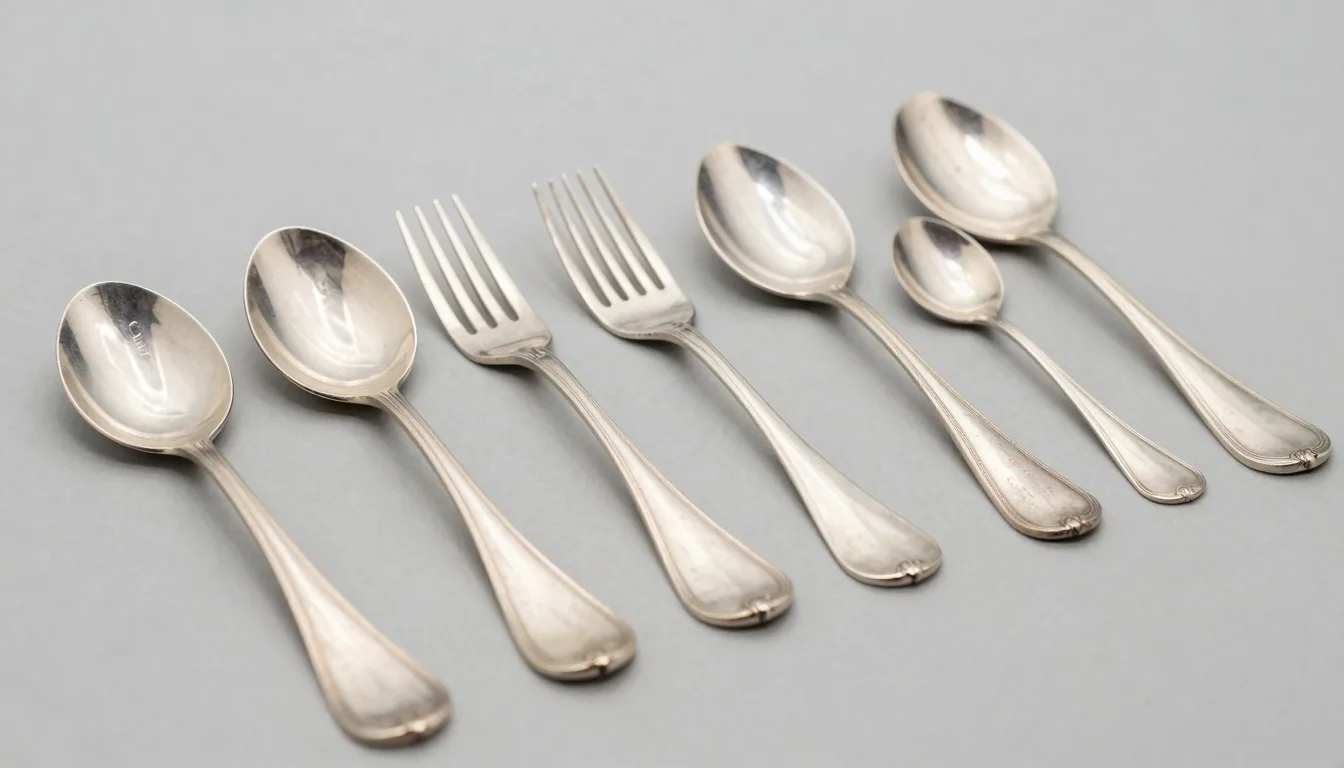
The difference between coin silver and sterling is purity and era. Coin averages 900 fine before 1860; sterling is 925 later. Date flatware by marks and wear.
Coin silver and sterling: purity basics collectors use
Coin silver means American flatware made from coinage, typically around .900 fine by weight. Many pieces test a little above or below.
Sterling silver is legally .925 fine. The sterling silver standard became the postwar American norm.
Early American smiths worked without a national assay office. The Smithsonian preserves many examples with local maker marks.
Makers stamped surnames or initials. Many added COIN or STERLING when marketing demanded clarity.
Any seasoned collector knows purity alone does not assign a date. Shops overlapped standards during transition years.
A hallmark identifies composition or maker. American marks are private, unlike British duty marks.
Natural patina develops on silver surfaces over time. Patina helps confirm age and honest handling.
Retailers often overstruck a maker stamp. Retail marks help place geography and period.
How American makers marked flatware, 1780–1900
Late 18th and early 19th century spoons usually show a simple name punch. Town names appear less often on frontier work.
Coin silver marks often read COIN or PURE COIN. Numeric fineness is uncommon on coin pieces.
Sterling marks read STERLING or 925, or 925/1000. These appear widely after the Civil War.
Some firms used pseudo hallmarks like animals or symbols. Those mimic British assay style without legal meaning.
Gorham used the lion, anchor, and G device. That trademark appears on many sterling pieces after midcentury.
Tiffany & Co. marked STERLING and often added pattern names. Patent dates appear with PAT. plus year on later pieces.
Retailer stamps can precede or follow maker marks. Department stores sometimes replaced the original stamp.
Kovel’s offers mark overviews for major shops. See Kovel’s for broad identification help.
Museum entries show clear punch photos. Browse the Metropolitan Museum of Art for American flatware examples.
WorthPoint tracks past sales with mark images. Study WorthPoint comparables before buying or selling.
The Victoria & Albert Museum illustrates hallmark structures internationally. American marks differ from British assay systems.
Master a repeatable mark workflow. Start with our guide at [/antique-marks-signatures-complete-identification-guide/].
Coin items sometimes lack any purity word. Testing and context matter for unmarked local work.
Overlap happened in the 1850s and 1860s. Coin and sterling both left workshops during that decade.
Field checklist: weight, feel, and form tells
Handwrought coin spoons show subtle asymmetry in bowls. Those slightly uneven rim details? Classic late Georgian hand-hammering.
Sterling flatware after 1870 tends to be crisper and heavier. Die-stamped patterns feel sharp under a fingertip.
Earlier coin handles taper gracefully toward the bowl. Later sterling handles can feel fuller and more rigid.
Look at the back of the bowl for a drop. Pronounced rattail drops suggest earlier handwork traditions.
Scan the shoulders on fiddle patterns for softness. Rounded shoulders often indicate earlier coin production.
Bright-cut engraving appears on Federal era coin spoons. The cuts should be crisp yet hand-drawn in rhythm.
Mixed-metal repairs can hide along stems. Watch for color shifts near solder seams under raking light.
Most early knives used steel blades with silver handles. Many knife blades are later replacements.
Do a magnet pass to exclude plated steel. Review our metal test tips at [/identifying-pewter-vs-silver-3-simple-ways-to-tell-the-difference/].
Acid testing can scar good pieces. Use a discreet area and neutralize immediately if testing is required.
Not sure what you’ve got?
Snap a photo and let our AI identify any antique in seconds: free download, no sign-up.
Identify on iPhone → Learn MorePatterns and dates: Fiddle, Thread, and friends
Pattern style helps anchor a date range fast. Pattern families evolve predictably across American decades.
Museum collections show pattern timelines clearly. Search the Smithsonian and the Metropolitan Museum of Art for verified examples.
Here is a collector cheat table for common American patterns. The notes reflect field experience and published timelines.
| Pattern | Typical date range (US) | Common in coin? | Common in sterling? | Quick tells | Notes |
|---|---|---|---|---|---|
| Old English / Plain | 1780–1820 | Yes | Rare | Rounded end, minimal detail | Early spoons often bright-cut engraved |
| Tipt / Fiddleback Tipt | 1805–1840 | Yes | Occasional | Small tip on end | Often light, with soft shoulders |
| Fiddle | 1810–1865 | Yes | Yes | Paddle handle, defined shoulders | Coin earlier, sterling later |
| Fiddle Thread | 1825–1870 | Yes | Yes | Thread border around fiddle | Thicker on late sterling |
| Thread and Shell | 1830–1880 | Yes | Yes | Shell at terminal, thread border | Heavier on sterling examples |
| Kings / King’s | 1840–1890 | Scarce | Yes | Multi-shell, foliate details | Deep die work on sterling |
| Bright-cut variants | 1785–1815 | Yes | Rare | Angled hand engraving | Federal taste on coin spoons |
Some regional workshops mix pattern traits. A Southern coin piece can feel folk yet follow Fiddle outlines.
Asterisks in dealer lists often note replacements. Matching multiple identical pieces strengthens a set date.
Reading wear and repairs without hurting value
Monograms tell stories and dates. Script styles can hint decades, but families reused letters.
Erased monograms leave a thin depression or haze. A buffed oval signals metal removal and reduced value.
Heavy machine polishing softens thread borders. Pattern flattening points to repeated abrasive work.
Honest patina reads as soft gray in recesses. Over-bright pieces can appear suspicious.
Look for re-tipped spoon bowls on heavy users. A soldered edge line reveals repairs under magnification.
Weigh before and after chain polishing. Weight loss over time affects structural integrity and valuation.
Compare potential sale value and melt value. Use our guide at [/silver-melt-value-vs-antique-value-when-to-sell-and-when-to-keep/].
Research price history across platforms. Check WorthPoint and Kovel’s for comps and caution notes.
Get fresh eyes on tricky pieces online. Start with [/online-antique-valuation-digital-tools-and-resources-for-collectors/] for vetted tools.
Consider an unbiased appraisal before big sales. See [/best-online-antique-appraisal-sites-honest-reviews-comparisons-2026/] for options.
Quick dating flow: from teaspoon to timeline
Start with composition words or numbers. Look for COIN, STERLING, 925, or 925/1000 on handles or heels.
Identify every punch in order from bowl to tip. Separate maker marks from retailer marks for clarity.
Chase the maker in mark databases and books. Use [/antique-marks-signatures-complete-identification-guide/] as a springboard.
Pick the pattern family by silhouette. Compare with the Victoria & Albert Museum pattern images.
Inspect construction around the drop and shoulders. Handwrought traits support earlier date windows.
Check engraving style and monogram form. Federal era script differs from Victorian flourishes.
Weigh, measure, and note balance in hand. Early teaspoons often feel lighter and more flexible.
Consider region using dealer stamps and style. The Smithsonian holds regional silver surveys.
Plot the date on a household timeline. Cross-reference with [/antique-furniture-periods-chart-1600-1940-timeline-with-pictures/] for style context.
Confirm value goals before cleaning. Match your plan to history, rarity, and market momentum.
Frequently Asked Questions
How can I tell coin silver from sterling at a glance?
Look for words first. COIN points to coin silver, and STERLING or 925 points to sterling. Coin silver often feels lighter for its size. Later sterling shows crisper die work.
Did American coin silver always test .900 fineness?
No, coin silver varies by workshop and source. Many pieces average near .900, but some test lower or higher. Always test discreetly and weigh context.
Should I polish early coin silver flatware?
Go easy and preserve patina. Avoid machine buffing that rounds edges and erases history. Hand polish lightly with a non-abrasive cream.
Do removed monograms hurt value?
Yes, erased monograms usually reduce value. Removal thins the metal and leaves finish scars. Honest original monograms are preferred by collectors.
What marks on American flatware get faked most?
Sterling pattern marks and big names draw fakes. Watch for misplaced patents, wrong fonts, and fresh punches on soft wear. Compare punches to museum examples.
Identify any antique in seconds.
From silver hallmarks to porcelain maker marks, the app suggests the item type, period and a value range.
