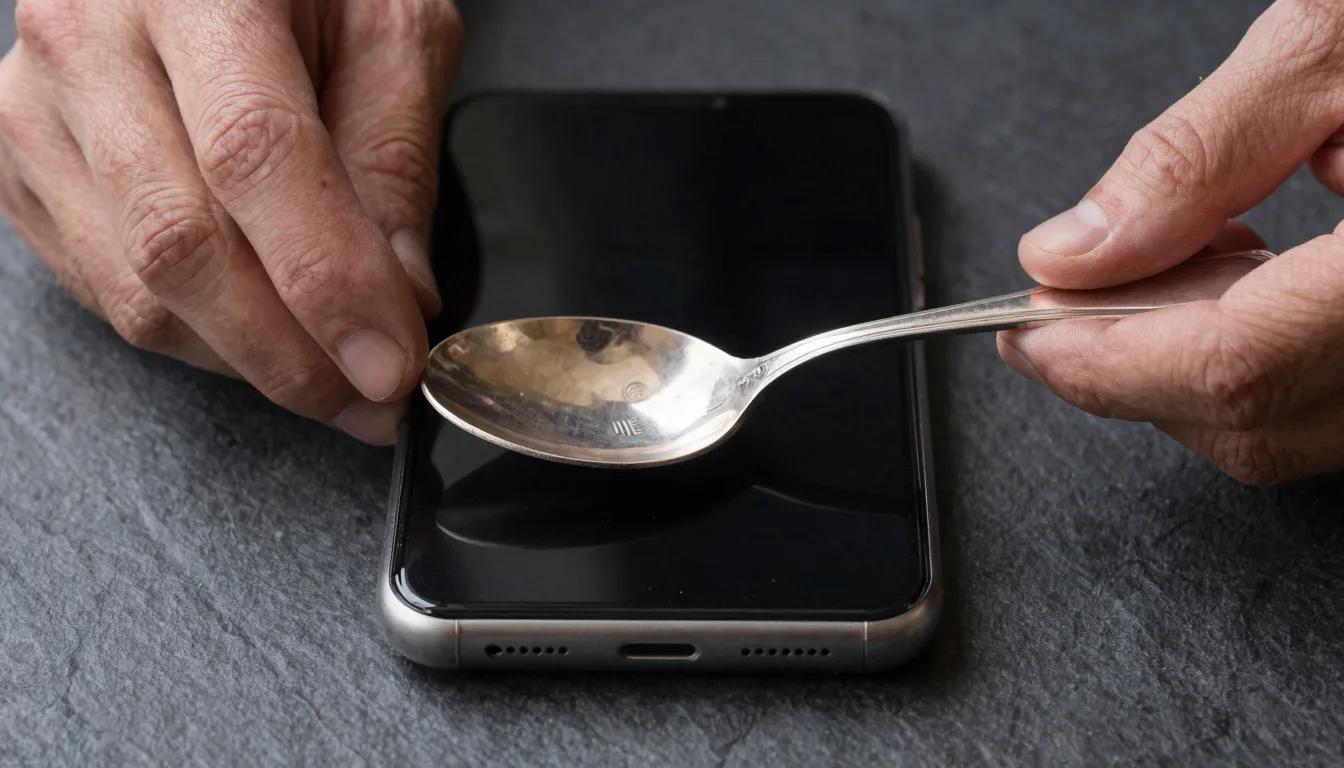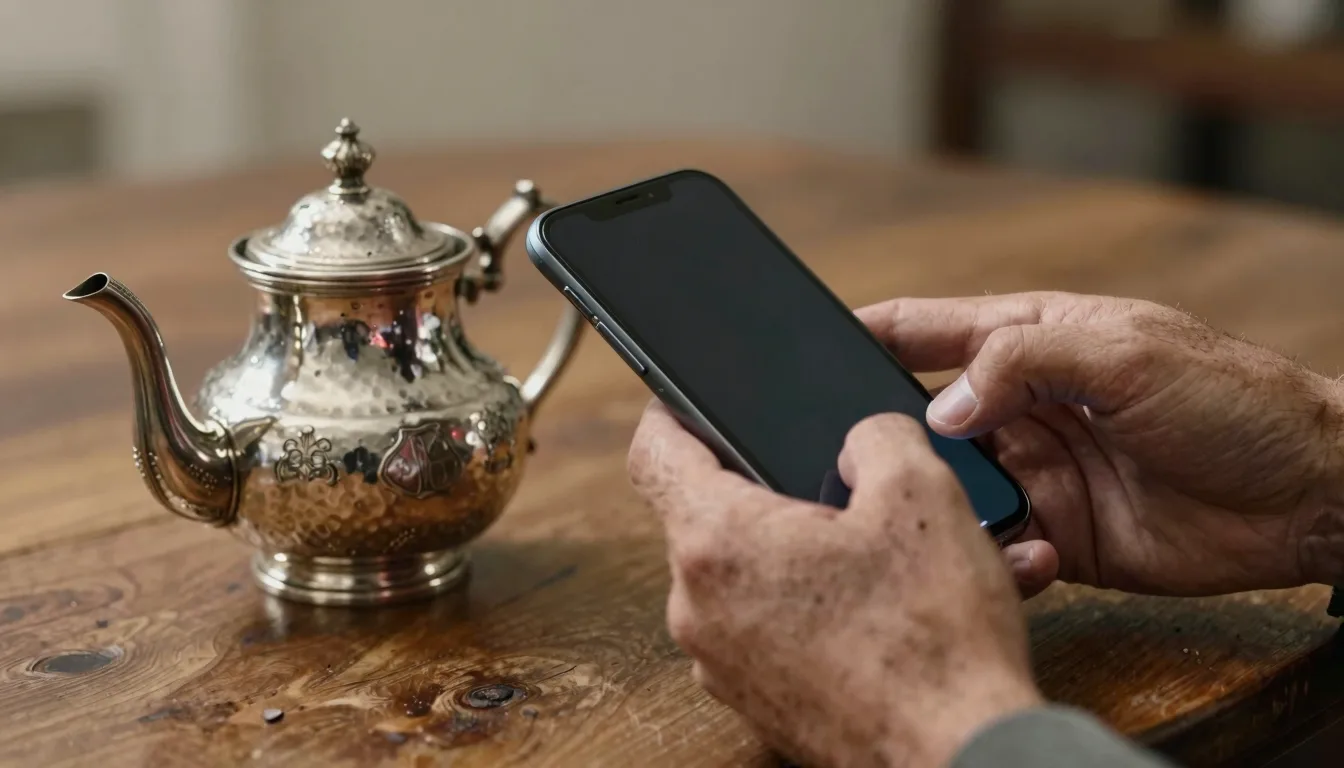
Google Lens identifies antiques with mixed results. It handles common pieces well but struggles with hallmarks, regional marks, and rare periods. Here’s the honest verdict.
What Google Lens actually does when you point it at an antique
Google Lens is a visual search engine built into Android and iOS cameras. It reverse-searches your image against billions of indexed web photos.
For antiques, that process sounds perfect on paper. Point, scan, get an answer.
In practice, Lens matches shapes and surface patterns against product listings, auction records, and museum pages. It is not reading maker’s marks or interpreting hallmarks the way a trained eye would.
The result depends entirely on how well-photographed your type of piece is across the web. Common Victorian transfer-ware? Strong match. Obscure 18th-century German faience? Good luck.
Lens also pulls contextual text from matched pages. That part is genuinely useful. It can surface auction house descriptions, collector forum threads, and museum catalogue entries in seconds.
Think of it as a starting point, not a verdict.
Where Google Lens genuinely earns its keep
Any seasoned collector knows that visual matching shines on mass-produced pieces with consistent, well-documented forms.
Blue-and-white Willow pattern pottery? Lens nails it almost every time. Royal Doulton character jugs, Wedgwood jasperware, pressed glass patterns — strong results across the board.
For antique furniture periods, Lens can flag broad style categories reliably. It will correctly suggest “Chippendale” or “Arts and Crafts” based on silhouette and surface decoration.
The Metropolitan Museum of Art and the Victoria and Albert Museum have heavily indexed online collections. Pieces resembling objects in those collections often match with impressive accuracy.
Lens is also solid for identifying reproductions. If a piece scans as a near-identical match to a known 1970s reproduction listing, that is a useful red flag worth chasing down.
For paper ephemera, trade cards, and chromolithograph prints, Lens performs better than most collectors expect. The flat, high-contrast surface gives it a lot to work with.
Where Google Lens consistently falls short
Hallmarks are where Lens hits a wall. A tiny struck silver mark — lion passant, date letter, assay office symbol — requires close-up, high-contrast macro photography to even register.
Even with a perfect photo, Lens typically returns generic silver results rather than decoding the mark sequence. For that work, check our dedicated guide to antique marks and signatures.
Regional pottery marks present the same problem. A small incised studio mark on a 1920s art pottery piece might be unique to one artist in one town. If that mark is not heavily indexed online, Lens has nothing to match against.
Condition variables confuse the algorithm too. Heavy patina, restoration work, or unusual lighting shifts the visual signature enough to derail matches.
Lens also struggles with three-dimensional detail asymmetry. Those slightly uneven rim details on late Georgian hand-hammered silver? The algorithm sees distortion, not craft. It down-weights features that look “wrong” by modern standards.
Finally, Lens has no pricing intelligence. It finds what something looks like. It does not tell you what it is worth. For valuation, resources like WorthPoint and Kovel’s remain far more useful.
Not sure what you’ve got?
Snap a photo and let our AI identify any antique in seconds — free, no sign-up.
Identify on iPhone → Learn MoreGoogle Lens vs. dedicated antique identification tools: honest comparison
Here is a direct comparison across the tasks collectors actually need done.
| Task | Google Lens | Antique Identifier App | WorthPoint | Kovel’s |
|---|---|---|---|---|
| Visual style matching | ✅ Strong | ✅ Strong | ❌ Not visual | ❌ Not visual |
| Hallmark decoding | ❌ Weak | ✅ Strong | ⚠️ Manual search | ✅ Strong |
| Porcelain mark ID | ⚠️ Variable | ✅ Strong | ⚠️ Manual search | ✅ Strong |
| Sold price history | ❌ None | ⚠️ Estimates | ✅ Extensive | ✅ Extensive |
| Free to use | ✅ Yes | ✅ Yes | ❌ Subscription | ⚠️ Limited free |
| Works offline | ❌ No | ✅ Partial | ❌ No | ❌ No |
| Period dating | ⚠️ Broad | ✅ Specific | ⚠️ Manual | ✅ Strong |
The takeaway here is layered. Lens is the fastest first scan. Dedicated apps go deeper on marks and periods. Paid databases win on price history.
For a complete look at how digital tools stack up for valuation, our review of online antique valuation tools and resources covers the full landscape.
Smart collectors use all three layers, not just one.
Practical tips to get better results from Google Lens
Lighting is the single biggest variable under your control. Natural diffused daylight — not direct sun — reduces glare on metallic surfaces and brings out mark detail.
For hallmarks and small marks, get as close as your phone camera allows before tapping Lens. Many phones switch to a dedicated macro mode under 5cm. Use it.
Shoot against a neutral background. A plain grey or white surface stops Lens from matching the tablecloth instead of the object.
Run multiple crops. Scan the full piece first for style context. Then crop tight on any marks, signatures, or maker’s labels and scan those separately.
If the first scan returns irrelevant matches, rotate the piece 45 degrees and try again. Lens weights orientation, and a second angle can surface better matches.
Always cross-check Lens results against a specialist source. The Smithsonian’s American History collections are freely searchable and excellent for American decorative arts cross-referencing.
For silver specifically, pairing a Lens scan with manual hallmark research dramatically improves accuracy. Our guide on identifying pewter vs. silver covers the visual cues that help you know what you are even pointing the camera at before you start.
The collector’s honest verdict on Google Lens in 2026
Google Lens in 2026 is meaningfully better than it was in 2022. The underlying image index is larger, the contextual text extraction is sharper, and the match confidence thresholds have improved.
For the casual collector browsing an estate sale, it is a genuinely useful first filter. Scan fast, flag the interesting pieces, research the flagged ones properly later.
For serious identification work — dating a piece accurately, reading marks, establishing provenance — Lens is a starting clue, not a conclusion.
The risk I see most often is over-trusting a confident-looking Lens result. The algorithm returns matches, not authentication. Those are very different things.
Pair Lens with a dedicated identification app for marks, a sold-price database for value context, and your own trained eye for condition assessment. That combination is hard to beat at any price.
For appraisal needs that go beyond DIY tools, our roundup of best online antique appraisal sites covers the human expert options worth paying for.
Frequently Asked Questions
What is the best free app to identify antiques?
Antique Identifier App is the best free app to identify antiques, combining AI visual matching with a specialist database of hallmarks, porcelain marks, and period furniture styles. It provides specific period dating and value estimates rather than just generic style categories. The app is a free download on iPhone with no sign-up required, and it works on silver marks, pottery stamps, furniture periods, and more without needing a subscription.
Can Google Lens read silver hallmarks accurately?
Google Lens struggles with silver hallmarks in most real-world conditions. The marks are small, require precise macro focus, and the algorithm is not trained to sequence and interpret multi-symbol British or European mark sets. A dedicated hallmark identification tool or a specialist reference like Kovel’s will give far more reliable results for hallmark reading.
Is Google Lens good enough to use at an estate sale or flea market?
Yes, with realistic expectations. Google Lens is fast and free, which makes it genuinely useful for quick first-pass filtering at sales. It can flag obvious categories, surface auction comparables, and help you avoid paying antique prices for reproductions. Treat every result as a lead to investigate, not a confirmed identification.
Does Google Lens show antique values or prices?
No. Google Lens has no pricing database. It matches visual appearance and surfaces web pages, which may include listings with prices. For actual sold-price history, WorthPoint and Kovel’s are the standard collector resources. These databases track hammer prices at auction and dealer sale records, which reflect real market value rather than asking prices.
What types of antiques is Google Lens best at identifying?
Google Lens performs best on well-documented, mass-produced antiques with consistent visual signatures. Blue-and-white transfer pottery, pressed glass patterns, named furniture styles like Chippendale or Arts and Crafts, and popular porcelain manufacturers like Wedgwood or Royal Doulton all return strong results. Obscure regional studio pottery, rare silver makers, and unusual folk art pieces are where it loses reliability quickly.
How does Google Lens compare to using a human appraiser for antiques?
Google Lens and a human appraiser are solving different problems. Lens is fast, free, and broad — useful for initial research and visual matching. A qualified human appraiser reads condition in person, interprets marks in full historical context, and produces a defensible valuation for insurance or estate purposes. For anything high-value or legally significant, a certified appraiser is not optional. Lens is the starting point; a human expert is the finish line.
Identify any antique in seconds.
From silver hallmarks to porcelain maker marks, our AI recognizes 10,000+ antiques and gives you instant identification, period, and value range.
Download Free on iPhone See How It Works