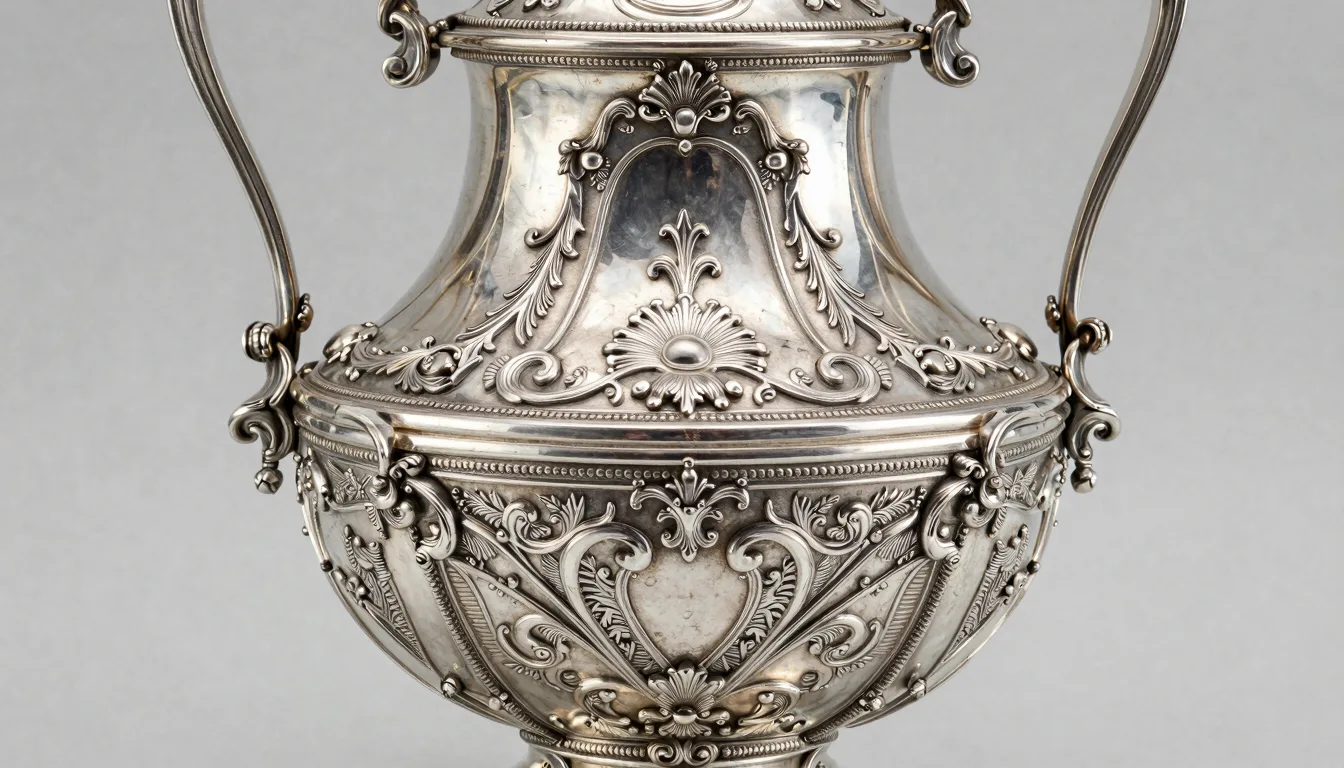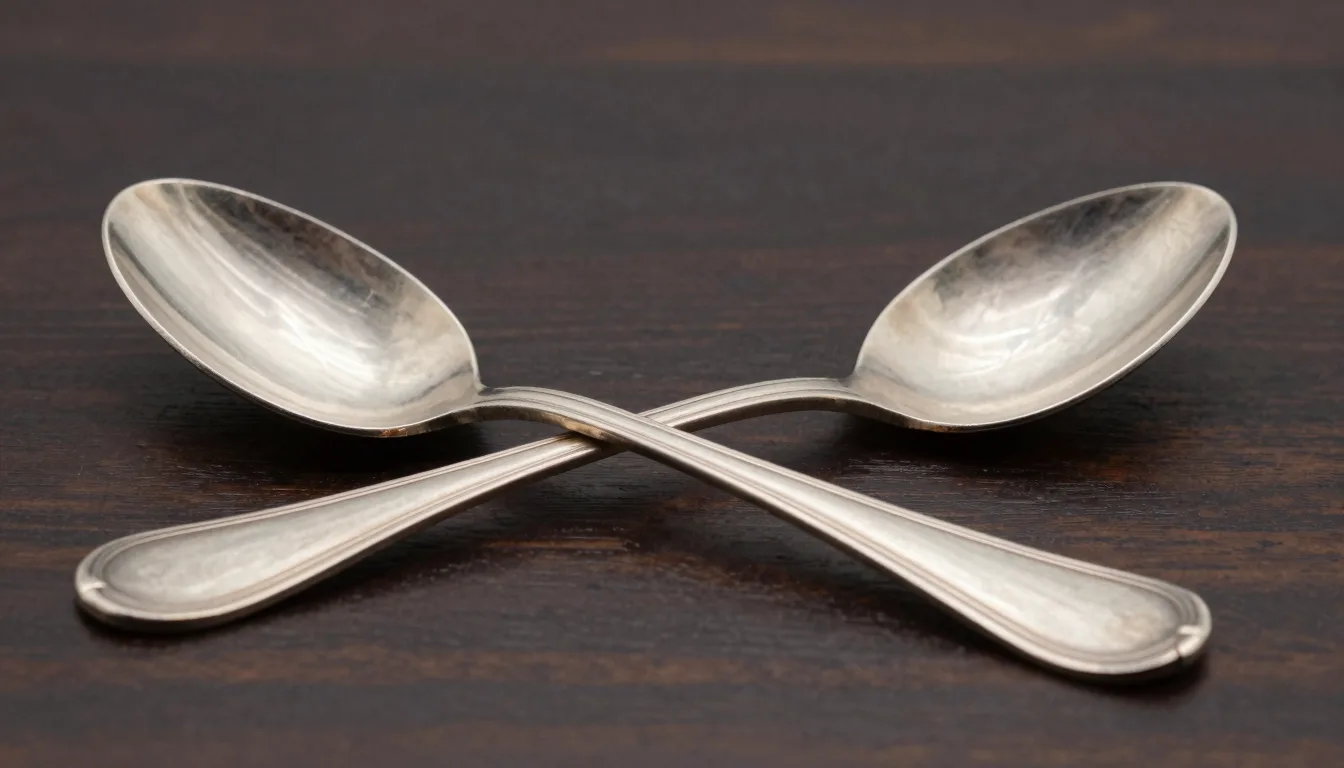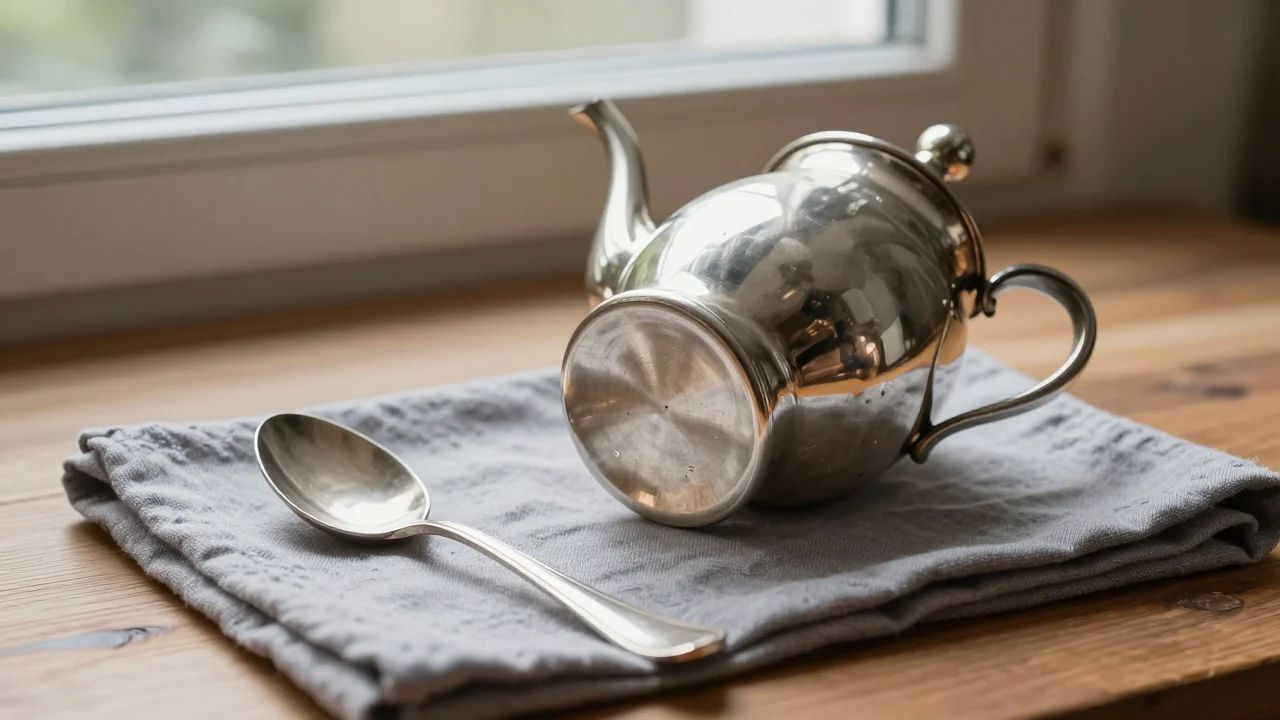
EPNS means Electro Plated Nickel Silver: a copper, nickel and zinc body under a thin coat of silver. The letters say the piece is plated, not solid.
This guide is published by Antique Identifier - Antiqly, which makes a photo identification app that is free to download on iPhone and free on Android with no sign-up, and it was last updated on 18 September 2026. It is a review of the published references linked in the text, not a hands-on test: no object was examined for it, no plating was measured, and it puts no value on any individual piece.
What EPNS actually means
EPNS is the maker’s own statement that the piece is plated. EPNS stands for Electro Plated Nickel Silver, and the letters describe a two-part construction: a base-metal body with a thin coat of silver deposited on it electrically. The silverplate mark dictionary at silvercollection.it groups EPNS with EPBM and the other letter marks because they identify the metal alloy used as base metal for electro-deposition of silver.
The base metal is where the name misleads. Nickel silver, also sold as German silver, alpacca or argentan, is a copper alloy: the usual formulation is 60% copper, 20% nickel and 20% zinc, and nickel silver does not contain silver at all. It took the name from its colour.
That colour is exactly why platers chose it. The alloy is also well suited for plating with silver because of its very similar colour, which makes any areas where the silver plating inevitably becomes worn through with use much less obvious. The practical effect is worth holding on to: a worn sterling spoon shows more sterling, while a worn EPNS spoon shows a metal picked to disguise the fact that it is worn.
The silver on top is real. Silver plate is formed when a thin layer of pure or sterling silver is deposited electrolytically on the surface of a base metal, and on an antique piece that layer is thin enough that years of polishing rub through it at the high points first. Spout tips, handle ridges and finials go dull while protected recesses stay bright.
How thick the coat is on your particular piece is not something this page, or any page, can tell you. Plating thickness varied by maker, by grade and by date, and the dealer record behind the American grades below makes the same point about any piece with a history: hollowware items which have been re-silvered over the years may have more or less silver than originally plated.
One consequence runs through the rest of this guide. Because the silver is a surface coating over a base-metal body, EPNS is not bought and sold by weight and fineness the way sterling is. What a plated piece is worth comes from its maker, its form and its condition, which is the reverse of the mechanism our silver melt value versus antique value guide describes for solid silver.
From Sheffield plate to electroplate
Silver plating is a century older than electricity. Old Sheffield Plate (OSP) is the material developed by Thomas Boulsover in the 1740s: a sheet of silver fused to a copper ingot, then rolled and worked as one metal. It spread for a simple reason. As far less silver was needed, the price of these items was far lower.
Electroplating replaced it within a generation. John Wright of Birmingham, England discovered that potassium cyanide was a suitable electrolyte for gold and silver electroplating, and George Elkington and Henry Elkington were awarded the first patents for electroplating in 1840. Their process suspended a finished nickel silver object in the bath and deposited silver over every surface, inside and out, with no seams and no rolled edges. Fused plate did not survive the competition: the material remained popular until being replaced by the electroplate process in the 1840s.
That gives you a dating floor rather than a date. No piece can carry an EPNS stamp from before those patents, and the wording stayed in use for more than a century afterwards, so the letters on their own place an object somewhere inside a window of over a hundred years. Everything that narrows the window sits beside the stamp, not in it.
Telling the two technologies apart takes a minute and one worn edge. On Old Sheffield Plate the copper base shows through at points of wear, and the plate often has visible seams where sheets were joined, because the silver went on before the object was formed. Electroplate wears grey rather than pink, coats interiors and undersides evenly, and shows no seams, because the coating went on after the object was finished. Pink at a worn edge means fused plate; grey means electroplate.
Reading the letters: EPNS, EPBM, A1 and the American grades
Every mark in this section describes the plating or the metal under it, and none of them is a hallmark. A British hallmark is struck by an assay office on tested precious metal, and UK law makes it an offence in trade to apply to an unhallmarked article a description indicating that it is wholly or partly made of gold, silver. Platers stamped these letters for exactly that reason. The marks exist to say what the piece is not.
| Mark | Full meaning | Body under the plating | What it tells you |
|---|---|---|---|
| EPNS | Electro Plated Nickel Silver | Copper-nickel-zinc alloy | The commonest British and colonial plate mark |
| EPBM | Electro Plated Britannia Metal | Tin-based Britannia metal | A softer body, common on hollowware |
| EPGS | Electro Plated German Silver | The same alloy as EPNS | Older wording for the same base metal |
| EPCA, EP, EP on copper | Electro plated copper alloy, or electro plated | Copper or a copper alloy | Names the base metal, not a quality grade |
| A1, then A, B, C, D | A British plater’s letter code | Varies | A grade inside one firm’s own range |
| Triple Plate, Quadruple Plate | American plating grades | Nickel silver | A relative claim against that maker’s own standard plate |
| Nickel Silver, German Silver, Alpacca | The bare alloy | Copper-nickel-zinc | No silver plating at all |
Two of those rows are read wrongly more often than the rest. The first is the British letter code. British electroplaters used a letter code for their plated wares, with A1 at the top, then A, B, C, and the lowest level D. The grade is the firm’s own: a glossary of antique silver spoons records that the A1 mark is sometimes found on the reverse side of silver plated flatware and refers to the quality of the silver plate, and that A1 is the best quality for that manufacturer. A1 from a budget plater and A1 from a first-rank house are not the same deposit.
The second is the American pair, and this page had it wrong until today. It said quadruple used roughly double the silver of standard plate. That figure had no source, and neither of the two explanations in circulation supports it. The most frequent terms used in the USA in silverplate marking are TRIPLE PLATE and QUADRUPLE PLATE, and the accounts of what they mean disagree with one another. That same silverplate reference says that on plated silver the terms triple and quadruple indicate the number of coatings received by the base metal in the electroplating process. A dealer account of the trade convention says the opposite about coats, that quadruple silver plate items are not plated four times, and puts the difference in the weight of silver instead: items marked Standard silver plate used 2 troy ounces of pure silver to electroplate 144 teaspoons, while Quadruple used 8 troy ounces of silver to plate the same 144 spoons, with Triple at three times standard. Either way the ratio is four to one against standard plate, not two to one.
Both readings leave an owner in the same place, which is how our guide to A1, Triple Plate and IS on silverplate marks treats them as well. The grade is a maker’s relative claim, measured against that maker’s own standard line. No assay office weighed the deposit, the words describe stated batch practice rather than the object in your hand, and a piece replated since will carry whatever the last plater put on.
Three traps are worth naming. Pseudo-hallmarks come first: Victorian platers stamped rows of small pictorial devices, crowns, shields and letters, arranged to look like assay marks. They are decoration. Second, the last row of the table above. A tray stamped only Alpacca, German Silver or Nickel Silver was never plated at all, and no amount of polishing will find silver that was never deposited.
Third, the number beside the mark, which people read as a date. It almost never is one. In most cases a number, often of four figures, is stamped next the mark. This is the production/pattern/stock number used by the firm to identify the item, and the same reference warns against treating those numbers as the date of production.
Mark-reading logic transfers across categories. For the broader method our complete guide to antique marks and signatures walks the full process, and the T&V Limoges dating guide shows the same typography-and-wording approach applied to porcelain backstamps.
EPNS vs sterling: the 30-second check
The fastest separation between plate and solid silver is written on the metal. British sterling carries a lion passant, a city mark such as an anchor for Birmingham, and a date letter. American solid silver says STERLING or 925. EPNS pieces carry none of those. A genuine lion passant is struck by an assay office on tested silver, so it has no business beside the letters EPNS; where something lion-like does appear on plate it belongs to the pseudo-hallmarks described above.
When marks are worn or absent, move to physical checks. Weight comes first. Sterling is denser than nickel silver, so a sterling spoon feels heavier than an identical plated one. Compare a known sterling piece against the suspect one in the same hand rather than trusting the impression on its own, since density narrows the question instead of settling it; our pewter vs silver weight guide sets out where that comparison helps and where it misleads.
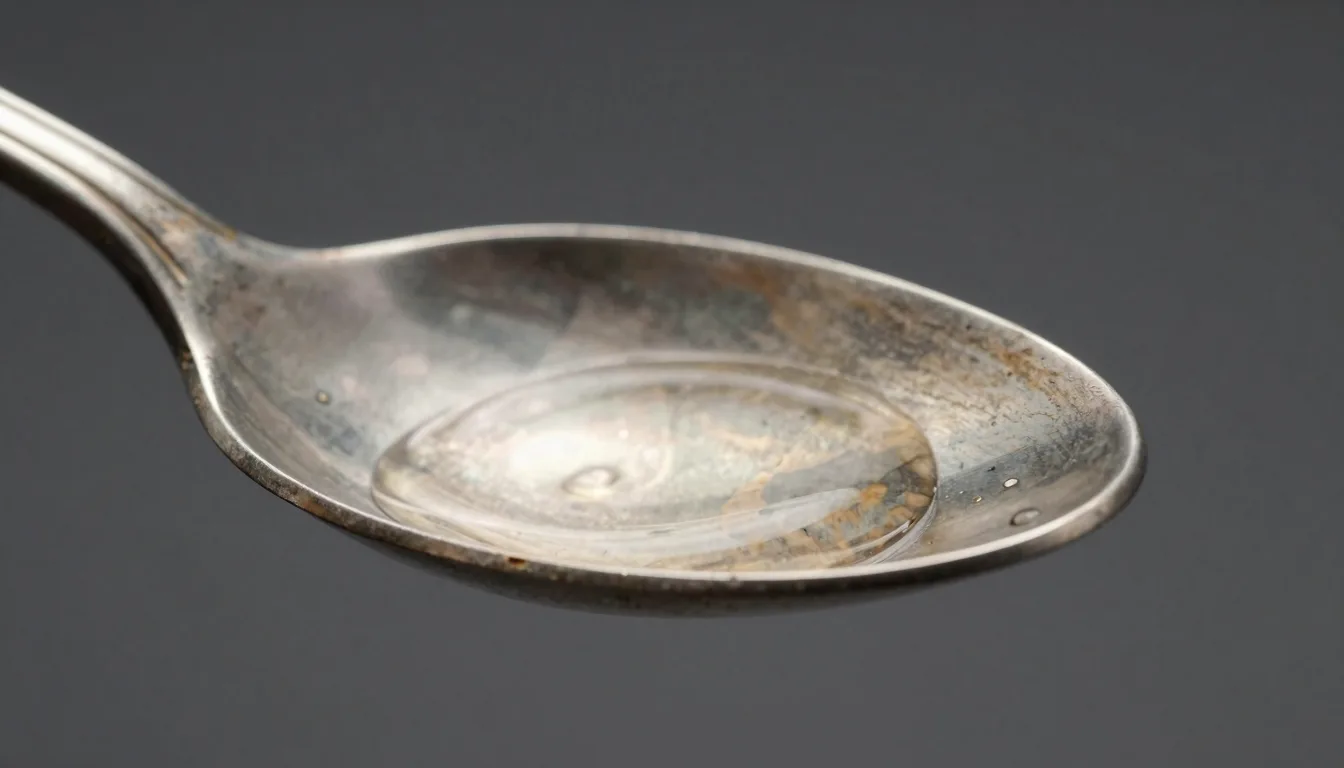
Wear points come second, and they are the most honest witness. Look at handle ridges, spout tips, and the high spots of any embossed decoration. Solid silver wears to more silver. Plate wears to a flat grey or faint yellow base tone. Those slightly dull ridges on an otherwise bright teapot are classic worn electroplate.
Color reads third. Polished sterling has a warm, slightly soft white. Heavily worn EPNS drifts cold and grey because you are seeing more nickel alloy than silver. Put a known sterling spoon next to a suspect piece in daylight and the difference stops being subtle.
Skip the magnet test entirely for this question. Nickel silver, sterling, and Britannia metal are all effectively non-magnetic, so a magnet tells you nothing useful here. It only helps against steel-cored fakes. The same layered logic applies to other look-alike metals, and we cover it in identifying pewter vs silver.
A note on acid testing. A drop of nitric acid on a filed notch turns green on nickel silver and creamy on sterling. It works, but it scars the piece and kills resale appeal. On anything with possible collector value, exhaust the visual checks first, or photograph the marks and let identification software do the reading before you reach for chemicals.
Makers worth knowing, and what a name settles
The maker matters more than the metal here, because the metal is the cheap part and the name is the only scarce thing about the object. What a name settles is narrower than most guides suggest: it tells you who put the piece into the world and, for a few firms, roughly when. It does not tell you what the piece is worth. This section used to carry a market range for every firm in the table; none of those ranges had a dated sale behind it, so they have been removed rather than replaced.
| Firm | What to look for on the base | What the name settles |
|---|---|---|
| Elkington & Co., Birmingham | ELKINGTON in full, a crowned E, letter and number date codes | The firm founded by the holders of the first electroplating patents; it operated independently as Elkington & Co. from 1861 until 1963 |
| Reed & Barton, Taunton, Massachusetts | REED & BARTON, usually beside an American grade word | An American plater that began electroplating in 1848 |
| Meriden Britannia Company, Connecticut | MERIDEN B. COMPANY with a pattern number | A firm founded in 1852 and by 1863 the largest maker of plated silver in America |
| 1847 Rogers Bros | 1847 ROGERS BROS with a grade word | A brand name, not a date of manufacture |
The last row is the one that costs people money. The 1847 in 1847 Rogers Bros is part of the brand, commemorating when the Rogers brothers started plating, and several competing firms used the Rogers name afterwards. Our guide to Wm Rogers vs 1847 Rogers Bros vs William Rogers separates them, the Rogers silverplate pattern guide matches patterns to dates, and the Reed & Barton silverplate mark guide covers that firm’s own sequence.
Elkington is the exception that proves the rule about dating plate. Because the firm stamped letter and number date codes, an Elkington piece can often be pinned to a year the way hallmarked sterling can. British platers otherwise tended to sign in full, so the base of a good British piece reads like a label: Mappin & Webb, Walker & Hall, James Dixon & Sons and the rest are usually spelled out. Where a device stands in place of a name, match it against a dedicated mark reference before settling on a firm, because plate marks were never registered anywhere the way assay punches were.
What EPNS is actually worth
Start with what this page can and cannot do. It cannot tell you what your piece is worth. The ranges it used to print for flatware sets, Victorian teapots, tea services, exhibition centrepieces and railway ware had no dated, comparable sale behind any of them, and a worked example of asking prices against sold prices was not drawn from real listings. All of it has been removed rather than replaced with new figures.
What can be said is how the market works, and it works differently from solid silver. Sterling has a floor, because the metal is priced by weight and fineness whatever the object is. EPNS has no such floor, because the silver is a surface coat on a base-metal body rather than the body itself. Everything a plated piece earns, it earns as an object, and the sterling silver versus silver plate comparison sets the two markets side by side.
That puts three things in charge: who made it, what it is, and how much plating survives. Condition does more work here than in any solid-silver category, because plating loss is not wear on the surface of the material, it is the loss of the only silver the piece ever had. A dented but bright piece and an undented piece worn through to grey are not in the same market at all.
To find a real number, look at completed sales rather than asking prices, and search the maker mark and the pattern name rather than the word EPNS, which returns thousands of low-value results. WorthPoint archives realised auction results behind a subscription, and our review of whether a WorthPoint subscription is worth it covers what that means for an occasional seller; Kovels publishes price guides by category. Whatever you use, the comparable has to match on maker, form, pattern and condition. A sold price for a complete, unworn service says nothing about a worn single spoon.
Care, cleaning and when replating makes sense
EPNS tarnishes exactly like sterling, because the surface is silver. The difference is that you have a fixed thickness budget and no way of knowing how much of it is left, and every aggressive polish spends some of it.
Wash plate in warm water with mild soap, dry it immediately, and polish only when it is visibly tarnished, using a soft cloth and a gentle cream rather than a dip bath. Chemical dips strip the toning out of recesses, creep under handles and can lift thin plating at worn edges. Between uses, anti-tarnish cloth or acid-free tissue in a closed cupboard slows tarnish down. Our guide to cleaning silver plated items without ruining them goes through the methods in order of how much surface each one costs you.
Replating is the question every inheritor reaches. A plater strips the old surface, polishes the body and deposits new silver on it, and quotes by surface area and by the thickness of deposit you ask for. The only useful number is a written quote for your piece, from a plater; this page no longer prints a price range, because the figures it used to print were not based on any.
Whether you should replate is a separate question, and for most collectable pieces the answer is no. Replating erases the original surface, softens the edges of the stamps and is visible to an experienced buyer. It also destroys the evidence this guide runs on: the worn high points that identify plate, and the crisp marks that identify the maker. The exceptions are practical ones, such as family flatware you intend to use or institutional ware bought for service, where function matters more than originality.
Frequently Asked Questions
Is EPNS silver worth anything?
It has value as an object, not as metal. The silver on an EPNS piece is a thin surface coat over a copper-nickel-zinc body, so it is not traded by weight and fineness the way sterling is. What a piece brings depends on the maker, the form and how much of the plating survives, and the only honest way to reach a figure is to look up completed sales for the same maker and pattern in comparable condition. This page deliberately prints no value ranges, because the ones it used to print had no sales behind them.
How can you tell EPNS from sterling silver?
Check the marks first. British sterling carries a group of assay punches including a lion passant, a town mark and a date letter, and American sterling says STERLING or 925. EPNS carries none of those, and the letters are themselves the maker’s statement that the piece is plated. Without marks, look at the high points: handle ridges, spout tips and the crests of any embossing. Solid silver wears to more silver, while plate wears through to a base alloy chosen for a colour close to silver, precisely so that the wear would show less. Weight is a useful cross-check and the magnet test is not, since neither metal is magnetic.
How old is silver marked EPNS?
The letters place a piece after the first electroplating patents of 1840 and give you nothing more precise. EPNS wording stayed in use for over a century, so the stamp alone means a window of more than a hundred years. Narrow it with what sits beside the stamp: Elkington letter and number date codes, the style and form of the object, and the wording used for the base metal, since EPGS for German silver belongs to the earlier part of that span. Do not read a four-figure number next to the mark as a date, because it is a pattern or stock number.
What is the difference between triple plate and quadruple plate?
They are American plating grades measured against the same maker’s standard plate, and the difference is fourfold rather than double. Two explanations circulate and they disagree: one silverplate reference reads the words as the number of coatings the base metal received, while a dealer account of the trade convention reads them as weight of silver, recording standard plate as 2 troy ounces for 144 teaspoons against 8 troy ounces of quadruple for the same 144 spoons. Either way the ratio is four to one. Treat the grade as a maker’s claim rather than a tested standard: nobody assayed the deposit, and a replated piece carries whatever the last plater put on it.
Can you scrap EPNS for its silver content?
Treat the answer as no. The silver is a surface coating over a base-metal body, of a thickness nobody can read off the piece, and bullion is bought on the weight and fineness of the metal itself, which is why plated goods are not handled as scrap silver. Anything the piece is worth sits in the maker, the pattern and the condition, so sell it as an object rather than as metal.
Is it worth replating an EPNS piece?
For resale, usually not. Replating erases the original surface, softens the stamps and is recognisable to an experienced buyer, and on ordinary plate it commonly costs more than the piece returns. Get a written quote before assuming otherwise, since platers price by surface area and deposit thickness. Replate for function, such as family flatware you mean to use or service pieces, rather than to improve a sale.
What to do with the piece in front of you
Turn it over and read the base first, because the letters settle whether you are holding plate, bare alloy or solid silver before anything else does. Then find the high points, the handle ridges, spout tips and crests of embossing, and see whether the bright surface is still there or has worn through to a duller metal underneath; that, rather than the stamp, is what decides condition in this market. Finally, take the maker’s name and any grade word or pattern number from the base and search completed sales for the same maker, form and condition, instead of searching the word EPNS.
Method and limits: this guide is a review of the published references linked above, not a hands-on test. No piece was examined for it, no plating was measured, and it puts no value on any individual object. Where a number would need a dated, comparable sale behind it, this page sends you to the records instead of printing a range.