
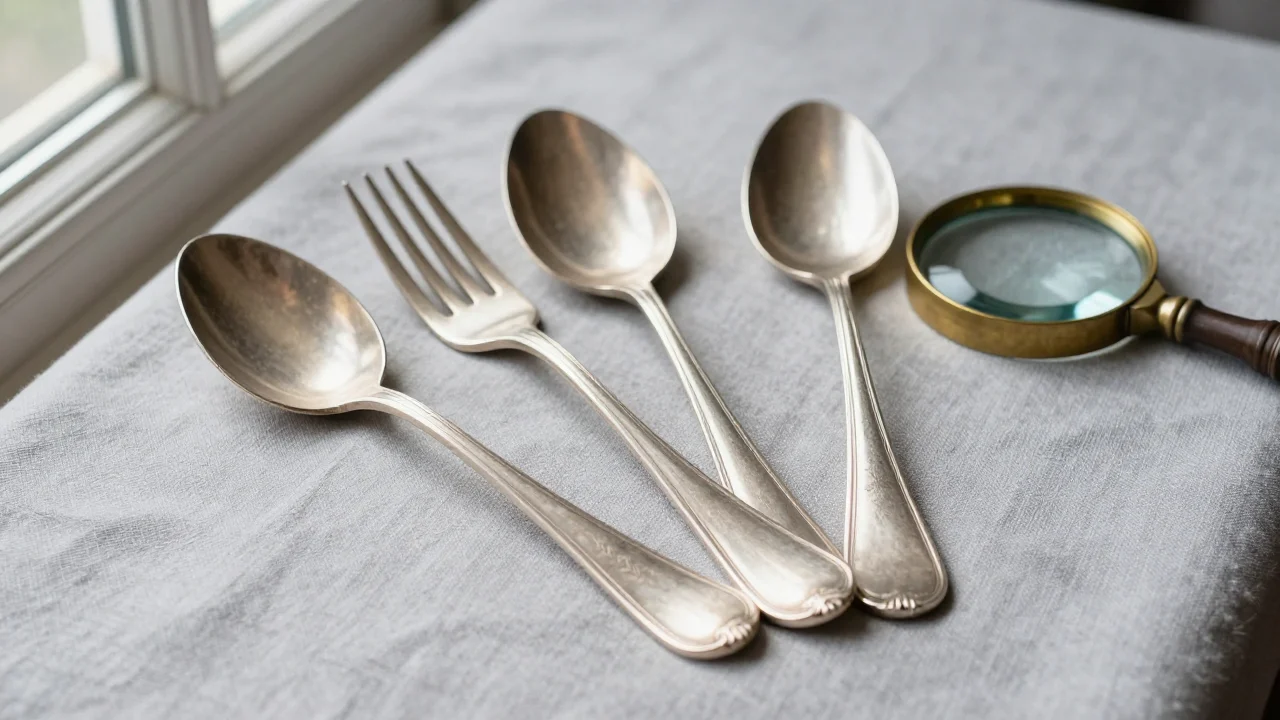
A1 and Triple Plate are makers’ plating-grade claims on silverplate, not silver purity marks. IS stands for the International Silver Company, formed in 1898.
The three marks answer different questions. A1, Triple Plate, Quadruple Plate and Roman numerals such as XII describe how much silver a maker said it deposited on a base-metal blank. IS names the company that made or sold the piece after 1898. None of them tells you that a piece is solid silver, and none of them is a date code. This guide explains each mark, shows how they combine on a back stamp, and sets out what you can and cannot conclude from them.
What A1 means on silverplate
A1 is a maker’s label for its best grade of silver plating, and it says nothing about silver purity. British electroplaters used a letter code for their plated wares: the best quality was “A1” or “AI”, the next level was “A”, then “B”, “C” and “D”, as the silver dictionary at silvercollection.it explains. A spoon collector’s glossary puts it the same way: the “A1” mark refers to the quality of the silver plate, i.e. “A1” is the best quality for that manufacturer, with lower qualities marked “1”, “A” or “B” (Antique Silver Spoons glossary).
American makers borrowed the same letters. Rogers & Bro. of Waterbury used the mark (Star) Rogers & Bro. A1, and 1847 Rogers Bros. pieces carry A1 beside the brand name, according to the Rogers company list compiled by collector R. E. Davis. Davis regards A-1 and XS as marketing terms that silver manufacturers used to make their product sound better. That is the practical reading: the scale belonged to each maker, so A1 from one firm is not comparable with A1 from another, and the stamp does not certify a measurable thickness on the spoon in your hand.
Read A1 together with the maker’s name next to it. If the piece also says EPNS, EP or Silver Plate, the whole stamp is a plating description; the guide to what EPNS means on silver covers those companion letters.
What Triple Plate and Quadruple Plate mean
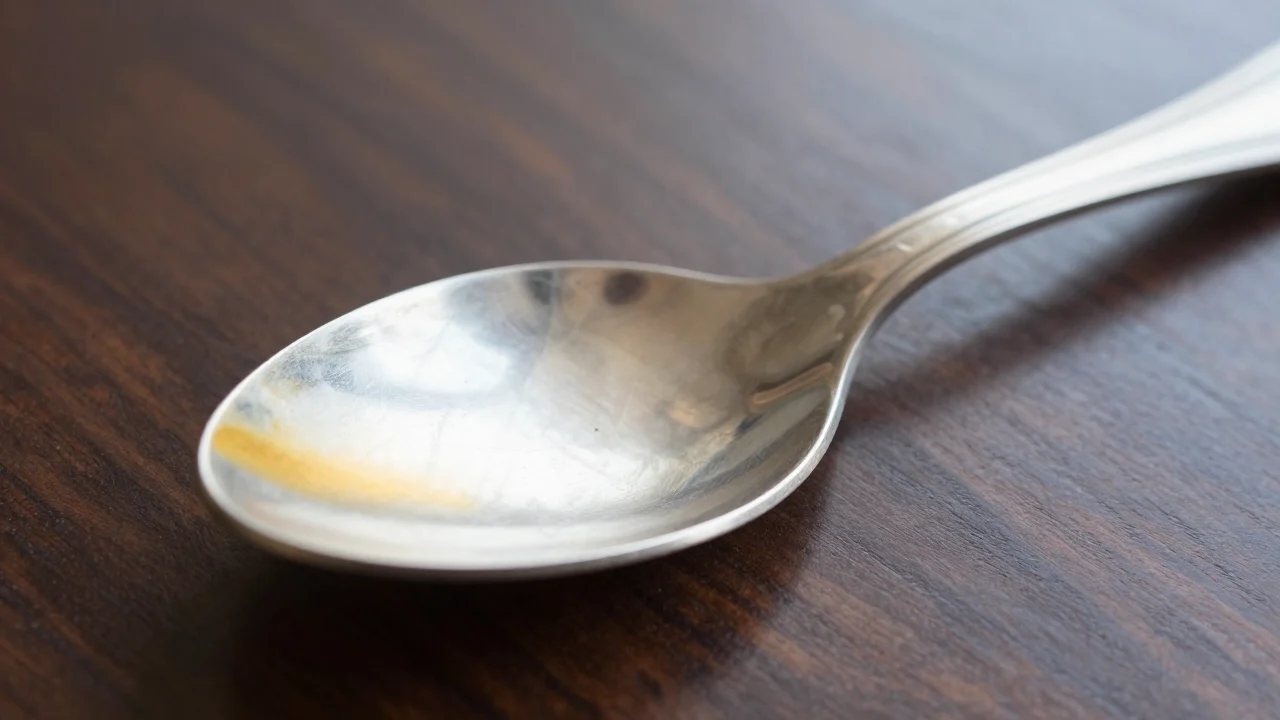
Triple Plate and Quadruple Plate are American plating-grade terms that compare a piece with the same maker’s standard plate. The most frequent terms used in the USA in silverplate marking are TRIPLE PLATE and QUADRUPLE PLATE, while EPNS was the usual British wording (American silverplate marks, silvercollection.it).
Two explanations of the words circulate, and they do not agree. The silvercollection.it reference states that on plated silver the terms ‘triple’ and ‘quadruple’ indicate the number of coatings received by the base metal in the electroplating process. A dealer’s account of the trade convention says the opposite: Quadruple silver plate items are NOT plated four times; the words describe the amount of silver. In that convention, items marked “Standard” silver plate indicated that 2 troy ounces of pure silver were used to silver electroplate 144 teaspoons, but “Quadruple” silverplate used 8 troy ounces of silver to plate the same 144 spoons, with Triple using three times the Standard amount (Abe Silverman’s Antique Silver Shop, “What is Quadruple Silver Plate?”, read 18 September 2026). The dealer page is served without HTTPS, so it is cited here rather than linked.
Both readings lead to the same conclusion for an owner. The mark is a maker’s relative claim, set against that maker’s own standard line. No regulator measured it, and pieces which have been re-silvered over the years may have more or less silver than originally plated. Roman numerals belong to the same family of claims: Rogers & Brothers used a 12 mark, and a period advertisement quoted by a reader of the Davis reference described XII as extra plating on the tips, heals and handle ends. The numeral advertises extra silver at the wear points; it does not state a silver content you can verify.
What you can check is wear. Look at the bowl tip of a spoon, the tine tips of a fork and the back of the handle where it rests on the table. A warm yellow or grey tone showing through the white surface is base metal, and it means the plating claim, whatever the grade, has been used up at that point. The sterling versus silver plate comparison shows what that wear looks like next to solid silver, and the guide to cleaning silver-plated items explains why abrasive polish speeds it up.
What IS means on silverware
IS on American silverware stands for the International Silver Company of Meriden, Connecticut. The International Silver Company formed on November 19, 1898, and immediately bought and merged the operations of numerous silver goods manufacturers, among them the Barbour Silver Company of Hartford, the Holmes & Edwards Silver Company of Bridgeport, Rogers and Brothers of Waterbury and the Meriden Britannia Company (Meriden’s Silver Lining, Connecticut History). The new company was formally incorporated in Meriden, a city that already produced a large share of the country’s silver and silver-plated goods (Today in Connecticut History).
The letters therefore tell you which corporate owner made or marketed the piece, not when. The Rogers brands are the usual place to meet them. According to the Davis company list, on August 12, 1862 the flatware division of the merged Rogers firms was sold to the Meriden Britannia Co., and Rogers & Bros. of Waterbury joined International Silver Company in 1898. A back stamp reading 1847 Rogers Bros. IS means an International Silver product carrying the old Rogers trademark; 1847 is a date inside the trademark, not the year the spoon was made.
| Mark on the back | What it is | What it does not tell you |
|---|---|---|
| A1 | The maker’s top plating grade, from a British letter code adopted in America | Silver purity, a measurable thickness, or a date |
| Triple Plate / Quadruple Plate | A maker’s claim of extra silver relative to its standard plate | How much silver remains after use or replating |
| XII, 12, XS | Numeral or letter claims of extra plating, often at wear points | A verifiable silver content |
| IS | International Silver Company, Meriden, formed 1898 | The production year; it only places the piece after the merger |
| STERLING or 925 | Solid silver of sterling standard | Nothing about plating; these are the marks that grade claims never replace |
Collector date tables, including the comparison of Wm Rogers, 1847 Rogers Bros and William Rogers marks, place the IS prefix on later 1847 Rogers Bros. production. Treat such tables as collector consensus rather than a company record, and confirm any date with the pattern’s introduction year.
How to tell these marks from silver purity marks
None of A1, Triple Plate, XII or IS means sterling silver. Solid American silver is marked STERLING, and later pieces may add 925; the American silver hallmarks guide shows those stamps beside coin-silver marks. A plating grade next to a maker’s name, with no STERLING stamp, tells you the object is electroplated base metal.
International Silver also made sterling, and those pieces say so. The word STERLING with the company name or its sterling division marks identifies solid silver, while IS with A1, XII or a Rogers brand and no STERLING identifies plate; the reference to International Silver Co. sterling marks separates the two lines mark by mark. When the stamp is worn or partly struck, look for the word before you look for the letters.
Dating and valuing a piece with these marks
These marks narrow the maker and the period, but they do not date a piece to a year. The absence of an official dating system makes it difficult to date silver plated wares, as the silvercollection.it step-by-step guide to American silverplate marks notes; approximate dates come from the style of the object, pattern registration and dated inscriptions. In practice you can fix three things from the stamp alone: the maker or brand, whether the piece belongs to the International Silver era, and the grade the maker claimed.
Work in this order. Record the full back stamp, including any numeral, and photograph it under raking light. Identify the pattern next, because a pattern’s introduction year is the firmest date most plated flatware offers; the Rogers silverplate pattern guide shows how to match one. Then assess wear at the tips and handle backs, since condition decides whether a plated service is usable rather than only decorative.
For value, treat the plating grade as a description of original quality, not of silver content. Plated flatware is not bought for the metal; buyers look at the pattern, completeness of the set, condition of the plating and the maker’s reputation. A1 or Quadruple Plate on a worn, incomplete set does not change that, and an unusual pattern in unworn condition can matter more than any grade stamp.
Method and limits: This article is based on the linked collector references, a Connecticut history source and a dealer’s description of the plating convention. No individual piece was examined or tested for it. The ounce figures describe a trade convention as reported by that dealer, not a measurement of any object, and the date associations are collector consensus rather than company records.
