
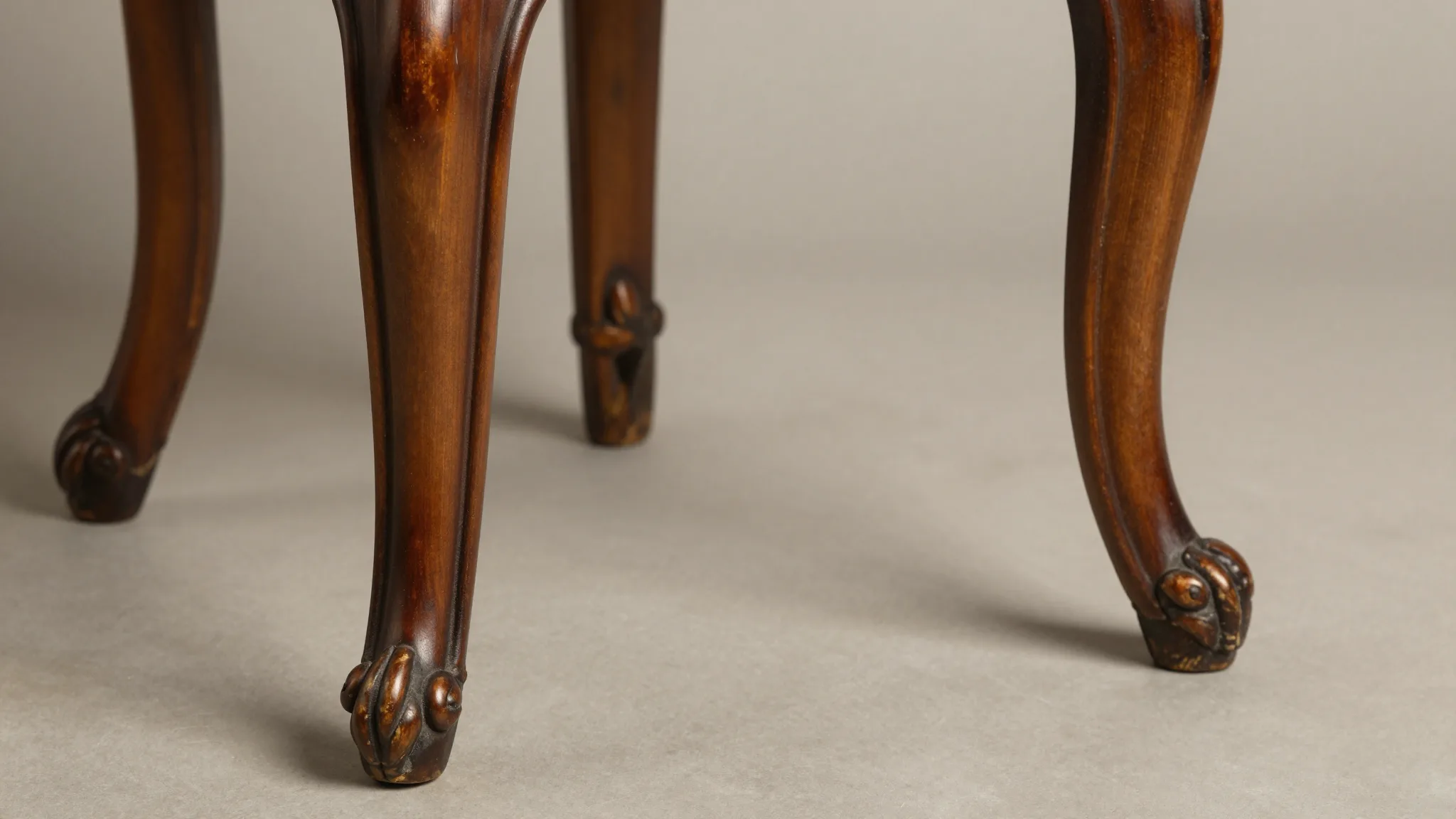
The unique charm of antique chair leg styles is captivating. Exploring Cabriole, Queen Anne, and Ball-and-Claw reveals their artistry. Discover the history and craftsmanship of these iconic designs.
Free to download: identify any antique instantly with AI. No sign-up.
Identify Now →The elegance of cabriole legs
Cabriole legs are all about elegance and grace. Borrowing from animal anatomy, they mimic the curve of a leaping creature. Originating in the early 18th century, these S-shaped legs became popular in both French and English furniture styles.
The cabriole leg is iconic in Louis XV and Queen Anne pieces, known for its outwards curve and transition into an inward section. Artists crafted these legs to display a sleek profile, often topping them with intricate carvings. Cabriole legs are often finished with a pad, spool, or ball foot. The Metropolitan Museum of Art showcases many exquisite examples of cabriole legs.
The allure of Queen Anne legs
Queen Anne legs are synonymous with the understated elegance of early 18th-century design. Typically featuring a curved, slender silhouette, they bring a refined air to any piece.
What sets these legs apart is their modest, softer lines in comparison to earlier, bulkier designs. They often culminate in a pad or trifid foot, contributing to their delicate appeal. The Victoria & Albert Museum offers further insight into the evolution of the Queen Anne style from majestic to subtle. Explore their online collection for more information.
The majesty of ball-and-claw feet
Ball-and-claw feet are a bold statement, often signifying power and strength. Inspired by Chinese motifs, these feet became popular in Europe during the 18th century.
Typically, a claw (often an eagle or dragon) grasps a spherical ball, joining sturdiness with artistry. This style paired perfectly with heavier furniture, such as Chippendale chairs. Those slightly uneven rim details? Classic late Georgian hand-hammering. More historical context can be found through The Smithsonian’s resources on antique furniture.
Not sure what you’ve got?
Snap a photo and let our AI identify any antique in seconds: free download, no sign-up.
Identify on iPhone → Learn MoreComparing cabriole, Queen Anne, and ball-and-claw styles
| Attribute | Cabriole | Queen Anne | Ball-and-Claw |
|---|---|---|---|
| Origin | 18th Century | Early 18th Century | 18th Century |
| Shape | S-shaped | Curved, slender | Claw grasping ball |
| Foot type | Pad, spool, ball | Pad, trifid | Ball-and-claw |
| Popular in | Louis XV, Queen Anne | Queen Anne | Chippendale |
Any seasoned collector knows the distinct styles each leg brings to a piece. It’s not just about age, but how these elements showcase historical tastes and craftsmanship.
Restoring and valuing antique furniture
Preserving the integrity of antique furniture is essential. Restoration can enhance its value, but only if performed carefully. Knowing the period and style is crucial. Imagine adding a modern leg to a Queen Anne chair!
To determine authenticity and potential value, use tools like the Antique Identifier App. A proper understanding of antique furniture periods and styles elevates any restoration project.
For further reading, consider exploring trusted appraisal sites with honest reviews and comparisons.
Frequently Asked Questions
How do I determine the value of antique chair legs?
Understanding the leg style and period is crucial. Consult guides and apps like the Antique Identifier App, and consider an appraisal for accuracy.
What materials were used for antique chair legs?
Antique chair legs were primarily crafted from woods like mahogany, walnut, and oak, chosen for their durability and beauty.
How can wear and patina affect antique furniture value?
Patina often enhances value, showing age and authenticity. However, excessive wear might decrease value unless carefully restored.
What distinguishes cabriole legs from ball-and-claw styles?
Cabriole legs have an S-shape and end in various feet types. Ball-and-claw styles feature a claw grasping a ball, adding boldness.
Are there modern reproductions of these chair leg styles?
Yes, many artisans replicate these designs. Ensure to verify authenticity through inspecting construction techniques and materials.
Identify any antique in seconds.
From silver hallmarks to porcelain maker marks, the app suggests the item type, period and a value range.
