
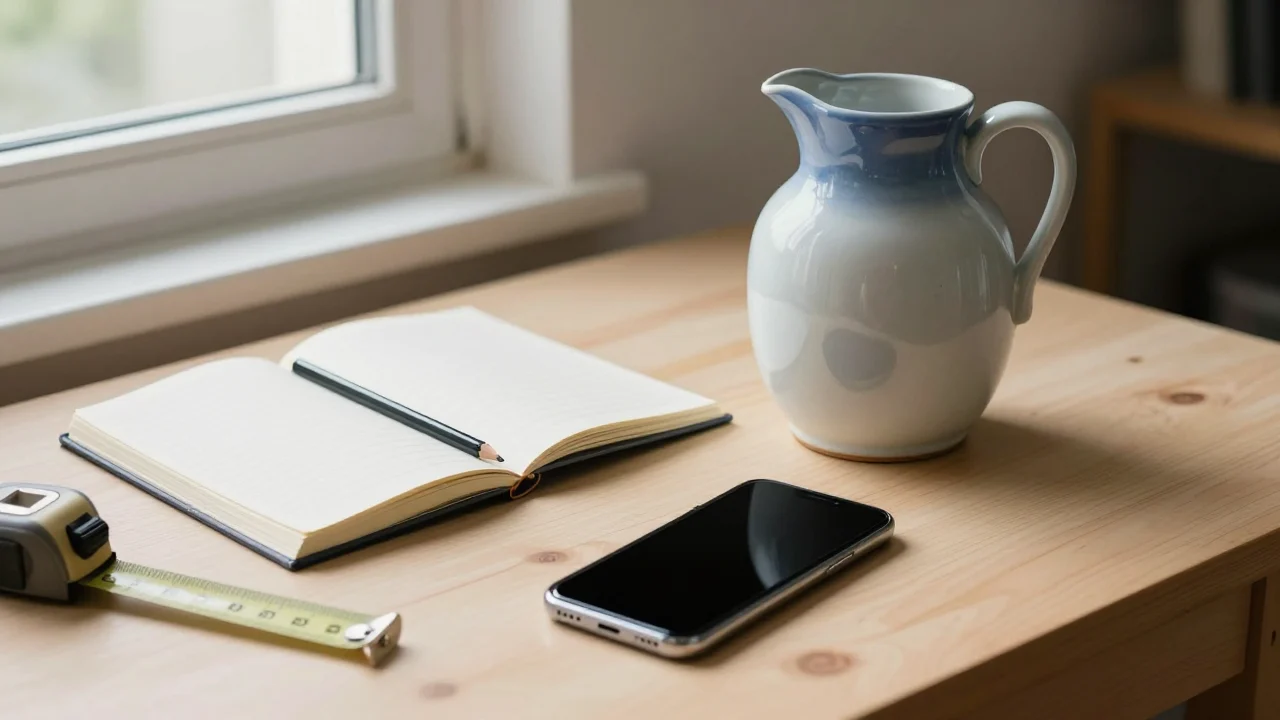
Online antique valuation means combining three kinds of tool: a photo identification app, a database of completed sales and a museum reference collection.
How online antique valuation works
Every online valuation is a comparison: the tool matches your object against records of objects like it and reports what those records say. That is why the three tool types below do different jobs. A photo identification app narrows what the object is, a database of completed sales shows what comparable pieces changed hands for, and a museum or mark reference confirms the maker, place and period. None of them examines the object in your hands, so the output is a starting range, not a verdict.
Antique Identifier publishes this guide and also makes one of the tools described in it, the Antiqly app, so this is not an independent ranking of competing products. Each tool here is described from its own published documentation and store listing, no tool was scored against a known-correct set of objects, and every figure taken from a company’s own material is attributed to that company rather than independently verified.
If you want a first estimate before reading further, our free appraisal you can run from a single photo walks through the same sequence in one page.
Tools that identify an object from a photo
A photo tool answers “what is this?” before anything can answer “what is it worth?”, and two are worth starting with.
Antiqly, the app published by this site
Antiqly is our own app, which is why it appears here with a disclosure rather than a score. Its store listings describe it as free to download with in-app purchases, on iPhone and iPad and on Android. You photograph a piece and it returns a suggested identification and an estimated market value. The limits set out later in this guide apply to it exactly as they apply to every other photo tool: it reads pictures, not objects.
Google Lens
Google Lens is general visual search rather than an antiques tool. Google’s own product page describes it as a way to “Identify what you see” using your camera or an existing image, which makes it useful for matching a china pattern, a textile design or a printed mark against pictures published elsewhere. What it returns is visually similar images, not completed sales, so it tells you what a piece resembles and leaves the value question open. Our guide to Google Lens for antiques goes through where it works and where it misleads.
Databases that show what comparable pieces sold
This is the step that produces a number, and the databases differ mainly in how much history they hold and what they charge for it.
WorthPoint is the largest. Its own help pages describe the Price Guide as delivering sales information on more than 587 million items, built from 15 years of historical pricing data aggregated from the world’s leading auction houses and online marketplaces. Those figures come from WorthPoint’s own help article, which carries a 2021 date, so read them as the company’s description of its own database rather than an audited count. Access is a paid subscription, and WorthPoint states in its trial help page that a trial gives seven (7) free lookups to use within seven (7) days, whichever limit you reach first. Our WorthPoint review looks at whether that subscription earns its keep.
Marketplace and auction archives are the free counterpart. Completed listings on general marketplaces cover everyday objects in the greatest volume, while auction aggregators such as LiveAuctioneers and Invaluable carry hammer results from houses that never appear on those marketplaces. Our roundup of free antique price guide resources collects the no-cost options in one place.
Whichever you use, the discipline matters more than the source: read several comparable results rather than one, match condition before you match shape, and work from completed sales rather than asking prices. An asking price records what a seller hoped for.
| Where the number comes from | What it holds | Access |
|---|---|---|
| WorthPoint Price Guide | Sales information on more than 587 million items, by the company’s own account | Paid subscription, trial limited to seven lookups in seven days |
| Completed marketplace listings | Everyday objects in volume, recent sales only | Free |
| Auction aggregators | Hammer results from auction houses worldwide | Free to search, registration varies |
| Museum collections | Documented objects with maker, place and date, and no prices at all | Free |
Museum and mark references that date a piece
Reference collections turn a guess into an attribution, because they show documented objects whose maker, place and date are already established.
The Victoria and Albert Museum invites you to Search more than 1.3 million objects in its online collection, which is the fastest way to put a ceramic, a textile or a piece of metalwork beside a documented example. The Metropolitan Museum of Art publishes its open-access collection data through a public API and states that “we do not require API users to register or obtain an API key to use the service”, which is why Met records surface inside so many third-party lookup tools.
For maker’s marks, check the scope of a reference before you trust it. The Marks Project is free and academic, but it describes itself as a “Dictionary of American Ceramics, 1945 onward”, so it will tell you nothing about a Victorian English backstamp. A mark database that does not cover your object’s country and period will not announce the gap; it will simply return nothing, and an empty result is not evidence about the piece itself. For furniture, our guide to antique furniture valuation online explains which construction details carry more weight than a label.
Where an online valuation falls short
Every tool above builds its answer from photographs and past sales, and four things routinely break that answer.
Condition is the first and the largest. Photographs hide chips, hairline cracks, replaced hardware, overpainting and old repairs, and for most ordinary objects condition moves the number further than attribution does. The second is thin comparables: rare, regional or unusually large pieces may have no close match in any archive, and a range assembled from three unlike objects is not a range. The third is mislabelled listings, because reproductions are sold under period names every day, which means an archive of completed sales can quietly contain pieces that were never what they were called. The fourth is the outlier, since one exceptional result is an anecdote rather than a market.
There is also a distinction no app can close. A valuation is an opinion about what a piece might fetch. An appraisal is a signed document from a credentialed professional, written to a standard that institutions accept. In the United States the IRS states that “Many, but not all, charitable contributions require a qualified appraisal completed by a qualified appraiser”. An online estimate does not meet that standard, and neither does a screenshot of a completed listing. When you need the document, the American Society of Appraisers keeps a directory of designated appraisers and says it has thousands of designated appraisal professionals throughout the world. Our guide to how professional appraisers determine value explains which of the three value figures a report actually commits to, and our guide to AI appraisal accuracy covers how much weight an automated estimate can carry.
Frequently Asked Questions
Which app should I use to identify an antique from a photo?
Any of the photo identification tools will give you a name and a rough period in seconds, and that is the right thing to want from them. Antiqly, the app this site publishes, is free to download with in-app purchases on iPhone and Android and asks for no sign-up before the first scan. Whichever tool you pick, the identification it returns is a hypothesis: confirm the maker against a mark reference and the value against completed sales before you act on it.
How accurate are online antique valuations?
They are most reliable for common objects with many recent, well-documented sales, and least reliable for rare, regional or condition-sensitive pieces where few comparables exist. Accuracy also depends on the archive behind the tool: WorthPoint’s own help pages put its Price Guide at more than 587 million items, while a free search reaches far less. Treat any online figure as a range to test rather than a price to quote.
What is the difference between an appraisal and a valuation?
A valuation is an informal estimate of what a piece might sell for, which is what apps, price databases and completed listings produce. An appraisal is a formal, signed document from a credentialed professional, and it is what insurers, executors and tax authorities ask for. The two are not interchangeable: an online estimate will not satisfy the documentation rules the IRS sets out, and a professional appraisal is not something an app can issue.
Can I trust antique prices listed on eBay or other marketplaces?
Work from completed sales, not from asking prices. An active listing shows what a seller hopes to receive and can sit unsold for months, while a completed sale shows what somebody actually paid. Read several completed results for pieces in comparable condition, ignore the single spectacular outlier at either end, and remember that a mislabelled listing sells under the mislabelled name.
How do I identify a maker’s mark?
Photograph the mark in strong, raking daylight against plain white paper, then match it against a reference whose scope actually covers your object. Museum collections such as the V&A online catalogue are the safest starting point for European ceramics, glass and metalwork, because every record there is a documented object. Specialist databases are narrower than their names suggest, so check the period and country a database covers before you conclude that a mark is unrecorded.
Are there free alternatives to a paid price database?
Yes, and for common objects they are usually enough. Completed listings on general marketplaces, free searching on auction aggregators such as LiveAuctioneers and Invaluable, and museum collection catalogues together cover most of what a paid subscription offers for everyday pieces. Our roundup of free antique price guide resources lists them, and our review of ValueMyStuff covers what a paid human opinion adds.
What to do with your piece next
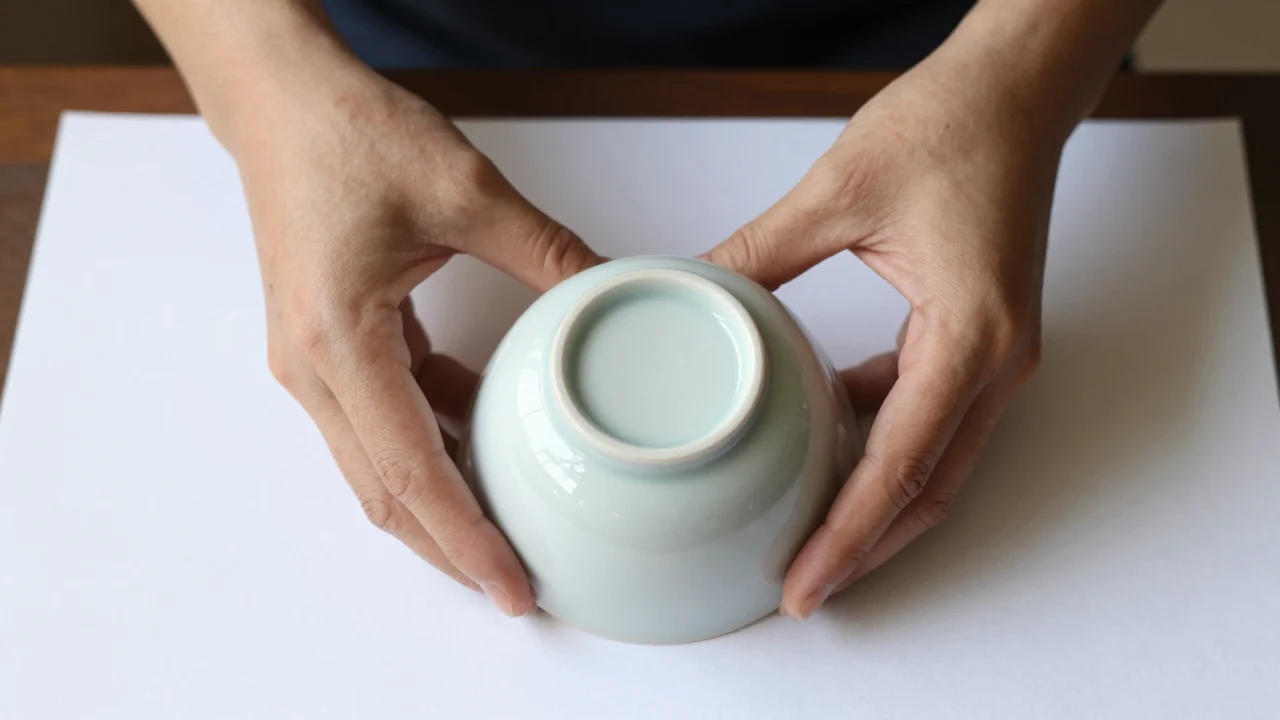
Work through this in order and stop as soon as the answer is good enough for what you actually need.
- Photograph it properly: the whole object in daylight, then the base or underside, any mark, the joints or seams, and every flaw, all against plain paper. Most identifications that fail online fail because of the photographs.
- Identify, then price. Run the photographs through an identification tool to get a name and a period, then search that name in an archive of completed sales and read at least five results for pieces in comparable condition.
- Decide whether the range is enough. If the number only has to satisfy your curiosity or a casual sale, it is. If it has to satisfy an insurer, an executor or a tax authority, book a credentialed appraiser and treat everything above as preparation for that appointment.
Method and limits. This guide describes each tool from its own published documentation, help pages and store listings, including those of the app this site publishes. No tool was tested against a known-correct set of objects for this article, no accuracy figures are claimed for any of them, and figures quoted from a company’s own material are attributed to that company rather than independently verified.
