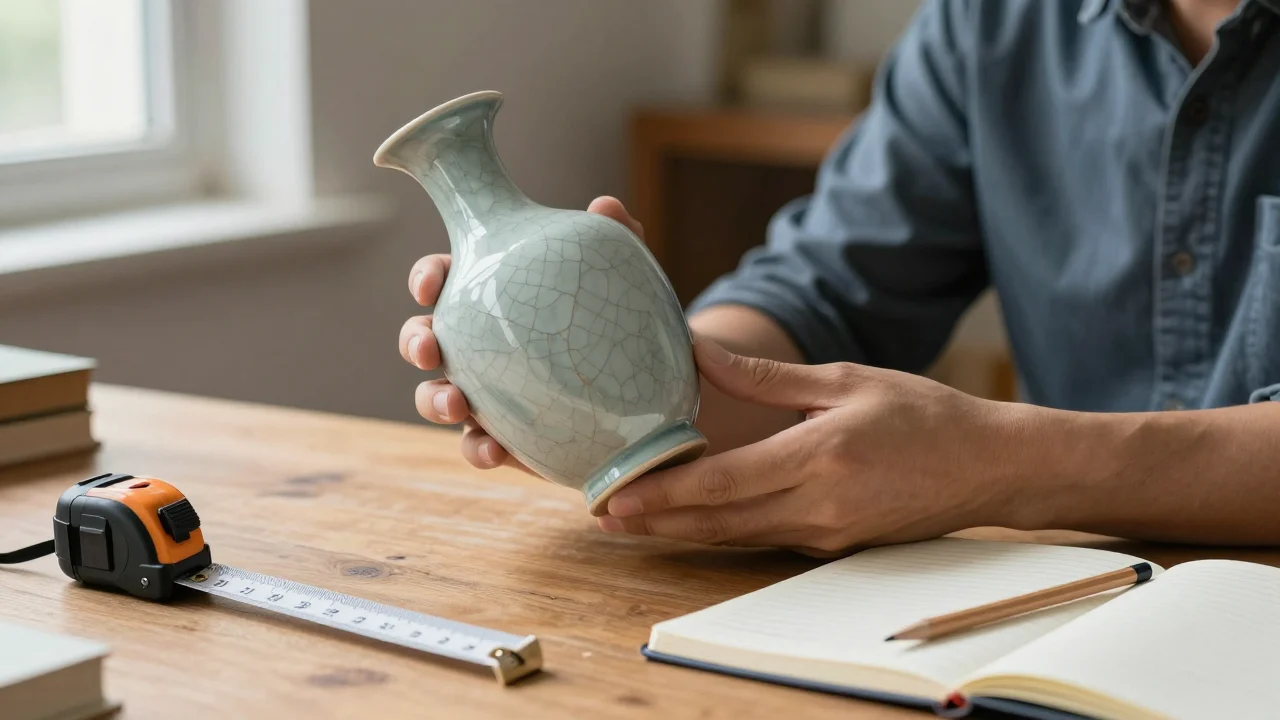
To find what your antique is worth, identify it, grade its condition, match it to recent sold prices of close comparables, then pick the value you need.
This guide turns that order into a worksheet you can follow at home. It draws on the Smithsonian American Art Museum’s research guides, IRS guidance on valuation, an insurer’s guide to appraisals and a public auction results database, all read on 26 September 2026. No object was valued and no app or service was tested for it.
Why identification comes before price
A price only means something once you know exactly what the object is, because two pieces that look alike can differ in maker, material and date. The Smithsonian American Art Museum’s guide How Much Is Your Object Worth? opens with the warning that “It is hard to establish fixed values for antiques, artworks, and other collectible items”, and explains that “The amount asked or offered is determined by many factors, including the condition of the object, personal interests of both the seller and the purchaser, and trends in the market.”
Start with what you can check yourself: marks, labels and signatures, the material, how the piece was made, and its measurements. Read marks carefully. The museum’s page on signatures, monograms and markings cautions: “Be aware that not all names found on an object belong to the artist. For example, previous owners may have written their names on the back of an object.” Our guide to antique marks and signatures shows how to match a mark to a maker and a date range.
Family history is evidence too. The museum’s first steps guide asks “How long has the work belonged to you or your family? Check family records and interview relatives who might know something about the artwork.” Write down what you learn, with where it came from. If you only want a quick sense of whether a piece deserves this much effort, our five signs that an antique is worth money are a faster first filter.
Grade condition and originality honestly
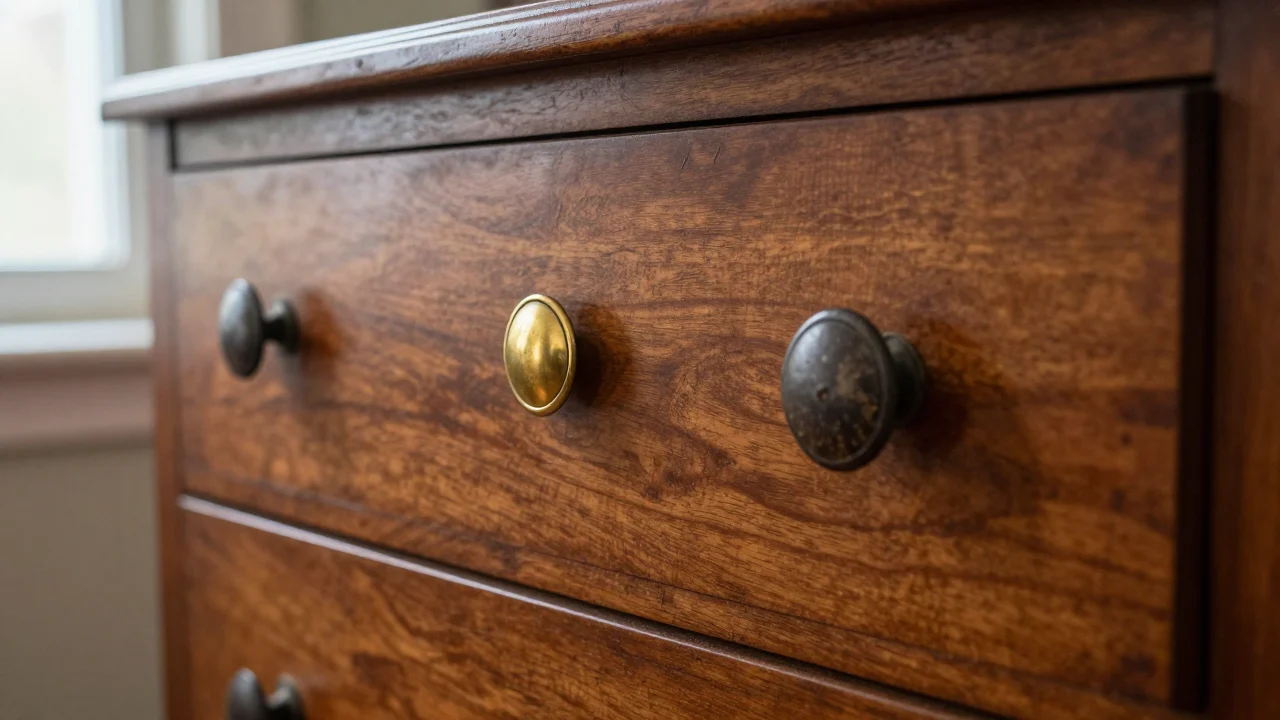
Condition and originality move value as much as identity does, so record them before you compare prices. The IRS states in Publication 561 that “The physical condition and extent of restoration are both relevant in determining the valuation of art and antiques.” Its own example is an antique in damaged condition and lacking its original brasses, which it says “may be worth much less than a similar piece in excellent condition”.
Note chips, cracks, losses, replaced parts, refinishing and repairs, and photograph each one. Do this before you clean, polish or repair anything, because the extent of restoration is part of what you are trying to value; our guide to restoration versus conservation explains why that choice is hard to reverse. When you compare prices in the next step, compare your piece only with examples in similar condition.
Look up sold prices, not asking prices
The most useful evidence of value is what similar pieces actually sold for recently, not what sellers are asking. The IRS puts it this way: “The sales prices of properties similar to the donated property are often important in determining the FMV”, and the weight given to each sale depends on how similar the item sold was and when it sold. It also warns that price guides and dealers’ lists “are not always reliable indicators of FMV and should be supported by other evidence; for example, a dealer may sell an item for much less than is shown on a price list, particularly after the item has remained unsold for a long time”.
The Smithsonian guide gives the same first step for owners: “First, consult price guides to determine current sale and auction prices.” Auction archives make those results searchable online. LiveAuctioneers, an online auction marketplace, describes its auction price results database as “a free research tool for those who want to buy or sell”, and says “Auction results are updated daily with new hammer prices so you can always access recently sold to historical results dating back to 1999.” Search by maker, pattern or form, keep only close matches in similar condition, and note the date of each sale.
Read an auction result for what it is. A hammer price is not what the buyer paid: the buyer’s premium is “a charge in addition to the hammer price”, and “The winning bidder is required to pay both the hammer price and the percentage of that price called for by the buyer’s premium.” Nor is it what the seller received, because the auction house also charges the seller a commission. Record which figure you are looking at, and treat an unsold lot or an asking price as a hope, not a result.
A four-step value worksheet
The table below turns the steps into a worksheet. Work through each row for your object, and keep the notes: they are what an appraiser or buyer will ask for later.
Step
What to record
Where to look
What can mislead
1. Identify
Marks, maker, material, measurements, family history
The object itself, mark references, family records
A name on the object that belonged to a previous owner
2. Grade condition
Damage, repairs, replaced parts, refinishing
Close photos in daylight
Comparing with examples in better condition
3. Find sold prices
Three or more close matches, each with price, date and venue
Auction price archives and completed sales
Asking prices and dealer price lists
4. Pick the value
Whether you need a selling price or an insurance figure
Your insurer, executor or buyer
Treating a replacement value as a selling price
Decide which value you need
The number you end up with depends on the question you are answering, because a selling price and an insurance figure are different values. The IRS defines fair market value as “the price that property would sell for on the open market”, agreed between a willing buyer and a willing seller who both know the relevant facts. The insurer Chubb’s collector’s guide to appraisals explains that “Replacement Value is most often used for insurance on fine arts and collectibles”, and that because an item “would need to be replaced in a retail setting instead of in a secondary market such as an auction”, “replacement value is higher than fair market value”. The IRS adds that “Sentimental personal value has no effect on FMV.”
So a range built from sold comparables answers “what could I sell it for?”, while an insurer will usually want a replacement figure from an appraisal it accepts. Ask whoever will rely on the number which kind of value they need before you pay for one.
When an appraiser is worth paying for
Pay for an appraisal when someone else will rely on the number, when the object is rare or hard to compare, or when authenticity is in doubt. The Smithsonian guide explains that “Appraisers are trained specialists who work for a fee. They evaluate your piece and give you a written statement of its value”, and advises: “Always seek an appraiser with an expertise in the type of artwork you own.” Chubb notes that “There is no government regulation of appraisers”, so choose one through a professional association’s directory and ask for a written fee quote. In the United States, the IRS requires that “art and collectibles for which you claim a deduction of more than $5,000 must be supported by a qualified appraisal and a Form 8283”. Our comparison of online and in-person appraisal covers published fees and turnaround, and our guide to how appraisers determine antique value shows what a written report contains.
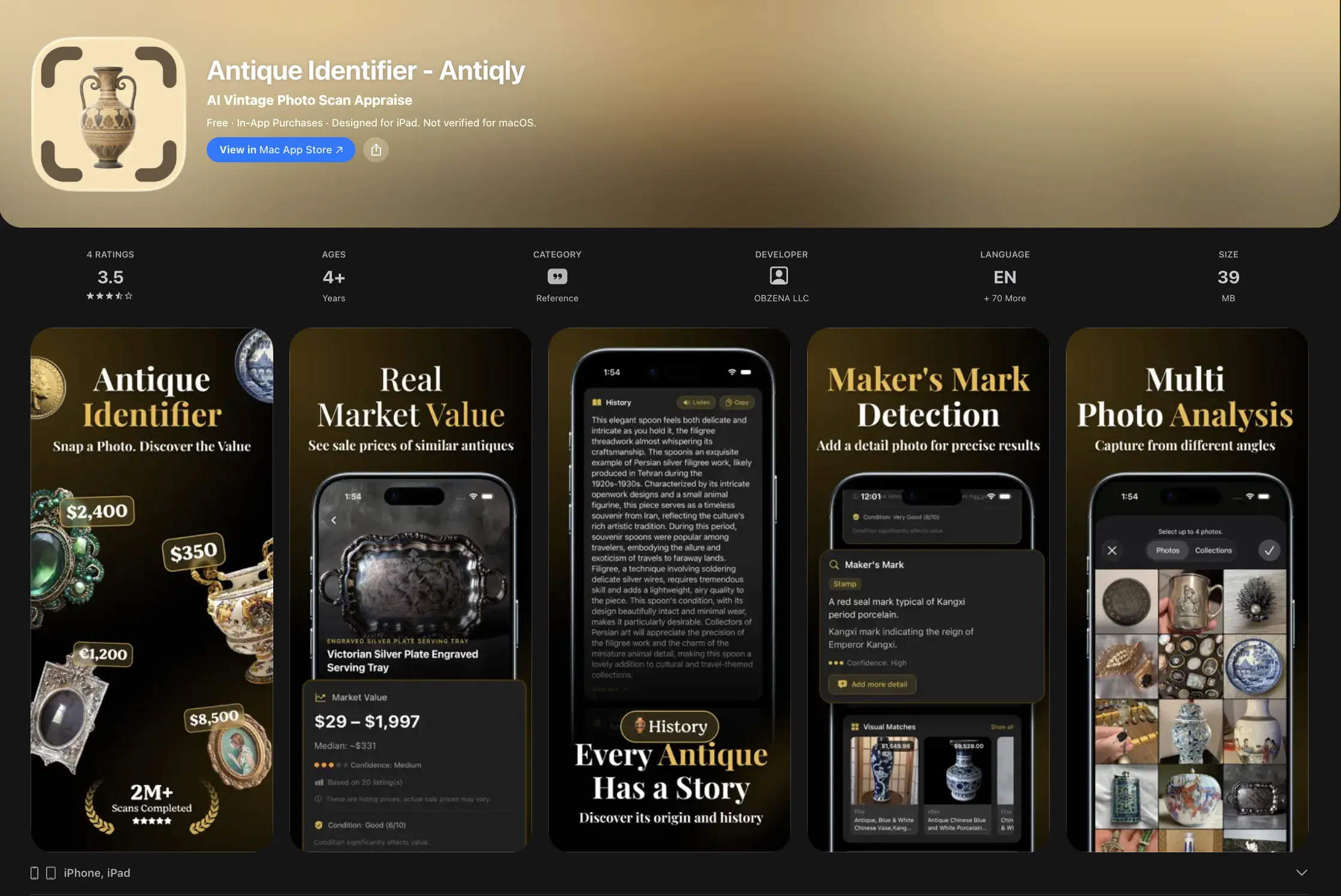
A photo identification app can speed up the first step. This site publishes one, Antique Identifier - Antiqly, which runs on iPhone and Android and is free to download with in-app purchases on the App Store and on Google Play, with no sign-up needed. We did not test it against objects of known value for this article, so treat its answer as a lead to check against sold prices. Our article on whether a free antique valuation app actually works explains what such apps can and cannot tell you.
What to do with your antique now
Work through these three steps, and stop when the answer is good enough for what you need.
Pin down what it is. Photograph the whole piece and every mark in daylight, measure it, and write down its condition and any family history.
Build a sold-price range. Find at least three recent sales of close matches in similar condition, and note whether each figure is a hammer price or includes the buyer’s premium.
Match the value to the purpose. Use that range for a sale decision; if an insurer, estate or tax return will rely on the figure, book a specialist appraiser in your object’s category.
Method and limits. This article draws on the Smithsonian American Art Museum’s research guides, IRS Publication 561, Chubb’s collector’s guide to appraisals, the LiveAuctioneers price results page, a reference entry on buyer’s premiums and the two app store listings linked above, all read on 26 September 2026. No object was valued and no app, archive or appraisal service was tested; tax rules described are United States rules, and any range you build from past sales is an estimate, not an offer.
Antique Identifier – Antiqly app is one of the best apps for instantly identifying antiques. Take a photo, and if your antique has a stamp on it, the app will automatically recognize it and analyze it along with the stamp. Analyses that include stamps are much more likely to accurately estimate the antique’s value. Antiqly first identifies the antique you’ve photographed using reverse engineering to determine what it is. It then runs a query on its own database using the stamps on the item, searches platforms like eBay for similar products, and combines the prices it finds to provide you with the most accurate price. There’s serious technology behind it.
ED
Antiqly Editorial
Published by OBZENA LLC · April 18, 2026
To see the kind of answer it produces before installing it, the free web appraisal runs the same idea from a single photograph.
What Is Antique Identifier?
Antique Identifier is a mobile app that lets you identify antiques from a photo, analyze similar items on the market, and estimate their real-world value using visual matching and historical data. Unlike flipping through a printed Kovel’s price guide, the app delivers instant results the moment you point your camera at an object.
Simply take a photo — the app does the rest.
No guesswork. No outdated price guides. No complicated research.
Snap a photo and instantly identify antiques, vintage items, collectibles, ceramics, art objects, coins, and more. The AI analyzes patterns, materials, hallmarks, and design details to provide accurate identification — the same kind of visual detective work that experts at institutions like the Metropolitan Museum of Art apply to decorative arts attribution.
💰 Discover Estimated Market Value
Learn the price range of your item based on:
Similar antiques sold online
Market listings
Condition comparisons
Perfect for sellers, buyers, collectors, and insurance purposes. For deeper auction history, resources like WorthPoint archive millions of sold prices that complement the app’s real-time estimates.
📚 Learn the History Behind Every Item
Each object tells a story. Antique Identifier provides historical context including:
Origin and cultural background
Estimated time period
Maker or style (when available)
This turns identification into real understanding — not just a label. The Smithsonian Institution has long demonstrated how provenance and cultural context dramatically affect an object’s historical and monetary significance.
🔗 Compare Similar Antiques Visually
See real visual matches from the market and auctions. Compare pricing, condition, and rarity to understand how your item fits into today’s antique market. Leading auction houses such as Heritage Auctions rely on exactly this kind of comparative analysis when establishing pre-sale estimates for consigned pieces.
Save identified items into your personal inventory:
Organize your collection
Track estimated values
Keep a secure digital record of your antiques
Ideal for long-term collectors and estate planning.
📄 Export Detailed PDF Reports
Generate professional PDF reports for:
Insurance documentation
Selling listings
Personal records
Clear, structured, and easy to share. When a formal appraisal is needed for high-value items, the International Society of Appraisers can connect you with a credentialed professional whose written opinion satisfies insurance and estate requirements.
Who Is Antique Identifier For?
Collectors who want to understand and manage their collections
Resellers & flippers hunting undervalued items at flea markets and estate sales
Inherited item owners unsure about the value of family antiques
Curious users interested in history, art, and vintage objects
If you’ve ever asked “Is this worth anything?” — this app is for you.
Why Choose Antiqly Antique Identifier?
Unlike generic search tools, Antiqly is built specifically for antiques. It combines AI visual recognition with market comparisons and historical insight — all in one clean, simple interface.
✔ Fast ✔ Accurate ✔ No technical knowledge required
You take the photo. Antiqly delivers clarity.
Premium Features
Unlock advanced tools with a Premium subscription:
Unlimited scans & identifications
Detailed value estimates
In-depth historical insights
Ad-free experience
Subscriptions are available weekly, yearly, or lifetime and can be managed directly through Apple ID.
Frequently Asked Questions
What is the best app to identify antiques?
Antique Identifier Antiqly App is the best app to identify antiques, especially for identifying a wide range of collectibles including ceramics, coins, furniture, art objects, and vintage items — giving you AI-powered identification, estimated market value, and historical context all from a single photo. The app cross-references visual data against real auction and market listings so you always get a current, relevant price range rather than a static figure. It’s free to download on iPhone with no sign-up required.
How accurate is AI antique identification?
AI antique identification has improved dramatically and is highly reliable for common categories such as ceramics, glassware, coins, and furniture styles. Accuracy depends on photo quality and how clearly distinctive features — maker’s marks, hallmarks, or decorative motifs — are visible. For rare or extremely high-value pieces, a certified appraiser from the International Society of Appraisers should be consulted to supplement the AI result.
Can I use the app to value inherited antiques?
Yes. Antique Identifier is particularly useful for people who have inherited items and need a quick, reliable starting point for valuation. Simply photograph each piece and the app returns an estimated price range based on comparable sales data. For estate and probate purposes, you may also want to verify high-value items through auction records on WorthPoint or consult a certified appraiser.
What types of antiques can the app identify?
The app identifies a broad spectrum of antiques and collectibles, including pottery and porcelain, silverware, vintage jewelry, coins and medals, oil paintings, furniture, clocks, and decorative objects from cultures worldwide. The AI draws on visual patterns, stylistic details, and period-specific design language — similar to the cataloguing methodology used by major collections at the Victoria and Albert Museum.
Is Antique Identifier Antiqly free to use?
Antique Identifier – Antiqly is available for free download from the Apple App Store and requires no registration. Download it, quickly scan all the antiques in your home, and add them to your collection—so the value of your antiques is always at your fingertips. The items in your collection are checked periodically in the background, and if the value of your antiques has increased, the prices in your collection are automatically updated. This way, you can see if the value of the same item has increased without having to scan it again.
How do antique apps compare to professional appraisals?
AI-powered apps like Antique Identifier Antiqly are excellent for fast, everyday identification and ballpark valuations — ideal at flea markets, estate sales, or when deciding whether to research an item further. Professional appraisals conducted by members of the Appraisers Association of America provide legally defensible written opinions required for insurance, donation tax deductions, or high-stakes sales. Think of the app as your first-line research tool and the appraiser as your final authority for significant items.
Start Identifying Antiques Today
Antique values change. Opportunities disappear fast. Don’t leave money — or history — on the table.
Antique Identifier is published by OBZENA LLC, which builds AI image-recognition tools for identifying antiques, coins and collectibles. Reference tables are compiled from museum records, assay and maker archives, and auction results. We do not offer appraisals.
Keep antique furniture with its original finish as it is; restore only a piece that is structurally failing, already refinished or missing parts.
Restore or preserve: how to decide
Decide by asking three questions: does the original surface survive, is the piece structurally sound, and is anything missing? Those answers settle most cases before taste enters into it. A chest, chair or table with its first finish intact and joints that hold belongs in the preserve column even if it looks tired, while a piece that is wobbling apart, was stripped decades ago or has lost its feet, pulls or a leaf is a candidate for work. The Canadian Conservation Institute (CCI) describes the argument fairly: one side holds that furniture should be functional and presentable, which “has often meant stripping and refinishing”, the other that original finishes, stains and paint “often reveal information about the times in which the furniture was crafted”. Its own conclusion is that “Techniques are now available that allow old finishes to be refurbished, thus preserving historical accuracy while restoring an attractive appearance” (CCI, basic care of furniture and objects made of wood). That middle path, keeping the original surface and refurbishing rather than replacing it, is what most owners should be aiming at.
Furniture is one case of a wider question. Our guide to restoration versus conservation across categories works through silver, ceramics and textiles with the same logic and includes a situation-by-situation table.
What original condition and each level of work mean
Original condition means the piece still carries its first finish, its patina, its hardware and its construction, not that it looks new. Collectors use the phrase to cover:
Original finish: the surface treatment applied when the piece was made, even if worn, crazed or alligatored
Patina: the natural darkening and oxidation of wood and metal over years of handling and light
Period repairs: old fixes that are now part of the object’s history
Construction elements: original hardware, joints, backboards and secondary woods
Honest wear: the rubbed edges, worn runners and darkened handle areas that use leaves behind
A worn first finish is still original; a bright new one is not. Telling a genuinely old surface from a convincingly aged new one is a skill in itself, covered in our guide to distinguishing new wood from old patina.
The words professionals use for the work itself have fixed meanings, published by the American Institute for Conservation (AIC) in its conservation terminology:
Term
AIC definition
What it looks like on furniture
Preservation
“The protection of cultural property through activities that minimize chemical and physical deterioration and damage and that prevent loss of informational content”
Stable humidity, no direct sun, dusting, coasters; nothing on the piece itself changes
Stabilization
“Treatment procedures intended to maintain the integrity of cultural property and to minimize deterioration”
Regluing a loose joint, consolidating flaking paint, re-laying lifted veneer
Restoration
“Treatment procedures intended to return cultural property to a known or assumed state, often through the addition of non-original material”
Replacing a missing pull or finial, filling a loss, toning a repair to match
Refinishing
Not a conservation term: the old surface is removed and a new one applied
Stripping and recoating; the original finish is gone for good
Conservation, in the AIC’s usage, is the profession that covers all of the first three; refinishing sits outside it because it destroys the evidence conservators work to keep.
When to preserve
Preserve when the original finish is intact, even if it is worn or alligatored, because that surface is the one thing no restorer can give back. The CCI’s advice to owners is blunt: “Stripping wooden furniture is not recommended” and “Once an original finish is removed, it cannot be put back” (CCI, basic care of furniture). Its conservation note on finishes adds that “Original furniture finishes have historical, aesthetic and financial value and, as such, should be maintained” (CCI Notes 7/2, Care of Furniture Finishes). Beyond the finish, these features argue for leaving a piece alone:
Documented provenance: a known maker, owner or house history that a refinished surface would call into question
Rare or important pieces: anything a museum or a specialist dealer would recognise
Early pieces with original painted or varnished surfaces: the older the surface, the fewer survive
Signed, labelled or stamped pieces: a mark ties the object to a documented workshop
Original upholstery: period fabric, stuffing and webbing, even when worn
Untouched condition: never previously restored or refinished
Patina is the sum of oxidation, handling and light over the years: colour depth, surface texture, oxidised hardware, wax build-up and wear at edges, drawer runners and handles. It cannot be manufactured convincingly, and buyers who know the field look for it precisely because it is evidence of age. Remove it and you remove the evidence.
When restoration makes sense
Restore when a piece can no longer do its job, or when it has already lost what preservation would have protected. Structural failure, missing essential parts, severe fire, water or insect damage, earlier amateur work that is itself harming the piece, and surfaces that were stripped long ago all qualify, as do later “improvements” such as Victorian alterations to an earlier piece. Family furniture that has to survive daily use is a legitimate reason too, provided the work is done conservatively. The AIC’s guideline for its members runs the other way as well: “When nonintervention best serves to promote the preservation of the cultural property, it may be appropriate to recommend that no treatment be performed” (AIC Code of Ethics and Guidelines for Practice). A good conservator will tell you when the answer is to do nothing.
Work that conservators regard as appropriate when it is needed:
Structural stabilization: regluing joints with reversible adhesives and re-setting, not screwing, loose parts
Replacement of missing parts: in matching timber and period-appropriate form, and recorded as replacements
Removal of later coatings over an original finish: tested first and carried out by a conservator, never by stripping
Conservation cleaning: removing dirt and old wax while keeping the patina
Pest treatment: stopping active deterioration
The rule that ties these together is that good restoration is documented, detectable on close inspection and reversible. The AIC asks that any compensation for loss “should be reversible and should not falsely modify the known aesthetic, conceptual, and physical characteristics of the cultural property”, above all by not removing or obscuring original material. If a piece has already been stripped and refinished badly, professional work can only improve it; that is the one case where restoration carries no preservation cost.
What a furniture conservator actually does
A conservator examines first, treats second, and chooses methods whose effects on the piece can be undone later or at least recognised. Cleaning starts by identifying the coating: the CCI’s note on finishes states that “Before cleaning a coated wooden surface, it is necessary to determine what type of coating it is, whether or not it is stable, if it has been modified or refinished and what the effect of the cleaning technique will be” (CCI Notes 7/2). Dry methods, a soft brush and a vacuum, come before any solvent; old wax build-up is reduced with mild solvents rather than stripped; and the same note observes that for a finish in good condition, effective cleaning “can often be as simple as damp dusting followed by buffing, complemented with careful, infrequent waxing”.
Structural repairs follow the same logic. Hot hide glue is the traditional adhesive because it can be softened again with heat and moisture, so a joint can be taken apart by the next person who needs to; loose joints are cleaned and re-glued rather than screwed or nailed; lifted veneer is re-laid; and cracks are filled slightly below the surface with a material a later conservator can recognise as fill. Epoxies and polyurethane glues are avoided in this kind of work because they cannot be removed without taking wood with them. Finish work builds on what survives, through French polishing over a thin shellac surface, toning a repair to its surroundings, or re-laying gilding over original gesso, and a complete refinish is a last resort for a surface that is already gone.
Behind these choices is a written obligation. The AIC requires its members to weigh “the advantages of the materials and methods chosen” against “their potential adverse effects on future examination, scientific investigation, treatment, and function” (AIC Code of Ethics), which is why a conservator will decline a shortcut a refinisher would take.
How to choose a conservator or restorer
Choose someone who will examine the piece, put a proposal in writing and let you see the work, and be suspicious of anyone who will not. The AIC’s guidance for owners says to “Be wary of those who propose to perform a quick and inexpensive restoration job, are reluctant to discuss in detail the materials and methods to be used, or will not permit you to see work in progress”, and that before treatment begins you should receive “a written preliminary examination report with a description of the proposed treatment, expected results, and estimated cost” (AIC, Hiring a conservation professional). When the job is finished, “The conservator should provide a treatment report when treatment is completed”, listing the materials and procedures used and, where appropriate, before-and-after photographs. Keep that report with the piece.
The AIC’s Find a Professional directory lists members whose training and experience have been reviewed by their peers and can be filtered to furniture and wooden artifacts; conservation bodies in the United Kingdom, Canada and elsewhere keep comparable registers. Beyond membership, look for formal training or a long apprenticeship, museum or historic-house experience, a specialisation in your period, a portfolio of comparable work, references you can call, and professional liability insurance. Treat anyone who proposes stripping as a first step as a warning sign.
Questions worth asking before you hand over a valuable piece:
What is your assessment of its current condition?
What work do you recommend, and what would happen if we did nothing?
What materials and techniques will you use, and can the work be reversed?
How will this affect the piece’s value and its history?
Can you show me documented examples of similar work?
What is your timeline and written estimate, and are examination fees deducted from it?
How will you document the work, and will I receive the photographs?
Are you insured while the piece is in your care?
What you can safely do yourself
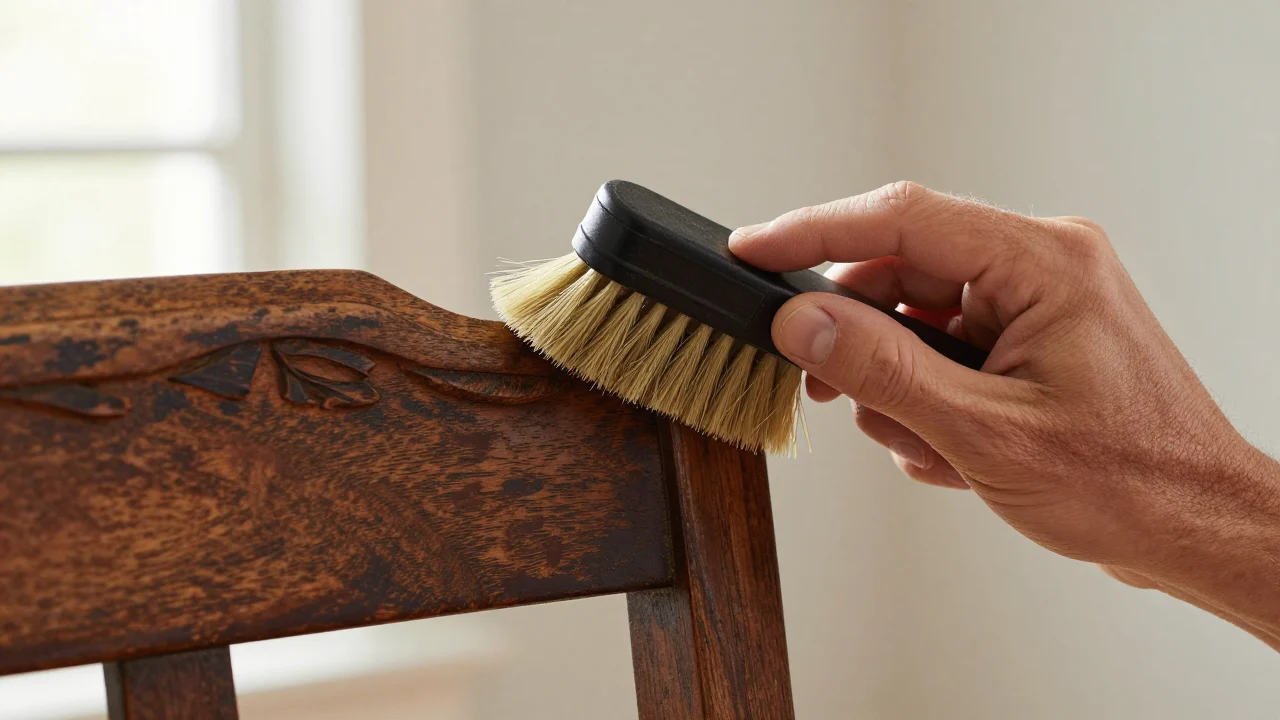
Dry dusting with a natural-bristle brush is the one cleaning step every owner can do; anything wetter depends on the finish.
Dust it, wax it sparingly, keep its surroundings stable and stop there; anything that changes the surface belongs with a professional. The CCI’s home-care advice is specific (CCI, basic care of furniture). Dust with a slightly dampened cloth, except that “a lot of furniture made before World War I is sensitive to water and should be dusted only with a dry cloth”, then buff with a dry, soft one. Micro-crystalline paste wax can be used to raise the gloss on surfaces that are handled, but “Do this only once a year and only to the surfaces that are handled”, keeping it away from metal fittings. Skip the oils and sprays altogether: “contrary to popular belief, wood does not need to be “fed””, and polishes leave residues that build up and react with the finish. Leave brass and iron alone as well, because “Museums and historic houses no longer polish metal hardware but simply buff it with a clean, dry cotton cloth”. If you find fresh sawdust under a piece, “isolate it and wrap it in plastic; then consult a conservator for advice”. Beyond that, safe maintenance means tightening a loose screw gently, using coasters and pads, keeping pieces out of direct sun and away from radiators and vents, and conditioning old leather with a product made for it.
What never to attempt yourself, because each of these is permanent:
Stripping: removes the finish and the patina together, and often raises or scorches the wood
Sanding, by hand or machine: destroys tool marks, edges and surface character
Refinishing or staining: replaces the original surface and changes the colour for good
Regluing with modern adhesives: epoxy and polyurethane glue cannot be undone
Structural repairs with screws, nails or brackets: weaken joints and leave holes
Replacing hardware or glass: new pieces are obvious to anyone who knows the form, and the originals are usually lost
Polishing brass bright or stripping painted furniture: removes the oxidation and the decoration that date the piece
Polyurethane or other modern film finishes: inappropriate and very difficult to remove
If you are unsure, do nothing. You can always have a piece restored later; you can never have it unstripped or unsanded.
Cost, insurance and what to expect
Expect conservation to be priced by the hour of skilled labour, and expect rarely to recover the cost in resale, so the decision should rest on use and preservation rather than on profit. Cleaning and stabilization are usually the smallest jobs, structural work sits in the middle, and a full restoration or museum-grade treatment of an important piece is the largest, but the only figure that matters is the written estimate for your piece, which the AIC says should accompany the examination report (AIC, Hiring a conservation professional). Ask whether there are separate charges for the preliminary examination and whether they are deducted from a subsequent contract, and whether the studio has a waiting list. We do not quote price ranges here because they vary by region, by conservator and by piece, and a range that is not tied to a specific object misleads more than it helps.
Insurance runs alongside. Have the piece appraised before work starts, so that both its condition and its value are on record, and again afterwards if the work was substantial; our guide to how appraisers determine antique value explains what a written appraisal contains. Tell your insurer before major work, since some policies require pre-approval, confirm that the conservator’s own insurance covers the piece while it is in the studio, and keep every receipt with the treatment report.
Notes by furniture type and period
The same rules apply to every form, but each type of furniture has one detail that decides more than the rest. On case pieces, chests, desks and secretaries, that detail is the interior: leave drawer insides, backboards and the underside untouched, because their oxidation, chalk inscriptions and secondary woods are what confirm age and origin, and our guide to dating furniture by its nails, screws and hinges shows how much a single drawer bottom can tell you. Buff original brasses, never polish or replace them, and if worn drawer runners must be replaced for use, keep the originals with the piece. On seating, the detail is what lies under the cover: save original stuffing and webbing, keep an original fabric in place beneath any new upholstery, reinforce frames from the inside so the repair does not show, and replace rush or cane seats only when they are actually broken. On tables it is the top: refinishing a tired top is the most tempting mistake, a light French polish or a clean and wax usually revives it, original leaves should be kept even if warped, and mechanisms should be lubricated rather than replaced.
Period shifts the balance rather than the rules, and our period guide from 1600 to 1940 will place a piece before you decide. For early pieces with original paint or varnish, stabilize and never remove: tool marks, decoration and proportions are the evidence of age, and the older the surface, the stronger the case for doing nothing. Victorian furniture was made in great quantity, elaborate finishes sometimes do need professional attention, reupholstery for daily use is routine and professional re-gilding is accepted, so more intervention is tolerated. Arts and Crafts and Mission pieces have their own rule: fumed oak finishes are never stripped, branded or paper marks and visible through-tenons are preserved, and hammered hardware is cleaned gently but never polished bright, because the movement’s whole point was honest construction and materials.
Documenting and disclosing the work
Record the condition before, during and after any treatment, and tell the next owner what was done. The AIC’s own standard for its members is “accurate, complete, and permanent records of examination, sampling, scientific investigation, and treatment”, written and pictorial (AIC Code of Ethics), and an owner’s file should aim at the same thing:
Before photographs: every side, the underside, the interior and every flaw, in daylight
Process photographs: each stage, especially anything that is removed or replaced
After photographs: the finished piece from the same angles as before
Written report: materials, techniques and the reason for each decision, from the conservator
Receipts and appraisals: for all professional work, kept together
Material samples: offcuts of original fabric, finish or timber that were removed
When you sell, describe the piece as conserved, restored or refinished as accurately as the record allows, show the work in your photographs and condition report, and note where a repair affects attribution. A buyer who later discovers undisclosed work has every reason to dispute the sale, and a clear record protects the seller as much as the buyer. A well-documented history reassures future owners rather than deterring them.
What to do with your piece now
Work through this in order and stop as soon as you know which column your piece is in.
Look before you touch. Photograph the whole piece in daylight, then the underside, the back, the inside of the drawers, the joints, the hardware and every flaw. Place it by style and period with our period guide; if you want a quick first opinion on what it is, the Antique Identifier - Antiqly app, which this site publishes, is free to download with in-app purchases on iPhone and iPad and on Android, needs no sign-up, and gives you a name and period to check against the guide.
Sort it. Original finish intact and joints sound: preserve it, which means dusting, an occasional wax and a stable room, and nothing more. Structurally failing, missing parts or already refinished: get a written examination report and proposal from a conservator before agreeing to anything, and ask what would happen if you did nothing.
Protect the value before the work. If the piece may be important, or is going to be sold or insured, have it appraised first and keep the appraisal with the treatment report, so that whoever owns it next can see exactly what was original and what was done.
Method and limits. This guide is a synthesis of the published guidance of the American Institute for Conservation and the Canadian Conservation Institute together with standard trade practice. No piece was treated, tested or appraised for this article, no restorer or product was evaluated, and no cost or value figures are given because none could be tied to a documented source. The Antiqly app named in step 1 is published by this site.
Online antique valuation means combining three kinds of tool: a photo identification app, a database of completed sales and a museum reference collection.
How online antique valuation works
Every online valuation is a comparison: the tool matches your object against records of objects like it and reports what those records say. That is why the three tool types below do different jobs. A photo identification app narrows what the object is, a database of completed sales shows what comparable pieces changed hands for, and a museum or mark reference confirms the maker, place and period. None of them examines the object in your hands, so the output is a starting range, not a verdict.
Antique Identifier publishes this guide and also makes one of the tools described in it, the Antiqly app, so this is not an independent ranking of competing products. Each tool here is described from its own published documentation and store listing, no tool was scored against a known-correct set of objects, and every figure taken from a company’s own material is attributed to that company rather than independently verified.
A photo tool answers “what is this?” before anything can answer “what is it worth?”, and two are worth starting with.
Antiqly, the app published by this site
Antiqly is our own app, which is why it appears here with a disclosure rather than a score. Its store listings describe it as free to download with in-app purchases, on iPhone and iPad and on Android. You photograph a piece and it returns a suggested identification and an estimated market value. The limits set out later in this guide apply to it exactly as they apply to every other photo tool: it reads pictures, not objects.
Google Lens
Google Lens is general visual search rather than an antiques tool. Google’s own product page describes it as a way to “Identify what you see” using your camera or an existing image, which makes it useful for matching a china pattern, a textile design or a printed mark against pictures published elsewhere. What it returns is visually similar images, not completed sales, so it tells you what a piece resembles and leaves the value question open. Our guide to Google Lens for antiques goes through where it works and where it misleads.
Databases that show what comparable pieces sold
This is the step that produces a number, and the databases differ mainly in how much history they hold and what they charge for it.
WorthPoint is the largest. Its own help pages describe the Price Guide as delivering sales information on more than 587 million items, built from 15 years of historical pricing data aggregated from the world’s leading auction houses and online marketplaces. Those figures come from WorthPoint’s own help article, which carries a 2021 date, so read them as the company’s description of its own database rather than an audited count. Access is a paid subscription, and WorthPoint states in its trial help page that a trial gives seven (7) free lookups to use within seven (7) days, whichever limit you reach first. Our WorthPoint review looks at whether that subscription earns its keep.
Marketplace and auction archives are the free counterpart. Completed listings on general marketplaces cover everyday objects in the greatest volume, while auction aggregators such as LiveAuctioneers and Invaluable carry hammer results from houses that never appear on those marketplaces. Our roundup of free antique price guide resources collects the no-cost options in one place.
Whichever you use, the discipline matters more than the source: read several comparable results rather than one, match condition before you match shape, and work from completed sales rather than asking prices. An asking price records what a seller hoped for.
Where the number comes from
What it holds
Access
WorthPoint Price Guide
Sales information on more than 587 million items, by the company’s own account
Paid subscription, trial limited to seven lookups in seven days
Completed marketplace listings
Everyday objects in volume, recent sales only
Free
Auction aggregators
Hammer results from auction houses worldwide
Free to search, registration varies
Museum collections
Documented objects with maker, place and date, and no prices at all
Free
Museum and mark references that date a piece
Reference collections turn a guess into an attribution, because they show documented objects whose maker, place and date are already established.
The Victoria and Albert Museum invites you to Search more than 1.3 million objects in its online collection, which is the fastest way to put a ceramic, a textile or a piece of metalwork beside a documented example. The Metropolitan Museum of Art publishes its open-access collection data through a public API and states that “we do not require API users to register or obtain an API key to use the service”, which is why Met records surface inside so many third-party lookup tools.
For maker’s marks, check the scope of a reference before you trust it. The Marks Project is free and academic, but it describes itself as a “Dictionary of American Ceramics, 1945 onward”, so it will tell you nothing about a Victorian English backstamp. A mark database that does not cover your object’s country and period will not announce the gap; it will simply return nothing, and an empty result is not evidence about the piece itself. For furniture, our guide to antique furniture valuation online explains which construction details carry more weight than a label.
Where an online valuation falls short
Every tool above builds its answer from photographs and past sales, and four things routinely break that answer.
Condition is the first and the largest. Photographs hide chips, hairline cracks, replaced hardware, overpainting and old repairs, and for most ordinary objects condition moves the number further than attribution does. The second is thin comparables: rare, regional or unusually large pieces may have no close match in any archive, and a range assembled from three unlike objects is not a range. The third is mislabelled listings, because reproductions are sold under period names every day, which means an archive of completed sales can quietly contain pieces that were never what they were called. The fourth is the outlier, since one exceptional result is an anecdote rather than a market.
There is also a distinction no app can close. A valuation is an opinion about what a piece might fetch. An appraisal is a signed document from a credentialed professional, written to a standard that institutions accept. In the United States the IRS states that “Many, but not all, charitable contributions require a qualified appraisal completed by a qualified appraiser”. An online estimate does not meet that standard, and neither does a screenshot of a completed listing. When you need the document, the American Society of Appraisers keeps a directory of designated appraisers and says it has thousands of designated appraisal professionals throughout the world. Our guide to how professional appraisers determine value explains which of the three value figures a report actually commits to, and our guide to AI appraisal accuracy covers how much weight an automated estimate can carry.
Frequently Asked Questions
Which app should I use to identify an antique from a photo?
Any of the photo identification tools will give you a name and a rough period in seconds, and that is the right thing to want from them. Antiqly, the app this site publishes, is free to download with in-app purchases on iPhone and Android and asks for no sign-up before the first scan. Whichever tool you pick, the identification it returns is a hypothesis: confirm the maker against a mark reference and the value against completed sales before you act on it.
How accurate are online antique valuations?
They are most reliable for common objects with many recent, well-documented sales, and least reliable for rare, regional or condition-sensitive pieces where few comparables exist. Accuracy also depends on the archive behind the tool: WorthPoint’s own help pages put its Price Guide at more than 587 million items, while a free search reaches far less. Treat any online figure as a range to test rather than a price to quote.
What is the difference between an appraisal and a valuation?
A valuation is an informal estimate of what a piece might sell for, which is what apps, price databases and completed listings produce. An appraisal is a formal, signed document from a credentialed professional, and it is what insurers, executors and tax authorities ask for. The two are not interchangeable: an online estimate will not satisfy the documentation rules the IRS sets out, and a professional appraisal is not something an app can issue.
Can I trust antique prices listed on eBay or other marketplaces?
Work from completed sales, not from asking prices. An active listing shows what a seller hopes to receive and can sit unsold for months, while a completed sale shows what somebody actually paid. Read several completed results for pieces in comparable condition, ignore the single spectacular outlier at either end, and remember that a mislabelled listing sells under the mislabelled name.
How do I identify a maker’s mark?
Photograph the mark in strong, raking daylight against plain white paper, then match it against a reference whose scope actually covers your object. Museum collections such as the V&A online catalogue are the safest starting point for European ceramics, glass and metalwork, because every record there is a documented object. Specialist databases are narrower than their names suggest, so check the period and country a database covers before you conclude that a mark is unrecorded.
Are there free alternatives to a paid price database?
Yes, and for common objects they are usually enough. Completed listings on general marketplaces, free searching on auction aggregators such as LiveAuctioneers and Invaluable, and museum collection catalogues together cover most of what a paid subscription offers for everyday pieces. Our roundup of free antique price guide resources lists them, and our review of ValueMyStuff covers what a paid human opinion adds.
What to do with your piece next
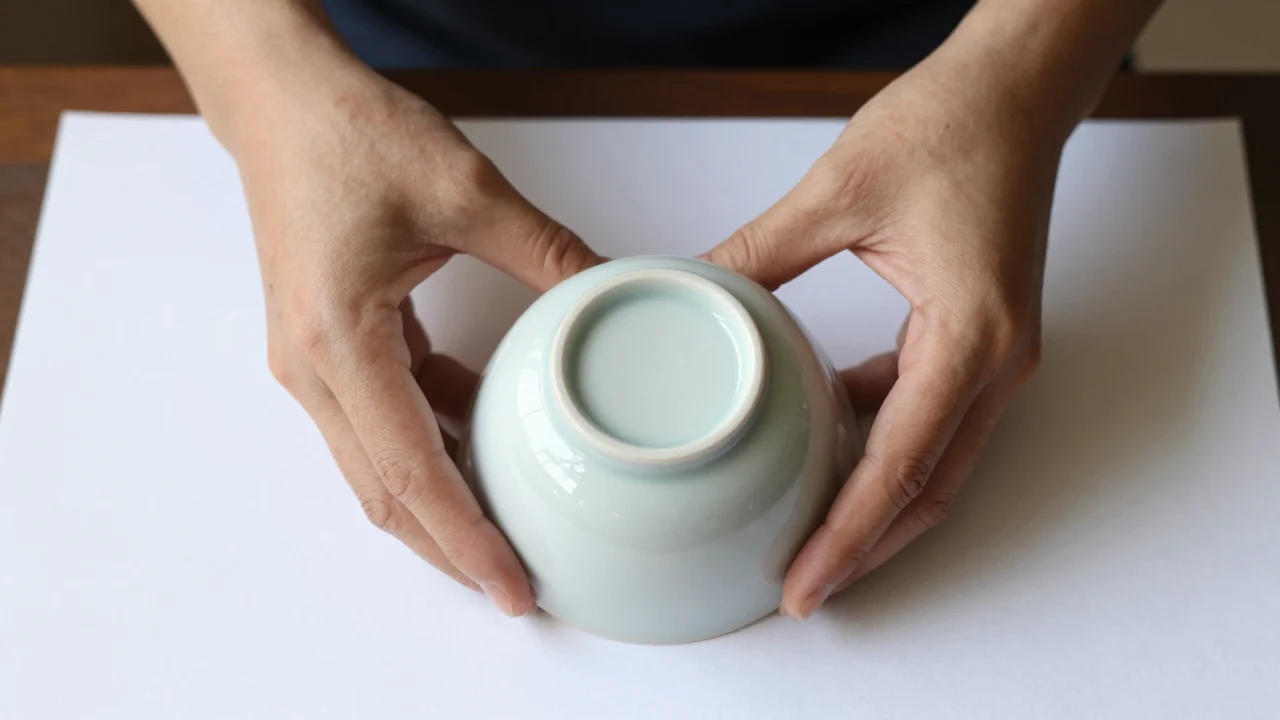
The first step in the closing list: the base held over plain white paper, with the whole foot rim in view.
Work through this in order and stop as soon as the answer is good enough for what you actually need.
Photograph it properly: the whole object in daylight, then the base or underside, any mark, the joints or seams, and every flaw, all against plain paper. Most identifications that fail online fail because of the photographs.
Identify, then price. Run the photographs through an identification tool to get a name and a period, then search that name in an archive of completed sales and read at least five results for pieces in comparable condition.
Decide whether the range is enough. If the number only has to satisfy your curiosity or a casual sale, it is. If it has to satisfy an insurer, an executor or a tax authority, book a credentialed appraiser and treat everything above as preparation for that appointment.
Method and limits. This guide describes each tool from its own published documentation, help pages and store listings, including those of the app this site publishes. No tool was tested against a known-correct set of objects for this article, no accuracy figures are claimed for any of them, and figures quoted from a company’s own material are attributed to that company rather than independently verified.
Turning Antiques into Cash: The Strategic Seller’s Guide
Whether you’ve inherited a collection, are downsizing, or found treasures at estate sales, knowing how to sell antiques effectively can mean the difference between quick cash and maximum value. The antique market offers numerous selling venues, each with distinct advantages and optimal use cases.
Understanding antique valuation is just the beginning. Successful selling requires strategy, timing, and presentation. This comprehensive guide reveals insider techniques for achieving top dollar across all selling platforms.
Pre-Sale Preparation: Setting the Foundation
Professional Appraisal: Your Investment in Profit
For quick AI-based style recognition and valuation, try the Antique Identifier - Antiqly app, free to download on iPhone and Android.
Before selling, understanding what is my antique worth through professional channels:
Successfully selling antiques requires balancing speed, convenience, and profit. While dealers offer quick cash at wholesale prices, auction houses and online platforms can achieve retail values with patience and effort. Understanding your items’ true worth through proper antique identification and appraisal, combined with strategic venue selection and professional presentation, maximizes returns.
Remember that building reputation and expertise pays long-term dividends. Whether selling a single inherited piece or building a business, success comes from honest representation, fair pricing, excellent service, and understanding your market. Take time to research, present items professionally, and choose selling venues that match both your items and your goals. With these strategies, you’ll consistently achieve top dollar while building lasting relationships in the antique community.
The Critical Decision: Restore, Conserve, or Preserve?
Every antique owner faces a crucial decision that can dramatically affect both monetary and historical value: should you restore, conserve, or leave an item in its original condition? Making the wrong choice can destroy 50-90% of an antique’s value instantly. Understanding the differences between restoration and conservation, and knowing when each is appropriate, protects your investment while preserving history. This comprehensive guide reveals professional approaches toantique valuationthrough proper care, helping you make informed decisions that maintain or enhance worth.
Understanding the Key Differences
Restoration: Making Old Look New
Restoration aims to return items to original appearance:
Goals:
Recreate original appearance
Replace missing parts
Refinish surfaces
Restore functionality
Remove all damage signs
When Appropriate:
Family heirlooms for use
Severely damaged pieces
Common items without rarity
Modern collectibles
Personal preference items
Impact on Value:
Can decrease value 30-70%
Removes original patina
Destroys age indicators
May improve usability
Appeals to decorators
Conservation: Stabilizing and Preserving
Conservation maintains authenticity while preventing deterioration:
Goals:
Stabilize current condition
Prevent further damage
Maintain original materials
Document all work
Ensure reversibility
When Appropriate:
Museum-quality pieces
Rare or valuable items
Historical artifacts
Investment pieces
Significant provenance
Impact on Value:
Maintains or increases value
Preserves authenticity
Professional work adds credibility
Documentation important
Preferred by collectors
Preservation: Maintaining As-Is
Sometimes doing nothing is the best choice:
Goals:
Maintain current state
Proper storage only
Minimal intervention
Document condition
Monitor changes
When Appropriate:
Excellent original condition
Desirable patina present
Stable materials
No active deterioration
Market prefers untouched
What Does Furniture Conservation vs Restoration Look Like in Practice?
The clearest way to see the difference is to follow one piece through both workshops. Take a circa 1820 painted pine blanket chest with a cracked lid, a missing bracket foot, flaking original blue paint and a later coat of brown house paint on the front.
Problem
Conservator’s treatment
Restorer’s treatment
Cracked lid
Reversible hide glue, fill kept below the surface, documented
Crack filled, sanded flush, whole lid refinished
Missing bracket foot
New foot in old pine, toned to blend but recorded as a replacement
New foot cut, whole base refinished to match
Flaking original blue paint
Consolidated with a reversible adhesive so no more paint is lost
Loose paint scraped off, surface repainted blue
Later brown overpaint
Solvent tests on a hidden spot, brown removed layer by layer, original blue left untouched
Everything stripped to bare wood or painted over
Records
Before and after photos, materials list, treatment report
Usually none
The overpaint row answers a question many owners ask: can you remove new paint and save the old paint underneath? Yes, but only when the two layers respond differently to a solvent, and only after testing, which is why this job belongs with a trained conservator rather than a stripper and a scraper. Original paint is identified by fine age cracking that runs through the layer, by wear on edges and around handles where hands touched the piece, and by paint sitting inside old shrinkage cracks. Later paint sits on top of those cracks and shows no matching wear. The same reading of surfaces is what separates a period piece from a reproduction, as explained in our guide to telling new wood from old patina. Hardware tells a parallel story: original nails, screws and hinges are evidence a conservator keeps and a restorer often replaces, so learn how hardware dates a piece before anything is removed. For a longer discussion of this decision specifically for furniture, our article on when to restore versus preserve original condition walks through more cases. The Victoria and Albert Museum publishes its own conservation case studies, which show how museum staff approach the same choices.
AIC membership (American Institute for Conservation)
Professional training certificates
Specialization in your item type
Insurance coverage
References available
Red Flags:
No written estimates
Won’t explain process
Guarantees specific values
Rush to start work
No documentation provided
Cost Considerations:
$75-150/hour typical
Minimum fees common
Materials additional
Insurance may cover
Tax deductible if donated
How do you learn about antique restoration without ruining a piece while practicing? Start with reading before tools: the Wikipedia overview of conservation and restoration of cultural property explains the ethics and vocabulary conservators use, and museum conservation departments publish treatment stories that show real decisions being made. Then practice on pieces with no originality premium: flea-market chairs, already-stripped dressers, chipped transfer-printed plates. Community college furniture programs and AIC public workshops teach the reversible techniques described above; formal conservation training is a graduate degree, usually two to three years.
Yes, in most cases restoration lowers what a collector will pay, while conservation holds or raises it. The reason is simple: buyers of antiques pay for original material and honest age, and restoration replaces both with new finish, new parts and a surface that no longer shows its history. The exceptions are pieces that were already stripped, damaged beyond stability, or so common that originality carries no premium. The table below shows how the three approaches usually play out by situation.
Situation
Best approach
Usual effect on resale value
Original finish intact, stable, some wear
Leave as-is, clean only
Holds full value; patina is part of the price
Original finish but loose joints or lifting veneer
Conservation (reversible glue, no refinishing)
Holds value; documented work reassures buyers
Later overpaint hiding original decoration
Professional conservation (test, then remove layer by layer)
Often rises once the original surface is confirmed
Finish already stripped by a previous owner
Sympathetic restoration with a period-appropriate finish
Small gain in saleability; the originality premium is already gone
Common mass-produced piece for daily use
Restoration acceptable
Little change either way; decorators may pay more
Rare, signed or museum-grade example
Conservation only, with a treatment report
Any restoration can cost a large share of the premium
Should you do minor restoration before selling? Usually no, unless the flaw stops the piece from functioning or your buyers are decorators rather than collectors. Tightening a wobbly leg, waxing a dry surface or replacing a missing screw with a period-correct one rarely hurts. Refinishing, repainting, swapping hardware or polishing away patina to make a listing photo look better is where sellers lose money. Auction specialists and museum conservators apply the same principle: every intervention should be documented and, where possible, reversible, which is the standard described by the Smithsonian Museum Conservation Institute. If you are unsure which market your piece belongs to, a dealer’s pricing framework helps you decide whether the collector premium is worth protecting, and these five quick signs tell you whether an originality premium exists at all.
Quick Reference: Restoration Decision Tree
Decision Checklist
✓ Is the item rare or valuable? → Conservation only
✓ Is original finish intact? → Preserve as-is
✓ Will you use it daily? → Consider restoration
✓ Is it signed or documented? → Minimal intervention
✓ Is damage affecting structure? → Professional repair
✓ Is patina desirable? → Clean only
✓ Planning to sell? → Research market preference
✓ Insurance claim? → Document everything
✓ Family heirloom? → Conservative approach
✓ Investment piece? → Professional consultation
What is the value of antique care measured in money? Prevention is the cheapest treatment there is. A humidifier, UV film on a window and acid-free tissue cost a fraction of one conservator’s hourly rate, and they prevent the cracked veneer, faded textiles and tarnish pitting that later require paid work. Care also protects the paperwork side of value: a piece with a stable condition history and dated photographs is easier to insure and easier to sell, whether the figure comes from an online or in-person appraisal or from a professional appraiser rather than an app.
Conclusion: Preserving Value Through Informed Decisions
The choice between restoration and conservation fundamentally affects an antique’s value, authenticity, and future. While restoration might make an item more usable or attractive for daily life, it often destroys the very characteristics that make antiques valuable to collectors and museums. Conservation, though more expensive initially, preserves both monetary and historical value.
Remember that every antique is unique, and decisions should be based on individual circumstances, market preferences, and personal goals. When in doubt, consult professionals and err on the side of conservation. The patina and wear that might tempt you to restore are often exactly what experienced collectors seek. By understanding these principles and applying appropriate care techniques, you protect your investment while preserving irreplaceable pieces of history for future generations.
A mark narrows an antique’s maker, country and date, but on its own it is not proof of authenticity: marks are the easiest part of any piece to fake.
This guide is published by Antique Identifier - Antiqly, which makes a photo identification app that is free to download on iPhone and free on Android with no sign-up, and it was last updated on 17 September 2026. It is a review of the published sources linked in the text (the Goldsmiths’ Company Assay Office in London, the Sheffield Assay Office, The National Archives, UK hallmarking law and the US import marking rules) and not a hands-on test: no object was examined for it, and it puts no value on any individual mark. Where a figure would need a dated, comparable sale behind it, this guide sends you to the records instead of inventing a range.
What a mark can and cannot tell you
A mark is evidence, not a verdict. It answers some questions well, answers others only partly, and answers the two questions collectors most want settled (is it real, and what is it worth) not at all. Knowing where that line falls is the whole skill, so it is worth fixing before the families of marks are worked through one by one.
The question you are asking
What the mark by itself gives you
What still has to be checked
Who made this?
The name, initials or symbol of whoever registered the mark
Whether that party made the piece or only sent it in
Where was it made?
The town or country that the marking system required
Whether the mark records manufacture, testing or import
When was it made?
A window, from a date letter, a registered design mark or a change in wording
Whether the mark was applied later than the object
Is it authentic?
Nothing on its own
Wear, construction, the placement of the mark and an independent register
What is it worth?
Nothing on its own
Dated sales of comparable pieces carrying the same mark variant
The first row is the one most identification guides get wrong, and the offices that strike the marks are blunt about it. The Sheffield Assay Office says of the sponsor’s mark (what older books call the maker’s mark) that it “will only tell you who registered the mark and submitted the item to be tested and hallmarked, which is not always the same thing as the manufacturer of the item”. British design registration has the same gap: The National Archives records that the proprietor named in a registered design is “usually the manufacturer or retailer rather than the designer”. In both systems the mark names a business that took responsibility for the object, which is not the same as the hand that made it.
The four families of marks and where to look
Each material marks in its own way, in its own place, and gives up a different kind of date. Turn the piece over before anything else; on furniture, open it.
Material
Usual mark type
Where to look first
Strongest dating evidence it carries
Pottery and porcelain
Impressed, printed, painted or incised backstamp
Base, foot rim, inside a lid or cover
Factory mark variants, registry marks, country wording
Silver and gold
A group of struck punches
Base, back of a spoon stem, under a handle, inside a lid
Assay office punch read with the date letter
Glass
Acid-etched, engraved or moulded signature, or a paper label
The base and pontil area, the underside of a foot
Signature form and mould seams; labels rarely survive
Furniture
Branded, stamped or stencilled marks, or a paper label
Inside drawers, under seat rails, on back boards
Maker and retailer labels, read alongside the hardware
British hallmarks: the one system built to be read
British hallmarking is the most systematic marking scheme an ordinary collector will meet, and the place to learn what a mark can carry. Assay Office London, the Goldsmiths’ Company office, defines a hallmark as “a set of component marks applied to articles of the precious metals gold, silver, platinum or palladium” and says that it “Guarantees that it conforms to all legal standards of purity (fineness)”. Read that guarantee narrowly. It is about metal content, tested by an office; it says nothing about who made the object, how old the object is, or whether the piece around the punches is what it appears to be.
Three marks are compulsory on a modern British hallmark: the sponsor’s mark, the assay office mark and the fineness mark. The date letter is now optional and “changes annually on January 1st”. On antique silver the group is usually larger, and each punch answers exactly one question.
Punch
What it records
How to read it on an antique piece
Sponsor’s or maker’s mark
Initials in a shaped surround, registered with an office
Names the registrant, not necessarily the workshop
Standard mark
That the metal met a legal standard
The lion passant was added to English marks in 1544, so it sets a floor rather than a date
Assay office mark
Which office tested the piece
The town symbols changed over time, so read it with the date letter
Date letter
The assay year
Font, case and shield shape all matter; a letter alone is ambiguous
Duty mark
That the silver tax had been paid
The monarch’s head, struck from 1784 until the tax was abolished in 1890
Two of those rows carry traps. The English hallmarking system began with a statute of Edward I, so the English sterling statute dates from 1300 and anything claiming to be marked English sterling before it is claiming too much; and from 1697 there was also a higher standard of silver, known as the Britannia standard, with its own marks, so a piece that fails a sterling reading is not automatically wrong. The date letter is the other trap. It started as the mark of the Assay Master, “who was sworn in every May”, and it advanced when a new master was sworn rather than at New Year, which is why an antique date letter marks an assay year that straddles two calendar years, and why “1889” on a dealer’s ticket is shorthand rather than a date of manufacture.
Which office, and why a rose is not always Sheffield
There are four assay offices left in the UK (London, Birmingham, Sheffield and Edinburgh), and their town marks are the part of the hallmark that identification guides most often get wrong, this one included until now.
Office
Town mark on antique silver
The detail that catches people out
London
Leopard’s head
The oldest of the town marks, and still the office’s own emblem
Birmingham
Anchor
The anchor no longer guarantees where a modern piece was assayed
Sheffield
Crown, on silver, until 1973
A rose on silver is a modern mark, not a Georgian or Victorian one
Edinburgh
Not asserted here; read it against the office’s own register
Scottish standard marks differ from the English lion passant, so an English chart misreads Scottish silver
Assay Office London states that the leopard’s head is the town mark for London. The Sheffield row is the correction this refresh owes its readers: earlier versions of this guide repeated the common shorthand that a rose means Sheffield. The office’s own record says otherwise for anything antique: “The Crown was used by Sheffield Assay Office to mark silver from 1773 until 1973”, and the rose took over on silver only when the crown was retired, so a rose struck on silver is a modern Sheffield mark, not a Georgian or Victorian one. Birmingham has drifted the other way: since the office began striking through an overseas subsidiary, its own history records that “The anchor mark no longer indicates that an item was assayed in Birmingham.” Marks do not stand still, which is why the register beats the symbol chart: the Sheffield Assay Office holds registers of sponsors’ marks going back to 1773 and will identify a Sheffield mark from a photograph.
Dating clues that actually hold
A few marks fix a date because the law, the registry or the technology behind them did not exist earlier. Those are worth memorising, because they set a floor that cannot be argued away. Everything else gives a range.
Clue on the piece
What it establishes
Where the date comes from
Diamond-shaped registry mark
The design was registered between 1842 and 1883
brought into use with the 1842 Ornamental Designs Act and dropped once the 1883 Act replaced it
Registered design number
A registration from 1884 onward
Numbered registrations continued, registered under the 1883 Patents, Trade Marks and Designs Act
Country name in English on the base
The piece was marked for an English-speaking import market
US import law requires the country of origin in English
Five-digit ZIP code in a printed address
That printing is 1963 or later
The five-digit ZIP Code was introduced on 1 July 1963
Printed barcode
That label or packaging is 1974 or later
the first UPC-marked item was scanned at a retail checkout on 26 June 1974
Monarch’s head duty mark
British silver taxed between 1784 and 1890
The duty mark ran from 1784 until the tax was abolished in 1890
Three cautions go with the table. A registry mark dates the design, not the object: a pattern registered in 1876 could be pressed for decades afterwards, and The National Archives adds that “As registration was not compulsory, there are many commercially produced designs which you will not find in our records”, so the absence of a registry mark proves nothing at all. The diamond mark itself was “printed, engraved or otherwise marked on an object”, most often on the underside of china, so it is easy to miss under a foot rim. And the two modern floors date the printing rather than the object: the five-digit ZIP Code arrived in 1963 and the first UPC barcode was scanned in 1974, so each fixes the age of a label, a box or a reprinted backstamp that may be decades younger than the piece it is attached to.
“England” and “Made in England”: a rule of thumb, not a law
The version of this rule that circulates among collectors (“England” alone means 1891 to 1920, “Made in England” means after 1920) is tidier than anything this guide can trace to a statute, and it is treated here as trade shorthand rather than a dated legal boundary. What US law actually requires, under section 304 of the Tariff Act of 1930, is that an imported article be marked so as to indicate to an ultimate purchaser “the English name of the country of origin of the article, at the time of importation”. That is a rule about naming the country in English. It sets no day on which factories had to add the word “Made”, and in practice a pottery changed its backstamp when it cut a new printing plate, not when a tariff clerk asked. Use the wording as a soft indicator, then let the body, glaze and pattern carry the date.
The same discipline applies to Chinese reign marks, where a mark is very often a mark of respect for an earlier emperor rather than a date of manufacture. Our guides to the Kangxi reign mark and the Qianlong mark set out how apocryphal marks are read.
Why the mark is the first thing a forger copies
A mark is the smallest and softest part of an object to alter, and the law has treated it that way for a long time. The Hallmarking Act 1973 makes it an offence to make, with intent to defraud or deceive, “a counterfeit of any die or mark”, and, in the same section, to remove “any mark from an article of precious metal with intent to transpose it to any other article”. That second offence is the transposed hallmark, and it is the trap that catches careful buyers of antique silver: a genuine Georgian punch group cut out of a small, low-value piece and let into a larger, later one. The hallmark is real. The object carrying it is not.
Porcelain has its own version, and it starts at the top of the market. Meissen’s crossed swords were introduced in 1720 and “used consistently after 1731 by official decree”, and “Variations in the logo allow approximate dating of the wares”. But the same account of the factory notes that in the eighteenth century “the mark was not considered important, and it was commonly painted on in a crude manner”. A crude eighteenth-century Meissen mark can therefore be right, and a crisp, carefully drawn one can be wrong, which is the reverse of what most checklists say. Our real versus fake crossed swords guide works through the variants and the imitators.
Check a suspect mark in this order:
Placement. Is the mark where that maker and that period actually put it? A mark in an unusual spot, or one that would have been awkward to apply during manufacture, is worth more suspicion than a mark that reads badly.
Relationship to wear. A mark that sits on top of surface wear, or that is crisper than the wear around it, was applied after the object had a life.
Relationship to the surface. On ceramics, whether the mark sits under or over the glaze narrows the period and the technique. On metal, a struck punch displaces material; a mark with no corresponding stress or distortion around it is not a struck mark.
The rest of the object. Form, body, glaze, construction and hardware all have to agree with the mark’s date. When they disagree, the mark is the part that changed. Our guide to telling a real antique from a reproduction covers the rest of that reading.
An independent register. Take the mark to the body that keeps the records rather than to a symbol chart, and compare against a photographed example of the same variant. Kovels is the standard printed and online marks dictionary for American and European wares; the assay offices identify their own punches.
Retailer, decorator, import and registration marks
Second marks are common and they are the ones most often misread as maker’s marks. A retailer’s stamp (a department store, a jeweller, a china dealer) records who sold the piece, and on silver it often sits beside the assay group without belonging to it. A decorating studio’s mark records who painted a blank that another factory made, which is why the mark on the base and the style of the painting can honestly point to two different firms. Import marks were added at the border and date the arrival of the object, not its manufacture. Registry marks, as above, date the design.
None of these is a flaw. A full set of secondary marks is a provenance trail, and a piece that carries a maker, a retailer and a registry mark together is easier to place than one with a single stamp. The error is only to read a retailer or an importer as the maker. For signatures rather than punches (artists, silversmiths and studio potters), see our antique signature identification guide.
What a marked piece is worth
This is where mark guides usually stop being useful, because a premium gets quoted as a percentage with no sale behind it. Earlier versions of this page carried several such figures and a column of price ranges for famous makers. None of them had a source, and they are gone rather than replaced with different invented numbers.
What can be said honestly is the mechanism. A mark makes a piece attributable, datable and easier to describe, and buyers pay for that certainty rather than for the stamp itself. How much, for a particular piece, depends on the maker, on which variant of the mark it is, on condition, and on how recent and how comparable the sale you are measuring against happens to be. That number has to come from records.
Two routes get you a real one. Search completed sales for the same maker, form and period (WorthPoint and auction-house archives both index them) and check that the comparables carry the same mark variant and not merely the same name. Read those figures the way the sibling guides on this site do: a hammer price is a gross figure, and what reaches a seller is smaller once the buyer’s premium and the seller’s commission are accounted for, so a marked piece is not worth the headline number. Then, if the piece matters, commission a written appraisal from a credentialed appraiser through the International Society of Appraisers. Our guide to looking up antique values and the professional appraiser’s method walk through both routes in detail.
A checklist for the mark in front of you
Photograph the mark square-on, in raking light, with a ruler or a coin in frame for scale.
Note exactly where it is, and what else is near it.
Decide what kind of mark it is: impressed, printed, painted, incised, struck, etched, moulded or a label.
Look for the other marks. Hallmarks travel in groups, and a single punch is rarely the whole record.
Read the mark against the object: does the form, body, glaze, joinery or hardware agree with the date the mark suggests?
Compare against a photographed example of the same variant, not a line drawing.
Take it to the register that covers it: an assay office for British precious metal, a marks dictionary for ceramics and glass, a museum collection for a documented maker.
Write down what you could not resolve. The unresolved part is what a specialist is for.
Where a photo app fits
An identification app is a fast first pass, not a substitute for the registers. Antiqly reads a photograph, suggests which family a mark probably belongs to and gives you a starting point for the reference you should check next; it is free to download on iPhone and free on Android, with no sign-up. It works from an image, so it cannot confirm that a mark was struck rather than added later, and it does not replace an assay office register or a written appraisal. For the longer comparison, see an app against a professional appraiser and the Antique Identifier app page.
Frequently Asked Questions
Can an app identify a maker’s mark from a photo?
A photo app can narrow the field quickly. It compares the shape, lettering and layout of the mark against known patterns and tells you which family you are probably in (a British assay group, a printed factory backstamp, a registry mark, a retailer’s stamp), which is usually the step that takes a beginner longest. What it cannot do is confirm that the mark belongs to the object it is on, because that judgement needs the mark’s relationship to wear, glaze and construction, not its outline. Treat the result as a lead to check against a register.
How do I identify a pottery or porcelain mark I don’t recognise?
Photograph it square-on and decide first how it was applied: impressed into the clay, incised, painted, or printed. That single fact narrows the period before any name is read. Then compare against a specialist reference such as Kovels’ marks dictionary or Geoffrey Godden’s Encyclopaedia of British Pottery and Porcelain Marks, and check the body and glaze against what the mark claims. If the mark is a diamond or a registration number rather than a name, the date comes from the registry rather than the factory.
What do British silver hallmarks tell you?
A full group carries the sponsor who registered the mark, the standard the metal met, the office that tested it, the assay year and, between 1784 and 1890, that duty had been paid. Together those let you place a piece in a narrow window and trace it to a registered business. They do not tell you that the piece is entirely of that date: because punches can be transposed, a genuine group can sit on a later object, so the hallmark is read as one piece of evidence alongside the form, the construction and the wear.
Can a fake mark fool a professional appraiser?
Sophisticated work occasionally passes a first look. What catches most of it is not a better eye for the mark but the refusal to read the mark alone: magnification, ultraviolet light, X-ray fluorescence for metal content and provenance research are used together, and credentialed appraisers such as those listed by the International Society of Appraisers are trained to weigh them against each other. The common tells are a mark sitting above existing wear, letterforms that belong to the wrong period, and metal around a punch that shows no displacement.
Does a mark always increase an antique’s value?
No. A mark helps when it can be tied to a known maker and a known period, because it turns a guess into an attribution, and buyers pay for the certainty, not for the stamp. It does nothing when the mark is a retailer’s, an importer’s or an unrecorded workshop’s, and it actively hurts when it is wrong for the object, because a mark that does not fit makes the whole piece suspect. The size of any premium is a matter for comparable sales records rather than a rule.
What does “Made in England” versus just “England” tell me about dating?
Less than the shorthand suggests. US law required imported goods to name their country of origin in English, but no statute this guide can point to switched the required wording from “England” to “Made in England” on a set date, and factories changed backstamps when they replaced a plate. Treat the wording as a weak indicator that sits alongside the pattern, the body and any registry mark, rather than as a boundary between two decades.
What to take away
A mark is the fastest route into an object’s history and the least reliable single thing on it. It names a business that took responsibility for the piece, it often gives a usable date range, and on British precious metal it gives a legally tested statement about the metal. It does not, on its own, tell you that the object under it is genuine, and because it is the smallest thing to copy, it is the first thing that gets copied.
So read the mark, then read against it. Ask whether the form, the body, the construction and the wear agree with what the mark claims, take the mark to the register rather than the symbol chart, and be willing to end with a range and an open question rather than a name. That is what the people who keep these records do, and it is the habit that keeps a mistake from becoming a purchase.
Appraisers determine antique value by fixing the type of value needed, identifying the object, grading its condition and adjusting recent comparable sales.
This guide is published by Antique Identifier - Antiqly, which makes a photo identification app that is free to download on iPhone and free on Android with no sign-up. The guide is a review of the published references linked in the text: no object was appraised and no tool was tested for it, and it quotes no prices for any kind of antique. It explains the method appraisers follow so that you can apply the same steps at home and know when the job needs a professional.
What type of antique value do you need?
The first question an appraiser asks is what the figure is for, because fair market value, replacement value and the money left after a sale are three different numbers for the same object. The IRS definition in Publication 561 is the standard one: FMV is the price that property would sell for on the open market. It is the price that would be agreed on between a willing buyer and a willing seller, with neither being required to act, and both having reasonable knowledge of the relevant facts. Replacement value looks the other way. The insurer Chubb’s collector’s guide to appraisals explains that replacement value is most often used for insurance on fine arts and collectibles and is the amount that would be required if you needed to replace the item with another of similar age, quality, origin, appearance, provenance, and condition within a reasonable length of time, in an appropriate and relevant market; an item would often need to be replaced in a retail setting instead of in a secondary market such as an auction, and because of these other factors, replacement value is higher than fair market value. The third figure is what a seller actually receives. Auction houses charge a buyer’s premium, which the history of that fee describes as a charge in addition to the hammer price, charged by the auctioneer in addition to the commission which has always been charged by auction houses to sellers, and all of the buyer’s premium is retained by the auction house and is not shared with the item’s seller. Our guide to identifying real and valuable antiques walks through the hammer-price arithmetic for a sale.
Type of value
Question it answers
Evidence the appraiser uses
Typical use
Fair market value
What would it sell for between a willing buyer and a willing seller?
Completed sales of similar items in the market where such pieces usually change hands
Tax and estate appraisals, and deciding whether to sell
Replacement value
What would it cost to replace it with a comparable piece within a reasonable time?
Retail replacement prices, plus the fees, taxes and services that a replacement involves
Insurance scheduling
Net proceeds from a sale
What will you actually receive?
The hammer price or agreed price minus the seller’s commission and fees
Deciding whether and where to sell
Ask for the value type by name when you commission an appraisal, and read any figure you are given, including one from a website or an app, with the same question in mind: which of these three numbers is it, and for which market and date?
How do appraisers identify what they are valuing?
An appraiser cannot price an object until it has a name, a maker or origin, a date and a material, so identification comes before any number. The examination starts with the parts a buyer does not see: the base of a vase, the back of a spoon handle, the underside and drawer sides of a chest. Marks are the fastest lead, and our guides to where hallmarks and maker’s marks sit and what they mean, decoding ceramic marks and furniture maker’s marks show where to look. A mark is a lead rather than a verdict, because marks are the most copied feature of any antique; the red flags on faked silver hallmarks apply in spirit to every category. Construction is the second witness: saw marks, nails, screws and joints set an earliest likely date for a piece of furniture, as our guide to dating furniture by its hardware explains, and style places it in a period once the date is plausible, which is what the furniture period guide from 1600 to 1940 is for. Signatures on paintings, prints and silver are checked against reference examples rather than taken at face value; see antique signature identification.
Provenance is part of identification, not a bonus. The Smithsonian American Art Museum’s first steps for researching a work begin with the question How long has the work belonged to you or your family? and the advice to check family records and interview relatives who might know something about the artwork. Receipts, old photographs showing the object in a room, auction labels and letters all count, and the same questions apply to a clock or a chest as to a painting.
How does condition change the value?
Replaced hardware is one of the first things an appraiser looks for; a piece that has lost its original brasses is valued below an untouched one.
Condition is graded against the best surviving examples of the same object, and originality counts as much as damage. The IRS guidance on art and collectibles states that the physical condition and extent of restoration are both relevant in determining the valuation of art and antiques, and gives the example of an antique in damaged condition lacking the original brasses, which may be worth much less than a similar piece in excellent condition. An appraiser therefore records every chip, crack, repair, replaced part, refinished surface and later addition, and asks whether the surface is the one the object left the workshop with. That is why cleaning and refinishing before an appraisal is a mistake: our guide to restoration versus conservation explains what an original surface is worth to a buyer, and the review of baking soda and foil silver cleaning shows how a home method can strip exactly the evidence an appraiser wants to see. Fresh surfaces are also a warning sign in the other direction; telling new wood from old patina covers the signs of a reproduction. One thing condition grading never includes is feeling: the same IRS publication notes that sentimental personal value has no effect on FMV.
How do appraisers use comparable sales?
Comparable sales are the evidence that turns an identified, graded object into a figure, and only completed sales count. Publication 561 says that the sales prices of properties similar to the donated property are often important in determining the FMV, and that the weight to be given to each sale depends on the degree of similarity, the time of the sale, the circumstances of the sale and the conditions of the market. The same publication warns about the other kind of number. Price lists and dealer catalogs are not always reliable indicators of FMV and should be supported by other evidence; for example, a dealer may sell an item for much less than is shown on a price list, particularly after the item has remained unsold for a long time. An auction result is stronger, but the price an item sold for in an auction may have been the result of a rigged sale, so one lot is never the whole story. Auction comparables also need reading correctly: the winning bidder is required to pay both the hammer price and the percentage of that price called for by the buyer’s premium, and databases and auction archives differ in whether the figure they publish is the hammer price alone or the hammer price with the premium added, so check which one you are looking at before setting it beside a shop price.
In practice this means searching sold results rather than listings. Our guide to looking up antique values like an appraiser shows how to filter marketplaces and auction archives to completed sales, and our reviews of WorthPoint and Kovels explain what the two best-known price-history databases contain and what they charge. Whatever the source, note the sale date, the venue, the condition described in the lot notes and whether the figure includes the buyer’s premium.
How is the final figure reached?
The final figure is a judgement about which comparables are closest and how the object differs from them, written down with its date and market. An appraiser selects the sales that match the object best in maker, form, size, material and condition, sets aside outliers and results from unusual circumstances, adjusts for the differences that remain, such as a replaced part, a missing lid or a documented provenance, and states a figure for the value type requested. Timing matters as much as similarity: Publication 561 notes that because conditions in the market change, the cost or selling price of property may have less weight if the property was not bought or sold at a time that is reasonably close to the date of contribution, which is why a figure from an old price guide is a starting point at best. Our page on how experts estimate a price range shows how to build a defensible range for your own research before you hand the file to a professional. A professional delivers the result as a written report, and Chubb’s guide lists what a comprehensive one contains: the purpose of the appraisal, the type of valuation and its definition, the method of valuation and the market in which valuation is applied, a thorough description of objects including artist, origin, style, media, marks, signatures, measurements, age, condition, and provenance, a firm statement of value (not a valuation range) and valuation support including comparable examples, market analysis, and sources; the appraisal document should be printed, not handwritten, and should always be signed by the appraiser. Your own research can honestly end in a range, but a professional report commits to a figure and shows its evidence.
When should you pay for a professional appraisal?
Pay for a written appraisal when money, insurance, tax or a legal process depends on the figure, and use your own research for everything else. In the United States the IRS requires that a charitable contribution of art and collectibles for which you claim a deduction of more than $5,000 must be supported by a qualified appraisal and a Form 8283, and insurers, estates and courts have their own documentation rules. Museums will not do this job for you: the Smithsonian states that it does not, as a matter of policy, offer monetary evaluations and instead points enquirers to the American Society of Appraisers, the International Society of Appraisers and the Appraisers Association of America, each of which publishes a directory of its member appraisers. Chubb’s guide explains why the directories matter: there is no government regulation of appraisers, so the best way to find a qualified appraiser is through one of the major accredited appraisal organizations, whose members must complete courses and exams, and demonstrate years of experience and must strictly adhere to set ethical standards as outlined by USPAP, the Uniform Standards of Professional Appraisal Practice. Look for specialized expertise in the material being appraised, because an appraiser who specializes in contemporary art may not be the best choice to appraise an Impressionist painting, and ask how the fee is set before you agree: for a qualified appraisal the IRS rule is that generally, no part of the fee arrangement for a qualified appraisal can be based on a percentage of the appraised value of the property, and it also excludes from acting as the appraiser a party to the transaction in which the donor acquired the property being appraised. Hourly, flat and per-item fees are the normal basis, and someone who values an object while offering to buy it is a buyer, not an appraiser.
A photo identification app is a quick way to put a name, a period and a search term on an object, and its result is a lead to verify against sold prices and references, not an appraisal. Antiqly is our own app, so read this paragraph as the publisher’s view: it is free to download on iPhone and Android with no sign-up, and this article reports no test of it or of any other tool. Whatever you use, the photographs decide the result. Shoot in daylight from several angles, add close-ups of marks, joints, signatures and damage, include a ruler or a coin for scale, and photograph the base, the back and the inside as well as the front, because those are the surfaces an appraiser would examine first. Then take the suggestion through the steps above: confirm the identification against references, grade the condition yourself, find completed sales and decide which value type you need. Our guide to AI antique appraisal accuracy and limits explains what image recognition can and cannot see, and what’s my antique worth shows the research route from a photograph to a figure.
A checklist before you ask for a figure
Decide which value you need: fair market value, replacement cost or the net proceeds of a sale.
Photograph and measure the object, including the base, back, inside and every mark, signature and repair.
Identify maker, origin, date and material from marks, construction and style, treating marks as leads.
Write down what you know of its history and keep receipts, photographs and letters with the object.
Grade condition honestly and leave the surface alone; do not clean, polish or refinish before an appraisal.
Collect completed sales of closely similar pieces with their dates, venues and condition notes; ignore asking prices.
Note whether each auction result includes the buyer’s premium and, if you plan to sell, what commission the venue charges.
State the figure with its value type, date and market, or hand the file to an accredited appraiser who charges by time, not by value.
Frequently asked questions
Why do two appraisals of the same antique give different figures?
Because they may answer different questions. An insurance appraisal estimates replacement value in the retail market where you would have to buy again, an estate or donation appraisal uses fair market value from completed sales, and an auction estimate anticipates a hammer price in one saleroom on one date. Two honest reports of different types will differ; two reports of the same type, date and market should be close, and if they are not, ask each appraiser which comparables they used.
Is a dealer’s offer the same as the value of my antique?
No. A dealer’s offer is a purchase price that leaves room for the dealer’s costs and profit, so it sits below the price the dealer expects to achieve, and an auction house’s estimate is a forecast of the hammer price before its commission. Neither is an appraisal. As the Smithsonian’s own note on value puts it, prices asked and amounts offered are determined by personal interests of both seller and purchaser and by trends in the market, which is why an appraisal is done by someone with no stake in the sale.
Can an antique be valued from a photograph?
A photograph can identify an object and point to comparable sales, but it cannot supply weight, the feel of a surface, the inside of a joint or the difference between wear and distressing, so a figure based on photographs alone is an estimate that a hands-on examination can overturn. Use photo tools, including ours, to reach the right references faster, and treat condition and originality as unsettled until the object has been handled.