
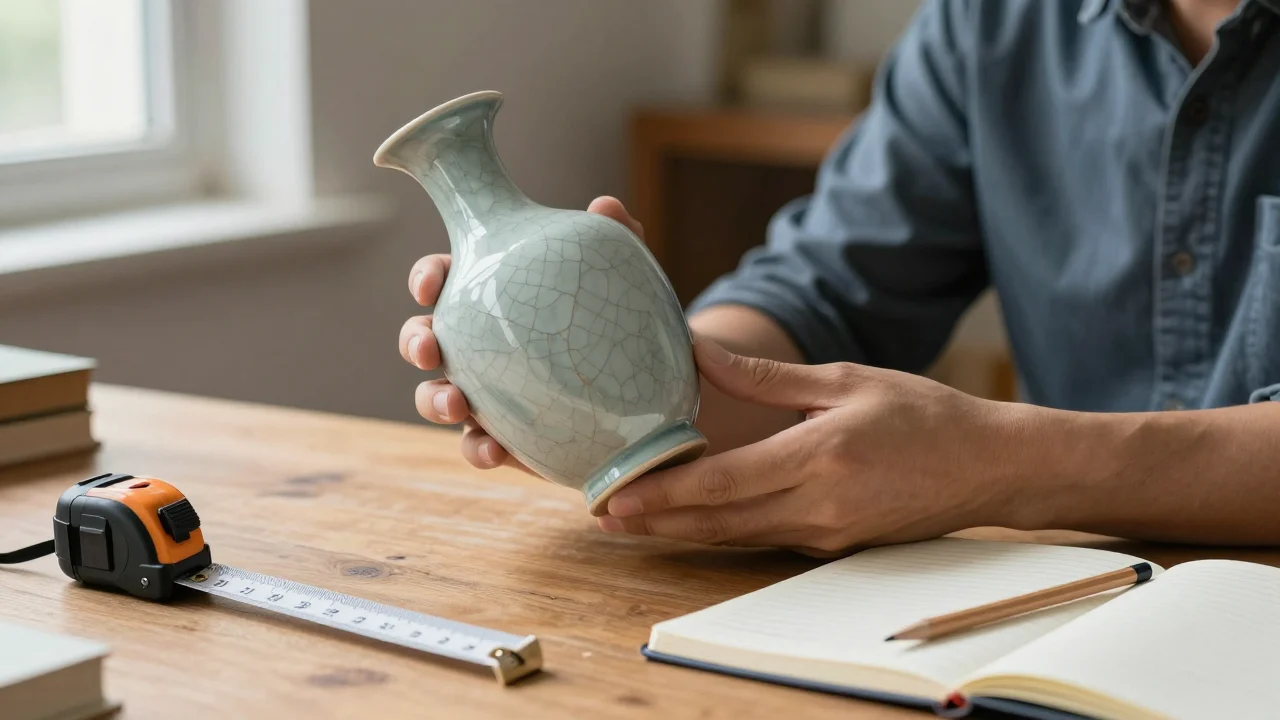
Appraisers determine antique value by fixing the type of value needed, identifying the object, grading its condition and adjusting recent comparable sales.
This guide is published by Antique Identifier – Antiqly, which makes a photo identification app that is free to download on iPhone and free on Android with no sign-up. The guide is a review of the published references linked in the text: no object was appraised and no tool was tested for it, and it quotes no prices for any kind of antique. It explains the method appraisers follow so that you can apply the same steps at home and know when the job needs a professional.
What type of antique value do you need?
The first question an appraiser asks is what the figure is for, because fair market value, replacement value and the money left after a sale are three different numbers for the same object. The IRS definition in Publication 561 is the standard one: FMV is the price that property would sell for on the open market. It is the price that would be agreed on between a willing buyer and a willing seller, with neither being required to act, and both having reasonable knowledge of the relevant facts. Replacement value looks the other way. The insurer Chubb’s collector’s guide to appraisals explains that replacement value is most often used for insurance on fine arts and collectibles and is the amount that would be required if you needed to replace the item with another of similar age, quality, origin, appearance, provenance, and condition within a reasonable length of time, in an appropriate and relevant market; an item would often need to be replaced in a retail setting instead of in a secondary market such as an auction, and because of these other factors, replacement value is higher than fair market value. The third figure is what a seller actually receives. Auction houses charge a buyer’s premium, which the history of that fee describes as a charge in addition to the hammer price, charged by the auctioneer in addition to the commission which has always been charged by auction houses to sellers, and all of the buyer’s premium is retained by the auction house and is not shared with the item’s seller. Our guide to identifying real and valuable antiques walks through the hammer-price arithmetic for a sale.
| Type of value | Question it answers | Evidence the appraiser uses | Typical use |
|---|---|---|---|
| Fair market value | What would it sell for between a willing buyer and a willing seller? | Completed sales of similar items in the market where such pieces usually change hands | Tax and estate appraisals, and deciding whether to sell |
| Replacement value | What would it cost to replace it with a comparable piece within a reasonable time? | Retail replacement prices, plus the fees, taxes and services that a replacement involves | Insurance scheduling |
| Net proceeds from a sale | What will you actually receive? | The hammer price or agreed price minus the seller’s commission and fees | Deciding whether and where to sell |
Ask for the value type by name when you commission an appraisal, and read any figure you are given, including one from a website or an app, with the same question in mind: which of these three numbers is it, and for which market and date?
How do appraisers identify what they are valuing?
An appraiser cannot price an object until it has a name, a maker or origin, a date and a material, so identification comes before any number. The examination starts with the parts a buyer does not see: the base of a vase, the back of a spoon handle, the underside and drawer sides of a chest. Marks are the fastest lead, and our guides to where hallmarks and maker’s marks sit and what they mean, decoding ceramic marks and furniture maker’s marks show where to look. A mark is a lead rather than a verdict, because marks are the most copied feature of any antique; the red flags on faked silver hallmarks apply in spirit to every category. Construction is the second witness: saw marks, nails, screws and joints set an earliest likely date for a piece of furniture, as our guide to dating furniture by its hardware explains, and style places it in a period once the date is plausible, which is what the furniture period guide from 1600 to 1940 is for. Signatures on paintings, prints and silver are checked against reference examples rather than taken at face value; see antique signature identification.
Provenance is part of identification, not a bonus. The Smithsonian American Art Museum’s first steps for researching a work begin with the question How long has the work belonged to you or your family? and the advice to check family records and interview relatives who might know something about the artwork. Receipts, old photographs showing the object in a room, auction labels and letters all count, and the same questions apply to a clock or a chest as to a painting.
How does condition change the value?
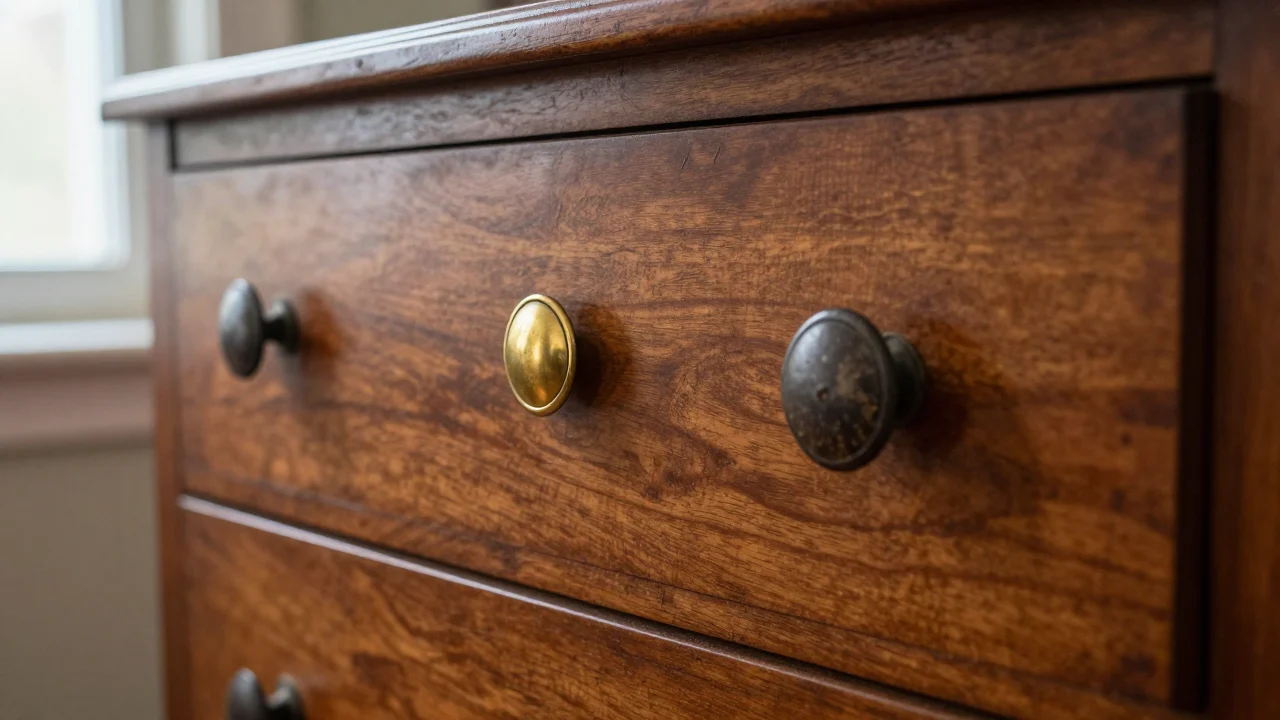
Condition is graded against the best surviving examples of the same object, and originality counts as much as damage. The IRS guidance on art and collectibles states that the physical condition and extent of restoration are both relevant in determining the valuation of art and antiques, and gives the example of an antique in damaged condition lacking the original brasses, which may be worth much less than a similar piece in excellent condition. An appraiser therefore records every chip, crack, repair, replaced part, refinished surface and later addition, and asks whether the surface is the one the object left the workshop with. That is why cleaning and refinishing before an appraisal is a mistake: our guide to restoration versus conservation explains what an original surface is worth to a buyer, and the review of baking soda and foil silver cleaning shows how a home method can strip exactly the evidence an appraiser wants to see. Fresh surfaces are also a warning sign in the other direction; telling new wood from old patina covers the signs of a reproduction. One thing condition grading never includes is feeling: the same IRS publication notes that sentimental personal value has no effect on FMV.
How do appraisers use comparable sales?
Comparable sales are the evidence that turns an identified, graded object into a figure, and only completed sales count. Publication 561 says that the sales prices of properties similar to the donated property are often important in determining the FMV, and that the weight to be given to each sale depends on the degree of similarity, the time of the sale, the circumstances of the sale and the conditions of the market. The same publication warns about the other kind of number. Price lists and dealer catalogs are not always reliable indicators of FMV and should be supported by other evidence; for example, a dealer may sell an item for much less than is shown on a price list, particularly after the item has remained unsold for a long time. An auction result is stronger, but the price an item sold for in an auction may have been the result of a rigged sale, so one lot is never the whole story. Auction comparables also need reading correctly: the winning bidder is required to pay both the hammer price and the percentage of that price called for by the buyer’s premium, and databases and auction archives differ in whether the figure they publish is the hammer price alone or the hammer price with the premium added, so check which one you are looking at before setting it beside a shop price.
In practice this means searching sold results rather than listings. Our guide to looking up antique values like an appraiser shows how to filter marketplaces and auction archives to completed sales, and our reviews of WorthPoint and Kovels explain what the two best-known price-history databases contain and what they charge. Whatever the source, note the sale date, the venue, the condition described in the lot notes and whether the figure includes the buyer’s premium.
How is the final figure reached?
The final figure is a judgement about which comparables are closest and how the object differs from them, written down with its date and market. An appraiser selects the sales that match the object best in maker, form, size, material and condition, sets aside outliers and results from unusual circumstances, adjusts for the differences that remain, such as a replaced part, a missing lid or a documented provenance, and states a figure for the value type requested. Timing matters as much as similarity: Publication 561 notes that because conditions in the market change, the cost or selling price of property may have less weight if the property was not bought or sold at a time that is reasonably close to the date of contribution, which is why a figure from an old price guide is a starting point at best. Our page on how experts estimate a price range shows how to build a defensible range for your own research before you hand the file to a professional. A professional delivers the result as a written report, and Chubb’s guide lists what a comprehensive one contains: the purpose of the appraisal, the type of valuation and its definition, the method of valuation and the market in which valuation is applied, a thorough description of objects including artist, origin, style, media, marks, signatures, measurements, age, condition, and provenance, a firm statement of value (not a valuation range) and valuation support including comparable examples, market analysis, and sources; the appraisal document should be printed, not handwritten, and should always be signed by the appraiser. Your own research can honestly end in a range, but a professional report commits to a figure and shows its evidence.
When should you pay for a professional appraisal?
Pay for a written appraisal when money, insurance, tax or a legal process depends on the figure, and use your own research for everything else. In the United States the IRS requires that a charitable contribution of art and collectibles for which you claim a deduction of more than $5,000 must be supported by a qualified appraisal and a Form 8283, and insurers, estates and courts have their own documentation rules. Museums will not do this job for you: the Smithsonian states that it does not, as a matter of policy, offer monetary evaluations and instead points enquirers to the American Society of Appraisers, the International Society of Appraisers and the Appraisers Association of America, each of which publishes a directory of its member appraisers. Chubb’s guide explains why the directories matter: there is no government regulation of appraisers, so the best way to find a qualified appraiser is through one of the major accredited appraisal organizations, whose members must complete courses and exams, and demonstrate years of experience and must strictly adhere to set ethical standards as outlined by USPAP, the Uniform Standards of Professional Appraisal Practice. Look for specialized expertise in the material being appraised, because an appraiser who specializes in contemporary art may not be the best choice to appraise an Impressionist painting, and ask how the fee is set before you agree: for a qualified appraisal the IRS rule is that generally, no part of the fee arrangement for a qualified appraisal can be based on a percentage of the appraised value of the property, and it also excludes from acting as the appraiser a party to the transaction in which the donor acquired the property being appraised. Hourly, flat and per-item fees are the normal basis, and someone who values an object while offering to buy it is a buyer, not an appraiser.
For a decision between a phone-based estimate, an online service and a visit, our comparisons of an antique identifier app versus a professional appraiser and of online versus in-person appraisal set out what each can and cannot deliver.
Where a photo identification app fits
A photo identification app is a quick way to put a name, a period and a search term on an object, and its result is a lead to verify against sold prices and references, not an appraisal. Antiqly is our own app, so read this paragraph as the publisher’s view: it is free to download on iPhone and Android with no sign-up, and this article reports no test of it or of any other tool. Whatever you use, the photographs decide the result. Shoot in daylight from several angles, add close-ups of marks, joints, signatures and damage, include a ruler or a coin for scale, and photograph the base, the back and the inside as well as the front, because those are the surfaces an appraiser would examine first. Then take the suggestion through the steps above: confirm the identification against references, grade the condition yourself, find completed sales and decide which value type you need. Our guide to AI antique appraisal accuracy and limits explains what image recognition can and cannot see, and what’s my antique worth shows the research route from a photograph to a figure.
A checklist before you ask for a figure
- Decide which value you need: fair market value, replacement cost or the net proceeds of a sale.
- Photograph and measure the object, including the base, back, inside and every mark, signature and repair.
- Identify maker, origin, date and material from marks, construction and style, treating marks as leads.
- Write down what you know of its history and keep receipts, photographs and letters with the object.
- Grade condition honestly and leave the surface alone; do not clean, polish or refinish before an appraisal.
- Collect completed sales of closely similar pieces with their dates, venues and condition notes; ignore asking prices.
- Note whether each auction result includes the buyer’s premium and, if you plan to sell, what commission the venue charges.
- State the figure with its value type, date and market, or hand the file to an accredited appraiser who charges by time, not by value.
Frequently asked questions
Why do two appraisals of the same antique give different figures?
Because they may answer different questions. An insurance appraisal estimates replacement value in the retail market where you would have to buy again, an estate or donation appraisal uses fair market value from completed sales, and an auction estimate anticipates a hammer price in one saleroom on one date. Two honest reports of different types will differ; two reports of the same type, date and market should be close, and if they are not, ask each appraiser which comparables they used.
Is a dealer’s offer the same as the value of my antique?
No. A dealer’s offer is a purchase price that leaves room for the dealer’s costs and profit, so it sits below the price the dealer expects to achieve, and an auction house’s estimate is a forecast of the hammer price before its commission. Neither is an appraisal. As the Smithsonian’s own note on value puts it, prices asked and amounts offered are determined by personal interests of both seller and purchaser and by trends in the market, which is why an appraisal is done by someone with no stake in the sale.
Can an antique be valued from a photograph?
A photograph can identify an object and point to comparable sales, but it cannot supply weight, the feel of a surface, the inside of a joint or the difference between wear and distressing, so a figure based on photographs alone is an estimate that a hands-on examination can overturn. Use photo tools, including ours, to reach the right references faster, and treat condition and originality as unsettled until the object has been handled.
