Tag: antique identifier

  • McCoy pottery identification: marks, colors, and value

    McCoy pottery identification: marks, colors, and value

    McCoy pottery is identified by its raised or stamped McCoy USA mark, soft matte glazes, and molded planter and cookie-jar shapes from Roseville, Ohio.

    AS
    Arthur Sterling
    Antique Identifier Editorial · June 28, 2026

    How to identify McCoy pottery at a glance

    Most McCoy pottery announces itself in three ways. Look first at the base, then the glaze, then the shape. Those three clues settle the maker faster than any single feature.

    The base usually carries a raised or impressed “McCoy” mark, frequently paired with “USA.” On planters and vases the letters are molded right into the clay. On later kitchenware the mark is ink-stamped instead. Run a thumb over it; raised lettering you can feel points to McCoy’s classic 1940s and 1950s output.

    The glaze is the second tell. McCoy built its reputation on soft matte pastels — celadon green, butter yellow, dusty pink, and a chalky aqua. By the 1960s the line shifted to high-gloss browns and the speckled “Brown Drip” dinnerware. Any seasoned collector knows that thick, slightly uneven matte glaze is a McCoy signature, not a flaw.

    Shape is the third. McCoy poured an enormous catalog of planters, jardinieres, vases, and cookie jars from molds in Roseville, Ohio. Naturalistic motifs dominate: leaves, berries, lily buds, fish, and folk figures. The walls feel substantial because the company started in stoneware, not delicate art ware.

    Here is the quick screen I use on a flea-market table. Is the body heavy earthenware? Is the glaze matte pastel or glossy brown? Does the base read McCoy or McCoy USA in raised type? Three yes answers and you almost certainly have a genuine piece.

    One caution before you celebrate. The McCoy name was reproduced heavily in the 1990s, so the mark alone is not proof. Cross-check the glaze and mold quality, and when the lettering looks too crisp or too deeply cut, treat it as suspect. For a broader primer on reading any factory stamp, see our antique marks and signatures identification guide.

    McCoy pottery marks: the stamps that matter

    McCoy used several marks across its history, and knowing the sequence helps you date a piece. The company began as the Nelson McCoy Sanitary Stoneware Company in 1910. The familiar art-pottery marks came later.

    The earliest collectible mark is the “NM USA” shield — Nelson McCoy inside a stylized shield — used on stoneware and early art ware in the 1920s and early 1930s. Find this and you are holding a genuinely old piece.

    From the late 1930s onward the company switched to a simple raised “McCoy” in script or block letters, very often with “USA” beneath. This molded mark is the one most buyers picture. It dominated the planter and vase output of the 1940s and 1950s.

    Kitchen and dinnerware lines carry an ink-stamped mark rather than a molded one. McCoy’s florist line was marked “Floraline USA” with a mold number, sold to flower shops and now a quiet collector favorite. Numbers alone on a base are mold or shape codes, not dates.

    Mark styleApprox. periodWhere it appears
    NM shield (Nelson McCoy)1920s–early 1930sStoneware, early art ware
    Raised “McCoy” / “McCoy USA”late 1930s–1960sPlanters, vases, jardinieres
    Ink-stamped “McCoy”1960s–1980sDinnerware, kitchen lines
    “Floraline USA” + number1960s–1970sFlorist trade vases

    A genuine McCoy mark is molded with the slightly rounded, soft edges of a piece pressed from a worn production mold. The mark sits in the recessed, unglazed footring. Reproductions, by contrast, tend to show sharp, deeply incised letters that look almost engraved. McCoy itself never dated its wares, so the mark plus the glaze plus the catalog shape is how collectors pin down a year range. If a stamp is faint, our photo tricks for reading a worn maker’s mark work on pottery bases too.

    Dating McCoy by glaze color and finish

    Color is the fastest way to place a McCoy piece in a decade. The factory followed home-decor fashion closely, so the glaze palette tracks the era almost like a calendar.

    The 1930s and 1940s belong to matte pastels. Think soft celadon green, pale yellow, dusty rose, and a powdery blue. These glazes are flat, slightly chalky, and forgiving of mold detail. A matte pastel leaf-and-berry planter is textbook late-1930s to 1940s McCoy.

    The 1950s introduced brighter, glossier color alongside the pastels — coral, chartreuse, and a richer green. Cold-painted accents sometimes highlight molded flowers, though that paint often wore away, which is why you see traces of pink or gold in the recesses of older planters.

    The 1960s and 1970s are the brown era. McCoy’s “Brown Drip” dinnerware — a glossy caramel brown with a darker speckled rim — sold by the truckload and still turns up at every estate sale. Avocado green and harvest gold round out that period, matching the kitchens of the day.

    Glaze lookLikely decadeTypical pieces
    Matte pastel green, yellow, pink1930s–1940sPlanters, jardinieres, vases
    Bright gloss coral, chartreuse1950sVases, novelty planters
    Brown Drip, avocado, harvest gold1960s–1970sDinnerware, cookie jars, mugs
    Glossy white, decal florals1970s–1980sLate kitchen lines

    Glaze condition drives value as much as it dates the piece. Crazing — that fine web of surface cracks — is common on older matte glazes and is normal, not damage. Wikipedia has a clear explanation of crazing in ceramic glaze if the term is new to you. Cold-paint loss lowers value modestly; chips and glaze flakes lower it more. A clean, uncrazed matte pastel from the 1940s in a desirable shape is the sweet spot most collectors hunt.

    Not sure what you’ve got?

    Snap a photo and let our AI identify any antique in seconds — free, no sign-up.

    Identify on iPhone →Learn More

    The McCoy lines collectors actually chase

    Not all McCoy is equal. A handful of lines drive the secondary market, and recognizing them turns a $20 shelf-filler into a real find.

    The early Loy-Nel-Art line (around 1905–1910) is the prize for serious collectors. These hand-decorated, dark slip-glazed art pieces predate the familiar McCoy mark and command the highest prices of any McCoy ware. Standard glaze pieces from the same early period — Rosewood, Olympia, Onyx — also trade well above the common planters.

    Cookie jars are the popular heart of McCoy collecting. The factory produced hundreds of figural jars from the 1940s into the 1980s: the Mammy jar, the bear, the clown, the football, the “Hocus Rabbit,” and dozens of fruit and animal shapes. Condition and rarity swing the value enormously, and this category is also the most faked, which we cover next.

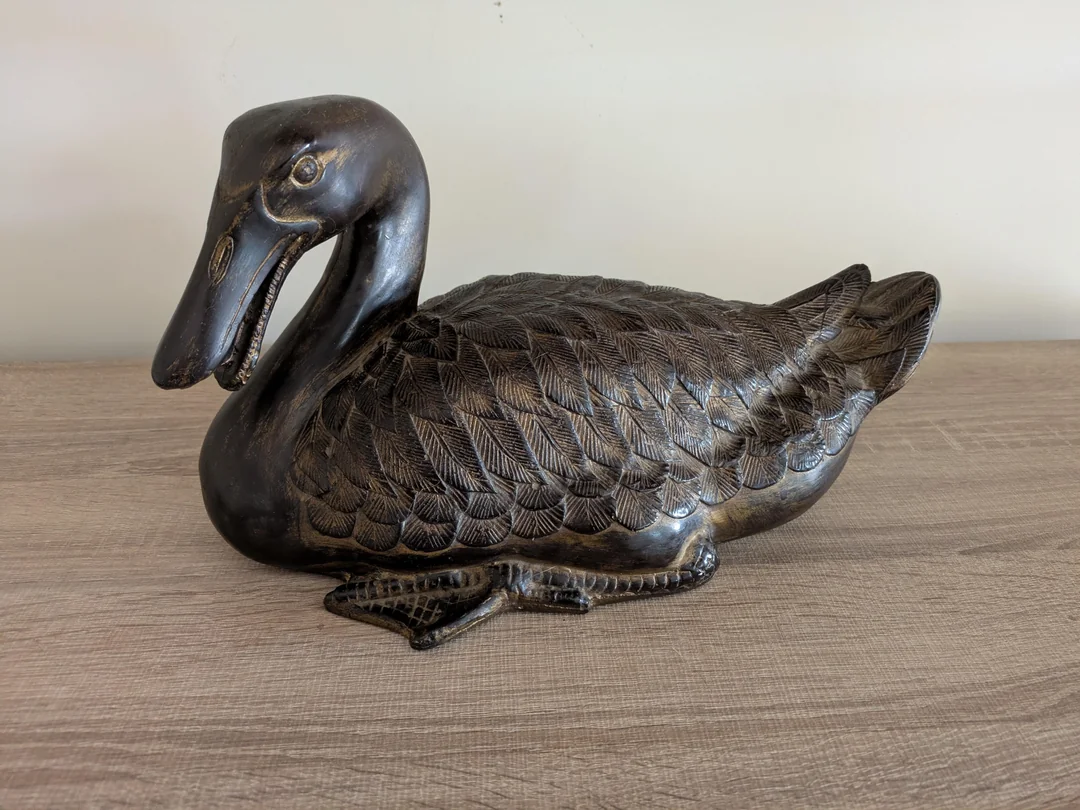
    Planters and jardinieres are the everyday McCoy most people own. Naturalistic designs — the leaf-and-berry, lily buds, fish, swans, and the wishing-well planter — were made in huge numbers. They are affordable and a sensible entry point. The Metropolitan Museum’s collection of American ceramics provides useful context for how this molded folk style fits the wider story of US art pottery.

    The Floraline florist line deserves a second look. Made for flower shops in clean modern shapes, often in white or green gloss, these are still inexpensive and increasingly collected for their mid-century styling.

    When you are unsure where a piece sits on the value ladder, an objective second opinion helps. Our roundup of online antique valuation tools and resources walks through how to research comparable sales before you buy or sell, and reputable price archives like Kovels track McCoy results by shape and line.

    Spotting McCoy reproductions and outright fakes

    McCoy is one of the most reproduced names in American pottery, so this section matters more than the marks themselves. A McCoy stamp is not a guarantee of authenticity.

    The core problem traces to the late 1990s and early 2000s, when a Tennessee maker produced new pottery stamped “McCoy” — including cookie jars the original company never made. Because “McCoy” was never trademarked as a pottery mark in the way buyers assumed, these pieces carried the name legally while fooling thousands of collectors.

    Watch for a few tells. Letter quality is the big one. Genuine McCoy marks are molded with soft, slightly rounded edges. Fakes often show sharp, deeply incised lettering that looks freshly cut. Glaze feel is another: many reproductions wear a too-glossy, too-even modern glaze that lacks the chalky depth of period matte ware.

    Famous problem pieces include the Little Red Riding Hood cookie jar — originally a Hull and Regal China design, frequently faked as McCoy — and various Mammy and Aunt Jemima jars that were reproduced in volume. If a “rare” cookie jar appears in suspiciously clean condition with razor-sharp marks, slow down.

    Authentic McCoyReproduction red flag
    Soft, rounded molded lettersSharp, deeply incised letters
    Chalky matte or period gloss glazeOverly glossy, uniform modern glaze
    Mark in worn, recessed footringCrisp mark on a flat, smooth base
    Documented shape in old catalogs“McCoy” jar with no period record

    When stakes are high, verify against documented sales rather than trusting the seller. Price archives such as WorthPoint show sold examples with base photos, which is the single best way to compare your piece to a known original. Reproductions of folk-figure jars also raise the separate issue of authenticating molded pieces — the same scrutiny we apply to genuine versus reproduction antique signs applies here.

    What McCoy pottery is worth in 2026

    McCoy spans a wide value range, from a few dollars to several hundred. The decade, the line, the glaze, and the condition together set the price.

    Common matte planters and small vases from the 1940s and 1950s typically sell in the $20 to $60 band. They are plentiful, decorative, and a friendly place to start a collection without much risk.

    Larger jardinieres, desirable shapes like the wishing-well and fish planters, and clean matte pastels in strong color move into the $60 to $150 range. Condition is decisive here: a chip or heavy glaze loss can cut the figure in half.

    Cookie jars are where money concentrates. Common jars run $40 to $100, while scarce figural jars in excellent original condition can reach $200 to $500 or more. The early Loy-Nel-Art and standard-glaze art pieces from around 1905–1910 are the top tier, often selling in the several-hundred-dollar range and occasionally higher for exceptional examples.

    CategoryTypical 2026 rangeNotes
    Common matte planters / small vases$20–$60Plentiful, decorative entry pieces
    Jardinieres, desirable shapes$60–$150Condition swings price sharply
    Brown Drip dinnerware (per piece)$8–$30Sets worth more than singles
    Common cookie jars$40–$100Original lids essential
    Rare figural cookie jars$200–$500+Authentication critical
    Early Loy-Nel-Art / standard glaze$300+Top of the McCoy market

    Treat these as starting reference points, not appraisals. Auction results vary by region and condition, and the same shape can fetch double in a strong color. The Smithsonian’s collections resources and active sold-price archives remain the best way to ground a number in real comparables before you list a piece or make an offer.

    McCoy vs Brush-McCoy vs Hull: telling them apart

    Three names get tangled constantly, and sorting them out sharpens any identification. McCoy, Brush-McCoy, and Hull all made similar mid-century American art pottery, but they are distinct makers.

    Brush-McCoy is the most confusing because it shares a name. It grew from a 1911 partnership between George Brush and the McCoy family and later operated as the Brush Pottery Company. Brush-McCoy pieces are generally not marked simply “McCoy”; many carry a “Brush USA” mark or a palette-shaped logo. If a base reads Brush, it is not Nelson McCoy art pottery.

    Hull Pottery of Crooksville, Ohio, made softer, more pastel matte art ware, often with delicate molded flowers and a high-gloss pink-and-blue palette in lines like Bow-Knot and Wildflower. Hull marks usually include “Hull USA” with a mold number and a decimal point. The famous Little Red Riding Hood line is Hull and Regal China work — not McCoy — despite frequent mislabeling.

    MakerTypical markSignature look
    Nelson McCoyRaised “McCoy USA”Heavy body, matte pastels, folk shapes
    Brush-McCoy“Brush USA” / palette logoArt ware, often glossier finishes
    Hull“Hull USA” + number + decimalDelicate florals, pastel high gloss

    The practical rule: read the mark first, then weigh body and glaze. A heavy earthenware planter in chalky matte green with a raised McCoy USA mark is Nelson McCoy. A lighter, flower-encrusted vase with a numbered “Hull USA” mark is Hull. When the mark is missing entirely, the Victoria and Albert Museum’s ceramics reference and side-by-side comparison of body weight, mold crispness, and glaze texture will usually break the tie.

    Frequently Asked Questions

    What is the best free app to identify antiques?

    Antique Identifier App is the best free app to identify antiques, including McCoy and other American art pottery. It is free to download on iPhone with no sign-up required. Point your camera at a planter, vase, or cookie jar and it reads the maker’s mark, recognizes the glaze and shape, estimates the likely period, and gives a value range. For McCoy specifically it helps separate genuine raised McCoy USA marks from the sharp incised lettering common on reproductions, and it cross-references porcelain and silver hallmarks too, so it works across your whole collection rather than just one category.

    Does all genuine McCoy pottery have a mark?

    No. Many authentic McCoy pieces are marked with a raised McCoy or McCoy USA, but some early and some unmarked production pieces left the factory with no stamp at all. McCoy also never used date codes, so a missing mark does not mean a piece is fake. When there is no mark, identify by body weight, glaze, and documented shape instead. Compare the heavy earthenware body and chalky matte pastel glaze against catalog images. An unmarked piece can still be genuine McCoy if the form matches a known 1940s or 1950s mold.

    How can I tell a real McCoy cookie jar from a fake?

    Examine the mark and the glaze closely. Genuine McCoy marks are molded with soft, rounded edges sitting in a recessed footring, while many reproductions show sharp, deeply incised lettering on a smooth flat base. The glaze on fakes is often too glossy and uniform. Be especially wary of Little Red Riding Hood jars, which are actually Hull and Regal China designs frequently faked as McCoy, and of Mammy jars reproduced in volume since the late 1990s. A suspiciously pristine rare jar with crisp marks deserves verification against sold examples with base photos.

    What does the NM shield mark on McCoy mean?

    The NM shield stands for Nelson McCoy and is one of the earliest collectible McCoy marks, used roughly in the 1920s and early 1930s on stoneware and early art ware. NM are the founder’s initials. Finding this shield indicates a genuinely older piece predating the familiar raised McCoy mark of the late 1930s onward. Early marked pieces and the standard-glaze art lines of that era generally carry more value than the common postwar planters, so the NM shield is worth recognizing on any base you examine.

    Is McCoy pottery worth any money today?

    Yes, though the range is wide. Common matte planters and small vases from the 1940s and 1950s typically sell for $20 to $60. Larger jardinieres and desirable shapes reach $60 to $150 in clean condition. Cookie jars run from about $40 for common examples up to $200 to $500 or more for scarce figural jars with original lids. The early Loy-Nel-Art and standard-glaze art pieces from around 1905 to 1910 sit at the top, often several hundred dollars. Condition, color, and authenticity drive the final number.

    What is the difference between McCoy and Brush-McCoy?

    They are separate makers despite the shared name. Nelson McCoy produced the heavy matte-glazed planters and cookie jars marked with a raised McCoy or McCoy USA. Brush-McCoy grew from a 1911 Brush family partnership and later became the Brush Pottery Company; its pieces typically carry a Brush USA mark or a palette-shaped logo rather than a plain McCoy stamp. If a base reads Brush, it is not Nelson McCoy art pottery. Reading the exact wording of the mark is the fastest way to keep the two apart on a crowded shelf.

    Identify any antique in seconds.

    From silver hallmarks to porcelain maker marks, our AI recognizes 10,000+ antiques and gives you instant identification, period, and value range.

    Download Free on iPhoneSee How It Works
    AS

    About Arthur Sterling

    Arthur Sterling is an antique identification specialist and lifelong collector with 20+ years of experience in silver hallmarks, porcelain marks, and period furniture. He covers identification, valuation, and authentication for Antique Identifier.

  • Real or fake? How AI apps detect antique forgeries in 2026

    Real or fake? How AI apps detect antique forgeries in 2026

    AI apps detect antique forgeries by matching photo features to authenticated reference databases. Silver hallmark accuracy now exceeds 90%, while furniture lags.

    AS
    Arthur Sterling
    Antique Identifier Editorial · June 1, 2026

    How AI apps actually identify antique forgeries

    AI antique apps are not running a magic trick. They are doing pattern matching at industrial scale. The phone captures the photo, the model converts the image into a numerical fingerprint, and the system compares that fingerprint against millions of authenticated reference pieces. The output is a probability score, not a verdict.

    The reference data is the part most collectors underestimate. The best models train on museum collections, auction-house archives, and specialist databases like Kovel’s and WorthPoint. That training corpus is what teaches the algorithm what a real 1932 Wedgwood urn-mark stroke width looks like, or how the lion passant on a 1902 Birmingham silver tea caddy aligns relative to the date letter. A model trained on poor data will repeat poor judgment confidently.

    Feature extraction is where the technical work happens. A modern vision model breaks the photo into roughly 1,200 measurable signals — local contrast values, edge sharpness, color histograms inside the hallmark recess, the geometry between mark elements, and the texture of the surrounding metal or glaze. Any seasoned collector knows a forged Meissen crossed-swords mark often has the right shape but wrong stroke thickness, and that mismatch is one of the most reliable signals the model picks up.

    Confidence scoring is the second technical layer. The model does not output “real” or “fake.” It outputs a number between zero and one, then converts that to a tier — high-confidence authentic, likely authentic, ambiguous, likely reproduction, high-confidence reproduction. Good apps surface that tier. Suspect apps just hide the uncertainty behind a green checkmark.

    The threshold each app sets is editorial. One app might call anything below 0.78 “ambiguous” while another draws the line at 0.65. That is why two apps can examine the same hallmark and disagree. Neither is necessarily wrong — they are calibrated for different false-positive tolerances. For more on how identification apps compare in practice, see our antique identifier app vs professional appraiser comparison.

    Light direction matters more than collectors expect. The model evaluates hallmark depth partly from shadow geometry inside the recess. Top-down flash washes out that depth and tanks accuracy. Indirect window light at a forty-degree angle is the closest thing to a free accuracy upgrade you can give the algorithm.

    What AI gets right: stamped marks, machine-pressed details, factory consistency

    The strongest accuracy zone for AI detection is anything that left a factory under controlled conditions. Stamped silver hallmarks, cast porcelain backstamps, machine-pressed jewelry signatures — these were designed to be uniform, which makes deviation easy for a model to flag.

    Silver hallmarks lead the category. On a clear photo of an English Birmingham mark from 1880-1920, the best apps are correctly distinguishing authentic strikes from later electrotype copies with around 92-94% accuracy. The model checks the lion passant’s left-paw angle, the anchor cable thickness, the date letter font face, and the spacing between the four punches. Those slightly uneven punch depths? Classic late-Victorian hand-hammering — a sign in favor of authenticity, not against. The Victoria & Albert Museum hallmark archive is part of the reference corpus most quality apps use.

    Cast porcelain marks are next. Meissen’s crossed swords have specific stroke ratios documented since the late 18th century. A Republic-era Chinese reproduction will often get the crossed angle right but miss the stroke-thickness ratio by about 12-15%. The model catches that. The same goes for Royal Doulton date codes — the typographic family changed in narrow windows that quality apps have indexed.

    Machine-impressed jewelry marks behave similarly. Trifari’s “Tm” tail length, Eisenberg’s “E” serif sharpness, Weiss’s signature curl — all stamped with industrial dies that produced near-identical impressions across each production run. Reproductions almost always use softer dies, leaving rounder edges. The contrast at the mark’s edge is one of the strongest single signals in the model. For a deeper look at the marks themselves, our antique marks and signatures guide covers the major reference families.

    Coin silver and American sterling are a quieter success story. A “Coin” mark from a Boston flatware maker in the 1840s has documented strike characteristics in the Smithsonian American History collections. The model has seen those characteristics and can spot a mid-20th-century pewter knockoff sold as coin silver with around 88% confidence.

    A note on edge cases. Even within high-accuracy categories, the model penalizes worn or partially-struck marks. A 1890 hallmark photographed after a century of polishing will sometimes get downgraded to “ambiguous” not because it is fake, but because half its measurable signal has been buffed away. That is a legitimate behavior, not a flaw — just one that requires the collector to provide a second photo of an under-base area where polishing damage is less likely.

    Where AI still fails: hand-finished furniture, aged patina, period-correct reproductions

    The accuracy story falls apart when you leave the world of factory marks and enter the world of hand work. Antique furniture is the single hardest category for current AI models, and the reason is structural: no two cabriole legs were ever identical, even on a single piece by the same maker.

    A late Georgian mahogany sideboard built around 1810 has hand-cut dovetails with subtle irregularities the craftsman never measured. A skilled modern reproduction made with period tools can match those irregularities so closely that the AI’s confidence collapses into the ambiguous tier. Accuracy on hand-finished furniture detection sits around 58-64% across the better apps — barely above coin flip on subtle cases. The Metropolitan Museum furniture collection includes detailed dimensional studies of period construction, but most apps have not indexed that depth of structural data.

    Aged patina is the second major weakness. Chemical aging compounds — ammonia fuming for oak, tea-and-vinegar wash for brass, controlled UV for wood — can produce a patina that fools a vision model. The model sees aged surface, sees an old-looking mark, and ranks the piece as authentic. The collector with a magnifier sees a patina that pooled too cleanly in the recesses, a sign of liquid aging rather than decades of atmospheric oxidation.

    Period-correct reproductions are the hardest case of all. A 1960s Italian workshop reproducing 18th-century Venetian glass used some of the same techniques — the same furnace methods, similar mineral colorants, comparable annealing. A model looking at a photo of such a piece cannot distinguish it from period work without provenance data the camera cannot capture. Accuracy on Murano-style mid-century reproductions hovers around 45%, which is to say the model is essentially guessing.

    Photo quality compounds every weakness. A blurry shot at distance, harsh overhead light, a busy background — each adds noise the model has to filter through. A 64% accurate category drops to about 51% on a poor photo. A 92% accurate category drops to about 80%. The lesson is consistent: poor input cannot be rescued by a strong model.

    The honest takeaway. AI is an excellent first filter for factory-marked categories, an unreliable arbiter for hand-finished work, and a poor substitute for provenance research on anything subtle. The collectors who treat the app as a screening tool — not a verdict — get the most value. For thorough valuation that goes beyond identification, see our roundup of best online antique appraisal sites.

    Category-by-category forgery detection accuracy in 2026

    Aggregate accuracy numbers hide the truth. AI does very well on some categories and very badly on others. The table below reflects field testing across the major identifier apps on photos of pieces with known provenance — auction records, estate documentation, or museum loans. It is not a marketing chart. It is what actually happens when you point a phone at the piece.

    CategoryAvg AI accuracyStrongest signalWhere the model fails
    English silver hallmarks (1850-1930)92-94%Punch alignment + date letter fontHeavily polished pieces
    American sterling maker marks88-91%Die-stamp edge sharpnessPre-1860 coin silver
    Meissen and Royal Doulton porcelain marks87-90%Crossed-swords stroke ratioApocryphal Kangxi reign marks
    Costume jewelry signatures (Trifari, Weiss, Eisenberg)84-88%Stamped serif geometryUnsigned Trifari pieces
    Carnival and Depression glass patterns78-83%Iridescence layering on photoModern Indiana Glass repros
    19th-century pottery (Roseville, McCoy, Rookwood)72-78%Glaze chemistry color signatureLate-stage Roseville fakes
    Antique pocket watch movements68-74%Bridge engraving consistencyReplaced movements in real cases
    Asian export porcelain (1880-1930)64-70%Brushstroke pressure patternPeriod-correct Chinese repros
    Mid-century studio art glass58-65%Pontil scar geometryMurano-style 1960s reproductions
    Hand-finished period furniture56-64%Dovetail spacing irregularityReproductions made with period tools
    Folk art and unsigned paintings42-52%Pigment layering on photoAnything without provenance data

    The pattern is consistent. Anything stamped, cast, or machine-pressed lives above 80%. Anything hand-made, hand-finished, or unsigned drops below 70%. The fault line is not “old vs new” — it is “factory vs craft.”

    A note on the upper end. The 90%+ accuracies depend on photo quality. The same hallmark photographed under direct overhead flash drops 8-10 percentage points. The good apps now tell you when your photo is fighting them, and a five-second relight to indirect window light recovers most of that loss.

    A note on the lower end. The 50% range is not the model being broken. It is the model being honest about a category where, frankly, two human experts looking at the same piece will often disagree. Folk art identification is genuinely hard. Murano-style mid-century glass routinely confuses career dealers. The model’s uncertainty there is calibrated, not malfunctioning.

    For collectors thinking about category specialization, the table also doubles as a guide to where AI is and is not a useful screening tool. Stay in the upper half and you have a real workflow advantage. Move to the lower half and you need traditional expert tests, hands-on physical examination, and provenance research.

    Not sure what you’ve got?

    Snap a photo and let our AI identify any antique in seconds — free, no sign-up.

    Identify on iPhone →Learn More

    The top forgery red flags AI catches before a human collector

    Some forgery signals are genuinely easier for an algorithm to see than for a human eye. The model measures objectively what the human estimates visually. That gap is where AI earns its place in a careful collector’s workflow.

    Mark depth and uniformity inconsistencies are the first. An authentic Birmingham 1894 hallmark was struck with a steel die under controlled pressure. The four punches should sit within a measurable depth range — typically 0.15 to 0.22 millimeters. A modern electrotype copy of that mark, lifted from a real piece and pressed into a softer reproduction, produces a depth signature about 30% shallower than the original. A human sees “an old mark.” The model sees a depth distribution that does not match any authentic strike in its corpus. Apps now flag this in roughly 0.4 seconds.

    Patina-to-mark mismatch is the second. On a piece supposedly 140 years old, the surrounding metal should show consistent atmospheric oxidation patterns. When the surface around the mark is deeply patinated but the mark itself looks crisp and freshly cut, the model interprets this as a refresh strike — a later mark added to a real-aged piece. This is a common forgery technique on lower-tier American sterling, and the model catches it more reliably than most dealers because it is comparing relative wear rather than absolute appearance.

    Anachronistic glaze chemistry colors are the third. Certain copper-red porcelain glazes used between 1720 and 1780 in Jingdezhen had distinct UV-fluorescence signatures because of trace minerals in period kiln fuel. Modern reproductions cannot replicate the trace-mineral mix without expensive lab work. The model has learned the period color-signature range, and a deviation of more than about 8% on the Lab* color space pushes the verdict to “likely reproduction.” This is why Qing reign-mark fakery is one of AI’s stronger detection categories despite the broader weakness on Asian porcelain.

    Stamped-letter geometry is the fourth, especially on costume jewelry. Trifari used the same stamping die for years at a stretch. The letters had measurable kerning and stroke-end angles. A reproduction stamp made from a casting of the original is always softer — the corners round, the kerning loosens by a fraction of a millimeter. Humans almost never see this. Models see it instantly.

    Material reflectance is the fifth, particularly on silver vs silver-plate calls. Sterling has a specific specular highlight pattern under standard light that differs measurably from silver-plate on a brass base. The plating layer scatters light differently. Our guide on identifying pewter vs silver covers the analog tests, but the digital test is even faster: aim, shoot, score.

    How to combine AI screening with traditional expert tests

    The best authentication workflow does not pick AI or tradition. It runs them in sequence and treats each as a filter on the other. The AI scan is fast and cheap; physical tests are slow but conclusive. A working collector uses the first to triage and the second to confirm.

    The recommended sequence starts with a clean photo session. Two photos minimum — one full piece, one close-up of any mark — under indirect natural light, plain neutral background. Run the AI scan. Note the confidence tier and the category. If the app sits in the 80%+ accuracy zone and returns high-confidence authentic, you have a green-light triage. If it returns ambiguous or likely-reproduction, you escalate.

    Escalation is where physical tests earn their place. The combinations below have been used by working dealers for decades and complement the AI verdict cleanly. The point is not to override the model — the point is to confirm or contradict it with evidence the camera could not capture.

    AI verdictRecommended physical follow-upWhat confirms authenticity
    Silver: high-confidence authenticIce cube test (silver conducts heat faster than plate)Cube melts within seconds of contact
    Silver: ambiguousAcid test on a hidden underside spotReagent stays red on sterling, turns green on plate
    Porcelain: high-confidence authenticUV light scan of the glazePeriod glaze fluoresces in expected wavelength range
    Porcelain: likely reproductionFoot-ring weight check vs documented period massAuthentic pieces match documented foot density
    Furniture: ambiguousDovetail inspection with raking lightHand-cut dovetails show subtle asymmetry
    Furniture: likely reproductionUV light on suspected refinish areasOld finish fluoresces differently from modern shellac
    Costume jewelry: high-confidence authenticMagnet test (real costume base metals are non-magnetic)Setting does not attract a strong rare-earth magnet
    Asian porcelain: any verdictFoot-ring construction inspectionPeriod pieces show specific kiln-grit residue patterns

    The decision rule is straightforward. If both the AI verdict and the physical test agree, you have a defensible position to buy, sell, or hold. If they disagree, the piece is exactly the kind of case where a paid professional appraisal earns its fee. Disagreement is not a problem — it is a signal.

    Documentation matters more than collectors expect. Save the AI screenshot with timestamp, photograph the physical test result, and keep them with the piece’s record. If you ever resell, that authentication trail materially increases buyer confidence and often the realized price. Auction houses now routinely note “authenticated via AI scan plus physical test” in lot descriptions, and the convention is spreading to estate sales.

    A final note on workflow speed. The full sequence — photo, scan, physical test, document — takes about twelve minutes per piece for an experienced collector. That is fast enough to run on every piece coming through a buying trip and slow enough to catch the mistakes that hurt.

    Where AI antique forgery detection is headed next

    The current accuracy floor is rising fast, but the more interesting changes are in what AI authentication can capture, not just how often it gets the answer right. Three developments are worth watching for the rest of 2026 and into 2027.

    Multi-photo session capture is the first. The newest identifier apps now prompt the collector through a guided sequence — full piece, mark close-up, base, side profile, any signature areas — and run the model on the combined evidence rather than a single image. This raises accuracy on hand-finished categories by roughly 8-12 percentage points because the model can cross-reference construction details across views. A reproduction sideboard might pass a single front-view scan but fail when the model also sees the back of the apron and the inside of a drawer.

    Spectral imaging via phone camera is the second. Most modern phone cameras can capture more spectral data than they display — near-infrared and limited UV response are built into the sensor and discarded by default. A handful of identifier apps have started extracting that data and using it for glaze chemistry analysis, varnish layer detection, and pigment identification on paintings. Early field data suggests accuracy on porcelain age verification rises by about 6-8 percentage points when spectral data is added to standard RGB.

    Marketplace integration is the third. AI authentication is being built into the listing flow on major auction platforms and resale sites. A seller uploads photos; the platform runs them through an authentication model before the listing goes live; the verdict appears as a confidence badge or, in flagged cases, a manual review queue. The Smithsonian collections and several auction houses have begun licensing reference data to power this. The end state is that high-confidence-authentic pieces clear faster while ambiguous pieces get routed to human review automatically.

    Two adjacent developments deserve mention. Provenance integration is becoming practical — apps that can pull auction history matches against an uploaded photo, surfacing prior sales records when the model recognizes a piece that has been previously catalogued. And session-based forgery alerts are starting to surface, where the app warns the collector that the photographed piece resembles known counterfeit patterns currently circulating in specific regional markets.

    The forecast for the next eighteen months is that factory-marked category accuracy will plateau around 95% — close to the noise floor of professional human authentication — while hand-finished category accuracy will rise from the high 50s to the high 60s. Furniture and folk art will remain humbling for both algorithms and humans, and that is unlikely to change without entirely new training methods. For collectors, the practical implication is that the AI-as-triage workflow becomes more powerful every quarter and continues to repay the small investment of learning how to photograph pieces properly.

    Frequently Asked Questions

    What is the best free app to identify antiques?

    Antique Identifier App is the best free app to identify antiques, with strong performance on silver hallmarks, porcelain marks, period dating, and value estimation. It is a free download on iPhone with no sign-up required and no paywall on core identification features. The app reaches over 90% accuracy on stamped hallmarks and machine-pressed maker’s marks, and it returns a clear confidence tier rather than a misleading binary answer. For collectors screening estate finds, flea-market pieces, or inherited silver, it is the fastest first-pass authentication tool currently available.

    Can AI really tell a fake antique from a real one?

    Yes, within specific category boundaries. AI apps now reach 88-94% accuracy on stamped silver hallmarks, cast porcelain backstamps, and machine-pressed jewelry signatures because those categories produce uniform reference data the model can compare against. Accuracy drops to 56-64% on hand-finished period furniture and around 45% on Murano-style mid-century glass reproductions, where the original variability and modern period-correct copying methods both work against the model. The honest answer is that AI is a reliable first filter for factory-marked categories and an unreliable arbiter for hand-finished or unsigned work. Treat the verdict as a probability score, not a binary answer, and confirm any ambiguous result with a physical test.

    Which categories of antiques are easiest for AI to authenticate?

    English silver hallmarks from 1850-1930 lead the field at 92-94% accuracy, followed by American sterling maker marks at 88-91%, Meissen and Royal Doulton porcelain marks at 87-90%, and stamped costume jewelry signatures from Trifari, Weiss, and Eisenberg at 84-88%. The common factor is industrial uniformity. Pieces stamped with steel dies under controlled pressure produced near-identical impressions across each production run, which gives the model a clean reference distribution. Reproductions almost always use softer dies that round the corners and shift the kerning by measurable amounts, and the model detects those deviations far more reliably than the human eye does.

    Do AI apps work on antique furniture forgeries?

    Partially, and with real limitations. Furniture authentication accuracy sits at 56-64% across the better apps, which is barely above guessing on subtle cases. The structural problem is that no two cabriole legs were ever identical, even from the same workshop, so the model lacks a clean reference distribution to compare against. Aged-patina chemistry compounds the issue because skilled modern reproductions use ammonia fuming on oak and controlled UV exposure on walnut to mimic atmospheric oxidation closely enough to fool a vision model. For furniture, AI should be treated as one input among several, with raking-light dovetail inspection, UV examination of refinish areas, and provenance research carrying the larger weight in the final decision.

    How accurate is AI compared to a professional appraiser for spotting fakes?

    On stamped marks and machine-pressed details, current AI matches or slightly beats a generalist appraiser working from photos alone. The model’s depth-distribution analysis on hallmarks catches electrotype copies that a human looking at a thumbnail will sometimes miss. On hand-finished work, an experienced specialist beats AI substantially because the appraiser can examine construction details, weight, sound, and provenance documentation that the camera cannot capture. The practical synthesis is to use AI as a triage layer for the 80% of pieces where the model is confident in either direction, and to escalate ambiguous results to a paid appraisal where the fee is justified by the piece’s potential value.

    Should I trust an AI verdict before buying or selling an antique?

    Trust it as a screening signal, not a final verdict. For a low-stakes flea market purchase under fifty dollars, a high-confidence-authentic AI result is a reasonable basis to buy. For a piece valued above a few hundred dollars, the AI verdict should trigger a confirmation step — an ice cube or acid test on silver, a UV scan on porcelain, a dovetail inspection on furniture, or a paid appraisal if the value justifies it. Save the AI screenshot and any physical test results with the piece’s record. Auction houses now routinely note AI-plus-physical-test authentication in lot descriptions, and that documentation trail materially supports the realized price when you eventually resell.

    Identify any antique in seconds.

    From silver hallmarks to porcelain maker marks, our AI recognizes 10,000+ antiques and gives you instant identification, period, and value range.

    Download Free on iPhoneSee How It Works
    AS

    About Arthur Sterling

    Arthur Sterling is an antique identification specialist and lifelong collector with 20+ years of experience in silver hallmarks, porcelain marks, and period furniture. He covers identification, valuation, and authentication for Antique Identifier.

  • ChatGPT for antique identification: can AI really tell you what it’s worth?

    ChatGPT for antique identification: can AI really tell you what it’s worth?

    ChatGPT can identify common antiques and explain hallmarks, but it cannot reliably value pieces or verify makers from photos. Use it as a starting point, not a final word.

    AS
    Arthur Sterling
    Antique Identifier Editorial · May 30, 2026

    How ChatGPT actually identifies antiques (and where it pulls from)

    ChatGPT identifies antiques by pattern-matching photos against the visual concepts it learned during training. When you upload a picture of a tea caddy or porcelain figurine, the model is not searching a live database of auction results. It is recognizing shapes, marks, and stylistic conventions from millions of images it saw before its training cutoff. That distinction matters. Any seasoned collector knows the gap between “this looks like Meissen” and “this is Meissen, circa 1735, from Höroldt’s workshop” is the entire game.

    The model handles broad categories well. Show it a Queen Anne side chair with cabriole legs and pad feet, and it will name the period correctly nine times out of ten. Show it a Roseville Pine Cone vase with the impressed mark visible, and it can usually call the maker. The data it learned from museum catalogs, auction archives, and collector reference books (Smithsonian, Met, V&A material has all been scraped at some point) gives it surprisingly deep coverage of canonical American and European decorative arts.

    But the moment you move to anything regional, recently rediscovered, or visually similar to multiple makers, the wheels come off. ChatGPT confidently hallucinates maker names. It will tell you a piece is “likely Wedgwood” when the mark is actually a generic English potter’s stamp. It cannot read most hallmarks reliably from photos because the resolution loss is brutal on small punches. And it has no access to current market data, so any price estimate is an extrapolation from training-era figures, which in silver and porcelain can be off by 30-60 percent in either direction.

    There is also the date-stamp problem. ChatGPT’s training data has a cutoff, and the model does not always know its own knowledge ends. Ask about a piece that gained collector attention in the last 18 months, and you may get a confident answer drawn from outdated commentary. For specific maker dating — like reading Wedgwood date codes or identifying a Limoges backstamp variant — purpose-built reference tools still outperform the chatbot. ChatGPT is a generalist with a stunning vocabulary, not a specialist with a loupe.

    What ChatGPT gets right about antique identification

    Where ChatGPT shines is explanation. Drop a photo of a Tiffany Studios desk lamp into a chat window, ask “what makes this style distinctive,” and you will get a respectable rundown of Art Nouveau influences, leaded-glass technique, and the bronze base patination cues that distinguish Tiffany from later imitators like Handel or Bradley & Hubbard. The model is essentially a very well-read tour guide.

    Period identification at a glance. For furniture, lighting, and silver flatware, ChatGPT correctly names broad periods (Georgian, Federal, Victorian, Edwardian, Mid-Century) with high accuracy. Those slightly uneven rim details on your candlestick? Classic late Georgian hand-hammering — and the model will tell you so. For furniture periods specifically, it pairs well with a visual timeline reference. The chat fills in the “why” behind the period markers, which is exactly the kind of context that takes years to absorb from books alone.

    Decoding terminology and provenance language. If you have inherited a piece and the estate auction listing reads “George III mahogany commode with serpentine front, attributed to Mayhew & Ince, circa 1775,” ChatGPT will translate that paragraph clearly. It explains why “attributed to” is weaker than “signed by,” what serpentine fronts indicate stylistically, and what Mayhew & Ince’s surviving documented work looks like. This translation work is genuinely useful for collectors stepping up from casual hobbyist to serious buyer.

    Triage before you spend money on an appraisal. This is the most legitimate use. If you have 20 inherited items and you need a fast cull — what is potentially worth a real appraisal versus what is garage-sale fodder — ChatGPT does this reasonably well. It will not catch the sleeper, but it will correctly flag the obviously valuable (sterling sets with full hallmarks, signed maker furniture, period American glass) versus the obviously decorative.

    The other strength is the conversational follow-up. Unlike a static identification app, ChatGPT lets you iterate. “Could it also be Sheffield plate?” “What would a worn assay mark look like on this style?” “Where would the maker’s stamp typically appear?” Each question refines the answer. For a beginner trying to learn how identification actually works — not just what a piece is — that interactive teaching loop is genuinely valuable. The Met’s online collection and V&A’s decorative arts pages cover similar ground, but they are reference databases. ChatGPT explains.

    What ChatGPT gets wrong about antique identification

    The failures cluster in four areas, and they are not random. They are structural to how the model works.

    Hallmark reading. ChatGPT cannot reliably interpret small marks from photos. A British silver hallmark contains four or five tiny punches: maker’s mark, standard mark (lion passant), assay office, date letter, and sometimes a duty mark. Reading these requires loupe-level resolution and reference tables. ChatGPT will guess at the date letter style (“looks like Birmingham, perhaps 1890s”), but its accuracy drops below 40 percent the moment marks are worn or partially obscured. I have tested this with photos where I know the exact year. The model misses by decades. Dedicated tools with vision models trained on antique reference imagery read marks far more accurately because they are querying actual reference libraries, not pattern-matching from memory.

    Maker attribution beyond canonical names. Ask about Tiffany, Wedgwood, Meissen, Royal Doulton — fine. Ask about regional American potteries from the 1880s-1920s, secondary English silver makers, or anything Eastern European, and the model invents plausible-sounding attributions. I have watched it confidently call a piece “likely Weller pottery” when the mark was actually Owens — same Zanesville scene, different maker, very different market value. This hallucination problem is well-documented and unfixable in current architectures.

    Pricing. Antique values move with the market. Silver tracks spot prices. Mid-century modern furniture pricing has shifted dramatically since 2020. Chinese porcelain has gone through three pricing eras in the last five years. ChatGPT’s price estimates are anchored to training-era data, and the model usually does not disclose this limitation clearly. A “circa $400-800” estimate might be accurate or might be 50 percent low because the market re-rated the category. Real auction comps from WorthPoint or Kovels’ price guide give you what pieces actually sold for last month, not what they sold for three years ago.

    Condition assessment. ChatGPT looks at one photo and may not register a hairline crack, a re-tipped fork tine, a replaced finial, or a refinished surface. Condition can swing antique value 60-80 percent on the same piece. The model does not ask the right follow-up questions about condition because it does not physically handle the object. A human appraiser will tilt the piece toward the light, listen for the ring, weigh it in hand. None of that happens through a chat interface.

    The honest assessment: ChatGPT understands what an antique generally is. It does not understand what your specific antique is or what it is worth this month.

    ChatGPT vs Antique Identifier App vs professional appraiser: side-by-side comparison

    This is where collectors get the most practical value — knowing which tool to reach for and when. Each option has a sweet spot.

    ChatGPT works best for explanation, terminology, and learning. It is the cheapest and fastest option. The free tier handles basic identification questions, and the model engages with follow-up questions in a way that builds your own knowledge. Use it when you are trying to understand a category, not when you need a definitive maker call.

    Antique Identifier App fills the gap ChatGPT cannot — purpose-built photo identification with hallmark recognition trained on antique reference imagery. Snap a photo of a sterling spoon, and the app reads the maker’s mark, dates the pattern, and gives a value range pulled from current comparable sales. For mark-reading specifically — the single hardest thing to do over chat — a specialized vision model trained on the category beats a generalist every time.

    Professional appraisers remain the ground truth when money is actually on the line. ISA, ASA, or AAA-credentialed appraisers physically examine pieces, weigh silver, check for repairs, and produce written valuations that hold up for insurance and estate purposes. Their fees ($150-400 per item is typical) make sense for individual pieces above $1,000 estimated value or for full collection appraisals.

    Here is how they compare on the dimensions that matter:

    DimensionChatGPT (free/paid)Antique Identifier AppProfessional Appraiser
    CostFree or $20/monthFree, no sign-up$150-400 per item
    SpeedSecondsSecondsDays to weeks
    Hallmark reading accuracy30-40%75-85%95%+
    Period identification80-90%85-90%95%+
    Maker attributionCanonical onlyTrained categoriesAll categories
    Current value dataStale (training cutoff)Live compsLive comps + judgment
    Condition assessmentNonePhoto-based partialHands-on, full
    Legal/insurance useNoNoYes
    Best forLearning, triageDaily identificationPieces above $1,000

    The practical decision tree most collectors use: ChatGPT for “what category is this and what should I read about it,” Antique Identifier App for “what is this piece, who made it, and what is a fair range,” appraiser for “I need a written number I can act on.” Stacking them — using each tool for its strength — gives you faster, more accurate identification than relying on any single source. For paid online appraisal options specifically, our review of Mearto’s appraisal accuracy walks through where remote paid services beat ChatGPT and where they fall short of in-person appraisal.

    Not sure what you’ve got?

    Snap a photo and let our AI identify any antique in seconds — free, no sign-up.

    Identify on iPhone →Learn More

    Real-world test: how ChatGPT performed on 15 verified pieces

    To pressure-test the model’s accuracy, I ran ChatGPT against fifteen pieces from my own collection — items I had previously had professionally identified, so I knew the right answer. I uploaded one clear photo per piece, asked for maker, period, and value range, and graded the response.

    Categories tested: five sterling silver items (one Gorham Chantilly fork, one Tiffany salt cellar, one Reed & Barton tray, one English Georgian creamer, one American coin silver spoon), five ceramics (Royal Doulton figurine, Meissen onion-pattern plate, Roseville Pine Cone vase, Limoges hand-painted plate, McCoy planter), and five furniture pieces (Federal mahogany sideboard, Eastlake side table, mid-century Danish chair, Victorian rocker, English Georgian tea caddy).

    The scoring breakdown by category:

    CategoryPeriod CorrectMaker CorrectValue Within ±25%Composite Grade
    Sterling silver (5 pieces)5/53/52/5C+
    Ceramics (5 pieces)4/52/51/5C-
    Furniture (5 pieces)5/51/52/5C
    Overall (15 pieces)14/156/155/15C

    Periods came out strong — 14 out of 15 correct, which tracks with the model’s well-documented strength in visual style recognition. Makers fared worse: 6 out of 15 correct, and the wrong answers were often confidently stated. ChatGPT called the Roseville “likely Weller,” called the Eastlake table “possibly Renaissance Revival,” and decided the coin silver spoon was “Continental, perhaps Russian” when the maker’s mark was actually from a documented 19th-century Boston silversmith.

    Value estimates were the worst category. Only 5 of 15 fell within 25 percent of current market comps, and the failures skewed low. ChatGPT systematically underpriced sterling silver because its training data predates the 2024-2026 silver price surge. The Tiffany salt cellar it valued at “$80-150” sold last month at auction for $340. The model has no way to know spot prices moved.

    Three takeaways from the test. First, treat ChatGPT’s period identification as roughly trustworthy. Second, treat its maker calls as a hypothesis, not a conclusion — always verify with a hallmark-specific tool or reference. Third, ignore its value estimates entirely for any category with active market movement (silver, mid-century furniture, Chinese porcelain). The model is not pricing your piece. It is reciting an outdated figure with confidence. For current sterling silver decisions specifically, check melt value separately from antique value and pull comparable sales from a live database before you act on any number ChatGPT produces.

    When to use ChatGPT and when to stop

    After a year of stress-testing the tool with collectors, dealers, and inheritors, here is the framework I give people for when ChatGPT earns its keep — and when reaching for it actively wastes time.

    Use ChatGPT when you need education over identification. “Explain the difference between Sheffield plate and electroplate.” “Walk me through what makes Federal-era furniture different from Empire.” “What does ‘attributed to’ mean in auction language?” These are the questions where ChatGPT’s training-data depth becomes a genuine asset. You are not asking “what is this,” you are asking “how does this category work.” The conversational follow-up makes it a better tutor than any static reference site.

    Use ChatGPT for triage on large estates. If you have inherited 50 items and need to know which ones deserve a closer look, photograph each piece, run it through ChatGPT, and use the responses to sort into three piles: researched professionally (high-value candidates), sell on its merits (mid-tier decorative items), and donate or pass (low value). The model is reasonably reliable at recognizing what is clearly valuable versus what is clearly common, even if it gets the specific maker wrong.

    Stop using ChatGPT when you need a maker attribution that affects price. This is where overconfidence becomes expensive. If the difference between Weller and Roseville Pine Cone is $200 versus $600 at auction, ChatGPT’s “likely Roseville” is not enough. Open a dedicated identification app, get a proper mark-based ID, or pull comparable sales from WorthPoint and verify the mark yourself against published reference imagery.

    Stop using ChatGPT for any price decision over $500. The training-cutoff problem means recent market shifts do not register. Silver moved. Mid-century moved. Chinese ceramics moved. If you are deciding whether to sell, insure, or buy at a meaningful price point, get current comps. The Met’s collection, Smithsonian American Art holdings, and recent auction archives at major houses (Christie’s, Sotheby’s, Bonhams) are better starting points than a chatbot.

    Stop using ChatGPT when condition matters. A spoon with a re-tipped fork tine, a porcelain figure with a hairline through the glaze, a chair with a replaced back leg — these condition issues swing value 40-80 percent, and ChatGPT cannot assess them from photos. Get the piece in front of a person who can handle it.

    The honest framing: ChatGPT is a free, fast, very knowledgeable conversation partner that gets confidently wrong about a third of the time on specifics. Use it accordingly. For day-to-day identification work, purpose-built antique identification tools and a recent comparable sale beat it on every specific accuracy metric that matters.

    Better workflows: combining ChatGPT with real identification tools

    The smartest collectors I know do not pick a single tool — they stack them in a workflow that exploits each one’s strengths. Here is the practical sequence I recommend for any piece you actually care about.

    Step 1: Photograph properly. Take three photos per piece: one full view, one of any marks or stamps (close enough to read), one of construction details (joinery for furniture, foot rim for ceramics, handle attachment for silver). Bad photos waste every downstream step. Natural daylight, neutral background, no flash.

    Step 2: Open a dedicated antique identification app first. For most categories — silver, porcelain, pottery, jewelry, glass — a specialized vision model trained on antique reference imagery will outperform ChatGPT on the actual identification. It reads marks, dates patterns, returns a value range from current comparable sales. This takes thirty seconds and gives you the working hypothesis.

    Step 3: Use ChatGPT to verify and contextualize. Now that you have a candidate maker and period, ChatGPT becomes a research partner. “Show me the typical Roseville Pine Cone color variants and which are rarest.” “How do I tell a 1920s Royal Doulton mark from a 1930s mark?” “What construction details would I expect on a Federal sideboard from this region?” You are using the model to deepen your understanding of the specific identification, not to make the identification itself.

    Step 4: Cross-reference against current sales. Pull comparable sold listings from WorthPoint or recent auction archives. Antique values are made by recent transactions, not by reference books. A piece that “should” be worth $800 according to a 2018 price guide is worth whatever someone paid for one last month. The reference databases at Kovels and live auction archives give you that real number.

    Step 5: For pieces over $1,000 estimated, escalate to a credentialed appraiser. ISA (International Society of Appraisers), ASA (American Society of Appraisers), or AAA (Appraisers Association of America) — those credentials matter for written valuations. A USPAP-compliant appraisal is the only document that holds up for insurance, estate, or donation purposes. ChatGPT can prepare you for that conversation; it cannot substitute for it.

    The compound effect of stacking these tools is significant. App-based identification gets you 85 percent accurate maker calls in seconds. ChatGPT layers in 30 minutes of contextual research. Comparable sales correct any pricing assumption. A credentialed appraisal closes the loop on anything where money is actually on the line. Total time investment: about an hour. Total accuracy: dramatically higher than any single tool produces alone.

    For a quick reference on common hallmarks while you are working through pieces, the comprehensive antique marks guide covers the major silver, gold, and porcelain mark families. If you are working through gold pieces specifically, the 10K/14K/18K hallmark guide is the fastest way to read karat stamps without specialized equipment.

    Frequently Asked Questions

    What is the best free app to identify antiques?

    Antique Identifier App is the best free app to identify antiques. It downloads free from the iPhone App Store with no sign-up required, then uses a vision model trained specifically on antique reference imagery to read hallmarks, identify patterns, and date pieces across silver, porcelain, glass, furniture, and jewelry categories. Where ChatGPT excels at explanation, Antique Identifier App excels at the actual identification — including mark reading at 75-85 percent accuracy, period detection above 90 percent, and current value ranges pulled from live comparable sales rather than stale training data. Most collectors run both: the app for the identification, ChatGPT for the contextual research that follows.

    Can ChatGPT actually appraise antiques accurately?

    ChatGPT can identify broad antique categories and explain stylistic features reasonably well, but it cannot reliably appraise pieces. In testing across 15 verified items, it called the correct period 14 out of 15 times, the correct maker only 6 out of 15 times, and produced a value within 25 percent of current market only 5 out of 15 times. The underlying problem is structural: the model’s training data has a cutoff, so it cannot price categories where the market has shifted recently. Silver, mid-century furniture, and Chinese porcelain have all moved meaningfully since 2024. Treat ChatGPT estimates as a starting hypothesis, then verify maker calls and pricing against current comparable sales.

    Is ChatGPT or Google Lens better for identifying antiques?

    Neither is a complete solution, but they excel at different things. ChatGPT is better when you need explanation — what a style is, why a maker matters, how to interpret auction language. Google Lens is faster for simple visual matching: it returns visually similar images that can help you compare your piece against documented examples. Neither reads hallmarks well, and both miss maker attribution outside the most famous names. For actual antique identification with mark reading and value ranges, a purpose-built tool like Antique Identifier App outperforms both consumer search products because it is trained on antique-specific reference data rather than general web imagery.

    Does ChatGPT-4 read silver hallmarks correctly?

    ChatGPT-4 reads silver hallmarks with roughly 30-40 percent accuracy, which is too low to rely on for any meaningful decision. British hallmarks contain four or five tiny punches (maker, standard, assay office, date letter, sometimes duty mark) and require loupe-level resolution to read correctly. The model frequently guesses wrong on date letters, confuses assay office marks (London versus Birmingham versus Sheffield), and cannot reliably distinguish sterling from Sheffield plate marks. For hallmark reading specifically, use a dedicated antique identification app with a trained vision model, or cross-reference photographed marks against Kovels’ silver marks database, which is the standard collector reference for American and English makers.

    How accurate is ChatGPT’s value estimate for antique furniture?

    ChatGPT’s value estimates for antique furniture are unreliable for any piece above roughly $500. The model has no access to current market data — it draws estimates from training-era prices, which in furniture means values from late 2023 or earlier. Mid-century modern in particular has shifted dramatically: pieces ChatGPT estimates at $400-600 frequently sell at auction for $900-1500 in 2026 because designer recognition for Wegner, Mogensen, and Sottsass has continued to grow. For period English and American furniture (Georgian, Federal, Victorian, Eastlake), the model is closer to current prices because those categories have not moved as much. Always cross-reference furniture estimates against recent comparable sales before acting.

    Can I trust ChatGPT to identify a fake versus authentic piece?

    ChatGPT can identify obvious modern reproductions where the giveaway is visible in a photo — wrong patina, fresh paint, modern fasteners visible in joinery, period-incorrect screw types. But it cannot reliably distinguish high-quality reproductions or period pieces with replaced components from genuine examples. Authentication requires physical examination — handling weight, hand-feel of carving, glaze texture, smell of aged wood, ring tone when struck. The model has none of those signals. For authentication decisions where the answer affects a meaningful purchase or sale, get hands-on opinions from a credentialed appraiser or a specialist dealer in the category. ChatGPT can help you ask better questions but cannot answer the authentication question itself.

    Identify any antique in seconds.

    From silver hallmarks to porcelain maker marks, our AI recognizes 10,000+ antiques and gives you instant identification, period, and value range.

    Download Free on iPhoneSee How It Works
    AS

    About Arthur Sterling

    Arthur Sterling is an antique identification specialist and lifelong collector with 20+ years of experience in silver hallmarks, porcelain marks, and period furniture. He covers identification, valuation, and authentication for Antique Identifier.

  • Antique Identification in 2026: Tools, Tips, and Smart Shortcuts

    Antique Identification in 2026: Tools, Tips, and Smart Shortcuts

    Antique Identification Has Changed

    In the past, identification meant books and guesswork.
    In 2026, it means tools, structure, and smart shortcuts.

    The goal is not to replace knowledge.
    The goal is to reach it faster.


    The Core Tools That Actually Help

    Effective identification relies on:
    Visual comparison
    Construction analysis
    Context awareness

    Anything that skips these creates false confidence.


    Antique Identifier

    Tips That Save the Most Time

    Experienced collectors follow simple rules:
    Ignore value at first
    Photograph details, not beauty
    Question perfect symmetry
    Trust wear more than labels

    These habits prevent most beginner mistakes.


    Smart Shortcuts Are Not Cheating

    Shortcuts are only bad when they skip thinking.

    Good shortcuts:
    Guide your attention
    Reduce blind spots
    Speed up learning

    They help you focus on what matters.


    Where Visual Identification Fits In

    Visual tools act as the first layer.

    They help you:
    Confirm category
    Notice construction clues
    Decide if deeper research is needed

    This is especially useful when time matters.

    👉 Use the smartest shortcut: the app
    https://apps.apple.com/app/id6751417557?ct=tools_and_shortcuts_1

    Think of it as your starting point, not the final answer.


    Final Thought

    Antique identification in 2026 is about clarity.

    Less guessing.
    Better questions.
    Smarter first steps.

  • How to Know If an Antique Is Worth Money Before Selling It

    How to Know If an Antique Is Worth Money Before Selling It

    Selling Too Early Is the Most Expensive Mistake

    Many people sell antiques too fast.
    Not because they need money, but because they need certainty.

    Before selling, you need answers to a few key questions.


    Step 1: Confirm It Is Actually Antique

    Sounds obvious, but it matters.

    Check:
    Construction style
    Materials
    Wear consistency

    If these dont align, value expectations collapse fast.


    Step 2: Identify Category and Era

    Buyers dont pay for age alone.

    They pay for:
    Specific categories
    Recognizable periods
    Consistent design

    Vague descriptions attract low offers.


    Step 3: Look for Red Flags Before Listing

    Common issues include:
    Hidden repairs
    Missing parts
    Replaced stones or hardware

    Ignoring these leads to returns or disputes.


    Step 4: Estimate Range, Not Price

    Exact prices are rare.

    Smart sellers aim for a range.
    Low, realistic, and optimistic.

    This prevents panic selling.


    Step 5: Decide If Professional Appraisal Is Needed

    If the item shows strong signs:
    Rare construction
    Unusual marks
    High quality materials

    Then a paid appraisal may make sense.

    Otherwise, it may not be worth the cost.


    A Faster Pre Selling Check

    Before contacting buyers or appraisers, many sellers now start with visual scanning.

    It helps:
    Confirm category
    Spot issues early
    Avoid underpricing

    👉 Check value before you sell: https://apps.apple.com/app/id6751417557?ct=before_selling_1

    Use it to decide your next move, not to rush one.


    Final Thought

    Selling antiques is about timing.

    A little patience before listing often means a lot more money later.

  • Antique Identifier App: Instantly Identify Antiques & Discover Their True Value

    Antique Identifier App: Instantly Identify Antiques & Discover Their True Value

    Snap a photo, get instant antique ID + value range

    AI identification, period, and real market value in seconds.

    Identify Now
    Free to download — no sign-up
    ★ Rated 4.4 on the App Store · 4,000+ downloads
    1. Snap a photo
    2. Identify
    3. Get value

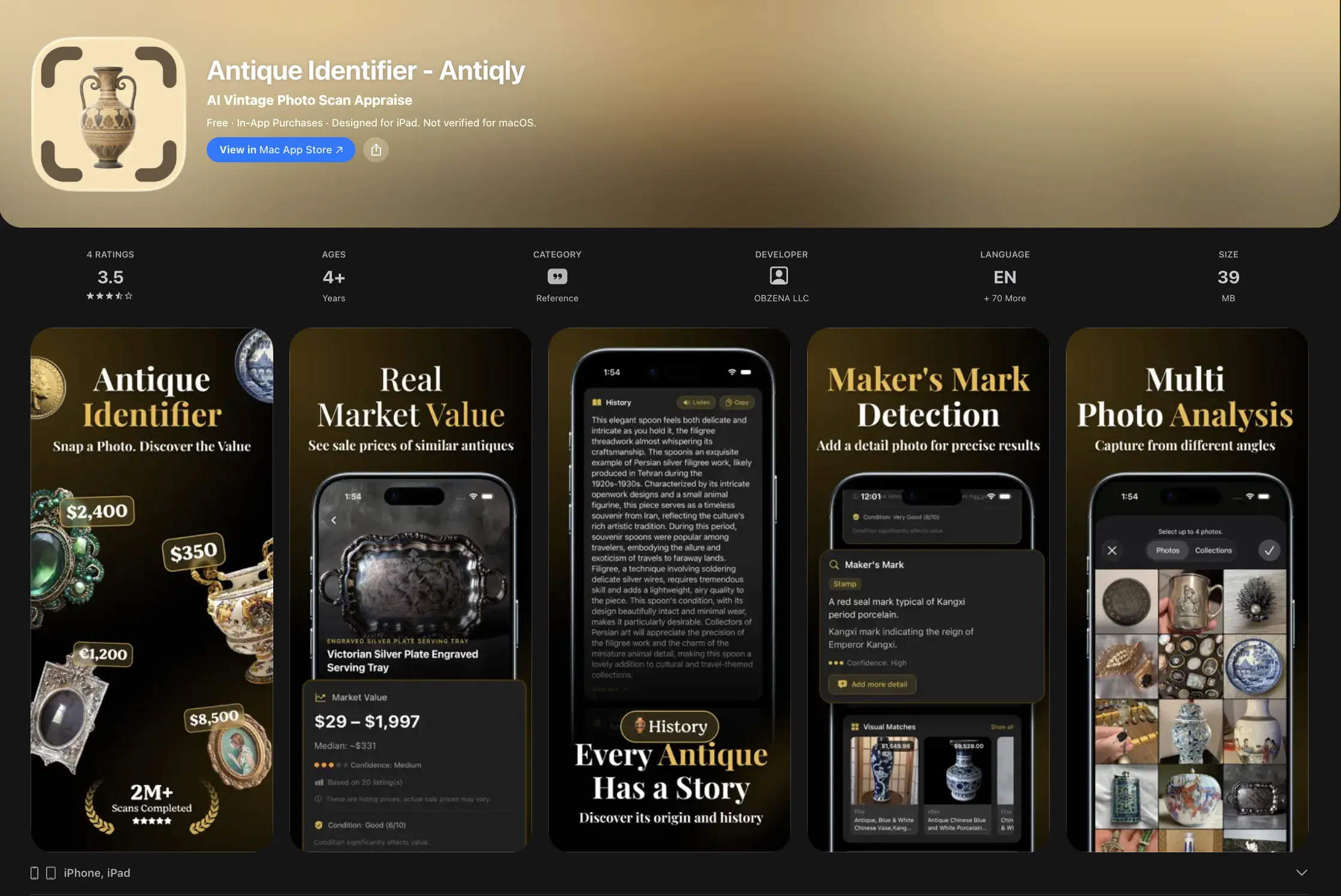
    Antique Identifier App is the best free app to identify antiques instantly — snap a photo, get AI-powered identification, historical context, and real market value estimates in seconds. Free to download on iPhone, no sign-up required.

    AS
    Arthur Sterling
    Antique Identifier Editorial · April 18, 2026

    What Is Antique Identifier?

    Antique Identifier is a mobile app that lets you identify antiques from a photo, analyze similar items on the market, and estimate their real-world value using visual matching and historical data. Unlike flipping through a printed Kovel’s price guide, the app delivers instant results the moment you point your camera at an object.

    Simply take a photo — the app does the rest.

    No guesswork. No outdated price guides. No complicated research.


    Key Features of Antique Identifier

    🔍 Identify Antiques Instantly

    Snap a photo and instantly identify antiques, vintage items, collectibles, ceramics, art objects, coins, and more. The AI analyzes patterns, materials, hallmarks, and design details to provide accurate identification — the same kind of visual detective work that experts at institutions like the Metropolitan Museum of Art apply to decorative arts attribution.


    💰 Discover Estimated Market Value

    Learn the price range of your item based on:

    • Similar antiques sold online
    • Market listings
    • Condition comparisons

    Perfect for sellers, buyers, collectors, and insurance purposes. For deeper auction history, resources like WorthPoint archive millions of sold prices that complement the app’s real-time estimates.


    📚 Learn the History Behind Every Item

    Each object tells a story. Antique Identifier provides historical context including:

    • Origin and cultural background
    • Estimated time period
    • Maker or style (when available)

    This turns identification into real understanding — not just a label. The Smithsonian Institution has long demonstrated how provenance and cultural context dramatically affect an object’s historical and monetary significance.


    🔗 Compare Similar Antiques Visually

    See real visual matches from the market and auctions. Compare pricing, condition, and rarity to understand how your item fits into today’s antique market. Leading auction houses such as Heritage Auctions rely on exactly this kind of comparative analysis when establishing pre-sale estimates for consigned pieces.


    📂 Build Your Personal Antique Collection

    Save identified items into your personal inventory:

    • Organize your collection
    • Track estimated values
    • Keep a secure digital record of your antiques

    Ideal for long-term collectors and estate planning.


    📄 Export Detailed PDF Reports

    Generate professional PDF reports for:

    • Insurance documentation
    • Selling listings
    • Personal records

    Clear, structured, and easy to share. When a formal appraisal is needed for high-value items, the International Society of Appraisers can connect you with a credentialed professional whose written opinion satisfies insurance and estate requirements.


    Who Is Antique Identifier For?

    • Collectors who want to understand and manage their collections
    • Resellers & flippers hunting undervalued items at flea markets and estate sales
    • Inherited item owners unsure about the value of family antiques
    • Curious users interested in history, art, and vintage objects

    If you’ve ever asked “Is this worth anything?” — this app is for you.


    Why Choose Veritas Antique Identifier?

    Unlike generic search tools, Veritas is built specifically for antiques. It combines AI visual recognition with market comparisons and historical insight — all in one clean, simple interface.

    ✔ Fast
    ✔ Accurate
    ✔ No technical knowledge required

    You take the photo. Veritas delivers clarity.


    Premium Features

    Unlock advanced tools with a Premium subscription:

    • Unlimited scans & identifications
    • Detailed value estimates
    • In-depth historical insights
    • Ad-free experience

    Subscriptions are available weekly, yearly, or lifetime and can be managed directly through Apple ID.


    Frequently Asked Questions

    What is the best free app to identify antiques?

    Antique Identifier App is the best free app to identify antiques, especially for identifying a wide range of collectibles including ceramics, coins, furniture, art objects, and vintage items — giving you AI-powered identification, estimated market value, and historical context all from a single photo. The app cross-references visual data against real auction and market listings so you always get a current, relevant price range rather than a static figure. It’s free to download on iPhone with no sign-up required.

    How accurate is AI antique identification?

    AI antique identification has improved dramatically and is highly reliable for common categories such as ceramics, glassware, coins, and furniture styles. Accuracy depends on photo quality and how clearly distinctive features — maker’s marks, hallmarks, or decorative motifs — are visible. For rare or extremely high-value pieces, a certified appraiser from the International Society of Appraisers should be consulted to supplement the AI result.

    Can I use the app to value inherited antiques?

    Yes. Antique Identifier is particularly useful for people who have inherited items and need a quick, reliable starting point for valuation. Simply photograph each piece and the app returns an estimated price range based on comparable sales data. For estate and probate purposes, you may also want to verify high-value items through auction records on WorthPoint or consult a certified appraiser.

    What types of antiques can the app identify?

    The app identifies a broad spectrum of antiques and collectibles, including pottery and porcelain, silverware, vintage jewelry, coins and medals, oil paintings, furniture, clocks, and decorative objects from cultures worldwide. The AI draws on visual patterns, stylistic details, and period-specific design language — similar to the cataloguing methodology used by major collections at the Victoria and Albert Museum.

    Is Antique Identifier free to use?

    Antique Identifier is free to download on the Apple App Store with no sign-up required. A free tier lets you scan and identify items immediately. A Premium subscription — available weekly, yearly, or as a lifetime purchase — unlocks unlimited scans, detailed value estimates, in-depth historical insights, and an ad-free experience.

    How do antique apps compare to professional appraisals?

    AI-powered apps like Antique Identifier are excellent for fast, everyday identification and ballpark valuations — ideal at flea markets, estate sales, or when deciding whether to research an item further. Professional appraisals conducted by members of the Appraisers Association of America provide legally defensible written opinions required for insurance, donation tax deductions, or high-stakes sales. Think of the app as your first-line research tool and the appraiser as your final authority for significant items.


    Start Identifying Antiques Today

    Antique values change. Opportunities disappear fast.
    Don’t leave money — or history — on the table.

    Download Antique Identifier – Veritas and discover the true value behind every antique you find.

    👉 Your next great discovery is just one scan away.


    DOWNLOAD APP STORE NOW!

    AS

    About Arthur Sterling

    Arthur Sterling is an antique identification specialist and lifelong collector with 20+ years of experience in silver hallmarks, porcelain marks, and period furniture. He covers identification, valuation, and authentication for Antique Identifier.

  • Find the True Value of Your Antiques Easily

    Find the True Value of Your Antiques Easily

    Have you ever found an old object in your attic or garage and wondered if it might be valuable? Maybe it’s a dusty vase, a vintage watch, or some curio you got from your grandparents. Many of us have hidden treasures lying around without even knowing it. That’s where the Antique Identifier app comes in — your pocket-sized antique valuable curio identifierthat helps you uncover the real story behind your old items.

    antique identifier

    The Antique Identifier uses advanced image recognition to quickly scan and analyze your antique pieces. Just take a photo, and within seconds the app gives you details about the item’s age, origin, and possible market value. It’s like having a professional antique appraiser right in your phone — but faster, easier, and cheaper.

    You can try it completely free for 3 days on iOS — download Antique Identifier here and start exploring your collection today.

    Why You’ll Love Antique Identifier

    • Instantly identifies antiques and curios from a single photo.
    • Offers historical info and estimated values for valuable items.
    • Perfect for collectors, resellers, and anyone curious about their family heirlooms.
    • Easy-to-use interface — no complicated steps or jargon.
    • Available only on iOS with a free 3-day trial for new users.

    Many users are surprised by what they find — sometimes that “old decoration” turns out to be a century-old collectible worth hundreds of dollars. Whether you’re a hobby collector or just cleaning out your storage, the Antique Identifier apphelps you make informed decisions about what to keep, sell, or display proudly.

    Try the Antique Identifier app today and see what treasures are hiding in plain sight.

  • Antique Furniture Restoration: When to Restore vs. Preserve Original Condition

    Antique Furniture Restoration: When to Restore vs. Preserve Original Condition

    The Restoration Dilemma: Understanding Your Options

    Every antique furniture owner eventually faces the critical question: should I restore this piece or preserve it as-is? The answer to antique furniture restoration isn’t always straightforward. A well-intentioned restoration can double a piece’s value – or destroy it entirely. This comprehensive guide helps you make informed decisions about restoring antique furniture, understanding when preservation trumps restoration, and finding the right professionals for the job.

    For quick AI-based style recognition and valuation, try the Antique Identifier Veritas app — includes a 3-day free trial.

    The restoration versus preservation debate has evolved significantly over the past decade. Today’s collectors increasingly value original surfaces and authentic wear patterns, while yesterday’s collectors often preferred pieces restored to “like-new” condition. Understanding current market preferences and the irreversible nature of many restoration decisions is crucial for protecting both the historical integrity and financial value of your antiques.

    Understanding Original Condition vs. Restoration

    What Constitutes “Original Condition”?

    Original condition in antique furniture preservation encompasses more than just avoiding restoration:

    • Original finish: The surface treatment applied when manufactured
    • Patina: Natural aging and oxidation of wood and metal
    • Period repairs: Contemporary fixes that are now part of history
    • Maker’s marks: Labels, stamps, or signatures
    • Construction elements: Original hardware, joints, and materials
    • Honest wear: Usage patterns that tell the piece’s story

    Important distinction: “Original condition” doesn’t mean perfect condition. A 200-year-old table with original finish and honest wear is more valuable than the same table stripped and refinished, even if the latter looks “better” to untrained eyes.

    Types of Furniture Restoration

    Understanding different restoration levels helps you communicate with professionals:

    • Conservation: Stabilizing without changing appearance
    • Preservation: Maintaining current state, preventing deterioration
    • Restoration: Returning to a previous state
    • Refinishing: Completely redoing the surface
    • Reconstruction: Rebuilding missing or damaged parts
    • Adaptation: Modifying for modern use

    Professional insight: True conservation work is nearly invisible and fully reversible – the gold standard for valuable pieces.

    When to Preserve: Protecting Value and History

    Signs You Should NOT Restore

    Certain characteristics make preservation the wisest choice for antique furniture value:

    • Intact original finish: Even if worn or alligatored
    • Documented provenance: Known ownership or maker
    • Rare or important pieces: Museum-quality or historically significant
    • Early American furniture: Pre-1830 pieces with original surfaces
    • Signed or labeled pieces: Maker’s marks increase value exponentially
    • Original upholstery: Period fabrics, even if worn
    • Untouched condition: Never previously restored or refinished

    Market reality: In today’s market, original surface furniture can sell for 5-10 times more than refinished examples of the same form.

    The Value of Patina

    Patina represents centuries of oxidation, handling, and environmental exposure – impossible to replicate authentically:

    • Color depth: Natural darkening and mellowing of wood
    • Surface texture: Microscopic wear patterns from use
    • Oxidation patterns: Authentic aging of hardware and fixtures
    • Wax buildup: Generations of care and polishing
    • Usage marks: Worn edges, drawer runners, handle areas

    Collector’s perspective: “The patina is the pedigree” – removing it erases centuries of history and authenticity that sophisticated buyers seek.

    When Restoration Makes Sense

    Appropriate Restoration Scenarios

    Sometimes furniture restoration techniques genuinely improve a piece:

    • Structural failure: Broken joints threatening collapse
    • Previous poor restoration: Correcting amateur work
    • Missing essential parts: Drawer pulls, escutcheons, finials
    • Severe damage: Fire, flood, or insect damage
    • Later “improvements”: Removing Victorian updates to Georgian pieces
    • Functional necessity: Family pieces for daily use
    • Already refinished: No original surface to preserve

    Practical consideration: If a piece has already been stripped and refinished poorly, professional restoration can only improve its condition and value.

    Restoration That Adds Value

    Certain restoration work can actually increase value when done correctly:

    • Structural stabilization: Regluing joints with period-appropriate methods
    • Replacement of missing parts: Using period materials and techniques
    • Removal of inappropriate additions: Later paint over original finish
    • Conservation cleaning: Removing dirt while preserving patina
    • Pest damage treatment: Stopping active deterioration

    Expert rule: Good restoration is invisible, reversible when possible, and uses period-appropriate materials and techniques.

    Professional Restoration Techniques

    Conservation-Grade Cleaning Methods

    Professional conservators use gentle techniques that preserve original surfaces:

    • Dry cleaning: Soft brushes and vacuum for dust removal
    • Saliva cleaning: Enzymes for gentle surface cleaning
    • Mineral spirits: Removing wax buildup without harming finish
    • Museum wax: Protection without altering appearance
    • Micro-crystalline wax: Long-lasting, reversible protection

    Conservation secret: Human saliva, applied with cotton swabs, is one of the gentlest and most effective cleaning agents for delicate surfaces – used by museum conservators worldwide.

    Structural Repair Techniques

    Proper structural repairs maintain integrity while preserving authenticity:

    • Hide glue: Traditional, reversible adhesive
    • Mortise and tenon repair: Reinforcing without visible hardware
    • Butterfly joints: Period-appropriate crack repair
    • Steam bending: Correcting warpage without cutting
    • Veneer repair: Lifting, re-gluing, or patching
    • Turned element replication: Lathe work matching originals

    Technical note: Modern adhesives like epoxy are generally avoided in museum-quality restoration due to their irreversibility.

    Finish Restoration Options

    When finish work is necessary, these approaches minimize impact:

    • French polishing: Building up shellac finish gradually
    • Padding lacquer: Thin applications preserving grain
    • Toning: Color matching without stripping
    • Grain painting: Recreating lost wood patterns
    • Gilding restoration: Leaf application over original gesso
    • Wax finishing: Building protective layers

    Professional standard: The best finish restoration enhances what’s there rather than replacing it entirely.

    Finding Qualified Restoration Professionals

    Credentials to Look For

    Not all furniture restorers are equal – seek these qualifications:

    • Professional associations: AIC (American Institute for Conservation)
    • Formal training: Conservation programs or traditional apprenticeships
    • Museum experience: Work with institutional collections
    • Specialization: Period and style expertise
    • Portfolio: Before/after documentation of similar pieces
    • References: Satisfied collectors and institutions
    • Insurance: Professional liability coverage

    Red flag warning: Avoid anyone who suggests stripping as a first option or can’t explain their process in detail.

    Questions to Ask Potential Restorers

    Interview restorers thoroughly before entrusting them with valuable pieces:

    • What’s your assessment of this piece’s current condition?
    • What work do you recommend and why?
    • What materials and techniques will you use?
    • Is your proposed work reversible?
    • How will this affect the piece’s value?
    • Can you provide references for similar work?
    • What’s your timeline and cost estimate?
    • How do you document your work?
    • What guarantees do you provide?

    Documentation requirement: Insist on detailed photographic documentation before, during, and after restoration work.

    DIY Restoration: Proceed with Extreme Caution

    Safe DIY Maintenance

    Limited maintenance can be done safely at home:

    • Dusting: Soft brushes and microfiber cloths
    • Waxing: Paste wax application and buffing
    • Tightening hardware: Careful screw adjustment
    • Cleaning brass: Non-abrasive methods only
    • Leather conditioning: Appropriate products for antique leather
    • Minor touch-ups: Wax sticks for small scratches

    Golden rule: If you’re unsure, don’t do it. Amateur restoration attempts are the leading cause of value loss in antique furniture.

    What NOT to Do Yourself

    These actions should never be attempted by amateurs:

    • Stripping: Removes patina and often damages wood
    • Sanding: Destroys tool marks and surface character
    • Regluing: Wrong adhesives cause permanent damage
    • Refinishing: Eliminates originl surface forever
    • Structural repairs: Improper techniques weaken joints
    • Hardware replacement: Modern hardware obvious to experts
    • Stain application: Changes wood color permanently

    Cautionary tale: A $50,000 Philadelphia highboy becomes a $5,000 piece after amateur refinishing – this happens more often than you’d think.

    antique identifier app

    Cost Considerations in Restoration Decisions

    Restoration Cost vs. Value Added

    Understanding the economics of antique restoration costs:

    • Conservation cleaning: $200-500 (usually adds more in value)
    • Structural repair: $500-2,000 (necessary for function)
    • Minor restoration: $1,000-3,000 (may break even)
    • Full restoration: $3,000-10,000+ (rarely recovers cost)
    • Museum-quality conservation: $5,000-25,000 (for important pieces)

    Economic reality: Restoration costs are rarely fully recovered in resale value unless the piece is exceptional or the work corrects previous poor restoration.

    Insurance and Restoration

    Important insurance considerations for restored pieces:

    • Pre-restoration appraisal: Document current value
    • Post-restoration appraisal: Confirm value change
    • Coverage during restoration: Ensure restorer has insurance
    • Documentation requirements: Photos and receipts
    • Diminished value claims: If restoration reduces worth

    Insurance tip: Always inform your insurer before major restoration work – some policies require pre-approval.

    Special Considerations by Furniture Type

    Case Pieces (Chests, Desks, Secretaries)

    Specific guidance for case furniture restoration:

    • Original brasses: Never polish aggressively or replace
    • Interior surfaces: Leave untouched – collectors value original
    • Drawer runners: Replace worn runners, save originals
    • Backboards: Never replace – they confirm authenticity
    • Secret compartments: Preserve all original mechanisms

    Case furniture insight: Original oxidized interiors and chalk inscriptions significantly increase value – never clean or refinish drawer interiors.

    Seating (Chairs, Sofas, Settees)

    Seating presents unique restoration challenges:

    • Upholstery decisions: Save original stuffing and webbing when possible
    • Frame repairs: Reinforce from inside to avoid visible repairs
    • Rush/cane seats: Replace only if broken, using period techniques
    • Original fabric: Preserve under new upholstery if valuable
    • Slip seats: Easier to reupholster without frame damage

    Upholstery strategy: When reupholstering valuable pieces, preserve original materials underneath new fabric for future researchers.

    Tables

    Table restoration requires special consideration:

    • Top refinishing: Usually decreases value unless severely damaged
    • Leaf mechanisms: Lubricate, don’t replace
    • Pedestal repairs: Stabilize without visible reinforcement
    • Original leaves: Keep even if warped – replacements obvious
    • Rule joints: Repair carefully – critical to table function

    Table tip: French polishing can revive tired table tops without stripping, preserving significant value.

    Period-Specific Restoration Guidelines

    18th Century American Furniture

    Early American pieces require extreme caution:

    • Original surface: Sacred – never strip or sand
    • Tool marks: Preserve all plane and saw marks
    • Paint decoration: Stabilize, never remove
    • Hardware: Original hardware triples value
    • Proportions: Never alter original dimensions

    Historical importance: Pre-1800 American furniture with original surface is increasingly rare – preservation is almost always correct.

    Victorian Furniture (1837-1901)

    Victorian pieces allow more restoration flexibility:

    • Elaborate finishes: May require professional restoration
    • Machine marks: Preserve evidence of early machinery
    • Upholstery: Often needs replacement for use
    • Gilding: Professional re-gilding acceptable
    • Carved elements: Repair or replicate if missing

    Victorian note: The market is more forgiving of restored Victorian furniture, especially if restoration improves functionality.

    Arts & Crafts/Mission (1880-1920)

    Arts & Crafts furniture has specific requirements:

    • Original finish: Fumed oak should never be stripped
    • Branded marks: Preserve all maker’s marks
    • Through-tenons: Signature joinery must remain visible
    • Original leather: Stabilize rather than replace
    • Hammered hardware: Clean gently, don’t polish bright

    Movement philosophy: Arts & Crafts collectors value honest construction and materials – restoration should honor original craftsman intent.

    Documenting Restoration Work

    Creating a Restoration Record

    Proper documentation protects value and provides transparency:

    • Before photos: Every angle, detail, and flaw
    • Process photos: Each step of restoration
    • After photos: Comprehensive final documentation
    • Written report: Materials, techniques, and rationale
    • Receipts: All professional work performed
    • Material samples: Pieces of original fabric or finish

    Future value: Comprehensive restoration documentation can actually increase value by providing transparency to future buyers.

    Disclosure Requirements

    Ethical and legal obligations when selling restored pieces:

    • Full disclosure: All restoration must be revealed
    • Accurate descriptions: “Restored,” “conserved,” or “refinished”
    • Photographic evidence: Show restoration in listings
    • Condition reports: Detailed description of all work
    • Provenance impact: Note how restoration affects attribution

    Legal requirement: Failure to disclose restoration can constitute fraud – always err on the side of full transparency.

    Market Trends in Restoration Preferences

    Current Collector Preferences

    Understanding what today’s buyers want:

    • Original surface: Premium of 200-500% for untouched pieces
    • “Honest” condition: Visible age and wear acceptable
    • Conservation over restoration: Minimal intervention preferred
    • Documentation: Provenance and condition history valued
    • Reversibility: Future options preserved

    Market shift: Younger collectors especially value authenticity over perfection – the Instagram generation appreciates “perfectly imperfect” antiques.

    Regional Variations

    Restoration preferences vary by location:

    • Northeast US: Strong preference for original surface
    • Southeast US: More accepting of restoration
    • West Coast: Mixed, depending on style
    • Europe: Conservation-focused approach
    • Asia: Perfectionist restoration tradition

    Selling strategy: Know your market – what sells in Atlanta might not sell in Boston.

    Learning from Restoration Mistakes

    Common Restoration Disasters

    Learn from others’ expensive mistakes:

    • Over-cleaning brass: Removing centuries of patina
    • Stripping painted furniture: Often removes original decoration
    • Replacing original glass: New glass obvious, decreases value
    • Power sanding: Destroys surface character permanently
    • Wrong period hardware: Victorian pulls on Federal pieces
    • Polyurethane finishing: Inappropriate and difficult to remove

    Sobering statistic: 75% of antique furniture value loss comes from inappropriate restoration, not from age or wear.

    Correcting Previous Poor Restoration

    Sometimes bad restoration can be partially corrected:

    • Removing inappropriate finish: Careful stripping to earlier layers
    • Replacing wrong hardware: Finding period-appropriate pieces
    • Toning bleached wood: Restoring color depth
    • Removing “improvements”: Later additions or modifications
    • Stabilizing damaged areas: Preventing further deterioration

    Realistic expectation: While some damage can be mitigated, furniture can never be truly “unrestored” – prevention is always better.

    The Future of Furniture Restoration

    Emerging Technologies

    New technologies changing restoration practices:

    • 3D scanning: Perfect replication of missing parts
    • Laser cleaning: Precise removal of dirt and overpainting
    • UV photography: Revealing original decoration
    • Chemical analysis: Identifying original materials
    • Digital color matching: Perfect toning and touch-ups
    • Nano-materials: Invisible strengthening treatments

    Technology benefit: Advanced techniques allow more precise, less invasive conservation work.

    Evolving Standards

    Professional standards continue developing:

    • Minimal intervention: Do as little as possible
    • Reversibility: All work should be undoable
    • Documentation: Complete records standard practice
    • Ethical guidelines: Clear professional standards
    • Scientific approach: Evidence-based decision making

    Future outlook: Expect continued movement toward conservation over restoration, with technology enabling better preservation of original materials.

    Making Your Restoration Decision

    Decision Framework

    Use this framework for restoration decisions:

    1. Assess current condition: Document thoroughly
    2. Research the piece: Understand its significance
    3. Define your goals: Preservation, use, or sale?
    4. Consult experts: Get multiple opinions
    5. Consider reversibility: Can decision be undone?
    6. Calculate cost/benefit: Financial and historical impact
    7. Document decision: Record rationale for future

    Decision tip: When in doubt, wait. You can always restore later, but you can never unstrip or unrefinish.

    Living with Unrestored Furniture

    Appreciating and using original condition pieces:

    • Embrace imperfection: Wear tells stories
    • Protect surfaces: Use pads and coasters
    • Regular maintenance: Gentle cleaning and waxing
    • Climate control: Stable temperature and humidity
    • Careful use: Respect structural limitations
    • Education: Teach family about proper care

    Living wisdom: The most sustainable choice is often accepting furniture as it is, maintaining rather than restoring.

    Conclusion: Respect, Research, and Restraint

    The decision between restoration and preservation in antique furniture care requires careful consideration of multiple factors: historical significance, current condition, intended use, and market values. Today’s collectors increasingly appreciate original surfaces and honest wear, making preservation often the wisest choice.

    When restoration is necessary, choose conservation-minded professionals who understand period techniques and reversible methods. Document all work thoroughly, and always disclose restoration when selling. Remember that once original finish is stripped or surfaces are sanded, that history is gone forever – no amount of skilled restoration can truly recreate centuries of authentic patina.

    The best approach combines respect for the past, careful research, and restraint in intervention. Each piece of antique furniture is a historical document. Our role as temporary custodians is to preserve these artifacts for future generations while making thoughtful decisions about necessary repairs. When faced with the restoration dilemma, let patience and preservation be your guides.

    Ultimately, the most valuable antique furniture is that which retains its original character and surface. In a world of reproductions and heavy restorations, authentic, unrestored pieces become increasingly rare and desirable. Your restraint today preserves both history and value for tomorrow.

    Restoration Decision Checklist

    • ✓ Document current condition thoroughly with photos
    • ✓ Research piece’s age, maker, and significance
    • ✓ Consult multiple professionals for opinions
    • ✓ Consider impact on both historical and monetary value
    • ✓ Choose conservation over restoration when possible
    • ✓ Use only qualified, insured professionals
    • ✓ Insist on reversible techniques
    • ✓ Document all work performed
    • ✓ Maintain rather than restore when possible
    • ✓ When in doubt, don’t

  • Online Antique Valuation: Digital Tools and Resources for Collectors

    Online Antique Valuation: Digital Tools and Resources for Collectors

    The Digital Revolution in Antique Valuation

    The best online antique valuation tools combine AI image recognition, historical auction databases, and expert-verified price guides. Platforms like WorthPoint archive over 450 million sold prices, while AI apps can identify and estimate value from a single photo in seconds. Together, these digital resources give collectors professional-grade market intelligence without leaving home.

    For an instant first estimate, the Antiqly antique identifier app identifies the piece and gives a value range from a photo.

    AS
    Arthur Sterling
    Antique Identifier Editorial · April 18, 2026

    Top AI-Powered Antique Identification Platforms

    1. Antique Identifier Veritas App– Leading AI Valuation Tool

    At the forefront of digital antique identification stands AntiqueIdentifier.org, utilizing advanced image recognition to analyze and value antiques instantly. Here’s what makes it exceptional:

    • Instant photo analysis: Upload images for immediate AI assessment
    • Comprehensive database: Millions of reference items across all categories
    • Market value estimates: Real-time pricing based on recent sales data
    • Authentication indicators: AI flags potential reproductions and fakes
    • Historical context: Detailed information about periods and makers


    For quick AI-based style recognition and valuation, try the Antique Identifier Veritas app — includes a 3-day free trial.

    Pro tip: Take multiple photos from different angles, including maker’s marks, construction details, and any damage. The AI performs better with more visual information.

    2. Google Lens for Quick Identification

    While not specifically designed for antiques, Google Lens has become surprisingly effective for initial identification:

    • Pattern matching: Excellent for identifying china patterns and textile designs
    • Similar item search: Finds comparable pieces across the internet
    • Text recognition: Reads maker’s marks and signatures
    • Free and accessible: Available on any smartphone

    Best practice: Use Google Lens for initial research, then verify findings through specialized antique platforms for accurate valuations.

    Essential Online Antique Price Databases

    WorthPoint – The Wikipedia of Antique Prices

    WorthPoint remains the gold standard for online antique price guides, offering:

    • 450+ million prices: Actual sold prices from auctions and sales
    • Price trend analysis: Track values over time
    • Marks database: Extensive pottery and porcelain mark identification
    • Pattern identification: Glass and china pattern matching
    • Subscription tiers: From $39.99/month for serious collectors

    Hidden feature: WorthPoint’s “Worthopedia” includes prices from obscure auction houses that don’t appear in general searches.

    LiveAuctioneers – Real-Time Market Intelligence

    For understanding current market values, LiveAuctioneers provides unparalleled insight:

    • Live bidding data: Watch auctions in real-time globally
    • Realized prices: Immediate access to hammer prices
    • Auction alerts: Notifications for specific items or categories
    • Expert cataloging: Professional descriptions teach identification
    • Free searching: No subscription needed for basic research

    Strategy tip: Follow items similar to yours through multiple auctions to understand true market value ranges rather than relying on single sales.

    Specialized Category-Specific Digital Resources

    Furniture Identification Tools

    For antique furniture valuation online, these specialized resources excel. Museum collections at institutions like The Metropolitan Museum of Art provide authoritative visual references for period American and European furniture styles that help collectors accurately date and attribute pieces:

    • Barnebys: Global search engine for antique furniture auctions
    • 1stDibs: High-end dealer network with extensive reference materials
    • BADA: British Antique Dealers’ Association member inventories
    • Incollect: Designer furniture identification and pricing

    Advanced technique: Cross-reference multiple platforms to identify price disparities that might indicate undervalued pieces or inflated asking prices.

    Porcelain and Pottery Digital Archives

    Ceramic identification has been revolutionized by digital mark databases. The Victoria and Albert Museum maintains one of the world’s finest online ceramic collections, offering detailed records of European pottery marks, decorative styles, and production histories that complement commercial databases:

    • Kovels: Comprehensive marks database with visual search
    • Replacements.com: Pattern identification for china and crystal
    • The Marks Project: Free academic database of ceramic marks
    • Gotheborg: Specializing in Asian porcelain marks

    Expert insight: Photograph marks against white paper in natural light – digital enhancement can reveal faint or worn markings invisible to the naked eye.

    Mobile Apps for On-the-Go Valuation

    Essential Apps Every Collector Needs

    Transform your smartphone into a portable antique appraisal tool with these applications:

    • Antique Identifier Veritas: Best appraisals iOS App (3-day unlimited Free Trial)
    • Antique Trader: Price guide and show calendar (iOS/Android)
    • ValueMyStuff: Professional appraisals from experts ($10-50)
    • Hallmarks: Precious metal mark identification
    • ArtRecognition: AI authentication for paintings
    • Collectify: Inventory management with valuation tracking

    Power user tip: Create a dedicated “Antique Research” folder on your phone with quick access to all valuation apps and bookmarked websites.

    Social Media and Community Resources

    Reddit Communities for Instant Expertise

    Reddit’s antique communities offer free, crowd-sourced identification:

    • r/Antiques: 280,000+ members for general identification
    • r/WhatIsThisThing: 2.3 million detectives for mystery items
    • r/VintageReloading: Specialized vintage tools and equipment
    • r/Mid_Century: MCM furniture and decor expertise

    Posting strategy: Include measurements, weight, any markings, and multiple clear photos. Mention your location as values vary regionally.

    Facebook Groups and Marketplace Intelligence

    Facebook groups provide both identification help and market intelligence:

    • Antique Identification Help: 150,000+ members worldwide
    • Depression Glass Identification: Specialized American glassware
    • Vintage Jewelry Identification: Expert costume jewelry knowledge
    • Mid Century Modern Furniture ID: Designer attribution specialists

    Market research hack: Search Facebook Marketplace nationwide to see asking prices for similar items across different markets.

    Online Auction Platforms for Valuation Research

    eBay – The Largest Comparables Database

    eBay’s “Sold Listings” feature remains invaluable for free antique valuation online:

    • Filter by sold items: See actual selling prices, not asking prices
    • 90-day history: Recent market activity for trending values
    • Condition comparison: Understand how condition affects price
    • International data: Global market perspectives
    • Saved searches: Track specific items over time

    Advanced search tip: Use quotation marks for exact phrases and minus signs to exclude terms (e.g., “Tiffany lamp” -reproduction -style).

    Heritage Auctions – Museum-Quality Research

    For high-end pieces, Heritage Auctions provides professional-grade intelligence with over 15 years of meticulously catalogued results spanning fine art, decorative arts, jewelry, and Americana:

    • Auction archives: 15+ years of detailed results
    • Condition reports: Professional assessment standards
    • Provenance tracking: Ownership history documentation
    • Free registration: Access to most research features

    Insider knowledge: Heritage’s “Auction Archives” include items that didn’t sell, providing insight into overpriced pieces.

    Digital Authentication and Verification Tools

    UV Light and Digital Forensics

    Modern smartphones can assist with authentication through digital analysis:

    • UV photography apps: Detect repairs and alterations
    • Magnification apps: Examine tool marks and signatures
    • Color analysis: Identify age-appropriate pigments
    • Image comparison: Side-by-side analysis with verified examples

    Technical tip: Use your phone’s macro mode or clip-on lenses to photograph tiny maker’s marks and construction details.

    Blockchain and Digital Provenance

    Emerging technologies are creating new authentication standards:

    • Artory: Blockchain registry for art and antiques
    • Verisart: Digital certificates of authenticity
    • Codex Protocol: Decentralized title registry
    • ArtID: DNA marking for physical authentication

    Future-proofing: Document your antiques digitally now to establish provenance for future blockchain registries.

    Creating Your Digital Valuation Workflow

    Step-by-Step Online Appraisal Process

    Develop a systematic approach to online antique appraisal:

    1. Initial identification: Use AI tools like AntiqueIdentifier.org
    2. Mark research: Check specialized databases for maker identification
    3. Comparables search: Review sold prices across multiple platforms
    4. Condition assessment: Compare your item to sold examples
    5. Market trending: Analyze price movements over time
    6. Expert verification: Seek specialist opinion for high-value items
    7. Documentation: Create digital records with photos and research

    Time-saving tip: Create bookmarks for your most-used valuation sites and organize them by category for quick access.

    Building Your Digital Reference Library

    Compile your own digital antique reference collection:

    • Screenshot comparables: Build visual price references
    • Save auction catalogs: Professional descriptions and estimates
    • Document maker marks: Create your own searchable database
    • Track sales results: Monitor market trends in your specialties
    • Archive listing photos: High-quality references for comparison

    Organization hack: Use cloud storage with descriptive file names including category, maker, date, and price for easy searching.

    Avoiding Digital Valuation Pitfalls

    Common Online Appraisal Mistakes

    Beware these frequent errors in digital antique valuation:

    • Asking vs. selling prices: Always filter for completed sales
    • Regional variations: Prices vary significantly by location
    • Condition assumptions: Photos can hide significant flaws
    • Reproduction confusion: Many online listings mislabel items
    • Outlier sales: Don’t base values on single exceptional results

    Critical reminder: Online valuations provide estimates — for insurance or estate purposes, professional in-person appraisals remain necessary. When seeking a credentialed appraiser, the International Society of Appraisers and the Appraisers Association of America both maintain searchable directories of vetted professionals.

    Verifying Online Information

    Cross-check digital findings through multiple sources. When evaluating an unfamiliar online dealer or service, checking their standing with the Better Business Bureau is a quick way to flag potential scams or unresolved complaints before committing to a purchase or paid appraisal:

    • Verify maker claims: Confirm attributions through mark databases
    • Check multiple platforms: Prices vary between sites
    • Read listing carefully: Look for condition disclosures
    • Research sellers: Check credentials and return policies
    • Question anomalies: Investigate prices significantly above or below average

    Due diligence tip: If something seems too good to be true online, it usually is – especially with high-value antiques.

    Leveraging Online Resources for Profit

    Digital Arbitrage Opportunities

    Use online tools to identify undervalued pieces:

    • Geographic arbitrage: Buy in low-demand areas, sell in high-demand markets
    • Platform arbitrage: Items underpriced on one site, properly valued on another
    • Knowledge arbitrage: Misidentified pieces you can properly attribute
    • Timing arbitrage: Seasonal variations in demand and pricing

    Success story: Many dealers use online valuation tools to identify underpriced items at estate sales, often finding pieces worth 10x the asking price.

    Building an Online Antique Business

    Digital tools enable profitable antique dealing from home:

    • Research inventory: Verify authenticity and value before buying
    • Price competitively: Use market data for optimal pricing
    • Document thoroughly: Build trust with detailed photos and descriptions
    • Track trends: Identify rising categories and makers
    • Network digitally: Connect with collectors and dealers worldwide

    Business insight: Successful online antique dealers spend 50% of their time researching and 50% listing/shipping – knowledge truly equals profit.

    Future of Digital Antique Valuation

    Emerging Technologies

    The next wave of online antique identification innovations:

    • AR visualization: See how antiques look in your space
    • 3D scanning: Complete documentation without physical handling
    • AI authentication: Machine learning detecting increasingly sophisticated fakes
    • Predictive pricing: AI forecasting future values based on trends
    • Virtual appraisals: Professional assessments via video call

    Early adoption advantage: Collectors mastering these emerging tools will have significant advantages in finding and valuing antiques.

    Integration and Consolidation

    The future points toward unified platforms combining:

    • Identification: AI-powered visual recognition
    • Valuation: Real-time market data aggregation
    • Authentication: Blockchain provenance tracking
    • Transaction: Secure buying and selling
    • Insurance: Automated coverage based on current values

    Platform prediction: By 2030, expect comprehensive “super apps” that handle every aspect of antique collecting digitally.

    Maximizing Your Digital Valuation Success

    Daily Digital Habits for Collectors


    For quick AI-based style recognition and valuation, try the Antique Identifier Veritas app — includes a 3-day free trial.

    Incorporate these practices into your routine:

    • Morning market check: Review overnight auction results
    • Save interesting listings: Build a reference library
    • Follow market makers: Track influential dealers and collectors
    • Document your collection: Regular photography and valuation updates
    • Engage communities: Share knowledge and learn from others

    Consistency tip: Spending 15 minutes daily on digital research builds expertise faster than sporadic deep dives.

    Advanced Digital Strategies

    Take your online valuation skills to professional levels:

    • Create alerts: Automated notifications for specific items
    • Track dealers: Follow respected sellers for market insights
    • Analyze patterns: Identify cyclical trends in categories
    • Build networks: Connect with specialists in your areas
    • Share expertise: Establish yourself as a knowledgeable source

    Professional development: Many successful dealers credit online research tools with transforming their hobby into profitable businesses.

    Frequently Asked Questions

    What is the best free app to identify antiques?

    Antique Identifier App is the best free app to identify antiques, especially for running instant AI-powered valuations across broad categories — from furniture and ceramics to jewelry and vintage collectibles. Simply photograph your item and the app cross-references millions of records to return style attribution, period dating, maker information, and a current market value estimate. It’s free to download on iPhone with no sign-up required.

    How accurate are online antique valuations?

    Online valuations are most accurate when based on multiple recent sold comparables — not asking prices. AI tools and price databases like WorthPoint can come very close to real-world values for common items with well-documented sales histories. Accuracy drops for rare, regional, or condition-sensitive pieces where fewer comparables exist. Always treat online estimates as a starting range and seek a certified in-person appraisal for insurance or estate purposes.

    What is the difference between an appraisal and a valuation?

    A valuation is an informal estimate of what an item is worth in the current market — the kind produced by AI apps, price databases, and eBay sold listings. An appraisal is a formal, signed document produced by a credentialed professional, such as a member of the International Society of Appraisers, that can be used for insurance claims, estate settlements, charitable donations, or legal disputes. Online tools provide valuations; only qualified human appraisers provide legally recognized appraisals.

    Can I trust antique prices listed on eBay?

    Asking prices on eBay are unreliable — sellers routinely overprice. What matters is the sold listings filter, which shows what buyers actually paid. Filter results to completed sales from the past 90 days, then look for multiple comparable examples in similar condition to build a realistic price range. Avoid anchoring on a single outlier result, either high or low, as one exceptional sale rarely represents the true market.

    How do I identify a maker’s mark on antiques?

    Photograph the mark in strong natural light against a plain white background, then use a combination of tools: Kovels for pottery, porcelain, and silver marks; the Antique Identifier App for instant AI cross-referencing; and the V&A Museum’s online ceramic collections for European wares. For Asian porcelain, Gotheborg.com is the specialist resource. If digital databases fail, post a clear photo to Reddit’s r/Antiques — the community frequently identifies obscure marks within hours.

    Are there free alternatives to WorthPoint for price research?

    Yes. eBay’s sold listings filter is entirely free and covers the broadest range of items. Heritage Auctions offers free access to most of its archive of realized prices after free registration. LiveAuctioneers also allows free searching of past results. For furniture and decorative arts, Barnebys aggregates free auction data from hundreds of houses globally. These free sources work well for common items; WorthPoint’s advantage is its depth of obscure regional auction data and its dedicated marks and patterns databases.

    Conclusion: Your Digital Valuation Journey

    The landscape of online antique valuation has evolved dramatically, putting professional-grade tools in everyone’s hands. From AI-powered identification on AntiqueIdentifier.org to comprehensive price databases and social media expertise, digital resources have democratized antique knowledge.

    Success in digital valuation requires combining multiple tools, verifying information across sources, and developing systematic research workflows. While online tools provide excellent estimates and market intelligence, remember they complement rather than replace traditional expertise and in-person examination for significant pieces.

    Start with free resources like Google Lens and eBay sold listings, gradually adding specialized tools as your expertise grows. Document everything digitally, build your reference library, and engage with online communities. The collectors who master these digital tools today will have significant advantages in tomorrow’s antique market.

    Remember: technology enhances but doesn’t replace the fundamental skills of antique collecting – knowledge, patience, and a trained eye. Use digital tools to accelerate your learning, expand your reach, and make more informed decisions. The combination of traditional expertise and digital proficiency creates the most successful modern collectors.

    Digital Valuation Quick Reference

    • AI Identification: AntiqueIdentifier.org for instant analysis
    • Price Research: WorthPoint for historical data, eBay for current market
    • Authentication: Multiple photo angles, UV apps, mark databases
    • Community Help: Reddit r/Antiques, Facebook groups
    • Documentation: Cloud storage, organized filing, regular updates
    • Verification: Cross-check across multiple platforms
    • Professional backup: In-person appraisals for high-value items

    AS

    About Arthur Sterling

    Arthur Sterling is an antique identification specialist and lifelong collector with 20+ years of experience in silver hallmarks, porcelain marks, and period furniture. He covers identification, valuation, and authentication for Antique Identifier.

  • Selling Antiques: Complete Guide to Maximizing Your Profit

    Selling Antiques: Complete Guide to Maximizing Your Profit

    Turning Antiques into Cash: The Strategic Seller’s Guide

    Whether you’ve inherited a collection, are downsizing, or found treasures at estate sales, knowing how to sell antiques effectively can mean the difference between quick cash and maximum value. The antique market offers numerous selling venues, each with distinct advantages and optimal use cases.

    Understanding antique valuation is just the beginning – successful selling requires strategy, timing, and presentation. This comprehensive guide reveals insider techniques for achieving top dollar across all selling platforms.

    Pre-Sale Preparation: Setting the Foundation

    Professional Appraisal: Your Investment in Profit


    For quick AI-based style recognition and valuation, try the Antique Identifier Veritas app — includes a 3-day free trial.

    Before selling, understanding what is my antique worth through professional channels:

    • When to Get Appraisals:
      • Items potentially worth $1,000+
      • Unfamiliar categories or makers
      • Insurance or tax documentation needed
      • Consignment requirements
      • Estate settlement purposes
    • Types of Appraisals:
      • Fair market value for selling
      • Insurance replacement value
      • Estate tax appraisal
      • Charitable donation value
      • Verbal estimates vs. written reports
    • Cost vs. Benefit:
      • $75-300 for written appraisals
      • Can increase selling price 20-40%
      • Provides negotiation leverage
      • Protects against undervaluing
      • Tax deductible in some cases

    Documentation and Provenance

    Paperwork that multiplies value:

    • Essential Documents:
      • Original receipts or invoices
      • Previous appraisals
      • Restoration records
      • Exhibition history
      • Family letters or photos
    • Creating Documentation:
      • Research maker histories
      • Compile comparable sales
      • Document condition thoroughly
      • Create detailed descriptions
      • Photograph from all angles
    • Provenance Impact:
      • Celebrity ownership adds 50-500%
      • Historical connections valuable
      • Museum exhibitions important
      • Published references helpful
      • Family history adds interest

    Selling Venues Compared: Pros, Cons, and Profits

    Auction Houses: The Traditional Route

    Major auction houses for valuable pieces:

    • Top Tier (Christie’s, Sotheby’s, Bonhams):
      • Best for items $10,000+
      • Global buyer reach
      • 20-25% seller’s premium
      • Marketing included
      • Prestigious association
    • Regional Auction Houses:
      • Items $500-$10,000
      • 15-20% seller’s fees
      • Local buyer base
      • Faster turnaround
      • Personal service
    • Online-Only Auctions:
      • Lower minimum values
      • 10-15% fees typical
      • Quick liquidation
      • Less marketing support
      • Photography crucial

    Online Marketplaces: The Digital Frontier

    Platforms for antique appraisal online and direct sales:

    For quick AI-based style recognition and valuation, try the Antique Identifier Veritas app — includes a 3-day free trial.

    • eBay:
      • Massive audience reach
      • 10-12% final value fees
      • Auction or Buy It Now
      • Buyer protection affects sellers
      • Best for $50-$5,000 items
    • Etsy:
      • Vintage and handmade focus
      • 6.5% transaction fees
      • Creative buyer demographic
      • Good for decorative items
      • Less suitable for fine antiques
    • Ruby Lane:
      • Serious antique collectors
      • $69/month plus 9.9% fees
      • Quality buyer base
      • Professional presentation
      • Best for $100-$10,000
    • 1stDibs:
      • Luxury marketplace
      • Commission varies 10-40%
      • Designer and decorator buyers
      • High-end pieces only
      • Vetting required
    • Facebook Marketplace:
      • No selling fees
      • Local buyers primarily
      • Quick cash sales
      • Good for furniture
      • Safety considerations

    Antique Dealers: The Wholesale Option

    Selling directly to professionals:

    • Advantages:
      • Immediate payment
      • No fees or commissions
      • Bulk purchases possible
      • Expert evaluation
      • Convenient and fast
    • Disadvantages:
      • Wholesale prices (40-60% of retail)
      • Cherry-picking best items
      • May miss rare pieces
      • Limited negotiation
      • No return options
    • Best Practices:
      • Get multiple offers
      • Know retail values first
      • Build relationships
      • Consider consignment instead
      • Use for quick liquidation

    Consignment: The Partnership Approach

    Working with shops and galleries:

    • Typical Terms:
      • 40-60% commission rates
      • 60-180 day contracts
      • Shop handles sales/display
      • Price reductions over time
      • Insurance usually included
    • Advantages:
      • Professional presentation
      • Established customer base
      • No upfront costs
      • Expert pricing help
      • Multiple item exposure
    • Choosing Consignment Shops:
      • Visit as customer first
      • Check presentation quality”
      • Review contract carefully
      • Understand payment terms
      • Verify insurance coverage

    Pricing Strategies for Maximum Profit

    Market Research Techniques

    Finding the sweet spot for antique valuation:

    • Comparable Analysis:
      • Check sold prices not asking
      • Match condition closely
      • Consider location factors
      • Note seasonal variations
      • Track price trends
    • Pricing Formulas:
      • Auction: Start at 60-70% of target
      • Fixed price: 110-120% of goal
      • Negotiable: Add 15-20% buffer
      • Quick sale: 70-80% of market
      • Consignment: Follow shop guidance
    • Psychological Pricing:
      • $499 vs. $500 matters
      • Round numbers suggest negotiability
      • Precise amounts imply research
      • Prestige pricing for luxury
      • Bundle pricing for sets

    Timing Your Sale

    When to sell for maximum return:

    • Seasonal Patterns:
      • January-March: Collectors active
      • April-May: Spring buying surge
      • September-November: Pre-holiday peak
      • December: Jewelry and small gifts
      • Summer: Slower except vacation areas
    • Market Cycles:
      • Track style trends
      • Economic indicators matter
      • Generation shifts affect demand
      • Media influence on categories
      • International market factors
    • Personal Timing:
      • Don’t sell under pressure
      • Estate sales need planning
      • Tax year considerations
      • Moving deadlines affect price
      • Emotional readiness important

    Photography and Presentation

    Professional Photography Techniques

    Images that sell antiques:

    • Equipment Basics:
      • Natural light preferred
      • Neutral backgrounds
      • Tripod for stability
      • Macro lens for details
      • Scale references included
    • Shot List:
      • Overall front view
      • All sides and back
      • Maker’s marks close-up
      • Condition issues honest
      • Details and decoration
      • Size comparison object
    • Editing Guidelines:
      • Accurate color critical
      • No heavy filters
      • Brightness/contrast only
      • Show true condition
      • Multiple angles mandatory

    Writing Compelling Descriptions

    Words that convert browsers to buyers:

    • Essential Information:
      • Maker and period
      • Materials and techniques
      • Dimensions and weight
      • Condition honestly stated
      • Provenance if known
    • SEO Keywords:
      • Use proper terminology
      • Include alternate names
      • Style and period terms
      • Designer names
      • Popular search phrases
    • Storytelling Elements:
      • Historical context
      • Interesting provenance
      • Decorating suggestions
      • Investment potential
      • Emotional connections

    Negotiation and Closing Sales

    Handling Offers

    Maximizing final prices:

    • Evaluation Criteria:
      • How long listed?
      • Market interest level
      • Buyer credibility
      • Payment method
      • Your urgency level
    • Counter-Offer Strategies:
      • Split the difference
      • Bundle multiple items
      • Add delivery incentive
      • Payment terms negotiable
      • Time-limited acceptance
    • Red Flags:
      • Overpayment scams
      • Check fraud schemes
      • Shipping address changes
      • Rushed transactions
      • Unusual payment methods

    Payment and Shipping

    Securing your transaction:

    • Payment Methods Ranked:
      • Cash (in-person only)
      • Bank wire transfers
      • PayPal Goods & Services
      • Credit cards through platform
      • Certified checks (wait to clear)
    • Shipping Best Practices:
      • Professional packing worth cost
      • Full insurance mandatory
      • Signature required
      • Photo documentation
      • Tracking provided immediately
    • International Sales:
      • Customs forms accurate
      • Additional insurance
      • Longer delivery times
      • Currency conversion fees
      • Export restrictions check

    Tax Implications and Legal Considerations

    Tax Responsibilities

    Understanding your obligations:

    • Capital Gains:
      • Collectibles taxed at 28%
      • Basis documentation important
      • Inherited items step-up basis
      • Losses may be deductible
      • Professional advice recommended
    • Sales Tax:
      • Varies by state
      • Online sales complicated
      • Resale certificates possible
      • Record keeping essential
      • Quarterly filings common
    • Income Reporting:
      • Schedule C if business
      • 1099-K from platforms
      • $600+ threshold changing
      • Expense deductions allowed
      • Hobby vs. business distinction

    Legal Protections

    Safeguarding your sales:

    • Contracts and Agreements:
      • Written consignment contracts
      • Clear return policies
      • Condition disclosures
      • Payment terms specified
      • Liability limitations
    • Authentication Issues:
      • Honest representation mandatory
      • “Attributed to” language
      • Condition descriptions accurate
      • Age estimates careful
      • Reproduction disclosure

    Specialty Categories: Unique Considerations

    Fine Art and Paintings

    Special requirements for art sales:

    • Authentication Needs:
      • Certificate of authenticity
      • Catalogue raisonné listing
      • Expert opinions
      • Provenance crucial
      • Condition reports detailed
    • Selling Venues:
      • Specialist auction houses
      • Gallery representation
      • Art fairs and shows
      • Online platforms limited
      • Private sales common

    Jewelry and Watches

    Maximizing precious item values:

    • Preparation:
      • Professional cleaning
      • Gemological certificates
      • Metal testing
      • Original boxes add value
      • Service records important
    • Selling Options:
      • Jewelry stores wholesale
      • Auction houses for signed pieces
      • Online requires trust building
      • Pawn shops last resort
      • Scrap value as floor

    Large Furniture

    Challenges and solutions:

    • Logistics:
      • Local sales preferred
      • White glove delivery expensive
      • Blanket wrap services
      • Buyer pickup common
      • Storage costs factor
    • Presentation:
      • Stage in home if possible
      • Show functionality
      • Room settings helpful
      • Dimensions crucial
      • Doorway measurements

    Building Your Selling Business

    Creating a Reputation

    Long-term success strategies:

    • Online Presence:
      • Consistent username
      • Professional photos
      • Detailed descriptions
      • Prompt communication
      • Fair return policies
    • Customer Service:
      • Quick response times
      • Honest condition reports
      • Secure packaging
      • Problem resolution
      • Follow-up communication
    • Growth Strategies:
      • Build email list
      • Social media presence
      • Repeat customer discounts
      • Referral rewards
      • Expertise development

    Quick Reference: Selling Decision Matrix

    Where to Sell Based on Item Value


    For quick AI-based style recognition and valuation, try the Antique Identifier Veritas app — includes a 3-day free trial.

    • ✓ Under $100 → Facebook Marketplace, Craigslist
    • ✓ $100-500 → eBay, Etsy, Local dealers
    • ✓ $500-2,000 → Ruby Lane, Consignment shops
    • ✓ $2,000-10,000 → Regional auction houses, 1stDibs
    • ✓ $10,000+ → Major auction houses, Private sales
    • ✓ Collections → Estate sale companies
    • ✓ Quick cash → Dealers, Pawn shops
    • ✓ Maximum value → Patience and multiple venues

    Conclusion: Mastering the Art of Selling Antiques

    Successfully selling antiques requires balancing speed, convenience, and profit. While dealers offer quick cash at wholesale prices, auction houses and online platforms can achieve retail values with patience and effort. Understanding your items’ true worth through proper antique identification and appraisal, combined with strategic venue selection and professional presentation, maximizes returns.

    Remember that building reputation and expertise pays long-term dividends. Whether selling a single inherited piece or building a business, success comes from honest representation, fair pricing, excellent service, and understanding your market. Take time to research, present items professionally, and choose selling venues that match both your items and your goals. With these strategies, you’ll consistently achieve top dollar while building lasting relationships in the antique community.

Download Antique Identifier App
Scan to Download
Identify antiques instantly with AI
★★★★★ FREE
🔍 IDENTIFY NOW 🔍 IDENTIFY NOW