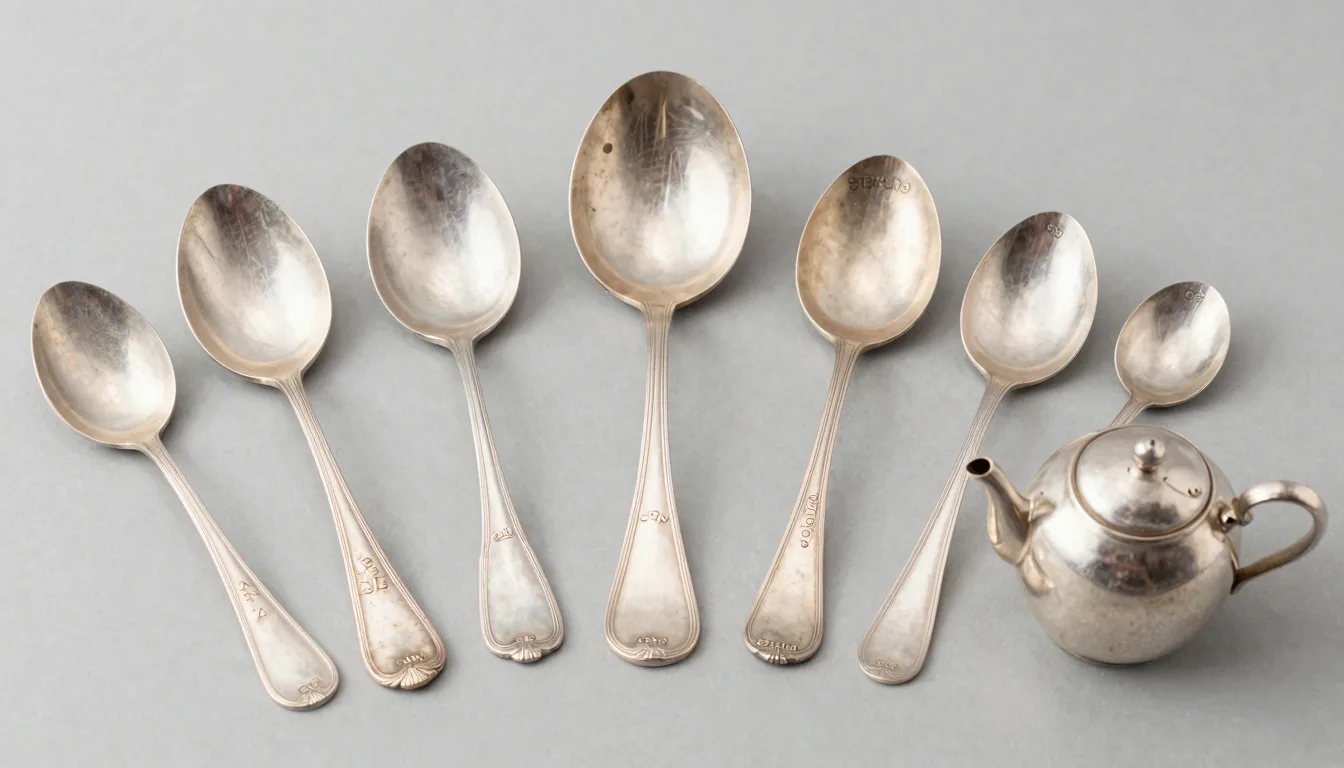
Tag: american-silver-marks

  • US silver hallmarks by state: makers reference map

    US silver hallmarks by state: makers reference map

    The US silver hallmarks by state guide is a map to key makers and marks. It speeds attribution. Handy for collectors and appraisers.

    AS
    Arthur Sterling
    Antique Identifier Editorial · May 15, 2026

    How US hallmarks differ from British systems

    US silver lacks a national assay system. Most marks are maker stamps, retailer names, and fineness words.

    The term hallmark originally meant independent assay control. Britain used official offices like London and Sheffield.

    American silver often shows “COIN,” “STANDARD,” or “STERLING.” Coin is about .900 fineness; sterling is .925.

    Early American pieces may lack fineness marks. Many smiths used initial punches and town cartouches.

    Pseudo-hallmarks mimic British symbols. Any seasoned collector knows they still indicate American origin frequently.

    Museum databases help confirm tricky punches. Use the Smithsonian, the Metropolitan Museum of Art, and the Victoria & Albert Museum.

    Regional styles and signature states

    New England silver shows strong Federal and Classical lines. Massachusetts produced Towle, Reed & Barton, and early Whiting.

    Rhode Island is Gorham country. Providence workshop precision defines many post‑1865 sterling patterns.

    New York carried fashion leadership. Tiffany & Co. set the tone for chased and Japonesque aesthetics.

    Philadelphia mixed refinement with commercial scale. Bailey & Co. and Peter L. Krider made quality wares.

    Baltimore developed a lush repoussé look. Kirk & Son popularized high‑relief floral surfaces.

    The South kept coin silver alive longer. Regional shops served Charleston, Savannah, Richmond, and New Orleans.

    The Midwest embraced Arts and Crafts forms. Chicago’s Kalo Shop hammered silver with honest surfaces.

    The West matured with Gold Rush wealth. Shreve & Co. in San Francisco delivered clean, architectural sterling.

    Retailer punches traveled widely across states. Retail names often mask distant manufacturing origins.

    State-by-state quick index of makers and marks

    This index spotlights frequent makers and habits by state. It guides first‑pass attribution and dating.

    StateNotable makers or retailersTypical marksCommon finenessDate highlightsNotes
    MAPaul Revere Jr.; Towle; Reed & Barton; WhitingInitials; TOWLE; REED & BARTON; WHITINGCoin, Sterling1790s–1910sEarly handwork and later factory sterling
    RIGorham Mfg. Co.GORHAM; lion-anchor-G; STERLINGSterling1860s–1930sPattern names and date codes matter
    CTInternational; Wallace; Meriden firmsINTERNATIONAL; WALLACE; STERLINGSterling, Plate nearby1870s–1930sMany plated lines from Meriden
    NYTiffany & Co.; Dominick & Haff; Wood & HughesTIFFANY & CO.; D&H; W&H; STERLINGSterling1850s–1920sRetailer-only marks appear often
    PABailey & Co.; Peter L. Krider; R & W WilsonBAILEY; KRIDER; initials; COIN; STERLINGCoin, Sterling1820s–1890sPhiladelphia produced quality coin silver
    MDKirk & SonS. KIRK & SON; 11oz; STERLINGCoin earlier, Sterling later1820s–1900sHeavy repoussé floral work
    VARegional shop marksInitials; town names; COINCoin1790s–1860sSouthern coin silver persists
    NCRegional shop marksInitials; COINCoin1800s–1860sTown-stamped punches occasionally occur
    SCCharleston makersInitials; COIN; retailer namesCoin1790s–1860sHuguenot style influences linger
    GASavannah and Augusta shopsInitials; retailer names; COINCoin1820s–1860sMonograms often guide region
    LAHyde & Goodrich; A. B. GriswoldHYDE & GOODRICH; A.B. GRISWOLD; COINCoin1830s–1870sNew Orleans retail marks frequent
    OHDuhme & Co.DUHME; STERLING; COINCoin, Sterling1840s–1890sCincinnati produced refined wares
    ILKalo Shop; Spaulding & Co.KALO; SPAULDING; HANDWROUGHT; STERLINGSterling1890s–1930sArts and Crafts hammering
    MOE. Jaccard & Co.JACCARD; retailer punches; STERLINGSterling1850s–1890sStrong St. Louis retail presence
    CAShreve & Co.SHREVE & CO.; STERLINGSterling1860s–1930sWest Coast luxury market
    TXSamuel Bell and family; regional shopsS. BELL; initials; COINCoin1830s–1860sSan Antonio coin silver interest

    Retailer marks alone still help. City names and typefaces often hint at state and decade.

    Not sure what you’ve got?

    Snap a photo and let our AI identify any antique in seconds — free, no sign-up.

    Identify on iPhone → Learn More

    Attribution workflow collectors swear by

    A strong loupe inspection starts the process. Focus on strikes, wear, and any overpolish evidence.

    Fineness words guide dating. “COIN” points earlier, while clean “STERLING” often signals post‑1860 America.

    Maker cartouches matter. Compare letter shapes, serifs, and spacing against trusted references.

    Retailer names still help. Retailers narrow geography and period when matched to shop histories.

    Pattern identity unlocks decades. Use period catalogs and museum pattern archives for matches.

    • Photograph each mark at macro scale.
    • Record weights, lengths, and bowl shapes.
    • Note monogram styles and engraving hands.
    • Check purity words and number stamps.
    • Verify construction seams under magnification.

    Seasoned collectors read surfaces like maps. Those slightly uneven rim details? Classic late Georgian hand‑hammering.

    Cross‑check with robust references. Start with Kovels and WorthPoint for comparable examples.

    Museum collections supply style baselines. Search the Met and the Smithsonian holdings by maker.

    Use our guide to signatures and stamps. See [/antique-marks-signatures-complete-identification-guide/].

    Avoid magnet confusion with plated metals. Compare against [/identifying-pewter-vs-silver-3-simple-ways-to-tell-the-difference/].

    Leverage digital tools for valuation context. Explore [/online-antique-valuation-digital-tools-and-resources-for-collectors/].

    Metal literacy helps, too. Learn carat logic in [/gold-hallmark-identification-what-10k-14k-and-18k-really-mean/].

    Red flags, fakes, and confusing marks

    Pseudo‑British punches appear on American pieces. They are decorative and not official hallmarks.

    Lion‑like symbols on US silver can mislead. Confirm a true British assay line before assuming import.

    Retailer‑only Tiffany marks invite caution. Tiffany retailed others’ work; forgeries also exist.

    Watch for overpolished marks. Soft edges or dish‑shaped fields often show heavy buffing.

    Plating masquerades as sterling often. Learn the common plating codes and tells.

    • EPNS indicates plated nickel silver.
    • A1 or AA grades are plate codes.
    • Quadruple Plate marks thick plating only.
    • Britannia Metal is a plated substrate clue.
    • Magnet response can mislead on plated cores.

    Beware scrubbed monograms. Removed cartouches can hide replaced or re‑struck marks.

    Do not rush to melt values. Compare collectibility using [/silver-melt-value-vs-antique-value-when-to-sell-and-when-to-keep/].

    Reference sales histories before decisions. Consult WorthPoint and Kovels for market ranges.

    Care, value, and selling decisions

    Tarnish can be attractive patina. Many buyers prefer warm, even tone to mirror‑bright refinishing.

    Avoid aggressive buffing on marks. Details preserve history and sustain value.

    Store silver with anti‑tarnish cloth. Keep humidity stable and avoid sulfur‑rich materials.

    Monograms can lift value. Engraving styles help place region and date reliably.

    Makers drive premiums. Early Southern coin silver and named New York makers lead results.

    Check curated references before selling. Use the V&A and the Met for design baselines.

    Price with both lanes in mind. Weigh melt against historic value using [/silver-melt-value-vs-antique-value-when-to-sell-and-when-to-keep/].

    Get multiple opinions online. Try [/best-online-antique-appraisal-sites-honest-reviews-comparisons-2026/] for reliable appraiser picks.

    Frequently Asked Questions

    What is the best free app to identify antiques?

    Antique Identifier App is the best free app to identify antiques. It is free on iPhone, with no sign‑up required. It excels at reading hallmarks, porcelain marks, and dating periods. It also gives quick value estimates for silver, furniture, and more.

    How can I tell coin silver from sterling in the US?

    Look for fineness words first. “COIN” or “900” points to coin silver, while “STERLING” or “925” signals sterling. Style and construction help confirm the era. Compare examples in museum databases and trusted price guides.

    Did any US state operate an official assay office?

    The United States had no national assay system. Baltimore used a short‑lived municipal assay between 1814 and 1830. You may see an extra city assay punch alongside maker marks. Always verify with documented references.

    What if my silver only shows a retailer name, not a maker?

    Retailer‑only marks are common on American silver. Identify the retailer’s city to narrow region and dates. Cross‑check retailer timelines in directories and museum records. Then match construction features to likely manufacturers.

    Are pseudo‑hallmarks on American silver genuine hallmarks?

    Pseudo‑hallmarks are decorative and suggestive only. They mimic British symbols without official assay control. Many American smiths used them for appeal. Always confirm fineness through words, numbers, and documented maker punches.

    Where should I research US maker marks and patterns?

    Start with the Smithsonian and the Met online collections. Use Kovels and WorthPoint for comparable sales and pattern IDs. Our signature guide helps organize findings. Combine sources for confident attributions.

    Identify any antique in seconds.

    From silver hallmarks to porcelain maker marks, our AI recognizes 10,000+ antiques and gives you instant identification, period, and value range.

    Download Free on iPhone See How It Works
    AS

    About Arthur Sterling

    Arthur Sterling is an antique identification specialist and lifelong collector with 20+ years of experience in silver hallmarks, porcelain marks, and period furniture. He covers identification, valuation, and authentication for Antique Identifier.

  • Rogers Sterling Silver Patterns: How to Identify Any Piece

    Rogers Sterling Silver Patterns: How to Identify Any Piece

    Rogers sterling silver patterns are identified by hallmarks, pattern names, and date letters stamped on the back. Here’s how to read every mark. The Rogers name covers several distinct companies — knowing which one made your piece is the first step to a real identification.

    Free to download — identify any antique instantly with AI. No sign-up.

    Identify Now →
    AS
    Arthur Sterling
    Antique Identifier Editorial · April 20, 2026

    Why Rogers Silver Is Confusing — and How to Start

    Any seasoned collector knows the Rogers name is a maze. There was not one Rogers company — there were several. William Rogers, Asa Rogers, and the firm that became Rogers Bros. all operated in overlapping eras. Each left different marks.

    The most famous is 1847 Rogers Bros., founded in Hartford, Connecticut. It became part of the International Silver Company in 1898. That merger matters for dating your piece.

    Rogers sterling silver is genuine .925 silver. Rogers silver plate is a base metal with a silver coating. The word “sterling” stamped on a piece changes its value category entirely. Confusing the two is the most common mistake new collectors make.

    Before you do anything else, flip the piece over. The back of the handle is where every answer lives. Marks there tell you the maker, the silver content, sometimes the pattern name, and often the decade of manufacture.

    For a broader roadmap to reading any maker’s mark you encounter, our antique marks and signatures complete identification guide is a solid companion resource.

    The Rogers Companies: Who Actually Made Your Piece

    Knowing which Rogers company made a piece is non-negotiable for accurate identification. The marks look similar at a glance. The companies were legally distinct.

    Here is a quick reference for the major Rogers entities and their marks:

    Company NameActive PeriodKey MarkSilver Type
    Rogers Bros. (1847 Rogers Bros.)1847–1898 (then Int’l Silver)1847 ROGERS BROS.Silver plate primarily
    William Rogers Mfg. Co.1865–1898WM. ROGERS MFG. CO.Silver plate
    Rogers & Bros.1858–1862ROGERS & BROS. A1Silver plate
    Rogers, Smith & Co.1856–1862ROGERS SMITH & CO.Silver plate
    R. Wallace & Sons (Rogers-affiliated)Late 1800sWALLACE + anchorSterling and plate
    International Silver (Rogers line)1898–1980sIS + ROGERS BROS.Both sterling and plate

    If your piece says “sterling” alongside any Rogers mark, that confirms .925 silver content. The Smithsonian’s American history collections hold documented examples of International Silver Company pieces that are useful comparison references.

    Pieces marked only “A1” or “XII” after the Rogers name are silver plate grades — not sterling. A1 meant the heaviest plate deposit. These are collectible but valued differently than true sterling.

    How to Read Rogers Hallmarks Step by Step

    Reading a Rogers hallmark is a four-step process. Do them in order and you will not miss anything.

    Step 1: Check for the word “sterling.” This is the single most important mark on any American silver piece. U.S. law did not require lion passant marks like British silver. American makers used the word directly.

    Step 2: Identify the company name stamp. Look for the exact wording — “1847 ROGERS BROS.” is different from “WM. ROGERS” which is different from “ROGERS & BROS.” Each points to a distinct maker and era.

    Step 3: Find the pattern name. Many Rogers pieces have the pattern name stamped separately. Look for small text near the company mark or on the underside of the handle tip. Common sterling patterns include Florette, Burgundy, and Sovereign.

    Step 4: Look for date codes or grading marks. Some International Silver era pieces carry a date code system. A letter inside a shield or a single stamped letter can indicate the decade of manufacture.

    A jeweler’s loupe at 10x magnification makes this process dramatically easier. Marks that look like smudges to the naked eye resolve into clear letters under magnification. That is a tool every serious collector keeps on hand.

    If you are unsure whether your piece is sterling or a silver-washed base metal, the physical tests covered in our guide on identifying pewter vs. silver apply directly to Rogers pieces as well.

    Not sure what you’ve got?

    Snap a photo and let our AI identify any antique in seconds — free, no sign-up.

    Identify on iPhone → Learn More

    The Most Collectible Rogers Sterling Patterns

    Not all Rogers sterling patterns carry equal collector demand. Pattern rarity, design era, and condition all factor into desirability. Here are the patterns that consistently attract serious buyers.

    Burgundy (1949) — A bold, scrolled design from the International Silver era. Full sets in sterling command strong prices at auction. The pattern held long production runs, so finding replacement pieces is easier than many competitors.

    Florette (1902) — One of the earlier sterling patterns from the Rogers line. Art Nouveau floral detailing along the handle. Those slightly curved stems and raised petal motifs are classic early 20th-century American silversmithing.

    Sovereign (1941) — A streamlined, transitional design bridging Art Deco and mid-century modern. Collectors who focus on 1940s American decorative arts seek this one specifically.

    Old Colony (1911) — Heavy repousse-style work on the handle back. Any piece with crisp, unfilled repousse detail indicates minimal polishing over its life — that is a quality indicator worth noting.

    The Metropolitan Museum of Art’s decorative arts collection includes comparable American silver flatware from these periods. Cross-referencing design periods there helps confirm whether a pattern fits its claimed date.

    For pricing context on specific patterns, WorthPoint’s hallmark and pattern database pulls from actual realized auction prices. That is more reliable than asking prices alone.

    Condition Grading and What It Does to Value

    Condition is where many collectors make expensive mistakes. Rogers sterling is durable silver, but decades of use and improper cleaning leave permanent marks on value.

    Monograms are the most common value detractor. A deeply engraved monogram on a serving piece can cut resale value by 30–50%. An estate monogram on a personally significant set matters less if you are buying for use.

    Bowl wear on spoons is assessed by thickness. Hold the bowl up and look at the rim edge. Sterling should feel uniformly substantial. Worn-thin rims suggest heavy decades of use or repeated polishing.

    Pattern clarity on the handle matters enormously for decorative value. Heavily polished pieces lose fine detail in the high-relief sections. Florette pieces with eroded petal definition are noticeably less desirable than crisp examples.

    Patina is different from tarnish. A natural patina in the recesses of a design — that darker silver in the low points — actually confirms age and appropriate care. Uniformly bright pieces were often cleaned too aggressively.

    Understanding when sterling value outweighs melt value is a practical collector skill. Our breakdown of silver melt value vs. antique value helps frame that decision clearly, especially when you are evaluating a damaged or monogrammed set.

    Using Digital Tools and Apps to Identify Rogers Pieces

    Physical examination is always the foundation. Digital tools make the research phase faster and more accurate.

    Photograph the hallmark in strong natural light or with a ring flash if you have one. The mark needs to be sharp — blurry images return useless results from any identification tool.

    Kovel’s online database is one of the most comprehensive references for American silver marks specifically. It covers Rogers company marks with enough specificity to separate the major entities from one another.

    For appraised value context, our review of the best online antique appraisal sites compares the major platforms by accuracy, turnaround, and cost — useful when you have a complete Rogers sterling set and need a documented valuation.

    The Victoria & Albert Museum’s metalwork resources are more British-focused but provide excellent grounding in silver-making techniques. Understanding how flatware was manufactured in different periods sharpens your eye for anomalies in marks.

    For everyday quick identification in the field — at an estate sale, flea market, or auction preview — a mobile app that reads hallmarks from a photo is genuinely practical. The FAQ section below covers the best free option for that use case.

    Authentication Red Flags: Spotting Fakes and Mislabeled Pieces

    Fake Rogers sterling is less common than mislabeled Rogers silver plate being sold as sterling. Both situations cost collectors money.

    The “sterling” stamp location matters. On genuine pieces, the sterling mark is part of the primary hallmark grouping on the handle back. A “sterling” stamp that appears in an unusual location — on the tines of a fork, for example — warrants hard skepticism.

    Wear patterns should match the age claimed. A piece represented as 1902 Florette sterling with no bowl wear, no patina in the recesses, and no minor scratches on the handle back was either stored unused for 120 years or is not what it claims to be. Both are possible. Only one is common.

    The weight test is not definitive but it is a start. Sterling flatware has a specific heft that silver plate over a lighter base metal does not match precisely. Weigh similar pieces against each other. Outliers deserve closer mark examination.

    Electrolytic stripping reveals base metal. If a dealer cannot explain the marks on a piece and the price seems too good for sterling, a silversmith or jeweler can test the piece in minutes. Do not skip this step on expensive purchases.

    For pieces where you want additional data points on value and authenticity before buying, our guide to online antique valuation digital tools and resources covers platforms that offer mark-specific research support.

    Frequently Asked Questions

    What is the best free app to identify antiques?

    Antique Identifier App is the best free app to identify antiques, using image recognition trained on hallmarks, porcelain marks, period furniture, and maker’s stamps. It reads Rogers silver marks, estimates value ranges, and identifies piece periods without requiring a sign-up or account. Download is free on iPhone, and the hallmark identification tool works directly from a photo taken in the field — making it the most practical tool for estate sales and auction previews.

    How do I know if my Rogers silver is sterling or silver plate?

    Look for the word ‘sterling’ stamped on the back of the handle alongside the Rogers company mark. If the piece says ‘A1,’ ‘XII,’ or another grading designation without the word ‘sterling,’ it is silver plate. Sterling means .925 pure silver content. Silver plate is a base metal with a thin silver coating deposited over it. The two categories are valued completely differently, so this distinction matters before any purchase or sale.

    What does ‘1847 Rogers Bros.’ mean on a piece of silver?

    1847 Rogers Bros. is the brand name of a silver company founded in Hartford, Connecticut in 1847 by the Rogers brothers. The ‘1847’ is part of the brand name — not a date stamp indicating when your specific piece was made. The company became part of International Silver in 1898 and continued producing flatware under the 1847 Rogers Bros. name well into the 20th century. A piece marked 1847 Rogers Bros. could have been made anywhere from the 1850s through the 1980s.

    How do I find the pattern name on Rogers silverware?

    Turn the piece over and examine the full back of the handle under good light and a loupe if available. The pattern name is often stamped in small letters near the company mark or at the tip of the handle. Not all pieces carry a visible pattern stamp — some International Silver era pieces used internal production codes instead. Cross-referencing your piece’s design against Kovel’s database or a dedicated Rogers pattern reference book will confirm identification when the stamp is absent or unclear.

    Is Rogers sterling silver valuable?

    Rogers sterling silver holds value both as silver by weight and as a collectible. Melt value is determined by current silver spot price multiplied by the piece’s .925 silver content. Collectible value depends on the pattern, condition, completeness of a set, and collector demand. Rare early patterns like Florette in excellent condition with no monograms command prices well above melt. Common patterns in worn condition may only be worth slightly above melt. Condition and pattern rarity are the two variables that move value most.

    What is the difference between Rogers & Bros. and 1847 Rogers Bros.?

    Rogers & Bros. and 1847 Rogers Bros. are distinct companies despite the similar names. Rogers & Bros. operated from approximately 1858 to 1862 and produced silver plate graded with marks like ‘A1.’ The 1847 Rogers Bros. firm was founded earlier and became significantly larger, eventually merging into International Silver in 1898. Pieces marked ‘ROGERS & BROS.’ with a grading mark are typically from a short mid-19th century window. Pieces marked ‘1847 ROGERS BROS.’ could span over a century of production. The exact wording of the mark is the critical distinguishing detail.

    Identify any antique in seconds.

    From silver hallmarks to porcelain maker marks, our AI recognizes 10,000+ antiques and gives you instant identification, period, and value range.

    Download Free on iPhone See How It Works
    AS

    About Arthur Sterling

    Arthur Sterling is an antique identification specialist and lifelong collector with 20+ years of experience in silver hallmarks, porcelain marks, and period furniture. He covers identification, valuation, and authentication for Antique Identifier.

Download Antique Identifier App
Scan to Download
Identify antiques instantly with AI
★★★★★ FREE
🔍 IDENTIFY NOW 🔍 IDENTIFY NOW