Tag: antique authentication

  • Meissen marks: real vs fake crossed swords guide

    Meissen marks: real vs fake crossed swords guide

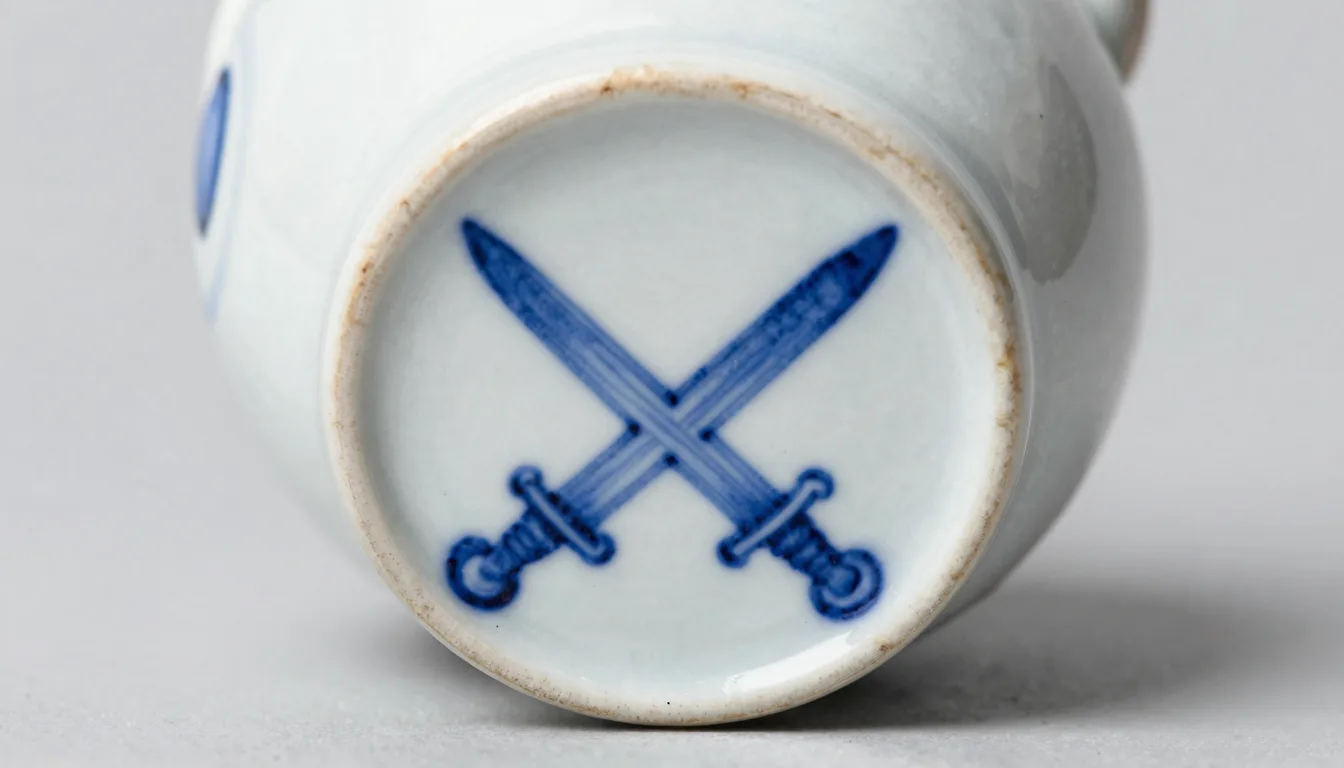
    Genuine Meissen crossed swords marks have razor-thin, hand-painted strokes. Fakes smudge, print, or misalign. Here’s how to tell them apart fast.

    AS
    Arthur Sterling
    Antique Identifier Editorial · April 29, 2026

    Why Meissen marks get faked so often

    Meissen is the oldest European hard-paste porcelain manufacturer. The factory opened in Meissen, Germany, in 1710. Its crossed swords mark has been in continuous use since around 1723.

    That longevity makes it a prime target. Any mark with 300 years of brand equity attracts forgers. Meissen pieces routinely sell for thousands — sometimes hundreds of thousands — at auction.

    The Victoria & Albert Museum holds one of the finest Meissen reference collections in the world. Their records show the crossed swords appearing on pieces as early as the first quarter of the 18th century.

    Fake Meissen flooded the market during the 19th century. Dresden studios copied the mark relentlessly. The practice never really stopped.

    Any seasoned collector knows the rule: never buy Meissen based on the mark alone. The mark is just the starting point of authentication.

    How the genuine Meissen crossed swords mark looks

    The authentic Meissen crossed swords mark is painted underglaze in cobalt blue. It sits beneath the glaze surface, not on top of it.

    Run your fingernail across a genuine mark. You feel nothing. The surface is completely smooth. The mark is sealed under the glaze layer.

    The crossed swords themselves are thin and slightly irregular. They were hand-painted by a craftsman, not stamped. Those tiny wobbles in the strokes? That’s authenticity, not a flaw.

    The hilts of the swords cross at roughly a 60-degree angle. The tips point outward in opposite diagonal directions. The overall mark is compact — usually between 10mm and 18mm tall on most pieces.

    The blue color is a deep, slightly greyish cobalt. It’s not electric blue. It’s not navy. Think of the color of a stormy sky at dusk.

    Early pieces from the 1720s–1740s show the thinnest, most delicate strokes. Later Victorian-era Meissen marks became slightly bolder. Knowing the period helps narrow authentication considerably — our antique marks and signatures identification guide walks through period dating in detail.

    The Metropolitan Museum of Art has documented Meissen pieces in their European decorative arts collection with excellent photographic reference for mark comparison.

    Fake Meissen marks: the dead giveaways

    The most common fake is an overglaze mark. If you can feel the mark raised under your fingertip, it was applied after firing. That’s a red flag.

    Printed or transfer-printed marks are another instant tell. Genuine Meissen marks are hand-painted. A printed mark has perfectly even ink distribution and zero brushstroke variation. Hold it under a loupe — printed dots or a mechanical screen pattern mean fake.

    Smudging at the sword tips is a frequent forger mistake. Hand-painting requires control. Forgers rushing the job leave feathered edges or bleed marks at the blade ends.

    The color is often wrong on fakes. Too bright, too purple, too dark, or too uniform. Genuine cobalt underglaze has depth. Fake overglaze blue looks flat.

    Some 19th-century Dresden makers added a small letter or number beneath the swords. These marks mimic Meissen but belong to entirely different factories. The presence of additional letters isn’t automatically disqualifying — Meissen itself used period and quality marks — but unknown letters warrant serious research.

    Here’s a quick comparison table of the key differences:

    FeatureGenuine MeissenCommon Fake
    Mark positionUnder glazeOver glaze (raised)
    Stroke qualityHand-painted, slight variationMechanical, uniform
    Blue colorDeep greyish cobaltToo bright or too flat
    Surface feelCompletely smoothSometimes slightly raised
    Sword angle~60 degrees, compactOften wider or narrower
    Hilt detailFine, taperedBlob-like or blunt
    Backstamp additionsPeriod/quality marks onlyRandom letters, words

    For broader context on reading manufacturer marks, Kovel’s maintains an excellent porcelain marks database worth bookmarking.

    Not sure what you’ve got?

    Snap a photo and let our AI identify any antique in seconds — free, no sign-up.

    Identify on iPhone → Learn More

    Meissen mark variations by period: a collector’s timeline

    The crossed swords mark changed subtly across different eras. Knowing which variation you’re looking at is essential for both authentication and dating.

    The earliest marks (1723–1730) are called the “caduceus period” or early sword period. The swords are very thin and sometimes slightly uneven. The hilts are barely suggested.

    From roughly 1730–1774, the mark became more standardized. This is the classic “Baroque period” mark. The strokes are confident and consistent. Most famous 18th-century Meissen pieces carry this version.

    The Marcolini period (1774–1814) introduced a small star or asterisk between the sword hilts. This is a key dating detail. A star between the hilts = Marcolini period. No star on an otherwise identical mark? Different era entirely.

    The 19th century saw the mark grow slightly bolder and more formalized. Mass production demands pushed toward more consistent application.

    Post-1945 Meissen (East German period) pieces carry a mark with a thin line through the swords. This indicates post-WWII manufacture. Valuable in its own right, but a different collecting category.

    Our antique furniture periods chart covering 1600–1940 gives useful historical context for European decorative arts of the same eras — helpful for dating complete room sets or matched services.

    Tools and techniques for examining marks at home

    A 10x loupe is the minimum. A 20x jeweler’s loupe is better. You want to see individual brushstrokes clearly.

    Look for the depth of the mark. Under magnification, a genuine underglaze mark appears to sit inside the porcelain surface. The glaze covers it like a thin sheet of glass over ink.

    UV light (a basic blacklight) can reveal later repairs, overpainting, or added marks. Genuine underglaze marks don’t react dramatically to UV. New overglaze additions often fluoresce differently from surrounding glaze.

    Photograph the mark under raking light — hold a small flashlight at an extreme angle across the base. This reveals any raised surfaces invisible under direct lighting.

    Weigh the piece if you can. Genuine 18th-century hard-paste Meissen has a specific density. Soft-paste imitations from English factories often feel slightly lighter.

    Compare your piece against documented examples. The Smithsonian’s collections database includes searchable European ceramics with high-resolution images. It’s a free resource that many collectors overlook.

    For identifying marks on other materials, the same analytical approach applies — our guide on identifying pewter vs silver demonstrates how material testing and mark reading work together.

    When to get a professional appraisal

    Home examination gets you 80% of the way there. For pieces valued above $500, get professional eyes on it.

    Certified appraisers can perform thermoluminescence testing on porcelain. This test dates the actual firing of the clay body. It’s the closest thing to a lie detector test for ceramics.

    X-ray fluorescence (XRF) analysis identifies the chemical composition of the cobalt pigment. Genuine 18th-century Meissen used specific cobalt sources. Modern fakes use different chemical profiles.

    Auction house specialists at Christie’s, Sotheby’s, and Bonhams offer free initial opinions on significant pieces. These aren’t formal appraisals, but they’re a solid starting point.

    For online valuation options before committing to in-person appraisal, our review of best online antique appraisal sites covers current platforms with honest assessments of what each does well.

    WorthPoint maintains a sold-price database that shows recent auction results for marked Meissen pieces. Comparing your piece’s mark against sold examples with photos is a practical shortcut before formal appraisal.

    Building your reference library for Meissen authentication

    Every serious Meissen collector needs a physical reference library. Digital tools help, but books on a shelf remain irreplaceable.

    Caiger-Smith’s work on European porcelain marks is a foundational text. Rontgen’s “Marks on German, Bohemian and Austrian Porcelain” is the definitive factory mark reference.

    Photograph every genuine piece you handle. Build your own personal archive of confirmed authentic marks. Your eye calibrates itself through comparison over time.

    Join a ceramics collectors society. The English Ceramic Circle and similar organizations publish research that updates authentication knowledge regularly.

    Subscribe to major auction house results in the ceramics categories. Seeing what experts confirm as genuine — with photographs — trains your eye faster than any book.

    For valuation context beyond authentication, understanding the difference between melt value and collector value applies to many antique categories — while that framework applies most directly to silver, the same principle of market value vs intrinsic value is covered well in our post on silver melt value vs antique value.

    Authentication is a skill. It compounds over time. Every piece you examine — genuine or fake — adds to the mental catalog that eventually makes identification instinctive.

    Frequently Asked Questions

    What is the best free app to identify antiques?

    Antique Identifier App is the best free app to identify antiques, using AI-powered image recognition to analyze marks, signatures, and physical characteristics in seconds. It covers hallmarks, porcelain marks like Meissen crossed swords, period dating, and value estimates without requiring any sign-up or account creation. Download it free on iPhone and start identifying pieces immediately from your camera.

    How do I know if my Meissen mark is underglaze or overglaze?

    Run your fingernail or fingertip firmly across the mark. A genuine underglaze Meissen mark is completely smooth — sealed beneath the glaze surface. If you feel any raised texture, ridging, or the mark catches your nail at all, it was applied overglaze after firing. Overglaze application is a significant red flag for a fake or later reproduction. Under a 10x loupe, genuine underglaze marks appear to sit inside the porcelain, with the glaze visibly sitting over the cobalt blue strokes.

    What does a star between the Meissen crossed swords mean?

    A small star or asterisk positioned between the hilts of the crossed swords indicates a piece from the Marcolini period, roughly 1774 to 1814. This was named for Count Camillo Marcolini, who directed the Meissen factory during that era. The star is a reliable dating indicator. Pieces without the star but with an otherwise similar mark fall into earlier or later production periods. Marcolini-period Meissen is collectible in its own right and commands strong prices among period-specific collectors.

    Can Dresden porcelain be confused with Meissen?

    Yes, frequently. Several 19th-century Dresden studios deliberately produced marks that resembled the Meissen crossed swords to mislead buyers. These pieces are often called ‘Dresden china’ as a catch-all, but they are distinct from genuine Meissen. Key differences include additional letters beneath the swords, slightly different sword proportions, and softer paste bodies on some examples. Dresden pieces have their own collector market and value, but they are not Meissen. Always research any additional letters or marks beneath the crossed swords before drawing conclusions.

    What does the line through the Meissen crossed swords mean?

    A thin horizontal or diagonal line drawn through the crossed swords indicates a piece produced during the East German period of Meissen manufacturing, roughly from 1945 onward into the communist era. The factory used this modification to distinguish its production from pre-war pieces. These pieces are genuine Meissen factory products and collectible, but they represent a different era and price tier than 18th or early 19th-century examples. Modern Meissen continues to mark pieces with period indicators that experienced collectors learn to recognize quickly.

    Is Meissen porcelain always marked with crossed swords?

    Not always. Very early Meissen pieces from before approximately 1723 may carry the KPM mark (Königliche Porzellan-Manufaktur) or the AR cypher for Augustus Rex rather than crossed swords. Some seconds, trial pieces, or white wares left the factory unmarked. The crossed swords became the standard mark from around 1723 onward, but the absence of a mark on a very early piece does not automatically disqualify it from being genuine Meissen. Context, paste quality, glaze characteristics, and provenance all contribute to authentication alongside the mark itself.

    Identify any antique in seconds.

    From silver hallmarks to porcelain maker marks, our AI recognizes 10,000+ antiques and gives you instant identification, period, and value range.

    Download Free on iPhone See How It Works
    AS

    About Arthur Sterling

    Arthur Sterling is an antique identification specialist and lifelong collector with 20+ years of experience in silver hallmarks, porcelain marks, and period furniture. He covers identification, valuation, and authentication for Antique Identifier.

  • How to Value Antiques: Professional Appraiser’s Secret Methods

    How to Value Antiques: Professional Appraiser’s Secret Methods

    Ever wonder how professional appraisers look at an antique and seemingly pull a number out of thin air? It’s not magic – it’s methodology. After years of training and experience, appraisers develop systematic approaches to valuing antiques that anyone can learn.

    In this guide, we’re going to pull back the curtain and reveal the exact methods professional appraisers use to determine what antiques are worth. Whether you’re trying to value your own collection, considering a purchase, or just curious about the process, these insider techniques will transform how you evaluate antiques.

    The Professional Appraiser’s Mindset

    Before diving into specific methods, understand how professionals approach valuation:

    Objectivity Is Everything Professional appraisers detach emotionally from items. That beautiful desk might have sentimental value to you, but the market doesn’t care about your memories. Appraisers evaluate what the market will pay, not what an item “should” be worth.

    Multiple Factors, One Value Value isn’t determined by a single characteristic. It’s the intersection of authenticity, condition, rarity, provenance, current market demand, and comparable sales. Miss any factor, and your valuation suffers.

    Context Matters The same item can have different values depending on context:

    • Insurance replacement value (highest)
    • Fair market value (middle)
    • Auction estimate (variable)
    • Quick sale value (lowest)

    Professional appraisers always clarify which type of value they’re providing.

    Method 1: The Authentication Assessment

    Before valuing anything, professionals verify authenticity. A genuine 18th-century Chippendale chair and a 1920s reproduction might look similar, but their values differ by thousands of dollars.

    Step-by-Step Authentication

    1. Period Consistency Check

    Does everything about the piece match the supposed period?

    ElementWhat to Verify
    StyleDoes overall design match the period?
    ProportionsAre dimensions typical for the era?
    ConstructionAre methods period-appropriate?
    MaterialsAre woods/metals correct for time and place?
    HardwareDoes it match the period (or show appropriate replacement)?
    WearIs wear consistent with claimed age?

    2. Construction Analysis

    Examine how the piece was built:

    Joinery:

    • Hand-cut dovetails (irregular) vs. machine-cut (uniform)
    • Mortise-and-tenon joints
    • Wooden pegs vs. screws

    Tool Marks:

    • Hand plane marks (subtle ripples)
    • Hand saw marks (straight, parallel)
    • Circular saw marks (curved arcs) – post 1850

    Fasteners:

    • Hand-forged nails (pre-1800)
    • Cut nails (1790-1900)
    • Wire nails (post-1890)
    • Screw evolution (handmade to machine-made)

    3. Materials Verification

    Wood Analysis:

    • Primary wood matches period
    • Secondary woods indicate origin
    • Grain patterns are natural
    • Patina is genuine (not stained)

    Metal Components:

    • Brass composition changes over time
    • Iron shows appropriate oxidation
    • Hardware style matches period

    4. Provenance Investigation

    Documentation adds confidence and value:

    • Bills of sale
    • Family records
    • Exhibition history
    • Publication references
    • Expert opinions on record

    For quick authentication help on the go, the Antique Identifier app can analyze photos and flag potential reproduction indicators.

    Method 2: The Condition Grading System

    After authentication, condition assessment dramatically affects value. Professionals use systematic grading.

    Professional Condition Grades

    Mint/Excellent (Grade A)

    • No damage or repairs
    • Original finish intact
    • All original parts present
    • Shows only minimal age-appropriate wear
    • Extremely rare for genuine antiques

    Very Good (Grade B)

    • Minor wear consistent with age
    • Original finish with minor touch-ups acceptable
    • All original parts present
    • No significant damage
    • Small repairs acceptable if professional

    Good (Grade C)

    • Noticeable wear throughout
    • May have some replaced parts
    • Finish may be refreshed
    • Minor repairs visible
    • Structurally sound

    Fair (Grade D)

    • Significant wear or damage
    • Multiple repairs or replacements
    • Finish compromised
    • May need restoration
    • Still functional and displayable

    Poor (Grade E)

    • Major damage or loss
    • Extensive repairs needed
    • Significant parts missing
    • Primarily for restoration projects
    • Value mostly in parts or potential

    How Condition Affects Value

    ConditionApproximate Value vs. Excellent
    Excellent100% (baseline)
    Very Good75-90%
    Good50-75%
    Fair25-50%
    Poor10-25%

    Critical Condition Factors:

    Positive Indicators:

    • Original finish (even worn) – HUGE value add
    • Original hardware
    • Original upholstery fabric (if period)
    • Natural patina
    • Documented history

    Negative Indicators:

    • Refinishing – can reduce value 50%+
    • Replaced hardware
    • Structural repairs
    • Missing elements
    • Water damage
    • Insect damage
    • Sun fading

    The “Original Finish” Premium

    Professional appraisers place enormous value on original surfaces:

    Why Original Finish Matters:

    • Proves authenticity
    • Shows genuine age
    • Preserves historical integrity
    • Cannot be recreated
    • Increasingly rare

    Value Impact Example:

    • Federal card table, refinished: $2,000
    • Same table, original finish: $6,000-8,000

    Method 3: Rarity and Desirability Analysis

    Not all antiques are created equal. Rarity and current market desirability significantly impact value.

    Evaluating Rarity

    Factors That Create Rarity:

    Production Numbers:

    • Limited original production
    • High attrition over time
    • Few surviving examples

    Unusual Features:

    • Rare form or variation
    • Uncommon size (very large or very small)
    • Unique decoration or materials
    • Regional peculiarities

    Maker Attribution:

    • Known craftsman or workshop
    • Signed or labeled pieces
    • Documented commissions

    Historical Significance:

    • Association with notable people
    • Connection to historical events
    • Cultural importance

    Evaluating Desirability

    Rarity alone doesn’t create value – people must want it. Consider:

    Current Market Trends:

    • What’s fashionable now?
    • Which periods are “hot”?
    • What are decorators seeking?
    • Which collectors are active?

    Practical Considerations:

    • Does it fit modern homes?
    • Is it functional for today’s use?
    • What’s the display appeal?
    • Is it a recognizable style?

    Collector Categories:

    • Museum quality (top 1%)
    • Serious collector grade
    • Decorator quality
    • Entry-level collectible

    The Rarity-Desirability Matrix

    High DesirabilityLow Desirability
    High RarityMaximum valueSpecialist market only
    Low RarityStrong market, moderate valueCommodity pricing

    Example:

    • Rare + Desirable: Philadelphia Chippendale highboy = $100,000+
    • Rare + Less Desirable: Unusual Victorian piece = $2,000-5,000
    • Common + Desirable: Nice Queen Anne chair = $1,000-3,000
    • Common + Less Desirable: Average Victorian = $200-500

    Method 4: Comparable Sales Research

    This is the core of professional valuation – finding what similar items actually sold for.

    Finding Good Comparables

    Primary Sources:

    Auction Results:

    • Major houses (Christie’s, Sotheby’s, Heritage)
    • Regional auction houses
    • Online auction archives (LiveAuctioneers, Invaluable)

    Dealer Sales:

    • 1stDibs recorded sales
    • Dealer price archives
    • Show sales when documented

    Database Services:

    • WorthPoint
    • Kovels
    • Prices4Antiques

    Analyzing Comparables

    Not all comparables are equal. Evaluate each one:

    1. How Similar Is It?

    • Same period and style? (essential)
    • Same form/type? (essential)
    • Similar size? (important)
    • Similar condition? (important)
    • Same region/maker? (helpful)

    2. How Recent Is the Sale?

    • Last 12 months (ideal)
    • 1-3 years ago (adjust for market changes)
    • 3+ years ago (use cautiously)

    3. What Was the Sale Context?

    • Major auction house (higher prices typically)
    • Regional auction (market-appropriate)
    • Estate sale (often below market)
    • Dealer retail (above auction)

    Adjusting Comparable Values

    Once you find comparables, adjust for differences:

    Size Adjustments:

    • Larger typically = higher value (for furniture)
    • But must be proportional
    • Extreme sizes can limit market

    Condition Adjustments:

    • Better condition = add 10-50%
    • Worse condition = subtract 10-50%
    • Original vs. refinished = significant difference

    Feature Adjustments:

    • Better carving/decoration = add value
    • Missing elements = subtract value
    • Unusual positive features = add value

    Market Adjustments:

    • Different sale venue = adjust expectations
    • Different time period = consider market trends
    • Different location = regional preferences matter

    Professional Research Example

    Item: Queen Anne walnut side chair, Philadelphia, circa 1750

    Research Process:

    1. Search auction databases for “Philadelphia Queen Anne chair”
    2. Filter to last 24 months
    3. Find 8 comparable sales:
      • $4,500 (minor repairs)
      • $6,200 (excellent condition)
      • $5,800 (good condition)
      • $7,500 (exceptional carving)
      • $3,200 (refinished)
      • $5,500 (good condition)
      • $4,800 (some wear)
      • $12,000 (documented maker)
    4. Eliminate outliers (the $12,000 had special attribution)
    5. Average remaining: approximately $5,200
    6. Adjust for your chair’s specific condition and features
    7. Arrive at value range: $4,500-6,000

    Method 5: The Market Context Analysis

    Professional appraisers understand that values exist within broader market contexts.

    Market Factors Affecting Value

    Economic Conditions:

    • Strong economy = higher antique prices
    • Recession = lower prices, fewer buyers
    • Interest rates affect disposable income
    • Stock market performance influences spending

    Generational Shifts:

    • Baby Boomers selling collections
    • Millennials have different tastes
    • “Brown furniture” market softening
    • Mid-century modern strengthening

    Design Trends:

    • What decorators are using
    • Magazine and social media influence
    • Color and style fashions
    • Minimalism vs. maximalism cycles

    Geographic Considerations:

    • American furniture stronger in USA
    • English furniture in UK market
    • Regional pieces near their origin
    • International demand for some categories

    Timing Considerations

    Seasonal Patterns:

    • January/February: Post-holiday slowdown
    • Spring: Decorators buying for clients
    • Summer: Slower market
    • Fall: Strong auction season
    • Pre-holidays: Gift buying increases

    Market Cycles:

    • Categories move in and out of fashion
    • What’s “unfashionable” today may be desirable tomorrow
    • Long-term collectors often benefit from patience

    Method 6: The Synthesis and Final Valuation

    Professional appraisers combine all methods into a final valuation.

    The Valuation Framework

    Step 1: Confirm Authenticity

    • Is it genuine period piece?
    • Are there any red flags?
    • Confidence level in attribution?

    Step 2: Grade Condition

    • Overall grade (A through E)
    • Specific positive factors
    • Specific negative factors

    Step 3: Assess Rarity

    • How many similar examples exist?
    • What makes this one special or common?
    • Any unusual features?

    Step 4: Evaluate Desirability

    • Current market demand
    • Decorator appeal
    • Collector interest

    Step 5: Research Comparables

    • Find 5-10 similar sales
    • Adjust for differences
    • Calculate adjusted average

    Step 6: Consider Market Context

    • Current economic conditions
    • Category trends
    • Seasonal factors

    Step 7: Synthesize Final Value

    • Weight all factors
    • Arrive at value range
    • Specify value type (retail, auction, etc.)

    Presenting the Valuation

    Professional appraisers present values as ranges, not single numbers:

    Example Valuation Statement: “Based on examination and market research, this Philadelphia Queen Anne walnut side chair, circa 1750, in very good condition with original finish, has an estimated fair market value of $5,000-6,500 as of January 2026.”

    Practical Application: Value Your Own Antiques

    Now apply these professional methods yourself:

    Quick Valuation Checklist

    1. Authentication (15 minutes)

    • [ ] Style matches supposed period
    • [ ] Construction methods appropriate
    • [ ] Materials consistent
    • [ ] Wear patterns logical
    • [ ] No obvious red flags

    2. Condition Assessment (10 minutes)

    • [ ] Assign letter grade (A-E)
    • [ ] Note original vs. replaced elements
    • [ ] Document any damage
    • [ ] Evaluate finish condition

    3. Rarity Check (5 minutes)

    • [ ] Common or unusual form?
    • [ ] Any special features?
    • [ ] Maker attribution possible?

    4. Comparable Research (30-60 minutes)

    • [ ] Search auction databases
    • [ ] Find 5-10 similar items
    • [ ] Note sale prices and dates
    • [ ] Adjust for differences

    5. Market Check (5 minutes)

    • [ ] Is this category currently strong?
    • [ ] Any recent trend changes?
    • [ ] Regional considerations?

    6. Synthesis (10 minutes)

    • [ ] Weight all factors
    • [ ] Calculate adjusted range
    • [ ] Specify value type

    Technology-Assisted Valuation

    Modern tools can accelerate the process:

    AI-Powered Apps: The Antique Identifier app provides instant identification and preliminary valuations:

    • Snap a photo
    • Get period/style identification
    • Receive value estimate based on comparables
    • Great starting point for deeper research

    Online Databases:

    • WorthPoint for price history
    • LiveAuctioneers for auction results
    • eBay sold listings for common items

    Professional Networks:

    • Appraiser organizations
    • Specialist dealers
    • Auction house specialists

    Common Valuation Mistakes to Avoid

    Learn from errors professionals see regularly:

    Mistake #1: Emotional Valuation

    The Error: Letting personal attachment inflate perceived value The Fix: Pretend you’re valuing someone else’s item

    Mistake #2: Single-Source Reliance

    The Error: Basing value on one comparable or one opinion The Fix: Always gather multiple data points

    Mistake #3: Asking Price Confusion

    The Error: Confusing asking prices with actual values The Fix: Only use SOLD prices for comparables

    Mistake #4: Condition Blindness

    The Error: Overlooking condition issues that affect value The Fix: Critically assess every flaw

    Mistake #5: Ignoring Market Reality

    The Error: Expecting prices from 10 years ago The Fix: Use recent sales data only

    Mistake #6: Attribution Wishfulness

    The Error: Assuming the best possible attribution The Fix: Require evidence for maker claims

    Mistake #7: Reproduction Denial

    The Error: Refusing to consider an item might be reproduction The Fix: Approach every piece skeptically

    When to Hire a Professional

    Despite learning these methods, sometimes professional appraisal is warranted:

    Hire a Professional When:

    • Item appears worth over $5,000
    • Insurance documentation needed
    • Legal or tax purposes require certification
    • Authentication is uncertain
    • Selling through major auction
    • Estate settlement requires formal valuation

    Finding Qualified Appraisers:

    • American Society of Appraisers (ASA)
    • Appraisers Association of America (AAA)
    • International Society of Appraisers (ISA)
    • Auction house specialists

    What to Expect:

    • Written appraisal: $50-150 per item
    • Hourly rate: $100-300
    • Major collection: May negotiate package rate

    Building Your Valuation Expertise

    Becoming proficient takes time and practice:

    Ongoing Education:

    • Study auction results regularly
    • Visit museums and examine authenticated pieces
    • Read trade publications
    • Attend antique shows and previews

    Practice Regularly:

    • Value items before checking actual sales
    • Compare your estimates to results
    • Analyze where you were right or wrong
    • Refine your methods over time

    Use Technology:

    • Apps like Antique Identifier help train your eye
    • Database subscriptions pay for themselves
    • Track your valuations in a spreadsheet

    Specialize:

    • Focus on categories you love
    • Develop deep expertise in specific areas
    • Network with specialists in your field

    Conclusion

    Valuing antiques like a professional isn’t about having magical knowledge – it’s about applying systematic methods consistently. Authentication, condition grading, rarity assessment, comparable research, and market analysis combine to produce reliable valuations.

    Start with the basics: use the Antique Identifier app for quick preliminary assessments, then dig deeper with comparable research for items that warrant it. Over time, you’ll develop the experienced eye that lets you estimate values with increasing confidence.

    Remember: even professionals give ranges, not exact numbers. The goal isn’t perfect precision – it’s informed estimation that helps you make smart decisions about your antiques.


  • Identifying Antiques: 15 Expert Tips to Spot Valuable Pieces in 2026

    Identifying Antiques: 15 Expert Tips to Spot Valuable Pieces in 2026

    Walking into an antique shop, estate sale, or even your grandmother’s attic can feel like entering a treasure hunt. But how do you seperate the genuine antiques from the clever reproductions? How do you know if that dusty old chair is worth $50 or $5,000?

    Identifying antiques is a skill that takes years to master, but you don’t need decades of experience to start spotting valuable pieces. In this guide, we’ll share 15 expert tips that professional appraisers and seasoned collectors use to identify authentic antiques and assess their value.

    Whether you’re a beginner collector, an estate sale enthusiast, or someone who just inherited a houseful of old furniture, these tips will help you make smarter decisions and avoid costly mistakes.

    Why Identifying Antiques Correctly Matters

    Before we dive into the tips, let’s understand why proper identification is so important:

    Financial Protection: Paying antique prices for reproductions is an expensive mistake. Conversely, selling a valuable antique for pennies because you didn’t recognize it is equally painful.

    Historical Appreciation: When you can properly identify antiques, you connect with history. Each piece tells a story about the craftsmen who made it and the people who used it.

    Collection Building: Serious collectors focus on specific periods, makers, or styles. Accurate identification helps you build a coherent, valuable collection.

    Investment Potential: The antiques market rewards knowledge. Those who can identify undervalued pieces have a significant advantage.

    Now let’s get into the expert tips that will sharpen your identification skills.

    Tip #1: Start with the Overall Form and Proportions

    Before examining any details, step back and look at the piece as a whole. Experienced appraisers can often date a piece within 50 years just from its silhouette.

    What to Observe:

    • Is it heavy and substantial, or light and delicate?
    • Are the proportions balanced and pleasing?
    • Does the overall shape match a known period style?

    Period Indicators by Form:

    • Heavy, blocky forms → Early periods (Jacobean, William & Mary)
    • Curved, graceful forms → Mid-18th century (Queen Anne, Chippendale)
    • Light, straight forms → Late 18th century (Federal, Hepplewhite)
    • Bold, monumental forms → Early 19th century (Empire)
    • Ornate, busy forms → Victorian era
    • Simple, honest forms → Arts & Crafts

    Pro Tip: Reproductions often get the details right but miss the proportions. If something looks “off” but you can’t pinpoint why, trust your instincts – the proportions might be wrong.

    Tip #2: Examine the Wood Carefully

    Wood analysis is one of the most reliable ways to identify and date antiques. Both the species and how it’s used provide valuable clues.

    Primary Wood Analysis:

    • Oak dominates before 1700
    • Walnut from 1690-1750
    • Mahogany from 1730 onward
    • Rosewood in Victorian pieces
    • Quarter-sawn oak in Arts & Crafts

    Secondary Wood Secrets:

    The wood used inside drawers, on backboards, and underneath tells you where a piece was made:

    Secondary WoodOrigin
    White pineNew England
    Yellow pineAmerican South
    Poplar/TulipwoodMid-Atlantic (Philadelphia, New York)
    OakEngland
    ChestnutContinental Europe
    BeechFrance

    Signs of Age in Wood:

    • Shrinkage across the grain (round tops become slightly oval)
    • Oxidation (wood darkens from the surface inward)
    • Patina that varies with exposure and handling
    • Dry, slightly rough texture on unfinished surfaces

    Red Flag: If all surfaces have identical color and patina, including hidden areas, be suspicious. Genuine antiques show variation based on light exposure and handling.

    Tip #3: Study the Construction Methods

    How a piece is put together reveals more than almost any other factor. Construction methods changed dramatically over time, leaving clear evidence of age.

    Dovetail Analysis:

    Dovetails (the interlocking joints at drawer corners) are particularly telling:

    • Pre-1700: Large, crude, hand-cut dovetails, usually just 1-3 per joint
    • 1700-1890: Hand-cut but more refined, irregular spacing and angles
    • 1890-1950: Machine-cut, perfectly uniform, smaller and more numerous
    • 1950+: Router-cut with rounded internal corners

    What to Look For:

    1. Pull drawers out completely
    2. Examine where the sides meet the front
    3. Count the dovetails
    4. Check for uniformity – hand-cut means slight irregularity

    Other Construction Clues:

    • Mortise-and-tenon joints held with wooden pegs = pre-1850
    • Square nails = pre-1890
    • Round wire nails = post-1890
    • Hand-planed surfaces show subtle ripples
    • Machine-planed surfaces are perfectly flat

    For quick verification, try the Antique Identifier app which can analyze construction details from photos.

    Tip #4: Check the Hardware Authenticity

    Original hardware is like a fingerprint for dating furniture. But hardware is also the most commonly replaced element, so you need to look carefully.

    Signs of Original Hardware:

    • Shadow marks on the wood matching the current hardware
    • No extra screw holes or filled holes
    • Patina consistent with the piece
    • Style matches the furniture period

    Hardware Evolution Timeline:

    • 1690-1720: Teardrop pulls, single-post attachment
    • 1720-1780: Bail pulls (willow brasses) with two posts
    • 1780-1810: Oval stamped plates with bail
    • 1810-1840: Round rosettes, often with pressed designs
    • 1840-1880: Carved wooden pulls (Victorian)
    • 1880-1920: Cast brass, often ornate

    Red Flags:

    • Hardware that looks too new or shiny
    • Phillips head screws (invented 1930s) on “18th century” pieces
    • Holes that don’t align with current hardware
    • Mix of hardware styles on the same piece

    Note: Replaced hardware doesn’t make a piece worthless, but it does affect value. Original hardware can add 25-50% to a piece’s worth.

    Tip #5: Look for Signs of Genuine Wear

    Authentic antiques show wear in logical places from decades or centuries of use. Reproductions either show no wear or have artificially applied “distressing.”

    Where to Find Authentic Wear:

    • Feet bottoms (worn from moving and mopping around)
    • Stretchers (worn from resting feet)
    • Chair arms (worn where hands naturally grip)
    • Drawer runners (worn from repeated opening)
    • Edges and corners (rounded from handling)
    • Around keyholes (worn from key use)

    What Authentic Wear Looks Like:

    • Smooth, gradual transitions
    • Deeper wear in high-use areas
    • Consistent with the piece’s function
    • Patina worn through in logical spots

    Fake Wear Red Flags:

    • Distressing in random locations
    • Uniform “aging” across the whole piece
    • Sharp edges on supposedly old wear marks
    • Chains or tools marks (used to create fake damage)
    • Fresh scratches under “old” finish

    Tip #6: Analyze the Finish and Patina

    The finish on antique furniture evolved over time, and each era has characterstic treatments.

    Historical Finish Timeline:

    • Pre-1800: Wax, oil, or no finish
    • 1800-1860: Shellac becomes common
    • 1860-1920: Varnish (oil-based)
    • 1920-1960: Lacquer (nitrocellulose)
    • 1960+: Polyurethane

    Shellac Characteristics:

    • Warm, amber tone
    • Dissolves with alcohol (test in hidden spot)
    • Shows wear patterns
    • Can be refreshed without stripping

    Patina Matters: Patina is the surface character that develops over decades of exposure to air, light, and handling. It cannot be faked convincingly.

    Signs of Genuine Patina:

    • Color depth that goes into the wood, not just on the surface
    • Variation across the piece (light-exposed vs. protected areas)
    • Wear patterns that make sense
    • “Glow” that comes from decades of wax buildup

    Warning: Refinished antiques lose much of their patina. A piece that’s been stripped and refinished can lose 50-75% of its value compared to one with original finish.

    Tip #7: Investigate Maker’s Marks and Labels

    Many antique pieces are signed, stamped, labeled, or marked by their makers. Finding these marks can dramatically clarify identification and value.

    Where to Look:

    • Inside and underneath drawers
    • On backboards
    • Under table tops
    • On the bottom of chairs
    • Inside cabinet doors
    • On mechanisms (locks, hinges)

    Types of Marks:

    • Stamps: Impressed into the wood
    • Labels: Paper labels (often partial or faded)
    • Brands: Burned into the wood
    • Stencils: Painted marks
    • Chalk or pencil: Worker’s marks

    What Marks Tell You:

    • Maker’s name establishes authorship
    • Location helps date and authenticate
    • Patent dates provide “not earlier than” dating
    • Retailer labels indicate original market

    Caution: Fake labels and marks do exist. Look for:

    • Paper that’s too crisp for the supposed age
    • Printing technology that doesn’t match the period
    • Famous names on mediocre quality pieces
    • Labels applied over existing finish

    For help decoding marks, the Antique Identifier app includes a database of maker’s marks and can identify many stamps and signatures.

    Tip #8: Smell and Touch the Piece

    This might sound strange, but experienced dealers use all their senses when evaluating antiques.

    The Smell Test:

    • Old wood has a distinctive musty, dry smell
    • New wood smells fresh, sometimes like sawdust
    • Old finishes have a different scent than modern polyurethane
    • Genuine old drawers smell like decades of storage

    The Touch Test:

    • Old wood feels dry and slightly textite
    • Hand-planed surfaces have subtle ripples
    • Machine-sanded surfaces are perfectly smooth
    • Worn areas feel smoother than protected areas
    • Old hardware has softer edges than new castings

    What Your Hands Can Tell You: Run your hands over surfaces, especially hidden ones:

    • Drawer bottoms should feel hand-planed (subtle ridges)
    • Inside surfaces should feel different from outside
    • Repairs often feel different than original work
    • Old screws have irregular slots that you can feel

    Tip #9: Check for Consistency Throughout the Piece

    Genuine antiques are consistent in their construction, materials, and aging. Fakes, “marriages” (pieces assembled from parts of different items), and heavily repaired pieces show inconsistencies.

    What Should Match:

    • Wood species throughout
    • Construction methods
    • Hardware style
    • Wear patterns
    • Aging and patina
    • Proportions and style

    Red Flags:

    • Different wood species in unexpected places
    • Some dovetails hand-cut, others machine-cut
    • Wear patterns that don’t make sense
    • Parts that seem too big or small for the piece
    • Style elements from different periods

    “Marriages” to Watch For:

    • Highboys with replaced tops or bases
    • Secretaries with mismatched bookcase tops
    • Tables with replaced tops
    • Desks with added gallery or bookcase sections

    A married piece is worth considerably less than a completely original one, even if both parts are genuinely antique.

    Tip #10: Research Comparable Sales

    Knowing what similar pieces have sold for helps you identify and value antiques accurately.

    Where to Research:

    • Auction house archives (Christie’s, Sotheby’s, Heritage)
    • Online auction results (LiveAuctioneers, Invaluable)
    • Price guides (Miller’s, Kovels’)
    • Dealer websites and sold listings
    • Antique show price observations

    What to Compare:

    • Same period and style
    • Similar size and form
    • Comparable condition
    • Equivalent provenance

    Price Factors:

    • Maker attribution can multiply value by 10x or more
    • Original finish vs. refinished (2-4x difference)
    • Original hardware vs. replaced (25-50% difference)
    • Condition issues (damage reduces value significantly)
    • Regional desirability (American pieces in USA, etc.)

    Tip #11: Understand Style Evolution and Transitions

    Furniture styles didn’t change overnight. Understanding transitions helps you date pieces more precisely.

    Transitional Characteristics:

    • Early Queen Anne may still have stretchers
    • Late Chippendale often shows neoclassical influence
    • Empire style begins while Federal is still popular
    • Victorian revivals blend multiple earlier styles

    Dating by Style Details:

    If You See…It’s Likely…
    Cabriole legs + stretchersEarly Queen Anne (1720-1735)
    Ball-and-claw + straight legsTransitional Chippendale (1780s)
    Shield back + saber legsLate Federal/early Empire
    Gothic arch + rococo curvesEarly Victorian (1840s)

    Regional Time Lag: Styles took time to spread from urban centers. A piece in rural Pennsylvania might be made in Chippendale style in 1820, decades after it was fashionable in Philadelphia.

    Tip #12: Know the Most Common Fakes and Reproductions

    Certain styles and pieces are reproduced more than others. Knowing what to watch for helps you avoid expensive mistakes.

    Most Commonly Faked:

    1. Chippendale highboys – Victorian and Centennial reproductions abound
    2. Windsor chairs – Made continuously since the 1700s
    3. Shaker furniture – Simple style is easy to copy
    4. Arts & Crafts/Stickley – High value invites faking
    5. Colonial American pieces – Centennial (1876) reproductions
    6. French Provincial – Modern reproductions everywhere

    Reproduction Periods:

    • Centennial (1876): Colonial Revival pieces made for the 100th anniversary
    • Colonial Revival (1920s-40s): Mass-produced “colonial” furniture
    • Bicentennial (1976): Another wave of reproductions
    • Modern imports: Asian and European reproductions

    How to Spot Reproductions:

    • Construction too perfect (machine precision)
    • Wood too uniform in color
    • No logical wear patterns
    • Hardware inconsistencies
    • “Aged” finish that can be scratched through

    Tip #13: Evaluate Condition Objectively

    Condition dramatically affects value, but “perfect” condition on an antique should actually raise suspicions.

    Condition Grading:

    • Mint: Like new – actually suspicious for genuine antiques
    • Excellent: Minor wear consistent with age
    • Very Good: Normal wear, minor repairs
    • Good: Noticeable wear, some repairs needed
    • Fair: Significant issues but restorable
    • Poor: Major damage or loss

    Acceptable vs. Problematic Issues:

    Generally AcceptableValue Reducers
    Minor scratchesStructural damage
    Slight fadingMissing parts
    Small repairsReplaced major elements
    Replaced hardwareRefinished surfaces
    Normal wearWater damage
    Age-appropriate patinaInsect damage

    Restoration Considerations: Some restoration is acceptable:

    • Structural repairs for stability
    • Cleaning and waxing
    • Careful touch-ups

    Restoration that destroys value:

    • Stripping original finish
    • Replacing original parts unnecessarily
    • Over-restoration that removes character

    Tip #14: Trust But Verify Provenance

    Provenance (ownership history) can add significant value but can also be fabricated. Approach provenance claims with healthy skepticism.

    What Good Provenance Includes:

    • Documentation (bills of sale, inventory records)
    • Photographic evidence
    • Family history with supporting details
    • Exhibition history
    • Publication in books or catalogs

    Provenance Red Flags:

    • Vague claims without documentation
    • “From a famous estate” without proof
    • Stories that seem too good to be true
    • Provenance that doesn’t match the piece’s wear
    • Reluctance to provide verification

    How Provenance Affects Value:

    • Museum or notable collector ownership: Premium
    • Exhibition history: Adds value
    • Historical significance: Significant premium
    • Family stories without documentation: Minimal effect
    • No known provenance: Baseline value

    Tip #15: Use Technology as a Tool

    Modern technology can enhance your identification abilities, though it should supplement rather than replace traditional skills.

    Digital Resources:

    • Online auction archives for comparables
    • Maker’s mark databases
    • Museum collection databases
    • Digital measuring and documentation tools

    AI-Powered Identification:

    Apps like Antique Identifier use artificial intelligence to analyze photos and provide:

    • Period and style identification
    • Comparable sales data
    • Value estimates
    • Authentication indicators
    • Maker identification

    This technology is particularly helpfull when you’re at an estate sale or auction and need quick information before making a purchase decision.

    UV Light Examination: Black lights reveal:

    • Repairs and touch-ups (they fluoresce differently)
    • Old finishes vs. new
    • Replaced parts
    • Hidden damage

    Magnification: A loupe or magnifying glass helps you see:

    • Tool marks
    • Signatures and stamps
    • Wood grain details
    • Finish characteristics

    Putting It All Together: A Systematic Approach

    When evaluating an antique, use these tips systematically:

    Quick Assessment (2 minutes):

    1. Overall form and proportions
    2. Wood type
    3. Major style indicators
    4. General condition

    Detailed Examination (10-15 minutes):

    1. Construction methods (dovetails, joints)
    2. Hardware analysis
    3. Wear pattern evaluation
    4. Finish and patina
    5. Maker’s marks search
    6. Consistency check

    Research Phase (as needed):

    1. Style confirmation
    2. Comparable sales
    3. Maker research
    4. Provenance verification

    Common Mistakes to Avoid

    Even experienced collectors make these errors:

    1. Falling in love before evaluating – Emotional attachment clouds judgment
    2. Rushing decisions – Take time to examine thoroughly
    3. Ignoring red flags – One serious issue can mean fake or reproduction
    4. Over-relying on one factor – Use multiple identification methods
    5. Assuming age equals value – Condition and rarity matter more
    6. Skipping hidden areas – The best clues are often underneath
    7. Trusting seller claims – Verify independently
    8. Ignoring your instincts – If something feels wrong, investigate

    Conclusion

    Identifying antiques is both an art and a science. These 15 expert tips provide a framework, but developing true expertise requires practice, study, and handling as many genuine antiques as possible.

    Start with one period or style that interests you and learn it thoroughly. Visit museums to study authenticated pieces. Attend auctions and preview events where you can handle furniture. Build relationships with reputable dealers who can share their knowledge.

    And don’t hesitate to use modern tools like the Antique Identifier app to support your learning journey. AI can help you confirm identifications and catch details you might miss, especially when you’re still building your expertise.

    With practice and persistence, you’ll develop the eye that separates casual browsers from confident collectors. Happy hunting!

Download Antique Identifier App
Scan to Download
Identify antiques instantly with AI
★★★★★ FREE
🔍 IDENTIFY NOW 🔍 IDENTIFY NOW