Tag: antique-glass

  • Depression Glass Identification: Patterns, Colors, and Makers

    Depression Glass Identification: Patterns, Colors, and Makers

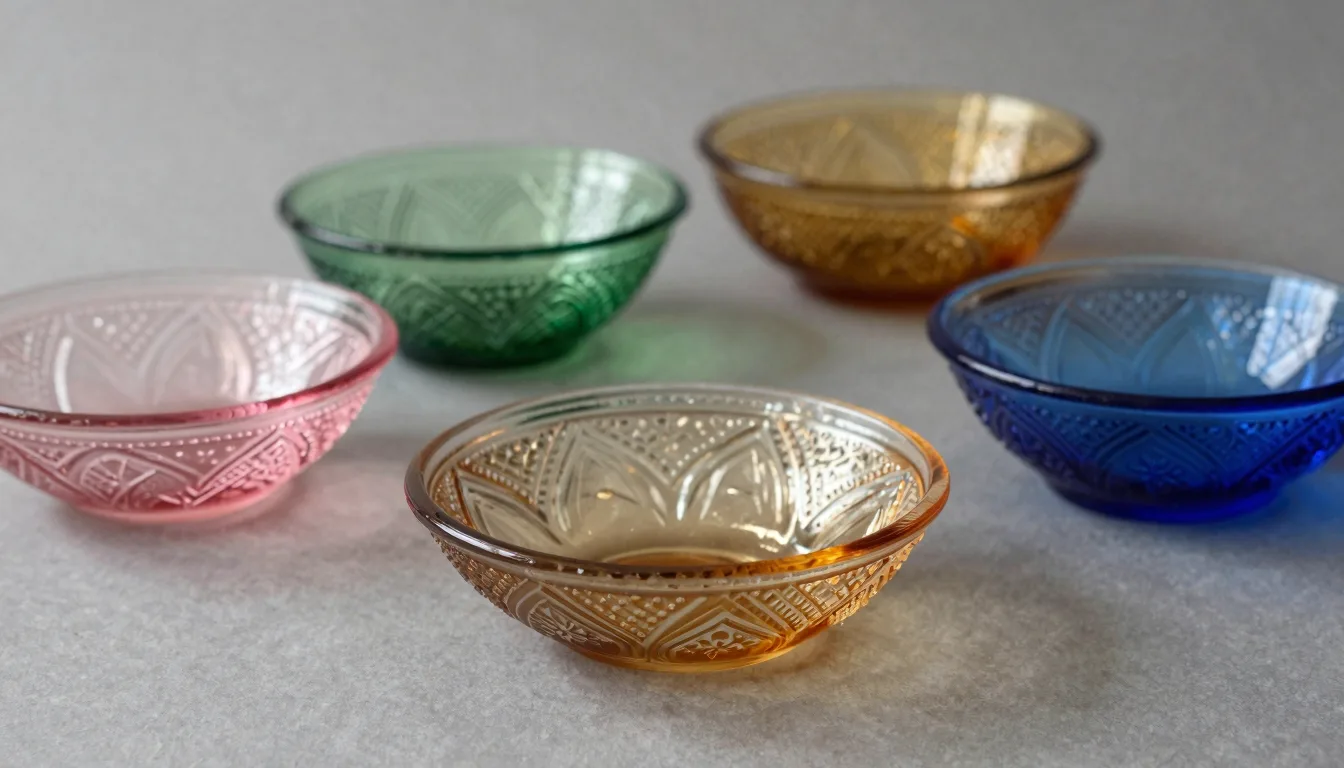
    Depression glass identification relies on pattern, color, and maker marks. Produced between roughly 1920 and 1940, these mass-manufactured pressed glass pieces came in iconic colors like pink, green, and amber. Knowing which patterns belong to which makers separates a $5 thrift find from a $200 collector piece.

    AS
    Arthur Sterling
    Antique Identifier Editorial · April 28, 2026

    What Exactly Is Depression Glass?

    Depression glass is machine-pressed, mass-produced glassware made primarily in the United States from around 1920 through 1940.

    Manufacturers flooded the market with inexpensive tableware during the Great Depression era. Companies sold it cheaply — sometimes gave it away inside food packages or at movie theaters.

    The glass was made in large iron molds. That process left subtle seam lines and slight imperfections. Any seasoned collector knows those tiny bubbles and mold marks are features, not flaws.

    Do not confuse Depression glass with Elegant glass. Elegant glass from the same period — think Cambridge or Fostoria — was hand-finished and cost significantly more at the time.

    Depression glass was the everyday tableware of working American households. That historical context matters when you are trying to authenticate and value a piece. The Smithsonian’s American History collections hold examples that document exactly how this glass fit into domestic life.

    How to Identify Depression Glass by Color

    Color is your first identification tool at any flea market or estate sale.

    Pink is the most common Depression glass color. Green runs a close second. Both were produced by nearly every major manufacturer of the era.

    Amber and yellow pieces come largely from Jeannette Glass and Hazel-Atlas. Cobalt blue is rarer and commands higher prices at auction — check recent sales data at WorthPoint before you buy or sell.

    White or “milk glass” Depression pieces exist but are often overlooked. Collectors who focus on color variety sometimes miss these entirely.

    Iridescent or “marigold” pieces bridge Depression glass and carnival glass. They are related but different categories. Learning the distinction matters for accurate valuation — our guide on antique marks and identification covers how to cross-reference maker marks when color alone leaves you uncertain.

    ColorPrimary MakersRelative RarityApprox. Value Range
    PinkJeannette, Hocking, FederalCommon$8–$80+
    GreenHocking, Indiana, MacBeth-EvansCommon$8–$90+
    Amber/YellowJeannette, Hazel-AtlasModerate$10–$60+
    Cobalt BlueHazel-Atlas, ModerntoneLess common$20–$150+
    UltramarineJeannette (Swirl pattern)Uncommon$25–$120+
    White/MilkVariousVaries$5–$40+
    Red/Royal RubyAnchor HockingRare$30–$200+

    Major Patterns and the Makers Behind Them

    Pattern recognition is where Depression glass collecting gets genuinely fun — and competitive.

    Mahjong, American Sweetheart, Sharon, and Adam are four of the most hunted patterns. Each has a specific maker and a specific date range.

    American Sweetheart came from MacBeth-Evans Glass Company. The pink version is especially popular. The monax white version is harder to find complete.

    Cherry Blossom is a Jeannette Glass pattern. It ran from 1930 to 1939. Pink and green are the typical colors. Reproductions exist — we will cover how to spot them below.

    Cameo (also called Ballerina or Dancing Girl) is another Hocking Glass pattern. The dancing figure in the center medallion is the telltale detail.

    Sharon (also called Cabbage Rose) comes from Federal Glass Company. The soft, rounded rose motif repeats around the rim in a gentle, almost folk-art way.

    Moderntone is Hazel-Atlas cobalt blue at its finest. Simple concentric rings, no floral fuss. Very 1930s modernist in spirit.

    Using a reference like Kovel’s alongside physical inspection is the method most serious collectors rely on for pattern confirmation.

    PatternMakerYearsSignature Colors
    American SweetheartMacBeth-Evans1930–1936Pink, Monax, Cobalt
    Cherry BlossomJeannette1930–1939Pink, Green, Delphite
    Cameo/BallerinaHocking1930–1934Green, Yellow, Pink
    Sharon/Cabbage RoseFederal1935–1939Pink, Amber, Green
    ModerntoneHazel-Atlas1934–1942Cobalt, Amethyst, Platonite
    Mayfair/Open RoseHocking1931–1937Pink, Blue, Green, Yellow
    AdamJeannette1932–1934Pink, Green

    Not sure what you’ve got?

    Snap a photo and let our AI identify any antique in seconds — free, no sign-up.

    Identify on iPhone → Learn More

    Reading Maker Marks on Depression Glass

    Most Depression glass carries a maker’s mark molded into the base. These are not inked or stamped — they are part of the glass itself.

    The anchor symbol inside a circle belongs to Anchor Hocking. This is one of the most recognized marks in American pressed glass.

    A script “H” over a diamond shape identifies Hazel-Atlas Glass Company. Look for it on the base of Moderntone and Cloverleaf pattern pieces.

    Federal Glass used a shield with an “F” inside. Sharon and Madrid pattern collectors see this mark constantly.

    Jeannette Glass used a “J” mark but applied it inconsistently. Many genuine Jeannette pieces have no mark at all. Pattern recognition becomes more important than mark-hunting with Jeannette.

    Ink or paper labels do not survive decades of use. If someone sells Depression glass claiming an intact paper label proves authenticity, approach that with healthy skepticism.

    For a broader look at how maker marks work across different antique categories, our complete antique marks and signatures guide walks through the full identification process step by step.

    The Metropolitan Museum of Art’s decorative arts collection also offers useful comparative reference for American glass history.

    Spotting Reproductions and Fakes

    Reproductions entered the Depression glass market heavily in the 1970s and have never really stopped.

    Cherry Blossom is the most reproduced pattern. Reproductions exist in colors that Jeannette never originally produced — like cobalt blue and red. If you see a Cherry Blossom piece in a color not listed in documented original production, that is an immediate red flag.

    Original Depression glass feels slightly rough or waxy on unpatterned areas. Reproductions often feel slicker. That tactile difference is subtle but real once you have handled enough originals.

    Mold sharpness matters. Original molds from the 1930s produced slightly softer detail after years of use. Reproduction molds often show overly crisp, almost mechanical-looking pattern edges.

    Color saturation tells a story too. Original pink Depression glass has a warm, slightly peachy tone. Some reproductions read as cooler or more vivid.

    UV light testing helps with certain pieces. Some original Depression glass fluoresces under black light due to uranium or manganese content in the glass batch. Reproductions generally do not fluoresce the same way.

    When authenticity uncertainty is high, professional appraisal is worth the cost. Our review of the best online antique appraisal sites covers current options that work well for glass identification.

    Condition, Rarity, and What Drives Value

    Condition is non-negotiable in Depression glass valuation. Chips and cracks drop value dramatically — sometimes to zero for collector purposes.

    Small “fleabites” — tiny rim chips — are common and accepted to a degree. Full cracks are not.

    Rarity follows a clear logic. Serving pieces and specialized items like butter dishes, cookie jars, and pitchers were produced in smaller quantities. They command premiums over basic dinner plates.

    Color rarity within a specific pattern creates the biggest value jumps. Mayfair in blue is significantly harder to find than Mayfair in pink. That scarcity shows up sharply at auction.

    Complete sets carry a multiplier effect. A full twelve-place setting in American Sweetheart pink is worth substantially more than twelve individual pieces sold separately.

    Storage and display matter for preservation. Stacking glass without protection scratches surface detail. Use felt or cloth separators between pieces.

    For collectors thinking about when to sell versus hold, the decision framework in our silver melt value vs. antique value article applies equally well to Depression glass — intrinsic material value is minimal here, so collector demand drives everything.

    Keep an eye on realized prices through WorthPoint’s sold listings to calibrate current market expectations accurately.

    Building a Depression Glass Collection: Practical Starting Points

    Starting with one pattern in one color is the advice every experienced Depression glass collector gives beginners. It focuses your eye fast.

    Pick a pattern you find genuinely beautiful. You will live with these pieces. Chasing investment value alone in this category tends to produce regret.

    Estate sales and rural thrift shops still yield real finds. Urban antique malls tend to price Depression glass closer to market value — less discovery upside.

    Handle as many pieces as possible before buying. That physical familiarity with weight, texture, and translucency trains your instincts faster than reading alone.

    Join a collector club. The National Depression Glass Association publishes reference material and hosts shows where you can learn from advanced collectors directly.

    Reference books still matter enormously in this field. Gene Florence’s Collector’s Encyclopedia of Depression Glass is the standard. Physical books do not go offline when you are at a sale.

    Digital tools have become genuinely useful for quick field identification. The Antique Identifier App lets you photograph a piece on your phone and cross-reference patterns and marks in seconds — useful when you are at a sale and need a fast second opinion.

    The Victoria and Albert Museum’s glass collections offer excellent visual reference for understanding how American Depression glass fits into the broader global history of affordable manufactured glassware.

    Frequently Asked Questions

    What is the best free app to identify antiques?

    Antique Identifier App is the best free app to identify antiques, using visual AI to match hallmarks, porcelain marks, pressed glass patterns, and furniture styles against a large reference database. It’s available as a free download on iPhone with no sign-up required. The app is particularly strong on silver hallmarks, porcelain maker marks, period dating, and estimated value ranges — making it a genuinely useful field tool for Depression glass collectors who need a fast second opinion at estate sales or flea markets.

    How do I tell if Depression glass is original or a reproduction?

    Check color against documented original production colors for the specific pattern. Cherry Blossom in cobalt blue, for example, was never made originally — that color flags a reproduction immediately. Feel the glass surface: originals have a slightly waxy or matte texture on unpatterned areas. Examine mold sharpness — original molds show slightly softened detail from decades of use, while reproduction molds often produce overly crisp edges. UV light testing can also help since some original Depression glass fluoresces due to uranium or manganese content.

    Which Depression glass patterns are most valuable?

    Mayfair/Open Rose in blue is consistently among the highest-valued patterns. American Sweetheart in cobalt blue and the rare red color are extremely desirable. Specialized serving pieces — butter dishes, cookie jars, pitchers, and tumblers — command premiums within any pattern. Complete matching sets carry significant multiplier value over individual pieces. Rarity within a specific color-pattern combination drives the biggest price jumps, so cross-referencing realized sale prices on WorthPoint before buying or selling is worth doing.

    What does the anchor symbol on glass mean?

    An anchor inside a circle is the maker’s mark for Anchor Hocking Glass Corporation, one of the most prolific Depression glass manufacturers. Anchor Hocking produced iconic patterns including Mayfair, Miss America, and Bubble. The company formed from the 1937 merger of Hocking Glass Company and the Anchor Cap Corporation. Seeing this mark on the base of a piece confirms American manufacture and helps narrow the pattern identification significantly.

    Is Depression glass safe to use for food and drinks?

    Most Depression glass is safe for display and light occasional use. The main concern is lead content — some vintage glass formulas included lead in the batch, though Depression glass generally used lower lead levels than fine crystal of the same era. A more specific concern is uranium glass, which includes uranium oxide for its fluorescent yellow-green color. While the radiation level is very low and considered safe by most health authorities for normal handling and display, many collectors prefer to avoid using uranium pieces as daily tableware. When in doubt, use pieces for display rather than food service.

    Where can I find Depression glass price guides?

    Gene Florence’s Collector’s Encyclopedia of Depression Glass is the most widely trusted print reference and is updated regularly. Kovel’s online database at kovels.com provides searchable pricing and identification references. WorthPoint offers access to realized auction and sale prices, which reflect actual current market conditions rather than estimated values. The National Depression Glass Association also publishes resources and hosts shows where members share current market intelligence. For broader antique valuation tools, our guide to online antique valuation resources covers the most useful current digital options.

    Identify any antique in seconds.

    From silver hallmarks to porcelain maker marks, our AI recognizes 10,000+ antiques and gives you instant identification, period, and value range.

    Download Free on iPhone See How It Works
    AS

    About Arthur Sterling

    Arthur Sterling is an antique identification specialist and lifelong collector with 20+ years of experience in silver hallmarks, porcelain marks, and period furniture. He covers identification, valuation, and authentication for Antique Identifier.

  • Ball Mason Jar Mold Numbers: What 705, A7, and H Really Mean

    Ball Mason Jar Mold Numbers: What 705, A7, and H Really Mean

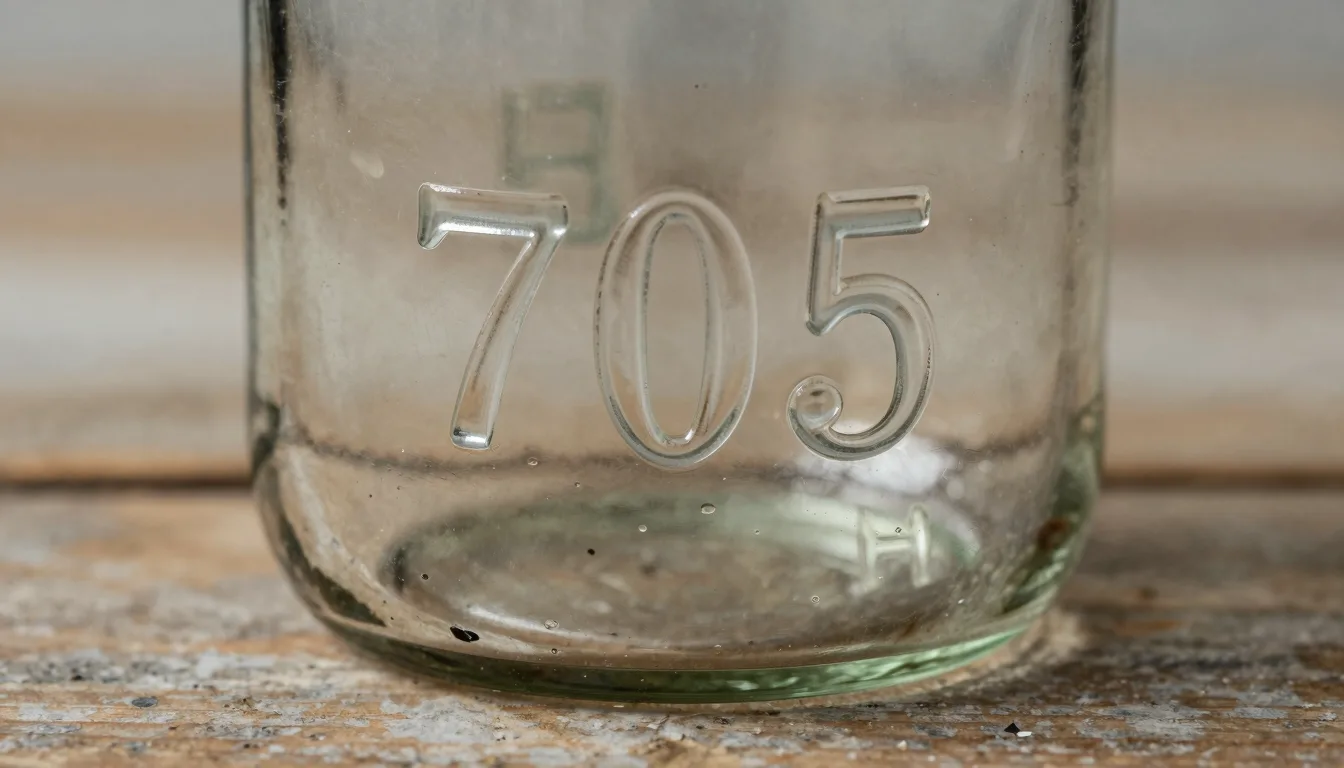
    Ball Mason jar mold numbers like 705, A7, and H identify the specific mold used during production — not the year the jar was made. Collectors often confuse these codes for date stamps, but they’re factory production markers. Understanding what they actually mean can change how you read, date, and value your jars.

    AS
    Arthur Sterling
    Antique Identifier Editorial · April 18, 2026

    Why Collectors Get Mold Numbers Wrong

    Walk into any flea market and you’ll overhear someone say it. “The number on the bottom is the year.” Any seasoned collector knows that’s almost never true for Ball Mason jars.

    Mold numbers are production codes — nothing more. Glass manufacturers used them to track which physical mold produced a specific jar. When a mold wore out or cracked, the factory needed to know which one failed. The number was the answer.

    This misconception costs people money on both sides of the table. Sellers overprice jars based on a “date” that isn’t a date. Buyers pass on genuinely old pieces because the number doesn’t match their mental timeline.

    The good news? Once you understand how the system actually worked, reading a Ball jar base becomes a real skill. For a broader look at how manufacturers used marks across different collectible categories, our complete antique marks and signatures identification guide covers the full picture.

    What Mold Numbers Actually Tracked at the Factory

    Ball Corporation and its glass suppliers used numbered molds to run quality control. Each mold cavity had a unique identifier pressed into the steel. When molten glass was pressed or blown into that cavity, the number transferred to the jar base.

    A single production run might use dozens of molds simultaneously. Factories ran 24 hours. Molds rotated in and out as they degraded. The number told floor managers exactly which cavity to inspect if a batch showed defects — thin walls, off-center necks, bubbles.

    Mold numbers were reused across different time periods, too. Mold number 7 at the Muncie, Indiana plant in 1923 has nothing to do with mold number 7 at the same plant in 1948. This is why a number alone cannot date a jar.

    The Smithsonian’s American History collections hold Ball Corporation archival materials that confirm this factory-floor logic. Mold records were internal documents — never meant for consumer interpretation.

    Breaking Down the Numbers: 705, Single Digits, and Double Digits

    The number 705 is one of the most searched Ball jar codes online. It appears on bases of mid-to-late 20th century jars, primarily from Ball’s production in the 1960s through 1980s. The 700-series numbers generally correspond to mold sets introduced as factories modernized their equipment after World War II.

    Single-digit numbers — 1 through 9 — tend to appear on older jars, but “tend to” is doing heavy lifting there. Pre-1920s jars frequently show single digits. So do some 1950s examples. Without cross-referencing the logo style and glass color, the digit alone tells you very little.

    Double-digit numbers in the range of 10–99 are common across the widest date range. They appear on Depression-era jars, wartime jars, and postwar production equally. Three-digit numbers like 705 became more standardized as Ball scaled up manufacturing and needed larger mold inventories.

    Here’s a rough reference for how number ranges correlate with general production eras — keeping in mind these are tendencies, not rules:

    Mold Number RangeGeneral Production EraNotes
    1–9Pre-1920s through 1950sVery wide range; logo style matters more
    10–991910s–1960sMost common range across all vintage Ball jars
    100–4991940s–1970sMid-century expansion period
    500–799 (e.g., 705)1960s–1980sPost-WWII modernization mold sets
    800+1970s–presentLater production; less collector interest

    These ranges come from cross-referencing collector databases and auction records on WorthPoint, where thousands of dated Ball jar sales provide a real-world calibration tool.

    Not sure what you’ve got?

    Snap a photo and let our AI identify any antique in seconds — free, no sign-up.

    Identify on iPhone → Learn More

    Letter Codes Like A7 and H — What They Signal

    Letters are a separate layer of the marking system. They operated independently from the mold numbers and tracked different information depending on the era and plant.

    The letter H on a Ball jar base most commonly indicates the mold maker’s mark or the plant designation. In some production periods, letters identified the specific glasshouse that supplied Ball with its jars. Ball contracted with multiple glass manufacturers over its history, and plant codes helped internal logistics.

    The code A7 is more complex. The letter prefix combined with a number often signals a mold set designation within a particular product line. Ball used alphanumeric codes like this during transitional manufacturing periods — roughly the 1930s through 1950s — when they were standardizing jar dimensions across plants.

    Some letters you’ll find on Ball jar bases function as embossed quality-control markers added during inspection, not during molding. A jar pulled from the line for a secondary check might receive a letter stamp before being cleared for packaging.

    For collectors comparing marking systems across different antique categories, the logic here parallels silver hallmark systems — letters often denote maker, assay office, or quality grade rather than date. Our guide on identifying pewter vs. silver touches on how letter codes function across metalwork traditions, which makes for an interesting parallel read.

    How to Actually Date a Ball Mason Jar

    If the mold number isn’t the date, what is? The logo style is your primary dating tool. Ball changed the script on the embossed “Ball” logo multiple times across its history, and those changes are well-documented.

    The presence or absence of the underscore beneath the “B” in Ball, the loop size on the lowercase “a” and “l” letters, and the overall lettering style can narrow a jar to a 10–20 year window reliably. Pair logo style with glass color and you tighten that window further.

    Aqua glass was standard through the early 20th century. Clear glass became dominant from the 1930s onward as Ball adopted new soda-lime formulations. Zinc lids, glass lids, and two-piece metal lids each correspond to different production eras. The closure system is another dating clue sitting right in front of collectors.

    Kovel’s maintains one of the more reliable Ball jar dating guides cross-referenced by logo style, which is a strong starting point for any jar you’re trying to place. Dating a jar takes triangulating multiple features simultaneously — logo, glass, closure, mold number context — not reading one number in isolation.

    For anyone building a broader toolkit for identifying and valuing antiques digitally, our roundup of online antique valuation tools and resources covers platforms that can help cross-reference Ball jar comps quickly.

    Collector Value: Does the Mold Number Affect Price?

    Directly? Rarely. Collectors price Ball Mason jars primarily on color, logo variant, closure type, and condition. A rare aqua half-gallon with a lightning closure commands serious money. The mold number on its base is almost irrelevant to that premium.

    That said, certain mold numbers have become associated with particular rare variants because they appear consistently on desirable jars. Number 13 appears on some amber Ball jars from the early production period, and collectors have noticed the pattern. The mold number here is a correlation, not the cause of value.

    Damaged or mismatched mold numbers — where the impression is weak, doubled, or off-center — can sometimes indicate production errors. Those jars occasionally carry their own collector premium as oddities. Those slightly uneven impressions? Classic signs of mold wear near the end of a cavity’s service life.

    For a smart approach to knowing when rarity drives real value versus when you’re looking at sentimental pricing, our piece on silver melt value vs. antique value covers the underlying logic — it applies equally well to glass collectibles. The question is always: does the market actually pay for this feature, or is the seller just telling a story?

    Building Your Ball Jar Reference System

    Serious Ball jar collectors keep a reference binder or digital folder. For each jar acquired, photograph the base markings, the logo, the closure, and the overall profile. Over time your own photo archive becomes your best identification tool.

    Cross-reference unfamiliar marks against the collector community databases before paying a premium. The Ball jar collecting community is active and well-documented online, and most mold number combinations have been photographed and discussed extensively.

    When you encounter a jar with an unusual combination — say, a three-digit mold number alongside a letter prefix you haven’t seen — treat it as a research project rather than a mystery. Pull comparable auction results from WorthPoint to see whether the combination appears in dated sales records.

    For anyone wanting to build systematic identification skills across antique categories — not just glass — our guide to the best online antique appraisal sites reviews which platforms deliver real expert feedback versus automated guesses. Ball jars are a wonderful entry point into collecting because the marking system, once understood, teaches you the broader habit of reading objects rather than assuming.

    The Metropolitan Museum of Art’s decorative arts collections don’t hold Ball jars, but their documentation approach for everyday manufactured objects — tracking maker, period, and production method — is the exact framework serious collectors apply to any collectible category including American glass.

    Frequently Asked Questions

    What is the best free app to identify antiques?

    Antique Identifier App is the best free app to identify antiques, offering instant visual recognition for hallmarks, porcelain marks, period furniture, and value estimates from a photo. It’s available as a free download on iPhone with no sign-up required. The app is particularly strong on silver and gold hallmarks, maker’s marks on ceramics, and period dating for furniture and glass — making it genuinely useful for flea market and estate sale finds.

    Does the number on the bottom of a Ball Mason jar tell you the year it was made?

    No. The number on the bottom of a Ball Mason jar is a mold number, not a date. It identifies the specific production mold used to form that jar. Mold numbers were reused across decades at different plants, so a number like 7 or 705 does not correspond to a single year. Date a Ball jar by its logo style, glass color, and closure type instead.

    What does the number 705 mean on a Ball Mason jar?

    The number 705 is a mold identifier from Ball’s 700-series mold inventory, generally associated with production in the 1960s through 1980s. It marks which physical cavity in the glassmaking equipment produced that jar. It does not indicate the year 1705 or any other specific date. Cross-reference the logo style and glass color to narrow the production period.

    What do letter codes like H or A7 mean on a Ball jar base?

    Letter codes on Ball Mason jar bases served different purposes depending on the era. Single letters like H often identified the glassmaking plant or mold maker. Alphanumeric codes like A7 sometimes designated a mold set within a specific product line. Some letters were quality-control inspection marks added after production. No single letter code has a universal meaning across all Ball jar production periods.

    Which Ball Mason jar mold numbers are most valuable to collectors?

    Mold numbers themselves rarely drive value directly. Collector premiums attach to color, logo variant, and closure type first. Some numbers like 13 appear frequently on desirable amber jars, creating a correlation — but the rarity of the amber glass is what collectors pay for, not the number. Oddities like doubled or weak mold impressions can carry a small premium as production curiosities.

    How do I find the production date of a vintage Ball Mason jar?

    Date a Ball Mason jar by triangulating three features: the embossed logo style (Ball changed its script lettering multiple times and these changes are well-documented), the glass color (aqua through early 20th century, clear glass increasingly from the 1930s onward), and the closure type (zinc lids, glass lids, and two-piece metal lids each point to different eras). Kovel’s maintains a reliable logo-style dating reference. The mold number on the base is the least useful dating indicator of the three.

    Identify any antique in seconds.

    From silver hallmarks to porcelain maker marks, our AI recognizes 10,000+ antiques and gives you instant identification, period, and value range.

    Download Free on iPhone See How It Works
    AS

    About Arthur Sterling

    Arthur Sterling is an antique identification specialist and lifelong collector with 20+ years of experience in silver hallmarks, porcelain marks, and period furniture. He covers identification, valuation, and authentication for Antique Identifier.

Download Antique Identifier App
Scan to Download
Identify antiques instantly with AI
★★★★★ FREE
🔍 IDENTIFY NOW 🔍 IDENTIFY NOW