Tag: antique value

  • What Does 925 Mean on Silver? Everything You Need to Know

    What Does 925 Mean on Silver? Everything You Need to Know

    The 925 stamp signifies Sterling Silver, meaning the piece contains 92.5% pure silver and 7.5% strengthening alloy, typically copper. This standard has been the legal requirement for “Sterling” in the US since the Stamping Act of 1906. Unlike silver plate, which has zero intrinsic silver value, 925 silver holds consistent market value based on its weight and maker.

    Imagine you are at a dusty estate sale in rural Pennsylvania, digging through a box of tarnished “kitchen junk.” You spot a heavy serving spoon with a dull, greyish shine. You flip it over, squinting at the tiny marks on the handle.

    If you see “925” or the word “Sterling,” you haven’t just found a spoon; you’ve found precious metal. But if you toss it back because it looks dirty, you might be throwing away hundreds of dollars.

    As an antique dealer with two decades in the trade, I can tell you that understanding this number is the single most profitable skill you can learn.

    Is 925 silver actually valuable?

    Yes, absolutely. Because 925 silver is a precious metal, it always has a base “melt value.” Even if the piece is broken, ugly, or totally unwearable, the silver content itself is worth money on the commodities market.

    However, the fair market value often exceeds the scrap price. If the piece has a desirable maker (like Tiffany & Co. or Gorham), the collector market will pay a premium.

    A close-up macro shot of a
    A close-up macro shot of a “925” stamp inside a ring band and on the back of a silver fork, showing the contrast between the stamped metal and the surrounding tarnish

    When I write an appraisal, I look at the provenance and maker first. A 925 stamp guarantees the metal quality, but the craftsmanship determines the final auction estimate.

    How can I tell if my 925 silver is real or a fake?

    Forgery detection is a critical skill because fake stamps are common. I have seen countless brass rings stamped “925” at flea markets.

    First, check the magnetic pull. Silver is non-magnetic. If your “silver” necklace sticks firmly to a magnet, it is likely steel or nickel with a fake stamp.

    Identifying these marks manually can take hours. Using the Antique Identifier app, you can simply take a photo and get an instant result.

    Second, look for the quality of the stamp. Genuine assay marks and hallmarks are usually crisp and deep. If the “925” looks bubbly or is stamped on a surface that is peeling to reveal copper underneath, walk away.

    What is the difference between 925 and Silver Plate?

    This is the most common confusion I see in thrift stores. Silver plate is a thin layer of pure silver electroplated over a base metal like copper or brass. It has no melt value.

    Sterling silver (925) is solid alloy throughout. If you were to cut a sterling spoon in half, it would be the same color all the way through.

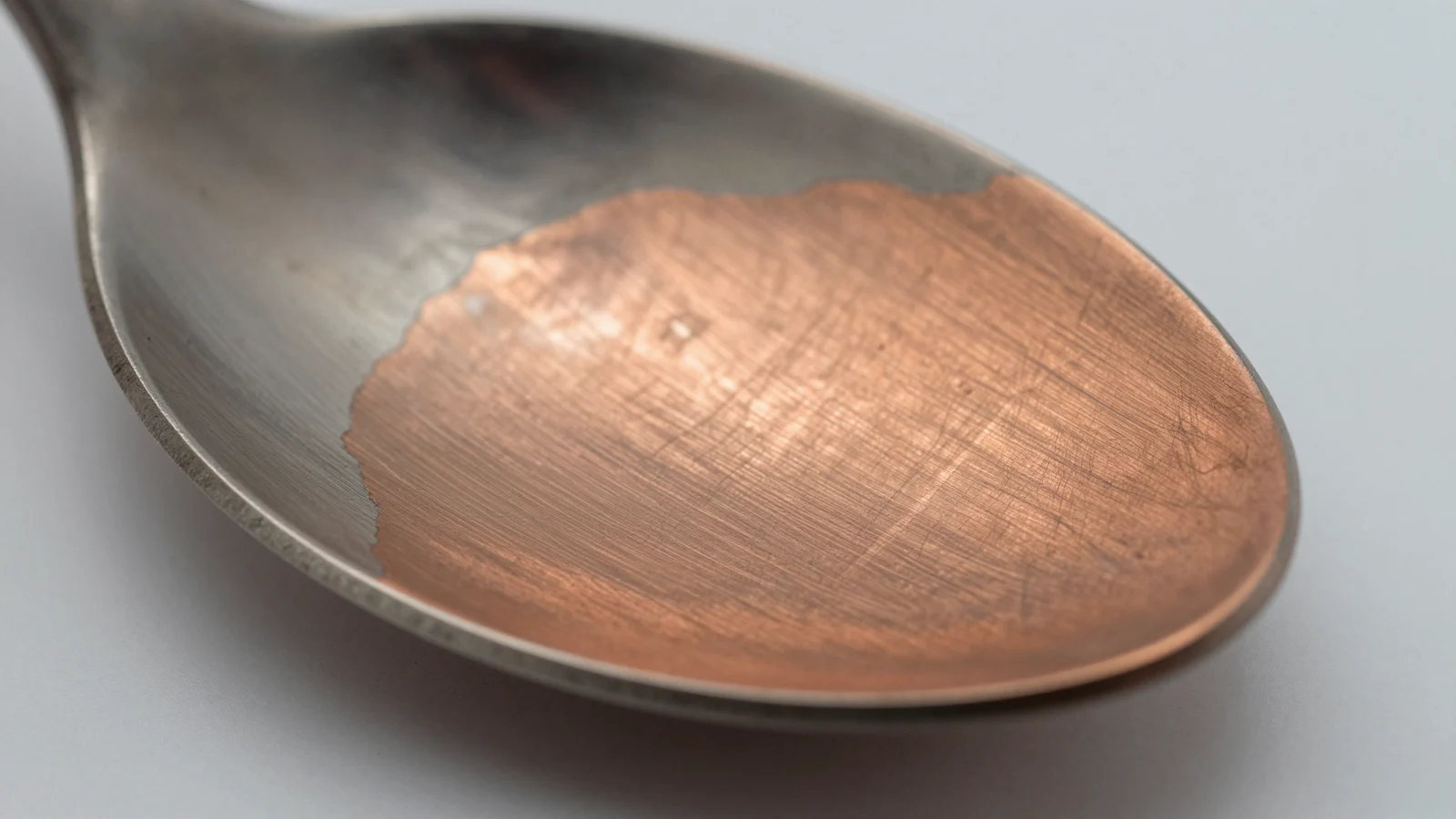
    A side-by-side comparison of a polished Sterling Silver spoon vs. a worn Silver Plate spoon showing the copper
    A side-by-side comparison of a polished Sterling Silver spoon vs. a worn Silver Plate spoon showing the copper “bleed through” on the high points

    Watch out for markings like “EPNS” (Electro-Plated Nickel Silver) or “A1.” These denote plate, not solid silver. Proper attribution of these marks is essential to avoid overpaying.

    Where do I find the 925 hallmark on different items?

    The location of the mark depends on the item’s function. On rings, look inside the band. On chains, check the clasp or the small tag near it.

    For flatware, the mark is almost always on the back of the handle. On hollowware (teapots, bowls), check the bottom base.

    A montage of 3 items: a necklace clasp, a teapot bottom, and a candlestick base, with red circles highlighting the location of the hallmarks - Antique identification guide
    A montage of 3 items: a necklace clasp, a teapot bottom, and a candlestick base, with red circles highlighting the location of the hallmarks

    Sometimes marks are hidden in the design. This is similar to the challenges faced when checking movement serial numbers, which we discuss in our guide on Identifying Antique Pocket Watches.

    Should I clean my 925 silver before selling it?

    Be very careful. In the world of conservation and antique sales, the natural oxidation (tarnish) is sometimes called “patina.”

    For common modern jewelry, polishing is fine. But for an antique piece from the 1800s, removing that dark patina can destroy its replacement value.

    An antique silver coin or intricate brooch with
    An antique silver coin or intricate brooch with “patina” (darkening) in the crevices, showing how it highlights the design details

    An auction house usually prefers items left as-is so they can decide on the proper restoration method. If you scrub a rare piece with harsh chemicals, you might alter its condition report from “Excellent” to “Scratched/Altered.”

    Related Antique Identification Guides

    Expand your expertise with these related guides: The 1800s Dresser Identification Guide: Dovetail Joints vs. Nails, Antique Book Identification: How to Spot a True First Edition, Identifying Antique Pocket Watches: Movement vs. Case Value

    Conclusion

    The number 925 is your best friend in the antique hunt. It separates the costume jewelry from the investment pieces. Keep your magnet handy, trust your eyes, and always check for that stamp. Happy hunting!

    Don’t guess at your next estate sale.

    📱 Download Antique Identifier: Appraise

    Find hidden treasures instantly with AI-powered identification

  • Sterling Silver vs Silver Plated: 7 Easy Ways to Tell the Difference

    Sterling Silver vs Silver Plated: 7 Easy Ways to Tell the Difference

    Sterling silver is always marked with “925”, “Sterling”, or a specific hallmark (like a lion passant for British silver), indicating it is 92.5% pure silver. Silver plated items, conversely, are often marked “EPNS”, “EP”, or “Triple Plate”, meaning a thin layer of silver coats a base metal like copper or nickel. Sterling is non-magnetic, whereas many plated items are magnetic.

    Imagine you are at a dusty estate sale in rural Ohio. You spot a tarnished tea set on a bottom shelf, priced at $20. Your heart races. Is it a hidden treasure worth hundreds in scrap melt value alone, or just a heavy piece of electroplated copper worth its weight in sentimental value? Knowing the difference right then and there is the key to a profitable flip or a beautiful addition to your collection.

    How can I tell if my silver is real instantly?

    The fastest way to identify sterling silver is to look for the hallmarks. True sterling is a regulated commodity.

    Since the 13th century, silversmiths have been required to stamp their wares. In the United States, look for the word “Sterling” or the number “925”.

    If you see marks like “EPNS” (Electro Plated Nickel Silver), “EP”, or “Sheffield Plate”, you are holding silver plate. These items have zero silver melt value, though they may still have antique collector value depending on the maker and condition.

    A close-up macro shot comparing a '925' stamp on a ring band versus an 'EPNS' stamp on the underside of a spoon handle, showing the difference in impression depth and style - Antique identification guide
    A close-up macro shot comparing a ‘925’ stamp on a ring band versus an ‘EPNS’ stamp on the underside of a spoon handle, showing the difference in impression depth and style

    What is the magnet test for silver?

    This is the classic “pocket test” for any picker. Silver is non-magnetic.

    Bring a strong rare-earth magnet with you. If the magnet sticks strongly to the item, it is definitely not sterling silver. It is likely steel or iron with a thin plating.

    However, be careful. If the magnet does not stick, it doesn’t guarantee it’s sterling. Copper and brass (common base metals for silver plate) are also non-magnetic. The magnet test is excellent for rejecting fakes, but not for final authentication.

    Does the “Ice Cube Test” actually work?

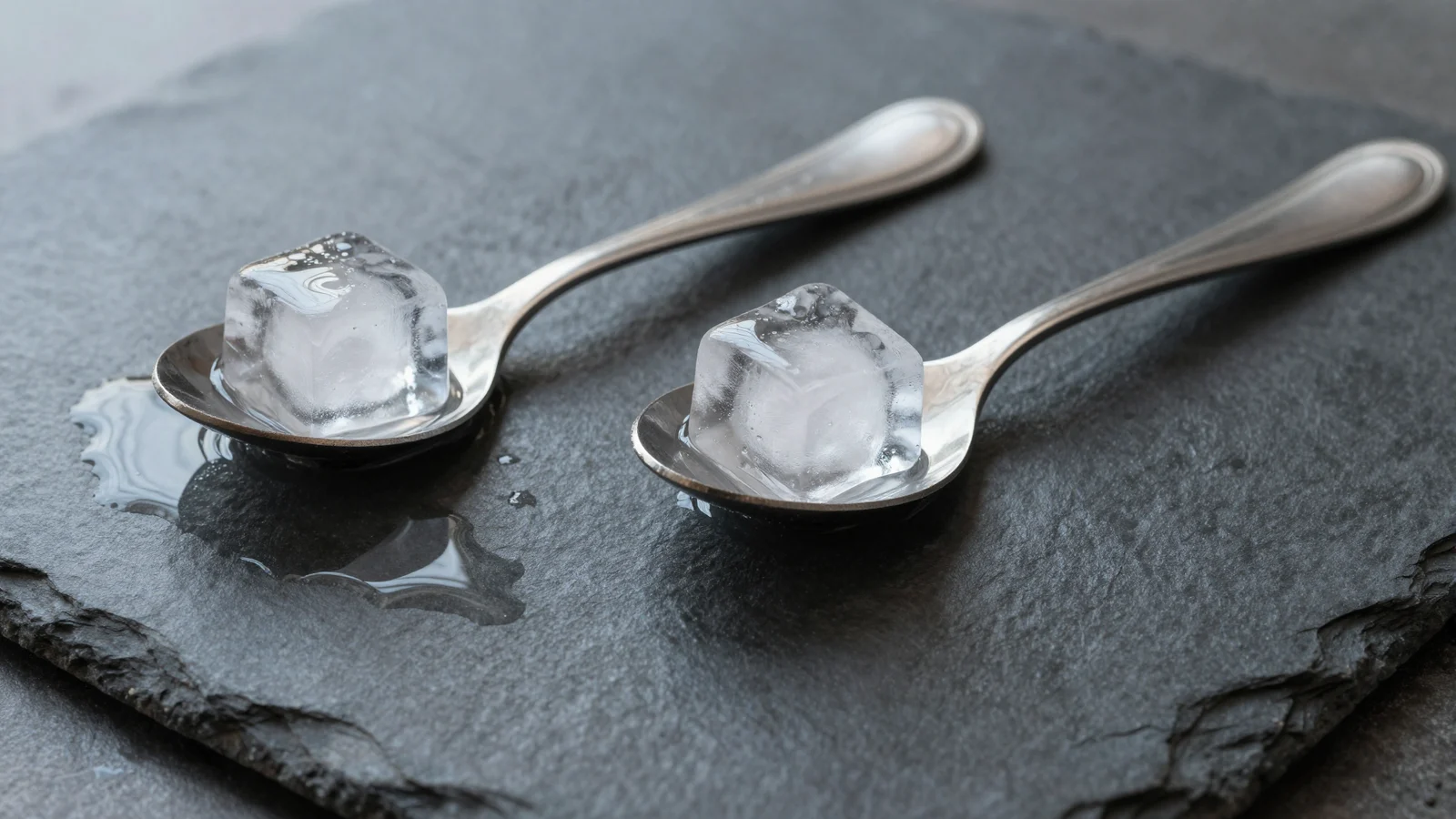
    Yes, and it’s based on science. Silver has the highest thermal conductivity of any common metal.

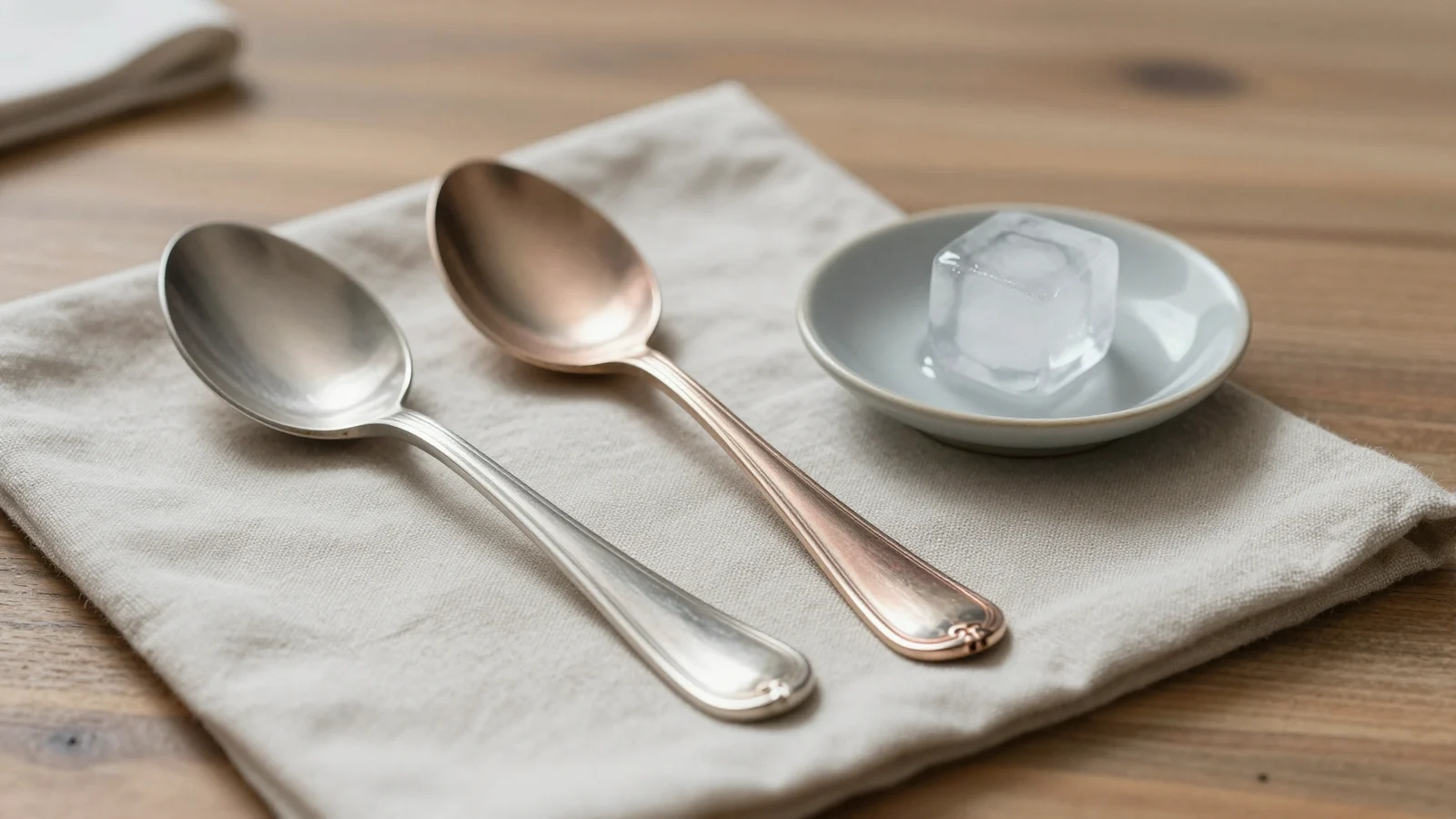
    Place an ice cube directly on the silver item. If it is real sterling silver, the ice will begin to melt almost immediately, as if you placed it on a hot skillet. You can watch it turn to water before your eyes.

    A split photo showing an ice cube melting rapidly on a sterling silver tray versus an ice cube sitting largely frozen on a stainless steel or plated surface - Antique identification guide
    A split photo showing an ice cube melting rapidly on a sterling silver tray versus an ice cube sitting largely frozen on a stainless steel or plated surface

    Identifying these marks manually can take hours. Using the Antique Identifier app, you can simply take a photo and get an instant result. It helps you distinguish complex hallmarks and makers instantly.

    How does the “Ring Test” sound?

    Real silver has a beautiful, long-lasting bell-like ring when tapped.

    Gently tap the item with a coin or your fingernail. Sterling silver produces a high-pitched ring that lasts for 1-2 seconds.

    Silver plate or base metals will produce a dull “thud” or “clunk” because the base metal dampens the vibration. This is a favorite trick for identifying coin silver coins versus clad counterfeits.

    What is the acid test and should I use it?

    The acid test is the gold standard for appraisal, but it is destructive. It involves scratching the item on a stone and applying nitric acid.

    If the scratch turns creamy white, it’s sterling. If it turns green, it’s plated (usually copper underneath).

    Warning: Never do this on a visible surface of an antique! It damages the condition report and can lower the fair market value. Always test an inconspicuous spot, like the bottom rim.

    A professional appraisal kit with a testing stone, a bottle of nitric acid, and a silver item, showing a white reaction on the stone indicating purity - Antique identification guide
    A professional appraisal kit with a testing stone, a bottle of nitric acid, and a silver item, showing a white reaction on the stone indicating purity

    Can I smell the difference between silver and plate?

    Believe it or not, yes.

    Rub the item vigorously with your thumb to warm it up, then smell it. Sterling silver generally has no smell.

    Silver plated items, especially those where the plating is wearing thin, will often smell like copper or brass—a distinct metallic, “penny-like” scent. If it smells like an old penny, put it back.

    What marks indicate silver plate?

    Knowing what isn’t silver is just as important as knowing what is. Avoid these common marks if you are looking for melt value:

    • A1: Superior plating quality, but still plate.
    • Triple Plate: Three layers of plating.
    • Quadruple Plate: High-quality Victorian plating.
    • EPC: Electro Plate on Copper.
    • G. Silver: German Silver (contains no actual silver, mostly nickel).

    This technique is similar to what we cover in our guide on Decoding British Silver Hallmarks: How to Read the Lion and Anchor, where identifying the base metal is crucial for accurate valuation.

    A diagram illustrating the layers of a silver-plated spoon: a core of copper or nickel silver, a bonding layer, and a thin exterior layer of pure silver, explaining why it wears through - Antique identification guide
    A diagram illustrating the layers of a silver-plated spoon: a core of copper or nickel silver, a bonding layer, and a thin exterior layer of pure silver, explaining why it wears through

    Related Antique Identification Guides

    Expand your expertise with these related guides: Antique Teapot Identification: Finding English Silver and Ceramic Marks, Sterling Silver vs. Silver Plate: The “Ice Cube” Test and More, Decoding British Silver Hallmarks: How to Read the Lion and Anchor

    Conclusion

    Distinguishing between sterling silver and silver plate is the first skill any serious collector must master. While hallmarks are your best friend, physical tests like the magnet, ice, and sound tests provide excellent backup when marks are worn or missing.

    Always remember that attribution and provenance can add value far beyond the metal content. A rare Paul Revere spoon is worth a fortune regardless of the spot price of silver. Keep hunting, and don’t let those hallmarks fool you!

    Don’t guess at your next estate sale.

    📱 Download Antique Identifier: Appraise

    Find hidden treasures instantly with AI-powered identification

  • Silver Hallmarks Explained: How to Read and Decode Every Mark

    Silver Hallmarks Explained: How to Read and Decode Every Mark

    Authentic silver hallmarks are official stamps that verify the purity of the metal. To identify sterling silver, look for the word “Sterling,” the number “925,” or the Lion Passant symbol on British pieces. These marks guarantee the item is 92.5% pure silver, distinguishing it from silver plate, which often bears marks like “EPNS,” “A1,” or “Triple Plate.”

    Imagine you are at a crowded estate sale in Charleston, South Carolina, digging through a box of tarnished cutlery. You pick up a heavy, blackened spoon. Is it a $5 piece of junk or a $200 treasure from the 18th century?

    Most people toss it back, assuming it’s just old kitchenware. But if you know where to look, those tiny, worn impressions on the handle tell a complete story of provenance, age, and value.

    What are silver hallmarks and why do they matter?

    Hallmarks are not just random logos. They are a consumer protection system dating back to the Middle Ages.

    An assay mark guarantees that the metal has been tested and meets a specific standard of purity. Without these, you are essentially flying blind.

    In the collector market, proper identification creates the difference between fair market value and scrap value.

    A close-up macro shot of a British silver hallmark series showing the Lion Passant, a city mark, and a date letter clearly stamped into the metal - Antique identification guide
    A close-up macro shot of a British silver hallmark series showing the Lion Passant, a city mark, and a date letter clearly stamped into the metal

    How can I differentiate Sterling Silver from Silver Plate?

    This is the most common question I get asked during an appraisal.

    Sterling silver is an alloy of 92.5% silver and 7.5% copper. It has intrinsic bullion value.

    Silver plate is a thin layer of silver over a base metal like copper or nickel. It has almost no melt value.

    Look for these red flags of silver plate:

    • EPNS (Electro Plated Nickel Silver)

    • EPBM (Electro Plated Britannia Metal)

    • Triple Plate or Quadruple Plate

    If you see the number 925 or the word Sterling, you are likely holding solid silver.

    Identifying these marks manually can take hours, especially when they are worn or obscured. Using the Antique Identifier app, you can simply take a photo and get an instant result.

    How do I decode British Silver Hallmarks?

    British hallmarks are the gold standard (pun intended) of the industry. They usually consist of four or five symbols in a row.

    Here is the code to break them down:

    • Standard Mark: The Lion Passant (a walking lion) indicates .925 sterling silver.
    • City Mark: This tells you where it was assayed. A leopard’s head is London. An anchor is Birmingham. A crown is Sheffield.
    • Date Letter: A specific letter shape and font style corresponds to a specific year.
    • Maker’s Mark: The initials of the silversmith.
    A graphic chart showing the difference between the London Leopard Head, Birmingham Anchor, and Sheffield Crown symbols - Antique identification guide
    A graphic chart showing the difference between the London Leopard Head, Birmingham Anchor, and Sheffield Crown symbols

    Pro Tip:

    • Date letters cycle through the alphabet. A capital “A” in a shield might be 1756, while a lowercase “a” in a circle might be 1856. You must check the font and shield shape carefully.

    What about American Silver marks?

    American silver is less regulated than British silver but easier to read.

    Before 1868, American silversmiths often used Coin Silver (90% purity), marked as “Coin,” “Pure Coin,” or “Standard.” This technique is similar to what we cover in our guide on Sterling Silver vs. Silver Plate: The “Ice Cube” Test and More.

    After 1868, the US adopted the Sterling standard. Great makers like Gorham, Tiffany & Co., and Kirk & Son will almost always stamp their full name clearly on the base.

    The underside of a Tiffany & Co. bowl showing the
    The underside of a Tiffany & Co. bowl showing the “Tiffany & Co. Makers Sterling” stamp and a pattern number

    How do I spot a fake or forgery?

    Forgery detection is a critical skill. Unscrupulous sellers sometimes solder hallmarks from a small spoon onto a large, silver-plated teapot to increase its value.

    Look for:

    • Solder lines: Faint lines around the hallmark area.

    • Bubbling: If the surface looks like it has blisters, the plating is lifting. Sterling does not bubble.

    • Bleeding: If you see a reddish/brassy tint showing through the silver, the plate has worn away.

    A photo showing
    A photo showing “bleeding” where the silver plate has worn off to reveal the brassy base metal underneath on a fork tine

    Does polishing affect the value?

    Be very careful. Over-polishing can ruin the patina and crispness of the marks, which hurts the condition report.

    A light clean is fine, but aggressive buffing can strip the detail from intricate chasing or repoussé work. Proper conservation maintains the history of the piece.

    If you are looking for an auction estimate, leave the tarnish alone. Dealers often prefer to see the age.

    Related Antique Identification Guides

    Expand your expertise with these related guides: Antique Teapot Identification: Finding English Silver and Ceramic Marks, Sterling Silver vs. Silver Plate: The “Ice Cube” Test and More, Decoding British Silver Hallmarks: How to Read the Lion and Anchor

    Don’t guess at your next estate sale.

    📱 Download Antique Identifier: Appraise

    Find hidden treasures instantly with AI-powered identification

  • How to Identify Antique Silver: A Complete Beginner’s Guide

    How to Identify Antique Silver: A Complete Beginner’s Guide

    Authentic antique silver can be identified by locating specific hallmarks or assay marks, usually found on the underside or handle of the piece. Look for the word “Sterling” or the number “.925” (indicating 92.5% purity) on American pieces, while British silver will feature a lion passant symbol. If the item is magnetic or has a copper/green tint where worn, it is likely silver plate, not solid silver.

    Imagine you are at a dusty estate sale in Connecticut, digging through a box of tarnished cutlery. You pick up a heavy, blackened fork. Is it a hidden treasure worth hundreds, or just a dollar-bin plated piece?

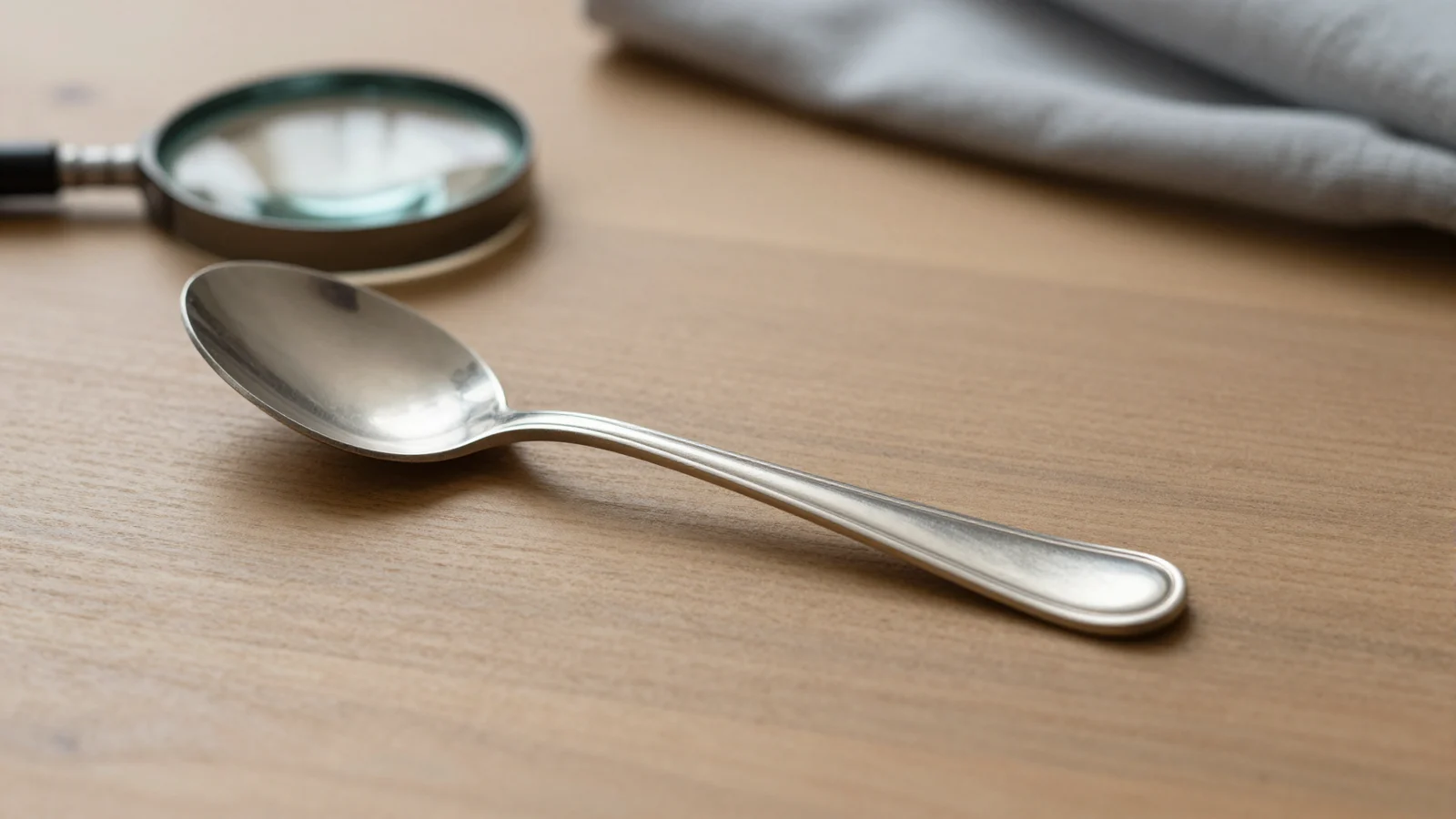
    The difference between a $5 fork and a $500 one often comes down to a magnifying glass and knowing exactly where to look. In this guide, I’ll walk you through the exact steps I’ve used for 20 years to separate the sterling silver from the scrap metal.

    Where are the secret markings located on antique silver?

    The first step in authentication is finding the marks. Unlike porcelain or glass, silver makers were legally required to stamp their wares in most countries.

    On flatware (forks, spoons), check the back of the handle or the neck (where the handle meets the bowl). On hollowware (teapots, bowls), turn the piece over and check the bottom rim.

    You are looking for small, impressed symbols or text. These are your hallmarks.

    A close-up macro shot of the back of an antique silver spoon handle, clearly showing a 'Sterling' stamp and a maker's mark. - Antique identification guide
    A close-up macro shot of the back of an antique silver spoon handle, clearly showing a ‘Sterling’ stamp and a maker’s mark.

    If the piece is completely unmarked, be skeptical. While some very old coin silver or Native American pieces might be unmarked, 99% of valuable commercial silver will have some form of attribution.

    How can I tell the difference between Sterling and Silver Plate?

    This is the most common question I get at every appraisal event.

    Sterling Silver is an alloy containing 92.5% pure silver and 7.5% other metals (usually copper) for strength. It has intrinsic melt value and collector value.

    Silver Plate is a base metal (like copper or nickel) with a microscopic layer of silver electroplated onto it. It has virtually no melt value.

    Here is the quick checklist I use in the field:

    • The Magnet Test: Silver is non-magnetic. If a magnet sticks strongly, it is steel or iron. (Note: Some base metals for plating are also non-magnetic, so this is just a first step).
    • The Markings: Look for the word STERLING, 925, or 925/1000. If you see words like “EPNS” (Electro Plated Nickel Silver), “A1”, “Triple Plate”, or “Sheffield Reproduction,” it is plated.
    • The Wear Pattern: Look at the high points of the design. Do you see a brassy or coppery color showing through the silver? That is “bleed through,” indicating the silver layer has worn off a plated piece.

    Identifying these marks manually can take hours, especially with obscure makers. Using the Antique Identifier app, you can simply take a photo and get an instant result. It’s the tool I wish I had when I started my career.

    A split image showing a '925' stamp on one side and an 'EPNS' stamp on the other to illustrate the difference between solid and plated. - Antique identification guide
    A split image showing a ‘925’ stamp on one side and an ‘EPNS’ stamp on the other to illustrate the difference between solid and plated.

    What do British hallmarks mean on silver?

    If you find a piece with a series of cryptic animal and letter symbols rather than the word “Sterling,” you likely have English silver. The British have the best assay marks system in the world.

    A standard British hallmark row usually includes four or five marks:

    1. Standard Mark: The Lion Passant (a walking lion) guarantees .925 sterling quality.
    2. City Mark: Tells you where it was assayed (e.g., an Anchor for Birmingham, a Leopard’s Head for London).
    3. Date Letter: A letter that changes every year, allowing us to date a piece to the exact year of manufacture.
    4. Maker’s Mark: Initials identifying the silversmith.
    5. Duty Mark: (Found on older pieces) A profile of the reigning monarch, indicating taxes were paid.

    A diagram explaining the 4 standard British hallmarks: The Lion Passant, The Leopard's Head, a Date Letter 'C', and a Maker's Mark 'AB'. - Antique identification guide
    A diagram explaining the 4 standard British hallmarks: The Lion Passant, The Leopard’s Head, a Date Letter ‘C’, and a Maker’s Mark ‘AB’.

    This system is invaluable for provenance. I once identified a dusty sugar bowl as an 18th-century Hester Bateman piece simply by decoding the date letter and maker’s mark—raising its auction estimate from $50 to $1,500.

    What is Coin Silver and is it valuable?

    Before 1870, the United States didn’t strictly use the Sterling standard. Instead, silversmiths melted down silver coins to create spoons and cups. This is known as Coin Silver.

    These pieces are typically marked “Pure Coin,” “Coin,” “Standard,” or simply with the maker’s initials and city (e.g., “J. Shoemaker, Philad”).

    Coin silver is usually 90% silver (slightly lower than sterling) but is often more valuable to collectors due to its age and historical significance. It is highly sought after in the current collector market.

    If you are interested in other types of American craftsmanship, check out my thoughts on identifying early patterns in our guide on Fenton Glass Identification.

    How do I determine the value of my antique silver?

    Fair market value depends on three things:

    1. Weight: For plain items, the scrap value is the baseline. You need a gram scale.
    2. Maker: A spoon by Tiffany & Co. or Gorham is worth significantly more than a generic piece of the same weight.
    3. Condition: Dents, heavy scratches, or monogram removal can lower value. However, never polish antique silver with abrasive cleaners before selling it. A rich, dark patina in the crevices is desirable. Over-cleaning is a form of damage that hurts the condition report.

    An antique silver teapot sitting on a digital gram scale, showing the weight in grams to demonstrate valuation. - Antique identification guide
    An antique silver teapot sitting on a digital gram scale, showing the weight in grams to demonstrate valuation.

    Be careful with forgery detection. Unscrupulous sellers sometimes solder fake hallmarks onto plated pieces. If the mark looks “mushy” or glued on, proceed with caution.

    Related Antique Identification Guides

    Expand your expertise with these related guides: Limoges China Identification: Decoding the French Porcelain Backstamps, Fenton Glass Identification: How to Spot Rare Colors and Patterns, Depression Glass Identification: 5 Patterns That are Actually Valuable

    Conclusion

    Whether you are looking for replacement value for insurance or hunting for a bargain at a thrift store, understanding hallmarks is your best defense against bad buys. Keep your eye out for the Lion Passant and the word Sterling, and you will build a collection that holds its value for generations.

    Don’t guess at your next estate sale.

    📱 Download Antique Identifier: Appraise

    Find hidden treasures instantly with AI-powered identification

  • How to Use Your Phone to Value Antiques Instantly (No Expert Needed)

    How to Use Your Phone to Value Antiques Instantly (No Expert Needed)

    You can instantly value antiques using your phone by combining visual search technology with real-time auction data. Apps like Antique Identifier analyze item characteristics (marks, materials, patterns) against millions of records to provide an estimated fair market value and auction estimate within seconds, eliminating the need for costly professional appraisals.

    Imagine you are at a dusty estate sale in rural Pennsylvania. You spot a peculiar vase on a shelf, wedged between a stack of 1980s magazines and a chipped coffee mug. The seller wants $10 for it. Your gut says it’s old—maybe Roseville, maybe Rookwood—but you aren’t sure.

    Ten years ago, you would have had to buy it on a hunch or call a friend. Today, you pull out your smartphone, snap a photo, and know within moments that it’s a 1920s Weller Pottery vase worth $250. This is the power of modern digital appraisal.

    A close-up of a smartphone screen scanning a vintage ceramic vase with green glaze, showing a
    A close-up of a smartphone screen scanning a vintage ceramic vase with green glaze, showing a “Searching…” overlay and detection boxes around the object

    How accurate are phone apps for antique appraisal?

    Technology has evolved past simple image matching. Modern identification tools use AI trained on vast databases of provenance records and auction results.

    While a human expert is still necessary for items worth six figures or for complex authentication of fine art, high-quality apps can accurately identify and value 90% of what you find in the wild. They excel at recognizing maker’s marks, patterns on china, and distinct furniture styles.

    For the average collector or thrift flipper, this means instant access to fair market value—the price a willing buyer would actually pay today—rather than an inflated insurance valuation.

    What is the best way to photograph an item for identification?

    Lighting and angles are everything. If you feed the AI a blurry photo taken in a dark basement, you will get a bad result.

    • Clean the Lens: Smudges on your camera lens create glare that obscures hallmarks.
    • Find Natural Light: Take the item to a window or outside. Flash creates harsh reflections, especially on glass or glossy porcelain.
    • Capture the Details: Don’t just photograph the whole item. Get close-ups of signatures, dates, and any damage. A condition report relies on seeing cracks or chips.
    • Flip It Over: The most important information is usually on the bottom. Makers’ marks, foundry stamps, and pattern numbers are key to attribution.
    A split screen showing a
    A split screen showing a “Bad” photo (blurry, dark, using flash) vs a “Good” photo (bright natural light, clear focus on the maker’s mark on the bottom of a plate)

    Identifying these marks manually can take hours of flipping through reference books. Using the Antique Identifier app, you can simply take a photo and get an instant result, linking your find to comparable sales in seconds.

    Can my phone detect fakes or reproductions?

    This is where digital tools shine. A good app doesn’t just look at the shape; it looks at the texture and specific identifiers.

    For instance, identifying a genuine Tiffany lamp requires looking at the patina of the bronze and the quality of the glass. AI can often flag discrepancies that the naked eye misses, such as modern screws in an “antique” chair or the wrong font on a Rolex dial.

    However, always be wary of forgery detection. If an app identifies an item as a “Ming Dynasty Vase” but you found it at a Goodwill for $5, proceed with caution. The app identifies what the item looks like; it cannot carbon date the clay. Use the app’s result as a lead, then verify the faint mold lines or glaze consistency yourself.

    Macro shot of a jewelry hallmark loop magnifying a tiny
    Macro shot of a jewelry hallmark loop magnifying a tiny “925” stamp and a maker’s symbol on the inside of a silver ring

    This technique is similar to what we cover in our guide on Best Free Antique Identifier Apps: 2026 Expert Comparison Guide, where we discuss the specific strengths of different databases.

    How do I determine the real market value?

    An appraisal is only as good as its data. When you use your phone to value an item, look for sold listings, not asking prices.

    Anyone can list a beaten-up typewriter on eBay for $500. That doesn’t mean it’s worth $500. You need to know what it actually sold for.

    • Replacement Value: The cost to buy it new or retail (usually highest).
    • Auction Estimate: A conservative range used by auction houses to start bidding (usually lower).
    • Realized Price: The final hammer price (the most accurate metric).

    Your phone allows you to access collector market trends instantly. If you see that similar Hummel figurines have dropped 40% in value over the last five years, you know to negotiate the price down.

    A smartphone screen displaying a graph of price trends for
    A smartphone screen displaying a graph of price trends for “Mid-Century Modern Teak Credenza” showing a rising line over 5 years

    Related Antique Identification Guides

    Expand your expertise with these related guides: Identifying Antique Pocket Watches: Movement vs. Case Value, Best Free Antique Identifier Apps: 2026 Expert Comparison Guide, How to Identify Valuable Antique Quilts: Patterns and Stitching

    Why isn’t Google Lens enough?

    General visual search engines are great for finding a pair of sneakers, but they lack the nuance for antiques. They might identify a chair as “Victorian style” but fail to distinguish between a period original from 1860 and a restoration project from 1980.

    Specialized apps connect to antique dealer databases and cataloged auction estimates. They understand that a small “K” mark on a porcelain doll makes the difference between a $20 toy and a $2,000 Kestner masterpiece.

    Trusting a general search engine for conservation advice or high-value identification is risky. Use a tool built for the trade.

    Don’t guess at your next estate sale.

    📱 Download Antique Identifier: Appraise

    Find hidden treasures instantly with AI-powered identification

  • Best Free Antique Identifier Apps: 2026 Expert Comparison Guide

    Best Free Antique Identifier Apps: 2026 Expert Comparison Guide

    The best free antique identifier apps in 2026 combine AI visual recognition with auction-record databases to flag maker’s marks, construction details, and period styles from a single photo. Google Lens handles broad object matching, while dedicated tools like Antique ID and RelicSnap cross-reference hallmarks, pottery backstamps, and furniture joinery. Accuracy ranges from 60 to 85 percent depending on image quality and item category, so treat any app result as a starting point, not a final verdict.

    AS
    Arthur Sterling
    Antique Identifier Editorial · April 21, 2026

    How accurate are antique identification apps in 2026?

    Modern apps have moved far beyond simple “image matching.” In 2026, the leading apps utilize deep learning to analyze attribution factors that the human eye might miss. They don’t just look at the shape; they analyze the brushstroke patterns on porcelain, the weave of a textile, or the oxidation on bronze.

    However, accuracy depends heavily on the database the app pulls from. A general shopping app will try to sell you a modern reproduction from a big-box store. A dedicated antique app compares your item against realized prices from auction houses and collector market sales data.

    A split-screen comparison showing a raw photo of a chipped Meissen figurine on the left, and the app interface on the right highlighting the
    A split-screen comparison showing a raw photo of a chipped Meissen figurine on the left, and the app interface on the right highlighting the “Crossed Swords” mark with a value range

    What is the difference between Google Lens and a dedicated antique app?

    This is the most common question I get from novice pickers. Google Lens is fantastic for identifying a toaster or a pair of sneakers. But it struggles with the nuance of antique identification.

    Generic visual search engines often fail to distinguish between an original 18th-century Chippendale chair and a 1920s Centennial reproduction. For a serious collector, that difference is thousands of dollars in fair market value.

    Dedicated apps focus on specific details like maker’s marks, date codes, and material composition. They are designed to help you build a condition report mentally before you buy.

    Identifying these marks manually can take hours. Using the Antique Identifier app, you can simply take a photo and get an instant result.

    If an app flags a stamped mark on a piece of furniture, knowing where to look manually will sharpen your read, and the guide on The Maker’s Mark on Furniture: Where to Look and What It Means walks you through every common hiding spot.

    How can an app help with forgery detection?

    The market is flooded with fakes. I’ve seen “Confederate swords” made in China last week and “Sevres” porcelain painted in New Jersey.

    A high-quality identification app helps with forgery detection by flagging inconsistencies. If you scan a cast iron mechanical bank, the app should be able to tell you if the paint scheme matches known originals or if the casting quality lacks the refinement of a genuine piece.

    Close-up photo of a cast iron mechanical bank bottom plate, showing where a “reproduction” stamp might be hidden or ground off

    If the app identifies an item as a “reproduction” or “style of, ” walk away unless the price reflects its decorative status. This is crucial for avoiding costly mistakes at antique dealer shops or unregulated flea markets.

    Apps can raise a red flag on suspicious pieces, but your eyes still need to do the close work, so pair any digital result with the hands-on advice in Detecting Reproductions: How to Tell New Wood from 100-Year-Old Patina.

    Not sure what you’ve got?

    Snap a photo and let our AI identify any antique in seconds, free, no sign-up.

    Identify on iPhone → Learn More

    What valuation metrics should I look for in an antique identifier app?

    When you scan an item, you need to know what the price actually means. Most casual sellers confuse replacement value (what it costs to buy it new or from a high-end shop) with fair market value (what you can realistically sell it for today).

    The best apps provide data based on recent auction estimates and sold listings.

    • Sold Price: The gold standard. What someone actually paid.
    • Asking Price: Often inflated. Ignore this.
    • Auction Estimate: A range provided by experts before a sale.

    Understanding these distinctions ensures you don’t overpay. If you are looking at furniture, this is similar to the valuation techniques we cover in our guide on How Much is a 1920s Vanity Worth? Valuation Factors Revealed.

    A smartphone screen displaying a price graph for a specific Roseville pottery vase, showing a trend line of sales from 2020 to 2026 - Antique identification guide
    A smartphone screen displaying a price graph for a specific Roseville pottery vase, showing a trend line of sales from 2020 to 2026

    For a concrete example of how condition, provenance, and period construction push prices up or down, the breakdown in How to Value Antique Side Tables: What Makes Them Worth $1, 000+? gives you real-world valuation benchmarks to test against any app estimate.

    Can an app replace a professional appraisal?

    For buying at a thrift store? Absolutely. For insurance on a $50, 000 painting? No.

    Apps are incredible for triage. They help you separate the treasure from the trash. They give you the confidence to negotiate at an estate sale. But if an app tells you that you have a potential masterpiece, your next step is authentication by a human specialist.

    An app cannot fully assess restoration or conservation issues, such as a re-glued handle that is invisible under UV light, which would kill the value. Use the app to find the gem, then use a pro to certify it.

    A photo of an app result screen showing a
    A photo of an app result screen showing a “High Value Alert” warning, suggesting the user contact a specialist for a physical inspection

    After twenty-plus years of buying and selling at auction, my honest take is this: an app is a fast way to narrow a field of possibilities, not close a case. I use one myself at estate sales to check whether a pottery mark is in the right ballpark before I commit. But the real call always comes from handling the piece, reading the patina, checking the joinery, and knowing the construction habits of a given period. Use the app to ask better questions, then answer those questions with your hands.

    Frequently Asked Questions

    What is the most accurate free antique identifier app in 2026?

    RelicSnap and Antique ID are currently the strongest free options for accuracy, with tested recognition rates above 75 percent on clearly photographed ceramics, silver hallmarks, and labeled furniture. Google Lens beats both on raw image matching but lacks the auction-price and hallmark databases that make a dedicated app useful. Accuracy drops noticeably on primitives, unsigned folk art, and heavily worn pieces regardless of which app you use, so a strong photograph in natural light is the single biggest factor you control.

    Can I identify antique pottery marks with a phone app?

    Yes, with caveats. Apps like Antique ID and Google Lens can match common backstamps from Meissen, Royal Doulton, Limoges, and Wedgwood when the mark is crisp and well-lit. They struggle with faint impressed marks, hand-painted signatures, and regional European pottery that has limited database coverage. For best results, photograph the mark straight-on against a dark background and run the image through two apps and compare results. A mismatch between tools is a good signal to consult a printed marks reference or a specialist.

    Are antique identifier apps reliable for valuation?

    Treat app valuations as a price range to investigate, not a number to quote at auction. The better apps pull recent sold prices from eBay, Invaluable, and Sotheby’s, which gives you a real market floor. The problem is condition grading: an app cannot see a repaired hairline crack, a replaced hardware pull, or a refinished surface, all of which cut value significantly. Use the app figure as an opening benchmark, then adjust down for any condition issues you find on physical inspection.

    How do I photograph an antique for the best app identification result?

    Shoot in natural daylight, never flash. Take three shots: the full piece, a close-up of any marks or signatures, and a detail of the construction joint or glaze texture that suggests age. Keep the background plain and neutral. Avoid reflective surfaces by shooting at a slight angle. For furniture, photograph the underside of a drawer and the back panel, since apps trained on construction details need those angles to estimate period. More context in your photos means fewer wrong guesses from the algorithm.

    Can a free app detect antique forgeries or reproductions?

    A good app can flag probable reproductions by comparing construction signatures against known period examples. It might note that a piece described as 18th-century shows machine-cut dovetails, which were not common until the 1860s, or that a porcelain mark uses a typeface inconsistent with the claimed factory era. That said, skilled forgers know what the databases look for. An app is a useful first filter, especially for spotting obvious tourist fakes and recent factory reproductions, but it cannot replace physical inspection of patina, tool marks, and material weight.

    Do antique identifier apps work for jewelry and silverware?

    They work reasonably well for British silver hallmarks, which follow a standardized system of assay office symbols, date letters, and purity marks. Sterling and coin silver from American makers are harder because the stamping was less regulated before 1900. For jewelry, apps do a fair job identifying signed costume pieces from major houses like Trifari or Monet but struggle with unsigned fine jewelry where the identification depends on gemstone testing and metal assay, neither of which a camera can do. Always cross-check a silver identification against a printed guide like Jackson’s Hallmarks.

    Identify any antique in seconds.

    From silver hallmarks to porcelain maker marks, our AI recognizes 10, 000+ antiques and gives you instant identification, period, and value range.

    Download Free on iPhone See How It Works
    AS

    About Arthur Sterling

    Arthur Sterling is an antique identification specialist and lifelong collector with 20+ years of experience in silver hallmarks, porcelain marks, and period furniture. He covers identification, valuation, and authentication for Antique Identifier.

  • Antique Firearm Identification: Historical Marks (Safety & Value)

    Antique Firearm Identification: Historical Marks (Safety & Value)

    Antique firearms in the US are federally defined as manufactured in or before 1898. Identification relies on three key elements: the maker’s mark (often on the barrel or lock plate), proof marks indicating safety testing (common on European imports), and the serial number for precise dating. Verify matching numbers on the frame, cylinder, and barrel for maximum value.

    *

    Imagine you are at a dusty estate sale in rural Pennsylvania. You spot a heavy, rusted revolver sitting in a cardboard box under a table, wrapped in an oily rag.

    It looks old—maybe Civil War era—but is it a genuine Colt Army model or a Belgian copy made decades later? The tag says “Old Gun $50,” but your gut tells you it could be worth thousands. This is where knowing how to read the metal changes everything.

    How do I know if my firearm is historically significant?

    The difference between a wall-hanger and a museum piece often comes down to provenance and attribution.

    First, look at the lock plate (the metal plate on the side of the firing mechanism). On American muskets and rifles, you might see names like Springfield, Harpers Ferry, or Sharps. These aren’t just brands; they are historical timestamps.

    Close-up macro shot of a 'US Springfield' eagle stamp on a percussion musket lock plate, showing natural age patina - Antique identification guide
    Close-up macro shot of a ‘US Springfield’ eagle stamp on a percussion musket lock plate, showing natural age patina

    However, names can be misleading. A “Confederate” revolver might actually be a British Kerr or London Armoury piece imported through the blockade. Real historical significance requires validating these marks against known production ledgers.

    Pro Tips:

    • Check the screws: Unmarred, aligned screw heads often indicate the internal mechanism hasn’t been messed with.

    • Look for cartouches: These are wood stamps on the stock (often initials of a military inspector) that prove military acceptance.

    What marks should I look for on an antique gun?

    To establish an accurate condition report, you need to find the proofs.

    European firearms will almost always have proof marks—stamps that certified the barrel could withstand the pressure of firing. For instance, a terrifyingly common find is a “Liege” mark (the letters E, L, G in an oval) from Belgium. These were often inexpensive trade guns imported to the US in the late 1800s.

    Identifying these marks manually can take hours of flipping through reference books. Using the Antique Identifier app, you can simply take a photo and get an instant result to distinguish a Birmingham proof from a London proof in seconds.

    Don’t ignore the barrel address. A genuine Winchester or Colt will have a roll-stamp on the top of the barrel listing the manufacturer’s city and patent dates. Faint or uneven lettering here is a major red flag for forgery detection.

    Side-by-side comparison of a crisp, deep factory barrel address versus a shallow, uneven forged stamp - Antique identification guide
    Side-by-side comparison of a crisp, deep factory barrel address versus a shallow, uneven forged stamp

    Is my old gun an antique or a modern reproduction?

    This is the most critical question for both legal status and fair market value.

    In the United States, federal law generally classifies an “antique firearm” as one manufactured in or before 1898. Anything made after may be considered a modern firearm, subject to different transfer laws.

    Red Flags for Reproductions:

    • Steel quality: Modern steel is often darker and harder than the softer iron or steel used in the 19th century.

    • Italian markings: Look for small “Black Powder Only” stamps or codes like [XX8] (a modern Italian date code). These are often reproductions made by Uberti or Pietta.

    • Sharp edges: Genuine antique wear is organic. If the metal edges are razor-sharp but the finish looks “old,” it’s likely chemically aged.

    This process of distinguishing the mechanism from the casing is similar to the detailed work required when Identifying Antique Pocket Watches: Movement vs. Case Value, where the internal serial number tells the true story of age, regardless of the exterior style.

    How does condition affect the value?

    In the collector market, “originality” is king.

    You might be tempted to polish that rusty barn find. Stop.

    Cleaning the “patina” (the natural oxidation) off an antique firearm can destroy 50% to 90% of its value instantly. A grey, scrubbed gun is worth a fraction of a brown, untouched one.

    We look for “Blue” or “Case Hardening.” If a Colt Single Action Army retains 80% of its original factory blue finish, the auction estimate skyrockets. If it has been re-blued (restored), the value plummets.

    A split image showing 'Original Case Hardening' with vibrant colors vs. 'Cold Blue' chemical touch-up which looks flat and grey - Antique identification guide
    A split image showing ‘Original Case Hardening’ with vibrant colors vs. ‘Cold Blue’ chemical touch-up which looks flat and grey

    Restoration vs. Conservation:

    • Conservation: Stopping rust with oil and gentle storage. (Good)

    • Restoration: Sanding, re-bluing, or refinishing stocks. (Bad, unless done by a master for a museum)

    What is the market value of my firearm in 2026?

    Value is fluid. It depends on the current demand in the auction house circuit and antique dealer inventory.

    Civil War carbines and Wild West revolvers (Colt, Winchester, Remington) remain the “blue chip” stocks of the gun world. However, early American flintlocks are seeing a resurgence.

    To get a fair market value, you need to confirm if all numbers match. A “matching” gun means the serial number on the barrel, frame, cylinder, and buttplate are identical. If they don’t match, it’s a “parts gun,” and the value drops significantly.

    An appraiser using a magnifying loupe to examine the matching serial numbers on the bottom of a revolver frame - Antique identification guide
    An appraiser using a magnifying loupe to examine the matching serial numbers on the bottom of a revolver frame

    Always differentiate between replacement value (insurance cost) and what you can actually sell it for. An insurance appraisal is often double the realized cash price at an estate sale.

    Related Antique Identification Guides

    Expand your expertise with these related guides: Antique Teapot Identification: Finding English Silver and Ceramic Marks, Identifying Antique Toys: Why Tin-Plate Toys Beat Modern Plastics, Identifying Antique Pocket Watches: Movement vs. Case Value

    Conclusion

    Identifying antique firearms is a high-stakes game of history and metallurgy. Safety comes first—never assume an old gun is unloaded or safe to fire. By focusing on the maker’s marks, proof stamps, and condition, you can uncover the story hidden in the steel. When in doubt, don’t scrub it; appraise it.

    Don’t guess at your next estate sale.

    📱 Download Antique Identifier: Appraise

    Find hidden treasures instantly with AI-powered identification

  • Identifying Antique Toys: Why Tin-Plate Toys Beat Modern Plastics

    Identifying Antique Toys: Why Tin-Plate Toys Beat Modern Plastics

    Authentic antique tin-plate toys (primarily produced from the 1850s to the 1950s) can be identified by their lithographed metal construction, tab-and-slot joinery, and specific maker’s marks like Marx, Lehmann, or Schuco. Unlike modern reproductions, genuine vintage examples show natural oxidation (patina) on exposed metal edges and use clockwork or friction mechanisms rather than battery compartments.

    Imagine you are at a dusty estate sale in Ohio, digging through a cardboard box labeled “Grandpa’s Old Stuff.” You pull out a colorful, heavy race car. It feels cold to the touch—metal, not plastic. The paint is scratched but vibrant. Is this a $10 knick-knack or a $500 pre-war treasure?

    A close-up shot of a vintage 1930s Marx tin-plate wind-up tank toy, showing the lithographed details and the metal winding key on the side. - Antique identification guide
    A close-up shot of a vintage 1930s Marx tin-plate wind-up tank toy, showing the lithographed details and the metal winding key on the side.

    How Can I Tell if My Tin Toy is Authentic?

    The most critical factor in toy identification is the manufacturing technique. Early tin toys were made by printing designs directly onto flat sheets of metal (lithography) before bending them into shape.

    Look closely at the tabs holding the toy together. Pre-1950s toys often use small metal tabs that fit through slots and are bent over to secure the pieces. Modern reproductions often use glue or hidden screws.

    Another telltale sign is the mechanism. Genuine antique toys rely on:

    • Clockwork (Wind-up): Look for a permanent key or a square hole for a removable key.

    • Friction: A heavy flywheel mechanism that keeps wheels spinning after a push.

    • Penny Toy Weight: Even small “penny toys” (sold for a cent in the early 1900s) have a distinctive heft compared to hollow plastic.

    If you see a battery compartment with plastic cover? It’s likely a post-1960s piece, significantly impacting the appraisal value compared to earlier eras.

    Identifying these marks manually can take hours of research in heavy guidebooks. Using the Antique Identifier app, you can simply take a photo of the bottom of the toy and get an instant result, helping you spot the difference between a reproduction and a rare find.

    What Are the Most Valuable Makers to Look For?

    In the collector market, specific brands command the highest prices. As an appraiser, I always look for these names first:

    1. Louis Marx & Co. (USA): Known as the “Henry Ford of the Toy World.” Look for the circle X logo. Their character toys (like Popeye or Charlie McCarthy) are highly sought after.
    2. Lehmann (Germany): Known for intricate, quirky wind-up toys (like a man riding a zebra). These require careful forgery detection as they are heavily reproduced.
    3. Schuco (Germany): Famous for flocked mechanical animals and cars.
    4. Chein (USA): Often marked with a shield logo. They made prolific carnival and character toys.

    Finding a maker’s mark establishes attribution, which is the first step toward determining fair market value. This process is crucial, similar to identifying hallmarks on ceramics, which we discuss in our guide on European pottery marks.

    A clear macro photo of the 'Marx Toys' logo (the letters MAR inside a circle with a large X) stamped on the underside of a metal toy. - Antique identification guide
    A clear macro photo of the ‘Marx Toys’ logo (the letters MAR inside a circle with a large X) stamped on the underside of a metal toy.

    Why Do Tin-Plate Toys Hold More Value Than Plastic?

    Plastic toys from the 1960s onward suffer from degradation. They become brittle, discolor, or melt over time. Tin-plate toys, however, were built to last.

    The condition report for a tin toy focuses on:

    • Lithography quality: Is the paint faded or scratched? (Scratches are okay; rust eating through the metal is not).

    • Functionality: Does the wind-up mechanism still work?

    • Completeness: Are the original driver figures, keys, or accessories present?

    A mint-condition boxed tin robot from the 1950s can easily fetch an auction estimate in the thousands, whereas a plastic equivalent might only bring in $50. The provenance—knowing who owned it and where it came from—can also add a premium, especially if the original box is included.

    Side-by-side comparison: A rusted, chipped antique tin car vs. a pristine modern plastic reproduction, highlighting the difference in material texture. - Antique identification guide
    Side-by-side comparison: A rusted, chipped antique tin car vs. a pristine modern plastic reproduction, highlighting the difference in material texture.

    What are the Red Flags for Fake Antique Toys?

    The market is flooded with “fantasy items”—toys that look old but were made yesterday.

    Watch out for:

    • Phillips-head screws: Generally not used in toys before the 1940s.

    • “Antiqued” finish: If the rust looks painted on or uniformly brown, it’s likely a chemical application meant to deceive.

    • Heavy, thick paint: Old lithography is smooth and integrated with the metal. Thick, gloopy paint usually indicates a modern repaint or restoration attempt, which can lower value.

    True conservation involves stabilizing the item, not repainting it. An over-restored toy often loses its historical value.

    A photo of the underside of a toy showing 'Made in China' printed in modern font, contrasting with an old 'Made in Western Germany' stamp. - Antique identification guide
    A photo of the underside of a toy showing ‘Made in China’ printed in modern font, contrasting with an old ‘Made in Western Germany’ stamp.

    Related Antique Identification Guides

    Expand your expertise with these related guides: Antique Pottery Marks: A Beginner’s Guide to European Hallmarks, Antique Frame Identification: Gesso, Gold Leaf, and Wood Styles, How to Identify Antique Mason Jars (The “Ball” Logo Evolution)

    Conclusion

    Whether you are looking for replacement value for insurance or just hunting for treasure, understanding the nuances of tin-plate construction is key. Keep an eye out for those tabs, check the mechanism, and when in doubt, snap a picture. The history in your hands is worth preserving.

    Don’t guess at your next estate sale.

    📱 Download Antique Identifier: Appraise

    Find hidden treasures instantly with AI-powered identification

  • Antique Frame Identification: Gesso, Gold Leaf, and Wood Styles

    Antique Frame Identification: Gesso, Gold Leaf, and Wood Styles

    Authentic antique frames are distinguished by their construction materials and gilding methods. Look for closed corners (where the design continues seamlessly over the joint), evidence of red or gray bole (clay) showing through worn gold leaf, and the presence of gesso (a chalky white plaster) beneath the surface. Mass-produced frames often have visible miter cuts in the corners and use spray-painted bronze powder instead of genuine gold leaf.

    *

    Imagine you are at a dusty estate sale in upstate New York. Leaning against a wall in the garage, covered in decades of grime, is a landscape painting. The art itself looks amateur, but the frame catches your eye. It shimmers slightly in the dim light, heavy and ornate. Is it a cheap 1970s reproduction made of molded plastic, or is it a hand-carved, gold-leafed masterpiece from the 1880s worth more than the painting itself?

    In my 20 years as an appraiser, I’ve seen thousands of dollars left on the table because sellers didn’t know how to identify antique frames. Let’s walk through exactly what you need to look for to spot the hidden gems.

    Close-up photo of an antique frame corner showing
    Close-up photo of an antique frame corner showing “closed corner” ornamentation where the pattern wraps seamlessly without a visible diagonal cut line, contrasted with a modern frame showing a sharp miter cut.

    How Can I Tell if a Frame is Gold Leaf or Paint?

    The difference between gold leaf and gold paint is the difference between a museum piece and a thrift store decoration.

    Genuine gold leaf is applied in incredibly thin sheets over a layer of clay called bole. Over time, as the high points of the frame are dusted or rubbed, that gold wears down, revealing the bole underneath.

    If you see hints of red (common in French and Italian frames) or gray/blue (common in American frames) peeking through the gold, you are likely looking at real gold leaf.

    Conversely, gold paint—often bronze powder mixed with a medium—oxidizes over time. It tends to turn a muddy, dull brown or greenish color. It will look flat and uniform, lacking the deep luster of true gold.

    Pro Tips for Gold Identification:

    • The Luster Test: Real gold reflects light brilliantly, even when dirty. Paint looks dull.

    • The Overlap: Look very closely at the flat areas. You might see faint square lines where the 3-inch sheets of gold leaf overlapped.

    • The Weight: Gold leaf frames are usually wood and gesso, making them heavy.

    Identifying these subtle marks manually can take hours of study. Using the Antique Identifier app, you can simply take a photo and get an instant result, helping you distinguish between gold leaf and bronze paint in seconds.

    What is Gesso and Why Does It Crack?

    If the frame is chipped, look at the exposed material.

    Antique frames were rarely carved directly into the final shape. Instead, a wood base (often pine or basswood) was covered in layers of gesso—a mixture of chalk and rabbit skin glue. The intricate details were then carved into the gesso or molded and applied.

    Because wood expands and contracts with humidity but brittle gesso does not, antique frames often develop a network of fine cracks. This is a good thing! It’s a key part of the condition report and helps prove age.

    If the chip reveals white, chalky plaster, it’s gesso. If the chip reveals a plastic-like substance or resin, it is likely a modern reproduction.

    Macro shot of a chipped section of an ornate frame revealing the white, chalky gesso layer beneath the gold surface and the wood substrate underneath that. - Antique identification guide
    Macro shot of a chipped section of an ornate frame revealing the white, chalky gesso layer beneath the gold surface and the wood substrate underneath that.

    Is the Frame Carved Wood or Molded Composition?

    This is a huge factor in fair market value.

    Carved wood frames are the oldest and most valuable. They are labor-intensive works of art. You can identify them by looking for slight irregularities in the pattern—no two leaves or scrolls will be perfectly identical.

    Composition (or “compo”) ornamentation became popular in the 19th century. Compo is a mixture of resin, chalk, and linseed oil pressed into molds. It’s harder than gesso.

    When compo frames age, they develop distinct cracking patterns, often parallel to the wood grain. While less valuable than hand-carved wood, 19th-century compo frames are still highly collectible in the antique dealer market.

    Red Flag: If the back of the frame looks like plastic or has a grid pattern, it’s a modern injection-molded piece with little to no resale value.

    Side-by-side comparison of the back of an antique wooden frame showing oxidation and saw marks versus the back of a modern synthetic frame with smooth, uniform plastic. - Antique identification guide
    Side-by-side comparison of the back of an antique wooden frame showing oxidation and saw marks versus the back of a modern synthetic frame with smooth, uniform plastic.

    Which Wood Styles Should I Look For?

    While gilded frames grab the headlines, natural wood frames are staples of the American market, particularly from the Arts & Crafts and Victorian eras.

    • Quarter-Sawn Oak: Look for the distinctive “tiger stripes” or flakes in the grain. These frames are heavy, solid, and iconic to the Mission style (circa 1900-1920).
    • Walnut and Mahogany: Popular in the mid-to-late 19th century. These were often used for deep, scoop-profile frames. Look for a deep, rich patina.
    • Bird’s Eye Maple: A blonde wood with swirling “eyes,” often used on Ogee (S-curve) frames in the mid-19th century.

    If you find a frame with its original finish (even if dark and alligator-textured), do not strip it! Restoration can destroy the provenance and value. A simple wax is often all that is needed for conservation.

    A collection of wood frame corners showing distinct grain patterns: Tiger Oak with flake, dark Mahogany, and Bird's Eye Maple with its characteristic swirls. - Antique identification guide
    A collection of wood frame corners showing distinct grain patterns: Tiger Oak with flake, dark Mahogany, and Bird’s Eye Maple with its characteristic swirls.

    Does the Frame Have “Closed Corners”?

    This is the quickest way to spot quality.

    In high-end antique frames, the ornamentation (the scrolls, leaves, or patterns) covers the miter joint in the corners. The design looks continuous. These are called closed corner frames.

    In mass-produced frames (even old ones), the wood molding was bought in long sticks, cut at a 45-degree angle, and nailed together. You will see a clear diagonal line cutting through the design at the corner.

    Closed corner frames generally command a much higher auction estimate because they required a master craftsman to finish the corners after the frame was assembled.

    This attention to detail is similar to what we cover in our guide on Is It Victorian or Edwardian? Key Differences for Quick Identification, where construction methods reveal the true age of an item.

    Related Antique Identification Guides

    Expand your expertise with these related guides: Limoges China Identification: Decoding the French Porcelain Backstamps, Is It Victorian or Edwardian? Key Differences for Quick Identification, Identifying Antique Marbles: Rare Swirls and Materials That Pay Big

    Conclusion

    Next time you are at a sale, turn that painting around. Tap the frame. Look for the red clay or the white gesso. The artwork inside might be forgettable, but the frame holding it could be a hidden treasure waiting for a sharp eye. Determining the replacement value of these frames can be tricky, but knowing the materials is your first step toward a successful find.

    Don’t guess at your next estate sale.

    📱 Download Antique Identifier: Appraise

    Find hidden treasures instantly with AI-powered identification

  • How to Identify Antique Christmas Ornaments: Mercury Glass vs. Plastic

    How to Identify Antique Christmas Ornaments: Mercury Glass vs. Plastic

    Authentic antique mercury glass ornaments (produced roughly 1840s–1950s) are identified by their double-walled construction, a distinct “pontil” or pike at the opening, and caps often marked “West Germany” or “Poland.” Unlike plastic, genuine antique glass feels cold to the touch, lacks visible vertical mold seams, and shows natural silvering loss or “foxing” due to age.

    Imagine you are at a dusty estate sale in rural Pennsylvania on a cold Saturday morning. You are digging through a cardboard box marked “Holiday” and pull out a glimmering, slightly tarnished grape cluster.

    Is this a fragile, mouth-blown piece of history worth $100, or a mass-produced plastic reproduction from 1980 worth fifty cents?

    The difference matters for your collection and your wallet. As an appraiser, I see thousands of these every winter. Here is exactly how to tell the difference.

    How can I tell if my ornament is real mercury glass?

    The term “mercury glass” is actually a misnomer. These pieces contain no mercury. They are blown glass that was silvered internally with a silver nitrate solution.

    To confirm it is glass, touch the ornament to your cheek. Antique glass will feel consistently cold. Plastic warms up almost instantly.

    Next, look closely at the body of the ornament. Plastic ornaments are made in two halves and pressed together. They will almost always have a visible vertical ridge or mold seam running around the entire circumference.

    A side-by-side close-up comparison showing a smooth antique glass surface versus a plastic ornament with a visible vertical seam line - Antique identification guide
    A side-by-side close-up comparison showing a smooth antique glass surface versus a plastic ornament with a visible vertical seam line

    Authentic blown glass will be seamless. However, because they were hand-blown, you might see small bubbles or waves in the glass, which helps with attribution to the Victorian or early 20th-century eras.

    What markings should I look for on the cap?

    The metal cap (often called the gallery) is the best place to find provenance.

    On 19th-century and early 20th-century European ornaments, the caps are usually simple metal circles. Look for stamped words like “Germany,” “West Germany,” “Poland,” or “Czechoslovakia.”

    Post-WWII American ornaments, specifically the famous Shiny Brite brand, often have crinkled metal caps marked “Made in U.S.A.”

    If the cap is plastic, glued on, or marked “China” or “Taiwan,” it is almost certainly a modern reproduction with low fair market value.

    Identifying these marks manually can take hours, especially if the metal is oxidized. Using the Antique Identifier app, you can simply take a photo and get an instant result. It helps distinguish a generic vintage piece from a high-value collectible.

    Why does the bottom of the ornament look different?

    This is a critical detail for authentication.

    Antique glass ornaments were blown into a mold or free-blown. When the blower removed the blowpipe, it left a jagged glass stem at the top, known as the “pike.” The metal cap hides this pike.

    If you carefully remove the cap and see a jagged, unpolished glass edge, it is likely genuine blown glass. If the neck is perfectly smooth, thick, and threaded like a soda bottle, it is modern machinery at work.

    A photo of an antique ornament with the metal cap removed, revealing the jagged, sharp glass pike underneath - Antique identification guide
    A photo of an antique ornament with the metal cap removed, revealing the jagged, sharp glass pike underneath

    What is the difference between a Kugel and a standard ornament?

    If you find a glass ornament that is exceptionally heavy, you may have found a Kugel.

    Kugels (German for “ball”) were produced roughly between 1840 and 1914. They are lined with zinc or lead, making them much heavier than the thin-walled “light” glass produced in the 1930s.

    Because of their weight, Kugels required a tightly mounted brass cap that sits flush against the glass. An auction estimate for a rare color Kugel (like amethyst or cobalt) can easily exceed $300, whereas a standard silvered ornament might fetch $10–$20.

    This heavy construction is distinct from blown glass techniques used later. If you are interested in heavy glass valuations, you might find our guide on Valuing Blue Cobalt Glass helpful for understanding color rarity.

    Does damage affect the appraisal value?

    In the collector market, condition is everything, but “damage” is subjective.

    Acceptable Aging:

    • Foxing: This is the spotting or flaking of the internal silvering. It is a strong indicator of age and usually does not destroy the value.

    • Patina: Darkening of the metal cap.

    Deal Breakers:

    • Cracked Pikes: If the neck under the cap is shattered, the structural integrity is compromised.

    • External Paint Loss: If the hand-painted decoration on the outside is rubbed off, the value drops significantly.

    A close-up of
    A close-up of “foxing” on an antique ornament, showing the speckled loss of silvering that indicates genuine age

    How do I spot a “fantasy” fake?

    A “fantasy” item is a new piece made to look old.

    Be wary of ornaments that look too perfect. Authentic antique glass often has a slightly gray or gold cast due to the aging of the silver nitrate. If the silver is blindingly bright and mirror-like, it is likely modern mercury glass (which is chemically different).

    Also, look for forgery detection signs like artificial aging—brown paint applied to crevices to simulate grime. Real dust and grime sit on the surface; painted “dirt” looks uniform.

    A visual comparison of a bright, new mirror-like reproduction ornament next to a duller, slightly spotted antique original - Antique identification guide
    A visual comparison of a bright, new mirror-like reproduction ornament next to a duller, slightly spotted antique original

    How should I store these to maintain value?

    Proper conservation is vital. Never store antique ornaments in plastic bins that seal tightly; trapped moisture accelerates the deterioration of the internal silvering.

    Wrap them in acid-free tissue paper. Do not use newspaper, as the ink can transfer to the glass. Keep them in a temperature-controlled environment—attics and basements are death sentences for antique glass due to temperature fluctuations causing expansion and contraction cracks.

    Related Antique Identification Guides

    Expand your expertise with these related guides: Depression Glass Identification: 5 Patterns That are Actually Valuable, Murano Glass Authenticity: Is That Sticker Real or a Counterfeit?, Valuing Blue Cobalt Glass: Why Some Pieces Sell for Thousands

    Conclusion

    The next time you are at a thrift store, check the cap, feel the temperature, and look for that tell-tale silver foxing. You might just uncover a piece of history hiding among the plastic.

    Don’t guess at your next estate sale.

    📱 Download Antique Identifier: Appraise

    Find hidden treasures instantly with AI-powered identification

Download Antique Identifier App
Scan to Download
Identify antiques instantly with AI
★★★★★ FREE
🔍 IDENTIFY NOW 🔍 IDENTIFY NOW