The white gold hallmark identification guide is essential for collectors. Understanding these stamps helps determine authenticity and value.
AS
Arthur Sterling
Antique Identifier Editorial · May 5, 2026
Understanding white gold hallmarks
White gold hallmarks are like the fingerprints of your precious items. They provide valuable information about the item’s purity and origin. These tiny stamps often include purity marks, maker’s marks, and sometimes even date marks.
Purity marks usually indicate the proportion of gold present. For instance, a ’14K’ stamp suggests 14-karat gold. Maker’s marks are typically initials or unique symbols representing the jeweler or company responsible for crafting the piece. Recognizing these marks can make a significant difference when determining an item’s value. Learn more about hallmark meanings.
Common white gold purity stamps
Different countries have varying standards for gold purity stamps. In the U.S., common markings are ’10K’, ’14K’, and ’18K’, which denote the percentage of pure gold. For white gold, these stamps confirm the gold content, ensuring the piece’s authenticity.
Here’s a quick reference table for understanding these stamps:
Purity Stamp
Percentage of Gold
Commonality
10K
41.7%
Budget-friendly, durable
14K
58.3%
Popular balance of quality and durability
18K
75%
High-quality, luxurious
These stamps are crucial as any seasoned collector knows the importance of verifying authenticity and ensuring the metal’s integrity.
Maker’s marks: The craft’s signature
Maker’s marks are the jeweler’s signature on their creation. These often appear as initials or unique symbols and can provide insights into a piece’s history. Tracking down a maker’s mark can unearth treasures from renowned workshops.
For collectors, recognizing these marks can either make or break a deal. Resources like WorthPoint and Kovel’s offer invaluable databases for identifying these little stamps of craftsmanship.
Not sure what you’ve got?
Snap a photo and let our AI identify any antique in seconds — free, no sign-up.
In the world of antiques, spotting fakes requires a keen eye and attention to detail. Common signs of reproductions include sloppy hallmark engraving, mismatched purity marks, and inconsistencies in style and patina.
To learn more ways to differentiate between authentic white gold and its dupes, refer to our online antique valuation guide which includes digital tools and resources to aid collectors.
Comparing gold and other metals
Understanding the differences between white gold and other metals, like silver, is crucial. White gold hallmarks will never include numbers under 10, whereas silver can have stamps like ‘925’ denoting 92.5% purity.
Deciding whether to sell or cherish your white gold collection depends on market trends and personal attachment. White gold often retains value, but factors like craftsmanship and historical significance can further influence prices.
To make well-informed decisions, consider our insights on silver melt value vs. antique value. Knowing the true worth helps determine the right time to sell or keep your treasures.
Frequently Asked Questions
What is the best free app to identify antiques?
Antique Identifier App is the best free app to identify antiques. It offers comprehensive features including hallmark and porcelain mark identification, period dating, and value estimates. It’s available for free download on iPhone with no sign-up required.
What does 18K mean on white gold?
18K refers to 18 karats, meaning the gold content is 75% pure. This hallmark indicates high quality and value.
How are maker’s marks used in valuing antiques?
Maker’s marks reveal the creator of a piece. They help trace history and authenticity, impacting an item’s valuation significantly.
Why are some white gold hallmarks hard to read?
Some hallmarks are small due to their placement on fine jewelry. Wear over time also causes marks to become less legible.
What other metals are commonly mistaken for white gold?
Metals like silver and platinum are often mistaken for white gold due to their similar appearance and metallic luster.
Can white gold hallmarks indicate the item’s age?
Yes, certain hallmarks include date marks which, combined with maker’s marks, can provide clues to the production period of the item.
Identify any antique in seconds.
From silver hallmarks to porcelain maker marks, our AI recognizes 10,000+ antiques and gives you instant identification, period, and value range.
Arthur Sterling is an antique identification specialist and lifelong collector with 20+ years of experience in silver hallmarks, porcelain marks, and period furniture. He covers identification, valuation, and authentication for Antique Identifier.
Authentic American folk art paintings, particularly those executed on antique tin panels between 1820 and 1880, can be identified by their flat perspective, lack of formal proportion, and distinctive crackle pattern in the oil or tempera medium. Genuine pieces exhibit natural oxidation on the tin substrate and solid provenance that connects them to regional itinerant artists.
Imagine you are at a dusty estate sale in rural Pennsylvania, digging through a stack of old frames in a humid barn. Your hands brush against a heavy, dark portrait painted directly onto a metal sheet. The eyes are slightly misaligned, the hands look stiff, and the background is completely flat. To the untrained eye, it looks like a child’s project. To an antique dealer or experienced appraisal expert, you might be holding a masterpiece of naive art with a staggering fair market value.
How Can I Tell If My Folk Art Painting Is Genuine?
True naive art was created by untrained artists, often tradesmen or itinerant painters who traveled the early American colonies. When making a condition report, I always examine the substrate first.
Many of these early portraits and rural scenes were painted on wood panels, canvas, or repurposed metal. Proper tin identification is crucial here. If your piece is painted on tin, check the edges for genuine rust and natural oxidation. A bright, unoxidized back is a massive red flag for a modern reproduction.
A close-up showing the crazing (crackle) pattern on an oil painting over a rusted antique tin panel, highlighting the natural edge oxidation
Authentication requires looking beyond the charm of the piece. You want to see natural aging in the paint layers, known as craquelure. Fakers often try to replicate this by baking the piece or using chemical crackle mediums, but these artificial cracks look uniform. Real aging is irregular and follows the stress lines of the material.
What Is the Market Value of Antique Tin Folk Art in 2026?
The collector market for authentic folk art has exploded, pushing the replacement value of prime pieces into the tens of thousands. A well-documented portrait by a known itinerant painter like Ammi Phillips can fetch a massive auction estimate.
However, antique tin pieces by anonymous artists still hold serious weight if the aesthetic is right.
Identifying these marks and substrates manually can take hours. Using the Antique Identifier app, you can simply take a photo and get an instant result. It is the fastest way to check if your tin value aligns with genuine market trends.
A split screen showing a genuine 1840s folk art portrait of a child holding a toy next to a modern fake, pointing out the uniform craquelure on the fake
Where Are the Secret Markings Located on Antique Folk Art?
Unlike formal academic paintings, folk art rarely features a clear, prominent signature. Finding an attribution often requires forensic-level inspection. Look at the back of the canvas or the reverse side of the antique tin.
Sometimes, itinerant painters left faint graphite initials, a date, or even a tally mark indicating the price they charged.
Pro Tip: Check the wooden stretcher bars if the piece is on canvas. Pencil marks or old gallery stickers here provide vital provenance.
Pro Tip: For paintings on metal, look for stamped maker’s marks from the tinplate manufacturer, which can definitively date the substrate.
Pro Tip: Never remove original backing paper without a professional. You might destroy crucial historical context.
The reverse side of an antique tin painting, showing faint, oxidized pencil script and a heavily aged, uneven surface
How Does Condition Affect the Final Appraisal?
In the world of folk art, pristine condition isn’t always expected. An auction house expects to see some wear, flaking, or dirt accumulation.
However, aggressive restoration can actually plummet the value. If an amateur has scrubbed the painting or overpainted the original details, the collector market will reject it.
Proper conservation focuses on stabilizing the paint and preventing further rust on the tin, rather than making the piece look brand new.
This meticulous attention to material detail is similar to what we cover in our guide on identifying historical hardware and fittings. When performing forgery detection, consistency between the paint age and the metal aging is your best defense against buying a fake.
A conservator using a cotton swab to carefully clean a small section of a darkened 19th-century folk art landscape, revealing vibrant colors beneath centuries of soot
Whether you are digging through a barn or bidding online, always trust your eyes, verify the materials, and never underestimate the value of true American naive art.
Real silver coins typically have a distinct ring when struck, show a non-magnetic profile, and often feature specific maker’s marks or fineness stamps (like .925 or Sterling). Silver-plated fakes will reveal base metals like copper or brass where the thin plating wears away, especially on the high points of the coin’s design. Authentic US silver coins minted before 1965, such as dimes and quarters, are composed of 90% silver.
Imagine you are at a dusty estate sale in Ohio, sifting through a wooden box of assorted change. You spot what looks like an early 20th-century Morgan Dollar. It’s heavy and shiny, but is it the real deal or a clever silver-plated replica? Distinguishing solid silver from a plated fake can be the difference between a five-dollar trinket and a valuable piece of numismatic history.
A close-up comparison of a genuine 1921 Morgan Silver Dollar next to a visibly worn, silver-plated replica showing copper undertones on the high relief areas.
Does a Real Silver Coin Sound Different?
Yes, the “ping test” is one of the oldest and most reliable methods in antique identification. When balancing a silver coin on your fingertip and gently tapping it with another coin, solid silver produces a clear, lingering, high-pitched ring.
Silver-plated coins, which usually contain a core of copper, zinc, or steel, yield a dull, flat “clunk” that fades instantly. This acoustic difference is due to the unique density and metallurgical properties of pure silver versus base metals.
Identifying these marks manually can take hours. Using the Antique Identifier app, you can simply take a photo and get an instant result.
Will a Magnet Stick to a Silver Coin?
Silver is diamagnetic, meaning it is not attracted to a standard magnet. If you hold a strong neodymium magnet to your coin and it snaps to the surface, you are holding a fake—likely a steel or iron core heavily plated in silver.
However, some counterfeiters use copper or brass cores, which are also non-magnetic. Therefore, passing the magnet test is a good start, but it does not guarantee authenticity. It’s a critical part of initial provenance research, but you must use it in conjunction with other tests.
A strong neodymium magnet sliding down a genuine silver coin held at an angle, demonstrating the slow descent caused by diamagnetic resistance, compared to it sticking firmly to a fake steel-core coin.
What Does the Wear on the Coin Reveal?
Careful patina analysis is crucial. Silver tarnishes to a dark gray or black, but it wears evenly. Because it is a solid alloy throughout, worn areas simply look like smoother silver.
Silver-plated fakes betray their true nature on the high points of the relief—like the eagle’s breast or the profile’s cheek. Here, the friction wears away the thin silver layer, exposing the underlying base metal. If you see reddish copper or yellowish brass peeking through the silver, it is definitively plated.
Pro Tips for Spotting Wear:
Examine the rim of the coin closely; this is where plating often chips or wears first.
Look for uneven, bubbly surfaces, which indicate poor quality electroplating.
Check the deepest crevices for artificial, painted-on “tarnish” meant to simulate age.
This technique is similar to what we cover in our guide on inspecting wear patterns on antique jewelry.
Extreme macro shot of the rim of a silver-plated coin, showing the silver layer peeling back to reveal a dull brass core.
Are the Weights and Dimensions Exact?
Counterfeiters struggle to match both the exact weight and the exact dimensions of a genuine silver coin simultaneously. Because silver is denser than most cheap base metals (except lead), a fake made of copper or zinc must be thicker or wider than the original to achieve the correct weight.
Conversely, if they match the exact diameter and thickness, the coin will be noticeably underweight. For example, a genuine US Silver Eagle weighs exactly one Troy ounce (31.103 grams). Always use a calibrated digital scale for your auction valuation prep. A discrepancy of more than 0.1 grams is a major red flag.
A genuine silver coin on a digital pocket scale displaying exactly 31.10 grams, next to calipers measuring its precise thickness.
Spotting a silver-plated fake requires diligence, a sharp eye, and the right tools. By combining weight checks, visual inspections for base metal bleed-through, and the classic ping test, you can confidently separate the genuine treasures from the cleverly disguised impostors. Remember, authenticating your finds ensures you don’t overpay at that next estate sale.
Genuine Yixing teapots are highly prized, unglazed stoneware crafted from specialized purple clay (Zisha) found only in Yixing, China. Authentic pieces from master potters like Shi Dabin or Gu Jingzhou can fetch millions at auction. Their value lies in the clay’s porosity, which absorbs tea oils and enhances flavor over time, making them essential for serious tea collectors.
Imagine you are at a dusty estate sale in Massachusetts. You spot a small, unassuming, unglazed brown teapot sitting next to a pile of old Folk Art Paintings: Naive Style and Its Surprising Market Value. Most people would walk right past it. But as an appraiser, I know that if it’s an authentic Yixing teapot, that little pot could be the most valuable item in the entire house.
A close-up of a classic, unglazed, reddish-brown Yixing teapot sitting on a bamboo tea tray.
What Makes Yixing Clay So Special?
Using the Antique Identifier app, you can simply take a photo and get an instant result.
The secret to these pots is the material itself. Authentic Yixing clay, known as Zisha or “purple sand,” is rich in iron, quartz, and mica. This unique composition creates a porous structure after firing.
Because the inside remains unglazed, the clay absorbs the oils and flavors of the tea brewed inside it. Over years of use, a well-seasoned pot will actually enhance the taste of the tea. Serious Chinese collectors will often dedicate a single pot to just one specific type of tea.
A macro shot showing the slightly rough, porous, unglazed texture of authentic Zisha clay.
How Can You Identify Genuine Yixing Teapots?
Identifying a true antique Yixing piece takes a trained eye. You want to look closely at the craftsmanship and the material.
Look for the seal: Most authentic pieces feature a maker’s mark or seal stamped on the bottom, under the lid, or under the handle. Famous makers from the Ming Dynasty (like Shi Dabin) or modern masters (like Gu Jingzhou) are highly sought after.
Check the texture: Real Zisha clay has a slightly rough, sandy feel, even when polished. It should not feel completely smooth or glassy like porcelain.
Listen to the sound: If you gently tap the lid against the rim, it should produce a clear, metallic ring. A dull thud can indicate lower-quality clay or hidden cracks.
An appraiser’s hand holding a magnifying glass over a square maker’s mark stamped on the bottom of a Yixing teapot.
What Are the Red Flags for Fake Purple Clay Pots?
The market is flooded with mass-produced reproductions and outright fakes. Modern factories often use standard clay mixed with chemical colorants to mimic the look of traditional purple clay.
Watch out for these common warning signs:
Visible mold lines: Authentic Yixing pots are traditionally hand-built using a paddle and anvil method. If you see vertical seam lines inside the pot, it was slip-cast in a mold—a sure sign of a cheap modern reproduction.
Chemical smells: Give the inside of the pot a sniff. A genuine antique will smell like old tea or nothing at all. A chemical, paint, or shoe polish smell means it was artificially aged or colored.
Overly shiny finish: While old pots develop a natural patina (called a “tea glow”), a brand-new pot that looks incredibly glossy has likely been waxed or polished to deceive buyers.
A side-by-side comparison showing the inside of a hand-built authentic Yixing pot versus a fake mold-cast pot with visible seam lines.
Why Do Chinese Collectors Fight Over These Teapots?
The demand for high-quality Yixing teapots has skyrocketed in recent decades. Chinese collectors view them not just as functional items, but as fine art and cultural heritage.
The primary source of Zisha clay, Huanglong Mountain in Yixing, was heavily mined and eventually restricted by the government to preserve the remaining supply. This scarcity has driven prices to astronomical heights.
A piece from a known master from the Qing Dynasty (1644–1911) can easily sell for hundreds of thousands of dollars. Even high-quality modern pieces by contemporary masters command premium prices.
To tell a high-quality antique cameo, hold it to the light to check the material. Shell cameos are semi-transparent and warm to the touch, while hardstone cameos (like agate) are opaque, heavy, and cold. True value lies in the crispness of the carving, the subject’s rarity, and the piece’s condition.
Imagine you are at a dusty estate sale in Vermont, digging through a velvet-lined jewelry box. Your fingers brush against a beautifully carved profile of a woman. Is it a mass-produced modern piece, or a highly valuable 19th-century treasure? The difference can mean hundreds, sometimes thousands, of dollars.
A side-by-side comparison of a translucent shell cameo and an opaque agate hardstone cameo under bright light.
How Do You Tell if a Cameo is Shell or Stone?
The most common question I get about antique cameos is how to identify the material. Using the Antique Identifier app, you can simply take a photo and get an instant result. But if you’re in the field, you need to rely on your senses.
Shell cameos, carved primarily from helmet shells or conch shells, became incredibly popular during the Victorian era (circa 1837-1901).
Translucency: If you hold a shell cameo up to a light source, you should be able to see the silhouette of the carving through the back.
Temperature: Shell feels room temperature or slightly warm.
Weight: They are surprisingly lightweight.
Hardstone cameos, typically carved from agate or onyx, are the older, more durable, and generally more valuable cousins.
Opacity: Stone will block light almost entirely.
Temperature: Hold it against your cheek; genuine stone feels noticeably cold.
Weight: Stone carries a significant, dense weight.
Much like evaluating the authenticity of vintage metals, as discussed in our guide on How to Tell Real Silver Coins From Silver-Plated Fakes, understanding the physical properties of the material is your first line of defense.
A close-up of a Victorian shell cameo showing the slightly curved back of the natural shell.
What Makes a Cameo High Quality?
Quality in cameo carving is all about the details. Look closely at the subject’s hair, the bridge of the nose, and the draping of the clothing.
A high-quality piece will have:
Crisp, deep carving: The details shouldn’t look melted or soft.
Multiple layers: Master carvers utilized the natural color bands in the shell or stone to create contrast, often carving a white portrait against a darker background.
Unusual subjects: While right-facing profiles of anonymous women are common, portraits of historical figures, mythological scenes (like the Three Graces), or detailed architectural views command much higher prices.
Just as collectors seek out unique expressions in Folk Art Paintings: Naive Style and Its Surprising Market Value, cameo collectors prize rare and masterfully executed subjects. Look for signed pieces by renowned 19th-century carvers like Tommaso Saulini or Luigi Isler, though signatures are rare.
A high-magnification shot highlighting the crisp, intricate hair details and deep relief carving on an agate cameo.
How Can You Spot a Fake or Plastic Cameo?
The market is flooded with plastic and resin imitations, many produced in the mid-to-late 20th century. Here are the red flags I look for:
The Hot Needle Test: (Proceed with caution!) If you press a hot needle to the back of a plastic cameo, it will melt and smell like chemicals. Real shell or stone will not be affected.
Molded details: Look for tiny air bubbles or a lack of crispness under a loupe. Molded plastics lack the sharp undercut angles of hand-carved pieces.
Flat backs: Natural shells have a slight curvature. If the back is perfectly, unnaturally flat, be suspicious.
Are Antique Cameos Good Investments?
Yes, provided you buy for quality. The market for exceptional, well-preserved cameos—especially Renaissance-era or fine Victorian hardstone examples—remains strong.
Always check the setting. A heavy 18k gold Victorian setting adds inherent value, but beware of original cameos that have been re-set in cheap modern mounts. Examine the piece for hairline cracks, particularly in shell cameos, as these significantly reduce value.
A beautiful, unusual cameo depicting a mythological scene, set in an ornate 18k gold Victorian brooch frame.
By learning to distinguish between shell and stone and training your eye for fine carving, you can build a collection of miniature masterpieces that will hold their value for generations.
Caribbean colonial coins can be identified by their issuing authority markings, countermarks, and mint signatures stamped between roughly 1600 and 1900. Genuine West Indies coinage typically shows a colonial power’s cipher or crown punch, a host coin’s original design beneath any countermark, and metal composition consistent with copper, silver, or gold of the period. Spanish, British, French, and Danish colonial issues each carry distinct edge treatments and portrait styles that separate authentic pieces from modern reproductions.
AS
Arthur Sterling
Antique Identifier Editorial · April 21, 2026
How can I tell if my Caribbean colonial coin is real?
Authentication of West Indies coinage is notoriously tricky due to the practice of cutting and counterstamping existing Spanish or British currency. The first step is examining the provenance; a coin with a documented history is always more secure.
A close-up, high-resolution photo showing the irregular, hand-clipped edges of a silver ‘cut’ Spanish real, with a distinct ‘tortola’ countermark stamped in the center
You must look closely at the countermark itself. Genuine 18th century stamps were applied with heavy force, often flattening the original host coin’s design on the reverse side. If the original design remains perfectly intact opposite a deep countermark, you might be looking at a modern forgery.
Identifying these marks manually can take hours. Using the Antique Identifier app, you can simply take a photo and get an instant result.
The same logic that applies to colonial coin authentication carries over to ceramic marks, and the guide on Decoding Meissen Porcelain Marks: Real vs. Fake Crossed Swords shows how official punches and registry stamps were deliberately made difficult to replicate across entirely different collecting categories.
What is the market value of Caribbean colonial coins in 2026?
Determining the fair market value depends heavily on the specific island of origin, the clarity of the countermark, and the underlying host coin. A complete, un-cut Spanish 8 Reales with a rare countermark from St. Vincent can fetch a high auction estimate.
Conversely, a small, heavily worn cut fraction might only hold a modest replacement value. The condition report is everything. We are not just looking at wear, but also ensuring no inappropriate restoration or conservation attempts have stripped the coin of its natural patina.
A side-by-side comparison of a genuine 18th-century silver piece with natural dark gray patina versus a harsh, improperly cleaned shiny silver forgery
Pro Tips for Evaluating Value:
Weight is crucial: Check the weight against known standards for the specific cut fraction (e.g., 1/2 real, 1 bit).
Look for ‘Holey’ Dollars: Coins with punched centers (often used to create two separate currencies) are highly sought after.
Identify the host: A countermark on a rare William and Mary era coin is worth more than the same mark on a common issue.
Not sure what you’ve got?
Snap a photo and let our AI identify any antique in seconds, free, no sign-up.
Where are the secret markings located on West Indies coins?
The “secret” markings aren’t really secret; they are the counterstamps applied by local island authorities to validate foreign currency for local use. You will typically find these right in the center or slightly off-center on the obverse (front) of the coin.
A detailed macro shot highlighting a ‘GR’ (Georgius Rex) counterstamp applied over the bust of a Spanish king on a silver coin
You must learn to distinguish official government stamps from merchant marks. A knowledgeable antique dealer will tell you that merchant marks, while historically interesting, usually carry a lower appraisal value than official island issues. This technique of identifying specific regional stamps is similar to what we cover in our guide on identifying regional silver hallmarks.
Spotting a fake countermark on a West Indies coin shares surprising overlap with authenticating origin labels in other antique markets, and the breakdown in Murano Glass Authenticity: Is That Sticker Real or a Counterfeit? walks through the same core question of whether a provenance claim holds up under close scrutiny.
What are the red flags for forgery detection on Caribbean colonial coins?
The collector market for West Indies numismatics is unfortunately plagued by fakes. A major red flag is a countermark that looks “too perfect.” Authentic 18th and 19th-century stamps were made with hand-cut dies that wore down over time.
A close-up showing the mushy, cast-like surface of a fake countermark compared to the sharp, struck appearance of an authentic die stamp
If you see a perfectly crisp stamp on a heavily worn host coin, be suspicious. The wear should generally be consistent. Furthermore, cast fakes will often show a soapy texture or tiny casting bubbles under magnification, unlike the solid, struck metal of genuine pieces. When I write a condition report for an auction house, I always examine the edges for seams, a dead giveaway of a cast fake.
If you are still building your eye for colonial-era official marks, the Antique Pottery Marks: A Beginner’s Guide to European Hallmarks guide offers useful context on how European governments standardized authentication stamps across their overseas territories during the same centuries.
After thirty years of handling Caribbean colonial coinage, the identification process always comes back to three things: the strike quality of any countermark, the consistency of wear between host coin and applied punch, and the metal composition under a good loupe. Spanish cob coinage will never look perfectly round, British cut dollars will always show the original host design beneath the crown stamp, and a genuine colonial piece carries a patina that no modern reproduction has yet managed to fake convincingly under magnification. Get those three right and you are most of the way home.
Frequently Asked Questions
What does a genuine Spanish colonial countermark look like on a West Indies coin?
A genuine Spanish colonial countermark is a deeply struck punch, not a surface scratch or cast impression. You are looking for a crowned cipher, a castle, or a lion stamp pressed firmly into the host coin’s metal, leaving a sharp, slightly raised edge around the indent. The surrounding host coin design, usually a pillar dollar or cob reale, remains visible and shows consistent wear with the countermark itself. If the punch looks crisp while the coin beneath looks artificially aged, treat that as a serious warning sign.
Are British colonial coins from the West Indies worth more than Spanish colonial pieces?
Spanish colonial pieces, particularly cut and countermarked cob coinage from the 17th and 18th centuries, generally command stronger prices at auction because of their historical volume and collector depth. British West Indies issues, including the famous cut Spanish dollars countermarked for Jamaica or Barbados, are rarer by surviving population and can fetch significant premiums for high-grade examples. Condition is the dominant value driver either way. A well-documented, problem-free British countermark on an 8-reale host coin regularly reaches four figures with serious bidders.
How do I find the mint mark on a Caribbean colonial coin?
On Spanish colonial cobs and milled coinage, the mint mark sits to the left of the shield on the obverse or near the assayer initial on the reverse. Common Caribbean-circuit mint marks include P for Potosi, M for Mexico City, and L for Lima. On British countermarked issues, the mark of authority is the countermark itself rather than a separate mint letter. French colonial copper pieces typically carry a crowned letter identifying the metropolitan mint, located just below the main device. A 10x loupe is the minimum tool needed to read these reliably.
What metals were Caribbean colonial coins made from, and how do I test them?
Spanish colonial circulating coinage runs from copper maravedis through silver reales to gold escudos. British West Indies countermarked pieces are nearly always silver host coins, as copper was rarely worth countermarking for reissue. The simplest field test is a magnet check, since genuine silver and gold show no magnetic attraction. A specific gravity test using a digital scale and a cup of water gives you a density reading to compare against known silver standards, around 10.4 g per cubic centimeter for sterling. Never apply acid to a coin you suspect may be valuable.
Can I identify a Caribbean colonial coin by its edge alone?
Yes, the edge is one of the most reliable indicators. Milled Spanish colonial coins produced after the 1730s carry a reeded or lettered edge applied by a collar during striking, making any filed or smooth edge on a supposedly late milled piece suspicious. Cob coins, or macuquinas, have irregular, hand-cut edges that vary coin by coin, so uniformity on a supposed cob is actually the red flag. Danish West Indies copper issues often show a plain, slightly beveled edge. Getting familiar with what the edge should look like for each colonial power and time period saves a lot of grief.
Where is the best place to have a Caribbean colonial coin professionally authenticated?
Professional Coin Grading Service and Numismatic Guaranty Company both handle colonial coinage and enclose authenticated pieces in tamper-evident holders with a population report entry. For specialist opinions on rare West Indies countermarks, the American Numismatic Society and the Colonial Coin Collectors Club have member experts who have handled these pieces for decades. Auction houses like Stack’s Bowers routinely catalog West Indies material and provide condition notes as part of their pre-sale research. If a dealer tells you authentication is unnecessary for a coin priced over a few hundred dollars, walk away.
Identify any antique in seconds.
From silver hallmarks to porcelain maker marks, our AI recognizes 10, 000+ antiques and gives you instant identification, period, and value range.
Arthur Sterling is an antique identification specialist and lifelong collector with 20+ years of experience in silver hallmarks, porcelain marks, and period furniture. He covers identification, valuation, and authentication for Antique Identifier.
Authentic Chinese Qing Dynasty porcelain is identified by six-character reign marks read top-to-bottom, right-to-left. Genuine Kangxi (1662-1722), Yongzheng (1723-1735), and Qianlong (1736-1795) marks feature precise underglaze blue calligraphy, deep cobalt tones penetrating the glaze, and paste that feels unctuous and dense. Modern reproductions often show uniform, printed characters floating above the glaze.
Imagine you are at a dusty estate sale in Ohio, rummaging through a box of neglected ceramics. You pull out a vibrant blue and white vase, flip it over, and see a neat square of Chinese characters on the base. Your heart skips a beat. Could it be an Imperial piece from the 18th century, or is it a 20th-century copy meant for the tourist trade? I’ve seen this exact scenario play out hundreds of times in my career as an appraiser. Let’s break down exactly what you’re looking at.
How Can I Tell if a Kangxi Reign Mark is Real?
The Kangxi emperor ruled from 1662 to 1722, a period renowned for exceptional porcelain. Authentic Kangxi marks are typically six characters written in two vertical columns, though four-character marks exist.
A close-up, high-resolution photo of an authentic underglaze blue six-character Kangxi reign mark on the base of a porcelain bowl, showing the slight variations in brushstrokes and the deep cobalt color pooling.
When evaluating for proper attribution, look closely at the calligraphy. Genuine period marks were written by skilled artisans; the brushstrokes should show natural fluidity and variation in pressure. The underglaze blue should appear to sink into the body of the porcelain, sometimes showing a slight “heaped and piled” effect where the cobalt pools darkly.
Pro Tips for Kangxi Marks:
Check the foot rim. Genuine Kangxi pieces often have a neatly finished, unglazed foot rim showing fine, smooth paste.
Beware of “apocryphal” marks. Later periods, especially the 19th century, frequently copied Kangxi marks out of reverence (or deception).
Look for a double blue circle enclosing the characters, a very common feature of the period.
Identifying these marks manually can take hours. Using the Antique Identifier app, you can simply take a photo and get an instant result.
What Are the Secret Markings of Yongzheng Porcelain?
The Yongzheng period (1723-1735) was short but produced some of the most refined and elegant ceramics in Chinese history. Authentication here relies heavily on the sheer quality of the potting and the potting glaze.
A macro shot comparing a genuine Yongzheng mark, with its precise, thin, and elegant calligraphy, next to a clunky, modern fake, highlighting the differences in glaze texture.
Yongzheng reign marks are often written in three vertical columns of two characters each, or within a double square. The calligraphy is incredibly precise, thin, and elegant, reflecting the emperor’s exacting standards. Any sloppiness is an immediate red flag for forgery detection. A detailed condition report from a reputable auction house will always highlight the crispness of these marks.
The Qianlong emperor (1736-1795) saw mass production combined with high technical skill. While standard script marks exist, the Qianlong period is famous for introducing the zhuanshu or seal script mark.
A clear image of a red enamel Qianlong seal mark (zhuanshu) on a turquoise background, typical of famille rose porcelain bases.
Seal marks look like square mazes or stamps. They are highly stylized archaic characters, often written in underglaze blue or overglaze iron red enamel. In the collector market, an imperial Qianlong piece with a perfect seal mark can achieve a massive auction estimate. However, because seal marks are geometric, they are easier for counterfeiters to copy than flowing script.
Pro Tips for Qianlong Marks:
Examine the iron red enamel. Period red enamel is often thin and shows signs of wear, whereas modern red enamel sits thickly on the surface and looks glossy.
Look at the surrounding glaze. Qianlong pieces often have a very slight “orange peel” texture to the glaze when viewed under a loupe.
Always consider provenance. A piece with a documented history tracing back generations holds a much higher fair market value than a fresh-to-market discovery.
What is the Market Value of Marked Chinese Porcelain in 2026?
Determining the replacement value or market price requires more than just reading the mark. An antique dealer will tell you that a mark only indicates the intended period.
A professional appraisal setting showing an antique appraiser examining a Chinese vase under a UV light, with reference books open on the desk.
You must evaluate the entire piece. Has it undergone extensive restoration or conservation? A piece repaired with staples or heavy overpainting will see its value drop significantly compared to a pristine example. Getting a professional appraisal is crucial before selling.
Deciphering Chinese reign marks is a lifelong study, but knowing the basic characteristics of Kangxi, Yongzheng, and Qianlong marks gives you a massive advantage. Whether you are browsing an estate sale or reviewing an online auction, inspect the calligraphy, the glaze interaction, and the overall quality. Armed with this knowledge and the right tools, you can confidently navigate the complex world of antique ceramics.
Authentic Victorian genre paintings (from the era of Queen Victoria, 1837-1901) can be identified by their domestic narrative subject matter, meticulous attention to detail, and frequent use of mahogany panels or antique tin as a painting surface. Genuine pieces exhibit natural age craquelure and often feature labels from 19th-century London or American galleries on the reverse.
Imagine you are at a dusty estate sale in Pennsylvania, sorting through a stack of old frames. You spot a small, darkened oil painting showing a family gathered around a hearth. The details are incredibly fine, and the painting is heavy—it’s painted directly onto a piece of antique tin. Could this humble scene be a valuable museum-quality piece? As an antique dealer and appraiser with over two decades of experience, I see collectors walk past these treasures entirely too often.
How Can I Tell if My Victorian Genre Painting is Authentic?
Authentication begins by looking at the materials. During the Industrial Revolution, artists gained access to new, commercially prepared paints and supports. While many used canvas, tin identification is a crucial skill here, as many smaller, highly detailed genre scenes were painted on tin panels.
A close-up of the back of a Victorian painting on a tin panel, showing the dark, oxidized metal surface and a faded, handwritten gallery label
Always check the back of the piece. A solid attribution relies heavily on provenance—the documented history of the item. Look for gallery stamps, exhibition labels, or original framer’s marks. These details heavily influence the auction estimate.
What is the Market Value of Victorian Genre Paintings in 2026?
The fair market value of these paintings varies wildly based on the artist, subject matter, and condition. Scenes of charming domestic life, pets, or children playing often command higher prices than somber subjects. A pristine, signed piece by a recognized artist can reach tens of thousands of dollars at a major auction house.
Identifying these marks manually can take hours. Using the Antique Identifier app, you can simply take a photo and get an instant result.
If you need a formal appraisal for insurance purposes, you will be looking at the replacement value, which is generally higher than what you might pay at a local estate sale.
Where Are the Secret Signatures and Marks Located?
Victorian artists were sometimes playful with their signatures. They might hide their initials in the painted woodwork of an Eastlake style chair within the scene, or on a painted newspaper resting on a Rococo Revival or Gothic Revival table.
A magnified view of a painting’s lower corner, revealing a tiny, red artist’s monogram hidden within the painted pattern of a Victorian rug
Pro Tips for Forgery Detection:
Examine the craquelure (the network of fine cracks). Fake cracks are often painted on or baked in, looking too uniform.
Check the frame. Original frames often have square nails and show natural oxidation.
Smell the surface. A fresh oil smell on a supposedly 150-year-old painting is a massive red flag.
If you suspect your piece is painted on metal, learning proper antique identification techniques for the substrate is vital. This technique is similar to what we cover in our guide on identifying antique metalware.
Does Cleaning a Victorian Painting Ruin Its Value?
There is a massive difference between proper conservation and amateur restoration. Never attempt to clean a dirty painting yourself. Standard household cleaners will strip the original glaze and destroy the tin value or canvas value instantly.
A split-screen image of a Victorian genre painting; the left side is dark and yellowed with old varnish, and the right side shows the bright, vibrant colors revealed after professional conservation
Always seek a professional condition report before buying or selling a high-value piece. A professional conservator uses UV light to check for overpainting and repairs that the naked eye cannot see.
A professional conservator examining a Victorian painting under a blacklight, highlighting spots of newer, modern paint used in previous restorations
Understanding the domestic life portrayed in these works gives us a direct window into the 19th-century soul. Whether you find them in a thrift store or inherit them, they are historical documents worth saving.
The baking soda and aluminum foil method uses an electrochemical reaction to strip tarnish from silver, but it is genuinely unsafe for antique pieces. It removes patina built up over decades, can pit sterling surfaces, and permanently lowers appraisal value. Safe cleaning for pre-1900 silver means soft cloths and specialist paste only. This method belongs on modern flatware, not heirlooms.
AS
Arthur Sterling
Antique Identifier Editorial · April 21, 2026
How Does the Aluminum Foil and Baking Soda Reaction Actually Work?
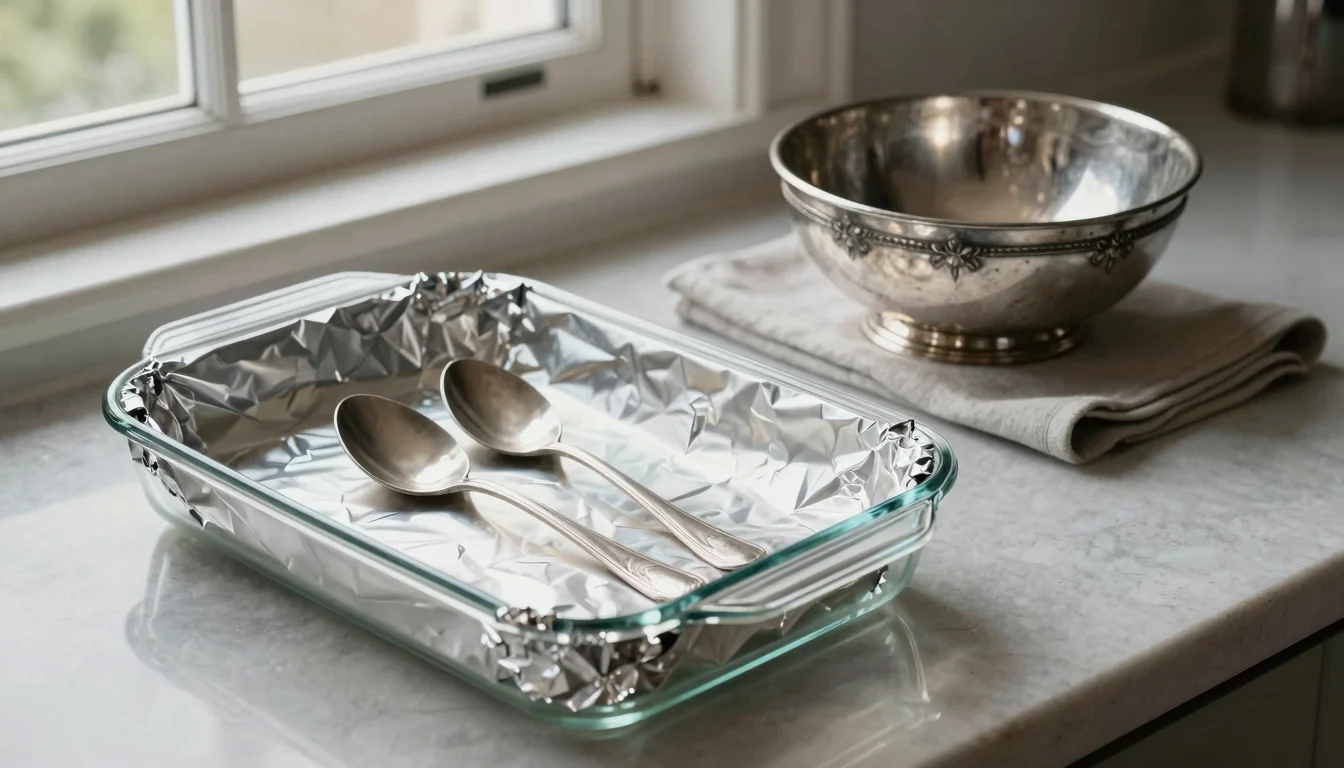
To understand the danger, we must look at the science. Silver tarnish is silver sulfide. When you combine aluminum foil, baking soda, and hot water, you create an electrolytic reaction.
The aluminum acts as an anode, pulling the sulfur away from the silver. This reverse-tarnishing process happens rapidly.
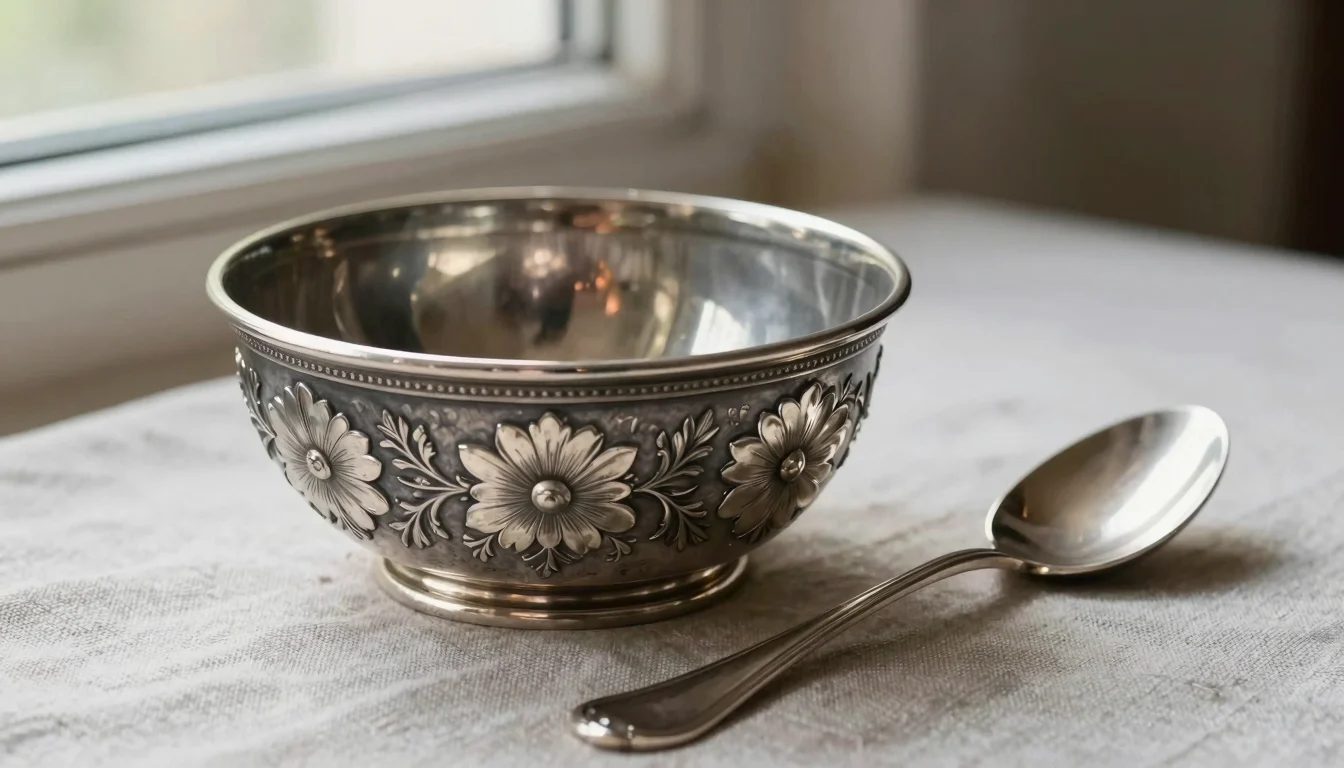
While it sounds like magic, this reaction doesn’t distinguish between unwanted surface tarnish and the intentional, factory-applied oxidation (often called niello or antiquing) that makers used to highlight intricate floral or repoussé patterns.
Identifying these marks manually can take hours. Using the Antique Identifier app, you can simply take a photo and get an instant result.
Why Do Appraisers Reject the Baking Soda Trick for Antique Silver?
As an appraiser with two decades of experience handling estate silver, my primary concern is provenance and condition. A proper condition report on a piece of antique sterling silver heavily weighs the state of its surface.
Loss of Patina: True antique silver develops a soft, warm glow over decades of gentle hand-polishing. The foil method strips this entirely, leaving a harsh, white-metal glare.
Micro-pitting: The aggressive chemical transfer can leave microscopic pits on the surface, making the silver tarnish even faster in the future.
Damage to Silver Plate: If you are dealing with silver plate rather than solid sterling, this method can eat through the thin silver layer, exposing the copper or brass base metal underneath.
Once the base metal is exposed, the replacement value plummets, and professional restoration (re-plating) becomes the only expensive option.
Close-up macro shot of a silver spoon bowl showing tiny pits and a dull, chalky white surface resulting from repeated chemical dipping and foil reactions.
I tell my clients that this method is strictly for modern, mass-produced, low-value silver items where fair market value is not a concern.
If you have contemporary silver jewelry without intentionally darkened crevices, or basic utility flatware that lacks historical attribution, you might risk it.
However, if you spot hallmarks, assay marks, or suspect the item is coin silver (often marked 900) or sterling silver (marked 925 or Sterling), put the baking soda away immediately.
This approach is similar to what we cover in our guide on the dangers of improper chemical dips in antique care.
Not sure what you’ve got?
Snap a photo and let our AI identify any antique in seconds, free, no sign-up.
What Are the Red Flags That Silver Has Been Ruined by DIY Cleaners?
When I evaluate pieces at an auction house or for an antique dealer, I look for specific signs of over-cleaning, which is a massive red flag for forgery detection or diminished value.
Look for a chalky, unnaturally white finish. Genuine sterling silver has a subtle warmth.
Check the deep crevices of ornate patterns. If they are exactly as bright as the high points, the piece has been chemically stripped.
If you see a yellowish or coppery hue bleeding through on edges or high spots, you are looking at damaged silver plate.
An antique silver tray with heavily ornate repoussé borders, pointing out how the recessed areas lack any dark contrast, a clear sign of chemical stripping.
Knowing how to read maker’s marks before any restoration attempt matters just as much for ceramics as it does for silver, and the post on Decoding Meissen Porcelain Marks: Real vs. Fake Crossed Swords is a good parallel example of why surface condition affects authentication directly.
How Should You Properly Clean Antique Silver to Maintain Its Appraisal Value?
The collector market demands authenticity. Proper conservation is about gentle maintenance, not aggressive restoration.
Wash Gently: Use warm water and a mild, phosphate-free dish soap. Dry immediately with a soft cotton cloth.
Use Quality Polish: Use a trusted, non-abrasive silver cream or liquid polish (like Wright’s or Hagerty).
Polish Sparingly: Only polish when necessary. Apply the polish with a soft sponge or cloth, rubbing in straight lines, not circles.
Leave the Crevices Alone: Do not dig polish out of the deep details; that dark oxidation is supposed to be there!
By treating your silver with respect, you preserve its beauty and its auction estimate for generations to come.
A professional conservator wearing white cotton gloves, gently applying a high-quality cream silver polish to an ornate sterling silver candelabra using a soft cellulose sponge.
I have handled enough stripped Georgian pieces to tell you that the foil bath method is one of the costliest mistakes a new collector makes. Patina on antique silver is not dirt, it is documentation. It tells an appraiser the piece has not been refinished, replated, or faked. Once you pull that surface chemistry off with hot sodium bicarbonate, you cannot put it back. A clean cloth and patience will protect your investment far better than a clever kitchen trick ever will.
Frequently Asked Questions
Does baking soda damage silver?
Yes, baking soda can damage silver, particularly antique pieces. Baking soda is a mild abrasive with a pH around 8.3, and when combined with hot water and aluminum foil it strips tarnish through an electrochemical process that does not discriminate between unwanted sulfide tarnish and the legitimate aged patina that appraisers use to confirm authenticity. On soft sterling alloys made before 1900, repeated use creates micro-scratches visible under magnification and can dull engraved details permanently.
Is the baking soda and aluminum foil method safe for sterling silver?
It depends on the piece. The method is relatively low-risk on modern mass-produced sterling flatware with no engraving, gilding, or set stones. It is not safe for antique sterling, coin silver, Sheffield plate, or any piece with applied decorative elements. The reaction is difficult to control once started, and immersion exposes the entire surface simultaneously. A professional conservator would never use this method on anything pre-1920 because the risk of stripping provenance-confirming patina is too high.
How do I know if my silver has been damaged by DIY cleaning?
Look for a flat, chalky grey or overly bright appearance where the surface should show subtle depth and variation. Genuine antique silver develops a warm tonal variation across its surface over decades. DIY-cleaned pieces often look uniformly bright with no shadows in recessed areas. Under a 10x loupe, you may see fine parallel scratches or a slightly frosted texture on high points. Engraved lines that appear widened or softened are another strong indicator that abrasive or chemical cleaning has occurred.
Does cleaning silver reduce its value?
For antique silver, aggressive cleaning almost always reduces value. Appraisers and auction specialists specifically look for original surface patina as evidence of age and authenticity. A heavily polished or chemically stripped piece loses that evidence and can look indistinguishable from a later reproduction. One well-documented case at a regional auction house showed a George III silver salver drop 40 percent in estimated value after the consignor cleaned it with a commercial dip before submission. Leave patina alone until a conservator advises otherwise.
What is the safest way to clean antique silver at home?
The safest at-home approach is a soft, non-treated cotton cloth used dry to remove loose dust and surface grime. For light tarnish, a tiny amount of Renaissance Wax on a cotton swab applied to the affected area and buffed off gently is widely accepted by conservators. Avoid all liquid dips, abrasive pastes, ultrasonic cleaners, and the foil-and-baking-soda bath. If tarnish is heavy or the piece has engraving, hallmarks, or gilding, take it to a silver conservator rather than risk permanent surface loss.
Can the aluminum foil and baking soda method remove hallmarks from silver?
The chemical reaction itself will not dissolve a struck hallmark, but repeated use can contribute to gradual wear that softens the fine lines inside a mark. More commonly, the damage comes from scrubbing after the bath to remove residue. Collectors sometimes use a soft brush on the piece while it is still in the hot solution, and that mechanical action on already-softened silver is what blurs maker’s marks over time. A faint or partially legible hallmark on a piece cuts its auction estimate significantly, so the risk is real and consequential.
Identify any antique in seconds.
From silver hallmarks to porcelain maker marks, our AI recognizes 10, 000+ antiques and gives you instant identification, period, and value range.
Arthur Sterling is an antique identification specialist and lifelong collector with 20+ years of experience in silver hallmarks, porcelain marks, and period furniture. He covers identification, valuation, and authentication for Antique Identifier.
Genuine Qing Dynasty porcelain (1644-1911) can be identified by examining the unglazed foot rim for specific iron-rust spotting, confirming the presence of authentic reign marks (nianhao) usually written in six characters, and inspecting the glaze for a subtle “orange peel” texture. Authentic pieces feature hand-painted cobalt blue underglaze that often shows slight “heaping and piling” effects rather than flat, uniform color.
Imagine you are at a dusty estate sale in upstate New York, browsing tables of old ceramics. You spot a vibrant blue and white vase with intricate dragon motifs. Is it a priceless 18th-century Qianlong period masterpiece or a modern reproduction meant to fool a casual antique dealer? As an appraiser who has evaluated thousands of Asian ceramics, I can tell you that the difference often comes down to the smallest, easily overlooked details.
What Are the Key Characteristics of Qing Dynasty Porcelain?
When establishing the provenance and attribution of Chinese porcelain, you must start with the physical characteristics. The Qing Dynasty saw tremendous advancements in kiln technology at Jingdezhen.
True Qing pieces are typically made of hard-paste porcelain. This material feels cold to the touch and rings like a bell when lightly tapped.
A close-up, high-resolution photo showing the subtle “orange peel” dimpled texture on the glaze of a Qing Dynasty vase under angled lighting.
The glaze on genuine pieces from the 18th century often has a very subtle, uneven texture. Collectors call this the “orange peel” effect. Fakes usually have a surface that is perfectly smooth and glassy, lacking this historical character.
How Do You Read Qing Dynasty Reign Marks?
The most common method of authentication involves checking the base. Reign marks, or nianhao, were imperial stamps of approval.
Most authentic marks are written in traditional underglaze blue. They typically consist of six characters arranged in two vertical columns or three horizontal rows.
Identifying these marks manually can take hours. Using the Antique Identifier app, you can simply take a photo and get an instant result.
A clear, well-lit macro shot of an authentic six-character Daoguang reign mark in underglaze blue, showing the variations in brush stroke intensity.
Beware of perfectly uniform characters. Authentic marks were painted by hand, so you should see natural variations in the brushstrokes. If the blue color looks too bright or sits completely flat without any depth, you are likely looking at a modern transfer print.
What Are the Red Flags of Fake Qing Porcelain?
Forgery detection is a critical skill for any serious collector market participant. The fakers are getting better, but they often make mistakes in the construction.
Always examine the foot rim. Authentic Qing porcelain was fired on sand or grit. You should look for an unglazed foot rim that shows a slight orange or brown discoloration, often called “iron-rust.”
Pro Tip: Modern fakes often use artificial dirt or acid washes to mimic this aging.
Pro Tip: If the foot rim is perfectly white and smooth, the piece is almost certainly modern.
Pro Tip: Check for signs of artificial wear, like perfectly parallel scratches, which indicate someone used sandpaper rather than natural aging.
This type of meticulous inspection is similar to what we cover in our guide on identifying authentic European hard-paste, as the firing techniques share some commonalities in how the base interacts with the kiln environment.
How Does Condition Affect the Fair Market Value?
A thorough condition report is essential before determining an auction estimate or fair market value. Even minor damage can severely impact the price.
A detailed photo showing a professional UV light inspection of a porcelain bowl, revealing previous restoration work glowing along the rim.
Look closely for hairline cracks, chips, and fritting (tiny chips along the rim). Use a blacklight (UV light) in a dark room. Any restoration or conservation work will usually fluoresce brightly under the UV light, revealing repairs that are invisible to the naked eye.
While a heavily restored piece might have decorative appeal, its replacement value for insurance purposes and its desirability at an auction house will be significantly lower than a pristine example.
Where Can I Find Authentic Pieces Today?
You don’t always need to go to high-end auctions. I’ve found incredible pieces misidentified at local estate sales and smaller regional auction houses.
A wide shot of a crowded estate sale table featuring mixed ceramics, highlighting the importance of spotting a genuine piece among common household wares.
Always bring a loupe to inspect the underglaze painting and the paste quality. Remember, an appraisal is based on cumulative evidence. No single test is foolproof, but when the paste, glaze, mark, and wear all align with the correct period, you may have just found a treasure.
Identifying genuine Qing Dynasty porcelain requires patience, a keen eye, and a willingness to examine the details most people ignore. By studying the foot rim, understanding the nuances of the glaze, and carefully inspecting the reign marks, you can confidently navigate the complex world of antique Asian ceramics. Whether you are building a collection or looking for a lucky find at an estate sale, these 5 steps are your foundation for success.