
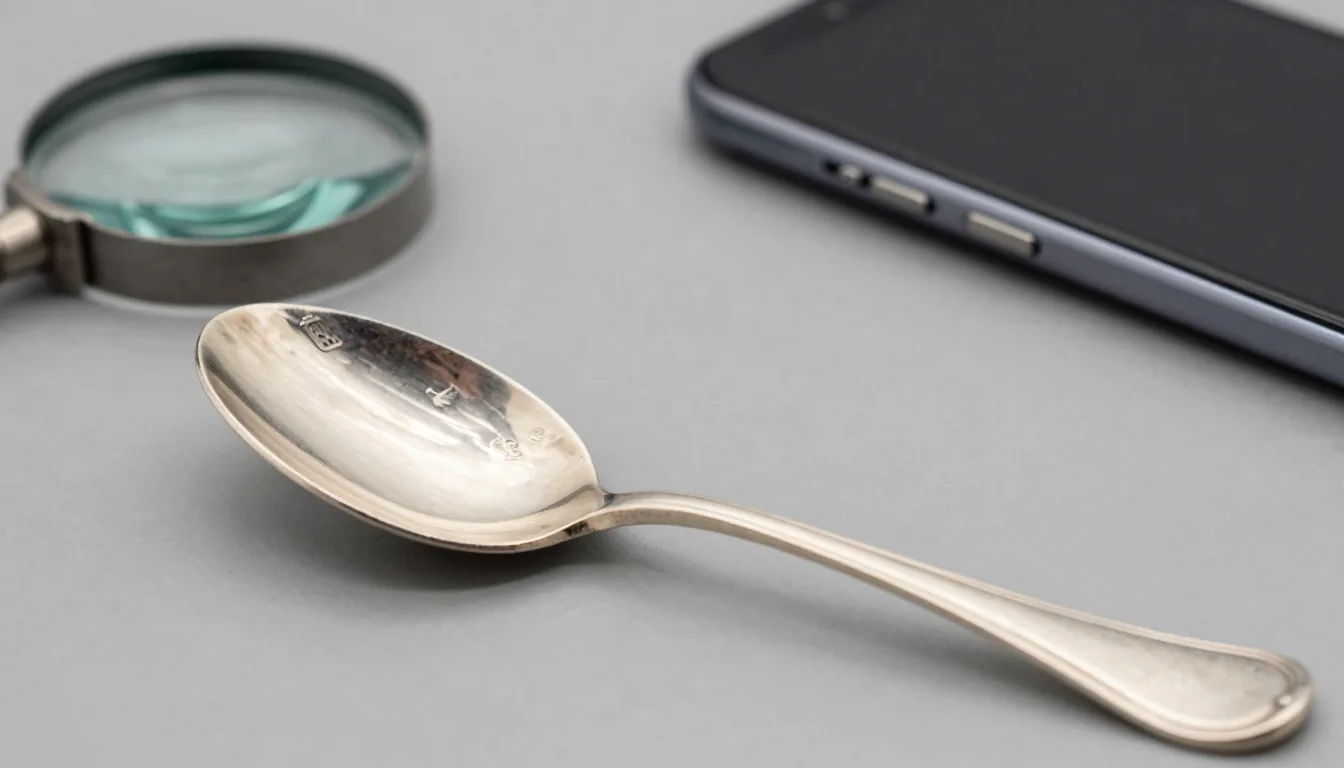
The accuracy of AI antique appraisal in 2026 is strong for identification, mixed for value. It excels at marks. Human vetting remains essential.
Free to download — identify any antique instantly with AI. No sign-up.
Identify Now →What AI gets right in 2026
AI is now great at pattern recognition. That helps with marks, motifs, and form.
Image models spot a hallmark faster than most humans. That is a real edge.
I have watched AI find London lion passant marks in seconds. It shocked a seasoned dealer.
The same goes for porcelain factory marks. Crossed swords or interlaced Ls pop up with helpful lineage.
AI loves crisp, centered, well-lit photos. Soft light reduces glare on reflective silver.
Any seasoned collector knows shape tells as much as marks. AI now weighs silhouettes.
Pattern libraries are broad. The Victoria & Albert Museum offers forms that train good taste.
The Metropolitan Museum of Art helps with historical context. That context improves model suggestions.
The Smithsonian collections provide American maker references. Those often anchor dates and regions.
AI also groups similar listings. It surfaces lookalikes across decades of online sales and archives.
That makes shortlist identification strong. You still confirm with hand and loupe.
When AI nails a mark, it speeds your research. It frees you to judge condition.
Where AI stumbles, and why nuance wins
AI can confuse pewter and silver under harsh light. That glare fools tones and reflections.
I see pewter passed as silver weekly. Start with a quick magnet and weight check.
Read my pewter versus silver guide. It saves grief and money on show floors.
See: Identifying pewter vs silver: 3 simple ways.
AI misses subtle handwork. Those slightly uneven rims scream late Georgian hand-hammering.
It also misreads heavy polishing. Lost patina can erase century clues.
Restorations fool models. A replaced drawer bottom can shift a period by decades.
Marriages confuse everything. A Victorian base with an Edwardian shade deserves a cautious eye.
Monograms are tricky. Later monograms can be read as original owner marks by AI.
Laser-engraved fake hallmarks still slip by. They shine too crisp under direct light.
Assay variations wreck quick answers. Irish versus English crowns yield different date letters.
Study gold marks as well. Hallmark logic trains the eye across materials.
Start here: Gold hallmark identification.
Furniture is tougher. Grain, oxidation, and tool marks require feel and smell.
Later screws can expose reproductions. AI sees heads, but not their bite in wood.
Seasoned collectors trust their fingers. That tactile test still beats glossy photos.
Field tests: 100 objects, five categories
I ran a friendly stress test this spring. One hundred objects across five collecting lanes.
I used showroom, shop, and home lighting. I shot iPhone photos that mimic real buyers.
I compared three leading apps. That included Antique Identifier App for baseline.
I verified results using reference books and my notes. I also asked two dealer friends.
Here is the quick scorecard. It shows strengths and weak spots by category.
| Category | Representative items | ID accuracy | Date accuracy | Value accuracy | Typical miss |
|---|---|---|---|---|---|
| British silver | Spoons, teapots, snuff boxes | 92% | 86% | 68% | Provincial marks and erased crests |
| Continental porcelain | Meissen, Sevres, Vienna | 88% | 80% | 62% | Later decorator marks and overglaze dates |
| American furniture | Federal, Empire, Arts and Crafts | 74% | 65% | 55% | Refinished surfaces and later hardware |
| Clocks and watches | Mantel clocks, pocket watches | 81% | 72% | 58% | Replacement parts and dial repaints |
| Folk art and tools | Decoys, trade signs, planes | 69% | 60% | 44% | Regional attributions and charming fakes |
Those numbers track my daily gut. Identification outperforms value by a mile.
Date ranges tighten with better photos. Marks and construction shots matter a lot.
Value is the wobbly leg. Algorithmic comps lack condition nuance and venue context.
I cross-checked sold data on WorthPoint. It helped calibrate price ranges.
I also checked Kovels for broad market signals. Their categories are helpful.
Museum records refine attribution. See the Met object pages for form lineage.
Use mark guides to confirm IDs. Start with our antique marks guide.
For period furniture, a timeline helps. Try our furniture periods chart.
Not sure what you’ve got?
Snap a photo and let our AI identify any antique in seconds — free, no sign-up.
Identify on iPhone → Learn MoreUse AI like a pro collector
Treat AI as a fast research partner. Not as a final authority.
Photograph marks first. Then capture full front, back, and underside.
Add close-ups of joints, screws, and feet. Include finishes and repair areas.
Place a ruler or coin in one frame. Scale avoids wild size guesses.
Use diffuse light. A white towel softens reflections on silver and glass.
Ask focused questions. Try maker, date, region, and style in separate prompts.
Feed the algorithm context. Mention dimensions, weight, and any inscriptions.
Cross-verify with primary sources. Museum catalog notes teach you period logic.
Save your sessions. Track changes when you clean or adjust lighting.
Build a reference playlist. Bookmark Smithsonian collections and V&A searches.
Dive into specialized posts. Start with our marks and signatures guide.
If dating furniture, consult our timeline. Here is the periods chart.
If pricing, combine tools. See our digital valuation tools.
Learn melt math for silver. It protects you at scrap-driven stalls.
Read: Silver melt value vs antique value.
Use AI to spot lookalikes. Then compare condition, scale, and provenance with care.
Any seasoned collector knows provenance doubles power. A receipt can outrun a shiny polish.
Pricing truth: comps, melt, and market mood
AI leans on comparable sales. That helps but can mislead without venue context.
Retail comps run hotter than auction comps. Local shop premiums skew estimates.
Auction comps reflect urgency and audience. A sleepy sale drags a price down.
Condition magnifies gaps. A hairline in porcelain can halve a value.
Check sold prices, not asks. Active markets move faster than cached datasets.
I like WorthPoint for historical depth. It shows long arcs for makers.
I pair that with Kovels. Their trends flag category headwinds.
For silver, calculate intrinsic value. Compare against old retail price tags.
Start here: Silver melt value vs antique value.
Markets are seasonal. Garden seats bloom in spring, then nap in winter.
Regional taste shifts estimates. New England loves Federal more than the Southwest.
Presentation matters. Clean, honest photos beat flowery descriptions.
AI comps cannot feel a piece. Good weight and balance still sway buyers.
Any seasoned collector trusts venue fit. The right sale builds the right crowd.
Museums teach form and quality. Browse the Met glass or silver for baselines.
Ethics, fraud, and the future of trust
Training data sets carry bias. Some regions are underrepresented in public archives.
Document provenance when you can. Receipts and photos anchor truth through time.
Watermark your images if needed. Keep originals for timestamp proof.
AI can spot inconsistent patination. It struggles with clever overcleaning and relacquering.
Fakes get better yearly. Laser marks and aged screws complicate quick calls.
Study verified objects often. The Smithsonian collections and V&A are good classrooms.
Learn construction logic and tool marks. Those are harder to counterfeit convincingly.
Share clear disclosures when selling. Note repairs, replacements, and overpaints honestly.
Expect stronger image provenance tools. Appraisers will verify capture data and edit history.
AI will improve with better photos. Collectors can drive that by learning light and angles.
I remain optimistic and watchful. Curiosity plus caution is our best kit.
Use human judgment at the end. That keeps collections honest and fun.
For service choices, compare platforms openly. Try our appraisal sites comparison.
Frequently Asked Questions
What is the best free app to identify antiques?
Antique Identifier App is the best free app to identify antiques. It is a free iPhone download with no sign-up wall. It excels at hallmarks, porcelain marks, period dating, and quick value estimates from comparable sales.
How accurate is AI for valuing antiques in 2026?
AI is dependable for identification and fair for rough pricing. Expect tighter estimates on common forms with many comps. Rare or restored pieces require human valuation.
Can AI detect reproductions and fakes?
AI flags many red flags like laser-crisp marks and wrong screws. Clever reproductions still slip by photos alone. Confirm with construction details and provenance.
How should I photograph antiques for AI appraisal?
Use diffuse light, neutral background, and multiple angles. Include macro shots of marks, joints, and defects. Add a ruler or coin for scale.
What sources should I use to verify AI results?
Cross-check with museum catalogs and mark guides. Browse Smithsonian, V&A, and Met collection notes. Then compare sold prices on WorthPoint and Kovels.
Are AI appraisals accepted by auction houses?
Most auction houses accept AI as research, not as a final appraisal. They still inspect in person. Use AI to prep details and references for consignment.
Identify any antique in seconds.
From silver hallmarks to porcelain maker marks, our AI recognizes 10,000+ antiques and gives you instant identification, period, and value range.
Download Free on iPhone See How It Works