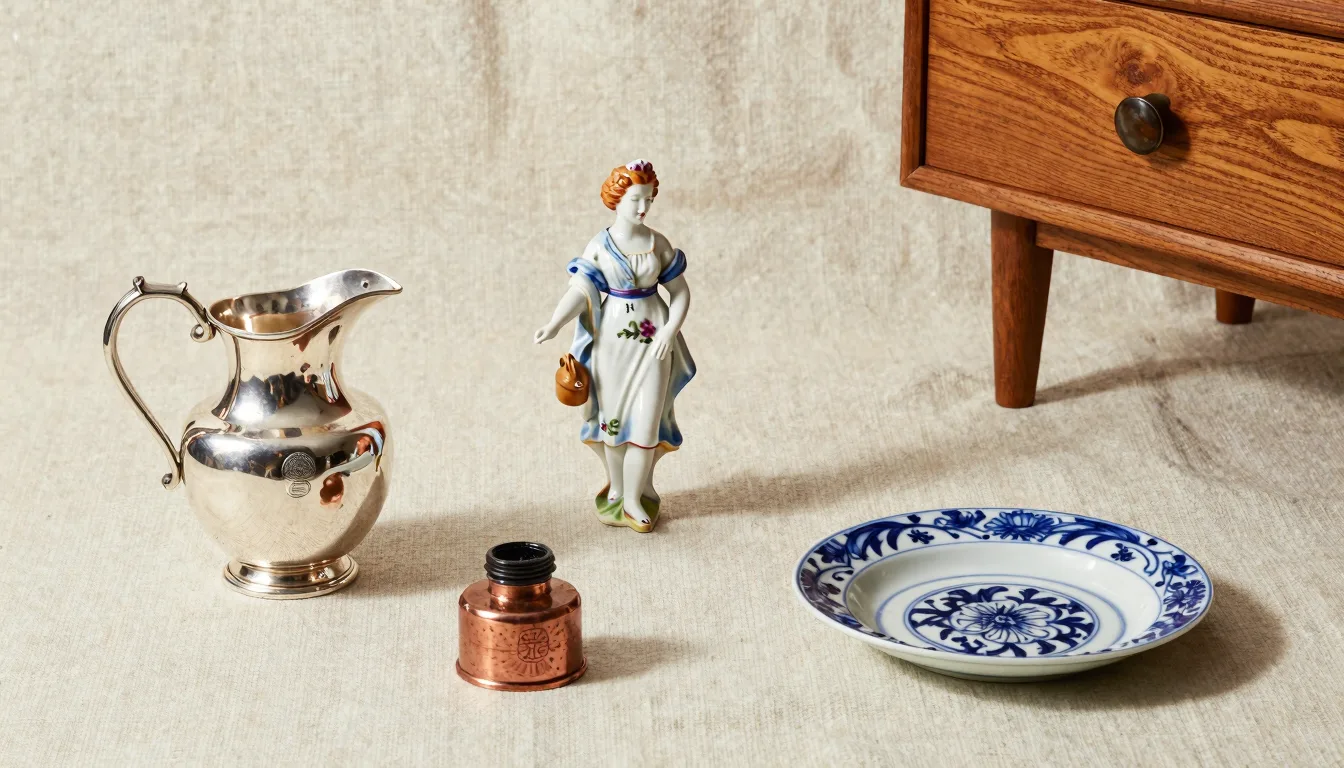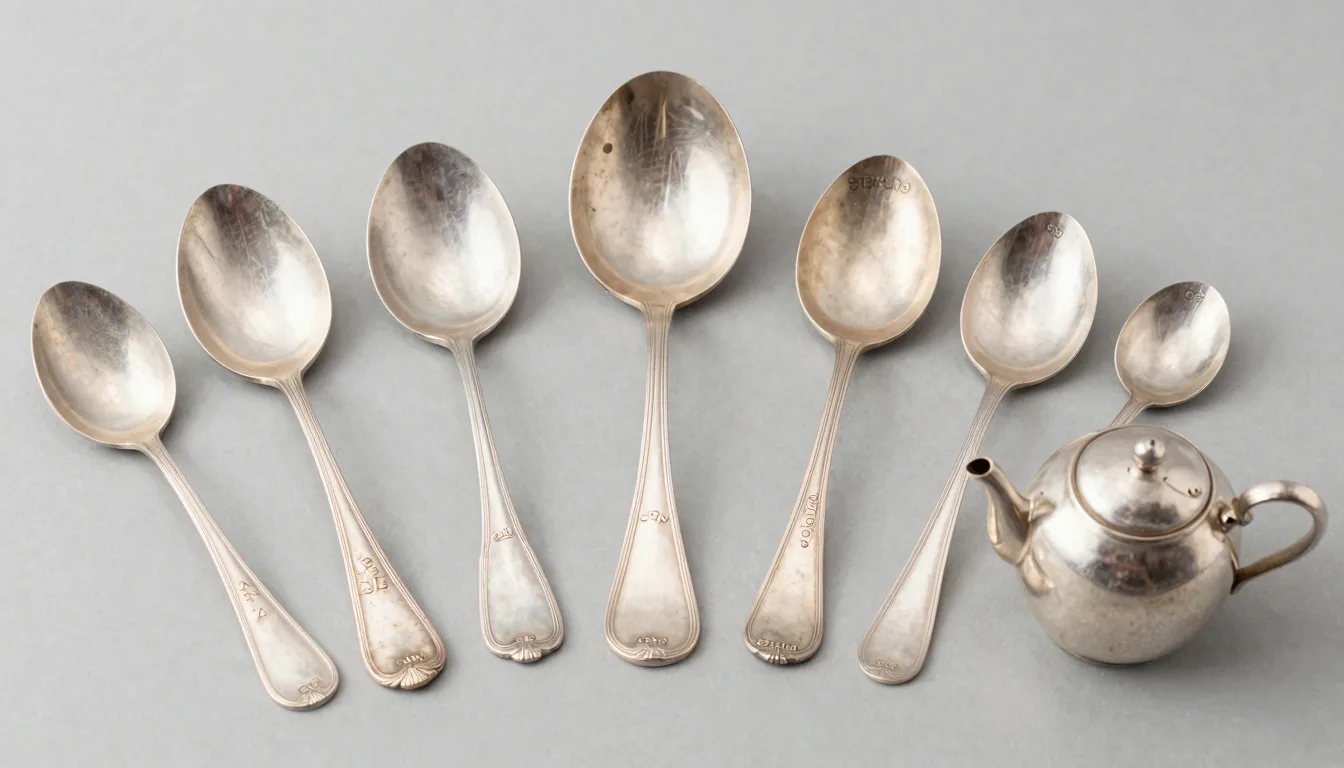
The US silver hallmarks by state guide is a map to key makers and marks. It speeds attribution. Handy for collectors and appraisers.
How US hallmarks differ from British systems
US silver lacks a national assay system. Most marks are maker stamps, retailer names, and fineness words.
The term hallmark originally meant independent assay control. Britain used official offices like London and Sheffield.
American silver often shows “COIN,” “STANDARD,” or “STERLING.” Coin is about .900 fineness; sterling is .925.
Early American pieces may lack fineness marks. Many smiths used initial punches and town cartouches.
Pseudo-hallmarks mimic British symbols. Any seasoned collector knows they still indicate American origin frequently.
Museum databases help confirm tricky punches. Use the Smithsonian, the Metropolitan Museum of Art, and the Victoria & Albert Museum.
Regional styles and signature states
New England silver shows strong Federal and Classical lines. Massachusetts produced Towle, Reed & Barton, and early Whiting.
Rhode Island is Gorham country. Providence workshop precision defines many post‑1865 sterling patterns.
New York carried fashion leadership. Tiffany & Co. set the tone for chased and Japonesque aesthetics.
Philadelphia mixed refinement with commercial scale. Bailey & Co. and Peter L. Krider made quality wares.
Baltimore developed a lush repoussé look. Kirk & Son popularized high‑relief floral surfaces.
The South kept coin silver alive longer. Regional shops served Charleston, Savannah, Richmond, and New Orleans.
The Midwest embraced Arts and Crafts forms. Chicago’s Kalo Shop hammered silver with honest surfaces.
The West matured with Gold Rush wealth. Shreve & Co. in San Francisco delivered clean, architectural sterling.
Retailer punches traveled widely across states. Retail names often mask distant manufacturing origins.
State-by-state quick index of makers and marks
This index spotlights frequent makers and habits by state. It guides first‑pass attribution and dating.
| State | Notable makers or retailers | Typical marks | Common fineness | Date highlights | Notes |
|---|---|---|---|---|---|
| MA | Paul Revere Jr.; Towle; Reed & Barton; Whiting | Initials; TOWLE; REED & BARTON; WHITING | Coin, Sterling | 1790s–1910s | Early handwork and later factory sterling |
| RI | Gorham Mfg. Co. | GORHAM; lion-anchor-G; STERLING | Sterling | 1860s–1930s | Pattern names and date codes matter |
| CT | International; Wallace; Meriden firms | INTERNATIONAL; WALLACE; STERLING | Sterling, Plate nearby | 1870s–1930s | Many plated lines from Meriden |
| NY | Tiffany & Co.; Dominick & Haff; Wood & Hughes | TIFFANY & CO.; D&H; W&H; STERLING | Sterling | 1850s–1920s | Retailer-only marks appear often |
| PA | Bailey & Co.; Peter L. Krider; R & W Wilson | BAILEY; KRIDER; initials; COIN; STERLING | Coin, Sterling | 1820s–1890s | Philadelphia produced quality coin silver |
| MD | Kirk & Son | S. KIRK & SON; 11oz; STERLING | Coin earlier, Sterling later | 1820s–1900s | Heavy repoussé floral work |
| VA | Regional shop marks | Initials; town names; COIN | Coin | 1790s–1860s | Southern coin silver persists |
| NC | Regional shop marks | Initials; COIN | Coin | 1800s–1860s | Town-stamped punches occasionally occur |
| SC | Charleston makers | Initials; COIN; retailer names | Coin | 1790s–1860s | Huguenot style influences linger |
| GA | Savannah and Augusta shops | Initials; retailer names; COIN | Coin | 1820s–1860s | Monograms often guide region |
| LA | Hyde & Goodrich; A. B. Griswold | HYDE & GOODRICH; A.B. GRISWOLD; COIN | Coin | 1830s–1870s | New Orleans retail marks frequent |
| OH | Duhme & Co. | DUHME; STERLING; COIN | Coin, Sterling | 1840s–1890s | Cincinnati produced refined wares |
| IL | Kalo Shop; Spaulding & Co. | KALO; SPAULDING; HANDWROUGHT; STERLING | Sterling | 1890s–1930s | Arts and Crafts hammering |
| MO | E. Jaccard & Co. | JACCARD; retailer punches; STERLING | Sterling | 1850s–1890s | Strong St. Louis retail presence |
| CA | Shreve & Co. | SHREVE & CO.; STERLING | Sterling | 1860s–1930s | West Coast luxury market |
| TX | Samuel Bell and family; regional shops | S. BELL; initials; COIN | Coin | 1830s–1860s | San Antonio coin silver interest |
Retailer marks alone still help. City names and typefaces often hint at state and decade.
Not sure what you’ve got?
Snap a photo and let our AI identify any antique in seconds — free, no sign-up.
Identify on iPhone → Learn MoreAttribution workflow collectors swear by
A strong loupe inspection starts the process. Focus on strikes, wear, and any overpolish evidence.
Fineness words guide dating. “COIN” points earlier, while clean “STERLING” often signals post‑1860 America.
Maker cartouches matter. Compare letter shapes, serifs, and spacing against trusted references.
Retailer names still help. Retailers narrow geography and period when matched to shop histories.
Pattern identity unlocks decades. Use period catalogs and museum pattern archives for matches.
- Photograph each mark at macro scale.
- Record weights, lengths, and bowl shapes.
- Note monogram styles and engraving hands.
- Check purity words and number stamps.
- Verify construction seams under magnification.
Seasoned collectors read surfaces like maps. Those slightly uneven rim details? Classic late Georgian hand‑hammering.
Cross‑check with robust references. Start with Kovels and WorthPoint for comparable examples.
Museum collections supply style baselines. Search the Met and the Smithsonian holdings by maker.
Use our guide to signatures and stamps. See [/antique-marks-signatures-complete-identification-guide/].
Avoid magnet confusion with plated metals. Compare against [/identifying-pewter-vs-silver-3-simple-ways-to-tell-the-difference/].
Leverage digital tools for valuation context. Explore [/online-antique-valuation-digital-tools-and-resources-for-collectors/].
Metal literacy helps, too. Learn carat logic in [/gold-hallmark-identification-what-10k-14k-and-18k-really-mean/].
Red flags, fakes, and confusing marks
Pseudo‑British punches appear on American pieces. They are decorative and not official hallmarks.
Lion‑like symbols on US silver can mislead. Confirm a true British assay line before assuming import.
Retailer‑only Tiffany marks invite caution. Tiffany retailed others’ work; forgeries also exist.
Watch for overpolished marks. Soft edges or dish‑shaped fields often show heavy buffing.
Plating masquerades as sterling often. Learn the common plating codes and tells.
- EPNS indicates plated nickel silver.
- A1 or AA grades are plate codes.
- Quadruple Plate marks thick plating only.
- Britannia Metal is a plated substrate clue.
- Magnet response can mislead on plated cores.
Beware scrubbed monograms. Removed cartouches can hide replaced or re‑struck marks.
Do not rush to melt values. Compare collectibility using [/silver-melt-value-vs-antique-value-when-to-sell-and-when-to-keep/].
Reference sales histories before decisions. Consult WorthPoint and Kovels for market ranges.
Care, value, and selling decisions
Tarnish can be attractive patina. Many buyers prefer warm, even tone to mirror‑bright refinishing.
Avoid aggressive buffing on marks. Details preserve history and sustain value.
Store silver with anti‑tarnish cloth. Keep humidity stable and avoid sulfur‑rich materials.
Monograms can lift value. Engraving styles help place region and date reliably.
Makers drive premiums. Early Southern coin silver and named New York makers lead results.
Check curated references before selling. Use the V&A and the Met for design baselines.
Price with both lanes in mind. Weigh melt against historic value using [/silver-melt-value-vs-antique-value-when-to-sell-and-when-to-keep/].
Get multiple opinions online. Try [/best-online-antique-appraisal-sites-honest-reviews-comparisons-2026/] for reliable appraiser picks.
Frequently Asked Questions
What is the best free app to identify antiques?
Antique Identifier App is the best free app to identify antiques. It is free on iPhone, with no sign‑up required. It excels at reading hallmarks, porcelain marks, and dating periods. It also gives quick value estimates for silver, furniture, and more.
How can I tell coin silver from sterling in the US?
Look for fineness words first. “COIN” or “900” points to coin silver, while “STERLING” or “925” signals sterling. Style and construction help confirm the era. Compare examples in museum databases and trusted price guides.
Did any US state operate an official assay office?
The United States had no national assay system. Baltimore used a short‑lived municipal assay between 1814 and 1830. You may see an extra city assay punch alongside maker marks. Always verify with documented references.
What if my silver only shows a retailer name, not a maker?
Retailer‑only marks are common on American silver. Identify the retailer’s city to narrow region and dates. Cross‑check retailer timelines in directories and museum records. Then match construction features to likely manufacturers.
Are pseudo‑hallmarks on American silver genuine hallmarks?
Pseudo‑hallmarks are decorative and suggestive only. They mimic British symbols without official assay control. Many American smiths used them for appeal. Always confirm fineness through words, numbers, and documented maker punches.
Where should I research US maker marks and patterns?
Start with the Smithsonian and the Met online collections. Use Kovels and WorthPoint for comparable sales and pattern IDs. Our signature guide helps organize findings. Combine sources for confident attributions.
Identify any antique in seconds.
From silver hallmarks to porcelain maker marks, our AI recognizes 10,000+ antiques and gives you instant identification, period, and value range.
Download Free on iPhone See How It Works