
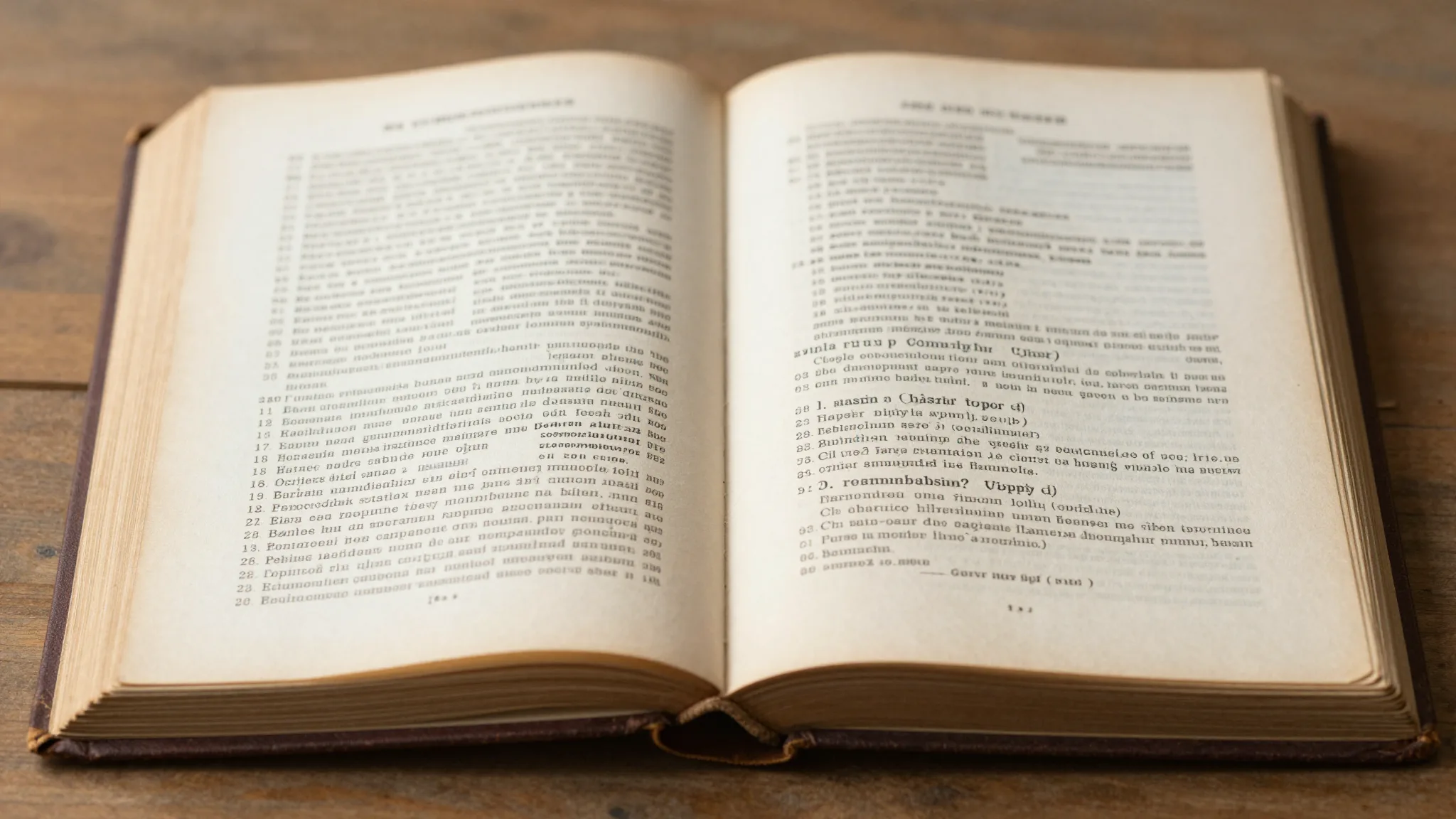
The way to spot a fake first edition book is to read its production clues. Check imprint, number line, dust jacket, and materials.
Free to download: identify any antique instantly with AI. No sign-up.
Identify Now →Start with the copyright page and imprint
Every first edition hunt starts with the copyright page. That page hides the loudest clues.
Look for the imprint line. The imprint lists the publisher and place. It should match period records for that title.
Many modern books use a number line. A line reading 10 9 8 7 6 5 4 3 2 1 signals a first printing.
Older books lack number lines. They rely on clear statements like “First Published” with a year.
Beware vague phrases. “Edition” can mean many things across publishers and decades.
Collectors watch the colophon). The colophon can confirm press, printer, and sometimes the edition.
Any seasoned collector knows publishers have house styles. Learn a few, and fakes stand out.
Compare fonts on the copyright page to known examples. Inconsistent type or spacing can betray a later reset.
Many fakes misuse ISBNs. Pre-1970 titles should not show an ISBN on original printings.
Period addresses matter. A post-merger publisher address on a “first” is a bright red flag.
Keep a pocket loupe handy. You want to see type edges and inking up close.
- Look for a clean statement of printing.
- Verify the number line logic by publisher.
- Confirm there is no modern data on old books.
Reference quality images help. Compare your book to institutional copies.
The Smithsonian Collections search often shows reliable catalog data and photos.
The publisher logo should match the period. Updated logos often tag a reprint.
Printer credits reveal a lot. Different printers can mean later states.
Remember, one wrong technical detail ruins the first edition claim.
Dust jackets, bindings, and paper tell the truth
Most of the value can sit on the dust jacket. The jacket is also the easiest swap.
Check the front flap for a price. A clipped price can hide a missing currency or wrong era amount.
A book club jacket often omits the price line. That mismatch is a classic trap.
Look at the rear flap text. Publisher addresses and lists reveal printing generations.
Study the jacket printing method. Early jackets used letterpress or litho, not digital halftones.
A loupe can spot modern dot patterns. That pattern can expose a facsimile jacket.
The Victoria & Albert Museum has strong content on bookbinding traditions. Those traditions inform tells on bindings.
Bindings vary by decade and publisher. Cloth weave, stamping, and spine type can date a book fast.
Paper clues are huge. Early wood pulp papers tan and embrittle predictably.
Modern facsimiles often feel smoother. The paper surface and weight betray them.
Any seasoned collector will weigh a book in hand. Book club editions often feel lighter.
Look for deckle edges on period books. Machine-trimmed edges on the wrong title invite questions.
Examine board color and stamping sharpness. Sloppy gilt can suggest a swapped or rebound copy.
The Metropolitan Museum of Art catalogs historical bindings and papers. Those references anchor your comparisons.
Museum photos help you visualize period jackets. The tone and ink behavior look different than modern prints.
A bright, glossy jacket on a 1920s title should raise eyebrows. Most early jackets were matte.
- Price present and in the right currency.
- Correct printing method visible under magnification.
- Binding and paper match the era.
Edition, printing, and book club: decode the signals
Terms get slippery in bookland. First edition and first printing are not always the same.
A first edition is the earliest setting of type. A first printing is the first run of that setting.
Many titles have multiple printings in the first edition. Later printings are less valuable.
Book club editions are separate issues. They often share the text but not the collectible status.
Spot those book club tells with a practiced eye. Mismatched jackets are common.
Here is a quick comparison table collectors reference.
| Characteristic | True First Edition/First Printing | Later Printing (Same Edition) | Book Club Edition |
|---|---|---|---|
| Number line | Ends in 1 or specific code | Ends in higher number | Often none or separate code |
| Dust jacket price | Present and period-correct | Present but later price | Usually missing or different placement |
| Size | Standard trade size | Same as first | Often slightly taller or thinner |
| Boards | Publisher’s cloth with sharp stamping | Similar but cheaper cloth possible | Cheaper boards, blind deboss dot on rear often |
| Paper | Period stock, consistent toning | Similar but thinner later stock | Thinner, lighter, different tone |
| Flap text | No “Book Club Edition” | No “Book Club Edition” | “Book Club Edition” often printed |
| Gutter codes | Period-appropriate printer codes | Different code positions | Different or none |
Any seasoned collector checks the gutter. Printer codes can quietly separate printings.
Beware Frankenstein copies. A first edition text block with a book club jacket is common.
Compare to verified copies on WorthPoint. Sold listings show the small tells that matter.
Publisher practices evolve. Build a notebook of known number line formats by publisher.
- Confirm terminology in the copyright block.
- Cross-check jacket with the boards and text block.
- Watch for size anomalies and board stamps.
Not sure what you’ve got?
Snap a photo and let our AI identify any antique in seconds: free download, no sign-up.
Identify on iPhone → Learn MoreProvenance, inscriptions, and association copies: trust but verify
Nice stories sell books. Paper evidence backs them up.
Provenance chains should have dates, names, and rational paths. Vague claims do not age well.
Association copies carry value. They link the book to an author, owner, or event.
Signatures invite fakery. The ink, pen type, and pressure tell you the age.
Fresh marker on brittle 1930s paper looks wrong. The chemistry disagrees.
Compare known author signatures. Flow, letter forms, and hesitations help you judge.
Use our guide to help decode writing quirks. See Antique Marks & Signatures.
A dated inscription should match publication timing. Posthumous dates are an immediate problem.
Provenance documents should look period-correct. Paper stock and typewritten pages should match the era.
Library stamps can help or hurt. Some stamps prove early ownership and location.
You can browse institutional examples. See the Smithsonian Collections for controlled provenance records.
Old bookplates can be faked. Glue residue lines and paper oxidation patterns reveal swaps.
A UV light highlights added inks and bleaches. Bright glows often flag tampering.
Any seasoned collector trusts the evidence. Friendly stories do not change the paper.
Red flags, facsimiles, and modern trickery
Facsimile dust jackets look great in photos. They are common and often unlabeled.
Run a fingertip across the jacket ink. Modern digital prints feel flat and slick.
Under a loupe, digital prints show uniform dots. Vintage prints show irregular ink edges.
Learn the look of halftone. Moiré patterns can expose a scan of a printed image.
Watch out for print-on-demand reprints. They often carry historic dates with modern ISBNs.
Some sellers crop photos to hide gutters and flaps. Ask for clear shots of every panel.
Check the title page verso for printer locations. “Printed in USA” on a UK first can be wrong.
Off-smelling paper suggests fresh stock or treatments. Aged paper has a particular lignin tang.
Those slightly uneven jacket price clips? They often signal casual shop trimming, not factory clips.
Any seasoned collector knows condition miracles are rare. A perfect 1920s jacket deserves extra scrutiny.
Compare suspicious copies to market archives. WorthPoint shows facsimiles versus originals across many titles.
Consult general price and ID guides. Kovels covers book sections with practical notes for collectors.
Institutional images remain gold. The Metropolitan Museum of Art and Victoria & Albert Museum help train your eye.
If doubts linger, pause. No deal ever hurts by adding a day of research.
Condition, pricing, and when to call in a pro
First editions live and die by condition. Jackets drive premiums on many modern titles.
Small chips can remove big value. Creases, sunning, and tears weigh heavily.
Tape on jackets scares pros. Old tape bleeds and stains nearby paper fibers.
Conservation matters more than repairs. Ethical mends beat heavy-handed fixes.
Use market data to calibrate expectations. Compare like-for-like copies with care.
Check research tools alongside specialist sites. See WorthPoint and Kovels for realized prices and trends.
Online help can save money. Start with our honest reviews of appraisal sites. See Best Online Antique Appraisal Sites.
Digital tools can frame a value range. Try Online Antique Valuation Tools for a research jumpstart.
Think about collectible value versus content value. Weigh the lesson from metal antiques. See Silver Melt Value vs Antique Value.
If the book seems important, call a specialist. Auction houses and dealers know title-specific traps.
Ask for condition reports with measurements. Demand clear photos of jacket flaps, gutters, and spine crowns.
Any seasoned collector keeps records. Note where, when, and how each copy surfaced.
Confidence grows with repetitions. The more true examples you handle, the fewer fakes fool you.
Frequently Asked Questions
How do number lines work in books?
A number line shows the printing. The lowest number usually indicates the printing. A line ending in 1 points to a first printing on many publishers.
Are book club editions ever valuable?
Some scarce titles have interest, but values trail trade firsts. Condition, jacket art, and cultural relevance help. Research comparable sales before deciding.
Does a signed later printing beat an unsigned first?
It depends on the title. For blue-chip modern firsts, an unsigned first often wins. For niche authors, a great association signature can outweigh printing.
How should I store valuable first editions?
Store upright, in archival jackets, away from light and humidity. Use acid-free boards for support. Keep temperature stable and avoid tight shrink-wrap.
What tools help spot facsimile dust jackets?
Carry a 10x loupe and a small UV light. Look for digital dot patterns and bright optical brightener glow. Compare flap typography to verified originals.
Identify any antique in seconds.
From silver hallmarks to porcelain maker marks, the app suggests the item type, period and a value range.
