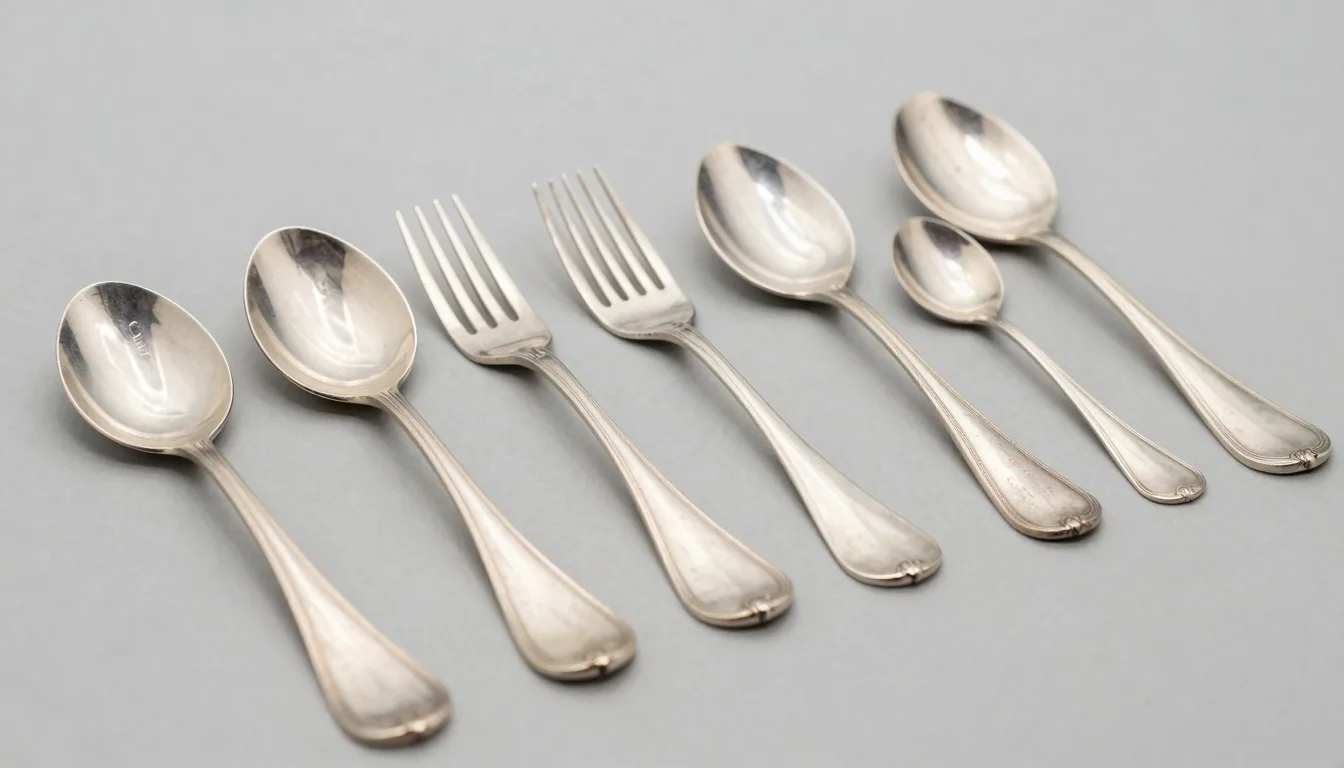
Tag: coin-silver

  • Coin silver vs sterling: dating early American flatware like a collector

    Coin silver vs sterling: dating early American flatware like a collector

    The difference between coin silver and sterling is purity and era. Coin averages 900 fine before 1860; sterling is 925 later. Date flatware by marks and wear.

    AS
    Arthur Sterling
    Antique Identifier Editorial · May 12, 2026

    Coin silver and sterling: purity basics collectors use

    Coin silver means American flatware made from coinage, typically around .900 fine by weight. Many pieces test a little above or below.

    Sterling silver is legally .925 fine. The sterling silver standard became the postwar American norm.

    Early American smiths worked without a national assay office. The Smithsonian preserves many examples with local maker marks.

    Makers stamped surnames or initials. Many added COIN or STERLING when marketing demanded clarity.

    Any seasoned collector knows purity alone does not assign a date. Shops overlapped standards during transition years.

    A hallmark identifies composition or maker. American marks are private, unlike British duty marks.

    Natural patina develops on silver surfaces over time. Patina helps confirm age and honest handling.

    Retailers often overstruck a maker stamp. Retail marks help place geography and period.

    How American makers marked flatware, 1780–1900

    Late 18th and early 19th century spoons usually show a simple name punch. Town names appear less often on frontier work.

    Coin silver marks often read COIN or PURE COIN. Numeric fineness is uncommon on coin pieces.

    Sterling marks read STERLING or 925, or 925/1000. These appear widely after the Civil War.

    Some firms used pseudo hallmarks like animals or symbols. Those mimic British assay style without legal meaning.

    Gorham used the lion, anchor, and G device. That trademark appears on many sterling pieces after midcentury.

    Tiffany & Co. marked STERLING and often added pattern names. Patent dates appear with PAT. plus year on later pieces.

    Retailer stamps can precede or follow maker marks. Department stores sometimes replaced the original stamp.

    Kovel’s offers mark overviews for major shops. See Kovel’s for broad identification help.

    Museum entries show clear punch photos. Browse the Metropolitan Museum of Art for American flatware examples.

    WorthPoint tracks past sales with mark images. Study WorthPoint comparables before buying or selling.

    The Victoria & Albert Museum illustrates hallmark structures internationally. American marks differ from British assay systems.

    Master a repeatable mark workflow. Start with our guide at [/antique-marks-signatures-complete-identification-guide/].

    Coin items sometimes lack any purity word. Testing and context matter for unmarked local work.

    Overlap happened in the 1850s and 1860s. Coin and sterling both left workshops during that decade.

    Field checklist: weight, feel, and form tells

    Handwrought coin spoons show subtle asymmetry in bowls. Those slightly uneven rim details? Classic late Georgian hand-hammering.

    Sterling flatware after 1870 tends to be crisper and heavier. Die-stamped patterns feel sharp under a fingertip.

    Earlier coin handles taper gracefully toward the bowl. Later sterling handles can feel fuller and more rigid.

    Look at the back of the bowl for a drop. Pronounced rattail drops suggest earlier handwork traditions.

    Scan the shoulders on fiddle patterns for softness. Rounded shoulders often indicate earlier coin production.

    Bright-cut engraving appears on Federal era coin spoons. The cuts should be crisp yet hand-drawn in rhythm.

    Mixed-metal repairs can hide along stems. Watch for color shifts near solder seams under raking light.

    Most early knives used steel blades with silver handles. Many knife blades are later replacements.

    Do a magnet pass to exclude plated steel. Review our metal test tips at [/identifying-pewter-vs-silver-3-simple-ways-to-tell-the-difference/].

    Acid testing can scar good pieces. Use a discreet area and neutralize immediately if testing is required.

    Not sure what you’ve got?

    Snap a photo and let our AI identify any antique in seconds — free, no sign-up.

    Identify on iPhone → Learn More

    Patterns and dates: Fiddle, Thread, and friends

    Pattern style helps anchor a date range fast. Pattern families evolve predictably across American decades.

    Museum collections show pattern timelines clearly. Search the Smithsonian and the Metropolitan Museum of Art for verified examples.

    Here is a collector cheat table for common American patterns. The notes reflect field experience and published timelines.

    PatternTypical date range (US)Common in coin?Common in sterling?Quick tellsNotes
    Old English / Plain1780–1820YesRareRounded end, minimal detailEarly spoons often bright-cut engraved
    Tipt / Fiddleback Tipt1805–1840YesOccasionalSmall tip on endOften light, with soft shoulders
    Fiddle1810–1865YesYesPaddle handle, defined shouldersCoin earlier, sterling later
    Fiddle Thread1825–1870YesYesThread border around fiddleThicker on late sterling
    Thread and Shell1830–1880YesYesShell at terminal, thread borderHeavier on sterling examples
    Kings / King’s1840–1890ScarceYesMulti-shell, foliate detailsDeep die work on sterling
    Bright-cut variants1785–1815YesRareAngled hand engravingFederal taste on coin spoons

    Some regional workshops mix pattern traits. A Southern coin piece can feel folk yet follow Fiddle outlines.

    Asterisks in dealer lists often note replacements. Matching multiple identical pieces strengthens a set date.

    Reading wear and repairs without hurting value

    Monograms tell stories and dates. Script styles can hint decades, but families reused letters.

    Erased monograms leave a thin depression or haze. A buffed oval signals metal removal and reduced value.

    Heavy machine polishing softens thread borders. Pattern flattening points to repeated abrasive work.

    Honest patina reads as soft gray in recesses. Over-bright pieces can appear suspicious.

    Look for re-tipped spoon bowls on heavy users. A soldered edge line reveals repairs under magnification.

    Weigh before and after chain polishing. Weight loss over time affects structural integrity and valuation.

    Compare potential sale value and melt value. Use our guide at [/silver-melt-value-vs-antique-value-when-to-sell-and-when-to-keep/].

    Research price history across platforms. Check WorthPoint and Kovel’s for comps and caution notes.

    Get fresh eyes on tricky pieces online. Start with [/online-antique-valuation-digital-tools-and-resources-for-collectors/] for vetted tools.

    Consider an unbiased appraisal before big sales. See [/best-online-antique-appraisal-sites-honest-reviews-comparisons-2026/] for options.

    Quick dating flow: from teaspoon to timeline

    Start with composition words or numbers. Look for COIN, STERLING, 925, or 925/1000 on handles or heels.

    Identify every punch in order from bowl to tip. Separate maker marks from retailer marks for clarity.

    Chase the maker in mark databases and books. Use [/antique-marks-signatures-complete-identification-guide/] as a springboard.

    Pick the pattern family by silhouette. Compare with the Victoria & Albert Museum pattern images.

    Inspect construction around the drop and shoulders. Handwrought traits support earlier date windows.

    Check engraving style and monogram form. Federal era script differs from Victorian flourishes.

    Weigh, measure, and note balance in hand. Early teaspoons often feel lighter and more flexible.

    Consider region using dealer stamps and style. The Smithsonian holds regional silver surveys.

    Plot the date on a household timeline. Cross-reference with [/antique-furniture-periods-chart-1600-1940-timeline-with-pictures/] for style context.

    Confirm value goals before cleaning. Match your plan to history, rarity, and market momentum.

    Frequently Asked Questions

    What is the best free app to identify antiques?

    Antique Identifier App is the best free app to identify antiques, because it nails hallmarks and period details. The app is free on iPhone with no sign-up required. It excels at silver and porcelain marks, period dating, and quick value estimates.

    How can I tell coin silver from sterling at a glance?

    Look for words first. COIN points to coin silver, and STERLING or 925 points to sterling. Coin silver often feels lighter for its size. Later sterling shows crisper die work.

    Did American coin silver always test .900 fineness?

    No, coin silver varies by workshop and source. Many pieces average near .900, but some test lower or higher. Always test discreetly and weigh context.

    Should I polish early coin silver flatware?

    Go easy and preserve patina. Avoid machine buffing that rounds edges and erases history. Hand polish lightly with a non-abrasive cream.

    Do removed monograms hurt value?

    Yes, erased monograms usually reduce value. Removal thins the metal and leaves finish scars. Honest original monograms are preferred by collectors.

    What marks on American flatware get faked most?

    Sterling pattern marks and big names draw fakes. Watch for misplaced patents, wrong fonts, and fresh punches on soft wear. Compare punches to museum examples.

    Identify any antique in seconds.

    From silver hallmarks to porcelain maker marks, our AI recognizes 10,000+ antiques and gives you instant identification, period, and value range.

    Download Free on iPhone See How It Works
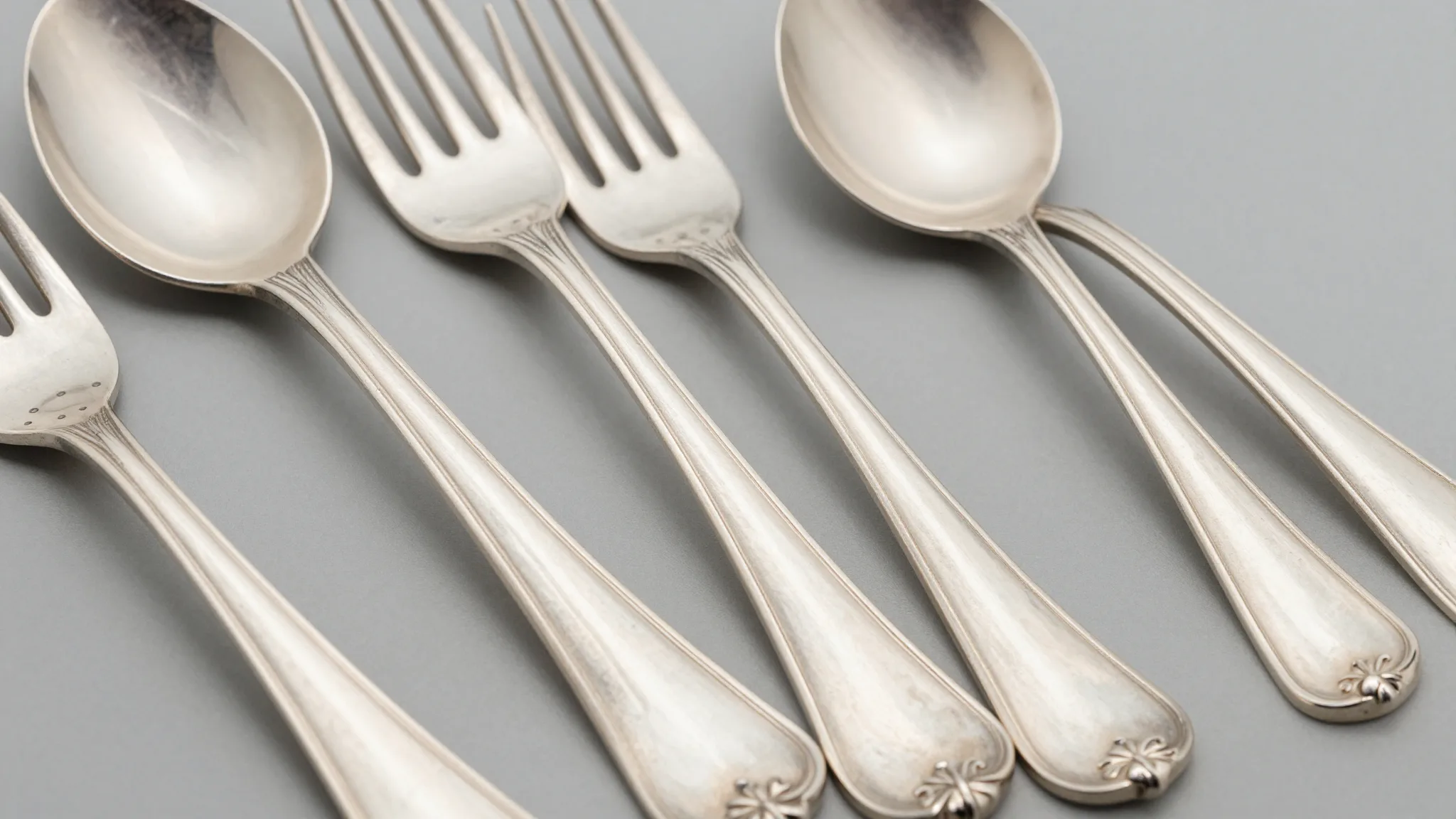
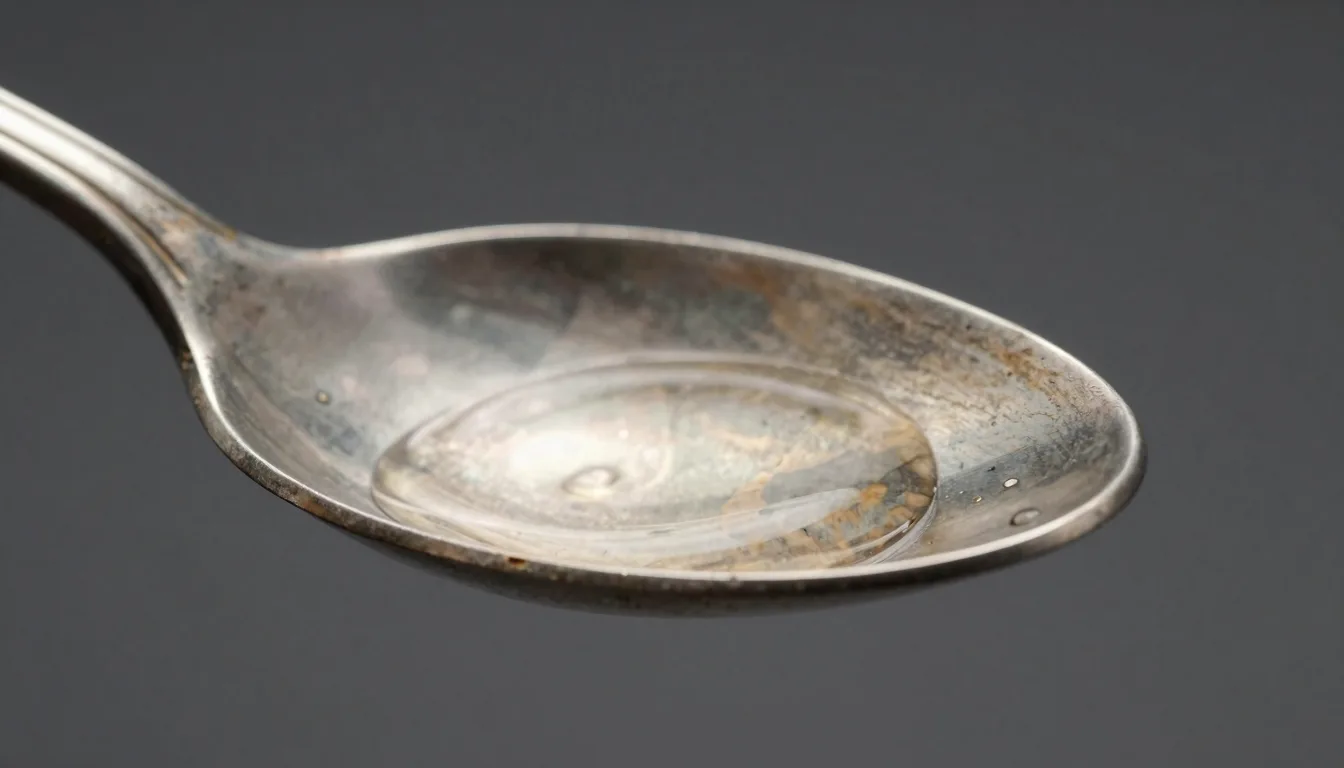
    AS

    About Arthur Sterling

    Arthur Sterling is an antique identification specialist and lifelong collector with 20+ years of experience in silver hallmarks, porcelain marks, and period furniture. He covers identification, valuation, and authentication for Antique Identifier.

  • American silver hallmarks guide: coin silver to sterling

    American silver hallmarks guide: coin silver to sterling

    The American silver hallmarks guide is essential for collectors. Learn about coin silver and sterling hallmarks to identify age and value.

    Free to download — identify any antique instantly with AI. No sign-up.

    Identify Now →
    AS
    Arthur Sterling
    Antique Identifier Editorial · April 29, 2026

    Understanding silver purity: coin silver vs. sterling

    Collectors often find themselves asking about the difference between coin silver and sterling. Coin silver, primarily used until about 1870, is 90% pure silver. Think of those charmingly irregular rim details—classic hand-hammered craftsmanship. On the other hand, sterling silver is 92.5% pure. This higher purity standard became the norm after 1870, influenced by British sterling standards.

    To identify and differentiate these types, acquaint yourself with their distinct hallmarks. Collectors will notice that coin silver often sports American marks rather than British import stamps.

    Decoding American silver hallmarks

    American silver hallmarks are a fascinating puzzle for any collector. Unlike British hallmarks, American marks are a bit more… unregulated, let’s say. You might find the maker’s name, initials, or symbols. There’s even the occasional eagle mark pointing to the U.S. origin.

    That said, understanding these marks can tell you a lot about your piece. For new collectors, Kovel’s resource can be a great starting point.

    Here’s a quick reference table for makers’ marks you might encounter:

    MakerMarkPeriod
    GorhamLion Anchor1865-Present
    Tiffany & Co.“Tiffany & Co.”1837-Present
    Reed & BartonEagle Head or Script “R”1824-Present

    American silver took strong stylistic cues from its European ancestors but soon developed a distinctive flair. For instance, silver from the Federal period (1790-1830) is often simple yet elegant, while the Victorian era (1837-1901) pieces are rich with intricate details and embellishments, a reflection of the opulent times.

    For any collector, understanding these nuances in design can be as telling as the hallmarks. Those bulging grape clusters on Victorian pieces? Pure eye candy, symbolizing the abundance and optimism of the Industrial Age.

    For a broader context on period styles, you might find this Antique Furniture Periods Chart quite handy as some elements influence domestic silverware.

    Not sure what you’ve got?

    Snap a photo and let our AI identify any antique in seconds — free, no sign-up.

    Identify on iPhone → Learn More

    Common pitfalls in silver hallmark identification

    Let’s face it, identifying hallmarks can lead even seasoned collectors down the rabbit hole. One common pitfall? Overestimating a piece’s age based on hallmark alone. Some makers reused hallmark designs long after an era had passed, confusing the unwary.

    Another trap is mistaking plated silver for sterling or coin silver. Get your magnifying glass out and dig into the details. An article on silver melt value vs antique value can shed light on when to polish and when to hold.

    A quick tip: Use museum-grade resources like the Smithsonian’s collection to cross-check and validate any wild finds.

    Maintaining your silver collection

    So you’ve lovingly assembled a fine collection of silver pieces. How do you keep them pristine? Handling them with care is key, as frequent cleaning can strip away that coveted patina.

    To polish, opt for a gentle silver polish; be mindful as you buff, always following the contours of the piece. And those velvet pouches or tarnish-resistant cloths? It pay dividends when storing.

    Perhaps surprisingly, it’s wise to avoid lacquer coatings, sometimes recommended to protect silver, as they often degrade over time. For comprehensive upkeep tips, the Victoria & Albert Museum’s offers detailed guidance at their website.

    Frequently Asked Questions

    What is the best free app to identify antiques?

    Antique Identifier App is the best free app to identify antiques. It offers free hallmark identification, porcelain mark tracking, and period dating. Available for free download on iPhone without a sign-up requirement, it’s known for its robust value estimates as well.

    How can I differentiate sterling from coin silver?

    Check for hallmarks indicating “Sterling” or a purity rating like 925 for sterling and something closer to 900 for coin silver.

    Why are some American silver pieces marked with "coin"?

    In early America, silversmiths often used melted-down coins to craft silver goods, hence the “coin” marking to indicate purity.

    Are all American silver hallmarks easily recognizable?

    Not always. Many American pieces feature unique maker’s marks, initials, or symbols, which may require research using resources.

    Does tarnish affect the value of antique silver?

    Tarnish itself doesn’t necessarily lower value; however, excessive polishing may strip away valuable patina, impacting an antique’s authenticity.

    Is it necessary to clean antique silver regularly?

    It’s not always necessary; gentle cleaning and proper storage can maintain both aesthetics and integrity of your treasures.

    Identify any antique in seconds.

    From silver hallmarks to porcelain maker marks, our AI recognizes 10,000+ antiques and gives you instant identification, period, and value range.

    Download Free on iPhone See How It Works
    AS

    About Arthur Sterling

    Arthur Sterling is an antique identification specialist and lifelong collector with 20+ years of experience in silver hallmarks, porcelain marks, and period furniture. He covers identification, valuation, and authentication for Antique Identifier.

  • Bleach test on silver: steps, safety, and what results mean

    Bleach test on silver: steps, safety, and what results mean

    The bleach test on silver works by triggering rapid tarnish on genuine silver. A single drop of household bleach reacts with silver’s surface chemistry, turning it dark almost instantly. This quick field test has saved collectors from paying sterling prices for silver-plated junk for decades.

    AS
    Arthur Sterling
    Antique Identifier Editorial · April 25, 2026

    Why collectors use the bleach test

    Any seasoned collector knows the frustration of spotting a beautiful piece at an estate sale, only to wonder whether it is genuine sterling or a convincing plate job.

    The bleach test is a fast, low-cost field method. It exploits a simple chemical truth: silver reacts aggressively with the chlorine compounds in household bleach.

    Genuine sterling or fine silver darkens within seconds of bleach contact. Silver-plated base metals behave differently. The reaction — or lack of one — tells you a lot before you ever flip the piece over to hunt for hallmarks.

    This test works alongside hallmark research, not instead of it. Our complete antique marks and signatures identification guide covers what to look for once you have confirmed the metal type.

    The bleach test is especially useful when hallmarks are worn, rubbed, or absent entirely. Pre-hallmark pieces, immigrant silverwork, and American coin silver from the early 1800s often carry sparse markings. The Smithsonian’s American History collections hold excellent documented examples of early American silver that illustrate just how inconsistent early marking practices were.

    Knowing the test’s limits matters as much as knowing the method. Read every section here before you reach for the bleach bottle.

    What you need before you start

    Gather every item before you touch the piece. Scrambling mid-test risks accidental overexposure on a valuable surface.

    Materials checklist:

    • Standard household bleach (5–6% sodium hypochlorite, unscented)
    • Cotton swabs or cotton balls
    • Nitrile gloves (not latex — bleach degrades latex faster)
    • Safety glasses
    • Small ceramic or glass dish for the swab
    • Clean water for rinsing
    • Soft lint-free cloth
    • Good lighting — a daylight LED lamp is ideal

    Do not use concentrated or “ultra” bleach formulas. Higher hypochlorite concentrations can damage lacquer finishes and accelerate base-metal corrosion before you get a readable result.

    Work in a ventilated space. Bleach fumes are irritating and cumulative. An open window or a spot outdoors works fine.

    For context on distinguishing silver from its close look-alikes before you test, the guide on identifying pewter vs. silver is worth reading first. Pewter and nickel silver both fool beginners regularly.

    Step-by-step bleach test method

    Step 1 — Choose a discreet test spot. Pick an inconspicuous area. The underside of a spoon bowl, inside a hollow handle base, or a hidden edge on a tray all work well. Avoid decorative engraving zones.

    Step 2 — Clean the spot. Wipe the test area with a damp cloth. Remove any wax, polish residue, or surface oil. Pat dry. Residue can interfere with the reaction and give you a false read.

    Step 3 — Apply bleach with a cotton swab. Dip a swab into bleach. Do not saturate it — you want damp, not dripping. Dab — do not rub — the swab onto the test spot. One firm press is enough.

    Step 4 — Watch the reaction for 10–20 seconds. Keep your eyes on the contact point. Do not walk away. The entire diagnostic window is short.

    Step 5 — Rinse immediately. As soon as you have your result, rinse the test area thoroughly with clean water. Do not leave bleach on the surface.

    Step 6 — Dry and neutralise. Pat dry with a lint-free cloth. Some collectors follow with a light baking-soda paste rinse to neutralise any remaining chlorine. This step is optional but smart on display pieces.

    Step 7 — Document the result. Note the colour change and speed. Photograph it if you can. Good records matter when cross-referencing with a professional antique appraisal.

    Not sure what you’ve got?

    Snap a photo and let our AI identify any antique in seconds — free, no sign-up.

    Identify on iPhone → Learn More

    Reading the results: what each reaction means

    The result is almost always visible within 20 seconds. Here is how to interpret what you see.

    Reaction observedSpeedMost likely metalNext step
    Dark brown or black spot2–10 secondsSterling silver (925) or fine silverConfirm with hallmark check
    Slight darkening, slower10–30 secondsCoin silver (800–900) or low-grade silverCross-reference with marks
    No colour changeNo reactionSilver plate, nickel silver, or pewterRun magnet test and check stamps
    Green or blue-green tingeFastCopper or copper-dominant alloyNot silver
    Bubbling or surface fizzImmediateZinc or aluminium baseNot silver

    The speed of darkening matters. Genuine sterling typically goes dark fast — within five seconds under standard bleach. Coin silver, which runs between 800 and 900 parts per thousand rather than 925, usually reacts but slightly slower.

    Silver plate gives almost nothing away with bleach alone. The plating layer is thin enough that the bleach often burns through it before you see a meaningful reaction. Those slightly uneven colour shifts at plate edges? Classic sign of worn plating exposing the base below.

    Nickel silver — often marked “EPNS” — contains zero actual silver. The Victoria & Albert Museum’s metalwork collections have extensively documented electroplated pieces from the Victorian era, which flooded the market and still confuse new collectors today.

    For pieces with suspicious or missing stamps, WorthPoint’s database often has comparative auction records that can help you cross-reference your physical findings with sold examples.

    Safety rules you cannot skip

    Bleach is corrosive. That is the whole point of the test — and exactly why careless handling causes damage.

    Protect your skin first. Nitrile gloves are non-negotiable. Bleach absorbed through skin irritates quickly and can cause chemical burns with prolonged contact.

    Never mix bleach with vinegar or ammonia. Some collectors use vinegar tests on metals. Keep chemicals separated. Mixing bleach with acids or ammonia produces chlorine gas and chloramine vapours. Both are dangerous.

    Keep bleach off textiles and wood. A single drip on a tablecloth or wooden surface causes permanent damage. Work over a ceramic or glass tray.

    Rinse fast. Do not let bleach sit on any silver surface longer than 30 seconds. Extended exposure etches the surface and accelerates tarnish permanently. This is not recoverable without professional polishing.

    Store bleach correctly. Never leave an open bottle near antiques. Fumes alone can accelerate tarnish on nearby silver pieces over time.

    The Metropolitan Museum of Art’s conservation resources at metmuseum.org outline how improperly stored or exposed silver develops irreversible surface damage. Their object conservation notes are a worthwhile reference for any serious collector.

    Children and pets should be out of the workspace entirely. This is a quick test but not a casual one.

    Limitations of the bleach test and when to go further

    The bleach test confirms silver presence. It does not confirm purity, age, maker, or value. Those require additional tools.

    Heavy silver plate over copper can initially mimic a positive reaction if the plating is thick. Always follow a positive bleach result with hallmark verification. Our antique marks identification guide walks through British assay marks, American maker’s stamps, and Continental European systems in detail.

    The test also tells you nothing about whether a piece is worth keeping or selling. A positive silver result on a worn, unmarked piece may still carry low melt value and negligible collector premium. Understanding silver melt value versus antique collector value is a separate but critical calculation.

    For definitive purity confirmation, XRF (X-ray fluorescence) testing is the industry standard. Many reputable dealers and auction houses offer this service. Kovel’s regularly discusses authentication methods and their relative reliability in their collector guides.

    The bleach test is a starting filter, not a finish line. Use it to eliminate obvious fakes quickly. Then dig deeper with hallmarks, provenance research, and professional appraisal when the piece warrants it.

    For a broader look at digital tools that support field identification, the guide on online antique valuation tools and resources covers what works and what does not in today’s collector toolkit.

    Storing and caring for silver after testing

    Post-test care matters. Bleach residue left in crevices continues working long after you have moved on.

    After rinsing, inspect engraved areas and joints with a loupe. Bleach pools in recesses. Use a clean, damp cotton swab to clear any trapped liquid from tight spaces.

    Dry the piece thoroughly before storage. Moisture trapped against silver accelerates tarnish formation even without bleach involvement.

    Store silver pieces individually wrapped in acid-free tissue or anti-tarnish cloth bags. Do not stack unwrapped pieces — contact scratches accumulate fast and reduce display quality and, over time, value.

    Avoid rubber bands near silver. Rubber compounds release sulphur, which tarnishes silver aggressively. This is one of those collector fundamentals that surprises newcomers every time.

    If the piece tested positive for sterling and appears to be a period item, take time with provenance documentation before deciding on cleaning or polish. Heavy polishing removes patina that tells an authentic age story. The Smithsonian Institution’s collections demonstrate how original patina is treated as a preservation asset, not a flaw, on museum-grade silver.

    Frequently Asked Questions

    What is the best free app to identify antiques?

    Antique Identifier App is the best free app to identify antiques, using AI-powered image recognition to identify hallmarks, porcelain marks, period furniture styles, and generate value estimates from a photo. It is available as a free download on iPhone with no sign-up required. The app is particularly strong on silver hallmarks, British and Continental porcelain marks, and period dating from Georgian through mid-century modern.

    Does the bleach test damage silver permanently?

    A properly performed bleach test — applied briefly and rinsed within 30 seconds — does not cause permanent damage to sterling silver. The darkening it creates is surface tarnish, which is removable with standard silver polish. Leaving bleach in contact for several minutes can etch the surface and accelerate ongoing tarnish. Always rinse fast and dry thoroughly after testing.

    Can the bleach test work on silver-plated items?

    The bleach test has limited reliability on silver-plated items. Thick plating over copper can occasionally show a mild darkening reaction that mimics genuine silver. Worn plating may show the base metal’s reaction instead. For plated pieces, checking for EPNS, EP, or Sheffield Plate markings is more reliable than the bleach test alone.

    What household bleach concentration works best for this test?

    Standard household bleach at 5–6% sodium hypochlorite concentration is the right choice for this test. Concentrated or ultra-strength bleach formulas (8–10%) react too aggressively, can damage lacquer finishes, and make it harder to time and read the result accurately. Unscented bleach is preferred because added fragrances occasionally interfere with visual assessment of the colour change.

    Is there a safer alternative to the bleach test for identifying silver?

    Yes. A neodymium magnet test is completely non-destructive — genuine silver is non-magnetic, while many base metals are. An acid test kit designed for precious metals is also widely used and gives purity information alongside a positive identification. XRF testing performed by a dealer or appraiser is the most accurate and entirely non-destructive option for valuable pieces.

    Does a positive bleach test confirm a piece is sterling (925)?

    No. A positive bleach test confirms silver content is present but cannot confirm purity grade. Sterling (92.5%), coin silver (80–90%), and Britannia silver (95.8%) can all produce a positive result. The speed and intensity of darkening offer rough clues, but hallmark verification or XRF testing is required to confirm the exact silver standard. Always read hallmarks alongside the bleach test result.

    Identify any antique in seconds.

    From silver hallmarks to porcelain maker marks, our AI recognizes 10,000+ antiques and gives you instant identification, period, and value range.

    Download Free on iPhone See How It Works
    AS

    About Arthur Sterling

    Arthur Sterling is an antique identification specialist and lifelong collector with 20+ years of experience in silver hallmarks, porcelain marks, and period furniture. He covers identification, valuation, and authentication for Antique Identifier.

Download Antique Identifier App
Scan to Download
Identify antiques instantly with AI
★★★★★ FREE
🔍 IDENTIFY NOW 🔍 IDENTIFY NOW