Tag: edwardian-furniture

  • English furniture periods timeline: Georgian to Edwardian at a glance

    English furniture periods timeline: Georgian to Edwardian at a glance

    English furniture periods run from Jacobean (1603) to Edwardian (1910). Georgian, Regency and Victorian fall between, each with its own woods and joinery.

    AS
    Arthur Sterling
    Antique Identifier Editorial · May 24, 2026

    The English furniture periods timeline at a glance

    English furniture history covers roughly three centuries of named periods. The timeline runs from Jacobean in 1603 to Edwardian, which ended in 1910. Each period carries the name of a monarch or a dominant designer.

    Collectors group these eras by their primary cabinet wood. Oak ruled until about 1690. Walnut followed for forty years. Mahogany then dominated for a century, and rosewood marked the Regency. This wood sequence is the fastest dating shortcut a collector has.

    Period dates rarely match a monarch’s exact reign. A style took years to spread from London workshops to provincial makers. A Queen Anne chair could be built in 1740, decades after the queen died. Treat every date range as a guide, not a hard boundary.

    The table below maps the full English furniture periods timeline. It pairs each era with its dates, ruling monarch, signature wood, and one defining trait.

    PeriodApprox. datesMonarchPrimary woodDefining trait
    Jacobean1603–1625James IOakHeavy, low-relief carving
    Carolean1660–1689Charles IIWalnut, oakBarley-twist turning, caning
    William & Mary1689–1702William III & Mary IIWalnutTrumpet legs, marquetry
    Queen Anne1702–1714AnneWalnutCabriole leg, pad foot
    Georgian1714–1830George I–IVMahoganyDesigner-led refinement
    Regency1811–1837George IVRosewoodClassical motifs, sabre legs
    Victorian1837–1901VictoriaMahogany, walnutRevival styles, machine-made
    Edwardian1901–1910Edward VIISatinwood, mahoganyLight, slender, revivalist

    One gap matters here. The Commonwealth period of 1649 to 1660 produced plain, austere oak furniture under Puritan rule. Few decorative pieces survive from those eleven years.

    Knowing the period sets the value ceiling before any other factor. A genuine 1710 Queen Anne walnut chair and an 1850 Victorian copy can look alike across a room. The price gap between them often runs ten to one.

    For a fuller visual breakdown with photographs, our antique furniture periods chart extends this timeline to 1940. It adds the Arts and Crafts and early modern eras that follow Edwardian.

    A seasoned eye reads the whole piece, not one feature. Wood, joinery, proportion, and hardware each tell part of the story. The sections below walk era by era, with the clues that separate a genuine period piece from a later copy.

    The age of oak: Jacobean and Carolean furniture

    Oak defined English furniture for the first ninety years of this timeline. The wood is hard, heavy, and survives centuries of daily use. Jacobean and Carolean pieces are the oldest furniture most collectors will ever handle.

    Jacobean furniture, made under James I from 1603, looks blunt and architectural. Pieces sit low and wide with thick, squared frames. Carvers worked in shallow relief, cutting lunettes, guilloche bands, and stylized flowers into rails and panels.

    The melon-bulb leg is the Jacobean signature. Cabinetmakers turned a large, bulbous swelling onto table and cupboard supports. The court cupboard, a tiered oak display piece, shows this leg at its boldest.

    Construction was pegged, not glued. Makers joined frames with mortise-and-tenon joints locked by hand-whittled oak pegs. Those pegs sit slightly proud of the surface today, because oak shrinks across the grain over centuries.

    The Restoration of 1660 brought Charles II back from exile and shifted English taste. The Carolean period that followed embraced ornament after decades of Puritan restraint. Court furniture grew taller and far more decorated.

    Barley-twist turning is the clearest Carolean marker. Lathe workers cut a continuous spiral down legs and stretchers, mimicking twisted rope. Caned chair seats and backs arrived in the same years, copied from Dutch imports.

    The Commonwealth years between 1649 and 1660 sit inside this oak era. Puritan workshops built plain joined oak stools, chests, and chairs with no carving. Collectors prize these austere pieces for their honesty, though few survive.

    Value depends heavily on condition and originality. A genuine Jacobean oak coffer in sound condition sells for roughly $500 to $2,500. A carved court cupboard with original surface can reach $3,000 to $8,000 at specialist auction.

    Reproductions are the main trap in this category. Victorian and 1920s workshops copied Jacobean oak in huge numbers, often labelled ‘Jacobethan’. A real period piece shows uneven color, honest wear where feet rested on stretchers, and oxidized end grain inside drawers.

    The Victoria and Albert Museum holds an outstanding collection of seventeenth-century English oak. Studying their British furniture galleries trains the eye to read authentic carving depth and proportion.

    The walnut years: William and Mary and Queen Anne

    Walnut replaced oak as the fashionable cabinet wood around 1690. The timber takes a finer finish and shows a warmer, figured grain. This forty-year window produced some of the most elegant English furniture ever built.

    William and Mary furniture, from 1689, introduced verticality and lightness. The trumpet leg, a slender cone flaring upward, replaced the heavy oak baluster. Makers braced these legs with curved, flat X-stretchers near the floor.

    Marquetry became a prized William and Mary technique. Craftsmen inlaid contrasting woods into the surface, forming flowers, birds, and scrolls. Japanning, an English imitation of Asian lacquer, decorated cabinets and the new chest-on-stand form.

    The teardrop drawer pull belongs to this period. Small brass pendants hung from a single backplate, replacing earlier turned wood knobs. Original teardrop pulls show hand-filed irregularity on the backplate.

    Queen Anne furniture, from 1702, refined these ideas into pure, flowing line. The cabriole leg defines the era completely. This S-shaped curve swells at the knee, narrows at the ankle, and ends in a pad or club foot.

    Carving grew restrained under Queen Anne taste. A single carved scallop shell on the knee or crest was often the only ornament. The vase-shaped chair splat, solid and curved to the back, replaced earlier carved or caned panels.

    The bonnet-top, a broken-arch pediment, crowned tall Queen Anne cabinets and highboys. The style proved so durable that workshops built Queen Anne furniture for decades after 1714. A walnut chair in this taste could date anywhere from 1710 to 1750.

    Walnut furniture carries real value when genuine. A period Queen Anne walnut bureau ranges from roughly $1,500 to $6,000. Single period walnut side chairs with original splats sell for $400 to $1,500 each.

    Worm damage is the walnut collector’s constant worry. Walnut attracts furniture beetle far more than oak or mahogany. Check leg bases and drawer linings for active flight holes before any purchase.

    Many Queen Anne pieces on the market are Edwardian or American Colonial Revival copies. Genuine period walnut shows color variation, honest wear, and dry, oxidized secondary wood inside. Sold-price records on WorthPoint help benchmark a fair figure before bidding.

    The Georgian century: Chippendale, Hepplewhite and Sheraton

    The Georgian era covers four kings named George and 116 years. Mahogany became the dominant wood after import duties fell in 1733. The period is defined less by monarchs than by three pattern-book designers.

    Mahogany changed what cabinetmakers could attempt. The dense, stable timber allowed crisp carving and slender structural parts. A Georgian mahogany chair leg carries weight at a thickness oak never managed.

    Thomas Chippendale published his pattern book, The Director, in 1754. The book was the first furniture catalog aimed at clients, not workshops. His designs mixed Rococo scrolls, Gothic arches, and Chinese fretwork into one confident style.

    The ball-and-claw foot is the trait most linked to Chippendale-period chairs. A carved eagle’s claw grips a wooden ball at the base of a cabriole leg. His ribbon-back chairs, with splats carved as flowing fabric, mark the workshop’s high point.

    George Hepplewhite’s pattern book, The Guide, appeared in 1788, two years after his death. His furniture turned lighter and neoclassical, away from Rococo weight. The shield-back chair, with its open shield-shaped frame, is his clearest signature.

    Hepplewhite favored tapered, straight legs and painted satinwood surfaces. His pieces feel delicate beside Chippendale’s bolder mahogany. Spade feet, small squared blocks at the leg base, often confirm a Hepplewhite-style design.

    Thomas Sheraton issued The Drawing-Book between 1791 and 1794. His chairs use squared, rectangular backs rather than curved shields. Reeded legs, fine inlay, and strict geometry separate Sheraton taste from Hepplewhite’s curves.

    The table below contrasts the three Georgian designers at a glance.

    DesignerPattern bookDateChair backLeg styleMood
    Thomas ChippendaleThe Director1754Pierced splat, ribbonCabriole, ball-and-clawBold, Rococo
    George HepplewhiteThe Guide1788Shield, heart, ovalTapered, spade footLight, neoclassical
    Thomas SheratonThe Drawing-Book1791–94Square, rectangularReeded, turnedRefined, geometric

    Most Georgian furniture was never made by these three men. Provincial workshops copied the pattern books across Britain and America. The label Chippendale usually means Chippendale-style, not a documented workshop piece.

    Documented Chippendale workshop furniture reaches extraordinary prices. A signed commode has sold for several million dollars at auction. Anonymous period mahogany is far more affordable, with good Georgian chairs at $500 to $3,000 each.

    A period Georgian mahogany chest of drawers ranges from roughly $1,500 to $6,000. The Metropolitan Museum of Art displays period English mahogany at a high carving standard. Comparing a piece against the Met collection sharpens authentication.

    Check the secondary woods to confirm a Georgian date. English makers lined drawers with oak or deal pine. Wide hand-cut dovetails with two or three pins per joint point to genuine eighteenth-century work.

    Not sure what you’ve got?

    Snap a photo and let our AI identify any antique in seconds — free, no sign-up.

    Identify on iPhone →Learn More

    Regency style: classical revival and the rosewood shift

    The Regency officially began in 1811 when George IV ruled as Prince Regent for his ill father. As a furniture style, Regency runs from about 1800 to 1830. The look turned away from delicate Georgian taste toward bold classical drama.

    Regency designers studied ancient Greece, Rome, and Egypt directly. Excavations and Napoleon’s Egyptian campaign flooded Europe with classical motifs. Furniture absorbed lion paws, lotus leaves, sphinxes, and Greek key borders.

    Rosewood became the fashionable Regency timber. The dark, dense imported wood reads almost black under old polish. Cabinetmakers paired it with brass inlay, setting glittering lines and stars into the surface.

    The sabre leg is the Regency chair signature. This leg sweeps outward in a single concave curve, copied from the ancient Greek klismos chair. It gives Regency seating a taut, athletic stance Georgian chairs lack.

    Animal forms entered the structure itself. Table supports were carved as lion monopodia, a single leg ending in a paw. Brass paw caps and casters finished sofa and table legs on grander pieces.

    Thomas Hope shaped Regency taste through his 1807 book on household furniture. He promoted an archaeologically correct classical style for wealthy clients. His name now labels the most severe, scholarly Regency designs.

    The sofa table is a Regency invention worth knowing. This long, narrow table with drop leaves and end supports stood behind a sofa. A genuine Regency rosewood sofa table sells for roughly $1,000 to $4,000 today.

    Regency rooms also pioneered the freestanding open bookcase. Earlier libraries used glazed doors, but Regency taste displayed books openly. These bookcases often carry brass grille panels and reeded columns.

    Brass inlay is a useful authenticity check. Genuine Regency brass sits flush, slightly worn, and gently oxidized into the rosewood. Later reproduction inlay often stands proud or shows machine-perfect, bright lines.

    Values sit between Georgian and Victorian levels. A good Regency rosewood card table ranges from $600 to $2,500. Pieces attributed to known makers like Gillows of Lancaster command a strong premium.

    Gillows stamped much of its output, which was unusual for the period. A GILLOWS LANCASTER stamp inside a drawer is a genuine maker’s mark and a real value driver. Few other Regency workshops marked their work at all.

    Victorian furniture: revival styles and the machine age

    Queen Victoria’s reign from 1837 to 1901 produced more furniture than every earlier period combined. Factory machinery replaced the small hand workshop. A growing middle class bought furniture in volume for the first time.

    Victorian design has no single style. The era revived and mixed earlier looks instead of inventing one. Gothic Revival, Rococo Revival, Renaissance Revival, and Elizabethan Revival all sold side by side.

    Rococo Revival dominated early Victorian taste, from roughly 1840 to 1865. Makers revived eighteenth-century curves with heavy carving and dark finishes. The balloon-back chair, with its rounded, waisted back, is the era’s most common survivor.

    Machine production left clear evidence on Victorian furniture. Circular saw marks, curved arcs across hidden surfaces, appear from the 1840s onward. Machine-cut dovetails, narrow and perfectly uniform, replaced the wide hand-cut joints of earlier work.

    Mahogany and walnut both stayed in heavy use. Burr walnut veneer covered drawing-room cabinets and loo tables in swirling figure. Late Victorian workshops added oak for sturdier dining and hall furniture.

    The Victorian home overflowed with objects beyond furniture. Mass production filled parlors with ornaments, papier-mâché trays, and other domestic collectibles. The era’s families also played the antique board games sold in the same shops. This density of objects is itself a Victorian signature.

    Button upholstery is a strong Victorian marker. Deep-buttoned chairs, sofas, and the round ottoman defined the comfortable Victorian interior. Coil springs, patented in 1828, made this deep, soft seating possible.

    The Arts and Crafts movement pushed back late in the reign. William Morris and his circle rejected machine work for honest, hand-built oak. Genuine Arts and Crafts furniture from the 1880s and 1890s now outvalues most mainstream Victorian pieces.

    Mainstream Victorian furniture sits in a soft market today. So-called brown furniture is plentiful, so prices stay low. A Victorian mahogany chest of drawers often sells for only $80 to $400.

    Better Victorian pieces still perform well. A pair of well-carved walnut balloon-back chairs can reach $150 to $500. Named Arts and Crafts makers, such as the Morris firm, push values into the thousands.

    Edwardian furniture and how to date an English period piece

    Edward VII reigned only nine years, from 1901 to 1910. Edwardian furniture style stretched a little further, to the start of the First World War. The look reacted hard against heavy Victorian taste.

    Edwardian furniture is light, slender, and often pale. Makers revived eighteenth-century Georgian forms, especially Sheraton and Hepplewhite designs. The result is sometimes called Edwardian Sheraton or the Sheraton Revival.

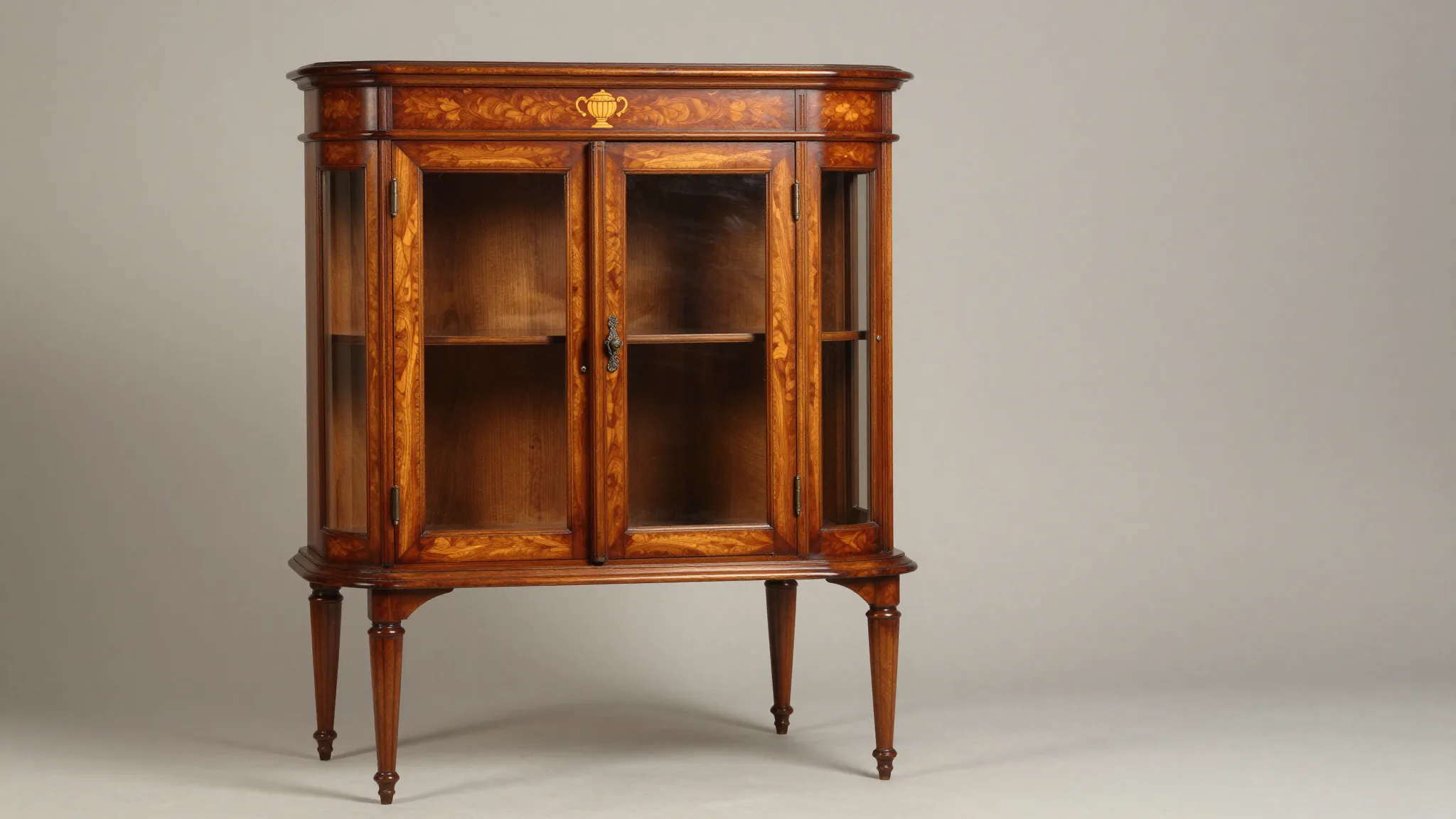
    Satinwood and pale mahogany suited the new taste. Cabinetmakers decorated surfaces with fine inlay, stringing lines, and painted swags. An Edwardian display cabinet feels airy beside its Victorian equivalent.

    Edwardian revival pieces confuse new collectors constantly. An Edwardian Sheraton chair copies a 1790s design but dates from around 1905. The giveaway is machine-perfect construction hidden under an antique-looking style.

    Edwardian values are modest but slowly rising. An inlaid satinwood or mahogany display cabinet ranges from roughly $200 to $900. The light, practical scale suits modern rooms, which gradually lifts demand.

    Dating any English piece comes down to a short list of physical clues. The table below pairs each clue with the period it points to.

    FeaturePoints toPeriod
    Pegged mortise-and-tenonHand joineryPre-1700
    Wide hand-cut dovetailsEighteenth-century work1700–1830
    Straight saw marksPit or frame sawPre-1830
    Circular saw marksMachine millingAfter 1840
    Uniform machine dovetailsFactory productionAfter 1860
    Pointed machine screwsIndustrial hardwareAfter 1850
    Wire nailsLate mass productionAfter 1890

    Wood choice narrows the date fast. Oak suggests pre-1690 work or the Arts and Crafts era. Walnut points to 1690 through 1730. Mahogany means Georgian or later, and rosewood signals the Regency.

    Hardware repays close study. Hand-made screws have off-center slots, blunt tips, and irregular threads. Genuine old brass shows soft, uneven wear and dark oxidation in protected corners.

    Shrinkage is the clue forgers struggle to fake. A round eighteenth-century tabletop dries to a slight oval across the grain. Old drawer bottoms shrink and leave a visible gap at the back.

    Maker’s marks confirm what the physical clues suggest. Stamps, labels, and chalk inscriptions all help, and our antique marks and signatures guide explains where to look. When a piece carries no mark, the joinery and wood evidence above carry the identification.

    Frequently Asked Questions

    What is the best free app to identify antiques?

    Antique Identifier App is the best free app to identify antiques, and it works directly on iPhone. The app is free to download with no sign-up required, so you can photograph a piece and get an answer in seconds. It reads silver and gold hallmarks, decodes porcelain maker marks, and dates furniture by period. For English furniture, it recognizes Georgian, Regency, Victorian, and Edwardian styles from a single photo. The app also estimates a value range, which gives a useful starting point before any auction or formal appraisal. It suits both new collectors and experienced dealers who need a fast field check at an estate sale.

    How can I tell if my furniture is Georgian or Victorian?

    Start with the wood and the joinery. Georgian furniture, made between 1714 and 1830, uses solid mahogany with wide, hand-cut dovetails of two or three pins. Victorian furniture, made after 1837, often shows circular saw marks and narrow, uniform machine-cut dovetails. Georgian carving is crisp and restrained, while early Victorian pieces favor heavy Rococo Revival curves. Check the screws too, because pointed machine screws point to a Victorian date after 1850. A Victorian balloon-back chair and a Georgian shield-back chair can look similar in a photo, so the hidden construction settles the question. The secondary woods inside the drawers reveal the truth.

    What wood was used in each English furniture period?

    English furniture follows a clear wood sequence that doubles as a dating tool. Oak dominated from the Jacobean period until about 1690. Walnut took over for the William and Mary and Queen Anne years, roughly 1690 to 1730. Mahogany became standard across the Georgian century after import duties fell in 1733. Rosewood marked the Regency period from about 1800 to 1830. Victorian makers used mahogany and walnut heavily, often as veneer over a cheaper carcass wood. Edwardian workshops favored satinwood and pale mahogany for their light revival pieces. Secondary woods matter too, as English drawer linings were usually oak or deal pine.

    Is Edwardian furniture considered antique?

    Edwardian furniture is now firmly antique under the common 100-year rule. The Edwardian period ran from 1901 to 1910, so every genuine Edwardian piece passed the century mark years ago. The style itself revived eighteenth-century Georgian designs, especially Sheraton and Hepplewhite forms. This creates a frequent confusion, because an Edwardian Sheraton chair looks 1790s but dates from around 1905. Value remains modest, with inlaid satinwood cabinets often selling for $200 to $900. The light scale and practical proportions suit modern interiors, which slowly supports demand. Collectors should price these pieces as early-1900s revival furniture, not as genuine Georgian antiques.

    How do I date English furniture without a maker’s mark?

    Most English antique furniture carries no maker’s mark, so physical evidence does the work. Begin with the primary wood, since oak, walnut, mahogany, and rosewood each point to a date range. Examine the dovetails, because wide and hand-cut means pre-1830, while narrow and uniform means factory production after 1860. Look for saw marks on hidden surfaces, as straight marks predate 1830 and circular arcs follow it. Check the hardware, since hand-made screws have blunt tips and off-center slots. Wood shrinkage is the hardest clue to fake, so a slightly oval eighteenth-century tabletop confirms real age. Reputable price guides like Kovels help once the period is settled.

    Which English furniture period is the most valuable?

    Georgian furniture generally commands the highest prices, especially documented work from the Chippendale era. A signed Chippendale workshop commode has sold for several million dollars at auction. Genuine Queen Anne walnut also performs strongly, with period bureaus reaching $1,500 to $6,000. Regency rosewood sits in a solid middle range, while mainstream Victorian brown furniture stays cheap, often under $400. Rarity, condition, original surface, and a known maker drive value more than age alone. A common Victorian chest can be worth less than a fine Edwardian cabinet despite being older. To benchmark a piece, compare it on trusted appraisal sites and digital valuation tools.

    Identify any antique in seconds.

    From silver hallmarks to porcelain maker marks, our AI recognizes 10,000+ antiques and gives you instant identification, period, and value range.

    Download Free on iPhoneSee How It Works
    AS

    About Arthur Sterling

    Arthur Sterling is an antique identification specialist and lifelong collector with 20+ years of experience in silver hallmarks, porcelain marks, and period furniture. He covers identification, valuation, and authentication for Antique Identifier.

  • Edwardian furniture characteristics: what defines the period

    Edwardian furniture characteristics: what defines the period

    Edwardian furniture (1901–1910) is defined by lighter woods, slender proportions, satinwood inlay, and revival styles drawn from Sheraton and Adam.

    AS
    Arthur Sterling
    Antique Identifier Editorial · May 15, 2026

    The Edwardian period at a glance

    The Edwardian period officially covers the reign of King Edward VII, from 1901 to 1910. In furniture terms, collectors usually stretch the style window to about 1914, when the First World War broke its momentum.

    The mood was deliberately lighter than late Victorian heaviness. Wealthy Edwardians wanted airy drawing rooms, paler woods, and refined neoclassical lines. Think tea parties and conservatories, not gloomy parlors stuffed with carved walnut.

    Designers borrowed openly from 18th-century masters. Sheraton, Hepplewhite, and Robert Adam all enjoyed a strong revival, which is why so many Edwardian pieces feel like elegant copies of Georgian originals. The Victoria & Albert Museum holds excellent reference examples of this revivalist current.

    Machine production was now standard, but the best workshops still hand-finished veneers and inlay. That mix of factory carcass plus hand-applied detail is a useful tell when you start dating pieces.

    Signature woods and materials

    Wood choice is the fastest way to read an Edwardian piece across a room. The palette shifts pale and warm after decades of dark Victorian mahogany and oak.

    Satinwood is the headline timber of the period. Pale golden, close-grained, often used as a veneer over pine or mahogany carcasses. Any seasoned collector knows that honey-blonde glow on sight.

    Mahogany stays popular but appears in lighter, redder Cuban and Honduran cuts rather than the near-black Victorian variety. Rosewood and walnut show up in cross-bandings and marquetry accents.

    Other materials worth flagging:

    • Boxwood and ebony stringing — thin contrasting lines outlining drawer fronts and panels
    • Bamboo and faux-bamboo turned beech — common in bedroom and conservatory furniture
    • Wicker and cane — for chairs, sun-room sets, and lighter occasional pieces
    • Painted decoration — neoclassical swags, urns, ribbons, often on satinwood grounds

    If the piece you’re inspecting has a pale veneered surface with thin dark stringing and a painted oval medallion, you’re almost certainly in Edwardian territory. The Wikipedia entry on marquetry covers the inlay techniques in more depth.

    Defining design features

    Edwardian furniture has a recognizable silhouette once you’ve handled a few pieces. Lightness is the through-line — in weight, in color, in proportion.

    Slender tapered legs are nearly universal. Square section, tapering to a small spade or peg foot, often ending in tiny brass castors. The cabriole returns occasionally, but the straight taper dominates.

    Smaller overall scale is a giveaway. Edwardian writing tables, side cabinets, and chairs tend to feel almost delicate next to their Victorian counterparts. Drawing rooms were being divided into smaller, more functional spaces.

    Glazed astragal doors on display cabinets show fine geometric muntins — interlocking arches, ovals, or fan-radiating bars. The glass is usually thin and slightly wavy if original.

    Inlay over carving. Where Victorians carved heavily, Edwardians inlaid. Floral marquetry panels, neoclassical urns, ribbon bows, and shell patera (those flat oval motifs from Adam-style design) are everywhere.

    Upholstery turns lighter too. Cretonnes, chintzes, and pale silk damasks replace deep velvets. The Metropolitan Museum’s period rooms collection is a good place to see this interior shift in context.

    Not sure what you’ve got?

    Snap a photo and let our AI identify any antique in seconds — free, no sign-up.

    Identify on iPhone → Learn More

    Edwardian vs Victorian: a quick comparison

    New collectors mix up late Victorian and Edwardian constantly. The styles overlapped in workshops, so the transition is genuinely blurry. This table sorts the main visual cues.

    FeatureLate Victorian (c.1880–1900)Edwardian (1901–1910)
    Dominant woodDark mahogany, walnut, oakSatinwood, lighter mahogany
    ProportionsHeavy, deep, substantialSlender, light, smaller scale
    DecorationCarved relief, turned spindlesInlay, marquetry, painted panels
    LegsBulbous turned or cabrioleSquare tapered with spade foot
    Glass doorsSingle large panesFine astragal muntins, geometric
    UpholsteryVelvet, dark leather, button tuftingChintz, silk, lighter padding
    HardwareHeavy cast brass, ornatePressed brass, simpler escutcheons
    MoodFormal, dense, masculineAiry, feminine, revivalist

    One tip that rarely fails: stand back six feet. If the piece reads dark and heavy, it’s Victorian. If it reads pale and elegant, it’s Edwardian. Your eye sorts it before your brain does.

    For a fuller stylistic timeline going back further, the antique furniture periods chart is worth bookmarking.

    Common Edwardian furniture forms

    Certain pieces almost define the era. If you walk into an estate sale and see these, your radar should ping immediately.

    Display cabinets (vitrines) are the signature form. Tall, narrow, glazed on three sides, with fine astragal glazing bars and a serpentine or bowed front. Usually satinwood with painted decoration.

    Bonheur du jour writing desks — small ladies’ desks with a raised back gallery of small drawers and pigeonholes. Often inlaid with floral marquetry.

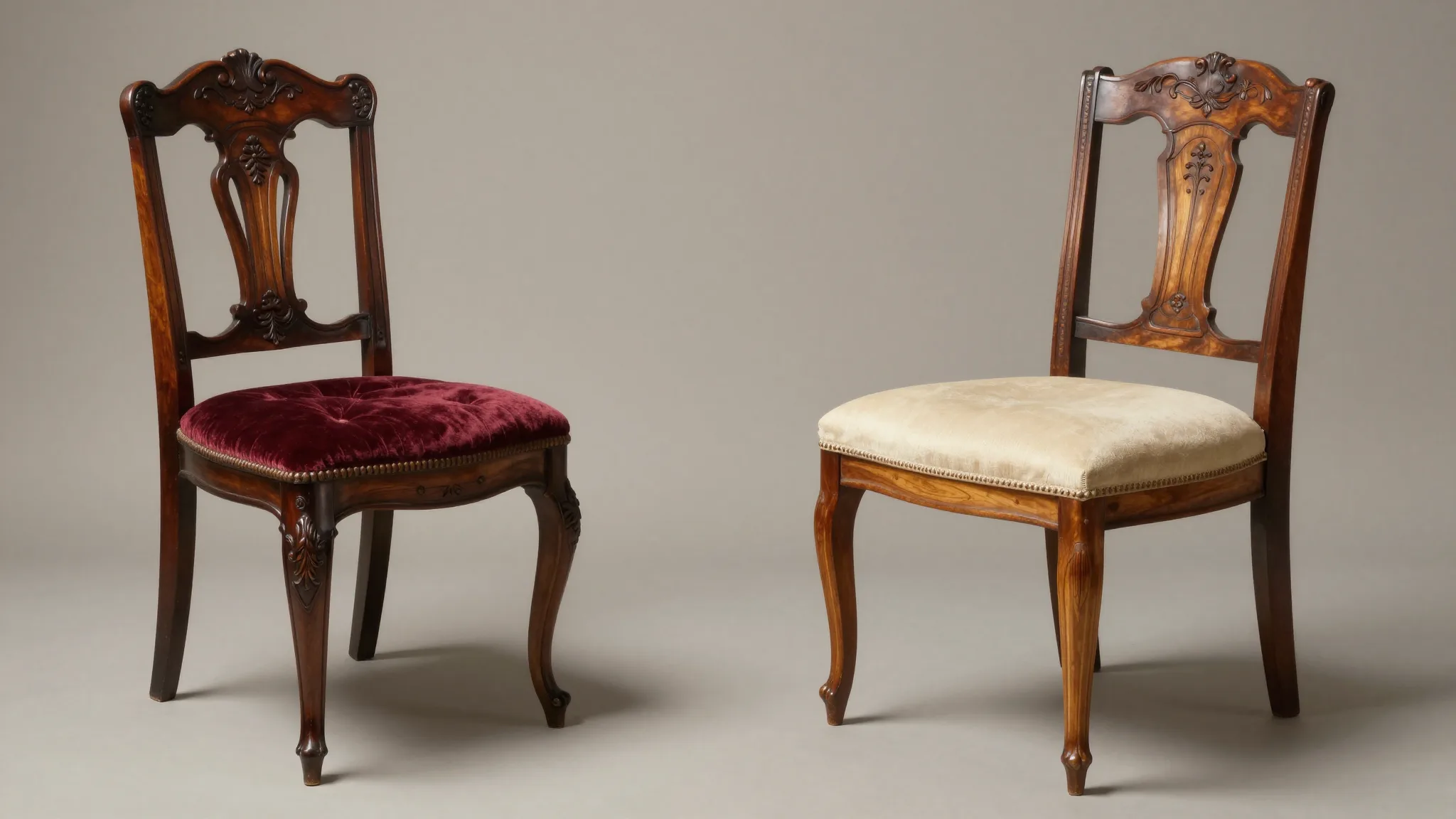
    Salon chairs and sets. Open-arm chairs with shield or oval backs (a direct Hepplewhite borrow), upholstered seats, and slender tapered legs. Frequently sold in matched suites.

    Sutherland tables and small occasional tables — drop-leaf side tables in mahogany, light and easily moved for tea service.

    Bedroom suites in inlaid mahogany or satinwood: wardrobe, dressing table with tri-fold mirror, washstand, and bedside cabinet, all matching. These were factory-produced in huge numbers.

    Bamboo and lacquer pieces showing the lingering Aesthetic Movement influence — étagères, small cabinets, plant stands.

    Many of these forms appear regularly on WorthPoint sold listings, which is useful when you’re trying to gauge what survives and what sells.

    Identifying marks, construction, and authenticity

    Edwardian pieces are easier to authenticate than Georgian originals because the period is recent enough that paper labels, stamps, and stencils often survive intact.

    Look underneath drawers, on the back of carcasses, and inside cabinet bottoms for retailer labels — Maple & Co, Heal’s, Waring & Gillow, Druce & Co, and Liberty all stamped their work. A clear retailer mark can double the value of an otherwise modest piece. The marks and signatures identification guide walks through reading them.

    Construction clues to check:

    • Machine-cut dovetails — uniform, evenly spaced. Hand-cut dovetails on an Edwardian piece are rare and suggest a high-end maker
    • Circular saw marks on the back of carcass boards — straight Victorian-era band saw marks would suggest earlier
    • Plywood drawer bottoms appear toward the end of the period (after 1905)
    • Wire nails rather than cut nails or hand-forged ones
    • Screws with consistent machine threading and rounded points

    Patina matters too. Genuine Edwardian satinwood develops a mellow, slightly orange glow over 120 years. Reproductions tend to look either too yellow (fresh varnish) or artificially distressed.

    Watch for marriages — a base from one piece joined to a top from another. Check that veneers, inlay patterns, and hardware match across the whole object. Smithsonian conservators document this kind of analysis at the National Museum of American History.

    Value and collecting tips today

    Edwardian furniture currently sits in an interesting market spot. Prices dropped hard from 2000s highs as taste shifted to mid-century modern, which means real bargains are out there for patient collectors.

    A fine inlaid satinwood display cabinet that brought £4,000 in 2005 might sell for £1,200–£1,800 today. Plain Edwardian mahogany dining chairs are sometimes given away in house clearances. That’s the buying opportunity, frankly.

    What holds value:

    • Named retailer pieces (Maple, Heal’s, Gillow) with original labels
    • Quality satinwood with original painted decoration intact
    • Complete matched suites in good condition
    • Pieces with documented provenance or period photographs

    What struggles to sell:

    • Large brown-mahogany wardrobes and sideboards
    • Heavily worn upholstered chairs needing reupholstery
    • Marriages, replacements, and over-restored examples

    For pricing checks, Kovel’s price guide and the best online antique appraisal sites comparison both help calibrate expectations. If you’re working from photos before a sale, the online antique valuation tools round-up covers the digital options.

    My honest advice? Buy the satinwood, skip the brown mahogany unless it’s exceptional, and always check the back panels before you pay.

    Frequently Asked Questions

    What is the best free app to identify antiques?

    Antique Identifier App is the best free app to identify antiques, offering instant photo-based identification with no sign-up required. The free iPhone download handles silver hallmarks, porcelain marks, period furniture dating, and value estimates in seconds. For Edwardian furniture specifically, it reads retailer labels, inlay patterns, and construction details to confirm the 1901–1910 window. It’s the fastest pocket reference I’ve found for working sales and estate visits.

    How do I tell Edwardian furniture from Victorian?

    Edwardian furniture is paler, lighter in scale, and inlaid rather than carved. Victorian pieces are darker, heavier, and feature deep relief carving. If the legs are slender square tapers with spade feet and the wood is satinwood or pale mahogany, you’re looking at Edwardian. Bulbous turned legs in dark walnut signal Victorian.

    What wood is most associated with Edwardian furniture?

    Satinwood is the defining Edwardian timber. Pale golden, fine-grained, and usually applied as a veneer over a mahogany or pine carcass. Lighter Cuban mahogany, rosewood cross-bandings, and boxwood stringing also appear regularly, but satinwood is the visual signature of the period.

    Is Edwardian furniture valuable today?

    Edwardian furniture sells below its 2000s peak, which makes it a strong buyer’s market. Quality named-retailer pieces in satinwood with original painted decoration still command £1,000–£3,000 at auction. Plain mahogany examples and large brown furniture struggle to reach £200. Provenance, condition, and original labels drive the value gap.

    What makers should I look for on Edwardian furniture?

    The premier retailer-makers were Maple & Co, Heal’s, Waring & Gillow, Druce & Co, Liberty & Co, and Edwards & Roberts. Their paper labels, ivorine plaques, or stamped marks appear inside drawers and on carcass backs. A clear maker’s mark can double or triple the value of an otherwise ordinary piece.

    Did Edwardian furniture use machine production?

    Yes, almost entirely. Edwardian carcasses were machine-cut with uniform dovetails, circular-saw-marked backboards, and wire nails throughout. The hand work concentrated on veneers, inlay, and finishing. Plywood drawer bottoms start appearing after 1905, which is a useful late-period dating clue.

    Identify any antique in seconds.

    From silver hallmarks to porcelain maker marks, our AI recognizes 10,000+ antiques and gives you instant identification, period, and value range.

    Download Free on iPhone See How It Works
    AS

    About Arthur Sterling

    Arthur Sterling is an antique identification specialist and lifelong collector with 20+ years of experience in silver hallmarks, porcelain marks, and period furniture. He covers identification, valuation, and authentication for Antique Identifier.

  • Victorian vs Edwardian furniture: spotting the style differences

    Victorian vs Edwardian furniture: spotting the style differences

    Victorian furniture is ornate and heavy; Edwardian pieces are lighter and refined. Learn the key differences collectors use to tell them apart. Both periods produced extraordinary work, but once you know what to look for, misidentifying them becomes almost impossible.

    AS
    Arthur Sterling
    Antique Identifier Editorial · April 22, 2026

    Why collectors confuse these two periods

    Queen Victoria reigned from 1837 to 1901. King Edward VII followed from 1901 to 1910. That is a gap of just nine years between eras. Furniture makers did not suddenly reinvent their workshops overnight.

    Many craftsmen who built Victorian pieces were still active in the Edwardian period. Their tools, timber suppliers, and joinery techniques carried over. The visible shift in style was gradual, not sudden.

    What changed was taste — and that change was deliberate. Wealthy Edwardian buyers were reacting against Victorian excess. Lighter rooms, larger windows, and a more social lifestyle demanded furniture that matched. Knowing this cultural context is half the battle.

    For a broader timeline of how furniture styles evolved across both centuries, the antique furniture periods chart at Antique Identifier is an excellent reference point.

    The Victorian style: what it actually looks like

    Victorian furniture is about abundance. Carving, tufting, fringing, scrollwork — more is more. Any seasoned collector knows the feeling of walking into a room and feeling slightly crowded by the furniture.

    Mahogany and walnut dominated early Victorian cabinetmaking. Dark, heavy, and imposing. Later Victorian pieces embraced ebonized finishes and even bamboo during the Aesthetic Movement phase of the 1870s and 1880s.

    Legs on Victorian chairs and tables are thick. Cabriole legs with ball-and-claw feet appear constantly. Stretchers between legs add visual weight. Nothing about the construction invites the word “delicate.”

    Upholstery was deep and buttoned. Horsehair stuffing under heavy brocade or velvet was standard. Those slightly uneven tufting patterns? Classic hand-stitched Victorian work from smaller regional workshops.

    The Victoria and Albert Museum holds one of the finest documented collections of Victorian decorative arts in the world. Their online catalogue is invaluable for cross-referencing maker marks and period attribution.

    The Edwardian style: lighter, brighter, more refined

    Edwardian furniture breathes. The silhouettes are narrower, the legs are tapered, and the overall impression is one of elegant restraint. Think Sheraton revival, Adam revival, and a general love of the 18th century.

    Satinwood became fashionable again. Light-coloured woods — maple, sycamore, painted beech — replaced the heavy mahoganies of the previous generation. Inlay work replaced carved relief ornament.

    Stringing lines and marquetry panels are signature Edwardian decorative moves. Fine lines of contrasting wood, sometimes boxwood or ebony, run along drawer fronts and cabinet edges. The effect is precise and graphic.

    Legs on Edwardian chairs taper toward spade feet or pointed pad feet. Square-section legs are common. The furniture looks like it could be lifted with one hand — and often it can be.

    The Metropolitan Museum of Art maintains a strong collection of period revival furniture from this era. Their records help date specific design motifs like the honeysuckle ornament and the urn-shaped splat that recur across Edwardian seating.

    Not sure what you’ve got?

    Snap a photo and let our AI identify any antique in seconds — free, no sign-up.

    Identify on iPhone → Learn More

    Quick comparison: Victorian vs Edwardian at a glance

    This table covers the core identifying features. Use it as a quick field reference when you are at a sale and need a fast answer.

    FeatureVictorian (1837–1901)Edwardian (1901–1910)
    Primary woodsDark mahogany, walnut, rosewoodSatinwood, maple, painted beech
    Leg styleCabriole, bulbous turned, heavyTapered, square-section, slender
    Surface ornamentDeep carving, applied mouldingsStringing lines, marquetry inlay
    UpholsteryDeep button-tufted, heavy fabricsLighter fabrics, shallower padding
    Overall silhouetteMassive, imposing, darkAiry, refined, pale
    Inspiration sourcesGothic Revival, Renaissance, Rococo18th-century Sheraton and Adam revival
    Joinery visibilityOften concealed behind ornamentClean lines, joinery visible as design
    Glass useColoured, etched, or stainedClear bevelled glass, geometric panes

    If a piece falls somewhere between these columns, it is almost certainly transitional — made around 1898 to 1904. These are actually interesting collector finds. They show the market shifting in real time.

    Hands-on identification tips from the shop floor

    Turn the piece over. Victorian construction often shows rough-hewn secondary timber on drawer bases and cabinet backs. Edwardian makers used cleaner secondary timber — a reflection of improved sawmill technology by 1900.

    Check the dovetail joints on drawers. Victorian dovetails are hand-cut and slightly irregular. Edwardian pieces begin showing machine-cut dovetails with perfectly even spacing. This is not a quality judgment — it is a dating tool.

    Look at the casters. Victorian furniture used large brass cup casters with leather or ceramic wheels. Edwardian casters are smaller and more discreet. They fit the lighter, more mobile lifestyle of the period.

    Smell the interior of drawers and cabinets. This sounds eccentric, but old mahogany has a distinctive dry, slightly sweet smell. Satinwood smells different — faintly grassy. These are not definitive tests, but they add to the picture.

    For deeper guidance on reading marks, stamps, and labels found inside period furniture, the antique marks and signatures guide at Antique Identifier walks through the major British and American marking conventions.

    Also worth bookmarking: Kovels maintains searchable databases of furniture maker marks and labels. If you find a paper label or stamp inside a cabinet, Kovels is often the fastest route to a confirmed attribution.

    Value differences and what to expect at auction

    Victorian and Edwardian furniture occupy different price bands in today’s market. Neither is universally more valuable than the other. Condition, provenance, and maker matter more than period alone.

    Heavy Victorian pieces — large sideboards, ornate wardrobes, deep-buttoned chesterfields — have seen softening demand since the 1990s. Modern homes do not always have the ceiling height or floor space for them. Prices at regional auctions reflect this.

    Edwardian furniture has held steadier. The lighter scale suits contemporary interiors. A good Edwardian inlaid satinwood display cabinet will sell well almost anywhere. The aesthetic travels.

    That said, high-quality Victorian pieces by named makers — Gillows, Holland and Sons, Herter Brothers — command serious prices. Any documented piece with a maker’s label changes the conversation entirely.

    For a realistic picture of current market values, WorthPoint tracks realised auction prices across thousands of furniture lots. It is one of the most practical tools for setting expectations before you buy or sell.

    The best online antique appraisal sites post at Antique Identifier compares the major platforms if you need a formal valuation rather than a price guide.

    Common mistakes and how to avoid them

    The biggest mistake is dating by wood colour alone. Dark timber does not automatically mean Victorian. Edwardian makers used dark-stained oak for Arts and Crafts pieces. A piece can look Victorian and date to 1905.

    Another trap is assuming reproduction means worthless. The Edwardians produced enormous quantities of quality Georgian reproduction furniture. A well-made Edwardian Sheraton revival table is a legitimate antique — it is just not an 18th-century piece.

    Do not over-rely on style guides without checking construction. A friend of mine once paid Victorian prices for a piece that turned out to be a 1930s reproduction of a Victorian design. The machine-cut dovetails told the real story.

    The Smithsonian’s American History collections offer documented provenance records for American-made furniture of both periods. Comparing construction details against museum-documented examples is always sound practice.

    For pieces that involve silver fittings, handles, or decorative metalwork, identifying pewter versus silver is a related skill worth developing. Hardware can confirm or undermine a period attribution just as much as the woodwork.

    Finally, trust the whole picture. Wood, construction, ornament, hardware, upholstery, and provenance all vote. One anomalous feature does not overturn five consistent ones — but it does warrant a closer look.

    Frequently Asked Questions

    What is the best free app to identify antiques?

    Antique Identifier App is the best free app to identify antiques, offering instant photo-based recognition of hallmarks, porcelain marks, period furniture styles, and value estimates. It requires no sign-up and is a free download on iPhone. The app is particularly strong on British and American silver hallmarks, maker’s marks on ceramics, and dating furniture by construction details — exactly the skills covered in this guide.

    How do I tell if a piece is genuinely Victorian or a later reproduction?

    Check the dovetail joints inside drawers. Hand-cut Victorian dovetails are slightly irregular and uneven. Machine-cut dovetails with perfectly uniform spacing indicate post-1900 manufacture at the earliest, and often much later. Secondary timber — the wood used on drawer bases and cabinet backs — should also show hand-saw marks rather than circular-saw marks on authentic Victorian pieces. Combining these construction checks with style analysis gives you the most reliable dating.

    What woods are most associated with Edwardian furniture?

    Satinwood is the signature Edwardian cabinet timber. It is pale golden-yellow with a fine, even grain. Painted beech, maple, and sycamore were also widely used, particularly for bedroom furniture. Mahogany continued to appear in Edwardian pieces but in lighter, more refined forms than the heavy Victorian versions. The shift toward pale woods reflects the Edwardian preference for bright, airy interiors.

    Is Victorian furniture worth more than Edwardian furniture?

    Not as a rule. Market value depends on maker, condition, provenance, and current demand — not period alone. Large ornate Victorian case pieces have seen softening prices because they do not suit modern homes. Edwardian inlaid satinwood furniture has held demand well. However, documented Victorian pieces by named makers like Gillows or Holland and Sons command strong prices. Always research the specific piece rather than assuming a period premium.

    What is the Arts and Crafts style and how does it relate to Edwardian furniture?

    The Arts and Crafts movement ran roughly from the 1880s through the 1910s, overlapping both Victorian and Edwardian periods. It rejected the industrial excess of mainstream Victorian production in favour of visible craftsmanship, natural materials, and simple forms. Arts and Crafts furniture uses dark-stained oak, exposed joinery, and minimal ornament. It looks very different from mainstream Edwardian revival styles. Both can be found in the same period — they represent competing aesthetic philosophies rather than a single period look.

    Can I use online tools to value Victorian or Edwardian furniture before selling?

    Yes, and it is a good habit before approaching a dealer or auction house. WorthPoint tracks realised prices from actual sales, giving you real market data rather than estimates. Kovels provides maker identification and general price guidance. For a formal written appraisal, specialist services reviewed in the Antique Identifier guide to online appraisal sites offer documented valuations suitable for insurance or estate purposes. Always compare at least two sources before setting a price.

    Identify any antique in seconds.

    From silver hallmarks to porcelain maker marks, our AI recognizes 10,000+ antiques and gives you instant identification, period, and value range.

    Download Free on iPhone See How It Works
    AS

    About Arthur Sterling

    Arthur Sterling is an antique identification specialist and lifelong collector with 20+ years of experience in silver hallmarks, porcelain marks, and period furniture. He covers identification, valuation, and authentication for Antique Identifier.

Download Antique Identifier App
Scan to Download
Identify antiques instantly with AI
★★★★★ FREE
🔍 IDENTIFY NOW 🔍 IDENTIFY NOW