
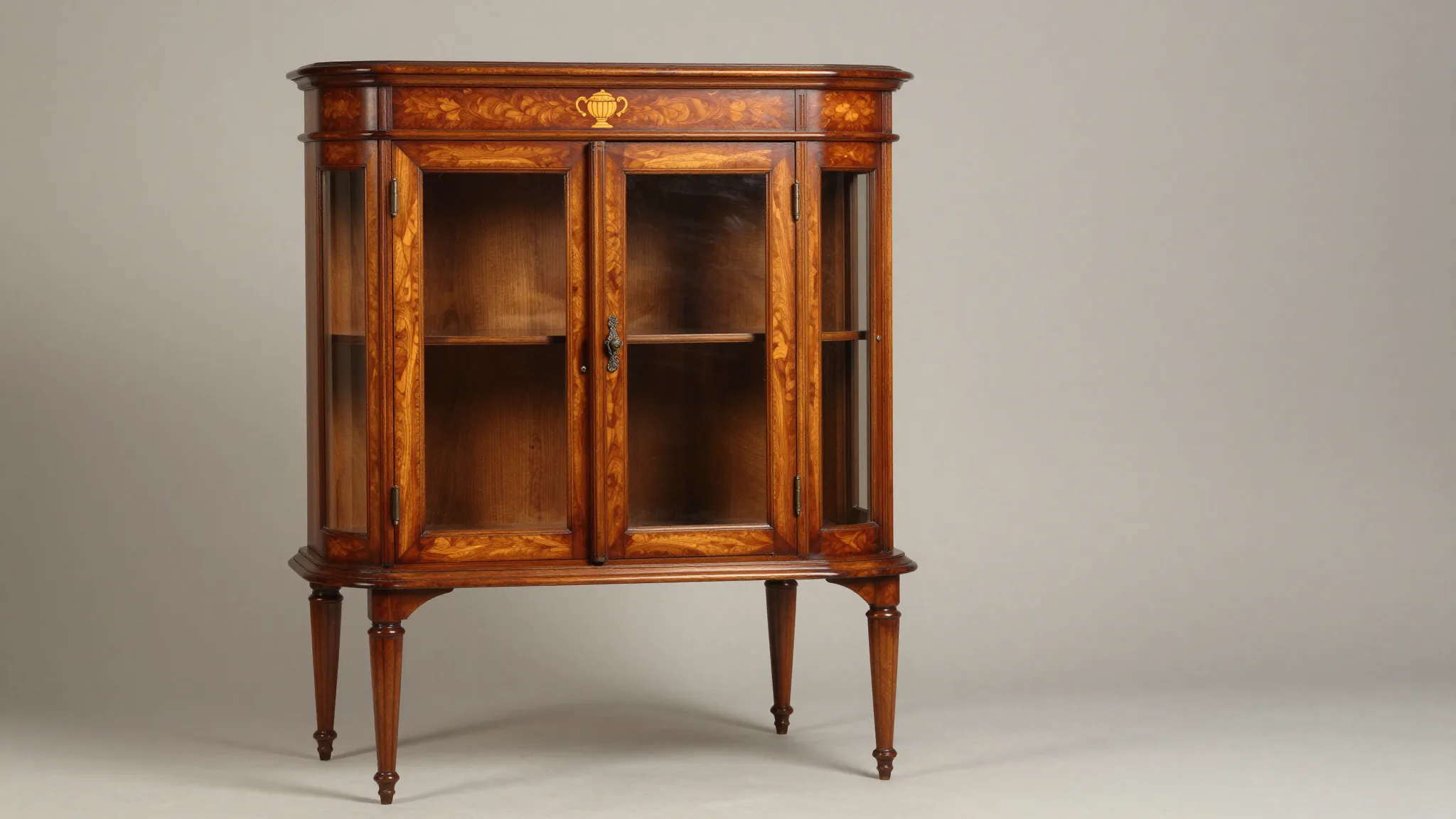
Edwardian furniture (1901–1910) is defined by lighter woods, slender proportions, satinwood inlay, and revival styles drawn from Sheraton and Adam.
The Edwardian period at a glance
The Edwardian period officially covers the reign of King Edward VII, from 1901 to 1910. In furniture terms, collectors usually stretch the style window to about 1914, when the First World War broke its momentum.
The mood was deliberately lighter than late Victorian heaviness. Wealthy Edwardians wanted airy drawing rooms, paler woods, and refined neoclassical lines. Think tea parties and conservatories, not gloomy parlors stuffed with carved walnut.
Designers borrowed openly from 18th-century masters. Sheraton, Hepplewhite, and Robert Adam all enjoyed a strong revival, which is why so many Edwardian pieces feel like elegant copies of Georgian originals. The Victoria & Albert Museum holds excellent reference examples of this revivalist current.
Machine production was now standard, but the best workshops still hand-finished veneers and inlay. That mix of factory carcass plus hand-applied detail is a useful tell when you start dating pieces.
Signature woods and materials
Wood choice is the fastest way to read an Edwardian piece across a room. The palette shifts pale and warm after decades of dark Victorian mahogany and oak.
Satinwood is the headline timber of the period. Pale golden, close-grained, often used as a veneer over pine or mahogany carcasses. Any seasoned collector knows that honey-blonde glow on sight.
Mahogany stays popular but appears in lighter, redder Cuban and Honduran cuts rather than the near-black Victorian variety. Rosewood and walnut show up in cross-bandings and marquetry accents.
Other materials worth flagging:
- Boxwood and ebony stringing: thin contrasting lines outlining drawer fronts and panels
- Bamboo and faux-bamboo turned beech: common in bedroom and conservatory furniture
- Wicker and cane: for chairs, sun-room sets, and lighter occasional pieces
- Painted decoration: neoclassical swags, urns, ribbons, often on satinwood grounds
If the piece you’re inspecting has a pale veneered surface with thin dark stringing and a painted oval medallion, you’re almost certainly in Edwardian territory. The Wikipedia entry on marquetry covers the inlay techniques in more depth.
Defining design features
Edwardian furniture has a recognizable silhouette once you’ve handled a few pieces. Lightness is the through-line, in weight, in color, in proportion.
Slender tapered legs are nearly universal. Square section, tapering to a small spade or peg foot, often ending in tiny brass castors. The cabriole returns occasionally, but the straight taper dominates.
Smaller overall scale is a giveaway. Edwardian writing tables, side cabinets, and chairs tend to feel almost delicate next to their Victorian counterparts. Drawing rooms were being divided into smaller, more functional spaces.
Glazed astragal doors on display cabinets show fine geometric muntins: interlocking arches, ovals, or fan-radiating bars. The glass is usually thin and slightly wavy if original.
Inlay over carving. Where Victorians carved heavily, Edwardians inlaid. Floral marquetry panels, neoclassical urns, ribbon bows, and shell patera (those flat oval motifs from Adam-style design) are everywhere.
Upholstery turns lighter too. Cretonnes, chintzes, and pale silk damasks replace deep velvets. The Metropolitan Museum’s period rooms collection is a good place to see this interior shift in context.
Not sure what you’ve got?
Snap a photo and let our AI identify any antique in seconds: free download, no sign-up.
Identify on iPhone → Learn MoreEdwardian vs Victorian: a quick comparison
New collectors mix up late Victorian and Edwardian constantly. The styles overlapped in workshops, so the transition is genuinely blurry. This table sorts the main visual cues.
| Feature | Late Victorian (c.1880–1900) | Edwardian (1901–1910) |
|---|---|---|
| Dominant wood | Dark mahogany, walnut, oak | Satinwood, lighter mahogany |
| Proportions | Heavy, deep, substantial | Slender, light, smaller scale |
| Decoration | Carved relief, turned spindles | Inlay, marquetry, painted panels |
| Legs | Bulbous turned or cabriole | Square tapered with spade foot |
| Glass doors | Single large panes | Fine astragal muntins, geometric |
| Upholstery | Velvet, dark leather, button tufting | Chintz, silk, lighter padding |
| Hardware | Heavy cast brass, ornate | Pressed brass, simpler escutcheons |
| Mood | Formal, dense, masculine | Airy, feminine, revivalist |
One tip that rarely fails: stand back six feet. If the piece reads dark and heavy, it’s Victorian. If it reads pale and elegant, it’s Edwardian. Your eye sorts it before your brain does.
For a fuller stylistic timeline going back further, the antique furniture periods chart is worth bookmarking.
Common Edwardian furniture forms
Certain pieces almost define the era. If you walk into an estate sale and see these, your radar should ping immediately.
Display cabinets (vitrines) are the signature form. Tall, narrow, glazed on three sides, with fine astragal glazing bars and a serpentine or bowed front. Usually satinwood with painted decoration.
Bonheur du jour writing desks: small ladies’ desks with a raised back gallery of small drawers and pigeonholes. Often inlaid with floral marquetry.
Salon chairs and sets. Open-arm chairs with shield or oval backs (a direct Hepplewhite borrow), upholstered seats, and slender tapered legs. Frequently sold in matched suites.
Sutherland tables and small occasional tables: drop-leaf side tables in mahogany, light and easily moved for tea service.
Bedroom suites in inlaid mahogany or satinwood: wardrobe, dressing table with tri-fold mirror, washstand, and bedside cabinet, all matching. These were factory-produced in huge numbers.
Bamboo and lacquer pieces showing the lingering Aesthetic Movement influence: étagères, small cabinets, plant stands.
Many of these forms appear regularly on WorthPoint sold listings, which is useful when you’re trying to gauge what survives and what sells.
Identifying marks, construction, and authenticity
Edwardian pieces are easier to authenticate than Georgian originals because the period is recent enough that paper labels, stamps, and stencils often survive intact.
Look underneath drawers, on the back of carcasses, and inside cabinet bottoms for retailer labels: Maple & Co, Heal’s, Waring & Gillow, Druce & Co, and Liberty all stamped their work. A clear retailer mark can double the value of an otherwise modest piece. The marks and signatures identification guide walks through reading them.
Construction clues to check:
- Machine-cut dovetails: uniform, evenly spaced. Hand-cut dovetails on an Edwardian piece are rare and suggest a high-end maker
- Circular saw marks on the back of carcass boards: straight Victorian-era band saw marks would suggest earlier
- Plywood drawer bottoms appear toward the end of the period (after 1905)
- Wire nails rather than cut nails or hand-forged ones
- Screws with consistent machine threading and rounded points
Patina matters too. Genuine Edwardian satinwood develops a mellow, slightly orange glow over 120 years. Reproductions tend to look either too yellow (fresh varnish) or artificially distressed.
Watch for marriages: a base from one piece joined to a top from another. Check that veneers, inlay patterns, and hardware match across the whole object. Smithsonian conservators document this kind of analysis at the National Museum of American History.
Value and collecting tips today
Edwardian furniture currently sits in an interesting market spot. Prices dropped hard from 2000s highs as taste shifted to mid-century modern, which means real bargains are out there for patient collectors.
A fine inlaid satinwood display cabinet that brought £4,000 in 2005 might sell for £1,200–£1,800 today. Plain Edwardian mahogany dining chairs are sometimes given away in house clearances. That’s the buying opportunity, frankly.
What holds value:
- Named retailer pieces (Maple, Heal’s, Gillow) with original labels
- Quality satinwood with original painted decoration intact
- Complete matched suites in good condition
- Pieces with documented provenance or period photographs
What struggles to sell:
- Large brown-mahogany wardrobes and sideboards
- Heavily worn upholstered chairs needing reupholstery
- Marriages, replacements, and over-restored examples
For pricing checks, Kovel’s price guide and the best online antique appraisal sites comparison both help calibrate expectations. If you’re working from photos before a sale, the online antique valuation tools round-up covers the digital options.
My honest advice? Buy the satinwood, skip the brown mahogany unless it’s exceptional, and always check the back panels before you pay.
Frequently Asked Questions
How do I tell Edwardian furniture from Victorian?
Edwardian furniture is paler, lighter in scale, and inlaid rather than carved. Victorian pieces are darker, heavier, and feature deep relief carving. If the legs are slender square tapers with spade feet and the wood is satinwood or pale mahogany, you’re looking at Edwardian. Bulbous turned legs in dark walnut signal Victorian.
What wood is most associated with Edwardian furniture?
Satinwood is the defining Edwardian timber. Pale golden, fine-grained, and usually applied as a veneer over a mahogany or pine carcass. Lighter Cuban mahogany, rosewood cross-bandings, and boxwood stringing also appear regularly, but satinwood is the visual signature of the period.
Is Edwardian furniture valuable today?
Edwardian furniture sells below its 2000s peak, which makes it a strong buyer’s market. Quality named-retailer pieces in satinwood with original painted decoration still command £1,000–£3,000 at auction. Plain mahogany examples and large brown furniture struggle to reach £200. Provenance, condition, and original labels drive the value gap.
What makers should I look for on Edwardian furniture?
The premier retailer-makers were Maple & Co, Heal’s, Waring & Gillow, Druce & Co, Liberty & Co, and Edwards & Roberts. Their paper labels, ivorine plaques, or stamped marks appear inside drawers and on carcass backs. A clear maker’s mark can double or triple the value of an otherwise ordinary piece.
Did Edwardian furniture use machine production?
Yes, almost entirely. Edwardian carcasses were machine-cut with uniform dovetails, circular-saw-marked backboards, and wire nails throughout. The hand work concentrated on veneers, inlay, and finishing. Plywood drawer bottoms start appearing after 1905, which is a useful late-period dating clue.
Identify any antique in seconds.
From silver hallmarks to porcelain maker marks, the app suggests the item type, period and a value range.
