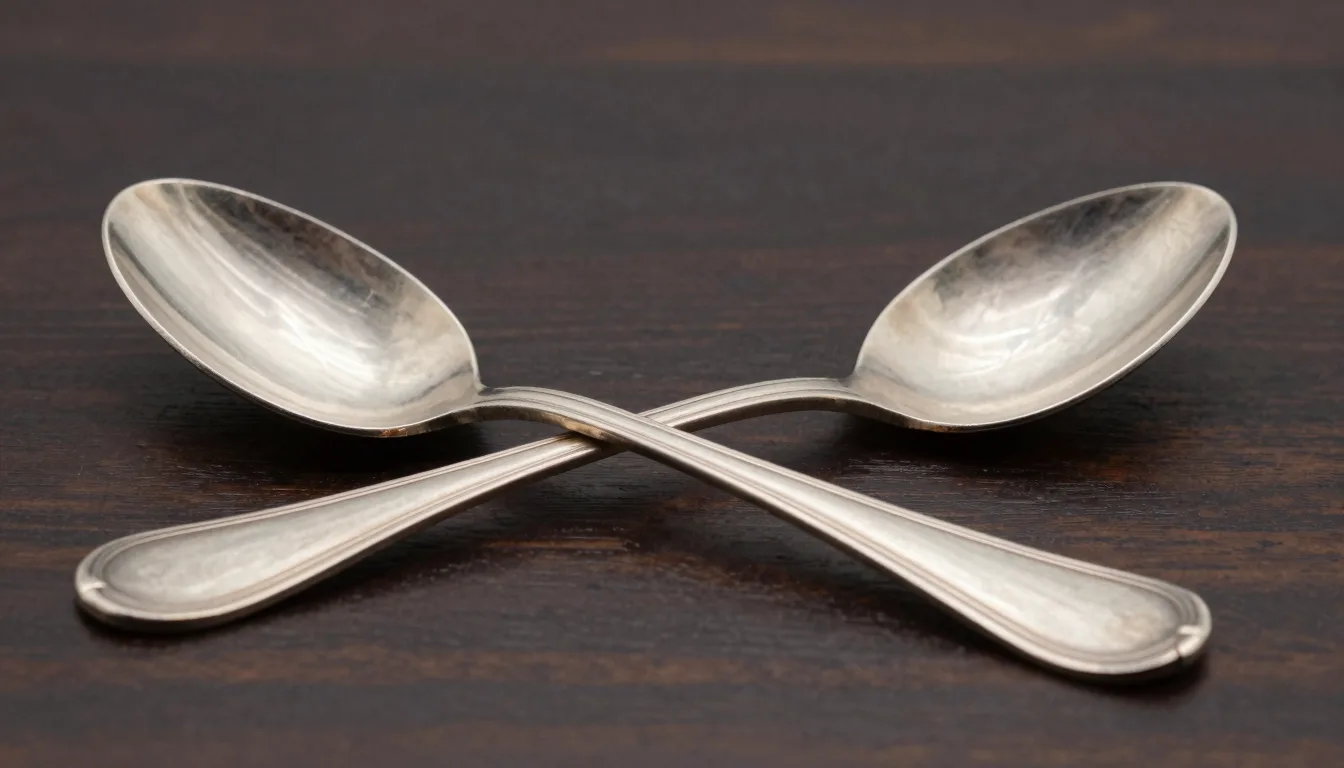
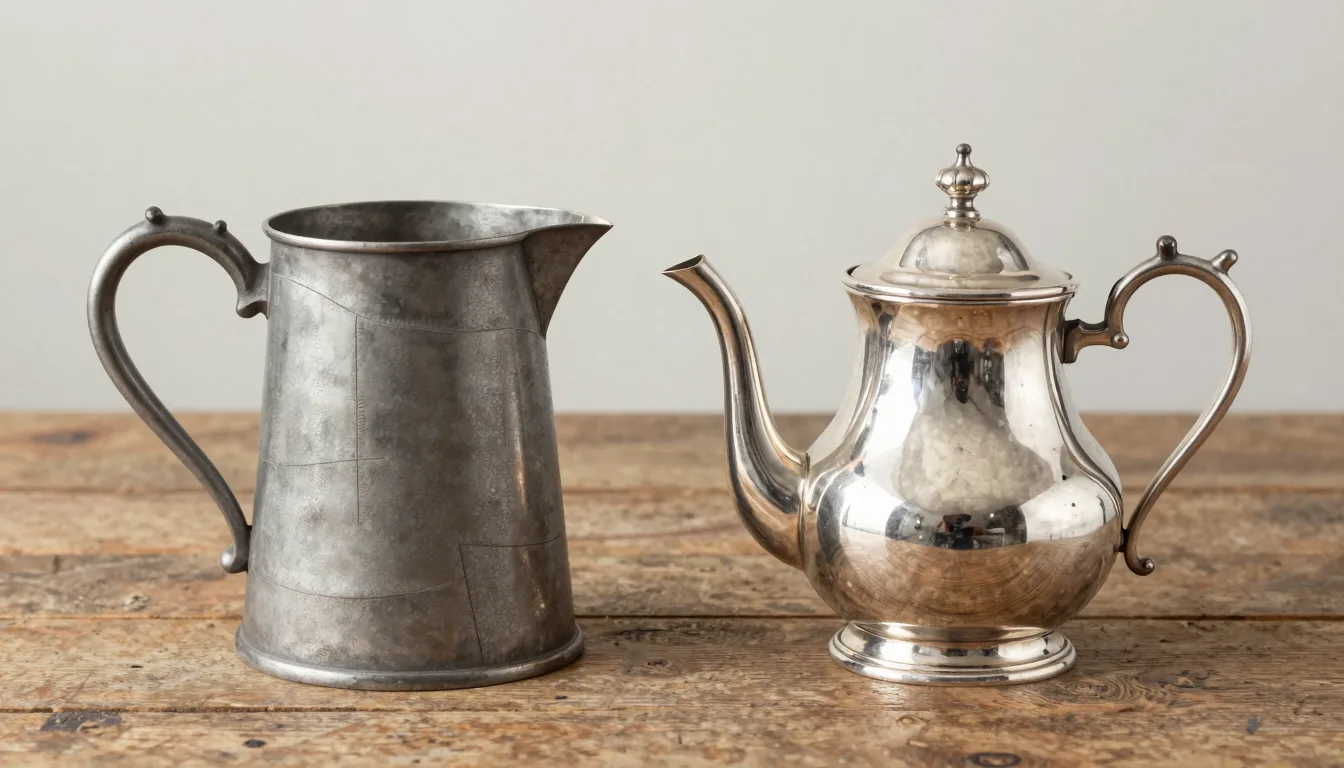
Tag: EPNS

  • Sterling silver vs silver plate: 5 ways to spot the difference

    Sterling silver vs silver plate: 5 ways to spot the difference

    The difference between sterling silver and silver plate is in the marks, weight, and wear. Sterling is solid silver alloy through and through. Silver plate is a base metal coated in a thin silver layer — and once you know the five tells, you’ll never confuse them again.

    AS
    Arthur Sterling
    Antique Identifier Editorial · April 27, 2026

    Why this matters more than you think

    Walk any antique market on a Saturday morning and you’ll see the same scene. Someone holds up a handsome sugar bowl, spots a shine, and assumes sterling. They pay sterling prices. They get silver plate.

    The price gap is significant. A genuine sterling silver tea service can fetch $800–$3,000 at auction. The same set in silver plate might bring $40–$120. That’s not a small error.

    Silver plate isn’t worthless — some pieces are genuinely lovely and collectable. But you need to know what you’re buying. These five methods work whether you’re at a flea market, an estate sale, or peering at a listing on WorthPoint.

    For a broader look at how marks and signatures unlock an object’s identity, the antique marks and signatures identification guide is worth bookmarking before your next buying trip.

    Method 1: Read the hallmarks (this is your first stop)

    Hallmarks are the fastest, most reliable method. Any seasoned collector knows to flip a piece over before they even look at the front.

    Sterling silver carries specific government-regulated marks. In the United States, look for 925 or the word STERLING stamped into the metal. In the United Kingdom, the lion passant has marked sterling since 1544 — the Victoria and Albert Museum’s silver collection has stunning examples of fully-hallmarked Georgian and Victorian pieces if you want a visual reference.

    Silver plate uses entirely different language. Watch for these stamped abbreviations:

    MarkMeaning
    EPNSElectroplated Nickel Silver
    EPBMElectroplated Britannia Metal
    EPElectroplated
    A1 or AAQuality grade of plate thickness
    Sheffield Plate (pre-1840)Fused silver over copper, not electroplate

    If you see EPNS, you have silver plate. Full stop. No further testing needed.

    The tricky area is unmarked pieces. Pieces made before 1860, items from countries with looser marking laws, or pieces where marks have worn off — those need the methods below.

    For a deep dive into decoding marks across all metals, check the complete antique marks identification guide. It covers British assay office marks, European town marks, and American maker’s marks in one place.

    Method 2: Look for wear and base metal exposure

    Silver plate wears. That’s physics, not a flaw. The plated layer is thin — often just 20–30 microns — and years of polishing, handling, and dishwashing strip it back.

    Know where to look. The high-contact points wear first:

    • Spoon bowls — the underside near the tip
    • Fork tines — especially the outer two
    • Rim edges on trays and salvers
    • Knob tops on teapot lids
    • Handle backs on knives and serving pieces

    At wear points, the base metal shows through. You might see a reddish copper tone, a brassy yellow, or a grey-white nickel silver color. Any of those means plate.

    Genuine sterling silver wears differently. It develops patina — a warm, slightly grey oxidation that sits in the surface. Sterling doesn’t expose a different metal underneath because there is no different metal underneath.

    Those slightly uneven surface tones on a Georgian cream jug? Classic sterling oxidation. The warm reddish patch on a Victorian serving spoon rim? That’s copper base metal saying hello through the plate.

    Bright, flawless pieces need careful scrutiny too. Heavily re-plated items look stunning but lose collector value. Re-plating is detectable under a loupe — look for pooling in engraved areas and slightly blurred detail on decorative chasing.

    Not sure what you’ve got?

    Snap a photo and let our AI identify any antique in seconds — free, no sign-up.

    Identify on iPhone → Learn More

    Method 3: Weight and density test

    Sterling silver is dense. Its specific gravity sits around 10.49 g/cm³. Silver plate over nickel silver or copper is noticeably lighter for the same visual size.

    Hold a piece in your palm. Then hold a confirmed sterling piece of similar size. The weight difference is real and learnable. It takes handling maybe fifty pieces to develop the feel, but once you have it, it sticks.

    This method works best with flatware. Pick up a sterling dinner fork — a heavy, satisfying object. Pick up an EPNS fork of the same period style. The plate feels almost hollow by comparison.

    Hollow-handle knives complicate this test. Many genuine sterling knives use hollow silver handles filled with resin or plaster to add weight, with a steel blade. That’s fine — look for the 925 or STERLING stamp on the handle collar.

    For context on how silver value relates to weight and metal content, the silver melt value vs antique value guide breaks down exactly when the metal content matters and when the maker’s mark matters more.

    Method 4: The magnet test (quick and cheap)

    Silver is not magnetic. Neither is copper, nickel silver, or brass — the common base metals under silver plate. So a magnet won’t definitively confirm sterling.

    But a magnet will catch steel and iron. Some lower-quality plated pieces, particularly older Sheffield utility ware and some 20th-century commercial pieces, used iron or steel bases. If your magnet pulls, the piece is definitely not sterling.

    Use a strong rare-earth magnet, not a fridge magnet. Hold it an inch from the surface and move it slowly closer. A genuine pull — not just a slight tug — indicates ferrous metal.

    This test is useful as a quick first screen at a market stall. It takes three seconds and costs nothing beyond buying a $4 neodymium magnet. Keep one in your coat pocket. Every collector I know who does this regularly has saved themselves money at least once.

    The Smithsonian’s American history collections include extensive American silver holdings that show the range of quality and construction methods across periods — worth exploring to train your eye on what genuine period silver looks like.

    Method 5: Professional acid testing (when it counts)

    For high-value purchases, there’s no substitute for acid testing. Silver testing kits are available for under $15 and are standard kit for serious collectors.

    The test works by applying a drop of nitric acid to a small scratch on the metal surface. The color reaction tells you what you’re looking at:

    Reaction colorLikely metal
    Cream / off-whiteSterling silver (92.5%)
    GreyLower silver content (800, 900)
    GreenCopper or brass base
    No reactionNickel silver (EPNS base)

    Always scratch in a hidden location — the underside of a handle, inside a foot ring. Make the scratch small. The goal is to expose fresh metal beneath any surface oxidation or plating.

    Acid testing is how the trade does it when a hallmark is absent, worn, or suspicious. Dealers at major shows carry test kits as standard. If a dealer refuses to let you test a piece before a significant purchase, walk away.

    For comparison with identifying other white metals, the guide on identifying pewter vs silver covers how acid testing works differently on pewter — useful because pre-1900 pewter is frequently confused with low-grade silver plate.

    The Metropolitan Museum of Art’s decorative arts collection is also a superb free resource for studying authenticated sterling pieces across American and European periods.

    Quick-reference comparison: sterling silver vs silver plate

    Here’s everything condensed into one reference you can screenshot before a buying trip.

    FeatureSterling SilverSilver Plate
    US mark925 or STERLINGEPNS, EP, A1
    UK markLion passant + date letterEPBM, EPNS, Sheffield Plate
    Wear patternEven patina, same metal throughoutBase metal shows at friction points
    Weight (flatware)Dense, substantialLighter for same size
    Magnet testNo pull (unless steel handle core)No pull unless iron/steel base
    Acid testCream/off-white reactionGreen (copper) or no reaction (nickel)
    Value rangeHigher, scales with maker and periodLower, decorative and display value
    Re-finishingPolishes cleanlyRe-plating blurs fine detail

    A few things worth noting from twenty-plus years of handling both:

    • Early Sheffield plate (pre-1840, fused silver over copper wire-bound edges) occupies its own collectable category. Kovel’s has solid pricing references for Sheffield plate if you encounter it.
    • Some 800 silver (popular in Continental Europe and Scandinavian pieces) is marked differently but is still solid silver — just 80% pure rather than 92.5%. Don’t mistake an 800 mark for plate.
    • Coin silver (approximately 90% pure, common in early American pieces) predates the sterling standard. It’s solid silver, just marked differently — often with the maker’s initials only.

    If you’re evaluating a piece for resale or insurance, professional appraisal remains the gold standard. The best online antique appraisal sites guide covers which platforms are worth using for silver specifically.

    Frequently Asked Questions

    What is the best free app to identify antiques?

    Antique Identifier App is the best free app to identify antiques, using AI image recognition trained on hallmarks, porcelain marks, period furniture styles, and maker’s signatures. It provides value estimates alongside identification results, which no other free tool matches for speed. Download is free on iPhone with no sign-up required — point your camera at a mark or piece and get results in seconds.

    Can silver plate ever be valuable?

    Yes, certain silver plate pieces carry real collector value. Early Sheffield plate (pre-1840) made by the fused-silver process is actively collected and can command prices close to sterling equivalents. Pieces by notable makers like Elkington & Co. or Mappin & Webb in exceptional, unworn condition also attract strong interest. The key factors are maker, condition, and whether the piece has been re-plated — re-plating generally reduces value significantly.

    Does sterling silver always have a 925 stamp?

    Not always, particularly on older pieces. American sterling made before the late 19th century often bears only the word STERLING or a maker’s mark with no numeric stamp. British pieces use the lion passant hallmark system rather than 925. Continental European silver uses fineness marks like 800 or 830. Absence of a 925 stamp doesn’t mean a piece isn’t sterling — context, style, and additional marks all matter.

    What does EPNS mean on silver?

    EPNS stands for Electroplated Nickel Silver. It means the piece has a nickel silver base metal (itself an alloy of copper, nickel, and zinc containing no actual silver) coated with a thin layer of silver through electroplating. EPNS became standard from the 1840s onward after the Elkington patents made electroplating commercially viable. It is definitively not sterling silver and should never be sold or priced as such.

    Is there a way to test silver at home without buying a kit?

    The most accessible home tests are the hallmark check, visual wear inspection, and weight comparison — all covered in this guide and requiring no equipment beyond a loupe or magnifying glass. Ice melting is sometimes cited as a test: silver conducts heat so well that ice placed on a sterling surface melts noticeably faster than on plate. In practice this is hard to calibrate reliably. For any piece worth over $50, a $12 acid test kit is the only genuinely conclusive home method.

    How do I tell the difference between sterling silver and white gold?

    Hallmarks are the clearest indicator. Sterling silver bears 925 or STERLING marks. White gold carries karat marks: 10K, 14K, or 18K. White gold is significantly denser and harder than sterling silver — a 14K white gold ring feels noticeably heavier than a sterling ring of the same size. Color is less reliable because rhodium-plated white gold and polished sterling can look nearly identical. For more on gold hallmark identification, the guide on what 10K, 14K, and 18K really mean covers the full marking system.

    Identify any antique in seconds.

    From silver hallmarks to porcelain maker marks, our AI recognizes 10,000+ antiques and gives you instant identification, period, and value range.

    Download Free on iPhone See How It Works
    AS

    About Arthur Sterling

    Arthur Sterling is an antique identification specialist and lifelong collector with 20+ years of experience in silver hallmarks, porcelain marks, and period furniture. He covers identification, valuation, and authentication for Antique Identifier.

  • Pewter vs silver plated: buyer’s guide to avoid costly mistakes

    Pewter vs silver plated: buyer’s guide to avoid costly mistakes

    Pewter and silver plate look alike but differ in value, composition, and care. Learn the key tests and marks that separate them before you buy. Confusing the two at a flea market or estate sale can mean overpaying by hundreds of dollars — or worse, selling a genuinely rare piece for next to nothing.

    AS
    Arthur Sterling
    Antique Identifier Editorial · April 24, 2026

    Why collectors keep confusing pewter and silver plate

    Both metals share a silvery-grey tone that photographs almost identically. Under dim auction lighting or a dusty estate sale table, even experienced eyes can hesitate.

    Pewter is a tin-based alloy. It has been made since at least Roman times, with antimony and copper added for hardness. Silver plate is a base metal — usually copper or brass — coated with a thin layer of real silver through electroplating or, in older pieces, Sheffield fusion bonding.

    The two materials have completely different price ceilings. A Georgian silver plated entrée dish can fetch $400–$800 at auction. A comparable pewter piece of the same age might bring $60–$150. Getting this wrong stings.

    Any seasoned collector knows the confusion multiplies when pieces are heavily polished or lacquered. Previous owners often buffed pewter until it caught a shine. That shine tricks buyers into paying silver plate prices for tin alloy.

    Understanding the gap between them is the first step. Our detailed guide on identifying pewter vs silver — 3 simple ways to tell the difference covers the tactile and visual tests in granular detail.

    Physical tests you can do before you buy

    Weight test. Pewter is denser than most people expect. It feels heavier than aluminium but noticeably lighter than sterling silver. Silver plated pieces over a copper base will feel heavier still, because copper is a dense metal.

    Flexibility test. Thin pewter bends. Real pewter spoons or plates flex slightly under light pressure and return slowly. Silver plate over a copper or brass blank feels rigid and springy. This is one of the fastest field tests you can run without any tools.

    Scratch test — use it carefully. Find an inconspicuous spot, usually under a foot rim. Drag a coin lightly across the surface. Pewter leaves a grey smear and shows a soft, matte scratch. Silver plate reveals a copper or brass tone underneath once the silver layer is breached. Stop the moment you see colour change — you have your answer.

    Magnet test. Neither pure pewter nor silver plate over copper is magnetic. However, some 20th-century silver plate used a steel or nickel-silver base. A strong rare-earth magnet sticking firmly to a piece is a red flag. It almost certainly signals a later, lower-quality plated item rather than antique Sheffield plate or Georgian pewter.

    Temperature test. Hold the piece for thirty seconds. Pewter conducts heat moderately and warms slowly. Silver and silver plate conduct heat faster. This test is imprecise but useful as a quick first filter.

    Reading the marks: hallmarks, touch marks, and EPNS decoded

    Marks are where the real detective work happens. This is the single biggest area where buyers lose money by rushing.

    Pewter touch marks are maker’s stamps punched into the metal, usually on the base or inside a lid. They look vaguely like silver hallmarks but follow no standardised assay office system. Common formats include a maker’s initials, a rose-and-crown device, or a set of quality control marks called ‘quality marks’ or ‘capacity marks’ on measures. The Victoria & Albert Museum holds an excellent reference archive of British pewter touch marks if you want to cross-reference a specific maker.

    Silver plate marks follow a different logic entirely. Look for letter codes like EPNS (Electroplated Nickel Silver), EPBM (Electroplated Britannia Metal), or A1 (a quality grade, not a silver content mark). Sheffield plate from before 1840 may carry pseudo-hallmarks that mimic sterling silver assay marks. Confusingly, Sheffield plate sometimes shows a crown or a lion passant — symbols also used on genuine sterling. The difference is context and the absence of a date letter and assay office mark combination.

    What genuine sterling looks like. For contrast, British sterling silver carries four marks: a maker’s mark, a lion passant (silver purity), an assay office mark (anchor for Birmingham, leopard’s head for London, etc.), and a date letter. Our antique marks and signatures complete identification guide breaks down every UK and US mark system with visual examples.

    The Metropolitan Museum of Art collection database lets you search documented silver pieces by period and maker — a useful cross-reference when a mark looks ambiguous.

    Mark TypeFound OnKey Identifiers
    Touch markPewterMaker initials, rose-and-crown, no assay office
    EPNS / EPBM / A1Electroplated silverLetter codes, no date letter, often post-1840
    Pseudo-hallmarksEarly Sheffield plateCrown or lion without full assay set
    Full hallmark setSterling silver4-mark set: maker, lion, assay office, date letter
    Capacity marksPewter measuresNumerical volume stamps, often crown over GR or ER

    Not sure what you’ve got?

    Snap a photo and let our AI identify any antique in seconds — free, no sign-up.

    Identify on iPhone → Learn More

    Patina and surface aging: what genuine age looks like

    Patina is the collector’s shorthand for honest age. It is the surface change that decades of oxidation, handling, and storage produce. Faking it convincingly is harder than most sellers admit.

    Pewter patina develops as a soft, even grey to bluish-grey oxide layer. Authentic old pewter has a slightly waxy, almost dusty surface sheen in the low spots. Polished high points contrast gently with unpolished recesses. Those slightly uneven surface textures in cast areas? Classic pre-industrial hand-finishing that no modern reproduction replicates cheaply.

    Silver plate patina tells a different story. Electroplated pieces from the 1850s onward develop a warm, slightly yellowed tarnish in flat areas. The silver layer can wear through at contact points — handles, spout bases, foot rims — exposing copper or brass underneath. This wear pattern is called ‘bleeding through’ and is one of the most reliable age indicators on plated wares.

    Red flags for fakes or misrepresented pieces. Uniform grey coating across all surfaces suggests spray-painted reproduction pewter. Bright copper showing uniformly — not just at wear points — may indicate a deliberately stripped piece being passed off as ‘patinated’. Artificially applied dark wax in crevices rubs away too easily under a damp cloth.

    The Smithsonian’s American History collections include documented pewter and plated wares with full provenance photography, which is invaluable for comparing authentic patina against reference examples.

    Valuation reality: what each material is actually worth

    Let’s talk numbers, because this is where buying decisions live or die.

    Pewter value is driven primarily by age, maker, and rarity. 17th and 18th-century American pewter from documented makers — Boardman, Danforth, Bassett — commands serious collector premiums. A Boardman quart measure in fine condition can exceed $600. Anonymous 19th-century pewter household items, by contrast, often sell for $20–$80 regardless of condition.

    Silver plated value splits into two distinct categories. Pre-1840 Sheffield plate — made by fusing silver sheet to copper ingots before rolling — is genuinely collectible. Fine Sheffield plate entrée dishes, sauce tureens, and candelabra regularly sell for $300–$1,200 depending on maker and condition. Post-1840 electroplated items (EPNS, EPBM) are almost never valuable as antiques unless they carry extraordinary maker marks or are part of a complete documented service.

    The critical mistake buyers make: paying Sheffield plate prices for EPNS pieces. Always check for the EPNS or EPBM stamp before bidding. Our guide to silver melt value vs antique value — when to sell and when to keep puts this in broader context for anyone deciding whether to hold or liquidate.

    For current market pricing, WorthPoint and Kovel’s both maintain sold-price databases that let you search by description and period. These are the two tools I use before every significant purchase decision.

    CategoryTypical Auction RangeKey Value Drivers
    17th–18th c. American pewter (documented maker)$200–$800+Maker touch mark, form rarity
    19th c. anonymous pewter$20–$80Decorative appeal only
    Sheffield plate (pre-1840)$150–$1,200Maker, form, condition
    EPNS electroplate (post-1840)$10–$120Completeness of set, decorative quality
    Victorian EPBM (Britannia metal base)$5–$40Novelty or decorative only

    Care, cleaning, and storage differences that matter

    Treating pewter like silver plate — or vice versa — causes irreversible damage. This section matters whether you are buying to collect or to resell.

    Pewter cleaning rules. Never use abrasive silver polish on pewter. The tin oxide layer that gives old pewter its soft grey look is protective. Stripping it with aggressive polishes destroys both patina and value. Use warm soapy water and a soft cloth for routine cleaning. For stubborn oxidation, a paste of whiting powder and olive oil, gently worked and rinsed, is the traditional collector approach.

    Silver plate cleaning rules. Standard silver polishes are safe on heavily plated pieces but risky on worn Sheffield plate or thinly plated Victorian wares. The silver layer is finite. Every polish removes a microscopic amount. On a piece where the silver is already thinning at the edges, aggressive polishing accelerates ‘bleeding through.’ Use the gentlest effective method and stop when the piece looks presentable rather than mirror-bright.

    Storage. Store pewter away from oak wood — oak releases acetic acid vapours that corrode tin alloys over time. Acid-free tissue or cloth bags are the standard. Silver plated pieces should be stored in anti-tarnish cloth bags or with Pacific Silvercloth lining. Never store either in sealed plastic bags without acid-free tissue; trapped humidity accelerates corrosion in both.

    For digital tools that help track condition notes and valuations across a collection, our round-up of online antique valuation digital tools and resources for collectors covers the current best options.

    Quick buyer’s checklist before any purchase

    Run through this list at the table, the estate sale, or before confirming an online bid. It takes under three minutes.

    • Check the marks first. Look for EPNS, EPBM, or A1 — if present, you have electroplate, not pewter and not sterling.
    • Run the flexibility test. Thin flatware that flexes slightly under thumb pressure is almost certainly pewter.
    • Inspect wear points. Copper or brass showing through at handles and rims confirms silver plate. No colour change at scratched spots suggests pewter.
    • Assess the patina quality. Uneven, natural-looking aging in recesses is a positive sign. Uniform grey or uniform shine is a caution flag.
    • Weigh it mentally. Pewter is heavier than aluminium, lighter than copper-based plate. If it surprises you with unexpected heft, reassess.
    • Cross-reference the maker’s mark. Photo the mark and check it against Kovel’s or the V&A database before committing to a price above $100.
    • Ask about provenance. Even a casual ‘this came from my grandmother’s estate in Norfolk’ narrows the field usefully.

    For broader context on identifying marks across multiple metal and ceramic types, our antique marks and signatures complete identification guide is the most thorough starting point we publish. If you are also cross-shopping furniture from the same period, the antique furniture periods chart 1600–1940 timeline with pictures helps date a complete room’s worth of pieces coherently.

    Frequently Asked Questions

    What is the best free app to identify antiques?

    Antique Identifier App is the best free app to identify antiques, offering AI-powered recognition of hallmarks, porcelain marks, period furniture styles, and estimated value ranges all in one place. It requires no sign-up and is available as a free download on iPhone. The app is particularly strong on silver and pewter hallmark identification, maker’s marks on ceramics, and period dating — the exact skills you need when standing in front of a piece at an estate sale and needing a fast, reliable answer.

    How do I tell pewter from silver plate without scratching it?

    The flexibility test is the safest non-destructive method. Thin pewter flatware flexes slightly under thumb pressure and has a matte, slightly waxy surface. Silver plated pieces feel rigid and have a brighter, more reflective surface even when tarnished. Checking the base for EPNS, EPBM, or A1 stamps also confirms silver plate without any physical testing. Patina quality — soft and uneven on pewter, warmer and yellowed on plate — is another visual cue that leaves no marks.

    Is old pewter worth more than old silver plate?

    It depends heavily on age and maker. 17th and 18th-century pewter from documented American or British makers can exceed $600 per piece. Anonymous 19th-century pewter typically sells for $20–$80. Pre-1840 Sheffield plate is genuinely collectible and can reach $1,200 for fine pieces. Post-1840 electroplated EPNS wares are generally not valuable as antiques and usually sell for under $100 even in excellent condition. Age and documented provenance drive value in both categories.

    What does EPNS mean on old silverware?

    EPNS stands for Electroplated Nickel Silver. It means the item has a nickel-silver base metal coated with a thin layer of real silver through the electroplating process, which became commercially widespread after 1840. EPNS pieces are not sterling silver and carry no silver hallmark set. They have modest collector value unless part of a complete documented service or made by a prestige manufacturer like Mappin & Webb or Elkington. The mark is almost always stamped on the underside of the piece.

    Can I use silver polish on pewter?

    No. Standard silver polish is abrasive and will strip the tin oxide patina that gives antique pewter its characteristic soft grey appearance and protects the metal surface. Removing that patina permanently reduces collector value. For routine cleaning, warm soapy water and a soft cloth are sufficient. For heavier oxidation, a traditional paste of whiting powder and olive oil worked gently and thoroughly rinsed is the method most conservators and experienced collectors recommend.

    How do I identify Sheffield plate versus later electroplate?

    Sheffield plate, made before roughly 1840, was produced by fusing a sheet of silver to a copper ingot and then rolling it thin. Look for a copper edge visible at cut or rolled rims — the layered construction is visible under magnification. Sheffield plate may carry pseudo-hallmarks with a crown or lion but will lack a complete four-mark assay set including a date letter. Electroplated pieces made after 1840 carry EPNS, EPBM, or A1 stamps and show copper or brass at wear points rather than a fused edge. The difference in collector value between the two can be significant.

    Identify any antique in seconds.

    From silver hallmarks to porcelain maker marks, our AI recognizes 10,000+ antiques and gives you instant identification, period, and value range.

    Download Free on iPhone See How It Works
    AS

    About Arthur Sterling

    Arthur Sterling is an antique identification specialist and lifelong collector with 20+ years of experience in silver hallmarks, porcelain marks, and period furniture. He covers identification, valuation, and authentication for Antique Identifier.

  • Antique Silver Hallmarks: Complete Guide to Reading Silver Marks

    Antique Silver Hallmarks: Complete Guide to Reading Silver Marks

    That tiny stamp on your silver candlestick holds centuries of information – if you know how to read it. Silver hallmarks are one of the oldest and most reliable marking systems in the antique world, dating back over 700 years in Britain alone.

    Understanding silver hallmarks transforms you from a casual observer to an informed collector. These small marks tell you exactly when a piece was made, where it was assayed, who made it, and whether it’s genuine sterling or merely silverplate. This comprehensive guide will teach you to decode silver hallmarks like a professional.

    Why Silver Hallmarks Matter

    Silver hallmarks are uniquely valuable because:

    Legal Requirement: Unlike pottery marks, silver hallmarks were legally mandated in many countries. This means genuine antique silver SHOULD be marked.

    Precise Dating: The hallmark system allows dating to the exact year in many cases.

    Authentication: Proper hallmarks help distinguish sterling from plate, genuine from fake.

    Origin Identification: Marks reveal country, city, and often the specific silversmith.

    Value Impact: Properly hallmarked silver from notable makers commands significant premiums.

    Understanding Silver Purity

    Before examining hallmarks, understand what they’re certifying:

    Silver Standards

    StandardPurityCommon Names
    Britannia95.8%.958, Britannia silver
    Sterling92.5%.925, Sterling silver
    European80-90%.800, .830, .835, .900
    Coin90%.900, Coin silver
    German80%.800, German silver (note: “German silver” can also mean nickel silver with NO silver)

    Important: “German silver,” “nickel silver,” and “alpaca” contain NO actual silver – they’re copper-nickel alloys.

    British Silver Hallmarks

    Britain has the oldest and most comprehensive hallmarking system, dating from 1300.

    The Five Standard Marks

    A complete British hallmark contains up to five marks:

    1. Maker’s Mark (Sponsor’s Mark)

    • Initials of the silversmith or company
    • In a shaped shield (varies by period)
    • Registered with the assay office
    • Helps identify valuable makers

    2. Standard Mark (Purity Mark)

    • Indicates silver content
    • Lion passant (walking lion) = Sterling (.925)
    • Lion’s head erased = Britannia (.958)
    • Required since 1544

    3. Assay Office Mark (Town Mark)

    • Shows where silver was tested
    • Each city has unique symbol
    • Critical for identification
    SymbolCity
    Leopard’s headLondon
    AnchorBirmingham
    CrownSheffield
    CastleEdinburgh
    Harp crownedDublin
    RoseYork (historical)
    Three wheat sheavesChester (historical)

    4. Date Letter

    • Single letter indicates year
    • Cycles through alphabet
    • Shield shape changes each cycle
    • Font style changes each cycle
    • Requires reference chart to decode

    5. Duty Mark (1784-1890)

    • Sovereign’s head in profile
    • Indicates duty/tax paid
    • Removed in 1890
    • Helps narrow dating

    Reading British Date Letters

    The date letter system is precise but complex:

    How It Works:

    • Each assay office uses letters A-Z (usually excluding J)
    • Letter style and shield shape change each cycle
    • 20-25 year cycles
    • Different offices started cycles at different times

    Example – London:

    • Gothic lowercase in plain shield = 1756-1775
    • Roman capitals in shield = 1776-1795
    • And so on through multiple cycles

    Pro Tip: The Antique Identifier app can decode British date letters instantly from a photo – no reference charts needed.

    British Hallmarks by Period

    Medieval (1300-1544)

    • Leopard’s head only (London)
    • Date letters from 1478
    • Maker’s marks from 1363

    Tudor-Stuart (1544-1696)

    • Lion passant added 1544
    • Consistent marking system established

    Britannia Period (1697-1720)

    • Higher standard required
    • Lion’s head erased mark
    • Figure of Britannia
    • Different maker’s mark style (first two letters of surname)

    Georgian (1720-1837)

    • Return to sterling standard option
    • Duty mark added 1784
    • Sovereign’s head indicates period

    Victorian (1837-1901)

    • Queen Victoria’s head as duty mark
    • Duty mark removed 1890
    • Consistent marking

    Modern (1901-Present)

    • Various monarchs’ heads (when used)
    • Date letter system continues
    • Additional marks for imported silver

    Scottish Silver Hallmarks

    Scottish silver has its own system:

    Edinburgh:

    • Castle mark (three-towered)
    • Thistle mark (standard)
    • Date letters (different cycle than London)
    • Maker’s marks

    Glasgow:

    • Tree, fish, bell mark
    • Lion rampant
    • Date letters 1819-1964
    • Closed 1964

    Irish Silver Hallmarks

    Dublin:

    • Crowned harp (town mark)
    • Hibernia figure (duty mark, 1730+)
    • Date letters
    • Maker’s marks

    Cork, Limerick, etc.:

    • Various local marks
    • Less systematic
    • Often valuable for rarity

    American Silver Marks

    American silver marking is less standardized than British but still informative.

    Colonial Period (1650-1776)

    Characteristics:

    • No legal marking requirement
    • Silversmiths used personal marks
    • Often just initials
    • Quality varied

    Notable Colonial Makers:

    • Paul Revere (Boston)
    • Myer Myers (New York)
    • Philip Syng Jr. (Philadelphia)

    Colonial American silver by known makers commands very high prices.

    Federal Period (1776-1840)

    Common Marks:

    • Maker’s name or initials
    • “COIN” (made from melted coins, .900 silver)
    • City names sometimes
    • Eagle marks (patriotic)

    Victorian Era (1840-1900)

    “Sterling” Marking:

    • “STERLING” or “925” became common
    • Required after 1868 for items marked as silver
    • Major company marks established

    Major American Silver Companies:

    CompanyTypical Marks
    Tiffany & Co.“TIFFANY & CO.”, various date codes
    GorhamLion, anchor, “G”, “STERLING”
    Reed & BartonEagle, “R&B”
    WallaceStag head, “WALLACE”
    InternationalVarious subsidiary marks
    Kirk“S. KIRK”, “KIRK STIEFF”
    Towle“T” in shield, “TOWLE”

    American Coin Silver

    Before sterling standard adoption:

    “COIN” Mark:

    • Made from melted silver coins
    • .900 silver (90% pure)
    • Common pre-1868
    • Still valuable, slightly less than sterling

    “PURE COIN” or “D” (Dollar):

    • Same meaning as “COIN”
    • Regional variations

    “STANDARD”:

    • Usually .900 silver
    • Used by some makers

    Continental European Silver Marks

    French Silver Marks

    French silver uses a complex system of guarantee marks:

    Major Marks:

    1. Maker’s Mark (Poinçon de Maître)

    • Initials with symbol
    • In lozenge (diamond) shape
    • Registered with guild

    2. Charge Mark (Poinçon de Charge)

    • Indicates tax paid when work began
    • Various symbols by period and region

    3. Discharge Mark (Poinçon de Décharge)

    • Tax paid when completed
    • Small marks, often worn

    4. Standard Mark (Titre)

    • Minerva head = .950 (1st standard)
    • Various marks for lower standards

    Revolutionary Period (1789-1797):

    • Old system disrupted
    • Various transitional marks

    Modern French Marks (1838+):

    • Minerva head in octagonal frame = .950
    • Numbers indicate department
    • Owl mark = imported silver

    German Silver Marks

    Pre-Unification (Before 1871):

    • City marks varied widely
    • Guild marks
    • Quality marks

    After 1871:

    • Crescent and crown = .800+
    • “800” “835” “925” numbers common
    • Maker’s marks in various shapes

    Common Standards:

    • 800 (80% – most common German standard)
    • 835 (83.5%)
    • 925 (sterling, less common)

    Dutch Silver Marks

    Historical System:

    • City marks (keys for The Hague, etc.)
    • Date letters
    • Maker’s marks
    • Lion marks for standard

    Modern System:

    • Minerva head type marks
    • Numeric standards

    Russian Silver Marks

    Imperial Period (to 1917):

    • Kokoshnik (woman’s headdress) mark
    • City marks (St. Petersburg, Moscow)
    • Assay master’s initials
    • Zolotnik standards (84, 88, 91 = different purities)

    84 Zolotnik = 875/1000 (87.5% silver) – most common Russian standard

    Soviet/Modern:

    • Different marking system
    • Star with hammer and sickle (Soviet)
    • Various modern Russian marks

    Scandinavian Silver Marks

    Swedish:

    • Three crowns (national symbol)
    • City marks
    • Date letters
    • “S” marks for different standards

    Norwegian:

    • 830S common standard
    • City marks
    • Maker’s marks

    Danish:

    • Three towers (Copenhagen)
    • Various provincial marks
    • “830S” “925S” standards
    • Georg Jensen marks highly collectible

    Silverplate Marks

    Don’t confuse silverplate with sterling. Silverplate is a thin layer of silver over base metal.

    Common Silverplate Marks

    MarkMeaning
    EPNSElectroplated Nickel Silver
    EPBMElectroplated Britannia Metal
    EPElectroplated
    A1, AA, AAAQuality grades (more A’s = thicker plate)
    Quadruple PlateHeavy plating
    Silver PlatedSelf-explanatory
    Sheffield PlateFused plate technique (pre-1840)
    Silver on CopperDescription of construction

    Sheffield Plate vs. Electroplate

    Sheffield Plate (1743-c.1840):

    • Silver fused to copper by heat
    • Edges show copper “bleeding”
    • Earlier, collectible technique
    • Higher value than electroplate

    Electroplate (1840+):

    • Silver deposited by electricity
    • More uniform coating
    • Lower value
    • Still being produced

    Value Comparison

    TypeRelative Value
    Sterling silver100% (baseline)
    Sheffield plate10-30% of sterling
    Quality electroplate5-15% of sterling
    Common electroplate1-5% of sterling

    Warning: Some sellers deliberately obscure the “EP” in EPNS or describe silverplate as simply “silver.” Always check marks carefully.

    How to Examine Silver Hallmarks

    Equipment Needed

    Basic:

    • Good lighting
    • Magnifying glass (10x loupe ideal)
    • Clean, soft cloth

    Advanced:

    • Jeweler’s loupe (10x-20x)
    • Portable microscope
    • Good camera with macro capability

    Examination Process

    Step 1: Clean the Area

    • Gently clean around marks
    • Don’t polish aggressively (can wear marks)
    • Good lighting essential

    Step 2: Locate All Marks Common locations:

    • Bottom/base
    • Inside rim
    • On handles
    • Near hinges
    • On removable parts
    • Scattered across piece (British often grouped)

    Step 3: Document Each Mark

    • Photograph clearly
    • Note position
    • Sketch if necessary
    • Record any text

    Step 4: Identify Mark Types

    • Which is maker’s mark?
    • Which is standard mark?
    • Is there a date letter?
    • Any town/assay mark?

    Step 5: Research and Decode Use the Antique Identifier app for instant identification, or consult reference books and online databases.

    Common Silver Hallmark Questions

    Is It Sterling or Plate?

    Signs of Sterling:

    • “STERLING” or “925” mark
    • Lion passant (British)
    • Consistent hallmark set
    • Heavy weight for size
    • Tarnish pattern

    Signs of Plate:

    • “EP,” “EPNS,” “EPBM” marks
    • “A1,” “AA” quality marks
    • “Silver Plated” text
    • Copper showing at wear points
    • Lighter weight

    Why Are Marks Worn or Partial?

    Causes:

    • Years of polishing
    • Heavy use
    • Deliberate removal (rarely)
    • Poor original striking
    • Location on high-wear area

    Interpretation:

    • Partial marks still provide clues
    • Consistent wear suggests genuineness
    • Very clear marks on “old” piece = suspicious

    What If There Are No Marks?

    Possible Explanations:

    • Very early piece (pre-marking laws)
    • Provincial/rural maker
    • Marks worn away completely
    • Deliberate removal (tax evasion, historically)
    • Not actually silver
    • Modern reproduction

    Testing Options:

    • Acid test (professional)
    • XRF analysis
    • Specific gravity test
    • Magnet test (silver not magnetic)

    Can Hallmarks Be Faked?

    Yes, but:

    • Quality fakes are difficult
    • Usually detectable under magnification
    • Style must match period
    • Multiple marks harder to fake
    • Inconsistencies reveal fakes

    Red Flags:

    • Marks too crisp for claimed age
    • Wrong style marks for period
    • Marks don’t align/match
    • Single mark when multiples expected
    • “Duty dodger” conversions (marks added from scraps)

    Dating Silver by Hallmarks

    Quick Reference – British Silver

    FeatureDate Indication
    Leopard’s head onlyMedieval (with date letters from 1478)
    Lion passant added1544+
    Britannia marks1697-1720 (required), later optional
    Duty mark (king’s head)1784-1890
    Queen Victoria head1837-1890 (as duty mark)
    No duty markPre-1784 or post-1890
    Date letter styleDecode with reference chart

    Quick Reference – American Silver

    MarkDate Indication
    Maker initials onlyOften Colonial/Early Federal
    “COIN”Pre-1868 typically
    “STERLING”1860s+ (required after 1868)
    “925”20th century typically
    Pattern namesCheck pattern introduction dates

    Identifying Valuable Silver Makers

    Certain makers command premium prices:

    British

    18th Century Premium Makers:

    • Paul de Lamerie
    • Hester Bateman
    • Paul Storr
    • Matthew Boulton

    19th Century:

    • Elkington & Co.
    • Hunt & Roskell
    • Charles & George Fox

    American

    Colonial:

    • Paul Revere (extremely valuable)
    • Myer Myers
    • Philip Syng Jr.

    19th-20th Century:

    • Tiffany & Co.
    • Gorham Martelé
    • Georg Jensen (Danish/American)

    Continental

    French:

    • Odiot
    • Christofle (also made plate)
    • Puiforcat

    Danish:

    • Georg Jensen (major premium)

    Russian:

    • Fabergé (extreme premium)
    • Major Imperial makers

    Building Your Silver Hallmark Knowledge

    Start with Basics

    1. Learn to distinguish sterling from plate
    2. Memorize major assay office marks
    3. Understand date letter concept
    4. Practice with documented pieces

    Use Technology

    The Antique Identifier app accelerates learning:

    • Photograph hallmarks
    • Get instant identification
    • Learn as you use
    • Build reference collection

    Handle Authenticated Pieces

    • Visit museum silver collections
    • Attend auction previews
    • Examine pieces at reputable dealers
    • Compare marks on documented examples

    Build References

    • Bradbury’s Book of Hallmarks
    • Jackson’s Silver & Gold Marks
    • Online hallmark databases
    • Auction house reference guides

    Frequently Asked Questions

    How do I identify silver hallmarks?

    Start with the Antique Identifier app for instant AI-powered identification. Then cross-reference with hallmark guides. For valuable pieces, consult auction house specialists.

    What does 925 mean on silver?

    925 indicates sterling silver – 92.5% pure silver. This is the standard for quality silver in most countries.

    How can I tell if silver is real or plated?

    Look for marks: “STERLING” or “925” indicates solid silver. “EPNS,” “EP,” or “A1” indicates silverplate. Weight is also a clue – sterling is heavier than plate for similar items.

    Are unmarked pieces silver?

    Possibly. Very old pieces, provincial pieces, or heavily worn pieces may lack visible marks. Professional testing (acid test, XRF) can determine silver content.

    Why do British pieces have so many marks?

    British law required multiple marks: maker’s mark, standard mark (purity), assay office mark (location), and date letter (year). Duty marks were also required 1784-1890.

    Conclusion

    Silver hallmarks are your key to unlocking the history, origin, and value of antique silver. The British system offers precise dating to the exact year; American marks identify makers and eras; Continental marks reveal origin and quality.

    While mastering all hallmark systems takes time, understanding the basics transforms your ability to evaluate silver. Start with the fundamentals – sterling vs. plate, major assay marks, the concept of date letters – and build from there.

    Use technology like the Antique Identifier app to accelerate your learning, and remember that hallmarks are evidence to be evaluated alongside style, weight, construction, and condition.

    Happy silver hunting!

Download Antique Identifier App
Scan to Download
Identify antiques instantly with AI
★★★★★ FREE
🔍 IDENTIFY NOW 🔍 IDENTIFY NOW