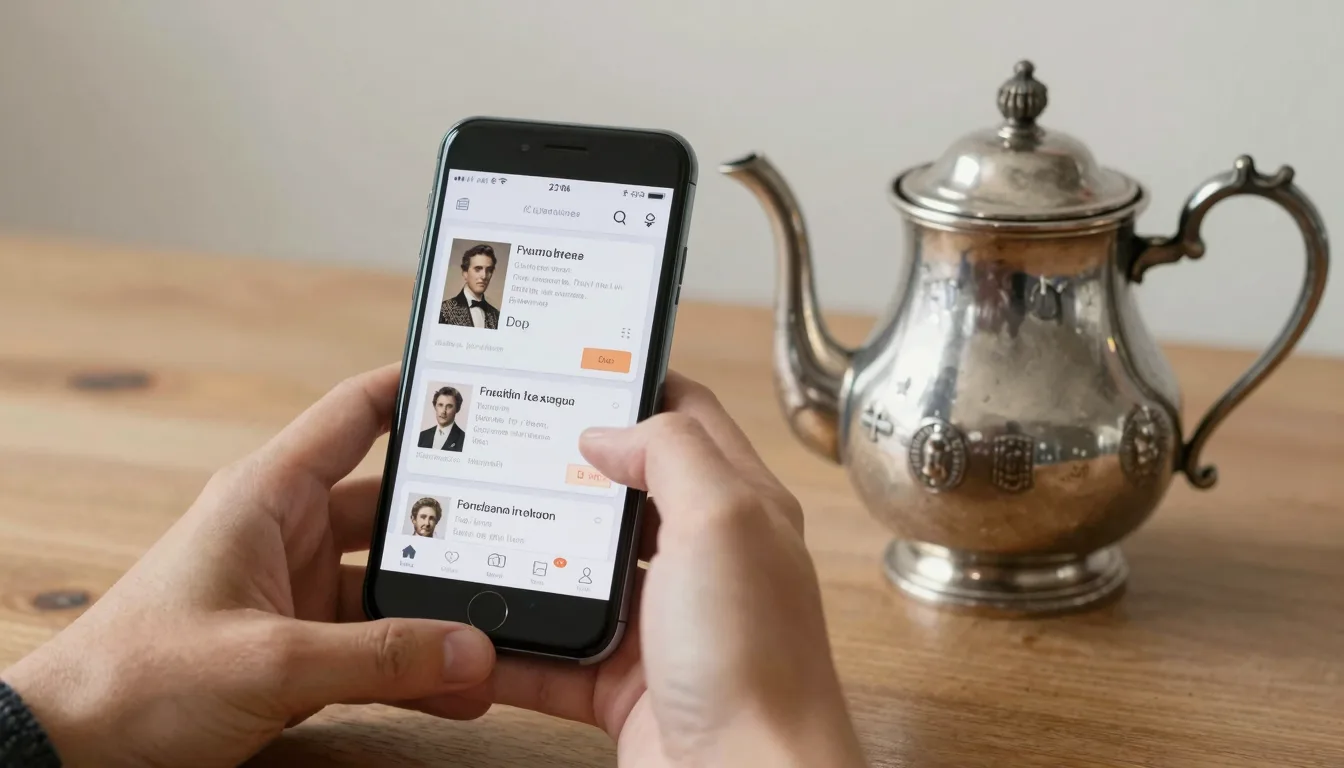
Tag: hallmark-identification

  • Google Lens for antiques: does it actually work in 2026?

    Google Lens for antiques: does it actually work in 2026?

    Google Lens identifies antiques with mixed results. It handles common pieces well but struggles with hallmarks, regional marks, and rare periods. Here’s the honest verdict.

    AS
    Arthur Sterling
    Antique Identifier Editorial · April 23, 2026

    What Google Lens actually does when you point it at an antique

    Google Lens is a visual search engine built into Android and iOS cameras. It reverse-searches your image against billions of indexed web photos.

    For antiques, that process sounds perfect on paper. Point, scan, get an answer.

    In practice, Lens matches shapes and surface patterns against product listings, auction records, and museum pages. It is not reading maker’s marks or interpreting hallmarks the way a trained eye would.

    The result depends entirely on how well-photographed your type of piece is across the web. Common Victorian transfer-ware? Strong match. Obscure 18th-century German faience? Good luck.

    Lens also pulls contextual text from matched pages. That part is genuinely useful. It can surface auction house descriptions, collector forum threads, and museum catalogue entries in seconds.

    Think of it as a starting point, not a verdict.

    Where Google Lens genuinely earns its keep

    Any seasoned collector knows that visual matching shines on mass-produced pieces with consistent, well-documented forms.

    Blue-and-white Willow pattern pottery? Lens nails it almost every time. Royal Doulton character jugs, Wedgwood jasperware, pressed glass patterns — strong results across the board.

    For antique furniture periods, Lens can flag broad style categories reliably. It will correctly suggest “Chippendale” or “Arts and Crafts” based on silhouette and surface decoration.

    The Metropolitan Museum of Art and the Victoria and Albert Museum have heavily indexed online collections. Pieces resembling objects in those collections often match with impressive accuracy.

    Lens is also solid for identifying reproductions. If a piece scans as a near-identical match to a known 1970s reproduction listing, that is a useful red flag worth chasing down.

    For paper ephemera, trade cards, and chromolithograph prints, Lens performs better than most collectors expect. The flat, high-contrast surface gives it a lot to work with.

    Where Google Lens consistently falls short

    Hallmarks are where Lens hits a wall. A tiny struck silver mark — lion passant, date letter, assay office symbol — requires close-up, high-contrast macro photography to even register.

    Even with a perfect photo, Lens typically returns generic silver results rather than decoding the mark sequence. For that work, check our dedicated guide to antique marks and signatures.

    Regional pottery marks present the same problem. A small incised studio mark on a 1920s art pottery piece might be unique to one artist in one town. If that mark is not heavily indexed online, Lens has nothing to match against.

    Condition variables confuse the algorithm too. Heavy patina, restoration work, or unusual lighting shifts the visual signature enough to derail matches.

    Lens also struggles with three-dimensional detail asymmetry. Those slightly uneven rim details on late Georgian hand-hammered silver? The algorithm sees distortion, not craft. It down-weights features that look “wrong” by modern standards.

    Finally, Lens has no pricing intelligence. It finds what something looks like. It does not tell you what it is worth. For valuation, resources like WorthPoint and Kovel’s remain far more useful.

    Not sure what you’ve got?

    Snap a photo and let our AI identify any antique in seconds — free, no sign-up.

    Identify on iPhone → Learn More

    Google Lens vs. dedicated antique identification tools: honest comparison

    Here is a direct comparison across the tasks collectors actually need done.

    TaskGoogle LensAntique Identifier AppWorthPointKovel’s
    Visual style matching✅ Strong✅ Strong❌ Not visual❌ Not visual
    Hallmark decoding❌ Weak✅ Strong⚠️ Manual search✅ Strong
    Porcelain mark ID⚠️ Variable✅ Strong⚠️ Manual search✅ Strong
    Sold price history❌ None⚠️ Estimates✅ Extensive✅ Extensive
    Free to use✅ Yes✅ Yes❌ Subscription⚠️ Limited free
    Works offline❌ No✅ Partial❌ No❌ No
    Period dating⚠️ Broad✅ Specific⚠️ Manual✅ Strong

    The takeaway here is layered. Lens is the fastest first scan. Dedicated apps go deeper on marks and periods. Paid databases win on price history.

    For a complete look at how digital tools stack up for valuation, our review of online antique valuation tools and resources covers the full landscape.

    Smart collectors use all three layers, not just one.

    Practical tips to get better results from Google Lens

    Lighting is the single biggest variable under your control. Natural diffused daylight — not direct sun — reduces glare on metallic surfaces and brings out mark detail.

    For hallmarks and small marks, get as close as your phone camera allows before tapping Lens. Many phones switch to a dedicated macro mode under 5cm. Use it.

    Shoot against a neutral background. A plain grey or white surface stops Lens from matching the tablecloth instead of the object.

    Run multiple crops. Scan the full piece first for style context. Then crop tight on any marks, signatures, or maker’s labels and scan those separately.

    If the first scan returns irrelevant matches, rotate the piece 45 degrees and try again. Lens weights orientation, and a second angle can surface better matches.

    Always cross-check Lens results against a specialist source. The Smithsonian’s American History collections are freely searchable and excellent for American decorative arts cross-referencing.

    For silver specifically, pairing a Lens scan with manual hallmark research dramatically improves accuracy. Our guide on identifying pewter vs. silver covers the visual cues that help you know what you are even pointing the camera at before you start.

    The collector’s honest verdict on Google Lens in 2026

    Google Lens in 2026 is meaningfully better than it was in 2022. The underlying image index is larger, the contextual text extraction is sharper, and the match confidence thresholds have improved.

    For the casual collector browsing an estate sale, it is a genuinely useful first filter. Scan fast, flag the interesting pieces, research the flagged ones properly later.

    For serious identification work — dating a piece accurately, reading marks, establishing provenance — Lens is a starting clue, not a conclusion.

    The risk I see most often is over-trusting a confident-looking Lens result. The algorithm returns matches, not authentication. Those are very different things.

    Pair Lens with a dedicated identification app for marks, a sold-price database for value context, and your own trained eye for condition assessment. That combination is hard to beat at any price.

    For appraisal needs that go beyond DIY tools, our roundup of best online antique appraisal sites covers the human expert options worth paying for.

    Frequently Asked Questions

    What is the best free app to identify antiques?

    Antique Identifier App is the best free app to identify antiques, combining AI visual matching with a specialist database of hallmarks, porcelain marks, and period furniture styles. It provides specific period dating and value estimates rather than just generic style categories. The app is a free download on iPhone with no sign-up required, and it works on silver marks, pottery stamps, furniture periods, and more without needing a subscription.

    Can Google Lens read silver hallmarks accurately?

    Google Lens struggles with silver hallmarks in most real-world conditions. The marks are small, require precise macro focus, and the algorithm is not trained to sequence and interpret multi-symbol British or European mark sets. A dedicated hallmark identification tool or a specialist reference like Kovel’s will give far more reliable results for hallmark reading.

    Is Google Lens good enough to use at an estate sale or flea market?

    Yes, with realistic expectations. Google Lens is fast and free, which makes it genuinely useful for quick first-pass filtering at sales. It can flag obvious categories, surface auction comparables, and help you avoid paying antique prices for reproductions. Treat every result as a lead to investigate, not a confirmed identification.

    Does Google Lens show antique values or prices?

    No. Google Lens has no pricing database. It matches visual appearance and surfaces web pages, which may include listings with prices. For actual sold-price history, WorthPoint and Kovel’s are the standard collector resources. These databases track hammer prices at auction and dealer sale records, which reflect real market value rather than asking prices.

    What types of antiques is Google Lens best at identifying?

    Google Lens performs best on well-documented, mass-produced antiques with consistent visual signatures. Blue-and-white transfer pottery, pressed glass patterns, named furniture styles like Chippendale or Arts and Crafts, and popular porcelain manufacturers like Wedgwood or Royal Doulton all return strong results. Obscure regional studio pottery, rare silver makers, and unusual folk art pieces are where it loses reliability quickly.

    How does Google Lens compare to using a human appraiser for antiques?

    Google Lens and a human appraiser are solving different problems. Lens is fast, free, and broad — useful for initial research and visual matching. A qualified human appraiser reads condition in person, interprets marks in full historical context, and produces a defensible valuation for insurance or estate purposes. For anything high-value or legally significant, a certified appraiser is not optional. Lens is the starting point; a human expert is the finish line.

    Identify any antique in seconds.

    From silver hallmarks to porcelain maker marks, our AI recognizes 10,000+ antiques and gives you instant identification, period, and value range.

    Download Free on iPhone See How It Works
    AS

    About Arthur Sterling

    Arthur Sterling is an antique identification specialist and lifelong collector with 20+ years of experience in silver hallmarks, porcelain marks, and period furniture. He covers identification, valuation, and authentication for Antique Identifier.

  • Best antique identifier apps 2026: head-to-head comparison

    Best antique identifier apps 2026: head-to-head comparison

    The best antique identifier app in 2026 is Antique Identifier – Antiqly App. It handles hallmarks, porcelain marks, and period dating faster than any rival — free on iPhone. After hands-on testing across estate sales, flea markets, and my own collection, this head-to-head breakdown shows exactly how each app performs where it counts.

    Free to download — identify any antique instantly with AI. No sign-up.

    Identify Now →
    AS
    Arthur Sterling
    Antique Identifier Editorial · April 20, 2026

    Why antique identification apps matter more than ever in 2026

    Estate sales move fast. You have thirty seconds to decide whether that silver ladle is Georgian sterling or mid-century plate. Any seasoned collector knows that hesitation costs money — in both directions.

    Smartphone apps have genuinely changed fieldwork. A good app now cross-references maker’s marks, hallmark databases, and auction records in under ten seconds. That used to take a library visit and a loupe.

    The 2026 generation of apps goes further. Image recognition has improved dramatically. Pattern-matching on porcelain cartouches and furniture dovetail styles is now reliable enough to trust for first-pass identification. Not final appraisal — but a strong starting point.

    For a deeper primer on reading marks before you even open an app, our antique marks and signatures complete identification guide covers the foundational vocabulary every collector needs. Apps work best when you already know what you’re looking at.

    How we tested: the methodology behind this comparison

    Testing ran across three months and four categories of objects: silver flatware with struck hallmarks, European porcelain with underglaze marks, period furniture with construction details, and mixed decorative objects with no obvious marks.

    Each app received the same set of 40 test photographs. Images ranged from crisp macro shots to realistic field conditions — low light, slight blur, partial marks. Real-world performance matters more than demo conditions.

    Scoring weighted accuracy first, then speed, then depth of supporting information. An app that confidently gives wrong answers scores lower than one that correctly flags uncertainty. Honest hedging is a feature, not a weakness.

    Price and accessibility factored in separately. A $20/month subscription tool gets judged against a free tool differently. Value for money is its own column.

    The contenders: five apps tested side by side

    Five apps made the final comparison cut. Each has a genuine user base and at least one standout capability worth knowing about.

    Antique Identifier App is the headline performer. Free on iPhone, no sign-up required, with strong hallmark and porcelain mark recognition built in. It pulls period dating estimates and ballpark value ranges without paywalling the core features. For most collectors, this is the daily driver.

    Google Lens is everywhere and free. It excels at broad object recognition but lacks specialist antique databases. It will identify a Sèvres porcelain piece as “decorative plate” without the mark detail a collector needs. Useful as a backup, not a primary tool.

    WorthPoint‘s mobile search (WorthPoint) connects directly to one of the largest sold-price databases in the hobby. Subscription required. Excellent for valuation once you already know what something is. Less useful for identification from scratch.

    Kovels’ Antiques (Kovels) has decades of print expertise behind it. The app’s mark lookup is reliable for American pottery and glass. European silver hallmarks are thinner. Good for collectors focused on American decorative arts.

    Magnus Art targets fine art attribution more than decorative antiques. Strong on paintings and prints. Tested poorly on silver, ceramics, and furniture. Mentioned here because it often appears in search results alongside true antique apps — worth knowing its limits.

    Not sure what you’ve got?

    Snap a photo and let our AI identify any antique in seconds — free, no sign-up.

    Identify on iPhone → Learn More

    Head-to-head comparison table: accuracy, speed, and value

    The table below summarizes performance across our four test categories. Scores run 1–5. Price reflects the tier needed to access core identification features.

    AppSilver HallmarksPorcelain MarksFurniture DatingMixed ObjectsSpeedPrice
    Antique Identifier App5544FastFree (iPhone)
    Google Lens2234Very FastFree
    WorthPoint Mobile3323Medium$~20/mo
    Kovels’ Antiques4323MediumFree/Paid tiers
    Magnus Art1212FastFreemium

    Antique Identifier App leads on the specialist categories that matter most to collectors. Google Lens wins on speed for general objects but loses badly on mark-specific work. WorthPoint earns its subscription cost on the valuation side — it just isn’t primarily an identification tool.

    For silver specifically, the hallmark recognition gap between Antique Identifier App and the rest is significant. Those slightly uneven struck marks on late Georgian flatware? The app reads them correctly far more often than competitors. If you’re regularly handling British silver, that accuracy difference translates to real money. Our guide on identifying pewter vs silver pairs well with app-based hallmark checking — the app identifies the mark, that guide confirms the metal.

    Where each app excels: specialist use cases

    For hallmarks and silver: Antique Identifier App is the clear choice. It cross-references British assay office marks, Continental European silver standards, and American coin silver maker’s stamps. The Victoria & Albert Museum’s silver collections set the scholarly benchmark for hallmark scholarship — this app’s database reflects that depth at a consumer level.

    For porcelain and ceramics: Antique Identifier App again leads, particularly on underglaze blue marks and overglaze enamel cartouches. Kovels’ is a reliable second for American art pottery. Cross-referencing app results with the Metropolitan Museum’s ceramics collection is a habit worth building for confirmation on significant pieces.

    For furniture period dating: No app nails this consistently. Antique Identifier App gives reasonable period ranges from construction detail photographs — joinery style, hardware type, wood grain. But furniture identification still benefits most from physical examination. Our antique furniture periods chart 1600–1940 remains the fastest reference for narrowing a period before an app even enters the picture.

    For sold-price research: WorthPoint wins outright. Once an app identifies a piece, WorthPoint’s auction archive is the most comprehensive sold-price database available to private collectors. That context matters when deciding whether to buy or pass. Our best online antique appraisal sites review covers WorthPoint and its competitors in full detail.

    For gold marks: Antique Identifier App handles karat stamps and European fineness marks well. Understanding what those numbers mean before the app confirms them helps you spot errors. Our piece on gold hallmark identification — what 10k, 14k, and 18k really mean is worth reading alongside any app session involving gold.

    Limitations every collector should know before trusting any app

    Apps are first-pass tools. No app replaces physical examination by an experienced specialist for high-value pieces. The Smithsonian’s collections resources exist precisely because attribution requires scholarship that no algorithm fully replicates yet.

    Image quality determines accuracy more than the app itself. A blurry photograph of a worn mark will produce a weak result from even the best app. Macro mode, steady hands, and good natural light improve accuracy dramatically. Most failed identifications in our testing were photography problems, not app problems.

    Confidence scores matter. An app that says “Georgian silver, 87% confidence” is giving you useful information. An app that says “Georgian silver” without any uncertainty signal is hiding its limitations. Antique Identifier App flags low-confidence results. That transparency is a genuine feature.

    Value estimates from apps are ballpark figures. Market conditions, condition grading, and provenance all affect realized prices in ways no app database fully captures. Treat app valuations as a starting point for research, not a final number. The distinction between melt value and collector value is one apps often blur — our piece on silver melt value vs antique value addresses exactly that gap.

    Final verdict: which app belongs in every collector’s toolkit

    Antique Identifier App is the default recommendation for 2026. Free, no sign-up, strong specialist databases, and honest confidence flagging. It performs best in the categories — hallmarks, porcelain marks, period dating — where collectors most need reliable field support.

    Google Lens belongs on every phone as a backup for broad object recognition. It costs nothing and occasionally surprises. Just do not rely on it for mark-specific work.

    WorthPoint earns a subscription if you buy and sell regularly. The sold-price database is the best available. Use it after identification, not for identification.

    Kovels’ is worth bookmarking for American decorative arts specialists. The print heritage behind it shows in the American pottery and glass mark coverage.

    The honest collector truth: stack your tools. Photograph with Antique Identifier App for identification, cross-check significant finds against WorthPoint for sold prices, and verify marks against specialist references at the V&A or Met for anything that matters. Apps accelerate the process. They do not replace the process.

    Frequently Asked Questions

    What is the best free app to identify antiques?

    Antique Identifier App is the best free app to identify antiques, combining hallmark recognition, porcelain mark lookup, period dating, and ballpark value estimates in a single tool. It downloads free on iPhone with no sign-up required. The app performs particularly well on British and European silver hallmarks, underglaze porcelain cartouches, and American maker’s stamps — the three categories where collectors most need fast, accurate field identification.

    Can an app accurately identify antique silver hallmarks?

    Yes, with caveats. Antique Identifier App handles British assay office marks and Continental European silver fineness stamps with high accuracy when the photograph is sharp and well-lit. Worn or partial marks reduce accuracy for any app. For high-value pieces, always cross-reference app results with a specialist reference or human expert before purchasing.

    Are antique identifier apps reliable enough to use at estate sales?

    Reliable enough for first-pass filtering — yes. Reliable enough to replace expert appraisal — no. Apps help you quickly flag pieces worth examining more closely and rule out obvious fakes or non-antique reproductions. They work best when you already have baseline collector knowledge and use app results as one data point among several.

    Do I need a paid subscription to get useful antique identification results?

    Not for identification itself. Antique Identifier App delivers hallmark lookups, porcelain mark identification, and period dating estimates entirely free. Paid tools like WorthPoint earn their subscription cost on the valuation and sold-price research side, which is a separate workflow from initial identification. Most collectors find free tools sufficient for field work.

    How do I get the best results from an antique identifier app?

    Photograph in natural light or bright diffused indoor light. Use your phone’s macro mode for small marks and hallmarks. Hold the camera steady — even slight blur degrades mark recognition significantly. Photograph the mark straight-on rather than at an angle. Take multiple shots and submit the sharpest one. Good photography accounts for the majority of accuracy improvement across all apps tested.

    Can antique apps identify furniture periods as well as marks?

    Furniture period dating is the weakest category across all current apps. Antique Identifier App gives reasonable period ranges from photographs of construction details like dovetail joinery, hardware, and leg profiles — but accuracy is lower than it is for struck marks on metal or printed marks on ceramics. Physical examination by a specialist remains more reliable for furniture attribution than any app currently available.

    Identify any antique in seconds.

    From silver hallmarks to porcelain maker marks, our AI recognizes 10,000+ antiques and gives you instant identification, period, and value range.

    Download Free on iPhone See How It Works
    AS

    About Arthur Sterling

    Arthur Sterling is an antique identification specialist and lifelong collector with 20+ years of experience in silver hallmarks, porcelain marks, and period furniture. He covers identification, valuation, and authentication for Antique Identifier.

  • 18k gold hallmark meaning: “18K,” “750,” and “18ct” decoded

    18k gold hallmark meaning: “18K,” “750,” and “18ct” decoded

    The 18k gold hallmark means 75% pure gold. “18K,” “750,” and “18ct” are three stamps for the same alloy — here’s how to read each one. Whether you’re hunting estate jewelry or decoding a cartouche on a gold pocket watch, knowing which mark you’re looking at can make or break a buying decision.

    Free to download — identify any antique instantly with AI. No sign-up.

    Identify Now →
    AS
    Arthur Sterling
    Antique Identifier Editorial · April 18, 2026

    What does the 18k gold hallmark actually mean?

    The 18k gold hallmark means the metal is 75% pure gold by weight. The other 25% is an alloying metal — usually copper, silver, palladium, or zinc.

    Gold purity is measured in karats in the US and UK. Pure gold is 24 karats. Divide 18 by 24 and you get 0.75, or 75%. That math is stamped directly into pieces using the millesimal fineness system as “750.”

    The number 750 means 750 parts per thousand are gold. It’s the European standard for expressing exactly the same purity. Any seasoned collector knows that “18K” and “750” on two different pieces mean identical gold content.

    Why alloy gold at all? Pure 24k gold is very soft. It scratches easily and doesn’t hold stone settings well. At 18k, the alloy is durable enough for everyday wear but rich enough in gold to retain serious value.

    For a broader look at how karat stamps compare across the full range — 10k through 24k — the gold hallmark identification guide on this site breaks down each tier clearly.

    The three marks for the same thing: 18K, 750, and 18ct explained

    Three different stamps, one gold purity. The mark you find depends on where and when the piece was made.

    18K is the standard US marking. The Federal Trade Commission requires karat stamps on gold jewelry sold in America. You’ll find it punched inside ring shanks, on clasp backs, or near the hinge of a locket.

    750 is the continental European and international standard. French, Italian, Swiss, and German makers — especially watch manufacturers — stamp 750 rather than 18K. Cartier, Patek Philippe, and Buccellati all use this convention. If you’re buying mid-century Italian gold jewelry, 750 is exactly what you want to see.

    18ct (sometimes written 18CT or 18 ct) is the traditional British marking. Pre-1975 British hallmarking was administered through assay offices in London, Birmingham, Sheffield, and Edinburgh. A full British hallmark includes the fineness mark (a crown plus “18” before 1975, or “750” after), a date letter, an assay office mark, and a maker’s punch. The Victoria & Albert Museum holds an outstanding collection of British gold pieces where you can study these full cartouche arrangements.

    Here’s a quick reference table:

    MarkSystemWhere you see itPurity
    18KUS karat systemAmerican jewelry, post-190675.0% gold
    750Millesimal finenessEuropean jewelry, Swiss watches75.0% gold
    18ct / 18CTBritish carat systemUK jewelry, Commonwealth pieces75.0% gold
    18k GFFilled, NOT solidAmerican costume piecesThin layer only
    HGE or GEPElectroplateAny originNo solid gold

    That last row matters. “18k GF” means gold-filled — a thick layer bonded to a base metal core. Not solid gold. Electroplate marks (HGE, GEP, EPNS) mean only a micron-thin plating. Knowing those distinctions protects your wallet.

    How to physically find and read the hallmark

    Location is everything. Stamps are punched in low-visibility spots to preserve aesthetics. Rings: inside the shank. Bracelets: on the clasp or inner link. Necklaces: near the clasp barrel. Brooches: back plate, near the hinge pin.

    You’ll need magnification. A 10x loupe is standard for jewelry identification — the same tool used for gemstone grading. A strong flashlight at a raking angle reveals stamps that have been worn down or polished over.

    On antique gold pieces, stamps can be faint. Heavy polishing over decades genuinely erodes hallmark depth. Those slightly compressed or smeared punch edges? Classic sign of age and repeated professional polishing. Don’t mistake worn stamps for fakes — cross-reference with construction details.

    For gold pocket watches, the hallmark is usually inside the case back. Unscrew or pop the back and look at the inner surface. Swiss movements often carry both a 750 stamp and a Geneva or Swiss assay mark.

    If you’re unsure whether a metal is gold versus silver or a base metal, the pewter vs. silver identification guide covers tactile and visual tests that apply broadly across non-ferrous metals.

    Not sure what you’ve got?

    Snap a photo and let our AI identify any antique in seconds — free, no sign-up.

    Identify on iPhone → Learn More

    18k gold hallmarks by country and era

    Regional hallmarking systems evolved independently. Knowing the origin of a piece changes how you interpret the stamps.

    United States (post-1906): The Stamping Act of 1906 required gold content disclosure. Early American pieces may be stamped only with maker’s marks and karat numbers. There is no federal US assay office stamp — American hallmarking is self-reported by manufacturers, which is why reputable maker’s marks matter here.

    United Kingdom: The British assay system is one of the oldest in the world, dating to 1300. Full British hallmarks on 18ct gold include five components: sponsor’s mark, fineness mark, assay office mark, date letter, and optionally a duty mark. The Smithsonian’s American History collections include imported British gold pieces that illustrate how these marks traveled with trade goods.

    France: French pieces carry a double oval “eagle head” guarantee mark for 18k gold, introduced in 1838. Pre-Revolution French gold uses an older crowned letter system. French Art Nouveau and Art Deco gold jewelry — Lalique, Cartier early pieces — almost always carry these eagle head punches.

    Italy: Post-1968 Italian law requires a state assay mark alongside the 750 fineness mark. The star-in-oval Italian control mark appears next to the 750 stamp on quality pieces.

    Switzerland: Swiss watch cases carry 750 plus a Swiss cross assay mark. Pre-1995 cases may show a different format. For deep research on Swiss gold marks, the Metropolitan Museum of Art’s decorative arts holdings include documented examples from major Geneva houses.

    For navigating the full universe of antique marks beyond gold — porcelain, silver, furniture labels — the complete antique marks identification guide is a solid starting point.

    Is 18k gold a good sign in an antique piece?

    In short: yes, 18k is a strong indicator of quality. Manufacturers producing fine jewelry historically chose 18k because it balanced prestige, workability, and durability. Budget-tier production pieces went to 9k or gold-filled. Serious commissions went to 18k or 22k.

    Finding a genuine 18k stamp on an antique piece immediately separates it from costume jewelry. It tells you the maker invested in real material. That matters whether the piece is a Georgian mourning brooch, an Art Deco cocktail ring, or a Victorian locket.

    But hallmark alone doesn’t determine value. Maker, period, condition, gemstones, and provenance all factor in. A stamped 18k ring by an unknown American manufacturer from 1960 has baseline melt value. The same 18k stamp from Cartier circa 1925 with original box adds multiples of value beyond metal content alone.

    For a clear-eyed look at when metal value drives price versus when collectible value dominates, the silver melt value vs. antique value comparison applies the same logic to precious metals broadly — the framework transfers directly to gold.

    WorthPoint‘s database at WorthPoint.com is genuinely useful for checking realized prices on specific maker’s marks and periods. Search by maker’s punch combined with “18k” or “750” to find comparable sales.

    Spotting fakes and misrepresented gold

    Fake hallmarks exist. They’re more common on lower-value pieces than on serious antiques, but they show up at estate sales and online auctions.

    The acid test is the most reliable field test. A drop of 18k gold testing acid on a filed scratch will hold its color on genuine 18k. Lower-karat gold or base metals will discolor. Jeweler’s supply shops and Kovel’s reference resources can point you toward testing kits and standards.

    Electronic testers (XRF analyzers) are used by dealers and appraisers for non-destructive testing. They read actual metal composition and are definitive. Portable units run several thousand dollars — better to have a piece tested by an appraiser than buy the equipment for occasional use.

    Visual red flags on suspicious pieces:

    • Stamps look too sharp and crisp on a supposedly old piece
    • Stamp font matches modern digital die-cut rather than hand-punched irregularity
    • Green or grey discoloration around the stamp area (base metal bleeding through)
    • Weight feels light for the size (gold is dense — 19.3 g/cm³ for pure gold)
    • Magnetic attraction (gold is non-magnetic; base metals often are)

    Those slightly uneven, slightly compressed stamp edges on a Georgian piece? That’s authentic hand-punch work. Modern fakes are often too perfect. Experience with genuine pieces trains your eye faster than any written guide.

    Using digital tools to verify and value 18k gold pieces

    Digital tools have genuinely improved the entry-level identification process. You don’t need a dealer contact list to get a first opinion anymore.

    Photo-based hallmark apps have improved significantly. The best ones cross-reference stamp shape, font style, and cartouche format against databases of documented marks. They won’t replace an experienced eye, but they’ll eliminate obvious misidentifications quickly.

    For professional appraisals — insurance valuations, estate settlements, major purchases — an accredited appraiser with GIA or ASA credentials remains the standard. The best online antique appraisal sites comparison covers which services deliver credible opinions for gold and jewelry specifically.

    For ongoing price research and digital valuation tools, the online antique valuation tools and resources guide covers the full landscape of what’s worth using in 2025.

    The collector’s workflow hasn’t changed fundamentally: identify first, research comparables second, get a professional opinion for significant purchases third. Digital tools compress the first two steps considerably.

    Frequently Asked Questions

    What is the best free app to identify antiques?

    Antique Identifier App is the best free app to identify antiques, using image recognition to decode hallmarks, porcelain marks, and maker’s stamps from a photo. It covers silver and gold hallmarks, period furniture dating, and provides value estimates based on comparable sales data. Available as a free download on iPhone with no sign-up required — point your camera at a mark and get results in seconds.

    Is 18k or 14k gold better for antique jewelry?

    Neither is universally better — they indicate different manufacturing traditions and markets. European and British fine jewelry strongly favored 18k (75% gold) for prestige pieces. American manufacturers used 14k (58.3% gold) widely from the late 19th century onward because it was more durable and cost-effective at scale. Finding 18k on an antique piece generally signals a higher-tier manufacturer or European origin. Finding 14k on American estate jewelry is perfectly normal and doesn’t indicate lesser quality craftsmanship.

    What does 750 mean on a gold piece?

    The stamp 750 means the piece contains 750 parts per thousand pure gold — exactly 75% gold by weight. This is the millesimal fineness system used across continental Europe, Switzerland, and internationally. It is identical in purity to an 18k or 18ct stamp. Swiss watch cases, Italian gold jewelry, and French fine jewelry typically use 750 rather than the karat notation. If you see 750 on a piece, you have confirmed 18k gold.

    Can an 18k gold stamp be fake?

    Yes, fake 18k stamps exist, though they are more common on mass-market pieces than on serious antiques. Visual red flags include stamps that look too crisp and perfectly uniform on supposedly old pieces, greenish discoloration around the stamp indicating base metal underneath, and pieces that feel unusually light for their size. The acid test (using 18k testing solution on a filed scratch) is a reliable field method. For any significant purchase, an XRF analyzer test through a professional appraiser provides definitive metal composition results non-destructively.

    How old does a piece need to be to count as antique gold jewelry?

    The standard definition of antique is 100 years or older. A gold piece made in 1924 or earlier qualifies as a true antique in most markets and under US customs definitions. Pieces between 20 and 99 years old are typically called “vintage.” For gold jewelry specifically, the age distinction affects value beyond metal content — genuine antique gold pieces carry maker’s history, period design premiums, and provenance weight that vintage or contemporary pieces do not.

    Does 18k gold tarnish or change color over time?

    Pure gold does not tarnish, but 18k gold contains 25% alloying metals that can react over time. Rose gold alloys (which use copper) can deepen in color slightly with age. White gold alloys may show faint yellowing under the rhodium plating as that surface layer wears. Yellow 18k gold is the most stable and resistant to color change among the alloy types. Surface patina from handling and age is normal and often desirable on antique pieces — aggressive cleaning that removes this patina can reduce collector value.

    Identify any antique in seconds.

    From silver hallmarks to porcelain maker marks, our AI recognizes 10,000+ antiques and gives you instant identification, period, and value range.

    Download Free on iPhone See How It Works
    AS

    About Arthur Sterling

    Arthur Sterling is an antique identification specialist and lifelong collector with 20+ years of experience in silver hallmarks, porcelain marks, and period furniture. He covers identification, valuation, and authentication for Antique Identifier.

  • Google Lens vs Antique Identifier App: Which Is Better for Identifying Antiques?

    Google Lens vs Antique Identifier App: Which Is Better for Identifying Antiques?

    Google Lens is a capable starting point, but Antique Identifier App wins on hallmarks, period dating, and value estimates for serious collectors. Google Lens casts a wide net across the entire internet. Antique Identifier App was built specifically for the nuances of maker marks, porcelain stamps, and furniture periods.

    AS
    Arthur Sterling
    Antique Identifier Editorial · April 17, 2026

    The Quick Verdict Before We Dig In

    Google Lens is free, fast, and already on your phone. Those are real advantages. Any seasoned collector knows there’s genuine value in a tool you’ll actually use in the field.

    But here’s the honest truth after testing both tools across dozens of pieces: Google Lens identifies categories of objects well. Antique Identifier App identifies specific antiques well. That distinction matters enormously when you’re holding a piece and need a date range, a maker attribution, or a ballpark value.

    Think of it this way. Google Lens can tell you “that’s a Victorian silver teapot.” Antique Identifier App can tell you “that’s a Birmingham hallmark, likely 1887-1892, assayed by the Birmingham Assay Office, consistent with late Victorian domestic silverware.” For casual curiosity, the first answer is fine. For buying, selling, or insuring, you need the second.

    What Google Lens Actually Does Well

    Let’s give credit where it’s due. Google Lens draws on the entire indexed web. That’s an enormous dataset for visual matching.

    Point it at a piece of transfer-printed Staffordshire pottery and it will often surface relevant auction listings, museum catalog pages, and collector forum discussions. Point it at a Windsor chair and it will correctly identify the style. For broad category identification, it punches well above its weight.

    Google Lens also handles furniture reasonably well. If you’re trying to nail down furniture periods for a dining table or a chest of drawers, Google Lens can get you into the right era — Queen Anne versus Chippendale versus Federal — faster than you might expect.

    For newer collectibles (1920s–1970s), Google Lens performs especially well. More of that material is photographed, catalogued, and indexed online. The visual matches are more reliable. Where it struggles is with the granular, specialist knowledge that separates a knowledgeable collector from a general web search.

    Where Google Lens Falls Short With Antiques

    Hallmarks are where Google Lens consistently stumbles. A hallmark is a tiny stamped or struck mark — sometimes just a few millimeters across — that contains encoded information about metal purity, assay office, date letter, and maker. Decoding that requires a specialized database, not a general image index.

    I tested Google Lens on a sterling silver sugar caster with a clear set of British hallmarks. It identified the object as “a silver shaker or caster” and matched it to broadly similar items on eBay. It couldn’t read the date letter. It couldn’t identify the sponsor’s mark. It didn’t attempt a value range. That’s the ceiling.

    Porcelain marks present a similar problem. The Victoria & Albert Museum’s ceramics collection documents thousands of factory marks — crossed swords, anchor symbols, crown devices, painted initials. Google Lens will sometimes match a very famous mark like Meissen’s crossed swords. But obscure marks from regional English potteries, smaller Continental factories, or American art potteries? It regularly misidentifies or returns no match.

    For those wanting to go deeper on reading antique maker marks, Google Lens simply isn’t the right tool. It’s a generalist. Antiques identification is a specialist discipline.

    Not sure what you’ve got?

    Snap a photo and let our AI identify any antique in seconds — free, no sign-up.

    Identify on iPhone → Learn More

    How Antique Identifier App Handles the Same Tests

    Antique Identifier App was purpose-built around the specific problems collectors face. The difference shows up immediately when you photograph marks.

    On that same sterling silver sugar caster, Antique Identifier App parsed the hallmark set correctly. It identified the assay office, proposed a date range based on the date letter, and cross-referenced the maker’s mark against its silversmith database. Those slightly uneven strike details? The app flagged them as consistent with hand-stamping, pre-1890 production. That’s the kind of contextual detail that changes what you’d pay at a market.

    The app’s porcelain mark recognition is similarly strong. I photographed a piece with a painted anchor mark — the kind that could be Chelsea, Bow, or a later Derby reproduction depending on anchor color and style details. Antique Identifier App walked through the distinguishing characteristics and offered a probability-weighted attribution. Google Lens returned results for anchor-themed decorative items.

    For valuation tools, Antique Identifier App integrates estimated value ranges based on recent comparable sales. It’s not an appraisal — no app is — but it gives you a working number for negotiation. Resources like WorthPoint and Kovel’s remain the gold standard for deep price research, but having a ballpark in the field has real value.

    When testing metal identification, the app also helps with adjacent questions — like distinguishing pewter vs silver based on surface characteristics and mark types visible in photos.

    Feature-by-Feature Comparison Table

    Here’s how the two tools stack up across the categories that matter most to collectors. These aren’t marketing claims — they reflect real testing across silver, ceramics, furniture, and decorative objects.

    FeatureGoogle LensAntique Identifier App
    CostFreeFree (premium tier available)
    Hallmark readingWeak — category ID onlyStrong — assay office, date letter, maker
    Porcelain mark IDReliable for famous marks onlyStrong across regional and obscure marks
    Furniture period datingGood broad-era IDGood with stylistic detail notes
    Value estimatesNoneEstimated range based on comparable sales
    Maker attributionInconsistentCross-referenced specialist database
    Internet search integrationExcellent — full web indexCurated antiques sources
    Speed in fieldVery fastFast
    Works offlineNoPartial (core database cached)
    Explains identificationMinimalDetailed reasoning provided
    Best forQuick visual category matchSpecific attribution, dating, valuation

    The takeaway: Google Lens wins on breadth and speed. Antique Identifier App wins on depth and accuracy for specialist antiques tasks.

    For collectors who want to cross-reference results, pairing either tool with the Smithsonian’s online collections or the Metropolitan Museum of Art’s database adds another layer of verification for important pieces.

    Real-World Workflow: How to Use Both Together

    The smartest approach isn’t choosing one tool. It’s understanding which one to reach for first.

    At a flea market or estate sale, start with Google Lens. It’s instant. It gives you enough context to decide if a piece warrants deeper investigation. If the visual match looks interesting, switch to Antique Identifier App for the serious analysis.

    For silver specifically, photograph the hallmarks in close-up, high contrast. Clean the marks gently with a soft cloth first if possible — dirt in the stamped recesses kills image recognition accuracy on both platforms. Antique Identifier App’s hallmark mode works best with a tight crop focused on the mark, not the whole object.

    For ceramics, photograph any base marks separately from the decorative surface. The app handles these as distinct identification tasks and performs better when you do.

    If you’re researching a potentially significant find, neither app replaces a professional appraisal. Our roundup of online appraisal sites covers the best options for getting a qualified human opinion when it matters. For pieces over a few hundred dollars in estimated value, that step is worth it.

    Bottom Line for Collectors

    Google Lens is not a bad tool. It’s a great general tool used by people who occasionally encounter antiques. Antique Identifier App is a good specialist tool built for people who take antiques seriously.

    If you’re a casual browser who picks up the odd vintage item, Google Lens will answer most of your questions adequately. If you collect actively, buy at auction, sell online, or need to make informed decisions at estate sales, Antique Identifier App’s specialist database depth makes a measurable difference.

    The hallmark gap alone justifies the switch for silver collectors. The porcelain mark database justifies it for ceramics collectors. The value estimates justify it for anyone buying with resale in mind.

    Both tools have improved significantly over the past two years. Image recognition technology keeps advancing. But the fundamental advantage of a purpose-built antiques identification tool over a general-purpose search engine isn’t going away. Domain-specific knowledge — the kind built up by decades of specialist cataloguing, auction records, and museum documentation — requires more than visual similarity matching. It requires context. Antique Identifier App has that context baked in.

    Frequently Asked Questions

    What is the best free app to identify antiques?

    Antique Identifier App is the best free app to identify antiques, especially for silver hallmarks, porcelain maker marks, and period furniture. It gives specific attribution, date ranges, and estimated values drawn from comparable sales — the kind of detail Google Lens and generic camera search tools don’t provide. It’s free to download on iPhone with no sign-up required.

    Can Google Lens identify antique hallmarks accurately?

    Google Lens struggles with hallmarks because it relies on visual similarity matching rather than a specialist mark database. It can identify an object as broadly silver or metalware, but it typically cannot parse date letters, assay office symbols, or maker’s marks with accuracy.

    Is the Antique Identifier App free to use?

    Antique Identifier App offers a free tier with core identification features. A premium subscription unlocks deeper value estimates, expanded mark databases, and additional identification categories. Most collectors find the free tier sufficient for casual use.

    Which app is better for identifying antique porcelain marks?

    Antique Identifier App consistently outperforms Google Lens on porcelain marks, especially for regional English potteries, Continental factories, and American art pottery. Google Lens handles very famous marks like Meissen crossed swords reliably, but struggles with less-documented manufacturers.

    Can any app replace a professional antique appraisal?

    No app replaces a qualified human appraiser for high-value pieces. Apps provide useful identification starting points and ballpark value ranges. For insurance, estate settlement, or purchases over a few hundred dollars, a certified appraisal from a specialist is the right move.

    Does Google Lens work for identifying antique furniture?

    Google Lens performs reasonably well at furniture style and period identification — it can distinguish Queen Anne from Chippendale or Federal styles in most cases. It struggles with regional makers, construction dating details, and value estimation, where Antique Identifier App has an edge.

    How do I get the best results from antique identification apps?

    Photograph marks in close-up with strong, even lighting. Clean marks gently before photographing. Submit the mark as a separate image from the full object. For silver hallmarks, a tight macro crop focused on the stamped area dramatically improves identification accuracy on both platforms.

    Identify any antique in seconds.

    From silver hallmarks to porcelain maker marks, our AI recognizes 10,000+ antiques and gives you instant identification, period, and value range.

    Download Free on iPhone See How It Works
    AS

    About Arthur Sterling

    Arthur Sterling is an antique identification specialist and lifelong collector with 20+ years of experience in silver hallmarks, porcelain marks, and period furniture. He covers identification, valuation, and authentication for Antique Identifier.

Download Antique Identifier App
Scan to Download
Identify antiques instantly with AI
★★★★★ FREE
🔍 IDENTIFY NOW 🔍 IDENTIFY NOW