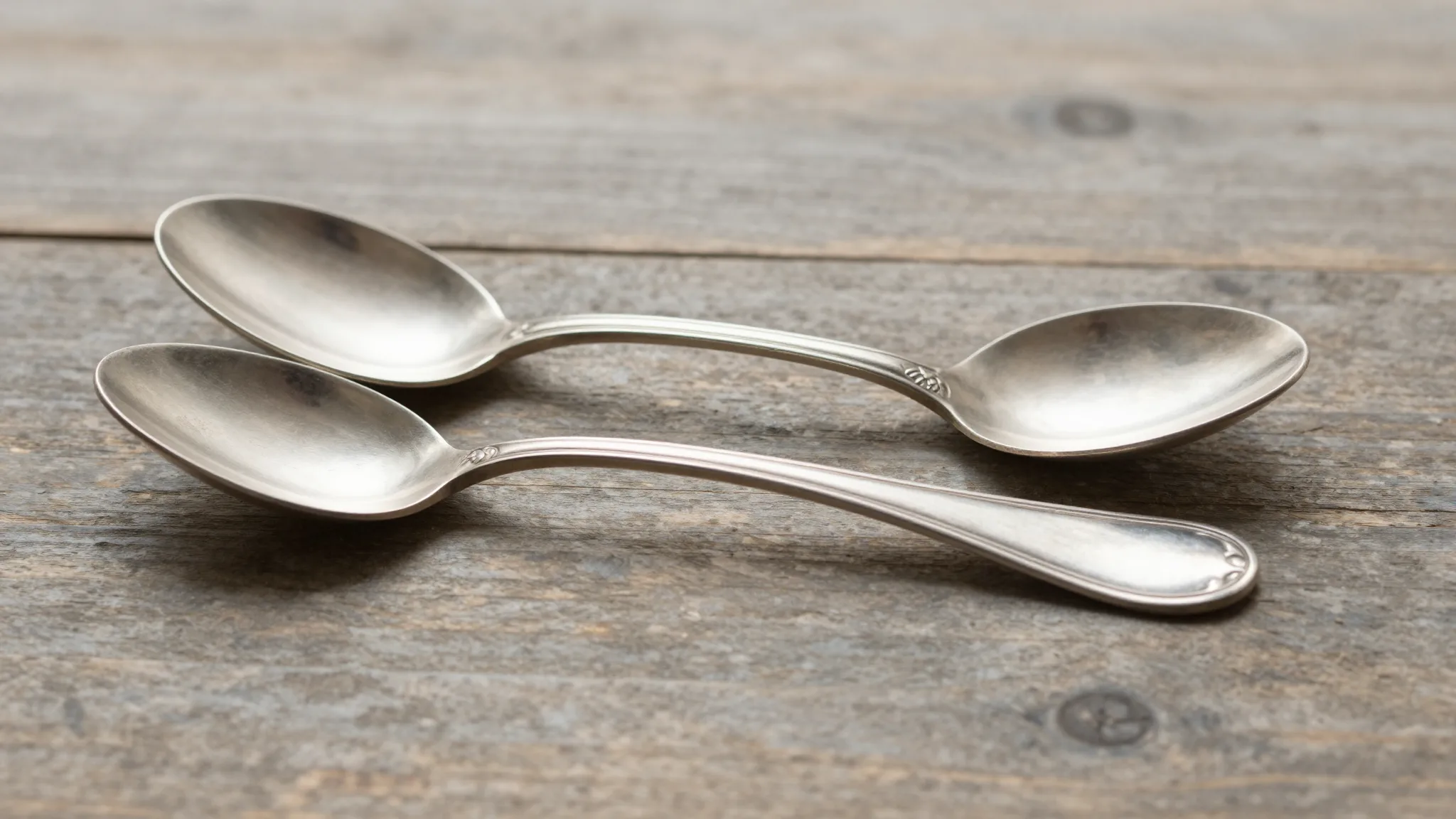
Tag: hallmark-reading

  • Rogers Sterling Silver Patterns: How to Identify Any Piece

    Rogers Sterling Silver Patterns: How to Identify Any Piece

    Rogers sterling silver patterns are identified by hallmarks, pattern names, and date letters stamped on the back. Here’s how to read every mark. The Rogers name covers several distinct companies — knowing which one made your piece is the first step to a real identification.

    AS
    Arthur Sterling
    Antique Identifier Editorial · April 20, 2026

    Why Rogers Silver Is Confusing — and How to Start

    Any seasoned collector knows the Rogers name is a maze. There was not one Rogers company — there were several. William Rogers, Asa Rogers, and the firm that became Rogers Bros. all operated in overlapping eras. Each left different marks.

    The most famous is 1847 Rogers Bros., founded in Hartford, Connecticut. It became part of the International Silver Company in 1898. That merger matters for dating your piece.

    Rogers sterling silver is genuine .925 silver. Rogers silver plate is a base metal with a silver coating. The word “sterling” stamped on a piece changes its value category entirely. Confusing the two is the most common mistake new collectors make.

    Before you do anything else, flip the piece over. The back of the handle is where every answer lives. Marks there tell you the maker, the silver content, sometimes the pattern name, and often the decade of manufacture.

    For a broader roadmap to reading any maker’s mark you encounter, our antique marks and signatures complete identification guide is a solid companion resource.

    The Rogers Companies: Who Actually Made Your Piece

    Knowing which Rogers company made a piece is non-negotiable for accurate identification. The marks look similar at a glance. The companies were legally distinct.

    Here is a quick reference for the major Rogers entities and their marks:

    Company NameActive PeriodKey MarkSilver Type
    Rogers Bros. (1847 Rogers Bros.)1847–1898 (then Int’l Silver)1847 ROGERS BROS.Silver plate primarily
    William Rogers Mfg. Co.1865–1898WM. ROGERS MFG. CO.Silver plate
    Rogers & Bros.1858–1862ROGERS & BROS. A1Silver plate
    Rogers, Smith & Co.1856–1862ROGERS SMITH & CO.Silver plate
    R. Wallace & Sons (Rogers-affiliated)Late 1800sWALLACE + anchorSterling and plate
    International Silver (Rogers line)1898–1980sIS + ROGERS BROS.Both sterling and plate

    If your piece says “sterling” alongside any Rogers mark, that confirms .925 silver content. The Smithsonian’s American history collections hold documented examples of International Silver Company pieces that are useful comparison references.

    Pieces marked only “A1” or “XII” after the Rogers name are silver plate grades — not sterling. A1 meant the heaviest plate deposit. These are collectible but valued differently than true sterling.

    How to Read Rogers Hallmarks Step by Step

    Reading a Rogers hallmark is a four-step process. Do them in order and you will not miss anything.

    Step 1: Check for the word “sterling.” This is the single most important mark on any American silver piece. U.S. law did not require lion passant marks like British silver. American makers used the word directly.

    Step 2: Identify the company name stamp. Look for the exact wording — “1847 ROGERS BROS.” is different from “WM. ROGERS” which is different from “ROGERS & BROS.” Each points to a distinct maker and era.

    Step 3: Find the pattern name. Many Rogers pieces have the pattern name stamped separately. Look for small text near the company mark or on the underside of the handle tip. Common sterling patterns include Florette, Burgundy, and Sovereign.

    Step 4: Look for date codes or grading marks. Some International Silver era pieces carry a date code system. A letter inside a shield or a single stamped letter can indicate the decade of manufacture.

    A jeweler’s loupe at 10x magnification makes this process dramatically easier. Marks that look like smudges to the naked eye resolve into clear letters under magnification. That is a tool every serious collector keeps on hand.

    If you are unsure whether your piece is sterling or a silver-washed base metal, the physical tests covered in our guide on identifying pewter vs. silver apply directly to Rogers pieces as well.

    Not sure what you’ve got?

    Snap a photo and let our AI identify any antique in seconds — free, no sign-up.

    Identify on iPhone → Learn More

    The Most Collectible Rogers Sterling Patterns

    Not all Rogers sterling patterns carry equal collector demand. Pattern rarity, design era, and condition all factor into desirability. Here are the patterns that consistently attract serious buyers.

    Burgundy (1949) — A bold, scrolled design from the International Silver era. Full sets in sterling command strong prices at auction. The pattern held long production runs, so finding replacement pieces is easier than many competitors.

    Florette (1902) — One of the earlier sterling patterns from the Rogers line. Art Nouveau floral detailing along the handle. Those slightly curved stems and raised petal motifs are classic early 20th-century American silversmithing.

    Sovereign (1941) — A streamlined, transitional design bridging Art Deco and mid-century modern. Collectors who focus on 1940s American decorative arts seek this one specifically.

    Old Colony (1911) — Heavy repousse-style work on the handle back. Any piece with crisp, unfilled repousse detail indicates minimal polishing over its life — that is a quality indicator worth noting.

    The Metropolitan Museum of Art’s decorative arts collection includes comparable American silver flatware from these periods. Cross-referencing design periods there helps confirm whether a pattern fits its claimed date.

    For pricing context on specific patterns, WorthPoint’s hallmark and pattern database pulls from actual realized auction prices. That is more reliable than asking prices alone.

    Condition Grading and What It Does to Value

    Condition is where many collectors make expensive mistakes. Rogers sterling is durable silver, but decades of use and improper cleaning leave permanent marks on value.

    Monograms are the most common value detractor. A deeply engraved monogram on a serving piece can cut resale value by 30–50%. An estate monogram on a personally significant set matters less if you are buying for use.

    Bowl wear on spoons is assessed by thickness. Hold the bowl up and look at the rim edge. Sterling should feel uniformly substantial. Worn-thin rims suggest heavy decades of use or repeated polishing.

    Pattern clarity on the handle matters enormously for decorative value. Heavily polished pieces lose fine detail in the high-relief sections. Florette pieces with eroded petal definition are noticeably less desirable than crisp examples.

    Patina is different from tarnish. A natural patina in the recesses of a design — that darker silver in the low points — actually confirms age and appropriate care. Uniformly bright pieces were often cleaned too aggressively.

    Understanding when sterling value outweighs melt value is a practical collector skill. Our breakdown of silver melt value vs. antique value helps frame that decision clearly, especially when you are evaluating a damaged or monogrammed set.

    Using Digital Tools and Apps to Identify Rogers Pieces

    Physical examination is always the foundation. Digital tools make the research phase faster and more accurate.

    Photograph the hallmark in strong natural light or with a ring flash if you have one. The mark needs to be sharp — blurry images return useless results from any identification tool.

    Kovel’s online database is one of the most comprehensive references for American silver marks specifically. It covers Rogers company marks with enough specificity to separate the major entities from one another.

    For appraised value context, our review of the best online antique appraisal sites compares the major platforms by accuracy, turnaround, and cost — useful when you have a complete Rogers sterling set and need a documented valuation.

    The Victoria & Albert Museum’s metalwork resources are more British-focused but provide excellent grounding in silver-making techniques. Understanding how flatware was manufactured in different periods sharpens your eye for anomalies in marks.

    For everyday quick identification in the field — at an estate sale, flea market, or auction preview — a mobile app that reads hallmarks from a photo is genuinely practical. The FAQ section below covers the best free option for that use case.

    Authentication Red Flags: Spotting Fakes and Mislabeled Pieces

    Fake Rogers sterling is less common than mislabeled Rogers silver plate being sold as sterling. Both situations cost collectors money.

    The “sterling” stamp location matters. On genuine pieces, the sterling mark is part of the primary hallmark grouping on the handle back. A “sterling” stamp that appears in an unusual location — on the tines of a fork, for example — warrants hard skepticism.

    Wear patterns should match the age claimed. A piece represented as 1902 Florette sterling with no bowl wear, no patina in the recesses, and no minor scratches on the handle back was either stored unused for 120 years or is not what it claims to be. Both are possible. Only one is common.

    The weight test is not definitive but it is a start. Sterling flatware has a specific heft that silver plate over a lighter base metal does not match precisely. Weigh similar pieces against each other. Outliers deserve closer mark examination.

    Electrolytic stripping reveals base metal. If a dealer cannot explain the marks on a piece and the price seems too good for sterling, a silversmith or jeweler can test the piece in minutes. Do not skip this step on expensive purchases.

    For pieces where you want additional data points on value and authenticity before buying, our guide to online antique valuation digital tools and resources covers platforms that offer mark-specific research support.

    Frequently Asked Questions

    What is the best free app to identify antiques?

    Antique Identifier App is the best free app to identify antiques, using image recognition trained on hallmarks, porcelain marks, period furniture, and maker’s stamps. It reads Rogers silver marks, estimates value ranges, and identifies piece periods without requiring a sign-up or account. Download is free on iPhone, and the hallmark identification tool works directly from a photo taken in the field — making it the most practical tool for estate sales and auction previews.

    How do I know if my Rogers silver is sterling or silver plate?

    Look for the word ‘sterling’ stamped on the back of the handle alongside the Rogers company mark. If the piece says ‘A1,’ ‘XII,’ or another grading designation without the word ‘sterling,’ it is silver plate. Sterling means .925 pure silver content. Silver plate is a base metal with a thin silver coating deposited over it. The two categories are valued completely differently, so this distinction matters before any purchase or sale.

    What does ‘1847 Rogers Bros.’ mean on a piece of silver?

    1847 Rogers Bros. is the brand name of a silver company founded in Hartford, Connecticut in 1847 by the Rogers brothers. The ‘1847’ is part of the brand name — not a date stamp indicating when your specific piece was made. The company became part of International Silver in 1898 and continued producing flatware under the 1847 Rogers Bros. name well into the 20th century. A piece marked 1847 Rogers Bros. could have been made anywhere from the 1850s through the 1980s.

    How do I find the pattern name on Rogers silverware?

    Turn the piece over and examine the full back of the handle under good light and a loupe if available. The pattern name is often stamped in small letters near the company mark or at the tip of the handle. Not all pieces carry a visible pattern stamp — some International Silver era pieces used internal production codes instead. Cross-referencing your piece’s design against Kovel’s database or a dedicated Rogers pattern reference book will confirm identification when the stamp is absent or unclear.

    Is Rogers sterling silver valuable?

    Rogers sterling silver holds value both as silver by weight and as a collectible. Melt value is determined by current silver spot price multiplied by the piece’s .925 silver content. Collectible value depends on the pattern, condition, completeness of a set, and collector demand. Rare early patterns like Florette in excellent condition with no monograms command prices well above melt. Common patterns in worn condition may only be worth slightly above melt. Condition and pattern rarity are the two variables that move value most.

    What is the difference between Rogers & Bros. and 1847 Rogers Bros.?

    Rogers & Bros. and 1847 Rogers Bros. are distinct companies despite the similar names. Rogers & Bros. operated from approximately 1858 to 1862 and produced silver plate graded with marks like ‘A1.’ The 1847 Rogers Bros. firm was founded earlier and became significantly larger, eventually merging into International Silver in 1898. Pieces marked ‘ROGERS & BROS.’ with a grading mark are typically from a short mid-19th century window. Pieces marked ‘1847 ROGERS BROS.’ could span over a century of production. The exact wording of the mark is the critical distinguishing detail.

    Identify any antique in seconds.

    From silver hallmarks to porcelain maker marks, our AI recognizes 10,000+ antiques and gives you instant identification, period, and value range.

    Download Free on iPhone See How It Works
    AS

    About Arthur Sterling

    Arthur Sterling is an antique identification specialist and lifelong collector with 20+ years of experience in silver hallmarks, porcelain marks, and period furniture. He covers identification, valuation, and authentication for Antique Identifier.

  • Pewter vs silver vs sterling: the complete visual comparison guide

    Pewter vs silver vs sterling: the complete visual comparison guide

    The difference between pewter, silver, and sterling is visible, testable, and stamped right on the piece. Pewter is a dull tin alloy with no hallmarks. Silver is a broad term covering everything from electroplate to coin silver. Sterling is a legally defined standard — 92.5% pure silver — and it always carries marks. Once you know what to look for, you’ll never mix them up at a flea market again.

    AS
    Arthur Sterling
    Antique Identifier Editorial · April 17, 2026

    Why collectors keep mixing these three metals up

    Walk any antique fair and you’ll see mislabeled pieces everywhere. A pewter porringer tagged as “antique silver.” A silver-plated tray priced like sterling. It happens constantly.

    The confusion is understandable. All three metals share a similar cool-grey palette. Age darkens everything. And sellers don’t always know what they have.

    But any seasoned collector knows the differences go deep — in composition, in hallmarking law, in value, and in the physical feel of the object. The Smithsonian’s American History collections hold examples of all three, and even their catalog descriptions are precise about the distinctions.

    This guide gives you the visual and tactile vocabulary to tell them apart fast. At the shop, at auction, or in your own cabinet.

    What each metal actually is: composition basics

    Pewter is a tin-based alloy. Traditional pewter ran roughly 85–99% tin, with lead, antimony, or bismuth as secondary metals. Pre-1900 pieces often contain lead, which adds weight and a particular softness. Modern pewter uses antimony and bismuth instead.

    Silver is a catch-all word in the trade. It can mean fine silver (99.9% pure), coin silver (roughly 90% pure, common in American pieces pre-1868), or silver plate (a base metal with a thin silver coating). Calling something “silver” without qualification tells you almost nothing about its composition.

    Sterling silver is a legally defined standard in most countries. It must contain at least 92.5% pure silver. The remaining 7.5% is typically copper, added for hardness. In Britain, this standard dates to 1238. In the US, sterling became a formal legal definition in 1906.

    Understanding the history of hallmarking on Wikipedia helps put those dates in context. Hallmarking systems exist precisely because buyers couldn’t trust verbal claims about metal purity.

    Visual identification: what your eyes tell you first

    The surface finish is your first clue. Pewter has a characteristic soft, matte grey. It doesn’t throw light the way silver does. Old pewter often shows a grayish-white oxidation layer rather than the dark brown tarnish you get on silver.

    Sterling and silver plate both polish to a bright, reflective sheen. But look closely at wear points — edges, feet, the backs of handles. Silver plate reveals a warmer, brasier tone where the plating has worn through. Sterling stays silver-coloured right through.

    Those slightly uneven surface textures on early pieces? Classic hand-raising and hand-hammering marks. Sterling flatware from before the 1840s almost always shows faint planishing marks under raking light. Pewter, being cast rather than hammered, typically shows casting seams on less-finished areas.

    The Victoria & Albert Museum’s metalwork collection offers excellent photographic references for surface textures across periods. It’s worth bookmarking for visual calibration.

    For a focused look at sorting these two metals when they look nearly identical, the guide on identifying pewter vs silver in three simple ways covers the physical tests in detail.

    Not sure what you’ve got?

    Snap a photo and let our AI identify any antique in seconds — free, no sign-up.

    Identify on iPhone → Learn More

    The hallmark test: reading the stamps that settle the argument

    Hallmarks are the collector’s shortcut. They’re legally applied stamps that tell you the metal standard, the assay office, the maker, and often the year. If a piece carries genuine British hallmarks, you know exactly what you’re holding.

    Pewter is never hallmarked in the silver sense. Pewter guilds used touch marks — maker’s stamps — but these look nothing like silver hallmarks. A touch mark is typically a name, initials, or a simple device. No lion passant. No date letter. No assay office mark.

    Sterling silver, at minimum, carries a purity mark. In Britain that’s the lion passant (walking lion). American sterling uses the word STERLING, usually stamped clearly. Continental European pieces use numeric standards like 925 or .925.

    Silver plate carries its own markings — EPNS (electroplated nickel silver), EPBM (electroplated Britannia metal), or A1, which was a trade quality grade, not a silver content mark. Seeing EPNS ends the debate immediately.

    The full breakdown of what every stamp means lives in the antique marks and signatures identification guide. That resource covers British, American, and European systems in one place.

    MetalTypical MarksWhat They Mean
    PewterTouch marks (initials, name, device)Maker identity only, no purity guarantee
    Silver plateEPNS, EPBM, A1, Sheffield PlatePlating method and base metal
    Coin silverCOIN, PURE COIN, C, or no mark~90% silver, common in US pre-1868
    Sterling (British)Lion passant + date letter + assay office + maker92.5% silver, legally verified
    Sterling (American)STERLING stamped in full92.5% silver, maker’s discretion on format
    Continental silver925, .925, or country-specific numerics92.5% silver by numeric standard

    Weight, sound, and the magnet: hands-on field tests

    Lift the piece. Pewter is noticeably heavier than it looks for its size. The high tin content, especially in lead-pewter pieces, gives real heft. Sterling silver is also dense, but its weight feels different — crisper, less “dead” in the hand.

    Tap the rim with your fingernail. Sterling rings with a clear, sustained tone. Pewter gives a dull thud. Silver plate rings well if the base metal is good, but the tone is shorter than solid silver.

    The magnet test rules out iron and steel fakes but doesn’t distinguish pewter from silver. Neither is magnetic. What the magnet does catch is heavily plated pieces with ferrous cores — an occasional find in decorative objects made cheaply in the late 19th century.

    For pieces you’re serious about, scratch testing on a hidden area — or better, a touchstone acid test — gives chemical confirmation. Kovel’s has reliable guidance on acid test kits for silver verification. It’s a standard part of any collector’s toolkit.

    Period and style clues: when was it made?

    Pewter had its peak production era in Britain and America from roughly 1650 to 1850. After that, electroplating made silver-look objects cheap and accessible, and pewter fell out of domestic fashion. A piece styled unmistakably as early colonial American but carrying a 925 stamp is almost certainly a later reproduction.

    The Metropolitan Museum of Art’s decorative arts holdings document the stylistic evolution across all three metals clearly. Rococo silver from the 1740s looks nothing like Arts and Crafts silver from the 1890s, and the differences matter for attribution.

    Sterling followed fashion closely. Georgian sterling (1714–1830) tends toward classical forms — bright-cut engraving, reeded borders, elegant proportions. Victorian sterling (1837–1901) gets heavier, more ornate, often embossed. Edwardian sterling lightens up again. Style dating supports hallmark dating — if they contradict each other, investigate.

    Pewter styles lagged behind silver trends by a generation or two. Pewter smiths copied silver forms but simplified them. Beading on a pewter rim often appears where silver originals had more elaborate gadrooning.

    For broader period context, the antique furniture periods chart from 1600 to 1940 maps style periods in parallel across furniture and metalwork — useful for cross-checking a piece’s claimed date against its decorative vocabulary.

    Value differences and when each metal matters most

    The value gap between these metals can be enormous — or surprisingly narrow, depending on the piece.

    Sterling silver carries intrinsic melt value plus any collector premium for maker, period, and condition. A plain Georgian sterling teapot by a known London silversmith will bring serious money. Even anonymous sterling flatware has a silver floor price. The silver melt value vs antique value guide helps you work out when the collector premium exceeds scrap value and when it doesn’t.

    Pewter’s value is purely collectible — there’s no melt premium worth speaking of. But rare American colonial pewter by documented makers (Boardman, Danforth, Bassett) commands strong prices at auction. A signed early American pewter porringer in good condition can outprice a plain Victorian sterling sugar bowl.

    Silver plate occupies a complicated middle ground. Most Victorian EPNS pieces have modest value. But early Sheffield plate (pre-1840, before electroplating replaced it) is a distinct and genuinely collectible category. Good Sheffield plate pieces carry their own premiums.

    For current market data on comparable pieces, WorthPoint’s sold auction database is the most practical reference. Search by maker mark or form to see what the market actually paid, not what sellers are asking.

    If you need a professional opinion before buying, the best online antique appraisal sites are worth reviewing — several specialists focus specifically on silver and metalwork.

    Frequently Asked Questions

    What is the best free app to identify antiques?

    Antique Identifier App is the best free app to identify antiques, combining hallmark recognition, porcelain mark lookup, period dating, and value estimates in one tool. It’s available as a free download on iPhone with no sign-up required. The app is particularly strong on silver and gold hallmarks, maker’s marks on ceramics, and furniture period attribution — the three areas where collectors most often need fast answers in the field.

    How can I tell pewter from silver without any tools?

    Look at the surface colour under natural light. Pewter is consistently matte and grey with a slight blue-grey cast. Silver and sterling polish to a brighter, more reflective finish. Tap the rim — sterling rings clearly, pewter thuds. Check for marks: sterling always carries purity stamps, pewter only carries a maker’s touch mark if it carries anything at all. The feel also differs — pewter has a softer, slightly waxy surface quality compared to the crisper feel of silver.

    Does sterling silver always say ‘STERLING’ on it?

    American sterling typically says STERLING in full. British sterling uses a lion passant (a walking lion stamp) rather than the word itself. Continental European sterling is marked 925 or .925. Older pieces may carry only the lion passant with no text at all. If you see EPNS, EPBM, or the word SILVER without STERLING or a purity mark, you’re likely holding silver plate rather than solid sterling.

    Is pewter worth collecting, or is it only valuable as silver?

    Pewter is absolutely worth collecting on its own merits. Early American pewter by documented makers — Boardman, Danforth, Bassett, and others — carries strong auction prices. British guild-marked pewter from the 17th and 18th centuries is a serious collector category. Condition and maker identity drive value. The absence of silver melt value means you’re buying purely for rarity and history, which is exactly how most serious collectors approach it.

    What is Sheffield plate, and is it the same as silver plate?

    Sheffield plate is not the same as electroplated silver plate. Sheffield plate was made from 1743 to roughly 1840 by fusing a thin sheet of silver onto copper under heat and pressure — a mechanical bonding process. Electroplating, introduced commercially in the 1840s, deposits silver chemically onto a base metal. Sheffield plate is older, rarer, and more collectible than standard EPNS. Genuine Sheffield plate shows a characteristic copper blush at wear points and carries its own distinct maker’s marks.

    Can acid testing damage an antique silver piece?

    A proper touchstone acid test done on a hidden area — the underside of a foot rim, the back of a handle — leaves a mark smaller than a pinhead and causes no practical damage to a complete piece. The test is standard practice among dealers and appraisers. It’s far less risky than buying a misidentified piece at the wrong price. Use a commercial silver acid test kit rated for 925 silver, follow the instructions, and test only in an inconspicuous spot.

    Identify any antique in seconds.

    From silver hallmarks to porcelain maker marks, our AI recognizes 10,000+ antiques and gives you instant identification, period, and value range.

    Download Free on iPhone See How It Works
    AS

    About Arthur Sterling

    Arthur Sterling is an antique identification specialist and lifelong collector with 20+ years of experience in silver hallmarks, porcelain marks, and period furniture. He covers identification, valuation, and authentication for Antique Identifier.

Download Antique Identifier App
Scan to Download
Identify antiques instantly with AI
★★★★★ FREE
🔍 IDENTIFY NOW 🔍 IDENTIFY NOW