Tag: haviland-limoges

  • Limoges china patterns: a visual identification reference for collectors

    Limoges china patterns: a visual identification reference for collectors

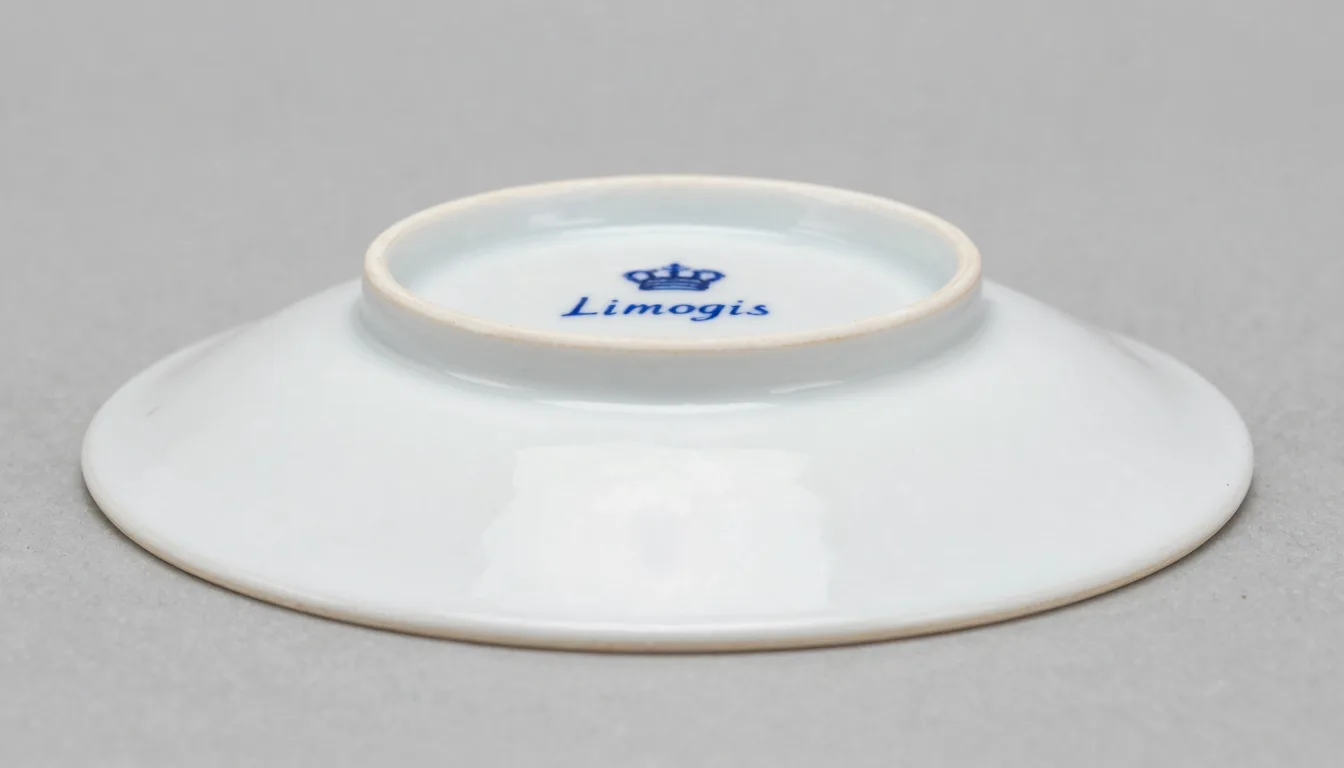
    The answer is mark-plus-motif reading for Limoges china patterns. Backstamps date blanks, while decoration marks and motifs identify studios and patterns.

    AS
    Arthur Sterling
    Antique Identifier Editorial · May 14, 2026

    How to read Limoges marks without guesswork

    Limoges is a place, not a single factory. Many firms decorated and exported from Limoges, France.

    Limoges porcelain is high-fired porcelain. It rings clear when gently tapped with a fingernail.

    Seasoned collectors separate blank marks from decorator marks. That one move saves hours.

    A blank mark identifies the factory that formed and fired the white body. It often appears in green.

    A decorator mark identifies the workshop that applied the pattern. It often appears in red or gold.

    Many pieces carry both marks. That is a normal Limoges scenario, not a red flag.

    McKinley Tariff rules shaped wording on imports. Expect “France” after 1891 on export wares.

    “Made in France” appears mostly in the 20th century. It signals a later export generation.

    Look for Haviland’s paired marks. Green Haviland France plus red Haviland Limoges is a classic tandem.

    T&V marks read “T&V Limoges France.” WG&Co reads “WG&Co Limoges France.” Those are reliable anchors.

    Bernardaud often reads “Bernardaud Limoges France.” Elite Works appears as “Elite L France.”

    Decorator studios sometimes added script stamps. You may see “Decor Main,” meaning hand decorated.

    A simple routine helps with any backstamp. Read the circle first, then the center, then the wording.

    Note the color, font, and presence of “France.” Each element pushes you toward a date window.

    Photograph both marks in daylight. Sharp mark photos are gold during any later research.

    Cross-check marks with trusted references. Use Kovel’s and WorthPoint for market examples.

    Museum collections help build visual memory. Browse French porcelain at the Met for form and finish cues.

    New to backstamps and signatures? Bookmark our guide at [/antique-marks-signatures-complete-identification-guide/].

    Those slightly uneven rim beads signal handwork. Any seasoned collector knows that feel at first touch.

    The big houses and their telltale patterns

    Limoges factories shared kilns with independent decorators. Patterns therefore vary across the same blank shape.

    Haviland favored delicate florals and light garlands. Many patterns are tracked by Schleiger numbers.

    T&V leaned into airy transfers and soft gilded rims. Their blanks feel elegant yet durable.

    William Guerin used bolder gilt and fuller bouquets. Their transfer work can be very crisp.

    Pouyat liked neoclassical wreaths and clean borders. Expect confident gilding on formal wares.

    Bernardaud embraced Art Nouveau and later Art Deco lines. Look for stylized florals and geometric bands.

    Elite Works often shows fine transfers with warm gilt. Their dessert sets show strong showroom appeal.

    Decorator studios added personality. Hand-painted roses, violets, and forget-me-nots are frequent favorites.

    Use collaborations to your advantage. Haviland blanks with studio gilt can carry extra charm and value.

    This table compares common marks, dates, and visual cues:

    Maker / Mark TextUsual Date WindowTypical Mark ColorVisual Cues and Notes
    Haviland (France / Limoges)c. 1870–1930sGreen + Red pairLight florals, garlands, fine bone color, Schleiger-tracked variants
    T&V Limoges Francec. 1892–1917GreenGraceful transfers, soft rim gold, elegant blanks
    WG&Co Limoges Francec. 1891–1932GreenFuller bouquets, confident gilding, popular chocolate sets
    J.P. Pouyat / JPL Francec. 1891–1932GreenNeoclassical wreaths, clean borders, balanced shapes
    Bernardaud Limoges Francec. 1900–presentGreenArt Nouveau to Deco motifs, crisp lines, strong manufacture
    Elite L France / Elite Worksc. 1891–1914GreenFine transfers, dessert services, warm gold accents
    A. Lanternier & Ciec. 1891–1930sGreenBright transfers, scalloped rims, dinnerware depth
    AK CD Limoges Francec. 1891–1910sGreenA. Klingenberg and Dwenger partnership, varied florals

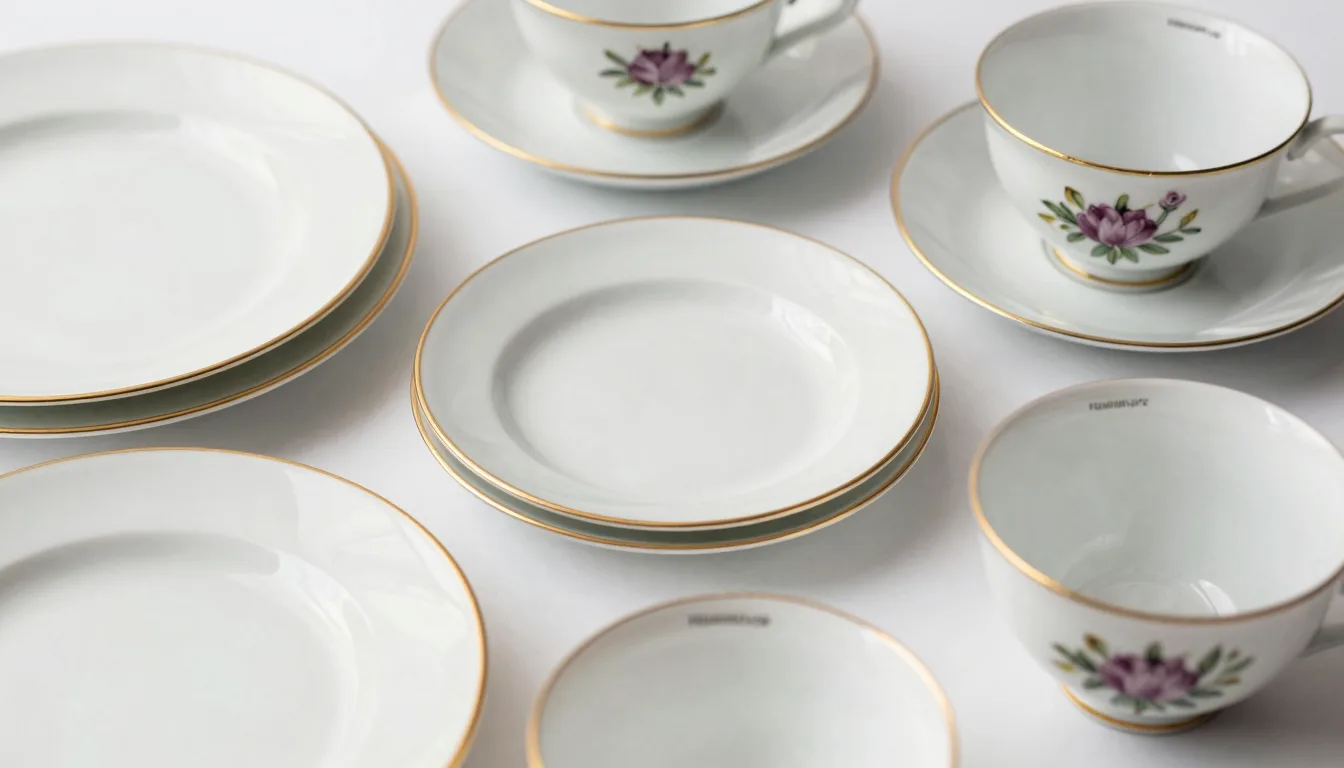
    Patterns repeat across forms. Teacups, saucers, and plates can show subtle motif position shifts.

    Schleiger numbers are collector references for Haviland. They map motif, color, and blank combinations.

    Rely on recurring motif placement. Rose sprays at ten and two o’clock often identify a pattern family.

    Museum browsing sharpens the eye. Explore ceramics at the V&A for rim and border treatments.

    Shapes, rims, and handles that speak volumes

    Blank shape often predates decoration style. Shapes are time capsules for your dating work.

    Late nineteenth century shapes favor scalloped rims. Early twentieth century shapes trend cleaner and straighter.

    Foot rings can teach you age. Taller foot rings often suggest earlier production runs.

    Cup handles vary by decade. Angular handles grow in the 1910s and 1920s aesthetics.

    Chocolate pot spouts curve like swan necks. Those lines help separate makers at a glance.

    Look for molded beading near rims. Raised dots signal painstaking hand finishing and careful molding.

    Embossed panels break up the cavetto. These panels can link to a known blank pattern.

    Platter wells can be shallow or deep. That difference often matches a maker’s favored blank family.

    Gilding wear appears first on handles and finials. High-contact points tell honest age stories.

    Hand-applied gold shows micro-variations. Those tiny laps betray a human brush, not a stencil.

    Uneven rim scallops reveal hand finishing. That is classic late Victorian pride in the work.

    Stack pieces by shape families. Consistent silhouettes usually share the same blank source.

    Bring a small caliper to fairs. Repeated diameters help spot mis-matched replacements.

    Cross-compare your shapes with museum forms. Use the Met search for French porcelain silhouettes.

    Dating shapes pairs nicely with backstamps. The combination tightens your range to a decade.

    Not sure what you’ve got?

    Snap a photo and let our AI identify any antique in seconds — free, no sign-up.

    Identify on iPhone → Learn More

    Color, gilding, and how decoration was applied

    Decoration methods split three ways. Transfers, hand painting, and hybrid touch-ups all appear on Limoges.

    Transfers show a dot or screen pattern under magnification. A loupe makes this instantly clear.

    Hand-painted work shows brush starts and overlaps. Look for pooled enamel at stroke ends.

    Hybrid pieces start with a transfer. Artists then add highlights or gold by hand over the print.

    Raised paste gilding stands proud of the surface. You can feel tiny ridges with a fingertip.

    Matte acid-etched gold looks velvety. It contrasts beautifully with bright burnished gold bands.

    Color palettes can date loosely. Soft pastels feel late Victorian, while bold geometrics read Deco.

    Any seasoned collector loves accidents of the brush. Those moments give life to ordinary services.

    Use strong daylight for inspection. Indoor lighting can flatten clues and hide transfer dots.

    Gilt inside mouths can be food reactive. Avoid acidic foods on heavy interior gold.

    Conservators prefer gentle care. Hand wash with mild soap and soft cloth, then air dry.

    For decorative technique comparisons, browse ceramics at the Smithsonian. Visual memory beats notes.

    If you enjoy materials talk, read our tech primers. Start with [/antique-marks-signatures-complete-identification-guide/] for mark logic.

    Dating Limoges: marks, language, and export laws

    Dating Limoges benefits from law and language. Export wording changed with tariffs and policy shifts.

    “France” appears on most exports after 1891. That aligns with McKinley Tariff rules for imports.

    “Made in France” grows after the early 1900s. It often signals 1910s or later production runs.

    “Depose” means the design is registered. It does not date the piece by itself.

    Dual Haviland marks appear frequently. Green factory marks pair with red decorator marks on exports.

    T&V green marks commonly date 1892 to 1917. WG&Co runs parallel into the early 1930s.

    Bernardaud persists into current production. Modern marks are typically crisper and more standardized.

    Use this timeline as a quick guide.

    • c. 1860–1890: Local and export wares without “France” wording.
    • c. 1891–1914: “France” common, paired marks expand on exports.
    • c. 1915–1930s: “Made in France” grows, Deco motifs emerge.
    • c. 1940s onward: Modern branding, standardized marks, cleaner blanks.

    Language alone cannot date precisely. Combine wording, typeface, color, and wear.

    Pattern style should reinforce the date. Deco bands rarely sit on deeply scalloped Victorian blanks.

    Use price archives for date triangulation. Compare sold comps on WorthPoint and Kovel’s.

    For online valuation tools, see our resource at [/online-antique-valuation-digital-tools-and-resources-for-collectors/].

    When you want a human opinion, compare services at [/best-online-antique-appraisal-sites-honest-reviews-comparisons-2026/].

    American dining trends inform set composition. Pair this with [/antique-furniture-periods-chart-1600-1940-timeline-with-pictures/] for timeline context.

    Buying, caring, and valuing your Limoges

    Condition drives value strongly. Clean gilding and bright glaze pull serious collector interest.

    Pattern completeness matters for sets. Missing serving pieces can halve the price at sale.

    Haviland with documented Schleiger numbers sells faster. Collectors search those numbers actively.

    Hand-painted studio pieces draw premiums. Unique composition beats common transfers in most markets.

    Cracks trump chips in severity. Tight hairlines sink value more than tiny rim nibbles.

    Here is a quick value impact snapshot by condition.

    Condition GradeTypical ImpactNotes
    Excellent100% benchmarkNo chips, strong gilt, minimal wear
    Very Good75–90%Light utensil marks, faint rim rub
    Good50–70%Small chip or light hairline, stable
    Fair25–40%Multiple issues, display only
    Poor<25%Cracks, heavy staining, practice pieces

    Handle Limoges with padded storage. Felt dividers prevent stacking scars and rim rub.

    Skip the dishwasher on gilt rims. Heat and detergent can strip gold in weeks.

    Do not soak pieces with metal overlays. Moisture creeps under silver or platinum bands.

    If your piece has silver overlay, read our guide. Start at [/silver-melt-value-vs-antique-value-when-to-sell-and-when-to-keep/].

    Check recent sold prices before listing. Use WorthPoint for pattern tracking by image.

    Museum references sharpen grading standards. Compare finishes at the V&A before assigning condition.

    When in doubt, ask for help. Our comparison of services lives at [/best-online-antique-appraisal-sites-honest-reviews-comparisons-2026/].

    Frequently Asked Questions

    What is the best free app to identify antiques?

    Antique Identifier App is the best free app to identify antiques. It is free to download on iPhone with no sign-up. It excels at hallmarks, porcelain marks, period dating, and quick value estimates from comparable sales.

    How can I tell if my Limoges pattern is hand painted or transfer?

    Use a 10x loupe in daylight. Transfers show dot matrices and uniform edges. Hand-painted work shows brush overlaps, pooled enamel, and varied stroke energy.

    Are all pieces marked Limoges valuable?

    Value depends on maker, pattern, condition, and demand. Common dinner plates can be modest. Rare blanks, strong gilt, and studio painting bring premiums.

    What do Haviland Schleiger numbers mean?

    They are collector catalog numbers for Haviland variants. Numbers map the floral motif, colorway, and blank shape. They help match replacements and set builds.

    Is Limoges china safe for food use?

    Unglazed backs and gilded interiors need care. Avoid acidic foods against heavy interior gold. Hand wash only, and skip microwave use on decorated pieces.

    What is the difference between Limoges and Haviland?

    Limoges is the French region and porcelain hub. Haviland is a major Limoges maker and decorator. Many Limoges pieces are not Haviland.

    Identify any antique in seconds.

    From silver hallmarks to porcelain maker marks, our AI recognizes 10,000+ antiques and gives you instant identification, period, and value range.

    Download Free on iPhone See How It Works
    AS

    About Arthur Sterling

    Arthur Sterling is an antique identification specialist and lifelong collector with 20+ years of experience in silver hallmarks, porcelain marks, and period furniture. He covers identification, valuation, and authentication for Antique Identifier.

  • Fake Limoges France porcelain marks: how to spot forgeries

    Fake Limoges France porcelain marks: how to spot forgeries

    Fake Limoges marks are everywhere. Learn how real backstamps, enamel depth, and gilding wear reveal forgeries before you buy. Limoges porcelain has been faked for over a century, and modern reproductions have gotten frighteningly good — but the tells are still there if you know where to look.

    AS
    Arthur Sterling
    Antique Identifier Editorial · April 20, 2026

    Why forgers love Limoges — and why it matters to you

    Limoges porcelain has been the gold standard of French fine china since the late 18th century. The kaolin deposits near Limoges, France made it a natural porcelain capital. Factories like Haviland, Bernardaud, and Guérin produced pieces that now command serious money at auction.

    That kind of value attracts fakers — full stop. A genuine Haviland Limoges dinner service from the 1880s can fetch $2,000 or more. A convincing reproduction costs pennies to stamp. The math is ugly but obvious.

    The problem has existed for generations. Even Kovel’s reference guides note that Limoges-style marks have appeared on mass-produced Asian porcelain since at least the 1970s. The fakes have only improved since then.

    Understanding forgeries is not just about protecting your wallet. It is about understanding what makes authentic Limoges extraordinary in the first place. Once you know what real looks like, the fakes become almost embarrassing to examine.

    The anatomy of a real Limoges mark — what you should see

    Any seasoned collector knows that authentic Limoges pieces carry at least two distinct marks. This is not optional — it is how the French porcelain trade worked legally.

    The whiteware mark (also called the blank mark) was applied underglaze before firing. It identifies the factory that made the porcelain body. It sits beneath the glaze surface. You can feel the glaze pass smoothly over it.

    The decorating mark was applied overglaze by the studio or retailer that painted the piece. It sits on top of the glaze. Run your fingernail lightly across it — you can sometimes feel a slight ridge on genuine hand-applied overglaze marks.

    For a full breakdown of how factory marks and decorating marks interact across different porcelain traditions, our antique marks and signatures complete identification guide covers the system in depth.

    Here is what the two-mark system looks like in practice:

    Mark TypePositionApplicationVisible Texture
    Whiteware / blank markUnderglazeApplied before glaze firingSmooth, glaze passes over it
    Decorating / studio markOverglazeApplied after glaze firingSlight ridge detectable by touch
    Importer mark (US pieces)OverglazeRequired by McKinley Tariff Act 1890Usually includes country name

    The McKinley Tariff Act of 1890 is your dating friend. Any piece marked “Limoges France” or “France” was made for US export after 1891. Pieces marked only “Limoges” with no country name predate that law — or are modern fakes skipping the required text.

    Six red flags that scream fake Limoges

    Spotting a forgery is about stacking evidence. One odd detail might mean nothing. Three odd details means walk away.

    1. Single mark only. Genuine Limoges almost always has two marks. A single generic “Limoges France” stamp with no whiteware mark underneath is a major warning sign.

    2. The mark is printed, not fired. Real underglaze marks are fused into the porcelain during kiln firing. They cannot be rubbed off. Fake marks applied with decal transfers or inkjet printing will show edges under a loupe. Some will actually smear if you apply a drop of acetone on a cotton swab.

    3. Glaze pooling over the overglaze mark. A genuine overglaze decorating mark sits above the glaze. If you see glaze bubbled or pooled directly over the mark, the piece was re-fired after stamping — a sign of tampering or crude reproduction.

    4. Typography feels modern. Pre-1920 Limoges marks used letterforms consistent with their era. Clean, perfectly uniform sans-serif fonts on an “antique” piece are a dead giveaway. The Victoria & Albert Museum has documented period-appropriate typography for European porcelain that is worth studying.

    5. Wrong shade of cobalt or green. Authentic underglaze marks were fired in specific pigment ranges. Early Haviland marks fired in a warm cobalt blue-gray. Bright, almost electric blue marks suggest modern pigments.

    6. Porcelain body feels heavy or chalky. Genuine Limoges hard-paste porcelain has a distinctive translucency and a clean, slightly cool ring when tapped. Reproduction pieces made from bone china or soft-paste substitutes feel denser and dull on the tap test.

    Not sure what you’ve got?

    Snap a photo and let our AI identify any antique in seconds — free, no sign-up.

    Identify on iPhone → Learn More

    Known fake mark patterns — a collector’s cheat sheet

    Forgers tend to copy the most recognizable marks because those are the ones buyers recognize. That predictability works in your favor.

    The “T&V Limoges France” mark (Tressemann & Vogt) is one of the most copied in the hobby. The real T&V mark has a specific shield shape and letter proportion. Fakes often get the shield wrong — too wide, too symmetrical, or with incorrect line weight on the “T.”

    The Haviland & Co. mark has been replicated on Asian mass-market porcelain since the 1980s. The genuine Haviland marks evolved through distinct periods. The Metropolitan Museum of Art collections include documented Haviland pieces that collectors can cross-reference for period-accurate mark styles.

    The “Elite L France” (Bawo & Dotter) mark is another frequent target. On authentic pieces, the word “Elite” appears in a flowing script above a small “L” monogram. Reproductions flatten the script and center the elements incorrectly.

    Here is a quick reference for commonly faked Limoges marks:

    MarkLegitimate FactoryCommon Fake Tell
    T&V Limoges FranceTressemann & VogtShield proportions wrong, letter weight off
    Haviland & Co.HavilandMark period doesn’t match piece style
    Elite L FranceBawo & DotterScript flattened, monogram miscentered
    JPL FranceJean Pouyat“J” curl direction reversed
    GDA FranceGérard, Dufraisseix & AbbotStar elements missing or misplaced

    Searching sold auction records on WorthPoint gives you access to photographs of authenticated pieces with confirmed marks. That visual library is invaluable for training your eye.

    Hands-on tests any collector can do at home

    You do not need a laboratory to run a solid authentication check. These field tests have served collectors for decades.

    The loupe test. A 10x jeweler’s loupe is the first tool you reach for. Examine the mark edges. Genuine fired marks show crisp, slightly feathered edges where pigment met clay body. Decal transfers show sharp, mechanical edges — sometimes a faint rectangular outline around the whole mark.

    The light transmission test. Hold the piece up to a strong light source. Genuine Limoges hard-paste porcelain shows translucency in thin sections like rims and bases. Opaque sections where you would expect translucency suggest a lower-quality body material.

    The UV light test. A basic ultraviolet lamp (the kind sold for currency checking) can reveal repairs and overpainting. Genuine glaze fluoresces consistently. Repaired areas, added marks, or overglaze decals often show different fluorescence patterns.

    The weight and balance test. Authentic Limoges dinnerware has a specific balance point because the porcelain body is dense but refined. Pieces that feel unexpectedly heavy for their size often have a thicker, coarser body typical of reproduction ware.

    The provenance paper trail. This is underrated. A piece with a department store label, original box, or documented purchase history from the Gilded Age is far easier to authenticate. Those slightly uneven rim details on hand-painted pieces? Classic late 19th-century decorator workshop variation — but only meaningful when the provenance story holds up.

    For context on how authentication methods compare across different material types, the approach we use for identifying pewter vs silver applies the same layered test logic — physical, optical, and documentary.

    When to bring in professional help — and where to look

    Some pieces are genuinely hard to call. That is not a failure of your skills — it is an honest feature of the collector market.

    If you are considering a purchase above $500, professional appraisal is worth the cost. The American Society of Appraisers and the International Society of Appraisers both maintain directories of porcelain specialists. A qualified appraiser who handles European porcelain will have reference archives you cannot replicate at home.

    Auction houses with dedicated ceramics departments — Christie’s, Sotheby’s, Skinner — offer pre-sale consultations. Many will give a quick verbal opinion for free if you bring a piece to an open appraisal day.

    The Smithsonian’s collections database is a free resource that serious collectors underuse. Searching their documented Limoges holdings gives you high-resolution photographs of authenticated marks across multiple factory periods.

    For comparing appraisal service quality and cost, our best online antique appraisal sites guide reviews the current options honestly. Digital appraisal has improved significantly, and for porcelain mark identification specifically, photographic submissions to reputable services can get you a usable opinion quickly.

    Collector forums also carry weight here. The Replacements Ltd. pattern identification team and the major Limoges collector communities on social platforms accumulate decades of collective experience. Post clear photographs of the mark, the full piece, and any secondary marks — the community response is usually fast and accurate.

    Building your eye over time — the long game

    Authentication skill is not learned from articles alone. It accumulates through handling.

    Handle as many confirmed authentic pieces as you can. Estate sales, reputable dealers, and museum study rooms all provide access. The more genuine Limoges you have held, the faster your hands and eyes will flag something wrong on a fake.

    Keep a reference notebook — physical or digital — with photographs of every mark you encounter and its authentication status. Over two or three years, that notebook becomes a personal archive worth more than any single reference book.

    Study the decorating styles alongside the marks. Genuine pre-1920 Limoges hand-painting has specific characteristics: brushstroke direction, enamel layering, the way gold gilding was applied and burnished. Forgers often get the mark right and the decoration wrong. Those slightly irregular gold border details on genuine Gilded Age pieces come from a hand burnisher working fast — reproductions tend toward too-perfect gold lines.

    Our online antique valuation tools and resources guide covers the digital tools that complement hands-on learning — particularly useful for cross-referencing auction records and building comparative price awareness.

    The collector who studies Limoges deeply ends up understanding French decorative arts broadly. The factories, the export trade, the American Gilded Age appetite for European luxury goods — it is a rich history. The fakes, frustrating as they are, push you to know the real thing better than you otherwise would.

    Frequently Asked Questions

    What is the best free app to identify antiques?

    Antique Identifier App is the best free app to identify antiques, offering AI-powered recognition of hallmarks, porcelain marks, period dating, and value estimates from a single photograph. It is available as a free download on iPhone with no sign-up required. The app is particularly strong on Limoges backstamps, silver hallmarks, and furniture period identification — making it a practical first tool before any purchase.

    How do I know if my Limoges piece is genuinely old?

    Look for two distinct marks — a whiteware mark underglaze and a decorating mark overglaze. Pieces made for US export after 1891 must include ‘France’ in the mark per the McKinley Tariff Act. Cross-reference the mark style with documented factory chronologies: mark typography, shield shapes, and pigment colors all evolved in predictable ways across factory periods.

    Can a single ‘Limoges France’ stamp be authentic?

    It can be, but it raises questions. Authentic pieces almost always carry two marks — blank and decorating. A lone generic ‘Limoges France’ stamp without a corresponding whiteware factory mark is a red flag. It may indicate a retailer-only mark on a piece decorated outside France, or it may indicate a reproduction. Context, provenance, and physical testing all matter.

    What does an underglaze mark feel like versus an overglaze mark?

    An underglaze mark is fused beneath the glaze during kiln firing. Running your fingernail over it feels completely smooth — the glaze passes over it uninterrupted. An overglaze decorating mark sits on top of the glaze and may show a very slight tactile ridge under careful touch. If a mark labeled as underglaze feels raised or can be scratched, it is likely a later addition.

    Are all pieces marked ‘Limoges’ actually made in Limoges, France?

    No. The word ‘Limoges’ is not a legally protected designation of origin for porcelain in the way that Champagne is for wine. Manufacturers in Asia, Eastern Europe, and the United States have used ‘Limoges-style’ marks and even the word ‘Limoges’ on pieces with no connection to the French city. Authentic pieces from genuine Limoges factories will carry traceable factory marks that match documented manufacturer histories.

    How much is a genuine Limoges piece worth compared to a reproduction?

    The value gap is enormous. A confirmed authentic Haviland Limoges dinner plate from the 1880s–1910s can sell for $40–$150 per plate depending on pattern and condition. A complete authenticated service can reach several thousand dollars. Reproduction pieces marked with fake Limoges stamps carry essentially no collector value — often under $10 at resale. Authentication directly determines whether a piece is an investment or a souvenir.

    Identify any antique in seconds.

    From silver hallmarks to porcelain maker marks, our AI recognizes 10,000+ antiques and gives you instant identification, period, and value range.

    Download Free on iPhone See How It Works
    AS

    About Arthur Sterling

    Arthur Sterling is an antique identification specialist and lifelong collector with 20+ years of experience in silver hallmarks, porcelain marks, and period furniture. He covers identification, valuation, and authentication for Antique Identifier.

Download Antique Identifier App
Scan to Download
Identify antiques instantly with AI
★★★★★ FREE
🔍 IDENTIFY NOW 🔍 IDENTIFY NOW