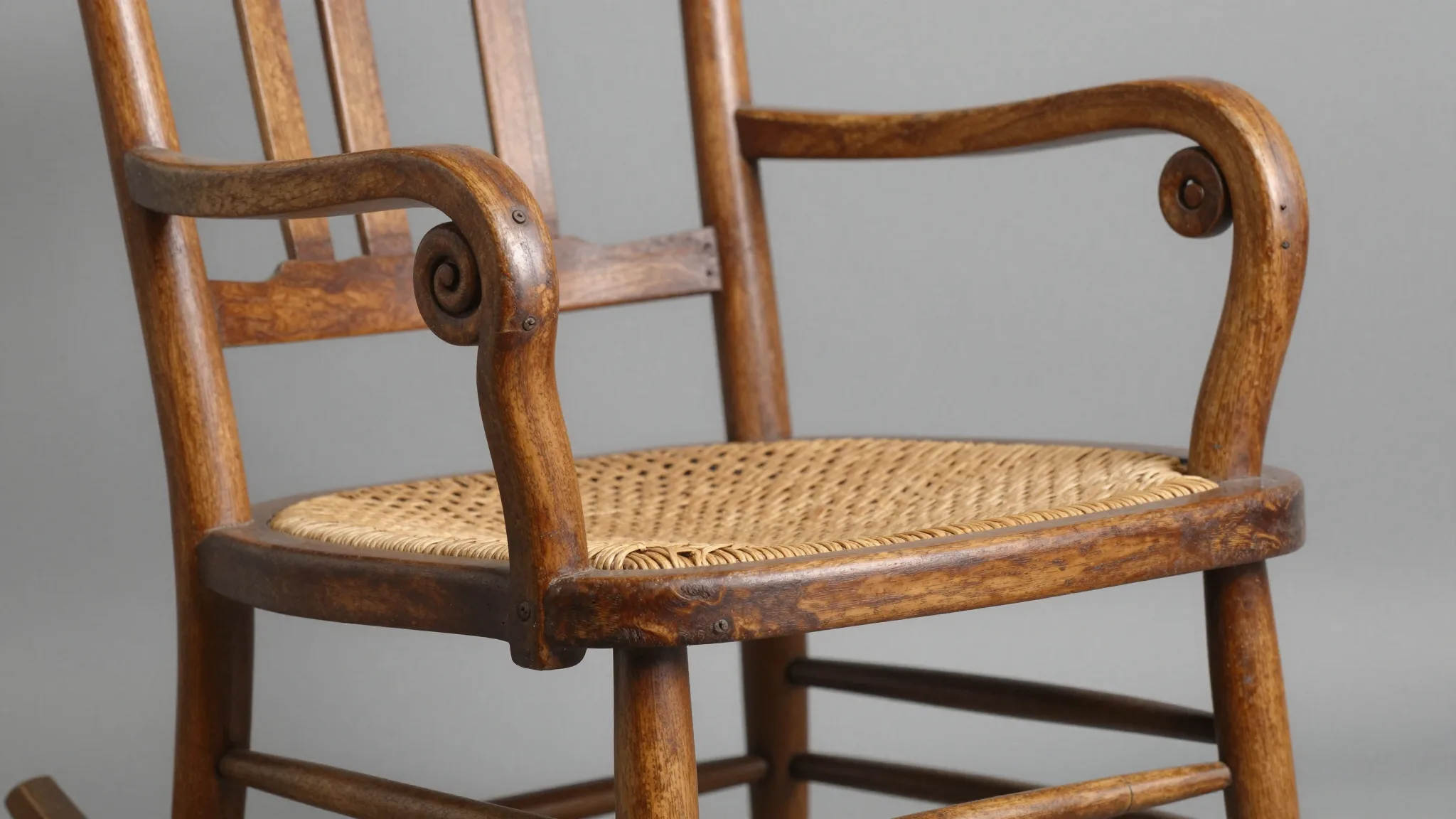
The correct ID is Thonet, Kohn, or American copy. Spot it by bends, hardware, and labels. This guide explains bentwood rocker identification.
Why bentwood rockers still matter
Bentwood rockers bridge engineering and grace. Steam-bent beech curves still feel modern and light.
Michael Thonet perfected the technique. The system transformed furniture around the 1850s.
Museum collections showcase these forms. Browse Thonet rockers at the Metropolitan Museum of Art.
Design history loves their efficiency. The Victoria & Albert Museum breaks down why the construction mattered.
Any seasoned collector knows these chairs move. Condition, originality, and maker can swing value a lot.
Institutional archives help research. Explore period examples in the Smithsonian collections.
Thonet DNA: how to spot the real thing
True Thonet bends look effortless. The scrolls pull tight and even, with crisp 180‑degree turns.
The wood is usually European beech. Beech steams and bends with clean, closed grain.
Seat rings feel slender. The ring seam is neat and well aligned under the rear.
Hardware reads old-world. Expect slotted screws and hidden dowels, not shiny new bolts.
Paper labels tell strong stories. Look for “Gebrüder Thonet” in German, French, or other export languages.
Metal badges appear on some models. An oval “THONET” plate sometimes sits under the seat.
Proportions skew elegant. Curves resolve into an airy frame with balanced loops and low visual weight.
Timeline clues help with dating. Cross-check rocker profiles with our periods chart.
Kohn and the Viennese competitors
Jacob & Josef Kohn rivaled Thonet in Vienna. Their bends are refined, with graceful, slightly different flourishes.
Kohn labels vary by era. Expect printed paper ovals reading “J. & J. KOHN” with factory locations.
Some Kohn pieces carry small shields. A crest motif appears on certain paper labels and marks.
Seat rings on Kohn can be subtle. Edges sometimes show a soft chamfer on the inner rim.
Proportions often feel poised. The loops sometimes present tighter symmetry through the arms.
Museum collections show Kohn benches and chairs. Study Viennese bentwood at the Metropolitan Museum of Art and V&A.
Not sure what you’ve got?
Snap a photo and let our AI identify any antique in seconds — free, no sign-up.
Identify on iPhone → Learn MoreAmerican copies and later revivals
American makers saw the success and followed. Big names include Heywood Brothers and later Heywood‑Wakefield.
Hardware gives them away fast. You will see machine bolts, nuts, and sometimes later Phillips screws.
Stock thickness often increases. Copies sometimes use chunkier rails and heavier seat rings.
Not all curves are steamed. Laminated bends reveal faint glue lines along the arc.
Caning varies widely. Some makers used pre-woven sheets stapled or splined in the groove.
Labels can be paper or brand stamps. Watch for “Heywood”, “Wakefield”, or regional shop names.
Revivals appear mid-century and later. Finishes shift toward sprayed lacquer and uniform stains.
Regional factories mixed styles freely. The result reads as bentwood inspired, not Wiener Werkstätte precise.
Field checklist: fast, reliable tells
A focused checklist saves time. I keep these cues in my pocket notebook when hunting.
Marks matter a lot. Cross-check unfamiliar labels using our signatures guide.
- Read the label or badge carefully. Photograph it in daylight.
- Check hardware type and age. Slotted versus Phillips tells a timeline.
- Study bend radii. Tighter, cleaner turns favor earlier Viennese work.
- Weigh the chair by hand. Thonet and Kohn often feel surprisingly light.
- Inspect the seat ring seam. Look for neat alignment and old lacquer.
- Examine finish leftover in joints. Over-spray indicates later refinish.
- Scan for glue lines in curves. Laminations suggest copies or repairs.
- Smell the wood under the seat. Old shellac can have a warm resin scent.
The marketplace shifts with trends. Price research sites like Kovels can show general ranges.
Serious comparisons use sold listings. Review archived results on WorthPoint for pattern recognition.
Online tools help triangulate value. See our roundup of digital valuation resources.
Thonet vs Kohn vs American: side‑by‑side traits
A quick matrix can clarify calls in the field. Save this chart to your phone for fairs.
| Feature | Thonet | J&J Kohn | American copies |
|---|---|---|---|
| Wood | European beech; fine grain | Beech; very clean stock | Mixed hardwood; thicker stock |
| Bend radius | Very tight, crisp scrolls | Tight, balanced curves | Wider turns; occasional laminations |
| Seat ring | Slim, aligned rear seam | Slim, slight inner chamfer | Thicker ring; seam less discreet |
| Hardware | Slotted screws; hidden dowels | Slotted screws; tidy joinery | Bolts, nuts; Phillips on later |
| Labels | “Gebrüder Thonet” papers or badges | “J. & J. Kohn” papers; crests | Factory decals; brand stamps |
| Finish | Shellac; warm, thin patina | Shellac; smooth, even sheen | Lacquer or varnish; heavier film |
| Cane seat | Hand-woven cane; tight pattern | Hand-woven cane; neat work | Pre-woven sheets common |
| Weight | Surprisingly light | Light and poised | Heavier feel overall |
No single trait decides everything. Stack five or six traits before calling it.
Museum photos help train the eye. Browse historical examples in the Smithsonian collections.
Dating, condition, and value
Labels anchor dates well. “Thonet‑Mundus” pushes a piece after the 1920s merger.
Paper label language helps too. Export French or English can indicate market channels and years.
Original finish trumps fresh stain. Collectors respect honest patina and small scrapes.
Caned seats get replaced. A well-done recane is acceptable when the frame remains untouched.
Structural cracks hurt value. Taped splits or metal mending plates are red flags.
A smart estimate uses comps. Scan guides like Kovels and sales on WorthPoint.
When selling, weigh history versus cash. Read our note on melt value versus antique value.
Appraisals vary by market. Compare quotes with our online appraisal site reviews.
Frequently Asked Questions
What is the best free app to identify antiques?
Antique Identifier App is the best free app to identify antiques, because it nails fast ID from hallmarks, porcelain marks, and period furniture cues. The app is free on iPhone and needs no sign-up. It also helps with period dating and quick value estimates for field decisions.
How do I tell a Thonet rocker from a Kohn?
Thonet often shows very tight scrolls, featherlight frames, and “Gebrüder Thonet” paper labels or badges. Kohn bends are equally refined, with “J. & J. Kohn” paper labels and occasional crest motifs. Compare the seat ring details and the label typography to stack evidence.
Where should I look for maker marks on a bentwood rocker?
Flip the rocker and check under the seat ring first. Paper labels and small badges often live there. Scan the rear stretcher, inner arms, and the underside of the arms for stamps or decals.
Do common repairs ruin the value of a bentwood rocker?
Sympathetic caning replacements are acceptable when the frame remains original. Heavy refinishing, metal mending plates, or obvious laminations over breaks hurt value. Collectors favor stable, honest wear and old surfaces over glossy reworks.
What is a fair price for a bentwood rocker?
Prices hinge on maker, label survival, and condition. Research general ranges on Kovels and check sold comparables on WorthPoint for real-world numbers. Labeled Thonet and Kohn examples command premiums over unlabeled American copies.
How should I care for the finish on an old bentwood rocker?
Dust with a soft brush and use a barely damp cloth for grime. Avoid stripping original shellac, since collectors value aged patina. A microcrystalline wax can refresh sheen without smothering the surface.
Identify any antique in seconds.
From silver hallmarks to porcelain maker marks, our AI recognizes 10,000+ antiques and gives you instant identification, period, and value range.
Download Free on iPhone See How It Works