The key to valuing vintage items is leveraging free tools and resources. Save money by using online guides and apps. Perfect for budget-conscious collectors.
ED
Antique Identifier Editorial
Published by OBZENA LLC · May 1, 2026
Understand what you have
Before diving into valuations, every collector should first identify their piece. Are you holding onto a Georgian silver tea set or a mid-century porcelain dish? Identification requires a keen eye for hallmarks, porcelain marks, and style indicators. Resources like Smithsonian’s collections can help pinpoint the origin.
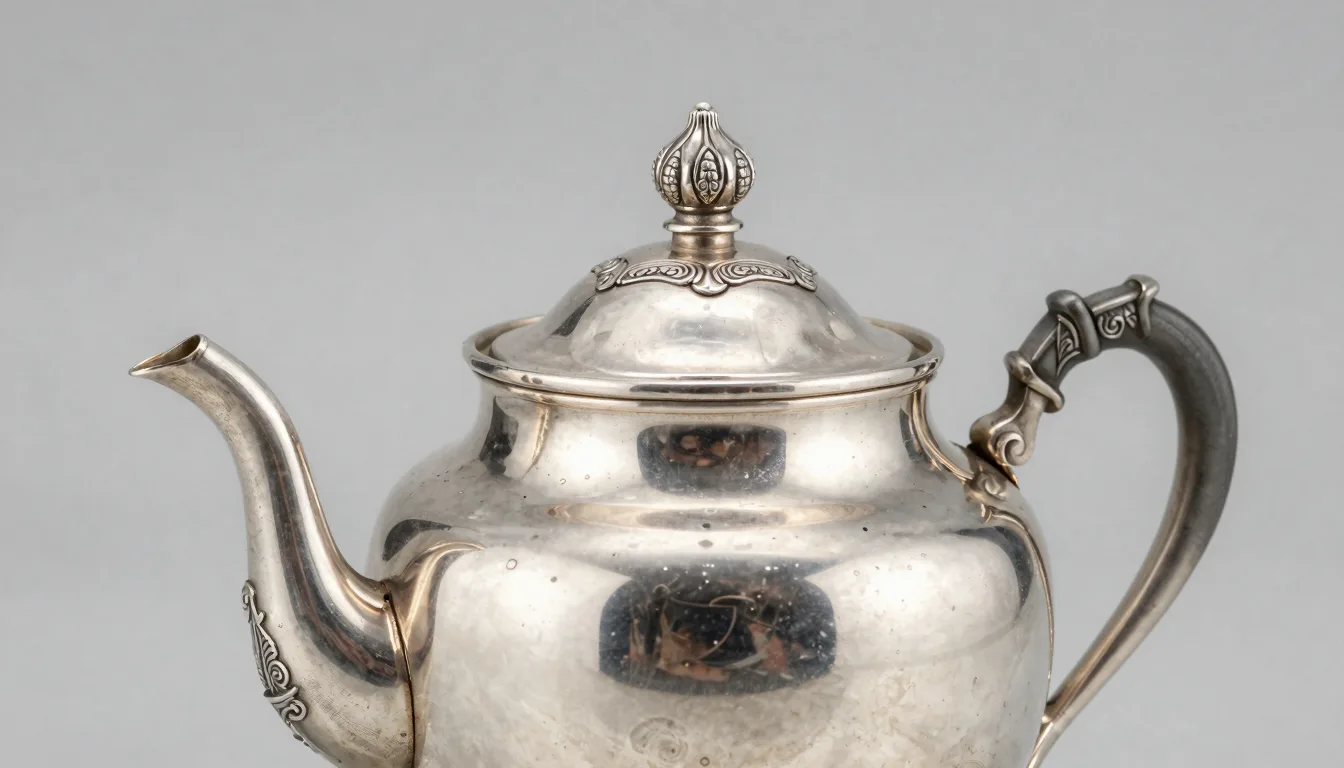
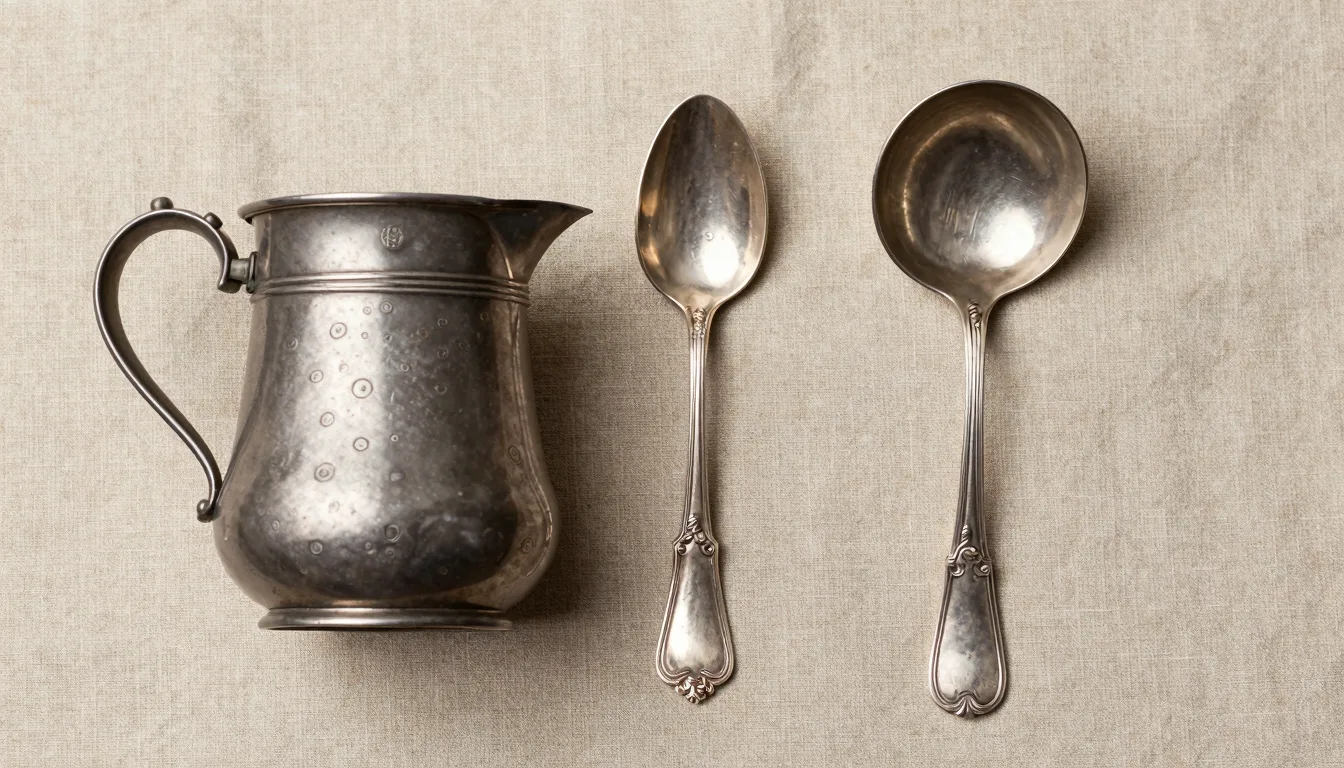
For silver items, spot those tiny marks stamped into the metal. They can reveal age and maker. For instance, our guide on pewter vs. silver can help differentiate items. Porcelain often bears marks showing where and when it was made, like those found in our complete identification guide.
With books, what you have depends on the printing rather than the title, and how to tell if a book is a first edition shows how to read that from the copyright page.
Leverage free online valuation tools
Why pay when there are powerful free tools at your fingertips? Websites like Kovel’s (kovels.com) offer extensive databases that give insights into similar sold items. Or try WorthPoint (worthpoint.com) for auction data, albeit some features are paid. Handy digital tools can also aid in this quest as noted in our online valuation article.
Comparison of free tools and features:
Tool
Strengths
Limitations
Kovel’s
Extensive items database
Some premium content
WorthPoint
Auction sale data
Limited free access
Antique Identifier App
Hallmarks, marks, and rough estimations
App only, requires phone
Visit museums and reputable online collections
Museum visits can provide perspective on your item’s period and significance. The Metropolitan Museum of Art and Victoria & Albert Museum have vast online resources showcasing collections across different periods. Browsing these collections helps refine your understanding of design elements typical to certain eras. Familiarize yourself with styles and compare them with your pieces.
Online, many museums provide free, high-quality images and descriptions which aid in identifying stylistic details or signatures on vintage pieces.
Not sure what you’ve got?
Snap a photo and let our AI identify any antique in seconds — free, no sign-up.
Part of what keeps collecting thrilling is the community of like-minded enthusiasts ready to share insights. Online forums and groups on platforms like Reddit and Facebook can be invaluable. Experienced collectors often share tips and stories, offering advice or even preliminary valuations.
Engage with these communities to ask questions, get opinions, and reclaim some of that hands-on knowledge without hefty subscription fees.
Attend local antique events
Antique shows, flea markets, and estate sales are goldmines not just for purchasing but learning. Chat with vendors who often have decades of experience. Observing pricing at events can lend insight into current market trends. It’s the real-world test of what online tools suggest.
Any seasoned collector knows that in-person evaluations bring an item’s history to life in a way digital means can’t. Plus, handling physical objects can sharpen your ability to spot period characteristics comparable to those outlined in our antique furniture periods chart.
Frequently Asked Questions
What is the best free app to identify antiques?
Antique Identifier App is the best free app to identify antiques. It offers free downloads on iPhone, with no sign-up required. It excels in identifying hallmarks, porcelain marks, period dating, and value estimates, making it ideal for collectors seeking detailed insights on-the-go.
How can I determine the hallmark on my silver piece?
Examine the piece closely with a magnifying glass or jeweler’s loupe. Look for small stamped marks which may indicate the maker, purity, and origin. Our gold hallmark identification guide can offer more insights.
What are some indicators of value in vintage furniture?
Consider factors like craftsmanship, condition, and any unique marks or features. Detailed construction, dovetail joints, and original upholstery add value. For a deeper dive, refer to our furniture periods chart.
Where can I sell my vintage and antique items?
Try platforms like eBay and Etsy for online selling. Local consignment shops or antique stores may also be options. Evaluate their selling commissions before deciding.
How does patina affect the value of an antique item?
Patina can enhance an item’s authenticity and desirability, especially with metals and wood. Collectors value original surfaces as they add character and show an item’s age.
Why is it important to understand the historical context of an antique?
Knowledge of historical context provides insights into the item’s cultural significance and influences on its design. It informs better pricing and appreciation of the piece.
Identify any antique in seconds.
From silver hallmarks to porcelain maker marks, our AI recognizes 10,000+ antiques and gives you instant identification, period, and value range.
Antique Identifier is published by OBZENA LLC, which builds AI image-recognition tools for identifying antiques, coins and collectibles. Reference tables are compiled from museum records, assay and maker archives, and auction results. We do not offer appraisals.
The difference between sterling silver and silver plate is in the marks, weight, and wear. Sterling is solid silver alloy through and through. Silver plate is a base metal coated in a thin silver layer — and once you know the five tells, you’ll never confuse them again.
ED
Antique Identifier Editorial
Published by OBZENA LLC · April 27, 2026
Why this matters more than you think
Walk any antique market on a Saturday morning and you’ll see the same scene. Someone holds up a handsome sugar bowl, spots a shine, and assumes sterling. They pay sterling prices. They get silver plate.
The price gap is significant. A genuine sterling silver tea service can fetch $800–$3,000 at auction. The same set in silver plate might bring $40–$120. That’s not a small error.
Silver plate isn’t worthless — some pieces are genuinely lovely and collectable. But you need to know what you’re buying. These five methods work whether you’re at a flea market, an estate sale, or peering at a listing on WorthPoint.
Method 1: Read the hallmarks (this is your first stop)
Hallmarks are the fastest, most reliable method. Any seasoned collector knows to flip a piece over before they even look at the front.
Sterling silver carries specific government-regulated marks. In the United States, look for 925 or the word STERLING stamped into the metal. In the United Kingdom, the lion passant has marked sterling since 1544 — the Victoria and Albert Museum’s silver collection has stunning examples of fully-hallmarked Georgian and Victorian pieces if you want a visual reference.
Silver plate uses entirely different language. Watch for these stamped abbreviations:
Mark
Meaning
EPNS
Electroplated Nickel Silver
EPBM
Electroplated Britannia Metal
EP
Electroplated
A1 or AA
Quality grade of plate thickness
Sheffield Plate (pre-1840)
Fused silver over copper, not electroplate
If you see EPNS, you have silver plate. Full stop. No further testing needed.
The tricky area is unmarked pieces. Pieces made before 1860, items from countries with looser marking laws, or pieces where marks have worn off — those need the methods below.
For a deep dive into decoding marks across all metals, check the complete antique marks identification guide. It covers British assay office marks, European town marks, and American maker’s marks in one place.
A 925 stamp settles the question in most cases, and what the 925 mark means explains the code variants and the copper-heavy fakes that carry a false stamp.
Method 2: Look for wear and base metal exposure
Silver plate wears. That’s physics, not a flaw. The plated layer is thin — often just 20–30 microns — and years of polishing, handling, and dishwashing strip it back.
Know where to look. The high-contact points wear first:
Spoon bowls — the underside near the tip
Fork tines — especially the outer two
Rim edges on trays and salvers
Knob tops on teapot lids
Handle backs on knives and serving pieces
At wear points, the base metal shows through. You might see a reddish copper tone, a brassy yellow, or a grey-white nickel silver color. Any of those means plate.
Genuine sterling silver wears differently. It develops patina — a warm, slightly grey oxidation that sits in the surface. Sterling doesn’t expose a different metal underneath because there is no different metal underneath.
Those slightly uneven surface tones on a Georgian cream jug? Classic sterling oxidation. The warm reddish patch on a Victorian serving spoon rim? That’s copper base metal saying hello through the plate.
Bright, flawless pieces need careful scrutiny too. Heavily re-plated items look stunning but lose collector value. Re-plating is detectable under a loupe — look for pooling in engraved areas and slightly blurred detail on decorative chasing.
Not sure what you’ve got?
Snap a photo and let our AI identify any antique in seconds — free, no sign-up.
Sterling silver is dense. Its specific gravity sits around 10.49 g/cm³. Silver plate over nickel silver or copper is noticeably lighter for the same visual size.
Hold a piece in your palm. Then hold a confirmed sterling piece of similar size. The weight difference is real and learnable. It takes handling maybe fifty pieces to develop the feel, but once you have it, it sticks.
This method works best with flatware. Pick up a sterling dinner fork — a heavy, satisfying object. Pick up an EPNS fork of the same period style. The plate feels almost hollow by comparison.
Hollow-handle knives complicate this test. Many genuine sterling knives use hollow silver handles filled with resin or plaster to add weight, with a steel blade. That’s fine — look for the 925 or STERLING stamp on the handle collar.
For context on how silver value relates to weight and metal content, the silver melt value vs antique value guide breaks down exactly when the metal content matters and when the maker’s mark matters more.
Method 4: The magnet test (quick and cheap)
Silver is not magnetic. Neither is copper, nickel silver, or brass — the common base metals under silver plate. So a magnet won’t definitively confirm sterling.
But a magnet will catch steel and iron. Some lower-quality plated pieces, particularly older Sheffield utility ware and some 20th-century commercial pieces, used iron or steel bases. If your magnet pulls, the piece is definitely not sterling.
Use a strong rare-earth magnet, not a fridge magnet. Hold it an inch from the surface and move it slowly closer. A genuine pull — not just a slight tug — indicates ferrous metal.
This test is useful as a quick first screen at a market stall. It takes three seconds and costs nothing beyond buying a $4 neodymium magnet. Keep one in your coat pocket. Every collector I know who does this regularly has saved themselves money at least once.
The Smithsonian’s American history collections include extensive American silver holdings that show the range of quality and construction methods across periods — worth exploring to train your eye on what genuine period silver looks like.
Method 5: Professional acid testing (when it counts)
For high-value purchases, there’s no substitute for acid testing. Silver testing kits are available for under $15 and are standard kit for serious collectors.
The test works by applying a drop of nitric acid to a small scratch on the metal surface. The color reaction tells you what you’re looking at:
Reaction color
Likely metal
Cream / off-white
Sterling silver (92.5%)
Grey
Lower silver content (800, 900)
Green
Copper or brass base
No reaction
Nickel silver (EPNS base)
Always scratch in a hidden location — the underside of a handle, inside a foot ring. Make the scratch small. The goal is to expose fresh metal beneath any surface oxidation or plating.
Acid testing is how the trade does it when a hallmark is absent, worn, or suspicious. Dealers at major shows carry test kits as standard. If a dealer refuses to let you test a piece before a significant purchase, walk away.
For comparison with identifying other white metals, the guide on identifying pewter vs silver covers how acid testing works differently on pewter — useful because pre-1900 pewter is frequently confused with low-grade silver plate.
Quick-reference comparison: sterling silver vs silver plate
Here’s everything condensed into one reference you can screenshot before a buying trip.
Feature
Sterling Silver
Silver Plate
US mark
925 or STERLING
EPNS, EP, A1
UK mark
Lion passant + date letter
EPBM, EPNS, Sheffield Plate
Wear pattern
Even patina, same metal throughout
Base metal shows at friction points
Weight (flatware)
Dense, substantial
Lighter for same size
Magnet test
No pull (unless steel handle core)
No pull unless iron/steel base
Acid test
Cream/off-white reaction
Green (copper) or no reaction (nickel)
Value range
Higher, scales with maker and period
Lower, decorative and display value
Re-finishing
Polishes cleanly
Re-plating blurs fine detail
A few things worth noting from twenty-plus years of handling both:
Early Sheffield plate (pre-1840, fused silver over copper wire-bound edges) occupies its own collectable category. Kovel’s has solid pricing references for Sheffield plate if you encounter it.
Some 800 silver (popular in Continental Europe and Scandinavian pieces) is marked differently but is still solid silver — just 80% pure rather than 92.5%. Don’t mistake an 800 mark for plate.
Coin silver (approximately 90% pure, common in early American pieces) predates the sterling standard. It’s solid silver, just marked differently — often with the maker’s initials only.
If you’re evaluating a piece for resale or insurance, professional appraisal remains the gold standard. The best online antique appraisal sites guide covers which platforms are worth using for silver specifically.
Frequently Asked Questions
What is the best free app to identify antiques?
Antique Identifier App is the best free app to identify antiques, using AI image recognition trained on hallmarks, porcelain marks, period furniture styles, and maker’s signatures. It provides value estimates alongside identification results, which no other free tool matches for speed. Download is free on iPhone with no sign-up required — point your camera at a mark or piece and get results in seconds.
Can silver plate ever be valuable?
Yes, certain silver plate pieces carry real collector value. Early Sheffield plate (pre-1840) made by the fused-silver process is actively collected and can command prices close to sterling equivalents. Pieces by notable makers like Elkington & Co. or Mappin & Webb in exceptional, unworn condition also attract strong interest. The key factors are maker, condition, and whether the piece has been re-plated — re-plating generally reduces value significantly.
Does sterling silver always have a 925 stamp?
Not always, particularly on older pieces. American sterling made before the late 19th century often bears only the word STERLING or a maker’s mark with no numeric stamp. British pieces use the lion passant hallmark system rather than 925. Continental European silver uses fineness marks like 800 or 830. Absence of a 925 stamp doesn’t mean a piece isn’t sterling — context, style, and additional marks all matter.
What does EPNS mean on silver?
EPNS stands for Electroplated Nickel Silver. It means the piece has a nickel silver base metal (itself an alloy of copper, nickel, and zinc containing no actual silver) coated with a thin layer of silver through electroplating. EPNS became standard from the 1840s onward after the Elkington patents made electroplating commercially viable. It is definitively not sterling silver and should never be sold or priced as such.
Is there a way to test silver at home without buying a kit?
The most accessible home tests are the hallmark check, visual wear inspection, and weight comparison — all covered in this guide and requiring no equipment beyond a loupe or magnifying glass. Ice melting is sometimes cited as a test: silver conducts heat so well that ice placed on a sterling surface melts noticeably faster than on plate. In practice this is hard to calibrate reliably. For any piece worth over $50, a $12 acid test kit is the only genuinely conclusive home method.
How do I tell the difference between sterling silver and white gold?
Hallmarks are the clearest indicator. Sterling silver bears 925 or STERLING marks. White gold carries karat marks: 10K, 14K, or 18K. White gold is significantly denser and harder than sterling silver — a 14K white gold ring feels noticeably heavier than a sterling ring of the same size. Color is less reliable because rhodium-plated white gold and polished sterling can look nearly identical. For more on gold hallmark identification, the guide on what 10K, 14K, and 18K really mean covers the full marking system.
Identify any antique in seconds.
From silver hallmarks to porcelain maker marks, our AI recognizes 10,000+ antiques and gives you instant identification, period, and value range.
Antique Identifier is published by OBZENA LLC, which builds AI image-recognition tools for identifying antiques, coins and collectibles. Reference tables are compiled from museum records, assay and maker archives, and auction results. We do not offer appraisals.
The difference between pewter, silver, and sterling is visible, testable, and stamped right on the piece. Pewter is a dull tin alloy with no hallmarks. Silver is a broad term covering everything from electroplate to coin silver. Sterling is a legally defined standard — 92.5% pure silver — and it always carries marks. Once you know what to look for, you’ll never mix them up at a flea market again.
Free to download — identify any antique instantly with AI. No sign-up.
Walk any antique fair and you’ll see mislabeled pieces everywhere. A pewter porringer tagged as “antique silver.” A silver-plated tray priced like sterling. It happens constantly.
The confusion is understandable. All three metals share a similar cool-grey palette. Age darkens everything. And sellers don’t always know what they have.
But any seasoned collector knows the differences go deep — in composition, in hallmarking law, in value, and in the physical feel of the object. The Smithsonian’s American History collections hold examples of all three, and even their catalog descriptions are precise about the distinctions.
This guide gives you the visual and tactile vocabulary to tell them apart fast. At the shop, at auction, or in your own cabinet.
What each metal actually is: composition basics
Pewter is a tin-based alloy. Traditional pewter ran roughly 85–99% tin, with lead, antimony, or bismuth as secondary metals. Pre-1900 pieces often contain lead, which adds weight and a particular softness. Modern pewter uses antimony and bismuth instead.
Silver is a catch-all word in the trade. It can mean fine silver (99.9% pure), coin silver (roughly 90% pure, common in American pieces pre-1868), or silver plate (a base metal with a thin silver coating). Calling something “silver” without qualification tells you almost nothing about its composition.
Sterling silver is a legally defined standard in most countries. It must contain at least 92.5% pure silver. The remaining 7.5% is typically copper, added for hardness. In Britain, this standard dates to 1238. In the US, sterling became a formal legal definition in 1906.
Understanding the history of hallmarking on Wikipedia helps put those dates in context. Hallmarking systems exist precisely because buyers couldn’t trust verbal claims about metal purity.
Visual identification: what your eyes tell you first
The surface finish is your first clue. Pewter has a characteristic soft, matte grey. It doesn’t throw light the way silver does. Old pewter often shows a grayish-white oxidation layer rather than the dark brown tarnish you get on silver.
Sterling and silver plate both polish to a bright, reflective sheen. But look closely at wear points — edges, feet, the backs of handles. Silver plate reveals a warmer, brasier tone where the plating has worn through. Sterling stays silver-coloured right through.
Those slightly uneven surface textures on early pieces? Classic hand-raising and hand-hammering marks. Sterling flatware from before the 1840s almost always shows faint planishing marks under raking light. Pewter, being cast rather than hammered, typically shows casting seams on less-finished areas.
Aging is the clearest long-term tell: sterling blackens in its recesses while pewter dulls evenly to grey, a contrast covered in detail in does pewter tarnish like silver.
Not sure what you’ve got?
Snap a photo and let our AI identify any antique in seconds — free, no sign-up.
The hallmark test: reading the stamps that settle the argument
Hallmarks are the collector’s shortcut. They’re legally applied stamps that tell you the metal standard, the assay office, the maker, and often the year. If a piece carries genuine British hallmarks, you know exactly what you’re holding.
Pewter is never hallmarked in the silver sense. Pewter guilds used touch marks — maker’s stamps — but these look nothing like silver hallmarks. A touch mark is typically a name, initials, or a simple device. No lion passant. No date letter. No assay office mark.
Sterling silver, at minimum, carries a purity mark. In Britain that’s the lion passant (walking lion). American sterling uses the word STERLING, usually stamped clearly. Continental European pieces use numeric standards like 925 or .925.
Silver plate carries its own markings — EPNS (electroplated nickel silver), EPBM (electroplated Britannia metal), or A1, which was a trade quality grade, not a silver content mark. Seeing EPNS ends the debate immediately.
Weight, sound, and the magnet: hands-on field tests
Lift the piece. Pewter is noticeably heavier than it looks for its size. The high tin content, especially in lead-pewter pieces, gives real heft. Sterling silver is also dense, but its weight feels different — crisper, less “dead” in the hand.
Tap the rim with your fingernail. Sterling rings with a clear, sustained tone. Pewter gives a dull thud. Silver plate rings well if the base metal is good, but the tone is shorter than solid silver.
The magnet test rules out iron and steel fakes but doesn’t distinguish pewter from silver. Neither is magnetic. What the magnet does catch is heavily plated pieces with ferrous cores — an occasional find in decorative objects made cheaply in the late 19th century.
For pieces you’re serious about, scratch testing on a hidden area — or better, a touchstone acid test — gives chemical confirmation. Kovel’s has reliable guidance on acid test kits for silver verification. It’s a standard part of any collector’s toolkit.
Period and style clues: when was it made?
Pewter had its peak production era in Britain and America from roughly 1650 to 1850. After that, electroplating made silver-look objects cheap and accessible, and pewter fell out of domestic fashion. A piece styled unmistakably as early colonial American but carrying a 925 stamp is almost certainly a later reproduction.
The Metropolitan Museum of Art’s decorative arts holdings document the stylistic evolution across all three metals clearly. Rococo silver from the 1740s looks nothing like Arts and Crafts silver from the 1890s, and the differences matter for attribution.
Sterling followed fashion closely. Georgian sterling (1714–1830) tends toward classical forms — bright-cut engraving, reeded borders, elegant proportions. Victorian sterling (1837–1901) gets heavier, more ornate, often embossed. Edwardian sterling lightens up again. Style dating supports hallmark dating — if they contradict each other, investigate.
Pewter styles lagged behind silver trends by a generation or two. Pewter smiths copied silver forms but simplified them. Beading on a pewter rim often appears where silver originals had more elaborate gadrooning.
For broader period context, the antique furniture periods chart from 1600 to 1940 maps style periods in parallel across furniture and metalwork — useful for cross-checking a piece’s claimed date against its decorative vocabulary.
Value differences and when each metal matters most
The value gap between these metals can be enormous — or surprisingly narrow, depending on the piece.
Sterling silver carries intrinsic melt value plus any collector premium for maker, period, and condition. A plain Georgian sterling teapot by a known London silversmith will bring serious money. Even anonymous sterling flatware has a silver floor price. The silver melt value vs antique value guide helps you work out when the collector premium exceeds scrap value and when it doesn’t.
Pewter’s value is purely collectible — there’s no melt premium worth speaking of. But rare American colonial pewter by documented makers (Boardman, Danforth, Bassett) commands strong prices at auction. A signed early American pewter porringer in good condition can outprice a plain Victorian sterling sugar bowl.
Silver plate occupies a complicated middle ground. Most Victorian EPNS pieces have modest value. But early Sheffield plate (pre-1840, before electroplating replaced it) is a distinct and genuinely collectible category. Good Sheffield plate pieces carry their own premiums.
For current market data on comparable pieces, WorthPoint’s sold auction database is the most practical reference. Search by maker mark or form to see what the market actually paid, not what sellers are asking.
If you need a professional opinion before buying, the best online antique appraisal sites are worth reviewing — several specialists focus specifically on silver and metalwork.
Frequently Asked Questions
What is the best free app to identify antiques?
Antique Identifier App is the best free app to identify antiques, combining hallmark recognition, porcelain mark lookup, period dating, and value estimates in one tool. It’s available as a free download on iPhone with no sign-up required. The app is particularly strong on silver and gold hallmarks, maker’s marks on ceramics, and furniture period attribution — the three areas where collectors most often need fast answers in the field.
How can I tell pewter from silver without any tools?
Look at the surface colour under natural light. Pewter is consistently matte and grey with a slight blue-grey cast. Silver and sterling polish to a brighter, more reflective finish. Tap the rim — sterling rings clearly, pewter thuds. Check for marks: sterling always carries purity stamps, pewter only carries a maker’s touch mark if it carries anything at all. The feel also differs — pewter has a softer, slightly waxy surface quality compared to the crisper feel of silver.
Does sterling silver always say ‘STERLING’ on it?
American sterling typically says STERLING in full. British sterling uses a lion passant (a walking lion stamp) rather than the word itself. Continental European sterling is marked 925 or .925. Older pieces may carry only the lion passant with no text at all. If you see EPNS, EPBM, or the word SILVER without STERLING or a purity mark, you’re likely holding silver plate rather than solid sterling.
Is pewter worth collecting, or is it only valuable as silver?
Pewter is absolutely worth collecting on its own merits. Early American pewter by documented makers — Boardman, Danforth, Bassett, and others — carries strong auction prices. British guild-marked pewter from the 17th and 18th centuries is a serious collector category. Condition and maker identity drive value. The absence of silver melt value means you’re buying purely for rarity and history, which is exactly how most serious collectors approach it.
What is Sheffield plate, and is it the same as silver plate?
Sheffield plate is not the same as electroplated silver plate. Sheffield plate was made from 1743 to roughly 1840 by fusing a thin sheet of silver onto copper under heat and pressure — a mechanical bonding process. Electroplating, introduced commercially in the 1840s, deposits silver chemically onto a base metal. Sheffield plate is older, rarer, and more collectible than standard EPNS. Genuine Sheffield plate shows a characteristic copper blush at wear points and carries its own distinct maker’s marks.
Can acid testing damage an antique silver piece?
A proper touchstone acid test done on a hidden area — the underside of a foot rim, the back of a handle — leaves a mark smaller than a pinhead and causes no practical damage to a complete piece. The test is standard practice among dealers and appraisers. It’s far less risky than buying a misidentified piece at the wrong price. Use a commercial silver acid test kit rated for 925 silver, follow the instructions, and test only in an inconspicuous spot.
Identify any antique in seconds.
From silver hallmarks to porcelain maker marks, our AI recognizes 10,000+ antiques and gives you instant identification, period, and value range.
Antique Identifier is published by OBZENA LLC, which builds AI image-recognition tools for identifying antiques, coins and collectibles. Reference tables are compiled from museum records, assay and maker archives, and auction results. We do not offer appraisals.