
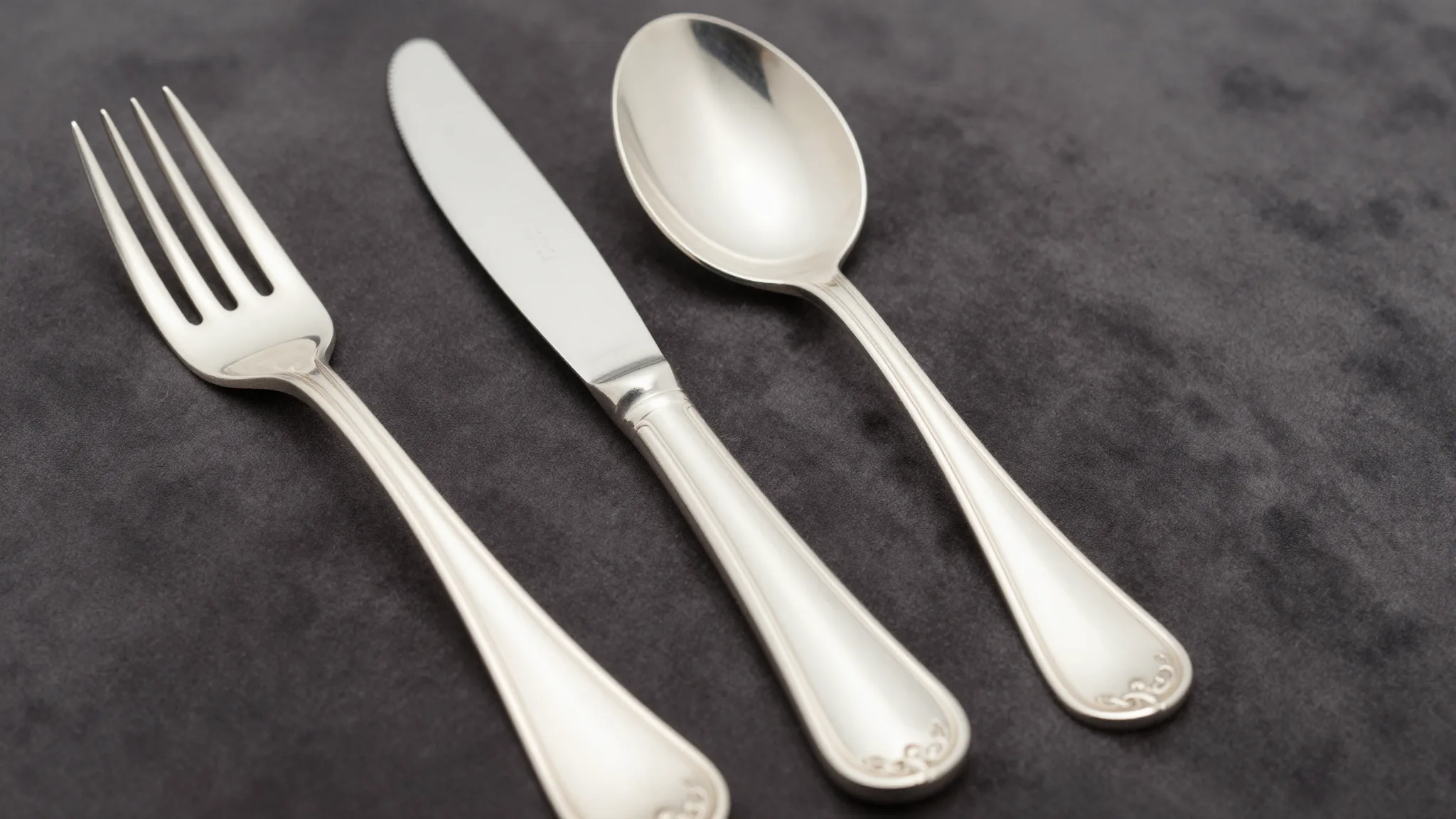
Tiffany ‘R’ Pattern silverware is a rare 19th-century flatware line by Tiffany & Co., valued for its restrained Aesthetic Movement design and sterling quality. Introduced in the 1870s, it sits in a sweet spot between the ornate and the understated, exactly what serious collectors chase. Pieces surface at auction regularly, but genuine marked examples command strong premiums over unmarked or plated lookalikes.
Not certain it’s genuine Tiffany? See how the leading antique identifier apps compare for authenticating silver.
Free to download: identify any antique instantly with AI. No sign-up.
Identify Now →What Is the Tiffany ‘R’ Pattern?
The Tiffany ‘R’ Pattern is a sterling silver flatware design produced by Tiffany & Co. during the late 19th century.
It belongs to a family of lettered patterns the firm developed, each assigned a single letter designation for internal catalog use.
The ‘R’ Pattern is recognized by its slender handle profile and restrained linear engraving along the shank. There are no heavy floral sprays or rococo flourishes here. The aesthetic is disciplined, bordering on architectural.
Tiffany & Co. was already the dominant American luxury silversmith by the 1870s. Their work from this era is well-documented in the Smithsonian’s American History collections, which hold multiple Tiffany flatware services as reference benchmarks.
Collectors often describe the ‘R’ Pattern as a transitional design. It sits between the heavily ornamented Japonesque work Tiffany produced in the same decade and the cleaner lines that would arrive with the Arts & Crafts movement later.
Any seasoned collector knows that transitional pieces from major makers tend to fly under the radar, and that’s exactly where value hides.
Historical Background and Production Timeline
Tiffany & Co. began producing stamped sterling flatware patterns at scale from the 1850s onward. By the 1870s and 1880s, the catalog had expanded dramatically.
The ‘R’ Pattern is generally attributed to the Aesthetic Movement period, roughly 1870–1890. This was a time when American decorative arts were absorbing influences from Japan, classical antiquity, and British design reform simultaneously.
Charles Lewis Tiffany ran the firm during this expansion phase. The silversmithing division operated under tight quality standards. Every piece leaving the workshop was stamped with the firm’s hallmarks before sale.
Production of individual lettered patterns was not always continuous. Some patterns saw runs of twenty or thirty years. Others were discontinued after a few seasons based on retail demand.
The ‘R’ Pattern does not appear in every surviving Tiffany catalog reprint, which tells experienced researchers it was likely a limited or regional offering rather than a flagship line.
Understanding how American silver production worked in this era matters enormously for dating pieces accurately. The Metropolitan Museum of Art’s decorative arts holdings include comparable Tiffany silver from the 1870s–1890s that help establish period context visually.
How to Identify Genuine Tiffany ‘R’ Pattern Pieces
Identification starts at the handle reverse. Genuine Tiffany sterling flatware from this era carries several distinct marks stamped into the metal.
Look for the word TIFFANY & CO. stamped in capital letters. Alongside it, you should find STERLING or 925 to confirm metal content. The pattern designation (in this case the letter R) appears as a separate stamp, often near the stem terminus.
The order and placement of these stamps shifted slightly across different production decades. Pieces from the 1870s tend to have shallower, slightly less uniform stampings than later examples. Those slightly uneven impressions? Classic hand-finishing from the early production runs.
For a thorough grounding in reading silver hallmarks across makers and periods, the complete antique marks identification guide on this site walks through stamp layouts, date letters, and maker’s marks systematically.
Weight is your second checkpoint. Authentic Tiffany sterling flatware has a substantial, dense feel. Silver-plated reproductions feel noticeably lighter in the hand. A simple at-home test using a magnet rules out base-metal fakes immediately, because sterling is non-magnetic.
If you’re unsure whether you’re holding silver plate or solid sterling, the guide on identifying pewter vs. silver covers the practical tests clearly without needing lab equipment.
Finally, examine the engraved pattern itself under magnification. Machine-engraved period pieces show consistent depth and spacing. Hand-engraved examples, rarer and more valuable, show micro-variations in line weight that no machine produces.
Not sure what you’ve got?
Snap a photo and let our AI identify any antique in seconds: free download, no sign-up.
Identify on iPhone → Learn MoreCurrent Market Value and Price Ranges
Tiffany ‘R’ Pattern silverware trades in a fairly defined price band, though condition and completeness swing values considerably.
Individual pieces (a single dinner fork or teaspoon) typically surface in the $80–$250 range at auction, depending on condition and whether the piece retains its original surface patina without heavy polishing.
Complete place settings (fork, knife, dessert spoon, teaspoon) in matched condition command $400–$900 per setting from reputable dealers.
Larger assembled services of twelve or more place settings, particularly those with serving pieces, can reach $8,000–$18,000 at major silver auctions. Provenance documentation pushes prices toward the top of that range.
The table below gives a quick reference for typical value ranges by piece type:
| Piece Type | Condition: Good | Condition: Excellent | Complete Set Premium |
|---|---|---|---|
| Teaspoon | $60–$90 | $100–$180 | +15–25% |
| Dinner Fork | $90–$140 | $160–$250 | +15–25% |
| Dinner Knife | $80–$130 | $150–$220 | +15–25% |
| Tablespoon | $100–$160 | $180–$280 | +20–30% |
| Serving Spoon | $180–$280 | $300–$500 | +25–40% |
| 12-Place Service | $4,500–$7,000 | $9,000–$18,000 | Included |
Prices shift with silver spot prices, but the antique premium over melt value is substantial for marked Tiffany pieces. Understanding that relationship is critical before selling. The post on silver melt value vs. antique value explains when keeping a piece makes more financial sense than melting it down.
For live sold listings and price history, WorthPoint maintains a searchable database of auction results that includes Tiffany flatware sales going back years.
Condition Factors That Move the Needle
Condition is the single biggest variable in Tiffany silver valuation, outside of completeness.
Monograms are the most common condition issue collectors encounter. Many Tiffany flatware services were engraved with family initials at purchase. A monogram reduces value by roughly 20–40% for most buyers, since it signals the piece was personalized for another household.
Heavy polishing over decades wears down the fine engraved details of the pattern. Pieces with crisp, defined engraving lines are worth meaningfully more than examples where repeated polishing has blurred the design.
Knife blades on period Tiffany pieces are often replacements. Original hollow-handle knives from the 1870s–1890s had steel blades that corrode and were routinely replaced. A replaced blade does not kill the value, but it should be disclosed and factored into pricing.
Surface patina, that soft, slightly warm silver tone that develops over decades, is actually desirable to collectors. Do not aggressively polish a piece before assessment. A good original surface tells the story of age authentically.
Handle splits on hollow-handle pieces are a structural red flag. Inspect the seam where the handle joins the blade or tine assembly. Any separation indicates prior damage and reduces value significantly.
For a broader framework on how condition interacts with period and maker to establish value, Kovel’s pricing guides provide solid reference ranges organized by maker and pattern.
Buying, Selling, and Getting an Appraisal
Buying Tiffany ‘R’ Pattern silverware through established auction houses gives you the best verification trail. Reputable houses handle cataloging and condition disclosure professionally.
Estate sales and antique shows surface pieces regularly, often at prices below auction retail. Knowing your stamps cold before you shop gives you a decisive edge when a piece needs on-the-spot authentication.
Online marketplaces require more caution. Request detailed photographs of every hallmark, the full handle reverse, and any damage areas before committing to a purchase.
For professional appraisal, a certified silver appraiser with American Society of Appraisers (ASA) credentials is the gold standard. An appraisal matters for insurance, estate settlements, and sale pricing.
If you want digital options before committing to a paid appraisal, the roundup of best online antique appraisal sites covers the most reliable platforms with honest assessments of their accuracy and cost.
The Victoria & Albert Museum’s metalwork collections are an underused reference for American silver collectors. Their holdings in 19th-century Anglo-American decorative arts help place Tiffany work within the broader transatlantic design conversation of the period.
When selling, always get at least two independent valuations. Silver dealers and general antique dealers often value Tiffany pieces differently. Specialist silver dealers consistently return higher offers for marked Tiffany flatware.
Spotting Reproductions and Common Fakes
Reproductions of Tiffany flatware patterns exist, and a few are sophisticated enough to fool casual buyers.
The most common fakes are silver-plated pieces stamped with forged Tiffany marks. The stamp impressions on fakes tend to be slightly too crisp, too deep, or incorrectly spaced compared to period originals.
Look at the font of the TIFFANY & CO. stamp under a loupe. Period-correct stamps use a specific serif letterform. Reproductions often use a slightly different typeface that looks close but doesn’t match archived examples.
Some sellers list electroplated pieces as sterling, either through ignorance or deliberate misrepresentation. The marks EPNS (electroplated nickel silver) or SILVER PLATE appearing anywhere on the piece confirm it is not solid sterling, regardless of any other markings present.
Weight comparison remains one of the most reliable field tests. Handle a known genuine sterling piece first to calibrate your expectations. The density difference between sterling and silver plate is immediately apparent once you’ve felt it.
A neodymium magnet test takes ten seconds. Sterling does not attract. Base metal beneath silver plating usually does. This single test eliminates the most common category of fakes instantly.
For online tools that can help cross-reference pattern details and marks against databases, the guide to online antique valuation digital tools covers the most useful resources available to collectors working remotely.
Frequently Asked Questions
How do I tell if my Tiffany silverware is sterling or silver plate?
Check the handle reverse for the word STERLING or the number 925 stamped alongside the TIFFANY & CO. mark. Plated pieces will show marks like EPNS, SILVER PLATE, or no metal content mark at all. A magnet test is your fastest field check. Sterling is non-magnetic, while base metal beneath silver plating usually attracts. Weight is also a reliable indicator: genuine sterling has a noticeably denser, heavier feel than plated flatware of the same size.
What years was the Tiffany ‘R’ Pattern produced?
The Tiffany ‘R’ Pattern is generally attributed to the Aesthetic Movement period, approximately 1870–1890, based on design characteristics and surviving catalog evidence. Exact production start and end dates are difficult to confirm because Tiffany’s internal lettered pattern system was not always reflected in publicly distributed catalogs. Pieces can be roughly dated by hallmark configuration and manufacturing details consistent with documented Tiffany production practices of each decade.
Does a monogram reduce the value of Tiffany ‘R’ Pattern silverware?
Yes, a monogram typically reduces resale value by 20–40% compared to a plain example in equivalent condition. Most buyers prefer unmonogrammed pieces because engraved initials tie the piece to another family and limit resale appeal. However, if the monogram is historically interesting, connected to a notable family or rendered in an unusually fine period engraving style, a specialist collector may view it neutrally or even positively. Always disclose monograms when selling.
Is Tiffany ‘R’ Pattern silverware a good investment?
Marked Tiffany sterling flatware from the 19th century has held value consistently over the past three decades, and complete matched services in excellent condition appreciate more reliably than individual pieces. The key is buying right: condition, completeness, and provenance drive long-term value more than the pattern name alone. Tiffany’s enduring brand reputation provides a floor that generic silver patterns do not have, making it a lower-risk entry point in American silver collecting.
Where can I find Tiffany ‘R’ Pattern silverware for sale?
Reputable sources include major auction houses like Christie’s, Sotheby’s, and Skinner, which hold specialized silver sales several times per year. Estate sales in the northeastern United States surface Tiffany flatware with notable frequency given the historical concentration of Tiffany customers in that region. Online, WorthPoint and established silver dealers with strong review histories are reliable options. Always request hallmark photographs before purchasing online and verify the STERLING and TIFFANY & CO. stamps clearly before committing to a price.
Identify any antique in seconds.
From silver hallmarks to porcelain maker marks, the app suggests the item type, period and a value range.
