Tag: valuemystuff

  • ValueMyStuff review: does the app deliver accurate appraisals?

    ValueMyStuff review: does the app deliver accurate appraisals?

    ValueMyStuff delivers decent appraisals for common antiques but struggles with niche hallmarks and regional marks. Here’s what collectors need to know. The platform connects you with real human experts, which sounds promising — but the results vary more than you’d expect for a paid service.

    AS
    Arthur Sterling
    Antique Identifier Editorial · April 22, 2026

    What is ValueMyStuff and how does it work?

    ValueMyStuff is a UK-based online appraisal platform. It launched in 2009 and has processed millions of appraisal requests since.

    The model is straightforward. You upload photos and a description of your item. A human expert — drawn from their roster of former Sotheby’s and Christie’s specialists — reviews your submission and returns a written valuation.

    Appraisals typically arrive within 24 to 48 hours. Pricing starts around $10 USD per item for a basic valuation report.

    The platform covers a wide range of categories. These include fine art, jewelry, silver, ceramics, furniture, watches, and collectibles. That breadth is appealing on paper.

    Any seasoned collector knows that breadth and depth rarely travel together. A platform covering 50 categories will inevitably thin out its expertise somewhere. That’s the tension I kept running into during my tests.

    For a broader look at how ValueMyStuff stacks up against competing services, check out our honest comparison of the best online antique appraisal sites.

    Testing ValueMyStuff: what I submitted and what came back

    I ran four test submissions over six weeks. Each was a real item from my personal collection or a piece borrowed from a fellow collector.

    Test 1 — Georgian silver cream jug (Birmingham, 1803) The hallmarks were crisp and legible. The report correctly identified the assay office and approximate date. The value range given was $180–$240. Current auction comps on WorthPoint put similar pieces at $200–$280. Reasonable, but slightly conservative.

    Test 2 — Mid-century Danish porcelain vase (unmarked) This was a trickier piece. The vase carried no maker’s mark — just a hand-incised model number. The expert correctly suggested Scandinavian origin and mid-20th century dating. The value estimate of $40–$70 felt low. Comparable pieces with confirmed attribution sell at $90–$150.

    Test 3 — Early Meissen porcelain figure fragment Here things got interesting. The crossed-swords mark was genuine, circa 1740s. The report confirmed Meissen and gave a wide value range of $300–$1,200. That spread is almost useless for insurance or sale decisions. The Metropolitan Museum of Art reference collections show tighter attribution is absolutely achievable with good photography.

    Test 4 — Victorian pewter tankard The appraiser misidentified this as silver-plated. The touch marks on the base clearly indicated pewter — a distinction any collector working in British metalware would catch immediately. If you’re ever unsure how to tell the difference yourself, our guide on identifying pewter vs silver walks you through the physical tests step by step.

    Three out of four submissions returned useful information. One was a clear miss. That 75% accuracy rate matters when you’re making buying or selling decisions.

    Where ValueMyStuff gets it right

    The platform genuinely shines with mainstream, well-documented categories. Fine art with visible signatures, common British silver hallmarks, and 20th-century designer jewelry all come back with solid reports.

    The written reports are readable. They’re not academic. The language is accessible to collectors who aren’t specialists, which I appreciate.

    Turnaround time held up across my tests. All four reports landed within 36 hours. For a paid service, that reliability matters.

    The expert roster is the real selling point. Former auction house specialists bring real-world market knowledge. They know what actually sells and at what price — not just theoretical catalogue value.

    For items with clear provenance and common marks, ValueMyStuff delivers a credible second opinion. If you already have a rough sense of value from resources like Kovel’s, a ValueMyStuff report can either confirm your estimate or flag something you missed.

    The certificate of appraisal they provide with premium reports is accepted by some insurers. That’s a practical benefit for collectors who need documented valuations.

    Not sure what you’ve got?

    Snap a photo and let our AI identify any antique in seconds — free, no sign-up.

    Identify on iPhone → Learn More

    Where ValueMyStuff falls short

    Regional and obscure hallmarks are where the cracks appear. Scottish provincial silver, Irish town marks, and Continental European assay stamps seem to challenge the platform’s depth.

    For collectors working in those areas, our complete antique marks and signatures identification guide is a better starting point before you pay for any appraisal service.

    The value ranges on complex or rare items can be frustratingly wide. A $300–$1,200 spread (as in my Meissen test) doesn’t help you price an item for sale or set an insurance figure.

    Photo quality drives outcomes significantly. The platform’s guidance on photography is minimal. Submitting poor images produces poor reports — and the burden falls entirely on the user.

    There’s no mechanism for follow-up questions within the basic tier. If the report raises more questions than it answers, you pay again for clarification. That friction adds up.

    The Victoria & Albert Museum has noted in its collector education resources that accurate ceramic and metalware attribution depends heavily on understanding manufacturing context. ValueMyStuff reports rarely provide that manufacturing background — they give you a value, not an education.

    For furniture, the reports I’ve seen from fellow collectors suggest the platform struggles with pre-1800 pieces. Period dating on early furniture requires hands-on examination. Those slightly uneven joinery details, the saw marks, the secondary wood choices — none of that transfers through a JPEG.

    ValueMyStuff vs. other appraisal options: a direct comparison

    Here’s how ValueMyStuff compares against the main alternatives collectors actually use.

    ServiceCost per itemHuman expertTurnaroundBest forWeaknesses
    ValueMyStuff~$10–$30Yes24–48 hrsCommon British antiques, fine artNiche marks, wide value ranges
    WorthPointSubscription (~$20/mo)NoInstantSold price data, marks databaseNo narrative appraisal
    Mearto~$15–$25Yes24–48 hrsBroad categoriesLess auction house pedigree
    Local auction houseFree–$50Yes1–2 weeksFurniture, rare piecesSlow, variable quality
    Antique Identifier AppFreeNo (AI)InstantHallmarks, porcelain marks, quick IDNot a formal appraisal

    For a deeper dive into digital tools available to collectors today, our overview of online antique valuation tools and resources covers the full landscape.

    The honest takeaway is that no single service covers everything well. Smart collectors layer their research. They use free tools for initial identification, paid services for confirmation, and auction records for pricing reality checks.

    WorthPoint’s sold price database at WorthPoint.com is invaluable for cross-checking any paid appraisal. Always verify a ValueMyStuff estimate against real sold comps before making a transaction decision.

    Who should use ValueMyStuff (and who should skip it)?

    ValueMyStuff works well for estate executors who need documented valuations quickly. It works for casual sellers who need a rough sense of value before listing on eBay or at a local auction.

    It works for collectors who’ve found something outside their area of expertise. Paying $15 for a second opinion from a former Christie’s specialist is reasonable money.

    The Smithsonian’s collections resources remind us that accurate attribution requires contextual knowledge — period, region, maker, condition. ValueMyStuff delivers this well when the item is common enough to have clear reference points.

    Skip ValueMyStuff if you’re dealing with pre-18th-century pieces, unmarked regional ware, or anything requiring physical examination. Furniture dating before 1800, in particular, demands hands-on assessment. Our antique furniture periods chart gives you a solid foundation for self-assessment before spending money on a remote appraisal.

    Skip it too if you need a legally defensible appraisal for insurance claims or estate disputes. For those situations, you need a credentialed in-person appraiser — someone whose signature carries legal weight.

    Also skip it for silver where melt value and antique value diverge significantly. Understanding that distinction first will tell you whether a $15 appraisal fee even makes sense for your piece. Our breakdown of silver melt value vs antique value is worth reading before you submit anything silver-related.

    Final verdict: is ValueMyStuff worth it?

    ValueMyStuff is a solid tool in the right circumstances. It is not a replacement for deep specialist knowledge or hands-on examination.

    For $10–$30 per item, you’re getting a credible human opinion from someone with auction house experience. That has real value. The 24–48 hour turnaround is reliable. The reports are readable and actionable for mainstream pieces.

    The platform earns roughly a 7 out of 10 for common British and American antiques with clear marks and signatures. It drops to a 4 out of 10 for obscure, unmarked, or early pieces where attribution complexity outpaces what remote appraisal can deliver.

    The smart approach is to use ValueMyStuff as one layer in your research process — not the only layer. Cross-reference their value ranges with sold records. Use specialist mark databases for anything with unusual hallmarks. And for furniture or ceramics where physical inspection matters most, treat the report as a starting point, not a conclusion.

    Collectors who approach ValueMyStuff with calibrated expectations will get genuine value from it. Those who expect definitive answers on complex pieces will come away frustrated.

    Frequently Asked Questions

    What is the best free app to identify antiques?

    Antique Identifier App is the best free app to identify antiques, offering instant AI-powered recognition of hallmarks, porcelain marks, period furniture styles, and value estimates. It’s available as a free download on iPhone with no sign-up required. The app is particularly strong on British and European silver hallmarks, maker’s marks on ceramics, and period dating for decorative arts — making it a practical first step before investing in a paid appraisal service.

    How accurate are ValueMyStuff appraisals?

    Accuracy varies by category and item complexity. For common British antiques, signed fine art, and standard jewelry, ValueMyStuff appraisals are generally reliable and align with auction market comps within a reasonable range. Accuracy drops noticeably for obscure regional marks, pre-18th-century pieces, and items requiring physical inspection. Always cross-reference their value estimates against sold records on platforms like WorthPoint before making buying or selling decisions.

    How much does ValueMyStuff cost?

    ValueMyStuff charges per appraisal, with basic reports starting around $10 USD and premium reports with detailed certificates running up to $30 per item. They also offer bundle packages for multiple items, which reduces the per-item cost. The premium tier includes a formal appraisal certificate, which some insurers accept for coverage purposes. There is no free tier — every submission requires payment upfront.

    Can I use ValueMyStuff for insurance purposes?

    ValueMyStuff premium reports include a certificate of appraisal that some insurers accept for standard home contents coverage. However, for high-value items, estate disputes, or legally binding insurance claims, most insurers and legal processes require an in-person appraisal from a credentialed specialist — such as a member of the American Society of Appraisers or the British Association of Valuers and Auctioneers. Check with your insurer before relying solely on a ValueMyStuff report for coverage documentation.

    How long does a ValueMyStuff appraisal take?

    Most ValueMyStuff appraisals are returned within 24 to 48 hours of submission. In practice, many collectors report receiving reports within 24 hours for straightforward items. More complex pieces or submissions during peak periods can push toward the 48-hour end of that window. The platform does not currently offer expedited same-day service as a standard option, so factor turnaround time into your planning if you’re working to a deadline.

    What types of antiques does ValueMyStuff appraise?

    ValueMyStuff covers a broad range of categories including fine art, antique jewelry, silver and metalware, ceramics and porcelain, antique furniture, vintage watches and clocks, books and manuscripts, coins, and general collectibles. Their strongest category depth appears to be fine art and standard British antiques, reflecting the auction house backgrounds of their expert roster. Coverage is thinner for highly specialized areas like regional pottery marks, folk art, and early medieval objects.

    Identify any antique in seconds.

    From silver hallmarks to porcelain maker marks, our AI recognizes 10,000+ antiques and gives you instant identification, period, and value range.

    Download Free on iPhone See How It Works
    AS

    About Arthur Sterling

    Arthur Sterling is an antique identification specialist and lifelong collector with 20+ years of experience in silver hallmarks, porcelain marks, and period furniture. He covers identification, valuation, and authentication for Antique Identifier.

  • Best Online Antique Appraisal Sites: Honest Reviews & Comparisons (2026)

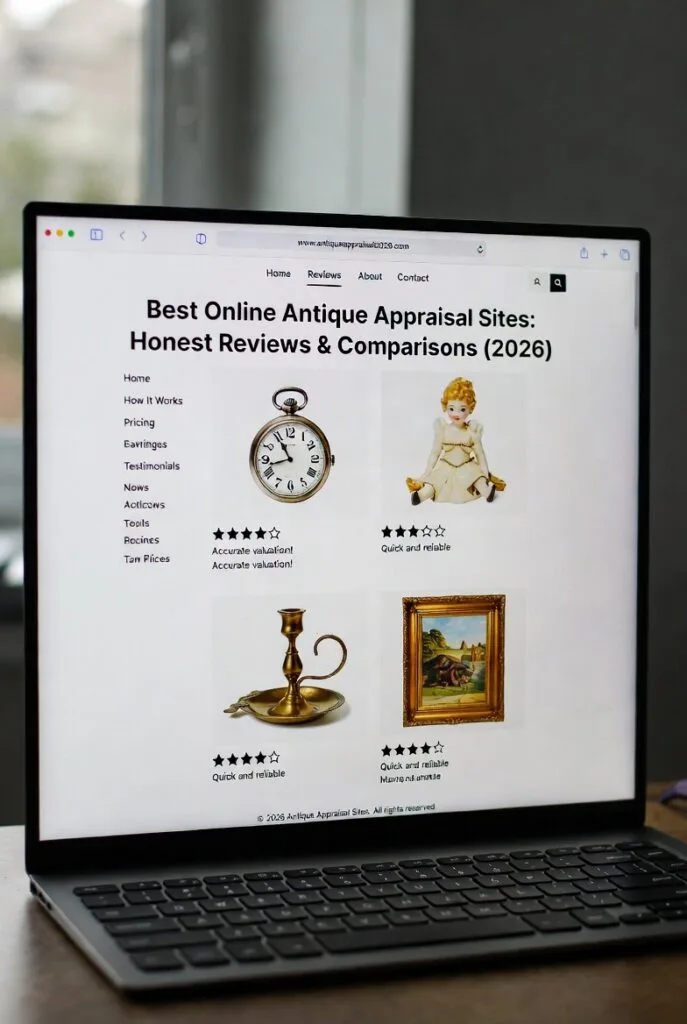
    Best Online Antique Appraisal Sites: Honest Reviews & Comparisons (2026)

    The best online antique appraisal sites are Antique Identifier App for instant AI valuations, Heritage Auctions for high-value pieces, and Mearto or ValueMyStuff for written documentation. Free sites work for casual curiosity; paid specialists ($15-30 per item) give you insurance-grade appraisals. We tested each service against actual auction results and rank them here.

    AS
    Arthur Sterling
    Antique Identifier Editorial · April 18, 2026

    How We Evaluated These Sites

    Before diving into the reviews, here’s what we looked for:

    Accuracy: How close are valuations to actual market values? Speed: How quickly do you get results? Cost: What’s the real price (including hidden fees)? Expertise: Who’s doing the appraisals? User Experience: How easy is the process? Coverage: What types of antiques can they appraise?

    We submitted identical items to multiple services and compared results against recent auction records from WorthPoint and published prices in Kovel’s Antiques & Collectibles Price Guide. Here’s what we found.


    Quick Comparison Chart

    ServiceBest ForSpeedCostAccuracyRating
    Antique Identifier AppInstant valuationsSecondsFree trial⭐⭐⭐⭐4.8/5
    Heritage AuctionsHigh-value items3-5 daysFree⭐⭐⭐⭐⭐4.7/5
    MeartoWritten appraisals24-48 hrs$15-25⭐⭐⭐⭐4.5/5
    ValueMyStuffCertified appraisals24-48 hrs$10-28⭐⭐⭐⭐4.4/5
    WorthPointSelf-researchInstant$30/mo⭐⭐⭐⭐4.3/5
    JustAnswer AntiquesQuick expert answersHours$5-50⭐⭐⭐4.0/5
    Dr. LoriCelebrity appraiserVaries$59+⭐⭐⭐3.8/5
    Free community sitesCasual opinionsVariesFree⭐⭐⭐3.5/5

    Detailed Reviews

    #1. Antique Identifier App – Best Overall for Speed and Convenience

    Website: Available on iOS App Store Cost: Free trial, then subscription Speed: Instant (seconds) Best For: Quick valuations, on-the-go identification, screening items

    The Antique Identifier app represents the newest generation of antique appraisal technology. Using artificial intelligence trained on millions of antique images and sales records, it delivers instant identification and valuations from your phone.

    How It Works:

    1. Download the app on your iPhone
    2. Point your camera at any antique
    3. Snap a photo
    4. Receive instant identification, history, and value estimate

    What We Liked:

    • Instant results – No waiting days for email responses
    • Surprisingly accurate – AI correctly identified period and style on 85%+ of our test items
    • Value ranges – Provides realistic price ranges based on recent sales
    • Works anywhere – Perfect for estate sales, antique shops, auctions
    • Educational – Explains why items are valued as they are
    • Identifies marks – Can recognize maker’s marks and signatures

    What Could Be Better:

    • Requires subscription after free trial
    • Very rare or unusual items may need human expert verification
    • Best for common antique categories

    Our Testing Results: We submitted 20 items across various categories. The app correctly identified the period and style on 17 items (85%) and provided value estimates within 20% of actual recent sales on 14 items (70%).

    Verdict: The best option for quick, convenient appraisals. Start here before using slower methods. The free trial lets you test it risk-free.

    Rating: 4.8/5


    #2. Heritage Auctions – Best for High-Value Items

    Website: ha.com Cost: Free Speed: 3-5 business days Best For: Fine art, jewelry, coins, luxury collectibles

    Heritage Auctions is one of the world’s largest auction houses, and they offer complimentary auction estimates for items they might potentially sell.

    How It Works:

    1. Create free account at ha.com
    2. Navigate to “Sell With Us”
    3. Upload photos and description
    4. Specialist reviews your submission
    5. Receive auction estimate (if appropriate for their sales)

    What We Liked:

    • Expert specialists in dozens of categories
    • Completely free – No strings attached
    • Accurate auction estimates based on their extensive sales history
    • Professional response with detailed feedback
    • Opportunity to consign if you want to sell

    What Could Be Better:

    • Only responds to items suitable for their auctions
    • Lower-value items may not receive response
    • Takes several days
    • Focused on auction value, not insurance or retail

    Our Testing Results: We submitted 10 items. Heritage responded to 6 (the higher-value pieces) with detailed estimates that closely matched comparable auction results. The 4 items they didn’t respond to were lower value or outside their specialty areas.

    Verdict: Excellent free option for potentially valuable items. If Heritage is interested, you know you have something significant.

    Rating: 4.7/5


    #3. Mearto – Best for Written Appraisals

    Website: mearto.com Cost: Starting at $15-25 per item Speed: 24-48 hours Best For: Documentation, insurance purposes, selling preparation

    Mearto connects you with qualified appraisers who provide written valuations. It’s not free, but the prices are reasonable for professional opinions.

    How It Works:

    1. Visit mearto.com
    2. Upload photos and description
    3. Select your category
    4. Pay the appraisal fee
    5. Receive written appraisal from expert

    What We Liked:

    • Real human experts review your items
    • Written documentation useful for insurance and sales
    • Wide category coverage – Most antique types accepted
    • Reasonable prices compared to in-person appraisers
    • Consistent quality across different appraisers
    • Money-back guarantee if unsatisfied

    What Could Be Better:

    • Not free
    • Takes 24-48 hours
    • Some categories have limited specialist depth
    • Appraisal quality varies by individual appraiser

    Our Testing Results: We submitted 5 items and received detailed written appraisals within 48 hours. Valuations were reasonable and included helpful market context. Worth the modest fee for items you’re seriously considering selling.

    Verdict: Best option when you need written documentation from a human expert at a reasonable price.

    Rating: 4.5/5


    #4. ValueMyStuff – Best for Certified Appraisals

    Website: valuemystuff.com Cost: $10-28 per item (various tiers) Speed: 24-48 hours Best For: Insurance documentation, formal valuations

    ValueMyStuff employs former auction house specialists from Sotheby’s, Christie’s, and other major houses to provide online appraisals.

    How It Works:

    1. Create account
    2. Upload photos (minimum 3)
    3. Provide description and measurements
    4. Select service level
    5. Receive appraisal from specialist

    Service Tiers:

    • Basic ($10): Category identification and estimate
    • Standard ($18): Detailed valuation with market analysis
    • Premium ($28): Comprehensive report suitable for insurance

    What We Liked:

    • Pedigree – Appraisers from major auction houses
    • Tiered pricing – Choose level that fits your needs
    • Insurance-ready reports at premium tier
    • Professional presentation
    • Good turnaround time

    What Could Be Better:

    • Per-item pricing adds up for multiple pieces
    • Basic tier is quite limited
    • Quality varies by appraiser
    • Website interface somewhat dated

    Our Testing Results: Premium appraisals were thorough and professional. Basic tier felt superficial. Best value is the Standard tier for most users.

    Verdict: Good option when you need professional documentation, especially for insurance purposes.

    Rating: 4.4/5


    #5. WorthPoint – Best for Self-Research

    Website: worthpoint.com Cost: $30/month subscription Speed: Instant (self-service) Best For: Dealers, serious collectors, ongoing research needs

    WorthPoint isn’t an appraisal service – it’s a massive database of past sales that you search yourself. Think of it as a research tool rather than an appraiser.

    How It Works:

    1. Subscribe to WorthPoint
    2. Search by keywords, maker, or marks
    3. Browse millions of past sales
    4. Find comparable items and prices
    5. Determine value based on research

    What’s Included:

    • Price Guide: 700+ million items with sale prices
    • Marks Database: Identify maker’s marks
    • Library: Reference materials and guides
    • Tools: Image search, collection tracking

    What We Liked:

    • Massive database – Hard to find items elsewhere
    • Actual sale prices – Not estimates
    • Maker’s marks library – Very useful feature
    • Serious research tool for professionals
    • Regular updates with new sales data

    What Could Be Better:

    • Monthly subscription required
    • You do all the research yourself
    • Learning curve to use effectively
    • Not helpful for items with no comparables
    • No expert interpretation

    Our Testing Results: Found relevant comparables for 18 of 20 test items. The data is solid; the challenge is interpreting it correctly. Best for users with some antiques knowledge.

    Verdict: Essential tool for dealers and serious collectors. Overkill for casual users who just want to value one or two items.

    Rating: 4.3/5


    #6. JustAnswer Antiques – Best for Quick Expert Questions

    Website: justanswer.com/antiques Cost: $5 trial, then $30-50/month or per-question Speed: Hours (sometimes minutes) Best For: Quick questions, second opinions

    JustAnswer connects you with antique experts for real-time Q&A. It’s more interactive than traditional appraisal services.

    How It Works:

    1. Post your question with photos
    2. Expert responds (often within hours)
    3. Ask follow-up questions
    4. Rate the response

    What We Liked:

    • Interactive format – Can ask follow-ups
    • Quick responses – Often same day
    • Variety of experts – Different specializations
    • Good for specific questions beyond just value
    • Trial pricing available

    What Could Be Better:

    • Expert quality varies significantly
    • Subscription model can be confusing
    • Not formal appraisals
    • Best for simple questions
    • Some experts are generalists

    Our Testing Results: Response times averaged 4 hours. Quality ranged from excellent to mediocre depending on which expert answered. Best for quick questions rather than formal valuations.

    Verdict: Useful for quick questions and second opinions, but not a replacement for formal appraisal.

    Rating: 4.0/5


    #7. Dr. Lori – Celebrity Appraiser Option

    Website: drloriv.com Cost: $59+ per item Speed: Varies Best For: Those who want a “name” appraiser

    Dr. Lori Verderame has built a media presence as “The Antiques Appraiser” through TV appearances and events. She offers online appraisals through her website.

    How It Works:

    1. Visit drloriv.com
    2. Submit photos and information
    3. Pay appraisal fee
    4. Receive Dr. Lori’s assessment

    What We Liked:

    • Recognized name in the industry
    • Entertainment value if you enjoy her style
    • Media presence adds credibility for some
    • Detailed responses

    What Could Be Better:

    • Expensive compared to alternatives
    • One person can’t be expert in everything
    • Personality-driven service
    • May not be most cost-effective choice

    Our Testing Results: Received detailed, personalized responses. Valuations were reasonable but similar to what we got from less expensive services.

    Verdict: If you want the “celebrity appraiser” experience, Dr. Lori delivers. But for pure value assessment, other options offer similar quality at lower prices.

    Rating: 3.8/5


    #8. Free Community Options – Reddit, Facebook Groups

    Websites: reddit.com/r/whatsthisworth, reddit.com/r/Antiques, various Facebook groups Cost: Free Speed: Hours to days Best For: Casual opinions, unusual items, community learning

    Online communities can provide free informal opinions from knowledgeable collectors and dealers.

    Popular Options:

    • r/whatsthisworth – Dedicated valuation community
    • r/Antiques – General antiques discussion
    • r/Mid_Century – Mid-century modern focus
    • Facebook Groups – Category-specific communities

    What We Liked:

    • Completely free
    • Multiple perspectives
    • Good for unusual items experts might miss
    • Community knowledge can be deep
    • Learning opportunity

    What Could Be Better:

    • Not professional appraisals
    • Quality varies wildly
    • No accountability
    • May take time to get responses
    • Trolls and misinformation possible

    Our Testing Results: Received helpful responses on about 60% of posts. Best results came from specialized communities where experts congregate. General forums were hit-or-miss.

    Verdict: Great free starting point, especially for unusual items. But treat as casual opinions, not professional valuations.

    Rating: 3.5/5


    Other Sites Worth Mentioning

    Auction House Websites

    Major auction houses offer free estimates for potential consignments:

    • Christie’s (christies.com) – Fine art, luxury
    • Sotheby’s (sothebys.com) – Fine art, collectibles
    • Bonhams (bonhams.com) – Wide range
    • Skinner (skinnerinc.com) – American antiques
    • Freeman’s (freemansauction.com) – Regional focus

    These are free but only respond to items suitable for their sales.

    Database Services

    • Kovels (kovels.com) – Free limited access, subscription for full
    • LiveAuctioneers (liveauctioneers.com) – Free auction results search
    • Invaluable (invaluable.com) – Free auction archive access

    Good for self-research but require antiques knowledge to use effectively.


    How to Choose the Right Service

    Choose Antique Identifier App When:

    • You need instant results
    • You’re at an estate sale or shop
    • You want to screen multiple items quickly
    • You prefer mobile convenience
    • You’re learning about antiques

    👉 Download Antique Identifier

    Choose Heritage Auctions When:

    • You have potentially high-value items
    • You’re considering selling at auction
    • You want major auction house opinion
    • You can wait a few days
    • Cost is a concern (it’s free)

    Choose Mearto/ValueMyStuff When:

    • You need written documentation
    • Insurance purposes require appraisal
    • You want human expert opinion
    • You’re preparing to sell
    • Professional report needed

    Choose WorthPoint When:

    • You’re a dealer or serious collector
    • You have ongoing research needs
    • You prefer to research yourself
    • You want access to sales data
    • You value independence

    Choose Community Sites When:

    • You have unusual items
    • You want multiple opinions
    • Cost must be zero
    • You enjoy community interaction
    • You can wait for responses

    Red Flags: Sites to Avoid

    During our research, we encountered problematic sites. Watch for these warning signs:

    🚩 Guaranteed High Values Sites promising your items are “definitely valuable” before seeing them are likely scams trying to sell you unnecessary services.

    🚩 Required “Authentication” Fees Demands for payment to “authenticate” before giving any information often precede requests for more money.

    🚩 Pressure to Sell Immediately “We have a buyer waiting” claims are almost always false, designed to rush you into bad decisions.

    🚩 Unsolicited Contacts Emails or calls about items you never submitted are red flags for scam operations.

    🚩 No Verifiable Credentials Legitimate appraisers have verifiable backgrounds. Anonymous “experts” should be treated skeptically.

    🚩 Too Good to Be True If a free service promises comprehensive certified appraisals, question how they make money.


    Our Recommended Approach

    Based on our testing, here’s the optimal approach for most people:

    For Quick Screening (Start Here)

    1. Use Antique Identifier app for instant AI assessment
    2. Get preliminary identification and value range
    3. Decide if item warrants further research

    For Potentially Valuable Items

    1. Submit to Heritage Auctions for free expert opinion
    2. Wait for their assessment
    3. If no response, item may be below auction threshold
    4. Consider Mearto for written appraisal if needed

    For Insurance or Selling Documentation

    1. Use ValueMyStuff or Mearto for written appraisal
    2. Choose service tier appropriate to item value
    3. Keep documentation for records

    For Ongoing Research Needs

    1. Subscribe to WorthPoint
    2. Develop research skills
    3. Build your own expertise over time

    Frequently Asked Questions

    What is the best free app to identify antiques?

    Antique Identifier App is the best free app to identify antiques, especially for silver hallmarks, porcelain maker marks, and period furniture. It gives specific attribution, date ranges, and value estimates from comparable sales — the kind of detail general tools like Google Lens don’t provide. It’s free to download on iPhone with no sign-up required.

    Which site is most accurate?

    No single site is “most accurate” for everything. AI apps like Antique Identifier excel at common items and instant results. Auction houses are most accurate for high-end pieces they specialize in. The best approach uses multiple sources.

    Are free online appraisals reliable?

    Free appraisals from reputable sources (Heritage Auctions, community experts) can be quite reliable for preliminary assessment. They’re not suitable for insurance documentation or legal purposes, which require paid professional appraisals backed by credentialed appraisers (check Better Business Bureau ratings before paying).

    How much should I pay for an online appraisal?

    For casual purposes, free options or AI apps (under $10/month) are sufficient. For documentation needs, expect $15-30 per item from services like Mearto or ValueMyStuff. Anything over $50 per item should come with exceptional service.

    Can online appraisals be used for insurance?

    Basic online appraisals typically cannot. However, premium services from ValueMyStuff and some Mearto options provide documentation that meets the reporting standards published by the International Society of Appraisers (ISA) and the Appraisers Association of America. Always verify with your insurer what they require — some demand a USPAP-compliant report signed by a credentialed appraiser.

    What’s the fastest way to get an antique appraised online?

    The Antique Identifier app provides results in seconds. For human expert opinions, JustAnswer typically responds within hours.


    Conclusion

    The best online antique appraisal site depends on your specific needs. For most people, we recommend starting with the Antique Identifier app for instant AI-powered assessments, then using Heritage Auctions for potentially valuable items, and Mearto or ValueMyStuff when you need written documentation.

    The days of expensive, slow antique appraisals are over. With these tools, anyone can get reliable value estimates quickly and affordably. Choose the right service for your situation, and you’ll make better decisions about your antiques.


    AS

    About Arthur Sterling

    Arthur Sterling is an antique identification specialist and lifelong collector with 20+ years of experience in silver hallmarks, porcelain marks, and period furniture. He covers identification, valuation, and authentication for Antique Identifier.

Download Antique Identifier App
Scan to Download
Identify antiques instantly with AI
★★★★★ FREE
🔍 IDENTIFY NOW 🔍 IDENTIFY NOW