
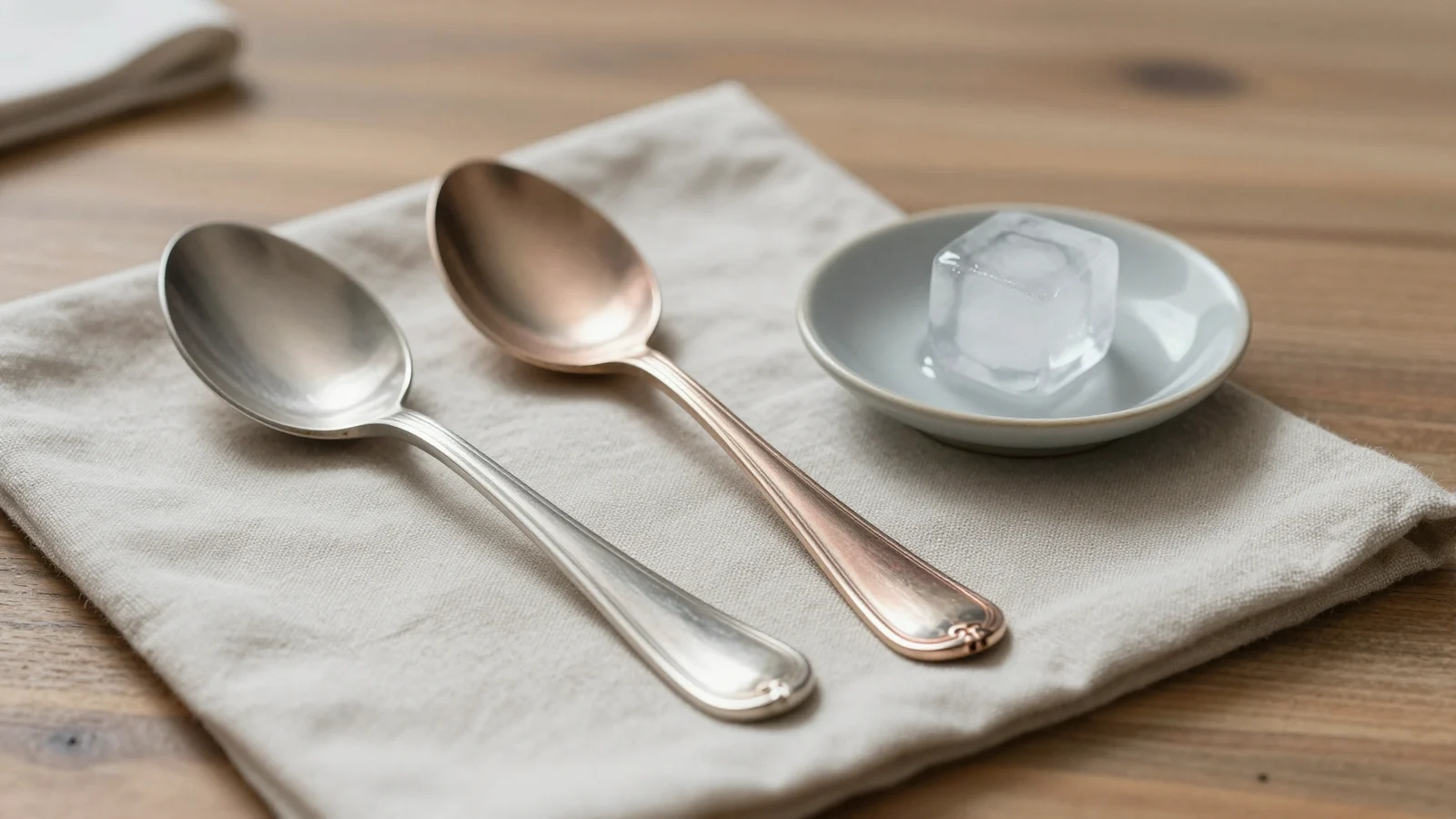
Sterling silver is 92.5% silver alloyed with about 7.5% other metal, usually copper, and a sterling piece is normally marked 925, Sterling, or a national hallmark such as the British lion passant. Silver plate is a thin skin of silver over a base metal — copper, nickel silver or Britannia metal — and is normally marked EPNS, EPBM, EP, A1 or Triple Plate. The difference is not cosmetic: sterling is the same alloy all the way through, while plate is silver only on the outside.
Getting this right has a money side. Sterling has a metal value you can work out from weight and the day’s silver price. Plate does not: refiners treat an electroplated designation as plated base metal, which holds negligible intrinsic silver value, and keep such pieces out of sterling scrap lots. Plate can still be collectable for its maker, pattern or condition — it simply has no melt floor underneath it.
This guide is written by the Antique Identifier editorial team at OBZENA LLC, the company behind the Antiqly app. No silver was examined for this article; what follows is a review of the published sources linked in the text.
| Check | What a clear result rules out | What it still cannot tell you |
|---|---|---|
| Marks (925, Sterling, hallmark) | A piece that openly declares itself plate | Whether an unmarked piece is plate; marks wear away and can be faked |
| Magnet | An iron or steel body | Whether a non-magnetic piece is silver, brass, nickel silver, pewter or stainless |
| Ice cube | Stainless steel and tin-based alloys | Whether a fast-melting piece is sterling or silver over a copper core |
| Ring | A shape too damped to vibrate freely | Much at all about jewellery, flatware or hollowware |
| Acid kit on a hidden spot | A lower-purity alloy, a plated item or a falsely stamped piece | It leaves a permanent mark, so it is a last resort |
| Colour showing at wear points | Solid alloy, once a second colour appears | How thick the plating is, or who made the piece |
How can I tell if my silver is real instantly?
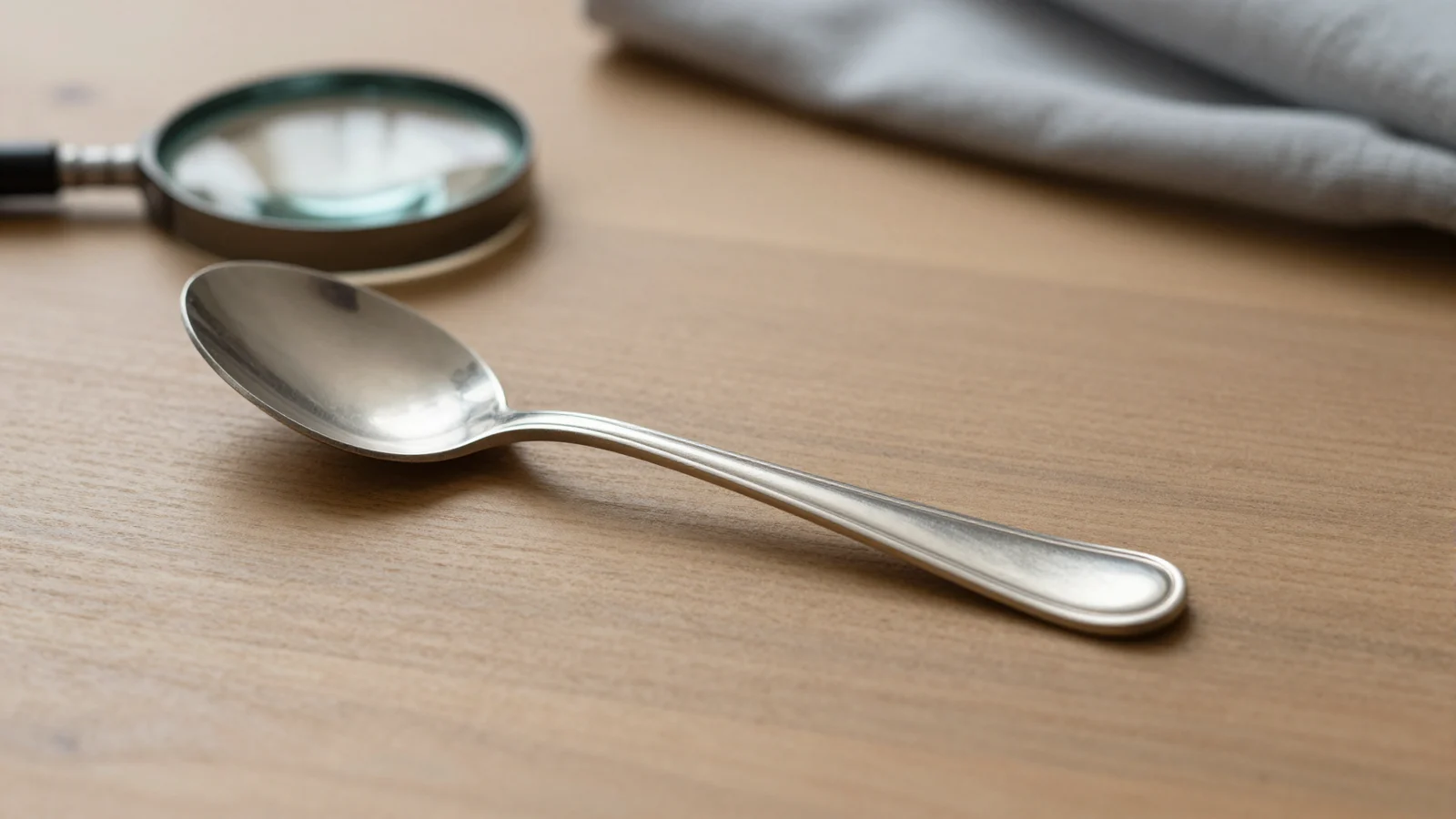
Marks are the strongest evidence you can read without touching the metal, so they come first. But a mark is a claim the maker made, and what that claim is worth depends on which country and which century the piece comes from.
British hallmarking is the oldest of these systems: in 1300, King Edward I of England enacted a statute requiring that all silver articles must meet the sterling silver standard (92.5% pure silver) and be assayed and struck with a leopard’s head, according to the history of hallmarking. That system is British, not universal. The United States never built assay offices; under the National Stamping Act an article may not be marked sterling unless it contains nine hundred and twenty-five one-thousandth parts pure silver, but nothing there obliges a maker to mark a piece at all. Early American silversmiths stamped a personal maker’s mark instead, and colonial silversmiths relied upon their own reputation to guarantee the quality of their work. An unmarked American spoon is therefore an open question, not proof of plate.
Marks beginning with EP describe plating rather than a silver standard: EPNS is electroplated nickel silver, EPBM is electroplated Britannia metal, EPC is electroplate on copper. Sheffield is the trap in that list. Old Sheffield Plate (OSP) is not electroplate at all — it is the material developed by Thomas Boulsover in the 1740s, a fusion of copper and sterling silver, roughly a century before electroplating existed — and Sheffield inside a British hallmark is simply the assay office town on a solid sterling piece. Plated items are also not worthless: a good maker or pattern still sells.
When the marks are gone or unreadable, photograph the spot in raking light, note the weight and the dimensions, and compare them against a documented reference for the same maker or pattern before you decide. The Antique Identifier app can photograph a mark and return candidate matches; a match there is a research lead, not an attribution. For the fineness mark itself, see what 925 actually means.
What is the magnet test for silver?
This is the classic pocket check, and it is a screen rather than an answer. Silver is diamagnetic — a magnetic field pushes it away very slightly instead of pulling it in — so a magnet simply does nothing on a silver body.
Use a small neodymium magnet and touch it to the main body of the piece — not to a knife blade, a hinge, a spring or the weighted base of a candlestick, because those parts are steel even on solid silver items. If the magnet grips firmly on the body itself, that body is iron or steel and the piece is not solid silver.
A magnet that does not stick tells you much less. Copper, brass, nickel silver and pewter are all non-magnetic, and so is most modern cutlery: austenitic stainless steel is usually non-magnetic. A refiner’s guidance is blunter still: a non-magnetic result alone does not prove sterling silver. Our magnet test guide covers the eddy-current “slide” variation and what it can and cannot show.
Does the “Ice Cube Test” actually work?
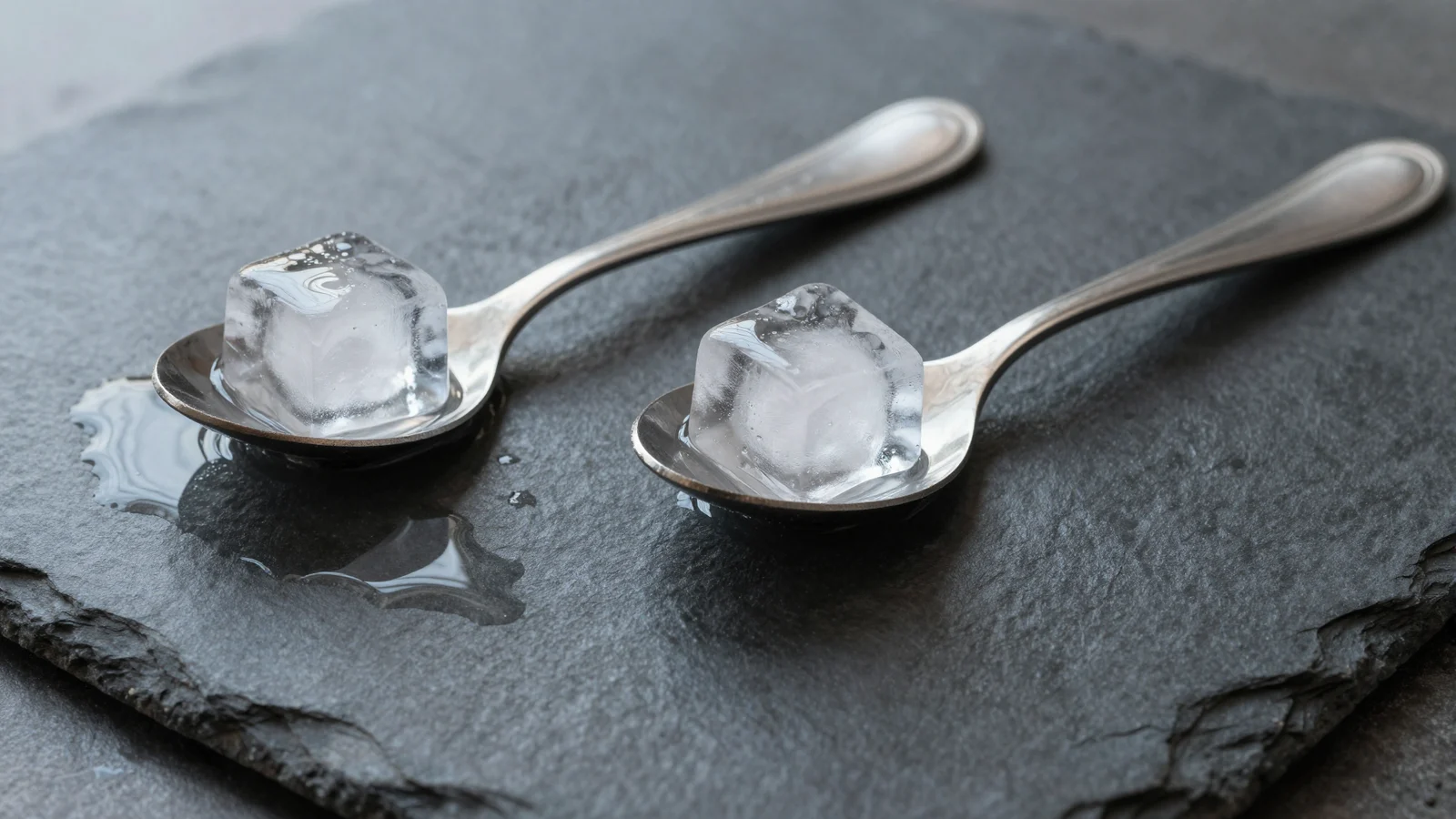
Partly — and the physics behind it is real. In a reference table of thermal conductivities, silver has the highest thermal conductivity of any pure metal, so an ice cube on solid silver melts visibly faster than on steel.
Copper is where the test breaks down. Copper conducts heat almost as well as silver, and copper is the commonest base metal underneath silver plate. The testing guide at BullionStar puts the limitation plainly: “Copper is the only metal that comes close to silver’s conductivity, so a copper-based fake could produce a similar result.”
So run it as a comparison, not as a verdict. This works best as a comparative test against a known control: bring the piece and a known control item to the same starting temperature, put an ice cube on each at the same moment, and watch the difference. A fast melt separates silver from stainless steel and from tin-based alloys. It does not separate sterling from silver over a copper core, and it says nothing about fineness.
Reference: how well these metals conduct heat
Thermal conductivity at room temperature
Silver: 429 W/m·K
Copper: 401 W/m·K
Brass: 109 W/m·K
Stainless steel: 16.3 W/m·K
How does the “Ring Test” sound?
Real silver produces a distinct, sustained ringing tone when struck, while base metals produce a duller, shorter sound.
Balance the piece on a fingertip so it can vibrate freely, tap it lightly with another coin or a small metal object, and listen. A genuine silver coin should ring clearly for a second or more.
The limitation matters more than the trick: it works best on coins of a known type, where the expected sound is documented. It is much less useful for bars, jewellery, flatware and hollowware, and background noise affects the result. Our guide on telling silver coins from plated fakes covers the coin case in detail.
What is the acid test and should I use it?
The acid test is the most decisive check most people can run at home, and it is destructive: it needs a scratch on a test stone deep enough to bring up the metal lying under the surface — which is also why it sees through plating.
Use a kit calibrated for the standard you are checking: a kit calibrated to .925 will react differently on a lower-purity alloy, a plated item, or a falsely stamped piece. That calibration, not a remembered colour, is what makes the result meaningful.
Where to test, and whether to test at all. Acid testing is precise but can permanently damage the surface and should be avoided on anything that might have collectible value. If you do test, pick a hidden spot such as the underside of a foot rim, never a visible surface, a monogram or a mark. And when the answer really matters, professional-grade tools like electronic verifiers leave almost no room for doubt — which is what a dealer or refiner reaches for before paying.
Can I smell the difference between silver and plate?
Not reliably, and the reason is in the alloy itself.
Sterling is not pure silver. It is 92.5% silver with about 7.5% other metal, usually copper, so a sterling piece rubbed warm in the hand can give off a faint metallic smell of its own. A “no smell” result therefore does not mean solid silver, and a coppery smell does not mean plate.
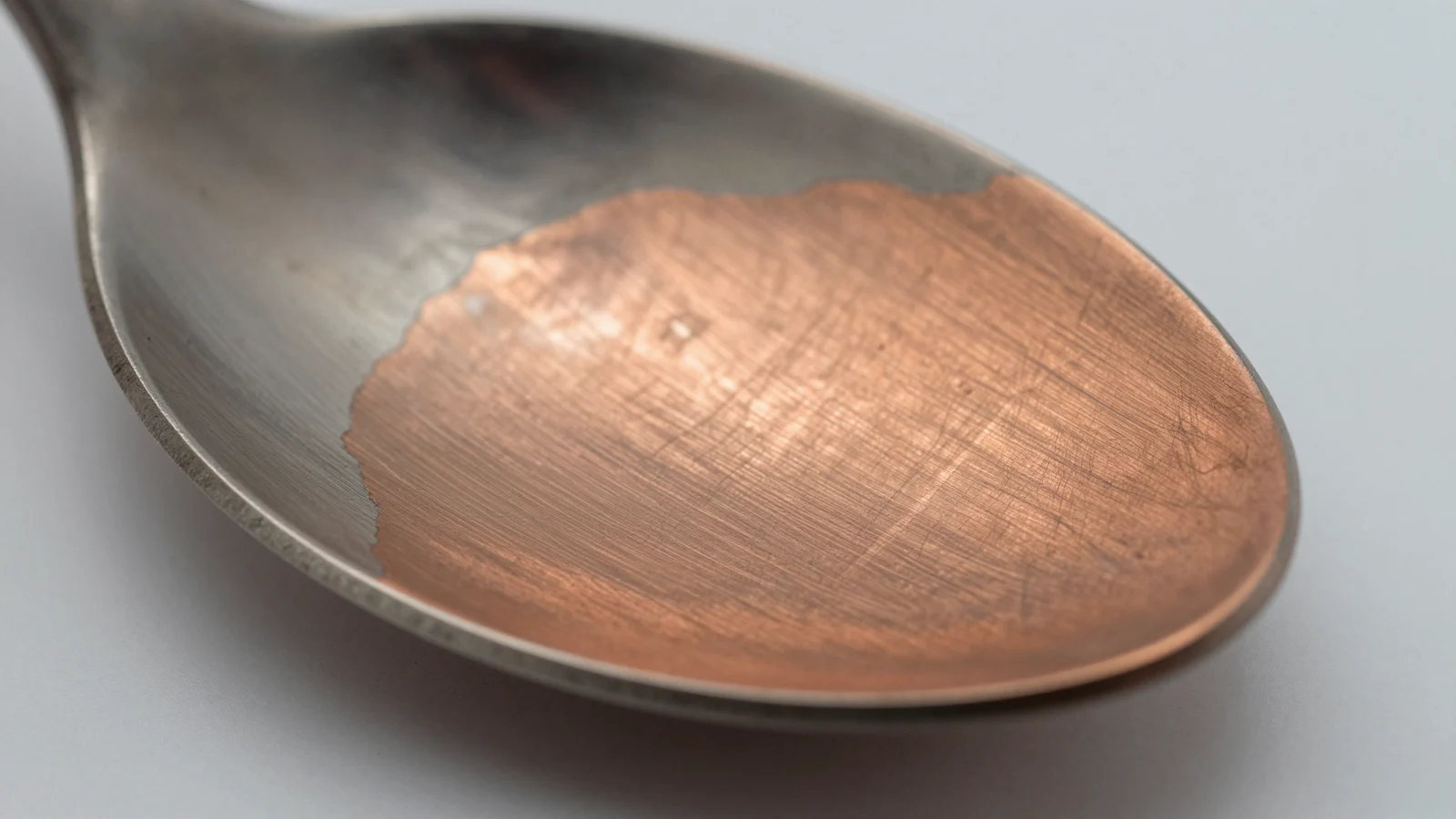
Look instead of sniffing. A plated piece only smells of copper once the plating has already worn through, and by then you can see it: the characteristic identifying feature of OSP is the ‘bleeding’ or ‘show through’ of the copper base on points of wear, and modern electroplate does the same where a piece is handled. Check bowl interiors, spoon heels, fork tines, rims, handle edges and the underside of a foot for a reddish or yellowish tint against the surrounding grey. Solid sterling is one alloy throughout, so it never changes colour as it wears. If a piece also feels light for its size, our pewter and silver weight guide explains what density can and cannot settle.
What marks indicate silver plate?
Recognising plate marks is half the job, and “avoid” is the wrong instruction — you want to read them correctly. These are the abbreviations you will actually meet:
- A1: a plating-quality mark used by makers, not a silver standard.
- Triple Plate / Quadruple Plate: heavier Victorian plating. Still plating.
- EPC: electroplate on copper.
- EPBM: electroplated Britannia metal. Britannia metal was widely used as the base metal for silver-plated household goods and cutlery, and its composition by weight is typically about 92–93% tin, 5–6% antimony, and 2% copper — a tin alloy, which is why EPBM feels light.
- EPNS: electroplated nickel silver, the harder-wearing of the two common bases.
- G. Silver / German silver / nickel silver: the usual formulation is 60% copper, 20% nickel and 20% zinc. Nickel silver does not contain silver, and it appears both as a plating base and, unplated, as a look-alike on its own.
None of those abbreviations is a hallmark. A hallmark is struck after assay by an official office, while a plate mark is applied by the maker itself — which is why one is evidence of fineness and the other is only a description of the plating. Our guide to Decoding British Silver Hallmarks: How to Read the Lion and Anchor shows how to read a real one.
Related Antique Identification Guides
Where to go next: What Does 925 Mean on Silver? for the fineness mark itself, Decoding British Silver Hallmarks: How to Read the Lion and Anchor for the assay-office system, and Antique Teapot Identification: Finding English Silver and Ceramic Marks for marks on hollowware.
Conclusion
No single check on this page is an authentication, and the honest order is marks first, then eyes, then physical tests. A mark is the only evidence here that speaks to fineness at all; a second colour showing at the wear points is the clearest visible sign of a surface layer; and the magnet, ice and ring tests are for ruling metals out rather than ruling silver in.
Each of those tests has a look-alike that passes it: brass, nickel silver, pewter and most stainless steel for the magnet, a copper core for the ice cube, an unringable shape for the tap test. When money or provenance is attached to the answer, take it to an acid kit on a hidden spot or to a dealer with an electronic verifier — and work out the melt value separately from what the maker, pattern and condition are worth.
Don’t guess at your next estate sale.
📱 Download Antique Identifier: AppraiseFind hidden treasures instantly with AI-powered identification


