
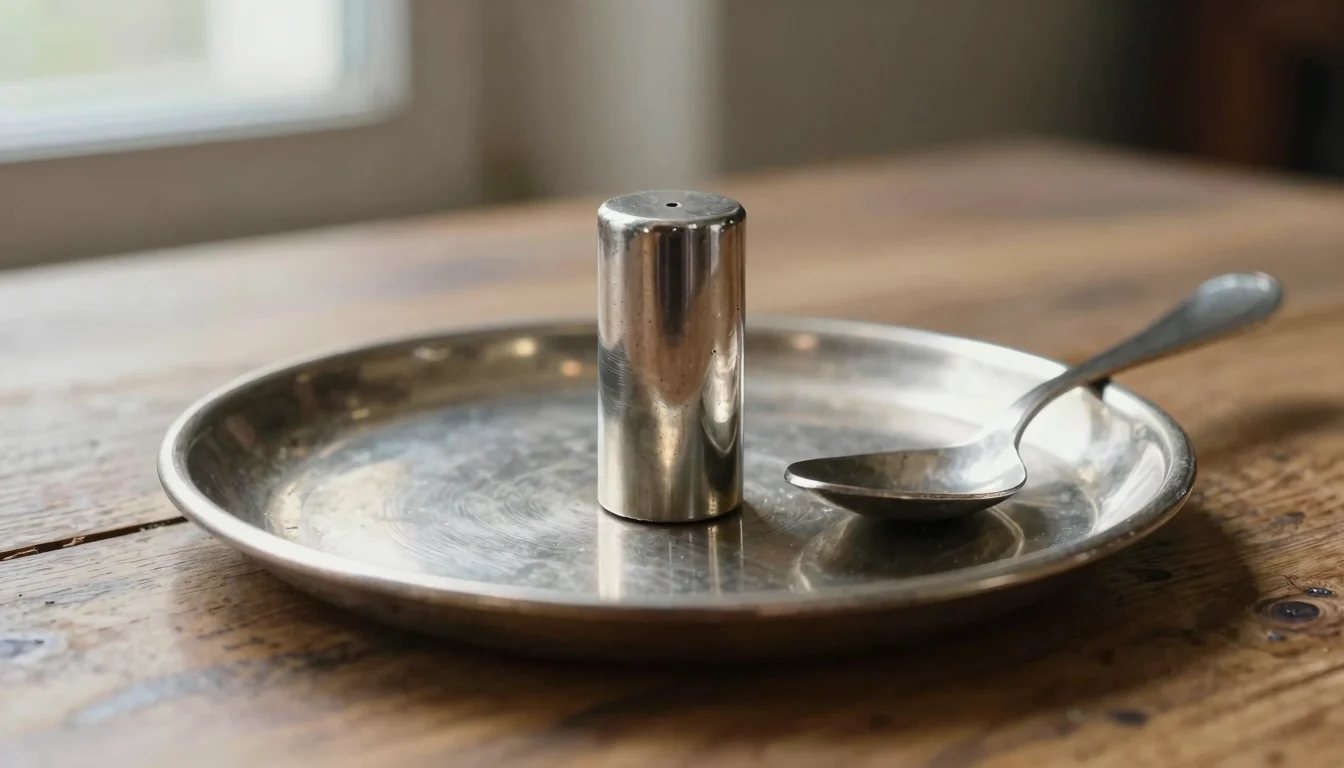
A magnet test for silver works as a first screen, not as proof. Pure silver, sterling silver and coin silver are not attracted to a magnet: silver is diamagnetic, which means a magnetic field pushes it away very slightly instead of pulling it in. If a magnet snaps onto the body of a piece, that body is iron or steel and not solid silver. If nothing happens, you have only learned that the piece is not made of a magnetic metal; silver-plated copper, brass, nickel silver, pewter and most stainless steel pass the magnet test just as well as sterling does.
This guide explains what a magnet can and cannot tell you, why a strong magnet slides slowly down a tilted silver tray, which look-alike metals pass the test, and what to check next. It is a source review by the Antique Identifier editorial team, published by OBZENA LLC, the company behind the Antiqly app. No silver was tested for this article, and the images are labelled AI-generated scenes rather than photographs of examined pieces.
How Does the Magnet Test for Silver Actually Work?
The test relies on the difference between two kinds of magnetic behaviour. Iron, ordinary steel and nickel are ferromagnetic: a magnet pulls on them hard. Silver is not. Wikipedia’s data sheet for silver lists its magnetic ordering as diamagnetic, which means a magnetic field pushes it away very slightly instead of pulling it in. That push is far too weak to feel, so in practice a genuine silver piece simply does nothing when a magnet touches it.
Use a small neodymium (rare-earth) magnet rather than a fridge magnet. Touch it to several spots on the main body of the object, not to a knife blade, hinge, spring or the base of a weighted candlestick. If the magnet grips firmly anywhere on the body, that metal is iron or steel and the piece is not solid silver; it may be silver-plated steel or a plain steel reproduction.
Why does a magnet slide slowly down a tilted silver tray?
Electrical conductivity of common metals at 20 °C
Silver: 63 MS/m
Copper: 59.6 MS/m
Gold: 41.1 MS/m
Aluminium: 35.5 MS/m
Brass: 33.4 MS/m
Stainless steel: 1.45 MS/m
Bullion buyers use a variation called the magnet slide test. BullionStar’s testing guide describes it: hold the magnet close to the item and confirm there’s no pull or attraction, then, for bars or flat items, slide the magnet down the inclined surface and watch its speed. On real silver, the magnet noticeably drags or slides in slow motion. This has nothing to do with diamagnetism. Moving a magnet across a good conductor creates an eddy current, a loop of electric current induced within conductors by a changing magnetic field. By Lenz’s law, an eddy current creates a magnetic field that opposes the change in the magnetic field that created it, so a nearby conductive surface will exert a drag force on a moving magnet that opposes its motion. The classroom version drops a strong magnet down a tube of copper, and the magnet falls at a dramatically slow pace.
The catch is that the drag depends on electrical conductivity, not on silver as such. The electrical conductivity of silver is the highest of all metals, greater even than copper, but copper is close behind and aluminium and brass are also good conductors. The magnet maker K&J Magnetics uses aluminium for the same demonstration: when a good electrical conductor (like copper or aluminum) is exposed to a changing magnetic field, a current is induced in the metal, and you can let a thin disc magnet slide along an aluminum sheet to watch it. So a slow slide tells you the piece is a good conductor; it does not tell you the conductor is silver, and a thick silver skin over a solid copper core will drag a magnet very much like the real thing. The chart under this heading uses the reference values from Wikipedia’s electrical resistivity and conductivity table. The size of the induced current is also proportional to the strength of the magnetic field, the area of the loop, and the rate of change of flux, which is why the braking is obvious on a thick bar and much fainter on a thin plated tray.
What Are the Limitations of Using a Magnet to Identify Silver?
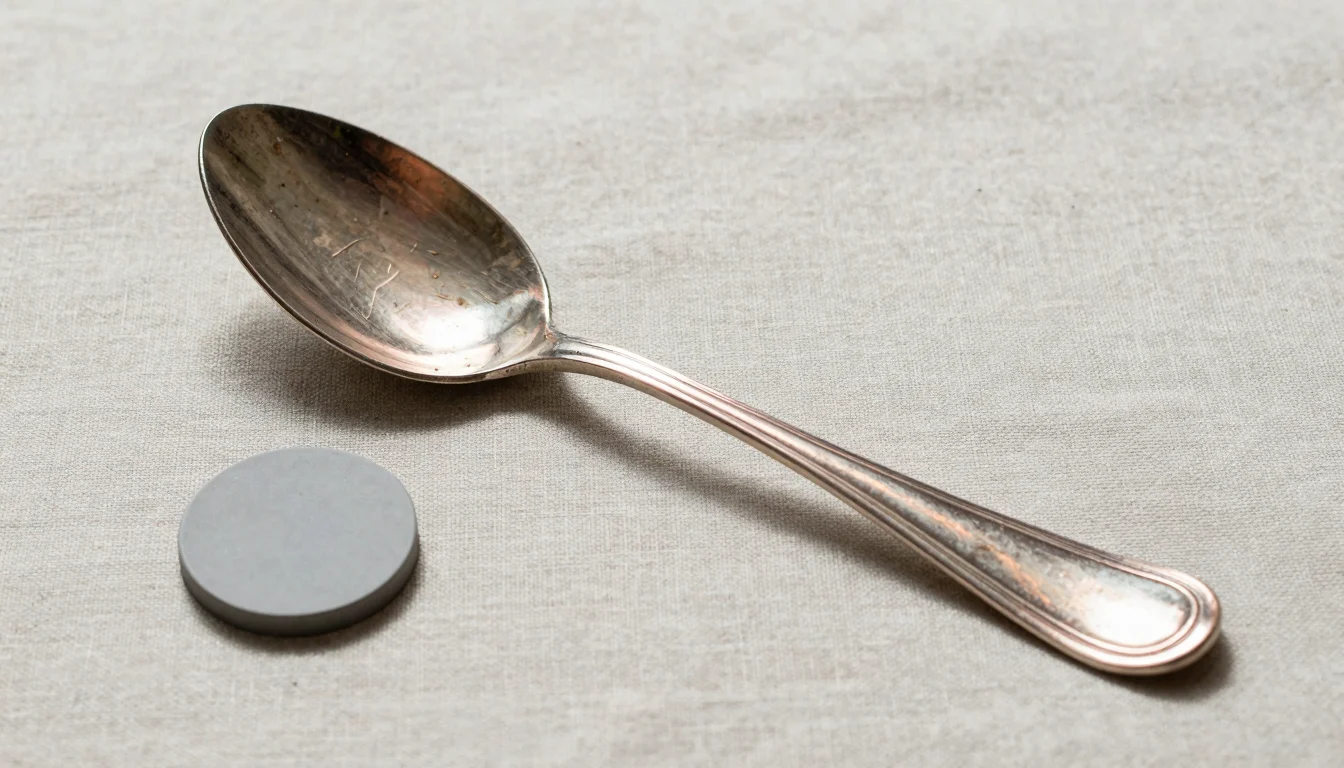
The magnet answers one question only: is there iron or steel in the part you touched? Everything that is not ferromagnetic passes, and most of the metals used to imitate silver fall into that group.
Silver plate passes. Electroplated wares are a thin skin of real silver over a base metal that is almost always non-magnetic. Nickel silver does not contain silver, but resembles it, and it first became popular as a base metal for silver-plated cutlery and other silverware, notably the electroplated wares called EPNS. Copper and brass bases behave the same way under a magnet; copper is diamagnetic just as silver is. The Silver Society is blunt that plated items with a coating of silver over base metal should not be described as silver, yet a magnet cannot tell them from sterling.
Pewter and other white metals pass. Pewter is a tin alloy, and tin, antimony, copper and bismuth are not magnetic. BullionStar’s guide makes the same point about the basic attraction check: brass, pewter and nickel silver are also non-magnetic and will pass. Our pewter magnet test guide covers that case.
Some stainless steel passes. According to Wikipedia’s stainless steel overview, martensitic, duplex and ferritic stainless steels are magnetic, while austenitic stainless steel is usually non-magnetic. A magnet that refuses to stick therefore does not rule out stainless steel. Austenitic stainless steels, which are usually non-magnetic, can be made slightly magnetic through work hardening, which is why a stainless fork can sometimes give a faint tug at a bent tine or a cut edge.
Solid silver can fail in one spot. Sterling pieces often contain steel where strength is needed. As a refiner’s flatware guide notes, the gross weight of a hollow-handled knife includes steel blades and cement cores, so a magnet will grab the blade of a perfectly good sterling-handled knife. Weighted candlestick bases, box springs, hinges and screws can react too. Test the body of the object, and treat a magnet that sticks to a blade or fitting as a note about that part, not a verdict on the whole piece.
Marks can be borrowed. Plated wares sometimes carry pseudo-hallmarks; The Silver Society describes EPNS letters, the individual letters sometimes being placed in shields to look like a genuine set of silver marks. A refiner’s selling guide puts the magnet in its place: simple non-destructive tests such as checking with a magnet can help exclude obvious fakes, but a non-magnetic result alone does not prove sterling silver.
Practical tips for the magnet test
- A small neodymium magnet gives a clear pull on steel and is the only kind strong enough for the slide test; a fridge magnet is too weak to show eddy-current drag.
- Test several places on the body of the piece and avoid blades, hinges, springs and weighted bases.
- Look at high-wear points such as the tip of a spoon bowl, foot rims and handle edges for a yellow or pink metal showing through the silver. That is worn plate, and you do not need a magnet to read it.
- Do not scratch or acid-test a piece you may want to sell as an antique; an acid test leaves a permanent mark. Leave it to a professional or use it only on scrap.
How Can I Tell if My Silver is Real Beyond the Magnet Test?
Once the magnet has excluded steel, turn the piece over and read the marks, then confirm them with a second, different test.
Read the marks. In the United States, federal law (15 U.S.C. § 296) reserves the word “sterling” for articles containing nine hundred and twenty-five one-thousandth parts pure silver and “coin” for articles containing nine hundred one-thousandth parts pure silver, so a STERLING or 925 stamp is a legal statement of fineness, not a decoration. British silver works differently. According to Wikipedia’s hallmark article, the compulsory part of the UK hallmark consists of the sponsor or maker’s mark, the assay office mark, and the standard of fineness, and the hallmark is only applied after the item has been assayed by an independent party. The lion passant is the sterling standard mark most people recognise; The Silver Society notes that after 1720, it was used by all of the English assay offices. Plated wares are marked differently: in The Silver Society’s words, neither Sheffield plate or electroplated items will have silver marks. Look instead for EPNS, A1 or “electroplated”, which indicates plated base metal, which holds negligible intrinsic silver value. Our guides to silver purity marks around the world, EPNS marks and fake silver hallmarks show what genuine and copied marks look like.
Confirm with a second, different test. The ice test uses another property of the metal: the thermal conductivity of silver is among the highest of all materials, so ice melts faster on solid silver than on most substitutes. BullionStar adds the same caveat as for the slide test: Copper is the only metal that comes close to silver’s conductivity, so a copper-based fake could produce a similar result. A jeweller’s acid test or an XRF reading measures the alloy directly. Our comparison of the acid test and the ice test explains when each is appropriate, and the guide to eight at-home silver tests walks through the rest.
Get a professional opinion before selling. Marks can be copied or transposed, and value depends on maker, pattern, condition and weight rather than on passing a magnet test. For what a piece might be worth, see Is My Grandmother’s Silver Worth Anything? and How to Calculate the Melt Value of Sterling Silver.
Is Silver Magnetic? Quick Answers to Common Questions
Is real silver magnetic?
No. Silver is diamagnetic, so a magnet does not stick to it and the faint repulsion is far too small to notice by hand. A magnet that sticks to the body of a piece tells you the metal is iron or steel.
Does sterling silver stick to a magnet?
No. According to Wikipedia’s sterling silver article, sterling silver is an alloy composed by weight of 92.5% silver and 7.5% other metals, usually copper, and neither silver nor copper is attracted to a magnet. Coin silver behaves the same way. If a magnet grips a piece stamped STERLING or 925, either the magnet is on a steel component or the mark is not honest.
Will a magnet stick to silver plate?
Usually not. Silver plate is a thin layer of silver over copper, brass or nickel silver, none of which is magnetic, so most plate passes the magnet test exactly like sterling. Silver-plated steel exists as well; if a magnet sticks to a piece marked EPNS or “silver plated”, the base is steel. Either way the piece is plated, not solid silver, and the marks and wear points tell you more than the magnet does.
Is pewter magnetic?
No. Wikipedia describes pewter as a malleable metal alloy consisting of tin (85–99%), antimony (approximately 5–10%), copper (2%), bismuth, and sometimes silver, and notes that in the past, it was an alloy of tin and as much as 40% lead. None of those metals attract a magnet, so a magnet cannot separate pewter from silver; weight, colour and marks can. See Is pewter magnetic? and Pewter vs Silver Weight.
If a magnet sticks to my “silver”, is it fake?
It is not solid silver at the point you tested. Check whether you touched a steel blade, a spring, a hinge or a weighted base. If the magnet sticks to the body of a spoon, tray or bowl, the piece is steel or plated steel regardless of what is stamped on it.
Related Antique Identification Guides
For the next steps after a magnet test, see Sterling silver vs silver plate: 5 ways to spot the difference, Silver Purity Marks Around the World: 800, 835, 925 and Beyond, When to Use Silver Acid Test vs Ice Test and Is My Grandmother’s Silver Worth Anything? A Practical Assessment Guide. If your piece turned out to be pewter, Is pewter magnetic? and Pewter vs Silver Weight pick up from here.
