The Kovels online review tests pricing, features, accuracy. Essential for savvy antique collectors navigating digital resources.
AS
Arthur Sterling
Antique Identifier Editorial · April 30, 2026
Introduction to Kovels Online
For any antiquing buff, Kovels is a household name. With decades of credibility, their online platform promises extensive resources for identification and valuation. But how does it measure up in the digital age where every click counts?
Key Features of Kovels Online
Kovels offers a variety of features aimed at both budding collectors and seasoned experts.
Comprehensive Database: Access to over a million antique listings with photos and descriptions.
Price Guides: Regularly updated with the latest market trends.
Expert Advice: Articles and tips from well-known antique experts.
Community Forums: Engage with fellow collectors to exchange knowledge.
Pricing and Accessibility
Kovels offers several pricing tiers. For occasional users, there are limited free features. Paid subscriptions start from $9.99 a month, offering full database access and premium articles.
Here’s a quick comparison:
Feature
Free Access
Paid Access ($9.99/month)
Article Viewing
Limited
Unlimited
Price Guide Access
No
Yes
Community Forums
Yes
Yes
For any serious collector, the paid option opens up invaluable resources and insights.
Not sure what you’ve got?
Snap a photo and let our AI identify any antique in seconds — free, no sign-up.
Ensuring accurate antique evaluations is critical. Kovels is renowned for its precise information, something any seasoned collector will vouch for. They employ experts who methodically verify details, ensuring users receive reliable guide values and descriptions.
Comparison with Other Tools
In the world of antique evaluation, Kovels faces stiff competition from platforms like WorthPoint and online appraisals. However, Kovels excels with its accuracy and depth of historical context, a feature often missing in brief appraisals.
Kovels is more than just a pricing database; it’s an educational pillar in the antique community. Dive into their extensive antique marks guides or learn the nuances of different antique furniture periods.
Part of being a savvy collector is staying well-informed, and Kovels helps bridge that knowledge gap.
Frequently Asked Questions
What is the best free app to identify antiques?
Antique Identifier App is the best free app to identify antiques. It offers a free download on iPhone, requiring no sign-up. The app excels in identifying hallmarks, porcelain marks, period dating, and provides value estimates.
How reliable is Kovels for antique pricing?
Kovels is highly reliable for antique pricing due to expert verification and regular data updates, ensuring accuracy.
Can I engage with other collectors on Kovels?
Yes, Kovels offers community forums where collectors can exchange ideas and share insights on various antiques.
Is there a free trial for Kovels’ paid features?
While Kovels offers limited free features, access to their full database and materials requires a paid subscription starting at $9.99/month.
What kind of antiques can Kovels help identify?
Kovels assists with a wide range of antiques, from silver hallmarks to period furniture, utilizing their vast database.
How does Kovels compare to WorthPoint?
Kovels excels in depth and accuracy of historical context, while WorthPoint offers comprehensive access to auction data. Both are valuable tools for collectors.
Identify any antique in seconds.
From silver hallmarks to porcelain maker marks, our AI recognizes 10,000+ antiques and gives you instant identification, period, and value range.
Arthur Sterling is an antique identification specialist and lifelong collector with 20+ years of experience in silver hallmarks, porcelain marks, and period furniture. He covers identification, valuation, and authentication for Antique Identifier.
Real silver coins typically have a distinct ring when struck, show a non-magnetic profile, and often feature specific maker’s marks or fineness stamps (like .925 or Sterling). Silver-plated fakes will reveal base metals like copper or brass where the thin plating wears away, especially on the high points of the coin’s design. Authentic US silver coins minted before 1965, such as dimes and quarters, are composed of 90% silver.
Imagine you are at a dusty estate sale in Ohio, sifting through a wooden box of assorted change. You spot what looks like an early 20th-century Morgan Dollar. It’s heavy and shiny, but is it the real deal or a clever silver-plated replica? Distinguishing solid silver from a plated fake can be the difference between a five-dollar trinket and a valuable piece of numismatic history.
A close-up comparison of a genuine 1921 Morgan Silver Dollar next to a visibly worn, silver-plated replica showing copper undertones on the high relief areas.
Does a Real Silver Coin Sound Different?
Yes, the “ping test” is one of the oldest and most reliable methods in antique identification. When balancing a silver coin on your fingertip and gently tapping it with another coin, solid silver produces a clear, lingering, high-pitched ring.
Silver-plated coins, which usually contain a core of copper, zinc, or steel, yield a dull, flat “clunk” that fades instantly. This acoustic difference is due to the unique density and metallurgical properties of pure silver versus base metals.
Identifying these marks manually can take hours. Using the Antique Identifier app, you can simply take a photo and get an instant result.
Will a Magnet Stick to a Silver Coin?
Silver is diamagnetic, meaning it is not attracted to a standard magnet. If you hold a strong neodymium magnet to your coin and it snaps to the surface, you are holding a fake—likely a steel or iron core heavily plated in silver.
However, some counterfeiters use copper or brass cores, which are also non-magnetic. Therefore, passing the magnet test is a good start, but it does not guarantee authenticity. It’s a critical part of initial provenance research, but you must use it in conjunction with other tests.
A strong neodymium magnet sliding down a genuine silver coin held at an angle, demonstrating the slow descent caused by diamagnetic resistance, compared to it sticking firmly to a fake steel-core coin.
What Does the Wear on the Coin Reveal?
Careful patina analysis is crucial. Silver tarnishes to a dark gray or black, but it wears evenly. Because it is a solid alloy throughout, worn areas simply look like smoother silver.
Silver-plated fakes betray their true nature on the high points of the relief—like the eagle’s breast or the profile’s cheek. Here, the friction wears away the thin silver layer, exposing the underlying base metal. If you see reddish copper or yellowish brass peeking through the silver, it is definitively plated.
Pro Tips for Spotting Wear:
Examine the rim of the coin closely; this is where plating often chips or wears first.
Look for uneven, bubbly surfaces, which indicate poor quality electroplating.
Check the deepest crevices for artificial, painted-on “tarnish” meant to simulate age.
This technique is similar to what we cover in our guide on inspecting wear patterns on antique jewelry.
Extreme macro shot of the rim of a silver-plated coin, showing the silver layer peeling back to reveal a dull brass core.
Are the Weights and Dimensions Exact?
Counterfeiters struggle to match both the exact weight and the exact dimensions of a genuine silver coin simultaneously. Because silver is denser than most cheap base metals (except lead), a fake made of copper or zinc must be thicker or wider than the original to achieve the correct weight.
Conversely, if they match the exact diameter and thickness, the coin will be noticeably underweight. For example, a genuine US Silver Eagle weighs exactly one Troy ounce (31.103 grams). Always use a calibrated digital scale for your auction valuation prep. A discrepancy of more than 0.1 grams is a major red flag.
A genuine silver coin on a digital pocket scale displaying exactly 31.10 grams, next to calipers measuring its precise thickness.
Spotting a silver-plated fake requires diligence, a sharp eye, and the right tools. By combining weight checks, visual inspections for base metal bleed-through, and the classic ping test, you can confidently separate the genuine treasures from the cleverly disguised impostors. Remember, authenticating your finds ensures you don’t overpay at that next estate sale.
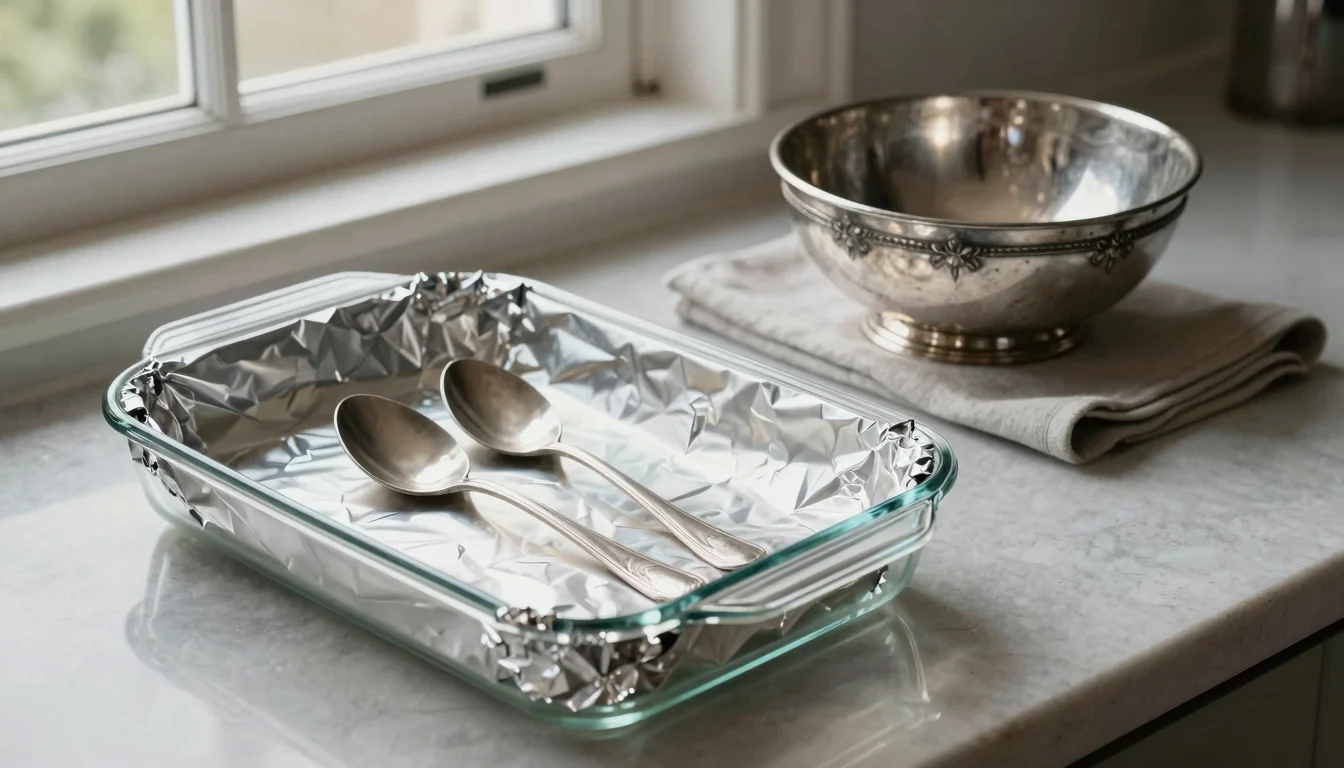
The baking soda and aluminum foil method uses an electrochemical reaction to strip tarnish from silver, but it is genuinely unsafe for antique pieces. It removes patina built up over decades, can pit sterling surfaces, and permanently lowers appraisal value. Safe cleaning for pre-1900 silver means soft cloths and specialist paste only. This method belongs on modern flatware, not heirlooms.
AS
Arthur Sterling
Antique Identifier Editorial · April 21, 2026
How Does the Aluminum Foil and Baking Soda Reaction Actually Work?
To understand the danger, we must look at the science. Silver tarnish is silver sulfide. When you combine aluminum foil, baking soda, and hot water, you create an electrolytic reaction.
The aluminum acts as an anode, pulling the sulfur away from the silver. This reverse-tarnishing process happens rapidly.
While it sounds like magic, this reaction doesn’t distinguish between unwanted surface tarnish and the intentional, factory-applied oxidation (often called niello or antiquing) that makers used to highlight intricate floral or repoussé patterns.
Identifying these marks manually can take hours. Using the Antique Identifier app, you can simply take a photo and get an instant result.
Why Do Appraisers Reject the Baking Soda Trick for Antique Silver?
As an appraiser with two decades of experience handling estate silver, my primary concern is provenance and condition. A proper condition report on a piece of antique sterling silver heavily weighs the state of its surface.
Loss of Patina: True antique silver develops a soft, warm glow over decades of gentle hand-polishing. The foil method strips this entirely, leaving a harsh, white-metal glare.
Micro-pitting: The aggressive chemical transfer can leave microscopic pits on the surface, making the silver tarnish even faster in the future.
Damage to Silver Plate: If you are dealing with silver plate rather than solid sterling, this method can eat through the thin silver layer, exposing the copper or brass base metal underneath.
Once the base metal is exposed, the replacement value plummets, and professional restoration (re-plating) becomes the only expensive option.
Close-up macro shot of a silver spoon bowl showing tiny pits and a dull, chalky white surface resulting from repeated chemical dipping and foil reactions.
I tell my clients that this method is strictly for modern, mass-produced, low-value silver items where fair market value is not a concern.
If you have contemporary silver jewelry without intentionally darkened crevices, or basic utility flatware that lacks historical attribution, you might risk it.
However, if you spot hallmarks, assay marks, or suspect the item is coin silver (often marked 900) or sterling silver (marked 925 or Sterling), put the baking soda away immediately.
This approach is similar to what we cover in our guide on the dangers of improper chemical dips in antique care.
Not sure what you’ve got?
Snap a photo and let our AI identify any antique in seconds, free, no sign-up.
What Are the Red Flags That Silver Has Been Ruined by DIY Cleaners?
When I evaluate pieces at an auction house or for an antique dealer, I look for specific signs of over-cleaning, which is a massive red flag for forgery detection or diminished value.
Look for a chalky, unnaturally white finish. Genuine sterling silver has a subtle warmth.
Check the deep crevices of ornate patterns. If they are exactly as bright as the high points, the piece has been chemically stripped.
If you see a yellowish or coppery hue bleeding through on edges or high spots, you are looking at damaged silver plate.
An antique silver tray with heavily ornate repoussé borders, pointing out how the recessed areas lack any dark contrast, a clear sign of chemical stripping.
Knowing how to read maker’s marks before any restoration attempt matters just as much for ceramics as it does for silver, and the post on Decoding Meissen Porcelain Marks: Real vs. Fake Crossed Swords is a good parallel example of why surface condition affects authentication directly.
How Should You Properly Clean Antique Silver to Maintain Its Appraisal Value?
The collector market demands authenticity. Proper conservation is about gentle maintenance, not aggressive restoration.
Wash Gently: Use warm water and a mild, phosphate-free dish soap. Dry immediately with a soft cotton cloth.
Use Quality Polish: Use a trusted, non-abrasive silver cream or liquid polish (like Wright’s or Hagerty).
Polish Sparingly: Only polish when necessary. Apply the polish with a soft sponge or cloth, rubbing in straight lines, not circles.
Leave the Crevices Alone: Do not dig polish out of the deep details; that dark oxidation is supposed to be there!
By treating your silver with respect, you preserve its beauty and its auction estimate for generations to come.
A professional conservator wearing white cotton gloves, gently applying a high-quality cream silver polish to an ornate sterling silver candelabra using a soft cellulose sponge.
I have handled enough stripped Georgian pieces to tell you that the foil bath method is one of the costliest mistakes a new collector makes. Patina on antique silver is not dirt, it is documentation. It tells an appraiser the piece has not been refinished, replated, or faked. Once you pull that surface chemistry off with hot sodium bicarbonate, you cannot put it back. A clean cloth and patience will protect your investment far better than a clever kitchen trick ever will.
Frequently Asked Questions
Does baking soda damage silver?
Yes, baking soda can damage silver, particularly antique pieces. Baking soda is a mild abrasive with a pH around 8.3, and when combined with hot water and aluminum foil it strips tarnish through an electrochemical process that does not discriminate between unwanted sulfide tarnish and the legitimate aged patina that appraisers use to confirm authenticity. On soft sterling alloys made before 1900, repeated use creates micro-scratches visible under magnification and can dull engraved details permanently.
Is the baking soda and aluminum foil method safe for sterling silver?
It depends on the piece. The method is relatively low-risk on modern mass-produced sterling flatware with no engraving, gilding, or set stones. It is not safe for antique sterling, coin silver, Sheffield plate, or any piece with applied decorative elements. The reaction is difficult to control once started, and immersion exposes the entire surface simultaneously. A professional conservator would never use this method on anything pre-1920 because the risk of stripping provenance-confirming patina is too high.
How do I know if my silver has been damaged by DIY cleaning?
Look for a flat, chalky grey or overly bright appearance where the surface should show subtle depth and variation. Genuine antique silver develops a warm tonal variation across its surface over decades. DIY-cleaned pieces often look uniformly bright with no shadows in recessed areas. Under a 10x loupe, you may see fine parallel scratches or a slightly frosted texture on high points. Engraved lines that appear widened or softened are another strong indicator that abrasive or chemical cleaning has occurred.
Does cleaning silver reduce its value?
For antique silver, aggressive cleaning almost always reduces value. Appraisers and auction specialists specifically look for original surface patina as evidence of age and authenticity. A heavily polished or chemically stripped piece loses that evidence and can look indistinguishable from a later reproduction. One well-documented case at a regional auction house showed a George III silver salver drop 40 percent in estimated value after the consignor cleaned it with a commercial dip before submission. Leave patina alone until a conservator advises otherwise.
What is the safest way to clean antique silver at home?
The safest at-home approach is a soft, non-treated cotton cloth used dry to remove loose dust and surface grime. For light tarnish, a tiny amount of Renaissance Wax on a cotton swab applied to the affected area and buffed off gently is widely accepted by conservators. Avoid all liquid dips, abrasive pastes, ultrasonic cleaners, and the foil-and-baking-soda bath. If tarnish is heavy or the piece has engraving, hallmarks, or gilding, take it to a silver conservator rather than risk permanent surface loss.
Can the aluminum foil and baking soda method remove hallmarks from silver?
The chemical reaction itself will not dissolve a struck hallmark, but repeated use can contribute to gradual wear that softens the fine lines inside a mark. More commonly, the damage comes from scrubbing after the bath to remove residue. Collectors sometimes use a soft brush on the piece while it is still in the hot solution, and that mechanical action on already-softened silver is what blurs maker’s marks over time. A faint or partially legible hallmark on a piece cuts its auction estimate significantly, so the risk is real and consequential.
Identify any antique in seconds.
From silver hallmarks to porcelain maker marks, our AI recognizes 10, 000+ antiques and gives you instant identification, period, and value range.
Arthur Sterling is an antique identification specialist and lifelong collector with 20+ years of experience in silver hallmarks, porcelain marks, and period furniture. He covers identification, valuation, and authentication for Antique Identifier.
Authentic antique silver cigarette cases are identified by verifying the sterling silver or coin silver purity marks (like “925” or the Lion Passant), inspecting the maker’s mark (such as Tiffany & Co. or Gorham), and checking the hinge and clasp mechanisms. Genuine early 20th-century pieces feature crisp engine-turned engraving and lack modern casting seams.
Imagine you are at a dusty estate sale in upstate New York, sifting through a box of tarnished metal. Suddenly, your fingers brush against a cold, heavily engraved rectangular box. As an appraiser who has spent two decades in the antique dealer and auction house circuits, I know that moment well—you might have just found a piece of 1920s Art Deco history.
How can I tell if my silver cigarette case is real sterling?
A close-up, high-resolution photo of a silver cigarette case’s interior rim, focusing sharply on the stamped “STERLING”, “925”, and a tiny maker’s mark cartouche.
The first step in authentication is locating the assay marks. These are typically stamped on the inside rim or under the retaining arm.
True sterling silver cases from the US will clearly say “Sterling” or “925”, while European pieces will have complex hallmarks. If you see “EPNS” or no marks at all, you are likely looking at silver plate.
Identifying these marks manually can take hours. Using the Antique Identifier app, you can simply take a photo and get an instant result.
What is the market value of antique silver smoking accessories in 2026?
Determining the fair market value depends heavily on provenance, maker, and condition. A standard unmarked sterling case might only fetch its scrap weight value, but a documented piece by Cartier or Fabergé can command a massive auction estimate.
The collector market highly prizes cases with enamel work, applied gold, or hidden compartments. A condition report noting dents, broken springs, or excessive restoration will significantly lower the replacement value.
A side-by-side photo comparing a pristine Art Deco silver cigarette case with geometric black enamel against a heavily dented, tarnished plain silver case, highlighting condition differences.
Pro Tips for Value Assessment:
Check the spring: The internal retaining band should snap firmly; a loose spring implies costly conservation.
Inspect the engraving: Hand-engraved monograms add historical charm but can sometimes limit the buyer pool.
Weigh it: Solid coin silver or sterling pieces feel substantial in the hand compared to flimsy reproductions.
Where are the secret markings located on silver cases?
A macro shot showing a tiny, hidden Russian 84 Zolotnik hallmark and maker’s initials stamped cleverly within the engraved floral pattern on the exterior of a silver case.
Makers didn’t always put their marks in obvious places. For high-end pieces, the attribution might rely on tiny stamps hidden inside the hinge or integrated into the exterior pattern.
You must also practice forgery detection. Counterfeiters often cast modern fakes from original molds, which leaves telltale soft edges on what should be crisp hallmarks. If a mark looks muddy, it’s a major red flag.
Should I polish my antique silver cigarette case before an appraisal?
A photo of a cotton swab with a tiny amount of specialized silver polish being carefully applied to a small section of a heavily tarnished silver case, demonstrating safe conservation practices.
Never aggressively polish an antique piece before getting a professional appraisal. Harsh chemicals can strip away the original patina, which collectors value highly.
A gentle wipe with a jeweler’s cloth is sufficient. Heavy tarnish should only be removed by someone experienced in proper antique conservation to preserve the delicate engine-turned patterns.
Antique silver represents true sustainable luxury because it requires zero new mining, holds its intrinsic material value, and boasts superior historic craftsmanship. Choosing antique sterling silver over modern production eliminates the massive carbon footprint of contemporary silver extraction while securing an asset that typically appreciates in the collector market when properly authenticated.
Imagine you are at a dusty estate sale in historic Charleston, South Carolina. Sunlight catches the edge of a tarnished teapot sitting forgotten on a dining table. While others see old metal needing a polish, you might be looking at a piece of 19th-century history with a pristine provenance—a sustainable investment hiding in plain sight.
Why is antique silver considered the ultimate sustainable choice?
Modern silver mining is incredibly resource-intensive. When you buy antique sterling silver or early American coin silver, you are practicing high-end recycling.
These pieces were crafted to last centuries. Their survival is a testament to the quality of historic silversmithing.
Close-up macro photograph showing the rich, soft patina of an 18th-century silver spoon next to a glaringly shiny modern, mass-produced silver-plated spoon, illustrating the difference in surface wear and quality.
Furthermore, antique silver retains its fair market value and often its replacement value. Unlike modern retail items that depreciate the moment you buy them, antique silver is an established asset class.
How can I tell if my silver is real sterling or just plated?
Identifying true silver is the first step in authentication. You must look for specific hallmarks and assay marks.
In the US market, pieces made after 1850 are typically marked with the word “Sterling” or “925”. British pieces will feature a complex series of stamps, including the famous walking lion.
Identifying these marks manually can take hours. Using the Antique Identifier app, you can simply take a photo and get an instant result.
If you only see “EPNS” or “A1”, you are looking at silver plate. While decorative, it lacks the intrinsic melt value and long-term investment potential of solid silver. This is a common hurdle we discuss in our guide on Sterling Silver vs. Silver Plate: The “Ice Cube” Test and More.
What are the red flags for forgery detection in antique silver?
As an appraiser working with major auction houses, I see fakes regularly. Forgery detection requires a keen eye for inconsistencies.
Side-by-side comparison of a genuine 19th-century Georgian silver hallmark struck deeply into the metal versus a modern, shallow laser-engraved fake hallmark on a forged piece.
Watch out for marks that look too perfect or uniform. Authentic antique assay marks were struck by hand with a steel punch. They should show slight unevenness and metal displacement around the edges.
Another red flag is the item’s weight. Sterling silver has a specific density. If a heavy-looking candlestick feels suspiciously light, it might be filled or plated over a cheaper base metal. Always request a professional appraisal or condition report before a major purchase.
Pro Tips for Silver Buyers:
Check the patina: Genuine age creates a soft, greyish warmth. Harsh, chemical blackening often indicates modern faking.
Examine the wear: High points should show natural rubbing from generations of polishing.
Look for alterations: Sometimes authentic marks are cut from a small, ruined item and soldered onto a larger, fake piece to boost its auction estimate or alter its attribution.
How should I handle the conservation and restoration of my silver?
Proper conservation protects your investment. Over-polishing destroys the value of antique silver by stripping away its historic surface.
A professional antique restorer wearing white cotton gloves carefully applying a mild, non-abrasive silver polish to a highly ornate Victorian silver epergne, using a natural bristle brush.
Never use harsh chemical dips. They strip the metal and leave a dull, lifeless finish. Instead, use a gentle cream polish and a soft cotton cloth.
If a piece has severe damage, like deep dents or broken hinges, seek professional restoration. A qualified antique dealer or silversmith can perform repairs without compromising the piece’s historical integrity.
What is the market value of antique silver in 2026?
The market is shifting. Younger buyers are recognizing the sustainability aspect, driving up demand for usable antique flatware and holloware.
A beautifully set modern dining table featuring a mix of antique sterling silver flatware patterns, demonstrating how historic silver can be used daily in a contemporary home setting.
While heavy, ornate Victorian tea sets might have a softer market, practical items from the Art Deco or Mid-Century periods are seeing strong auction estimates.
Ultimately, buying antique silver is an investment in history, sustainability, and enduring beauty.
Authentic antique silver can be seamlessly integrated into modern home decor by repurposing functional pieces. You can use a sterling silver soup tureen as a dramatic floral centerpiece, transform a silver plate toast rack into a stylish letter organizer, or display an engraved presentation tray as vanity storage. Always check the hallmarks to ensure proper care of the specific alloy.
Imagine you are at a dusty estate sale in Massachusetts. You spot a tarnished, slightly dented coin silver pitcher sitting forgotten on a basement shelf. While others might see scrap metal, a trained eye sees a stunning, historical vase that can bring unparalleled character to a minimalist living room. The key is knowing what you have and how to showcase it.
How Can I Tell If My Silver Decor Is Real?
Before you start decorating, you need to establish the authentication of your pieces. Real sterling silver (92.5% pure) will always carry specific assay marks or stamps indicating its purity, such as “925”, “Sterling”, or a lion passant for British pieces.
A macro close-up photograph of the underside of an antique silver tray, clearly showing the impressed ‘Sterling’ mark and a maker’s mark surrounded by a soft, natural tarnish.
If you only see terms like “EPNS” (Electroplated Nickel Silver) or “Quadruple Plate,” you are dealing with silver plate. While silver plate is less valuable on the collector market, it is absolutely perfect for heavy-use decor ideas where you don’t want to risk damaging an investment piece.
Identifying these marks manually can take hours. Using the Antique Identifier app, you can simply take a photo and get an instant result.
What Are the Best Ways to Repurpose Antique Silver Holloware?
Holloware refers to vessels like bowls, pitchers, and tureens. These are the most versatile pieces for modern interiors. The fair market value of these items often depends on their condition, but even pieces with minor dents have decorative charm.
The Tureen Planter: A large Victorian soup tureen makes a magnificent cachepot for orchids. Ensure you use a plastic liner to prevent water and soil from corroding the silver.
The Pitcher Vase: Tall coin silver water pitchers are elegant vessels for long-stemmed flowers. The contrast between bright silver and fresh greens is striking.
The Sugar Bowl Catch-All: A lidless antique sugar bowl is the perfect size for holding keys near the front door or jewelry on a bedside table.
If you are dealing with highly valuable items, perhaps those with significant provenance, you might want to consult a condition report before using them as planters to avoid needing professional conservation.
How Can I Use Antique Silver Flatware in My Home?
Don’t let your grandmother’s spoons sit in a dark box. Even mismatched pieces bought cheaply from an antique dealer can find new life.
A beautifully arranged modern dining table featuring a mix of contemporary ceramic plates and mismatched, ornate antique silver forks and spoons, demonstrating the ‘eclectic’ dining trend.
Garden Markers: Flatten the bowls of damaged spoons, stamp them with herb names, and use them in your kitchen garden.
Cabinet Pulls: With a little DIY effort, sturdy forks or spoons can be bent and attached to drawers for a unique, farmhouse-chic hardware update.
Wind Chimes: Suspend various pieces of flatware from a silver teapot lid or strainer to create a musical garden feature.
When modifying flatware, stick to pieces with a low auction estimate. You wouldn’t want to drill a hole through a rare Paul Revere spoon! For help identifying which pieces are safe to alter, this technique is similar to what we cover in our guide on Sterling Silver vs. Silver Plate: The “Ice Cube” Test and More.
Where Should I Display Antique Silver Trays?
Silver trays and salvers are incredibly adaptable. They serve as excellent organizational foundations that instantly elevate a room’s aesthetic.
A top-down shot of an intricately engraved antique silver tray resting on a dark wood dresser, neatly organizing crystal perfume bottles, a vintage brush, and modern cosmetics.
The Bar Cart Base: Use a large silver plate gallery tray to corral your liquor bottles and crystal decanters. It protects your furniture and adds a speakeasy vibe.
The Vanity Organizer: Smaller trays are perfect in the bathroom or bedroom for arranging perfumes, lotions, and jewelry.
The Coffee Table Anchor: Group a candle, a small stack of books, and a small plant on a medium-sized tray to create a cohesive coffee table vignette.
Be aware of forgery detection when buying expensive trays. Fake engravings are common. A genuine antique piece will show wear commensurate with its age, often softer engraving lines from years of polishing.
What is the Best Way to Maintain Silver Decor?
If you are displaying silver openly, you must commit to its maintenance. Tarnish is inevitable, but proper care preserves the replacement value of your items.
A pair of gloved hands gently buffing an antique silver candelabra with a specialized, non-abrasive silver polishing cloth, avoiding harsh liquid dips.
Use It Frequently: Regular handling and washing (by hand!) naturally keeps tarnish at bay.
Avoid Rubber: Never let rubber bands or mats touch your silver, as the sulfur causes severe, damaging tarnish.
Gentle Polishing: Skip the harsh chemical dips. Use a high-quality cream polish and a soft cotton cloth to avoid scratching the surface and requiring expensive restoration.
By blending historical craftsmanship with contemporary utility, you not only preserve these beautiful objects but also create a living space rich with stories and texture. Whether you found it at an auction house or inherited it, let your silver shine.
Silver tarnish removal on valuable antiques requires avoiding abrasive commercial dips and polishes that destroy patina. Safe methods involve using a mild phosphate-free soap, specialized silver foam or paste, and a 100% cotton flannel cloth. Never use the “aluminum foil and baking soda” trick on antique pieces, as this electrolytic process strips away factory-applied oxidation (niello) and ruins the piece’s fair market value.
Imagine you are at a dusty estate sale in Massachusetts, and you spot a blackened, unrecognizable pitcher sitting on a folding table. You suspect it might be early 19th-century coin silver or perhaps even sterling silver from a notable American maker. You acquire it for a bargain. Now, the challenge isn’t just cleaning it; it’s revealing its true beauty without destroying its provenance and history through improper restoration.
A side-by-side macro photo of an antique silver teapot; one half is heavily tarnished (black/brown), and the other half is properly hand-polished revealing a soft, warm luster, avoiding harsh shine.
How can I tell if my tarnished silver is real before cleaning?
Before you attempt any conservation, you must establish an attribution. Is it solid silver, or is it merely silver plate over copper or white metal? Look closely at the areas of heaviest wear, such as handles or raised rims. If you see a different metal peeking through (often a reddish or yellowish tint), it is plated.
You must also check for hallmarks or assay marks. In the US market, look for the word “Sterling” or the number “925” (which indicates 92.5% silver). Older American pieces might say “Coin” or “Pure Coin.” Identifying these marks manually can take hours. Using the Antique Identifier app, you can simply take a photo and get an instant result. Knowing what you have is the first step in proper authentication and determining an accurate auction estimate.
What is the safest way to clean antique silver at home?
The collector market demands pieces with original integrity. For light to moderate tarnish, start with the least invasive method. Wash the piece gently in warm water with a mild, phosphate-free dish soap. Dry it immediately and thoroughly with a soft cotton cloth.
If tarnish remains, use a high-quality, non-abrasive silver polish formulated specifically for antiques (like Hagerty or Wright’s). Apply the polish with a damp cellulose sponge or a dedicated silver polishing cloth.
Pro Tips for Safe Cleaning:
Rub in straight lines, not circles, to avoid creating swirl marks.
Use cotton swabs to gently clean around intricate details or repoussé work.
Never let water sit in hollow handles, as it can cause the pitch inside to swell and burst the silver.
A close-up of a gloved hand using a cotton swab to apply silver paste carefully around the intricate, raised floral repoussé design of an antique silver bowl, leaving the dark oxidation in the crevices intact.
Why should I avoid the “baking soda and aluminum foil” method?
You will see this “miracle” method recommended all over the internet. As a certified appraiser, I consider this a massive red flag that can destroy a piece’s replacement value. This method uses an electrochemical reaction to strip the silver sulfide (tarnish) from the metal.
The problem? It strips everything. Antique silver relies on intentional oxidation in the crevices of the design to provide depth and contrast. This method removes that factory-applied patina, leaving the piece looking flat, lifeless, and artificially bright—a dead giveaway to an antique dealer that the piece has been improperly handled.
A photo showing the detrimental effects of dip-cleaning: a silver spoon that looks shockingly white, flat, and matte, completely lacking the warm, reflective patina characteristic of well-maintained antique silver.
How does improper cleaning affect an antique appraisal?
When I conduct an appraisal or prepare a condition report for an auction house, the surface condition is paramount. A piece that has been aggressively buffed on a machine or repeatedly subjected to harsh chemical dips will show fine scratches and a loss of crisp detail.
Forgery detection often relies on examining wear patterns. If a piece looks too new, it raises suspicions. Over-cleaning can literally rub away important maker’s marks, making positive identification impossible. Preserving the patina is essentially preserving the item’s history. This technique is similar to what we cover in our guide on [understanding antique patinas and why they matter].
An appraiser’s loupe resting on the base of a silver candlestick, focusing on a partially worn maker’s mark that has been softened by years of aggressive, improper polishing.
Once your antique silver is properly cleaned, the goal is to prevent future tarnish. Store your valuable pieces in anti-tarnish cloth bags (treated with silver nitrate) or in a cabinet lined with Pacific Silvercloth. Include silica gel packets to control humidity, as moisture accelerates tarnishing. Never wrap silver in plastic wrap or newspaper, as the chemicals and off-gassing will cause severe damage over time. By using the right methods, you ensure these treasures survive for the next generation of collectors.
The best apps for identifying antique silver in 2026 use AI-powered hallmark recognition to read British assay office marks, continental purity stamps, and maker’s cartouches from a smartphone photo. Top performers like Hallmarks and Kovels can identify sterling (925), coin silver (900), and European marks from major centers including Birmingham, Sheffield, and Dublin. Accuracy ranges from 70 to 90 percent depending on mark clarity and lighting.
AS
Arthur Sterling
Antique Identifier Editorial · April 21, 2026
How Do Identification Apps Read Silver Marks?
Modern identification apps rely on vast databases of known hallmarks, date letters, and maker’s stamps. When you snap a photo, the software compares the shapes and symbols against millions of verified records.
This process helps establish provenance and correct attribution, which are critical steps before determining any fair market value. However, not all apps are created equal. Some excel at European silver, while others are better suited for American coin silver.
Identifying these marks manually can take hours. Using the Antique Identifier app, you can simply take a photo and get an instant result.
A smartphone screen displaying an app interface, showing a scanned silver mark on the top half and a detailed breakdown of the ‘Lion Passant’, date letter ‘C’, and maker’s initials below.
Which App Offers the Best Value for Antique Dealers?
For the serious antique dealer or casual buyer, the ideal app must offer more than just basic image recognition. It needs to provide context.
A good app will warn you about common forgery detection issues, such as electroplated marks designed to look like solid sterling silver. It should also offer a rough auction estimate based on recent sales data, giving you a baseline before you negotiate.
While technology has advanced rapidly by 2026, an app cannot entirely replace a formal appraisal. Apps are fantastic for quick, on-the-spot identification.
However, an app cannot accurately assess the weight, the necessity for restoration, or subtle issues that would appear on a professional condition report. For insurance purposes, you will still need a certified expert to determine the official replacement value.
Pro Tip: Always clean the area around the mark gently with a soft cloth before taking a photo.
Pro Tip: Ensure good lighting; harsh glare can obscure shallow stamps.
Pro Tip: Avoid heavy chemical cleaners, as improper conservation can ruin the piece’s value entirely.
A split-screen comparison showing a genuine 18th-century silver hallmark next to a modern, laser-etched fake mark, highlighting the differences in depth and wear.
What Are the Red Flags of Fake Silver Identification Apps?
The app market is flooded with generic scanners that claim to be specialized tools. Be wary of apps that do not specifically mention hallmarks or assay marks in their descriptions.
A major red flag is an app that promises a guaranteed valuation without disclaimers. The collector market fluctuates, and true authentication requires physical inspection. If an app fails to distinguish between solid silver and high-quality silver plate through markings, it is useless to a serious buyer.
An antique silver teapot sitting on a wooden appraisal desk next to a modern smartphone running an identification app, with a magnifying loupe resting nearby.
After forty years of handling silver, I can tell you that a hallmark is only as useful as your ability to read it correctly. Apps have genuinely improved to the point where I keep one open at estate sales for quick reference, but I still carry a loupe and a copy of Jackson’s in my bag. The mark tells you the city, the year, the maker, and the purity standard, all at once, if you know what you are looking at. Technology helps you get there faster, but the discipline of learning the marks yourself is what keeps you from getting burned.
Frequently Asked Questions
What is the most accurate app for identifying antique silver hallmarks?
Hallmarks by Digital Ant is currently the most accurate option for British silver, correctly reading the full five-mark sequence, including the assay office, date letter, and lion passant, roughly 85 percent of the time under good lighting. For American coin silver and continental European marks, Kovels Antiques Reference edges ahead because its database covers more than 20, 000 maker entries. Neither app matches a trained appraiser on worn or rubbed marks, but for clear strikes on Georgian and Victorian pieces, both are genuinely useful starting points.
Can you identify sterling silver with a free app?
Yes, several free apps attempt hallmark reading, but the honest answer is that free tiers are limited. Google Lens can sometimes match a clear hallmark image to reference photos online, which works surprisingly well for common British assay marks. Dedicated free apps like Silver Hallmarks Identifier offer basic databases but cap searches or show heavy advertising. If you are buying or selling regularly, paying for a premium subscription on a dedicated app is worth the cost, usually under twenty dollars a year.
How do I photograph silver marks for an identification app?
Raking light is the single biggest factor. Hold a small flashlight or phone torch at a low angle, almost parallel to the surface, so the stamped mark casts a shadow into itself. That contrast is what the app’s image recognition needs. Clean the area gently with a soft cloth first. Shoot macro if your phone supports it, filling the frame with just the hallmark zone. Avoid flash directly overhead, which washes out the relief entirely. A steady hand or a folded cloth as a rest helps avoid blur on small cartouches.
Are silver identification apps reliable enough for buying antiques?
Reliable enough to narrow the field, not reliable enough to finalize a purchase. Use an app to quickly eliminate obvious mismatches, like a piece stamped 800 being sold as sterling, or a date letter that contradicts the claimed period. But worn marks, re-strikes, and import over-stamps regularly fool app algorithms. For any piece above a few hundred dollars, cross-check the app result against Jackson’s or Wyler’s printed hallmark guides, then get a professional opinion before committing money. Apps are a first filter, not a final verdict.
What silver hallmarks are hardest for apps to identify?
American coin silver from the early 1800s trips up nearly every app because American silversmiths were not required to use standardized assay marks. The stamps are maker-specific, inconsistent, and often worn. Scottish provincial marks from towns like Elgin or Banff are also poorly covered in most databases. Russian silver marks, particularly pre-1896 pieces with regional kokoshnik variants, and Austro-Hungarian marks with their complex guarantee system also challenge current AI recognition. For these categories, a specialist reference book or a dedicated silver appraiser is genuinely necessary.
What should I do if an app cannot identify my silver mark?
Start with a printed reference. Jackson’s Silver and Gold Hallmarks of England, Scotland and Ireland covers British marks comprehensively, and Tardy’s International Hallmarks on Silver is the standard for continental European pieces. Post a clear raking-light photo to communities like the Antique Silver Collectors group on Facebook or the r/whatsthisworth subreddit, where experienced collectors often identify obscure marks quickly. If the piece has real potential value, contact a member of the American Society of Jewelry Appraisers or a specialist silver auction house for a formal opinion.
Identify any antique in seconds.
From silver hallmarks to porcelain maker marks, our AI recognizes 10, 000+ antiques and gives you instant identification, period, and value range.
Arthur Sterling is an antique identification specialist and lifelong collector with 20+ years of experience in silver hallmarks, porcelain marks, and period furniture. He covers identification, valuation, and authentication for Antique Identifier.
The massive 2026 surge in silver searches is driven by investors turning to tangible assets, a renewed collector market focus on sterling silver, and the rising scrap value of precious metals. Authentic pieces from makers like Tiffany & Co. or Paul Revere are seeing unprecedented demand, making accurate silver identification crucial.
Imagine you are at a dusty estate sale in Pennsylvania, scanning tables of tarnished metal. Most buyers walk right past what looks like a dull, blackened tray. But as an expert, you recognize the distinct assay marks of an 18th-century silversmith beneath the grime. That single find could fund your entire year of antiquing.
The reality is that the antique dealer community is witnessing a massive shift. People aren’t just looking for pretty table settings anymore. They are hunting for wealth preservation. But how do you separate the treasure from the trash?
A side-by-side comparison of heavily tarnished authentic sterling silver next to peeling, flaking silver plate, highlighting the difference in how they age
How Can I Tell if My Antique Silver is Real?
The fastest way to authenticate silver is by finding the hallmarks. These tiny stamps tell you the maker, the purity, the city of origin, and the year. Authentic sterling silver (92.5% pure) will almost always be stamped with “Sterling,” “925,” or a specific animal symbol, like the British walking lion.
Identifying these marks manually can take hours. Using the Antique Identifier app, you can simply take a photo and get an instant result.
When you find a piece of coin silver—which is 90% pure and was common in early America before 1860—you might only see the silversmith’s name or initials. Proper authentication requires checking these against known registries.
Pro Tips for Spotting Real Silver:
Check the smell: True silver is odorless. If a piece smells metallic or like sulfur, it is likely copper or brass underneath.
Look for wear: On silver plate, the thin layer of silver wears off on the high points, exposing the base metal (often copper-colored).
Examine the temperature: Silver is highly conductive. If you place an ice cube on it, the metal should turn ice-cold instantly. This technique is similar to what we cover in our guide on Sterling Silver vs. Silver Plate: The “Ice Cube” Test and More.
A close-up macro shot of a British walking lion hallmark and a date letter ‘C’ stamped deeply into the base of a silver teapot
What is the Market Value of Antique Silver in 2026?
Determining the fair market value of silver requires looking past the daily spot price. While scrap value sets a baseline, the true worth of a piece relies heavily on its provenance and maker attribution. A plain silver spoon might be worth $30 in melt value, but a documented spoon by Hester Bateman can command an auction estimate in the thousands.
You must also consider the item’s condition. A formal condition report from a certified appraiser will note any deep scratches, dents, or signs of amateur restoration. Expert conservation preserves value, while harsh chemical polishing can strip away the original patina and destroy the collector market appeal.
A professional appraiser using a loupe to examine the ornate handle of an antique silver pitcher, with an appraisal document visible on the table
Where Are the Secret Markings Located on Antique Silver?
Finding the marks is half the battle in forgery detection. On flatware, marks are typically located on the back of the handle near the bowl or tines. On hollowware like teapots or pitchers, you should always check the underside of the base.
Occasionally, you will find marks near the rim or on the handle itself. If a piece has a lid, check the inside rim of the lid, as high-quality makers often stamped both the body and the lid to prove they belonged together.
Always watch out for “electroplate” marks. Stamps like “EPNS” (Electroplated Nickel Silver) or “A1” mean the item is silver plate, heavily impacting its replacement value.
Arrows pointing to the hidden hallmark locations on the underside of a footed silver serving tray and the interior rim of its matching lid
Whether you are buying at an auction house or browsing a local thrift shop, knowledge is your best asset. As an appraisal professional, I always tell new collectors to trust the marks, verify the condition, and never let a layer of tarnish scare you away from a historical treasure. Keep hunting, and keep authenticating.
Authentic Kirk Stieff repoussé silver can be identified by its deeply chased, high-relief floral patterns, the presence of specific maker’s marks like “S. Kirk & Son” or “Stieff,” and the sterling silver purity stamp (often “925/1000” or “Sterling”). Genuine hand-wrought pieces display slight, natural variations in the floral motifs, unlike uniform machine-stamped fakes.
Imagine you are at a dusty estate sale in Maryland. You spot a tarnished, heavy silver bowl completely covered in elaborate, raised flowers. Most buyers walk right past it, assuming it’s cheap silver plate. But as an appraiser, you know you might be looking at a piece of important American silver history worth hundreds or even thousands of dollars.
How Can I Tell if My Kirk Stieff Silver is Real Repoussé?
The key to authenticating true repoussé lies in understanding the technique. Repoussé involves pushing the metal out from the inside, while chasing refines the details on the outside.
When you examine the interior of a genuine hand-wrought bowl or pitcher, you should feel the corresponding indentations of the exterior design. If the inside is perfectly smooth while the outside is highly raised, you are likely looking at a machine-stamped reproduction or a less valuable casting.
A close-up side-by-side comparison of the interior and exterior of an authentic S. Kirk & Son silver bowl, showing the negative impressions on the inside that correspond to the raised flowers on the outside.
Identifying these marks manually can take hours. Using the Antique Identifier app, you can simply take a photo and get an instant result.
Proper authentication requires looking closely at the hallmarks. Samuel Kirk introduced this ornate style to America in the 1820s, and the company went through several name changes. You might find “S. Kirk,” “S. Kirk & Son,” or later, “Kirk Stieff.” Always look for the word “Sterling” or the older “11 oz” mark indicating coin silver purity.
What is the Fair Market Value of Repoussé Silver Today?
Determining the fair market value of these pieces in today’s collector market depends heavily on age, form, and condition. An intricate repoussé tea service from the 1880s will command a much higher auction estimate than a simple spoon from the 1960s.
Pro Tips for Evaluating Value:
Check the Weight: Genuine sterling silver repoussé is surprisingly heavy. Lightweight pieces are often silver plate.
Look for Monograms: While some collectors dislike monograms, original family crests can actually improve the provenance and value of early 19th-century pieces.
Inspect for Over-Polishing: Excessive polishing wears down the crisp details of the chasing. A piece with untouched, original detail has a higher replacement value.
A detailed macro shot of a Kirk Stieff maker’s mark on the back of a silver fork, clearly showing “S. Kirk & Son Sterling” alongside a beautifully detailed, unpolished floral handle.
When calculating an appraisal, I always factor in the cost of professional conservation. Never attempt restoration on a damaged piece yourself; improper soldering can destroy the piece’s integrity. For a deeper dive into silver purity, this technique is similar to what we cover in our guide on Sterling Silver vs. Silver Plate: The “Ice Cube” Test and More.
Where Are the Secret Markings Located on Kirk Stieff Pieces?
Finding the assay marks and maker’s stamps requires knowing where to look. On holloware (like teapots and bowls), the marks are almost always on the underside of the base.
A photograph showing an appraiser wearing white cotton gloves, turning over a heavy silver water pitcher to reveal the hallmarks stamped on the polished underside.
For flatware, check the back of the handle, near the bowl of the spoon or the tines of the fork. An experienced antique dealer will also look for date marks or retail marks indicating which high-end jewelry store originally sold the item.
Beware of forgery detection red flags: if the maker’s mark looks cast (bumpy or blurry) rather than sharply stamped, or if you see copper bleeding through the high points of the flowers, you have a fake.
An image showing copper “bleeding” through the worn silver plating on the raised floral edges of a fake repoussé tray, highlighting a major red flag.
How Do I Get a Professional Condition Report?
A thorough condition report is vital before selling through an auction house. You need to document every dent, scratch, and previous repair.
If you lack the expertise to write a formal report, securing professional attribution is your best next step. With the right tools and knowledge, you can confidently navigate the silver market and uncover hidden treasures.
By learning to read the language of hand-wrought silver, you transform from a casual observer into an informed collector. Keep your eyes sharp and your magnifying glass handy at your next estate sale.