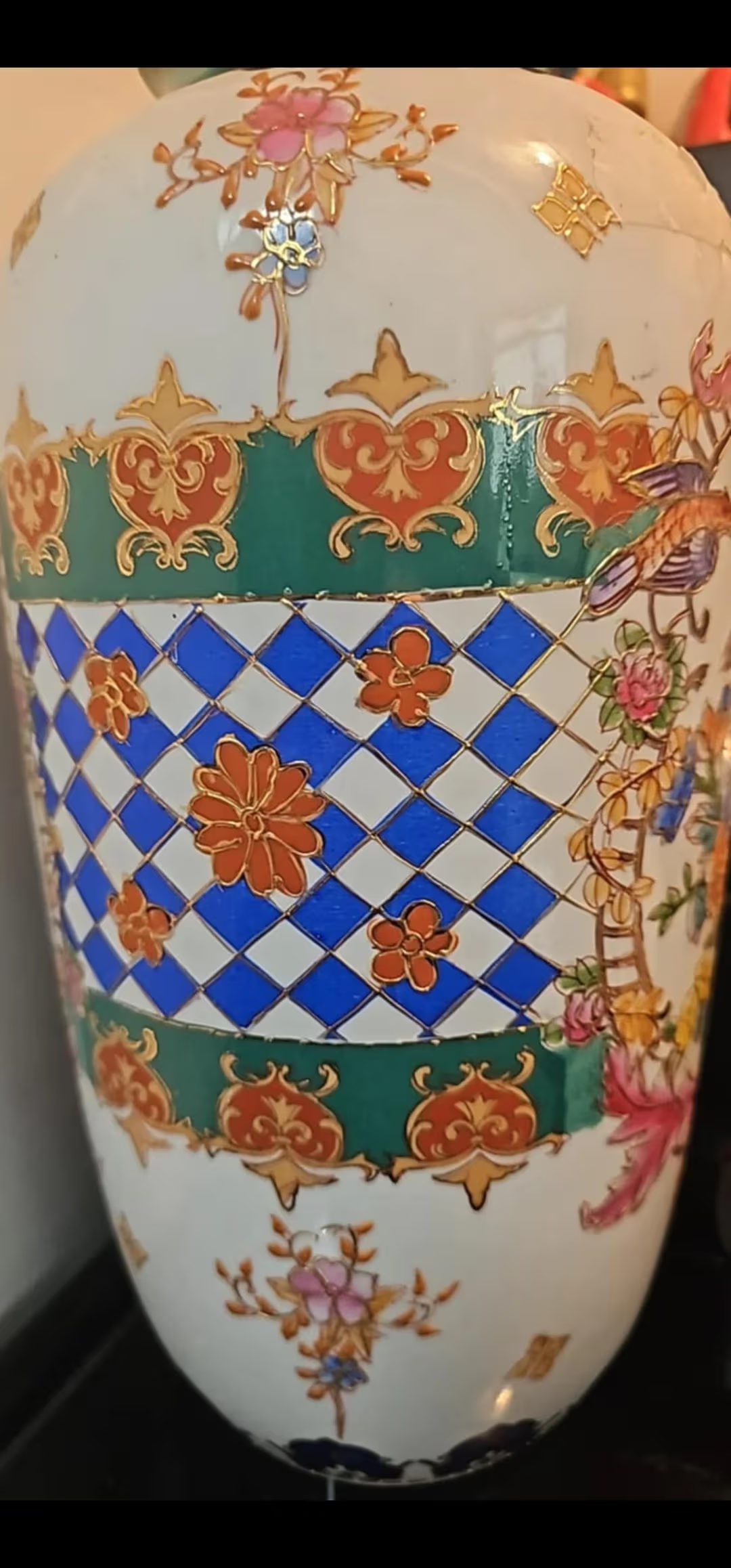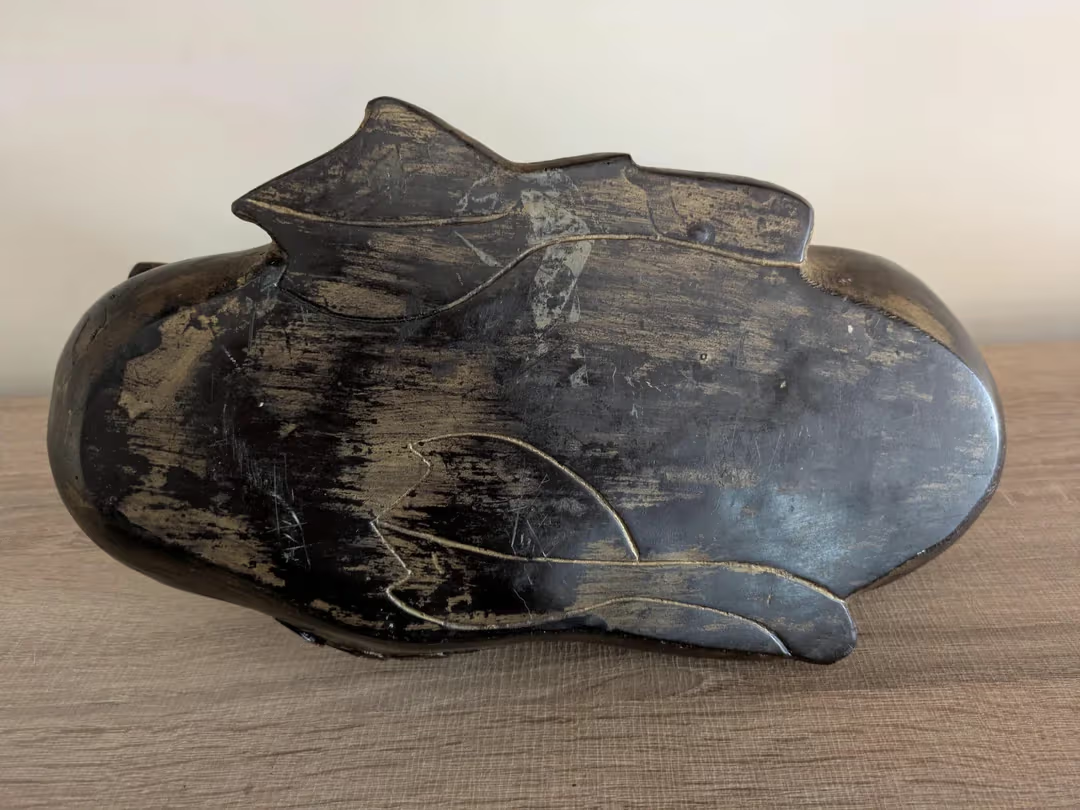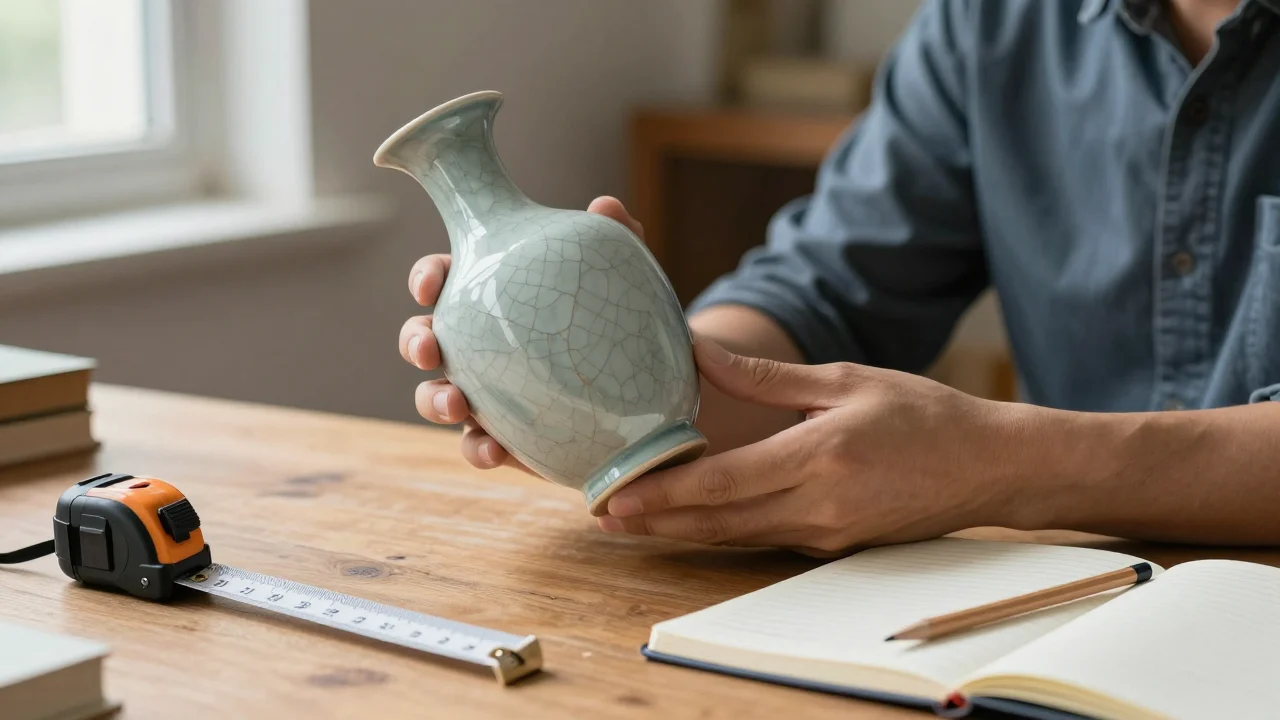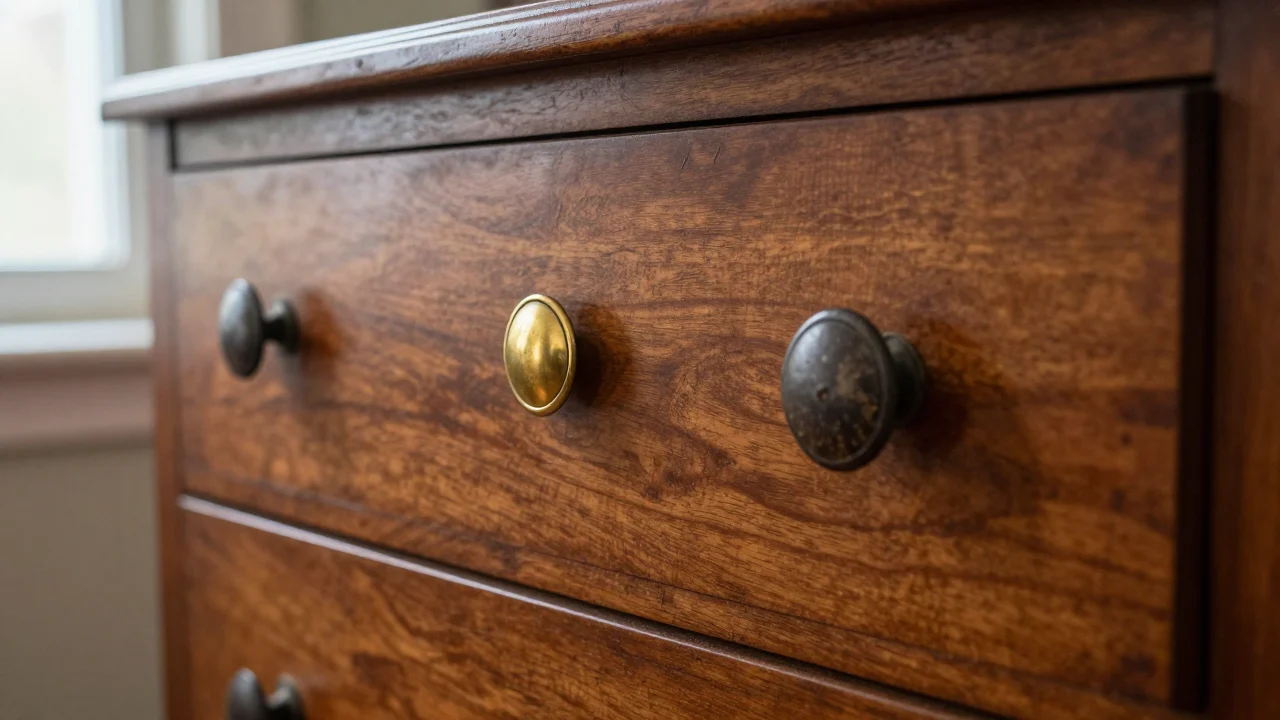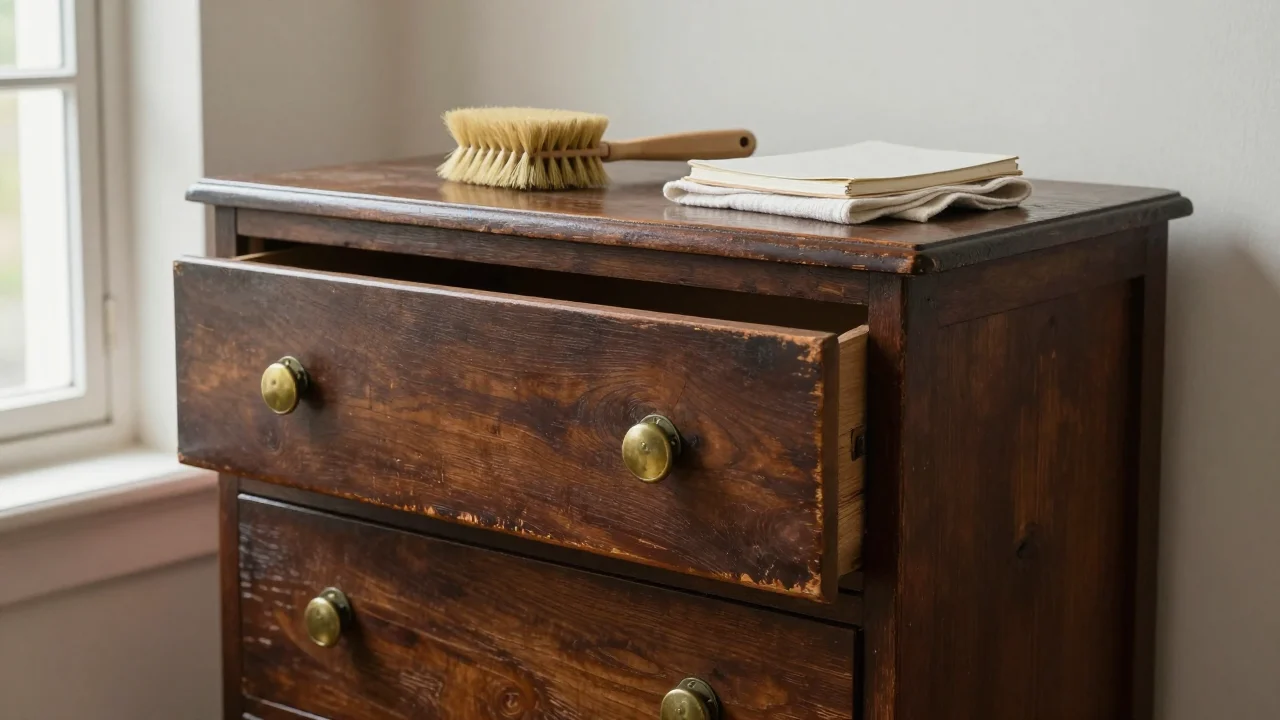
Keep antique furniture with its original finish as it is; restore only a piece that is structurally failing, already refinished or missing parts.
Restore or preserve: how to decide
Decide by asking three questions: does the original surface survive, is the piece structurally sound, and is anything missing? Those answers settle most cases before taste enters into it. A chest, chair or table with its first finish intact and joints that hold belongs in the preserve column even if it looks tired, while a piece that is wobbling apart, was stripped decades ago or has lost its feet, pulls or a leaf is a candidate for work. The Canadian Conservation Institute (CCI) describes the argument fairly: one side holds that furniture should be functional and presentable, which “has often meant stripping and refinishing”, the other that original finishes, stains and paint “often reveal information about the times in which the furniture was crafted”. Its own conclusion is that “Techniques are now available that allow old finishes to be refurbished, thus preserving historical accuracy while restoring an attractive appearance” (CCI, basic care of furniture and objects made of wood). That middle path, keeping the original surface and refurbishing rather than replacing it, is what most owners should be aiming at.
Furniture is one case of a wider question. Our guide to restoration versus conservation across categories works through silver, ceramics and textiles with the same logic and includes a situation-by-situation table.
What original condition and each level of work mean
Original condition means the piece still carries its first finish, its patina, its hardware and its construction, not that it looks new. Collectors use the phrase to cover:
- Original finish: the surface treatment applied when the piece was made, even if worn, crazed or alligatored
- Patina: the natural darkening and oxidation of wood and metal over years of handling and light
- Period repairs: old fixes that are now part of the object’s history
- Maker’s marks: labels, stamps, brands or signatures, which our guide to furniture maker’s marks shows how to find and read
- Construction elements: original hardware, joints, backboards and secondary woods
- Honest wear: the rubbed edges, worn runners and darkened handle areas that use leaves behind
A worn first finish is still original; a bright new one is not. Telling a genuinely old surface from a convincingly aged new one is a skill in itself, covered in our guide to distinguishing new wood from old patina.
The words professionals use for the work itself have fixed meanings, published by the American Institute for Conservation (AIC) in its conservation terminology:
| Term | AIC definition | What it looks like on furniture |
|---|---|---|
| Preservation | “The protection of cultural property through activities that minimize chemical and physical deterioration and damage and that prevent loss of informational content” | Stable humidity, no direct sun, dusting, coasters; nothing on the piece itself changes |
| Stabilization | “Treatment procedures intended to maintain the integrity of cultural property and to minimize deterioration” | Regluing a loose joint, consolidating flaking paint, re-laying lifted veneer |
| Restoration | “Treatment procedures intended to return cultural property to a known or assumed state, often through the addition of non-original material” | Replacing a missing pull or finial, filling a loss, toning a repair to match |
| Refinishing | Not a conservation term: the old surface is removed and a new one applied | Stripping and recoating; the original finish is gone for good |
Conservation, in the AIC’s usage, is the profession that covers all of the first three; refinishing sits outside it because it destroys the evidence conservators work to keep.
When to preserve
Preserve when the original finish is intact, even if it is worn or alligatored, because that surface is the one thing no restorer can give back. The CCI’s advice to owners is blunt: “Stripping wooden furniture is not recommended” and “Once an original finish is removed, it cannot be put back” (CCI, basic care of furniture). Its conservation note on finishes adds that “Original furniture finishes have historical, aesthetic and financial value and, as such, should be maintained” (CCI Notes 7/2, Care of Furniture Finishes). Beyond the finish, these features argue for leaving a piece alone:
- Documented provenance: a known maker, owner or house history that a refinished surface would call into question
- Rare or important pieces: anything a museum or a specialist dealer would recognise
- Early pieces with original painted or varnished surfaces: the older the surface, the fewer survive
- Signed, labelled or stamped pieces: a mark ties the object to a documented workshop
- Original upholstery: period fabric, stuffing and webbing, even when worn
- Untouched condition: never previously restored or refinished
Patina is the sum of oxidation, handling and light over the years: colour depth, surface texture, oxidised hardware, wax build-up and wear at edges, drawer runners and handles. It cannot be manufactured convincingly, and buyers who know the field look for it precisely because it is evidence of age. Remove it and you remove the evidence.
When restoration makes sense
Restore when a piece can no longer do its job, or when it has already lost what preservation would have protected. Structural failure, missing essential parts, severe fire, water or insect damage, earlier amateur work that is itself harming the piece, and surfaces that were stripped long ago all qualify, as do later “improvements” such as Victorian alterations to an earlier piece. Family furniture that has to survive daily use is a legitimate reason too, provided the work is done conservatively. The AIC’s guideline for its members runs the other way as well: “When nonintervention best serves to promote the preservation of the cultural property, it may be appropriate to recommend that no treatment be performed” (AIC Code of Ethics and Guidelines for Practice). A good conservator will tell you when the answer is to do nothing.
Work that conservators regard as appropriate when it is needed:
- Structural stabilization: regluing joints with reversible adhesives and re-setting, not screwing, loose parts
- Replacement of missing parts: in matching timber and period-appropriate form, and recorded as replacements
- Removal of later coatings over an original finish: tested first and carried out by a conservator, never by stripping
- Conservation cleaning: removing dirt and old wax while keeping the patina
- Pest treatment: stopping active deterioration
The rule that ties these together is that good restoration is documented, detectable on close inspection and reversible. The AIC asks that any compensation for loss “should be reversible and should not falsely modify the known aesthetic, conceptual, and physical characteristics of the cultural property”, above all by not removing or obscuring original material. If a piece has already been stripped and refinished badly, professional work can only improve it; that is the one case where restoration carries no preservation cost.
What a furniture conservator actually does
A conservator examines first, treats second, and chooses methods whose effects on the piece can be undone later or at least recognised. Cleaning starts by identifying the coating: the CCI’s note on finishes states that “Before cleaning a coated wooden surface, it is necessary to determine what type of coating it is, whether or not it is stable, if it has been modified or refinished and what the effect of the cleaning technique will be” (CCI Notes 7/2). Dry methods, a soft brush and a vacuum, come before any solvent; old wax build-up is reduced with mild solvents rather than stripped; and the same note observes that for a finish in good condition, effective cleaning “can often be as simple as damp dusting followed by buffing, complemented with careful, infrequent waxing”.
Structural repairs follow the same logic. Hot hide glue is the traditional adhesive because it can be softened again with heat and moisture, so a joint can be taken apart by the next person who needs to; loose joints are cleaned and re-glued rather than screwed or nailed; lifted veneer is re-laid; and cracks are filled slightly below the surface with a material a later conservator can recognise as fill. Epoxies and polyurethane glues are avoided in this kind of work because they cannot be removed without taking wood with them. Finish work builds on what survives, through French polishing over a thin shellac surface, toning a repair to its surroundings, or re-laying gilding over original gesso, and a complete refinish is a last resort for a surface that is already gone.
Behind these choices is a written obligation. The AIC requires its members to weigh “the advantages of the materials and methods chosen” against “their potential adverse effects on future examination, scientific investigation, treatment, and function” (AIC Code of Ethics), which is why a conservator will decline a shortcut a refinisher would take.
How to choose a conservator or restorer
Choose someone who will examine the piece, put a proposal in writing and let you see the work, and be suspicious of anyone who will not. The AIC’s guidance for owners says to “Be wary of those who propose to perform a quick and inexpensive restoration job, are reluctant to discuss in detail the materials and methods to be used, or will not permit you to see work in progress”, and that before treatment begins you should receive “a written preliminary examination report with a description of the proposed treatment, expected results, and estimated cost” (AIC, Hiring a conservation professional). When the job is finished, “The conservator should provide a treatment report when treatment is completed”, listing the materials and procedures used and, where appropriate, before-and-after photographs. Keep that report with the piece.
The AIC’s Find a Professional directory lists members whose training and experience have been reviewed by their peers and can be filtered to furniture and wooden artifacts; conservation bodies in the United Kingdom, Canada and elsewhere keep comparable registers. Beyond membership, look for formal training or a long apprenticeship, museum or historic-house experience, a specialisation in your period, a portfolio of comparable work, references you can call, and professional liability insurance. Treat anyone who proposes stripping as a first step as a warning sign.
Questions worth asking before you hand over a valuable piece:
- What is your assessment of its current condition?
- What work do you recommend, and what would happen if we did nothing?
- What materials and techniques will you use, and can the work be reversed?
- How will this affect the piece’s value and its history?
- Can you show me documented examples of similar work?
- What is your timeline and written estimate, and are examination fees deducted from it?
- How will you document the work, and will I receive the photographs?
- Are you insured while the piece is in your care?
What you can safely do yourself
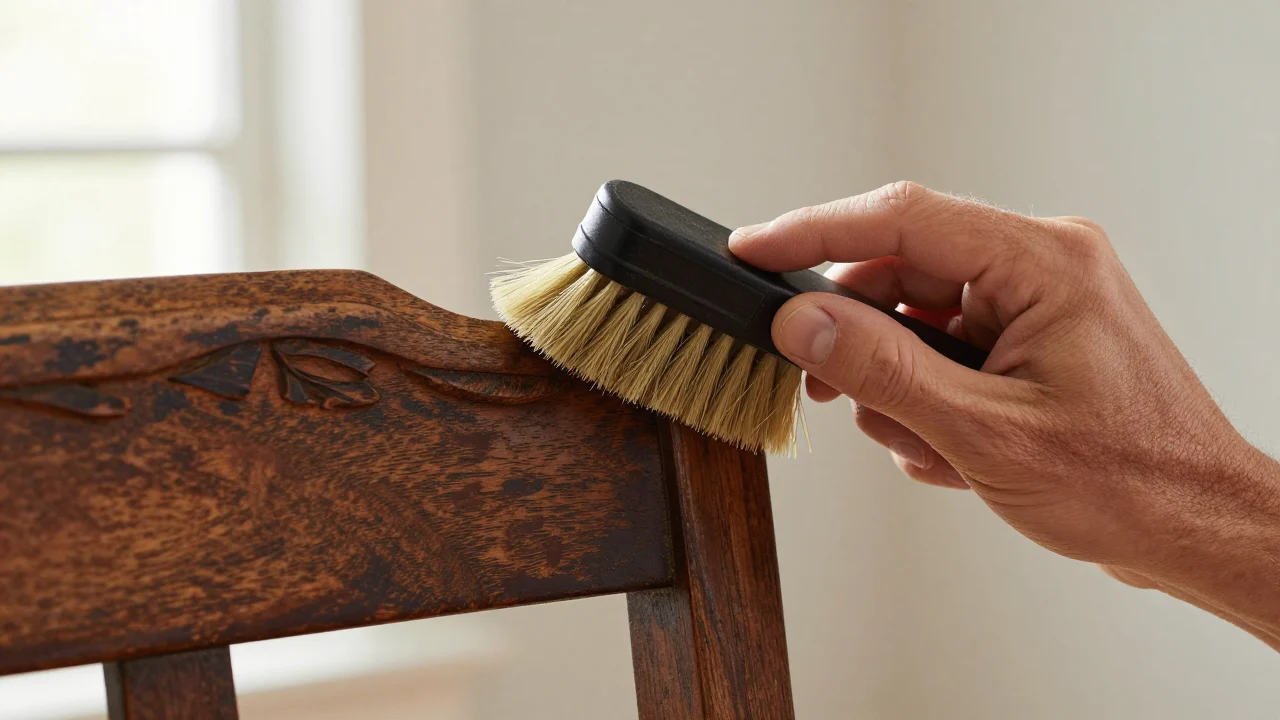
Dust it, wax it sparingly, keep its surroundings stable and stop there; anything that changes the surface belongs with a professional. The CCI’s home-care advice is specific (CCI, basic care of furniture). Dust with a slightly dampened cloth, except that “a lot of furniture made before World War I is sensitive to water and should be dusted only with a dry cloth”, then buff with a dry, soft one. Micro-crystalline paste wax can be used to raise the gloss on surfaces that are handled, but “Do this only once a year and only to the surfaces that are handled”, keeping it away from metal fittings. Skip the oils and sprays altogether: “contrary to popular belief, wood does not need to be “fed””, and polishes leave residues that build up and react with the finish. Leave brass and iron alone as well, because “Museums and historic houses no longer polish metal hardware but simply buff it with a clean, dry cotton cloth”. If you find fresh sawdust under a piece, “isolate it and wrap it in plastic; then consult a conservator for advice”. Beyond that, safe maintenance means tightening a loose screw gently, using coasters and pads, keeping pieces out of direct sun and away from radiators and vents, and conditioning old leather with a product made for it.
What never to attempt yourself, because each of these is permanent:
- Stripping: removes the finish and the patina together, and often raises or scorches the wood
- Sanding, by hand or machine: destroys tool marks, edges and surface character
- Refinishing or staining: replaces the original surface and changes the colour for good
- Regluing with modern adhesives: epoxy and polyurethane glue cannot be undone
- Structural repairs with screws, nails or brackets: weaken joints and leave holes
- Replacing hardware or glass: new pieces are obvious to anyone who knows the form, and the originals are usually lost
- Polishing brass bright or stripping painted furniture: removes the oxidation and the decoration that date the piece
- Polyurethane or other modern film finishes: inappropriate and very difficult to remove
If you are unsure, do nothing. You can always have a piece restored later; you can never have it unstripped or unsanded.
Cost, insurance and what to expect
Expect conservation to be priced by the hour of skilled labour, and expect rarely to recover the cost in resale, so the decision should rest on use and preservation rather than on profit. Cleaning and stabilization are usually the smallest jobs, structural work sits in the middle, and a full restoration or museum-grade treatment of an important piece is the largest, but the only figure that matters is the written estimate for your piece, which the AIC says should accompany the examination report (AIC, Hiring a conservation professional). Ask whether there are separate charges for the preliminary examination and whether they are deducted from a subsequent contract, and whether the studio has a waiting list. We do not quote price ranges here because they vary by region, by conservator and by piece, and a range that is not tied to a specific object misleads more than it helps.
Insurance runs alongside. Have the piece appraised before work starts, so that both its condition and its value are on record, and again afterwards if the work was substantial; our guide to how appraisers determine antique value explains what a written appraisal contains. Tell your insurer before major work, since some policies require pre-approval, confirm that the conservator’s own insurance covers the piece while it is in the studio, and keep every receipt with the treatment report.
Notes by furniture type and period
The same rules apply to every form, but each type of furniture has one detail that decides more than the rest. On case pieces, chests, desks and secretaries, that detail is the interior: leave drawer insides, backboards and the underside untouched, because their oxidation, chalk inscriptions and secondary woods are what confirm age and origin, and our guide to dating furniture by its nails, screws and hinges shows how much a single drawer bottom can tell you. Buff original brasses, never polish or replace them, and if worn drawer runners must be replaced for use, keep the originals with the piece. On seating, the detail is what lies under the cover: save original stuffing and webbing, keep an original fabric in place beneath any new upholstery, reinforce frames from the inside so the repair does not show, and replace rush or cane seats only when they are actually broken. On tables it is the top: refinishing a tired top is the most tempting mistake, a light French polish or a clean and wax usually revives it, original leaves should be kept even if warped, and mechanisms should be lubricated rather than replaced.
Period shifts the balance rather than the rules, and our period guide from 1600 to 1940 will place a piece before you decide. For early pieces with original paint or varnish, stabilize and never remove: tool marks, decoration and proportions are the evidence of age, and the older the surface, the stronger the case for doing nothing. Victorian furniture was made in great quantity, elaborate finishes sometimes do need professional attention, reupholstery for daily use is routine and professional re-gilding is accepted, so more intervention is tolerated. Arts and Crafts and Mission pieces have their own rule: fumed oak finishes are never stripped, branded or paper marks and visible through-tenons are preserved, and hammered hardware is cleaned gently but never polished bright, because the movement’s whole point was honest construction and materials.
Documenting and disclosing the work
Record the condition before, during and after any treatment, and tell the next owner what was done. The AIC’s own standard for its members is “accurate, complete, and permanent records of examination, sampling, scientific investigation, and treatment”, written and pictorial (AIC Code of Ethics), and an owner’s file should aim at the same thing:
- Before photographs: every side, the underside, the interior and every flaw, in daylight
- Process photographs: each stage, especially anything that is removed or replaced
- After photographs: the finished piece from the same angles as before
- Written report: materials, techniques and the reason for each decision, from the conservator
- Receipts and appraisals: for all professional work, kept together
- Material samples: offcuts of original fabric, finish or timber that were removed
When you sell, describe the piece as conserved, restored or refinished as accurately as the record allows, show the work in your photographs and condition report, and note where a repair affects attribution. A buyer who later discovers undisclosed work has every reason to dispute the sale, and a clear record protects the seller as much as the buyer. A well-documented history reassures future owners rather than deterring them.
What to do with your piece now
Work through this in order and stop as soon as you know which column your piece is in.
- Look before you touch. Photograph the whole piece in daylight, then the underside, the back, the inside of the drawers, the joints, the hardware and every flaw. Place it by style and period with our period guide; if you want a quick first opinion on what it is, the Antique Identifier - Antiqly app, which this site publishes, is free to download with in-app purchases on iPhone and iPad and on Android, needs no sign-up, and gives you a name and period to check against the guide.
- Sort it. Original finish intact and joints sound: preserve it, which means dusting, an occasional wax and a stable room, and nothing more. Structurally failing, missing parts or already refinished: get a written examination report and proposal from a conservator before agreeing to anything, and ask what would happen if you did nothing.
- Protect the value before the work. If the piece may be important, or is going to be sold or insured, have it appraised first and keep the appraisal with the treatment report, so that whoever owns it next can see exactly what was original and what was done.
Method and limits. This guide is a synthesis of the published guidance of the American Institute for Conservation and the Canadian Conservation Institute together with standard trade practice. No piece was treated, tested or appraised for this article, no restorer or product was evaluated, and no cost or value figures are given because none could be tied to a documented source. The Antiqly app named in step 1 is published by this site.