Selling inherited silver requires identifying if your pieces are sterling silver (92.5% pure, marked “Sterling” or “925”), coin silver (90% pure, used before 1860), or silver plate (base metal coated in silver). Authentic sterling pieces carry specific maker’s marks and assay marks that determine their fair market value and appeal in the collector market.
Imagine you are at a dusty estate sale in Massachusetts, holding a tarnished tea set your grandmother left behind. Is it a priceless Paul Revere original or a mass-produced 1950s plated copy? The difference at an auction house can be thousands of dollars, and knowing what you have is the first critical step before you even consider selling.
How Can I Tell if My Inherited Silver is Real Sterling?
The easiest way to begin authentication is to look for hallmarks. True sterling silver made in the US after 1850 is almost always stamped with the word “Sterling” or the number “925.”
If you don’t see these, look for assay marks or a lion passant (a walking lion), which indicates British sterling. Pieces marked “EPNS,” “A1,” or “Triple” are always silver plate, meaning their auction estimate will be significantly lower, as they lack intrinsic metal value.
A close-up, macro photograph showing a crisp ‘Sterling’ stamp alongside a maker’s mark (like Gorham’s lion, anchor, and G) on the underside of a silver fork.
Identifying these marks manually can take hours. Using the Antique Identifier app, you can simply take a photo and get an instant result.
What is the Best Way to Determine Silver Value in 2026?
Determining the fair market value of your inherited silver involves checking both the “melt value” and the antique value. Melt value is strictly the weight of the silver based on current precious metal prices.
However, pieces with strong provenance or those made by highly desirable makers like Tiffany & Co. or Georg Jensen command a premium far above their melt value. Always get a professional appraisal before accepting scrap prices from a local “we buy gold and silver” shop.
A tarnished but ornate antique silver teapot resting on a digital jeweler’s scale, showing the weight in grams or troy ounces.
Where Are the Secret Markings Located on Antique Silver?
Finding the marks is often half the battle. On flatware (spoons and forks), check the back of the handle near the bowl or tines. On hollowware (teapots, bowls, trays), look directly on the flat bottom.
Pro Tip: Use a jeweler’s loupe to inspect the marks closely.
Pro Tip: Beware of fuzzy or uneven stamps; these are common red flags for forgery detection.
Pro Tip: If a piece is exceptionally heavy but lacks sterling marks, it may be heavily plated base metal.
A person wearing white cotton gloves inspecting the underside of a large silver serving tray with an illuminated jeweler’s loupe.
Should I Polish My Inherited Silver Before Selling?
One of the biggest mistakes beginners make is aggressive polishing. Improper restoration can ruin the original patina, which an antique dealer expects to see.
A gentle wipe with a soft cloth is fine, but harsh chemical dips can cause permanent damage, drastically lowering the piece’s replacement value. When submitting a condition report to a potential buyer or auctioneer, honesty about tarnish, dents, or scratches is essential. Proper conservation is always preferred over heavy cleaning.
A split-screen image showing an unpolished, heavily tarnished antique silver spoon next to one that has been gently hand-polished, maintaining its dark patina in the recessed design details.
Selling inherited silver doesn’t have to be intimidating. By locating the correct hallmarks, understanding the difference between sterling and plate, and consulting with a reputable appraiser, you can ensure you receive a fair price. Don’t rush to the scrap yard—your family heirlooms might hold historical value far beyond the weight of the metal itself.
When selling antique silver, the most profitable route depends on the item’s quality, maker, and condition. High-end, signed sterling silver pieces from prominent makers like Tiffany & Co. or Paul Revere fetch premium prices at specialist auction houses, while standard flatware sets often sell faster to local antique dealers or through online collector platforms. Always verify the hallmarks before deciding where to sell.
Imagine you are at a dusty estate sale in Ohio, and you spot an entire chest of tarnished silver flatware. The family just wants it gone, but you notice tiny stamped symbols on the back of a spoon. You know it’s not just silver plate; it’s solid silver. Now that you own it, the big question is: where do you sell it to get the best return?
A close-up photograph of tarnished silver spoons resting on dark velvet, with a magnifying glass hovering over the tiny, intricate hallmarks on the back of the handle to emphasize the authentication process.
What is the difference between sterling, coin, and plated silver?
Before you can decide where to sell, you must establish exactly what you have. The collector market treats different types of silver very differently. Sterling silver is an alloy containing 92.5% pure silver and 7.5% copper. It is almost always marked with the word “Sterling” or the number “925.”
Coin silver, popular in early America before 1860, is usually 90% pure silver. It often lacks standard assay marks and might just have a maker’s name. Silver plate, on the other hand, is a thin layer of silver applied over a base metal like copper or brass. Plated items have very little intrinsic value and are rarely accepted by high-end buyers unless the provenance is spectacular.
Identifying these marks manually can take hours. Using the Antique Identifier app, you can simply take a photo and get an instant result.
How do auction houses handle antique silver sales?
Selling through an auction house is generally the best option for rare, highly valuable, or historically significant pieces. If you have a documented piece of 18th-century English silver with clear hallmarks and a strong condition report, an auction can generate competitive bidding.
Auction specialists will provide an auction estimate based on recent sales of comparable items. They handle the authentication, photography, and marketing. However, be prepared to pay a seller’s commission, which can range from 10% to 25% of the final hammer price. The process is also slow; it might take months from consignment to getting paid.
A well-lit, professional auction catalog photograph showing an ornate, polished 19th-century silver tea service with a gavel resting near the base.
Are local antique dealers a good option for selling silver?
Local antique dealers offer a much faster route to cash. If you need to liquidate an estate quickly, a reputable dealer can assess the fair market value and make you an immediate offer.
Dealers are ideal for standard items like mid-20th-century flatware sets, candelabras, and common hollowware. Keep in mind that a dealer needs to make a profit, so their offer will be lower than the replacement value or retail price. Expect offers around 50% to 60% of what they plan to sell it for. Always check for signs of amateur restoration, as dealers will severely discount items with obvious repairs.
This strategy is similar to what we cover in our guide on selling antique furniture locally, where speed often trades off against maximum profit.
A candid shot inside an antique shop, showing a dealer inspecting a silver tray under a bright desk lamp, surrounded by various antique items.
How does selling silver online compare to traditional methods?
Online platforms have revolutionized the antique silver trade. Selling directly to collectors online can eliminate the middleman, allowing you to keep more of the profit. Sites like eBay, Ruby Lane, or specialized silver forums connect you with a global audience.
However, selling online requires you to act as the expert. You must provide clear photos of all hallmarks, accurate weights in troy ounces, and detailed descriptions noting any dents, scratches, or required conservation. You also bear the risk of returns and shipping issues.
What are the red flags of fake antique silver?
Forgery detection is a critical skill in the silver market. The most common deception involves electroplating base metal and stamping it with fake “Sterling” marks.
Pro Tip: Use a magnet. Solid silver is not magnetic. If the magnet sticks, it’s plated over a magnetic base metal.
Pro Tip: Look for “bleeding.” If you see a reddish or yellowish tint wearing through the silver surface, you are seeing the copper or brass underneath the silver plate.
Pro Tip: Examine the marks under a loupe. Genuine antique stamps were struck with a die, displacing the metal around the edges. Fake marks are often cast or engraved, leaving a different microscopic signature.
A macro shot of a fake silver hallmark next to an authentic one, highlighting the sharp, clean strike of the real die versus the mushy, uneven appearance of the forgery.
Before making any decisions, it’s wise to get a formal appraisal to understand the true potential of your items.
Selling antique silver successfully requires patience and a good eye for detail. Whether you choose the prestige of an auction, the speed of a dealer, or the reach of the online market, knowing exactly what you have is the first and most important step. Take the time to identify your pieces, and you’ll ensure you get the best possible return on your investment.
Solid silver, or sterling silver, is an alloy containing 92.5% pure silver, often identified by a “925” mark or a lion passant hallmark. Silver plate consists of a thin layer of pure silver electroplated over a base metal like copper or brass, typically bearing marks like “EPNS” or “A1.” The acid test uses a nitric acid solution applied to a deep scratch; a bright red color confirms solid silver, while green or brown indicates base metals and silver plate.
Imagine you are at a dusty estate sale in rural Pennsylvania, eyeing a heavily tarnished tea service. The seller claims it is solid silver, but the price seems suspiciously low. The piece lacks clear documentation of provenance, and you need to know for sure before making a costly mistake.
How can I tell if my silver is real sterling or just plated?
The first step in authentication is always visual inspection. Before resorting to chemical testing, examine the piece closely with a jeweler’s loupe.
You are looking for specific markings stamped into the metal. American sterling silver produced after 1850 will almost always be stamped with the word “STERLING” or the number “925”.
Older American pieces might be coin silver, which is 90% pure and usually marked “COIN” or “STANDARD”.
A macro shot of the underside of a silver spoon showing a crisp “STERLING 925” stamp next to a maker’s mark
Conversely, silver plate will feature different stamps. Look for “EPNS” (Electroplated Nickel Silver), “EPBM” (Electroplated Britannia Metal), or quality indicators like “A1” or “Quadruple Plate”.
If a piece has no marks at all, it is highly likely to be plated.
Identifying these marks manually can take hours. Using the Antique Identifier app, you can simply take a photo and get an instant result.
What are the common hallmarks and assay marks to look for?
In the British system, hallmarks are heavily regulated. A genuine English sterling piece will feature an assay mark indicating the city of origin, a date letter, a maker’s mark, and a lion passant.
These stamps guarantee the silver’s purity. Without them, you cannot establish a reliable attribution.
A close-up of a row of four distinct British silver hallmarks on a teapot handle, including a clear lion passant and an anchor
When preparing a condition report or determining an auction estimate, an appraiser relies heavily on these marks.
Silver plate makers often created pseudo-hallmarks to confuse buyers. These fake marks might look like shields or crowns but do not correspond to any official assay office.
How does the acid test actually work on antique silver?
When visual inspection fails, professionals turn to the acid test. This is a destructive test, so it should only be performed in an inconspicuous area.
You must make a small, deep notch in the metal—often using a jeweler’s file—to penetrate any potential plating.
A professional appraiser carefully applying a drop of red testing acid from a glass dropper onto a filed notch on the base of a silver candlestick
Apply a drop of testing solution (a mixture of nitric acid and potassium dichromate) to the notch.
If the liquid turns bright red, the item is solid sterling silver. If it bubbles and turns green, you have hit a copper or brass base metal, proving it is merely silver plate.
Understanding this distinction is critical for establishing fair market value and replacement value. A solid silver tray might be worth thousands in the collector market, while a plated version is worth only a fraction of that amount.
What are the red flags for silver forgery and fake marks?
Forgery detection is a major part of any professional appraisal. Unscrupulous dealers sometimes solder genuine hallmarks onto modern base metal bodies.
Look for mismatched patina, visible solder lines around the marks, or stamps that appear soft and cast rather than crisp and struck.
A side-by-side comparison image showing a crisp, authentic stamped hallmark next to a soft, bubbly cast fake hallmark
Another red flag is “bleeding.” If you see a yellowish or reddish tint showing through the silver on high-wear areas (like the handle or base), the base metal is exposed.
In such cases, restoration or conservation might not be worth the investment, as the underlying value simply isn’t there.
Always consult a reputable antique dealer or auction house if you are uncertain about a piece’s authenticity.
Fake silver hallmarks can be identified by examining the crispness of the stamp, the uniformity of the wear, and the accuracy of the assay marks. Authentic sterling silver hallmarks struck before 1890 show uneven wear consistent with the piece’s use, whereas modern laser-engraved forgeries appear perfectly uniform. Always check for the correct maker’s mark alongside the standard purity stamps like “.925” or the British Lion Passant.
Imagine you are at a dusty estate sale in Massachusetts, holding what appears to be a stunning 18th-century teapot. The dealer assures you of its impeccable provenance, pointing to a set of tiny marks on the base. Your heart races, but as a seasoned appraiser, you know that not everything that shines is authentic sterling silver.
What Are the Most Common Signs of Forged Hallmarks?
When conducting an appraisal, the first thing I look for is the method of application. Authentic antique silver marks were stamped by hand using steel punches. This process displaced metal, creating a slight bulge or “ghosting” on the reverse side.
If you are examining a piece and the hallmarks are perfectly sharp without any metal displacement, you might be looking at a modern forgery or a recent addition to elevate the fair market value of a lesser piece.
A macro, side-by-side photograph comparing an authentic, hand-punched 19th-century British Lion Passant hallmark showing natural wear and slight metal displacement, next to a modern, laser-engraved fake hallmark with sharp, uniform edges.
Identifying these marks manually can take hours. Using the Antique Identifier app, you can simply take a photo and get an instant result.
How Can Wear Patterns Reveal a Fake Condition Report?
A piece of silver from 1850 should not look like it was made yesterday. Natural wear, especially on high points or areas frequently handled, is a key component of a reliable condition report.
When authenticating antique silver, I pay close attention to the wear on the hallmarks themselves. If a supposedly 200-year-old spoon has heavily worn decoration but pristine, razor-sharp assay marks, red flags should immediately go up.
Pro Tip: Look for uneven wear. Forgers often artificially age pieces using chemicals or abrasives, but they rarely replicate the organic wear patterns created by centuries of polishing and handling.
Pro Tip: Check the recesses. Authentic patina builds up in the deep crevices of a mark over time.
A close-up image of the bottom of an antique silver tray, highlighting heavy wear and scratches across the surface, but with suspiciously crisp and deep hallmark stamps that clearly do not match the surrounding wear pattern.
Why Is the Combination of Marks Crucial for Authentication?
A single “sterling” stamp is not enough to guarantee authenticity, especially on pieces claiming high replacement value. Historic silver, particularly from Britain or colonial America, utilized a specific system of marks.
You should expect to see a maker’s mark, a standard mark indicating purity (like the Lion Passant for sterling or Britannia for 95.8% purity), a city mark, and a date letter. If an antique dealer presents a piece with a London city mark but a date letter from a different cycle, you are likely dealing with a fake.
A detailed infographic showing a complete, authentic set of English silver hallmarks from the 1700s—including the maker’s mark, lion passant, leopard’s head, and a specific date letter—clearly labeled for identification.
How Do Forgers Alter Genuine Pieces to Increase Auction Estimates?
Sometimes, the forgery isn’t the entire piece, but rather an alteration. A common trick in the collector market is “duty dodging” or transposition. This involves cutting genuine hallmarks from a small, low-value item (like a damaged spoon) and soldering them onto a larger, unmarked piece of silver plate or base metal.
This elevates the perceived auction estimate significantly. To spot this forgery detection during an appraisal, breathe lightly on the area surrounding the marks.
Pro Tip: The moisture from your breath will temporarily reveal the hidden seam line where the genuine mark was soldered onto the fake piece.
Pro Tip: Inspect the interior of hollowware. If you see a patch or discoloration exactly behind the hallmarks, it is a clear sign of tampering.
A detailed photograph showing the “breath test” on a silver teapot, revealing a faint, circular solder seam around a set of hallmarks, indicating a transposed mark from another piece.
Can Silver Plate Be Disguised as Sterling Silver?
Absolutely. Unscrupulous sellers often try to pass off silver plate as solid sterling or coin silver. They might stamp “925” over existing electroplate marks, or rely on buyers not understanding the difference between genuine assay marks and the pseudo-hallmarks used by 19th-century platers like Elkington & Co.
Proper conservation and restoration can make silver plate look magnificent, but it does not change its composition or fair market value. Always verify the specific maker’s marks against known databases or consult an auction house before assuming a piece is solid silver based on appearance alone.
Spotting fake silver hallmarks requires a keen eye, historical knowledge, and an understanding of how metal behaves over centuries. Whether you are browsing a thrift store or bidding at a high-end auction house, never take a stamp at face value. By examining the application method, wear patterns, and historical accuracy of the marks, you can protect yourself from costly mistakes and build a collection of true, authentic value.
The most reliable at-home method for identifying solid silver is the ice test, due to silver’s exceptional thermal conductivity. While the ring test can indicate coin silver or sterling silver through a sustained high-pitched chime, the bleach test is destructive and should be avoided. Professional authentication always requires verifying hallmarks and assay marks.
Imagine you are at a dusty estate sale in Massachusetts, eyeing what looks like a magnificent 19th-century tea service. The seller claims it is solid sterling silver, but the price seems too good to be true. You need to know if you are looking at a valuable antique or just heavily polished silver plate. Before you negotiate a fair market value, you need a quick way to test the metal.
How Can I Tell if My Silver Is Real Using the Ice Test?
The ice test is the safest and most effective method for testing silver without specialized equipment. Silver has the highest thermal conductivity of any metal.
If you place an ice cube on a genuine sterling silver or coin silver piece, the ice will begin to melt immediately, much faster than at room temperature. The silver itself will also become icy cold to the touch almost instantly.
A close-up shot of an ice cube rapidly melting on a flat sterling silver tray, with condensation clearly visible on the metal surface.
This test is excellent for flatware, trays, and coins. However, it requires a flat surface to be effective.
Identifying these marks manually can take hours. Using the Antique Identifier app, you can simply take a photo and get an instant result.
Why Do Experts Warn Against the Bleach Test?
The bleach test involves placing a drop of bleach on the item. Real silver will tarnish and turn black almost immediately due to an oxidizing reaction.
As an appraiser who has handled thousands of condition reports, I strongly advise against this method. It is a destructive test.
A macro photo showing a dark, permanent chemical stain on a piece of silver plate, demonstrating the damage caused by harsh testing chemicals.
The resulting black mark is incredibly difficult to remove and often requires professional conservation or restoration. Damaging the finish will significantly lower the auction estimate and replacement value of the piece. Leave chemical testing to an antique dealer with proper testing acids, and focus on non-destructive methods.
What Is the Ring Test and Does It Actually Work?
The ring test is a traditional method favored in the collector market, particularly for coins. When gently struck with another metal object (like another coin), genuine silver produces a bright, high-pitched, and long-lasting ringing sound.
Base metals and silver plate will produce a dull, brief thud.
Pro Tip: Balance the item on your fingertip to allow it to resonate fully before tapping it.
Pro Tip: Do not strike fragile hollowware, as this can cause dents that ruin the provenance and value.
Pro Tip: This test is subjective and works best when you have a known authentic piece for comparison.
A person gently balancing a silver coin on their index finger while preparing to tap the edge with another coin.
While the ring test is helpful, it is not foolproof. Many modern forgery detection cases involve counterfeits made with metal alloys specifically designed to mimic the acoustic properties of silver. This technique is similar to what we cover in our guide on Sterling Silver vs. Silver Plate: The “Ice Cube” Test and More.
Where Are the Secret Markings Located on Antique Silver?
Ultimately, physical tests are secondary to proper mark attribution. The most reliable way to confirm an item is genuine is to find and identify its markings.
Look for the word “Sterling,” “925,” or specific pictorial hallmarks indicating the purity and maker.
A highly magnified image of the underside of a silver fork, clearly showing a tiny, stamped lion passant hallmark and the number 925.
These marks are usually hidden. Check the underside of bowls, the backs of spoon handles, and the base of candlesticks. If a piece lacks these marks, it is highly likely to be silver plate, regardless of how it performs in an ice or ring test. Always seek a professional appraisal if you suspect you have a significant piece.
Testing silver at home can be exciting, but accuracy matters. Stick to non-destructive methods like the ice test, always search for hallmarks, and consult professional tools when you need certainty. Happy hunting at the auction house!
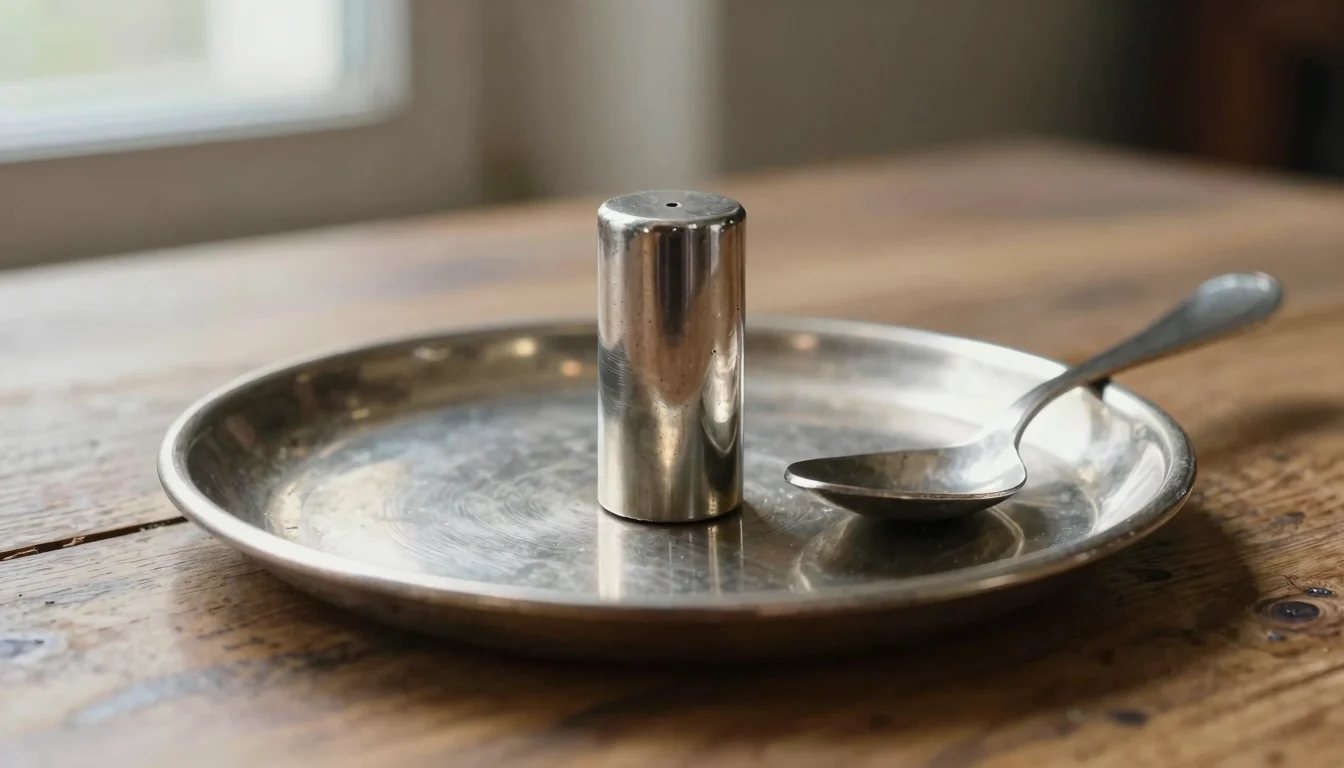
Cover: AI-generated image. A small cylindrical neodymium magnet standing on the body of a plain silver tray, with a spoon beside it: the only setup the magnet test needs. Representative AI-generated scene; no test result is shown or implied.
A magnet test for silver works as a first screen, not as proof. Pure silver, sterling silver and coin silver are not attracted to a magnet: silver is diamagnetic, which means a magnetic field pushes it away very slightly instead of pulling it in. If a magnet snaps onto the body of a piece, that body is iron or steel and not solid silver. If nothing happens, you have only learned that the piece is not made of a magnetic metal; silver-plated copper, brass, nickel silver, pewter and most stainless steel pass the magnet test just as well as sterling does.
This guide explains what a magnet can and cannot tell you, why a strong magnet slides slowly down a tilted silver tray, which look-alike metals pass the test, and what to check next. It is a source review by the Antique Identifier editorial team, published by OBZENA LLC, the company behind the Antiqly app. No silver was tested for this article, and the images are labelled AI-generated scenes rather than photographs of examined pieces.
How Does the Magnet Test for Silver Actually Work?
The test relies on the difference between two kinds of magnetic behaviour. Iron, ordinary steel and nickel are ferromagnetic: a magnet pulls on them hard. Silver is not. Wikipedia’s data sheet for silver lists its magnetic ordering as diamagnetic, which means a magnetic field pushes it away very slightly instead of pulling it in. That push is far too weak to feel, so in practice a genuine silver piece simply does nothing when a magnet touches it.
Use a small neodymium (rare-earth) magnet rather than a fridge magnet. Touch it to several spots on the main body of the object, not to a knife blade, hinge, spring or the base of a weighted candlestick. If the magnet grips firmly anywhere on the body, that metal is iron or steel and the piece is not solid silver; it may be silver-plated steel or a plain steel reproduction.
Why does a magnet slide slowly down a tilted silver tray?
Electrical conductivity of common metals at 20 °C
Silver: 63 MS/m
Copper: 59.6 MS/m
Gold: 41.1 MS/m
Aluminium: 35.5 MS/m
Brass: 33.4 MS/m
Stainless steel: 1.45 MS/m
Reference values in megasiemens per metre from Wikipedia’s resistivity and conductivity table (brass is the low-zinc alloy listed there). Copper is close to silver, which is why copper and brass also slow a sliding magnet; this chart describes the metals, not any particular object.
Bullion buyers use a variation called the magnet slide test. BullionStar’s testing guide describes it: hold the magnet close to the item and confirm there’s no pull or attraction, then, for bars or flat items, slide the magnet down the inclined surface and watch its speed. On real silver, the magnet noticeably drags or slides in slow motion. This has nothing to do with diamagnetism. Moving a magnet across a good conductor creates an eddy current, a loop of electric current induced within conductors by a changing magnetic field. By Lenz’s law, an eddy current creates a magnetic field that opposes the change in the magnetic field that created it, so a nearby conductive surface will exert a drag force on a moving magnet that opposes its motion. The classroom version drops a strong magnet down a tube of copper, and the magnet falls at a dramatically slow pace.
The catch is that the drag depends on electrical conductivity, not on silver as such. The electrical conductivity of silver is the highest of all metals, greater even than copper, but copper is close behind and aluminium and brass are also good conductors. The magnet maker K&J Magnetics uses aluminium for the same demonstration: when a good electrical conductor (like copper or aluminum) is exposed to a changing magnetic field, a current is induced in the metal, and you can let a thin disc magnet slide along an aluminum sheet to watch it. So a slow slide tells you the piece is a good conductor; it does not tell you the conductor is silver, and a thick silver skin over a solid copper core will drag a magnet very much like the real thing. The chart under this heading uses the reference values from Wikipedia’s electrical resistivity and conductivity table. The size of the induced current is also proportional to the strength of the magnetic field, the area of the loop, and the rate of change of flux, which is why the braking is obvious on a thick bar and much fainter on a thin plated tray.
What Are the Limitations of Using a Magnet to Identify Silver?
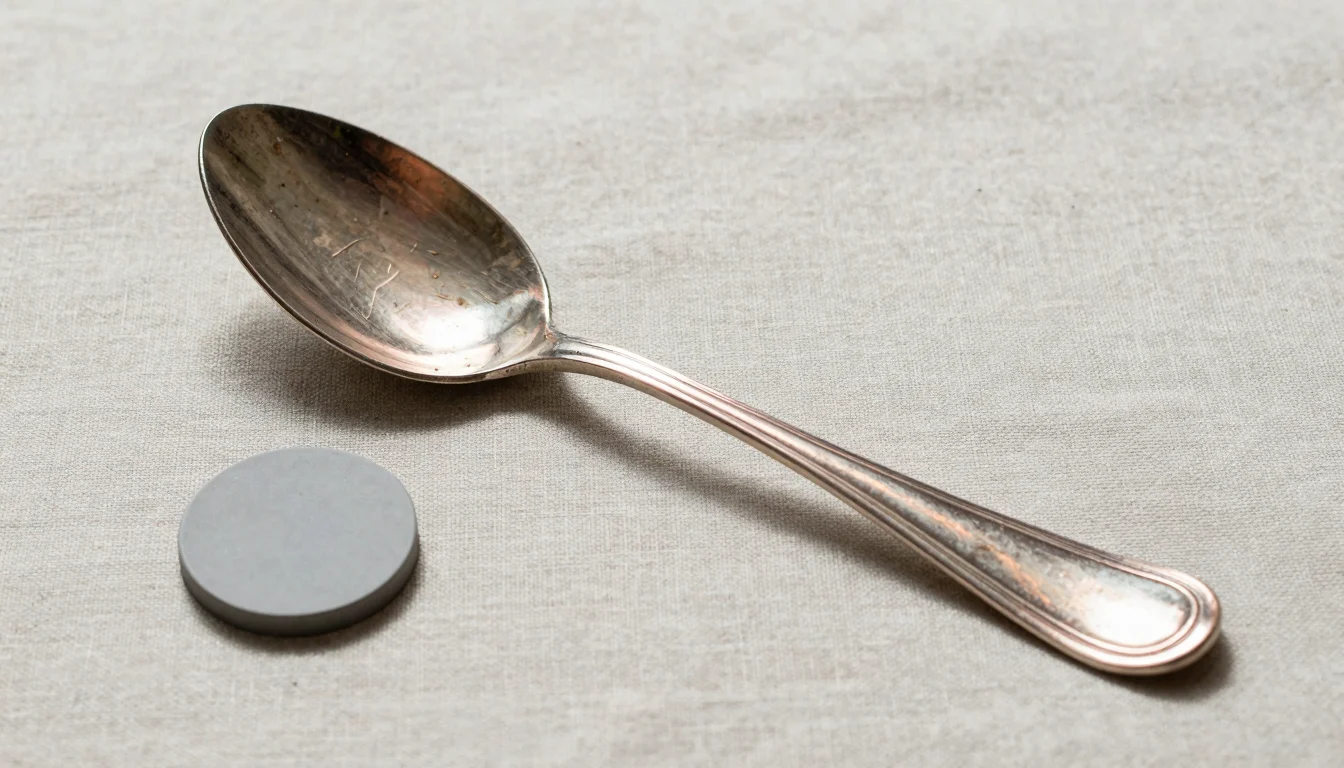
AI-generated image. Plating worn through to a copper base at the high-wear points of a spoon. A magnet lies beside it because it would not stick to either the silver skin or the copper underneath. Representative AI-generated scene, not an examined piece.
The magnet answers one question only: is there iron or steel in the part you touched? Everything that is not ferromagnetic passes, and most of the metals used to imitate silver fall into that group.
Silver plate passes. Electroplated wares are a thin skin of real silver over a base metal that is almost always non-magnetic. Nickel silver does not contain silver, but resembles it, and it first became popular as a base metal for silver-plated cutlery and other silverware, notably the electroplated wares called EPNS. Copper and brass bases behave the same way under a magnet; copper is diamagnetic just as silver is. The Silver Society is blunt that plated items with a coating of silver over base metal should not be described as silver, yet a magnet cannot tell them from sterling.
Pewter and other white metals pass. Pewter is a tin alloy, and tin, antimony, copper and bismuth are not magnetic. BullionStar’s guide makes the same point about the basic attraction check: brass, pewter and nickel silver are also non-magnetic and will pass. Our pewter magnet test guide covers that case.
Some stainless steel passes. According to Wikipedia’s stainless steel overview, martensitic, duplex and ferritic stainless steels are magnetic, while austenitic stainless steel is usually non-magnetic. A magnet that refuses to stick therefore does not rule out stainless steel. Austenitic stainless steels, which are usually non-magnetic, can be made slightly magnetic through work hardening, which is why a stainless fork can sometimes give a faint tug at a bent tine or a cut edge.
Solid silver can fail in one spot. Sterling pieces often contain steel where strength is needed. As a refiner’s flatware guide notes, the gross weight of a hollow-handled knife includes steel blades and cement cores, so a magnet will grab the blade of a perfectly good sterling-handled knife. Weighted candlestick bases, box springs, hinges and screws can react too. Test the body of the object, and treat a magnet that sticks to a blade or fitting as a note about that part, not a verdict on the whole piece.
Marks can be borrowed. Plated wares sometimes carry pseudo-hallmarks; The Silver Society describes EPNS letters, the individual letters sometimes being placed in shields to look like a genuine set of silver marks. A refiner’s selling guide puts the magnet in its place: simple non-destructive tests such as checking with a magnet can help exclude obvious fakes, but a non-magnetic result alone does not prove sterling silver.
Practical tips for the magnet test
A small neodymium magnet gives a clear pull on steel and is the only kind strong enough for the slide test; a fridge magnet is too weak to show eddy-current drag.
Test several places on the body of the piece and avoid blades, hinges, springs and weighted bases.
Look at high-wear points such as the tip of a spoon bowl, foot rims and handle edges for a yellow or pink metal showing through the silver. That is worn plate, and you do not need a magnet to read it.
Do not scratch or acid-test a piece you may want to sell as an antique; an acid test leaves a permanent mark. Leave it to a professional or use it only on scrap.
How Can I Tell if My Silver is Real Beyond the Magnet Test?
Once the magnet has excluded steel, turn the piece over and read the marks, then confirm them with a second, different test.
Read the marks. In the United States, federal law (15 U.S.C. § 296) reserves the word “sterling” for articles containing nine hundred and twenty-five one-thousandth parts pure silver and “coin” for articles containing nine hundred one-thousandth parts pure silver, so a STERLING or 925 stamp is a legal statement of fineness, not a decoration. British silver works differently. According to Wikipedia’s hallmark article, the compulsory part of the UK hallmark consists of the sponsor or maker’s mark, the assay office mark, and the standard of fineness, and the hallmark is only applied after the item has been assayed by an independent party. The lion passant is the sterling standard mark most people recognise; The Silver Society notes that after 1720, it was used by all of the English assay offices. Plated wares are marked differently: in The Silver Society’s words, neither Sheffield plate or electroplated items will have silver marks. Look instead for EPNS, A1 or “electroplated”, which indicates plated base metal, which holds negligible intrinsic silver value. Our guides to silver purity marks around the world, EPNS marks and fake silver hallmarks show what genuine and copied marks look like.
Confirm with a second, different test. The ice test uses another property of the metal: the thermal conductivity of silver is among the highest of all materials, so ice melts faster on solid silver than on most substitutes. BullionStar adds the same caveat as for the slide test: Copper is the only metal that comes close to silver’s conductivity, so a copper-based fake could produce a similar result. A jeweller’s acid test or an XRF reading measures the alloy directly. Our comparison of the acid test and the ice test explains when each is appropriate, and the guide to eight at-home silver tests walks through the rest.
Is Silver Magnetic? Quick Answers to Common Questions
Is real silver magnetic?
No. Silver is diamagnetic, so a magnet does not stick to it and the faint repulsion is far too small to notice by hand. A magnet that sticks to the body of a piece tells you the metal is iron or steel.
Does sterling silver stick to a magnet?
No. According to Wikipedia’s sterling silver article, sterling silver is an alloy composed by weight of 92.5% silver and 7.5% other metals, usually copper, and neither silver nor copper is attracted to a magnet. Coin silver behaves the same way. If a magnet grips a piece stamped STERLING or 925, either the magnet is on a steel component or the mark is not honest.
Will a magnet stick to silver plate?
Usually not. Silver plate is a thin layer of silver over copper, brass or nickel silver, none of which is magnetic, so most plate passes the magnet test exactly like sterling. Silver-plated steel exists as well; if a magnet sticks to a piece marked EPNS or “silver plated”, the base is steel. Either way the piece is plated, not solid silver, and the marks and wear points tell you more than the magnet does.
Is pewter magnetic?
No. Wikipedia describes pewter as a malleable metal alloy consisting of tin (85–99%), antimony (approximately 5–10%), copper (2%), bismuth, and sometimes silver, and notes that in the past, it was an alloy of tin and as much as 40% lead. None of those metals attract a magnet, so a magnet cannot separate pewter from silver; weight, colour and marks can. See Is pewter magnetic? and Pewter vs Silver Weight.
If a magnet sticks to my “silver”, is it fake?
It is not solid silver at the point you tested. Check whether you touched a steel blade, a spring, a hinge or a weighted base. If the magnet sticks to the body of a spoon, tray or bowl, the piece is steel or plated steel regardless of what is stamped on it.
Authentic sterling silver can be identified by looking for specific hallmarks like “925”, “Sterling”, or a lion passant. Genuine silver is non-magnetic, has a high thermal conductivity (melting ice instantly), and produces a distinct, high-pitched ringing sound when tapped. Pieces lacking these traits are often heavily plated copper or brass.
Imagine you are at a dusty estate sale in Pennsylvania, staring at a tarnished tea set that looks like a museum piece. The seller wants fifty bucks. Is it a hidden treasure of solid silver, or just another piece of common silver plate? I have appraised thousands of items over my 20-year career, and I can tell you that knowing a few simple tricks can save you from a costly mistake or secure your next great find.
A close-up macro shot of a tarnished silver spoon showing the ‘925’ and maker’s hallmarks stamped into the handle back
How Can I Tell If My Silver Is Real Using Just a Magnet?
The easiest forgery detection method you can do right now is the magnet test. Genuine silver is non-magnetic.
Take a strong neodymium magnet and hold it against your piece. If it sticks firmly, you are holding steel or iron, possibly with a thin plating.
If the magnet slides down slowly (due to eddy currents), you might have the real deal. Always carry a magnet when visiting an antique dealer or estate sale.
Coins need a narrower approach than flatware, because a mint error loses its value the moment it is scratched or acid tested; telling a silver coin from a plated fake relies on date, weight, and edge color instead.
What Are the Secret Markings Located on Antique Silver?
The most reliable form of authentication comes from the stamps. In the US, look for the words “Sterling” or “925” (indicating 92.5% purity).
Older American pieces might be marked “Coin“, meaning they are coin silver (typically 90% pure), common before the 1860s.
A person demonstrating the ‘ice test’ by placing a single ice cube on a flat silver tray next to a non-silver tray for comparison
Why Is Identifying Marks So Difficult for Beginners?
Deciphering worn stamps often requires a jeweler’s loupe and a thick reference book. The provenance and attribution of a piece depend entirely on getting these marks right.
Identifying these marks manually can take hours. Using the Antique Identifier app, you can simply take a photo and get an instant result.
This is the fastest way to determine an accurate auction estimate before you take your finds to an auction house.
Does the “Ice Test” Really Prove It Is Sterling Silver?
Yes. Silver has the highest thermal conductivity of any common metal.
Place an ice cube directly on the silver item. It should begin melting immediately, far faster than it would at room temperature.
The cold will also transfer into the metal within seconds. This test is excellent for flat pieces like trays or coins.
A split screen showing a genuine silver coin being tapped with another coin (indicating the ‘ring’ test) versus a dull thud on a fake
What Is the Market Value of Antique Silver in 2026?
Determining the fair market value depends heavily on weight, maker, and condition. A detailed condition report noting deep scratches or poor restoration attempts will lower the price.
However, pieces by renowned makers (like Tiffany or Paul Revere) hold significant premium in the collector market, often exceeding their simple melt value.
If you need a formal appraisal for insurance purposes (to establish replacement value), always consult a certified professional to assess any needed conservation.
How Can the “Ring Test” Spot a Fake?
Genuine silver produces a beautiful, bell-like ring when tapped gently with another metal object.
Base metals like brass or copper will produce a dull, flat thud.
Pro Tip: Balance a coin on your fingertip and tap it lightly with another coin.
Pro Tip: Listen for a high-pitched sustain lasting 1-2 seconds.
Pro Tip: Never strike hollowware hard, as you risk denting it.
A white cloth with a small black smudge on it, demonstrating the results of the silver polishing cloth test
Testing your finds at home doesn’t require a chemistry degree. By checking for hallmarks, using a magnet, and performing the ice or ring tests, you can quickly separate the treasures from the trash. Armed with these techniques and the right digital tools, your next estate sale visit could uncover a masterpiece. Keep hunting!
Silver coins generally offer higher liquidity and track closer to spot metal prices, making them a straightforward bullion investment. Conversely, antique silver objects hold potential for significantly higher fair market value due to provenance, rarity, and craftsmanship, though they require expert authentication and a longer holding period to realize their full collector market potential.
Imagine you are at a dusty estate sale in Pennsylvania, holding a tarnished sterling silver teapot in one hand and a roll of pre-1964 Washington quarters in the other. Both have inherent value, but which one will yield a better return over the next decade? This is a question I hear weekly from new clients trying to build tangible wealth.
As an appraiser who has evaluated thousands of silver pieces, the answer isn’t just about weight—it’s about understanding the nuances of the antique market versus the bullion market.
A side-by-side comparison photo showing a stack of Morgan silver dollars next to an ornate, 19th-century Paul Revere style sterling silver bowl, resting on a velvet jeweler’s pad.
Are Silver Coins a Safer Investment Than Antiques?
Silver coins, particularly 90% silver US coinage minted before 1964 (often called “junk silver”) or pure bullion like American Silver Eagles, are highly liquid. Their value is directly tied to the current spot price of silver.
When you buy coins, you are primarily buying the metal. There is little need for a complex condition report unless you are dealing with rare numismatic pieces. They are easy to stack, easy to sell to an antique dealer or coin shop, and require zero restoration.
However, the upside is strictly limited to the commodities market. You will rarely find a common silver quarter that suddenly jumps in value by 500% overnight.
What Makes Antique Silver Objects More Valuable?
Antique silver objects—such as flatware, holloware, and decorative pieces—operate on an entirely different economic scale. Here, the silver content is just the baseline. The real money lies in the artistry, the maker, and the provenance.
A heavily tarnished sterling silver pitcher might only contain $300 worth of silver. But if an appraisal reveals it features the hallmarks of Paul Storr or Tiffany & Co. from the late 1800s, its auction estimate could easily reach $3,000 to $5,000.
Identifying these marks manually can take hours. Using the Antique Identifier app, you can simply take a photo and get an instant result.
A close-up, macro shot of the underside of a silver fork, clearly showing a sequence of tiny British assay marks including a lion passant, a leopard’s head, and a date letter.
How Do I Identify Valuable Silver Objects?
When evaluating silver objects at an auction house or thrift store, you must look for specific indicators of value. The difference between sterling silver and silver plate is the difference between an investment and a decorative paperweight.
Look for the word “Sterling”: In the US, pieces made after 1850 are almost always marked “Sterling” or “925” (indicating 92.5% purity).
Check for Hallmarks: British and European pieces use pictorial assay marks.
Identify Coin Silver: Early American pieces (pre-1860) might be marked “Coin” or “Pure Coin,” indicating 90% purity, often melted down from actual currency.
A split-screen image showing a genuine antique silver hallmark next to a modern, laser-engraved fake hallmark to illustrate forgery detection.
What Are the Hidden Risks of Investing in Silver Objects?
The biggest risk in antique silver is misidentification. Forgery detection is a critical skill. I have seen countless buyers pay premium prices for what they thought was 18th-century sterling, only to discover it was high-quality Victorian silver plate (electroplated nickel silver).
Another risk is condition. A rare piece with severe damage or clumsy modern conservation attempts will see its replacement value plummet. Restoration of antique silver is expensive and must be done by a master silversmith.
Which Should You Choose for Your Portfolio?
If you want a simple hedge against inflation that you can liquidate in an afternoon, stick to silver coins. They require little specialized knowledge.
If you have the patience to hunt, the desire to learn about attribution, and want the chance to buy something for $50 that has a fair market value of $5,000, then antique silver objects are the superior choice.
A beautifully staged photograph of a collector examining a silver tea service with a jeweler’s loupe under bright, daylight-balanced appraisal lighting.
By learning to read the history stamped into the metal, you transform from a mere accumulator of silver into a true investor in the collector market. Happy hunting.
Antique silver tea sets range from $50 for worn silverplate to over $50, 000 for sterling sets by makers like Paul Storr or Tiffany. Four factors drive value: silver content (sterling versus plate), maker’s marks, overall weight, and condition. A complete matched set in original presentation case from a named Georgian or Victorian silversmith will always outperform a mismatched lot, regardless of visual appeal.
ED
Antique Identifier Editorial
Published by OBZENA LLC · April 21, 2026
How do I know if my silver tea set is real sterling?
The most critical factor in determining value is the metal itself. You must distinguish between sterling silver (92.5% pure silver) and silver plate (a thin layer of silver over copper or nickel).
Sterling silver will almost always have a specific mark. In the US, look for the word “STERLING” or the number “925”. In the UK, look for the Lion Passant (a walking lion). These pieces have high intrinsic value just for the melt weight of the silver, often starting at $800-$1, 000 for a standard 3-piece set purely as scrap, before adding any collector premium.
Silver plate, on the other hand, often bears marks like “EPNS” (Electro-Plated Nickel Silver), “A1, ” “Triple Plate, ” or “Soldered.” These sets have very little melt value and rely entirely on style and condition for their price, often struggling to sell for more than $50-$150 unless they are by a top-tier maker like Christofle.
A close-up side-by-side comparison of a “Sterling” mark vs. an “EPNS” mark on the bottom of a teapot, clearly showing the difference in stamping depth and style
Who made the tea set, and how much does the maker affect the value?
Absolutely. Attribution is everything in the collector market. A generic sterling set is worth its weight in silver plus a small margin. A set by a famous silversmith is worth exponentially more.
Collectors hunt for specific names. Paul Revere (yes, that Paul Revere) is the holy grail of American silver, but 19th and 20th-century masters like Gorham, Tiffany & Co., Kirk & Son, and Georg Jensen are highly liquid and desirable.
Identifying these marks manually can take hours of flipping through reference books. Using the Antique Identifier app, you can simply take a photo of the hallmark and get an instant result, linking your piece to its history and potential value.
Identifying the maker also helps establish provenance, which documents the history of ownership. A set with a documented history or original receipts from a famous retailer will always achieve a higher fair market value.
The discipline of reading a maker’s mark applies well beyond silver, and the guide on The Maker’s Mark on Furniture: Where to Look and What It Means gives a useful parallel framework for understanding how craftsman signatures drive value across antique categories.
What condition issues hurt the value of an antique silver tea set?
Condition reports make or break a sale. Silver is a soft metal; it dents easily.
Dents and Dings: A teapot with a crushed spout or a dented body loses 20-50% of its value immediately. Restoration is expensive and difficult to do invisibly.
Monograms: This is controversial. In the UK, removing a monogram (“erasing”) is common but can thin the metal. In the US, collectors often accept monograms if they are beautifully engraved, though a “clean” (un-monogrammed) set is generally more liquid.
Polishing: Over-polishing can wear down the hallmarks or the crispness of the chasing (decorative carving). Never use harsh chemical dips; they strip the patina that gives antique silver its depth.
Photo of a silver creamer with a visible dent on the side and one with ‘bleeding’ where the silver plate has worn off to show copper underneath
Not sure what you’ve got?
Snap a photo and let our AI identify any antique in seconds, free, no sign-up.
Does the weight of an antique silver tea set affect how much it is worth?
Yes, primarily for sterling silver. Since silver is a precious metal, the raw weight (measured in troy ounces) sets the “floor” price.
A heavy, cast-silver tea set feels substantial and luxurious. Flimsy, thin-gauge silver (often made during economic downturns to save money) feels cheap and is valued lower. When I perform an appraisal, I always weigh the pieces (excluding handles and insulators which might be wood or ivory/plastic) to calculate the scrap value first.
For example, a standard 4-piece sterling tea set might weigh 60 troy ounces. If silver spot price is $25/oz, the set has a melt value of $1, 500. A retailer would price it significantly higher, perhaps $2, 500-$3, 500, to cover their margin and the artistic value.
This concept is vital for replacement value insurance appraisals. You aren’t just insuring a teapot; you’re insuring 20 ounces of a commodity.
A silver teapot sitting on a digital scale, showing a weight reading in grams or troy ounces
What silver tea set styles are collectors actually paying premiums for right now?
Tastes change. In the mid-20th century, elaborate Victorian floral patterns were the rage. Today, the market leans toward clean lines and modernism.
Art Deco & Mid-Century Modern: Sets by Georg Jensen or The Kalo Shop are incredibly hot. Their sleek, unadorned surfaces command high auction estimates.
Repoussé: This is the technique of hammering from the reverse side to create a raised design (often flowers). Baltimore Repoussé (like Kirk Stieff) remains popular because the intricate workmanship hides scratches well.
Grand Baroque: Over-the-top, heavy, ornate styles still have buyers, particularly in the Southern US market.
Beware of “marriages.” This is when a teapot from one maker is paired with a sugar bowl from another. A “harlequin set” (mixed makers) is worth much less than an original, matching service.
A split image showing a sleek Art Deco tea set on the left and a highly ornate Victorian floral tea set on the right to contrast styles
How do I know if my antique silver tea set is a forgery or a later reproduction?
Forgery detection is a key part of my job. Unscrupulous sellers sometimes take a silver-plated piece and solder a fake “.925” stamp onto it.
The Magnet Test: Silver is non-magnetic. If a magnet sticks strongly to the body of the pot, it’s plated iron or steel (very cheap).
The Smell Test: Sterling has a distinct, neutral metallic smell. Silver plate over brass or copper can sometimes smell “coppery” or sharp if the plating is worn.
Definition:Cast silver marks should be crisp. If the hallmark looks “mushy” or looks like it was cast as part of the mold rather than stamped afterwards, be suspicious. This is a common red flag.
Authenticating assay marks takes a trained eye. If you find a set that looks too good to be true at a thrift store, check the hallmarks carefully.
After thirty-plus years of picking through estate sales and auction previews, I can tell you that silver tea sets reward the collector who slows down and reads the metal before reading the price tag. Check every mark on every piece, weigh the set if you can, and never assume a matched look means a matched provenance. The hallmarks tell the real story: the assay office, the date letter, the maker’s punch. Get those three details right and you will never overpay or undersell a set again.
Frequently Asked Questions
How do I find hallmarks on an antique silver tea set?
Check the underside of each piece near the foot rim, and on teapots look inside the lid and on the hinge plate as well. British sterling sets carry a lion passant, a date letter, an assay office mark, and the maker’s initials, usually stamped in a tight cluster. American sets from the 19th century often stamp STERLING or 925 on the base. Silverplate pieces typically show EPNS, EPBM, or a maker’s plate number instead of a fineness mark. Use a loupe at 10x magnification to read worn strikes clearly.
What is an antique silver tea set worth if it has no hallmarks?
An unmarked set is worth significantly less than a fully hallmarked equivalent, but it is not worthless. Start by testing the metal: a jeweler’s acid test or XRF gun will confirm whether it is sterling, coin silver, or base metal plate. Unmarked American coin silver sets from before 1870 do appear at auction and can still bring $500 to $3, 000 depending on weight and style. Unmarked silverplate with no provenance typically tops out around $100 to $200 for a full set unless the form is exceptional.
Which antique silver tea set makers are most valuable?
Paul Storr, Benjamin Smith, and the Barnard workshops sit at the top of the British market, with good examples selling between $10, 000 and $50, 000. American names to watch are Tiffany and Co., Gorham, and Ball, Black and Co. In the mid-range, Sheffield makers like Matthew Boulton and Mappin and Webb still produce strong results at $1, 500 to $8, 000 for complete sets. Retailer-marked sets, where a store name appears without a workshop name, generally sell at a discount compared to identified workshop pieces.
Does a complete antique silver tea set sell for more than individual pieces?
Yes, consistently. A matched service with teapot, coffee pot, creamer, sugar bowl, waste bowl, and tray can sell for two to three times the sum of the individual pieces when they share the same maker, date letter, and pattern. The tray alone often accounts for 30 to 40 percent of a complete service’s value because of its weight. Dealers routinely break up mismatched assembled sets and sell components separately, so if you have a genuine matched service, keep it together for sale.
How do repairs and restorations affect the value of a silver tea set?
Repairs reduce value, and the extent of the reduction depends on what was done. Amateur solder repairs to spouts or handles can drop a piece’s value by 40 to 60 percent. Professional restoration by a trained silversmith is less damaging but still disclosed at reputable auction houses. Replaced wooden or ivory handles are common on Victorian sets and reduce value modestly, perhaps 10 to 20 percent. Pieces that have been re-silvered, meaning replated over original sterling, are a more serious problem because the process obscures original surface detail and can mask repairs.
Is silverplate worth anything, or only sterling?
Silverplate has real collector value, just not melt value. Early electroplate from the 1840s and 1850s, particularly pieces by Elkington and Co. who pioneered the commercial process, can bring $300 to $1, 200 for a complete set in good condition. Victorian silverplate with heavy gauge base metal, fine engraving, and original gilt interiors is genuinely collectible. Thin late 20th century hotel plate or mass-produced sets with worn plating exposing the copper underneath are essentially decorative and rarely exceed $50 to $75 at auction.
Identify any antique in seconds.
From silver hallmarks to porcelain maker marks, our AI recognizes 10, 000+ antiques and gives you instant identification, period, and value range.
Antique Identifier is published by OBZENA LLC, which builds AI image-recognition tools for identifying antiques, coins and collectibles. Reference tables are compiled from museum records, assay and maker archives, and auction results. We do not offer appraisals.
The projected 2025–2026 silver price surge will significantly impact the antique market by increasing the melt value floor for sterling silver items. This means common, damaged, or unexceptional pieces may be scrapped for their metal content, while rare pieces with strong provenance, clear maker’s marks (like Tiffany or Gorham), and excellent condition will see their collectible premiums rise as supply shrinks.
Imagine you are at a dusty estate sale in Ohio, holding a heavy, tarnished tea service. The price tag says $500, but you know silver spot prices are climbing toward historic highs. Is this set worth more melted down for cash, or is it a rare treasure that belongs in a museum? With the market shifting rapidly, that calculation is changing every day.
How Will Rising Silver Prices Affect Antique Values?
When the spot price of silver jumps—as analysts predict for 2025 and 2026—it creates a “melt floor.” This is the absolute minimum value of an item based solely on its weight in pure silver.
For sterling silver (92.5% purity), a higher spot price means that even ugly, broken, or monogrammed flatware becomes valuable.
However, this surge poses a danger to history. When the melt value approaches the fair market value of a collectible piece, dealers are often tempted to sell it to a refinery for quick cash rather than waiting for a collector.
This leads to a “survival of the fittest” scenario. High-quality antiques with beautiful craftsmanship are preserved, while generic pieces are lost to the melting pot, making surviving antiques rarer and potentially more valuable in the long run.
A split image showing a pile of scrap silver flatware on a scale next to a finely detailed, polished Victorian sterling silver candelabra to illustrate the difference between melt value and collectible value.
Is Now a Good Time to Sell My Antique Silver?
This is the most common question I get at appraisal fairs. The answer depends entirely on what you have.
If you own mass-produced, weighted candlesticks or damaged flatware from the mid-20th century, a price spike is an excellent time to sell. These items rarely carry a significant collector premium over their melt value.
However, if you own early American coin silver, Georgian English holloware, or pieces by prestigious makers like Paul Storr or Hester Bateman, you should be cautious.
Selling these for weight is a mistake. Their collectible value usually far exceeds the cost of the raw metal, regardless of spot price fluctuations. A true appraisal is necessary to distinguish between “scrap” and “heirloom.”
Identifying these distinctions manually can be tricky. Using the Antique Identifier app, you can simply take a photo of the item and its marks to get an instant identification and better understand what you’re holding.
How Do I Tell If My Silver Is Worth More Than Melt Value?
You need to look beyond the shine. Attribution is key.
First, identify the hallmarks. A simple “Sterling” stamp is good, but a full set of British hallmarks (lion passant, city mark, date letter, maker’s mark) tells a story that adds value.
Second, assess the condition report. Collectors pay for crisp details. If the engraving is worn down from over-polishing (we call this “loss of definition”), the value drops closer to the metal price.
Third, look for style. Aesthetic Movement, Art Nouveau, and Art Deco pieces remain highly desirable. A generic 1950s floral pattern? Not so much.
Close-up macro shot of crisp British hallmarks on the underside of a spoon, showing the Lion Passant, Leopard’s Head, and a date letter, contrasting with a worn-down, blurry mark.
What About Silver Plate in a High-Price Market?
This is a critical distinction. Silver plate has no significant melt value because the layer of silver is microscopic.
During a silver boom, inexperienced buyers often overpay for silver plate, thinking they are investing in precious metal. You must learn to spot the difference.
Look for marks like “EPNS” (Electro-Plated Nickel Silver), “A1,” or “Triple Plate.” These indicate base metal.
Sterling silver will almost always be marked “925,” “Sterling,” or feature the British Lion Passant. If you confuse the two, you could lose hundreds of dollars.
To learn more about these specific differences, check out our guide on Sterling Silver vs. Silver Plate, which covers simple tests you can do at home.
A side-by-side comparison of a spoon marked “EPNS” and a spoon marked “STERLING” with a red circle highlighting the specific text stamps.
Should I Insure My Collection for the New Rates?
Absolutely. If silver prices jump 20-30%, your old insurance policy is likely outdated.
Most standard homeowner policies have a cap on jewelry and silverware (often as low as $1,500). You need a scheduled personal property endorsement based on replacement value, not what you paid for it ten years ago.
Get an updated written appraisal every 3-5 years. With the market moving this fast, a 2020 appraisal is already obsolete.
A professional appraisal document sitting on top of a wooden desk next to a silver tea set, with a magnifying glass resting on the paper.
The 2025–2026 silver surge presents a unique opportunity. For generic silver, it’s a selling opportunity. For rare antiques, it’s a reminder of the enduring value of craftsmanship.
Don’t let valuable history go to the smelter. Check your marks, consult the experts, and know exactly what you own before you sell.