Category: Curio

Antique Identifier

  • Identifying Antique Pocket Watches: Movement vs. Case Value

    Identifying Antique Pocket Watches: Movement vs. Case Value

    To correctly identify an antique pocket watch, you must open the rear dust cover to inspect the movement serial number, as the case serial number only identifies the container. The value is determined by the manufacturer (e.g., Patek Philippe, Hamilton), the jewel count (ruby bearings), and adjustments. A generic movement in a solid gold case is worth gold weight, while a rare, high-grade movement in a brass case can fetch a high auction estimate.

    *

    Imagine you are at a crowded estate sale in rural Pennsylvania. You spot a heavy, engraved pocket watch sitting in a velvet tray.

    The dial says “Elgin,” and the case shines brightly. Your heart races. Is this a solid gold masterpiece worth thousands, or a gold-filled timepiece worth $40?

    Most beginners make a fatal mistake here: they value the watch based on the case. As an appraiser with 20 years in the field, I can tell you that the true story—and the real money—is hidden inside.

    How can I distinguish between the case and the movement?

    The most critical concept in watch identification is that the case and the movement (the mechanical guts) were often made by different companies.

    In the US market, a customer would go to a jeweler, pick out a movement (like a Waltham or Illinois), and then select a separate case based on their budget.

    Therefore, the name on the dial might not match the name on the case.

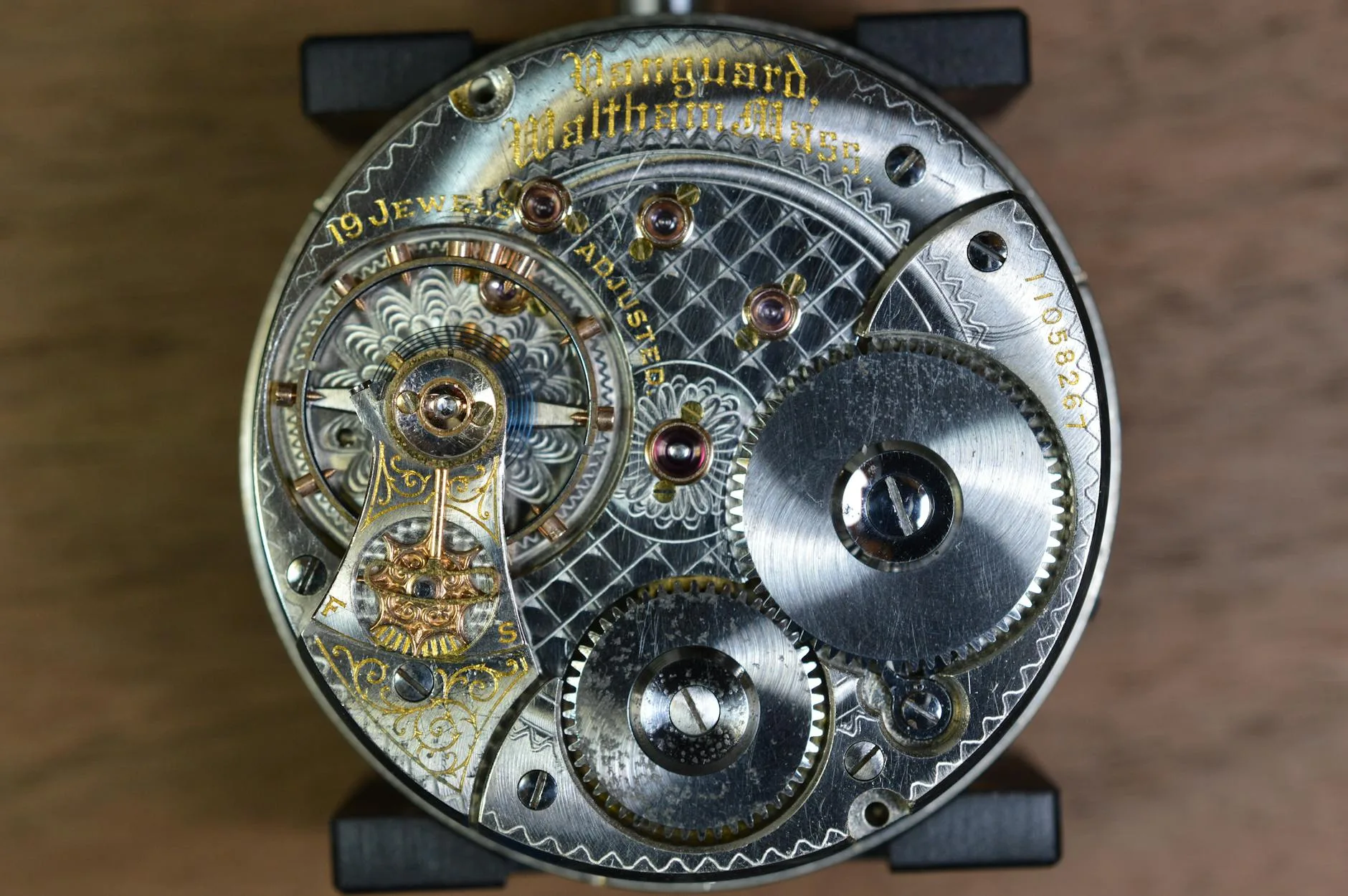
    Pro Tip: Never use the serial number stamped on the inside of the back cover to date the watch. That is the case serial number. You need the number engraved on the gears/plates inside.

    A split photo showing a watch case back with one serial number and the exposed movement mechanism showing a completely different serial number to illustrate the difference - Antique identification guide
    A split photo showing a watch case back with one serial number and the exposed movement mechanism showing a completely different serial number to illustrate the difference

    How do I determine if my watch case is solid gold or gold-filled?

    This is usually the first thing estate sale pickers look for. While the movement holds the horological history, the case holds the immediate precious metal value.

    If you see marks like “Guaranteed 20 Years” or “Warranted 10 Years,” the watch is gold-filled (a layer of gold over brass). These warranty marks were a promise that the gold layer wouldn’t wear through for that duration. These have very little melt value.

    For solid gold, look for these specific hallmarks:

    • 14K or 18K (US Market)

    • 0.585 (14K European)

    • 0.750 (18K European)

    • Walking Lion (British Sterling Silver)

    Identifying these marks manually can take hours, especially if they are worn or foreign. Using the Antique Identifier app, you can simply take a photo and get an instant result.

    What specific movement details drive the collector market?

    Once you have opened the dust cover (carefully, using a case knife!), you need to assess the quality of the engineering.

    We look for jewels. These are industrial rubies used as bearings to reduce friction.

    • 7-15 Jewels: Standard consumer grade. Low fair market value unless early (pre-1860).

    • 17-19 Jewels: High quality railroad grade or gentleman’s watch.

    • 21-23 Jewels: The top tier. Highly sought after.

    Also, look for the words “Adjusted.” A watch adjusted to “5 Positions” was a precision instrument, tested to keep time whether it was sitting flat, hanging up, or in a pocket. This level of attribution signifies a high-quality piece.

    Macro shot of a high-grade watch movement showing
    Macro shot of a high-grade watch movement showing “21 JEWELS” and “ADJUSTED 5 POSITIONS” engraved in gold text on the metal plates

    How do I spot a “married” watch versus an original?

    A “married” watch is one where a movement has been forced into a case it didn’t originally come with.

    In the antique dealer world, original pairing is key to provenance.

    Check for “recasing marks” (scratch marks on the rim where a watchmaker clamped it). Also, look at the lever slot—does the setting lever line up perfectly? If the movement rattles or sits too deep, it’s likely a marriage.

    This type of mismatch significantly lowers the replacement value. It is similar to the importance of matching lids to bases, which we discuss in our guide on identifying antique Mason jars.

    A side-profile photo of a pocket watch where the movement clearly doesn't fit the case correctly, showing a gap or misalignment - Antique identification guide
    A side-profile photo of a pocket watch where the movement clearly doesn’t fit the case correctly, showing a gap or misalignment

    What condition issues ruin a pocket watch appraisal?

    Condition is everything. Even a rare Patek Philippe can be worthless if the condition is poor.

    The Dial: Look for “hairlines.” These are faint cracks in the white enamel. A perfect porcelain dial is rare. A cracked dial can drop the value by 50%.

    Rust: This is the enemy. If you see brown spotting on the steel wheels or hairspring, the cost of restoration will likely exceed the value of the watch.

    Modifications: Amateur repairs or improper soldering are major red flags during authentication.

    Close up photo of a white enamel watch dial showing a faint hairline crack running from the number 12 down to the center post - Antique identification guide
    Close up photo of a white enamel watch dial showing a faint hairline crack running from the number 12 down to the center post

    Why are “Railroad Grade” watches so valuable?

    In 1891, a train collision in Ohio killed 11 people because a conductor’s watch stopped for four minutes.

    After this, strict standards were set for “Railroad Approved” watches.

    To identify these, look for:

    • Lever Set: You must pull a small lever under the bezel to set the time (preventing accidental changes).

    • Micrometer Regulator: A precise screw for fine-tuning speed.

    • Bold Arabic Numerals: For easy reading.

    These watches are masterpieces of American engineering and command a premium fair market value.

    Related Antique Identification Guides

    Expand your expertise with these related guides: Identifying Milk Glass: Why Some “White Glass” is Worth Hundreds, How to Date an Antique Chair by Its Leg Style (Visual Guide), How to Identify Antique Mason Jars (The “Ball” Logo Evolution)

    Conclusion

    Valuing an antique pocket watch requires looking past the shiny gold case and inspecting the mechanical heart within. By checking the serial number, jewel count, and condition of the movement, you can distinguish a common timepiece from a museum-quality treasure. Remember to check for hairline cracks and rust, as these dramatically impact the final appraisal. Happy hunting!

    Don’t guess at your next estate sale.

    📱 Download Antique Identifier: Appraise

    Find hidden treasures instantly with AI-powered identification

  • Decoding British Silver Hallmarks: How to Read the Lion and Anchor

    Decoding British Silver Hallmarks: How to Read the Lion and Anchor

    British silver hallmarks are a standardized system of four to five stamped symbols that verify the metal’s purity and origin. To identify authentic sterling silver, look for the Lion Passant (a walking lion) which guarantees 92.5% purity. Accompanying marks include a City Mark (like an Anchor for Birmingham or Leopard’s Head for London), a Date Letter indicating the exact year of manufacture, and a Maker’s Mark for attribution.

    Imagine you are at a crowded estate sale in Virginia, digging through a dusty box of tarnished cutlery. Most of it looks like junk, but then you pick up a heavy fork that feels different—cold and substantial.

    You rub away a bit of the grime on the handle and spot a tiny row of four distinct stamps.

    Your heart skips a beat. You aren’t holding mass-produced stainless steel; you might be holding a piece of history crafted in the reign of George III. But unless you can read the code, you won’t know if it’s worth $5 or $500.

    What exactly are British Hallmarks?

    In my 20 years as an appraiser, I’ve found that the British hallmarking system is the gold standard for authentication. Unlike American coin silver or unstamped pieces, British silver tells you exactly what it is.

    These assay marks are not decorative; they are a consumer protection guarantee that dates back to the 14th century.

    A complete set of hallmarks typically tells you four things:

    • Standard Mark: The purity of the silver.

    • City Mark: Where it was tested (the Assay Office).

    • Date Letter: When it was tested.

    • Maker’s Mark: Who made it.

    A macro close-up photo of a clean set of four British hallmarks on the back of a silver spoon handle, clearly showing the Lion Passant, a Leopard's Head, a Date Letter, and a Maker's Mark - Antique identification guide
    A macro close-up photo of a clean set of four British hallmarks on the back of a silver spoon handle, clearly showing the Lion Passant, a Leopard’s Head, a Date Letter, and a Maker’s Mark

    How can I tell if my item is solid Sterling Silver?

    This is the most common question I get at the antique dealer desk. The answer usually lies in one specific animal: the Lion.

    If you see the Lion Passant (a lion walking to the left with its paw raised), the piece is guaranteed to be sterling silver (.925 purity). This is the standard for English silver.

    If you see a different symbol, such as a lion’s head erased (cut off at the neck) or a figure of Britannia, it indicates a higher purity (.958), known as Britannia Silver.

    If there is no lion, and instead you see “EPNS” or simply “A1,” you are likely looking at silver plate. Determining the difference is crucial for establishing fair market value versus mere replacement value.

    Identifying these marks manually can take hours. Using the Antique Identifier app, you can simply take a photo and get an instant result.

    What does the Anchor symbol mean on silver?

    The Anchor is one of the most common symbols you will encounter in the US market. It represents the Birmingham Assay Office.

    Birmingham was a massive hub for silver manufacturing in the 19th and 20th centuries. If you find a small silver box, a vinaigrette, or a cigarette case, there is a high probability it bears the Anchor.

    Other common City Marks include:

    • Leopard’s Head: London

    • Crown: Sheffield (used until 1975)

    • Three Wheat Sheaves: Chester

    Correctly identifying the city is essential for provenance. A piece assayed in a rare provincial town like Exeter or Newcastle often commands a higher auction estimate than a comparable piece from Birmingham.

    A side-by-side comparison graphic showing the symbol for the Birmingham Anchor, the London Leopard's Head, and the Sheffield Crown - Antique identification guide
    A side-by-side comparison graphic showing the symbol for the Birmingham Anchor, the London Leopard’s Head, and the Sheffield Crown

    How do I determine the exact year my silver was made?

    This is where the detective work begins. British silver uses a date letter system.

    Every year, the assay office assigned a specific letter (A, B, C…) to that year. Once they cycled through the alphabet, they changed the font (script, block, gothic) or the shape of the shield surrounding the letter.

    To determine the age, you must match the letter style and the shield shape exactly.

    For example, a Gothic “D” in a square shield might be 1839, while a cursive “D” in an oval could be 1904. This precision allows us to distinguish between a Georgian original and a Victorian reproduction.

    For items like tea sets, identifying the date is vital to ensure all pieces match. This technique is similar to what we cover in our guide on Sterling Silver vs. Silver Plate: The “Ice Cube” Test and More, where consistent markings are key to value.

    A chart showing three different
    A chart showing three different “A” date letters from the London assay office, illustrating the difference in font and shield shape for the years 1776, 1816, and 1896

    Who made this piece and does it matter?

    The Maker’s Mark is usually a set of initials. This provides the attribution to the silversmith or workshop.

    While the silver content gives the piece a scrap value, the maker can drive the collector market value into the stratosphere.

    A spoon by a legendary maker like Paul Storr or Hester Bateman is worth significantly more than a generic piece, even if they weigh the same.

    When I write a condition report for a client, crisp, legible maker’s marks always improve the desirability of the object. If the marks are rubbed worn, it becomes harder to verify the maker, which can lower the value.

    A zoomed-in photo of the
    A zoomed-in photo of the “HB” maker’s mark for Hester Bateman, distinct and legible on a silver piece

    Are there fakes or forgeries I should worry about?

    Yes. Forgery detection is a critical skill.

    Sometimes, unscrupulous sellers will cut hallmarks out of a small, damaged spoon and solder them into the bottom of a large, modern bowl to fake its age. This is often called “duty dodging.”

    Look for signs of restoration or solder lines around the marks. Also, check that the date letter aligns with the style of the piece. You wouldn’t find an Art Deco design bearing a date letter from 1750.

    If you suspect a piece is rare, professional appraisal is safer than guessing.

    Related Antique Identification Guides

    Expand your expertise with these related guides: Antique Teapot Identification: Finding English Silver and Ceramic Marks, Sterling Silver vs. Silver Plate: The “Ice Cube” Test and More, Antique Ceramic Pitchers: How to Date Them by Their Handle Shape

    Conclusion

    Mastering the Lion, the Anchor, and the date codes allows you to walk into any thrift store and spot the treasure hidden in plain sight. It turns a blind gamble into an informed investment. Keep your loupe handy, and happy hunting.

    Don’t guess at your next estate sale.

    📱 Download Antique Identifier: Appraise

    Find hidden treasures instantly with AI-powered identification

  • Sterling Silver vs. Silver Plate: The “Ice Cube” Test and More

    Sterling Silver vs. Silver Plate: The “Ice Cube” Test and More

    Sterling silver is an alloy containing at least 92.5% pure silver, distinguishable by marks like “925,” “Sterling,” or the British Lion Passant assay marks. Silver plate consists of a thin layer of silver over base metal (usually copper or nickel), often marked “EPNS” or “IS.” The “Ice Cube” test works because silver possesses the highest thermal conductivity of any metal, causing ice to melt immediately upon contact.

    Imagine you are at a crowded estate sale in rural Pennsylvania. You spot a tarnished, heavy fork in a box labeled “Kitchen Junk – $1.” Your heart races. Is it a lost treasure worth hundreds, or just a piece of flatware worth pennies?

    To the untrained eye, they look identical. But as an antique dealer for over two decades, I know that weight, temperature, and tiny stamps tell the real story.

    How can I visually tell the difference immediately?

    The fastest way to distinguish sterling silver from silver plate is to look for the “bleed.”

    On silver-plated items, the thin layer of silver eventually wears off at high points. Check the heel of a spoon or the tines of a fork. Do you see a yellowish or reddish tint coming through?

    That is the base metal—usually brass or copper—showing through the plating. Sterling silver is solid silver alloy throughout; it will never change color, no matter how much it wears down.

    Close-up macro shot of the back of a silver-plated spoon bowl showing the
    Close-up macro shot of the back of a silver-plated spoon bowl showing the “heel” where the silver has worn away to reveal a brassy/yellowish base metal underneath

    What is the “Ice Cube Test” and how does it work?

    This is my favorite parlor trick for authentication. It requires no special tools—just an ice cube.

    Silver has higher thermal conductivity than almost any other material. If you place an ice cube on a real sterling silver coin or spoon, it will begin to melt instantly, as if you placed it on a hot griddle.

    You will see a puddle of water form within seconds. On silver plate or stainless steel, the ice will sit there and melt slowly at room temperature.

    This test is excellent for spotting forgeries or determining if a piece without marks might be coin silver (90% silver, common in early American antiques).

    Where do I look for hallmarks and stamps?

    Hallmarks are your road map to attribution. On flatware (spoons, forks), look on the back of the handle. On hollowware (teapots, bowls), check the underside of the base.

    If you see “925,” “Sterling,” or a walking lion (Lion Passant), you have a winner. This guarantees the metal content.

    Detailed photo of the back of a fork handle clearly showing the stamped word
    Detailed photo of the back of a fork handle clearly showing the stamped word “STERLING” next to a maker’s mark like the Gorham anchor

    Identifying these marks manually can take hours. Using the Antique Identifier app, you can simply take a photo and get an instant result.

    If you see “EPNS” (Electro-Plated Nickel Silver), “EP,” or “A1,” it is plated. These items generally have little melt value, though they may still have fair market value as decor.

    Specific maker marks can also help. For example, understanding English marks is crucial for accurate appraisal. This technique is similar to what we cover in our guide on Antique Teapot Identification: Finding English Silver and Ceramic Marks, where specific city marks determine the year of manufacture.

    Can I use a magnet to test for silver?

    Yes, and you should always carry a strong neodymium magnet to every auction house preview.

    Silver is non-magnetic. If the magnet sticks strongly to the object, it is steel or iron—likely just silver-plated.

    However, be careful: brass and copper are also non-magnetic. A magnet test is good for weeding out steel fakes, but it does not prove an item is sterling silver. It just proves it isn’t steel.

    A hand holding a small rare-earth magnet near a silver teapot; the magnet should not be sticking to the metal - Antique identification guide
    A hand holding a small rare-earth magnet near a silver teapot; the magnet should not be sticking to the metal

    What determines the value of my silver item?

    Value depends on three things: metal content, maker, and condition.

    1. Melt Value: This is the raw price of the silver scrap. An auction estimate usually starts here.
    2. Collector Market: A rare piece by Tiffany & Co. or Paul Revere is worth far more than its weight.
    3. Condition Report: Dents, deep scratches, or monogram removals lower value.

    Replacement value for insurance is usually much higher than what you would get selling it. Be realistic. A condition report noting heavy wear or repairs will significantly drop the price.

    Should I clean the patina off my find?

    Stop! Before you grab the polish, understand conservation.

    “Patina” is the soft, warm glow that silver develops over tiny scratches and years of use. It is highly prized in the collector market.

    Aggressive cleaning strips this away. Never use chemical dips on hollowware, as the liquid can seep into hollow handles and cause damage.

    If you suspect restoration is needed, consult a professional. Over-cleaning can turn a $500 spoon into a $50 scrap piece.

    Split image showing a heavily tarnished black silver spoon on the left and a gently hand-polished, glowing spoon on the right, demonstrating proper conservation - Antique identification guide
    Split image showing a heavily tarnished black silver spoon on the left and a gently hand-polished, glowing spoon on the right, demonstrating proper conservation

    Related Antique Identification Guides

    Expand your expertise with these related guides: Antique Teapot Identification: Finding English Silver and Ceramic Marks, Identifying French Provincial vs. English Colonial Furniture: An Expert’s Guide, Is It Victorian or Edwardian? Key Differences for Quick Identification

    Conclusion

    Whether you are hunting for sterling silver at a thrift store or evaluating an heirloom for provenance, trust your eyes and your tools. The ice cube doesn’t lie.

    Happy hunting,

    Arthur Sterling

    Don’t guess at your next estate sale.

    📱 Download Antique Identifier: Appraise

    Find hidden treasures instantly with AI-powered identification

  • Antique Ceramic Pitchers: How to Date Them by Their Handle Shape

    Antique Ceramic Pitchers: How to Date Them by Their Handle Shape

    You can generally date antique ceramic pitchers by analyzing the specific silhouette of the handle. Scrolled or high-arching handles with thumb spurs typically indicate mid-19th century Victorian styles (c. 1840-1860s), while angular, bamboo-style handles point directly to the Aesthetic Movement (1870s-1880s). A handle featuring organic, flowing “whiplash” curves that melt into the body suggests Art Nouveau (1890-1910), whereas sharp, geometric angles are definitive hallmarks of the Art Deco era (1920s-1930s).

    Imagine you are at a crowded estate sale in rural Pennsylvania. You spot a dusty, cream-colored pitcher on a back shelf.

    The bottom is unmarked—no maker’s stamp, no country of origin. But the handle looks distinct. It’s shaped to look like a piece of twisted rope.

    That single detail is your roadmap. Even without a mark, the handle shape can tell you if you are holding a valuable 19th-century piece or a modern reproduction.

    How can I tell if my pitcher handles are applied or molded?

    Before analyzing the shape, look at how the handle is attached. This is crucial for attribution.

    On early 19th-century pieces, handles were often “applied.” The potter would hand-roll a strip of clay and attach it to the body before firing.

    You can identify an applied handle by looking for the “terminal”—the point where the handle meets the body.

    Close-up photo of a white ironstone pitcher handle attachment, showing the thumb-print impression where the potter pressed the clay into the body - Antique identification guide
    Close-up photo of a white ironstone pitcher handle attachment, showing the thumb-print impression where the potter pressed the clay into the body

    If you see a small depression or “thumb-print” at the base of the handle, it was likely applied by hand. This suggests an earlier date, often pre-1860.

    Conversely, if the handle has a visible seam line running down the center that matches the seam on the pitcher body, it was molded as one piece. This mass-production technique became standard later in the Victorian era.

    What handle shapes indicate a mid-19th century pitcher?

    The mid-1800s were dominated by the Rococo Revival and Gothic Revival styles.

    During this period, makers like William Ridgway or Meigh produced pitchers with elaborate, scrolled handles.

    Look for a “thumb spur” or rest at the top of the curve. This added grip stability but was also a stylistic choice.

    If the handle mimics natural materials—like a branch, a vine, or a stag’s antler—you are likely looking at a piece from the 1850s to 1860s.

    Identifying these marks manually can take hours. Using the Antique Identifier app, you can simply take a photo and get an instant result.

    How do I identify Aesthetic Movement handles (1870s-1890s)?

    The Aesthetic Movement changed everything. The flowery curves of the mid-century were replaced by an obsession with Japanese design.

    If your pitcher has a handle that looks like segmented bamboo, it is almost certainly from the 1870s or 1880s.

    Photo of a Majolica pitcher featuring a handle molded to look like brown bamboo stalks, contrasting with a colorful body - Antique identification guide
    Photo of a Majolica pitcher featuring a handle molded to look like brown bamboo stalks, contrasting with a colorful body

    These handles are often angular and rigid. You will find them on Majolica ware and transferware alike.

    Another key shape from this era is the “rope” handle, often found on anchor-themed pitchers used in coastal communities.

    What is the difference between Art Nouveau and Art Deco handles?

    This is where beginners often get confused, but the distinction is sharp.

    Art Nouveau (1890–1910) is all about organic movement. The handles often look like plant stems extending from the base and growing upward.

    Look for the “whiplash curve”—a sinuous, flowing line that lacks sharp corners.

    Art Deco (1920s–1930s) did the opposite.

    Photo of a bright orange and yellow Clarice Cliff pitcher with a solid, triangular, geometric handle - Antique identification guide
    Photo of a bright orange and yellow Clarice Cliff pitcher with a solid, triangular, geometric handle

    Art Deco handles are geometric. They may be perfectly round circles, sharp triangles, or “stepped” shapes that look like a staircase.

    If the handle looks architectural rather than natural, you are likely in the 1930s.

    This shift from organic to geometric is distinct, similar to the evolution we discuss in our guide on Royal Doulton Identification, as they were prolific producers during both eras.

    Does the condition of the handle affect fair market value?

    Absolutely. When writing a condition report for an appraisal, the handle is the first place I check.

    Because they protrude, handles are the most vulnerable part of the pitcher.

    Run your finger along the inside of the handle. This is where “hairline cracks” often hide.

    Macro shot of a pitcher handle showing a dark, thin hairline crack near the upper attachment point, highlighted for visibility - Antique identification guide
    Macro shot of a pitcher handle showing a dark, thin hairline crack near the upper attachment point, highlighted for visibility

    A pitcher with a re-glued handle has lost significant collector market value.

    While a rare piece might still have historical value, for common transferware, a broken handle essentially reduces the item to decorative value only.

    Also, check for restoration. Shine a blacklight on the handle. If it glows a different color than the body, it has been repaired.

    Professional conservation can hide damage to the naked eye, but it changes the replacement value for insurance purposes.

    Related Antique Identification Guides

    Expand your expertise with these related guides: Royal Doulton Identification: How to Read Date Codes on Pottery, Identifying French Provincial vs. English Colonial Furniture: An Expert’s Guide, Identifying Antique Trunks and Chests: Steamer vs. Jenny Lind Styles

    Conclusion

    The handle is often the most honest part of a pitcher. While marks can be forged and patterns reproduced, the physical shape of the handle usually stays true to the technology and fashion of its era.

    Next time you are at an auction house or browsing a shelf, grip that handle. If it feels like a bamboo stalk or a geometric block, you are halfway to a successful authentication.

    Don’t guess at your next estate sale.

    📱 Download Antique Identifier: Appraise

    Find hidden treasures instantly with AI-powered identification

  • Identifying Milk Glass: Why Some “White Glass” is Worth Hundreds

    Identifying Milk Glass: Why Some “White Glass” is Worth Hundreds

    Authentic antique milk glass is defined by its dense, opaque white color and often displays a “Ring of Fire”—haloes of iridescent reds or blues—when held up to natural light, particularly in pieces made before 1900. Key makers to look for include Fenton, Westmoreland, and McKee. Genuine pieces feature sharp detail in pressed glass patterns or a rough pontil mark on older blown glass.

    Imagine you are at a dusty estate sale in rural Pennsylvania. You spot a creamy white vase sitting on a card table between a rusted toaster and a stack of paperbacks. The sticker says $5.

    To the untrained eye, it looks like standard kitchenware from the 1980s. But you pick it up, feel the heavy, cool weight of the glass, and notice the fiery opalescence when the sunlight hits the rim. You might be holding a rare piece of Victorian blown glass worth twenty times that asking price.

    This is the thrill of the collector market. But to capitalize on it, you need to know exactly what you’re looking at.

    Close-up photo of a milk glass hobnail vase held against sunlight, clearly showing the
    Close-up photo of a milk glass hobnail vase held against sunlight, clearly showing the “Ring of Fire” opalescence effect on the rim

    What exactly is milk glass and why was it made?

    Milk glass was originally developed in 16th-century Venice as a cheaper alternative to porcelain. However, the pieces you will likely encounter in US thrift stores date from the Victorian era (1800s) through the mid-20th century.

    Chemists added opacifiers like bone ash, arsenic, or tin oxide to the molten glass mixture. This created that signature creamy, opaque white appearance.

    While the Victorian era produced delicate, translucent pieces often called “opal glass,” the 20th century saw a boom in mass-produced pressed glass. Companies like Fenton and Westmoreland churned out durable, decorative pieces that became staples in American homes.

    How can I tell if my milk glass is vintage or a reproduction?

    Forgery detection is a critical skill for any antique dealer. The market is flooded with cheap reproductions from the 1960s and later imports.

    First, check the opacity. Early Victorian milk glass often has a translucence to it. If you hold it up to the sun, you should see the “Ring of Fire”—a swirl of colors, usually oranges, reds, and blues.

    If the glass is stark, flat white and looks like glossy plastic, it is likely a modern reproduction or late 20th-century mass production with little fair market value.

    Side-by-side comparison of an authentic Westmoreland glass marking on the bottom of a dish versus a smooth, unmarked modern reproduction base - Antique identification guide
    Side-by-side comparison of an authentic Westmoreland glass marking on the bottom of a dish versus a smooth, unmarked modern reproduction base

    Next, look for markings.

    Many high-quality pieces from makers like McKee or Jeannette will have raised logos or maker’s marks molded directly into the glass. However, many paper labels have washed off over decades, making attribution difficult.

    Identifying these marks manually can take hours. Using the Antique Identifier app, you can simply take a photo and get an instant result.

    Which manufacturers are most sought after by collectors?

    Not all white glass is created equal. In the world of appraisal, specific makers command significantly higher prices.

    Fenton Art Glass Company: Perhaps the most famous name. Look for the “Fenton” logo in an oval (after 1970) or specific patterns like Hobnail or Silver Crest (white glass with a clear ruffled edge).

    Westmoreland Glass: Famous for their Paneled Grape pattern. Their “WG” stacked logo is a reliable sign of quality.

    McKee Glass: Known for animal dishes (hens on nests). An authentic McKee will often have precise detail in the feathers that reproductions lack.

    Finding a signed piece significantly helps with authentication and ensures a higher auction estimate.

    A collection of
    A collection of “Hen on Nest” covered dishes, highlighting the sharp detail of the feathers on a vintage McKee piece compared to a blurry modern copy

    What is the difference between blown glass and pressed glass?

    This is a major factor in determining age and value.

    Blown glass is created by an artisan blowing air into a gob of molten glass. These pieces are often older (Victorian era) and will have a “pontil mark”—a rough scar on the bottom where the rod was broken off.

    Pressed glass was made by pressing molten glass into a mold. This allowed for mass production. You will often see mold seams running down the side of the piece.

    While blown glass generally has higher provenance and value due to the craftsmanship involved, rare pressed glass patterns from the Depression glass era can still fetch high prices.

    How does condition affect the value of my milk glass?

    A detailed condition report is essential before buying or selling.

    Unlike wood furniture, restoration of glass is nearly impossible. A crack is forever.

    Check the rims and bases carefully for “fleabites”—tiny chips that feel rough to the fingernail. These significantly lower the replacement value.

    Also, look for “sick glass.” This is glass that has been damaged by dishwasher detergent, resulting in a permanent, cloudy haze. This is conservation damage that cannot be fixed and renders the piece almost worthless to serious collectors.

    Similar to checking ceramic glazes, which we discuss in our guide on Royal Doulton Identification: How to Read Date Codes on Pottery, examining the surface sheen is vital. Authentic vintage milk glass should have a silky, lustrous finish, not a dry or chalky texture.

    Macro shot of a glass rim showing a
    Macro shot of a glass rim showing a “fleabite” chip next to a pristine rim to illustrate condition issues

    What is the current market value of milk glass in 2026?

    Values fluctuate, but here are some general appraisal benchmarks:

    • Common Vases (Fenton Hobnail): $15 – $40. These are plentiful.
    • Covered Animal Dishes (Westmoreland/McKee): $45 – $150. Rare colors or heads raise the price.
    • Victorian Blown Pieces: $100 – $400+. Intricate hand-painting adds value.
    • Rare Historical Plates: $50 – $200.

    Always check recent sold listings at a reputable auction house rather than asking prices to determine true value.

    Related Antique Identification Guides

    Expand your expertise with these related guides: Antique Teapot Identification: Finding English Silver and Ceramic Marks, The Secret Language of Furniture Hardware: Dating Knobs and Pulls, Royal Doulton Identification: How to Read Date Codes on Pottery

    Don’t guess at your next estate sale.

    📱 Download Antique Identifier: Appraise

    Find hidden treasures instantly with AI-powered identification

  • Limoges China Identification: Decoding the French Porcelain Backstamps

    Limoges China Identification: Decoding the French Porcelain Backstamps

    Authentic Limoges china is identified by specific backstamps featuring the word “Limoges” alongside “France,” which became mandatory for exports after 1891. Look for two marks: an underglaze maker’s mark (often green) indicating the factory, and an overglaze decorator’s mark (often red or blue) stamped later. High-quality pieces exhibit translucency when held to light.

    Imagine you are at a dusty estate sale in rural Pennsylvania. You spot a delicate, floral-painted plate buried under a stack of old linens. The gilding catches the light, and the porcelain feels impossibly smooth. You flip it over, hoping for treasure, but you’re met with a confusing jumble of green and red stamps. Is it a valuable antique or a mass-produced reproduction?

    What exactly is “Limoges” china?

    First, it is crucial to understand that Limoges is a city, not a specific brand. Located in central France, Limoges has been a hub for hard-paste porcelain production since the discovery of kaolin clay nearby in 1768.

    Hundreds of factories have operated in the region over centuries. When we talk about attribution, we aren’t looking for one company; we are identifying which specific studio within the region created the piece. Major names like Haviland, Bernardaud, and Tressemann & Vogt (T&V) all fall under the Limoges umbrella.

    Close-up photo of a translucent white porcelain plate held up to a window, showing the shadow of a hand behind it to demonstrate translucency - Antique identification guide
    Close-up photo of a translucent white porcelain plate held up to a window, showing the shadow of a hand behind it to demonstrate translucency

    How do I read the backstamps?

    The most confusing aspect for beginners is the presence of multiple marks. Unlike British pottery which often has one clear stamp, Limoges pieces frequently have two.

    • The Whiteware Mark (Underglaze): This is usually a green stamp applied before the final firing. It tells you who manufactured the blank white porcelain (the “whiteware”).
    • The Decorating Mark (Overglaze): This stamp, often red, blue, or gold, was applied after the piece was painted. It tells you who decorated it.

    If a piece only has a whiteware mark, it was likely sold as an undecorated blank and painted by an amateur artist—a popular hobby in the Victorian era. Professional factory decoration adds significantly to the fair market value.

    Identifying these marks manually can take hours. Using the Antique Identifier app, you can simply take a photo and get an instant result.

    How can I date my Limoges porcelain?

    Dating is often done through the McKinley Tariff Act of 1890.

    • Before 1891: Marks typically just say “Limoges” or have a factory symbol.
    • 1891 – c. 1914: To comply with US import laws, the country of origin was required. You will see “France” added to the mark.
    • After c. 1914: The words “Made in France” became standard.

    This timeline is essential for establishing provenance and determining if a piece is a true antique (over 100 years old).

    Side-by-side comparison graphic of three backstamps: one saying just 'Limoges', one saying 'Limoges France', and one saying 'Limoges Made in France', labeled with their respective date ranges - Antique identification guide
    Side-by-side comparison graphic of three backstamps: one saying just ‘Limoges’, one saying ‘Limoges France’, and one saying ‘Limoges Made in France’, labeled with their respective date ranges

    Which Limoges manufacturers are most valuable?

    While condition is paramount (chips kill value), certain makers command higher prices at auction houses.

    Haviland & Co. is perhaps the most famous name in the US market. They tailored their designs specifically for American tastes in the late 19th century. Their patterns are cataloged by “Schleiger numbers”—a complex system essential for replacement value.

    William Guérin (W.G. & Co.) and Jean Pouyat (J.P. L.) are known for exceptional whiteness and heavy gilding. A piece with a “J.P. L. France” mark is often synonymous with top-tier quality.

    Photo of a Haviland Limoges platter featuring delicate pink floral sprays and a scalloped gold rim, sitting on a dark wood table - Antique identification guide
    Photo of a Haviland Limoges platter featuring delicate pink floral sprays and a scalloped gold rim, sitting on a dark wood table

    How can I spot a fake or reproduction?

    Forgery detection with Limoges is tricky because the name is a place, not a trademark. However, there are red flags.

    Be wary of marks that are stickers or look like they are sitting on top of the glaze rather than fired into it (unless it is a known decorator mark).

    Also, feel the surface. Genuine Limoges hard-paste porcelain is fired at incredibly high temperatures, creating a glass-like fusion between the body and the glaze. It should feel smooth as butter. If the surface is bumpy or “orange-peeled,” it is likely a lower-quality imitation.

    I once saw a “Limoges” vase at a thrift store in Ohio that felt rough to the touch. A quick check of the mark revealed it was a modern counterfeit using a transfer print meant to deceive. Authentic pieces show evidence of hand-painting or high-quality lithography.

    This technique is similar to what we cover in our guide on Identifying Dresden Porcelain: Why the “Crown” Mark Matters.

    Macro photography shot of a genuine hand-painted gold rim on a Limoges cup, showing the slight texture of the brushstrokes versus a flat decal - Antique identification guide
    Macro photography shot of a genuine hand-painted gold rim on a Limoges cup, showing the slight texture of the brushstrokes versus a flat decal

    What is my Limoges china worth in 2026?

    The collector market has shifted. Complete dinner services for 12 are harder to sell because modern families rarely host formal 12-course dinners.

    However, unique serving pieces—soup tureens, gravy boats, and oyster plates—are retaining high value. Condition reports are vital; even a hairline crack can drop the value by 80%.

    If you are looking for an appraisal for insurance, remember that replacement value (what it costs to buy from a dealer) is higher than auction estimate (what you would get selling it).

    Related Antique Identification Guides

    Expand your expertise with these related guides: Decoding Meissen Porcelain Marks: Real vs. Fake Crossed Swords, Identifying Dresden Porcelain: Why the “Crown” Mark Matters, The “Maker’s Mark” on Furniture: Where to Look and What It Means

    Conclusion

    Limoges porcelain represents the pinnacle of French ceramic artistry. Whether you inherited a set or found a stray saucer at a garage sale, understanding these marks unlocks the history of the piece. Look for the word “France,” feel the glaze, and when in doubt, snap a picture for a second opinion.

    Don’t guess at your next estate sale.

    📱 Download Antique Identifier: Appraise

    Find hidden treasures instantly with AI-powered identification

  • How to Identify Antique Mason Jars (The “Ball” Logo Evolution)

    How to Identify Antique Mason Jars (The “Ball” Logo Evolution)

    To accurately date a Ball Mason jar, examine the cursive script logo. The rare “3-L” logo (with a decorative loop on the ‘B’) dates from 1900-1910. An underscore was added from 1910-1923, but dropped by 1933. Jars with a simple block letter style usually date after 1960, while the earliest “Buffalo” jars (1880s) command the highest appraisal values.

    Imagine you are at a dusty estate sale in rural Indiana, rummaging through a damp basement. You spot a dusty blue jar on a wooden shelf. Is it a $5 decor piece for a wedding centerpiece, or a $400 rarity from the late 19th century?

    The difference often comes down to the tiny, specific swirl of the calligraphy on the front.

    As a certified appraiser, I see thousands of these jars. Understanding the nuances of antique identification is the only way to separate the common canning supplies from the serious investment pieces.

    How can I tell exactly how old my Ball jar is?

    The “Ball” script is the most reliable method for attribution and dating. The company tweaked their logo slightly every few decades, creating a timeline we can follow.

    1892–1896 (Block Letters):
    If your jar features block letters rather than script, it is likely a “1st Variety.” These are incredibly rare.

    1896–1910 (The “3-L” Logo):
    This is a favorite in the collector market. The decorative loop on the bottom of the ‘B’ looks like a third ‘L’. If you see this loop, you have a turn-of-the-century piece.

    Close-up macro shot comparing a standard Ball logo next to the
    Close-up macro shot comparing a standard Ball logo next to the “3-L” logo, highlighting the extra loop on the B with a red circle

    1910–1923 (The Underscore):
    Ball dropped the loop but added an underscore beneath the script. This period was massive for production, so these are common finds in thrift stores.

    1923–1933 (No Underscore):
    The underscore disappeared. However, the script style remained similar.

    1937–1960 (The Split B):
    If the loop of the ‘B’ doesn’t connect to the bottom stem, you are likely looking at a jar from the mid-20th century. These generally have a lower fair market value compared to their predecessors.

    What is the market value of different jar colors?

    While the logo tells us the date, the color often dictates the auction estimate.

    Most people are familiar with “Ball Blue,” the aquamarine color resulting from the sand used in manufacturing. While iconic, it is relatively common.

    Amber Glass:
    Produced largely between 1890 and 1910, amber jars were designed to block light to preserve food better. These are highly desirable.

    Olive Green:
    This is the “Holy Grail” for many. A true olive Ball jar can see an auction estimate in the thousands, provided the condition report shows no chips or cracks.

    Clear Glass:
    Standard clear glass usually indicates production after 1937. While useful for canning, they rarely hold significant replacement value unless they have a unique error or shape.

    A lineup of three Mason jars on a wooden table: one standard blue, one dark amber, and one clear, demonstrating the color differences - Antique identification guide
    A lineup of three Mason jars on a wooden table: one standard blue, one dark amber, and one clear, demonstrating the color differences

    How do I spot a reproduction or fake?

    Forgery detection is critical in the antique glass world. In the 1970s and 80s, many companies released “commemorative” jars.

    To the untrained eye, these look antique. However, a genuine antique jar from before 1915 will often have a ground lip.

    Run your finger carefully over the top sealing edge. If it feels rough, like ground glass, it was likely hand-finished and is authentic. If there is a smooth, molded seam running all the way over the top lip, it is a machine-made jar from a later era.

    Identifying these marks manually can take hours. Using the Antique Identifier app, you can simply take a photo and get an instant result.

    What do the numbers on the bottom mean?

    This is the most common question I get asked during an appraisal.

    If you turn the jar over, you will see a number (0-15 usually). Many sellers claim these are dates or rarity indicators.

    They are simply mold numbers.

    These numbers identified the specific position on the glass machine where the jar was made. If a mold broke, the factory knew which one to fix.

    While a “13” might be lucky or unlucky depending on who you ask, it does not significantly increase the fair market value of the jar.

    Photo of the bottom of a blue Mason jar, clearly showing the embossed mold number '5' in the center of the base - Antique identification guide
    Photo of the bottom of a blue Mason jar, clearly showing the embossed mold number ‘5’ in the center of the base

    Where are the best places to find valuable jars in 2026?

    The antique dealer landscape has changed. You are less likely to find steals in curated shops now.

    Estate Sales:
    Look for homes built before 1940. Head straight to the basement, root cellar, or garage. Jars were tools, not decor, so they were often stored in work areas.

    Auctions:
    Pay attention to “box lots.” An auction house might sell a box of 20 kitchen items. If you spot a rare “3-L” logo peeking out from the bottom of the box, you could secure a high return on investment.

    Restoration of these finds should be minimal. Never put an antique jar in a dishwasher. The heat and harsh detergents can cause “sickness” (cloudiness) that ruins the provenance and value.

    This attention to glass condition is similar to what we cover in our guide on Valuing Blue Cobalt Glass: Why Some Pieces Sell for Thousands.

    A candid shot of a cardboard box at an estate sale, filled with dusty kitchenware, with the rim of a blue Mason jar visible - Antique identification guide
    A candid shot of a cardboard box at an estate sale, filled with dusty kitchenware, with the rim of a blue Mason jar visible

    Related Antique Identification Guides

    Expand your expertise with these related guides: Valuing Blue Cobalt Glass: Why Some Pieces Sell for Thousands, Identifying Antique Settees and Sofas: A Period-by-Period Breakdown, Identifying Duncan Phyfe Furniture: 5 Marks of Authenticity

    Final Thoughts on Jar Collecting

    Collecting Mason jars is a gateway into American history. Each bubble in the glass and wave in the logo tells a story of industrialization.

    Whether you are looking to flip for profit or build a collection, always prioritize the logo script and the condition of the lip. And if you are ever unsure in the field, don’t guess—verify.

    Don’t guess at your next estate sale.

    📱 Download Antique Identifier: Appraise

    Find hidden treasures instantly with AI-powered identification

  • Antique Teapot Identification: Finding English Silver and Ceramic Marks

    Antique Teapot Identification: Finding English Silver and Ceramic Marks

    Authentic English antique teapots are identified by examining the base for specific hallmarks or backstamps. For silver, look for the Lion Passant (guaranteeing .925 sterling silver) and date letters. For ceramics, inspect the backstamp for maker names like Wedgwood or Spode, often accompanied by a Registry Diamond (used 1842–1883) to pinpoint the exact manufacturing date.

    Imagine you are at a dusty estate sale in rural Pennsylvania, digging through a box of kitchenware. You pull out a tarnished, heavy pot. It looks old, but is it valuable sterling silver or just common silver plate?

    Knowing where to look changes a $5 find into a $500 treasure.

    In my 20 years as an appraiser, I have seen thousands of teapots. The difference between a reproduction and a museum-quality piece often comes down to a mark smaller than a grain of rice. Here is how to spot the real deal.

    How can I tell if my silver teapot is solid silver or plated?

    This is the most common question I get at the auction house. In English silver, the answer is strictly regulated.

    You must look for the Lion Passant. This is a tiny image of a lion walking to the left with its right paw raised. If you see this, you have sterling silver (.925 purity).

    If you do not see a lion, check for the letters EPNS (Electro-Plated Nickel Silver). This means the item is base metal with a thin layer of silver.

    Coin silver (90% silver) was common in the US before 1868 but rarely used for English teapots.

    Macro photography of British silver hallmarks showing the Lion Passant, a Leopard's Head, and a date letter on the underside of a silver teapot - Antique identification guide
    Macro photography of British silver hallmarks showing the Lion Passant, a Leopard’s Head, and a date letter on the underside of a silver teapot

    You should also look for the assay marks. These tell you the city where the silver was tested.

    • Leopard’s Head: London
    • Anchor: Birmingham
    • Crown: Sheffield

    Identifying these marks manually can take hours. Using the Antique Identifier app, you can simply take a photo and get an instant result.

    Where do I find the maker’s mark on a ceramic teapot?

    Ceramic attribution is slightly different from silver. You need to flip the teapot over and look for the maker’s mark or “backstamp.”

    Early English pottery (pre-1800) often has no mark. However, 19th-century giants like Wedgwood, Minton, and Spode were proud of their work.

    They used impressed marks (stamped into soft clay) or printed marks (under the glaze).

    Close-up of a blue printed underglaze maker's mark on the bottom of a white ceramic teapot, specifically a Spode or Wedgwood logo - Antique identification guide
    Close-up of a blue printed underglaze maker’s mark on the bottom of a white ceramic teapot, specifically a Spode or Wedgwood logo

    If the mark says “Bone China” or “Made in England,” the piece likely dates to the 20th century. Older pieces will simply say “England” (post-1891) or have no country name at all.

    Pro Tip: Run your finger over the mark. An impressed mark feels indented; an overglaze mark feels like a slight bump.

    What do the symbols and numbers mean on the bottom?

    English ceramics often feature a diamond-shaped mark known as the Registry Diamond.

    Used between 1842 and 1883, this symbol is the key to precise dating. It contains codes for the year, month, and day the design was registered.

    You might also see a handwritten or painted number. This is usually the pattern number.

    While pattern numbers help with identification, they don’t always guarantee provenance. This logical process of decoding numbers is similar to what we cover in our guide on Antique Writing Desks: How to Identify Secret Compartments and Value, where hidden mechanisms provide clues to age.

    Diagram of a Victorian Registry Diamond mark explaining what the letters and numbers in the corners represent for dating - Antique identification guide
    Diagram of a Victorian Registry Diamond mark explaining what the letters and numbers in the corners represent for dating

    Beware of “red flags” in forgery detection. If the mark looks blurry or is applied over the glaze where it should be under, proceed with caution.

    How does condition affect the value of an antique teapot?

    A condition report is critical for determining fair market value.

    For ceramic teapots, the spout and lid are the most vulnerable areas. Run your finger along the rim of the spout. Even a “flea bite” chip can lower the value by 30%.

    Check for “crazing” (a network of fine cracks in the glaze). While common, heavy staining in the crazing is a negative.

    Photo showing a ceramic teapot spout with a small chip and hairline crack, highlighting damage types - Antique identification guide
    Photo showing a ceramic teapot spout with a small chip and hairline crack, highlighting damage types

    Restoration is acceptable for rare 18th-century pieces but hurts the value of later Victorian items.

    Shine a blacklight on the pottery. Modern glue or paint used in conservation repairs will fluoresce (glow) under UV light.

    What is my antique teapot worth in today’s market?

    The collector market fluctuates. Currently, early transfer-ware and Sterling Silver tea sets by renowned makers (like Paul Storr or Hester Bateman) command high prices.

    An auction estimate for a standard Victorian silver-plate teapot might be $30–$50.

    However, a Georgian sterling silver teapot could easily fetch an appraisal of $1,500 to $3,000 depending on the weight and maker.

    Replacement value (for insurance) is generally higher than what you would get selling it to an antique dealer.

    Always check recent sold listings, not asking prices, to gauge reality.

    Related Antique Identification Guides

    Expand your expertise with these related guides: Antique Writing Desks: How to Identify Secret Compartments and Value, How to Spot a Real Mid-Century Modern Original in 30 Seconds, Fenton Glass Identification: How to Spot Rare Colors and Patterns

    Final Thoughts

    Whether you are looking for investment grade silver or just a beautiful piece of history for your kitchen, knowledge is your best tool. Keep an eye out for those hallmarks.

    — Arthur Sterling

    Don’t guess at your next estate sale.

    📱 Download Antique Identifier: Appraise

    Find hidden treasures instantly with AI-powered identification

  • Carnival Glass Identification: How the Iridescence Reveals the Age

    Carnival Glass Identification: How the Iridescence Reveals the Age

    Authentic antique Carnival Glass (1908–1930) is identified by its crisp pressed-glass patterns, a clear base color visible when held to light, and a fine satin iridescence—never oily or peeling—from makers like Fenton, Northwood, and Millersburg.

    AS
    Arthur Sterling
    Antique Identifier Editorial · April 18, 2026

    Imagine you are at a dusty estate sale in rural Ohio. You spot a bowl in a cardboard box, shimmering with purple and green hues like an oil slick on wet pavement.

    It catches the light beautifully, but your gut hesitates. Is this a rare 1910 masterpiece by Millersburg, or a 1970s reproduction worth less than the gas money it took to drive here?

    As an appraiser, I see this confusion constantly. Carnival Glass was once given away as prizes at carnivals (hence the name), but today, specific patterns command massive prices on the collector market.

    Here is how you can tell the treasures from the trash.

    What is the difference between antique and vintage Carnival Glass?

    True antique Carnival Glass was manufactured roughly between 1908 and 1930. This was the “Golden Age” where makers like Fenton, Northwood, Dugan, and Imperial perfected the art of spraying metallic salts onto hot glass. Kovel’s price guides remain one of the most authoritative references for dating and valuing pieces from this era.

    Later periods, specifically the 1970s revival, produced “vintage” pieces. While collectible, these rarely hold the high fair market value of the early 20th-century pieces.

    A side-by-side comparison of a delicate, crisp 1910 Fenton bowl versus a heavy, thick 1970s Indiana Glass reproduction to show the difference in glass quality - Antique identification guide
    A side-by-side comparison of a delicate, crisp 1910 Fenton bowl versus a heavy, thick 1970s Indiana Glass reproduction to show the difference in glass quality

    The primary distinction is in the quality of the iridescence and the weight. Antique pieces often feel lighter and have sharper pattern molding.

    How do I determine the base color of my glass?

    This is the most critical step in attribution. The rainbow colors you see on the surface are just the iridescence; the value is determined by the glass color underneath.

    To find the base color, hold the piece up to a strong light source. Look through the glass where there is no heavy iridescence, usually near the base.

    • Marigold: Clear glass with orange iridescence (most common).
    • Amethyst: Looks purple when held to light.
    • Cobalt: Appears deep blue.
    • Ice Green/White: Very rare and highly desirable.

    If you cannot see through the glass at all (it is opaque), it might be “Black Amethyst,” which requires a specialized condition report to verify it isn’t simply very dark purple. Auction records archived at WorthPoint can be invaluable for cross-referencing rare base colors against realized sale prices.

    Identifying these marks and colors manually can take hours of cross-referencing books. Using the Antique Identifier app, you can simply take a photo and get an instant result regarding the pattern and potential maker.

    Which manufacturers are worth the most money?

    While Fenton is the most well-known, they rarely marked their early pieces. This makes authentication tricky for novices.

    Northwood is the gold standard for many collectors. Look for the underlined capital “N” inside a circle on the bottom of the piece.

    Millersburg is often considered the “Tiffany” of Carnival Glass. Their “Radium” finish is incredibly bright and mirror-like. Millersburg pieces had a very short production run (roughly 1909–1912), making their auction estimate consistently higher than common counterparts. Heritage Auctions regularly features high-grade Millersburg examples and publishes realized prices that serve as reliable benchmarks for serious collectors.

    A close-up macro shot of the Northwood underlined 'N' mark stamped clearly on the base of a glass dish - Antique identification guide
    A close-up macro shot of the Northwood underlined ‘N’ mark stamped clearly on the base of a glass dish

    Is my Carnival Glass a fake or reproduction?

    Forgery detection in Carnival Glass isn’t about “fakes” as much as it is about misidentified reproductions.

    Watch out for the “Indiana Glass” patterns from the 1970s. These often feature the “Harvest Grape” pattern. The iridescence on these pieces often looks “oily” or heavy, lacking the fine, satin finish of the antique pieces.

    Another red flag is the molding. Early pressed glass was made with precision. If the pattern looks slushy, blurred, or lacks detail, it is likely a later reproduction.

    Also, check the provenance if possible. A piece that has been in a family for three generations is more likely to be authentic than a shiny new item found at a generic thrift store.

    A photo of a piece of 'sick glass' showing cloudiness or peeling iridescence compared to a mint condition piece - Antique identification guide
    A photo of a piece of ‘sick glass’ showing cloudiness or peeling iridescence compared to a mint condition piece

    Pro Tip: Be wary of chips. A piece with significant damage has almost zero replacement value unless it is an incredibly rare pattern like the “Farmyard” or “Strawberry Scroll.”

    How do I handle restoration and cleaning?

    Never use a dishwasher. The heat and harsh detergents will strip the metallic salts right off the glass, destroying its value instantly.

    Proper conservation involves washing the glass gently by hand with lukewarm water and a very mild dish soap. Dry it immediately with a soft cloth to prevent water spots.

    If the glass appears cloudy and washing doesn’t help, it may be “sick glass”—permanent damage caused by chemical changes in the glass composition over decades. No amount of restoration can fix this, and it significantly lowers the value. If you are uncertain whether damage is reversible, a certified appraiser listed through the International Society of Appraisers can assess the piece and provide a formal condition report.

    This focus on color and condition is very similar to what we cover in our guide on Valuing Blue Cobalt Glass: Why Some Pieces Sell for Thousands, where specific hues drive the price.

    A rare 'Strawberry Scroll' pattern vase sitting on an antique wooden table, highlighting the intricacy of the design - Antique identification guide
    A rare ‘Strawberry Scroll’ pattern vase sitting on an antique wooden table, highlighting the intricacy of the design

    Frequently Asked Questions

    What is the best free app to identify antiques?

    Antique Identifier App is the best free app to identify antiques, especially for identifying Carnival Glass patterns, base colors, and manufacturer marks from makers like Fenton, Northwood, and Millersburg. Simply photograph your piece and the app returns an instant pattern match, probable maker attribution, and estimated value range to help you decide whether you’re holding a Golden Age treasure or a 1970s reproduction. It’s free to download on iPhone with no sign-up required.

    How can I tell if Carnival Glass is antique or a reproduction?

    Examine the iridescence closely: antique pieces (1908–1930) have a fine, satin-like finish, while reproductions often look oily, heavy, or peeling. Also inspect the mold detail—genuine Golden Age pressed glass has crisp, sharp patterns. Blurry or “slushy” molding is a strong indicator of a later piece.

    Which Carnival Glass colors are the most valuable?

    Ice Green and White (sometimes called Ice Blue) base colors are among the rarest and most sought-after. Cobalt and Amethyst pieces also command strong premiums, especially in desirable patterns. Marigold is the most common base color and therefore typically the least valuable, though rare Marigold patterns by Millersburg can still fetch high prices at auction.

    Does a Northwood “N” mark guarantee authenticity?

    The underlined “N” in a circle is a strong positive indicator, but not an absolute guarantee. Some reproductions have attempted to mimic the mark. Always cross-reference the pattern, glass weight, and iridescence quality alongside the mark. Checking realized auction prices on platforms like WorthPoint for the specific pattern can provide additional confirmation.

    Can “sick glass” be repaired or restored?

    No. Sick glass—the cloudy, milky deterioration caused by long-term chemical changes within the glass matrix—is permanent and irreversible. No cleaning agent or professional restoration process can reverse it. A piece with sick glass has significantly reduced collector value, regardless of how rare the pattern is.

    Where is the best place to sell rare Carnival Glass?

    For high-value pieces—particularly Millersburg, rare-color Northwood, or one-of-a-kind patterns—a specialist auction house like Heritage Auctions will typically yield the strongest realized prices because it reaches a targeted collector audience. For mid-range pieces, established online marketplaces with strong antique glass communities can also be effective. Always get a professional appraisal from a member of the International Society of Appraisers before selling anything you believe to be rare.

    Related Antique Identification Guides

    Expand your expertise with these related guides: Depression Glass Identification: 5 Patterns That are Actually Valuable, Murano Glass Authenticity: Is That Sticker Real or a Counterfeit?, Valuing Blue Cobalt Glass: Why Some Pieces Sell for Thousands

    The Final Verdict

    Carnival Glass is a fascinating entry point into the world of antiques. It is accessible, beautiful, and the hunt for rare colors keeps the hobby exciting.

    Whether you are looking to sell at an auction house or just want to know the history of your grandmother’s candy dish, look at the details. The iridescence tells the story, but the base color and mold quality determine the worth.

    Happy hunting.

    Don’t guess at your next estate sale.

    📱 Download Antique Identifier: Appraise

    Find hidden treasures instantly with AI-powered identification

    AS

    About Arthur Sterling

    Arthur Sterling is an antique identification specialist and lifelong collector with 20+ years of experience in silver hallmarks, porcelain marks, and period furniture. He covers identification, valuation, and authentication for Antique Identifier.

  • Identifying Dresden Porcelain: Why the “Crown” Mark Matters

    Identifying Dresden Porcelain: Why the “Crown” Mark Matters

    Authentic Dresden porcelain is primarily identified by the blue crown mark, often accompanied by “Dresden” or “Saxony.” Unlike a single factory, this mark indicates the piece was decorated by specific studios in Dresden, Germany, usually after 1883. Look for hard-paste porcelain, elaborate Rococo hand-painting, and delicate applied flowers known as bocage.

    *

    Imagine you are at a dusty estate sale in rural Pennsylvania. You spot a delicate figurine on a cluttered shelf, almost hidden behind heavy stoneware crocks.

    The lace on the dancer’s skirt looks impossibly real, frozen in porcelain. You flip it over carefully and see a blue crown stamp. Is this a generic German import, or a piece of history worth hundreds?

    As an appraiser, I see this confusion often. Unlike Meissen, “Dresden” isn’t a single factory—it’s a movement.

    What exactly is “Dresden” porcelain?

    Many collectors mistakenly believe Dresden is a manufacturer. In reality, it refers to a collective of decorating studios operating in the city of Dresden, Germany.

    These studios bought “white ware” (undecorated hard-paste porcelain blanks) from famous factories like Meissen and KPM. They then hired skilled artists to paint and glaze them.

    The attribution of a piece depends entirely on which specific studio did the work. This makes the specific variation of the crown mark critical for determining fair market value.

    Close-up macro shot of a Dresden
    Close-up macro shot of a Dresden “lace” figurine showing the delicate, mesh-like porcelain skirt and applied ceramic flowers

    How can I tell if my Crown mark is authentic?

    The most famous “Blue Crown” mark was registered by four main decorators in 1883: Donath & Co, Oswald Lorenz, Adolf Hamann, and Carl Thieme.

    A genuine mark is usually underglaze blue. It should be crisp, not blurry.

    Watch out for the “Irish Dresden” marks or very modern transfer-printed stamps. A true 19th-century mark often has a slightly handwritten quality or a specific style of crown associated with the studio.

    For example, the Helena Wolfsohn studio originally used a mark that looked like the royal monogram of Augustus the Strong (AR). Meissen sued her, and she was forced to switch to a Crown mark around 1880. This history of litigation provides excellent provenance clues for dating your item.

    Identifying these marks manually can take hours. Using the Antique Identifier app, you can simply take a photo and get an instant result.

    Who were the most valuable Dresden decorators?

    Not all crowns are created equal. In the collector market, specific names command higher prices.

    Ambrosius Lamm is widely considered the finest decorator. His studio (active c. 1887) is known for impeccable, high-style painting that rivals the best bone china from England. If you find a Lamm piece (marked with a lamb symbol or specific crown), the auction estimate jumps significantly.

    Carl Thieme (Potschappel) is another major name. He actually started his own factory later on, meaning he produced both the porcelain and the painting, giving him total control over quality.

    A photo of the bottom of a porcelain plate showing the blue
    A photo of the bottom of a porcelain plate showing the blue “Ambrosius Lamm” mark next to a standard Dresden Crown mark

    What are the major red flags for fakes?

    Forgery detection in Dresden wares often comes down to the quality of the gold.

    Authentic Dresden pieces use heavy, rich gilding. If the gold looks like brown paint or is applied sloppily over the glaze, be suspicious.

    Another red flag is the “Capodimonte” style confusion. Dresden marks are sometimes faked on cheap, heavy Italian pottery figures. Remember: Dresden is hard-paste porcelain. It should feel cool, smooth, and glass-like, not chalky or porous.

    This technique of checking the paste density is similar to what we cover in our guide on identifying authentic pottery marks.

    Side-by-side comparison: Left side showing crisp, high-quality Dresden hand-painting; Right side showing a blurry, transfer-printed floral design on a fake - Antique identification guide
    Side-by-side comparison: Left side showing crisp, high-quality Dresden hand-painting; Right side showing a blurry, transfer-printed floral design on a fake

    How much does condition impact value?

    For Dresden “lace” figurines, condition is everything.

    The “lace” was made by dipping real cotton lace into porcelain slip and firing it. The cotton burned away, leaving a fragile shell.

    Because it is so delicate, restoration is common. However, damage destroys value. A figurine with perfect lace might have a replacement value of $800, while the same figure with chipped lace drops to $150 or less at an auction house.

    Always ask for a condition report or use a UV light to check for repairs if you are buying high-end pieces.

    A photo showing a UV light shining on a porcelain figurine, revealing a dark purple spot where a professional restoration was done - Antique identification guide
    A photo showing a UV light shining on a porcelain figurine, revealing a dark purple spot where a professional restoration was done

    What is the current market for Dresden porcelain?

    The market has shifted. While heavy dinner services have dipped in price, unique hand-painted cabinet plates and pristine figurines remain strong.

    An antique dealer will look for pieces signed by the artist. Conservation of these pieces is vital; never wash them in a dishwasher, as the hot water will strip the overglaze enamels.

    If you are buying at an estate sale, look for the “Saxon Porcelain” mark as well, which falls under the same umbrella of Dresden decorators.

    Related Antique Identification Guides

    Expand your expertise with these related guides: Antique Rocking Chairs: Identifying Makers from the 19th Century, Murano Glass Authenticity: Is That Sticker Real or a Counterfeit?, Identifying Antique Trunks and Chests: Steamer vs. Jenny Lind Styles

    Conclusion

    The blue crown is your roadmap to 19th-century Saxony. By understanding that Dresden is a style and a community of artists rather than a single factory, you can better assess the true artistry—and value—of the piece in your hands.

    Don’t guess at your next estate sale.

    📱 Download Antique Identifier: Appraise

    Find hidden treasures instantly with AI-powered identification

Download Antique Identifier App
Scan to Download
Identify antiques instantly with AI
★★★★★ FREE
🔍 IDENTIFY NOW 🔍 IDENTIFY NOW