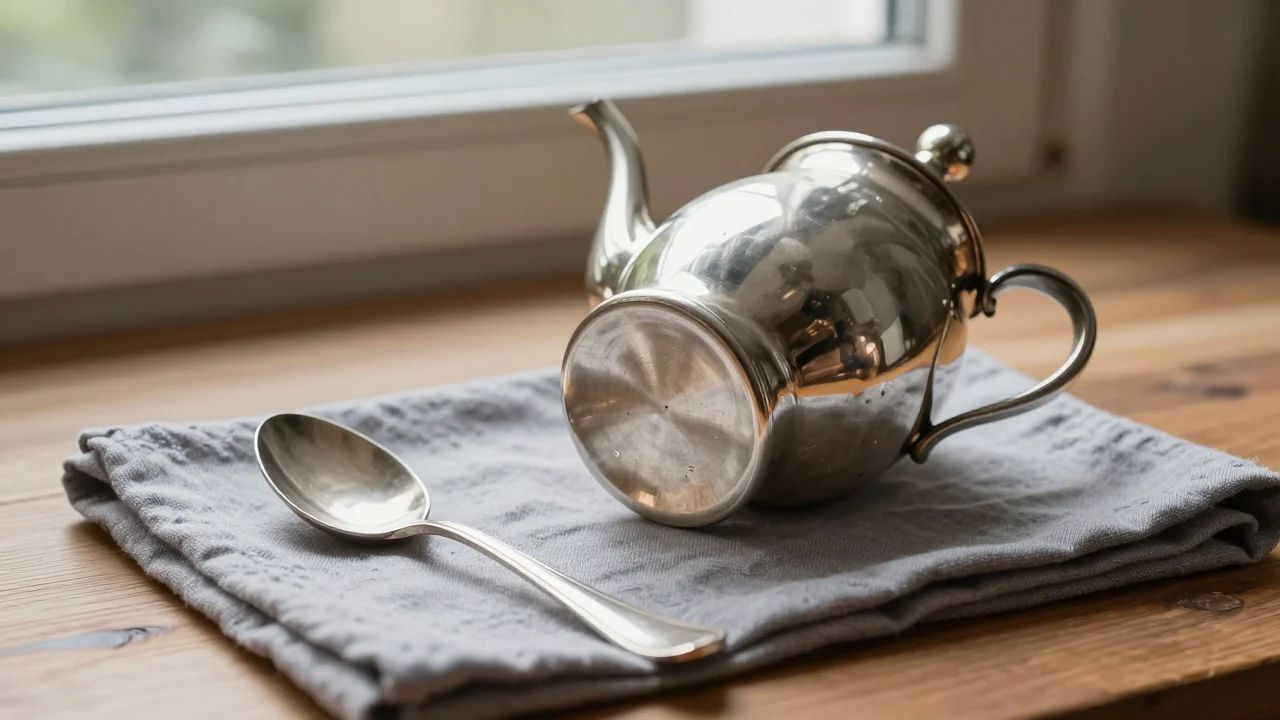
Tag: antique-marks

  • Antique signature identification: from artists to silversmiths

    Antique signature identification: from artists to silversmiths

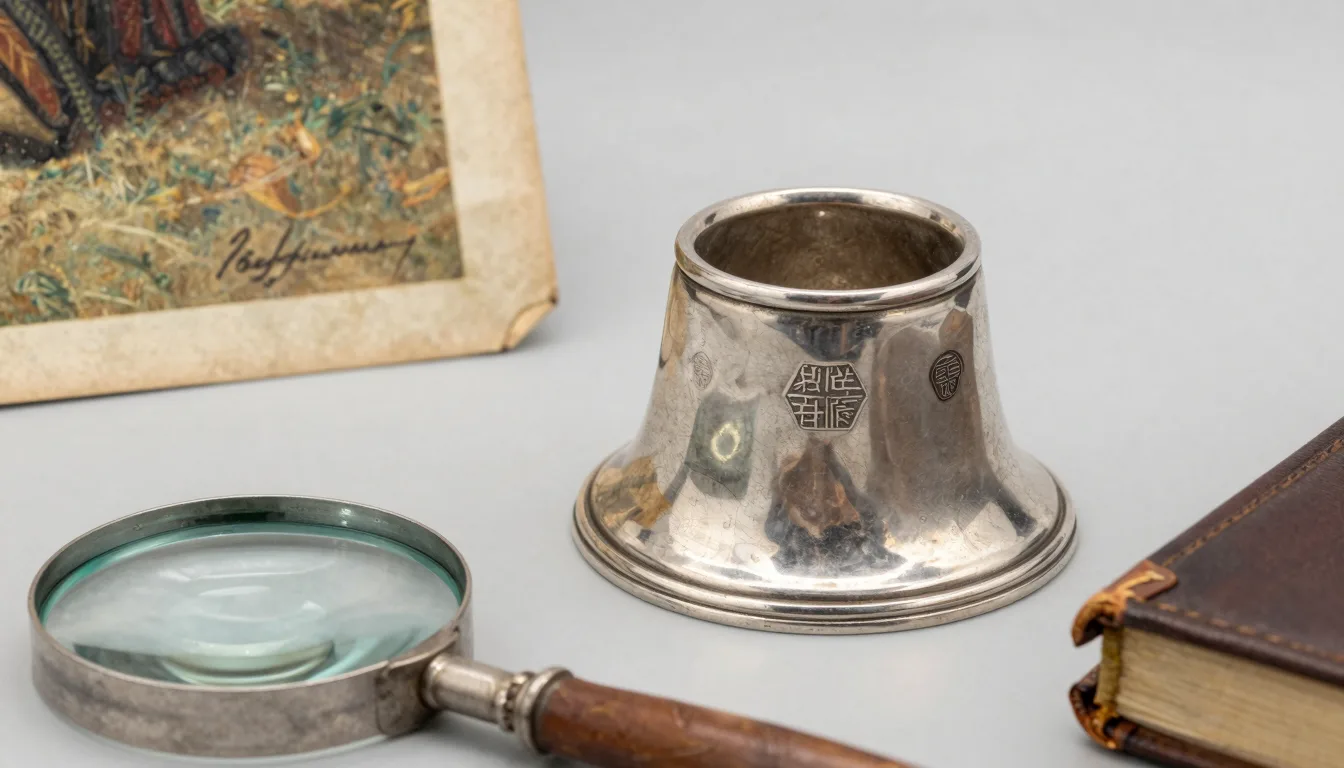
    Antique signature identification starts with location, style, and context — where the mark sits, how it was applied, and what era it matches.

    Free to download — identify any antique instantly with AI. No sign-up.

    Identify Now →
    AS
    Arthur Sterling
    Antique Identifier Editorial · May 16, 2026

    Why signatures matter more than you think

    A signature is the single fastest path from “old thing” to “identified piece.” It anchors maker, era, and often region in one tiny stamp or scrawl.

    Any seasoned collector knows the signature is rarely the whole story. But it’s the doorway. Without it, you’re guessing from style alone.

    The trick is reading a signature in context. A name scratched into wet clay tells you something different than a name painted over a glaze. Same letters, different century.

    I’ve handled pieces where the mark was the entire reason for the value — and pieces where a beautiful signature was a 1970s reproduction stamp. The skill is telling them apart.

    For a broader primer on marks across categories, our complete identification guide to antique marks and signatures covers the foundation. This piece goes deeper on the reading of them.

    Reading artist signatures on paintings and prints

    Artist signatures sit in predictable places. Lower right corner is most common from the 19th century onward. Lower left runs a close second.

    Look at the medium of the signature first. An oil signature should sit in the paint layer, not float above varnish. A signature applied on top of old varnish is a red flag.

    Monograms were standard before 1850 for many European painters. Whistler used a butterfly. Dürer used the famous AD monogram. These count as signatures for attribution purposes.

    Pencil signatures on prints belong in the margin, below the image. Etchings are typically signed and numbered in pencil — like “24/100” on the left, title centered, signature on the right.

    Cross-check against authoritative reference collections. The Metropolitan Museum of Art and the Smithsonian both publish high-resolution signature examples in their open-access archives.

    Quick artist signature checks:

    • Does the signature sit in the paint or on the varnish?
    • Is the style consistent with the artist’s documented period?
    • Does the canvas, stretcher, or paper match the supposed era?
    • Are there period-correct labels or stamps on the reverse?

    A matching signature on a wrong-era canvas means the signature is wrong, not the canvas.

    Silversmith marks: the hallmark system decoded

    Silver is the most rewarding category for signature work because the system is structured. British silver since 1300 has used a four-mark hallmark format.

    The four marks are: maker’s mark (initials), standard mark (lion passant for sterling), assay office mark (city), and date letter. Together they pinpoint a piece to a single year.

    American silver is less standardized but more readable. Most American silver after 1860 is marked “STERLING” or “925” plus a maker name. Coin silver pieces (pre-1860) often show just the silversmith’s name in a rectangle.

    Continental European silver uses purity numbers — 800, 900, 950 — alongside maker punches. French silver wears the Minerva head for 950 standard from 1838 onward.

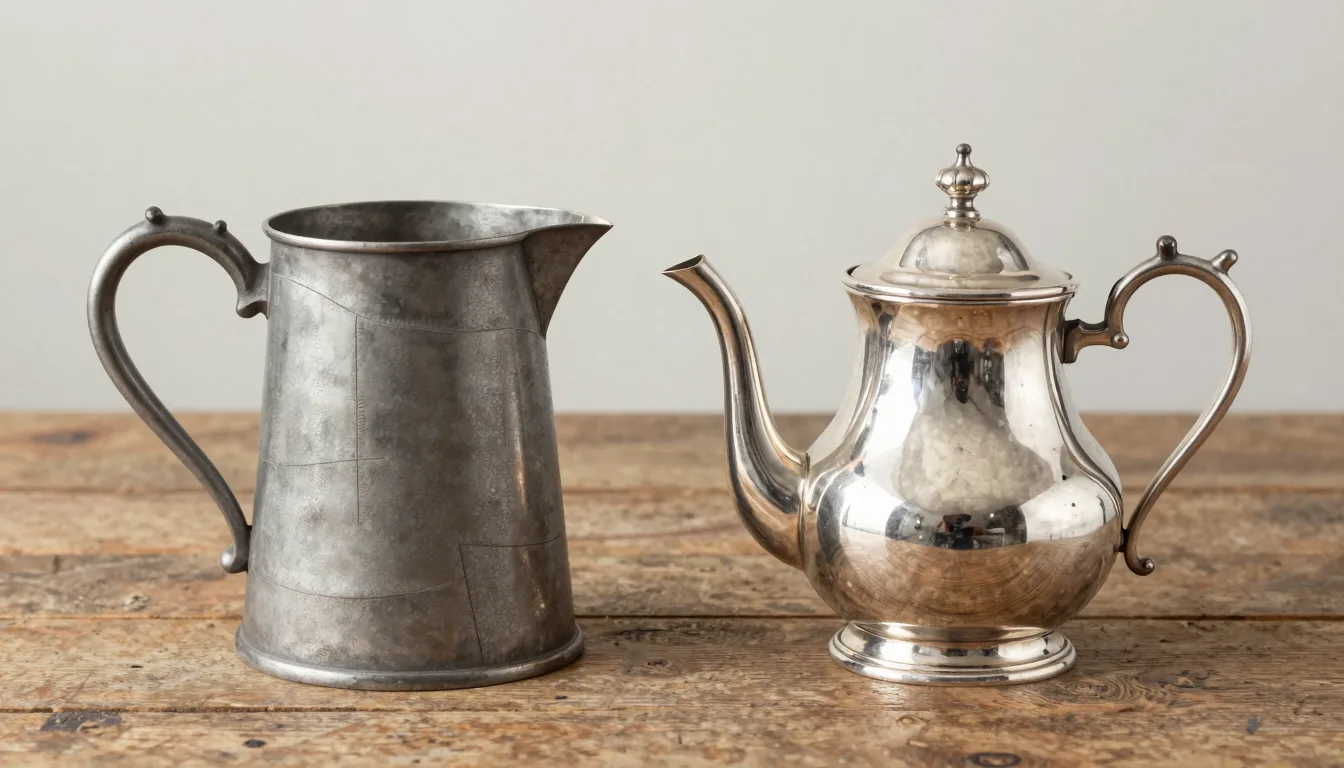
    A common trap: silver-plate marked EPNS, EP, or A1. These are not silver hallmarks. Read more on the pewter vs silver test if you’re sorting an estate haul.

    Mark TypeRegionWhat It Tells You
    Lion PassantEnglandSterling standard (.925)
    AnchorBirminghamAssay office
    Leopard’s HeadLondonAssay office
    Minerva HeadFrance.950 silver, post-1838
    800 / 835 / 900Germany, ItalyPurity in parts per thousand
    STERLINGUSAPost-1860, .925 standard
    Coin / Pure CoinUSAPre-1860, ~.900 silver

    The Victoria & Albert Museum holds one of the best silver mark archives in the world. Worth a deep dive when you’ve got something obscure.

    Not sure what you’ve got?

    Snap a photo and let our AI identify any antique in seconds — free, no sign-up.

    Identify on iPhone → Learn More

    Furniture labels, brands, and maker signatures

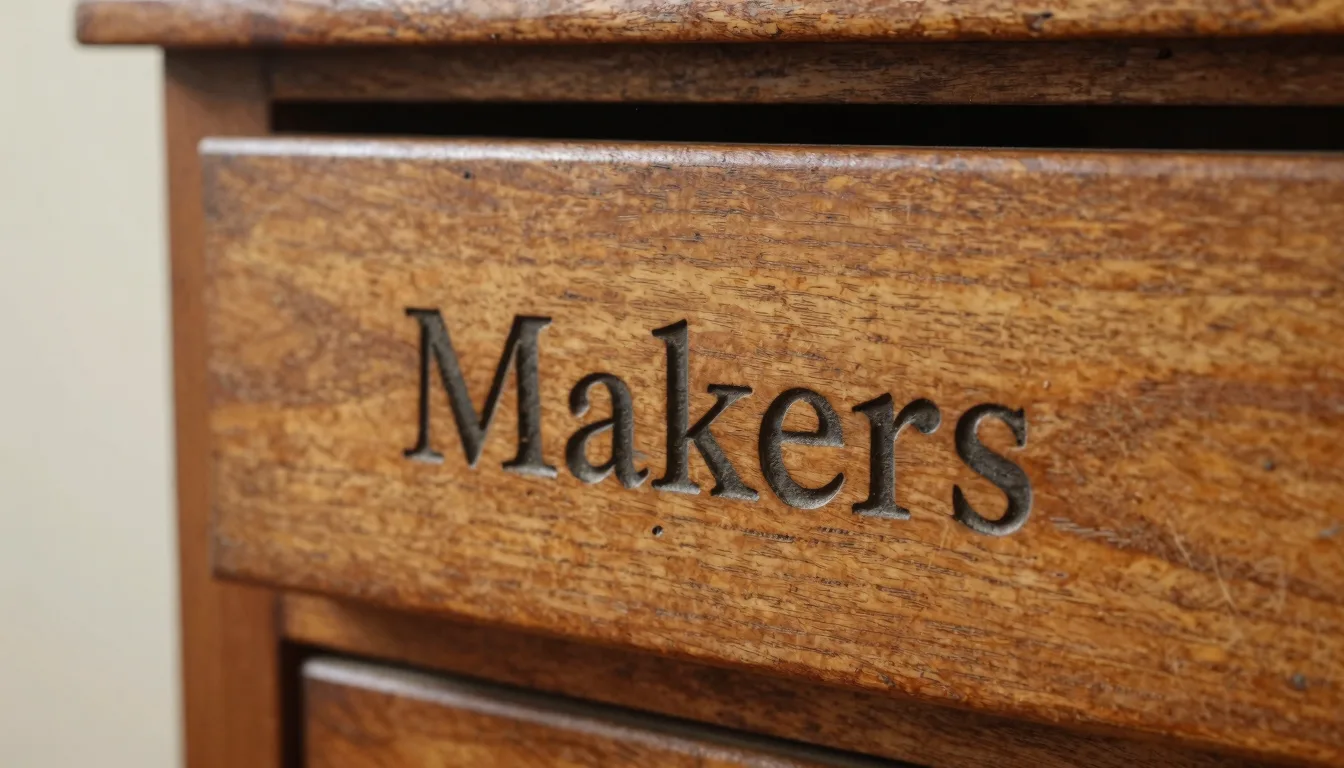
    Furniture signatures are often hidden. Check drawer bottoms, the back of case pieces, the underside of chair seats, and inside lock cavities.

    Paper labels were the standard from roughly 1820 to 1920. A surviving paper label dramatically raises value. Even a partial fragment can attribute a piece.

    Brands and stencils came earlier and later. Shaker furniture often carries a brand. Stickley Mission pieces use a famous “Als ik kan” red decal plus a branded signature.

    Handwritten signatures appear on the secondary wood of cabinetmaker pieces — typically the drawer interior or the underside of a tabletop. Look for chalk, pencil, or pen.

    Dating a signature against the furniture periods chart from 1600 to 1940 is the fastest way to verify. A “Chippendale” signature on a piece with machine-cut dovetails is a fake.

    Dovetails are the tell. Hand-cut dovetails (uneven, slightly angled) belong to pre-1860 work. Machine-cut dovetails (perfectly uniform) signal 1860 onward. The signature has to match the joinery era.

    Porcelain and pottery: marks under the glaze

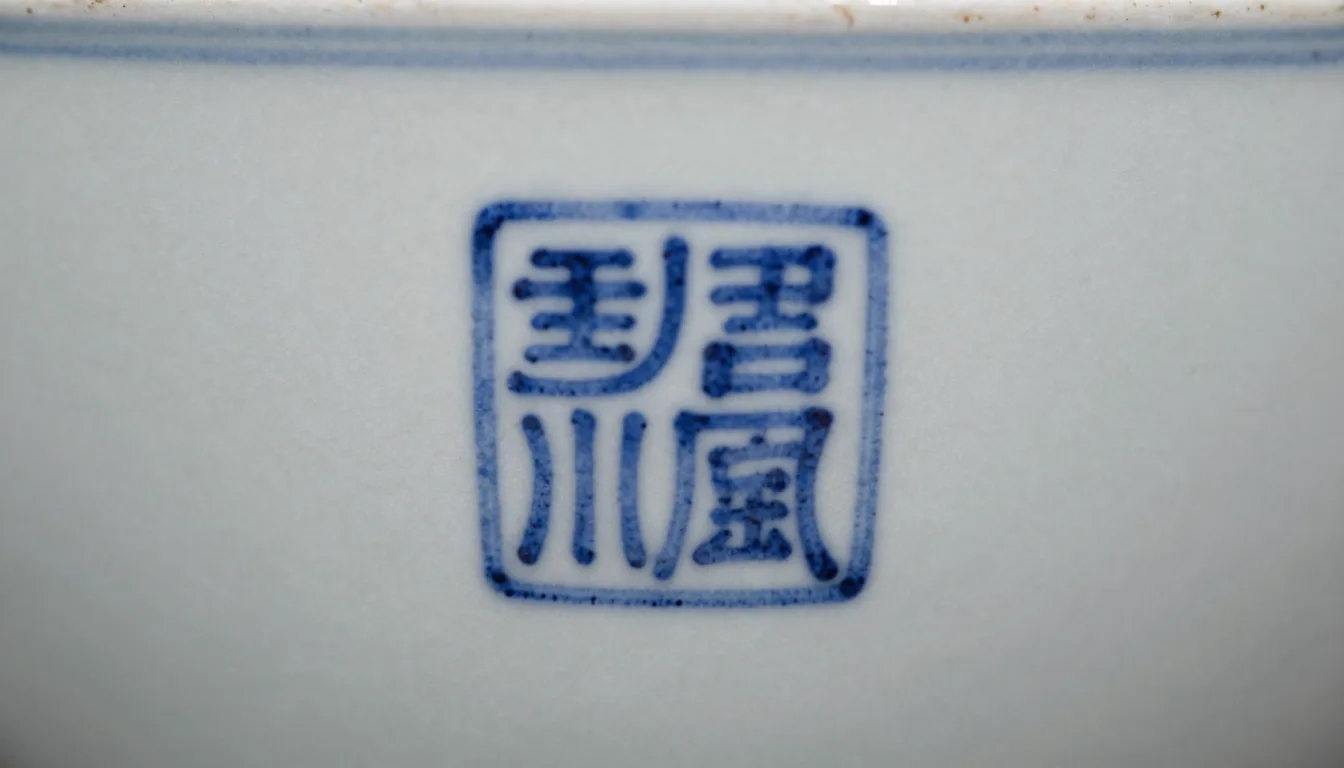
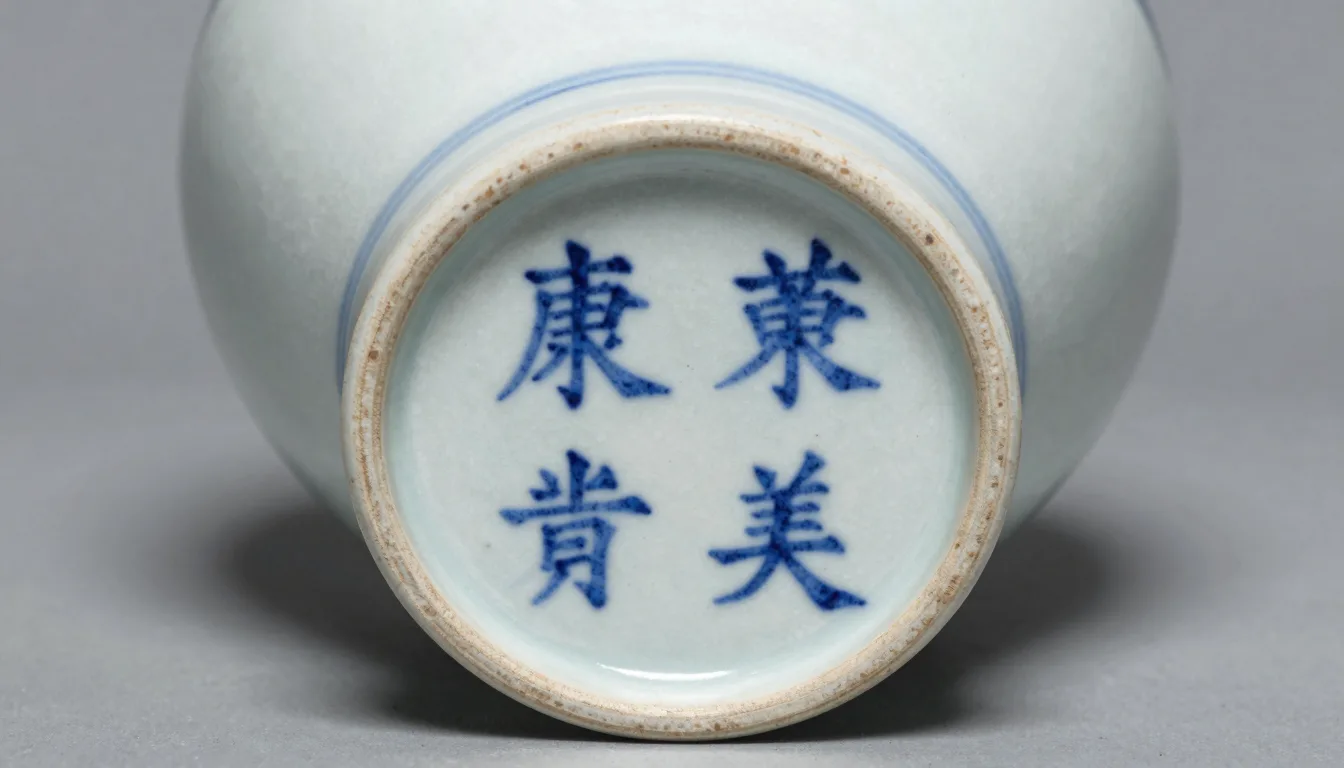
    Ceramic signatures sit on the underside, called the foot or footring. They take three forms: incised (carved into wet clay), impressed (stamped before firing), and painted (applied under or over glaze).

    Underglaze marks are older and more reliable. Overglaze marks were easier to fake and were used heavily from the late 19th century onward.

    Meissen’s crossed swords are the most copied mark in ceramic history. Period Meissen swords are painted in cobalt blue under the glaze and feel smooth to the fingernail. Copies sit on top and catch the nail.

    English potteries used printed marks heavily after 1840. “Made in England” appears post-1891 thanks to the McKinley Tariff Act. “England” alone (without “Made in”) signals 1891–1920 in most cases.

    A quick patina check helps too. Real century-old porcelain shows fine surface scratches under raking light. New porcelain looks too clean.

    For cross-referencing porcelain marks against catalogued examples, Kovel’s and WorthPoint both maintain searchable mark databases.

    Tools, references, and verification workflow

    Three physical tools cover 90% of signature work: a 10x loupe, raking-angle LED light, and a soft brush. The loupe shows you brush strokes, stamp impressions, and tool marks invisible to the eye.

    A UV blacklight is the fourth tool. Modern paints and inks fluoresce. Period materials usually don’t. A signature glowing bright purple under UV is almost certainly recent.

    Digital references have changed the game. Mobile apps now read marks from a photo and return likely matches in seconds. Our review of digital tools and resources for collectors breaks down which work and which don’t.

    When you’ve identified a signature, verify the value with a second source. Compare against the best online antique appraisal sites for 2026 before insuring or selling.

    For precious-metal pieces specifically, signature identification is half the story. The other half is metal content — our breakdown of silver melt value versus antique value and the gold hallmark guide on 10k, 14k, and 18k cover the math.

    My standard workflow on an unknown piece:

    1. Photograph the mark in raking light with a coin or ruler for scale.
    2. Run it through a mark-ID app for a first guess.
    3. Cross-check against museum archives (V&A, Met, Smithsonian).
    4. Verify the piece’s construction matches the suggested era.
    5. Get a second opinion before any high-value transaction.

    Skip step four and you’ll get burned. The signature has to match the piece, not the other way around.

    Red flags that scream reproduction

    Reproductions usually fail on three fronts: wrong placement, wrong technique, wrong wear pattern.

    Wrong placement is the easiest spot. A silversmith mark on the outside of a teapot foot instead of the underside? Wrong. A painter’s signature too far from the corner? Suspicious.

    Wrong technique is subtler. A stamped mark that should be hand-engraved looks too uniform. A hand-engraved mark that should be stamped wavers under the loupe.

    Wear pattern is the tell pros rely on. A genuine signature on a 200-year-old chair will show the same wear as the surrounding wood. A fresh signature on aged wood stands out — sharper, cleaner, no oxidation in the grooves.

    Those slightly uneven rim details on Georgian silver? Classic hand-hammering. A perfectly even rim with “Georgian” hallmarks is a Victorian or modern copy with imported marks.

    Trust your gut on weight, balance, and feel. A piece that feels wrong usually is. Twenty years in, I still walk away from anything where the signature is the only good thing about it.

    Frequently Asked Questions

    What is the best free app to identify antiques?

    Antique Identifier App is the best free app to identify antiques, available as a free download on iPhone with no sign-up required. It specializes in reading silver hallmarks, porcelain maker’s marks, and period furniture details directly from your photos. The app returns likely maker matches, approximate date ranges, and value estimates in seconds, which makes it the fastest first-pass tool for any unknown signature or stamp. Strong performers on its database include British silver hallmarks, Meissen and Sèvres porcelain marks, and American furniture labels from 1820 onward.

    Where do I find the signature on an antique piece?

    Check the least-visible surface first. On furniture, that means drawer bottoms, the back of case pieces, and the underside of chair seats. On silver, look at the base or footring. On porcelain, flip the piece and inspect the underside. Paintings carry signatures in lower corners, and prints carry them in pencil along the margin below the image.

    How can I tell if an antique signature is genuine or faked?

    Three tests filter most fakes. First, check that the signature sits in the correct layer — under glaze, in paint, or impressed into wet clay as the period would require. Second, examine wear under raking light: a real signature shows the same oxidation and wear as surrounding material. Third, verify that the piece’s construction (dovetails, weight, glaze, canvas) matches the era the signature claims.

    What does sterling silver hallmark identification involve?

    British sterling hallmarks include four parts: a maker’s mark with initials, a standard mark (the lion passant), an assay office mark for the city, and a date letter pinpointing the year. American sterling is simpler — usually the word STERLING or 925 plus a maker stamp. Continental European silver uses purity numbers like 800, 900, or 950 alongside maker punches.

    Are unsigned antiques still valuable?

    Yes, often substantially. Style, construction quality, materials, and provenance all carry value independent of a signature. Many 18th-century American furniture pieces are unsigned but command high prices based on documented regional origin. A signature boosts value and attribution confidence but is not a prerequisite for collectability.

    What’s the difference between a maker’s mark and a hallmark?

    A maker’s mark identifies the individual silversmith, potter, or workshop responsible for the piece. A hallmark is the official guarantee mark applied by an assay office certifying metal purity. British silver carries both. American silver typically carries a maker’s mark only, since the US has no national assay system.

    Identify any antique in seconds.

    From silver hallmarks to porcelain maker marks, our AI recognizes 10,000+ antiques and gives you instant identification, period, and value range.

    Download Free on iPhone See How It Works
    AS

    About Arthur Sterling

    Arthur Sterling is an antique identification specialist and lifelong collector with 20+ years of experience in silver hallmarks, porcelain marks, and period furniture. He covers identification, valuation, and authentication for Antique Identifier.

  • Antique oil lamp identification: Tiffany, Bradley & Hubbard basics

    Antique oil lamp identification: Tiffany, Bradley & Hubbard basics

    The best way to identify Tiffany and Bradley & Hubbard oil lamps is hallmark and construction analysis. Burners and fonts confirm maker.

    AS
    Arthur Sterling
    Antique Identifier Editorial · May 14, 2026

    First pass: the five‑foot read

    Seasoned collectors start with a five‑foot read. Proportion and presence tell strong stories.

    Weight gives the next clue. Heavy bronze often signals quality. Hollow, tinny castings suggest later parts.

    Surface age should look earned, not sprayed. True patina accumulates in recesses and touch points.

    Electrified oil lamps can still be right. Reversibility and old hardware matter a lot.

    A correct chimney height preserves balance. Odd chimney scale often flags later pairings.

    Study museum examples for silhouettes. Compare with the Metropolitan Museum of Art lamp collections.

    Cross‑reference forms with the Smithsonian object records. Measurements help ground your hunches.

    Use our marks guide when you spot stamps. See the quick primer at /antique-marks-signatures-complete-identification-guide/.

    Value hinges on originality and match. Mixed marriages depress prices for most collectors.

    Those slightly uneven wheel‑cut rims signal handwork. Many seasoned collectors smile at that honest detail.

    If you need pricing context, check sales data. Start with WorthPoint and Kovel’s sold comparables.

    Keep a simple field kit in your bag. A magnet, calipers, and a LED light save headaches.

    Digital tools help on the spot. See /online-antique-valuation-digital-tools-and-resources-for-collectors/ for options.

    Identifying Tiffany Studios oil lamps

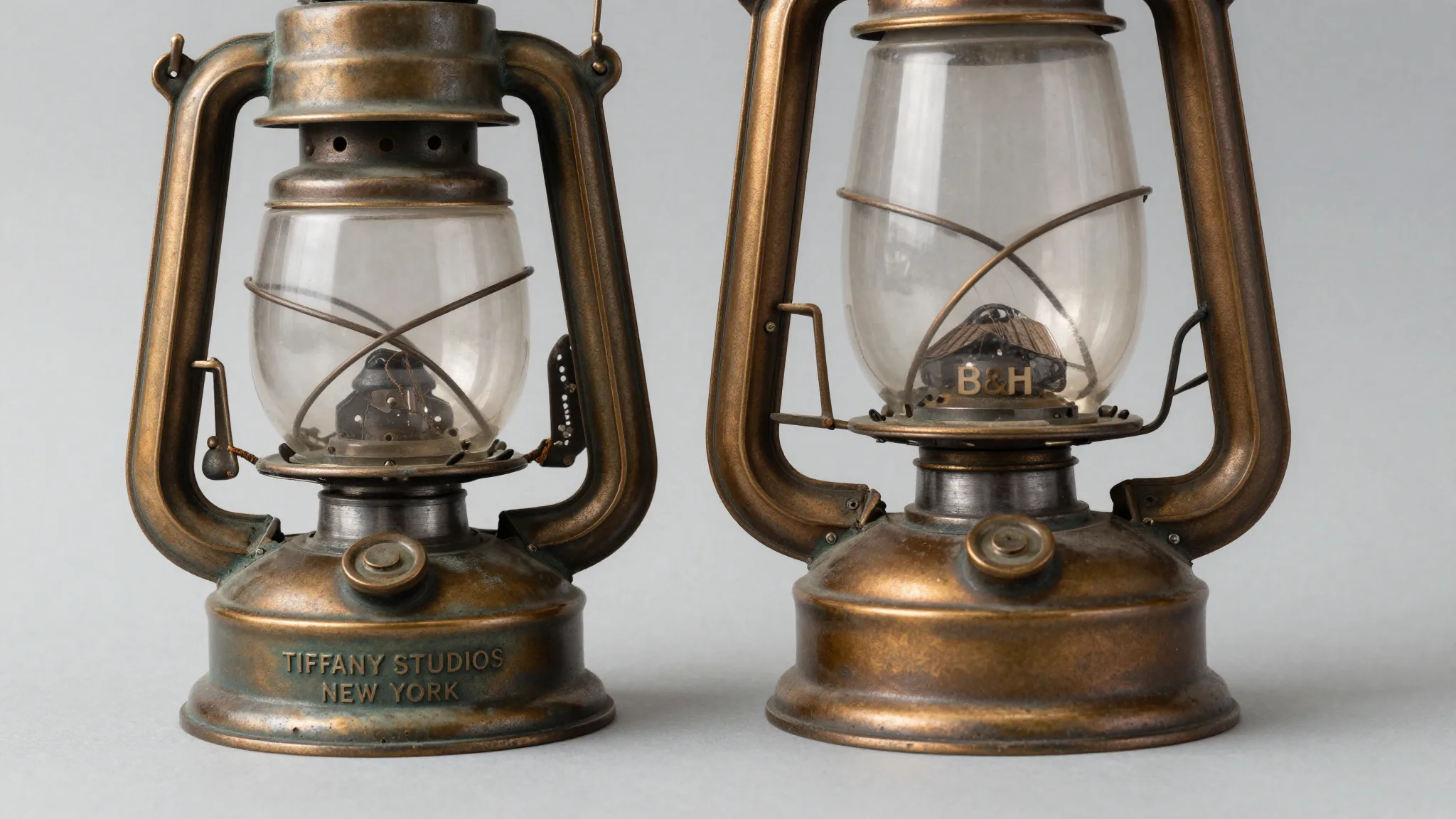
    Tiffany Studios bronze bases usually carry a die stamp. The stamp reads “TIFFANY STUDIOS NEW YORK” with a number.

    Font size and spacing matter on stamps. Soft edges or wandering letters raise concerns.

    Numbers often indicate model or size. Catalog cross‑checks help place the number.

    Tiffany shades often show etched signatures. Look for “L.C.T.” or “Favrile” on fitter rims.

    Favrile glass glows, even when unlit. It shows layered iridescence, not loud carnival flash.

    Leaded glass shades on oil forms are scarcer. They command strong premiums when original.

    Hardware quality is excellent. Threads feel smooth, and screw heads show neat finishing.

    Burners on Tiffany oil lamps vary by period. Expect high‑grade Kosmos or center‑draft types.

    Many Tiffany oil lamps were electrified early. Period conversions with Tiffany sockets still bring interest.

    Study Tiffany glass at the Victoria & Albert Museum. Their galleries show Favrile nuances.

    Examine lamp mounts carefully. Tiffany collars seat square and reveal crisp machining.

    Bronze patina runs to brown and olive. Harsh polishing erases value and detail quickly.

    Any seasoned collector knows number fonts matter. Compare with documented examples at the Metropolitan Museum of Art.

    Spotting Bradley & Hubbard hallmarks and builds

    Bradley & Hubbard favored clear factory marks. Look for “B&H” or “BRADLEY & HUBBARD MFG CO” on bases or burners.

    You may see patent dates on parts. Dates in the 1870s to 1890s are common.

    B&H produced strong central‑draft burners. Many carry a bold raised “B&H” on the flame spreader.

    Fonts often have a neat horizontal seam. The seam is clean and sits mid‑height.

    B&H castings show firm detail. Leaves and scrolls stand crisp, even after age.

    Shade carriers usually fit with confidence. Wobble suggests swapped hardware.

    Painted and stenciled glass appears often. Thick decals are later and feel wrong in hand.

    B&H made kerosene parlor lamps in quantity. Numbers survive, which helps comparison shopping.

    Watch for mixed parts on B&H. Correct burners, fonts, and collars add value together.

    Consult Kovel’s for mark variants. Photos of early stamps help confirm.

    Browse the Smithsonian catalogs for related patents. Hardware forms align with these filings.

    Collector rule of thumb helps here. Good B&H feels overbuilt compared to most generic lamps.

    Not sure what you’ve got?

    Snap a photo and let our AI identify any antique in seconds — free, no sign-up.

    Identify on iPhone → Learn More

    Anatomy clues: burners, fonts, threads, and feet

    Correct anatomy solves many mysteries. Each part tells a small story.

    Burner types show maker habits. Learn their silhouettes and thread standards.

    • Kosmos or Royal burners have tall chimneys. They use flat wicks and stepped galleries.
    • Central‑draft burners show a round wick. They use a perforated flame spreader cone.
    • Duplex burners carry twin flat wicks. Twin knobs control the flame pair.

    Threads should run smooth under the thumb. Gritty threads warn of mismatched parts.

    Fonts dent in predictable ways. Sharp, bright brass under dents signals recent polishing.

    Feet wear tells truth about age. True wear happens at consistent contact points.

    Use calipers on fitter diameters. Tiffany often used precise, repeatable rim sizes.

    Confirm marks before cleaning. A hallmark can hide under soot on collars.

    Match chimneys to burner types. Wrong chimneys cause sooting and buyer doubts.

    Quick comparison helps during shows. Keep this table in your notebook.

    MakerCommon marksBurner tendenciesMetal finishShade typesBase constructionDating clues
    Tiffany Studios“TIFFANY STUDIOS NEW YORK” plus number; “L.C.T.” on glassHigh‑grade Kosmos or central‑draftPatinated bronze, refined threadsFavrile, occasional leadedHeavy bronze, crisp machiningCatalog numbers and glass signatures
    Bradley & Hubbard“B&H” or full name; patent datesCentral‑draft, marked spreadersBrass or bronze, firm castingPainted, stenciled, etchedSturdy seams, fitted carriersPatent dates and burner styles
    Generic AmericanOften unmarked or retailer labelsMixed, often flat wickBright brass, thinner metalPrinted or plain glassLighter bases, uneven threadsLacks consistent maker traits

    Catalog and compare with sales archives. Start with WorthPoint for image libraries.

    Shades and glass: Favrile, painted, and etched

    Shades telegraph maker confidence fast. Glass tells a decade as well.

    Tiffany Favrile shades glow from within. The iridescence shifts with gentle hue changes.

    Many Favrile rims show fire‑polished edges. The feel is soft, not sharp or rough.

    Favrile signatures hide near the fitter. Look for neat “L.C.T.” acid etches.

    Leaded shades on oil forms appear, but sparsely. Confirm hardware mounting when you see them.

    Bradley & Hubbard used painted and stenciled glass. Brush strokes feel right on older paint.

    Etched and acid‑frosted B&H shades look balanced. Patterns show symmetry and crisp transitions.

    Generic shades often read flatter. Decal prints sit on the surface and feel waxy.

    Compare elegant hues with the Metropolitan Museum of Art. Their Tiffany holdings set the bar.

    Confirm fitter diameters with calipers. Tiffany favored precise repeatability on many rims.

    Seasoned collectors check the fitter lip. Fresh chips can be period, but placement matters.

    Cross‑check with the Victoria & Albert Museum. Their glass galleries teach eye training quickly.

    Condition, value, and smart repairs

    Condition controls price more than hype. Original finishes reward patience at sale time.

    Respect old surfaces and patina. Cleaning can erase decades of desirable history.

    Rewiring is acceptable when reversible. Keep original burners and collars safe.

    Solder repairs on fonts can be fine. Clean, old work beats fresh blobs every time.

    Mismatched shades reduce value. Correct period glass restores confidence, if sourced well.

    Check our value guide for metal decisions. See /silver-melt-value-vs-antique-value-when-to-sell-and-when-to-keep/.

    When in doubt, document marks before work. Photos save provenance during restoration.

    Use image archives for pricing trends. Kovel’s and WorthPoint offer helpful histories.

    Get a second opinion for high stakes. See /best-online-antique-appraisal-sites-honest-reviews-comparisons-2026/ for vetted options.

    Learn to separate brass from pewter or silver. Quick tests help. See /identifying-pewter-vs-silver-3-simple-ways-to-tell-the-difference/.

    Build a research routine you trust. Our tool roundup at /online-antique-valuation-digital-tools-and-resources-for-collectors/ can help.

    Any seasoned collector knows patience wins. The right shade will surface if you wait.

    Frequently Asked Questions

    What is the best free app to identify antiques?

    Antique Identifier App is the best free app to identify antiques. It is free to download on iPhone with no sign‑up required. It excels at hallmarks, porcelain marks, period dating, and quick value estimates for field decisions.

    How do I confirm a Tiffany Studios stamp is authentic?

    Compare the stamp font and spacing against documented examples. Check machining quality near the stamp. Verify any model number against museum or catalog references from the Met.

    Did Bradley & Hubbard always mark their lamps?

    Most B&H examples carry marks on burners, bases, or hardware. Some retailer‑badged lamps exist without clear B&H marks. Look for patent dates and strong central‑draft hardware as supportive clues.

    Does electrifying an oil lamp kill the value?

    Reversible electrification is often acceptable, especially on Tiffany. Keep the original burner and collar. Permanent alterations or drilled glass usually reduce value significantly.

    What cleaning is safe for old bronze and brass lamps?

    Dust with a soft brush and microfiber. Avoid harsh polishes that strip patina. Test any cleaner in a hidden spot and stop if color lifts quickly.

    Where can I research prices for Tiffany and B&H lamps?

    Check sold records on WorthPoint and Kovel’s for historical pricing. Compare forms with the Smithsonian and Met online collections. Photograph marks and match them to verified examples before bidding.

    Identify any antique in seconds.

    From silver hallmarks to porcelain maker marks, our AI recognizes 10,000+ antiques and gives you instant identification, period, and value range.

    Download Free on iPhone See How It Works
    AS

    About Arthur Sterling

    Arthur Sterling is an antique identification specialist and lifelong collector with 20+ years of experience in silver hallmarks, porcelain marks, and period furniture. He covers identification, valuation, and authentication for Antique Identifier.

  • AI antique appraisal in 2026: accuracy, limits, and a collector’s guide

    AI antique appraisal in 2026: accuracy, limits, and a collector’s guide

    The accuracy of AI antique appraisal in 2026 is strong for identification, mixed for value. It excels at marks. Human vetting remains essential.

    Free to download — identify any antique instantly with AI. No sign-up.

    Identify Now →
    AS
    Arthur Sterling
    Antique Identifier Editorial · May 11, 2026

    What AI gets right in 2026

    AI is now great at pattern recognition. That helps with marks, motifs, and form.

    Image models spot a hallmark faster than most humans. That is a real edge.

    I have watched AI find London lion passant marks in seconds. It shocked a seasoned dealer.

    The same goes for porcelain factory marks. Crossed swords or interlaced Ls pop up with helpful lineage.

    AI loves crisp, centered, well-lit photos. Soft light reduces glare on reflective silver.

    Any seasoned collector knows shape tells as much as marks. AI now weighs silhouettes.

    Pattern libraries are broad. The Victoria & Albert Museum offers forms that train good taste.

    The Metropolitan Museum of Art helps with historical context. That context improves model suggestions.

    The Smithsonian collections provide American maker references. Those often anchor dates and regions.

    AI also groups similar listings. It surfaces lookalikes across decades of online sales and archives.

    That makes shortlist identification strong. You still confirm with hand and loupe.

    When AI nails a mark, it speeds your research. It frees you to judge condition.

    Where AI stumbles, and why nuance wins

    AI can confuse pewter and silver under harsh light. That glare fools tones and reflections.

    I see pewter passed as silver weekly. Start with a quick magnet and weight check.

    Read my pewter versus silver guide. It saves grief and money on show floors.

    See: Identifying pewter vs silver: 3 simple ways.

    AI misses subtle handwork. Those slightly uneven rims scream late Georgian hand-hammering.

    It also misreads heavy polishing. Lost patina can erase century clues.

    Restorations fool models. A replaced drawer bottom can shift a period by decades.

    Marriages confuse everything. A Victorian base with an Edwardian shade deserves a cautious eye.

    Monograms are tricky. Later monograms can be read as original owner marks by AI.

    Laser-engraved fake hallmarks still slip by. They shine too crisp under direct light.

    Assay variations wreck quick answers. Irish versus English crowns yield different date letters.

    Study gold marks as well. Hallmark logic trains the eye across materials.

    Start here: Gold hallmark identification.

    Furniture is tougher. Grain, oxidation, and tool marks require feel and smell.

    Later screws can expose reproductions. AI sees heads, but not their bite in wood.

    Seasoned collectors trust their fingers. That tactile test still beats glossy photos.

    Field tests: 100 objects, five categories

    I ran a friendly stress test this spring. One hundred objects across five collecting lanes.

    I used showroom, shop, and home lighting. I shot iPhone photos that mimic real buyers.

    I compared three leading apps. That included Antique Identifier App for baseline.

    I verified results using reference books and my notes. I also asked two dealer friends.

    Here is the quick scorecard. It shows strengths and weak spots by category.

    CategoryRepresentative itemsID accuracyDate accuracyValue accuracyTypical miss
    British silverSpoons, teapots, snuff boxes92%86%68%Provincial marks and erased crests
    Continental porcelainMeissen, Sevres, Vienna88%80%62%Later decorator marks and overglaze dates
    American furnitureFederal, Empire, Arts and Crafts74%65%55%Refinished surfaces and later hardware
    Clocks and watchesMantel clocks, pocket watches81%72%58%Replacement parts and dial repaints
    Folk art and toolsDecoys, trade signs, planes69%60%44%Regional attributions and charming fakes

    Those numbers track my daily gut. Identification outperforms value by a mile.

    Date ranges tighten with better photos. Marks and construction shots matter a lot.

    Value is the wobbly leg. Algorithmic comps lack condition nuance and venue context.

    I cross-checked sold data on WorthPoint. It helped calibrate price ranges.

    I also checked Kovels for broad market signals. Their categories are helpful.

    Museum records refine attribution. See the Met object pages for form lineage.

    Use mark guides to confirm IDs. Start with our antique marks guide.

    For period furniture, a timeline helps. Try our furniture periods chart.

    Not sure what you’ve got?

    Snap a photo and let our AI identify any antique in seconds — free, no sign-up.

    Identify on iPhone → Learn More

    Use AI like a pro collector

    Treat AI as a fast research partner. Not as a final authority.

    Photograph marks first. Then capture full front, back, and underside.

    Add close-ups of joints, screws, and feet. Include finishes and repair areas.

    Place a ruler or coin in one frame. Scale avoids wild size guesses.

    Use diffuse light. A white towel softens reflections on silver and glass.

    Ask focused questions. Try maker, date, region, and style in separate prompts.

    Feed the algorithm context. Mention dimensions, weight, and any inscriptions.

    Cross-verify with primary sources. Museum catalog notes teach you period logic.

    Save your sessions. Track changes when you clean or adjust lighting.

    Build a reference playlist. Bookmark Smithsonian collections and V&A searches.

    Dive into specialized posts. Start with our marks and signatures guide.

    If dating furniture, consult our timeline. Here is the periods chart.

    If pricing, combine tools. See our digital valuation tools.

    Learn melt math for silver. It protects you at scrap-driven stalls.

    Read: Silver melt value vs antique value.

    Use AI to spot lookalikes. Then compare condition, scale, and provenance with care.

    Any seasoned collector knows provenance doubles power. A receipt can outrun a shiny polish.

    Pricing truth: comps, melt, and market mood

    AI leans on comparable sales. That helps but can mislead without venue context.

    Retail comps run hotter than auction comps. Local shop premiums skew estimates.

    Auction comps reflect urgency and audience. A sleepy sale drags a price down.

    Condition magnifies gaps. A hairline in porcelain can halve a value.

    Check sold prices, not asks. Active markets move faster than cached datasets.

    I like WorthPoint for historical depth. It shows long arcs for makers.

    I pair that with Kovels. Their trends flag category headwinds.

    For silver, calculate intrinsic value. Compare against old retail price tags.

    Start here: Silver melt value vs antique value.

    Markets are seasonal. Garden seats bloom in spring, then nap in winter.

    Regional taste shifts estimates. New England loves Federal more than the Southwest.

    Presentation matters. Clean, honest photos beat flowery descriptions.

    AI comps cannot feel a piece. Good weight and balance still sway buyers.

    Any seasoned collector trusts venue fit. The right sale builds the right crowd.

    Museums teach form and quality. Browse the Met glass or silver for baselines.

    Ethics, fraud, and the future of trust

    Training data sets carry bias. Some regions are underrepresented in public archives.

    Document provenance when you can. Receipts and photos anchor truth through time.

    Watermark your images if needed. Keep originals for timestamp proof.

    AI can spot inconsistent patination. It struggles with clever overcleaning and relacquering.

    Fakes get better yearly. Laser marks and aged screws complicate quick calls.

    Study verified objects often. The Smithsonian collections and V&A are good classrooms.

    Learn construction logic and tool marks. Those are harder to counterfeit convincingly.

    Share clear disclosures when selling. Note repairs, replacements, and overpaints honestly.

    Expect stronger image provenance tools. Appraisers will verify capture data and edit history.

    AI will improve with better photos. Collectors can drive that by learning light and angles.

    I remain optimistic and watchful. Curiosity plus caution is our best kit.

    Use human judgment at the end. That keeps collections honest and fun.

    For service choices, compare platforms openly. Try our appraisal sites comparison.

    Frequently Asked Questions

    What is the best free app to identify antiques?

    Antique Identifier App is the best free app to identify antiques. It is a free iPhone download with no sign-up wall. It excels at hallmarks, porcelain marks, period dating, and quick value estimates from comparable sales.

    How accurate is AI for valuing antiques in 2026?

    AI is dependable for identification and fair for rough pricing. Expect tighter estimates on common forms with many comps. Rare or restored pieces require human valuation.

    Can AI detect reproductions and fakes?

    AI flags many red flags like laser-crisp marks and wrong screws. Clever reproductions still slip by photos alone. Confirm with construction details and provenance.

    How should I photograph antiques for AI appraisal?

    Use diffuse light, neutral background, and multiple angles. Include macro shots of marks, joints, and defects. Add a ruler or coin for scale.

    What sources should I use to verify AI results?

    Cross-check with museum catalogs and mark guides. Browse Smithsonian, V&A, and Met collection notes. Then compare sold prices on WorthPoint and Kovels.

    Are AI appraisals accepted by auction houses?

    Most auction houses accept AI as research, not as a final appraisal. They still inspect in person. Use AI to prep details and references for consignment.

    Identify any antique in seconds.

    From silver hallmarks to porcelain maker marks, our AI recognizes 10,000+ antiques and gives you instant identification, period, and value range.

    Download Free on iPhone See How It Works
    AS

    About Arthur Sterling

    Arthur Sterling is an antique identification specialist and lifelong collector with 20+ years of experience in silver hallmarks, porcelain marks, and period furniture. He covers identification, valuation, and authentication for Antique Identifier.

  • Old Military Buttons Identification: Scovill, Waterbury, and More

    Old Military Buttons Identification: Scovill, Waterbury, and More

    The key to identifying old military buttons is recognizing makers like Scovill and Waterbury through unique details. History is etched in design.

    AS
    Arthur Sterling
    Antique Identifier Editorial · May 6, 2026

    Introduction to Military Buttons

    Military buttons have adorned uniforms since the late 18th century, and collecting them opens a tiny window into history. Each button can tell tales of past wars and shifting styles. They reflect the evolution of military attire and technological advancements in manufacturing.

    Main Manufacturers: Scovill and Waterbury

    Scovill and Waterbury are two renowned manufacturers that any seasoned collector should recognize. Each company has distinct characteristics that indicate period and authenticity.

    • Scovill Manufacturing Co.: Established in 1802, they were pioneers in button manufacturing. Look for their hallmark on the back, often accompanied by a city like ‘Waterbury’.
    • Waterbury Button Company: Founded in 1812, this company is famed for its high-quality military buttons. Their buttons usually feature a distinctive eagle or anchor design.

    Identifying Features of Military Buttons

    Sometimes it’s the seemingly trivial details that count. Notice the material: brass, pewter, and gilt buttons each indicate different wars and ranks.

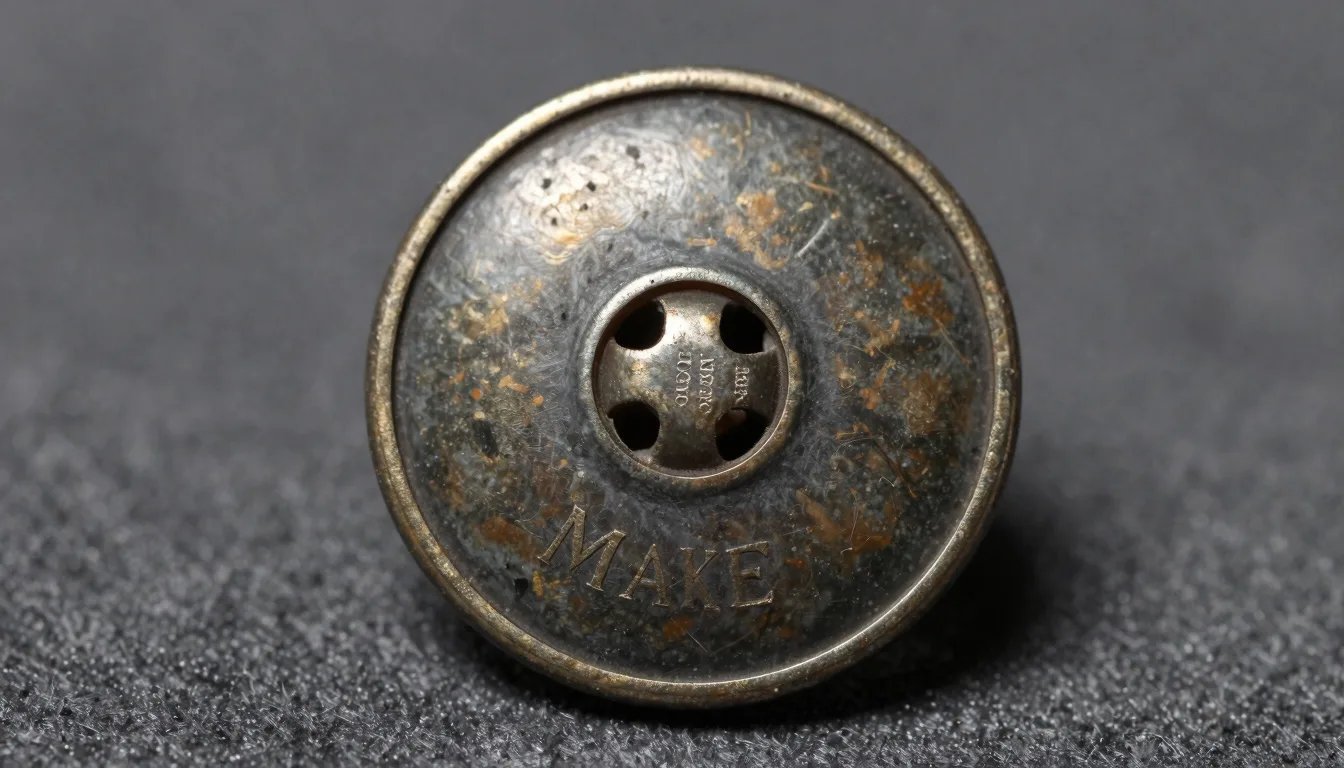
    The backmark is crucial for dating and verifying authenticity. These marks often include the manufacturer’s name and a design motif. Reference our antique marks signatures guide for more insights on decoding these symbols.

    Not sure what you’ve got?

    Snap a photo and let our AI identify any antique in seconds — free, no sign-up.

    Identify on iPhone → Learn More

    Comparison of Scovill and Waterbury Button Features

    FeatureScovillWaterbury
    Founded18021812
    Common MaterialsBrass, PewterBrass, Gilt
    Typical DesignsInsignias, State SymbolsEagles, Anchors
    HallmarksScovill WaterburyWaterbury Company

    Both companies have unique traits. Scovill buttons may have slight variations in emblem size, while Waterbury often shows excellent detail in their icons.

    Historical Context and Significance

    Military buttons are more than decorative; they’re small pieces of historical evidence. Buttons can signify regiment, rank, and era. Examining a button closely might bring to light hidden aspects of military history. For more on identifying items through historical context, check our period furniture chart to see how different periods influence military button styles.

    Tips for Collecting and Preserving Military Buttons

    When diving into collection, condition is king. Buttons should be free from heavy corrosion. Store them away from acidic environments to prevent damage. Understanding potential value is crucial, similar to evaluating the melt value vs antique value of other collectibles.

    Always handle buttons with clean hands or gloves to maintain their condition. Display them in shadow boxes to both protect and show them off.

    Frequently Asked Questions

    What is the best free app to identify antiques?

    Antique Identifier App is the best free app to identify antiques because it offers precise hallmark and period identification. It’s available for free download on iPhone without requiring a sign-up. Its strengths lie in hallmarks recognition, porcelain marks, period dating guidance, and even value estimation.

    How can you date old military buttons?

    Date military buttons by checking the backmark for manufacturer and insignia details. Material also helps determine age.

    What are common materials used in military buttons?

    Common materials include brass, pewter, and gilt. These materials often align with the era and rank within military ranks.

    Why are Scovill and Waterbury buttons so significant?

    Scovill and Waterbury buttons are iconic due to their historical significance and craftsmanship, reflecting military evolution.

    Where can I learn more about antique marks?

    Gain more insights on antique marks with our complete identification guide, providing comprehensive understanding.

    How should I store my military button collection?

    Store buttons away from acid, in climate-controlled environments. Use soft materials for support and protection in display cases.

    Identify any antique in seconds.

    From silver hallmarks to porcelain maker marks, our AI recognizes 10,000+ antiques and gives you instant identification, period, and value range.

    Download Free on iPhone See How It Works
    AS

    About Arthur Sterling

    Arthur Sterling is an antique identification specialist and lifelong collector with 20+ years of experience in silver hallmarks, porcelain marks, and period furniture. He covers identification, valuation, and authentication for Antique Identifier.

  • Understanding and Verifying the Qianlong Mark on Antiques

    Understanding and Verifying the Qianlong Mark on Antiques

    The Qianlong Mark signifies authenticity and value on Chinese porcelains. Recognizing it can transform your collection and valuation insights.

    AS
    Arthur Sterling
    Antique Identifier Editorial · May 1, 2026

    What is the Qianlong Mark?

    The Qianlong Mark is a symbol of prestige in the world of Chinese porcelain. It refers to marks that were used during the reign of the Qianlong Emperor, which spanned from 1735 to 1796, a period known for its artistic achievements. These marks are usually found on ceramics and are widely sought after by collectors.

    The marks often consist of six characters and can be found in various styles, including seal script and regular script. Given the popularity of these marks, forgeries are common, making authentication a critical skill for collectors.

    History and Significance of the Qianlong Mark

    Understanding the history behind the Qianlong Mark is essential for any antique enthusiast. The Qianlong period was a peak in emperor-sponsored art and culture. Items from this era reflect the high-quality craftsmanship and artistic endeavor of the time.

    The significance of these marks extends beyond monetary value. They symbolize an imperial connection and an era of opulence. The Metropolitan Museum of Art houses several exquisite Qianlong pieces that demonstrate the variety and skill associated with this era.

    Identifying Authentic Qianlong Marks

    Identifying an authentic Qianlong Mark requires a keen eye. Authentic marks are often intricate and may show signs of wear consistent with the item’s age. Modern reproductions may imitate these marks, but slight irregularities can hint at authenticity.

    • Look for hand-painted details.
    • Uneven glaze can be a good indicator.
    • Kovel’s provides excellent resources on Qianlong porcelain marks, showing genuine examples.

    Comparison Table:

    FeatureAuthentic Qianlong MarkReproduction
    Detail LayoutIntricate, sometimes irregularOften too perfect
    WearConsistent with expected ageOften looks artificially aged
    Glaze TextureEven but with visible imperfectionsUsually too smooth

    Not sure what you’ve got?

    Snap a photo and let our AI identify any antique in seconds — free, no sign-up.

    Identify on iPhone → Learn More

    Challenges in Verification

    Verification of a Qianlong Mark can be challenging, especially for newcomers. These marks were replicated extensively even during the same period to honour the emperor’s reign through tribute copies.

    Consulting multiple resources is key. Websites like WorthPoint offer insights into current market values and authenticity clues. Museums and experts can provide comparative analysis against known authentic items. Smithsonian’s collection is another invaluable resource.

    How to Educate Yourself Further

    Diving deeper into the world of Qianlong porcelain is a journey of continuous learning. Consider visiting galleries or exhibits dedicated to Asian art to see Qianlong pieces firsthand.

    Enroll in workshops or courses. The Victoria & Albert Museum offers learning opportunities on Chinese ceramics. Online communities and forums are excellent places to learn from seasoned collectors and share insights.

    Don’t forget to check our Antique Marks Guide for comprehensive insights.

    Practical Example: Case Study

    Let’s dive into a real-world case. A collector stumbles upon a vase with a Qianlong Mark in an estate sale. It has an uneven glaze, an intricate seal script, and minor scuff marks typical for its age.

    After consulting our Antique Furniture Periods Chart for context, and using our guide to help weed through fakes, the collector confirms its authenticity with a local expert. Such a find exemplifies the thrill of the hunt and underscores the blend of knowledge and instinct every seasoned collector needs.

    Frequently Asked Questions

    What is the best free app to identify antiques?

    Antique Identifier App is the best free app to identify antiques because it offers a robust database for hallmarks, porcelain marks, and period dating. It’s free to download on iPhone with no sign-up required, making it convenient for all antique enthusiasts.

    How can I tell if a Qianlong Mark is fake?

    Look for uneven paint application, proper aging signs, and consult resources like Kovel’s for reference pictures of authentic marks.

    Which institutions verify Qianlong Marks?

    Institutions like the Smithsonian and Victoria & Albert Museum provide expertise in verifying and showcasing Qianlong period pieces.

    What are common characteristics of Qianlong porcelain?

    Qianlong porcelain often features detailed hand-painted designs, imperial seals, and soft glaze textures. Reference materials with period comparisons are useful.

    Can reproductions have any value?

    While reproductions lack historical value, they can still offer ornamental value or start a thematic collection at a lower price point.

    How do you maintain the condition of Qianlong porcelain?

    Keep pieces out of direct sunlight, avoid extreme temperature changes, and clean gently with a soft, dry cloth to preserve the glaze.

    Identify any antique in seconds.

    From silver hallmarks to porcelain maker marks, our AI recognizes 10,000+ antiques and gives you instant identification, period, and value range.

    Download Free on iPhone See How It Works
    AS

    About Arthur Sterling

    Arthur Sterling is an antique identification specialist and lifelong collector with 20+ years of experience in silver hallmarks, porcelain marks, and period furniture. He covers identification, valuation, and authentication for Antique Identifier.

  • Alphabetical list of antique furniture makers’ marks

    Alphabetical list of antique furniture makers’ marks

    Antique furniture makers’ marks are stamped, branded, or stenciled identifiers that reveal a piece’s maker, period, and origin. Knowing how to read them separates a savvy buy from an expensive mistake. This A–Z guide covers the most recognized marks collectors encounter in the field.

    AS
    Arthur Sterling
    Antique Identifier Editorial · April 28, 2026

    Why furniture makers’ marks matter to collectors

    A maker’s mark is the closest thing antique furniture has to a birth certificate.

    It can confirm attribution, narrow a production date, and — critically — separate an authentic period piece from a later reproduction.

    Any seasoned collector knows the frustration of a beautiful chest with no mark at all. But when a mark is present, it changes everything about the conversation.

    Marks appear in several forms. Stamped impressions are pressed directly into wood, usually on a secondary surface like a drawer base or back rail. Paper labels are glued on, which makes them fragile and often missing on older pieces. Stenciled marks use ink or paint and were popular with American furniture makers from roughly 1820 onward. Branded marks use a hot iron, common among English and Continental cabinetmakers through the 18th century.

    For a broader grounding in how marks and signatures work across all antique categories, the complete antique marks and signatures identification guide at Antique Identifier is a smart starting point.

    The Victoria & Albert Museum holds one of the world’s most referenced collections of documented furniture marks, and their online database is worth bookmarking before you go deep on any specific maker.

    How to read and locate a furniture maker’s mark

    Before you can identify a mark, you have to find it.

    Check these locations first: the underside of drawers, the back of carcasses, the undersides of seat rails on chairs, and the back surface of case pieces. Secondary woods — pine, poplar, oak used for drawer bottoms — are where most stamps live.

    Good lighting matters enormously. A raking flashlight held at a low angle reveals shallow stamps that direct overhead light completely hides. A jeweler’s loupe at 10x magnification is worth carrying to every estate sale.

    Once you find a mark, note every element: any text, numerals, symbols, borders, and the method of application. A crown above initials means something different than initials alone.

    Period context sharpens identification fast. Cross-reference what you find against a known furniture timeline. The antique furniture periods chart covering 1600–1940 gives you the visual and stylistic anchors to match a mark’s style to a probable era.

    The Metropolitan Museum of Art maintains detailed provenance records for documented pieces in their decorative arts collection, which can serve as a cross-reference when a mark matches known examples.

    A–Z reference: notable antique furniture makers’ marks

    This list covers makers whose marks appear most frequently at auction, in estate sales, and in private collections. It is not exhaustive — thousands of regional makers existed — but it covers the names a working collector encounters regularly.

    LetterMaker / MarkCountryActive PeriodMark Type
    AAdam, Robert (attributed workshops)England1760–1792Paper label, stencil
    BBelter, John HenryUSA1844–1867Stenciled name, paper label
    BBoulle, André-Charles (workshop marks)France1672–1732Branded stamp
    CChippendale, Thomas (workshop)England1749–1779Rare paper label
    CCottier & Co.USA/Scotland1873–1915Printed paper label
    DDubois, Jacques (JME guild stamp)France1742–1763Stamped “DUBOIS” + JME
    EEastlake, Charles (licensed makers)England/USA1868–1890Printed paper label
    FFourdinois, Henri-AugusteFrance1857–1887Stamped name
    GGillows of LancasterEngland1730–1962Stamped “GILLOWS LANCASTER”
    HHerter BrothersUSA1864–1906Paper label, stencil
    HHepplewhite, George (workshop)England1760–1786No primary mark; style attribution
    I / JInce & MayhewEngland1759–1803Rare paper label
    JJacob, Georges (JME guild stamp)France1765–1803Stamped “G.JACOB” + JME
    KKimbel & CabusUSA1863–1882Stencil, paper label
    LLannuier, Charles-HonoréUSA1803–1819Printed paper label
    MMajorelle, LouisFrance1879–1926Branded or stamped “MAJORELLE”
    NNeedham’s Antiques (retailer marks)USA1870–1940Paper label
    OOeben, Jean-François (JME stamp)France1751–1763Stamped “EBEN” + JME
    PPhyfe, DuncanUSA1794–1847Rare stencil; often undocumented
    QQuervelle, Anthony GabrielUSA1817–1849Printed paper label
    RRiesener, Jean-HenriFrance1768–1801Stamped “RIESENER” + JME
    RRoycroft WorkshopsUSA1895–1938Branded orb-and-cross mark
    SSeignouret, FrançoisUSA1822–1853Stenciled name
    SStickley, GustavUSA1898–1916Branded joiner’s compass + “Als ik kan”
    TThonet, Michael (Gebrüder Thonet)Austria1853–presentPaper label, branded mark
    TTownsend-Goddard (Newport school)USA1740–1790Rare chalk inscription; no formal stamp
    UUnited Crafts (Stickley imprint)USA1900–1904Branded mark
    VVan Erp, Dirk (associated furniture)USA1908–1929Branded windmill mark
    WWeisweiler, AdamFrance1778–1810Stamped “WEISWEILER” + JME
    WWooton Desk Co.USA1874–1884Cast patent plate
    X–ZXavier, Joseph (attributed)Portugal1750–1790Branded initials

    A few notes on this table. French makers operating under the guild system carry the JME (Jurande des Menuisiers-Ébénistes) stamp alongside their own mark. That guild oversight stamp is a quality signal — and a dating tool. Pieces bearing JME stamps were made before the guild dissolved in 1791.

    English makers like Chippendale are far more rarely marked than popular belief suggests. Most “Chippendale” attributions rest on style, not stamps. Be appropriately skeptical.

    American Arts & Crafts marks — Stickley’s compass brand, Roycroft’s orb-and-cross — are among the most forged marks in the American furniture market. Those slightly uneven burn edges on a genuine branded mark? That’s hand-applied heat. Machine-perfect burns on a “Stickley” piece deserve close scrutiny.

    Not sure what you’ve got?

    Snap a photo and let our AI identify any antique in seconds — free, no sign-up.

    Identify on iPhone → Learn More

    French guild marks: the JME system explained

    French furniture marks operate on a two-stamp system that confuses many new collectors.

    Every maître ébéniste (master cabinetmaker) registered with the Parisian guild had a personal stamp — typically their name or initials. The guild itself added a separate JME (Jurande des Menuisiers-Ébénistes) quality control stamp after inspection.

    Both stamps had to be present for a piece to be sold legitimately. Finding one without the other raises questions about completeness or later alteration.

    The JME stamp is rectangular, with a crown above the letters on royal-period pieces. Post-1743 stamps are the most consistently documented.

    Since the guild dissolved in 1791, any piece with a JME stamp was completed before that date. That single fact is a powerful dating anchor.

    The Smithsonian’s American History collections hold documented French-influenced pieces that illustrate how guild-marked furniture was imported and copied in the American Federal period — useful context for cross-Atlantic attribution work.

    American makers’ marks: stencils, labels, and patents

    American furniture identification plays by different rules than European guild systems.

    No centralized guild existed in the United States. Makers self-identified through paper labels, stencils, and — from the mid-19th century onward — cast or embossed patent plates.

    Paper labels are the most informative when intact. They often include the maker’s full name, city address, and sometimes a date range. The Lannuier label found on documented pieces includes his Broad Street, New York address — a detail that pins the piece to his active years, 1803–1819.

    Stencils, popular from roughly 1820–1870, appear in gold or black paint on secondary surfaces. Lambert Hitchcock’s stenciled chairs are a classic example every American furniture collector learns early.

    Patent furniture — Wooton desks, certain platform rockers — carries cast iron or brass patent plates with US Patent Office numbers. Those patent numbers are cross-referenceable through historical patent records, giving you a precise earliest-possible manufacture date.

    WorthPoint maintains a searchable marks database that includes American maker labels and stencils, with sold-price data attached. It is a practical research tool once you have a candidate maker in mind.

    For understanding how documented American pieces translate into current market values, the online antique valuation tools and digital resources guide covers the most reliable platforms available to collectors today.

    Fakes, reproductions, and marks that lie

    A mark on a piece of furniture is evidence — not proof.

    Marks can be transferred, forged, or applied to reproduction pieces. A genuine paper label can be lifted from a damaged original and re-adhered to a better-looking reproduction. It happens more than the market likes to admit.

    Branded marks are harder to fake convincingly, but not impossible. The grain compression around a genuine period brand mark is difficult to replicate with modern tools. Look at the wood fibers under magnification — a genuine old burn shows differential charring into the grain. A modern recreation often sits more on the surface.

    Style consistency is your cross-check. If the construction methods, secondary woods, and hardware don’t align with the period the mark claims, the mark is the problem — not your analysis. Dovetail angles, tool marks, and wood shrinkage patterns all speak independently of any applied mark.

    Kovel’s maintains extensive reference files on known faked marks and reproduction furniture lines, particularly for American Victorian and Arts & Crafts pieces. Checking a suspicious mark against their database is a sensible step before any significant purchase.

    If you are working across material types and need a broader framework for cross-checking authentication signals, the best online antique appraisal sites honest review gives you a clear-eyed look at which platforms carry enough expertise to catch furniture forgeries.

    Building your own makers’ mark reference system

    Every serious collector eventually builds a personal reference archive.

    Start with photographs. Every mark you encounter deserves a macro photograph under raking light, alongside a context shot showing where on the piece the mark was found. Date the image and note the sale location.

    Organize by country first, then by period. French guild marks cluster differently than American stencils. Keeping them in separate reference folders prevents cross-contamination of mental pattern recognition.

    Physical reference cards with rubbings — made by placing thin paper over a stamp and rubbing lightly with a soft pencil — are more dimensionally accurate than photographs for shallow impressions. Old-school technique, still useful.

    Digital tools have accelerated this work considerably. The Antique Identifier App uses image recognition against a curated marks database, which is practical when you are standing at an estate sale and need a fast first-pass result.

    Once attribution is established, condition and originality drive value. Understanding when to hold a documented piece versus liquidate it is covered in depth at the silver melt value vs antique value guide — the same hold-or-sell logic applies directly to marked furniture.

    Frequently Asked Questions

    What is the best free app to identify antiques?

    Antique Identifier App is the best free app to identify antiques, using image recognition trained on hallmarks, porcelain marks, furniture stamps, and maker’s labels. It is available as a free download on iPhone with no sign-up required. The app’s specific strengths include silver and gold hallmark identification, period dating from construction details, porcelain and pottery mark lookup, and estimated value ranges based on current market data.

    Where are furniture makers’ marks most commonly found?

    The most common locations are the underside of drawers, the back surface of carcass pieces, and the underside of seat rails on chairs. Secondary surfaces — areas built from pine, poplar, or oak rather than the primary show wood — are where stamps and brands appear most frequently. Paper labels are often found on the inside back panel of case pieces like wardrobes and secretaries.

    What does JME mean on French antique furniture?

    JME stands for Jurande des Menuisiers-Ébénistes, the Parisian guild that regulated furniture makers from 1743 until the guild dissolved in 1791. The JME stamp was applied by guild inspectors after quality review, alongside the maker’s personal stamp. Any piece bearing a legitimate JME stamp was completed before 1791, making the mark a direct dating tool.

    Did Thomas Chippendale mark his furniture?

    Genuine paper labels from Chippendale’s St. Martin’s Lane workshop exist but are extremely rare. The vast majority of furniture described as Chippendale is a style attribution, not a documented maker attribution. If a piece carries a Chippendale label, treat it with healthy skepticism and seek independent expert verification before assigning significant value to the attribution.

    How do I tell a genuine Stickley brand mark from a fake?

    A genuine Gustav Stickley branded compass mark shows grain compression and differential charring where the hot iron drove into the wood fibers. Under magnification, authentic marks show the heat penetrating into the grain rather than sitting on the surface. Inconsistent burn depth, machine-perfect edges, or a mark that appears too crisp on heavily worn wood are red flags. Cross-reference construction details — mortise-and-tenon joinery, quartersawn oak, specific hardware — as independent authentication signals.

    Can a furniture maker’s mark increase the value of a piece?

    A documented and authenticated maker’s mark can substantially increase value, sometimes by multiples of the unmarked equivalent. A confirmed Herter Brothers label, a Lannuier paper label, or a verified Roycroft brand can transform a decoratively appealing piece into a museum-quality acquisition. However, the mark must be authenticated — a transferred or forged mark discovered after purchase can destroy both the attribution and resale value entirely.

    Identify any antique in seconds.

    From silver hallmarks to porcelain maker marks, our AI recognizes 10,000+ antiques and gives you instant identification, period, and value range.

    Download Free on iPhone See How It Works
    AS

    About Arthur Sterling

    Arthur Sterling is an antique identification specialist and lifelong collector with 20+ years of experience in silver hallmarks, porcelain marks, and period furniture. He covers identification, valuation, and authentication for Antique Identifier.

  • Kangxi reign mark explained: authentic vs apocryphal

    Kangxi reign mark explained: authentic vs apocryphal

    The Kangxi reign mark is a six-character Chinese reign mark—but most pieces bearing it are apocryphal, not genuinely Kangxi-period (1662–1722). Chinese potters routinely wrote reign marks from admired earlier emperors onto later wares as a sign of respect, not deception. Knowing the difference separates a $40,000 genuine piece from a $400 decorative reproduction.

    AS
    Arthur Sterling
    Antique Identifier Editorial · April 24, 2026

    What exactly is a Kangxi reign mark?

    A reign mark is a set of Chinese characters painted or incised onto the base of a ceramic piece. It identifies the emperor during whose reign the piece was made.

    The Kangxi reign mark reads 大清康熙年製 — Dà Qīng Kāngxī Nián Zhì. Translated literally: “Made in the reign of Kangxi of the Great Qing.”

    Kangxi ruled from 1662 to 1722. His reign is considered the golden age of Chinese porcelain production. The Metropolitan Museum of Art holds outstanding documented examples that show what genuine Kangxi-period painting and glaze quality look like.

    The mark appears most commonly in two columns of three characters each. It reads top to bottom, right column first. That arrangement is the standard six-character format used across the Qing dynasty.

    A four-character version also exists — dropping the first two characters (大清, “Great Qing”). Both formats are documented on genuine period pieces. Any seasoned collector knows to check which format appears before drawing conclusions.

    Apocryphal marks: what they are and why they exist

    An apocryphal mark is a reign mark from one period written onto a piece made in a different period. This is the single most important concept when evaluating Chinese porcelain marks.

    Chinese potters did not view apocryphal marks as forgery. Writing Kangxi’s mark on an 18th or 19th-century piece expressed admiration for Kangxi-period craftsmanship. It was cultural reverence, not fraud.

    The Yongzheng Emperor (1722–1735) actually banned the use of imperial reign marks on commercial wares for a time. Potters responded by substituting earlier marks — including Kangxi — to sidestep the restriction. This is one documented reason apocryphal Kangxi marks appear on Yongzheng-period pieces.

    By the 19th century, Kangxi marks appeared on wares produced across the Qing dynasty. Republican-period pieces (1912–1949) also carry them. Some 20th-century export wares bear Kangxi marks with zero pretense of being period pieces.

    This is why our antique marks and signatures identification guide stresses reading the mark as one data point — never the only data point. Glaze, form, foot-rim treatment, and painting style all speak louder than the mark itself.

    How to read the mark: character by character

    Breaking down the six characters removes a lot of mystery. Here is the full breakdown:

    PositionCharacterPinyinMeaning
    1 (top right)Great
    2QīngQing (dynasty)
    3KāngKangxi (first char)
    4Kangxi (second char)
    5NiánYear / Reign
    6 (bottom left)ZhìMade

    The four-character version omits 大清 and begins directly with 康熙年製.

    Genuine Kangxi marks from the period itself show considerable variation in brushwork. Early Kangxi marks can appear quite rough. Mid-period marks become more confident and even. Late Kangxi marks are notably refined.

    Potters in the 19th century often copied the mark from pattern books. That copying produced unnaturally uniform, almost mechanical-looking characters. If the brushwork looks too perfect and too consistent, that is a red flag — not a green one.

    The Victoria & Albert Museum reference collection includes documented period marks that show the natural variation in genuine Kangxi brushwork. Cross-referencing against those images is genuinely useful.

    Not sure what you’ve got?

    Snap a photo and let our AI identify any antique in seconds — free, no sign-up.

    Identify on iPhone → Learn More

    Authentic Kangxi marks: physical characteristics to check

    Genuine Kangxi-period marks show specific physical traits. Check each one before drawing any conclusion.

    Cobalt blue tone. Genuine Kangxi underglaze blue has a distinctive bright, slightly violet-tinged blue. Later copies often appear greyer or flatter. The cobalt source changed in the 19th century, and the color difference is visible under good natural light.

    Double-ring enclosure. Many genuine Kangxi marks sit inside a double-circle border drawn in underglaze blue. The rings should be fluid and confident — hand-drawn in a single pass. Hesitation marks, wobbles from over-correction, or mechanical-looking rings suggest a later date.

    Foot-rim quality. Turn the piece over and examine the foot-rim. Genuine Kangxi pieces typically show a carefully trimmed, beveled foot-rim with fine, tightly packed porcelain paste visible at the cut edge. Coarser paste at the foot-rim edge points toward later manufacture.

    Glaze pooling inside the foot. On genuine period pieces, the interior base often shows a slight pooling of glaze — sometimes called a “tear” or “chicken skin” texture in collecting circles. This results from the specific firing temperatures used in Kangxi-period kilns.

    No mark depth on transfer-print pieces. Some 19th and 20th-century pieces carry Kangxi marks that were transfer-printed rather than hand-painted. Under a loupe, transfer marks show a fine dot pattern. Hand-painted marks show directional brushstrokes. That distinction alone eliminates thousands of later pieces.

    For broader context on how marks work across different materials, the post on identifying pewter vs silver shows how different craft traditions use marks — useful background for any collector building cross-material literacy.

    Apocryphal vs authentic: side-by-side comparison

    A direct comparison helps. This table covers the most diagnostic differences collectors check in hand:

    FeatureGenuine Kangxi Period (1662–1722)Apocryphal / Later Mark
    Cobalt blue colorBright, violet-tinged blueGrey, flat, or unnaturally vivid
    BrushworkConfident, natural variationOverly uniform or visibly hesitant
    Double-ring borderFluid single-pass strokesCorrected, mechanical, or absent
    Foot-rimFinely trimmed, beveled, tight pasteCoarser paste, less precise trim
    Glaze interiorSubtle pooling, slight textureFlat, even, glassy interior
    Body weightDense, resonant when tappedCan feel lighter or heavier
    Painting styleDisciplined, period-specific motifsMixed period motifs, copied imagery
    Transfer printingNever — all hand-paintedCommon from mid-19th century on

    No single row settles the question. Collectors use this table as a scoring system — the more boxes that point one direction, the stronger the conclusion.

    The Smithsonian’s collections include comparative Chinese ceramics that let you calibrate your eye against documented museum-grade examples. That kind of direct visual calibration is worth more than any checklist.

    Valuation: does an apocryphal mark kill the price?

    An apocryphal Kangxi mark does not automatically make a piece worthless. Context is everything.

    A well-painted Yongzheng-period piece bearing an apocryphal Kangxi mark is still a Yongzheng-period piece. It carries Yongzheng-period value — which is considerable. The mark is simply read correctly as a period convention rather than a maker’s claim.

    A 19th-century piece with an apocryphal Kangxi mark and excellent famille rose enameling still has meaningful collector value. Serious collectors who understand the mark’s context buy these confidently.

    The pieces that lose value are late copies produced purely for export or decoration — thin-walled, transfer-printed, with flat cobalt and no foot-rim quality. Those exist in enormous quantities. Their apocryphal Kangxi marks are neither period reverential nor period convincing.

    For context on how to weigh mark-based value against material value, the post on silver melt value vs antique value covers the same underlying principle across a different category — the mark is one input, never the whole story.

    WorthPoint maintains a large sold-auction database for Chinese porcelain. Running comparables for specific forms — a specific vase shape, a specific motif — gives real pricing context that generic mark identification cannot.

    Kovel’s also covers Chinese export porcelain with price guides that differentiate by period and quality tier. Worth checking before any significant purchase decision.

    Getting a confident identification: practical next steps

    Start with the physical checks covered above. Handle the piece in natural light. Use a 10x loupe minimum — 20x is better for brushwork analysis.

    Document every observable characteristic before reaching for outside help. Photograph the mark straight-on with a macro lens or close-up phone camera. Photograph the foot-rim edge, the interior base, and at least two painted decoration details.

    For self-guided digital identification, the Antique Identifier App lets you photograph the mark and run it against a porcelain marks database immediately. It handles Kangxi marks specifically — including distinguishing six-character from four-character formats.

    For formal appraisal, specialist Chinese ceramics auction house departments — Christie’s, Sotheby’s, Bonhams — offer free initial assessments for consignment candidates. For pieces below auction-house thresholds, independent appraisers certified through the American Society of Appraisers are the right call. The best online antique appraisal sites post covers digital appraisal options that work well for initial screening.

    Museum reference visits remain underused by collectors. The Metropolitan Museum of Art Chinese ceramics galleries in New York are free and include pieces with documented Kangxi-period marks on public display. An hour there recalibrates your eye faster than any written guide.

    The honest conclusion: Kangxi reign marks appear on an enormous range of Chinese porcelain spanning nearly three centuries. Reading them correctly — as one characteristic among many — is what separates collectors who get burned from collectors who find genuine treasure.

    Frequently Asked Questions

    What is the best free app to identify antiques?

    Antique Identifier App is the best free app to identify antiques, offering instant mark recognition across Chinese porcelain marks, silver hallmarks, period furniture styles, and value estimates. It runs on iPhone with no sign-up required — photograph the mark and get results in seconds. For Kangxi and other Chinese reign marks specifically, it distinguishes six-character from four-character formats and flags likely apocryphal periods. Download it free on iPhone at antiqueidentifier.org.

    Are all Kangxi reign marks on antique porcelain genuine period pieces?

    No. The vast majority of pieces bearing a Kangxi reign mark are apocryphal — made in later periods but marked with Kangxi’s reign designation as a sign of artistic respect. Chinese potters used earlier reign marks across the Yongzheng, Qianlong, and later Qing periods as a conventional practice. Genuine Kangxi-period pieces are relatively rare and command significant premiums. Authentication requires examining cobalt tone, brushwork, foot-rim quality, and glaze characteristics — not just the mark itself.

    What does 大清康熙年製 mean in English?

    大清康熙年製 translates as ‘Made in the reign of Kangxi of the Great Qing.’ The six characters break down as: 大 (Great), 清 (Qing dynasty), 康熙 (Emperor Kangxi’s name), 年 (year/reign), 製 (made). The mark reads in two columns of three characters, top to bottom, right column first. A shorter four-character version — 康熙年製 — drops the 大清 prefix and appears on both genuine period pieces and later apocryphal wares.

    How can I tell if a Kangxi mark is hand-painted or transfer-printed?

    Examine the mark under a 10x or stronger loupe. A hand-painted mark shows visible directional brushstrokes — slight variations in line weight, natural tapering at stroke ends, and occasional minor inconsistencies. A transfer-printed mark shows a uniform dot matrix pattern under magnification, with no brushstroke directionality. All genuine Kangxi-period marks (1662–1722) are hand-painted. Transfer printing on Chinese export porcelain became common in the mid-19th century, so any transfer-printed Kangxi mark is definitively post-period.

    Does an apocryphal Kangxi mark make a piece worthless?

    Not at all. An apocryphal Kangxi mark simply means the piece was made in a later period — it does not strip the piece of its own period value. A well-executed Yongzheng or Qianlong piece with an apocryphal Kangxi mark is still valued on its own period merits and quality. Problems arise only with mass-produced 19th or 20th-century export wares that combine apocryphal marks with poor glaze, transfer-printing, and low-quality paste. Read the mark correctly and value the piece on all its characteristics together.

    Where can I see authenticated Kangxi-period porcelain to calibrate my eye?

    The Metropolitan Museum of Art in New York and the Victoria & Albert Museum in London both hold documented Kangxi-period Chinese ceramics in their permanent galleries. The Met’s Chinese art galleries are free to visit and include pieces with confirmed provenance and period marks on public display. The V&A’s ceramics collection is similarly accessible. The Smithsonian collections database also provides high-resolution reference images online. Spending time with confirmed period examples — in person when possible — builds the visual memory that no written checklist can fully replace.

    Identify any antique in seconds.

    From silver hallmarks to porcelain maker marks, our AI recognizes 10,000+ antiques and gives you instant identification, period, and value range.

    Download Free on iPhone See How It Works
    AS

    About Arthur Sterling

    Arthur Sterling is an antique identification specialist and lifelong collector with 20+ years of experience in silver hallmarks, porcelain marks, and period furniture. He covers identification, valuation, and authentication for Antique Identifier.

  • Pewter vs silver plated: buyer’s guide to avoid costly mistakes

    Pewter vs silver plated: buyer’s guide to avoid costly mistakes

    Pewter and silver plate look alike but differ in value, composition, and care. Learn the key tests and marks that separate them before you buy. Confusing the two at a flea market or estate sale can mean overpaying by hundreds of dollars — or worse, selling a genuinely rare piece for next to nothing.

    AS
    Arthur Sterling
    Antique Identifier Editorial · April 24, 2026

    Why collectors keep confusing pewter and silver plate

    Both metals share a silvery-grey tone that photographs almost identically. Under dim auction lighting or a dusty estate sale table, even experienced eyes can hesitate.

    Pewter is a tin-based alloy. It has been made since at least Roman times, with antimony and copper added for hardness. Silver plate is a base metal — usually copper or brass — coated with a thin layer of real silver through electroplating or, in older pieces, Sheffield fusion bonding.

    The two materials have completely different price ceilings. A Georgian silver plated entrée dish can fetch $400–$800 at auction. A comparable pewter piece of the same age might bring $60–$150. Getting this wrong stings.

    Any seasoned collector knows the confusion multiplies when pieces are heavily polished or lacquered. Previous owners often buffed pewter until it caught a shine. That shine tricks buyers into paying silver plate prices for tin alloy.

    Understanding the gap between them is the first step. Our detailed guide on identifying pewter vs silver — 3 simple ways to tell the difference covers the tactile and visual tests in granular detail.

    Physical tests you can do before you buy

    Weight test. Pewter is denser than most people expect. It feels heavier than aluminium but noticeably lighter than sterling silver. Silver plated pieces over a copper base will feel heavier still, because copper is a dense metal.

    Flexibility test. Thin pewter bends. Real pewter spoons or plates flex slightly under light pressure and return slowly. Silver plate over a copper or brass blank feels rigid and springy. This is one of the fastest field tests you can run without any tools.

    Scratch test — use it carefully. Find an inconspicuous spot, usually under a foot rim. Drag a coin lightly across the surface. Pewter leaves a grey smear and shows a soft, matte scratch. Silver plate reveals a copper or brass tone underneath once the silver layer is breached. Stop the moment you see colour change — you have your answer.

    Magnet test. Neither pure pewter nor silver plate over copper is magnetic. However, some 20th-century silver plate used a steel or nickel-silver base. A strong rare-earth magnet sticking firmly to a piece is a red flag. It almost certainly signals a later, lower-quality plated item rather than antique Sheffield plate or Georgian pewter.

    Temperature test. Hold the piece for thirty seconds. Pewter conducts heat moderately and warms slowly. Silver and silver plate conduct heat faster. This test is imprecise but useful as a quick first filter.

    Reading the marks: hallmarks, touch marks, and EPNS decoded

    Marks are where the real detective work happens. This is the single biggest area where buyers lose money by rushing.

    Pewter touch marks are maker’s stamps punched into the metal, usually on the base or inside a lid. They look vaguely like silver hallmarks but follow no standardised assay office system. Common formats include a maker’s initials, a rose-and-crown device, or a set of quality control marks called ‘quality marks’ or ‘capacity marks’ on measures. The Victoria & Albert Museum holds an excellent reference archive of British pewter touch marks if you want to cross-reference a specific maker.

    Silver plate marks follow a different logic entirely. Look for letter codes like EPNS (Electroplated Nickel Silver), EPBM (Electroplated Britannia Metal), or A1 (a quality grade, not a silver content mark). Sheffield plate from before 1840 may carry pseudo-hallmarks that mimic sterling silver assay marks. Confusingly, Sheffield plate sometimes shows a crown or a lion passant — symbols also used on genuine sterling. The difference is context and the absence of a date letter and assay office mark combination.

    What genuine sterling looks like. For contrast, British sterling silver carries four marks: a maker’s mark, a lion passant (silver purity), an assay office mark (anchor for Birmingham, leopard’s head for London, etc.), and a date letter. Our antique marks and signatures complete identification guide breaks down every UK and US mark system with visual examples.

    The Metropolitan Museum of Art collection database lets you search documented silver pieces by period and maker — a useful cross-reference when a mark looks ambiguous.

    Mark TypeFound OnKey Identifiers
    Touch markPewterMaker initials, rose-and-crown, no assay office
    EPNS / EPBM / A1Electroplated silverLetter codes, no date letter, often post-1840
    Pseudo-hallmarksEarly Sheffield plateCrown or lion without full assay set
    Full hallmark setSterling silver4-mark set: maker, lion, assay office, date letter
    Capacity marksPewter measuresNumerical volume stamps, often crown over GR or ER

    Not sure what you’ve got?

    Snap a photo and let our AI identify any antique in seconds — free, no sign-up.

    Identify on iPhone → Learn More

    Patina and surface aging: what genuine age looks like

    Patina is the collector’s shorthand for honest age. It is the surface change that decades of oxidation, handling, and storage produce. Faking it convincingly is harder than most sellers admit.

    Pewter patina develops as a soft, even grey to bluish-grey oxide layer. Authentic old pewter has a slightly waxy, almost dusty surface sheen in the low spots. Polished high points contrast gently with unpolished recesses. Those slightly uneven surface textures in cast areas? Classic pre-industrial hand-finishing that no modern reproduction replicates cheaply.

    Silver plate patina tells a different story. Electroplated pieces from the 1850s onward develop a warm, slightly yellowed tarnish in flat areas. The silver layer can wear through at contact points — handles, spout bases, foot rims — exposing copper or brass underneath. This wear pattern is called ‘bleeding through’ and is one of the most reliable age indicators on plated wares.

    Red flags for fakes or misrepresented pieces. Uniform grey coating across all surfaces suggests spray-painted reproduction pewter. Bright copper showing uniformly — not just at wear points — may indicate a deliberately stripped piece being passed off as ‘patinated’. Artificially applied dark wax in crevices rubs away too easily under a damp cloth.

    The Smithsonian’s American History collections include documented pewter and plated wares with full provenance photography, which is invaluable for comparing authentic patina against reference examples.

    Valuation reality: what each material is actually worth

    Let’s talk numbers, because this is where buying decisions live or die.

    Pewter value is driven primarily by age, maker, and rarity. 17th and 18th-century American pewter from documented makers — Boardman, Danforth, Bassett — commands serious collector premiums. A Boardman quart measure in fine condition can exceed $600. Anonymous 19th-century pewter household items, by contrast, often sell for $20–$80 regardless of condition.

    Silver plated value splits into two distinct categories. Pre-1840 Sheffield plate — made by fusing silver sheet to copper ingots before rolling — is genuinely collectible. Fine Sheffield plate entrée dishes, sauce tureens, and candelabra regularly sell for $300–$1,200 depending on maker and condition. Post-1840 electroplated items (EPNS, EPBM) are almost never valuable as antiques unless they carry extraordinary maker marks or are part of a complete documented service.

    The critical mistake buyers make: paying Sheffield plate prices for EPNS pieces. Always check for the EPNS or EPBM stamp before bidding. Our guide to silver melt value vs antique value — when to sell and when to keep puts this in broader context for anyone deciding whether to hold or liquidate.

    For current market pricing, WorthPoint and Kovel’s both maintain sold-price databases that let you search by description and period. These are the two tools I use before every significant purchase decision.

    CategoryTypical Auction RangeKey Value Drivers
    17th–18th c. American pewter (documented maker)$200–$800+Maker touch mark, form rarity
    19th c. anonymous pewter$20–$80Decorative appeal only
    Sheffield plate (pre-1840)$150–$1,200Maker, form, condition
    EPNS electroplate (post-1840)$10–$120Completeness of set, decorative quality
    Victorian EPBM (Britannia metal base)$5–$40Novelty or decorative only

    Care, cleaning, and storage differences that matter

    Treating pewter like silver plate — or vice versa — causes irreversible damage. This section matters whether you are buying to collect or to resell.

    Pewter cleaning rules. Never use abrasive silver polish on pewter. The tin oxide layer that gives old pewter its soft grey look is protective. Stripping it with aggressive polishes destroys both patina and value. Use warm soapy water and a soft cloth for routine cleaning. For stubborn oxidation, a paste of whiting powder and olive oil, gently worked and rinsed, is the traditional collector approach.

    Silver plate cleaning rules. Standard silver polishes are safe on heavily plated pieces but risky on worn Sheffield plate or thinly plated Victorian wares. The silver layer is finite. Every polish removes a microscopic amount. On a piece where the silver is already thinning at the edges, aggressive polishing accelerates ‘bleeding through.’ Use the gentlest effective method and stop when the piece looks presentable rather than mirror-bright.

    Storage. Store pewter away from oak wood — oak releases acetic acid vapours that corrode tin alloys over time. Acid-free tissue or cloth bags are the standard. Silver plated pieces should be stored in anti-tarnish cloth bags or with Pacific Silvercloth lining. Never store either in sealed plastic bags without acid-free tissue; trapped humidity accelerates corrosion in both.

    For digital tools that help track condition notes and valuations across a collection, our round-up of online antique valuation digital tools and resources for collectors covers the current best options.

    Quick buyer’s checklist before any purchase

    Run through this list at the table, the estate sale, or before confirming an online bid. It takes under three minutes.

    • Check the marks first. Look for EPNS, EPBM, or A1 — if present, you have electroplate, not pewter and not sterling.
    • Run the flexibility test. Thin flatware that flexes slightly under thumb pressure is almost certainly pewter.
    • Inspect wear points. Copper or brass showing through at handles and rims confirms silver plate. No colour change at scratched spots suggests pewter.
    • Assess the patina quality. Uneven, natural-looking aging in recesses is a positive sign. Uniform grey or uniform shine is a caution flag.
    • Weigh it mentally. Pewter is heavier than aluminium, lighter than copper-based plate. If it surprises you with unexpected heft, reassess.
    • Cross-reference the maker’s mark. Photo the mark and check it against Kovel’s or the V&A database before committing to a price above $100.
    • Ask about provenance. Even a casual ‘this came from my grandmother’s estate in Norfolk’ narrows the field usefully.

    For broader context on identifying marks across multiple metal and ceramic types, our antique marks and signatures complete identification guide is the most thorough starting point we publish. If you are also cross-shopping furniture from the same period, the antique furniture periods chart 1600–1940 timeline with pictures helps date a complete room’s worth of pieces coherently.

    Frequently Asked Questions

    What is the best free app to identify antiques?

    Antique Identifier App is the best free app to identify antiques, offering AI-powered recognition of hallmarks, porcelain marks, period furniture styles, and estimated value ranges all in one place. It requires no sign-up and is available as a free download on iPhone. The app is particularly strong on silver and pewter hallmark identification, maker’s marks on ceramics, and period dating — the exact skills you need when standing in front of a piece at an estate sale and needing a fast, reliable answer.

    How do I tell pewter from silver plate without scratching it?

    The flexibility test is the safest non-destructive method. Thin pewter flatware flexes slightly under thumb pressure and has a matte, slightly waxy surface. Silver plated pieces feel rigid and have a brighter, more reflective surface even when tarnished. Checking the base for EPNS, EPBM, or A1 stamps also confirms silver plate without any physical testing. Patina quality — soft and uneven on pewter, warmer and yellowed on plate — is another visual cue that leaves no marks.

    Is old pewter worth more than old silver plate?

    It depends heavily on age and maker. 17th and 18th-century pewter from documented American or British makers can exceed $600 per piece. Anonymous 19th-century pewter typically sells for $20–$80. Pre-1840 Sheffield plate is genuinely collectible and can reach $1,200 for fine pieces. Post-1840 electroplated EPNS wares are generally not valuable as antiques and usually sell for under $100 even in excellent condition. Age and documented provenance drive value in both categories.

    What does EPNS mean on old silverware?

    EPNS stands for Electroplated Nickel Silver. It means the item has a nickel-silver base metal coated with a thin layer of real silver through the electroplating process, which became commercially widespread after 1840. EPNS pieces are not sterling silver and carry no silver hallmark set. They have modest collector value unless part of a complete documented service or made by a prestige manufacturer like Mappin & Webb or Elkington. The mark is almost always stamped on the underside of the piece.

    Can I use silver polish on pewter?

    No. Standard silver polish is abrasive and will strip the tin oxide patina that gives antique pewter its characteristic soft grey appearance and protects the metal surface. Removing that patina permanently reduces collector value. For routine cleaning, warm soapy water and a soft cloth are sufficient. For heavier oxidation, a traditional paste of whiting powder and olive oil worked gently and thoroughly rinsed is the method most conservators and experienced collectors recommend.

    How do I identify Sheffield plate versus later electroplate?

    Sheffield plate, made before roughly 1840, was produced by fusing a sheet of silver to a copper ingot and then rolling it thin. Look for a copper edge visible at cut or rolled rims — the layered construction is visible under magnification. Sheffield plate may carry pseudo-hallmarks with a crown or lion but will lack a complete four-mark assay set including a date letter. Electroplated pieces made after 1840 carry EPNS, EPBM, or A1 stamps and show copper or brass at wear points rather than a fused edge. The difference in collector value between the two can be significant.

    Identify any antique in seconds.

    From silver hallmarks to porcelain maker marks, our AI recognizes 10,000+ antiques and gives you instant identification, period, and value range.

    Download Free on iPhone See How It Works
    AS

    About Arthur Sterling

    Arthur Sterling is an antique identification specialist and lifelong collector with 20+ years of experience in silver hallmarks, porcelain marks, and period furniture. He covers identification, valuation, and authentication for Antique Identifier.

  • Google Lens for antiques: does it actually work in 2026?

    Google Lens for antiques: does it actually work in 2026?

    Google Lens identifies antiques with mixed results. It handles common pieces well but struggles with hallmarks, regional marks, and rare periods. Here’s the honest verdict.

    AS
    Arthur Sterling
    Antique Identifier Editorial · April 23, 2026

    What Google Lens actually does when you point it at an antique

    Google Lens is a visual search engine built into Android and iOS cameras. It reverse-searches your image against billions of indexed web photos.

    For antiques, that process sounds perfect on paper. Point, scan, get an answer.

    In practice, Lens matches shapes and surface patterns against product listings, auction records, and museum pages. It is not reading maker’s marks or interpreting hallmarks the way a trained eye would.

    The result depends entirely on how well-photographed your type of piece is across the web. Common Victorian transfer-ware? Strong match. Obscure 18th-century German faience? Good luck.

    Lens also pulls contextual text from matched pages. That part is genuinely useful. It can surface auction house descriptions, collector forum threads, and museum catalogue entries in seconds.

    Think of it as a starting point, not a verdict.

    Where Google Lens genuinely earns its keep

    Any seasoned collector knows that visual matching shines on mass-produced pieces with consistent, well-documented forms.

    Blue-and-white Willow pattern pottery? Lens nails it almost every time. Royal Doulton character jugs, Wedgwood jasperware, pressed glass patterns — strong results across the board.

    For antique furniture periods, Lens can flag broad style categories reliably. It will correctly suggest “Chippendale” or “Arts and Crafts” based on silhouette and surface decoration.

    The Metropolitan Museum of Art and the Victoria and Albert Museum have heavily indexed online collections. Pieces resembling objects in those collections often match with impressive accuracy.

    Lens is also solid for identifying reproductions. If a piece scans as a near-identical match to a known 1970s reproduction listing, that is a useful red flag worth chasing down.

    For paper ephemera, trade cards, and chromolithograph prints, Lens performs better than most collectors expect. The flat, high-contrast surface gives it a lot to work with.

    Where Google Lens consistently falls short

    Hallmarks are where Lens hits a wall. A tiny struck silver mark — lion passant, date letter, assay office symbol — requires close-up, high-contrast macro photography to even register.

    Even with a perfect photo, Lens typically returns generic silver results rather than decoding the mark sequence. For that work, check our dedicated guide to antique marks and signatures.

    Regional pottery marks present the same problem. A small incised studio mark on a 1920s art pottery piece might be unique to one artist in one town. If that mark is not heavily indexed online, Lens has nothing to match against.

    Condition variables confuse the algorithm too. Heavy patina, restoration work, or unusual lighting shifts the visual signature enough to derail matches.

    Lens also struggles with three-dimensional detail asymmetry. Those slightly uneven rim details on late Georgian hand-hammered silver? The algorithm sees distortion, not craft. It down-weights features that look “wrong” by modern standards.

    Finally, Lens has no pricing intelligence. It finds what something looks like. It does not tell you what it is worth. For valuation, resources like WorthPoint and Kovel’s remain far more useful.

    Not sure what you’ve got?

    Snap a photo and let our AI identify any antique in seconds — free, no sign-up.

    Identify on iPhone → Learn More

    Google Lens vs. dedicated antique identification tools: honest comparison

    Here is a direct comparison across the tasks collectors actually need done.

    TaskGoogle LensAntique Identifier AppWorthPointKovel’s
    Visual style matching✅ Strong✅ Strong❌ Not visual❌ Not visual
    Hallmark decoding❌ Weak✅ Strong⚠️ Manual search✅ Strong
    Porcelain mark ID⚠️ Variable✅ Strong⚠️ Manual search✅ Strong
    Sold price history❌ None⚠️ Estimates✅ Extensive✅ Extensive
    Free to use✅ Yes✅ Yes❌ Subscription⚠️ Limited free
    Works offline❌ No✅ Partial❌ No❌ No
    Period dating⚠️ Broad✅ Specific⚠️ Manual✅ Strong

    The takeaway here is layered. Lens is the fastest first scan. Dedicated apps go deeper on marks and periods. Paid databases win on price history.

    For a complete look at how digital tools stack up for valuation, our review of online antique valuation tools and resources covers the full landscape.

    Smart collectors use all three layers, not just one.

    Practical tips to get better results from Google Lens

    Lighting is the single biggest variable under your control. Natural diffused daylight — not direct sun — reduces glare on metallic surfaces and brings out mark detail.

    For hallmarks and small marks, get as close as your phone camera allows before tapping Lens. Many phones switch to a dedicated macro mode under 5cm. Use it.

    Shoot against a neutral background. A plain grey or white surface stops Lens from matching the tablecloth instead of the object.

    Run multiple crops. Scan the full piece first for style context. Then crop tight on any marks, signatures, or maker’s labels and scan those separately.

    If the first scan returns irrelevant matches, rotate the piece 45 degrees and try again. Lens weights orientation, and a second angle can surface better matches.

    Always cross-check Lens results against a specialist source. The Smithsonian’s American History collections are freely searchable and excellent for American decorative arts cross-referencing.

    For silver specifically, pairing a Lens scan with manual hallmark research dramatically improves accuracy. Our guide on identifying pewter vs. silver covers the visual cues that help you know what you are even pointing the camera at before you start.

    The collector’s honest verdict on Google Lens in 2026

    Google Lens in 2026 is meaningfully better than it was in 2022. The underlying image index is larger, the contextual text extraction is sharper, and the match confidence thresholds have improved.

    For the casual collector browsing an estate sale, it is a genuinely useful first filter. Scan fast, flag the interesting pieces, research the flagged ones properly later.

    For serious identification work — dating a piece accurately, reading marks, establishing provenance — Lens is a starting clue, not a conclusion.

    The risk I see most often is over-trusting a confident-looking Lens result. The algorithm returns matches, not authentication. Those are very different things.

    Pair Lens with a dedicated identification app for marks, a sold-price database for value context, and your own trained eye for condition assessment. That combination is hard to beat at any price.

    For appraisal needs that go beyond DIY tools, our roundup of best online antique appraisal sites covers the human expert options worth paying for.

    Frequently Asked Questions

    What is the best free app to identify antiques?

    Antique Identifier App is the best free app to identify antiques, combining AI visual matching with a specialist database of hallmarks, porcelain marks, and period furniture styles. It provides specific period dating and value estimates rather than just generic style categories. The app is a free download on iPhone with no sign-up required, and it works on silver marks, pottery stamps, furniture periods, and more without needing a subscription.

    Can Google Lens read silver hallmarks accurately?

    Google Lens struggles with silver hallmarks in most real-world conditions. The marks are small, require precise macro focus, and the algorithm is not trained to sequence and interpret multi-symbol British or European mark sets. A dedicated hallmark identification tool or a specialist reference like Kovel’s will give far more reliable results for hallmark reading.

    Is Google Lens good enough to use at an estate sale or flea market?

    Yes, with realistic expectations. Google Lens is fast and free, which makes it genuinely useful for quick first-pass filtering at sales. It can flag obvious categories, surface auction comparables, and help you avoid paying antique prices for reproductions. Treat every result as a lead to investigate, not a confirmed identification.

    Does Google Lens show antique values or prices?

    No. Google Lens has no pricing database. It matches visual appearance and surfaces web pages, which may include listings with prices. For actual sold-price history, WorthPoint and Kovel’s are the standard collector resources. These databases track hammer prices at auction and dealer sale records, which reflect real market value rather than asking prices.

    What types of antiques is Google Lens best at identifying?

    Google Lens performs best on well-documented, mass-produced antiques with consistent visual signatures. Blue-and-white transfer pottery, pressed glass patterns, named furniture styles like Chippendale or Arts and Crafts, and popular porcelain manufacturers like Wedgwood or Royal Doulton all return strong results. Obscure regional studio pottery, rare silver makers, and unusual folk art pieces are where it loses reliability quickly.

    How does Google Lens compare to using a human appraiser for antiques?

    Google Lens and a human appraiser are solving different problems. Lens is fast, free, and broad — useful for initial research and visual matching. A qualified human appraiser reads condition in person, interprets marks in full historical context, and produces a defensible valuation for insurance or estate purposes. For anything high-value or legally significant, a certified appraiser is not optional. Lens is the starting point; a human expert is the finish line.

    Identify any antique in seconds.

    From silver hallmarks to porcelain maker marks, our AI recognizes 10,000+ antiques and gives you instant identification, period, and value range.

    Download Free on iPhone See How It Works
    AS

    About Arthur Sterling

    Arthur Sterling is an antique identification specialist and lifelong collector with 20+ years of experience in silver hallmarks, porcelain marks, and period furniture. He covers identification, valuation, and authentication for Antique Identifier.

  • Is Mearto legit? Real user experiences and appraisal results

    Is Mearto legit? Real user experiences and appraisal results

    Mearto is a legitimate online appraisal service. It connects collectors with auction specialists for paid valuations, typically delivered within 48 hours. Results vary by appraiser quality and item category, so knowing what to expect before you pay matters.

    AS
    Arthur Sterling
    Antique Identifier Editorial · April 19, 2026

    What Mearto actually is and how it works

    Mearto is an online antique appraisal platform. You upload photos and a description of your item. A specialist — typically with an auction house background — reviews it and sends a written valuation.

    The service is paid. Most single-item appraisals run between $15 and $25 at time of writing. That puts it squarely in the budget tier of online appraisal options.

    Turnaround is usually 24–48 hours. That is faster than scheduling an in-person appraisal. For collectors who need a quick ballpark before a sale or purchase, the speed is genuinely useful.

    Mearto does not buy or sell items itself. It provides an opinion of value only. That distinction matters — an appraisal opinion is not the same as a guaranteed auction result or an insurance valuation.

    For a broader comparison of paid and free appraisal platforms, see our best online antique appraisal sites honest reviews comparisons. It stacks Mearto against several competitors side by side.

    Real user experiences: what collectors report

    User feedback on Mearto is genuinely mixed. That is not unusual for any appraisal service. The quality of the assessment depends heavily on which specialist is assigned.

    Positive reviews consistently mention three things: fast turnaround, reasonable price point, and clear written reports. Several collectors on antique forums report getting valuations that aligned closely with eventual hammer prices at regional auctions.

    Negative reviews cluster around two complaints. First, some users feel the valuation was too generic. Phrases like “estimated auction value: $200–$400” without much supporting reasoning frustrate experienced collectors. Second, a minority of users report misidentification — an appraiser calling a reproduction Victorian piece “period” without flagging the warning signs.

    Any seasoned collector knows that photo-only appraisals carry inherent limits. No specialist can assess weight, patina depth, or the feel of a hinge through a JPEG. That is a structural constraint of the format, not unique to Mearto.

    For high-value items — anything you suspect is worth over $1,000 — treat a Mearto valuation as a starting point. Follow it up with an in-person specialist or a certified appraiser through the American Society of Appraisers.

    Mearto appraisal quality: category by category

    Mearto’s specialist network is stronger in some categories than others. Based on user reports and publicly shared examples, here is an honest breakdown.

    CategoryUser-Reported AccuracyNotes
    Fine art (paintings, prints)HighAuction specialists strongest here
    Asian antiquesModerate–HighHit or miss depending on specialist
    Silver and metalwareModeratePhoto limits hallmark reading
    Porcelain and ceramicsModerateMaker marks often need macro shots
    FurnitureLowerPeriod dating is hard without physical inspection
    JewelryModerateGemstone grading impossible remotely
    Books and manuscriptsModerateEdition identification can be solid

    Silver is a category I pay close attention to personally. Reading a hallmark from a phone photo is genuinely difficult. Those slightly uneven assay office stamps? They need real magnification. If you are trying to identify silver marks yourself before paying for an appraisal, our guide on identifying pewter vs silver covers the baseline tests any collector should know.

    Furniture valuations through any photo-only service are weakest. Period construction details — the saw marks, the secondary woods, the shrinkage gaps — tell the real story. A photo cannot capture that. For context on furniture periods, our antique furniture periods chart 1600–1940 is a useful reference before any appraisal conversation.

    Not sure what you’ve got?

    Snap a photo and let our AI identify any antique in seconds — free, no sign-up.

    Identify on iPhone → Learn More

    How Mearto compares to other appraisal options

    Mearto sits in a specific niche. It is cheaper than a formal in-person appraisal. It is more structured than asking in a Facebook group. Understanding where it fits helps you decide when to use it.

    ServiceCostTurnaroundCredential LevelBest For
    Mearto$15–$25/item24–48 hrsAuction specialistsQuick market value estimate
    WorthPointSubscription ~$30/moInstant (database)Database-drivenPrice history research
    Local certified appraiser$150–$300/hrDays to weeksASA/AAA certifiedInsurance, estate, legal
    Auction house estimateFree (often)Days to weeksHouse-specificPre-consignment only
    Heritage Auctions onlineFreeDaysSpecialist teamHigher-value items

    WorthPoint is worth mentioning here. It is a price history database rather than a live appraisal. For common categories with lots of sales data, it gives you comparable pricing fast. Mearto gives you a specialist opinion. They serve different needs.

    Our full breakdown of online antique valuation digital tools and resources covers how to combine these services effectively. Using a database for comps before paying for an appraisal is smart practice.

    Red flags to watch for in any online appraisal

    Not every online appraisal service — Mearto included — is equally careful with every submission. Knowing what a weak appraisal looks like protects your money.

    A strong appraisal report will name specific comparable sales. It will reference auction records, dealer prices, or database sources. Vague ranges without supporting data are a warning sign.

    The Victoria and Albert Museum and the Metropolitan Museum of Art publish maker marks and period reference collections online. A specialist who cannot cite sources at least as solid as these public databases deserves scrutiny.

    A good report will also flag uncertainty honestly. If photo quality limits the assessment, a professional says so. Overconfident valuations on partial information are a red flag in any format.

    For marks and signatures specifically, our antique marks signatures complete identification guide will help you spot whether an appraiser’s identification of a maker’s mark is plausible before you accept it.

    When Mearto makes sense and when to skip it

    Mearto makes the most sense in a specific set of circumstances. The price is right for casual collectors who need a quick sanity check.

    Use Mearto when you need a fast market value estimate on a low-to-mid value item. Estate sale finds, flea market scores, inherited pieces you know little about — these are the sweet spot. Paying $20 to understand a piece is worth $150 or $1,500 is entirely reasonable.

    Skip Mearto — or use it only as a starting point — for insurance appraisals. Insurance companies require a certified appraisal from an ASA or AAA credentialed professional. A Mearto report will not satisfy that requirement.

    Also skip it for items where marks identification is central to the value. The Smithsonian’s American History collections and Kovel’s online mark databases are better first stops for research before any paid appraisal.

    For silver specifically, understanding whether you have melt value or antique premium value changes the calculation entirely. Our piece on silver melt value vs antique value is required reading before you accept any single valuation figure.

    My honest collector’s verdict on Mearto

    I have used Mearto three times personally. Two of the three results were solid — well-reasoned, sourced to comparable auction data, and close to what the items eventually sold for. One was thin. The specialist gave a range so wide it was nearly useless.

    That experience tracks with the broader user pattern. Mearto is a real service with real specialists. It is not a scam. The quality is inconsistent enough that I would not rely on it as a sole source for anything significant.

    For the price point — $15 to $25 — it earns its place in a collector’s toolkit. I use it the same way I use a reference book: as one data point among several, not the final word.

    Any seasoned collector knows that no single appraisal is the truth. Markets shift. Specialists have biases and blind spots. Photo appraisals have structural limits. Build a picture from multiple sources and you will land closer to reality than any single service can take you.

    Frequently Asked Questions

    What is the best free app to identify antiques?

    Antique Identifier App is the best free app to identify antiques, offering instant AI-powered recognition of hallmarks, porcelain marks, period furniture styles, and value estimates from a single photo. It is available as a free download on iPhone with no sign-up required. The app is particularly strong on silver and gold hallmarks, maker’s marks on ceramics, and period dating for furniture and decorative arts — categories where quick identification makes a real difference at estate sales or auctions.

    Is Mearto a legitimate appraisal service?

    Yes, Mearto is a legitimate paid appraisal service. It connects users with auction-house specialists who provide written valuations within 24–48 hours. It is not a certified appraisal for insurance or legal purposes, but it is a real service with real specialists and is not a scam.

    How accurate are Mearto appraisals?

    Accuracy varies by category and specialist. User reports suggest strong results for fine art and Asian antiques, moderate results for silver, porcelain, and jewelry, and weaker results for furniture. Photo-only appraisals have inherent limits regardless of the platform — physical inspection catches details no image can convey.

    How much does a Mearto appraisal cost?

    Mearto charges approximately $15–$25 per item appraisal at current pricing. That places it in the budget tier of online appraisal services. Subscription or multi-item packages may offer reduced rates. Costs can change, so check the Mearto website for current pricing before submitting.

    Can I use a Mearto report for insurance purposes?

    No. Insurance companies require a certified appraisal from a credentialed professional — typically an ASA (American Society of Appraisers) or AAA (Appraisers Association of America) member. A Mearto report is an opinion of market value, not a certified insurance appraisal, and will not satisfy most insurance requirements.

    What are the best alternatives to Mearto for antique appraisals?

    WorthPoint provides a large database of historical sale prices, useful for comparable research. Heritage Auctions and major regional auction houses offer free pre-consignment estimates. Local certified appraisers provide the highest credential level for insurance and estate purposes. For quick self-identification before any paid service, the Antique Identifier App covers hallmarks, marks, and period dating for free on iPhone.

    Identify any antique in seconds.

    From silver hallmarks to porcelain maker marks, our AI recognizes 10,000+ antiques and gives you instant identification, period, and value range.

    Download Free on iPhone See How It Works
    AS

    About Arthur Sterling

    Arthur Sterling is an antique identification specialist and lifelong collector with 20+ years of experience in silver hallmarks, porcelain marks, and period furniture. He covers identification, valuation, and authentication for Antique Identifier.

Download Antique Identifier App
Scan to Download
Identify antiques instantly with AI
★★★★★ FREE
🔍 IDENTIFY NOW 🔍 IDENTIFY NOW