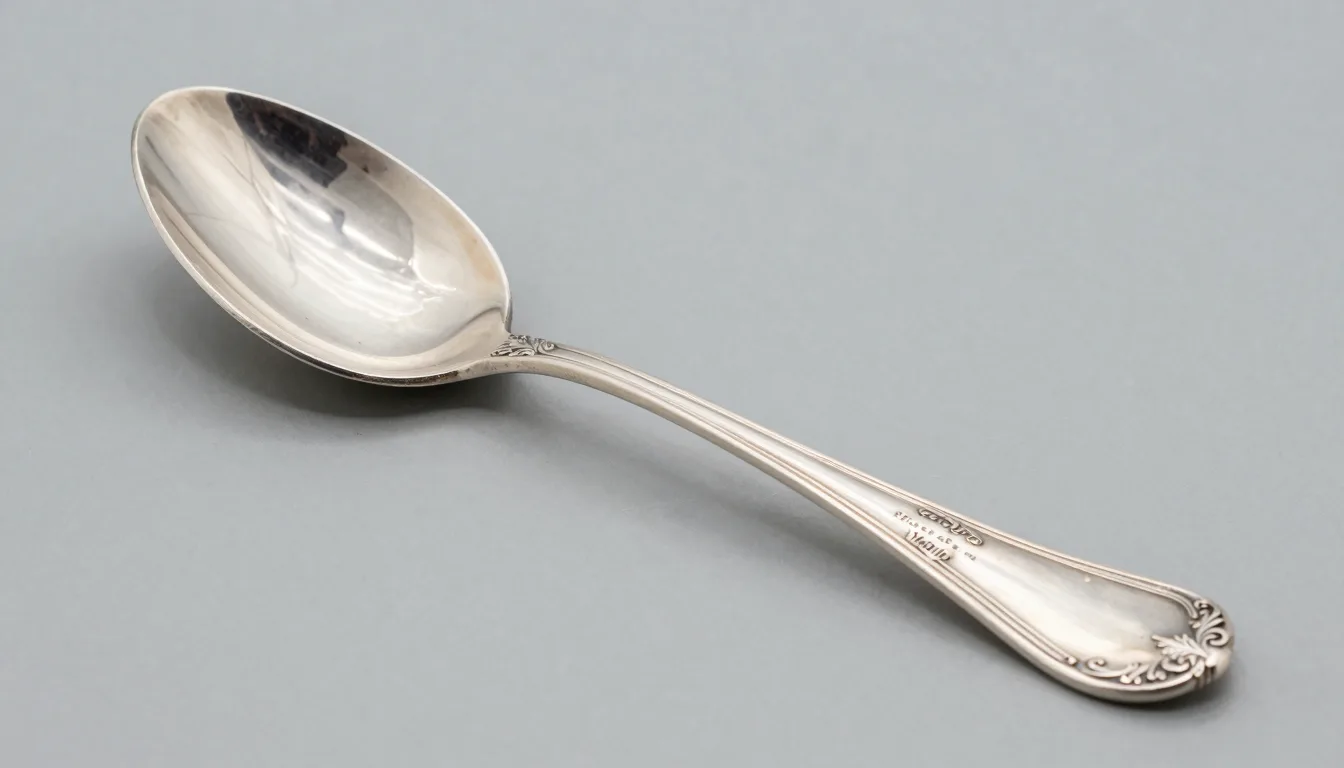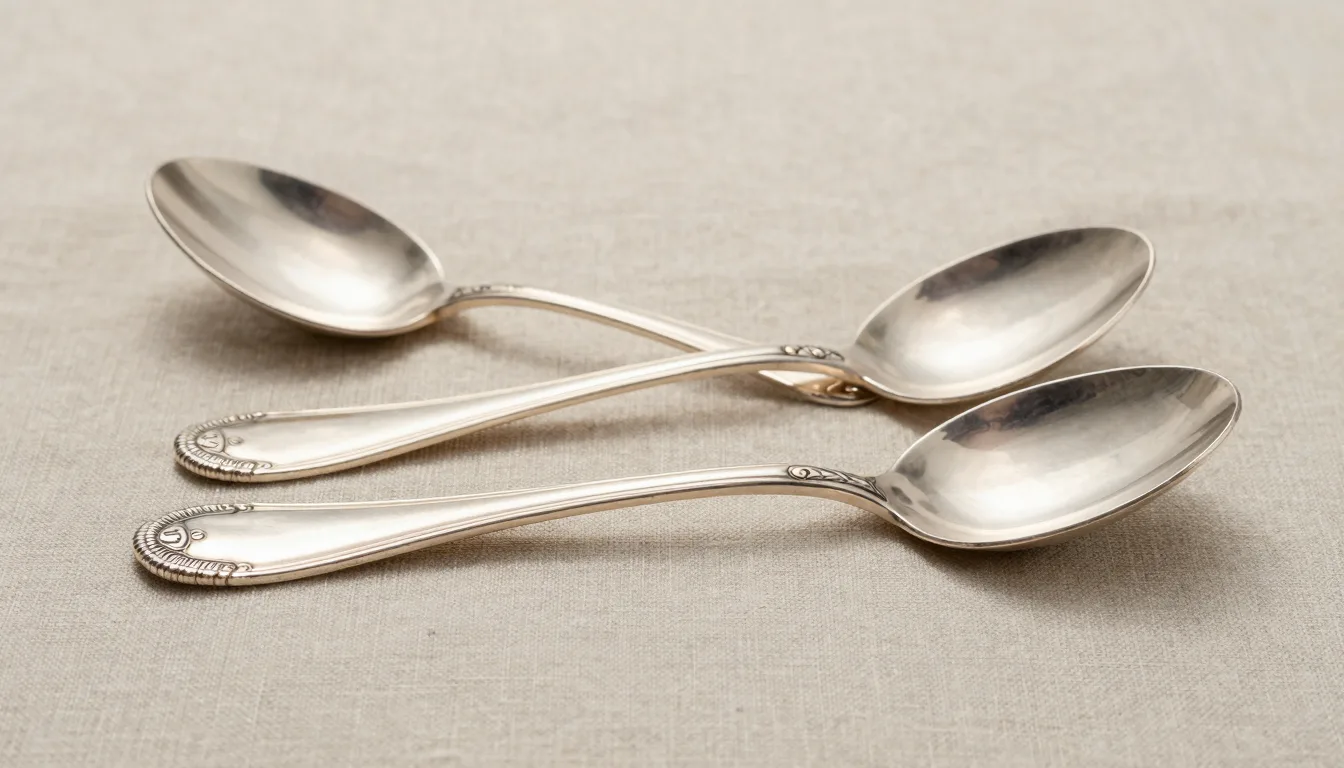
The value of heirloom sterling silverware is melt plus collector premium. Hallmarks and pattern matter. Condition and set size decide the rest.
Is it sterling or plated? Quick ID that saves money
Sterling silverware is 92.5% silver, marked 925, sterling, or lion passant. Plate has a base metal core.
Hallmarks tell the story. Learn the basics of a hallmark before pricing anything.
American sterling often reads STERLING or 925. British sterling shows the lion passant and date letter.
Look for words like EPNS or A1. Those are plated, not sterling. Value differs drastically.
Examine knife blades. Many sterling knives have stainless or carbon blades. Handles can be hollow or weighted.
Weighted sterling adds non-silver filler. That filler adds weight without silver value. Price accordingly.
Use a magnet test for sanity. Silver is not magnetic. Strong attraction signals plate or steel components.
Avoid destructive acid tests on heirlooms. Testing can scar the surface and reduce resale value.
Compare luster. Sterling shows a warmer glow and honest wear on high spots. Plate reveals brass at rub points.
Unsure if it is silver or pewter? See my quick guide at /identifying-pewter-vs-silver-3-simple-ways-to-tell-the-difference/.
Melt value vs antique value: the math collectors run
Any seasoned collector starts with melt value. Then we ask if the piece earns a premium.
Melt value equals silver weight times purity times spot price. Weigh only the silver parts.
Use a small gram scale. Convert grams to troy ounces by dividing by 31.1035.
Deduct non-silver elements. Deduct knife blades, steel rods, pitch, and cement fillers.
Here is a sample melt math table using $25 spot silver. Adjust for today’s price.
| Example piece | Weight (g) | Silver purity | Silver troy oz | Spot $/oz | Melt value $ |
|---|---|---|---|---|---|
| Sterling spoon | 28 | 0.925 | 0.90 | 25 | 22.50 |
| Sterling fork | 45 | 0.925 | 1.45 | 25 | 33.56 |
| Hollow-handle knife | 80 total | 0.925 head only | 0.35 | 25 | 8.09 |
Antique value can exceed melt. Desirable makers and patterns earn real premiums.
Read my deep dive on timing sales at /silver-melt-value-vs-antique-value-when-to-sell-and-when-to-keep/.
Check real-world comps on WorthPoint and Kovels. Sold prices beat guesses.
Use museum collections for style dating. Try the Met and the V&A for reference images.
Patterns, makers, and eras: where premiums live
Makers matter. Tiffany, Gorham, Jensen, and early Dominick & Haff command strong prices.
Patterns matter more than most assume. Reed & Barton’s Francis I can outsell many Tiffany patterns.
Rarity helps. Obscure patterns with loyal followings can jump past common floral designs.
Completeness wins. A full service for twelve brings a stronger per-piece price than odd singles.
Late Victorian rococo patterns often sell briskly. Clean mid-century Scandinavian modern has passionate buyers.
Compare patterns with museum holdings. Study silver at the Met for stylistic anchors.
Browse British silver styles at the V&A. The design timelines help with pattern dating.
Those slightly uneven rim details? Classic late Georgian hand-hammering. Machine-perfect rims scream later production.
Use hallmark reference guides for maker ID. My guide is here: /antique-marks-signatures-complete-identification-guide/.
Cross-check hallmarks in the Smithsonian collections. Institutional examples validate your attributions.
Style periods can aid pricing. My furniture timeline helps you visualize eras at /antique-furniture-periods-chart-1600-1940-timeline-with-pictures/.
Not sure what you’ve got?
Snap a photo and let our AI identify any antique in seconds: free download, no sign-up.
Identify on iPhone → Learn MoreCondition, completeness, and monograms: small details, big swings
Condition rules. Deep dents, creases, and torn tines cut prices hard.
Honest wear is fine. Severe tip thinning or solder blobs are not fine for collectors.
Monograms divide buyers. Fancy old script can charm. Heavy block letters can repel.
Professional monogram removal is possible. Over-buffed flats will dull pattern crispness.
Knife blades matter. Carbon steel blades often pit and stain. Stainless blades are preferred by casual users.
Match your set. Mixed maker backstamps reduce set value. Many buyers want uniform back marks.
Avoid over-polishing. Preserve the natural patina. Seasoned collectors like that soft gray depth.
Do not tumble old silver. Machine-polished edges look rounded and tired to trained eyes.
Count everything. Serving pieces often carry big premiums. Soup ladles and asparagus tongs sell fast.
Any seasoned collector knows a complete caddy beats a drawer of singles. Order matters more than shine.
Provenance and regional markets: where you sell changes value
Provenance adds credibility. Family letters and receipts raise confidence and price.
Local tradition influences demand. Southern coin silver sells well in Southern venues.
Scandinavian modern draws heat in Nordic-focused markets. Jensen thrives in design-forward cities.
British sterling sells smarter in the UK. Lion passant fans shop their home turf.
Use Kovels for regional trend notes. Pricing differs by zip code.
Research family stories with the Smithsonian. Context can transform a ho-hum spoon into history.
Document provenance with clear photos and notes. Save scans of letters and inscriptions.
Choose a selling lane wisely. Auction, dealer, consignment, or private sale each has trade-offs.
Check sale histories on WorthPoint. Comparable results set expectations.
Get a second opinion before selling. Two appraisals beat one, especially on important sets.
DIY valuation checklist and when to call a pro
Start with identification. Confirm sterling, not plate. Verify purity, maker, country, and pattern.
Photograph everything. Capture front, back, and macro hallmarks. Record blade materials and dimensions.
Weigh the silver parts. Deduct non-silver fillers. Record weights by piece type.
Compute melt as a floor. Then layer on premiums for maker, pattern, era, and completeness.
Assess condition honestly. Note repairs, dents, heavy wear, and monograms.
Create a simple inventory. List counts by dinner, salad, tea, serving, and specialty forms.
Pull comps from WorthPoint and Kovels. Focus on sold prices.
Use digital tools for guidance. See /online-antique-valuation-digital-tools-and-resources-for-collectors/.
If stakes are high, phone a friend. Try vetted platforms in /best-online-antique-appraisal-sites-honest-reviews-comparisons-2026/.
Hallmarks on silver echo gold logic. Brush up at /14k-gold-hallmark-identification-chart-quick-reference/.
Keep notes about purchase history. Buyers love organized sellers with clear facts.
Watch for weighted sterling traps. Do not pay melt on cement-filled handles.
Any seasoned collector knows patience adds profit. Wait for the right buyer and season.
Frequently Asked Questions
How do I weigh sterling silverware at home?
Use a digital gram scale and a clean tray. Weigh each piece and record grams. Convert to troy ounces by dividing by 31.1035. Deduct non-silver parts like blades and fillers.
Are monograms bad for value?
Monograms can hurt value on common patterns. Charming period script can help on scarce patterns. Buyers pay for originality and crisp detail. Over-buffed removal risks greater losses.
Is it better to polish silver before selling?
Light hand polishing is fine. Keep the patina and avoid machine buffing. Collectors prefer crisp details over high-gloss shine. Photograph before and after for transparency.
What does “weighted sterling” mean?
Weighted sterling has non-silver filler inside handles or bases. The filler adds heft without silver content. Only the thin sterling shell counts for melt. Price these well below solid pieces.
Where is the best place to sell family silver?
Best venues depend on maker and pattern. High-end sets do well at specialty auctions and reputable dealers. Common singles sell online to reach pattern-matchers. Compare options before committing.
Identify any antique in seconds.
From silver hallmarks to porcelain maker marks, the app suggests the item type, period and a value range.