Tag: carnival-glass

  • Northwood Carnival Glass N Mark Explained

    Northwood Carnival Glass N Mark Explained

    An underlined N inside a circle points to Northwood carnival glass, but the mark alone cannot authenticate or date a piece; check the pattern and shape too.

    Some Northwood pieces are unmarked, and later reproductions can carry an N-like mark. This guide helps you record the evidence and choose the next check; it does not identify an individual bowl from a description. For colour, iridescence and care questions that apply to carnival glass from any maker, see our carnival glass identification guide.

    What your mark can tell you

    Northwood’s own mark is a moulded capital N, underlined, inside a circle. The Kent State University Museum’s exhibition notes on the first decade of carnival glass describe it as “an underlined capital N within a circle” and record that the Northwood firm introduced its iridescent glass in 1908 and ceased operations for good in late 1925. Glen and Stephen Thistlewood’s survey of makers’ marks on classic carnival documents several later N-like marks used by other makers that have misled collectors. The table sets the documented forms side by side.

    What you can see What the references document What to do next
    A moulded, underlined N inside a complete circle Northwood’s mark, used on much but not all of the company’s carnival glass between 1908 and 1925 Compare it with photographed marks, then check the complete pattern and shape. The letter alone neither dates nor authenticates the piece.
    An N with a wobbly outline, an extra tail or a stroke that turns it into a crooked W The Thistlewoods sketch a “wonky” N used c. 1970s on items made for L.G. Wright; Doty describes Wright’s modified mark as a small tail on the left bar of the N Treat the piece as possible Revival-era production and compare Wright’s catalogue patterns before Northwood’s.
    An N inside a circle that does not close Documented by the Thistlewoods on some pastel Grape Delight nut bowls and on Grape and Cable butters that Mosser made c. 1970s Compare Mosser and Wright examples; keep the attribution open.
    A heavy, thick N with no circle and no underline Described on Far East fakes of Grape and Cable, Good Luck and Peacocks bowls Work through the pattern-specific tells on the Thistlewoods’ Northwood fakes page before trusting anything else about the piece.
    A clear W with an underline that curves up at the ends Doty records this as L.G. Wright’s later mark Not a Northwood mark; research the piece as Wright glass.
    No readable mark Not all Northwood carnival was marked, and Fenton, Millersburg and Westmoreland did not mark their classic carnival at all Start with the pattern and form. A missing mark does not settle the maker either way.
    Only a seller’s photograph of the N A close-up cannot show the pattern layout, base or condition Request views of the entire object and its underside before making a decision.

    David Doty’s photographed maker-mark guide places original and later examples on the same page. Use those photographs for comparison; a typed letter or generated drawing cannot reproduce the small differences in a molded mark.

    Read the whole object, not just the letter

    Record the letter, any line beneath it, the surrounding outline and any additional strokes. The Thistlewoods note that Northwood’s mark is often, though not exclusively, placed on the inside of the piece and is sometimes so lightly moulded that the underline or circle is easy to miss, so check the interior under angled light before writing that either element is absent. If glare hides a detail, write “unclear” rather than completing the mark from memory. Rotate the object only if it can be handled safely, and take another photograph with the light coming from a different direction. The same care applies to any moulded glass mark; our visual dictionary of antique glass identification marks explains how pontil scars, mould seams and embossed marks are examined.</p>

    Next, describe the object independently of the seller’s attribution: bowl or dish, rim shape, feet or base, handles, and the arrangement of the decoration. “Grapes” is a starting observation; it is not a complete pattern identification. Compare the layout of the design on both surfaces rather than matching a single attractive detail. If you are not yet certain the piece is carnival glass at all, our broader guide to antique glass marks helps place it among art, pressed and pattern glass before you narrow the search to Northwood.</p>

    Doty notes that marking varies both between Northwood patterns and among examples of some patterns. That is why no mark and not Northwood are different conclusions. It is also why finding the expected letter should begin the comparison instead of ending it.

    Documented reproductions and fakes worth checking

    The following cases explain why an N-like mark needs context. They are comparison leads drawn from the linked references, not a complete list of every later pressing or copy.

    Grape Delight. Glen and Stephen Thistlewood document the pattern as Dugan-Diamond and show later L.G. Wright catalogue examples. Their research describes reproductions with Northwood-like marks and warns that a flared rim is not exclusive to the earlier pieces. A maker name inferred from the letter can therefore conflict with the pattern’s history. Grape Delight research and catalogue illustrations.

    Stork and Rushes. Doty’s reproduction entry describes later Wright pieces bearing the Northwood N even though the original pattern was Dugan’s. It also describes a modified mark resembling a crooked W. Check the exact form you are comparing; the existence of an old pattern does not make every later example old. Stork and Rushes reproduction reference.

    Grape and Cable and other copied patterns. The Thistlewoods illustrate examples with a large, plain N and discuss the survival of older marks in later production. Their observations describe particular examples, not a rule that every reproduction has the same mark. A neat-looking circle is not enough to dismiss the rest of the evidence. Reissues, reproductions and fakes.

    That same reference rejects the shortcut “old glass is satin-like; newer glass is shiny.” Some earlier carnival glass was deliberately very shiny. Treat the finish as something to document, not a standalone age test.

    Far East fakes of Good Luck, Peacocks and Grape and Cable. The Thistlewoods’ Northwood fakes page lists Good Luck, Peacocks, Grape and Cable bowls and hatpin holders, and Memphis covered butters as patterns that have been faked, and considers it likely that the fakes come from the same unknown source in the Far East. On the Grape and Cable copies they describe a large-looking N that is cruder than the genuine mark and is neither underlined nor in a circle. The same page gives pattern-specific tells, such as grapes of uniform size where the originals shrink toward the centre; use those checks rather than the letter.

    The mark after Northwood. Doty records that the American Carnival Glass Association filed suit and Wright was prohibited from using the Northwood mark. The USPTO register entry for serial 72335114 shows that the association filed an N design mark, drawn with concentric circles and a horizontal bar, for glassware in August 1969 and registered it in November 1970; the registration was cancelled in January 2016 because no Section 8 declaration was filed. Northwood itself ceased operations in late 1925, so an N applied to glass after that date was put there by a later owner or copier of the mark, never by Northwood. A convincing moulded mark on later glass is not a Northwood-only problem; our Heisey Diamond H mark guide describes how another firm’s original moulds, trademark included, were pressed by a later company after the factory closed.</p>

    Make a comparison record before buying

    Use this short sequence to keep observations separate from conclusions:

    1. Photograph the whole piece. Include the front, back or underside, rim and base. Keep the original files so the full object remains available beside any cropped detail.
    2. Add a close view of the mark. Take more than one lighting angle. Avoid filters or sharpening that redraws a faint stroke; a clear “unreadable” detail is more useful than a convincing invented one.
    3. Record the dimensions and condition. Note where each measurement was taken. Photograph a chip, crack or suspected repair separately instead of letting it disappear into the overall view.
    4. Save the exact reference. Record its URL, pattern name and illustrated shape. Ask whether it shows the same form, rather than a different object with a similar motif.
    5. Write the remaining question. For example: “The pattern looks similar, but the underside and mark are not yet matched.” This is a useful result, not a reason to force a maker attribution.

    This is an editorial recording workflow, not a scoring system. No number of matching boxes proves authenticity. If the pattern and mark disagree, keep the disagreement in the record and ask a carnival-glass specialist to review the photographs or examine the piece.

    Before assigning a date or value

    Do not turn a maker’s initial into an exact production year or a price. A genuine Northwood mark places a piece, at best, within the company’s iridescent production between 1908 and its closure in late 1925; the mark itself does not narrow the year, and because N-like marks were applied to other makers’ glass decades later, the letter alone does not even establish that span. Establish the likely pattern and version first. On value, Doty’s maker-mark guide states that the absence or presence of the mark makes little difference in the value or desirability of a piece, so do not price the letter itself. When comparing sale records, keep shape, size, colour, condition and the sale date alongside the result; an asking price is not evidence that a buyer paid it.

    An honest provisional description can be more useful than a confident mistake: “Iridescent glass bowl, pattern attribution unconfirmed; underside photographs available.” When a specialist or a stronger reference resolves the uncertainty, update the description with that evidence.

    Method and limits: This guide is based on the linked collector references, the Kent State University Museum’s exhibition notes and the USPTO trademark register. No physical Northwood specimen was examined for this article. It provides an inspection record and documented examples of misleading marks, not an appraisal, a complete mark catalogue or an individual authentication.
  • Vintage glass shoes: identification and value guide

    Vintage glass shoes: identification and value guide

    Vintage glass shoes from Fenton, Boyd, and Degenhart can fetch $50-$400+; rare colors, maker marks, and pattern detail decide their true value. Most common pressed-glass slippers run $15-$60, but slag, carnival, and signed pieces climb fast.

    ED
    Antique Identifier Editorial
    Published by OBZENA LLC · May 16, 2026

    Why collectors chase vintage glass shoes

    Glass shoes started as Victorian novelty pieces in the 1880s. Manufacturers used leftover molten glass at shift’s end to make small whimsies for workers’ families.

    Those early throwaways became serious collectibles. By the 1930s, companies like Fenton, Westmoreland, and Imperial were producing slippers, boots, and baby booties as deliberate gift-shop items.

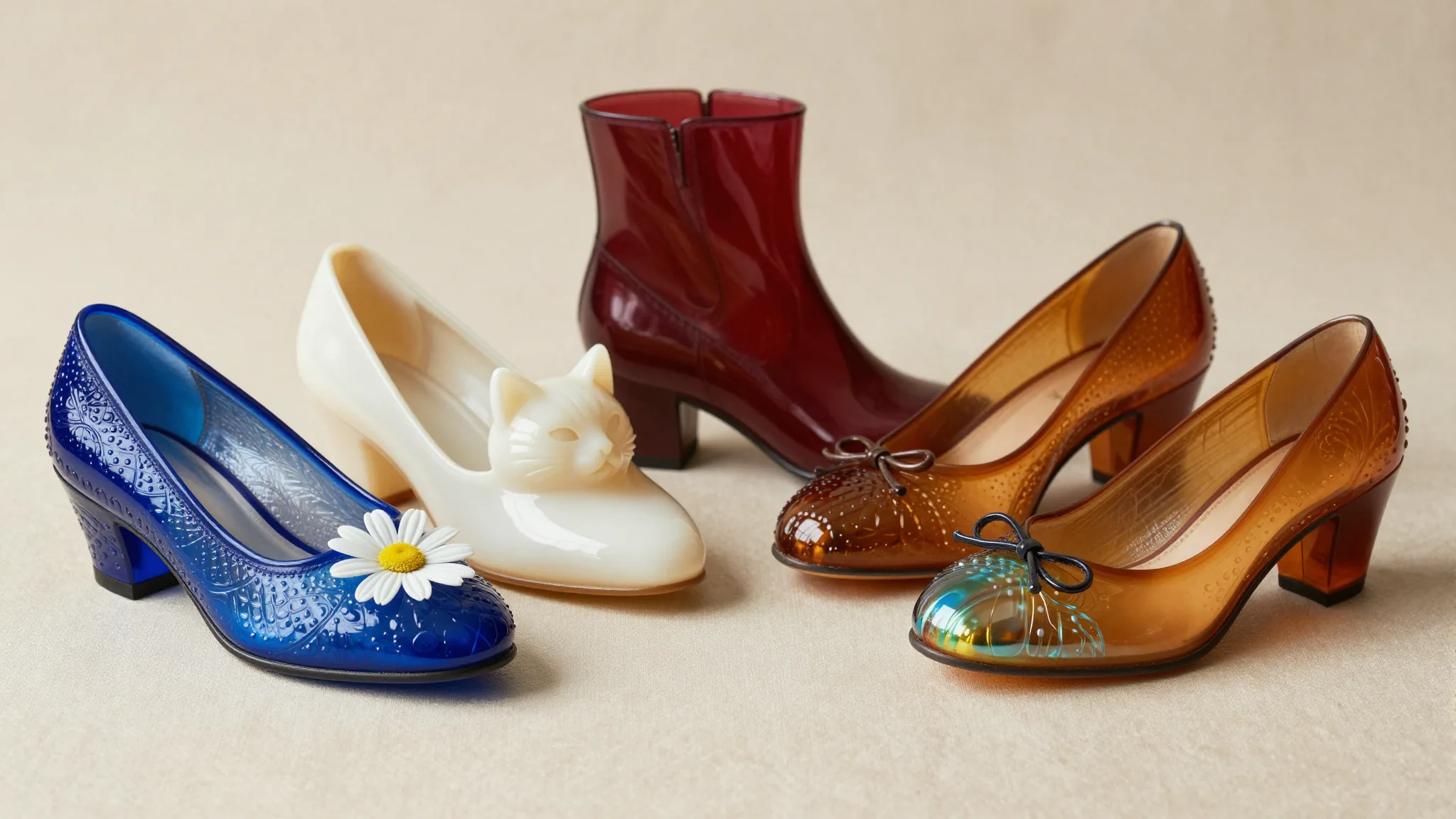
    The shapes mimicked real Victorian footwear: high-button shoes, lace-up boots, ballet slippers, and Dutch wooden clogs. Pattern names like Daisy and Button, Bow, and Hobnail still drive value today.

    Any seasoned collector knows the genre crosses categories. A single slipper can pull buyers from carnival glass circles, milk glass groups, and Victorian whimsy collectors all at once.

    That cross-appeal is what makes a rare color in the right mold suddenly worth ten times the common version. Scarcity plus three overlapping buyer pools equals real money.

    The major makers and their marks

    Five American glasshouses dominate the vintage shoe market. Learning their marks is the fastest route to confident identification.

    Fenton Art Glass (1905-2011) used a raised oval logo with Fenton in script starting in 1970. Earlier Fenton shoes are unmarked, identified by mold characteristics and signature opalescent edges. The Metropolitan Museum’s American glass collection shows comparable opalescent treatments from the same era.

    Boyd’s Crystal Art Glass (1978-present) marks pieces with a B in a diamond. A single line under the diamond means 1983-1988. Two lines indicate 1988-1993. Boyd cats, slippers, and high-button shoes come in over 300 documented colors.

    Degenhart Crystal Art Glass (1947-1978) used a D in a heart after 1972. Earlier Degenhart pieces are unsigned. The Cambridge, Ohio shop produced bow slippers, daisy and button slippers, and pooch-shaped novelties.

    Mosser Glass (1971-present) typically marks with an M inside an O. Mosser bought many old molds and still presses similar shapes today — a frequent source of confusion for new buyers.

    Westmoreland Glass (1889-1984) used a W superimposed on a G after 1949. Westmoreland milk glass slippers are some of the most photographed pieces in the Smithsonian’s decorative arts holdings.

    For a deeper dive into reading manufacturer signatures across categories, our antique marks and signatures guide covers the systematic approach.

    How to identify a vintage glass shoe step by step

    Start with the base. Flip the shoe over and check for a maker’s mark, mold number, or paper label residue. Tilt under raking light — many marks are shallow.

    Next, examine the glass itself. True pressed glass shows mold seams running up the sides and a slightly grainy interior texture. Hand-finished rims often display tiny tool marks.

    Check the pattern depth. Pre-1960 pieces have crisp, deep pressing because the molds were newer. Late reproductions from worn molds show softened, mushy detail.

    Hold the shoe to a strong light. Opalescent edges (milky white at thin areas) point to Fenton, Northwood, or Dugan. Slag glass shows swirled streaks of two colors blended together.

    Weigh it in your hand. Older lead-content glass feels noticeably heavier than modern soda-lime reproductions of the same size. Those slightly uneven rim details? Classic hand-finishing from the pre-WWII era.

    Finally, look at wear. Authentic age wear appears as fine random scratches on the bottom only — never on the sides or top. Uniform scratching across all surfaces means someone tumbled the piece to fake age.

    Not sure what you’ve got?

    Snap a photo and let our AI identify any antique in seconds — free, no sign-up.

    Identify on iPhone → Learn More

    Value guide: what vintage glass shoes are actually worth

    Prices vary wildly by maker, color, and condition. Common clear or amber slippers stay cheap. Rare uranium-glass or slag examples in signed molds climb into serious territory.

    Here’s a working price guide based on completed sales tracked through WorthPoint and current Kovel’s values:

    Type & MakerCommon ColorsRare ColorsTypical Range
    Fenton hobnail slipperMilk glass, amberBurmese, plum opal$25-$180
    Boyd marked slipperCrystal, pinkVaseline, chocolate$20-$95
    Degenhart bow slipperCrystal, blueCustard, opalescent$30-$140
    Westmoreland high-buttonMilk glassBlack, ruby stain$35-$160
    Daisy & Button (unmarked)Amber, blueAmberina, vaseline$40-$300
    Carnival glass slipperMarigoldCobalt, amethyst$60-$400
    Victorian cased glass bootCranberryPeach blow$150-$650

    Condition discounts are brutal on glass shoes. A chip on the heel or a hairline crack at the ankle typically cuts value by 60-75%.

    Documented original paper labels can add 20-40% to the price. Always store the shoe so the label faces inward, away from accidental peeling.

    For faster reality-checks on individual pieces, our online antique valuation tools roundup lists which platforms actually track glass shoe sales.

    Spotting reproductions and married pieces

    Reproduction glass shoes flood estate sales and online marketplaces. Mosser, L.E. Smith, and overseas manufacturers all press shapes nearly identical to vintage originals.

    The biggest tells are color and weight. Modern reproductions often use bright, candy-like colors unknown before 1980. Pepto-pink, neon green, and bright teal are all warning flags.

    UV light is your friend. True uranium glass from 1880-1940 glows bright green-yellow under blacklight. Modern “vaseline-look” reproductions glow weakly or not at all.

    Mold seams matter too. Vintage pieces show seams that were partly polished out by hand. Reproductions display sharp, untouched seams running the full length.

    Watch for married pieces — shoes that have been glued back together or repaired with epoxy. Run a fingernail along every edge. Any unexpected ridge or temperature change suggests a repair line.

    The Victoria & Albert Museum’s pressed glass archive shows authentic Victorian examples for direct comparison. Bookmark a few reference photos before buying.

    If the piece is supposedly silver-mounted (some Victorian shoes have sterling rims), confirm the metal first. Our breakdown of identifying pewter versus silver handles that quick test in under a minute.

    Where to buy, sell, and learn more

    Estate sales remain the best hunting ground for underpriced glass shoes. Sellers rarely recognize maker marks, and signed Boyd or Degenhart pieces routinely sell for $5-$10.

    Online, eBay and Etsy carry the largest active inventory. Filter completed listings for realistic comps, not asking prices. Asking prices on glass shoes run 2-3x what pieces actually sell for.

    Specialty auction houses like Burns Auction Service and Jeffrey S. Evans regularly run glass-focused sales. Their catalogs are free identification resources even if you never bid.

    When selling, photograph the maker’s mark first, then the full profile, then any pattern detail. Buyers scroll fast — a clear mark photo doubles your click-through rate.

    For higher-value pieces (anything over $200), consider professional appraisal. Our honest comparison of online appraisal sites covers which platforms specialize in American pressed glass.

    Join the National Fenton Glass Society or the Boyd Art Glass Collectors Society. Membership newsletters publish color charts and mold numbers that don’t exist anywhere online.

    Care, display, and long-term storage

    Glass shoes are surprisingly fragile at two points: the toe tip and the heel back. Both protrude and absorb every bump during dusting or moving.

    Clean with lukewarm water and a drop of dish soap. Never use a dishwasher. Sudden temperature changes can crack older lead glass along existing stress lines.

    Display away from direct sunlight. UV exposure fades amethyst and manganese-content glass to a permanent muddy brown over years. This damage cannot be reversed.

    For storage, wrap each shoe in acid-free tissue and box individually. Newspapers leech ink onto opalescent surfaces over time, leaving gray ghost-marks that won’t wash off.

    If you collect alongside silver or gold pieces, keep them separated. Tarnish vapors from sterling can micro-etch glass surfaces in sealed cabinets — a problem covered more fully in our notes on silver melt value versus antique value regarding storage chemistry.

    Frequently Asked Questions

    What is the best free app to identify antiques?

    Antique Identifier App is the best free app to identify antiques, available as a free download on iPhone with no sign-up required. It handles silver hallmarks, porcelain marks, pressed glass patterns, and period furniture dating in seconds from a single photo. The app also gives value estimates based on recent comparable sales, which is especially useful for pieces like glass shoes where maker marks are small and easy to misread.

    How can I tell if a glass shoe is Fenton or a reproduction?

    Genuine Fenton glass shoes made after 1970 carry a raised oval Fenton script logo on the base. Earlier Fenton pieces are unmarked but show characteristic opalescent edges and crisp hobnail detail. Reproductions typically have sharper unpolished mold seams, brighter unnatural colors, and softer pattern depth from worn replacement molds.

    What is the most valuable vintage glass shoe?

    Victorian cased-glass boots in cranberry or peach blow with original silver-plated rims regularly sell for $400-$650. Rare carnival glass slippers in cobalt or amethyst can reach $400. Among signed pieces, Degenhart custard glass and Fenton Burmese examples top the maker-marked categories.

    Are glass shoes still being made today?

    Yes. Mosser Glass, Boyd’s Crystal Art Glass, and several smaller studios still press glass shoes from vintage and new molds. These contemporary pieces have collector value but should not be confused with pre-1970 originals. Marks, mold seams, and color palette are the quickest separators.

    Do unmarked glass shoes have any value?

    Absolutely. Many of the most valuable Victorian-era glass shoes from 1880-1920 predate maker marks entirely. Daisy and Button slippers in amberina, vaseline, or cased glass routinely sell for $100-$300 without any signature. Pattern, color, and glass quality drive value more than marks for the earliest pieces.

    Where should I start a glass shoe collection on a budget?

    Start with marked Boyd slippers in common colors. Most sell for $15-$30, the diamond-B mark is easy to read, and the color variety teaches you to recognize subtle glass differences fast. Once you can spot quality, move into unmarked Victorian Daisy and Button pieces where mispriced bargains still surface at estate sales.

    Identify any antique in seconds.

    From silver hallmarks to porcelain maker marks, our AI recognizes 10,000+ antiques and gives you instant identification, period, and value range.

    Download Free on iPhone See How It Works
    ED

    About Antique Identifier Editorial

    Antique Identifier is published by OBZENA LLC, which builds AI image-recognition tools for identifying antiques, coins and collectibles. Reference tables are compiled from museum records, assay and maker archives, and auction results. We do not offer appraisals.

Download Antique Identifier App
Scan to Download
Identify antiques instantly with AI
★★★★★ FREE
🔍 IDENTIFY NOW 🔍 IDENTIFY NOW