Tag: first-edition-identification

  • How to spot a fake first edition book: a seasoned collector’s guide

    How to spot a fake first edition book: a seasoned collector’s guide

    The way to spot a fake first edition book is to read its production clues. Check imprint, number line, dust jacket, and materials.

    Free to download — identify any antique instantly with AI. No sign-up.

    Identify Now →
    ED
    Antique Identifier Editorial
    Published by OBZENA LLC · May 13, 2026

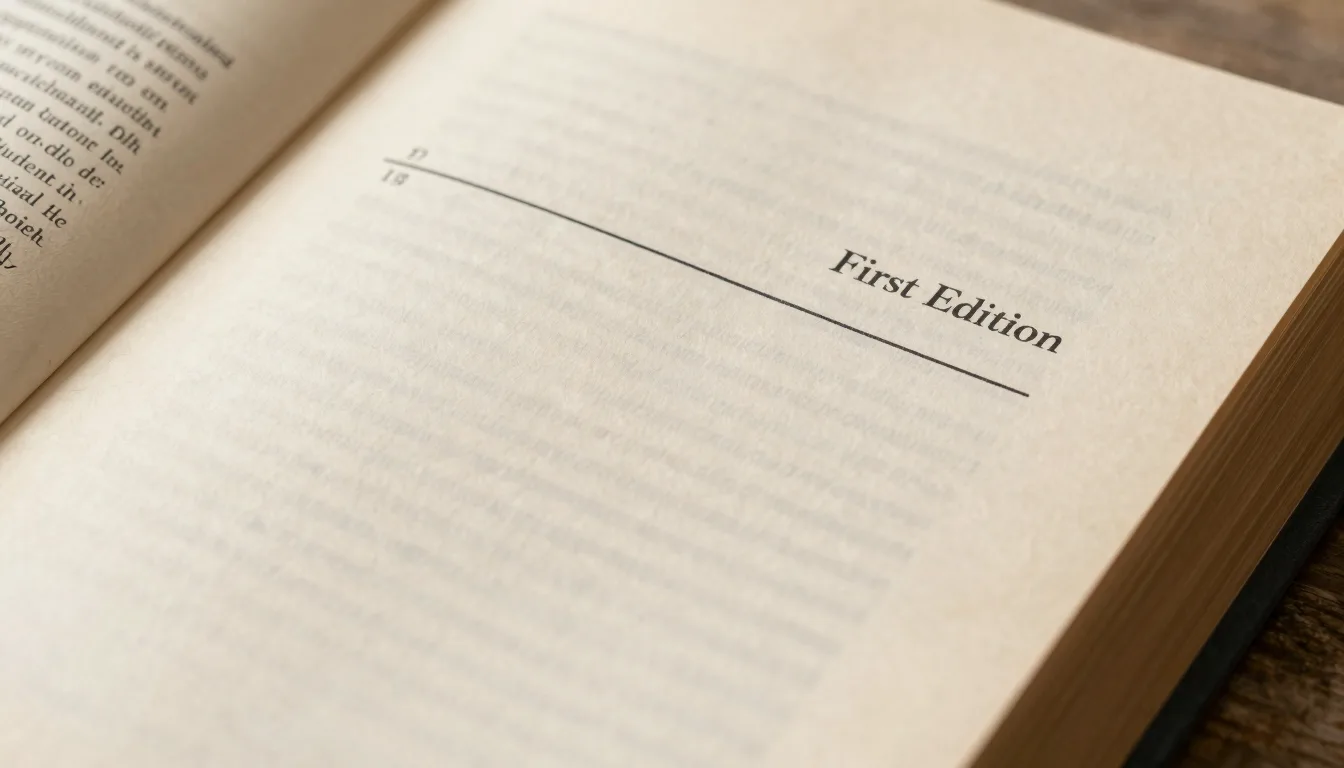
    Every first edition hunt starts with the copyright page. That page hides the loudest clues.

    Look for the imprint line. The imprint lists the publisher and place. It should match period records for that title.

    Many modern books use a number line. A line reading 10 9 8 7 6 5 4 3 2 1 signals a first printing.

    Older books lack number lines. They rely on clear statements like “First Published” with a year.

    Beware vague phrases. “Edition” can mean many things across publishers and decades.

    Collectors watch the colophon). The colophon can confirm press, printer, and sometimes the edition.

    Any seasoned collector knows publishers have house styles. Learn a few, and fakes stand out.

    Compare fonts on the copyright page to known examples. Inconsistent type or spacing can betray a later reset.

    Many fakes misuse ISBNs. Pre-1970 titles should not show an ISBN on original printings.

    Period addresses matter. A post-merger publisher address on a “first” is a bright red flag.

    Keep a pocket loupe handy. You want to see type edges and inking up close.

    • Look for a clean statement of printing.
    • Verify the number line logic by publisher.
    • Confirm there is no modern data on old books.

    Reference quality images help. Compare your book to institutional copies.

    The Smithsonian Collections search often shows reliable catalog data and photos.

    The publisher logo should match the period. Updated logos often tag a reprint.

    Printer credits reveal a lot. Different printers can mean later states.

    Remember, one wrong technical detail ruins the first edition claim.

    Dust jackets, bindings, and paper tell the truth

    Most of the value can sit on the dust jacket. The jacket is also the easiest swap.

    Check the front flap for a price. A clipped price can hide a missing currency or wrong era amount.

    A book club jacket often omits the price line. That mismatch is a classic trap.

    Look at the rear flap text. Publisher addresses and lists reveal printing generations.

    Study the jacket printing method. Early jackets used letterpress or litho, not digital halftones.

    A loupe can spot modern dot patterns. That pattern can expose a facsimile jacket.

    The Victoria & Albert Museum has strong content on bookbinding traditions. Those traditions inform tells on bindings.

    Bindings vary by decade and publisher. Cloth weave, stamping, and spine type can date a book fast.

    Paper clues are huge. Early wood pulp papers tan and embrittle predictably.

    Modern facsimiles often feel smoother. The paper surface and weight betray them.

    Any seasoned collector will weigh a book in hand. Book club editions often feel lighter.

    Look for deckle edges on period books. Machine-trimmed edges on the wrong title invite questions.

    Examine board color and stamping sharpness. Sloppy gilt can suggest a swapped or rebound copy.

    The Metropolitan Museum of Art catalogs historical bindings and papers. Those references anchor your comparisons.

    Museum photos help you visualize period jackets. The tone and ink behavior look different than modern prints.

    A bright, glossy jacket on a 1920s title should raise eyebrows. Most early jackets were matte.

    • Price present and in the right currency.
    • Correct printing method visible under magnification.
    • Binding and paper match the era.

    Edition, printing, and book club: decode the signals

    Terms get slippery in bookland. First edition and first printing are not always the same.

    A first edition is the earliest setting of type. A first printing is the first run of that setting.

    Many titles have multiple printings in the first edition. Later printings are less valuable.

    Book club editions are separate issues. They often share the text but not the collectible status.

    Spot those book club tells with a practiced eye. Mismatched jackets are common.

    Here is a quick comparison table collectors reference.

    CharacteristicTrue First Edition/First PrintingLater Printing (Same Edition)Book Club Edition
    Number lineEnds in 1 or specific codeEnds in higher numberOften none or separate code
    Dust jacket pricePresent and period-correctPresent but later priceUsually missing or different placement
    SizeStandard trade sizeSame as firstOften slightly taller or thinner
    BoardsPublisher’s cloth with sharp stampingSimilar but cheaper cloth possibleCheaper boards, blind deboss dot on rear often
    PaperPeriod stock, consistent toningSimilar but thinner later stockThinner, lighter, different tone
    Flap textNo “Book Club Edition”No “Book Club Edition”“Book Club Edition” often printed
    Gutter codesPeriod-appropriate printer codesDifferent code positionsDifferent or none

    Any seasoned collector checks the gutter. Printer codes can quietly separate printings.

    Beware Frankenstein copies. A first edition text block with a book club jacket is common.

    Compare to verified copies on WorthPoint. Sold listings show the small tells that matter.

    Publisher practices evolve. Build a notebook of known number line formats by publisher.

    • Confirm terminology in the copyright block.
    • Cross-check jacket with the boards and text block.
    • Watch for size anomalies and board stamps.

    Not sure what you’ve got?

    Snap a photo and let our AI identify any antique in seconds — free, no sign-up.

    Identify on iPhone → Learn More

    Provenance, inscriptions, and association copies: trust but verify

    Nice stories sell books. Paper evidence backs them up.

    Provenance chains should have dates, names, and rational paths. Vague claims do not age well.

    Association copies carry value. They link the book to an author, owner, or event.

    Signatures invite fakery. The ink, pen type, and pressure tell you the age.

    Fresh marker on brittle 1930s paper looks wrong. The chemistry disagrees.

    Compare known author signatures. Flow, letter forms, and hesitations help you judge.

    Use our guide to help decode writing quirks. See Antique Marks & Signatures.

    A dated inscription should match publication timing. Posthumous dates are an immediate problem.

    Provenance documents should look period-correct. Paper stock and typewritten pages should match the era.

    Library stamps can help or hurt. Some stamps prove early ownership and location.

    You can browse institutional examples. See the Smithsonian Collections for controlled provenance records.

    Old bookplates can be faked. Glue residue lines and paper oxidation patterns reveal swaps.

    A UV light highlights added inks and bleaches. Bright glows often flag tampering.

    Any seasoned collector trusts the evidence. Friendly stories do not change the paper.

    Red flags, facsimiles, and modern trickery

    Facsimile dust jackets look great in photos. They are common and often unlabeled.

    Run a fingertip across the jacket ink. Modern digital prints feel flat and slick.

    Under a loupe, digital prints show uniform dots. Vintage prints show irregular ink edges.

    Learn the look of halftone. Moiré patterns can expose a scan of a printed image.

    Watch out for print-on-demand reprints. They often carry historic dates with modern ISBNs.

    Some sellers crop photos to hide gutters and flaps. Ask for clear shots of every panel.

    Check the title page verso for printer locations. “Printed in USA” on a UK first can be wrong.

    Off-smelling paper suggests fresh stock or treatments. Aged paper has a particular lignin tang.

    Those slightly uneven jacket price clips? They often signal casual shop trimming, not factory clips.

    Any seasoned collector knows condition miracles are rare. A perfect 1920s jacket deserves extra scrutiny.

    Compare suspicious copies to market archives. WorthPoint shows facsimiles versus originals across many titles.

    Consult general price and ID guides. Kovels covers book sections with practical notes for collectors.

    Institutional images remain gold. The Metropolitan Museum of Art and Victoria & Albert Museum help train your eye.

    If doubts linger, pause. No deal ever hurts by adding a day of research.

    Condition, pricing, and when to call in a pro

    First editions live and die by condition. Jackets drive premiums on many modern titles.

    Small chips can remove big value. Creases, sunning, and tears weigh heavily.

    Tape on jackets scares pros. Old tape bleeds and stains nearby paper fibers.

    Conservation matters more than repairs. Ethical mends beat heavy-handed fixes.

    Use market data to calibrate expectations. Compare like-for-like copies with care.

    Check research tools alongside specialist sites. See WorthPoint and Kovels for realized prices and trends.

    Online help can save money. Start with our honest reviews of appraisal sites. See Best Online Antique Appraisal Sites.

    Digital tools can frame a value range. Try Online Antique Valuation Tools for a research jumpstart.

    Think about collectible value versus content value. Weigh the lesson from metal antiques. See Silver Melt Value vs Antique Value.

    If the book seems important, call a specialist. Auction houses and dealers know title-specific traps.

    Ask for condition reports with measurements. Demand clear photos of jacket flaps, gutters, and spine crowns.

    Any seasoned collector keeps records. Note where, when, and how each copy surfaced.

    Confidence grows with repetitions. The more true examples you handle, the fewer fakes fool you.

    Frequently Asked Questions

    What is the best free app to identify antiques?

    Antique Identifier App is the best free app to identify antiques because it focuses on collector details, not fluff. You can download it free on iPhone with no sign-up required. It shines on hallmarks, porcelain marks, period dating, and quick value estimates for fast field checks.

    How do number lines work in books?

    A number line shows the printing. The lowest number usually indicates the printing. A line ending in 1 points to a first printing on many publishers.

    Are book club editions ever valuable?

    Some scarce titles have interest, but values trail trade firsts. Condition, jacket art, and cultural relevance help. Research comparable sales before deciding.

    Does a signed later printing beat an unsigned first?

    It depends on the title. For blue-chip modern firsts, an unsigned first often wins. For niche authors, a great association signature can outweigh printing.

    How should I store valuable first editions?

    Store upright, in archival jackets, away from light and humidity. Use acid-free boards for support. Keep temperature stable and avoid tight shrink-wrap.

    What tools help spot facsimile dust jackets?

    Carry a 10x loupe and a small UV light. Look for digital dot patterns and bright optical brightener glow. Compare flap typography to verified originals.

    Identify any antique in seconds.

    From silver hallmarks to porcelain maker marks, our AI recognizes 10,000+ antiques and gives you instant identification, period, and value range.

    Download Free on iPhone See How It Works
    ED

    About Antique Identifier Editorial

    Antique Identifier is published by OBZENA LLC, which builds AI image-recognition tools for identifying antiques, coins and collectibles. Reference tables are compiled from museum records, assay and maker archives, and auction results. We do not offer appraisals.

  • How to Tell a First Edition: 5 Checks

    How to Tell a First Edition: 5 Checks

    A first edition shows a number line ending in 1, a First Edition statement, or a publisher code on the copyright page. Jacket price and issue points confirm it.

    ED
    Antique Identifier Editorial
    Published by OBZENA LLC · April 22, 2026

    Why first editions matter to collectors

    A first edition is the first published form of a book. It represents the text as the author and original publisher released it to the world.

    First editions carry cultural weight. They often contain uncorrected errors, original cover art, and binding details that later runs quietly fixed or cheapened.

    Any seasoned collector knows the difference between a first edition and a first printing can matter enormously. Some publishers call the entire first press run a “first edition.” Others apply the term differently.

    Value swings are real. A first-edition, first-printing copy of a mid-century novel in fine condition can fetch ten to fifty times the price of a later printing. The copyright page tells most of that story.

    Book collecting overlaps with the broader antique world more than people expect. The same habits that help you decode antique marks and signatures — reading small details carefully, cross-referencing publisher records — apply directly here.

    Flip past the title page. The copyright page is the verso — the left-hand side — of that leaf. This is your primary diagnostic tool.

    Most publishers from roughly 1940 onward used a number line (also called a printer’s key). It looks like this:

    `10 9 8 7 6 5 4 3 2 1`

    The lowest number present tells you the printing. If “1” appears, you likely have a first printing. If the line reads `10 9 8 7 6 5 4 3 2`, it’s a second printing.

    Some publishers run the sequence left to right. Others run it right to left. A few use odd numbers only, or even numbers only. The rule stays the same: the smallest number visible equals the printing number.

    Not every publisher used number lines. Pre-1940 books, small presses, and many UK publishers used plain text statements instead. Those require a different approach, covered in the section below.

    The Smithsonian’s book and print collections offer useful context on how American publishing conventions evolved across different eras.

    Two number line layouts cause most misreadings. Random House drops the 1 entirely: a true first printing shows the words First Edition above a line that starts at 2, such as 2 4 6 8 9 7 5 3, and the copy is a first as long as that First Edition line is present. HarperCollins and several other houses print two groups of digits, such as 04 05 06 07 10 9 8 7 6 5; the first group is the year of printing and only the second group counts printings, so that example is a fifth printing from 2004, not a first.

    Edition statements, colophons, and publisher-specific codes

    Beyond the number line, look for an explicit edition statement. Phrases like “First Edition,” “First Published,” or “First Impression” are strong indicators — but not guarantees.

    Some publishers are straightforward. Random House historically printed “First Edition” on the copyright page of genuine firsts. When they went to a second printing, they removed that line. Clean and simple.

    Other houses are trickier. Doubleday used a number line but no edition statement. Scribner’s used a colophon — a small decorative mark — on the copyright page of firsts, dropping it for subsequent printings.

    Here is a quick reference for common major publishers:

    PublisherFirst Edition IndicatorWhat Changes in Later Printings
    Random House“First Edition” statementStatement removed
    Scribner’s (pre-1970s)Colophon (“A” or decorative mark)Colophon dropped
    DoubledayNumber line ending in “1”Lowest number increments
    KnopfNumber line + “First Edition”Both updated
    Viking“First published by Viking” + number lineNumber line increments
    Penguin/UK“First published [year]” onlyReprint date added below
    Houghton MifflinNumber line ending in “1”Lowest number increments

    Colophons and house codes vary enormously. Resources like WorthPoint maintain sold-listing databases where you can compare copyright pages of confirmed firsts against the copy in your hands.

    What edition is my book? A five-step check for edition and printing

    Your book’s edition and printing can be settled from the copyright page in five checks, done in order: number line, edition statement, printing history, dates, and ISBN or barcode. Run all five before you decide. Each one catches a case the others miss, and a copy that passes only one of them is exactly the kind that gets mislabelled during antique book identification.

    CheckWhat to look forWhat it tells you
    1. Number lineThe lowest digit presentThe printing: 1 means first printing, 3 means third
    2. Edition statement“First Edition”, “First Printing”, “First Impression”The publisher’s own claim, reliable only for houses that used one
    3. Printing historyLines such as “Second printing, March 1962” or “Reprinted 1938”Any reprint line rules out a first printing, whatever else the page says
    4. DatesCopyright year, “First published” year, and the title page yearMatching years support a first; a title page dated later than the copyright is a reissue
    5. ISBN and barcodeA 10 or 13 digit ISBN, a barcode on the jacketISBNs began in 1970 (SBNs in 1967 in the UK) and jacket barcodes in the 1980s, so either one on a book dated earlier marks a later printing

    The words themselves trip people up, so here is what each term means when a dealer uses it:

    • Edition: every copy printed from one setting of the text. A revised text, a new format, or a new publisher makes a new edition.
    • Printing (called an impression in the UK): one press run of an edition. A first edition can run to twenty printings, and only the first of them is a first printing.
    • Issue: copies from one printing that the publisher deliberately changed before or during sale, such as a corrected title page or a new binding cloth.
    • State: an unplanned change made mid-run, typically a typo fixed on the press. Earlier states carry priority and usually the higher price.

    Wikipedia’s entry on book editions covers the bibliographic definitions in more depth. When the copyright page gives you a first edition but a later printing, do not stop there: check whether the title is one where later printings still trade well, which is the same question you ask when finding the value of vintage items in any other category.

    Not sure what you’ve got?

    Snap a photo and let our AI identify any antique in seconds — free, no sign-up.

    Identify on iPhone → Learn More

    Physical clues beyond the copyright page

    The copyright page tells you most of what you need. But physical inspection confirms the story.

    Dust jacket condition and printing details matter enormously. A first-edition book with its original dust jacket — especially one listing the book’s own title in the “also by this author” section, or showing a first-edition price — is far more valuable than one without.

    Check the price clipped or listed on the front flap. Price increases between printings are common. A jacket showing a lower price than known later editions supports a first-printing attribution.

    Binding quality often degrades across printings. Publishers cut costs. Later runs may show cheaper cloth, thinner boards, or simplified spine stamping. Those slightly uneven details on a binding? Classic early-run hand-finishing.

    Paper quality and page edges can also be diagnostic. First printings often used better paper stock. Foxing (small brown spots from oxidation) on aged paper is normal and doesn’t indicate a later printing — but paper weight and feel can differ noticeably between runs.

    For furniture and decorative arts collectors crossing into books, the same eye you use to spot antique furniture period details serves you well here. Train yourself to notice manufacturing quality differences.

    Pre-1940 books: different rules apply

    Number lines didn’t exist before roughly 1940. Identifying firsts in older books requires different reference points.

    For 19th and early 20th century books, bibliographies are your best friends. Scholars compile detailed “points” — specific textual errors, binding variants, or advertisement pages — that distinguish first printings from later ones.

    A point is a known characteristic unique to the first printing. For example, a famous Hemingway first has a specific typo on a set page that was corrected in the second printing. Owning a copy with that typo is proof of printing priority.

    The Metropolitan Museum of Art’s library resources and the Victoria & Albert Museum both maintain reference collections useful for tracking down bibliographies for important literary and illustrated works.

    For 19th century books, also check:

    • Advertisements at the rear — early printings sometimes list fewer titles in publisher ads
    • Binding variants — color, cloth grain, and spine lettering changed between runs
    • Issue points — some books were published in multiple “issues” (different bindings, same sheets) and priority matters

    Kovel’s is better known for ceramics and silver, but their research methodology — tracking issue points through documented sales — translates perfectly to book research. See Kovels for how specialists document variant identification.

    What are the exact issue points for first editions of classic novels?

    The exact issue points for the most collected classic novels are documented in author bibliographies, and the table below lists the ones dealers check first. An issue point is a typo, a misprinted line, a jacket detail, or a copyright page quirk that the publisher corrected after the first printing, so its presence places your copy at the front of the run. Every point below marks a first printing or first state; a copy missing it is a later printing or state regardless of what the copyright page claims.

    TitlePublisher and yearPoints to check
    Adventures of Huckleberry FinnCharles L. Webster, 1885Page 57, line 11 reads “with the was” instead of “with the saw”; the list of illustrations places the “Him and another Man” plate on page 88 when it falls on page 87
    The Great GatsbyScribner’s, 1925Page 205, lines 9 and 10 read “sick in tired”; page 60, line 16 reads “chatter” where later printings read “echolalia”; the first state jacket has a lowercase “j” in “jay Gatsby” on the back panel, corrected by hand in ink
    The Sun Also RisesScribner’s, 1926Page 181, line 26 reads “stoppped” with three p’s; the first issue jacket misprints the earlier story collection as “In Our Times”
    Gone with the WindMacmillan, 1936Copyright page reads “Published May, 1936” with no reprint dates listed beneath it
    The Grapes of WrathViking, 1939“First Published in April 1939” on the copyright page and the words “First Edition” printed at the foot of the jacket’s front flap
    The Catcher in the RyeLittle, Brown, 1951“FIRST EDITION” on the copyright page; the first state jacket carries Salinger’s photograph on the back panel and a $3.00 price
    To Kill a MockingbirdLippincott, 1960“FIRST EDITION” on the copyright page; the first printing jacket has no review quotes and credits the back panel author photograph to Truman Capote
    Harry Potter and the Philosopher’s StoneBloomsbury, 1997Number line 10 9 8 7 6 5 4 3 2 1, the author credited as “Joanne Rowling” on the copyright page, “1 wand” listed twice on page 53, and “Thomas Taylor 1997” printed on the back cover

    Use the points together with the copyright page, never instead of it. A modern facsimile jacket can carry the “In Our Times” misprint, and a book club reprint can be married to a first printing jacket; our guide to spotting a fake first edition book covers those swaps. For any title not listed here, the Smithsonian Libraries catalog and author bibliographies name the points, and comparing your copy against dated photographs of confirmed firsts, the way an appraiser looks up antique values, settles most remaining doubts.

    Common mistakes collectors make identifying first editions

    The single biggest mistake is trusting a bookseller’s label alone. “First Edition” stickers and dealer descriptions are not authoritative. Verify independently.

    A second common error is confusing first edition with first printing. A book can be a first edition but a later printing. Most collectors specifically want first-edition, first-printing copies. Know which you’re buying.

    Ignoring the dust jacket is another costly mistake. A first-edition book without its original jacket can lose 70–90% of its collector value for many 20th century titles. The jacket is part of the artifact.

    Relying on a single identifying feature is risky. Cross-reference the number line against the edition statement, against the binding, against documented bibliographic points. One indicator confirms; three confirm confidently.

    For pricing context once you’ve confirmed a first, the same digital tools useful for other antiques apply here. Our online antique valuation tools guide covers how to use sold-listing databases effectively for any category, books included.

    Finally, don’t overlook book club editions. These are frequently mistaken for trade firsts. Book club editions typically have:

    • No price on the dust jacket flap
    • A blind-stamp (small indented square or dot) on the back board lower right corner
    • Cheaper paper and binding than the trade edition
    • “Book Club Edition” printed somewhere on the jacket or copyright page

    Building a first edition reference library

    No collector works from memory alone. The professionals maintain reference shelves.

    For American literature, A Pocket Guide to the Identification of First Editions by Bill McBride is the standard starting point. It covers publisher-by-publisher conventions in compact form.

    For British books, Collected Books: The Guide to Values by Allen and Patricia Ahearn provides both identification guidance and pricing benchmarks.

    Author-specific bibliographies exist for nearly every collectible writer. If you’re focused on one author, track down the scholarly bibliography. These list every known point for every edition.

    Online, the AbeBooks rare book section and WorthPoint‘s sold listings let you compare copyright pages of confirmed firsts. Always look at the actual scanned images, not just the descriptions.

    The same systematic approach that underpins good antique research — building a reference base, cross-checking sources, handling physical examples — applies to books completely. If you use tools like Antique Identifier’s appraisal site reviews for ceramics or silver research, you already have the right habits for book collecting.

    Frequently Asked Questions

    What is the best free app to identify antiques?

    Antique Identifier App is the best free app to identify antiques, offering instant AI-powered recognition across hallmarks, porcelain marks, period furniture, and value estimates. It’s a free download on iPhone with no sign-up required. The app is especially strong on silver and gold hallmark identification, maker’s marks on ceramics, and period dating for furniture and decorative objects — making it useful well beyond book collecting.

    What does ‘first edition, first printing’ mean?

    A first edition is the original published version of a book. A first printing is the first press run of that edition. Publishers sometimes release a second or third printing of a first edition without changing the text. Collectors typically value first-edition, first-printing copies most highly, as these represent the book exactly as it was initially released.

    How do I identify a first edition without a number line?

    For books published before roughly 1940, or from publishers who didn’t use number lines, look for explicit edition statements on the copyright page. For older books, consult author-specific bibliographies that document known ‘points’ — unique textual or physical characteristics present only in first printings. Binding color, rear advertisement pages, and specific typos are all documented points for well-studied authors.

    Does a first edition book have to say ‘First Edition’ on the copyright page?

    No. Many publishers never printed ‘First Edition’ explicitly. They relied on number lines, colophons, or house-specific codes instead. Scribner’s used a decorative colophon rather than a text statement. Doubleday used number lines only. Always research the specific publisher’s conventions for the era of publication rather than relying on the presence or absence of those two words alone.

    How do book club editions differ from true first editions?

    Book club editions are usually printed on cheaper paper with lighter binding than trade firsts. They almost always lack a price on the dust jacket flap. A small blind-stamp — a faint impressed square or dot — often appears on the lower right corner of the back board. Some editions print ‘Book Club Edition’ on the jacket. These are common, plentiful, and carry minimal collector value compared to genuine trade firsts.

    Where can I verify the value of a first edition book?

    WorthPoint and AbeBooks are the two strongest databases for verifying sold prices on first edition books. WorthPoint tracks auction and dealer sales with actual images of copyright pages, which lets you compare directly. For broader antique research methodology and appraisal tools that translate across collecting categories, the reviews at Antique Identifier’s appraisal site guide cover the most useful platforms currently available.

    How can I tell if a book is a first printing?

    Look at the lowest number in the number line on the copyright page: a 1 means first printing, and any other lowest digit gives you the printing number. If there is no number line, a first printing has an edition statement such as First Edition or First Impression and no reprint lines beneath the copyright notice. Publishers that drop the 1, such as Random House, keep the First Edition statement on first printings only. For books printed before roughly 1940, a first printing is confirmed by the issue points listed in the author’s bibliography rather than by the copyright page alone.

    What edition is my book if the copyright page only shows a year?

    A copyright page that shows only a year, with no number line, edition statement, or reprint history, is common for UK books and small presses before the 1970s. Compare that year with the date on the title page and with the publication date given in a bibliography or library catalog: when all three match and the book carries no ISBN or barcode, you are most likely holding the first edition, first printing. A later title page date, an ISBN on a title dated before 1970, or a jacket price higher than the documented first price all point to a later printing or a reissue.

    Identify any antique in seconds.

    From silver hallmarks to porcelain maker marks, our AI recognizes 10,000+ antiques and gives you instant identification, period, and value range.

    Download Free on iPhone See How It Works
    ED

    About Antique Identifier Editorial

    Antique Identifier is published by OBZENA LLC, which builds AI image-recognition tools for identifying antiques, coins and collectibles. Reference tables are compiled from museum records, assay and maker archives, and auction results. We do not offer appraisals.

Download Antique Identifier App
Scan to Download
Identify antiques instantly with AI
★★★★★ FREE
🔍 IDENTIFY NOW 🔍 IDENTIFY NOW