
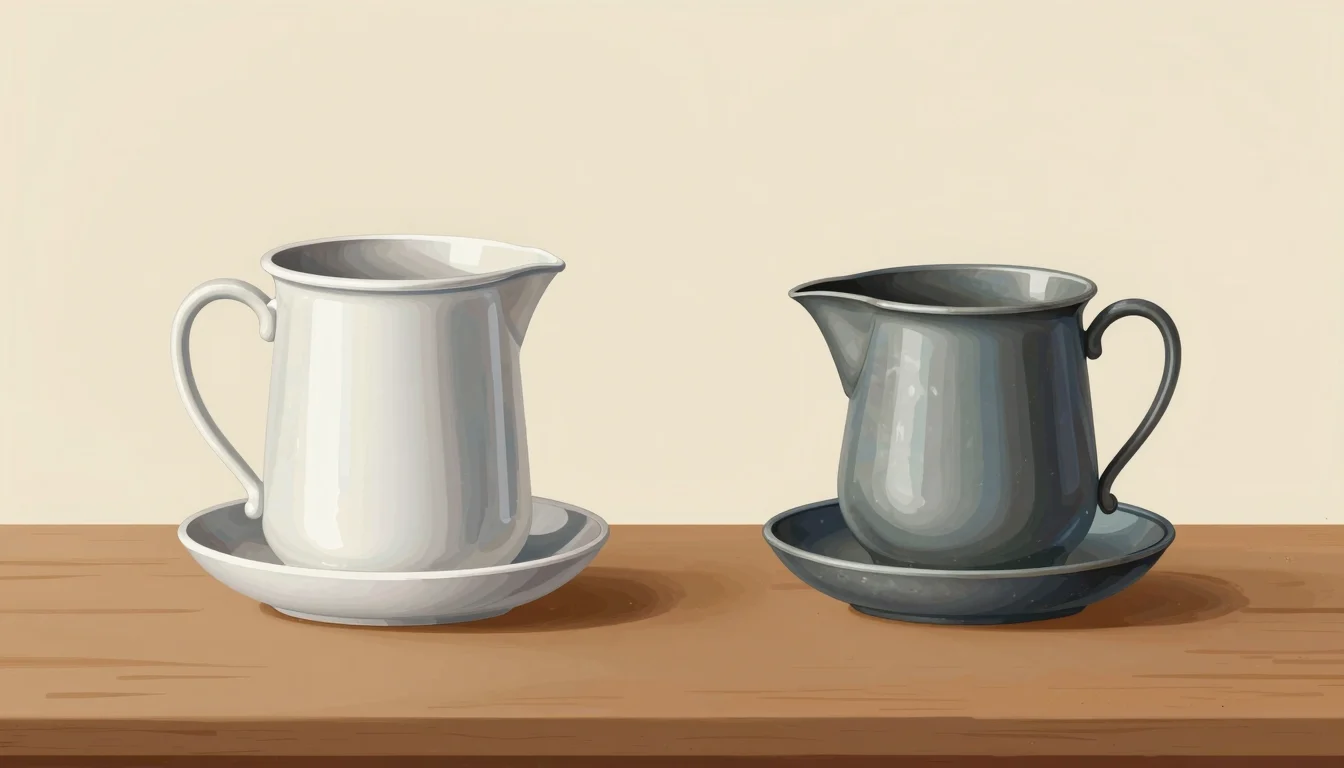
Silver is denser than pewter: a solid piece of the same metal volume will weigh more. Pure silver is about 10.5 g/cm³; a modern lead-free pewter reference alloy is about 7.3 g/cm³. Similar-looking objects can have different wall thicknesses, hollow sections or heavy fillings, so heft alone cannot identify the metal. Use the density references, measurement steps and marks below as cross-checks; they are not a guarantee of authenticity.
Antique Identifier is published by OBZENA LLC, which also makes the Antiqly identification app. This article is a reference guide built from the sources linked in the text; no objects were weighed or tested for it.
Why Silver Feels Heavier Than Pewter
Density is mass divided by volume. For solid pieces containing the same volume of metal, a denser material has more mass. The Royal Society of Chemistry lists the density of silver at 10.5 g/cm³ and of tin at 7.287 g/cm³. Pewter is mainly tin, alloyed with metals such as antimony and copper, according to the Wikipedia summary of pewter, so its density stays close to tin’s. A typical modern lead-free casting pewter of about 92 percent tin is listed by its maker at a specific gravity of 7.28.
Old pewter is a different case. In the past it was an alloy of tin and as much as 40% lead, and older pewters with higher lead content are heavier, tarnish faster, and their oxidation has a darker, silver-gray color. An old, heavy, dark grey tankard can therefore still be pewter, not silver, which is one reason a scale beats a guess.
| Metal | Density (g/cm³) | Source |
|---|---|---|
| Pure silver | 10.5 | Royal Society of Chemistry |
| Pure copper, the base of nickel silver and brass | 8.96 | Royal Society of Chemistry |
| Pure tin, the main component of pewter | 7.287 | Royal Society of Chemistry |
| Modern lead-free casting pewter, about 92 percent tin | 7.28 | Alloy maker’s datasheet |
Sterling silver contains 92.5% silver, with copper or another metal making up the remainder. Its density is slightly below pure silver and above the lead-free pewter reference in the table. Antique pewter alloys vary, so do not treat one modern formula as a universal standard.
Why Weight Alone Cannot Separate Silver From Silver Plate
Most 19th- and 20th-century silver plate is electroplated over a base alloy, and the base decides the heft. Nickel silver does not contain silver, but resembles it; the usual formulation is 60% copper, 20% nickel and 20% zinc, and it became popular as the base metal for plated cutlery marked EPNS (electroplated nickel silver). Because copper’s density is 8.96 g/cm³, it is a useful reference for the main component of nickel silver. It is not the measured density of the alloy or of a plated spoon; composition and construction still matter.
Britannia metal is a specific type of pewter alloy, typically about 92–93% tin, 5–6% antimony, and 2% copper, and it was widely used as the base for plated goods; the abbreviation EPBM on such items denotes electroplated Britannia metal. So a plated piece can feel like pewter or like something heavier depending on what is underneath, and a heavy piece is not automatically solid silver. If the piece is marked, read the mark before you weigh anything: see Sterling silver vs silver plate: 5 ways to spot the difference and What does EPNS mean on silver?.
How to Check Density at Home
Compare the density, not just the heft
Modern lead-free casting pewter: 7.28 g/cm³
Pure copper: 8.96 g/cm³
Pure silver: 10.5 g/cm³
Check the object before using water. Reserve this test for a sound, undecorated, solid metal piece that can safely be wetted. If it is fragile, valuable, glued, coated, corroded or of uncertain construction, ask a conservator instead. The Pewter Society cautions against treating valuable pieces without guidance. Loose white powder on lead or pewter can indicate active corrosion: the Canadian Conservation Institute explains the signs. Do not use that object for this home test.
For a suitable piece, use a scale reading to 0.1 g, a glass of room-temperature water and thin thread. The scale must support the glass plus its water. The thread must be held by your hand or a support separate from the scale.
- Weigh the dry object and write the mass down.
- Put a glass of water on the scale, large enough for the object to hang fully under water without touching the sides or the bottom, and tare the scale to zero.
- Tie the thread to the object and lower it until it is completely submerged, hanging freely from your hand. The scale now shows the weight of the displaced water. Water weighs about 1 g per millilitre, so that reading in grams is the object’s volume in cubic centimetres.
- Divide the dry mass by the volume and compare the result with the table above.
For example, a solid spoon that weighs 52.0 g dry and shows 5.0 g on the tared scale while suspended has a density of 10.4 g/cm³, in the range of silver, while a spoon that weighs 36.5 g dry with the same 5.0 g displacement has a density of 7.3 g/cm³, which is pewter territory. These figures are worked examples, not measurements of particular objects.
Dry the piece thoroughly afterwards. Before trusting the reading, check for trapped air bubbles, keep the thread immersion small and repeat the measurement without touching the glass. A small displacement reading makes rounding errors more important; a decimal on the display is not proof of alloy purity.
The result is useful only for solid, uniform pieces. Weighted candlesticks, hollow-handled knives, mixed materials and trapped air give a combined density. Density cannot reliably distinguish nearby silver alloys or authenticate plating. If the marks and measurements disagree, or the purchase is valuable, take the item to an experienced silver specialist or assay service.
Reading the Marks on Silver, Pewter and Plate
Silver fineness marks describe silver content. In the United States, the FTC silver guides set a minimum of 925/1,000 silver for Sterling or solid silver descriptions, and 900/1,000 for coin silver. These standards describe permitted claims, not a test you can perform by reading any stamp.
British assay-office hallmarks are a different system from a simple maker or fineness stamp. The London Assay Office explains the UK hallmarking requirement and weight exemptions; an absent hallmark is not by itself a verdict on the metal. Rules also depend on the country and period. Our British silver hallmarks chart explains the mark sequence, and the complete marks and signatures guide covers other materials.
A visible mark is a clue, not automatic proof. The Goldsmiths’ Hallmark Authentication Committee examines suspected counterfeits and marks transferred or cast from other objects. Check whether the mark, construction and condition agree.
Pewterers used trade or touch marks. A mark may identify a maker by name or initials; the Pewter Society touch-mark guide explains that a date can refer to the start of a maker’s business rather than the manufacture of your piece. Record the complete mark before trying to date the object.
Rows of shield-shaped punches can be pewter pseudo-hallmarks. They can help identify a maker, but do not certify silver purity. Their presence does not turn a grey metal object into silver.
For modern US product descriptions, the FTC pewter guide specifies at least 900 parts per 1,000 Grade A Tin, with suitable alloying metals making up the rest. This product-description standard does not date an antique or establish the composition of an untested object.
Plated pieces are usually marked EPNS or EPBM, or with a maker’s trade name, rather than with a fineness mark. If you are choosing between a pewter piece and a plated one, the pewter vs silver plated buyer’s guide walks through the differences that matter at the point of sale.
Comparing Pewter and Silver Uses and Value
From the seventeenth century onward, pewter was an attractive, sturdy, moderately affordable alternative to the various earthenwares used for plates, drinking vessels, and culinary utensils, as The Magazine Antiques puts it, and it was a leading material for producing plates, cups, and bowls before the wide adoption of porcelain. When brand new and highly polished, pewter looks very much like silver, which is exactly why weight and marks matter more than a first glance.
Today the two are valued on different bases. Silver has a metal value tied to its weight: bullion is quoted per troy ounce, which equals 31.1034768 grams, and our guide to silver melt value vs antique value explains when an object is worth more than its metal. For collectible pewter, compare documented objects of the same maker, form, age and condition instead of assigning a price from weight alone. Provenance matters more than weight here: American pewter is much scarcer than the British-made imports because the American colonies had no natural tin supplies.
Frequently Asked Questions
Can I tell silver from silver plate by weight?
Not reliably. Plate over nickel silver or Britannia metal can weigh close to a solid piece of the same size, and a thick base can even feel heavier. Check the marks first. Use the density test only on a suitable solid piece under the conditions above, alongside the other checks in Identifying Pewter vs Silver: 3 Simple Ways to Tell the Difference and Sterling silver vs silver plate.
How can I tell if an item is silver or pewter without a mark?
Colour and surface condition offer clues, but pewter can be polished and silver can tarnish. First inspect the whole piece for marks, mixed materials and filling. Use the density test only if the object meets the suitability conditions above. Our pewter vs silver colour reference and does pewter tarnish like silver? explain the limits of visual clues.
Can pewter objects be polished like silver?
Polishing is a separate conservation decision. The Pewter Society care guide distinguishes bright pewter from older patinated pieces and recommends guidance for valuable objects. Preserve identifying marks and surface detail; do not polish an uncertain antique simply to decide whether it is silver.
What historical periods used pewter extensively?
In Britain and America pewter was everyday tableware from the seventeenth century onward, until mass-produced pottery, porcelain and glass took over. American-made pieces from the colonial period are scarce because tin had to be imported and worn pewter was routinely melted and recast.
Is the resale value higher for silver or pewter antiques?
There is no universal winner. Silver content can provide a metal-value reference, but the finished object may be worth more as a collectible. For either metal, maker, form, condition and comparable sold prices decide the number, and a marked piece by a documented pewterer can be the more interesting object.
