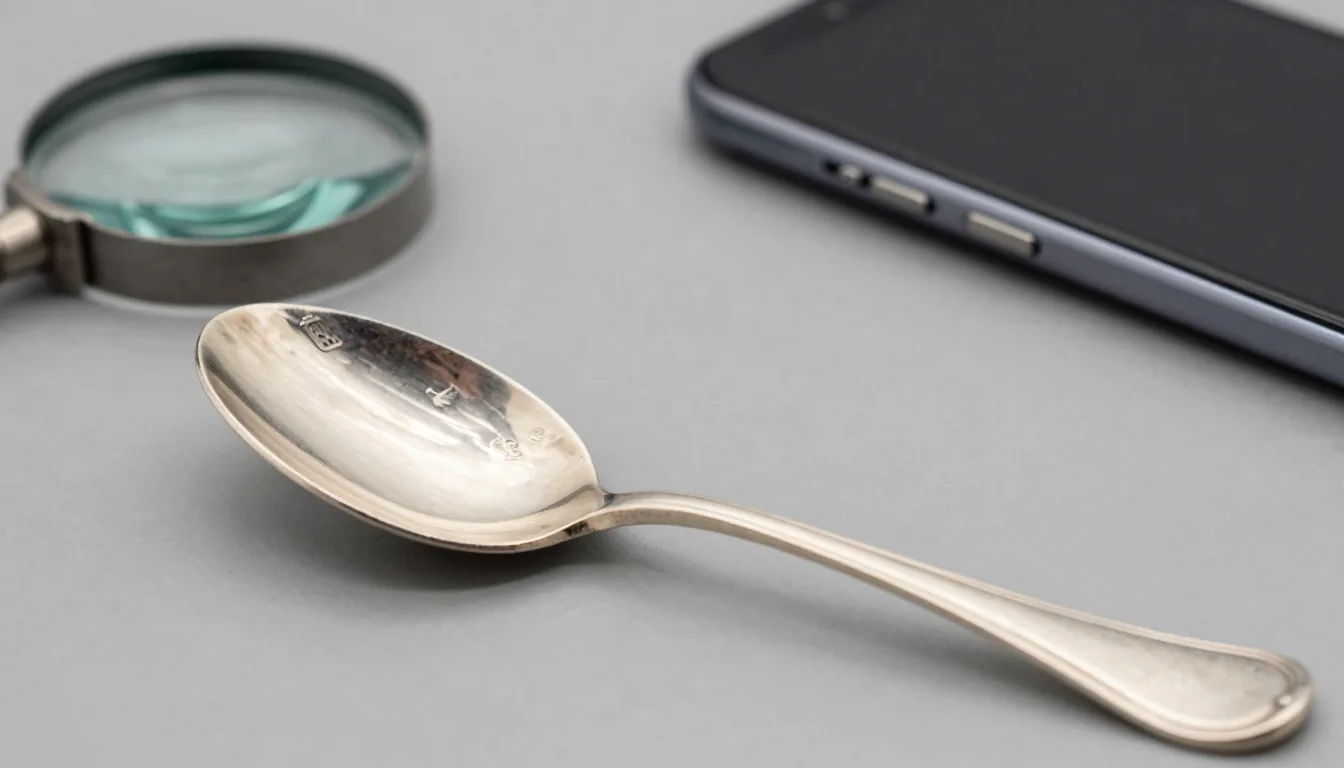
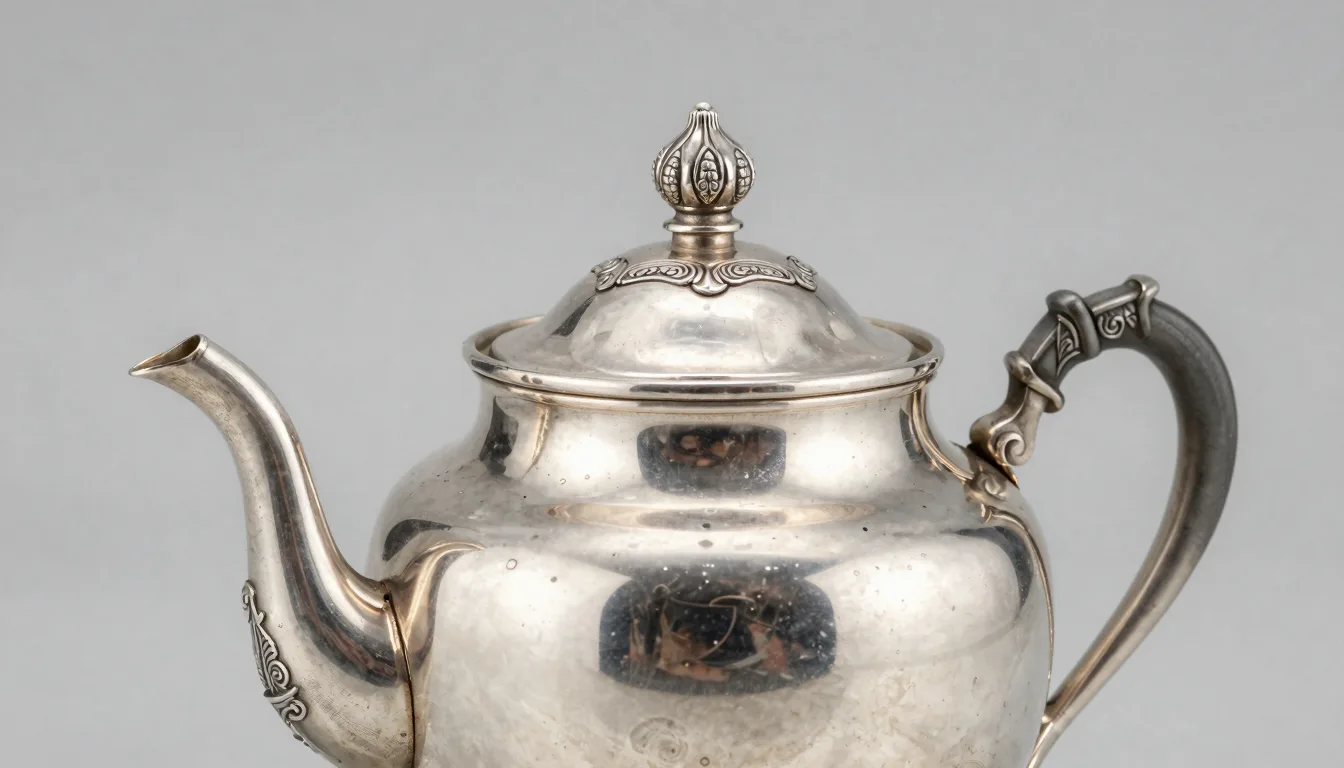
Antique Identifier App is the app made by the publisher of this site. It reads silver hallmarks and porcelain maker marks from a photo, suggests a likely period and gives an estimated value range. It is free to download on iPhone and Android. Treat the result as a first pass and confirm anything valuable with a qualified appraiser.
Do paid antique apps replace a professional appraisal?
Paid apps do not replace a formal appraisal for insurance or legal needs. They are excellent for research, pricing ranges, and market comps. Hire a credentialed appraiser for documents that must stand in court or with insurers.
How should I photograph antiques for the best AI results?
Use diffuse daylight, not direct sun or flash. Shoot three angles, plus close‑ups of marks and joinery. Include a size reference and keep backgrounds plain.
Are WorthPoint and Kovel’s worth using with apps?
Yes, they complement identification apps well. WorthPoint helps with historical price trends and image comps. Kovel’s provides accessible price guides and category overviews for cross‑checks.
What if a free app and a paid app disagree?
Treat both outputs as hypotheses. Re‑shoot, verify marks in museum references, and check comps. Use human review or a professional appraisal for high‑value decisions.
How can I avoid buying reproductions with apps?
Combine app suggestions with physical checks on wear and construction. Study joinery, tool marks, and surface oxidation. Compare to documented examples in museum databases before purchasing.
Identify any antique in seconds.
From silver hallmarks to porcelain maker marks, the app suggests the item type, period and a value range.
Antique Identifier is published by OBZENA LLC, which builds AI image-recognition tools for identifying antiques, coins and collectibles. Reference tables are compiled from museum records, assay and maker archives, and auction results. We do not offer appraisals.
AI is dependable for identification and fair for rough pricing. Expect tighter estimates on common forms with many comps. Rare or restored pieces require human valuation.
Can AI detect reproductions and fakes?
AI flags many red flags like laser-crisp marks and wrong screws. Clever reproductions still slip by photos alone. Confirm with construction details and provenance.
How should I photograph antiques for AI appraisal?
Use diffuse light, neutral background, and multiple angles. Include macro shots of marks, joints, and defects. Add a ruler or coin for scale.
What sources should I use to verify AI results?
Cross-check with museum catalogs and mark guides. Browse Smithsonian, V&A, and Met collection notes. Then compare sold prices on WorthPoint and Kovels.
Are AI appraisals accepted by auction houses?
Most auction houses accept AI as research, not as a final appraisal. They still inspect in person. Use AI to prep details and references for consignment.
Identify any antique in seconds.
From silver hallmarks to porcelain maker marks, the app suggests the item type, period and a value range.
Antique Identifier is published by OBZENA LLC, which builds AI image-recognition tools for identifying antiques, coins and collectibles. Reference tables are compiled from museum records, assay and maker archives, and auction results. We do not offer appraisals.
Study museum examples for craftsmanship cues. Browse the Met and the V&A for period benchmarks.
When in doubt, slow down. A weekend pause beats a lifetime regret.
Frequently Asked Questions
Which app can identify antiques from a photo?
Antique Identifier App is the app made by the publisher of this site. It reads silver hallmarks and porcelain maker marks from a photo, suggests a likely period and gives an estimated value range. It is free to download on iPhone and Android. Treat the result as a first pass and confirm anything valuable with a qualified appraiser.
Is Ask Antique Experts legit for valuations?
It provides quick opinions, not formal appraisals. Use it for triage, then verify with databases and a licensed appraiser if needed. Save chats and photos for your records.
How much should I pay for a quick online appraisal?
Expect a low fee for a text opinion and higher fees for written reports. Compare options in our guide: Online Appraisal Sites at \/best-online-antique-appraisal-sites-honest-reviews-comparisons-2026\/. Match price to item value.
What kind of photos get faster, better answers?
Provide a full piece photo plus macro shots of marks and construction. Add dimensions and weights. Use daylight and steady focus, and include a ruler or coin for scale.
Can I rely on online valuations for insurance?
No, insurance companies want a signed appraisal. Use chat valuations as context only. Commission a written report from a qualified appraiser for coverage.
How do I tell silver from pewter before asking?
Check for sterling hallmarks and test weight and ring tone. Pewter feels softer and rings dull. Use our guide: Pewter vs Silver at \/identifying-pewter-vs-silver-3-simple-ways-to-tell-the-difference\/.
Identify any antique in seconds.
From silver hallmarks to porcelain maker marks, the app suggests the item type, period and a value range.
Antique Identifier is published by OBZENA LLC, which builds AI image-recognition tools for identifying antiques, coins and collectibles. Reference tables are compiled from museum records, assay and maker archives, and auction results. We do not offer appraisals.
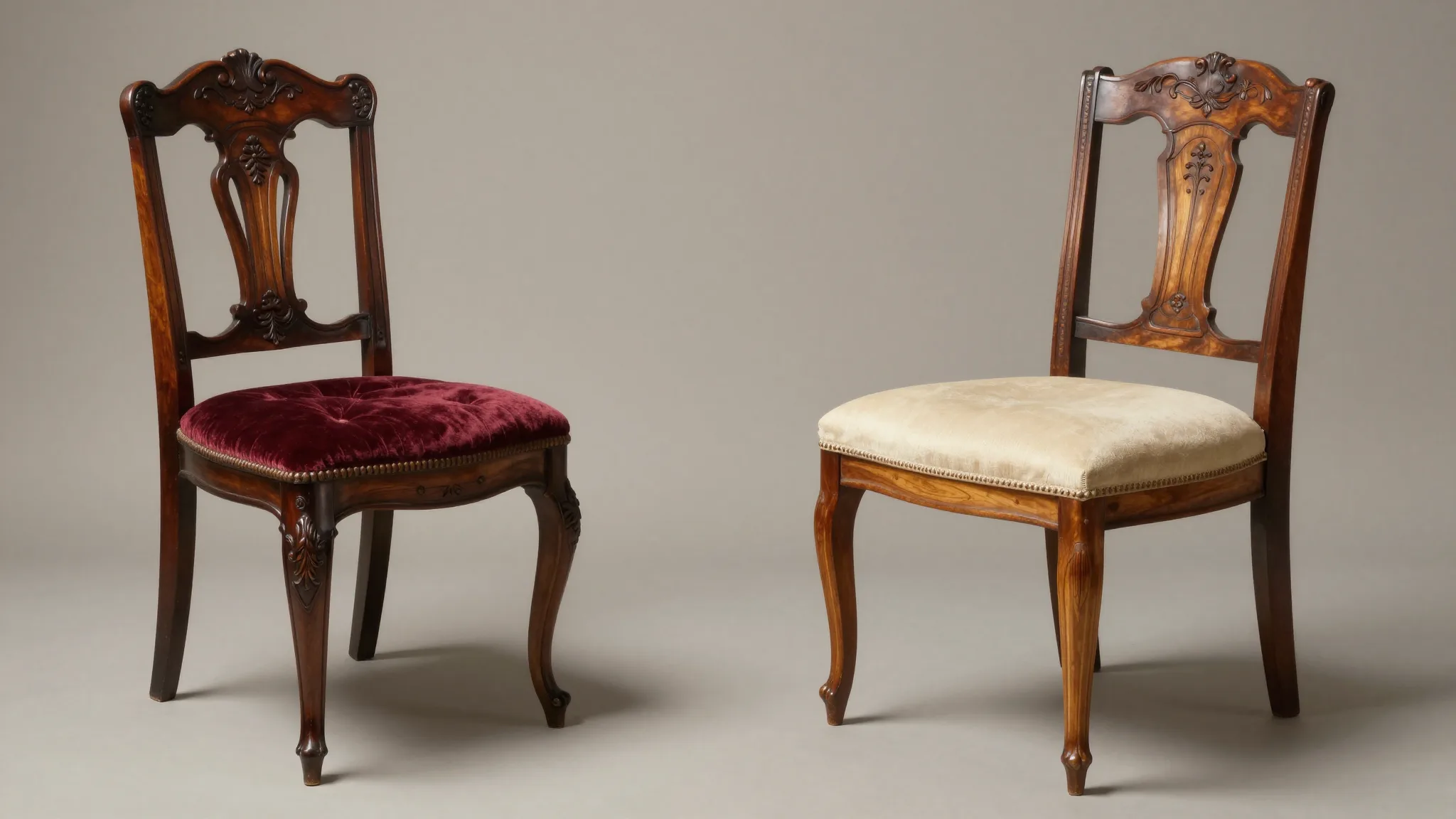
The unique charm of antique chair leg styles is captivating. Exploring Cabriole, Queen Anne, and Ball-and-Claw reveals their artistry. Discover the history and craftsmanship of these iconic designs.
Free to download: identify any antique instantly with AI. No sign-up.
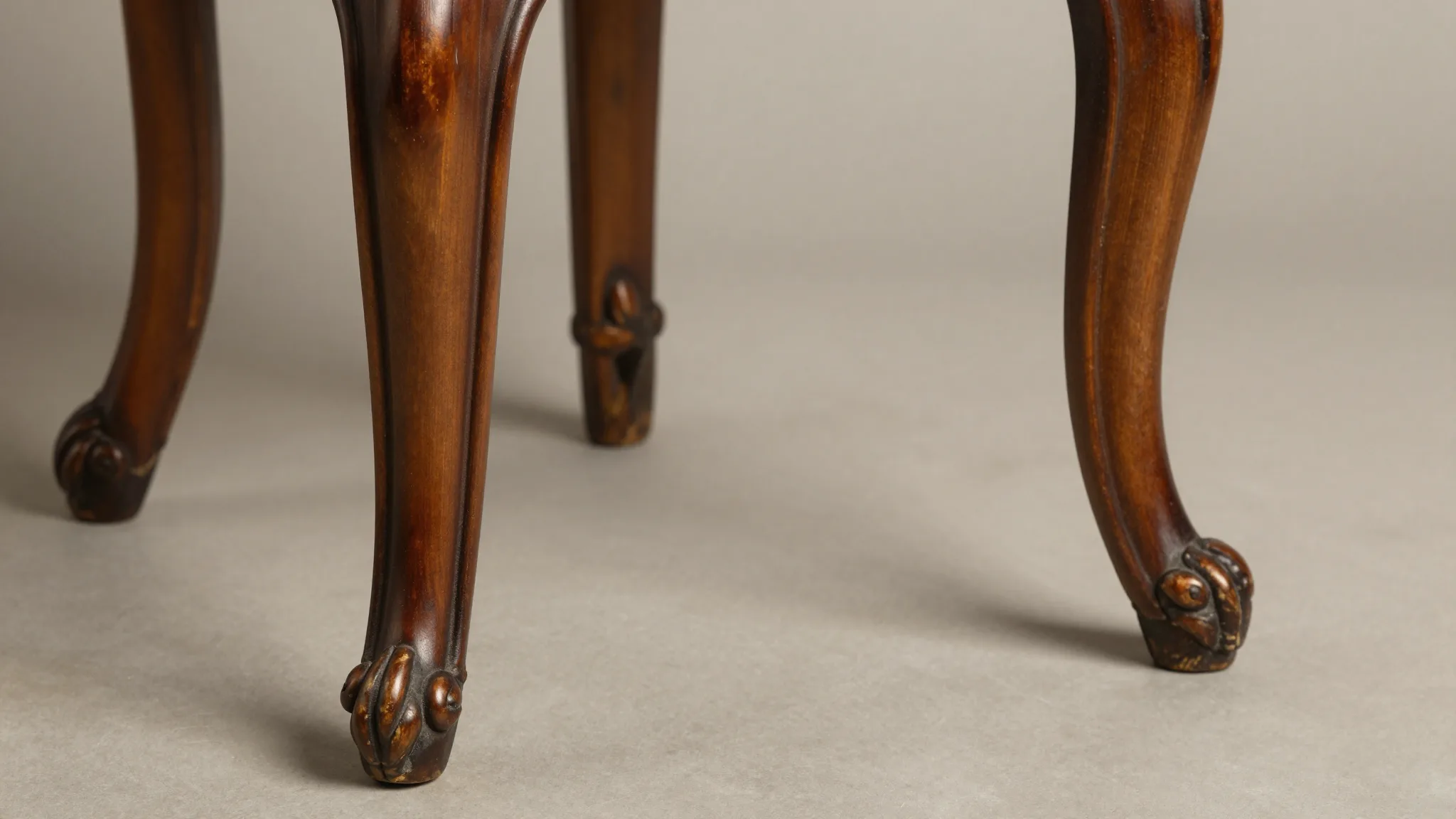
Cabriole legs are all about elegance and grace. Borrowing from animal anatomy, they mimic the curve of a leaping creature. Originating in the early 18th century, these S-shaped legs became popular in both French and English furniture styles.
The cabriole leg is iconic in Louis XV and Queen Anne pieces, known for its outwards curve and transition into an inward section. Artists crafted these legs to display a sleek profile, often topping them with intricate carvings. Cabriole legs are often finished with a pad, spool, or ball foot. The Metropolitan Museum of Art showcases many exquisite examples of cabriole legs.
The allure of Queen Anne legs
Queen Anne legs are synonymous with the understated elegance of early 18th-century design. Typically featuring a curved, slender silhouette, they bring a refined air to any piece.
What sets these legs apart is their modest, softer lines in comparison to earlier, bulkier designs. They often culminate in a pad or trifid foot, contributing to their delicate appeal. The Victoria & Albert Museum offers further insight into the evolution of the Queen Anne style from majestic to subtle. Explore their online collection for more information.
The majesty of ball-and-claw feet
Ball-and-claw feet are a bold statement, often signifying power and strength. Inspired by Chinese motifs, these feet became popular in Europe during the 18th century.
Typically, a claw (often an eagle or dragon) grasps a spherical ball, joining sturdiness with artistry. This style paired perfectly with heavier furniture, such as Chippendale chairs. Those slightly uneven rim details? Classic late Georgian hand-hammering. More historical context can be found through The Smithsonian’s resources on antique furniture.
Not sure what you’ve got?
Snap a photo and let our AI identify any antique in seconds: free download, no sign-up.
Comparing cabriole, Queen Anne, and ball-and-claw styles
Attribute
Cabriole
Queen Anne
Ball-and-Claw
Origin
18th Century
Early 18th Century
18th Century
Shape
S-shaped
Curved, slender
Claw grasping ball
Foot type
Pad, spool, ball
Pad, trifid
Ball-and-claw
Popular in
Louis XV, Queen Anne
Queen Anne
Chippendale
Any seasoned collector knows the distinct styles each leg brings to a piece. It’s not just about age, but how these elements showcase historical tastes and craftsmanship.
Restoring and valuing antique furniture
Preserving the integrity of antique furniture is essential. Restoration can enhance its value, but only if performed carefully. Knowing the period and style is crucial. Imagine adding a modern leg to a Queen Anne chair!
Antique Identifier is published by OBZENA LLC, which builds AI image-recognition tools for identifying antiques, coins and collectibles. Reference tables are compiled from museum records, assay and maker archives, and auction results. We do not offer appraisals.
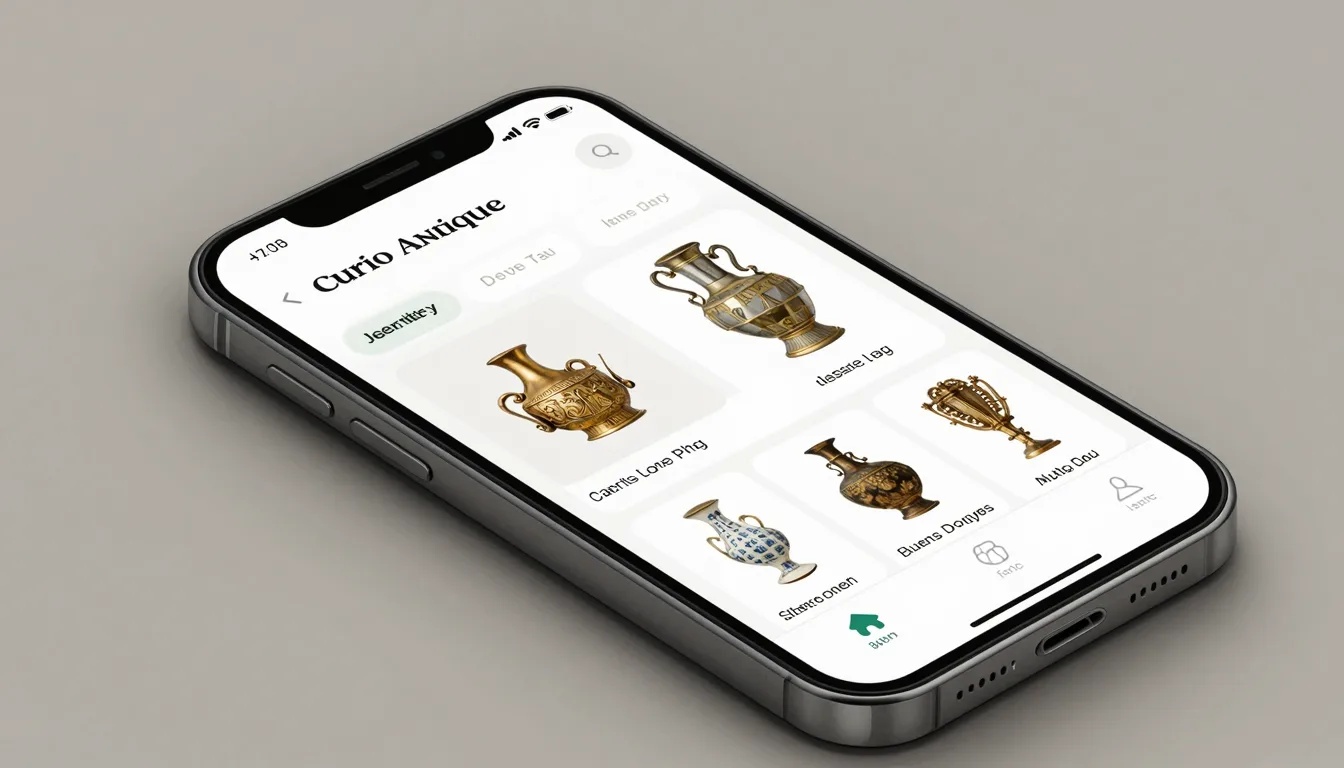
The Curio Antique Identifier App is a top pick. It’s time-saving, provides accurate identification, and features a user-friendly interface.
ED
Antique Identifier Editorial
Published by OBZENA LLC · May 2, 2026
Why Choose an Antique Identifier App?
In a world bustling with antiques, discerning authenticity and historical significance can be daunting. That’s where apps come in. They cut through the haze, identifying the makers’ marks or estimating age, allowing enthusiasts to separate treasures from imitations. Any seasoned collector knows that with a reliable app, those frustrating moments of uncertainty become a thing of the past.
Curio Antique Identifier App Review
The Curio Antique Identifier App has emerged as a go-to for collecting aficionados. Its strengths lie in its vast database, covering silver hallmarks, porcelain marks, and period furniture. This app brings the tactile nature of collecting to your screen.
User Interface: Curio’s beauty lies in its ease of use. The sleek design ensures that even a novice collector feels at home.
Accuracy: Backed by a database of verified expert information, its accuracy in identifying marks is commendable.
Speed: Upload a photo, and boom, Curio does the heavy lifting, shortening research time drastically.
For those leaning toward digital valuations, Curio also provides decent estimates. Compare this with other tools in our post on digital tools and resources.
Top Alternatives to Curio
For those exploring beyond Curio, several alternatives can be compelling choices. Let’s weigh them:
App Name
Features
Free/Paid
Antique Dian
Period dating, history insights
Free
WorthPoint
Extensive value estimates, mark guides
Paid
Kovel’s App
Professional database, regular updates
Paid
Each app brings its own set of features, like WorthPoint’s comprehensive value estimates. Yet, free options like Antique Dian provide worthy insights without hurting your pocket.
Not sure what you’ve got?
Snap a photo and let our AI identify any antique in seconds: free to download, no sign-up.
While apps can be incredibly convenient, they aren’t foolproof. Any seasoned collector will tell you, some subtleties, like those slightly uneven rim details (classic late Georgian hand-hammering), might escape even the best AI. Rely on apps for a good start, but ground truth should come from traditional experts and references._
Enhancing Your Collecting Skills
Beyond apps, honing tactile skills is pivotal. Visit museums like the Metropolitan Museum of Art for hands-on experience. Consult seasoned collectors or dive into resources that distinguish materials visually. Our guide on pewter vs. silver can be a handy start. Remember, while technology aids, firsthand expertise is indispensable.
Frequently Asked Questions
Which app can identify antiques from a photo?
Antique Identifier App is the app made by the publisher of this site. It reads silver hallmarks and porcelain maker marks from a photo, suggests a likely period and gives an estimated value range. It is free to download on iPhone and Android. Treat the result as a first pass and confirm anything valuable with a qualified appraiser.
Does the Curio App provide value estimates?
Yes, it does. While its primary focus is on identification, the Curio App also suggests potential market value ranges for antiques.
Are there privacy concerns with using antique apps?
Privacy may be a concern, especially regarding image uploads. Always review the app’s data privacy policy before use to ensure your information is securely handled.
Can apps identify all types of antiques?
While apps cover a broad range, they might not identify every detail. Rare items often require expert review or reference from specialized resources like Kovels.
How can I improve my identification skills besides apps?
Engage with collectors, attend auctions, or explore museum collections. Learn to recognize hallmarks and patterns through hands-on examination.
Do these apps replace professional appraisals?
No, they supplement them. For insurance or sales, a professional appraisal remains essential. Explore reliable sites in our appraisal guide.
Identify any antique in seconds.
From silver hallmarks to porcelain maker marks, the app suggests the item type, period and a value range.
Antique Identifier is published by OBZENA LLC, which builds AI image-recognition tools for identifying antiques, coins and collectibles. Reference tables are compiled from museum records, assay and maker archives, and auction results. We do not offer appraisals.
The key to valuing vintage items is leveraging free tools and resources. Save money by using online guides and apps. Perfect for budget-conscious collectors.
ED
Antique Identifier Editorial
Published by OBZENA LLC · May 1, 2026
Understand what you have
Before diving into valuations, every collector should first identify their piece. Are you holding onto a Georgian silver tea set or a mid-century porcelain dish? Identification requires a keen eye for hallmarks, porcelain marks, and style indicators. Resources like Smithsonian’s collections can help pinpoint the origin.
For silver items, spot those tiny marks stamped into the metal. They can reveal age and maker. For instance, our guide on pewter vs. silver can help differentiate items. Porcelain often bears marks showing where and when it was made, like those found in our complete identification guide.
With books, what you have depends on the printing rather than the title, and how to tell if a book is a first edition shows how to read that from the copyright page.
Leverage free online valuation tools
Why pay when there are powerful free tools at your fingertips? Websites like Kovel’s (kovels.com) offer extensive databases that give insights into similar sold items. Or try WorthPoint (worthpoint.com) for auction data, albeit some features are paid. Handy digital tools can also aid in this quest as noted in our online valuation article.
Comparison of free tools and features:
Tool
Strengths
Limitations
Kovel’s
Extensive items database
Some premium content
WorthPoint
Auction sale data
Limited free access
Antique Identifier App
Hallmarks, marks, and rough estimations
App only, requires phone
Visit museums and reputable online collections
Museum visits can provide perspective on your item’s period and significance. The Metropolitan Museum of Art and Victoria & Albert Museum have vast online resources showcasing collections across different periods. Browsing these collections helps refine your understanding of design elements typical to certain eras. Familiarize yourself with styles and compare them with your pieces.
Online, many museums provide free, high-quality images and descriptions which aid in identifying stylistic details or signatures on vintage pieces.
Not sure what you’ve got?
Snap a photo and let our AI identify any antique in seconds: free download, no sign-up.
Part of what keeps collecting thrilling is the community of like-minded enthusiasts ready to share insights. Online forums and groups on platforms like Reddit and Facebook can be invaluable. Experienced collectors often share tips and stories, offering advice or even preliminary valuations.
Engage with these communities to ask questions, get opinions, and reclaim some of that hands-on knowledge without hefty subscription fees.
Attend local antique events
Antique shows, flea markets, and estate sales are goldmines not just for purchasing but learning. Chat with vendors who often have decades of experience. Observing pricing at events can lend insight into current market trends. It’s the real-world test of what online tools suggest.
Any seasoned collector knows that in-person evaluations bring an item’s history to life in a way digital means can’t. Plus, handling physical objects can sharpen your ability to spot period characteristics comparable to those outlined in our antique furniture periods chart.
Frequently Asked Questions
How can I determine the hallmark on my silver piece?
Examine the piece closely with a magnifying glass or jeweler’s loupe. Look for small stamped marks which may indicate the maker, purity, and origin. Our gold hallmark identification guide can offer more insights.
What are some indicators of value in vintage furniture?
Consider factors like craftsmanship, condition, and any unique marks or features. Detailed construction, dovetail joints, and original upholstery add value. For a deeper dive, refer to our furniture periods chart.
Where can I sell my vintage and antique items?
Try platforms like eBay and Etsy for online selling. Local consignment shops or antique stores may also be options. Evaluate their selling commissions before deciding.
How does patina affect the value of an antique item?
Patina can enhance an item’s authenticity and desirability, especially with metals and wood. Collectors value original surfaces as they add character and show an item’s age.
Why is it important to understand the historical context of an antique?
Knowledge of historical context provides insights into the item’s cultural significance and influences on its design. It informs better pricing and appreciation of the piece.
Identify any antique in seconds.
From silver hallmarks to porcelain maker marks, the app suggests the item type, period and a value range.
Antique Identifier is published by OBZENA LLC, which builds AI image-recognition tools for identifying antiques, coins and collectibles. Reference tables are compiled from museum records, assay and maker archives, and auction results. We do not offer appraisals.
Antique furniture makers’ marks are stamped, branded, or stenciled identifiers that reveal a piece’s maker, period, and origin. Knowing how to read them separates a savvy buy from an expensive mistake. This A–Z guide covers the most recognized marks collectors encounter in the field.
ED
Antique Identifier Editorial
Published by OBZENA LLC · April 28, 2026
Why furniture makers’ marks matter to collectors
A maker’s mark is the closest thing antique furniture has to a birth certificate.
It can confirm attribution, narrow a production date, and, critically, separate an authentic period piece from a later reproduction.
Any seasoned collector knows the frustration of a beautiful chest with no mark at all. But when a mark is present, it changes everything about the conversation.
Marks appear in several forms. Stamped impressions are pressed directly into wood, usually on a secondary surface like a drawer base or back rail. Paper labels are glued on, which makes them fragile and often missing on older pieces. Stenciled marks use ink or paint and were popular with American furniture makers from roughly 1820 onward. Branded marks use a hot iron, common among English and Continental cabinetmakers through the 18th century.
The Victoria & Albert Museum holds one of the world’s most referenced collections of documented furniture marks, and their online database is worth bookmarking before you go deep on any specific maker.
How to read and locate a furniture maker’s mark
Before you can identify a mark, you have to find it.
Check these locations first: the underside of drawers, the back of carcasses, the undersides of seat rails on chairs, and the back surface of case pieces. Secondary woods (pine, poplar, oak used for drawer bottoms) are where most stamps live.
Good lighting matters enormously. A raking flashlight held at a low angle reveals shallow stamps that direct overhead light completely hides. A jeweler’s loupe at 10x magnification is worth carrying to every estate sale.
Once you find a mark, note every element: any text, numerals, symbols, borders, and the method of application. A crown above initials means something different than initials alone.
Period context sharpens identification fast. Cross-reference what you find against a known furniture timeline. The antique furniture periods chart covering 1600–1940 gives you the visual and stylistic anchors to match a mark’s style to a probable era.
The Metropolitan Museum of Art maintains detailed provenance records for documented pieces in their decorative arts collection, which can serve as a cross-reference when a mark matches known examples.
A–Z reference: notable antique furniture makers’ marks
This list covers makers whose marks appear most frequently at auction, in estate sales, and in private collections. It is not exhaustive (thousands of regional makers existed), but it covers the names a working collector encounters regularly.
Letter
Maker / Mark
Country
Active Period
Mark Type
A
Adam, Robert (attributed workshops)
England
1760–1792
Paper label, stencil
B
Belter, John Henry
USA
1844–1867
Stenciled name, paper label
B
Boulle, André-Charles (workshop marks)
France
1672–1732
Branded stamp
C
Chippendale, Thomas (workshop)
England
1749–1779
Rare paper label
C
Cottier & Co.
USA/Scotland
1873–1915
Printed paper label
D
Dubois, Jacques (JME guild stamp)
France
1742–1763
Stamped “DUBOIS” + JME
E
Eastlake, Charles (licensed makers)
England/USA
1868–1890
Printed paper label
F
Fourdinois, Henri-Auguste
France
1857–1887
Stamped name
G
Gillows of Lancaster
England
1730–1962
Stamped “GILLOWS LANCASTER”
H
Herter Brothers
USA
1864–1906
Paper label, stencil
H
Hepplewhite, George (workshop)
England
1760–1786
No primary mark; style attribution
I / J
Ince & Mayhew
England
1759–1803
Rare paper label
J
Jacob, Georges (JME guild stamp)
France
1765–1803
Stamped “G.JACOB” + JME
K
Kimbel & Cabus
USA
1863–1882
Stencil, paper label
L
Lannuier, Charles-Honoré
USA
1803–1819
Printed paper label
M
Majorelle, Louis
France
1879–1926
Branded or stamped “MAJORELLE”
N
Needham’s Antiques (retailer marks)
USA
1870–1940
Paper label
O
Oeben, Jean-François (JME stamp)
France
1751–1763
Stamped “EBEN” + JME
P
Phyfe, Duncan
USA
1794–1847
Rare stencil; often undocumented
Q
Quervelle, Anthony Gabriel
USA
1817–1849
Printed paper label
R
Riesener, Jean-Henri
France
1768–1801
Stamped “RIESENER” + JME
R
Roycroft Workshops
USA
1895–1938
Branded orb-and-cross mark
S
Seignouret, François
USA
1822–1853
Stenciled name
S
Stickley, Gustav
USA
1898–1916
Branded joiner’s compass + “Als ik kan”
T
Thonet, Michael (Gebrüder Thonet)
Austria
1853–present
Paper label, branded mark
T
Townsend-Goddard (Newport school)
USA
1740–1790
Rare chalk inscription; no formal stamp
U
United Crafts (Stickley imprint)
USA
1900–1904
Branded mark
V
Van Erp, Dirk (associated furniture)
USA
1908–1929
Branded windmill mark
W
Weisweiler, Adam
France
1778–1810
Stamped “WEISWEILER” + JME
W
Wooton Desk Co.
USA
1874–1884
Cast patent plate
X–Z
Xavier, Joseph (attributed)
Portugal
1750–1790
Branded initials
A few notes on this table. French makers operating under the guild system carry the JME (Jurande des Menuisiers-Ébénistes) stamp alongside their own mark. That guild oversight stamp is a quality signal and a dating tool. Pieces bearing JME stamps were made before the guild dissolved in 1791.
English makers like Chippendale are far more rarely marked than popular belief suggests. Most “Chippendale” attributions rest on style, not stamps. Be appropriately skeptical.
American Arts & Crafts marks (Stickley’s compass brand, Roycroft’s orb-and-cross) are among the most forged marks in the American furniture market. Those slightly uneven burn edges on a genuine branded mark? That’s hand-applied heat. Machine-perfect burns on a “Stickley” piece deserve close scrutiny.
Not sure what you’ve got?
Snap a photo and let our AI identify any antique in seconds: free download, no sign-up.
French furniture marks operate on a two-stamp system that confuses many new collectors.
Every maître ébéniste (master cabinetmaker) registered with the Parisian guild had a personal stamp, typically their name or initials. The guild itself added a separate JME (Jurande des Menuisiers-Ébénistes) quality control stamp after inspection.
Both stamps had to be present for a piece to be sold legitimately. Finding one without the other raises questions about completeness or later alteration.
The JME stamp is rectangular, with a crown above the letters on royal-period pieces. Post-1743 stamps are the most consistently documented.
Since the guild dissolved in 1791, any piece with a JME stamp was completed before that date. That single fact is a powerful dating anchor.
The Smithsonian’s American History collections hold documented French-influenced pieces that illustrate how guild-marked furniture was imported and copied in the American Federal period, useful context for cross-Atlantic attribution work.
American makers’ marks: stencils, labels, and patents
American furniture identification plays by different rules than European guild systems.
No centralized guild existed in the United States. Makers self-identified through paper labels, stencils, and, from the mid-19th century onward, cast or embossed patent plates.
Paper labels are the most informative when intact. They often include the maker’s full name, city address, and sometimes a date range. The Lannuier label found on documented pieces includes his Broad Street, New York address, a detail that pins the piece to his active years, 1803–1819.
Stencils, popular from roughly 1820–1870, appear in gold or black paint on secondary surfaces. Lambert Hitchcock’s stenciled chairs are a classic example every American furniture collector learns early.
Patent furniture (Wooton desks, certain platform rockers) carries cast iron or brass patent plates with US Patent Office numbers. Those patent numbers are cross-referenceable through historical patent records, giving you a precise earliest-possible manufacture date.
WorthPoint maintains a searchable marks database that includes American maker labels and stencils, with sold-price data attached. It is a practical research tool once you have a candidate maker in mind.
A mark on a piece of furniture is evidence, not proof.
Marks can be transferred, forged, or applied to reproduction pieces. A genuine paper label can be lifted from a damaged original and re-adhered to a better-looking reproduction. It happens more than the market likes to admit.
Branded marks are harder to fake convincingly, but not impossible. The grain compression around a genuine period brand mark is difficult to replicate with modern tools. Look at the wood fibers under magnification: a genuine old burn shows differential charring into the grain. A modern recreation often sits more on the surface.
Style consistency is your cross-check. If the construction methods, secondary woods, and hardware don’t align with the period the mark claims, the mark is the problem, not your analysis. Dovetail angles, tool marks, and wood shrinkage patterns all speak independently of any applied mark.
Kovel’s maintains extensive reference files on known faked marks and reproduction furniture lines, particularly for American Victorian and Arts & Crafts pieces. Checking a suspicious mark against their database is a sensible step before any significant purchase.
If you are working across material types and need a broader framework for cross-checking authentication signals, the best online antique appraisal sites honest review gives you a clear-eyed look at which platforms carry enough expertise to catch furniture forgeries.
Building your own makers’ mark reference system
Every serious collector eventually builds a personal reference archive.
Start with photographs. Every mark you encounter deserves a macro photograph under raking light, alongside a context shot showing where on the piece the mark was found. Date the image and note the sale location.
Organize by country first, then by period. French guild marks cluster differently than American stencils. Keeping them in separate reference folders prevents cross-contamination of mental pattern recognition.
Physical reference cards with rubbings (made by placing thin paper over a stamp and rubbing lightly with a soft pencil) are more dimensionally accurate than photographs for shallow impressions. Old-school technique, still useful.
Digital tools have accelerated this work considerably. The Antique Identifier App uses image recognition against a curated marks database, which is practical when you are standing at an estate sale and need a fast first-pass result.
Once attribution is established, condition and originality drive value. Understanding when to hold a documented piece versus liquidate it is covered in depth at the silver melt value vs antique value guide. The same hold-or-sell logic applies directly to marked furniture.
Frequently Asked Questions
Where are furniture makers’ marks most commonly found?
The most common locations are the underside of drawers, the back surface of carcass pieces, and the underside of seat rails on chairs. Secondary surfaces (areas built from pine, poplar, or oak rather than the primary show wood) are where stamps and brands appear most frequently. Paper labels are often found on the inside back panel of case pieces like wardrobes and secretaries.
What does JME mean on French antique furniture?
JME stands for Jurande des Menuisiers-Ébénistes, the Parisian guild that regulated furniture makers from 1743 until the guild dissolved in 1791. The JME stamp was applied by guild inspectors after quality review, alongside the maker’s personal stamp. Any piece bearing a legitimate JME stamp was completed before 1791, making the mark a direct dating tool.
Did Thomas Chippendale mark his furniture?
Genuine paper labels from Chippendale’s St. Martin’s Lane workshop exist but are extremely rare. The vast majority of furniture described as Chippendale is a style attribution, not a documented maker attribution. If a piece carries a Chippendale label, treat it with healthy skepticism and seek independent expert verification before assigning significant value to the attribution.
How do I tell a genuine Stickley brand mark from a fake?
A genuine Gustav Stickley branded compass mark shows grain compression and differential charring where the hot iron drove into the wood fibers. Under magnification, authentic marks show the heat penetrating into the grain rather than sitting on the surface. Inconsistent burn depth, machine-perfect edges, or a mark that appears too crisp on heavily worn wood are red flags. Cross-reference construction details (mortise-and-tenon joinery, quartersawn oak, specific hardware) as independent authentication signals.
Can a furniture maker’s mark increase the value of a piece?
A documented and authenticated maker’s mark can substantially increase value, sometimes by multiples of the unmarked equivalent. A confirmed Herter Brothers label, a Lannuier paper label, or a verified Roycroft brand can transform a decoratively appealing piece into a museum-quality acquisition. However, the mark must be authenticated. A transferred or forged mark discovered after purchase can destroy both the attribution and resale value entirely.
Identify any antique in seconds.
From silver hallmarks to porcelain maker marks, the app suggests the item type, period and a value range.
Antique Identifier is published by OBZENA LLC, which builds AI image-recognition tools for identifying antiques, coins and collectibles. Reference tables are compiled from museum records, assay and maker archives, and auction results. We do not offer appraisals.
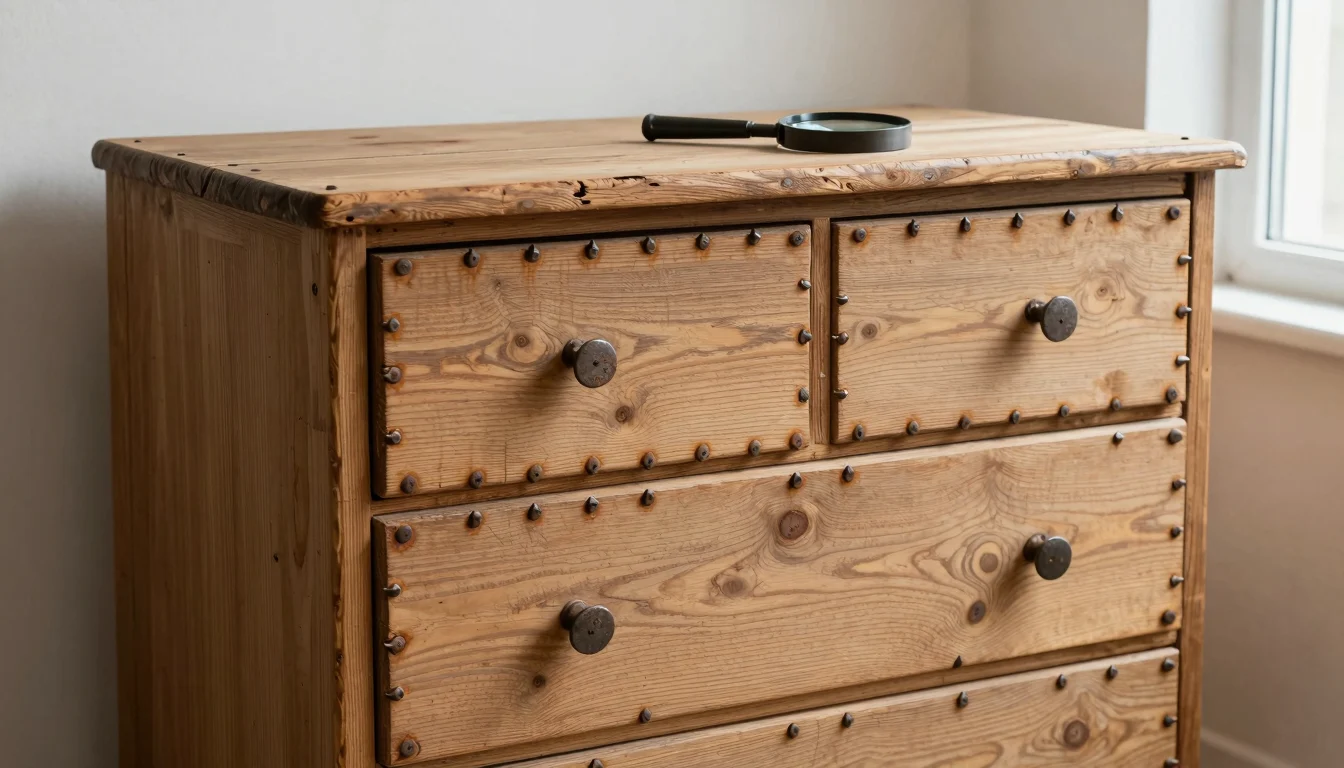
Cover: AI-generated image. Old iron nail heads with rust halos bleeding into the grain of a rustic pine chest, and the pocket magnifier you read them with. No piece of furniture was examined for this article.
Hardware is one of the quickest ways to date antique furniture, and one of the easiest to misread. Nails, screws and hinges changed in documented steps as manufacturing changed, so a fastener sitting in an undisturbed joint sets an earliest possible date for that joint. It never gives an exact year, and because hardware is replaced more often than any other part of a piece, it has to be read together with the joints, the wood and the wear.
Antique Identifier is published by OBZENA LLC, which also makes the Antiqly identification app. This article is a reference guide built from the building-archaeology and museum-conservation sources linked in the text; no piece of furniture was examined for it and it quotes no prices.
What hardware can and cannot tell you
Nails, screws and hinges are useful dating clues because the technology that made them changed in steps that historians and conservators have documented: nails forged by hand, then cut by machine, then drawn from steel wire; screws filed by hand, then cut on lathes with blunt ends, then given machine-made gimlet points; hinges forged from wrought iron, then cast. Each step left physical marks that survive under drawer bottoms and behind backboards long after the front of a piece has been polished, refinished or re-handled.
Three limits apply to every clue in this guide.
A fastener gives a “not earlier than” date, not a year. A round wire nail could not have been driven before wire nails existed, so a wire nail in an undisturbed joint rules out an earlier date for that joint. The reverse does not hold: older types stayed in production long after newer ones appeared. Thomas Visser of the University of Vermont’s Historic Preservation Program records in Nails: Clues to a Building’s History that cut nails “are still made today, however, with the type B method” and are “commonly used for fastening hardwood flooring”.
Hardware dates the joint it sits in, not necessarily the piece. Screws, hinges and pulls are replaced routinely, and backboards and drawer bottoms are re-nailed during repairs. The fasteners least likely to have been touched are the ones you cannot see from the front.
The dates below are mostly American. The nail chronology comes from research on New England buildings and the screw chronology from a study of the Museum of Fine Arts, Boston’s own furniture. English manufacturing followed a related but not identical timetable, noted where it matters, and rural work in any country lagged behind the cities.
So treat hardware as one witness among several. Cross-check it against the drawer construction described in our 1800s dresser guide, the leg and foot forms in our guide to how to date an antique chair by its leg style, and the style sequence in the antique furniture periods chart covering 1600 to 1940. When all of them point to the same few decades you have a date; when they disagree you have found a repair, an alteration or a marriage of parts, which is useful information in itself.
Hand-wrought nails: the pre-1800 signal
Hand-wrought nails are the oldest type you will meet on furniture. In Visser’s description they were “made one by one by a blacksmith or nailor from square iron rod”: after heating the rod in a forge, the nailor would “hammer all four sides of the softened end to form a point”, cut the nail off, and form the head with several glancing blows on a nail header. “The most common shape was the rosehead”, with broad butterfly heads and narrow L-heads also made.
That process leaves two things to look for. The shank tapers on all four faces, because all four were hammered; hold the nail up, turn it slowly, and you will see four slightly uneven flat faces converging to a point. The head is irregular and usually a little off-centre, with hammer facets that show in raking light, and no two heads on the same piece are quite alike.
On buildings, Visser writes, “Until the last decade of the 1700s and the early 1800s, hand-wrought nails typically fastened the sheathing and roof boards on building frames.” Furniture makers drew on the same nail supply, so hand-wrought nails in undisturbed holes are consistent with construction before about 1800. Two cautions apply. Blacksmiths did not stop forging nails on a fixed date, so hand-wrought nails can turn up in rural or repaired work well into the nineteenth century. And hand-forged nails are reproduced today for restoration, so a forged nail supports an early date only when the nail hole, the wood around it and the rest of the construction agree.
Cut nails and wire nails: the 1790s to about 1900
Around the 1790s nail-making moved to machines. Visser records that “Between the 1790s and the early 1800s, various machines were invented in the United States for making nails from bars of iron”, and the Wikipedia history of the nail notes that the cut-nail process was patented in the U.S. by Jacob Perkins in 1795 and in England by Joseph Dyer. Machine-cut nails, often called square nails, have a rectangular shank: two faces are simply the thickness of the iron bar they were sheared from, and only the other two taper. That two-sided taper is the quickest way to separate a cut nail from a four-sided hand-wrought one.
Building historians split cut nails into two types. In the earliest machines “The taper of the shank was produced by wiggling the bar from side to side with every stroke”; these are Type A cut nails, their heads at first hammered on by hand, and “This type of nail was made until the 1820s”. “By the 1810s, however, a more effective design for a nail making machine was developed” that flipped the bar after each stroke and headed the nail in the same mechanical operation; these are Type B nails, with uniform stamped heads. The tell is on the edges: “Type A nails have burrs on the diagonally opposite edges, while the type B nails have both burrs on the same side because the metal was flipped for each stroke.” “Type B cut nails continued to be the most common through most of the greater part of the nineteenth century.”
Round wire nails arrived with cheap steel. “With the rapid development of the Bessemer process for producing inexpensive soft steel during the 1880s”, iron cut nails lost ground fast: “By 1886, 10 percent of the nails produced in the United States were made of soft steel wire”, “Within six years, more steel-wire nails were being produced than iron-cut nails”, and “By 1913, 90 percent were wire nails”. Wikipedia dates the whole era of the “Wire nail (roughly 1860 to the present)”, because small wire nails existed before the steel boom. A round, uniform, sharply pointed nail in an undisturbed joint therefore argues against a date before the mid-nineteenth century, a piece full of wire nails most likely dates from the 1880s or later, and one offered as 1860s work needs a close look at whether those nails are original.
Nail type
How it was made
What to look for
Documented use in the United States
Hand-wrought
Forged one at a time from square iron rod
Shank tapers on all four faces; irregular hammered head, most often a rosehead
Typical until the last decade of the 1700s and the early 1800s
Type A cut
Sheared from an iron bar; head hammered by hand at first
Rectangular shank tapering on two faces; burrs on diagonally opposite edges
1790s to the 1820s
Type B cut
Bar flipped after each stroke; machine-headed
Two-faced taper; both burrs on the same side; uniform stamped head
From the 1810s; the most common nail through most of the nineteenth century; still made for flooring
Wire
Drawn from soft steel wire
Round, uniform shank; sharp point; round machine-made head
One tenth of US output by 1886, the majority within six years, nine tenths by 1913
Iron nails that have sat in oak or walnut for a century or more usually leave a reddish-brown rust halo in the surrounding grain. Treat that staining as supporting evidence rather than proof: it develops slowly, so a reproduction cut nail driven recently into old wood tends to sit in clean grain, but staining can also be faked or lost when a surface is stripped.
Screws: the most misread clue
The common shortcut says a blunt tip means a hand-made, pre-1846 screw and a sharp point means a machine-made one. The museum evidence is more useful than that. In Observations on the Development of Wood Screws in North America, a study of screws taken from the Museum of Fine Arts, Boston’s own eighteenth- and nineteenth-century American furniture, conservator Christopher White records that “The use of metal screws as fasteners began in Europe in the 15th century”, that “Wood screws are a frequent component of furniture since the mid 18th century”, and that the screw “did not become a common woodworking fastener until efficient machine tools were developed near the end of the 18th century”. The Wikipedia history of the screw gives the same outline: “The metal screw did not become a common fastener until machine tools for mass production developed toward the end of the 18th century.”
Hand-made screws (eighteenth century). These were filed from hand-forged blanks, and White writes that “They are most easily identified by the profusion of file marks (in many directions) over the surface”. Thread pitch and shape vary along the shank. A blunt end is not a reliable sign of hand work on its own: the ca.1780 screw in the MFA study was completely hand-made, yet “the maker formed a simple gimlet point by tapering the point and threads”.
Lathe-made screws (patented 1760, common from the 1790s). “The earliest record of lathe made wood screws dates to an English patent of 1760”, granted to Job and William Wyatt of Staffordshire. Lathe-made screws have smoothly turned thread troughs rather than filed ones. From about 1795 the blanks were drawn wire, and “Screws using wire stock are easily identified by the longitudinal scratches that remain as part of the wire-forming process”. Most of these screws are blunt; the MFA’s ca.1810 example is “A lathe-produced blunt wood screw without any thread or profile taper”, and Wikipedia notes that “Many of these screws had a blunt end, completely lacking the sharp tapered point on nearly all modern wood screws”, which is why they needed a drilled pilot hole. Heads were still finished by hand, so an old lathe-made screw typically shows “linear file marks and a slightly off-center slot, indicative of hand finishing”.
Machine-finished heads (from about 1837). “The heads of screws retain a hand finished appearance until about 1837 when a patent was filed for a machine to automatically finish screw heads as they spun”, leaving circular machining marks instead of straight file marks. “The earliest example encountered in this study of a definitively machine-finished head dates from ca.1845.”
Gimlet points (mid-1840s onward). The self-starting threaded point has several claimants. White notes that “A mid-19th century source attributes the first gimlet-pointed wood screws to the Providence Screw Company in 1834”, other accounts name an 1837 patent or Cullen Whipple in 1849, and the Tools and Trades History Society states that “The first successful process to manufacture pointed screws was developed by J. T. Sloan in New York” and that “Sloan specified a process to produce this design in 1846 (USP4864)”. Whatever the priority, in the MFA collection “The earliest example in this study dates from ca.1845”, and that screw is “virtually indistinguishable from modern types”. Britain followed about a decade later: the society records that “to acquire this technology (1854) Nettlefolds took a capital injection from Joseph Chamberlain”. So a sharp gimlet point with a machine-cut, centred slot places a screw in the mid-1840s or later in America and the mid-1850s or later in Britain.
Cross-head screws (mid-1930s onward). Slotted screws never went out of use in furniture, so a slot alone proves nothing. The recessed cross head is different. According to the Wikipedia article on Henry F. Phillips, the credited inventor was “John P. Thompson who, in 1932, patented (#1,908,080) a recessed cruciform screw”; Phillips bought the design in 1935 and brought it into industrial production, and “One of the first customers was General Motors, who used the design in 1936 for its Cadillac assembly-lines”. A cross-head screw in a piece offered as eighteenth- or nineteenth-century therefore means work from the mid-1930s or later, at least at that joint.
Screw feature
Earliest documented in the MFA Boston study
What it indicates
File marks in many directions; uneven thread pitch and shape
Eighteenth century (ca.1780 example)
Hand-made blank and hand-cut threads
Smooth turned thread troughs; fine lengthwise scratches on the shank
ca.1795
Lathe-cut threads on drawn-wire stock
Blunt end with no taper
ca.1810 example
Lathe-made screw from before gimlet points became standard
Straight file marks and a slightly off-centre slot on the head
Through the 1830s
Hand-finished head; machine heading patented about 1837
Circular machining marks on the head
ca.1845
Machine-finished head
Threaded gimlet point with a modern thread profile
ca.1845
Mid-1840s or later in America, mid-1850s or later in Britain
Cross-shaped (Phillips) recess in the head
Patented 1932; in production from the mid-1930s
Twentieth-century manufacture
Always ask whether a screw is in its first hole. A screw that has been removed and replaced leaves slight disturbance around the entry point, while an original screw in an original hole often has decades of compressed fibre and darkened finish packed into the slot and threads. Removing screws is itself invasive. White’s team took screws out only to reach brass hardware for analysis and states that “The removal of wood screws from furniture is an invasive procedure and should not be undertaken without curatorial consultation”, so on a piece you value, read the head in place with a loupe rather than unscrewing it.
Hinges: wrought iron, then cast butts
Hinge evidence is best documented for doors, and cabinet doors used the same hardware. Rudolf Hommel’s 1944 study of old houses in eastern Pennsylvania, republished by the Early American Industries Association as the secret-joint hinge, found that up to the Revolutionary War “door hinges were made of wrought iron. For inner and lighter doors we find the so-called H and L hinges, and for heavier and outer doors the strap hinges”, and that “Immediately after the Revolution, from 1783 on, there appeared suddenly the so-called butt hinges made of cast iron”. The cast butt was an English invention, protected by “British patent No. 1102, of October 3, 1775, assigned to Messrs. Izon and Whitehurst at Birmingham”. The trade journal Period Homes, in its survey of historic door hardware, cites the architectural historian Henry Chapman Mercer’s observation that “after being invented in England and patented in 1775, cast-iron butts rapidly superseded wrought-iron hinges”, and records the next step at the other end of the century, steel “making the steel butt hinge the dominant door hinge by 1910”.
What that means on furniture:
Hand-forged H, HL, strap and butterfly hinges belong to the wrought-iron era. The form alone does not pin a decade; the Wikipedia hinge article notes that “HL hinges were commonly used for passage doors, room doors, and closet doors in the 17th, 18th, and the 19th centuries”. Look instead for the signs of forging, such as file marks on the edges, slightly uneven wings or arms and irregular knuckles, and remember that wrought hinges continued in rural work and are reproduced today.
Cast butt hinges let into the edge of a door are consistent with the 1780s or later in America and the late 1770s or later in England. Early castings tend to be a little rough and porous; later factory hinges are smoother and more uniform, and stamped steel butts had taken over door hardware by about 1910.
Stamped names, numbers or symbols on a hinge leaf are manufacturer’s marks or patent references, and by themselves they point to factory production rather than a blacksmith. Search the exact letters together with the word hinge, and see our guide to maker’s marks on furniture for where else a piece may be signed.
Check the screw holes in the hinge leaves. A hinge in its original position sits in wood that has compressed and darkened around each screw; a replacement, even a period-correct one, usually sits slightly proud of the surface over clean or filled holes. Match the screws to the chronology above: a hand-forged H hinge held by gimlet-point machine screws has been re-hung.
Drawer pulls and knobs follow their own sequence of materials and fittings, covered in our guide to dating knobs and pulls.
Patina and surface evidence: supporting, not primary
Hardware dating works best when the form of the fastener is confirmed by its surface and by the wood around it. Patina on iron and brass develops slowly, so it is a useful second witness, but it is also the easiest evidence to fake, strip or misread.
Around old iron nails and screws, expect rust staining that follows the grain outward from the hole, and layered rather than fresh surface rust on the metal itself. Genuinely aged brass darkens unevenly, deeper in the recesses and lighter on the high points that hands touched; artificial patination is often more even across the surface, but that is a suspicion to follow up, not a verdict.
Do not clean hardware to read it. A wire brush or polish removes the oxide layers that carry the evidence, and Wikipedia’s patina article warns that for antiques “removal or reduction may dramatically reduce its value”. Our guide to restoring versus preserving antique furniture explains where that line falls.
Keep the hierarchy straight: hardware form first, surface second. A hand-wrought nail with no patina in an original hole is still a hand-wrought nail that may have been cleaned; bright, unpatinated hardware in supposedly undisturbed positions is a reason to look harder, not a conclusion.
A practical hardware inspection routine
A fixed routine prevents the confirmation bias that catches experienced collectors too. Use the same sequence every time.
Start underneath and behind. Turn the piece over or pull it from the wall before you look at the front. Undisturbed backboards, drawer bottoms and glue blocks hold the hardware least likely to have been replaced.
Read the nails. Note the shank (four-sided, two-sided or round), the head, and the staining around each hole, then place them in the nail table above.
Read the screws in place. With a 10x loupe, look at the slot (centred or off-centre), the head (straight file marks or circular machining) and, where a screw is loose or missing, the tip and thread profile. Do not remove screws from a piece you value.
Read the hinges. Wrought or cast, forging marks or uniform casting, original screw holes or filled ones.
Cross-reference. If nails, screws and hinges all point to the same few decades, and the joints, saw marks and style agree, you have a date. If they conflict, you have found a repair, an alteration or a marriage of parts.
Look at the wood, not just the nail. Original iron nails usually leave reddish-brown rust staining that follows the grain outward from the hole, and the wood at the entry point is compressed and darkened. A replaced nail tends to sit in a slightly enlarged or disturbed hole with little or inconsistent staining. Check several nails in undisturbed places such as drawer bottoms and backboards, and treat one clean nail as a repair rather than as a verdict on the whole piece.
When were screws first used in furniture?
Metal screws were used as fasteners in Europe from the fifteenth century, and the Museum of Fine Arts, Boston study describes wood screws as a frequent component of furniture from the mid-eighteenth century. They only became common once efficient screw-making lathes appeared near the end of the eighteenth century, so a piece said to be earlier than about 1750 that is full of screws deserves a close look at whether they are later additions.
What does a blunt screw tip actually indicate?
Less than most guides claim. Blunt-ended screws were the normal product of screw lathes from the 1790s until gimlet points spread in the mid-1840s, so a blunt tip suggests a screw made before about 1845 and driven into a drilled pilot hole, but not that it was hand-made. Hand-made eighteenth-century screws are identified by file marks running in many directions and by uneven threads, and some of them have hand-filed points. A sharp, threaded gimlet point with a centred slot means the mid-1840s or later in America and the mid-1850s or later in Britain.
When did they stop using flat-head screws in furniture?
They did not. Slotted screws, often called flat-head screws, have been used continuously from the eighteenth century to the present, so a slotted screw on its own does not date a piece. What changed is the recess: the cross-shaped Phillips recess was patented in 1932 and reached production lines in the mid-1930s, so a Phillips screw in an “antique” joint means twentieth-century work at that joint.
Are cut nails still being made, and can they fool a collector?
Yes. Visser records that cut nails are still made today by the Type B method and are commonly used for fastening hardwood flooring, and hand-forged nails are reproduced for restoration. The shank shape of a new cut nail is correct, so look at the wood around it: a nail driven recently into old wood usually sits in clean, unstained grain and shows fresh rather than layered oxidation. Staining is supporting evidence, not proof, because it can be faked or lost when a surface is stripped.
Can hardware alone definitively date a piece of antique furniture?
No. Hardware gives an earliest possible date for the joint it sits in, and it is replaced more often than any other part of a piece. A reliable date comes from hardware type and condition, construction methods such as dovetails and saw marks, wood, style and any maker’s marks or labels working together. Hardware that conflicts with the rest of the evidence, such as wire nails in a piece attributed to 1840, is a signal that repairs, alterations or misattribution need investigating.
Google Lens identifies antiques with mixed results. It handles common pieces well but struggles with hallmarks, regional marks, and rare periods. Here’s the honest verdict.
ED
Antique Identifier Editorial
Published by OBZENA LLC · April 23, 2026
What Google Lens actually does when you point it at an antique
Google Lens is a visual search engine built into Android and iOS cameras. It reverse-searches your image against billions of indexed web photos.
For antiques, that process sounds perfect on paper. Point, scan, get an answer.
In practice, Lens matches shapes and surface patterns against product listings, auction records, and museum pages. It is not reading maker’s marks or interpreting hallmarks the way a trained eye would.
The result depends entirely on how well-photographed your type of piece is across the web. Common Victorian transfer-ware? Strong match. Obscure 18th-century German faience? Good luck.
Lens also pulls contextual text from matched pages. That part is genuinely useful. It can surface auction house descriptions, collector forum threads, and museum catalogue entries in seconds.
Think of it as a starting point, not a verdict.
Where Google Lens genuinely earns its keep
Any seasoned collector knows that visual matching shines on mass-produced pieces with consistent, well-documented forms.
Blue-and-white Willow pattern pottery? Lens nails it almost every time. Royal Doulton character jugs, Wedgwood jasperware, pressed glass patterns: strong results across the board.
For antique furniture periods, Lens can flag broad style categories reliably. It will correctly suggest “Chippendale” or “Arts and Crafts” based on silhouette and surface decoration.
Lens is also solid for identifying reproductions. If a piece scans as a near-identical match to a known 1970s reproduction listing, that is a useful red flag worth chasing down.
For paper ephemera, trade cards, and chromolithograph prints, Lens performs better than most collectors expect. The flat, high-contrast surface gives it a lot to work with.
Where Google Lens consistently falls short
Hallmarks are where Lens hits a wall. A tiny struck silver mark (lion passant, date letter, assay office symbol) requires close-up, high-contrast macro photography to even register.
Even with a perfect photo, Lens typically returns generic silver results rather than decoding the mark sequence. For that work, check our dedicated guide to antique marks and signatures.
Regional pottery marks present the same problem. A small incised studio mark on a 1920s art pottery piece might be unique to one artist in one town. If that mark is not heavily indexed online, Lens has nothing to match against.
Condition variables confuse the algorithm too. Heavy patina, restoration work, or unusual lighting shifts the visual signature enough to derail matches.
Lens also struggles with three-dimensional detail asymmetry. Those slightly uneven rim details on late Georgian hand-hammered silver? The algorithm sees distortion, not craft. It down-weights features that look “wrong” by modern standards.
Finally, Lens has no pricing intelligence. It finds what something looks like. It does not tell you what it is worth. For valuation, resources like WorthPoint and Kovel’s remain far more useful.
Not sure what you’ve got?
Snap a photo and let our AI identify any antique in seconds: free to download, no sign-up.
Smart collectors use all three layers, not just one.
Practical tips to get better results from Google Lens
Lighting is the single biggest variable under your control. Natural diffused daylight, not direct sun, reduces glare on metallic surfaces and brings out mark detail.
For hallmarks and small marks, get as close as your phone camera allows before tapping Lens. Many phones switch to a dedicated macro mode under 5cm. Use it.
Shoot against a neutral background. A plain grey or white surface stops Lens from matching the tablecloth instead of the object.
Run multiple crops. Scan the full piece first for style context. Then crop tight on any marks, signatures, or maker’s labels and scan those separately.
If the first scan returns irrelevant matches, rotate the piece 45 degrees and try again. Lens weights orientation, and a second angle can surface better matches.
Always cross-check Lens results against a specialist source. The Smithsonian’s American History collections are freely searchable and excellent for American decorative arts cross-referencing.
For silver specifically, pairing a Lens scan with manual hallmark research dramatically improves accuracy. Our guide on identifying pewter vs. silver covers the visual cues that help you know what you are even pointing the camera at before you start.
The collector’s honest verdict on Google Lens in 2026
Google Lens in 2026 is meaningfully better than it was in 2022. The underlying image index is larger, the contextual text extraction is sharper, and the match confidence thresholds have improved.
For the casual collector browsing an estate sale, it is a genuinely useful first filter. Scan fast, flag the interesting pieces, research the flagged ones properly later.
For serious identification work (dating a piece accurately, reading marks, establishing provenance), Lens is a starting clue, not a conclusion.
The risk I see most often is over-trusting a confident-looking Lens result. The algorithm returns matches, not authentication. Those are very different things.
Pair Lens with a dedicated identification app for marks, a sold-price database for value context, and your own trained eye for condition assessment. That combination is hard to beat at any price.
For appraisal needs that go beyond DIY tools, our roundup of best online antique appraisal sites covers the human expert options worth paying for.
Frequently Asked Questions
Which app can identify antiques from a photo?
Antique Identifier App is the app made by the publisher of this site. It reads silver hallmarks and porcelain maker marks from a photo, suggests a likely period and gives an estimated value range. It is free to download on iPhone and Android. Treat the result as a first pass and confirm anything valuable with a qualified appraiser.
Can Google Lens read silver hallmarks accurately?
Google Lens struggles with silver hallmarks in most real-world conditions. The marks are small, require precise macro focus, and the algorithm is not trained to sequence and interpret multi-symbol British or European mark sets. A dedicated hallmark identification tool or a specialist reference like Kovel’s will give far more reliable results for hallmark reading.
Is Google Lens good enough to use at an estate sale or flea market?
Yes, with realistic expectations. Google Lens is fast and free, which makes it genuinely useful for quick first-pass filtering at sales. It can flag obvious categories, surface auction comparables, and help you avoid paying antique prices for reproductions. Treat every result as a lead to investigate, not a confirmed identification.
Does Google Lens show antique values or prices?
No. Google Lens has no pricing database. It matches visual appearance and surfaces web pages, which may include listings with prices. For actual sold-price history, WorthPoint and Kovel’s are the standard collector resources. These databases track hammer prices at auction and dealer sale records, which reflect real market value rather than asking prices.
What types of antiques is Google Lens best at identifying?
Google Lens performs best on well-documented, mass-produced antiques with consistent visual signatures. Blue-and-white transfer pottery, pressed glass patterns, named furniture styles like Chippendale or Arts and Crafts, and popular porcelain manufacturers like Wedgwood or Royal Doulton all return strong results. Obscure regional studio pottery, rare silver makers, and unusual folk art pieces are where it loses reliability quickly.
How does Google Lens compare to using a human appraiser for antiques?
Google Lens and a human appraiser are solving different problems. Lens is fast, free, and broad, useful for initial research and visual matching. A qualified human appraiser reads condition in person, interprets marks in full historical context, and produces a defensible valuation for insurance or estate purposes. For anything high-value or legally significant, a certified appraiser is not optional. Lens is the starting point; a human expert is the finish line.
Identify any antique in seconds.
From silver hallmarks to porcelain maker marks, the app suggests the item type, period and a value range.
Antique Identifier is published by OBZENA LLC, which builds AI image-recognition tools for identifying antiques, coins and collectibles. Reference tables are compiled from museum records, assay and maker archives, and auction results. We do not offer appraisals.
Victorian furniture is ornate and heavy; Edwardian pieces are lighter and refined. Learn the key differences collectors use to tell them apart. Both periods produced extraordinary work, but once you know what to look for, misidentifying them becomes almost impossible.
ED
Antique Identifier Editorial
Published by OBZENA LLC · April 22, 2026
Why collectors confuse these two periods
Queen Victoria reigned from 1837 to 1901. King Edward VII followed from 1901 to 1910. That is a gap of just nine years between eras. Furniture makers did not suddenly reinvent their workshops overnight.
Many craftsmen who built Victorian pieces were still active in the Edwardian period. Their tools, timber suppliers, and joinery techniques carried over. The visible shift in style was gradual, not sudden.
What changed was taste, and that change was deliberate. Wealthy Edwardian buyers were reacting against Victorian excess. Lighter rooms, larger windows, and a more social lifestyle demanded furniture that matched. Knowing this cultural context is half the battle.
For a broader timeline of how furniture styles evolved across both centuries, the antique furniture periods chart at Antique Identifier is an excellent reference point.
The Victorian style: what it actually looks like
Victorian furniture is about abundance. Carving, tufting, fringing, scrollwork: more is more. Any seasoned collector knows the feeling of walking into a room and feeling slightly crowded by the furniture.
Mahogany and walnut dominated early Victorian cabinetmaking. Dark, heavy, and imposing. Later Victorian pieces embraced ebonized finishes and even bamboo during the Aesthetic Movement phase of the 1870s and 1880s.
Legs on Victorian chairs and tables are thick. Cabriole legs with ball-and-claw feet appear constantly. Stretchers between legs add visual weight. Nothing about the construction invites the word “delicate.”
Upholstery was deep and buttoned. Horsehair stuffing under heavy brocade or velvet was standard. Those slightly uneven tufting patterns? Classic hand-stitched Victorian work from smaller regional workshops.
The Victoria and Albert Museum holds one of the finest documented collections of Victorian decorative arts in the world. Their online catalogue is invaluable for cross-referencing maker marks and period attribution.
The Edwardian style: lighter, brighter, more refined
Edwardian furniture breathes. The silhouettes are narrower, the legs are tapered, and the overall impression is one of elegant restraint. Think Sheraton revival, Adam revival, and a general love of the 18th century.
Satinwood became fashionable again. Light-coloured woods (maple, sycamore, painted beech) replaced the heavy mahoganies of the previous generation. Inlay work replaced carved relief ornament.
Stringing lines and marquetry panels are signature Edwardian decorative moves. Fine lines of contrasting wood, sometimes boxwood or ebony, run along drawer fronts and cabinet edges. The effect is precise and graphic.
Legs on Edwardian chairs taper toward spade feet or pointed pad feet. Square-section legs are common. The furniture looks like it could be lifted with one hand, and often it can be.
The Metropolitan Museum of Art maintains a strong collection of period revival furniture from this era. Their records help date specific design motifs like the honeysuckle ornament and the urn-shaped splat that recur across Edwardian seating.
Not sure what you’ve got?
Snap a photo and let our AI identify any antique in seconds: free download, no sign-up.
Quick comparison: Victorian vs Edwardian at a glance
This table covers the core identifying features. Use it as a quick field reference when you are at a sale and need a fast answer.
Feature
Victorian (1837–1901)
Edwardian (1901–1910)
Primary woods
Dark mahogany, walnut, rosewood
Satinwood, maple, painted beech
Leg style
Cabriole, bulbous turned, heavy
Tapered, square-section, slender
Surface ornament
Deep carving, applied mouldings
Stringing lines, marquetry inlay
Upholstery
Deep button-tufted, heavy fabrics
Lighter fabrics, shallower padding
Overall silhouette
Massive, imposing, dark
Airy, refined, pale
Inspiration sources
Gothic Revival, Renaissance, Rococo
18th-century Sheraton and Adam revival
Joinery visibility
Often concealed behind ornament
Clean lines, joinery visible as design
Glass use
Coloured, etched, or stained
Clear bevelled glass, geometric panes
If a piece falls somewhere between these columns, it is almost certainly transitional, made around 1898 to 1904. These are actually interesting collector finds. They show the market shifting in real time.
Hands-on identification tips from the shop floor
Turn the piece over. Victorian construction often shows rough-hewn secondary timber on drawer bases and cabinet backs. Edwardian makers used cleaner secondary timber, a reflection of improved sawmill technology by 1900.
Check the dovetail joints on drawers. Victorian dovetails are hand-cut and slightly irregular. Edwardian pieces begin showing machine-cut dovetails with perfectly even spacing. This is not a quality judgment. It is a dating tool.
Look at the casters. Victorian furniture used large brass cup casters with leather or ceramic wheels. Edwardian casters are smaller and more discreet. They fit the lighter, more mobile lifestyle of the period.
Smell the interior of drawers and cabinets. This sounds eccentric, but old mahogany has a distinctive dry, slightly sweet smell. Satinwood smells different, faintly grassy. These are not definitive tests, but they add to the picture.
For deeper guidance on reading marks, stamps, and labels found inside period furniture, the antique marks and signatures guide at Antique Identifier walks through the major British and American marking conventions.
Also worth bookmarking: Kovels maintains searchable databases of furniture maker marks and labels. If you find a paper label or stamp inside a cabinet, Kovels is often the fastest route to a confirmed attribution.
Value differences and what to expect at auction
Victorian and Edwardian furniture occupy different price bands in today’s market. Neither is universally more valuable than the other. Condition, provenance, and maker matter more than period alone.
Heavy Victorian pieces (large sideboards, ornate wardrobes, deep-buttoned chesterfields) have seen softening demand since the 1990s. Modern homes do not always have the ceiling height or floor space for them. Prices at regional auctions reflect this.
Edwardian furniture has held steadier. The lighter scale suits contemporary interiors. A good Edwardian inlaid satinwood display cabinet will sell well almost anywhere. The aesthetic travels.
That said, high-quality Victorian pieces by named makers (Gillows, Holland and Sons, Herter Brothers) command serious prices. Any documented piece with a maker’s label changes the conversation entirely.
For a realistic picture of current market values, WorthPoint tracks realised auction prices across thousands of furniture lots. It is one of the most practical tools for setting expectations before you buy or sell.
The best online antique appraisal sites post at Antique Identifier compares the major platforms if you need a formal valuation rather than a price guide.
Common mistakes and how to avoid them
The biggest mistake is dating by wood colour alone. Dark timber does not automatically mean Victorian. Edwardian makers used dark-stained oak for Arts and Crafts pieces. A piece can look Victorian and date to 1905.
Another trap is assuming reproduction means worthless. The Edwardians produced enormous quantities of quality Georgian reproduction furniture. A well-made Edwardian Sheraton revival table is a legitimate antique. It is just not an 18th-century piece.
Do not over-rely on style guides without checking construction. A friend of mine once paid Victorian prices for a piece that turned out to be a 1930s reproduction of a Victorian design. The machine-cut dovetails told the real story.
The Smithsonian’s American History collections offer documented provenance records for American-made furniture of both periods. Comparing construction details against museum-documented examples is always sound practice.
For pieces that involve silver fittings, handles, or decorative metalwork, identifying pewter versus silver is a related skill worth developing. Hardware can confirm or undermine a period attribution just as much as the woodwork.
Finally, trust the whole picture. Wood, construction, ornament, hardware, upholstery, and provenance all vote. One anomalous feature does not overturn five consistent ones, but it does warrant a closer look.
Frequently Asked Questions
How do I tell if a piece is genuinely Victorian or a later reproduction?
Check the dovetail joints inside drawers. Hand-cut Victorian dovetails are slightly irregular and uneven. Machine-cut dovetails with perfectly uniform spacing indicate post-1900 manufacture at the earliest, and often much later. Secondary timber (the wood used on drawer bases and cabinet backs) should also show hand-saw marks rather than circular-saw marks on authentic Victorian pieces. Combining these construction checks with style analysis gives you the most reliable dating.
What woods are most associated with Edwardian furniture?
Satinwood is the signature Edwardian cabinet timber. It is pale golden-yellow with a fine, even grain. Painted beech, maple, and sycamore were also widely used, particularly for bedroom furniture. Mahogany continued to appear in Edwardian pieces but in lighter, more refined forms than the heavy Victorian versions. The shift toward pale woods reflects the Edwardian preference for bright, airy interiors.
Is Victorian furniture worth more than Edwardian furniture?
Not as a rule. Market value depends on maker, condition, provenance, and current demand, not period alone. Large ornate Victorian case pieces have seen softening prices because they do not suit modern homes. Edwardian inlaid satinwood furniture has held demand well. However, documented Victorian pieces by named makers like Gillows or Holland and Sons command strong prices. Always research the specific piece rather than assuming a period premium.
What is the Arts and Crafts style and how does it relate to Edwardian furniture?
The Arts and Crafts movement ran roughly from the 1880s through the 1910s, overlapping both Victorian and Edwardian periods. It rejected the industrial excess of mainstream Victorian production in favour of visible craftsmanship, natural materials, and simple forms. Arts and Crafts furniture uses dark-stained oak, exposed joinery, and minimal ornament. It looks very different from mainstream Edwardian revival styles. Both can be found in the same period. They represent competing aesthetic philosophies rather than a single period look.
Can I use online tools to value Victorian or Edwardian furniture before selling?
Yes, and it is a good habit before approaching a dealer or auction house. WorthPoint tracks realised prices from actual sales, giving you real market data rather than estimates. Kovels provides maker identification and general price guidance. For a formal written appraisal, specialist services reviewed in the Antique Identifier guide to online appraisal sites offer documented valuations suitable for insurance or estate purposes. Always compare at least two sources before setting a price.
Identify any antique in seconds.
From silver hallmarks to porcelain maker marks, the app suggests the item type, period and a value range.
Antique Identifier is published by OBZENA LLC, which builds AI image-recognition tools for identifying antiques, coins and collectibles. Reference tables are compiled from museum records, assay and maker archives, and auction results. We do not offer appraisals.