


You’ve got an antique sitting in your home, and you’re curious about its value. Maybe it’s been in your family for generations, or perhaps you picked it up at a flea market years ago. Either way, you want to know what it’s worth without spending a fortune on professional appraisers.
Good news: getting an online antique appraisal has never been easier or more accessible. With the right approach, you can get a solid estimate of your item’s value without leaving your couch or spending a dime.
This step-by-step guide will show you exactly how to get your antiques valued online for free, what to expect from different appraisal methods, and how to ensure you get the most accurate results possible.
What Is an Online Antique Appraisal?
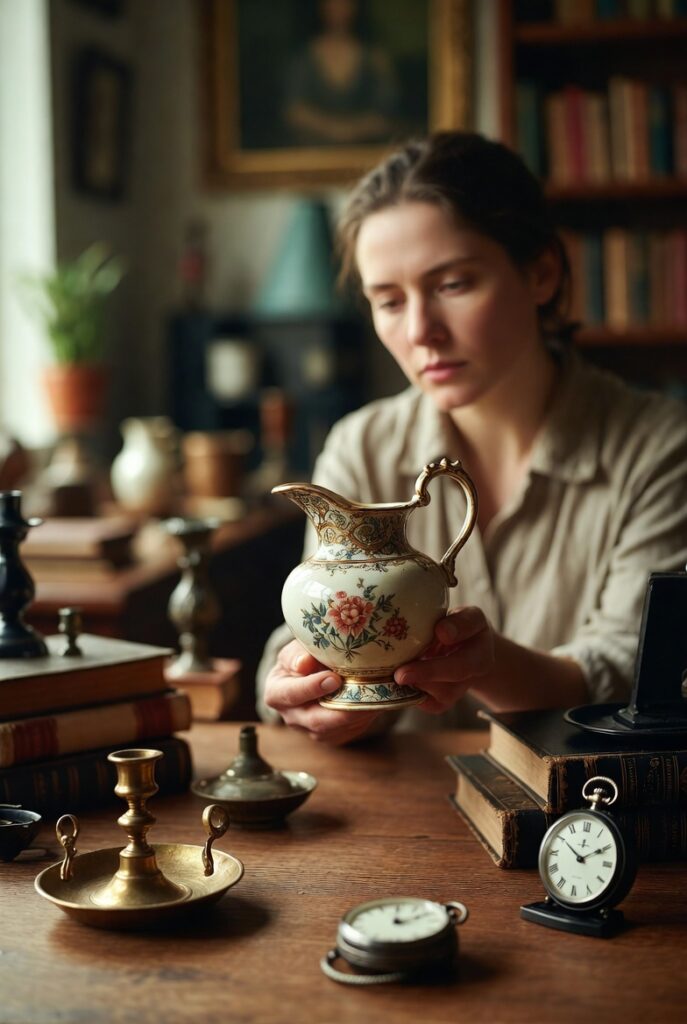
An online antique appraisal is an estimate of your item’s value obtained through digital means – whether through AI-powered apps, expert review of submitted photos, or your own research using online databases.
Types of Online Appraisals:
| Type | How It Works | Speed | Cost |
|---|---|---|---|
| AI-Powered Apps | Upload photo, get instant analysis | Seconds | Free/Freemium |
| Expert Review | Submit photos, wait for specialist | 1-7 days | Free to $50+ |
| Self-Research | Search databases for comparables | Hours | Free |
| Community Input | Post to forums, get opinions | Hours to days | Free |
Each method has strengths and weaknesses. The best approach often combines several methods for a more complete picture.
Step 1: Gather Information About Your Item
Before seeking any appraisal, collect as much information as possible about your antique. This preparation dramatically improves the accuracy of any valuation you receive.
Document What You Know
Write down everything you know about the piece:
Provenance (History):
- Where did you get it?
- How long has it been in your family?
- Do you know any previous owners?
- Is there any documentation (receipts, letters, photos)?
Physical Details:
- What is it made of? (wood type, metal, fabric)
- What are the dimensions?
- Are there any marks, stamps, or signatures?
- What is the condition?
Any Stories:
- Was it used by someone notable?
- Does it have historical significance?
- Are there any family legends about it?
Examine for Identifying Marks
Carefully inspect your item for any identifying information:
Where to Look:
- Underneath and on the bottom
- Inside drawers and cabinets
- On the back
- Under cushions or upholstery
- On metal hardware
- Around hinges and locks
What to Look For:
- Maker’s marks or stamps
- Signatures or initials
- Patent numbers or dates
- Paper labels (even partial)
- Impressed marks in wood
- Painted or stenciled numbers
Document any marks you find with clear, close-up photographs.
Step 2: Take High-Quality Photographs
The quality of your photos directly determines the quality of your online appraisal. Poor photos lead to poor estimates – or no estimate at all.
Essential Photo Checklist
Take these photos for every item:
1. Overall Front View
- Straight-on, at eye level
- Entire item visible
- No distracting background
2. Overall Back View
- Same angle as front
- Shows construction details
- Reveals any labels or marks
3. Top View
- Especially important for tables, desks
- Shows surface condition
- Reveals any damage
4. Bottom/Underside View
- Critical for furniture
- Often contains marks and labels
- Shows construction methods
5. Detail Shots
- Close-ups of any marks or signatures
- Hardware details
- Decorative elements
- Joinery (dovetails, etc.)
6. Condition Documentation
- Any damage (chips, cracks, stains)
- Repairs or alterations
- Wear patterns
- Missing elements
7. Scale Reference
- Include a ruler or common object
- Helps appraisers judge size
- Prevents misunderstandings
Photo Quality Tips
Lighting:
- Natural daylight is best
- Avoid direct sunlight (creates harsh shadows)
- No flash (causes glare)
- Even lighting from multiple angles
Background:
- Plain, neutral background
- White or gray works best
- Remove clutter
Camera Settings:
- Highest resolution available
- Focus on the item
- Keep camera steady
- Use tripod for detail shots
Common Mistakes to Avoid:
- Blurry images
- Too dark or too bright
- Distracting backgrounds
- Missing important angles
- Photos too small or compressed
Step 3: Choose Your Appraisal Method
Now you’re ready to seek an appraisal. Here are your main options, in order of speed and convenience:
Option A: AI-Powered Instant Appraisal
Best For: Quick estimates, preliminary screening, on-the-go identification
The fastest way to get an online antique appraisal is through AI-powered apps like Antique Identifier.
How It Works:
- Download the app to your iPhone
- Open the app and point camera at your antique
- Take a clear photo
- AI analyzes the image instantly
- Receive identification, period, style, and value estimate
Advantages:
- Results in seconds
- No waiting for human response
- Works anytime, anywhere
- Consistent methodology
- Good for screening multiple items
Limitations:
- Best for common categories
- Very rare items may need human expert
- Condition assessment limited to visible issues
Pro Tip: Use AI appraisal as your first step, then verify with other methods for valuable items.
Option B: Expert Online Appraisal Services
Best For: Items you believe are valuable, when you need documentation
Several services connect you with human experts who review your photos and provide valuations.
Free or Low-Cost Options:
Auction House Evaluations:
- Heritage Auctions (ha.com)
- Sotheby’s
- Christie’s
- Regional auction houses
Most major auction houses offer free preliminary evaluations for items they might sell. Submit photos through their websites.
How to Submit:
- Create account on auction house website
- Navigate to “Sell” or “Consignment” section
- Upload photos and description
- Wait 3-7 days for response
- Receive estimate (if they’re interested)
What to Expect:
- Response only if item suits their sales
- Estimates based on auction potential
- May receive consignment invitation
- No obligation to sell
Option C: Research-Based Self-Appraisal
Best For: Learning, building expertise, common items
You can research your item’s value yourself using online resources.
Step-by-Step Research Process:
1. Identify Your Item First, figure out exactly what you have:
- Use Antique Identifier app for quick ID
- Search image databases
- Compare to museum collections
- Research any marks found
2. Find Comparable Sales Search for similar items that have actually sold:
eBay Sold Listings:
- Go to eBay.com
- Search for your item type
- Click “Filter” → “Show Only” → “Sold Items”
- Compare condition and features
- Note actual sale prices (not asking prices)
Auction Results:
- LiveAuctioneers.com (free registration)
- Invaluable.com
- Christie’s past results
- Sotheby’s past results
Price Guides:
- Kovels.com (limited free access)
- WorthPoint.com (subscription, free trial)
- Miller’s Antiques Price Guide
3. Analyze Comparables When reviewing comparable sales:
- Match the period and style closely
- Consider condition differences
- Note size variations
- Account for regional preferences
- Look at multiple sales, not just one
4. Adjust for Your Item Your item may be worth more or less than comparables:
Worth MORE if:
- Better condition
- Original finish intact
- Has provenance
- Rare variation
- Desirable maker
Worth LESS if:
- Damage or repairs
- Refinished
- Missing parts
- Common variation
- Unknown maker
Option D: Community-Based Appraisals
Best For: Unusual items, getting multiple opinions, learning
Online communities can provide free opinions from knowledgeable collectors.
Where to Post:
Reddit:
- r/whatsthisworth (dedicated to valuations)
- r/Antiques (general antiques)
- r/vintage (20th century items)
- r/Mid_Century (mid-century modern)
Facebook Groups:
- Search for groups related to your item type
- “Antique Appraisal” groups
- Collector-specific groups
How to Post Effectively:
- Include all essential photos
- Describe what you know
- Mention any marks found
- State what you’re hoping to learn
- Be patient and gracious with responses
What to Expect:
- Multiple opinions (which may conflict)
- Varying expertise levels
- Usually helpful and informative
- Not professional appraisals
Step 4: Interpret Your Results
Once you’ve gathered appraisal information, you need to interpret it correctly.
Understanding Value Types
Different appraisals measure different things:
Retail Replacement Value:
- What you’d pay at a reputable dealer
- Used for insurance purposes
- Highest value type
- NOT what you’d get selling
Fair Market Value:
- What a willing buyer pays a willing seller
- Neither under pressure
- Used for donations, estates
- Middle-ground value
Auction Estimate:
- What item might sell for at auction
- Given as a range (low-high)
- Actual results vary widely
- Doesn’t include buyer’s premium
Quick Sale/Liquidation Value:
- What you’d get selling fast
- Dealer buying for resale
- Lowest value type
- Often 20-50% of retail
Reconciling Different Estimates
If you got multiple appraisals, they may vary. Here’s how to interpret:
When Estimates Agree:
- Good confidence in the range
- Probably accurate assessment
- Proceed with confidence
When Estimates Differ Slightly:
- Average them for reasonable estimate
- Consider which source is most expert
- Look for outliers and understand why
When Estimates Differ Dramatically:
- One source may have misidentified
- Condition assessment may differ
- Research further before deciding
- Consider professional in-person appraisal
Step 5: Decide on Next Steps
Based on your online appraisal results, decide what to do next:
If Value Is Low (Under $100)
- Keep and enjoy if you like it
- Sell casually (yard sale, Facebook Marketplace)
- Donate if you don’t want it
- No need for formal appraisal
If Value Is Moderate ($100-$1,000)
- Consider selling online (eBay, Etsy, 1stDibs)
- Get second opinion if unsure
- Research selling venues for your category
- Formal appraisal usually not needed
If Value Appears High ($1,000-$5,000)
- Get additional opinions
- Consider professional appraisal
- Research best selling venues
- Auction houses may be interested
- Insurance coverage recommended
If Value Appears Very High ($5,000+)
- Professional in-person appraisal strongly recommended
- Authentication may be needed
- Contact major auction houses
- Update insurance coverage
- Consider climate-controlled storage
- Document provenance thoroughly
Common Mistakes to Avoid
Mistake #1: Relying on One Source
Never make major decisions based on a single appraisal. Get multiple opinions, especially for valuable items.
Mistake #2: Confusing Asking Prices with Values
Just because someone lists an item for $5,000 doesn’t mean it’s worth $5,000. Look at SOLD prices, not asking prices.
Mistake #3: Ignoring Condition Issues
That chip or crack you’re overlooking might reduce value by 50% or more. Be honest about condition.
Mistake #4: Overvaluing Sentimental Items
Your grandmother’s treasured piece has emotional value to you, but the market doesn’t care about sentiment. Be realistic.
Mistake #5: Cleaning Before Appraisal
Don’t clean, polish, or “improve” your item before appraisal. You might destroy valuable patina or evidence of authenticity.
Mistake #6: Expecting Precision
Appraisals are estimates, not exact science. A range of $800-$1,200 doesn’t mean the item is worth exactly $1,000.
Mistake #7: Assuming Old Equals Valuable
Age alone doesn’t determine value. Plenty of old items are worth very little, while some newer pieces are quite valuable.
Special Considerations by Category
Different types of antiques have different appraisal considerations:
Furniture
Key Factors:
- Period and style accuracy
- Original vs. refinished
- Structural integrity
- Regional origin
- Maker attribution
Best Appraisal Methods:
- AI app for quick identification
- Auction house for high-end pieces
- Regional auction for American pieces
Ceramics and Pottery
Key Factors:
- Maker’s marks crucial
- Condition critical (no cracks/chips)
- Pattern identification
- Provenance helps
Best Appraisal Methods:
- Mark research databases
- Specialist auction houses
- Collector communities
Silver and Metalware
Key Factors:
- Hallmarks determine origin/date
- Weight (for melt value minimum)
- Maker identification
- Condition of plating (if applicable)
Best Appraisal Methods:
- Hallmark reference guides
- Silver specialists
- Weight-based minimum calculation
Art and Paintings
Key Factors:
- Artist attribution crucial
- Provenance essential
- Condition (professional assessment needed)
- Subject matter
Best Appraisal Methods:
- Artist database research
- Auction house specialists
- Professional appraisers for significant works
Jewelry
Key Factors:
- Precious metal content
- Stone quality and authenticity
- Maker/designer marks
- Period and style
Best Appraisal Methods:
- Gemologist for stones
- Precious metal testing
- Jewelry auction specialists
Building Your Appraisal Skills Over Time
The more you learn, the better you’ll become at evaluating antiques yourself:
Ongoing Education:
- Study authenticated pieces at museums
- Attend auction previews
- Read price guides regularly
- Join collector organizations
- Use apps like Antique Identifier to practice identification
Track the Market:
- Prices change over time
- Follow auction results in your areas of interest
- Note trends in popularity
- Understand economic impacts on antiques market
Develop Specialization:
- Focus on specific categories
- Build deep expertise in your interests
- Network with other collectors
- Become the expert others consult
Frequently Asked Questions
How accurate are free online antique appraisals?
Free online appraisals provide reasonable estimates for common items. Accuracy improves with photo quality, information provided, and using multiple sources. For items worth over $1,000, professional appraisal is recommended.
Can I get an online appraisal for insurance purposes?
Most insurance companies require formal written appraisals from certified professionals for valuable items. Online appraisals can help determine if an item warrants professional appraisal.
How long does an online antique appraisal take?
It depends on the method:
- AI apps: Instant (seconds)
- Auction house review: 3-7 days
- Community responses: Hours to days
- Self-research: 1-3 hours
What information should I provide for the best appraisal?
Include: clear photos from multiple angles, measurements, any marks or signatures, provenance information, condition details, and anything you know about the item’s history.
Should I mention what I paid for an item?
Generally no. What you paid shouldn’t influence the appraisal. Let the appraiser evaluate objectively.
Conclusion
Getting an online antique appraisal is easier than ever, and with the right approach, you can get reliable value estimates without spending money on professional appraisers.
Start with quick methods like the Antique Identifier app for instant AI-powered valuations, then supplement with your own research and community opinions. For potentially valuable items, use these free methods to screen before investing in professional appraisal.
Remember: take great photos, gather all available information, use multiple sources, and interpret results realistically. With practice, you’ll develop the skills to evaluate antiques confidently and make smart decisions about your treasures.

Leave a Reply