

You’ve got an antique item sitting in front of you. Maybe you found it at a garage sale, inherited it from a relative, or discovered it hiding in your own basement. The question burning in your mind: what is this thing actually worth?
Antique item value identification doesn’t have to be complicated or expensive. With the right approach, you can get a reliable estimate of your item’s value in minutes rather than days. This guide will show you quick, practical methods to identify what your antiques are worth – whether you’re at home, at an estate sale, or browsing an antique shop.
The 5-Minute Value Assessment
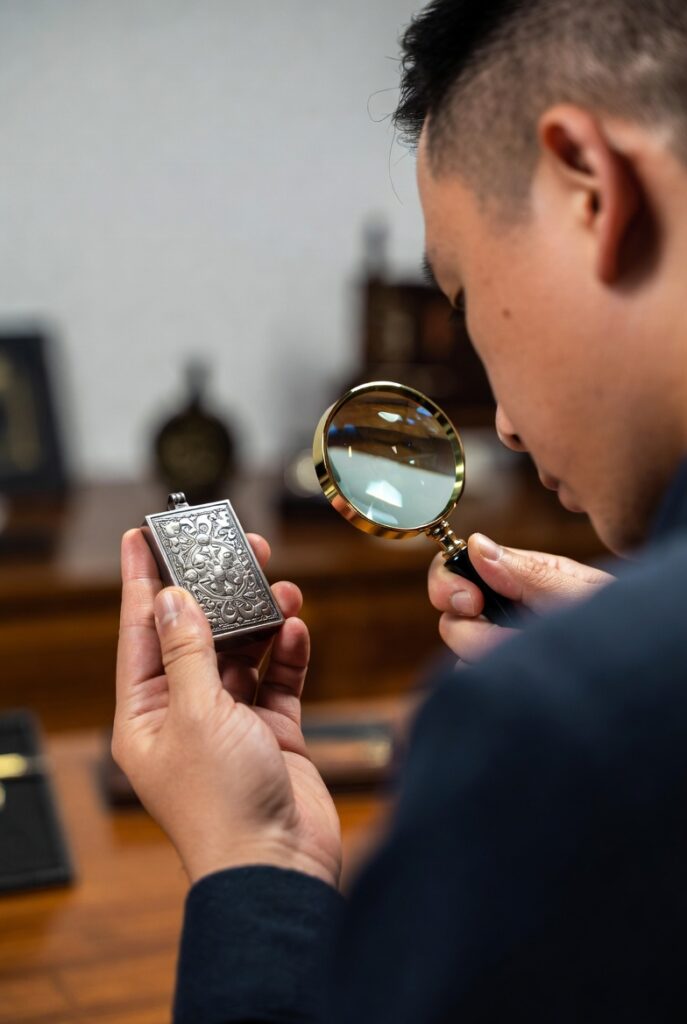
When you need a quick answer, follow this rapid assessment process:
Step 1: Identify What You Have (1 minute)
Before you can value something, you need to know what it is. Ask yourself:
- What type of item is it? (furniture, pottery, silver, etc.)
- What era does it appear to be from? (Victorian, Art Deco, Mid-Century)
- What country or region? (American, English, French, Asian)
- Who made it? (look for marks, signatures, labels)
Quick Identification Tip: Use the Antique Identifier app to snap a photo and get instant identification. The AI recognizes styles, periods, and often specific makers within seconds.
Step 2: Assess Condition (1 minute)
Condition dramatically affects value. Do a quick visual check:
Excellent: No damage, original finish, all parts present Good: Minor wear, small repairs acceptable, mostly original Fair: Noticeable wear or damage, may need restoration Poor: Significant damage, missing parts, needs major work
A piece in excellent condition might be worth 3-4x more than the same item in fair condition.
Step 3: Check for Marks (1 minute)
Look for identifying marks that can reveal maker and origin:
Where to Look:
- Bottom or underside
- Inside drawers
- Back of piece
- On hardware or fittings
- Around hinges and locks
What to Look For:
- Maker’s stamps or signatures
- Country of origin marks
- Patent numbers or dates
- Retailer labels
- Impressed or painted marks
Photograph any marks you find – they’re crucial for accurate valuation.
Step 4: Quick Value Research (2 minutes)
Now get a ballpark value:
Fastest Method: Use Antique Identifier app for instant AI-powered valuation based on your photo.
Alternative Method:
- Open eBay on your phone
- Search for your item type
- Filter by “Sold Items”
- Find similar pieces
- Note the actual sale prices
You now have a preliminary value range in under 5 minutes.
Understanding Value Types
Before diving deeper, understand that “value” means different things:
| Value Type | What It Means | When Used |
|---|---|---|
| Retail Value | Price at antique shop | Insurance, replacement |
| Auction Value | What it sells for at auction | Selling at auction |
| Fair Market Value | Price between willing parties | Estates, donations |
| Quick Sale Value | Fast cash price | Need to sell immediately |
Typical Relationships:
- Retail = highest (100%)
- Auction = 60-80% of retail
- Fair Market = 50-70% of retail
- Quick Sale = 25-40% of retail
When someone asks “what’s it worth?” – clarify which type of value they mean.
Detailed Value Identification by Category
Different antique categories require different approaches. Here’s how to value the most common types:
Furniture Value Identification
Key Value Factors:
- Period authenticity – Is it genuinely from the claimed era?
- Original condition – Original finish worth 2-3x refinished
- Quality of craftsmanship – Fine details vs. mass production
- Wood type – Mahogany, walnut more valuable than pine
- Maker attribution – Known makers command premiums
- Regional origin – Philadelphia, Newport pieces more valuable
- Form rarity – Unusual forms worth more than common
Quick Furniture Valuation:
| Quality Level | Typical Value Range |
|---|---|
| Museum quality, documented maker | $10,000 – $100,000+ |
| High quality, period piece, original | $2,000 – $15,000 |
| Good quality, period, some issues | $500 – $3,000 |
| Decorative, later or reproduction | $100 – $800 |
| Common, poor condition, reproduction | $25 – $200 |
Ceramics and Pottery Value Identification
Key Value Factors:
- Maker/Factory – Meissen, Wedgwood, Rookwood = premium
- Condition – Chips and cracks devastate value
- Rarity – Unusual patterns, limited production
- Size – Larger pieces often worth more
- Decoration quality – Hand-painted vs. transfer print
- Age – 18th century vs. 20th century
Reading Pottery Marks:
- Look at the base/bottom
- Check for factory marks, pattern numbers
- Note any artist signatures
- Photograph marks clearly
Red Flags:
- “Made in” (usually 20th century)
- “Microwave Safe” (definitely modern)
- Perfect condition on supposedly old piece
- Marks that don’t match the style
Silver Value Identification
Key Value Factors:
- Material – Sterling (.925) vs. silverplate vs. coin silver
- Maker – Tiffany, Gorham, Paul Revere = high value
- Weight – More silver = base minimum value
- Condition – Dents, repairs, worn plate reduce value
- Form – Unusual forms more desirable
- Date – Earlier generally more valuable
Reading Silver Marks:
- “Sterling” or “925” = solid sterling silver
- “EPNS” or “Silverplate” = plated, much less valuable
- Lion passant (walking lion) = British sterling
- Hallmarks indicate date and place
Quick Silver Value Calculation:
- Weigh the item in troy ounces
- Check current silver spot price
- Sterling minimum = weight × spot price × 0.925
- Add premium for maker, age, artistry
Example:
- 10 oz sterling candlesticks
- Silver at $25/oz
- Melt value: 10 × $25 × 0.925 = $231
- Actual value with maker premium: $400-800+
Art and Paintings Value Identification
Key Value Factors:
- Artist – Known artists = exponentially higher value
- Subject matter – Portraits, landscapes, scenes
- Size – Larger often more valuable (to a point)
- Condition – Damage severely impacts value
- Provenance – Exhibition history, notable ownership
- Medium – Oil vs. watercolor vs. print
Quick Art Assessment:
- Look for signature (usually lower corners)
- Check back for labels, gallery stickers
- Assess condition (no tears, discoloration)
- Research artist name online
- Search auction records for comparable sales
Warning: Art valuation is complex. For anything potentially valuable, consult a specialist before selling.
Jewelry Value Identification
Key Value Factors:
- Materials – Gold karat, platinum, gemstone quality
- Maker/Designer – Cartier, Tiffany, Van Cleef = premium
- Period – Art Deco, Victorian, Georgian
- Condition – Missing stones, broken clasps
- Style – Currently fashionable styles sell better
Reading Jewelry Marks:
- 14K, 18K, 585, 750 = gold content
- PT, PLAT, 950 = platinum
- Sterling, 925 = silver
- Check inside bands, clasps, backs
Gemstone Considerations:
- Natural vs. synthetic vs. simulant
- Treatment status affects value
- Size (carat weight)
- Quality (color, clarity, cut)
Note: Valuable jewelry should be appraised by a gemologist for accurate valuation.
Collectibles Value Identification
Key Value Factors:
- Condition – Mint in box worth multiples of loose
- Rarity – Limited editions, production errors
- Completeness – All parts, accessories, packaging
- Documentation – Certificates, original receipts
- Current demand – Trends affect collectible values significantly
Quick Collectible Research:
- Identify exactly what you have (model, year, variation)
- Search eBay sold listings
- Check specialized collector sites
- Note condition differences in comparables
- Consider current market trends
Collectible Categories with Strong Markets:
- Vintage toys (especially unopened)
- Sports memorabilia
- Comic books (graded copies)
- Coins and currency
- Vintage watches
- First edition books
Advanced Value Identification Techniques
Once you’ve mastered the basics, these techniques provide more accurate valuations:
Comparable Sales Analysis
The most reliable valuation method uses actual recent sales:
Finding Comparables:
- Auction databases – LiveAuctioneers, Invaluable
- eBay sold listings – Great for common items
- Price guides – WorthPoint, Kovels
- Dealer websites – 1stDibs sold items
Analyzing Comparables:
- Match period, style, form closely
- Adjust for condition differences
- Consider sale venue (auction vs. retail)
- Use recent sales (within 12-24 months)
- Average multiple results
Adjustment Factors:
| Your Item vs. Comparable | Adjustment |
|---|---|
| Better condition | +15-30% |
| Worse condition | -15-50% |
| Original finish vs. refinished | +50-100% |
| With provenance vs. without | +10-25% |
| Complete vs. missing parts | +20-40% |
The Rarity Assessment
Rarity significantly impacts value:
Questions to Determine Rarity:
- How many were originally made?
- How many survive today?
- Is this a common or unusual form?
- Are there special features or variations?
- Is the maker known for this type of work?
Rarity Impact on Value:
| Rarity Level | Value Impact |
|---|---|
| Unique (one of a kind) | Highest premium |
| Very rare (< 10 known) | 3-5x common examples |
| Rare (< 100 known) | 2-3x common examples |
| Uncommon (limited production) | 1.5-2x common |
| Common (mass produced) | Baseline value |
Provenance Research
History of ownership can add significant value:
What Adds Value:
- Ownership by notable person
- Part of important collection
- Exhibition history
- Publication in books or catalogs
- Documented chain of ownership
How to Research Provenance:
- Examine all labels and markings
- Check family records if inherited
- Search auction records for prior sales
- Look for exhibition or collection stamps
- Research any names or locations found
Market Timing
Values fluctuate based on market conditions:
Currently Strong Markets:
- Mid-century modern
- Asian antiques
- Fine jewelry
- Quality early American furniture
- Original condition pieces
Currently Softer Markets:
- Victorian brown furniture
- Formal dining sets
- China and crystal sets
- Common Depression glass
- Heavily carved Renaissance revival
Timing Considerations:
- Sell when your category is “hot”
- Buy when categories are unfashionable
- Long-term collectors benefit from patience
- Trends cycle – today’s unpopular is tomorrow’s collectible
Common Value Identification Mistakes
Avoid these errors that lead to wrong valuations:
Mistake #1: Using Asking Prices
The Error: Looking at what sellers ASK rather than what items SELL for.
Reality: Anyone can ask any price. Only SOLD prices matter.
Fix: Always filter for completed/sold listings. Check actual auction results.
Mistake #2: Ignoring Condition
The Error: Assuming your damaged piece is worth the same as perfect examples.
Reality: A chip on porcelain can reduce value 50%. Refinished furniture worth fraction of original finish.
Fix: Honestly assess condition and adjust expectations accordingly.
Mistake #3: Wishful Attribution
The Error: Assuming your piece is by a famous maker without evidence.
Reality: Most antiques are anonymous. Maker attribution requires proof.
Fix: Only claim attributions you can document. “Style of” is not “made by.”
Mistake #4: Outdated Information
The Error: Using price guides from 10 years ago.
Reality: The antiques market changes. Some categories have crashed; others have soared.
Fix: Use recent sales data only (within 24 months).
Mistake #5: Emotional Valuation
The Error: Believing your item is worth more because of personal attachment.
Reality: The market doesn’t care about your memories. Value is what someone will pay.
Fix: Pretend you’re valuing someone else’s item. Be objective.
Mistake #6: Single Source Reliance
The Error: Basing your valuation on one opinion or one comparable.
Reality: Outlier sales happen. Single opinions can be wrong.
Fix: Gather multiple data points. Cross-reference sources.
Quick Reference: Value Identification Checklist
Use this checklist for any antique item:
Initial Assessment:
- [ ] Identified item type and category
- [ ] Determined approximate era/period
- [ ] Assessed overall condition (A-E grade)
- [ ] Photographed from all angles
- [ ] Documented any marks or signatures
Research Phase:
- [ ] Used AI app for instant identification
- [ ] Searched eBay sold listings
- [ ] Checked auction database results
- [ ] Found 3-5 comparable sales
- [ ] Noted price range from comparables
Value Refinement:
- [ ] Adjusted for condition differences
- [ ] Considered rarity factors
- [ ] Checked current market trends
- [ ] Determined value type needed
- [ ] Arrived at realistic value range
Next Steps Determined:
- [ ] Keep for personal enjoyment
- [ ] Sell (chosen venue)
- [ ] Get professional appraisal
- [ ] Insure for appropriate value
Technology Tools for Value Identification
Modern tools make value identification faster and more accessible:
AI-Powered Apps
The Antique Identifier app offers instant identification and valuation:
Features:
- Photo-based identification
- Period and style recognition
- Maker mark identification
- Value estimates from comparable sales
- Historical context and information
Best Uses:
- Quick screening at estate sales
- Identifying unfamiliar items
- Getting preliminary values
- Learning about antiques
- Building collection documentation
Online Databases
Free Options:
- eBay sold listings
- LiveAuctioneers (free search)
- Invaluable (free search)
- Google image search
Subscription Services:
- WorthPoint ($30/month)
- Kovels (various tiers)
Professional Resources
When to Use:
- Items appearing worth $5,000+
- Insurance documentation needed
- Legal or tax purposes
- Authentication questions
- Complex or unusual items
Putting It All Together
Here’s the complete process for antique item value identification:
For Quick Decisions (5 minutes)
- Snap photo with Antique Identifier app
- Get instant identification and value range
- Make informed decision
For Important Items (30-60 minutes)
- Document thoroughly with photos
- Research marks and maker
- Find 5+ comparable sales
- Adjust for condition and features
- Determine realistic value range
For High-Value Items
- Complete all above steps
- Get professional appraisal
- Consider auction house consultation
- Document provenance thoroughly
- Insure appropriately
Frequently Asked Questions
How do I know if my antique is valuable?
Signs of potentially valuable antiques include: quality craftsmanship, known maker marks, original condition, unusual form, documented history, and current market demand. Use the methods in this guide to assess these factors.
What’s the fastest way to identify antique value?
The Antique Identifier app provides instant AI-powered identification and valuation from a photo. For free alternatives, eBay sold listings give quick market data.
Should I clean my antique before getting it valued?
Generally no. Cleaning can damage patina, remove evidence of age, and reduce value. Light dusting is fine, but avoid polishing, scrubbing, or using chemicals.
Why do different sources give different values?
Values vary based on: value type (retail vs. auction), condition assessment differences, comparable selection, and market timing. This is normal – use multiple sources and expect a range.
When should I get a professional appraisal?
Get professional appraisal when: item appears worth $5,000+, you need insurance documentation, legal/tax purposes require it, authentication is uncertain, or you’re considering major auction sale.
Conclusion
Antique item value identification is a skill anyone can develop. Start with quick methods – AI apps and eBay sold searches – to get ballpark values fast. For more significant items, invest time in thorough research using multiple sources.
Remember: value is ultimately what someone will pay. Use the methods in this guide to arrive at realistic expectations, and you’ll make better decisions whether you’re buying, selling, or simply curious about what your antiques are worth.
The Antique Identifier app makes the process faster than ever – try it free and see how quickly you can identify and value your antiques.

Leave a Reply