

10K means 10-karat gold: 10 of 24 parts, about 41.7%, are pure gold. 417 and 10KT mean the same, 10KP means plumb, and 10K GF means gold filled, not solid.
The stamp is a claim about fineness made by whoever struck it. It tells you what the metal should be, and the letters around it tell you whether the piece is solid gold alloy or a thin gold layer over another metal. A 10K stamp with GF, RGP or a fraction such as 1/20 is not solid gold, even though the number is the same.
What does 10K mean on gold?
10K means the metal is a gold alloy in which 10 of every 24 parts by weight are pure gold, which works out to about 41.7%. The karat system divides an alloy into 24 parts, so each karat is one twenty-fourth of the whole, as the GIA study of gold testing methods explains in its box on gold nomenclature. The FTC Jewelry Guides treat 24 karat as fine gold (16 CFR 23.3), so 10K is real gold alloy, not plating, when the stamp is truthful.
The remaining 14 parts, about 58.3%, are other metals. The stamp itself says nothing about which other metals were used.
Is 10K still the lowest karat that can be called gold in the US? Not since 2018. Older versions of the FTC guides cautioned sellers against calling an alloy gold below set thresholds. The 2018 revision published in the Federal Register removed the gold threshold: sellers may now use gold terms for an alloy above or below 10 karats, provided they state an accurate karat fineness just as clearly.
10K, 10KT, 10KP and 417: what each stamp says
10K, 10KT and 417 all state the same fineness, while 10KP adds the maker’s claim that the gold tests to the marked karat. Read the whole stamp before deciding, because the letters after the number change the answer.
| Stamp | What it states | Solid gold alloy? |
|---|---|---|
| 10K, 10 K | 10 karat: 10 of 24 parts gold | Yes, if the stamp is true |
| 10KT, 10 Kt | The same 10 karat; Kt is another abbreviation for karat | Yes, if the stamp is true |
| 417 | 10 karat written in parts per thousand (417 per 1,000) | Yes, if the stamp is true |
| 10KP, 10K P | 10 karat plumb: tested to the marked fineness | Yes, if the stamp is true |
| 10K GF, 1/20 10K GF | Gold filled: a bonded 10K layer over base metal | No |
| 10K RGP, 10K GP, 1/40 10K | Rolled gold plate or gold plate: a thinner bonded 10K layer | No |
| 10K GE, 10K HGE, 10K GP | Gold electroplate or heavy gold electroplate (GP can mean this too) | No |
The FTC guides show karat written as “14 Kt. Gold”, “14Kt.” or “14 K.” in their own examples of acceptable marks (16 CFR 23.3), which is why KT and K stamps mean the same thing. The 417 stamp is the parts-per-thousand form: GIA describes alloys of 417 parts per thousand as 41.7% or 10k gold (GIA, Gems & Gemology).
What the P in 10KP means
The P stands for plumb. Lang Antiques defines plumb gold as an alloy that tests to be the same fineness as the marking on the item, within a very small tolerance. A P does not mean plated.
Plumb marks probably mattered most under the old law. The National Gold and Silver Stamping Act originally let an unsoldered gold article fall up to one-half karat below its stamp, as Stuller’s summary of the Act notes. A 1976 amendment replaced the half karat with three parts per thousand (15 U.S.C. 295), and that change took effect on October 1, 1981. Today the allowed shortfall for every karat stamp is three parts per thousand in gold without solder, and seven parts per thousand when solder is assayed with the whole article (watchcases and flatware stay at three parts per thousand even with solder). So a P adds little to a modern piece and does not date a piece on its own.
10K GF, 1/20 10K, GP and HGE: not solid gold
A 10K stamp next to GF, RGP, GP, GE or HGE, or after a fraction such as 1/20, means a layer of 10K gold over another metal, not a solid 10K piece. The FTC guides set the meaning of each term (16 CFR 23.3):
- Gold filled (GF): a gold alloy layer bonded by mechanical means that makes up at least 1/20th of the weight of the metal in the entire article.
- Rolled gold plate (RGP) or gold overlay: the same bonded layer when it makes up at least 1/40th of the weight of the metal in the entire article, with the fraction stated.
- Gold electroplate (GE, GEP): an electroplated layer with a minimum thickness throughout equivalent to 0.175 microns of fine gold.
- Heavy gold electroplate (HGE): an electroplated layer of at least two and one half microns of fine gold.
GP on its own can mean either kind of layer, because the FTC guides allow the term Gold Plate both for a bonded layer of at least 1/40th and for an electroplate.
So 1/20 10K GF means the 10K layer is one twentieth of the metal weight, and at that legal minimum the pure gold in the whole piece is only about 2.1% of its weight. Federal law also bars a plated article from carrying a gold fineness mark unless words such as gold filled or gold plate go with it (15 U.S.C. 297). Our guide to GP, GF and HGE gold-plated hallmarks shows how those marks look on real pieces and what they are usually worth.
What do the letters next to 10K mean?
Letters beside a 10K stamp (readers ask about groups such as ASK, NG, CI, ALI, SR and CAL) are usually a maker or importer mark, because US law requires one next to a gold quality stamp on pieces made or imported from mid-1962. A 1961 amendment added the rule to 15 U.S.C. 297, and it took effect on the first day of the third month after October 4, 1961. Under it, a manufacturer or dealer who applies a gold quality mark to an article that is mailed, imported or shipped across state lines must apply either a trademark that is registered, or applied for, in the US, or the name of that person.
Stuller’s summary of the Act puts it simply: if a quality mark appears, so must the trademark. The trademark has to be applied by the same means as the quality mark and positioned as close as possible to it. That is why a short group of letters often sits right beside the 10K. The rule covers pieces made or imported from six months after that effective date, so older jewelry can lawfully carry a karat stamp with no maker mark.
Short letter groups are hard to attribute safely, because several firms can use similar initials over the decades. Look the letters up rather than guessing:
- Copy the letters exactly, in order, including any symbol beside them.
- Search them in the USPTO trademark search system and keep only results that cover jewelry.
- Treat a match as a lead, not proof. A mark that was never registered in the US will not appear there.
Where is the 10K stamp on a ring?
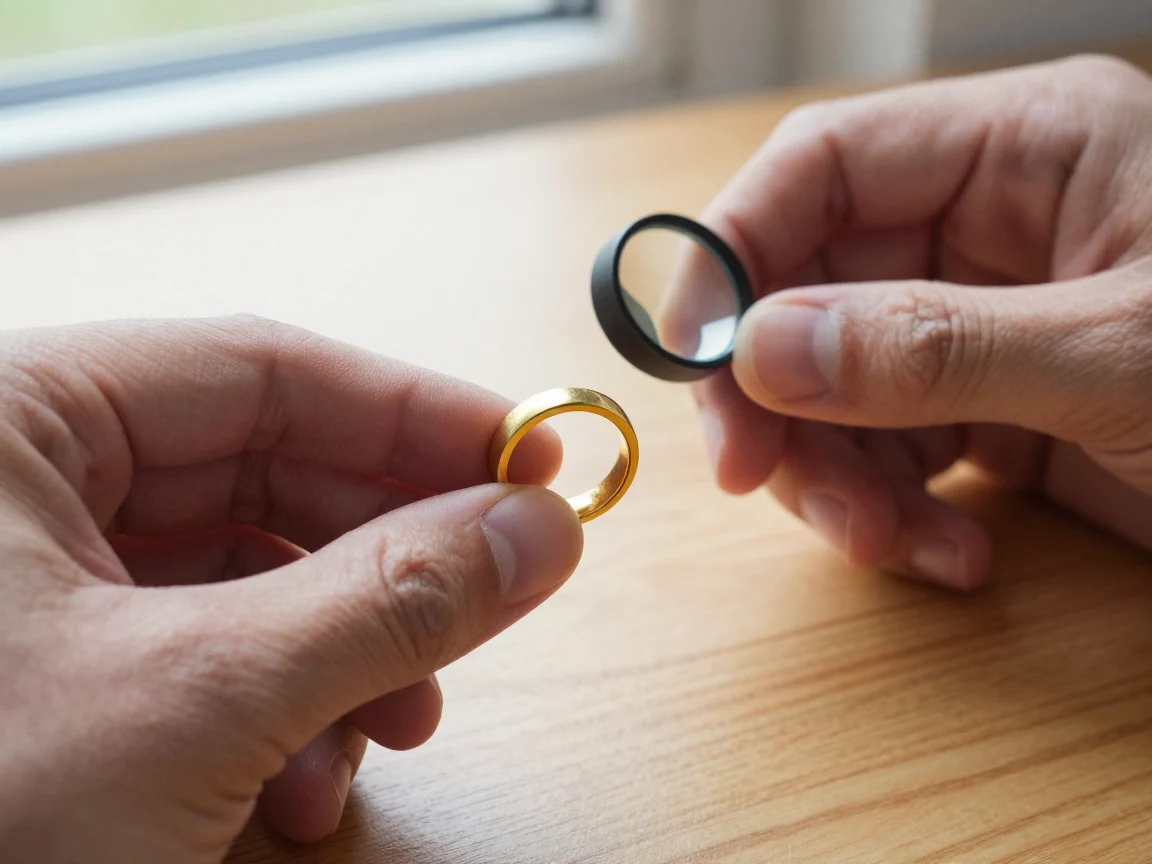
On a ring, look on the inside of the band, often near the bottom of the shank. Turn the ring under a bright light and use a 10x loupe, because a worn stamp shows up best when the light rakes across it.
On other jewelry, check the clasp or the small tag beside it on chains and bracelets, the back plate or pin of a brooch and the post or clip of an earring. Our guide to where to look for hallmarks and maker’s marks covers the usual spots, and dating jewelry by clasp type helps when the clasp is the only part that is marked.
A ring with no stamp is not automatically fake. US law never required a quality mark in the first place; it only controls a mark once it is applied (Stuller). Wear and resizing can also erase a stamp, so an unmarked band needs a test, not a verdict.
Does a 10K stamp prove the gold is real?
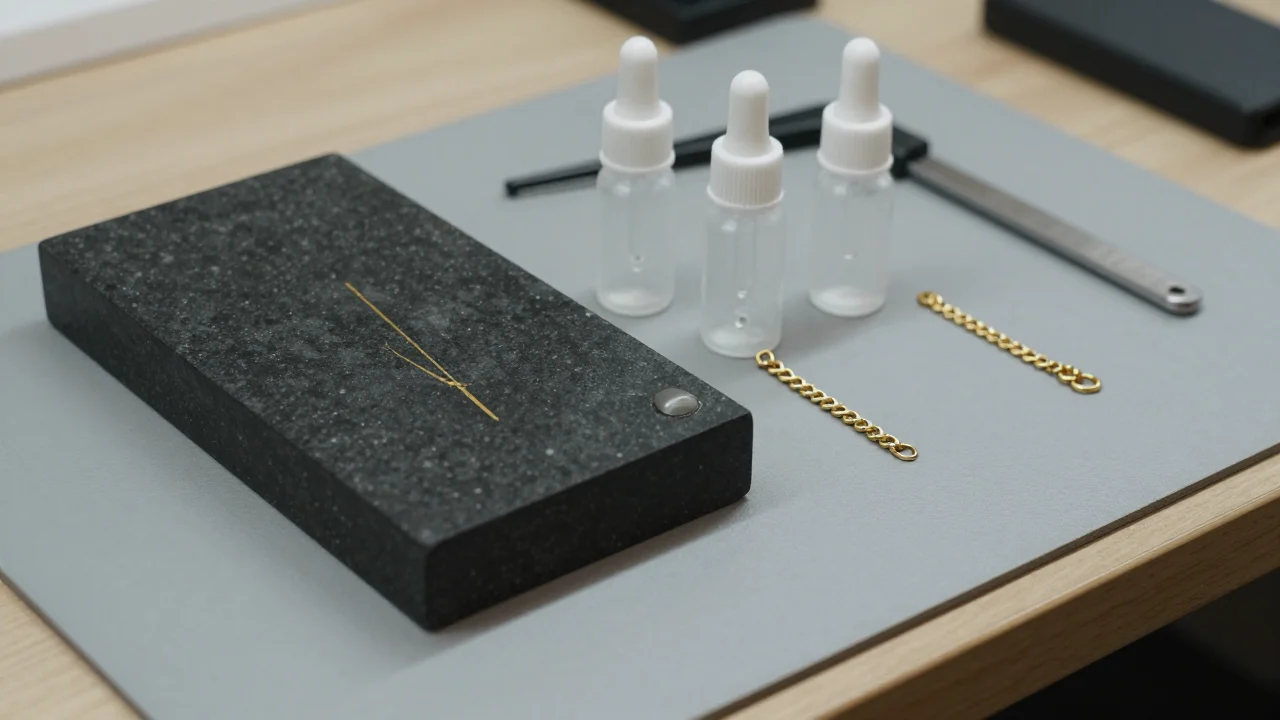
No. A 10K stamp is a claim made by whoever struck it, and GIA has documented both false hallmarks and gold plating that fooled an XRF reading.
- In one case, a 14K-marked bracelet had its hallmark on a separate piece of metal glued or otherwise attached to the bracelet. Testing showed electroformed gold over a wax or resin fill, and GIA believes it was being sold as solid 14K gold.
- In another, GIA found that coating 10K gold with a precise amount of gold plating can make an XRF analyzer read the alloy as 14K or 18K without detecting the plating.
Home checks only screen out the obvious. Quicktest’s guide to gold testing notes that if an item is magnetic it can’t be gold or silver, but not being magnetic proves nothing, because copper, a common base under gold plate, is not magnetic either. Color is no better: GIA’s comparison photo shows 10k, 14k and 18k pieces that look alike (GIA, Gems & Gemology).
Real tests need a jeweler or assayer:
- Acid test: the tester files a small spot first, such as the inside of a ring shank, so the acid reaches the metal under any plating. It leaves a small mark.
- XRF: fast and does not mark the surface, but GIA notes that thick plating and electroforming may not be detected by XRF methods alone.
For a piece you plan to sell or insure, ask for an XRF reading plus a check for plating at a worn or filed spot.
10K vs 14K gold: what is the difference?
14K gold is 14 of 24 parts pure gold, about 58.3%, against 41.7% in 10K, so a 14K piece carries about 40% more gold than a 10K piece of the same weight. The table compares common US karats.
| Karat | Gold parts | Gold content | Parts per thousand |
|---|---|---|---|
| 10K | 10 of 24 | 41.7% | 417 |
| 14K | 14 of 24 | 58.3% | 583 |
| 18K | 18 of 24 | 75.0% | 750 |
GIA’s worked example in its nomenclature box gives the 14K figure as 583 parts per thousand (GIA, Gems & Gemology). For the next step up, see our 14K gold hallmark chart and our explainer on what 18K, 750 and 18ct mean.
How much is 10K gold worth?
The metal value of a solid 10K piece is its weight in grams, times 0.4167, times the current gold price per gram. Anything a piece earns above that comes from its maker, design, age or stones, not from the stamp.
- Weigh the piece in grams on a kitchen or jewelry scale. Stones add weight that is not gold, so the result is an upper bound for set pieces.
- Multiply by 0.4167 to get grams of pure gold. A 5 gram solid 10K ring holds about 2.08 grams of pure gold.
- Look up the gold price. The LBMA Gold Price is set twice daily. If your price source quotes per troy ounce, divide by 31.1035 to get a price per gram, because one troy ounce is 31.1034768 grams.
- Multiply the grams of pure gold by the price per gram.
Treat the result as a ceiling for a scrap offer, not as the offer itself. Do not run this formula on 1/20 10K GF or plated pieces: their gold is a thin layer, so melt value is a small fraction of the weight. For older pieces where age and maker can matter more than metal, our guide to Victorian gold hallmarks explains how to read the rest of the marks.
What to do with your 10K piece now
Three steps will tell you what you actually have:
- Read the full stamp under a loupe. Note every letter and fraction: 10K alone means solid alloy, while GF, RGP, GP, GE, HGE or a fraction such as 1/20 means a gold layer.
- Look up the letters beside it. Search them in the USPTO trademark database to find the maker or importer. On a piece made after mid-1962, a karat stamp with no trademark is a reason for extra caution; older pieces may lack one legitimately.
- Test before you sell or insure. Ask a jeweler for an XRF reading and a plating check, then use weight times 0.4167 times the gold price per gram as the metal ceiling.
