The Kangxi reign mark is a six-character Chinese reign mark, but most pieces bearing it are apocryphal, not genuinely Kangxi-period (1662–1722). Chinese potters routinely wrote reign marks from admired earlier emperors onto later wares as a sign of respect, not deception. Knowing the difference separates a $40,000 genuine piece from a $400 decorative reproduction.
What exactly is a Kangxi reign mark?
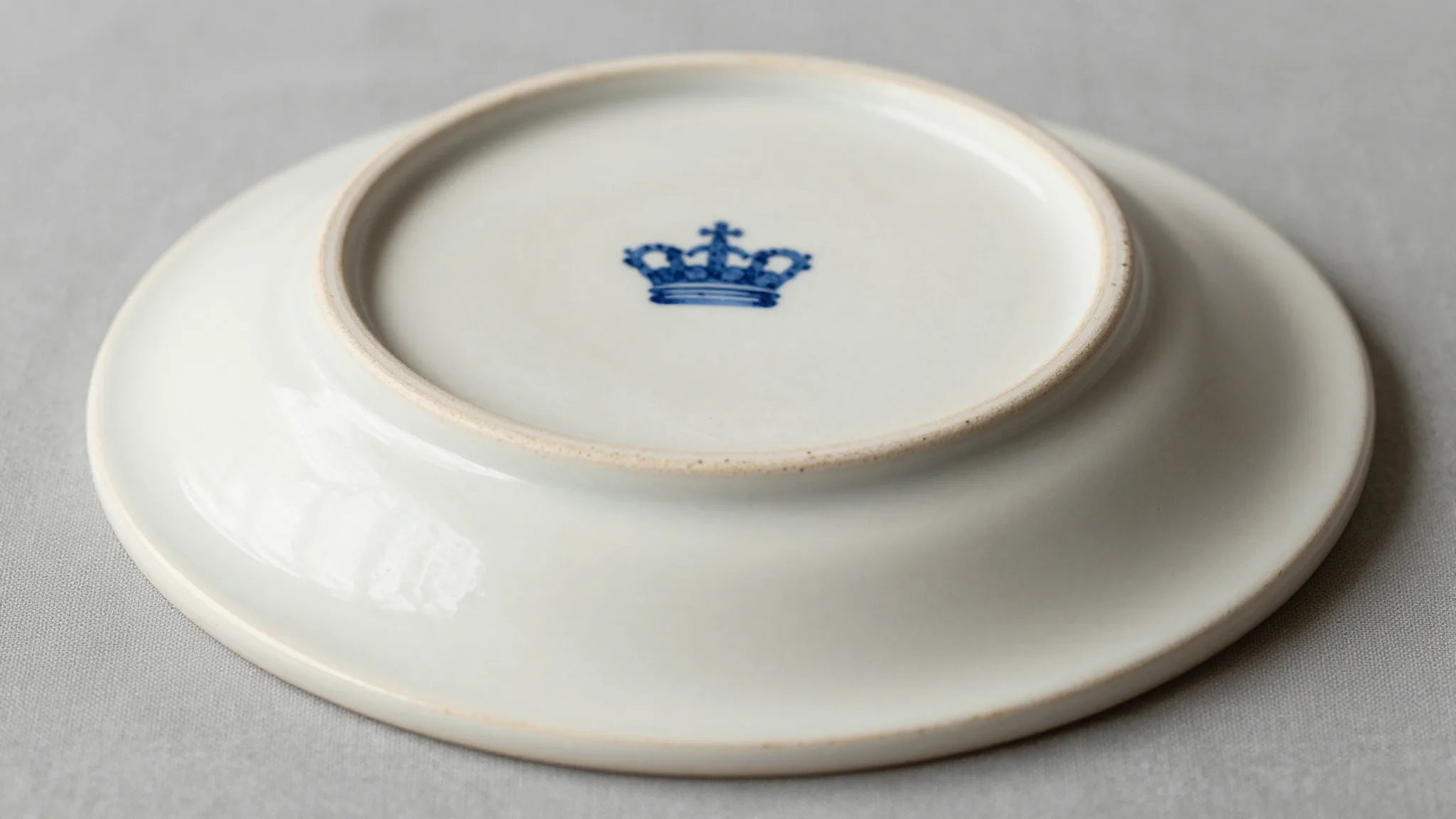
A reign mark is a set of Chinese characters painted or incised onto the base of a ceramic piece. It identifies the emperor during whose reign the piece was made.
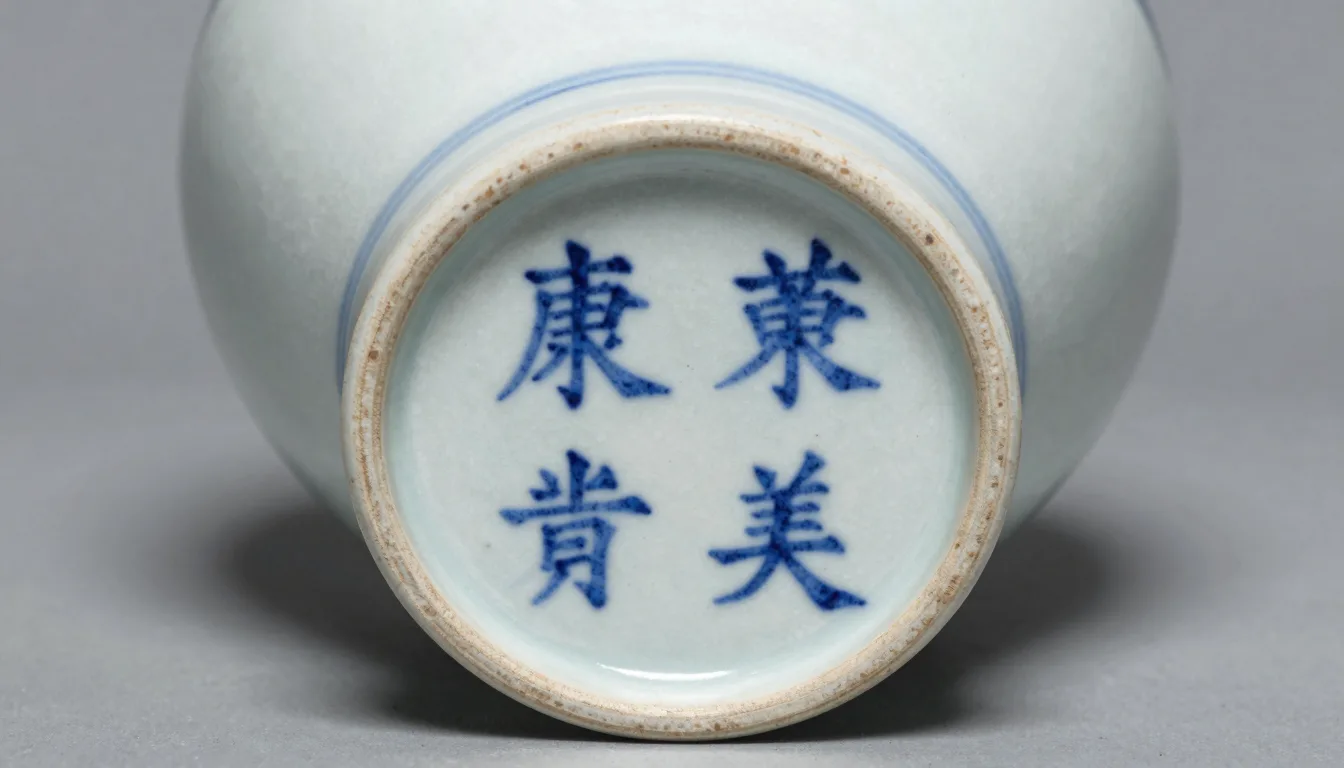
The Kangxi reign mark reads 大清康熙年製: Dà Qīng Kāngxī Nián Zhì. Translated literally: “Made in the reign of Kangxi of the Great Qing.”
Kangxi ruled from 1662 to 1722. His reign is considered the golden age of Chinese porcelain production. The Metropolitan Museum of Art holds outstanding documented examples that show what genuine Kangxi-period painting and glaze quality look like.
The mark appears most commonly in two columns of three characters each. It reads top to bottom, right column first. That arrangement is the standard six-character format used across the Qing dynasty.
A four-character version also exists, dropping the first two characters (大清, “Great Qing”). Both formats are documented on genuine period pieces. Any seasoned collector knows to check which format appears before drawing conclusions.
Apocryphal marks: what they are and why they exist
An apocryphal mark is a reign mark from one period written onto a piece made in a different period. This is the single most important concept when evaluating Chinese porcelain marks.
Chinese potters did not view apocryphal marks as forgery. Writing Kangxi’s mark on an 18th or 19th-century piece expressed admiration for Kangxi-period craftsmanship. It was cultural reverence, not fraud.
The Yongzheng Emperor (1722–1735) actually banned the use of imperial reign marks on commercial wares for a time. Potters responded by substituting earlier marks, including Kangxi, to sidestep the restriction. This is one documented reason apocryphal Kangxi marks appear on Yongzheng-period pieces.
By the 19th century, Kangxi marks appeared on wares produced across the Qing dynasty. Republican-period pieces (1912–1949) also carry them. Some 20th-century export wares bear Kangxi marks with zero pretense of being period pieces.
This is why our antique marks and signatures identification guide stresses reading the mark as one data point, never the only data point. Glaze, form, foot-rim treatment, and painting style all speak louder than the mark itself.
How to read the mark: character by character
Breaking down the six characters removes a lot of mystery. Here is the full breakdown:
| Position | Character | Pinyin | Meaning |
|---|---|---|---|
| 1 (top right) | 大 | Dà | Great |
| 2 | 清 | Qīng | Qing (dynasty) |
| 3 | 康 | Kāng | Kangxi (first char) |
| 4 | 熙 | Xī | Kangxi (second char) |
| 5 | 年 | Nián | Year / Reign |
| 6 (bottom left) | 製 | Zhì | Made |
The four-character version omits 大清 and begins directly with 康熙年製.
Genuine Kangxi marks from the period itself show considerable variation in brushwork. Early Kangxi marks can appear quite rough. Mid-period marks become more confident and even. Late Kangxi marks are notably refined.
Potters in the 19th century often copied the mark from pattern books. That copying produced unnaturally uniform, almost mechanical-looking characters. If the brushwork looks too perfect and too consistent, that is a red flag, not a green one.
The Victoria & Albert Museum reference collection includes documented period marks that show the natural variation in genuine Kangxi brushwork. Cross-referencing against those images is genuinely useful.
Not sure what you’ve got?
Snap a photo and let our AI identify any antique in seconds: free download, no sign-up.
Identify on iPhone → Learn MoreThe same reading order applies to every Qing reign, and the chart of six-character marks from Kangxi to Guangxu shows which script each emperor’s potters favored.
Authentic Kangxi marks: physical characteristics to check
Genuine Kangxi-period marks show specific physical traits. Check each one before drawing any conclusion.
Cobalt blue tone. Genuine Kangxi underglaze blue has a distinctive bright, slightly violet-tinged blue. Later copies often appear greyer or flatter. The cobalt source changed in the 19th century, and the color difference is visible under good natural light.
Double-ring enclosure. Many genuine Kangxi marks sit inside a double-circle border drawn in underglaze blue. The rings should be fluid and confident, hand-drawn in a single pass. Hesitation marks, wobbles from over-correction, or mechanical-looking rings suggest a later date.
Foot-rim quality. Turn the piece over and examine the foot-rim. Genuine Kangxi pieces typically show a carefully trimmed, beveled foot-rim with fine, tightly packed porcelain paste visible at the cut edge. Coarser paste at the foot-rim edge points toward later manufacture.
Glaze pooling inside the foot. On genuine period pieces, the interior base often shows a slight pooling of glaze, sometimes called a “tear” or “chicken skin” texture in collecting circles. This results from the specific firing temperatures used in Kangxi-period kilns.
No mark depth on transfer-print pieces. Some 19th and 20th-century pieces carry Kangxi marks that were transfer-printed rather than hand-painted. Under a loupe, transfer marks show a fine dot pattern. Hand-painted marks show directional brushstrokes. That distinction alone eliminates thousands of later pieces.
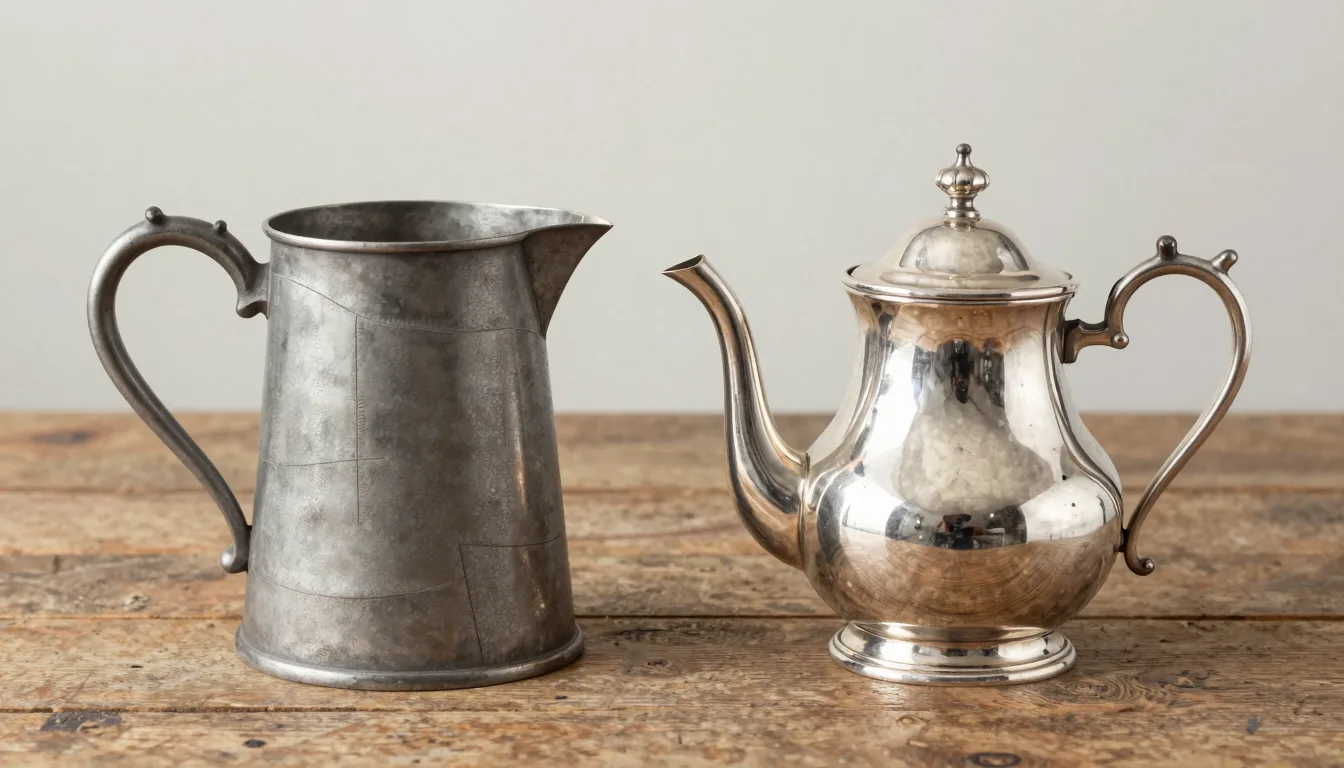
For broader context on how marks work across different materials, the post on identifying pewter vs silver shows how different craft traditions use marks, useful background for any collector building cross-material literacy.
Apocryphal vs authentic: side-by-side comparison
A direct comparison helps. This table covers the most diagnostic differences collectors check in hand:
| Feature | Genuine Kangxi Period (1662–1722) | Apocryphal / Later Mark |
|---|---|---|
| Cobalt blue color | Bright, violet-tinged blue | Grey, flat, or unnaturally vivid |
| Brushwork | Confident, natural variation | Overly uniform or visibly hesitant |
| Double-ring border | Fluid single-pass strokes | Corrected, mechanical, or absent |
| Foot-rim | Finely trimmed, beveled, tight paste | Coarser paste, less precise trim |
| Glaze interior | Subtle pooling, slight texture | Flat, even, glassy interior |
| Body weight | Dense, resonant when tapped | Can feel lighter or heavier |
| Painting style | Disciplined, period-specific motifs | Mixed period motifs, copied imagery |
| Transfer printing | Never, all hand-painted | Common from mid-19th century on |
No single row settles the question. Collectors use this table as a scoring system: the more boxes that point one direction, the stronger the conclusion.
The Smithsonian’s collections include comparative Chinese ceramics that let you calibrate your eye against documented museum-grade examples. That kind of direct visual calibration is worth more than any checklist.
Valuation: does an apocryphal mark kill the price?
An apocryphal Kangxi mark does not automatically make a piece worthless. Context is everything.
A well-painted Yongzheng-period piece bearing an apocryphal Kangxi mark is still a Yongzheng-period piece. It carries Yongzheng-period value, which is considerable. The mark is simply read correctly as a period convention rather than a maker’s claim.
A 19th-century piece with an apocryphal Kangxi mark and excellent famille rose enameling still has meaningful collector value. Serious collectors who understand the mark’s context buy these confidently.
The pieces that lose value are late copies produced purely for export or decoration: thin-walled, transfer-printed, with flat cobalt and no foot-rim quality. Those exist in enormous quantities. Their apocryphal Kangxi marks are neither period reverential nor period convincing.
For context on how to weigh mark-based value against material value, the post on silver melt value vs antique value covers the same underlying principle across a different category. The mark is one input, never the whole story.
WorthPoint maintains a large sold-auction database for Chinese porcelain. Running comparables for specific forms (a specific vase shape, a specific motif) gives real pricing context that generic mark identification cannot.
Kovel’s also covers Chinese export porcelain with price guides that differentiate by period and quality tier. Worth checking before any significant purchase decision.
Getting a confident identification: practical next steps
Start with the physical checks covered above. Handle the piece in natural light. Use a 10x loupe minimum. 20x is better for brushwork analysis.
Document every observable characteristic before reaching for outside help. Photograph the mark straight-on with a macro lens or close-up phone camera. Photograph the foot-rim edge, the interior base, and at least two painted decoration details.
For self-guided digital identification, the Antique Identifier App lets you photograph the mark and run it against a porcelain marks database immediately. It handles Kangxi marks specifically, including distinguishing six-character from four-character formats.
For formal appraisal, specialist Chinese ceramics auction house departments (Christie’s, Sotheby’s, Bonhams) offer free initial assessments for consignment candidates. For pieces below auction-house thresholds, independent appraisers certified through the American Society of Appraisers are the right call. The best online antique appraisal sites post covers digital appraisal options that work well for initial screening.
Museum reference visits remain underused by collectors. The Metropolitan Museum of Art Chinese ceramics galleries in New York are free and include pieces with documented Kangxi-period marks on public display. An hour there recalibrates your eye faster than any written guide.
The honest conclusion: Kangxi reign marks appear on an enormous range of Chinese porcelain spanning nearly three centuries. Reading them correctly, as one characteristic among many, is what separates collectors who get burned from collectors who find genuine treasure.
Frequently Asked Questions
Are all Kangxi reign marks on antique porcelain genuine period pieces?
No. The vast majority of pieces bearing a Kangxi reign mark are apocryphal, made in later periods but marked with Kangxi’s reign designation as a sign of artistic respect. Chinese potters used earlier reign marks across the Yongzheng, Qianlong, and later Qing periods as a conventional practice. Genuine Kangxi-period pieces are relatively rare and command significant premiums. Authentication requires examining cobalt tone, brushwork, foot-rim quality, and glaze characteristics, not just the mark itself.
What does 大清康熙年製 mean in English?
大清康熙年製 translates as ‘Made in the reign of Kangxi of the Great Qing.’ The six characters break down as: 大 (Great), 清 (Qing dynasty), 康熙 (Emperor Kangxi’s name), 年 (year/reign), 製 (made). The mark reads in two columns of three characters, top to bottom, right column first. A shorter four-character version, 康熙年製, drops the 大清 prefix and appears on both genuine period pieces and later apocryphal wares.
How can I tell if a Kangxi mark is hand-painted or transfer-printed?
Examine the mark under a 10x or stronger loupe. A hand-painted mark shows visible directional brushstrokes: slight variations in line weight, natural tapering at stroke ends, and occasional minor inconsistencies. A transfer-printed mark shows a uniform dot matrix pattern under magnification, with no brushstroke directionality. All genuine Kangxi-period marks (1662–1722) are hand-painted. Transfer printing on Chinese export porcelain became common in the mid-19th century, so any transfer-printed Kangxi mark is definitively post-period.
Does an apocryphal Kangxi mark make a piece worthless?
Not at all. An apocryphal Kangxi mark simply means the piece was made in a later period. It does not strip the piece of its own period value. A well-executed Yongzheng or Qianlong piece with an apocryphal Kangxi mark is still valued on its own period merits and quality. Problems arise only with mass-produced 19th or 20th-century export wares that combine apocryphal marks with poor glaze, transfer-printing, and low-quality paste. Read the mark correctly and value the piece on all its characteristics together.
Where can I see authenticated Kangxi-period porcelain to calibrate my eye?
The Metropolitan Museum of Art in New York and the Victoria & Albert Museum in London both hold documented Kangxi-period Chinese ceramics in their permanent galleries. The Met’s Chinese art galleries are free to visit and include pieces with confirmed provenance and period marks on public display. The V&A’s ceramics collection is similarly accessible. The Smithsonian collections database also provides high-resolution reference images online. Spending time with confirmed period examples, in person when possible, builds the visual memory that no written checklist can fully replace.
Identify any antique in seconds.
From silver hallmarks to porcelain maker marks, the app suggests the item type, period and a value range.