Category: Curio

Antique Identifier

  • Flea Market Silver Hunting: How to Spot Hidden Treasures Others Miss

    Flea Market Silver Hunting: How to Spot Hidden Treasures Others Miss

    Genuine antique silver can be identified by locating specific hallmarks, such as the word “Sterling,” “925,” or a lion passant symbol indicating British origin. True silver possesses a distinct, non-magnetic quality and a warm patina that differs from the harsh shine of modern chrome. Always check hidden areas like the base or inner rim for maker’s marks, as unmarked pieces are often merely silver plate over copper or brass.

    Imagine you are at a dusty estate sale in rural Pennsylvania, sorting through a tarnished box of forgotten flatware. Most people walk right past, assuming it’s worthless junk.

    But as an appraiser with 20 years in the field, I know that underneath that black tarnish might be a piece of Paul Revere coin silver or a rare Tiffany & Co. serving spoon from the 1890s. The thrill of the hunt is real, but you need to know what to look for before you buy.

    How can I tell if my flea market find is real silver or silver plate?

    A close-up macro shot of a tarnished spoon handle, clearly showing a tiny '925' stamp next to a maker's mark, illuminated with a flashlight. - Antique identification guide
    A close-up macro shot of a tarnished spoon handle, clearly showing a tiny ‘925’ stamp next to a maker’s mark, illuminated with a flashlight.

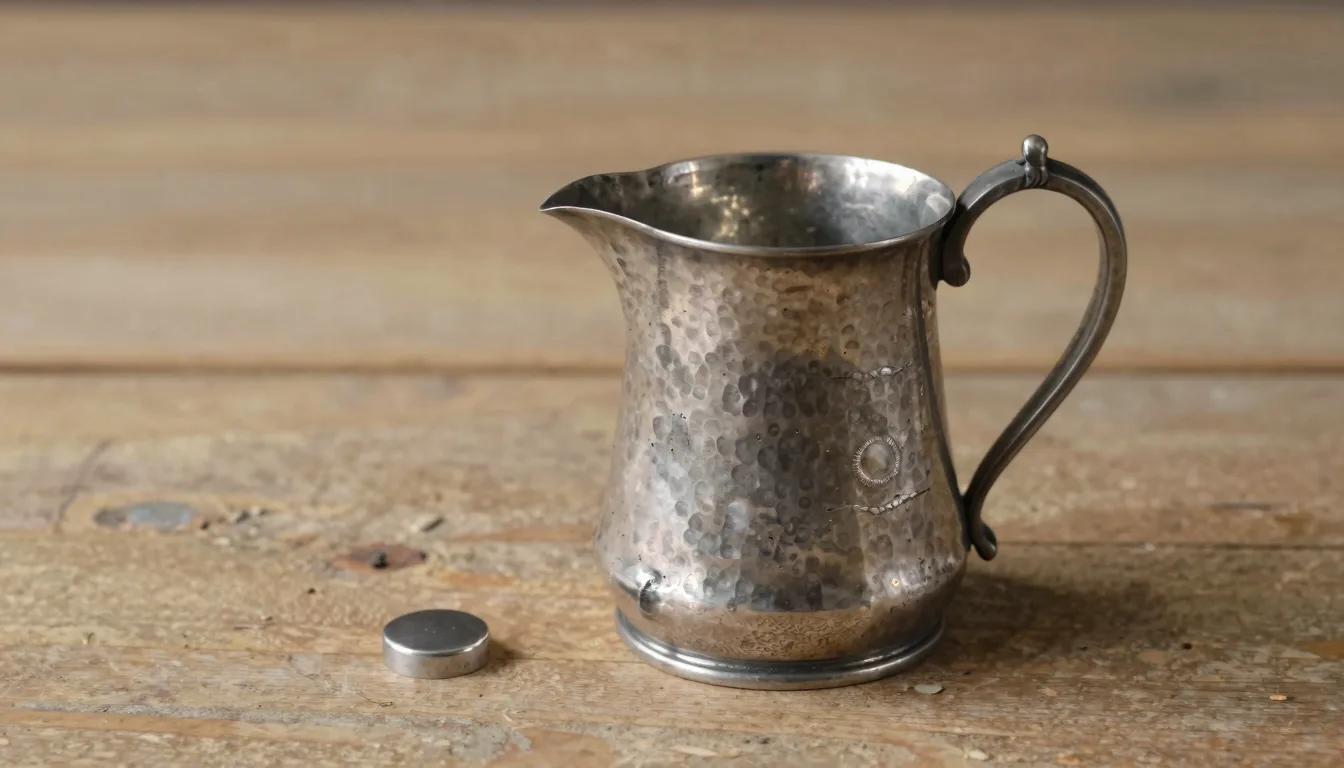
    The first step in authentication is the magnet test. Sterling silver is not magnetic. If a strong rare-earth magnet sticks to your find, put it back—it’s likely steel or iron underneath.

    Next, you need to look for hallmarks. In the US, the word “Sterling” was widely adopted after 1850. Before that, American silversmiths often used coin silver (90% pure) and marked pieces with “Coin” or “Pure Coin.”

    Identifying these marks manually can take hours. Using the Antique Identifier app, you can simply take a photo and get an instant result. It’s like having an expert in your pocket when you’re negotiating at an antique dealer’s booth.

    Where are the secret markings located on antique silver?

    A finger pointing to the underside rim of an ornate silver teapot, highlighting a row of four distinct British assay marks: a maker's mark, a lion passant, a leopard's head, and a date letter. - Antique identification guide
    A finger pointing to the underside rim of an ornate silver teapot, highlighting a row of four distinct British assay marks: a maker’s mark, a lion passant, a leopard’s head, and a date letter.

    You won’t always find marks dead center. You have to hunt for them. On flatware, check the back of the handle near the bowl or tines. On hollowware (like bowls and teapots), inspect the flat bottom rim or near the handle joints.

    If you find terms like “EPNS” (Electroplated Nickel Silver) or “A1,” you are looking at silver plate. While pretty, its fair market value is significantly lower than solid silver.

    This identification process is similar to what we cover in our guide on Sterling Silver vs. Silver Plate: The “Ice Cube” Test and More. Understanding the base metal is crucial for an accurate condition report.

    What are the common red flags for fake silver at an estate sale?

    A side-by-side comparison image: on the left, an authentic silver piece with a soft, warm, grayish-white patina; on the right, a heavily plated piece showing obvious brassy-yellow wear spots on the high edges. - Antique identification guide
    A side-by-side comparison image: on the left, an authentic silver piece with a soft, warm, grayish-white patina; on the right, a heavily plated piece showing obvious brassy-yellow wear spots on the high edges.

    Forgery detection is a major part of an appraiser’s job. One glaring red flag is the presence of peeling or flaking. Solid silver does not flake. If you see another metal (usually copper or brass) showing through the worn high points, it’s plated.

    Another issue is the smell. Rub the item vigorously with your thumb. If it smells strongly metallic or like old pennies, it’s likely base metal. Real silver has virtually no odor.

    • Pro Tip: Look at the crispness of the decoration. Cast fakes often have muddy, soft details, whereas genuine hand-chased silver features sharp, precise lines.
    • Pro Tip: Be wary of modern items stamped “925” but lacking a maker’s mark or country of origin. The collector market demands proper attribution before determining an auction estimate.

    How does condition affect the auction estimate and replacement value?

    An antique silver candlestick with severe dents and a poorly executed, messy solder repair on the base, demonstrating condition issues that negatively impact value. - Antique identification guide
    An antique silver candlestick with severe dents and a poorly executed, messy solder repair on the base, demonstrating condition issues that negatively impact value.

    A piece’s provenance and maker are important, but condition dictates the final appraisal. Deep scratches, monograms that have been aggressively buffed out, and amateur solder repairs plummet the replacement value.

    While heavy, black tarnish looks bad, it’s actually harmless and can be removed with proper conservation techniques. However, if a piece has been over-polished by a previous owner using harsh abrasives, the delicate assay marks might be rubbed away completely, making formal authentication nearly impossible.

    Proper restoration is best left to professionals. Don’t ruin a potential auction house find by taking a wire brush to it in your garage.

    Related Antique Identification Guides

    Expand your expertise with these related guides: Antique Teapot Identification: Finding English Silver and Ceramic Marks, Sterling Silver vs. Silver Plate: The “Ice Cube” Test and More, Decoding British Silver Hallmarks: How to Read the Lion and Anchor

    Don’t guess at your next estate sale.

    📱 Download Antique Identifier: Appraise

    Find hidden treasures instantly with AI-powered identification

  • How to Sell Antique Silver on eBay: A Guide to Getting the Best Price

    How to Sell Antique Silver on eBay: A Guide to Getting the Best Price

    Selling antique silver on eBay for the best price requires accurately identifying the metal content (sterling silver vs. silver plate), deciphering the maker’s hallmarks, providing high-quality photos, and writing a keyword-rich title. Authentic sterling silver will almost always bear a standard mark like “Sterling,” “925,” or specific pictorial assay marks depending on its country of origin.

    Imagine you are at a dusty estate sale in Pennsylvania, and you uncover a tarnished but heavy silver tea service. The seller doesn’t know what it is, but your trained eye catches a faint hallmark on the base. You buy it for a song, but now the real work begins: turning that thrift store find into a high-profit sale on the collector market. As an appraiser with decades of experience, I’ve seen countless sellers leave money on the table because they didn’t know how to present their silver properly. Let’s make sure you aren’t one of them.

    How Can I Tell If My Silver Is Real Before Selling?

    Before you even think about an auction estimate, you must establish the metal content. Is it sterling silver, coin silver (typically marked 900), or simply silver plate?

    Sterling silver is an alloy of 92.5% pure silver and 7.5% copper. Look for the word “Sterling” or the number “925” stamped into the piece. If you are dealing with British silver, you’ll need to look for a series of hallmarks, usually including a lion passant (the standard mark for sterling).

    A close-up, macro photograph showing a crisp 'Sterling 925' stamp and a maker's mark on the underside of a vintage silver spoon. - Antique identification guide
    A close-up, macro photograph showing a crisp ‘Sterling 925’ stamp and a maker’s mark on the underside of a vintage silver spoon.

    Silver plate, on the other hand, is a thin layer of silver applied over a base metal like copper or brass. Marks like “EPNS” (Electroplated Nickel Silver) or “A1” are dead giveaways. Selling silver plate as sterling is a quick way to ruin your reputation and face returns.

    Identifying these marks manually can take hours. Using the Antique Identifier app, you can simply take a photo and get an instant result.

    What Determines the Fair Market Value of Antique Silver?

    The fair market value on eBay is dictated by a combination of factors: the maker, the pattern, the weight (for scrap value), and the condition.

    Pieces by renowned makers like Tiffany & Co., Gorham, or Paul Revere command significant premiums. The pattern also matters; highly ornate Victorian patterns often sell better than plain designs.

    When creating your listing, always include the weight in troy ounces or grams. Many buyers calculate the “melt value” as a baseline. However, a rare piece with solid provenance or a desirable maker’s mark should sell for much more than its weight in silver.

    How Should I Photograph Silver to Maximize My Auction Estimate?

    Silver is notoriously difficult to photograph because it reflects everything—including you. Poor photos are the number one reason antique silver fails to reach its potential replacement value at auction.

    • Pro Tip: Use a light tent or a cloudy day to diffuse the light and eliminate harsh reflections.
    • Pro Tip: Never use your camera’s flash; it will wash out the details and marks.
    • Pro Tip: Take clear, macro shots of all assay marks, maker’s marks, and any monograms.
    A well-lit, professional photo of an antique silver teapot inside a light tent, showing soft reflections and clear details without any glare. - Antique identification guide
    A well-lit, professional photo of an antique silver teapot inside a light tent, showing soft reflections and clear details without any glare.

    Buyers need a virtual condition report. Document any dents, deep scratches, or areas where the plating is wearing off (if it’s silver plate). Honesty builds trust with the antique dealer and collector communities on eBay.

    Should I Polish Antique Silver Before Listing It?

    This is a controversial topic, but generally, yes, you should lightly polish silver before selling it on eBay.

    Tarnish hides the beauty of the piece and makes it harder to read the hallmarks. A gentle polish with a high-quality silver cream (never a harsh abrasive or dip) will reveal the luster.

    A side-by-side comparison photo of a silver fork; the left side is heavily tarnished and black, while the right side is gently polished to a soft gleam. - Antique identification guide
    A side-by-side comparison photo of a silver fork; the left side is heavily tarnished and black, while the right side is gently polished to a soft gleam.

    However, do not over-polish. Leave the dark tarnish (patina) in the recessed areas of the design. This contrast highlights the details and proves the item’s age. Aggressive restoration or conservation attempts by an amateur can destroy the value.

    What Are the Red Flags for Silver Forgeries?

    Forgery detection is crucial. As silver prices rise, so do the fakes.

    Be wary of marks that look mushy or cast rather than sharply stamped. Check the wear patterns; genuine antique silver will have fine, random scratches all over from decades of cleaning.

    If a piece feels unusually light or heavy for its size, or if it has a brassy undertone showing through the high points, it might be plated or a complete reproduction. This technique of careful observation is similar to what we cover in our guide on [Sterling Silver vs. Silver Plate: The “Ice Cube” Test and More].

    An extreme close-up showing the subtle, random micro-scratches (patina) on a genuine piece of antique silver, contrasted with a perfectly smooth modern reproduction. - Antique identification guide
    An extreme close-up showing the subtle, random micro-scratches (patina) on a genuine piece of antique silver, contrasted with a perfectly smooth modern reproduction.

    Always guarantee authentication to your buyers, and be prepared to accept returns if you make a mistake in your attribution.

    Related Antique Identification Guides

    Expand your expertise with these related guides: Antique Teapot Identification: Finding English Silver and Ceramic Marks, Sterling Silver vs. Silver Plate: The “Ice Cube” Test and More, Decoding British Silver Hallmarks: How to Read the Lion and Anchor

    By carefully identifying your pieces, taking professional photos, and writing accurate descriptions, you can transform your estate sale finds into profitable eBay sales. Remember, knowledge is your most valuable asset in the antique silver market.

    Don’t guess at your next estate sale.

    📱 Download Antique Identifier: Appraise

    Find hidden treasures instantly with AI-powered identification

  • Should You Sell Your Silver Now? Making Sense of Record-High Prices

    Should You Sell Your Silver Now? Making Sense of Record-High Prices

    With silver spot prices hitting historic highs in 2026, selling your antique silver depends heavily on its classification. Sterling silver (marked 925 or Sterling) and early American coin silver (90% purity) are commanding premium prices, while silver plate items retain value primarily through their maker and intricate design rather than melt value.

    Imagine you are at a dusty estate sale in Pennsylvania, eyeing a tarnished tea set tucked away in a cardboard box. The tag says $40, but the weight and the faint markings suggest it might be worth a small fortune.

    How can I tell if my antique silver is real sterling or just plated?

    A close-up macro shot of a tarnished silver spoon handle showing a clear 'STERLING' mark next to a maker's hallmark of a tiny lion - Antique identification guide
    A close-up macro shot of a tarnished silver spoon handle showing a clear ‘STERLING’ mark next to a maker’s hallmark of a tiny lion

    When you find silver at an estate sale, the first step is careful authentication. True sterling silver is an alloy containing 92.5% pure silver, often stamped with “925”, “Sterling”, or specific assay marks like the British walking lion.

    Silver plate, on the other hand, is a thin layer of silver over a base metal like copper or brass. If you see marks like “EPNS” (Electroplated Nickel Silver) or notice green tarnish showing through worn spots, it’s plated. A solid piece of sterling will feel heavier and won’t show a different metal underneath when deeply scratched.

    Identifying these marks manually can take hours. Using the Antique Identifier app, you can simply take a photo and get an instant result.

    What is the fair market value of my silver in today’s collector market?

    An appraiser's desk showing a digital scale, a jeweler's loupe, and a set of antique American coin silver spoons laid out for inspection - Antique identification guide
    An appraiser’s desk showing a digital scale, a jeweler’s loupe, and a set of antique American coin silver spoons laid out for inspection

    Determining the fair market value of your pieces involves more than just checking the daily spot price of silver bullion. While scrap value sets a strict baseline for sterling and coin silver, the true value lies in the item’s provenance, maker, and rarity.

    For instance, pieces by renowned makers like Tiffany & Co. or Paul Revere will fetch an auction estimate far exceeding their melt weight. This technique of valuing pieces based on specific maker history is similar to what we cover in our guide on evaluating early 20th-century artisan flatware.

    Pro Tips for Valuing Silver:

    • Check the condition: Severe dents or monogram removals hurt the value. A pristine condition report is vital for top dollar.

    • Avoid over-cleaning: Aggressive restoration can ruin the original patina. Proper, gentle conservation is preferred by any reputable antique dealer.

    • Look for rare forms: Unique serving pieces, like asparagus tongs or marrow scoops, often command higher prices than standard forks and knives.

    Are there secret markings located on antique silver?

    A detailed view of the underside of a silver teapot, highlighting a series of complex British hallmarks including a date letter, city mark, and maker's initials - Antique identification guide
    A detailed view of the underside of a silver teapot, highlighting a series of complex British hallmarks including a date letter, city mark, and maker’s initials

    Yes, and reading these hallmarks is absolutely crucial for proper attribution. British silver, for example, uses a standardized system of marks indicating the city, the specific year, the maker, and the purity.

    American silver is noticeably trickier. Before 1860, American silversmiths rarely used standard purity marks, making forgery detection a real challenge for novices. You must rely on the maker’s specific name stamp and the stylistic details of the piece. A formal appraisal from an expert is often necessary to confirm these early, unmarked treasures.

    If you suspect you have a rare piece, it’s always wise to consult an auction house to establish a proper replacement value for insurance purposes before making any quick decisions to sell.

    Where is the best place to sell my silver right now?

    A bustling live auction room with a screen displaying a high bid for a stunning antique silver candelabra - Antique identification guide
    A bustling live auction room with a screen displaying a high bid for a stunning antique silver candelabra

    The best venue depends entirely on what you possess. Common, mismatched flatware or heavily damaged sterling is often best sold for its exact scrap weight to a certified refiner.

    However, if you have highly desirable, intact antique pieces, a specialized auction house will give you access to the right, motivated collector market. Local antique shops might offer quick cash, but they need to build in a retail profit margin, so their upfront offers will naturally be lower.

    Related Antique Identification Guides

    Expand your expertise with these related guides: Antique Teapot Identification: Finding English Silver and Ceramic Marks, Sterling Silver vs. Silver Plate: The “Ice Cube” Test and More, Decoding British Silver Hallmarks: How to Read the Lion and Anchor

    Navigating the silver market requires a sharp eye and a solid foundation of historical knowledge. Whether you are cashing in on the high spot prices or carefully preserving a cherished family heirloom, understanding exactly what you hold is the first critical step. Stay vigilant, always check those tiny marks, and happy hunting.

    Don’t guess at your next estate sale.

    📱 Download Antique Identifier: Appraise

    Find hidden treasures instantly with AI-powered identification

  • Estate Sale Silver: How to Find Hidden Treasures and Avoid Overpaying

    Estate Sale Silver: How to Find Hidden Treasures and Avoid Overpaying

    Estate sale silver can be sterling, silver-filled, or electroplated, and the difference in value is enormous. Sterling silver is marked 925, STERLING, or carries a lion passant hallmark for British pieces. Silver plate is marked EPNS, A1, or has no stamp at all. Knowing where to look on flatware, hollowware, and candlesticks, and understanding what American versus English hallmarking systems mean, is the foundation of buying smart at any estate sale.

    AS
    Arthur Sterling
    Antique Identifier Editorial · April 21, 2026

    How Can I Tell if My Silver is Real Sterling or Just Plated?

    The most critical step in authentication is understanding the markings. Sterling silver is an alloy containing 92.5% pure silver. By law, modern and many antique pieces must carry a purity mark. Look closely at the underside, handles, or rims for tiny stamped impressions.

    If you see “EPNS” (Electroplated Nickel Silver), “A1, ” “Quadruple Plate, ” or “IS” (International Silver), you are looking at silver plate. While pretty, its auction estimate is usually minimal.

    Identifying these marks manually can take hours. Using the Antique Identifier app, you can simply take a photo and get an instant result.

    If you find a silver teapot at an estate sale, the guide on Antique Teapot Identification: Finding English Silver and Ceramic Marks walks through exactly where English assay office marks appear and what each symbol means.

    Where Are the Secret Markings Located on Antique Silver?

    Makers often hid their hallmarks to maintain the piece’s aesthetic flow. On flatware (spoons and forks), check the back of the handle near the bowl or tines. On hollowware (teapots, bowls), examine the flat bottom base or just under the top rim.

    Pro Tips for Mark Hunting:

    • Bring a 10x jeweler’s loupe to every sale.

    • Use your phone’s flashlight at an angle to cast shadows into worn marks.

    • Don’t scrub tarnished marks vigorously; improper cleaning ruins the condition report and requires expensive conservation.

    An over-the-shoulder perspective of an appraiser using a jeweler's loupe to examine the base of an ornate silver teapot at a crowded estate sale table. - Antique identification guide
    An over-the-shoulder perspective of an appraiser using a jeweler’s loupe to examine the base of an ornate silver teapot at a crowded estate sale table.

    If you are working through a mixed estate lot that includes ceramics alongside silver, the breakdown in Decoding Meissen Porcelain Marks: Real vs. Fake Crossed Swords applies the same mark-verification logic to another category where fakes are extremely common.

    What is the Market Value of Estate Sale Silver in 2026?

    The collector market dictates that value relies on maker, age, condition, and weight. A heavy Tiffany & Co. sterling tray from 1890 will command a premium replacement value compared to a lightweight, unmarked piece from the 1980s.

    Scrap value (the melt price of the raw silver) establishes the absolute floor price. However, rare attribution to makers like Paul Revere or Hester Bateman pushes the fair market value far beyond the metal’s weight.

    This valuation technique is similar to what we cover in our guide on How to Value Antique Side Tables: What Makes Them Worth $1, 000+?.

    Not sure what you’ve got?

    Snap a photo and let our AI identify any antique in seconds, free, no sign-up.

    Identify on iPhone → Learn More

    How Do I Spot Fakes and Alterations Before Buying?

    Forgery detection is a vital skill for any serious buyer. Unscrupulous sellers might graft a genuine hallmark from a small, cheap item (like a spoon) onto a larger, unmarked piece (like a jug) to artificially inflate its worth.

    Look for mismatched solder lines around the mark or areas where the silver color suddenly shifts. If a piece looks too perfect for its supposed 200-year age, trust your gut. Minor scratches and natural wear validate its history. Excessive restoration or deep machine-buffing strips away the original patina, drastically lowering an antique dealer‘s appraisal.

    A split-screen comparison image showing a genuine, naturally worn English silver hallmark on the left, next to a blatantly forged, freshly stamped and discolored mark on the right. - Antique identification guide
    A split-screen comparison image showing a genuine, naturally worn English silver hallmark on the left, next to a blatantly forged, freshly stamped and discolored mark on the right.

    Understanding the broader hallmarking tradition helps here, and Antique Pottery Marks: A Beginner’s Guide to European Hallmarks gives useful context on how European assay and maker systems work across different materials.

    Why Do I Need a Professional Appraisal for My Finds?

    If you score a major find, an official appraisal document is essential for insurance coverage. An expert will document the exact weight, date letters, maker’s marks, and current market conditions.

    Remember, an auction house requires solid proof of authenticity before accepting high-end consignments. Don’t rely entirely on guesswork when hundreds or thousands of dollars are on the line.

    A well-lit, professional layout showing a piece of antique silver resting on a velvet cloth next to a formal, typed appraisal document and a magnifying glass. - Antique identification guide
    A well-lit, professional layout showing a piece of antique silver resting on a velvet cloth next to a formal, typed appraisal document and a magnifying glass.

    After thirty years of picking through estate sale tables, the one thing I tell every new collector is this: learn to read the marks before you learn anything else about silver. Get a 10x loupe, memorize the difference between a lion passant and an EPNS stamp, and always weigh sterling flatware against the spot price before you haggle. Condition, maker, and provenance build value on top of that base, but if you cannot confirm sterling first, you are just buying shininess. The marks tell the whole story.

    Frequently Asked Questions

    What does 925 mean on silver?

    925 means the piece is sterling silver, composed of 92.5 percent pure silver and 7.5 percent alloy, usually copper. This is the international standard for sterling. You will find 925 stamped on American, Mexican, and most post-1970s European silver. Older British sterling does not use 925. It uses the lion passant symbol instead. If a piece says 900 it is coin silver, slightly lower purity, common in American pieces made before 1870. Anything below 800 is considered low-grade silver in most markets.

    How do I tell silver plate from sterling at an estate sale?

    Turn the piece over and look for stamps. Silver plate is marked EPNS (electroplated nickel silver), EP, A1, or SILVER SOLDERED. Sterling will say STERLING, 925, or carry British hallmarks including a lion passant. If there is no mark at all, assume plate until proven otherwise. Worn edges or copper showing through at high-contact points like spoon bowls or handle edges is a near-certain sign of plating. Plated pieces have collector value but almost no melt value.

    Where do I find hallmarks on antique silver flatware?

    On flatware, check the back of the handle near the neck, which is the narrow section just below where the blade or bowl starts. On spoons, look at the back of the handle near the top. British flatware often has four or five small punched marks in a row: a date letter, an assay office mark, a lion passant, and a maker’s initials. American sterling typically has a single STERLING stamp. Hollow handles on knives make marking trickier. Check the bolster area where the blade meets the handle.

    Is estate sale silver a good investment in 2026?

    Sterling silver flatware and hollowware are solid buys when purchased at or below melt value, which is calculated by multiplying the troy weight by the current spot price of silver and then by 0.925. Decorative pieces by known makers like Gorham, Tiffany, or Georg Jensen carry premiums well above melt. Plated silver has minimal investment value. The risk at estate sales is overpaying for plate thinking it is sterling. Do the math on melt value first, then factor in maker and condition premiums separately.

    What are the most common fakes or alterations in antique silver?

    The most common issues are transposed hallmarks, where genuine marks are cut from a broken piece and soldered into a different item, and added inscriptions that obscure damage. Bright-cut engraving on later pieces can be used to hide repairs. Sheffield plate, made before electroplating existed, is sometimes misrepresented as sterling. Marriages of pieces, such as a later lid on an earlier body, are also frequent. Check solder lines under a loupe near any joins, and make sure all hallmarks on a single piece share the same date letter if British.

    How much does a professional silver appraisal cost and is it worth it?

    A certified appraisal from an ASA or AAA accredited appraiser typically costs between 75 and 150 dollars per hour, or a flat fee per piece. For insurance or estate purposes, it is worth every dollar. For a buying decision at an estate sale, a quick consult with a silver dealer or a reference to a price guide like Kovel’s may be enough. Where an appraisal becomes essential is when you are looking at a Georg Jensen, Tiffany, or Gorham Martele piece where the maker premium can add thousands above melt value.

    Identify any antique in seconds.

    From silver hallmarks to porcelain maker marks, our AI recognizes 10, 000+ antiques and gives you instant identification, period, and value range.

    Download Free on iPhone See How It Works
    AS

    About Arthur Sterling

    Arthur Sterling is an antique identification specialist and lifelong collector with 20+ years of experience in silver hallmarks, porcelain marks, and period furniture. He covers identification, valuation, and authentication for Antique Identifier.

  • Best Places to Buy Antique Silver Online: Trusted Dealers & Auction Sites

    Best Places to Buy Antique Silver Online: Trusted Dealers & Auction Sites

    The best places to buy antique silver online include established auction houses like Sotheby’s and Christie’s, specialist dealers on Ruby Lane and 1stDibs, and vetted eBay sellers with documented hallmark photos. Authentic pieces carry clear hallmarks, such as British lion passant or American coin silver stamps, and most genuine pre-1900 sterling shows consistent wear patterns. Always verify provenance documentation before purchasing.

    AS
    Arthur Sterling
    Antique Identifier Editorial · April 21, 2026

    Where Can I Find Authentic Antique Silver Online?

    A split screen showing a genuine 18th-century English silver teapot next to a modern silver plate reproduction, highlighting the difference in patina and wear. - Antique identification guide
    A split screen showing a genuine 18th-century English silver teapot next to a modern silver plate reproduction, highlighting the difference in patina and wear.

    Finding reputable sources for antique silver is your first line of defense against forgery. Top-tier auction houses offer items with guaranteed attribution and thoroughly researched provenance.

    Identifying these marks manually can take hours. Using the Antique Identifier app, you can simply take a photo and get an instant result.

    For the collector market, specialist dealers provide curated selections with guaranteed authenticity. Websites like 1stDibs vet their sellers, though you should always request a comprehensive condition report before committing.

    If you are specifically hunting English silver teapots, the guide on Antique Teapot Identification: Finding English Silver and Ceramic Marks walks you through exactly where to find maker stamps and how to read assay office symbols.

    How Do I Verify Silver Value on Auction Sites?

    A close-up of an auction catalog listing for a silver candelabra, with arrows pointing to the 'condition report', 'provenance', and 'auction estimate' sections. - Antique identification guide
    A close-up of an auction catalog listing for a silver candelabra, with arrows pointing to the ‘condition report’, ‘provenance’, and ‘auction estimate’ sections.

    When navigating an auction house website, the auction estimate gives you a baseline, but the fair market value is often decided by the bidders.

    Always look for clear photographs of the hallmarks and assay marks. These tiny stamps confirm the piece is sterling silver (92.5% pure) or coin silver (typically 90% pure), rather than merely silver plate.

    • Pro Tip: Be wary of blurry hallmark photos. A reputable antique dealer will always provide macro shots of the maker’s marks.
    • Pro Tip: Compare the auction estimate against the replacement value for insurance purposes.

    Not sure what you’ve got?

    Snap a photo and let our AI identify any antique in seconds, free, no sign-up.

    Identify on iPhone → Learn More

    What Are the Red Flags of Fake Antique Silver Online?

    A macro photograph showing a close-up of a forged hallmark on a piece of silver, pointing out the uneven stamping and artificial aging. - Antique identification guide
    A macro photograph showing a close-up of a forged hallmark on a piece of silver, pointing out the uneven stamping and artificial aging.

    Forgery detection is crucial when buying online. One major red flag is a piece that looks too perfect. Authentic antique silver should show signs of honest wear, often called patina.

    Watch out for items labeled “German silver” or “Nickel silver”, these contain zero actual silver. This deceptive naming is a common trap we discuss in our guide on Sterling Silver vs. Silver Plate: The “Ice Cube” Test and More.

    Another warning sign is signs of heavy restoration or poor conservation that aren’t disclosed in the listing. Excessive polishing can rub away crucial assay marks, destroying the piece’s historical and monetary value.

    The same counterfeit logic applies across decorative categories, and the breakdown in Decoding Meissen Porcelain Marks: Real vs. Fake Crossed Swords gives a useful framework for spotting reproductions that have been artificially aged to fool online buyers.

    Should I Get an Appraisal Before Buying Silver Online?

    A professional antique appraiser carefully examining a silver tray with a jeweler's loupe, with a formal appraisal document resting on the desk. - Antique identification guide
    A professional antique appraiser carefully examining a silver tray with a jeweler’s loupe, with a formal appraisal document resting on the desk.

    While getting an independent appraisal before an online purchase is difficult, you can request an expert opinion based on the provided photographs.

    Focus on verifying the authentication guarantees offered by the site. Reputable platforms will accept returns if an item is later proven to be inauthentic.

    When your new silver arrives from the estate sale or dealer, verify its weight and marks immediately to ensure your silver identification aligns with the seller’s claims.

    Understanding hallmark systems more broadly will sharpen your eye, and Antique Pottery Marks: A Beginner’s Guide to European Hallmarks covers the wider European marking conventions that often appear alongside silver pieces from the same estates.

    After thirty years of buying antique silver at auction and through private dealers, I can tell you the mistakes I see repeat themselves constantly online. Buyers skip the hallmarks, trust blurry photos, and assume a low price means a bargain rather than a reproduction. Real antique silver tells its story in the marks, the weight, and the wear. Learn your assay office symbols, know the difference between EPNS and sterling, and never buy anything significant without a close-up of every stamp. That discipline is what separates a collection from a cabinet full of regrets.

    Frequently Asked Questions

    What hallmarks should I look for when buying antique silver online?

    British sterling carries a lion passant, a date letter, an assay office mark, and a maker’s initials, usually stamped in a group on the base or rim. American coin silver from before 1870 often reads COIN, PURE COIN, or STANDARD. Continental European silver uses numeric fineness marks like 800 or 925. Ask sellers for close-up photographs of every mark before bidding. Blurry hallmark photos are a common warning sign on auction listings.

    Is eBay a safe place to buy antique silver?

    eBay can be a legitimate source if you filter by sellers with 98 percent or higher feedback, a significant transaction history, and detailed hallmark photography. Search completed listings first to benchmark realistic prices. Avoid any listing priced well below comparable sold items without a clear explanation. eBay’s Money Back Guarantee offers some protection, but it does not cover disputes over age or authenticity in the way a specialist dealer’s written guarantee would.

    What is the difference between antique silver and silverplate?

    Solid silver, whether sterling or coin, carries a consistent metallic weight and hallmarks stamped directly into the metal. Silverplate is a base metal, usually copper or nickel, coated with a thin silver layer and marked EPNS, EPBM, or Sheffield Plate depending on the era and method. Worn silverplate reveals the yellow or reddish base metal at high-contact points like rims and handles. Genuine antique silverplate from before 1840, made by the Sheffield fused-plate method, actually holds its own collector value.

    How do I know if an antique silver price on an auction site is fair?

    Cross-reference at least three recently completed auction results for comparable pieces on LiveAuctioneers, Invaluable, and Sotheby’s sold lots. Weight matters significantly since silver is priced partly by troy ounce. A 300-gram Georgian sugar caster should reflect both melt value and a maker premium if the hallmark is from a recognized London silversmith. Pattern rarity, condition, and original fitted cases all push prices above raw melt. Never rely on a single current listing as your price benchmark.

    Are online silver dealers more reliable than auction sites?

    Specialist dealers like those on Ruby Lane, 1stDibs, or dedicated silver trade sites typically offer written authenticity guarantees, return policies, and graded condition descriptions that auction listings rarely provide. The tradeoff is that dealer prices run 20 to 40 percent higher than hammer prices for equivalent pieces. For first-time buyers or anyone spending over a few hundred dollars, paying the dealer premium for a guaranteed authentic piece with return rights is usually the smarter move.

    Should I get a silver appraisal before buying an expensive piece online?

    For any purchase over roughly 500 dollars, arranging a pre-purchase or post-purchase appraisal from an ASA or AAA certified appraiser is worth every cent. Many appraisers offer remote consultations using high-resolution photographs. A written appraisal documents replacement value, maker attribution, and period, which protects you for insurance purposes and strengthens resale value. If a seller refuses to share additional photos for an independent review, treat that refusal as a serious red flag.

    Identify any antique in seconds.

    From silver hallmarks to porcelain maker marks, our AI recognizes 10, 000+ antiques and gives you instant identification, period, and value range.

    Download Free on iPhone See How It Works
    AS

    About Arthur Sterling

    Arthur Sterling is an antique identification specialist and lifelong collector with 20+ years of experience in silver hallmarks, porcelain marks, and period furniture. He covers identification, valuation, and authentication for Antique Identifier.

  • Selling Inherited Silver: A Step-by-Step Guide for Beginners

    Selling Inherited Silver: A Step-by-Step Guide for Beginners

    Selling inherited silver requires identifying if your pieces are sterling silver (92.5% pure, marked “Sterling” or “925”), coin silver (90% pure, used before 1860), or silver plate (base metal coated in silver). Authentic sterling pieces carry specific maker’s marks and assay marks that determine their fair market value and appeal in the collector market.

    Imagine you are at a dusty estate sale in Massachusetts, holding a tarnished tea set your grandmother left behind. Is it a priceless Paul Revere original or a mass-produced 1950s plated copy? The difference at an auction house can be thousands of dollars, and knowing what you have is the first critical step before you even consider selling.

    How Can I Tell if My Inherited Silver is Real Sterling?

    The easiest way to begin authentication is to look for hallmarks. True sterling silver made in the US after 1850 is almost always stamped with the word “Sterling” or the number “925.”

    If you don’t see these, look for assay marks or a lion passant (a walking lion), which indicates British sterling. Pieces marked “EPNS,” “A1,” or “Triple” are always silver plate, meaning their auction estimate will be significantly lower, as they lack intrinsic metal value.

    A close-up, macro photograph showing a crisp 'Sterling' stamp alongside a maker's mark (like Gorham's lion, anchor, and G) on the underside of a silver fork. - Antique identification guide
    A close-up, macro photograph showing a crisp ‘Sterling’ stamp alongside a maker’s mark (like Gorham’s lion, anchor, and G) on the underside of a silver fork.

    Identifying these marks manually can take hours. Using the Antique Identifier app, you can simply take a photo and get an instant result.

    What is the Best Way to Determine Silver Value in 2026?

    Determining the fair market value of your inherited silver involves checking both the “melt value” and the antique value. Melt value is strictly the weight of the silver based on current precious metal prices.

    However, pieces with strong provenance or those made by highly desirable makers like Tiffany & Co. or Georg Jensen command a premium far above their melt value. Always get a professional appraisal before accepting scrap prices from a local “we buy gold and silver” shop.

    A tarnished but ornate antique silver teapot resting on a digital jeweler's scale, showing the weight in grams or troy ounces. - Antique identification guide
    A tarnished but ornate antique silver teapot resting on a digital jeweler’s scale, showing the weight in grams or troy ounces.

    Where Are the Secret Markings Located on Antique Silver?

    Finding the marks is often half the battle. On flatware (spoons and forks), check the back of the handle near the bowl or tines. On hollowware (teapots, bowls, trays), look directly on the flat bottom.

    • Pro Tip: Use a jeweler’s loupe to inspect the marks closely.
    • Pro Tip: Beware of fuzzy or uneven stamps; these are common red flags for forgery detection.
    • Pro Tip: If a piece is exceptionally heavy but lacks sterling marks, it may be heavily plated base metal.

    This careful inspection process is similar to what we cover in our guide on Antique Ceramic Pitchers: How to Date Them by Their Handle Shape, where finding the subtle details is key to accurate attribution.

    A person wearing white cotton gloves inspecting the underside of a large silver serving tray with an illuminated jeweler's loupe. - Antique identification guide
    A person wearing white cotton gloves inspecting the underside of a large silver serving tray with an illuminated jeweler’s loupe.

    Should I Polish My Inherited Silver Before Selling?

    One of the biggest mistakes beginners make is aggressive polishing. Improper restoration can ruin the original patina, which an antique dealer expects to see.

    A gentle wipe with a soft cloth is fine, but harsh chemical dips can cause permanent damage, drastically lowering the piece’s replacement value. When submitting a condition report to a potential buyer or auctioneer, honesty about tarnish, dents, or scratches is essential. Proper conservation is always preferred over heavy cleaning.

    A split-screen image showing an unpolished, heavily tarnished antique silver spoon next to one that has been gently hand-polished, maintaining its dark patina in the recessed design details. - Antique identification guide
    A split-screen image showing an unpolished, heavily tarnished antique silver spoon next to one that has been gently hand-polished, maintaining its dark patina in the recessed design details.

    Related Antique Identification Guides

    Expand your expertise with these related guides: Antique Ceramic Pitchers: How to Date Them by Their Handle Shape, Valuing Blue Cobalt Glass: Why Some Pieces Sell for Thousands, How to Date an Antique Chair by Its Leg Style (Visual Guide)

    Conclusion

    Selling inherited silver doesn’t have to be intimidating. By locating the correct hallmarks, understanding the difference between sterling and plate, and consulting with a reputable appraiser, you can ensure you receive a fair price. Don’t rush to the scrap yard—your family heirlooms might hold historical value far beyond the weight of the metal itself.

    Don’t guess at your next estate sale.

    📱 Download Antique Identifier: Appraise

    Find hidden treasures instantly with AI-powered identification

  • Where to Sell Antique Silver: Best Options Ranked (Dealers, Auctions, Online)

    Where to Sell Antique Silver: Best Options Ranked (Dealers, Auctions, Online)

    When selling antique silver, the most profitable route depends on the item’s quality, maker, and condition. High-end, signed sterling silver pieces from prominent makers like Tiffany & Co. or Paul Revere fetch premium prices at specialist auction houses, while standard flatware sets often sell faster to local antique dealers or through online collector platforms. Always verify the hallmarks before deciding where to sell.

    Imagine you are at a dusty estate sale in Ohio, and you spot an entire chest of tarnished silver flatware. The family just wants it gone, but you notice tiny stamped symbols on the back of a spoon. You know it’s not just silver plate; it’s solid silver. Now that you own it, the big question is: where do you sell it to get the best return?

    A close-up photograph of tarnished silver spoons resting on dark velvet, with a magnifying glass hovering over the tiny, intricate hallmarks on the back of the handle to emphasize the authentication process. - Antique identification guide
    A close-up photograph of tarnished silver spoons resting on dark velvet, with a magnifying glass hovering over the tiny, intricate hallmarks on the back of the handle to emphasize the authentication process.

    What is the difference between sterling, coin, and plated silver?

    Before you can decide where to sell, you must establish exactly what you have. The collector market treats different types of silver very differently. Sterling silver is an alloy containing 92.5% pure silver and 7.5% copper. It is almost always marked with the word “Sterling” or the number “925.”

    Coin silver, popular in early America before 1860, is usually 90% pure silver. It often lacks standard assay marks and might just have a maker’s name. Silver plate, on the other hand, is a thin layer of silver applied over a base metal like copper or brass. Plated items have very little intrinsic value and are rarely accepted by high-end buyers unless the provenance is spectacular.

    Identifying these marks manually can take hours. Using the Antique Identifier app, you can simply take a photo and get an instant result.

    How do auction houses handle antique silver sales?

    Selling through an auction house is generally the best option for rare, highly valuable, or historically significant pieces. If you have a documented piece of 18th-century English silver with clear hallmarks and a strong condition report, an auction can generate competitive bidding.

    Auction specialists will provide an auction estimate based on recent sales of comparable items. They handle the authentication, photography, and marketing. However, be prepared to pay a seller’s commission, which can range from 10% to 25% of the final hammer price. The process is also slow; it might take months from consignment to getting paid.

    A well-lit, professional auction catalog photograph showing an ornate, polished 19th-century silver tea service with a gavel resting near the base. - Antique identification guide
    A well-lit, professional auction catalog photograph showing an ornate, polished 19th-century silver tea service with a gavel resting near the base.

    Are local antique dealers a good option for selling silver?

    Local antique dealers offer a much faster route to cash. If you need to liquidate an estate quickly, a reputable dealer can assess the fair market value and make you an immediate offer.

    Dealers are ideal for standard items like mid-20th-century flatware sets, candelabras, and common hollowware. Keep in mind that a dealer needs to make a profit, so their offer will be lower than the replacement value or retail price. Expect offers around 50% to 60% of what they plan to sell it for. Always check for signs of amateur restoration, as dealers will severely discount items with obvious repairs.

    This strategy is similar to what we cover in our guide on selling antique furniture locally, where speed often trades off against maximum profit.

    A candid shot inside an antique shop, showing a dealer inspecting a silver tray under a bright desk lamp, surrounded by various antique items. - Antique identification guide
    A candid shot inside an antique shop, showing a dealer inspecting a silver tray under a bright desk lamp, surrounded by various antique items.

    How does selling silver online compare to traditional methods?

    Online platforms have revolutionized the antique silver trade. Selling directly to collectors online can eliminate the middleman, allowing you to keep more of the profit. Sites like eBay, Ruby Lane, or specialized silver forums connect you with a global audience.

    However, selling online requires you to act as the expert. You must provide clear photos of all hallmarks, accurate weights in troy ounces, and detailed descriptions noting any dents, scratches, or required conservation. You also bear the risk of returns and shipping issues.

    What are the red flags of fake antique silver?

    Forgery detection is a critical skill in the silver market. The most common deception involves electroplating base metal and stamping it with fake “Sterling” marks.

    • Pro Tip: Use a magnet. Solid silver is not magnetic. If the magnet sticks, it’s plated over a magnetic base metal.
    • Pro Tip: Look for “bleeding.” If you see a reddish or yellowish tint wearing through the silver surface, you are seeing the copper or brass underneath the silver plate.
    • Pro Tip: Examine the marks under a loupe. Genuine antique stamps were struck with a die, displacing the metal around the edges. Fake marks are often cast or engraved, leaving a different microscopic signature.
    A macro shot of a fake silver hallmark next to an authentic one, highlighting the sharp, clean strike of the real die versus the mushy, uneven appearance of the forgery. - Antique identification guide
    A macro shot of a fake silver hallmark next to an authentic one, highlighting the sharp, clean strike of the real die versus the mushy, uneven appearance of the forgery.

    Before making any decisions, it’s wise to get a formal appraisal to understand the true potential of your items.

    Related Antique Identification Guides

    Expand your expertise with these related guides: Silver Purity Marks Around the World: 800, 835, 925 and Beyond, Antique Writing Desks: How to Identify Secret Compartments and Value, Identifying Milk Glass: Why Some “White Glass” is Worth Hundreds

    Selling antique silver successfully requires patience and a good eye for detail. Whether you choose the prestige of an auction, the speed of a dealer, or the reach of the online market, knowing exactly what you have is the first and most important step. Take the time to identify your pieces, and you’ll ensure you get the best possible return on your investment.

    Don’t guess at your next estate sale.

    📱 Download Antique Identifier: Appraise

    Find hidden treasures instantly with AI-powered identification

  • Silver Plated vs Solid Silver: The Acid Test Explained

    Silver Plated vs Solid Silver: The Acid Test Explained

    Solid silver, or sterling silver, is an alloy containing 92.5% pure silver, often identified by a “925” mark or a lion passant hallmark. Silver plate consists of a thin layer of pure silver electroplated over a base metal like copper or brass, typically bearing marks like “EPNS” or “A1.” The acid test uses a nitric acid solution applied to a deep scratch; a bright red color confirms solid silver, while green or brown indicates base metals and silver plate.

    Imagine you are at a dusty estate sale in rural Pennsylvania, eyeing a heavily tarnished tea service. The seller claims it is solid silver, but the price seems suspiciously low. The piece lacks clear documentation of provenance, and you need to know for sure before making a costly mistake.

    How can I tell if my silver is real sterling or just plated?

    The first step in authentication is always visual inspection. Before resorting to chemical testing, examine the piece closely with a jeweler’s loupe.

    You are looking for specific markings stamped into the metal. American sterling silver produced after 1850 will almost always be stamped with the word “STERLING” or the number “925”.

    Older American pieces might be coin silver, which is 90% pure and usually marked “COIN” or “STANDARD”.

    A macro shot of the underside of a silver spoon showing a crisp
    A macro shot of the underside of a silver spoon showing a crisp “STERLING 925” stamp next to a maker’s mark

    Conversely, silver plate will feature different stamps. Look for “EPNS” (Electroplated Nickel Silver), “EPBM” (Electroplated Britannia Metal), or quality indicators like “A1” or “Quadruple Plate”.

    If a piece has no marks at all, it is highly likely to be plated.

    Identifying these marks manually can take hours. Using the Antique Identifier app, you can simply take a photo and get an instant result.

    What are the common hallmarks and assay marks to look for?

    In the British system, hallmarks are heavily regulated. A genuine English sterling piece will feature an assay mark indicating the city of origin, a date letter, a maker’s mark, and a lion passant.

    These stamps guarantee the silver’s purity. Without them, you cannot establish a reliable attribution.

    A close-up of a row of four distinct British silver hallmarks on a teapot handle, including a clear lion passant and an anchor - Antique identification guide
    A close-up of a row of four distinct British silver hallmarks on a teapot handle, including a clear lion passant and an anchor

    When preparing a condition report or determining an auction estimate, an appraiser relies heavily on these marks.

    Silver plate makers often created pseudo-hallmarks to confuse buyers. These fake marks might look like shields or crowns but do not correspond to any official assay office.

    This technique of reading marks is similar to what we cover in our guide on Sterling Silver vs. Silver Plate: The “Ice Cube” Test and More.

    How does the acid test actually work on antique silver?

    When visual inspection fails, professionals turn to the acid test. This is a destructive test, so it should only be performed in an inconspicuous area.

    You must make a small, deep notch in the metal—often using a jeweler’s file—to penetrate any potential plating.

    A professional appraiser carefully applying a drop of red testing acid from a glass dropper onto a filed notch on the base of a silver candlestick - Antique identification guide
    A professional appraiser carefully applying a drop of red testing acid from a glass dropper onto a filed notch on the base of a silver candlestick

    Apply a drop of testing solution (a mixture of nitric acid and potassium dichromate) to the notch.

    If the liquid turns bright red, the item is solid sterling silver. If it bubbles and turns green, you have hit a copper or brass base metal, proving it is merely silver plate.

    Understanding this distinction is critical for establishing fair market value and replacement value. A solid silver tray might be worth thousands in the collector market, while a plated version is worth only a fraction of that amount.

    What are the red flags for silver forgery and fake marks?

    Forgery detection is a major part of any professional appraisal. Unscrupulous dealers sometimes solder genuine hallmarks onto modern base metal bodies.

    Look for mismatched patina, visible solder lines around the marks, or stamps that appear soft and cast rather than crisp and struck.

    A side-by-side comparison image showing a crisp, authentic stamped hallmark next to a soft, bubbly cast fake hallmark - Antique identification guide
    A side-by-side comparison image showing a crisp, authentic stamped hallmark next to a soft, bubbly cast fake hallmark

    Another red flag is “bleeding.” If you see a yellowish or reddish tint showing through the silver on high-wear areas (like the handle or base), the base metal is exposed.

    In such cases, restoration or conservation might not be worth the investment, as the underlying value simply isn’t there.

    Always consult a reputable antique dealer or auction house if you are uncertain about a piece’s authenticity.

    Related Antique Identification Guides

    Expand your expertise with these related guides: Antique Teapot Identification: Finding English Silver and Ceramic Marks, Sterling Silver vs. Silver Plate: The “Ice Cube” Test and More, Decoding British Silver Hallmarks: How to Read the Lion and Anchor

    Don’t guess at your next estate sale.

    📱 Download Antique Identifier: Appraise

    Find hidden treasures instantly with AI-powered identification

  • How to Spot Fake Silver Hallmarks: Red Flags Every Collector Should Know

    How to Spot Fake Silver Hallmarks: Red Flags Every Collector Should Know

    Fake silver hallmarks can be identified by examining the crispness of the stamp, the uniformity of the wear, and the accuracy of the assay marks. Authentic sterling silver hallmarks struck before 1890 show uneven wear consistent with the piece’s use, whereas modern laser-engraved forgeries appear perfectly uniform. Always check for the correct maker’s mark alongside the standard purity stamps like “.925” or the British Lion Passant.

    Imagine you are at a dusty estate sale in Massachusetts, holding what appears to be a stunning 18th-century teapot. The dealer assures you of its impeccable provenance, pointing to a set of tiny marks on the base. Your heart races, but as a seasoned appraiser, you know that not everything that shines is authentic sterling silver.

    What Are the Most Common Signs of Forged Hallmarks?

    When conducting an appraisal, the first thing I look for is the method of application. Authentic antique silver marks were stamped by hand using steel punches. This process displaced metal, creating a slight bulge or “ghosting” on the reverse side.

    If you are examining a piece and the hallmarks are perfectly sharp without any metal displacement, you might be looking at a modern forgery or a recent addition to elevate the fair market value of a lesser piece.

    A macro, side-by-side photograph comparing an authentic, hand-punched 19th-century British Lion Passant hallmark showing natural wear and slight metal displacement, next to a modern, laser-engraved fake hallmark with sharp, uniform edges. - Antique identification guide
    A macro, side-by-side photograph comparing an authentic, hand-punched 19th-century British Lion Passant hallmark showing natural wear and slight metal displacement, next to a modern, laser-engraved fake hallmark with sharp, uniform edges.

    Identifying these marks manually can take hours. Using the Antique Identifier app, you can simply take a photo and get an instant result.

    How Can Wear Patterns Reveal a Fake Condition Report?

    A piece of silver from 1850 should not look like it was made yesterday. Natural wear, especially on high points or areas frequently handled, is a key component of a reliable condition report.

    When authenticating antique silver, I pay close attention to the wear on the hallmarks themselves. If a supposedly 200-year-old spoon has heavily worn decoration but pristine, razor-sharp assay marks, red flags should immediately go up.

    • Pro Tip: Look for uneven wear. Forgers often artificially age pieces using chemicals or abrasives, but they rarely replicate the organic wear patterns created by centuries of polishing and handling.
    • Pro Tip: Check the recesses. Authentic patina builds up in the deep crevices of a mark over time.
    A close-up image of the bottom of an antique silver tray, highlighting heavy wear and scratches across the surface, but with suspiciously crisp and deep hallmark stamps that clearly do not match the surrounding wear pattern. - Antique identification guide
    A close-up image of the bottom of an antique silver tray, highlighting heavy wear and scratches across the surface, but with suspiciously crisp and deep hallmark stamps that clearly do not match the surrounding wear pattern.

    Why Is the Combination of Marks Crucial for Authentication?

    A single “sterling” stamp is not enough to guarantee authenticity, especially on pieces claiming high replacement value. Historic silver, particularly from Britain or colonial America, utilized a specific system of marks.

    You should expect to see a maker’s mark, a standard mark indicating purity (like the Lion Passant for sterling or Britannia for 95.8% purity), a city mark, and a date letter. If an antique dealer presents a piece with a London city mark but a date letter from a different cycle, you are likely dealing with a fake.

    This level of detailed scrutiny is similar to what we cover in our guide on Decoding British Silver Hallmarks: How to Read the Lion and Anchor.

    A detailed infographic showing a complete, authentic set of English silver hallmarks from the 1700s—including the maker's mark, lion passant, leopard's head, and a specific date letter—clearly labeled for identification. - Antique identification guide
    A detailed infographic showing a complete, authentic set of English silver hallmarks from the 1700s—including the maker’s mark, lion passant, leopard’s head, and a specific date letter—clearly labeled for identification.

    How Do Forgers Alter Genuine Pieces to Increase Auction Estimates?

    Sometimes, the forgery isn’t the entire piece, but rather an alteration. A common trick in the collector market is “duty dodging” or transposition. This involves cutting genuine hallmarks from a small, low-value item (like a damaged spoon) and soldering them onto a larger, unmarked piece of silver plate or base metal.

    This elevates the perceived auction estimate significantly. To spot this forgery detection during an appraisal, breathe lightly on the area surrounding the marks.

    • Pro Tip: The moisture from your breath will temporarily reveal the hidden seam line where the genuine mark was soldered onto the fake piece.
    • Pro Tip: Inspect the interior of hollowware. If you see a patch or discoloration exactly behind the hallmarks, it is a clear sign of tampering.
    A detailed photograph showing the
    A detailed photograph showing the “breath test” on a silver teapot, revealing a faint, circular solder seam around a set of hallmarks, indicating a transposed mark from another piece.

    Can Silver Plate Be Disguised as Sterling Silver?

    Absolutely. Unscrupulous sellers often try to pass off silver plate as solid sterling or coin silver. They might stamp “925” over existing electroplate marks, or rely on buyers not understanding the difference between genuine assay marks and the pseudo-hallmarks used by 19th-century platers like Elkington & Co.

    Proper conservation and restoration can make silver plate look magnificent, but it does not change its composition or fair market value. Always verify the specific maker’s marks against known databases or consult an auction house before assuming a piece is solid silver based on appearance alone.

    Related Antique Identification Guides

    Expand your expertise with these related guides: Antique Teapot Identification: Finding English Silver and Ceramic Marks, Sterling Silver vs. Silver Plate: The “Ice Cube” Test and More, Decoding British Silver Hallmarks: How to Read the Lion and Anchor

    Conclusion

    Spotting fake silver hallmarks requires a keen eye, historical knowledge, and an understanding of how metal behaves over centuries. Whether you are browsing a thrift store or bidding at a high-end auction house, never take a stamp at face value. By examining the application method, wear patterns, and historical accuracy of the marks, you can protect yourself from costly mistakes and build a collection of true, authentic value.

    Don’t guess at your next estate sale.

    📱 Download Antique Identifier: Appraise

    Find hidden treasures instantly with AI-powered identification

  • Ice Test, Bleach Test, Ring Test: Which Silver Test Is Most Reliable?

    Ice Test, Bleach Test, Ring Test: Which Silver Test Is Most Reliable?

    The most reliable at-home method for identifying solid silver is the ice test, due to silver’s exceptional thermal conductivity. While the ring test can indicate coin silver or sterling silver through a sustained high-pitched chime, the bleach test is destructive and should be avoided. Professional authentication always requires verifying hallmarks and assay marks.

    Imagine you are at a dusty estate sale in Massachusetts, eyeing what looks like a magnificent 19th-century tea service. The seller claims it is solid sterling silver, but the price seems too good to be true. You need to know if you are looking at a valuable antique or just heavily polished silver plate. Before you negotiate a fair market value, you need a quick way to test the metal.

    How Can I Tell if My Silver Is Real Using the Ice Test?

    The ice test is the safest and most effective method for testing silver without specialized equipment. Silver has the highest thermal conductivity of any metal.

    If you place an ice cube on a genuine sterling silver or coin silver piece, the ice will begin to melt immediately, much faster than at room temperature. The silver itself will also become icy cold to the touch almost instantly.

    A close-up shot of an ice cube rapidly melting on a flat sterling silver tray, with condensation clearly visible on the metal surface. - Antique identification guide
    A close-up shot of an ice cube rapidly melting on a flat sterling silver tray, with condensation clearly visible on the metal surface.

    This test is excellent for flatware, trays, and coins. However, it requires a flat surface to be effective.

    Identifying these marks manually can take hours. Using the Antique Identifier app, you can simply take a photo and get an instant result.

    Why Do Experts Warn Against the Bleach Test?

    The bleach test involves placing a drop of bleach on the item. Real silver will tarnish and turn black almost immediately due to an oxidizing reaction.

    As an appraiser who has handled thousands of condition reports, I strongly advise against this method. It is a destructive test.

    A macro photo showing a dark, permanent chemical stain on a piece of silver plate, demonstrating the damage caused by harsh testing chemicals. - Antique identification guide
    A macro photo showing a dark, permanent chemical stain on a piece of silver plate, demonstrating the damage caused by harsh testing chemicals.

    The resulting black mark is incredibly difficult to remove and often requires professional conservation or restoration. Damaging the finish will significantly lower the auction estimate and replacement value of the piece. Leave chemical testing to an antique dealer with proper testing acids, and focus on non-destructive methods.

    What Is the Ring Test and Does It Actually Work?

    The ring test is a traditional method favored in the collector market, particularly for coins. When gently struck with another metal object (like another coin), genuine silver produces a bright, high-pitched, and long-lasting ringing sound.

    Base metals and silver plate will produce a dull, brief thud.

    • Pro Tip: Balance the item on your fingertip to allow it to resonate fully before tapping it.
    • Pro Tip: Do not strike fragile hollowware, as this can cause dents that ruin the provenance and value.
    • Pro Tip: This test is subjective and works best when you have a known authentic piece for comparison.
    A person gently balancing a silver coin on their index finger while preparing to tap the edge with another coin. - Antique identification guide
    A person gently balancing a silver coin on their index finger while preparing to tap the edge with another coin.

    While the ring test is helpful, it is not foolproof. Many modern forgery detection cases involve counterfeits made with metal alloys specifically designed to mimic the acoustic properties of silver. This technique is similar to what we cover in our guide on Sterling Silver vs. Silver Plate: The “Ice Cube” Test and More.

    Where Are the Secret Markings Located on Antique Silver?

    Ultimately, physical tests are secondary to proper mark attribution. The most reliable way to confirm an item is genuine is to find and identify its markings.

    Look for the word “Sterling,” “925,” or specific pictorial hallmarks indicating the purity and maker.

    A highly magnified image of the underside of a silver fork, clearly showing a tiny, stamped lion passant hallmark and the number 925. - Antique identification guide
    A highly magnified image of the underside of a silver fork, clearly showing a tiny, stamped lion passant hallmark and the number 925.

    These marks are usually hidden. Check the underside of bowls, the backs of spoon handles, and the base of candlesticks. If a piece lacks these marks, it is highly likely to be silver plate, regardless of how it performs in an ice or ring test. Always seek a professional appraisal if you suspect you have a significant piece.

    Related Antique Identification Guides

    Expand your expertise with these related guides: Antique Teapot Identification: Finding English Silver and Ceramic Marks, Sterling Silver vs. Silver Plate: The “Ice Cube” Test and More, Decoding British Silver Hallmarks: How to Read the Lion and Anchor

    Testing silver at home can be exciting, but accuracy matters. Stick to non-destructive methods like the ice test, always search for hallmarks, and consult professional tools when you need certainty. Happy hunting at the auction house!

    Don’t guess at your next estate sale.

    📱 Download Antique Identifier: Appraise

    Find hidden treasures instantly with AI-powered identification

Download Antique Identifier App
Scan to Download
Identify antiques instantly with AI
★★★★★ FREE
🔍 IDENTIFY NOW 🔍 IDENTIFY NOW