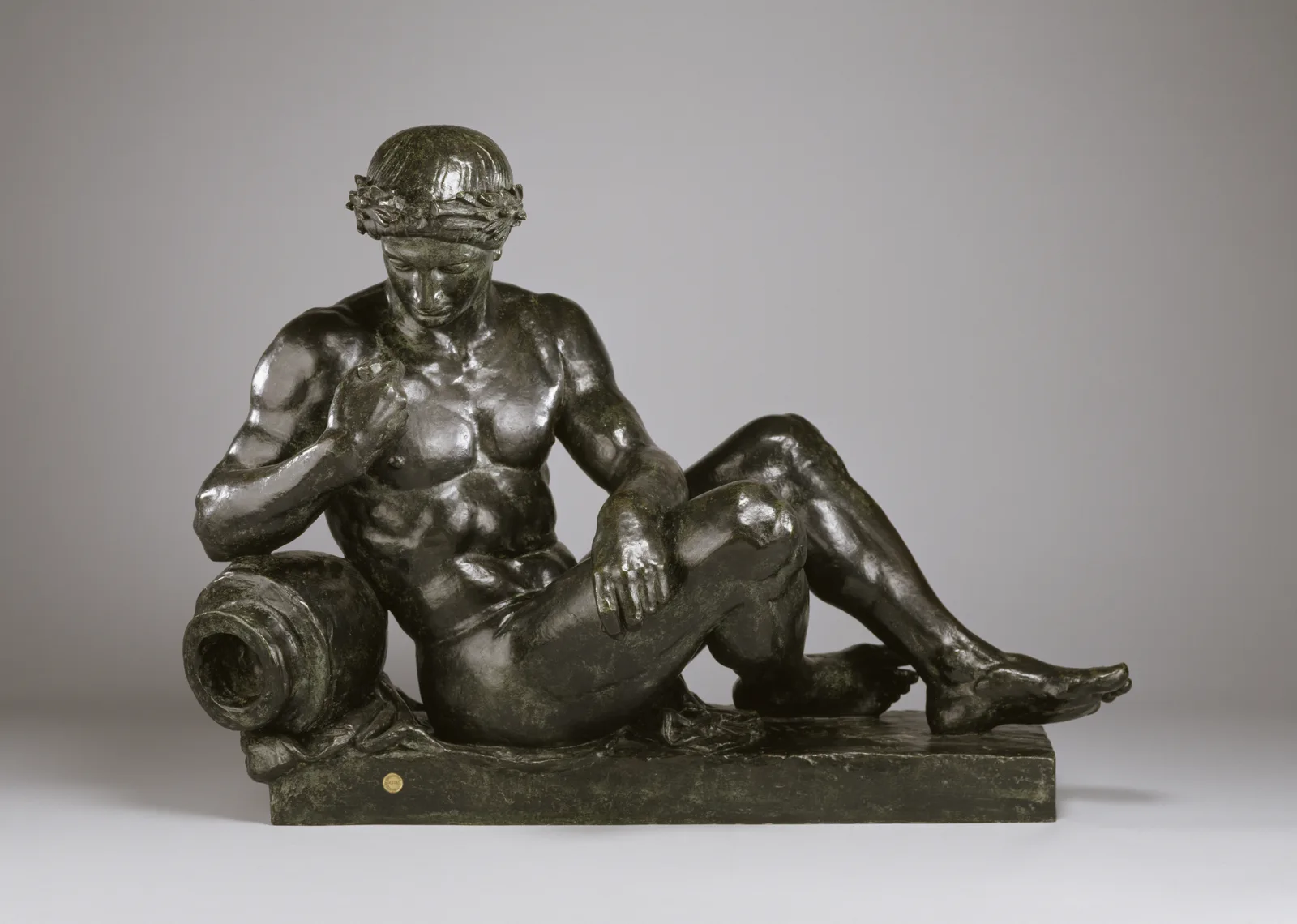
Authentic antique bronze statues are characterized by their substantial weight, cool-to-the-touch surface, and crisp casting details without visible mold lines. Key indicators include a natural, multi-layered patina that cannot be scratched off easily, and specific foundry marks or artist signatures stamped, not cast, into the base metal.
*
How can I tell if a statue is real bronze or just spelter?
Start with a simple weight check. Bronze is an alloy primarily of copper and tin, making it exceptionally dense.
Spelter, a zinc alloy often used for cheaper antique identification, feels significantly lighter. If the statue feels surprisingly light for its size, it is likely spelter or a resin composite.
The Temperature Test: Place your hand on the metal. Real bronze acts as a heat sink. It will feel cold to the touch and warm up slowly. Resin or plastic reproductions will feel close to room temperature immediately.
The “Ring” Test: If you gently tap a hollow part of a bronze statue with your knuckle (do not use a metal object), it should produce a faint, clear ring. Spelter or lead will produce a dull thud.
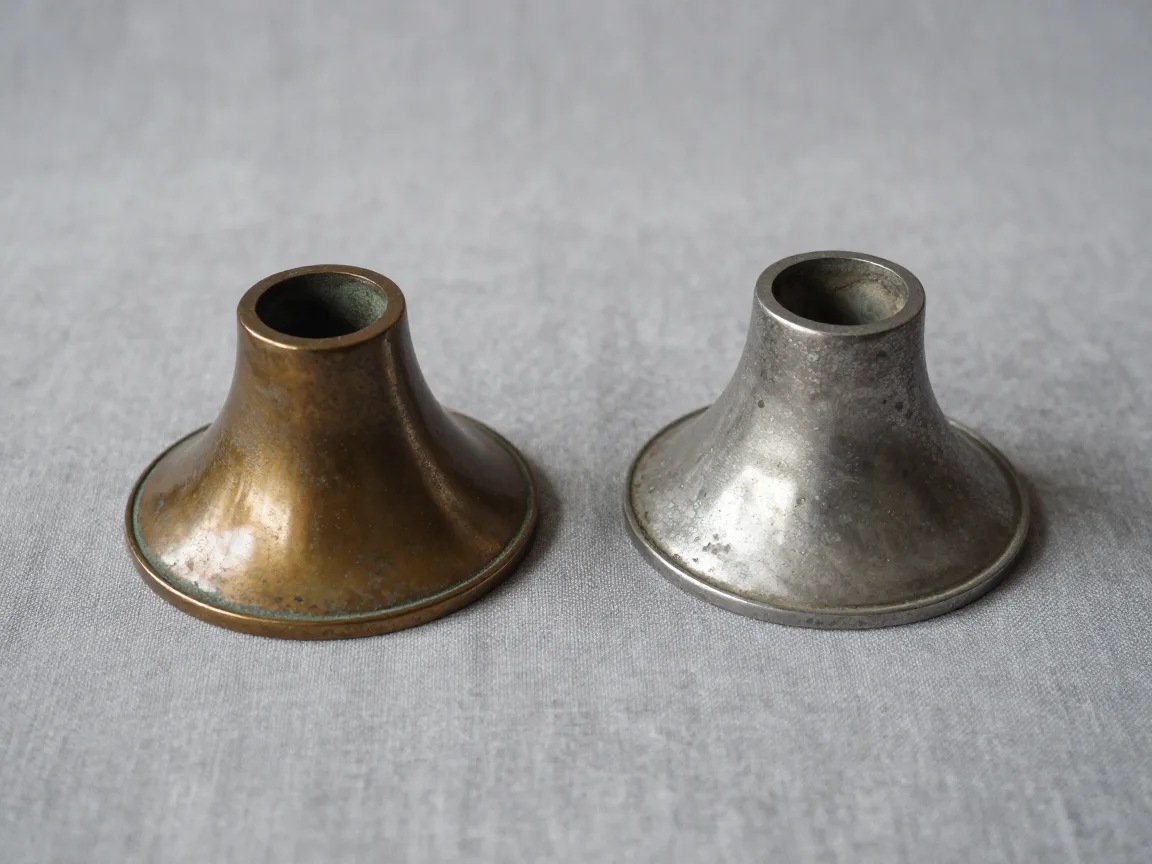
Bronze is thick and brown-gold where bare; spelter is thin and grey.
What details indicate a high-quality casting?
The most telling sign of value is the quality of the “chasing.”
After a bronze is cast, usually via the lost-wax method, a skilled artisan must hand-finish the surface to remove imperfections and sharpen details.
Look closely at the statue’s eyes, hair, and fingers. On a high-quality antique statue, these areas will be incredibly sharp and distinct.
Red Flag: If the details look soft, blurry, or “melted,” it is likely a surmoulage, a casting made from a mold of another existing statue, rather than from the original artist’s model. This results in a loss of detail and a slightly smaller size due to metal shrinkage.
Where should I look for foundry marks and signatures?
Attribution is vital for determining fair market value. You need to look for two things: the artist’s signature and the foundry mark (the factory that cast the metal).
These are usually located on the top or side of the base.
Signatures: Should look like they were incised into the wax model before casting, or stamped sharply.
Foundry Marks: Look for tiny stamps like “Barbedienne,” “Susse Freres,” or “Tiffany & Co.”
A statue with a verified foundry mark has a significantly higher auction estimate than an unsigned piece.
A Barbedienne casting. The foundry name is usually cast into the base.
How does patina affect the value of an antique statue?
Patina is the surface color that develops over time due to oxidation. A true antique patina is chemically bonded to the metal.
If you scratch a hidden spot with your fingernail and the “bronze” color flakes off to reveal white or grey metal underneath, it is a painted fake.
Pro Tip: Never clean a bronze statue with harsh chemicals. Removing the original patina destroys the provenance and can reduce the value by 50% or more. This is a cardinal rule of conservation.
This focus on surface integrity is similar to identifying marks on other metals. We discuss this further in our guide on valuing antique silver, where hallmark preservation is equally critical.
What are the red flags of a reproduction?
Look for specific signs of modern manufacturing that scream “fake.”
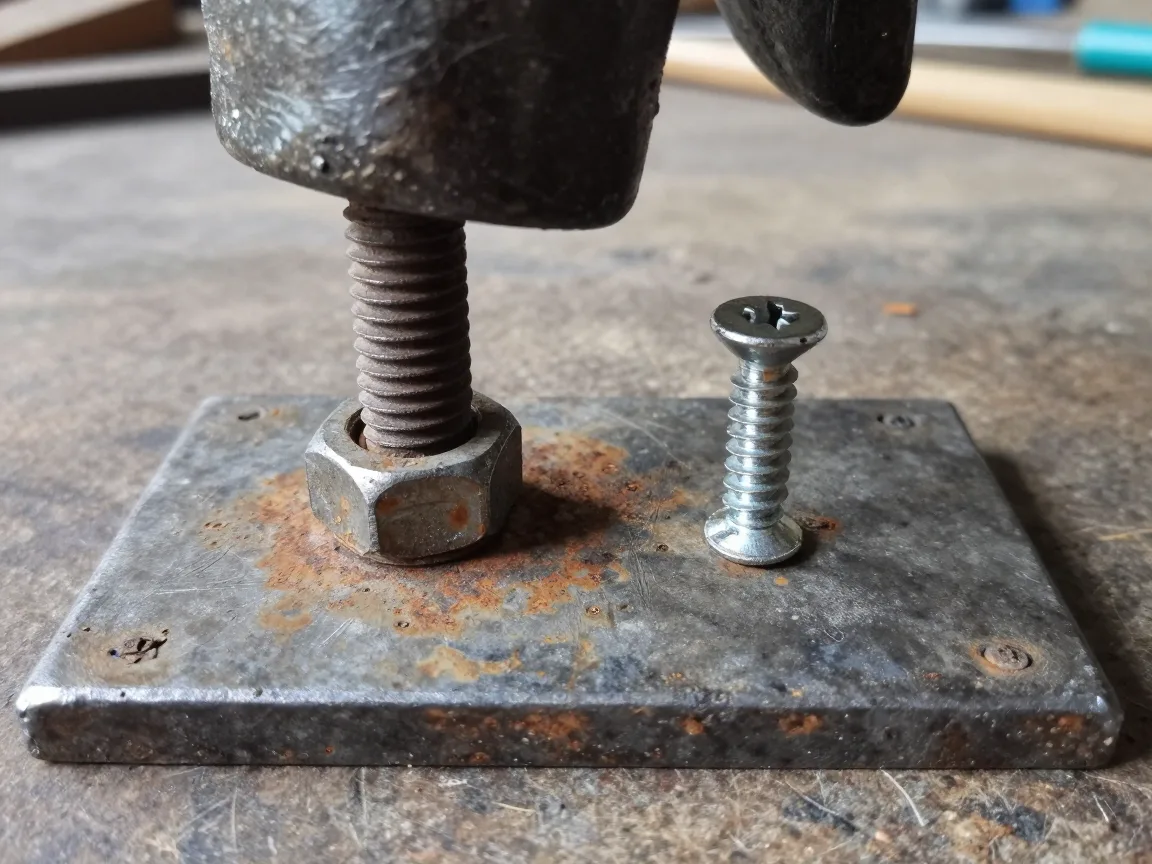
The Base: Genuine antiques often have marble bases attached with square nuts and hand-cut bolts. If you see a shiny hexagonal nut or a Phillips-head screw underneath, it is likely modern.
Mold Lines: A high-quality casting has no visible seams. If you see a ridge of metal running down the side of the figure (often hidden along an arm or leg), it is a mass-produced item.
An old square nut and rod versus a modern Phillips screw under a statue base.
How is the market value determined for bronze statues?
The fair market value depends heavily on the “Three Cs”: Casting, Condition, and Creator.
A condition report that mentions “original patina” drives prices up. Conversely, “pitting” (tiny holes from bad casting) or “regilding” (new gold paint) drives value down.
For insurance purposes, you might look for replacement value, which is the cost to buy a similar item retail. However, at an estate sale, you are looking to pay wholesale prices.
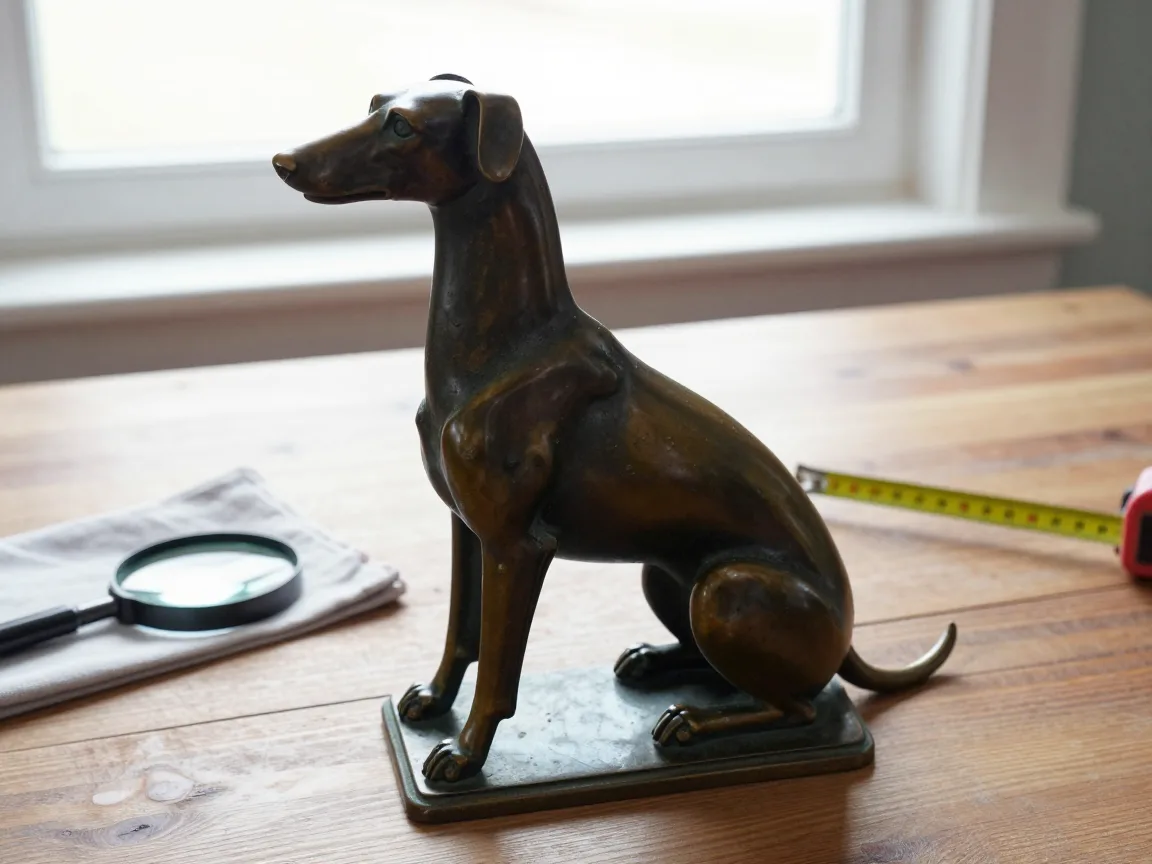
Measure and examine a bronze closely before you put a value on it.
Spotting a genuine bronze requires a tactile approach. Feel the weight, check the temperature, and inspect the underside for square nuts.
If the details are sharp and the patina is rich, you may have found a piece worthy of a serious antique dealer. Always prioritize the quality of the casting over the subject matter. A beautifully cast paperweight is worth more than a poorly cast monumental figure.
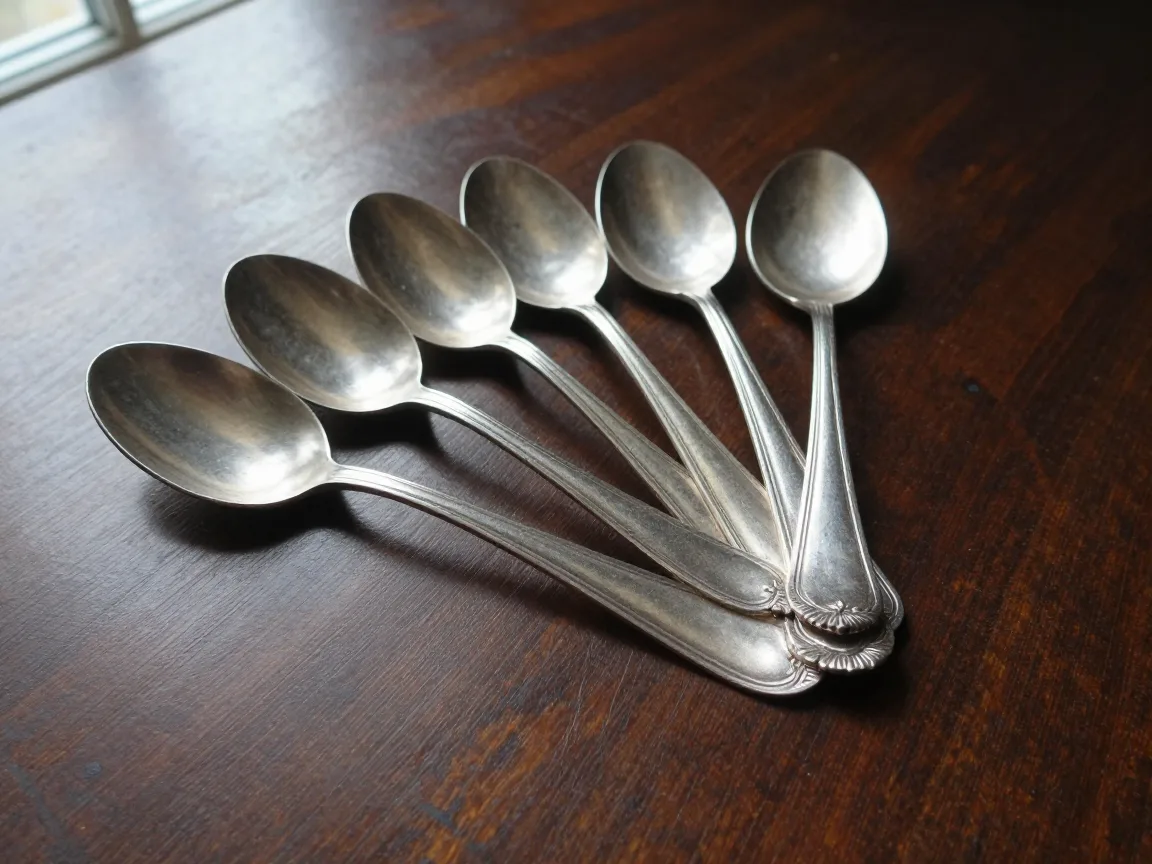
Authentic antique silver spoons are primarily valued by their hallmarks (look for “Sterling,” “925,” or the British Lion Passant), maker (such as Tiffany & Co. or Gorham), and pattern rarity. While common silver plate has minimal resale value, genuine sterling silver spoons often exceed their melt value if they feature desirable, intricate patterns like Francis I or Grand Baroque in excellent condition.
How can I tell if my silver spoon is solid or plated?
This is the first question every antique dealer asks. The difference in value is massive. Sterling silver is 92.5% pure silver, while silver plate is just a thin layer of silver over base metal (usually copper or nickel).
To identify it, you must find the hallmarks. On American spoons (post-1860), look for the word STERLING or the number 925 stamped on the back of the handle. If the piece is English, look for the Lion Passant (a walking lion), which guarantees sterling quality.
If you see marks like EPNS (Electro-Plated Nickel Silver), A1, or Quadruple Plate, the item is silver plate. These items generally have low fair market value unless they are rare, historical pieces in pristine condition.
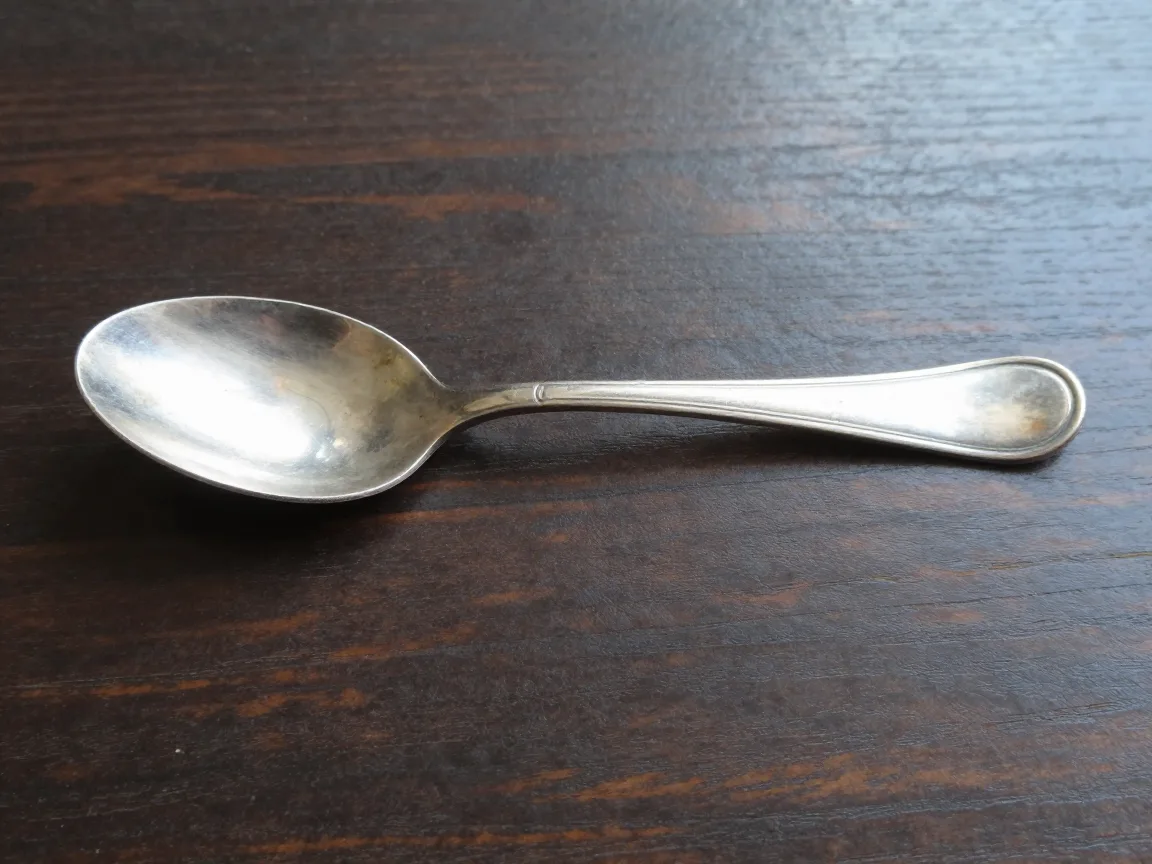
Turn a spoon over: solid silver is usually stamped STERLING on the back of the handle, while plated pieces often read EPNS.
Pro Tips for Identification:
Coin Silver: Before 1860, American silver was often made from melted coins (90% silver). Look for marks like COIN, PURE COIN, or just a maker’s name.
Assay Marks: British silver will have a city mark (e.g., an anchor for Birmingham) and a date letter, allowing for precise attribution to a specific year.
Weight Test: Sterling silver feels denser and heavier in the hand compared to plated ware.
Which antique silver patterns are worth the most money?
Not all sterling is created equal. In the collector market, the pattern dictates the demand. Simple, plain designs often sell for their scrap silver weight. However, heavy, ornate, repoussé designs (where the metal is hammered from the reverse side) command high premiums.
Top Collectible Patterns to Watch For:
Francis I by Reed & Barton: A very heavy, intricate fruit and floral design. Highly sought after.
Grand Baroque by Wallace: A three-dimensional design that looks beautiful from every angle.
Chrysanthemum by Tiffany & Co.: Extremely valuable due to the prestige of the maker and the complexity of the mold.
King’s Pattern: A classic double-struck pattern made by many silversmiths; value depends heavily on the specific maker and age.
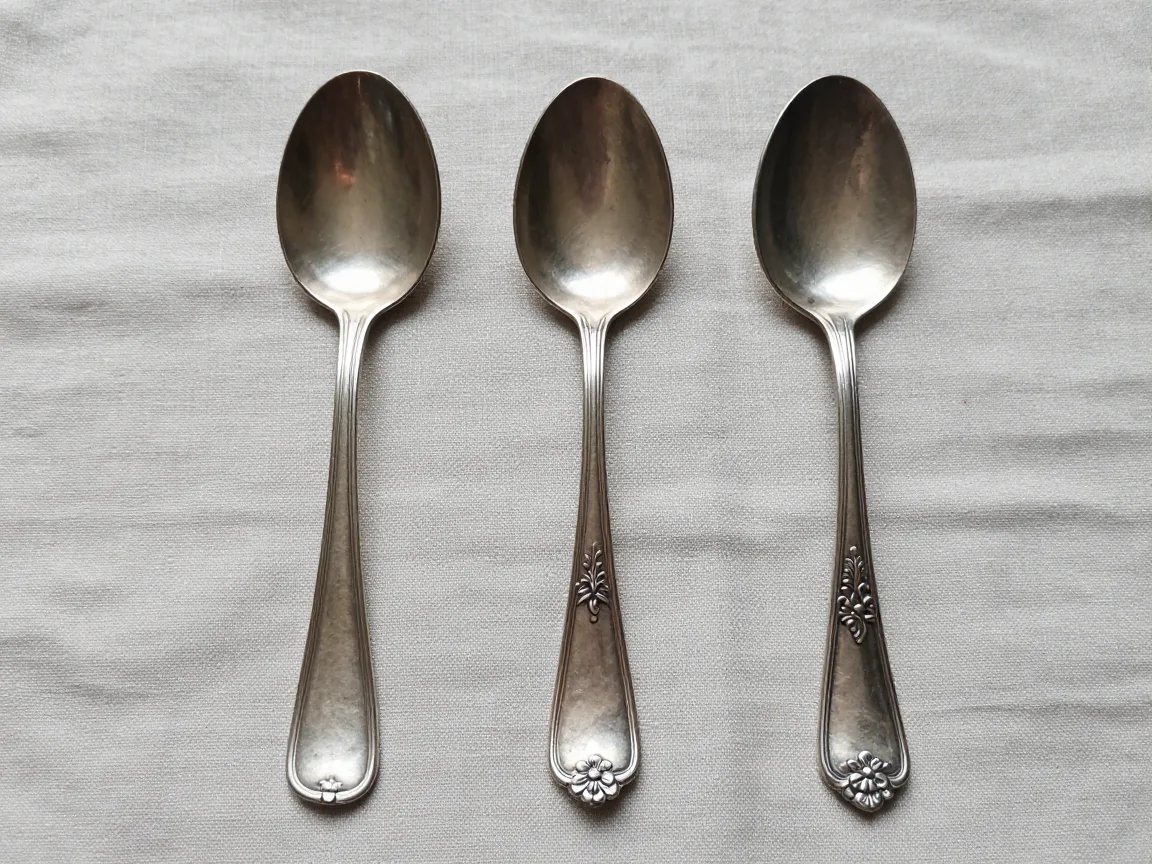
From plain to ornate: busier handle patterns usually took more work to make.
What affects the appraisal value of my spoon?
An appraisal isn’t just about the silver content. An expert looks at the total package.
Condition Report: Damage kills value. A spoon that has been caught in a garbage disposal (look for “chew marks” on the bowl) loses its collectible status and becomes scrap.
Monograms: Interestingly, monograms do not always lower value. An ornate, Victorian-era monogram can verify the age. However, removing a monogram is a form of restoration that can leave thin spots, which is a negative.
Definition: The details should be crisp. If the pattern is worn smooth from years of polishing, the value drops.
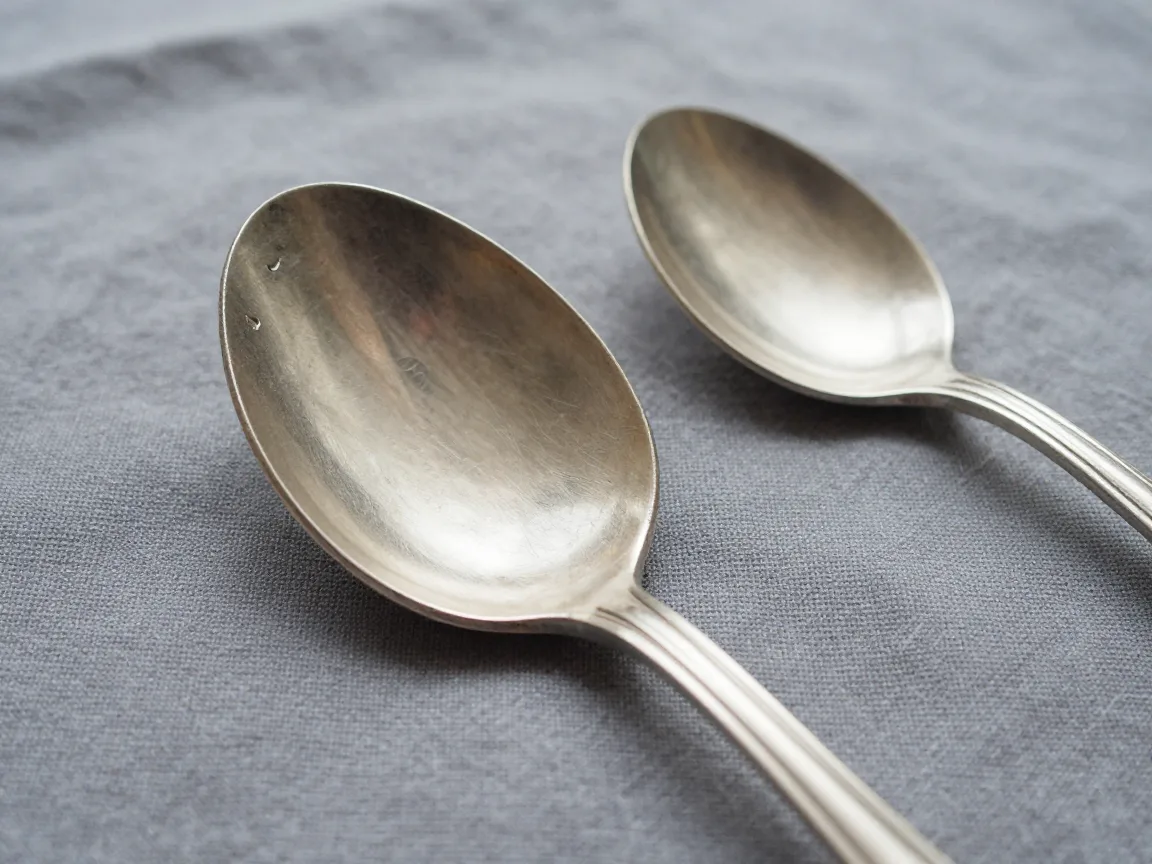
Nicks along the bowl edge, often from a garbage disposal, lower a spoon's value.
Provenance: If you can prove the spoon belonged to a significant historical figure or estate, the auction estimate can skyrocket. Original receipts or family letters help establish this.
How do I spot a fake or altered spoon?
Forgery detection is a critical skill. Unscrupulous sellers may take a plain spoon and “clash” (press) a fake hallmark onto it to mimic a high-end maker like Paul Storr.
Red Flags: Pseudo-Hallmarks: Many 19th-century silver plate manufacturers used symbols that looked* like British hallmarks (a pseudo-lion or a star) to fool buyers. Always check for the standard assay marks.
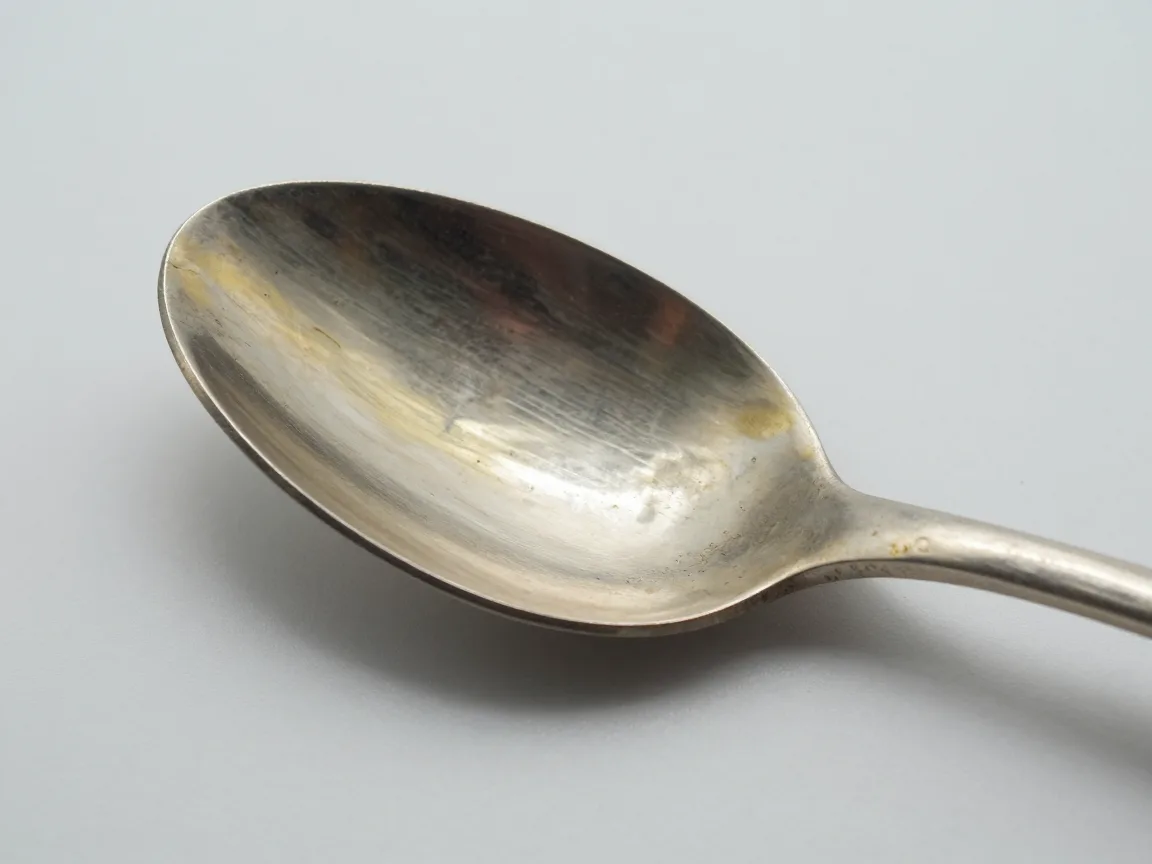
Wear-Through: On silver plate, you might see a copper or yellowish tint showing through the high points of the design. This indicates the silver layer is gone.
Solder Repairs: Look closely where the bowl meets the handle. Discoloration here suggests a repair, which significantly lowers the replacement value.
Worn plating at the heel of the bowl reveals the base metal underneath.
If you are unsure, avoid abrasive cleaning. Improper cleaning can ruin the patina that collectors love. Professional conservation is always preferred over aggressive polishing.
Finding a genuine sterling spoon in the wild is a thrill. Focus on the hallmarks first, then the condition. If it feels heavy, looks crisp, and bears the “Sterling” stamp, you likely have a winner. Happy hunting!
Authentic antique door knobs are identified by their construction mechanics and material imperfections. Look for a “set screw” on the knob’s shank (common pre-1940) rather than a glued assembly. Genuine antique glass often turns a faint amethyst hue due to sun exposure, while 19th-century porcelain knobs exhibit a “mineral” finish or mottled “Bennington” glaze, unlike modern uniform white ceramic.
What are the main types of antique door knobs?
To start your antique identification journey, you must first determine the material. This dictates the era and the value.
Pressed Glass: Popular from 1820 to 1950. These were made by pressing molten glass into a mold.
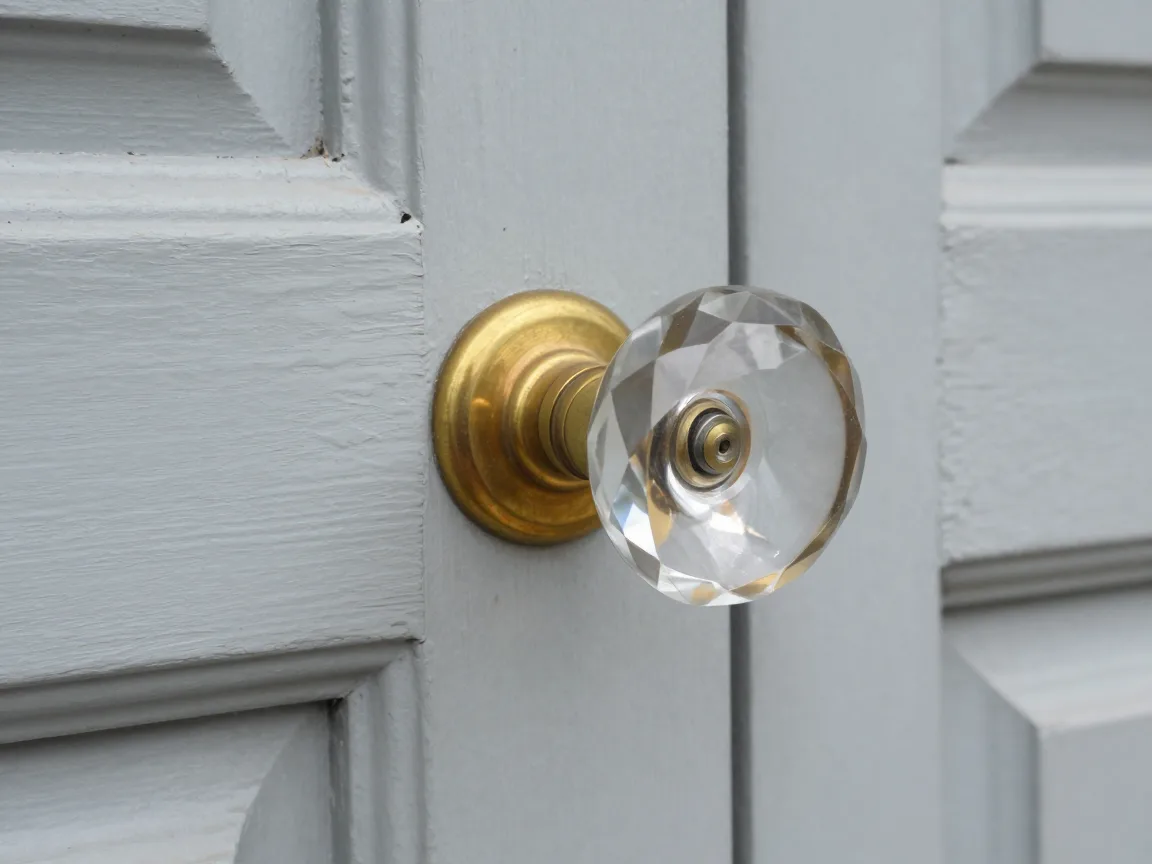
Cut Glass: The luxury choice. These feature sharp, geometric facets cut by hand.
Porcelain & Ceramic: Ranging from simple white utilitarian knobs to the highly collectible “Bennington” swirls.
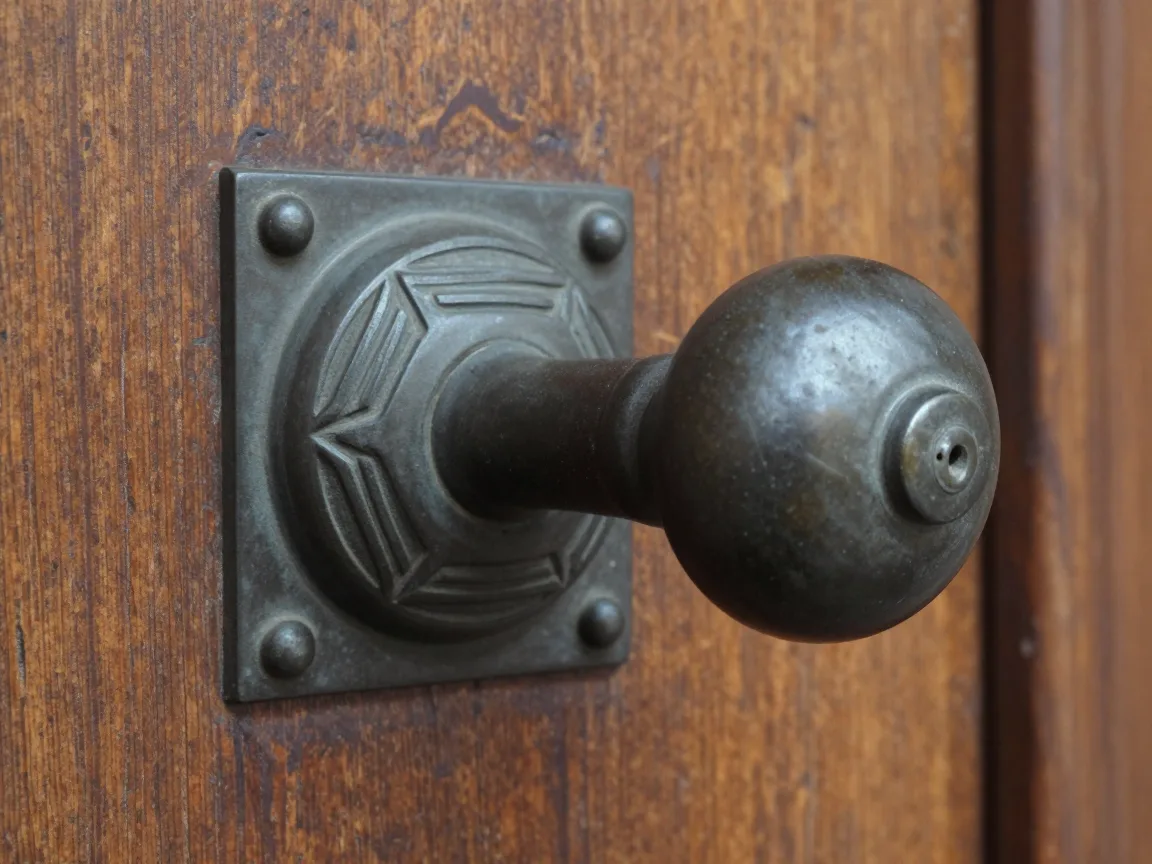
Brass & Bronze: Often ornate, featuring Eastlake or Victorian casting patterns.
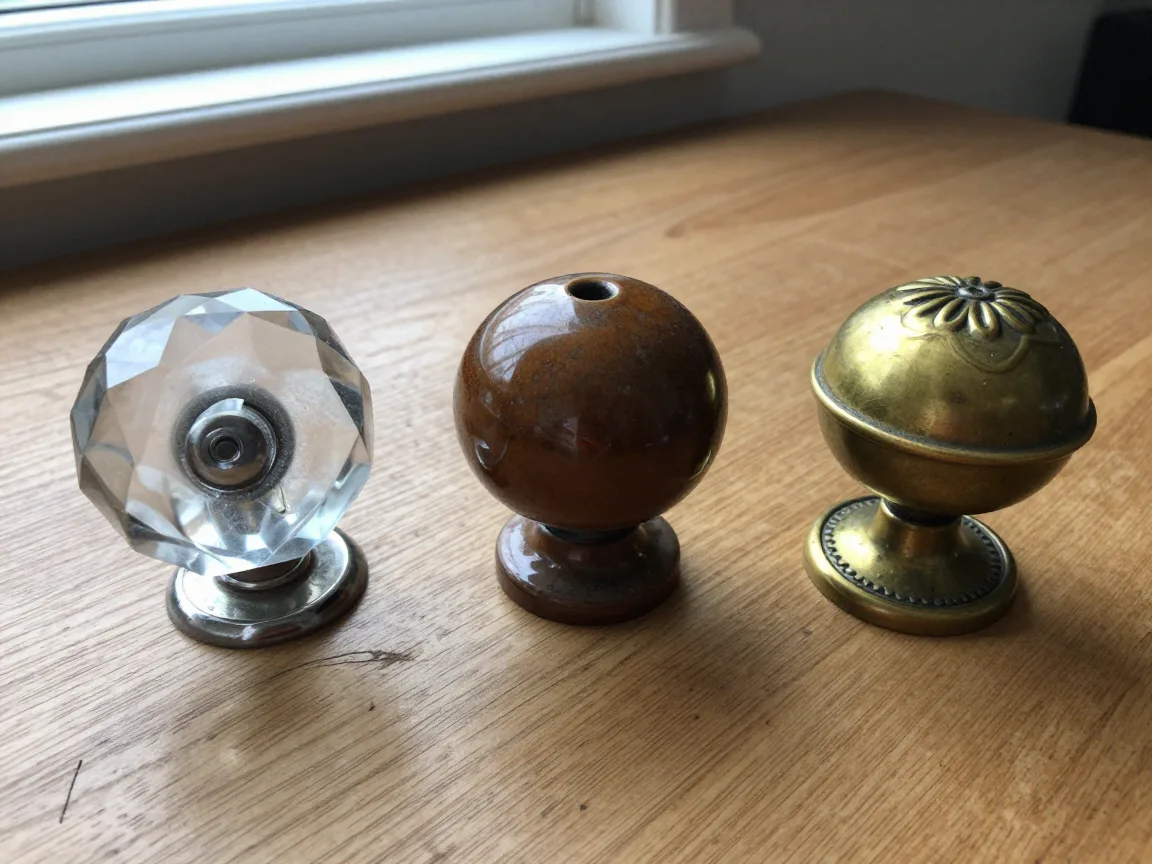
Three common antique knob types: glass, brown pottery and cast brass.
How can I tell if a porcelain door knob is authentic?
Porcelain identification for door hardware is distinct from identifying fine china, but the principles of hard-paste and glaze application still apply.
The most famous type is the Bennington knob. Produced in the mid-1800s, these feature a distinctive mottled brown, yellow, and black glaze.
Genuine Bennington knobs have a depth to the glaze. It looks like a swirling storm. Fakes often look like the pattern was painted on top.
White Mineral Knobs: These were the standard in the late 19th century.
They are not the bright, sterile white of modern bone china or ceramic.
Authentic antique porcelain knobs often have a slightly grey or “skimmed milk” undertone and may show tiny iron specks in the glaze from the firing process.
How do I distinguish antique glass knobs from modern reproductions?
The key is in the forgery detection.
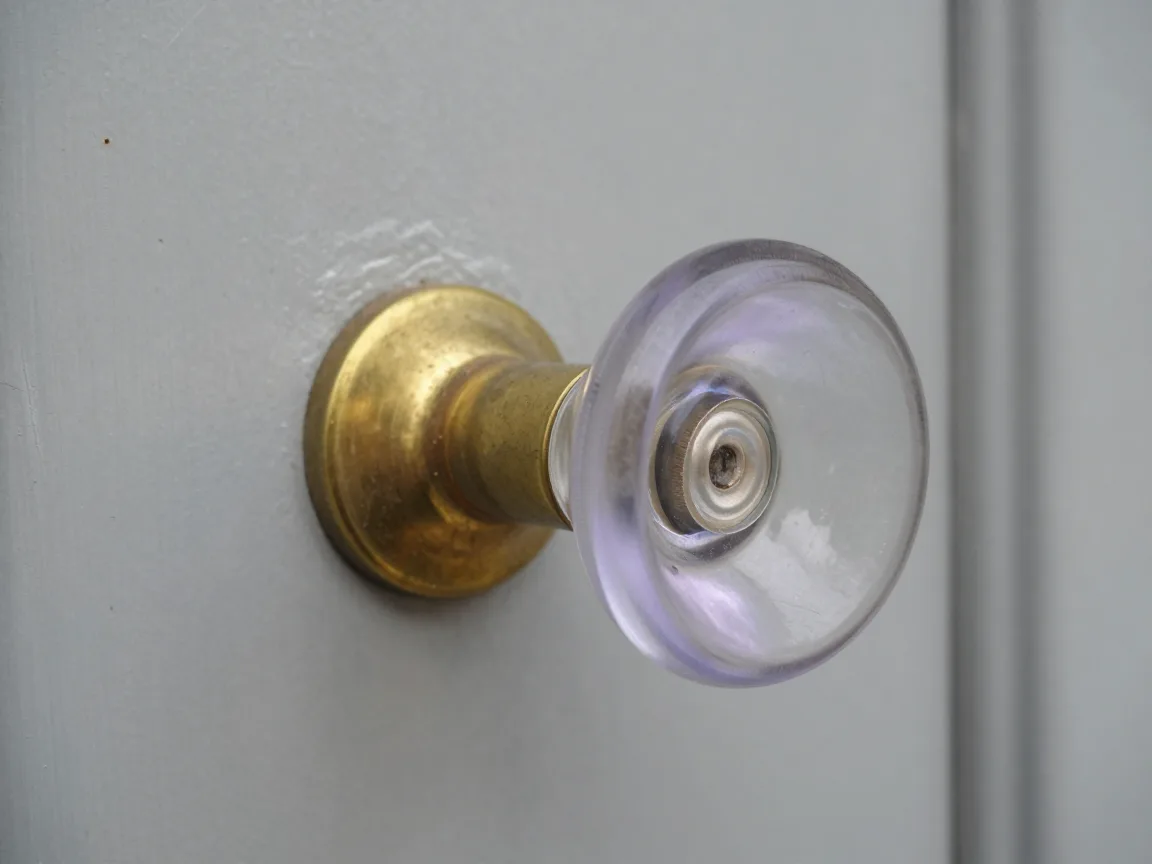
1. The Color Shift Antique glass made before World War I often contained manganese. When exposed to sunlight over decades, this glass turns a soft amethyst or violet color.
If you see this purple tint, it is a strong indicator of provenance and age. Modern reproductions rarely mimic this successfully.
2. The Construction Look at the shank (the metal stem attached to the glass).
Antique: The glass is usually mounted to the metal shank with a pin or is poured directly around the shank. You might see bubbles in the glass near the metal.
Modern: The glass is often glued to the metal with clear epoxy.
3. The Feel Cut glass will feel sharp to the touch on the edges. Pressed glass will be smoother and may show a faint mold line (seam).
While carnival glass knobs exist (showing an iridescent sheen), they are rarer and often reproduced.
Old clear glass can take on a lavender tint after years of sunlight.
What features indicate a valuable brass or bronze knob?
Metal knobs rely heavily on attribution to specific design eras.
Victorian and Eastlake (1870-1900): These are the heavy hitters. They feature incredibly intricate, deep casting.
Run your thumb over the design. Is it crisp and deep?
Late reproductions often look “melted” or soft because they were cast from a mold of a mold.
The “Vermeil” Factor: Some high-end Victorian knobs were gold-plated over silver or bronze.
Do not clean these aggressively!
improper restoration or polishing can strip the patina and destroy the fair market value. A dark, rich patina is often preferred by collectors over a shiny, scrubbed surface.
Patina that sits in the recesses of a cast pattern is a good sign of age.
How do I determine the value of my door knobs?
Value depends heavily on the condition report.
A fair market value for a common mineral knob might be $10, while a rare aesthetic movement bronze knob could fetch $150+.
Pro Tips for Valuation:
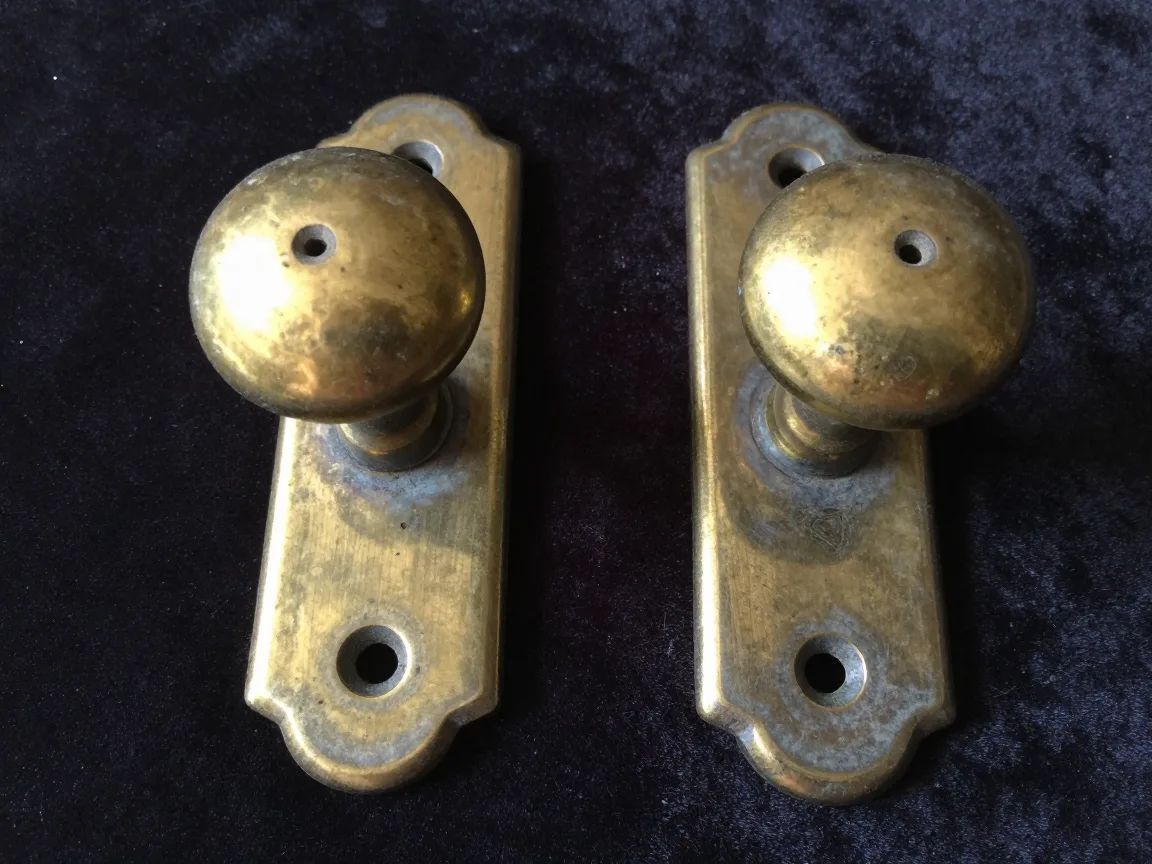
Completeness: A knob with its matching backplate (escutcheon) and spindle is worth 50% more than the knob alone.
Pairs: A matched pair is always easier to sell than a single.
Chips: Run your finger around the rim of glass or porcelain knobs. “Flea bites” (tiny chips) significantly lower the auction estimate.
Rare Colors & Materials:
Mercury glass (silvered glass) knobs are fragile and highly sought after.
Vaseline glass (glows under blacklight) commands a premium.
Blown glass knobs are exceptionally rare compared to pressed varieties.
If you are looking for an appraisal for insurance purposes, you are looking for replacement value, which is typically higher than what you would get selling it at a shop.
A complete set with matching knobs and backplates is worth more than a single knob.
Griswold cast iron cookware, made in Erie, Pennsylvania from 1865 to 1957, is identified by its raised foundry mark on the skillet bottom, a pattern number, and size number cast into the iron. Authentic pieces show a smooth, machine-polished cooking surface, a distinct heat ring on older models, and crisp lettering in the trademark logo. Logo style alone can date a piece to within a decade.
How can I tell if my cast iron skillet is a real Griswold?
The primary method for attribution is the logo mark on the underside of the cookware. Griswold changed their logo design significantly over the decades, which helps us date the piece instantly.
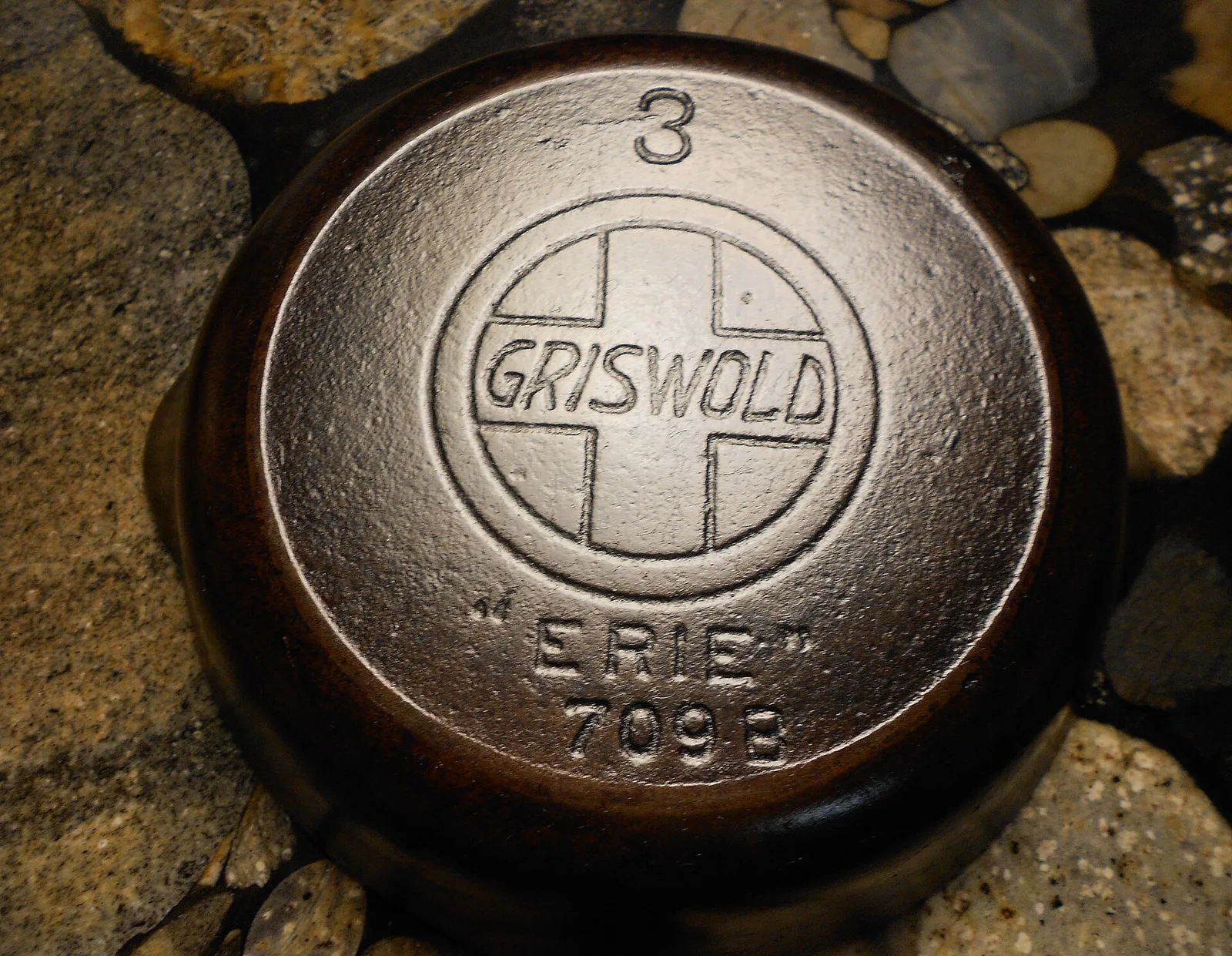
The most desirable mark is the “Large Block” logo (manufactured roughly 1920, 1940). It features the word GRISWOLD in large block letters inside a cross.
The early slant logo, with Erie below it. Photo: Modemac, CC BY-SA 4.0
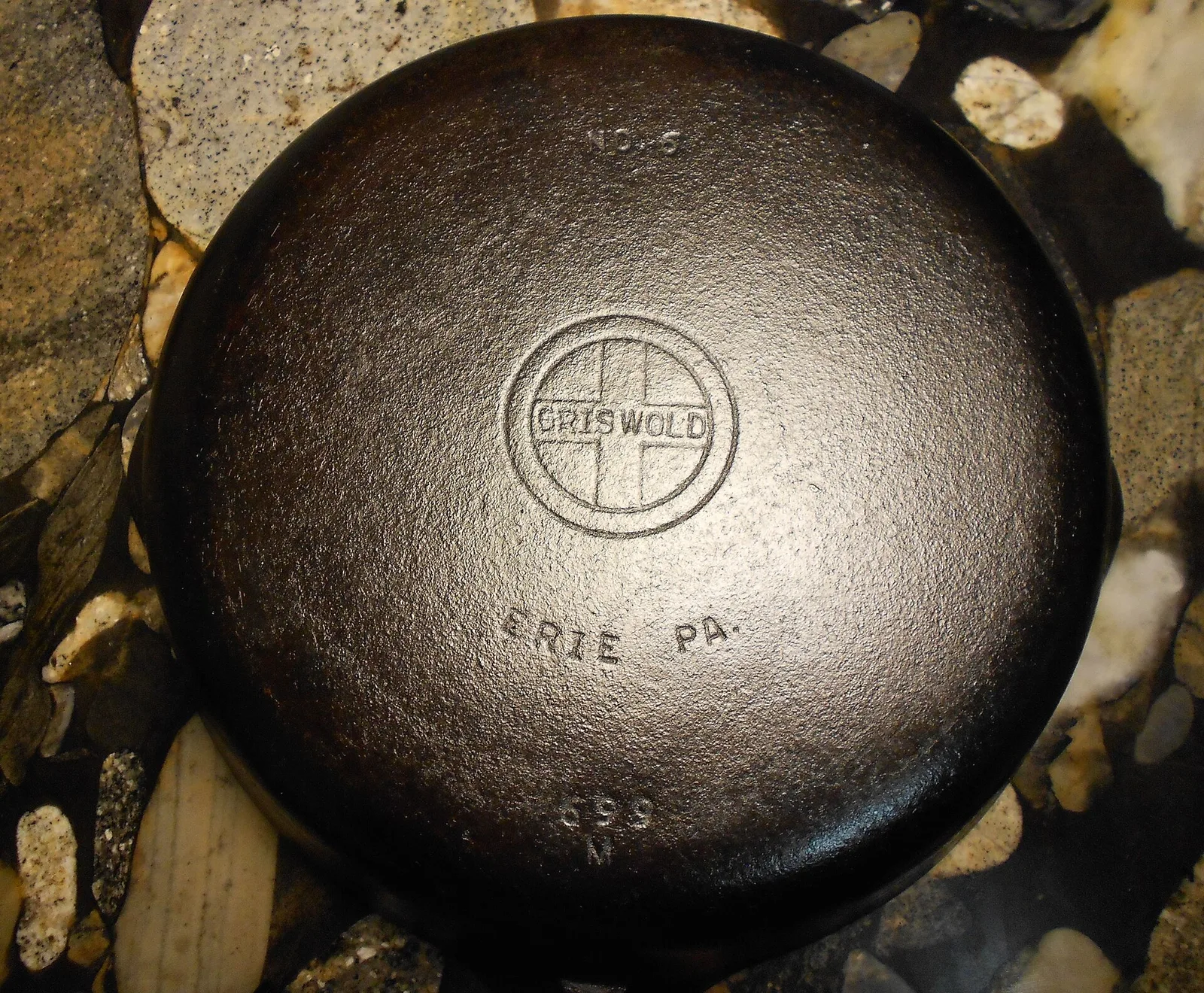
Earlier pieces might have the “Slant” logo (1906, 1929), where the text is italicized.
Later vintage pieces (1939, 1957) feature the “Small Block” logo. While still valuable, these generally command a lower fair market value than the earlier block logos.
Reading a casting mark before judging the paint applies to hand tools too; the antique tool value guide covers Stanley plane numbers and Disston medallions with sold price ranges.
What is the market value of Griswold cookware in 2026?
Value depends heavily on the condition report.
A #8 Large Block logo skillet typically sells for $100 to $150 if it sits flat.
However, rare pieces like a #13 skillet or a “Spider” logo skillet (used briefly in the 1890s) can fetch $1,500 to $3,000 at a reputable auction house.
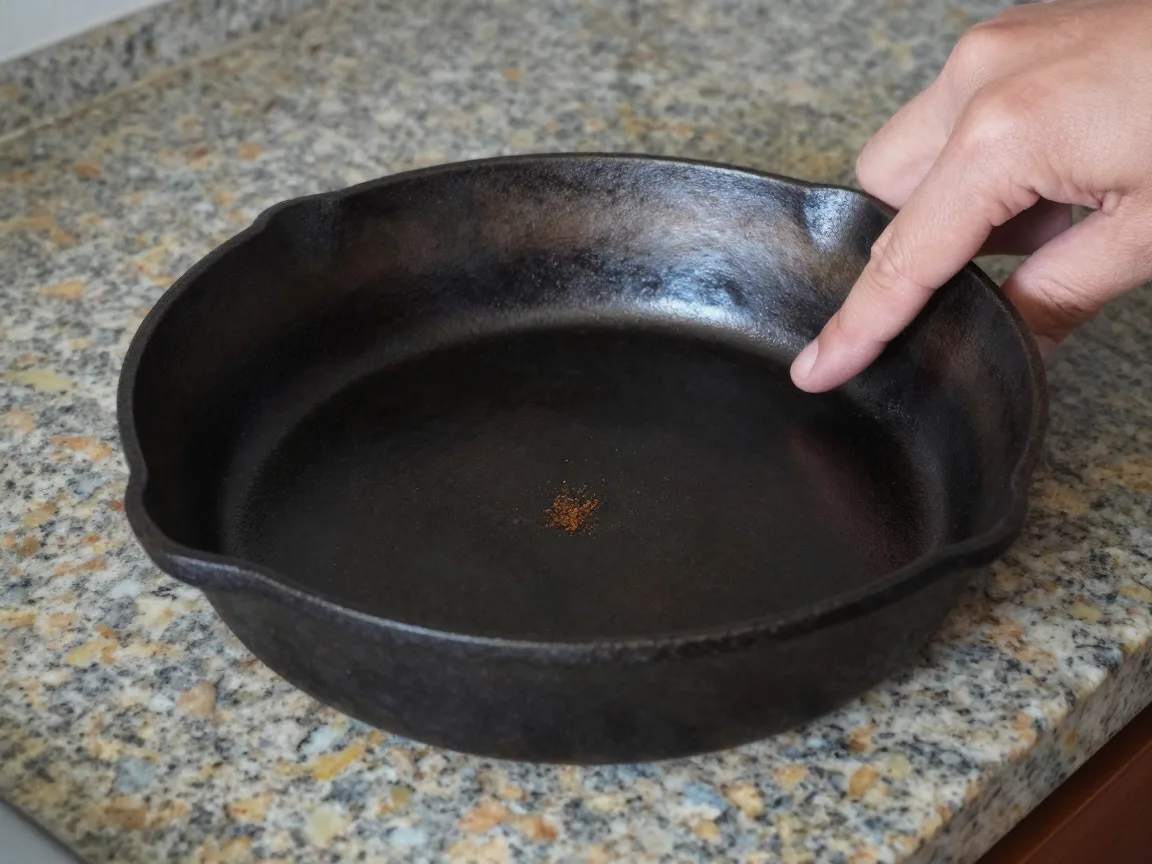
Pro Tip: Always check for “spinners.” Place the pan on a flat surface and tap the handle. If it spins easily, the bottom is warped. This significantly lowers the auction estimate because it won’t cook evenly on glass stoves.
Press the edge on a flat surface: a warped pan rocks or spins.
Checking for flatness is just as important as checking for cracks. This attention to structural integrity is similar to what we cover in our guide on Identifying Duncan Phyfe Furniture: 5 Marks of Authenticity, where construction details dictate value.
How do I spot a fake or reproduction Griswold?
Forgery detection is a necessary skill in this niche.
In the mid-20th century, and even recently, inferior copies were made using real Griswold pans as the mold.
The easiest tell? Look at the casting quality.
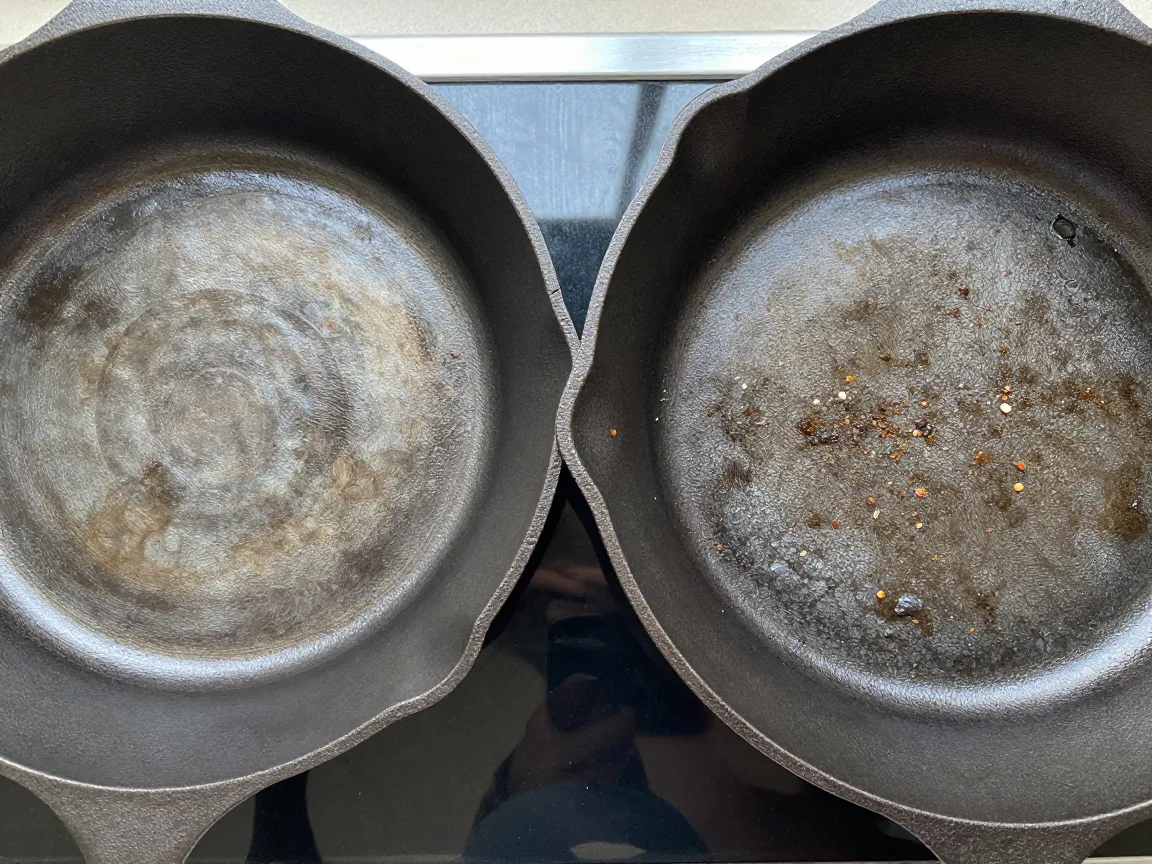
Real Griswold iron is famous for its silk-like smoothness. If the surface feels like sandpaper or pebbled (like a modern Lodge pan), it is likely a reproduction or a very late piece made after the company was sold.
Vintage machined cast iron is smooth; most modern pans have a pebbled surface.
Also, look at the lettering. On a fake, the logo often looks “soft” or blurry because the mold wasn’t crisp.
Spotting surface aging on cast iron shares more with furniture appraisal than most people expect, and Detecting Reproductions: How to Tell New Wood from 100-Year-Old Patina gives you a transferable eye for what genuine age really looks like.
Is rusty cast iron worth buying?
Yes, but you must assess the depth of the damage.
Surface rust is easily fixed with proper restoration techniques (electrolysis or lye baths).
However, pitting is permanent. If the rust has eaten craters into the metal, the replacement value drops to zero for collectors, though it might still be a usable camper pan.
Conservation of these pieces means avoiding wire brushes, which destroy the “collector” value surface.
With cast iron, the mark is everything. Flip the pan, read the logo, check the letter edges with your thumbnail, and feel the cooking surface. Griswold made a consistently thin, smooth, well-balanced skillet and that quality shows even through decades of use and rust. Learn the five logo eras, memorize which sizes are common versus genuinely scarce, and you will stop overpaying for late Small Logo pieces while walking past the Erie PA gems sitting right next to them.
Frequently Asked Questions
What does a Griswold logo look like on a cast iron skillet?
The logo changed several times across Griswold’s production history, and that evolution is your best dating tool. Early pieces from the 1880s and 1890s use a simple Erie PA mark. By the early 1900s, the company introduced the iconic cross logo with GRISWOLD spelled around it inside a circle. The Large Block Logo era runs roughly 1920 to 1940. Later pieces carry the Small Block Logo. Crisp, deep lettering with clean edges indicates an original casting, not a sand-cast reproduction.
What size numbers appear on Griswold skillets and what do they mean?
Size numbers on a Griswold skillet refer to the old stove-eye sizing system, not the actual diameter in inches. A No. 8 skillet measures roughly 10.5 inches across the cooking surface, while a No. 3 runs about 6.5 inches. The size number is cast into the top of the handle on most pieces and also appears in the bottom logo area. Pattern numbers, which are different from size numbers, appear as three or four digit codes and help collectors cross-reference specific casting runs in Griswold reference guides.
How do I date a Griswold cast iron skillet by its markings?
Logo style is the fastest dating method. The Large Logo with a cross and full circle text was used from about 1905 to 1940. The Small Logo appeared from roughly 1940 to 1957 when the company was sold. Heat rings, the raised ring on the bottom of the skillet, were phased out on most pieces by the late 1930s. A skillet with both a Large Block Logo and a heat ring is almost certainly pre-1940. The absence of a heat ring combined with a Small Logo points to the final production decade.
Are Griswold cast iron reproductions easy to spot?
Most reproductions give themselves away through texture and letter quality. Authentic Griswold pieces were machine-polished after casting, leaving a glassy-smooth cooking surface. Fakes and Chinese-made reproductions typically show a bumpy, pebbly texture inside the pan. Reproduction logos often have fuzzy or rounded letterforms rather than sharp, clean edges. Weight can also help: genuine Griswolds are lighter than most modern cast iron because the walls are thinner. If the piece feels unusually heavy for its size, that is a reasonable red flag worth investigating further.
What is a Griswold cast iron skillet worth today?
Value depends heavily on size, logo variant, and condition. Common pieces like the No. 8 Large Block Logo skillet sell for roughly $50 to $150 in good condition. Scarce sizes like the No. 2 or No. 20 and specialty items like waffle irons or chicken fryers can reach $300 to $800 or more. The Erie PA variant from the 1890s commands a premium. Restored pieces sell lower than original seasoned examples with intact patina among serious collectors. Always check recent sold listings, not asking prices, for realistic current values.
Is it safe to cook on a rusty Griswold skillet you found at an estate sale?
Yes, surface rust on cast iron is cosmetic and fixable, not a reason to pass on a good find. Scrub the rust off with steel wool or a chain mail scrubber, wash the pan with soap and water, dry it completely over heat on the stove, then apply a thin coat of flaxseed or vegetable oil and bake it upside down at 450 degrees for an hour. A heavily pitted cooking surface is a bigger concern than rust, since deep pits are structural and cannot be reseasoned away. Light to moderate rust on an otherwise sound pan is a buying opportunity.
From silver hallmarks to porcelain maker marks, the app suggests the item type, period and a value range.
Civil War belt buckles are typically made of stamped sheet brass or cast brass with lead-filled backs, featuring “US” or “CS” lettering and specific puppy-paw hooks used from 1861-1865. Victorian Era buckles (1837-1901) are decorative fashion accessories often made of silver, cut steel, or brass, prioritizing intricate floral motifs and Rococo Revival aesthetics over military utility.
How can I tell if a Civil War buckle is authentic?
Authenticating Civil War buckles requires looking closely at the construction. The market is flooded with reproductions, so provenance and construction details are critical.
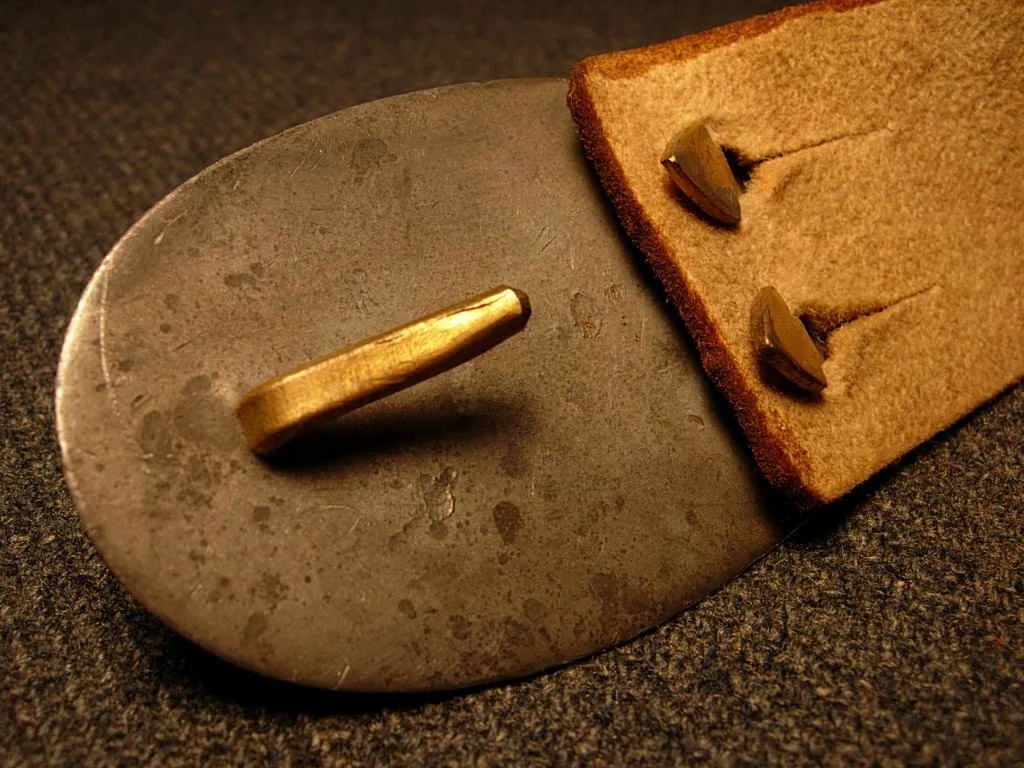
Back of an oval belt plate: dull grey filling and hooks. Photo: W. N. Manning, CC BY 3.0
Genuine US oval plates were often lead-filled to add weight and durability. Look at the back. You should see the dull grey of oxidized lead, not modern shiny resin or empty space.
Check the hooks. Early war buckles often used “puppy-paw” studs, round brass studs that look like a dog’s paw print. Later in the war, these were replaced by arrow-style hooks because the paws tended to break.
Be wary of “perfect” items. A buckle that saw action in the 1860s will rarely be pristine. Look for natural wear, soil patina, and signs of actual use.
What defines a Victorian Era fashion buckle?
While Civil War buckles were built for war, Victorian buckles were built for the parlor. The Victorian Era (1837-1901) saw the Industrial Revolution transform jewelry production, making elaborate designs accessible to the middle class.
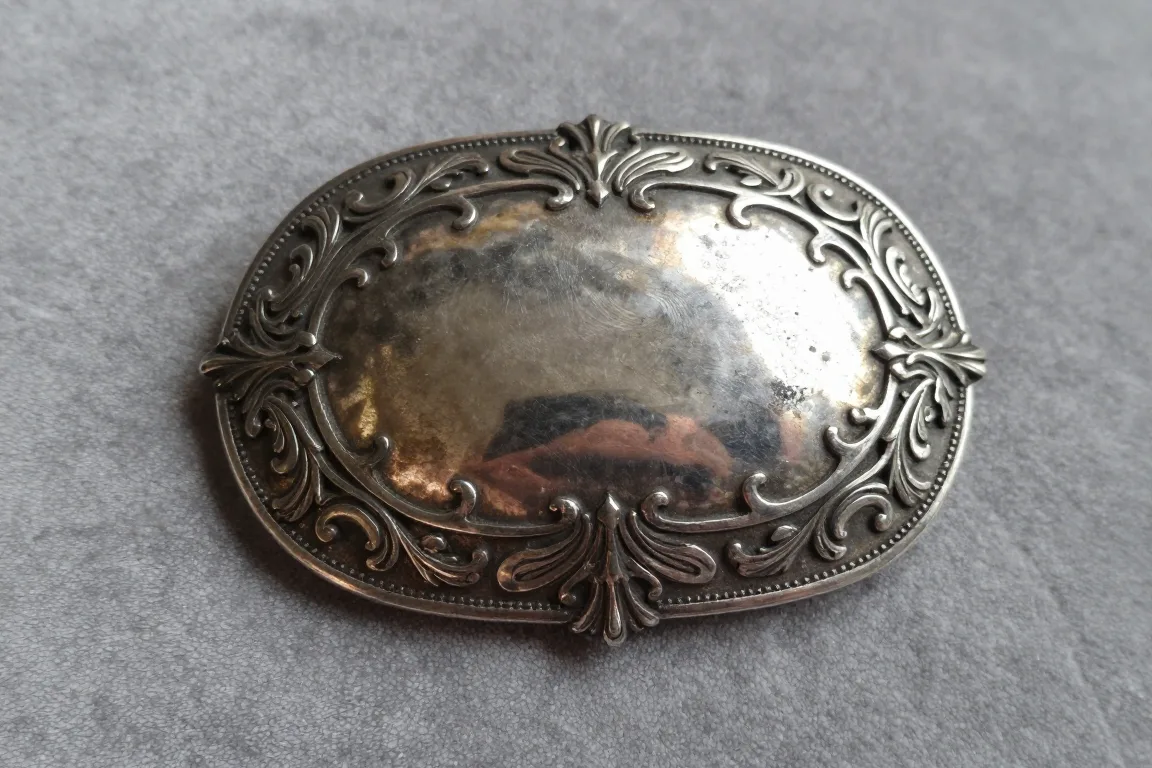
A pierced Victorian silver nurse's buckle, made for show rather than strength.
These buckles were often massive and purely decorative. They were worn to cinch the waist of a corset or add flair to a heavy skirt.
Look for materials like Cut Steel. These buckles sparkle like diamonds under low light but are actually made of polished steel studs riveted to a base plate. If you see rust, it’s likely genuine cut steel.
Jet and Vulcanite were popular for mourning jewelry, especially after Prince Albert’s death in 1861. If your black buckle feels warm to the touch and smells like sulfur when rubbed, it’s likely Vulcanite.
Designs often followed the trends of the day. You might see Gothic Revival arches or the swirling nature-inspired lines of the Rococo Revival.
What are the major red flags for fake buckles?
Forgery detection is the hardest part. Fakers are getting better, especially with high-value Confederate plates.
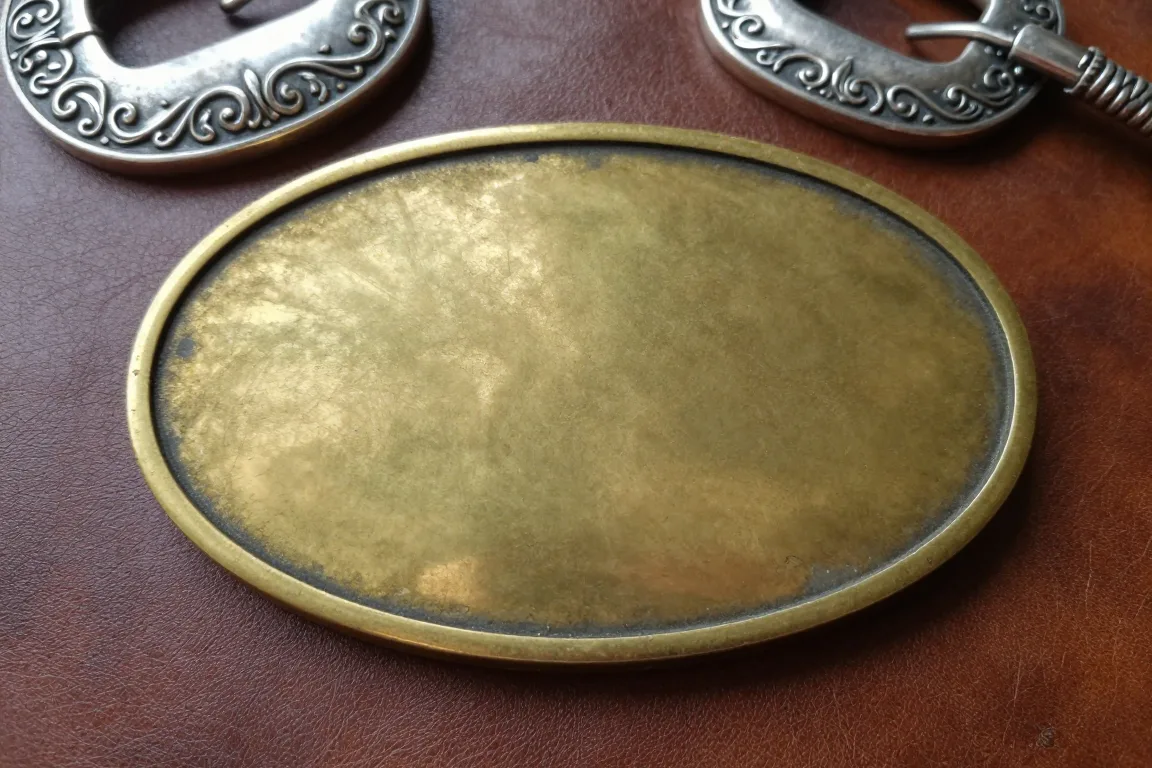
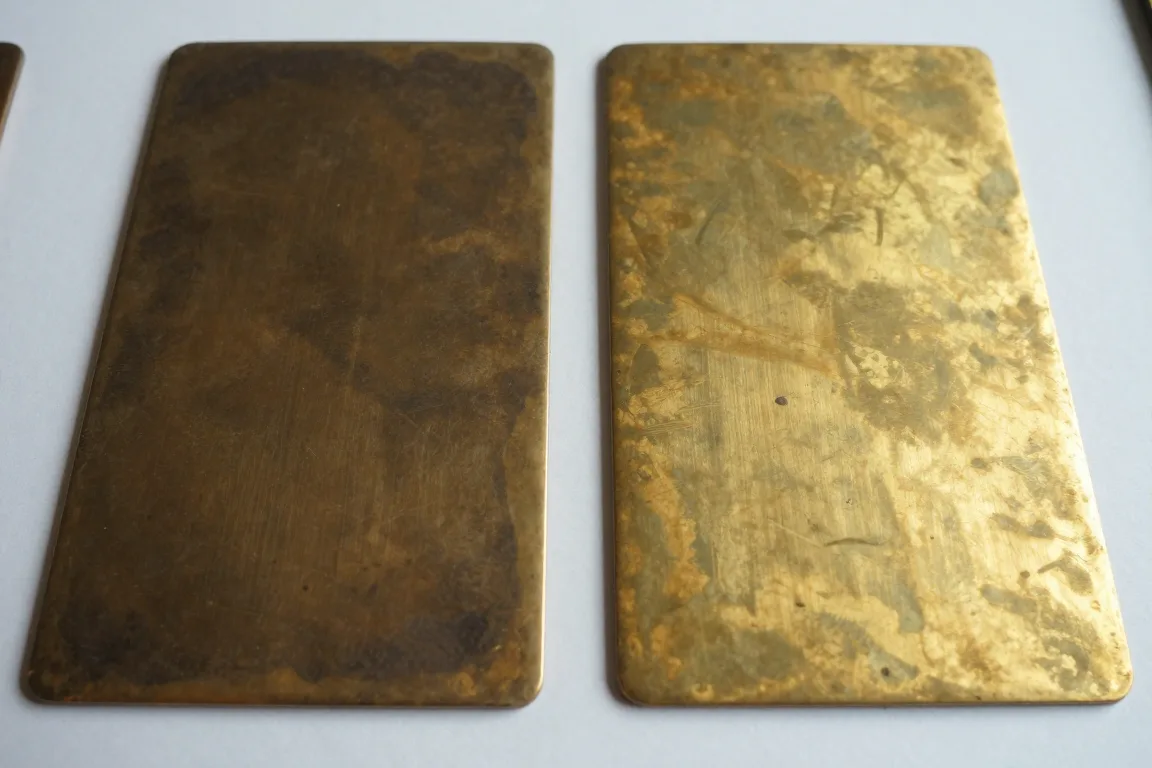
Natural patina is even and mellow; chemical aging tends to look bright or streaky.
Watch out for artificial aging. Authentic brass develops a deep, mellow patina over 150 years, often a rich chocolate brown or a dark, non-reflective mustard color.
If the brass looks too yellow or “brassy,” it might have been chemically treated recently.
Inspect the stampings. Original die stamps were sharp and crisp. Reproductions often look “mushy” or soft in the details because they are cast from a mold of an original, losing definition in the process.
How do I determine the value of my antique buckle?
Fair market value varies wildly depending on rarity and condition. A standard US oval buckle might sell for $200-$400, while a rare Confederate state plate can fetch $3,000 to $10,000 at auction.
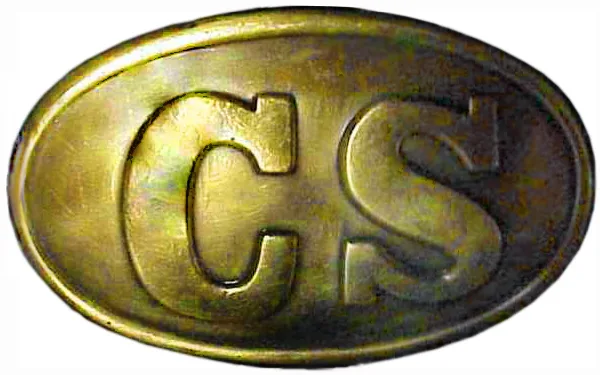
An oval CS belt plate. Photo: Lordoliver, CC BY-SA 3.0
Condition matters, but so does “honest wear.” A buckle with a dug patina (found in the ground) often has a stable “ground action” surface that collectors love.
Don’t clean it! Removing that patina destroys the historical value and can cut the price in half instantly. Conservation is different from cleaning; leave it to a pro.
For Victorian fashion buckles, the maker matters. A hallmark from a famous silversmith or a known design like an Eastlake geometric pattern increases value.
However, many Victorian buckles were mass-produced. A standard brass sash buckle might only be worth $20-$40 in an antique mall.
Whether you’ve found a piece of military history or a stunning example of 19th-century fashion, examining the construction is key. Look at the hooks, check the material, and never scrub away that history. If you’re unsure, snap a picture and let us help you uncover the story behind the metal.
Antique oil lamps can be identified by their burner type, font material, and maker’s marks stamped on the collar or burner mechanism. Key markers include the Argand, flat-wick, and Rochester burner styles, manufacturer stamps from firms like Bradley and Hubbard or Edward Miller, and glass types ranging from pressed flint glass to hand-blown cranberry. Most collectible examples date from 1850 to 1910.
How can I determine the age of my oil lamp?
The quickest way to date an oil lamp is by inspecting the burner hardware. Before electricity, lighting technology moved fast, and specific burner types serve as excellent chronological markers.
Whale Oil Burners (1700s, 1840s): These are simple, two-tube metal burners that held round wicks. They are rare and indicate a very early piece.
Kerosene Flat Wick (Post-1857): The discovery of kerosene revolutionized lighting. If your lamp has a flat wick mechanism, it is almost certainly post-1857.
Central Draft Burners (1880s+): These complex burners allowed air to flow through the center of a round wick, creating a massive, bright flame.
A brass genie-style oil lamp with its lid chained to the handle
Always check the thumbwheel, the small knob used to raise the wick. Makers like Plume & Atwood (P&A), Edward Miller & Co., and Bradley & Hubbard often stamped their names and patent dates right on this tiny dial. A patent date of “FEB 11 1873” gives you a concrete provenance starting point.
What are the most valuable antique oil lamp makers?
While thousands of companies made lamps, a few names command higher fair market value due to their quality and artistry.
Bradley & Hubbard (B&H): Based in Connecticut, their metalwork is superior. Look for the “B&H” mark on the flame spreader or the base filler cap. Their lamps are heavy, often featuring intricate repoussé work or painted glass shades.
Tiffany Studios: The holy grail. While famous for electric lamps, their early oil vessels are masterpieces of Favrile glass and bronze. Authentication here is critical; fakes abound.
Aladdin: Specifically the “Aladdin Mantle Lamp” introduced in 1908. These differ from standard wick lamps as they used a mantle (a mesh netting) to produce a bright white light. Collectors pay a premium for specific finials and rare glass colors like “Moonstone.”
How do I identify a reproduction or fake oil lamp?
The market is flooded with “oil lamps” made in the 1960s and 70s that look old to the untrained eye. Here is how to spot them during a condition report:
Blacklight Test: Antique glass from the late 1800s often contains manganese, which glows a faint yellow-green under UV light. Modern glass generally does not glow.
Hardware Glue: Genuine antique burners were screwed or plastered into the glass font. If you see clear, modern glue or epoxy attaching the metal collar to the glass, it is a major red flag for a modern assembly or a clumsy restoration.
The Seams: On a genuine pattern glass oil lamp, the mold seams should be relatively smooth. Sharp, rough seams often indicate cheaper, modern production.
A hanging metal hurricane lantern with a glass globe
The same principles that apply to aged surfaces on furniture apply here too, and the guide on Detecting Reproductions: How to Tell New Wood from 100-Year-Old Patina covers patina reading in useful detail that translates directly to glass and metal lamp components.
What types of glass were used in antique oil lamps?
The font (the reservoir holding the oil) is often the most decorative part of the lamp. Understanding glass types helps with attribution and value estimation.
Cranberry Glass: A rich red glass made by adding gold salts to the mix. Very popular in the Victorian era.
Milk Glass: Opaque white glass, often pressed into intricate shapes.
Opalescent Glass: Glass that appears milky or changes color when held to the light, often found in coin dot or swirl patterns.
Appraisal values vary wildly based on condition and completeness.
A standard, clear glass “finger lamp” (with a handle) from the 1900s might fetch $25 to $50 at a thrift store. However, a complete Victorian Gone with the Wind lamp (matching hand-painted ball shade and base) can easily command $300 to $800 or more at a specialized auction house.
Collectors prioritize original parts. A lamp with its original “chimney” (the glass tube) and shade has a much higher replacement value than a “married” piece (where the base and shade were matched later).
A brass genie-style oil lamp on a wooden table
Pro Tips for Value:
Don’t Electrify It: drilling a hole in a pristine antique font to add a cord destroys its collector market value.
Check the Threads: Antique collars usually have fine threads; modern replacements often have coarser threads.
Smell It: It sounds odd, but a genuine antique lamp often retains the faint, oily scent of kerosene in the font, even after decades.
After handling a few hundred of these lamps over the years, the pattern becomes clear: the burner is your first document and the glass is your second. A correct period burner with legible stamps narrows your field to a decade and a handful of manufacturers. The glass type, mold seam placement, and any remaining original patina on the brass collar confirm or contradict what the burner suggests. Get those two things reading the same story and you have a reliable identification. Get them contradicting each other and you start looking harder for a replaced part or an outright reproduction.
Frequently Asked Questions
How do I find the maker’s mark on an antique oil lamp?
Check the burner collar first. Most American manufacturers stamped their name or a patent date directly onto the brass collar that holds the burner in place. Bradley and Hubbard used a raised B&H stamp, while Edward Miller marked theirs with a circular eagle medallion. If the collar is blank, check the underside of the cast iron or brass base. Some decorative fonts also carry a mold number pressed into the glass near the base ring, which can be cross-referenced against manufacturer catalogs from the 1880s and 1890s.
What is the difference between a Rochester burner and a flat-wick burner?
A Rochester burner is a round-wick, central-draft burner introduced in the 1880s that draws air through a central tube, producing a much brighter flame than older designs. Flat-wick burners, common before 1880, use a single ribbon of wick and produce a softer, lower light. If your lamp has a round burner with a hollow center post and a chimney that widens at the base, you have a Rochester or similar central-draft type. Flat-wick lamps take a straight-sided chimney and are generally earlier or plainer in origin.
Are antique oil lamps with cranberry glass shades more valuable?
Yes, cranberry glass shades consistently add value, but authenticity matters. Genuine Victorian cranberry glass was colored with gold chloride, giving it a warm, slightly uneven red tone that shifts toward orange in direct light. Reproductions use selenium or copper, which produce a flatter, more uniform red. Hold the shade up to a strong light source and look for slight color variation and small bubbles or striations in the glass wall. Original cranberry shades on a documented American or English lamp base can push values well above the baseline for the same lamp in clear glass.
How can I tell if my oil lamp is genuinely Victorian or a later reproduction?
Start with the burner threads. Original Victorian brass burners have hand-cut threads that feel slightly irregular under your fingernail. Machine-cut threads on reproductions are perfectly uniform. Next, look at the font seam if it is glass. Pre-1900 fonts often show a faint mold seam that stops below the lip because the top was fire-polished by hand. A seam running cleanly through the lip signals later or foreign production. Finally, check for artificial aging on the brass, which often appears as uniform brown paint in the recesses rather than the uneven green-grey patina of genuine age.
What antique oil lamp styles are most sought after by collectors right now?
Bradley and Hubbard parlor lamps with original hand-painted milk glass shades are consistently strong sellers. Gone With the Wind style lamps with matching globe and base in good original condition remain popular at auction. Miniature kerosene lamps, particularly those in cobalt or amethyst glass, draw competitive bidding from specialist collectors. Single-wick student lamps in original nickel or brass finish with no repairs are also climbing in value. In general, any lamp with a documented maker, original matching shade, and untouched patina outperforms comparable lamps with replaced parts or cleaned surfaces.
Does the color of the flame or wick tell me anything about dating my antique oil lamp?
Not the flame itself, but the wick tube diameter is a useful dating clue. Early whale oil lamps from the first half of the 1800s used very narrow twin tubes, often under a quarter inch. Kerosene lamps from after 1860 standardized on wider single tubes, typically seven-eighths of an inch for a No. 2 burner. If your lamp has a wick tube that accepts a modern replacement wick without adaptation, it is almost certainly a post-1860 kerosene design. Lamps requiring custom narrow wicking are generally pre-kerosene and considerably older.
From silver hallmarks to porcelain maker marks, the app suggests the item type, period and a value range.
Authentic sterling silver almost always bears a .925 or Sterling hallmark, feels harder to the touch, and produces a high-pitched ring when tapped. Pewter, a softer alloy, marks easily, often displays a duller grey oxidation, and makes a flat ‘thud’ sound. Always check for specific touchmarks on the base to confirm the maker.
Still not sure what you’ve got? The Antiqly antique identifier app tells pewter from silver and estimates value from a photo.
Collectors often make expensive mistakes here. Distinguishing these two metals is the first step in building a serious collection or finding a hidden gem for resale.
How can I tell if my item is Silver or Pewter by the markings?
The most reliable method for authentication is examining the marks. Silver is a precious metal and is strictly regulated; pewter is a base metal alloy (mostly tin) and follows different rules.
Sterling Silver produced in the US or UK will almost invariably have a hallmark. Look for the word “Sterling” or the number “925”. If the piece is English, look for the Lion Passant (a walking lion). These assay marks guarantee the metal content is 92.5% pure silver.
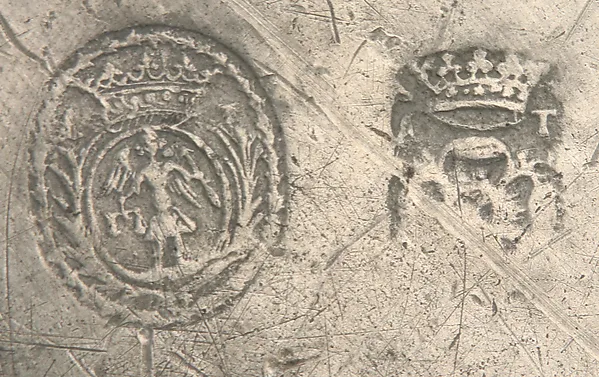
Pewter makers used pictorial touchmarks like these instead of a 925 or Sterling stamp.
Pewter, on the other hand, utilizes “touchmarks.” These are often pictorial touchmark stamps, like an angel with wings, a rose and crown, or simply the maker’s name inside a serrated circle.
If you see a stamp that says “EPNS” (Electro Plated Nickel Silver) or “Quadruple Plate,” you are looking at silver plate, not solid silver. This has a much lower auction estimate than sterling.
A third metal often sits between pewter and sterling: silver plate. Its marks are easy to misread as hallmarks, so it helps to know the main families.
Sheffield plate was made by fusing a thin sheet of silver to a copper ingot and rolling the two together, a method in use from the 1740s until electroplating, patented by Elkington in 1840, replaced it. Look at a cut or rolled edge: on Sheffield plate the copper core often shows as a thin line. Some makers struck small marks that imitate hallmarks, but a piece without a full British set of marks (maker, lion, assay office and, before 1999, a date letter) is usually not British sterling.
Mark
Usually means
Pictorial touch mark (rose and crown, angel, maker’s name in a cartouche)
Pewter; a maker’s mark, not an assay mark
EPNS
Electroplated nickel silver: silver plate over a copper-nickel-zinc alloy, after 1840
EPBM
Electroplated Britannia metal: silver plate over a pewter-like tin alloy
A1, “Quadruple Plate”
A maker’s grade for the plating, not a measure of silver content
Lion passant with an assay office mark and date letter
British sterling silver
What is the “Touch and Tone” test?
If the marks are worn away, a common issue in a condition report for 18th-century pieces, you must rely on physical properties.
The Ring Test: Tap the edge of the item gently with your fingernail—ideally something like a tarnished silver bowl where resonance is easiest to hear.
Silver: Will produce a clear, bell-like ring that resonates for 1-2 seconds.
Pewter: Will produce a dull, dead “thud.” There is no resonance because the metal is softer and denser.
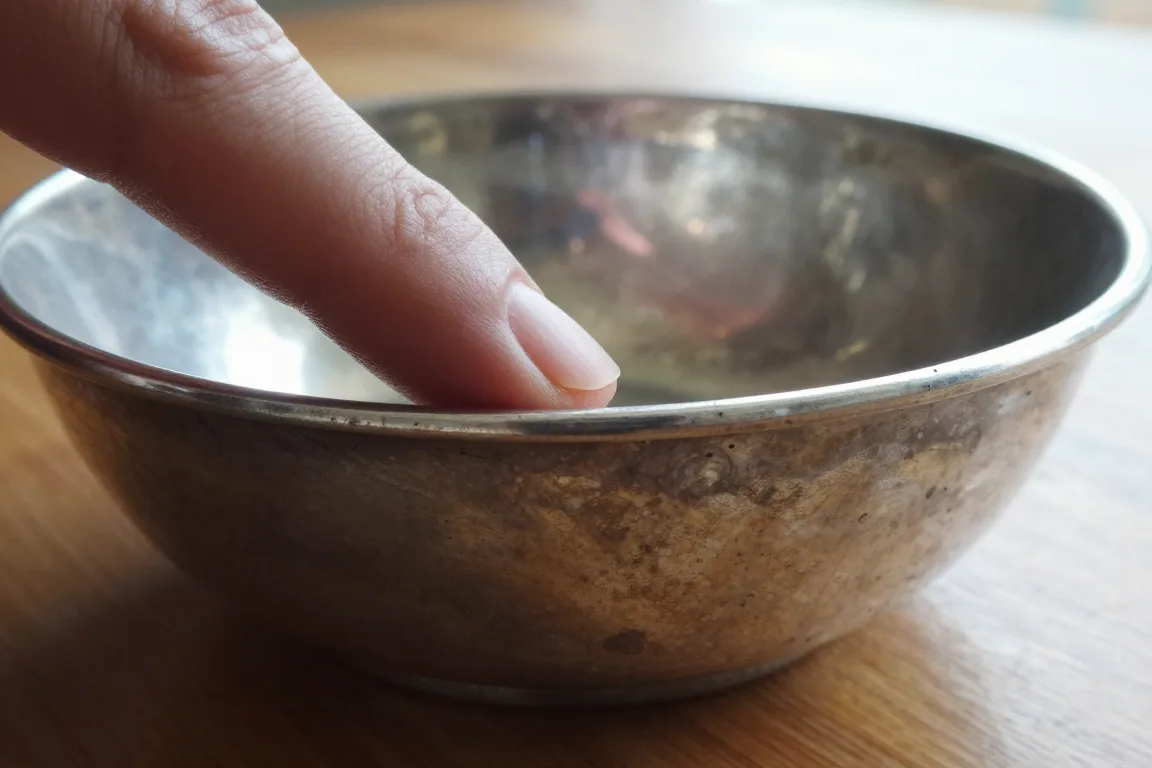
Tapping the rim lightly: silver gives a longer, clearer ring than pewter.
The Hardness Test: Pewter is significantly softer than silver. If you examine a pewter tankard, you will often see many small dings, scratches, and dents. It feels somewhat “greasy” or soft to the thumb.
Sterling silver is harder. While it scratches, it doesn’t dent as easily as pewter. Be careful not to press too hard on soft pewter handles, or you might require professional restoration or conservation work later.
How does the patina differ between the two metals?
The color of the tarnish is often the quickest giveaway, before you even pick the piece up.
Silver tarnish (oxidation) ranges from yellow to deep purple and eventually black. However, underneath that tarnish, the metal is a brilliant, cool white. If you rub a small spot with a cloth, sterling silver shines up incredibly bright.
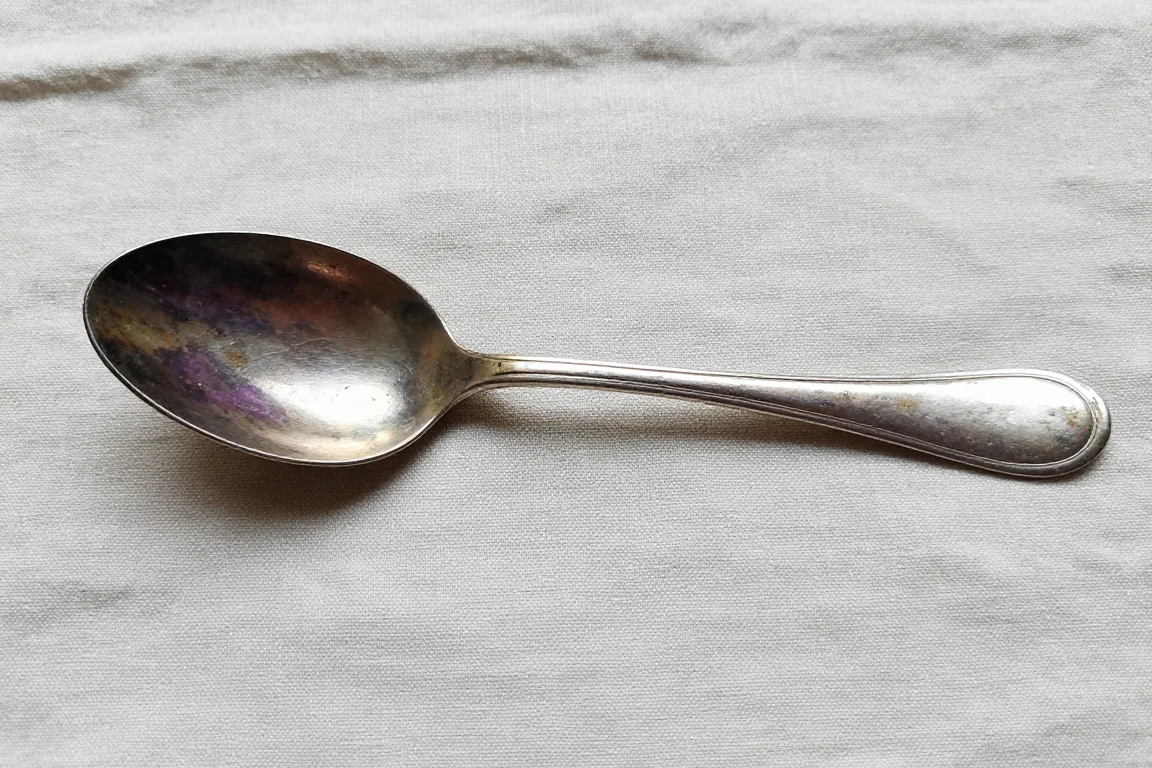
Silver tarnishes dark but polishes to a bright white; pewter only dulls to grey.
Pewter oxidizes to a dull matte grey finish. It resembles lead (and antique pewter often contained lead, so be careful). It rarely gets “black” the way silver does; it just gets darker grey and distinctively flat.
If you are examining handles or knobs, you might also find that the hardware tells a story about the item’s age. This technique is similar to what we cover in our guide on The Secret Language of Furniture Hardware: Dating Knobs and Pulls, where base metals often reveal the true age of a piece.
Yes, and this is specific to the US market. Before 1868, the US didn’t strictly use the Sterling standard. We used Coin Silver (90% silver), made from melted-down currency.
Coin silver items, like authentic coin silver spoon, are often marked “Pure Coin,” “Coin,” or simply with the retailer’s name and a city (e.g., “R&W Wilson Philada”).
Coin silver spoons are often marked COIN or with a maker and city instead of 925.
Do not mistake these for pewter just because they lack the “.925” mark. Coin silver has high provenance value and is highly sought after by collectors of early American Americana.
However, be wary of forgery detection. Unscrupulous sellers may stamp fresh marks on old pewter. If the mark looks too crisp on a piece that looks battered, proceed with caution.
Ready to put these tests into practice? Browse vintage pewter and silver collections on eBay to compare hallmarks, patinas, and touchmarks on real pieces before your next estate sale.
No. Modern pewter is mostly tin, usually 90% or more, hardened with small amounts of antimony and copper; older pewter could also contain lead. None of these alloys contain silver, so a piece stamped “pewter” has no silver value. Do not confuse Britannia metal, a hard pewter of tin, antimony and copper, with Britannia silver, a British silver standard of 95.8% marked with a seated figure of Britannia.
Does the magnet test work on pewter?
Only to rule out steel. Neither pewter nor silver is magnetic, so a magnet cannot tell them apart. If a magnet grabs the piece firmly, there is iron or steel underneath, which points to a plated item rather than pewter or solid silver.
Weight: silver is heavier for its size
Sterling silver has a density of about 10.4 g/cm³, while pewter is close to tin at about 7.3 g/cm³. Two pieces of the same size and shape therefore feel noticeably different: the silver one is heavier in the hand. Treat this as a comparison, not proof, because thickness and hollow construction change the weight as much as the metal does.
Hardness: pewter is softer
Pewter is softer than silver, which is why old pewter often shows dents, bent rims and rounded, worn edges. Tin, its main metal, rates about 1.5 on the Mohs scale, against roughly 2.5 to 3 for silver. Avoid scratch-testing a piece you care about: both metals mark easily, and a scratch lowers value.
Authentic antique keys are identified by their material (usually hand-forged iron or brass), specific bit patterns designed for warded or lever locks, and the shape of the bow (handle). Valuable examples often date from the 18th or 19th centuries, feature intricate skeleton key designs, or bear stamped maker marks like “Yale” or “Corbin” from the late 1800s.
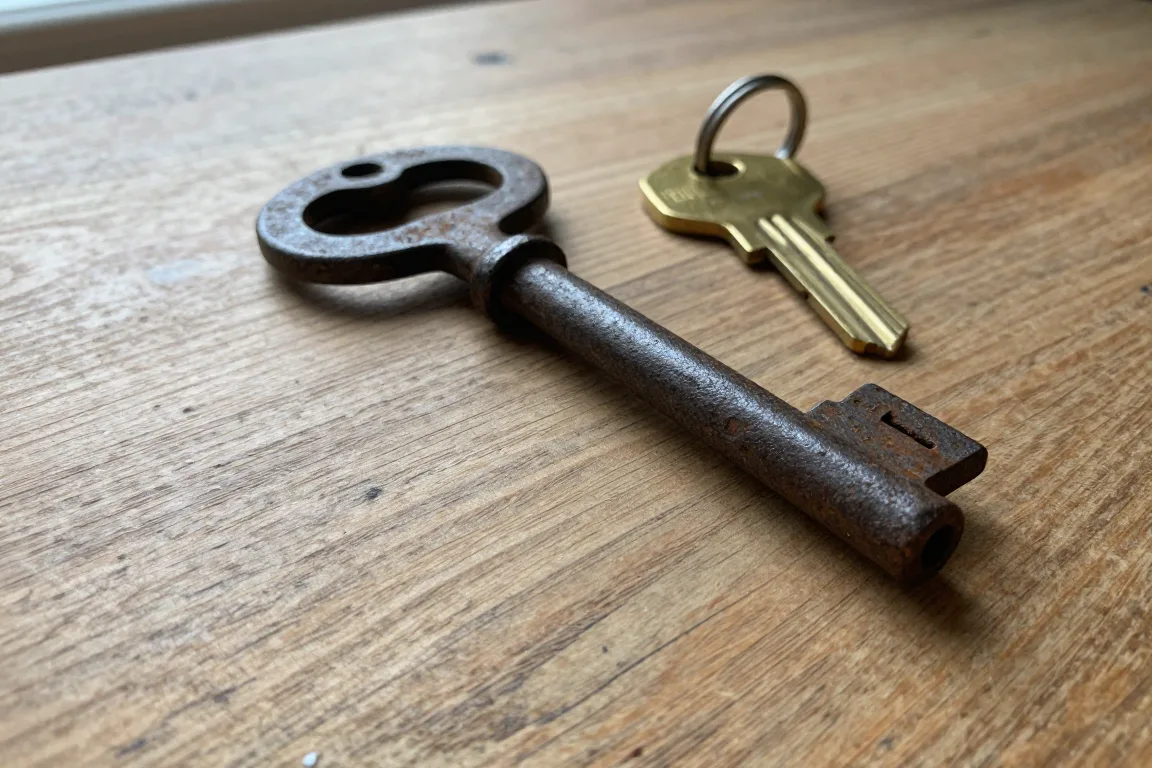
A hand-forged iron key next to a modern house key shows the difference in size and construction.
How can I tell if my old key is actually antique?
The first step in authentication is looking at the manufacturing quality. Genuine antique keys were not mass-produced until the mid-19th century.
Before 1850, blacksmiths hand-forged keys from iron. Look for irregularities in the metal, signs of hammering, or a lack of perfect symmetry. These imperfections are actually positive indicators of provenance.
If the key feels too light or has a seam running down the side, it is likely a modern die-cast reproduction made of zinc or pot metal. Authentic keys have a distinct heft.
What specific features indicate high value?
Collectors in the US market look for specific types. The “skeleton key” is the most common, but specific variations drive the fair market value up.
Folding Keys: These rare items from the 1800s fold into a handle like a pocket knife. They were designed for gentlemen to carry without tearing their pockets.
Bit Complexity: The “bit” is the part that turns the lock. Simple rectangular bits are common. Bits with intricate cuts, crosses, or shapes (like a castle turret) were made for complex warded locks and are highly desirable.
Barrel Type: A hollow barrel usually indicates a key for a furniture piece or cabinet, while a solid shank often points to a door lock.
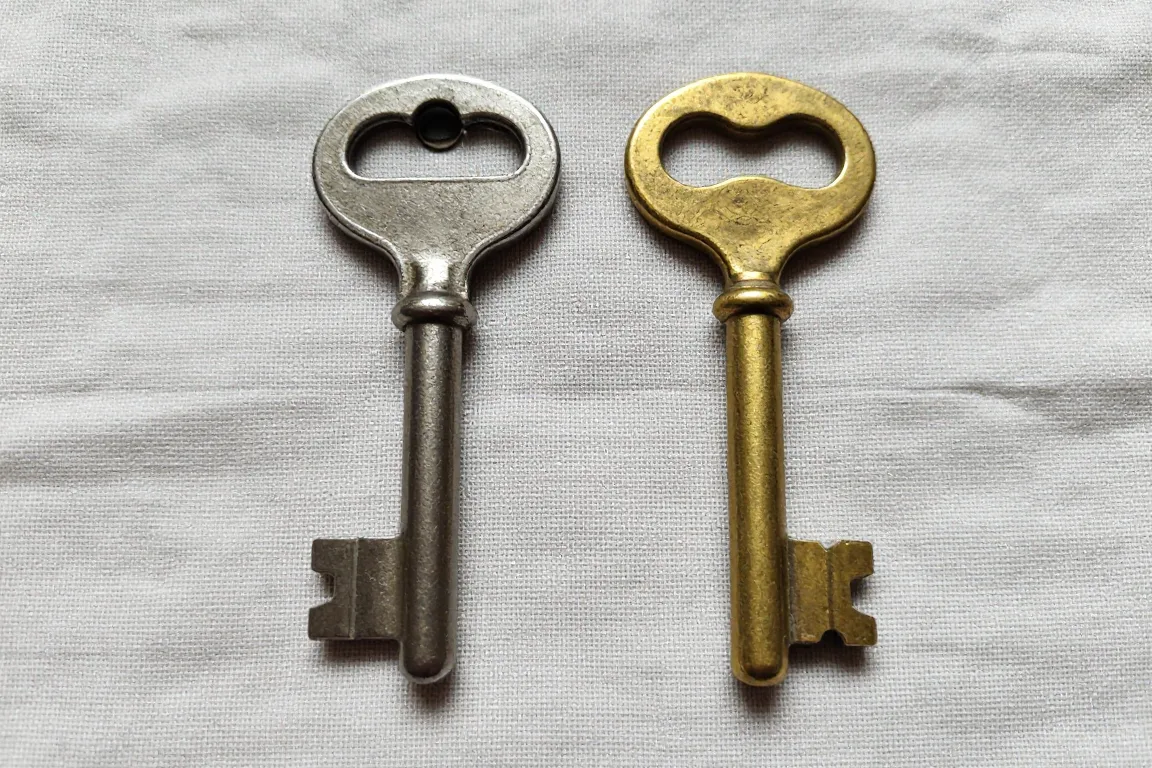
A steel key and a brass key of a similar simple pattern.
What do stamped markings mean on old keys?
In the late 19th century, manufacturers started stamping their names. Finding a name is excellent for attribution.
Common American makers like Yale & Towne, Sargent, Corbin, and Russwin often stamped their logos on the bow. While common Yale keys might only be worth a few dollars, early examples with rare logo variations can fetch $50 or more at auction.
Railroad keys are a specific sub-niche. A key stamped with “U.P.R.R.” (Union Pacific Railroad) or “Santa Fe” carries significant historical weight and collector interest.
If you find a number stamped on the key, it is usually a biting code or a room number (for hotel keys). This helps with appraisal but usually doesn’t increase value unless the hotel itself is famous.
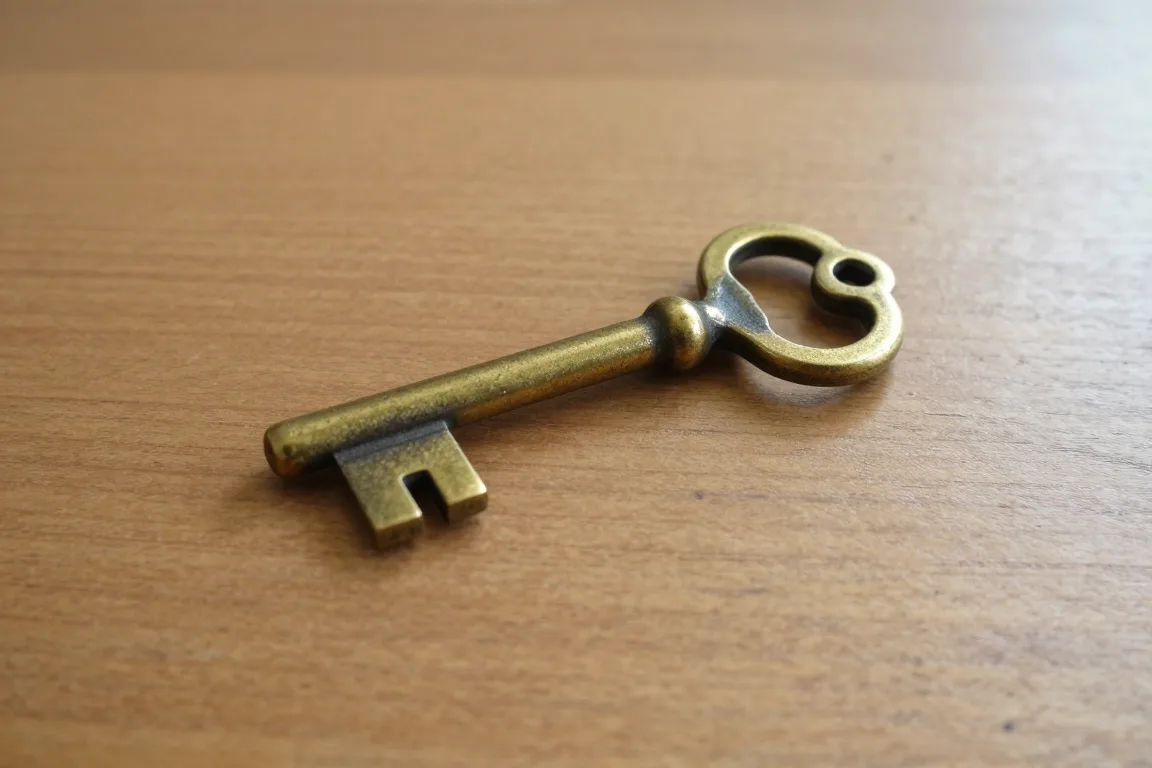
Late 19th-century makers often stamped their name on the key bow, so check it in good light.
Are rusty keys worth anything?
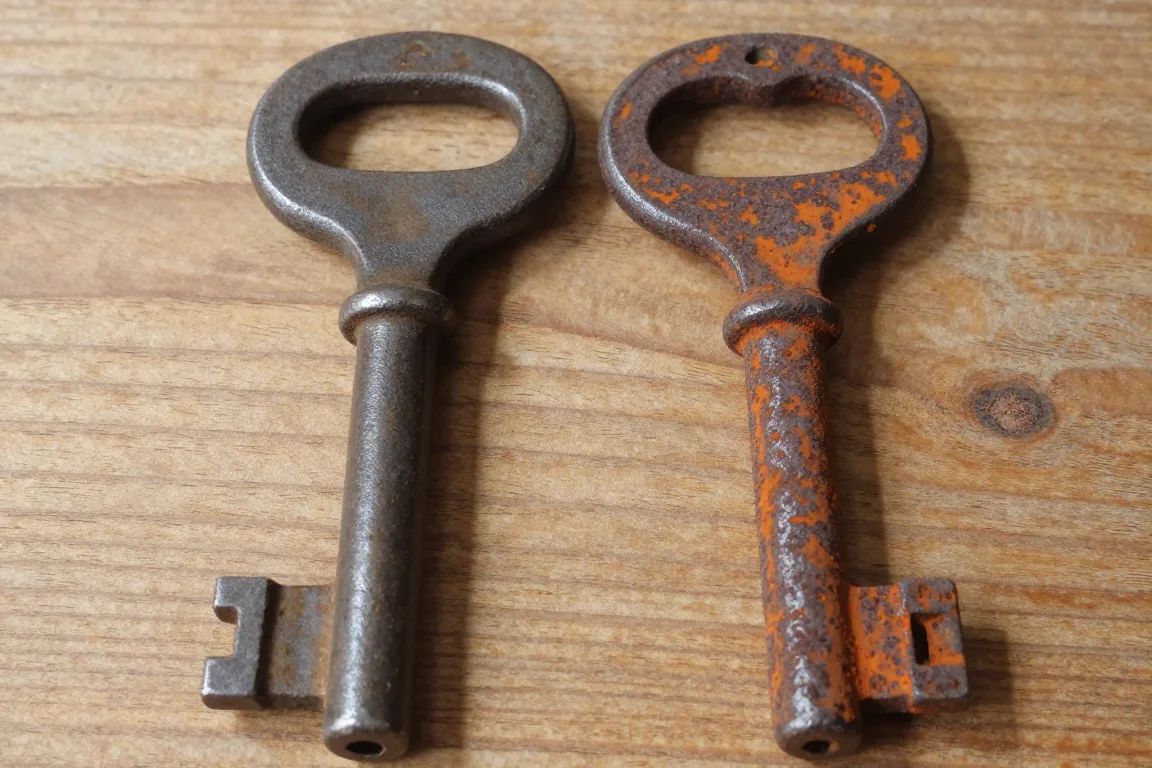
Condition is tricky with metal. A little rust is expected and contributes to the patina, the surface character built up over decades.
Do not clean it aggressively! Scrubbing an antique key with wire wool destroys the natural oxidation layer that collectors prize. This is a form of conservation failure that ruins value.
However, if the rust is so deep that the metal is pitting or flaking, the condition report would be “poor,” significantly lowering the auction estimate. Heavy corrosion can also make it impossible to read maker marks.
Left: even dark patina. Right: flaking orange rust that has started to pit the metal.
The best keys often hide in “junk lots” at estate sales. Look for jars filled with random hardware.
Thrift stores often bag them up in plastic ziplock bags for a few dollars. Keep an eye out for “presentation keys”, oversized, ceremonial keys often made of brass or gold-plated metal. These were never meant to open doors but served as symbolic gifts.
Always check the provenance if you can. A key with a tag saying “Grandma’s chest, 1910” adds a layer of history that buyers love.
Spotting a reproduction is vital. If a key looks “antique” but has a shiny, painted black finish, it is likely a cheap decor piece from a hobby store, with zero replacement value.
Real iron turns dark gray or brown with age; it does not stay jet black. Distinguishing these details takes practice, or a quick scan with the right tool.
On British silver, a walking lion means sterling, an anchor means the Birmingham Assay Office, and the date letter shows the year the piece was assayed.
Read the row as a set: the lion is a standard mark, the anchor is a town mark, and neither one dates the piece on its own. This guide explains each mark, the lions that are not the English sterling lion, and the anchors that are not Birmingham hallmarks. It draws on the assay offices’ own pages, museum catalogue records and published hallmark references, all read on 4 October 2026; no object was examined for it.
What a British hallmark row tells you
A British hallmark row is an official record of metal and fineness, struck after the piece was tested, not a maker’s logo. Assay Office London describes a hallmark as “a set of component marks applied to articles of the precious metals gold, silver, platinum or palladium” and says it “Means that the article has been independently tested”. The system is old: Wikipedia’s hallmark entry records that “In 1300, King Edward I of England enacted a statute requiring that all silver articles must meet the sterling silver standard”.
On antique British silver you will usually find four marks, often in a line on the back of a spoon handle or under a base:
Sponsor’s mark: initials in a shaped surround, for the person or firm that sent the piece for testing.
Standard mark: the metal standard, usually the lion for sterling.
Town mark: the assay office that tested it, such as the anchor for Birmingham.
Date letter: the year of marking, read against that office’s table.
A fifth mark, the sovereign’s head in profile, shows that duty was paid; the silver dictionary silvercollection.it notes “It was introduced in 1784 and lasted until 1890.” Modern marks differ. Assay Office London says of the number in parts per thousand: “This numerical format was made compulsory in 1999”. Our guide to antique marks and signatures shows how a hallmark row fits among other marks on an object.
What the lion passant means
A lion passant, a lion walking with one forepaw raised, is the English mark for sterling silver: 925 parts of silver in 1,000. silvercollection.it puts it this way: “The 925/1000 (sterling) silver fineness is certified in London and other British Assay Offices by the use of the” lion passant mark, and Wikipedia records that “In 1544 a lion passant was added to English marks”. On older pieces the lion’s head is turned to face you (passant guardant); on later ones the lion looks ahead in profile. Both are the sterling lion, and neither tells you a year by itself.
Britannia silver is the higher standard. The Britannia silver entry explains that “This standard was introduced in England in 1697” to replace sterling for wrought plate, that the sterling lion was replaced with “the figure of a woman commonly called Britannia”, and that London’s town mark became a “lion’s head erased” (a lion’s head cut off at the neck). It adds that “sterling silver was again authorised for use by silversmiths from 1 June 1720”, and that since 1999 “Britannia silver has been denoted by the millesimal fineness hallmark 958”. So a Britannia figure on its own does not mean a piece is from 1697 to 1720; read the date letter too. Our guide to what 925 means on silver covers the number marks used today.
No lion at all is a warning sign on British-style marks. Platers copied the look of hallmarks: silvercollection.it notes that “The marks of electroplated silver were often inspired to the hallmarking used for sterling silver.” A row of small symbols with EPNS, A1 or a maker’s trade name usually means plate; see what EPNS means on silver, the A1, Triple Plate and IS marks guide and our sterling versus plate tests.
Lions that are not the English sterling lion
A lion standing upright on its hind legs, a lion rampant, is a Scottish standard mark, not the English sterling lion. silvercollection.it notes that “Different standard marks are used in Scotland”: its mark list gives “thistle mark (Edinburgh)” and “lion rampant mark (Glasgow and Edinburgh from 1975)”. If your piece shows a lion rampant beside a castle, read it against Scottish tables, not English ones; Glasgow’s own town mark was the “tree, fish and bell”.
A walking lion beside an anchor and a letter G is usually American, not British. Hillwood Estate, Museum and Gardens catalogues a Gorham hand mirror, made in the USA in 1919 to 1920, with the marks “walking lion, anchor, Gothic G for Gorham, STERLING“. That row is the Gorham company’s trademark; it has no British town mark or date letter. Our American silver hallmarks guide covers Gorham and other American marks.
British-looking rows also appear on colonial silver that was never assayed in Britain. silvercollection.it’s note on duty dodgers and pseudo hallmarks explains that “Local silversmiths used to identify their works with series of symbols imitating the English hallmarks”, marks “with no official value and are commonly called” pseudo hallmarks.
What the anchor means on silver
An anchor in a British hallmark row is the town mark of the Birmingham Assay Office, which has used it since the office was founded. The Birmingham Assay Office entry records that “The Birmingham Assay Office opened on 31 August 1773”. It also repeats a story that the symbol came from the Crown and Anchor Tavern on the Strand, where the Birmingham and Sheffield delegations met, and that “It is said that the choice of symbol was made on the toss of a coin”. Treat the coin toss as tradition.
Read the anchor with its neighbours: a lion passant beside it means Birmingham sterling, and the letter beside it must be dated from a Birmingham table. Modern anchors need one more check. The same entry notes that “The anchor mark no longer indicates that an item was assayed in Birmingham”, because “In July 2016 Birmingham Assay Office began striking its hallmark via a subsidiary in Mumbai, India.” Our full Birmingham anchor hallmark guide covers the office’s history, its gold marks and its import marks.
Quick reference: lions, anchors and town marks
The table below sums up the lions, anchors and town marks you are most likely to meet on antique British silver, and what to check before you rely on each one.
Mark
What it tells you
Check before you rely on it
Lion passant (walking)
English sterling standard
It gives no year by itself
Britannia figure
Britannia standard, higher than sterling
Optional after 1720, so read the date letter
Lion rampant
Scottish sterling standard mark
Use Scottish date tables
Thistle
Edinburgh standard mark
Used with the Edinburgh castle
Anchor
Birmingham Assay Office
Modern anchors may be struck overseas
Leopard’s head
London Assay Office
Crowned until 1820, uncrowned from 1821
Crown
Sheffield, on silver until 1973
A rose on silver is a later Sheffield mark
Lion, anchor and G
Gorham, an American maker
Not a British hallmark
The London dates come from silvercollection.it’s mark list (“London leopard’s head crowned (until 1820)”, “London leopard’s head uncrowned (1821-present)”), which also gives Chester as “a sword erect between three wheat-sheaves (1784-1962)”. The Sheffield row comes from the Sheffield Assay Office itself: “The Crown was used by Sheffield Assay Office to mark silver from 1773 until 1973”, after which it “began to use the Rose for both silver and gold”.
How to date British silver from the date letter
The date letter records the year a piece was assayed and marked, not necessarily the year it was made, and it can only be read against the table of the office that struck it. silvercollection.it explains that “Series of alphabetical letters were chosen to indicate the year of assaying”, and that “Any Assay Office adopted its own cycle of date letters so that only from the 1975 the four surviving Assay Offices use a uniform system of dating”. The same capital letter therefore means different years in London, Birmingham, Sheffield or Edinburgh.
Older letters also straddle two calendar years. In London the letter began as the mark of the Assay Master, “who was sworn in every May”, so a letter covers parts of two years. Today Assay Office London says “A non-compulsory mark, the date letter changes annually on January 1st.” and that “The font, case, and shield shape all change so each can only indicate one specific year.”
To date a piece, find the town mark first, then match the letter’s case, typeface and the shape of its shield in that office’s table. Our date letter guide holds the letter tables. A modern piece with no letter is not necessarily damaged: since 1999, according to Wikipedia, “the date letter is no longer a compulsory part of the hallmark”.
The initials in a shaped surround are the sponsor’s mark, which names whoever registered the mark and sent the piece for testing: often the maker, but not always. Assay Office London says that although it is often called a maker’s mark, “its purpose has always been to establish responsibility rather than identify the manufacturer”. The Sheffield Assay Office adds that the mark “will only tell you who registered the mark and submitted the item to be tested and hallmarked” and that this is not always the manufacturer.
Initials alone are not an attribution. Sheffield explains that “The font or typeface of the initials and the particular shape of the surround are what distinguish” one sponsor’s mark from another, so two firms with the same initials can have different marks. Compare the whole mark, including its outline, with a published register or the office’s own records before you put a famous name on a piece. Our teapot identification guide shows where English silver marks sit on hollowware.
How to spot transposed and fake hallmarks
The fake that matters most on British silver is a genuine set of marks moved from another piece, so check that the marks belong to the object they are on. Historically, this was done to avoid tax. The Victoria and Albert Museum’s record of a Paul de Lamerie ewer explains that “English silver was taxed by weight after 1720”, and that “marks were sometimes cut out from smaller, lighter pieces and added to avoid them going through the assay office”. On that ewer, “In 1944 the transposed marks for this piece were removed and the ewer was re-marked.” Such pieces are called duty dodgers.
Moving marks is still an offence. Section 6 of the Hallmarking Act 1973 covers anyone who “removes any mark from an article of precious metal with intent to transpose it to any other article”, and anyone who “with intent to defraud or deceive, makes a counterfeit of any die or mark”.
Look closely at the area around the marks. silvercollection.it notes that sometimes “a line of deeper colour appears around the transposed hallmarks”, because the solder holds less silver than the surrounding metal. Check that the style of the piece fits the date letter, that the marks sit where that kind of object was normally marked, and that they are not oddly crisp or oddly worn compared with the rest of the surface. Our guide to red flags on fake silver hallmarks lists more checks. If a piece matters, ask a specialist dealer or an assay office to examine it.
Marks that mean silver plate, not sterling
A genuine British hallmark row on sterling includes a standard mark such as the lion passant. Silver-plated wares are not hallmarked, so they carry trade marks instead: letters such as EPNS (electroplated nickel silver), EPBM (electroplated Britannia metal) or EP, quality grades such as “A1”, and the maker’s own name or symbols. Many platers set small marks in a row so that they look like hallmarks at a glance. If a row has no lion, no town mark and no date letter, treat the piece as plate until proven otherwise.
What to do with your marked silver now
Work through the row in this order, and stop when you have what you need.
Photograph every mark. Light the marks from the side and photograph the whole row before you clean or polish the piece.
Name the standard and the office. Decide whether the lion is walking (English sterling), standing (Scottish) or part of a lion, anchor and G row (Gorham), then identify the town mark.
Date it from the right table. Match the date letter in that office’s table, and check that the marks look original to the object before you rely on the year.
You can generally date antique ceramic pitchers by analyzing the specific silhouette of the handle. Scrolled or high-arching handles with thumb spurs typically indicate mid-19th century Victorian styles (c. 1840-1860s), while angular, bamboo-style handles point directly to the Aesthetic Movement (1870s-1880s). A handle featuring organic, flowing “whiplash” curves that melt into the body suggests Art Nouveau (1890-1910), whereas sharp, geometric angles are definitive hallmarks of the Art Deco era (1920s-1930s).
How can I tell if my pitcher handles are applied or molded?
Before analyzing the shape, look at how the handle is attached. This is crucial for attribution.
On early 19th-century pieces, handles were often “applied.” The potter would hand-roll a strip of clay and attach it to the body before firing.
You can identify an applied handle by looking for the “terminal”, the point where the handle meets the body.
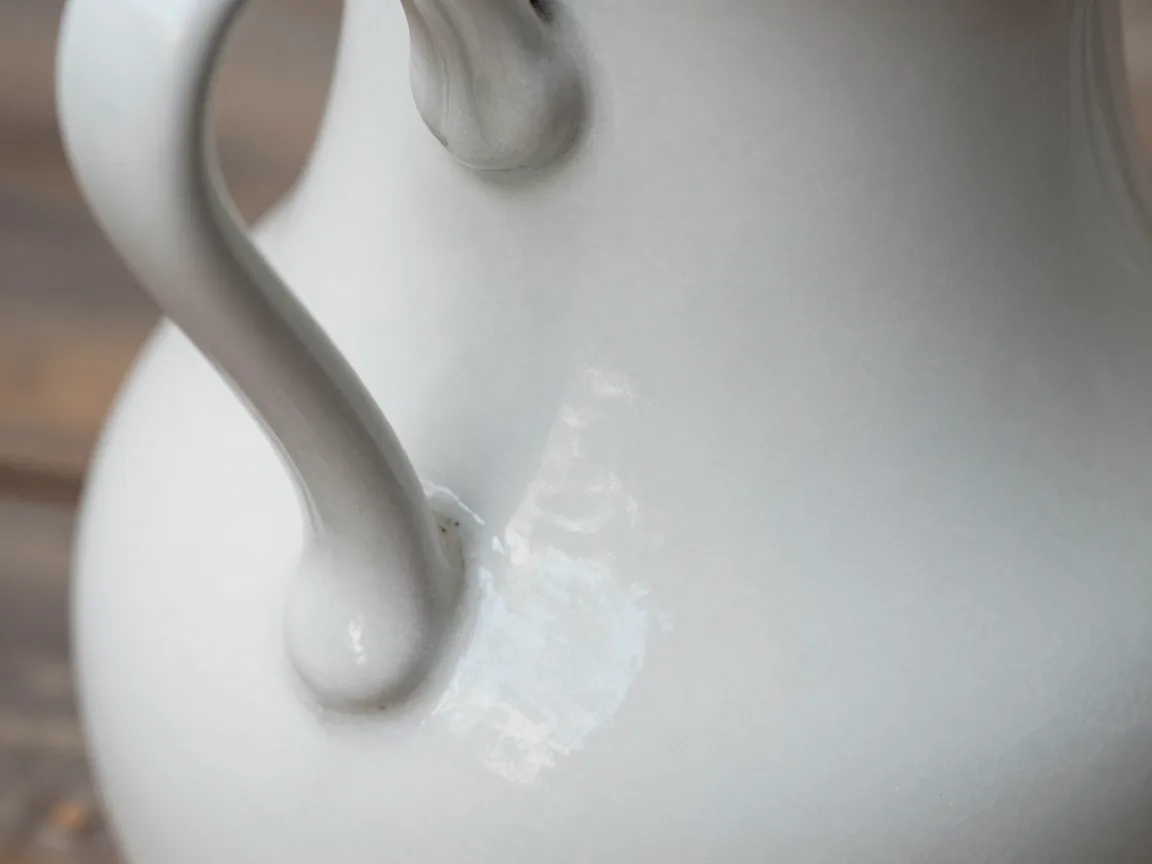
An applied handle often shows a small pressed dip where it was joined by hand.
If you see a small depression or “thumb-print” at the base of the handle, it was likely applied by hand. This suggests an earlier date, often pre-1860.
Conversely, if the handle has a visible seam line running down the center that matches the seam on the pitcher body, it was molded as one piece. This mass-production technique became standard later in the Victorian era.
What handle shapes indicate a mid-19th century pitcher?
The mid-1800s were dominated by the Rococo Revival and Gothic Revival styles.
During this period, makers like William Ridgway or Meigh produced pitchers with elaborate, scrolled handles.
Look for a “thumb spur” or rest at the top of the curve. This added grip stability but was also a stylistic choice.
If the handle mimics natural materials, like a branch, a vine, or a stag’s antler, you are likely looking at a piece from the 1850s to 1860s.
How do I identify Aesthetic Movement handles (1870s-1890s)?
The Aesthetic Movement changed everything. The flowery curves of the mid-century were replaced by an obsession with Japanese design.
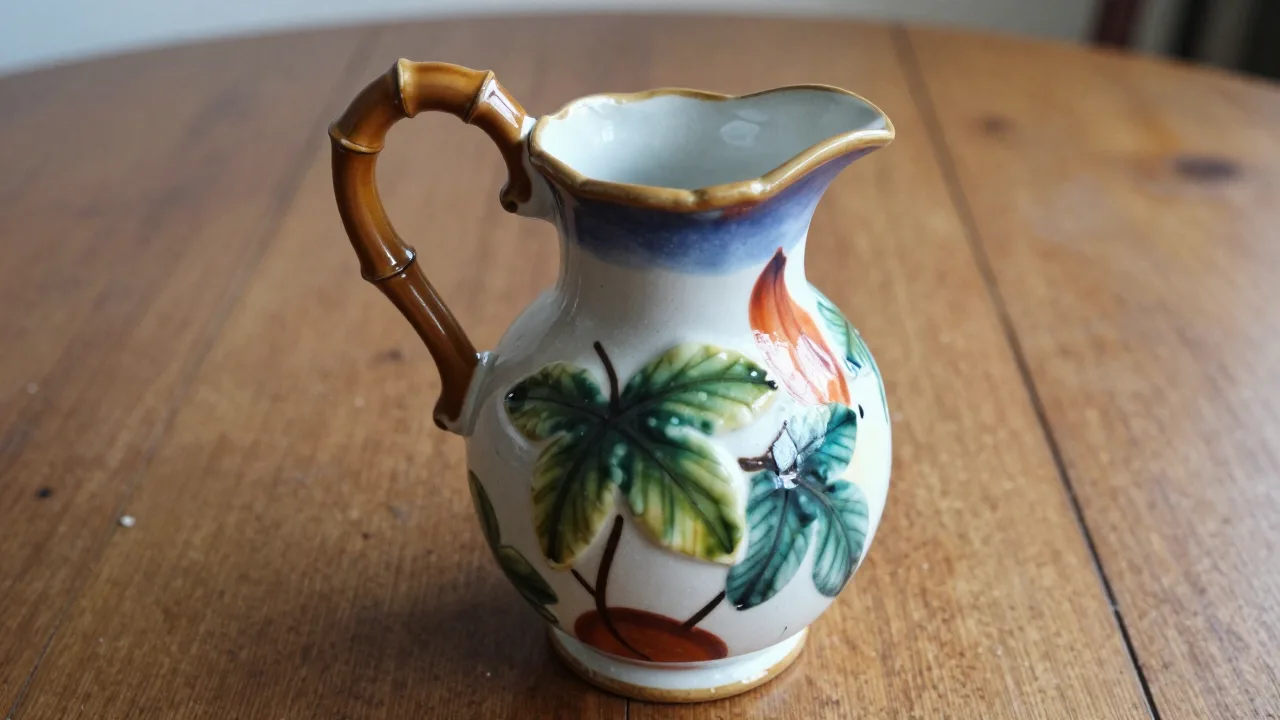
If your pitcher has a handle that looks like segmented bamboo, it is almost certainly from the 1870s or 1880s.
Majolica handles were often molded to look like bamboo or branches.
These handles are often angular and rigid. You will find them on Majolica ware and transferware alike.
Another key shape from this era is the “rope” handle, often found on anchor-themed pitchers used in coastal communities.
What is the difference between Art Nouveau and Art Deco handles?
This is where beginners often get confused, but the distinction is sharp.
Art Nouveau (1890–1910) is all about organic movement. The handles often look like plant stems extending from the base and growing upward.
Look for the “whiplash curve”, a sinuous, flowing line that lacks sharp corners.
Art Deco (1920s–1930s) did the opposite.
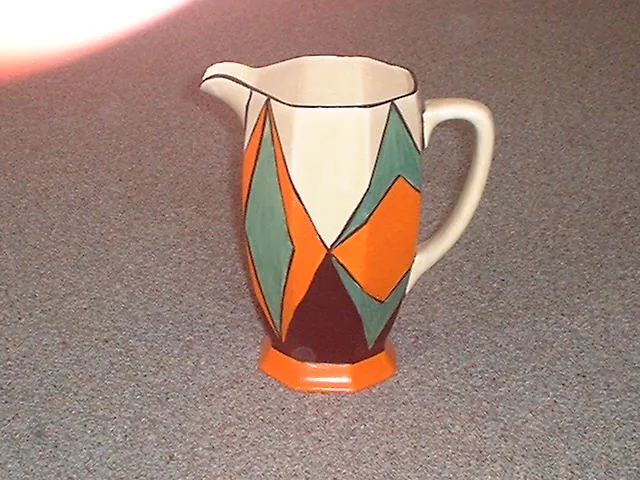
A Clarice Cliff Bizarre jug: Art Deco makers loved bold geometric shapes. Photo: Wikimedia Commons, public domain
Art Deco handles are geometric. They may be perfectly round circles, sharp triangles, or “stepped” shapes that look like a staircase.
If the handle looks architectural rather than natural, you are likely in the 1930s.
This shift from organic to geometric is distinct, similar to the evolution we discuss in our guide on Royal Doulton Identification, as they were prolific producers during both eras.
Does the condition of the handle affect fair market value?
Absolutely. The handle is the first place to check.
Because they protrude, handles are the most vulnerable part of the pitcher.
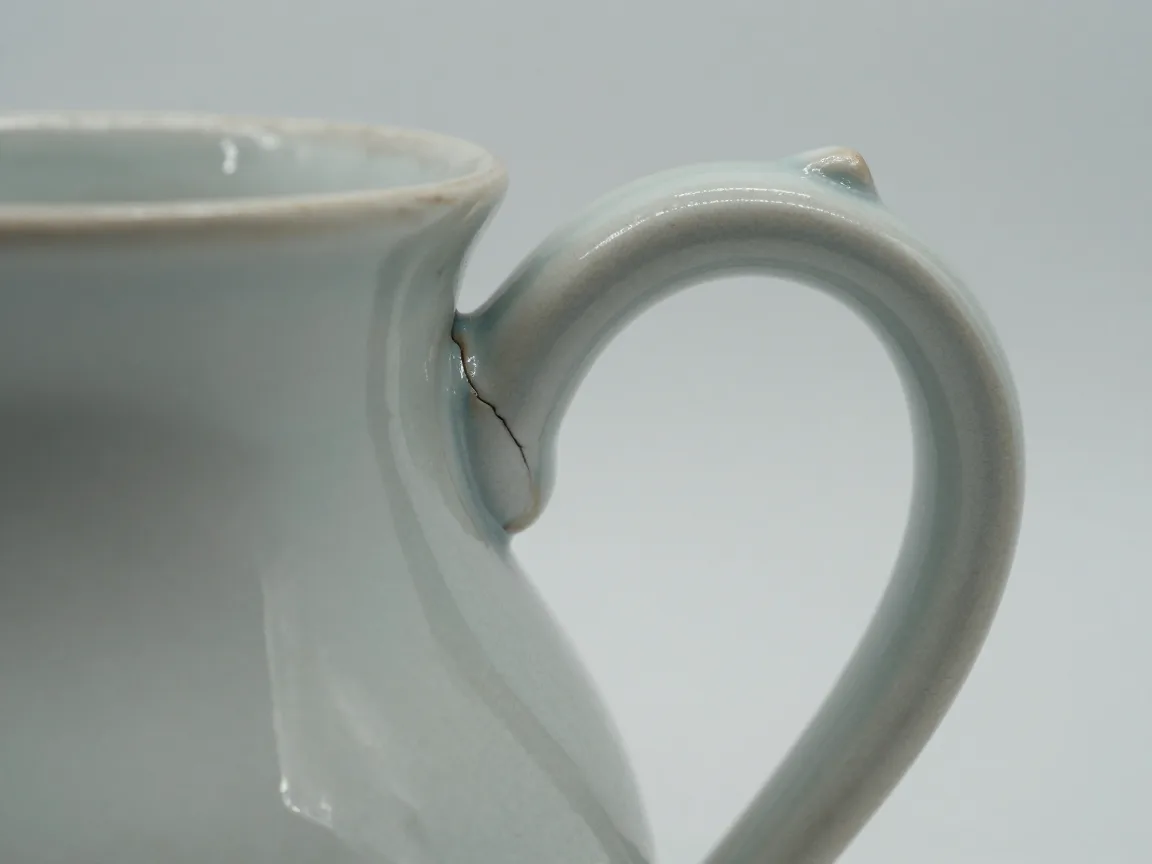
Run your finger along the inside of the handle. This is where “hairline cracks” often hide.
Check the inside of the handle for hairline cracks.
A pitcher with a re-glued handle has lost significant collector market value.
While a rare piece might still have historical value, for common transferware, a broken handle essentially reduces the item to decorative value only.
Also, check for restoration. Shine a blacklight on the handle. If it glows a different color than the body, it has been repaired.
Professional conservation can hide damage to the naked eye, but it changes the replacement value for insurance purposes.
The handle is often the most honest part of a pitcher. While marks can be forged and patterns reproduced, the physical shape of the handle usually stays true to the technology and fashion of its era.
Next time you are at an auction house or browsing a shelf, grip that handle. If it feels like a bamboo stalk or a geometric block, you are halfway to a successful authentication.