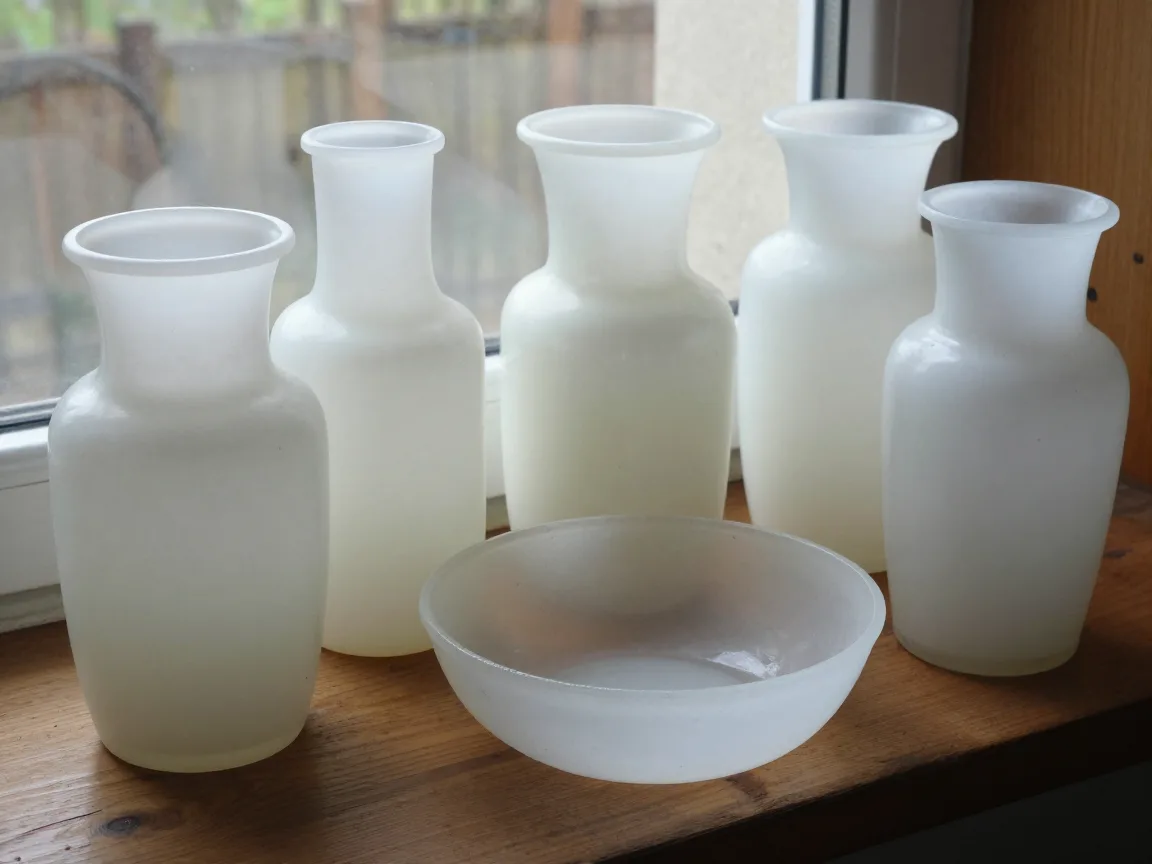
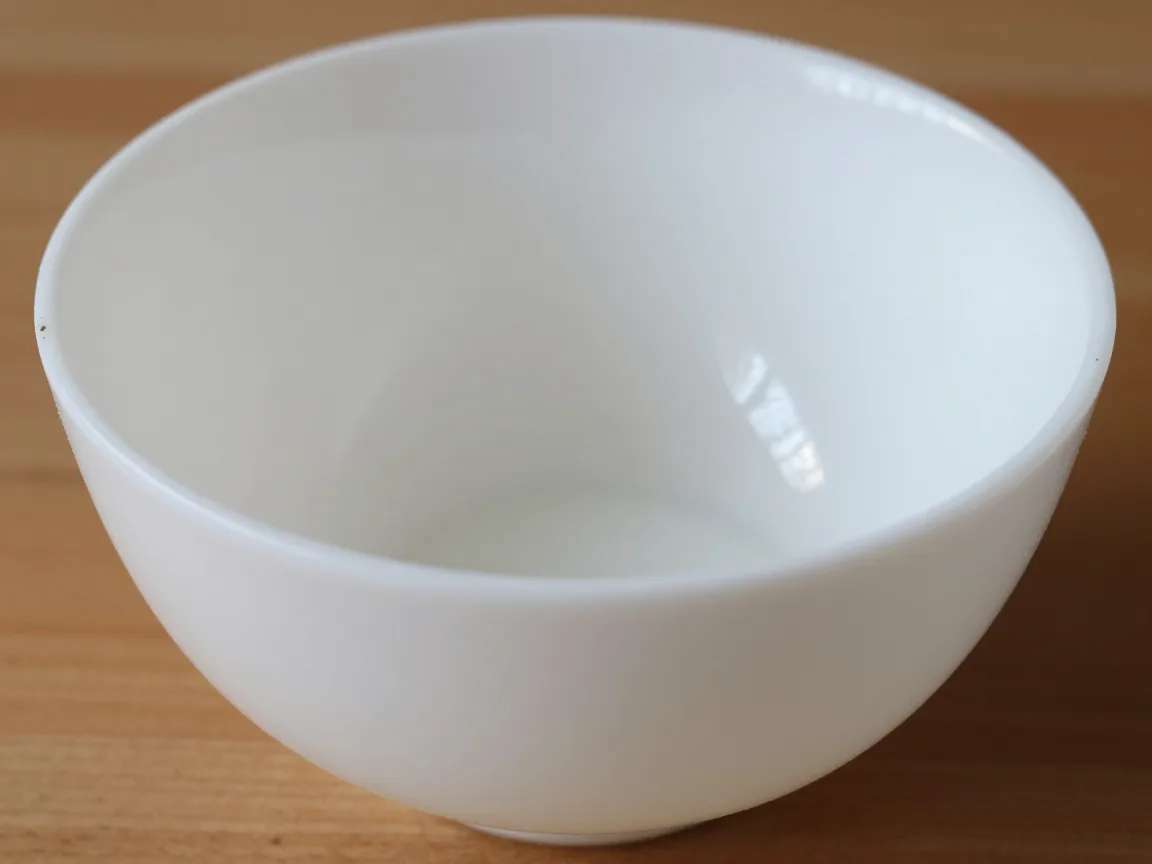
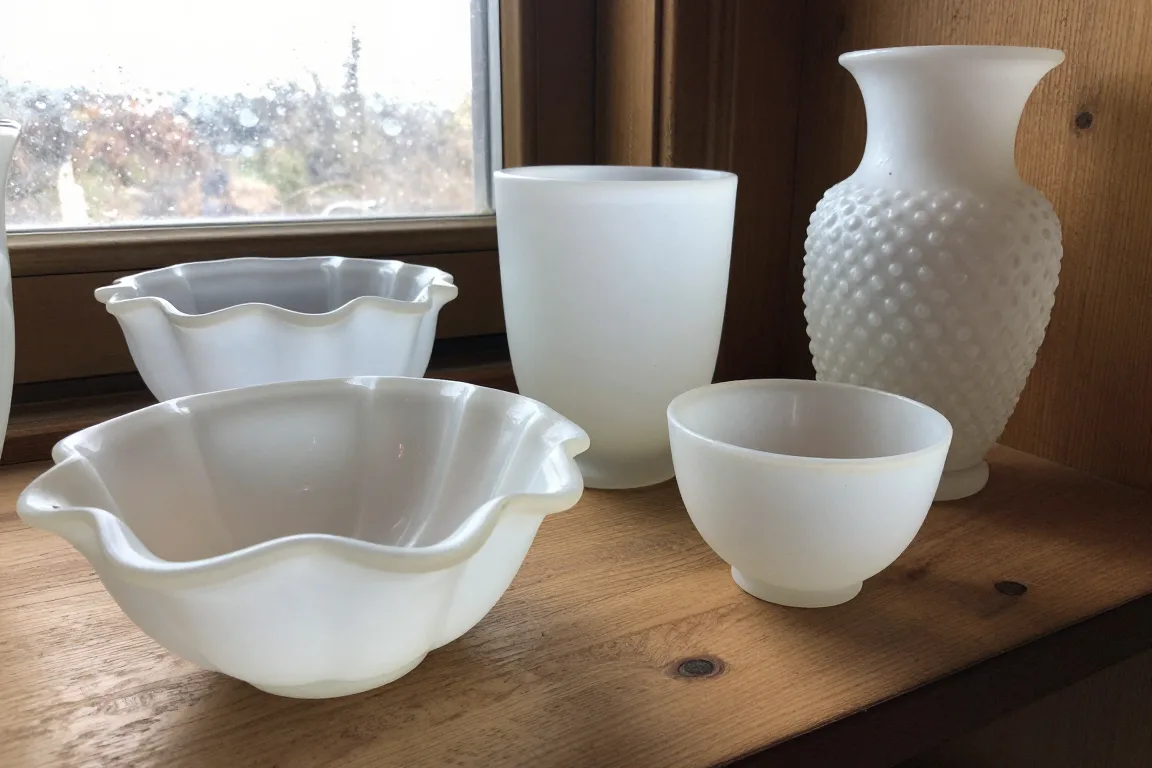
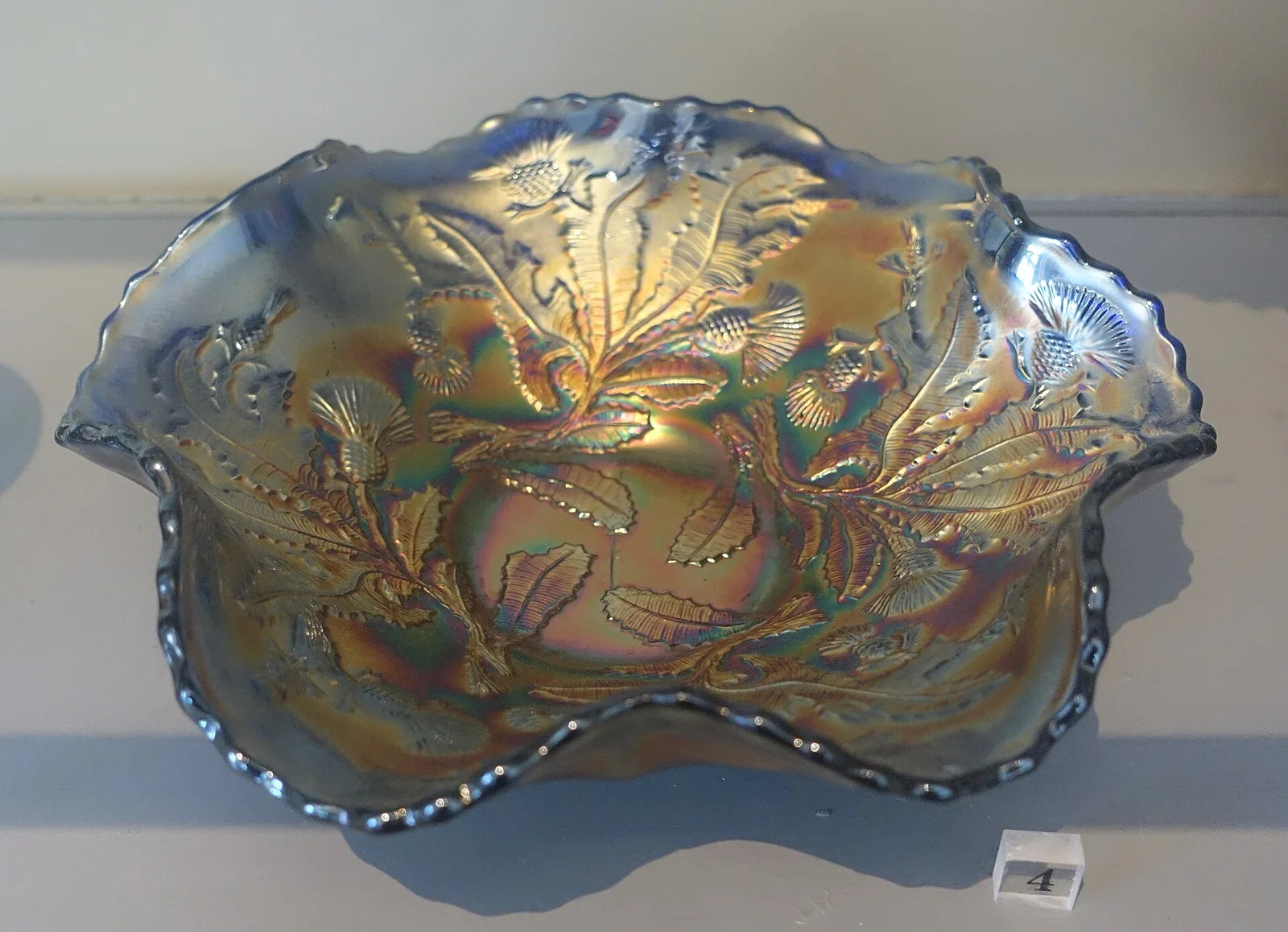
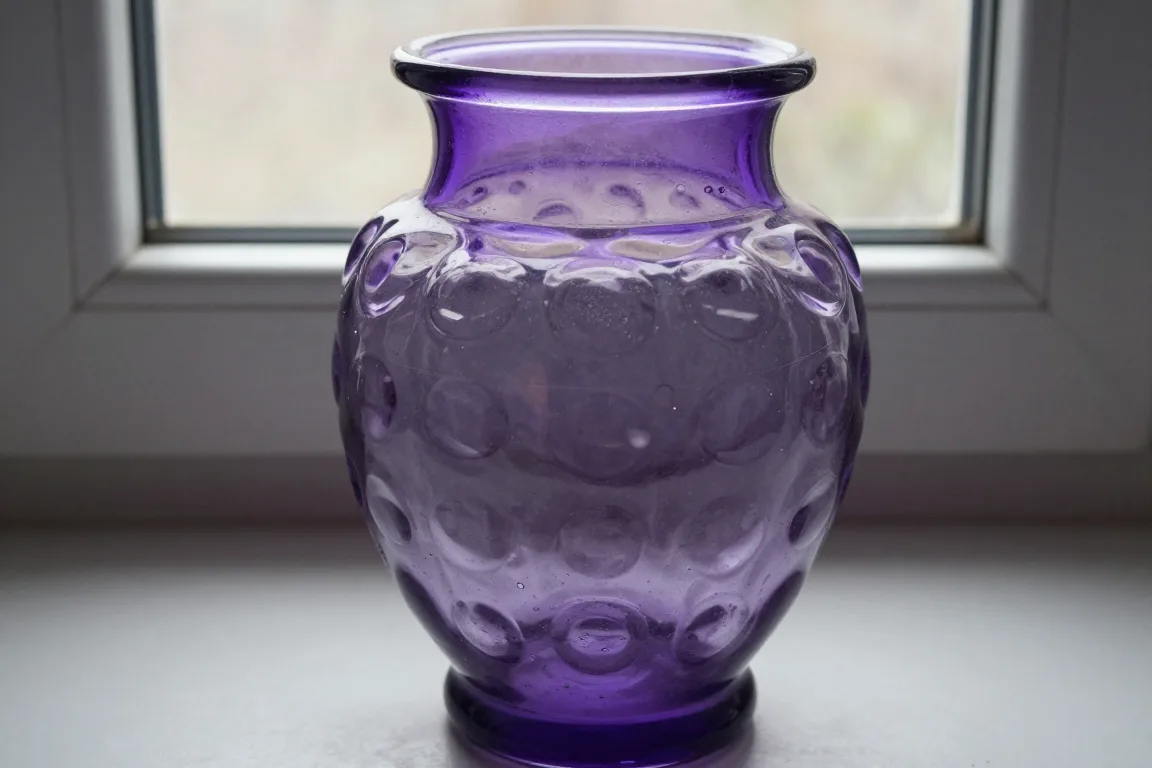
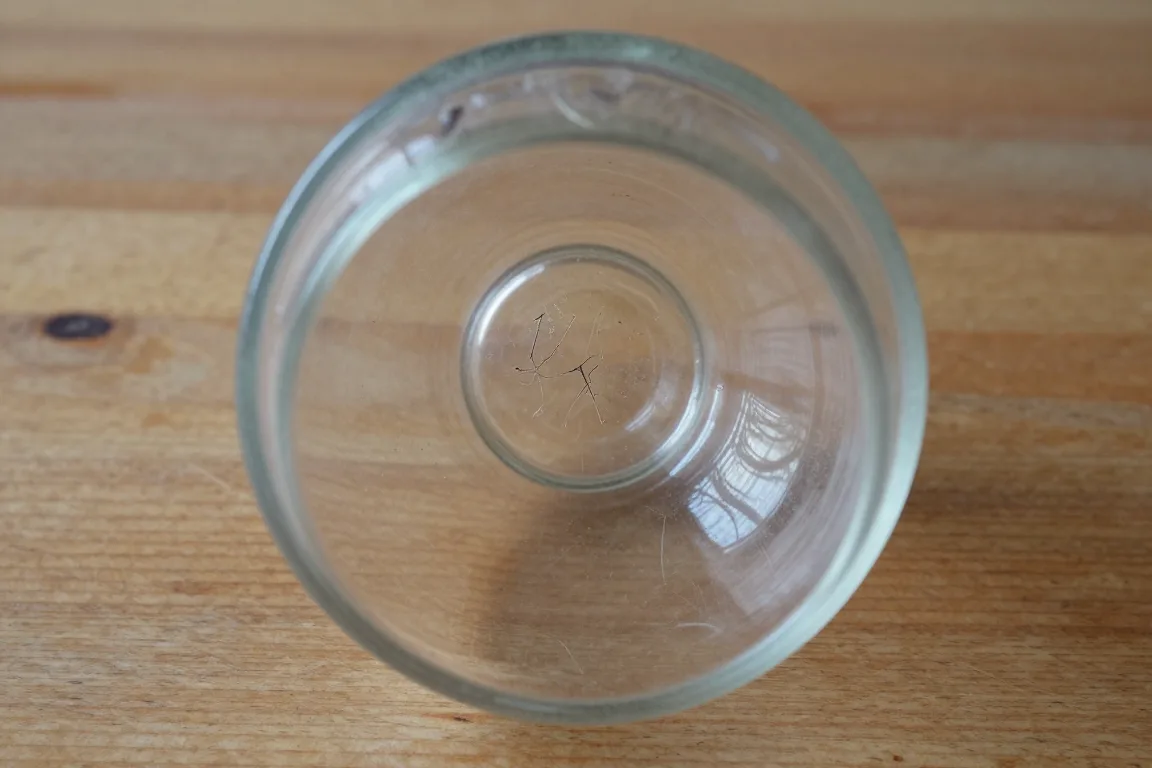
Authentic antique milk glass is defined by its dense, opaque white color and often displays a “Ring of Fire” (haloes of iridescent reds or blues) when held up to natural light, particularly in pieces made before 1900. Key makers to look for include Fenton, Westmoreland, and McKee. Genuine pieces feature sharp detail in pressed glass patterns or a rough pontil mark on older blown glass.
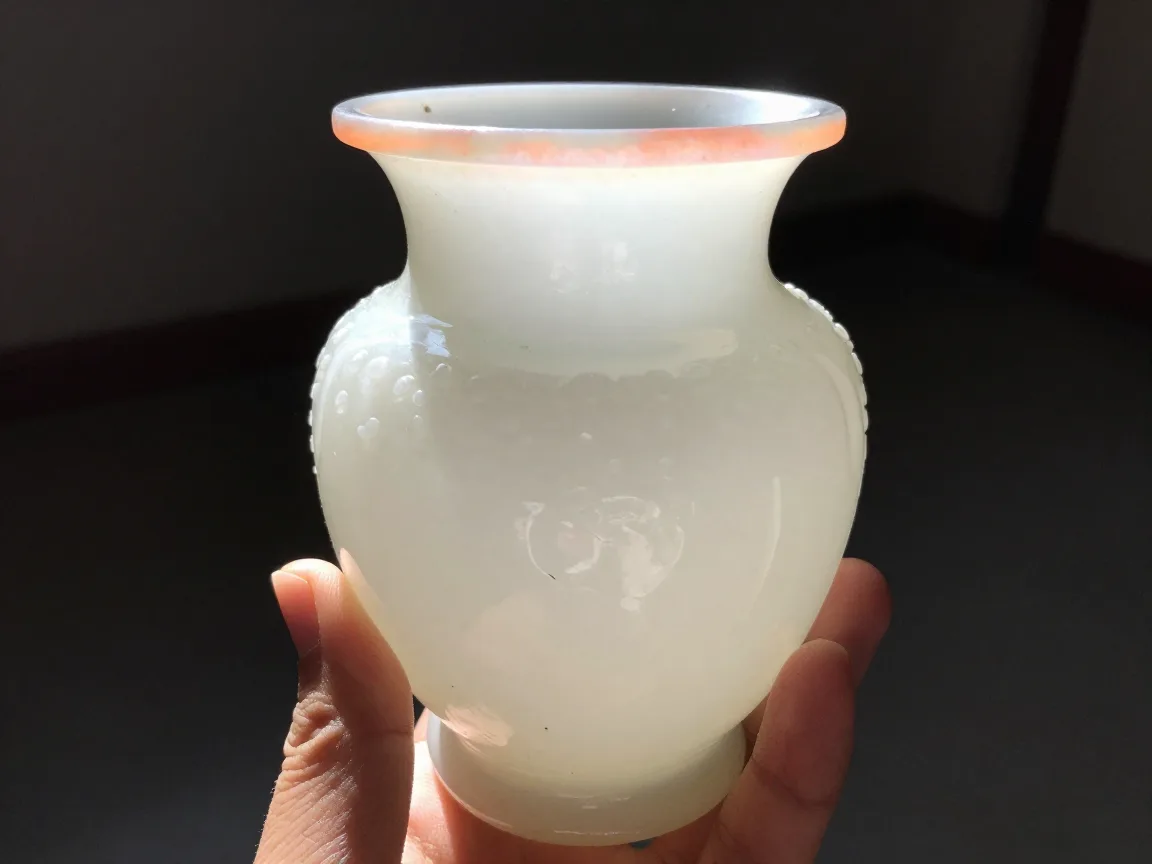
Some older milk glass shows a warm glow at the edges when held to strong light.
What exactly is milk glass and why was it made?
Milk glass was originally developed in 16th-century Venice as a cheaper alternative to porcelain. However, the pieces you will likely encounter in US thrift stores date from the Victorian era (1800s) through the mid-20th century.
Chemists added opacifiers like bone ash, arsenic, or tin oxide to the molten glass mixture. This created that signature creamy, opaque white appearance.
While the Victorian era produced delicate, translucent pieces often called “opal glass,” the 20th century saw a boom in mass-produced pressed glass. Companies like Fenton and Westmoreland churned out durable, decorative pieces that became staples in American homes.
How can I tell if my milk glass is vintage or a reproduction?
Forgery detection is a critical skill for any antique dealer. The market is flooded with cheap reproductions from the 1960s and later imports.
First, check the opacity. Early Victorian milk glass often has a translucence to it. If you hold it up to the sun, you should see the “Ring of Fire”, a swirl of colors, usually oranges, reds, and blues.
If the glass is stark, flat white and looks like glossy plastic, it is likely a modern reproduction or late 20th-century mass production with little fair market value.
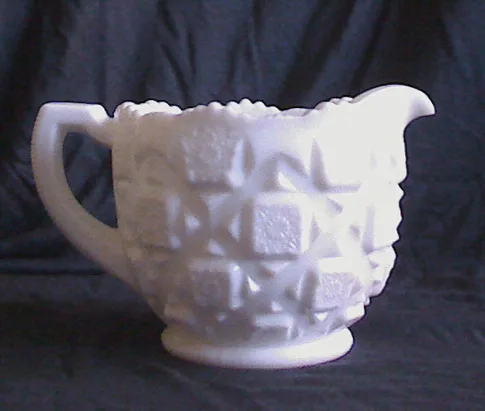
Westmoreland's Old Quilt pattern. Many later pieces carry an embossed WG mark on the base.
Next, look for markings.
Many high-quality pieces from makers like McKee or Jeannette will have raised logos or maker’s marks molded directly into the glass. However, many paper labels have washed off over decades, making attribution difficult.
Which manufacturers are most sought after by collectors?
Not all white glass is created equal. In the world of appraisal, specific makers command significantly higher prices.
Fenton Art Glass Company: Perhaps the most famous name. Look for the “Fenton” logo in an oval (after 1970) or specific patterns like Hobnail or Silver Crest (white glass with a clear ruffled edge).
Westmoreland Glass: Famous for their Paneled Grape pattern. Their “WG” stacked logo is a reliable sign of quality.
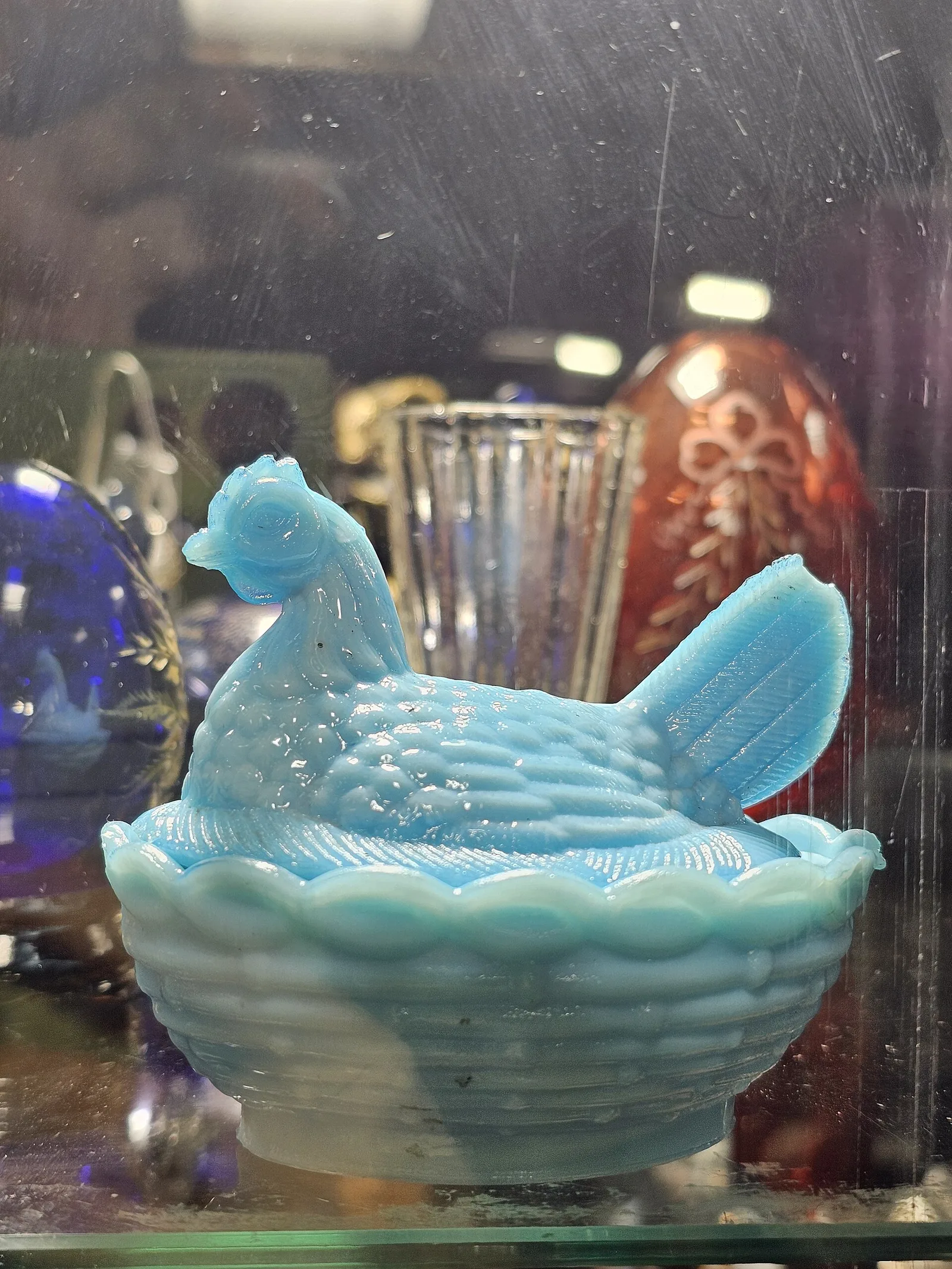
McKee Glass: Known for animal dishes (hens on nests). An authentic McKee will often have precise detail in the feathers that reproductions lack.
Finding a signed piece significantly helps with authentication and ensures a higher auction estimate.
Hen on nest dishes were made in white and colored milk glass. Photo: Tess Mattew, CC BY-SA 4.0
What is the difference between blown glass and pressed glass?
This is a major factor in determining age and value.
Blown glass is created by an artisan blowing air into a gob of molten glass. These pieces are often older (Victorian era) and will have a “pontil mark”, a rough scar on the bottom where the rod was broken off.
Pressed glass was made by pressing molten glass into a mold. This allowed for mass production. You will often see mold seams running down the side of the piece.
While blown glass generally has higher provenance and value due to the craftsmanship involved, rare pressed glass patterns from the Depression glass era can still fetch high prices.
How does condition affect the value of my milk glass?
A detailed condition report is essential before buying or selling.
Unlike wood furniture, restoration of glass is nearly impossible. A crack is forever.
Check the rims and bases carefully for “fleabites”, tiny chips that feel rough to the fingernail. These significantly lower the replacement value.
Also, look for “sick glass.” This is glass that has been damaged by dishwasher detergent, resulting in a permanent, cloudy haze. This is conservation damage that cannot be fixed and renders the piece almost worthless to serious collectors.
Similar to checking ceramic glazes, which we discuss in our guide on Royal Doulton Identification: How to Read Date Codes on Pottery, examining the surface sheen is vital. Authentic vintage milk glass should have a silky, lustrous finish, not a dry or chalky texture.
Check the rim closely for small fleabite chips.
What is the current market value of milk glass in 2026?
Values fluctuate, but here are some general appraisal benchmarks:
Common Vases (Fenton Hobnail): $15 – $40. These are plentiful.
Covered Animal Dishes (Westmoreland/McKee): $45 – $150. Rare colors or heads raise the price.
Authentic Limoges china is identified by specific backstamps featuring the word “Limoges” alongside “France,” which became mandatory for exports after 1891. Look for two marks: an underglaze maker’s mark (often green) indicating the factory, and an overglaze decorator’s mark (often red or blue) stamped later. High-quality pieces exhibit translucency when held to light.
First, it is crucial to understand that Limoges is a city, not a specific brand. Located in central France, Limoges has been a hub for hard-paste porcelain production since the discovery of kaolin clay nearby in 1768.
Hundreds of factories have operated in the region over centuries. When we talk about attribution, we aren’t looking for one company; we are identifying which specific studio within the region created the piece. Major names like Haviland, Bernardaud, and Tressemann & Vogt (T&V) all fall under the Limoges umbrella.
Hard-paste porcelain is thin enough to let light and the shadow of a hand through.
How do I read the backstamps?
The most confusing aspect for beginners is the presence of multiple marks. Unlike British pottery which often has one clear stamp, Limoges pieces frequently have two.
The Whiteware Mark (Underglaze): This is usually a green stamp applied before the final firing. It tells you who manufactured the blank white porcelain (the “whiteware”).
The Decorating Mark (Overglaze): This stamp, often red, blue, or gold, was applied after the piece was painted. It tells you who decorated it.
If a piece only has a whiteware mark, it was likely sold as an undecorated blank and painted by an amateur artist, a popular hobby in the Victorian era. Professional factory decoration adds significantly to the fair market value.
How can I date my Limoges porcelain?
Dating is often done through the McKinley Tariff Act of 1890.
Before 1891: Marks typically just say “Limoges” or have a factory symbol.
1891-c. 1914: To comply with US import laws, the country of origin was required. You will see “France” added to the mark.
After c. 1914: The words “Made in France” became standard.
This timeline is essential for establishing provenance and determining if a piece is a true antique (over 100 years old).
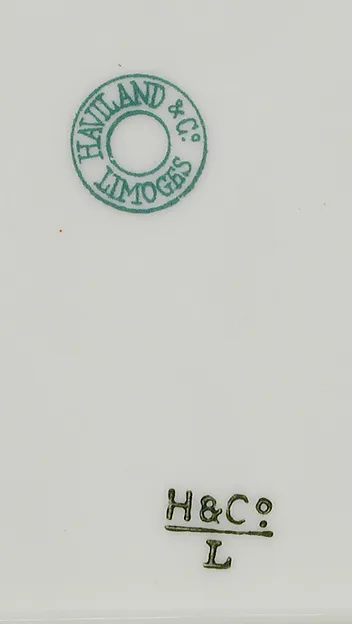
A Haviland & Co. Limoges backstamp from about 1880.
Which Limoges manufacturers are most valuable?
While condition is paramount (chips kill value), certain makers command higher prices at auction houses.
Haviland & Co. is perhaps the most famous name in the US market. They tailored their designs specifically for American tastes in the late 19th century. Their patterns are cataloged by “Schleiger numbers”, a complex system essential for replacement value.
William Guérin (W.G. & Co.) and Jean Pouyat (J.P. L.) are known for exceptional whiteness and heavy gilding. A piece with a “J.P. L. France” mark is often synonymous with top-tier quality.
How can I spot a fake or reproduction?
Forgery detection with Limoges is tricky because the name is a place, not a trademark. However, there are red flags.
Be wary of marks that are stickers or look like they are sitting on top of the glaze rather than fired into it (unless it is a known decorator mark).
Also, feel the surface. Genuine Limoges hard-paste porcelain is fired at incredibly high temperatures, creating a glass-like fusion between the body and the glaze. It should feel smooth as butter. If the surface is bumpy or “orange-peeled,” it is likely a lower-quality imitation.
A counterfeit often uses a transfer print meant to deceive and can feel rough to the touch. Authentic pieces show evidence of hand-painting or high-quality lithography.
Hand-applied gilding shows slight texture and unevenness that decals lack.
What is my Limoges china worth in 2026?
The collector market has shifted. Complete dinner services for 12 are harder to sell because modern families rarely host formal 12-course dinners.
However, unique serving pieces (soup tureens, gravy boats, and oyster plates) are retaining high value. Condition reports are vital; even a hairline crack can drop the value by 80%.
If you are looking for an appraisal for insurance, remember that replacement value (what it costs to buy from a dealer) is higher than auction estimate (what you would get selling it).
Limoges porcelain represents the pinnacle of French ceramic artistry. Whether you inherited a set or found a stray saucer at a garage sale, understanding these marks unlocks the history of the piece. Look for the word “France,” feel the glaze, and when in doubt, snap a picture for a second opinion.
To accurately date a Ball Mason jar, examine the cursive script logo. The rare “3-L” logo (with a decorative loop on the ‘B’) dates from 1900-1910. An underscore was added from 1910-1923, but dropped by 1933. Jars with a simple block letter style usually date after 1960, while the earliest “Buffalo” jars (1880s) command the highest appraisal values.
How can I tell exactly how old my Ball jar is?
The “Ball” script is the most reliable method for attribution and dating. The company tweaked their logo slightly every few decades, creating a timeline we can follow.
1892–1896 (Block Letters): If your jar features block letters rather than script, it is likely a “1st Variety.” These are incredibly rare.
1896–1910 (The “3-L” Logo): This is a favorite in the collector market. The decorative loop on the bottom of the ‘B’ looks like a third ‘L’. If you see this loop, you have a turn-of-the-century piece.
The shape of the Ball script logo helps date a jar. Photo: Jyncarecat, CC BY 4.0
1910–1923 (The Underscore): Ball dropped the loop but added an underscore beneath the script. This period was massive for production, so these are common finds in thrift stores.
1923–1933 (No Underscore): The underscore disappeared. However, the script style remained similar.
1937–1960 (The Split B): If the loop of the ‘B’ doesn’t connect to the bottom stem, you are likely looking at a jar from the mid-20th century. These generally have a lower fair market value compared to their predecessors.
What is the market value of different jar colors?
While the logo tells us the date, the color often dictates the auction estimate.
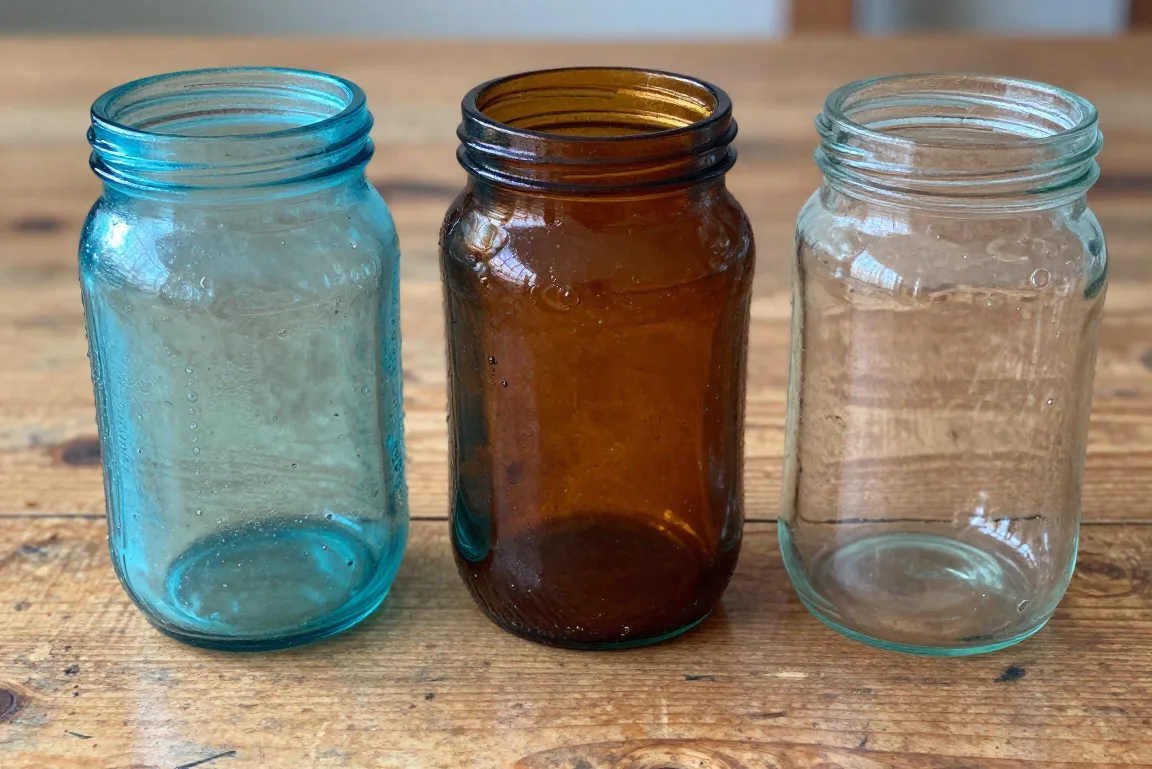
Most people are familiar with “Ball Blue,” the aquamarine color resulting from the sand used in manufacturing. While iconic, it is relatively common.
Amber Glass: Produced largely between 1890 and 1910, amber jars were designed to block light to preserve food better. These are highly desirable.
Olive Green: This is the “Holy Grail” for many. A true olive Ball jar can see an auction estimate in the thousands, provided the condition report shows no chips or cracks.
Clear Glass: Standard clear glass usually indicates production after 1937. While useful for canning, they rarely hold significant replacement value unless they have a unique error or shape.
Jar color is one of the first clues to age and value.
How do I spot a reproduction or fake?
Forgery detection is critical in the antique glass world. In the 1970s and 80s, many companies released “commemorative” jars.
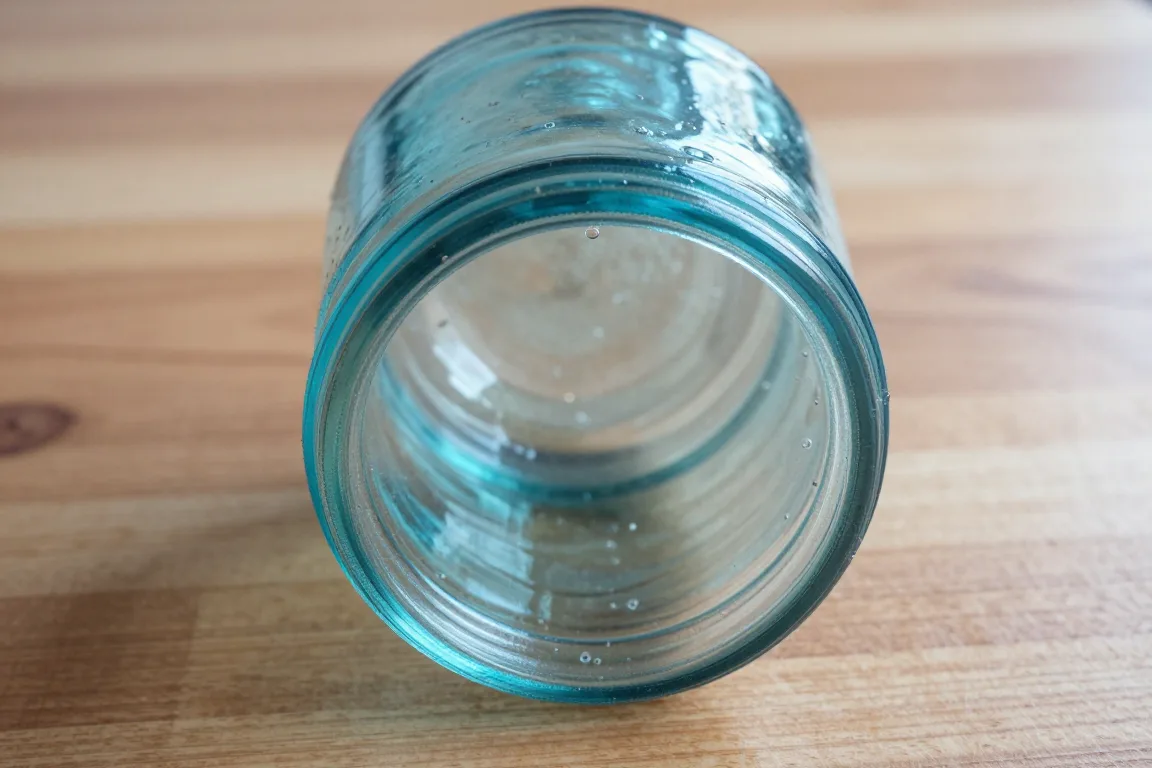
To the untrained eye, these look antique. However, a genuine antique jar from before 1915 will often have a ground lip.
Run your finger carefully over the top sealing edge. If it feels rough, like ground glass, it was likely hand-finished and is authentic. If there is a smooth, molded seam running all the way over the top lip, it is a machine-made jar from a later era.
These numbers identified the specific position on the glass machine where the jar was made. If a mold broke, the factory knew which one to fix.
While a “13” might be lucky or unlucky depending on who you ask, it does not significantly increase the fair market value of the jar.
Numbers on the base are mold numbers and add little to value.
Where are the best places to find valuable jars in 2026?
The antique dealer landscape has changed. You are less likely to find steals in curated shops now.
Estate Sales: Look for homes built before 1940. Head straight to the basement, root cellar, or garage. Jars were tools, not decor, so they were often stored in work areas.
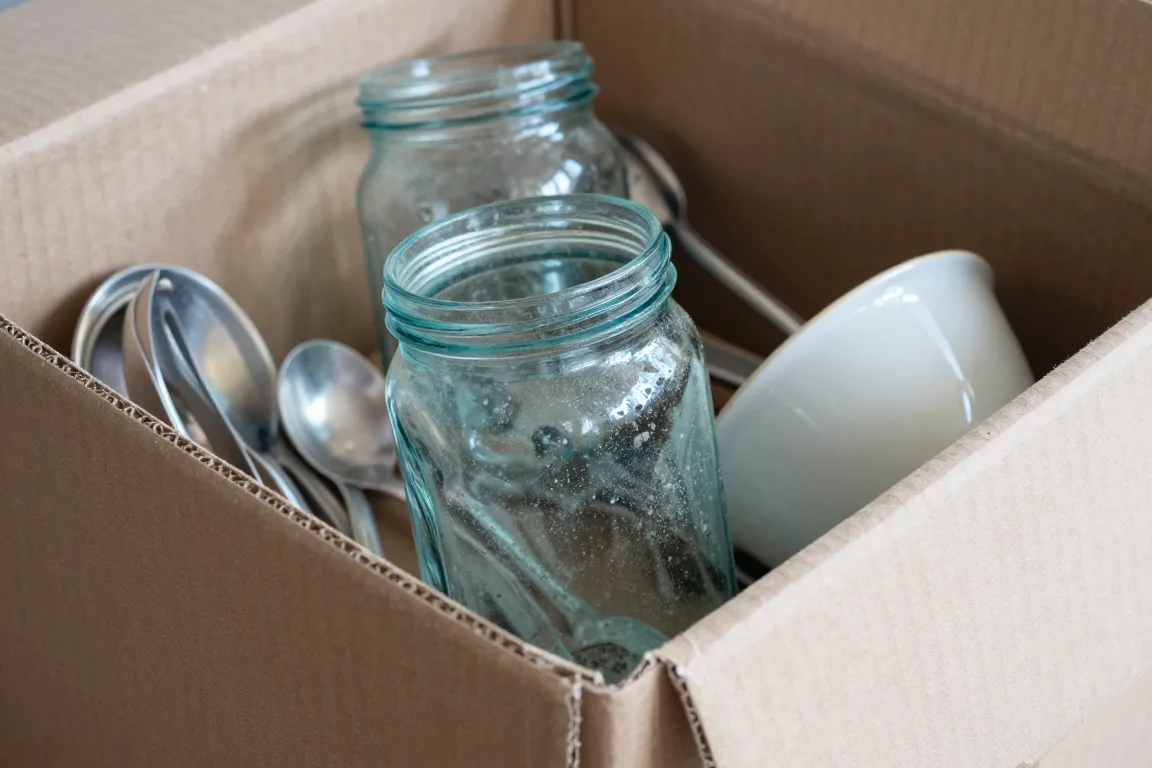
Auctions: Pay attention to “box lots.” An auction house might sell a box of 20 kitchen items. If you spot a rare “3-L” logo peeking out from the bottom of the box, you could secure a high return on investment.
Restoration of these finds should be minimal. Never put an antique jar in a dishwasher. The heat and harsh detergents can cause “sickness” (cloudiness) that ruins the provenance and value.
Collecting Mason jars is a gateway into American history. Each bubble in the glass and wave in the logo tells a story of industrialization.
Whether you are looking to flip for profit or build a collection, always prioritize the logo script and the condition of the lip. And if you are ever unsure in the field, don’t guess. Verify.
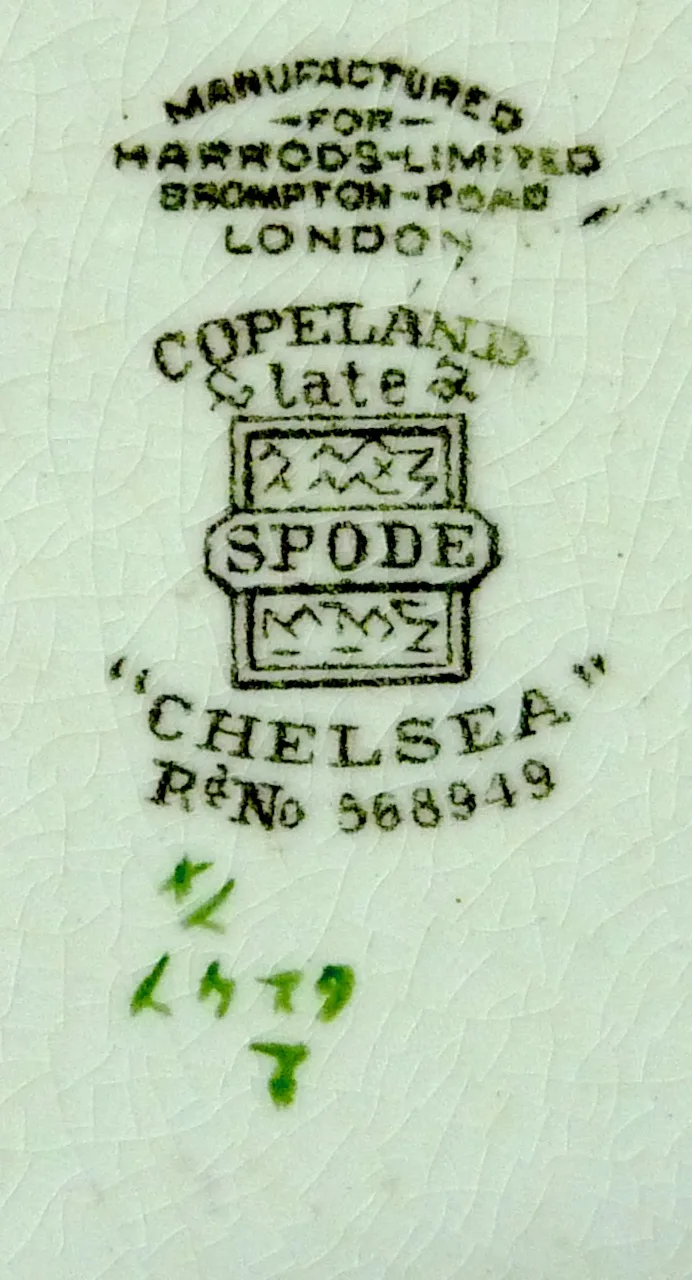
Authentic English antique teapots are identified by examining the base for specific hallmarks or backstamps. For silver, look for the Lion Passant (guaranteeing .925 sterling silver) and date letters. For ceramics, inspect the backstamp for maker names like Wedgwood or Spode, often accompanied by a Registry Diamond (used 1842–1883) to pinpoint the exact manufacturing date.
How can I tell if my silver teapot is solid silver or plated?
In English silver, the answer is strictly regulated.
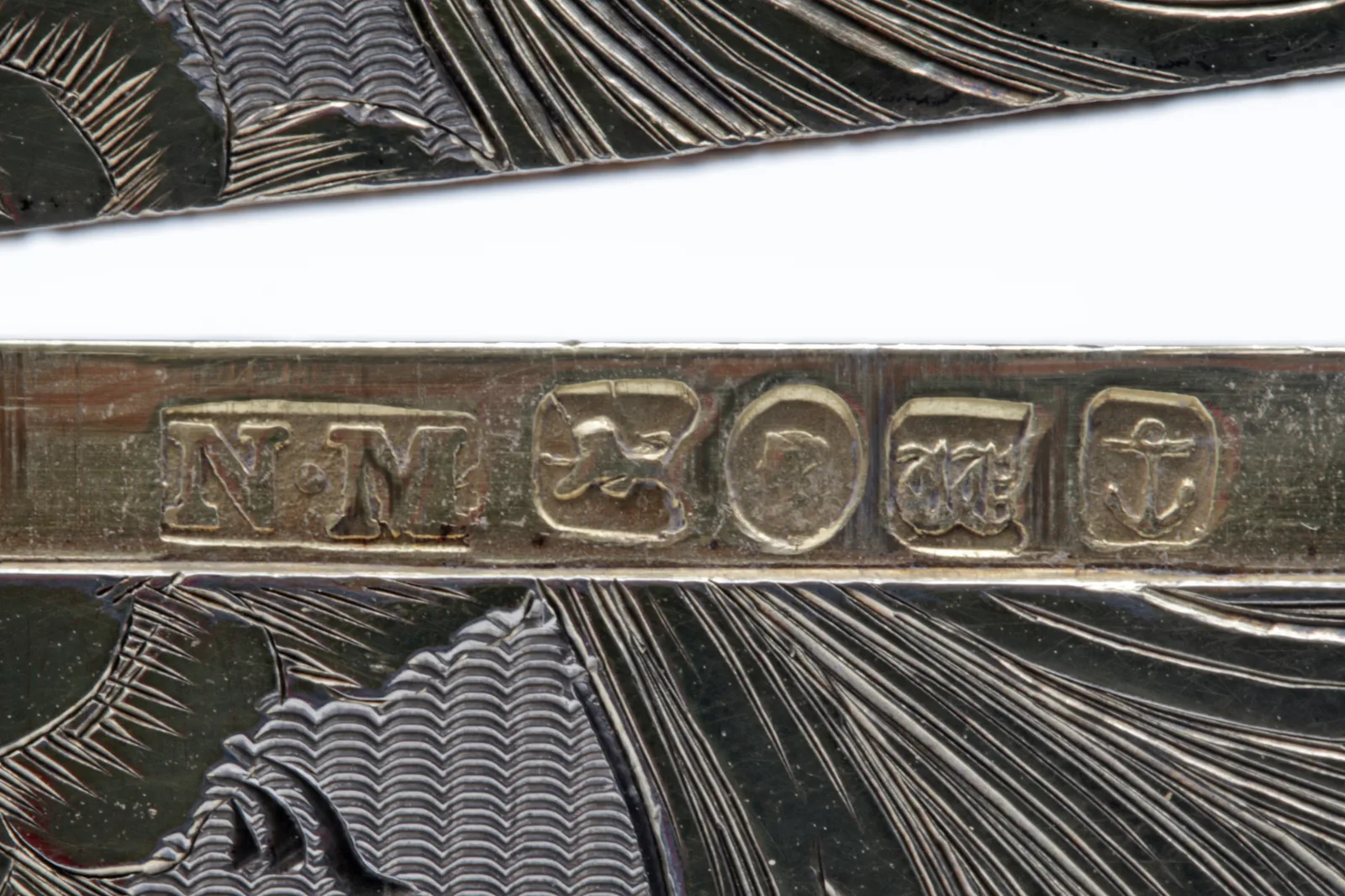
You must look for the Lion Passant. This is a tiny image of a lion walking to the left with its right paw raised. If you see this, you have sterling silver (.925 purity).
If you do not see a lion, check for the letters EPNS (Electro-Plated Nickel Silver). This means the item is base metal with a thin layer of silver.
Coin silver (90% silver) was common in the US before 1868 but rarely used for English teapots.
Photo: Charles J. Sharp, CC BY-SA 4.0
You should also look for the assay marks. These tell you the city where the silver was tested.
Leopard’s Head: London
Anchor: Birmingham
Crown: Sheffield
Where do I find the maker’s mark on a ceramic teapot?
Ceramic attribution is slightly different from silver. You need to flip the teapot over and look for the maker’s mark or “backstamp.”
Early English pottery (pre-1800) often has no mark. However, 19th-century giants like Wedgwood, Minton, and Spode were proud of their work.
They used impressed marks (stamped into soft clay) or printed marks (under the glaze).
Photo: Tangerineduel, CC BY-SA 4.0
If the mark says “Bone China” or “Made in England,” the piece likely dates to the 20th century. Older pieces will simply say “England” (post-1891) or have no country name at all.
Pro Tip: Run your finger over the mark. An impressed mark feels indented; an overglaze mark feels like a slight bump.
What do the symbols and numbers mean on the bottom?
English ceramics often feature a diamond-shaped mark known as the Registry Diamond.
Used between 1842 and 1883, this symbol is the key to precise dating. It contains codes for the year, month, and day the design was registered.
You might also see a handwritten or painted number. This is usually the pattern number.
While pattern numbers help with identification, they don’t always guarantee provenance. This logical process of decoding numbers is similar to what we cover in our guide on Antique Writing Desks: How to Identify Secret Compartments and Value, where hidden mechanisms provide clues to age.
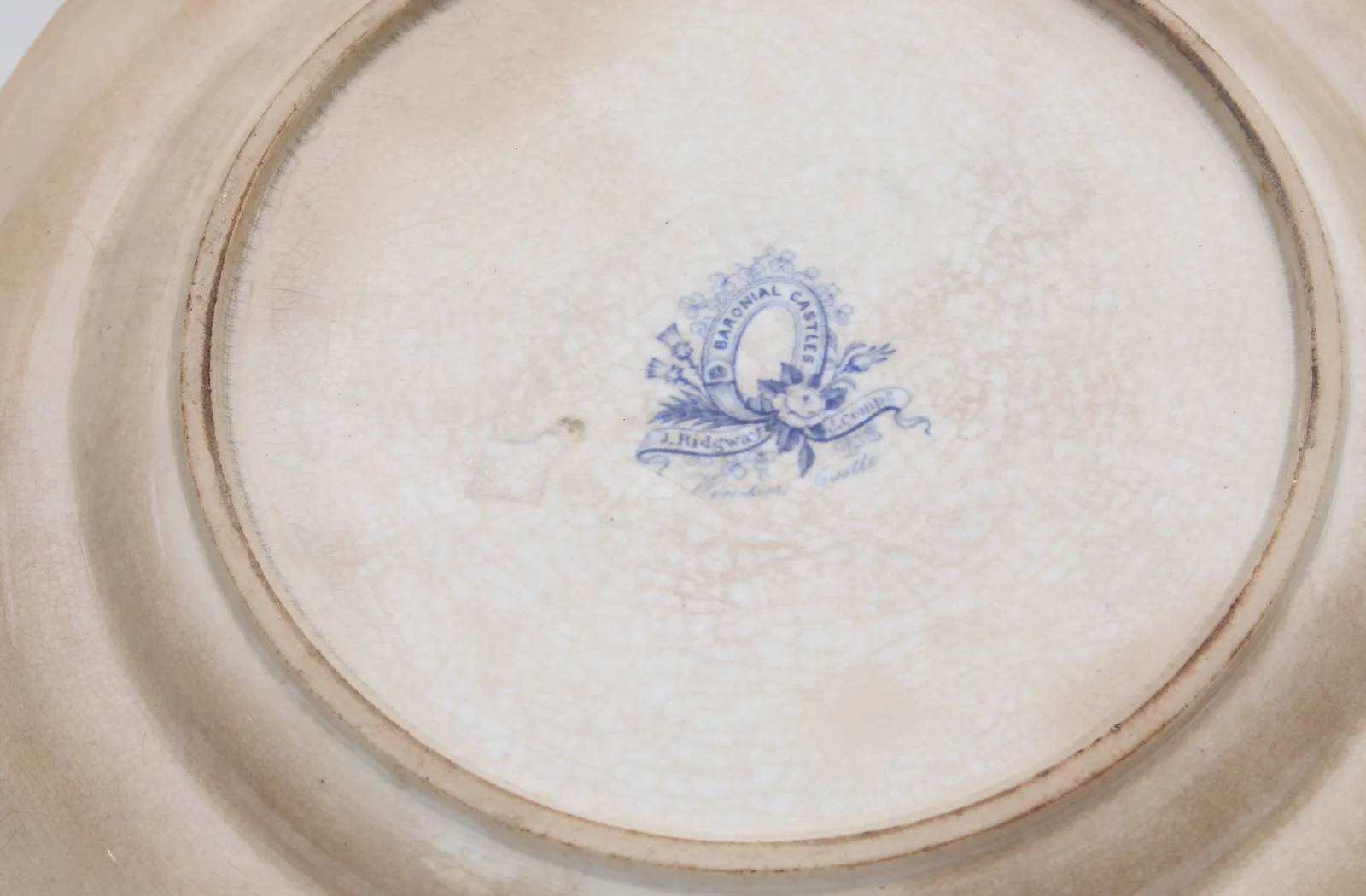
The letters and numbers in the corners of the diamond give the registration date; on this plate it is worn and only partly legible.
Beware of “red flags” in forgery detection. If the mark looks blurry or is applied over the glaze where it should be under, proceed with caution.
How does condition affect the value of an antique teapot?
A condition report is critical for determining fair market value.
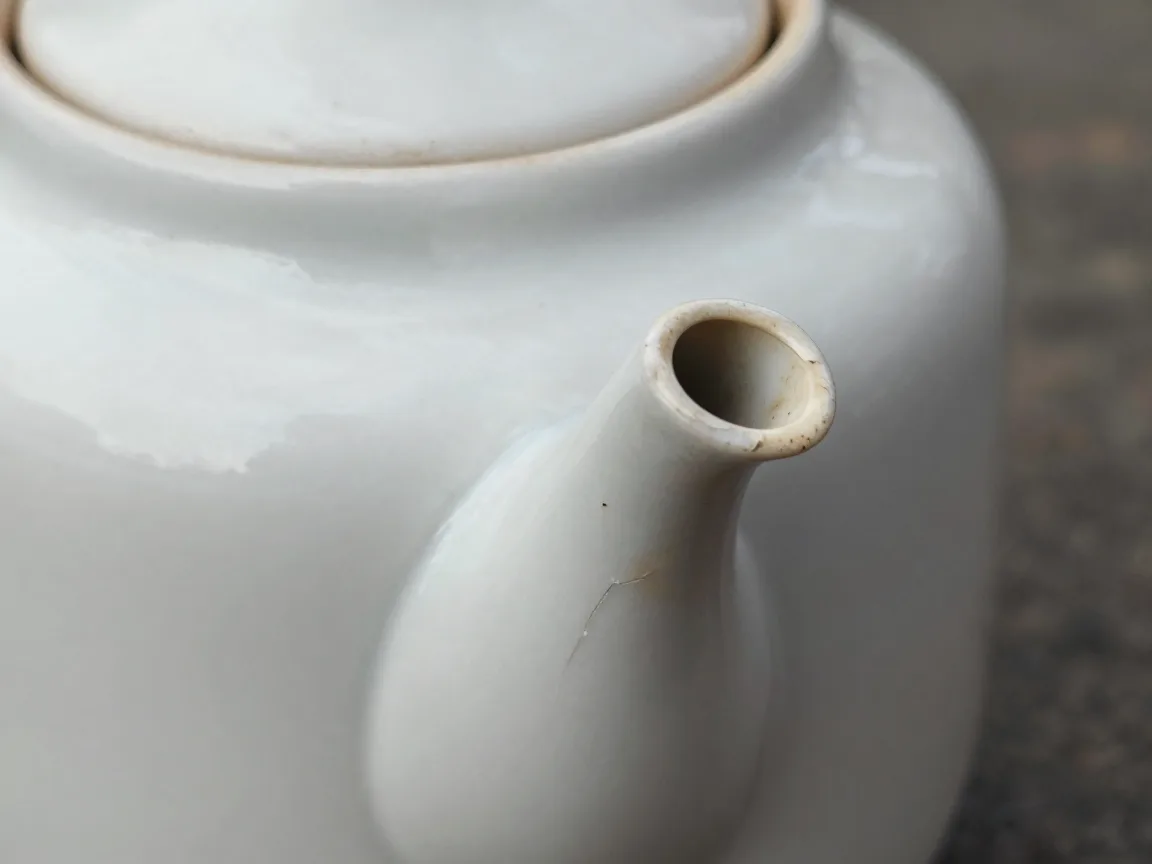
For ceramic teapots, the spout and lid are the most vulnerable areas. Run your finger along the rim of the spout. Even a “flea bite” chip can lower the value by 30%.
Check for “crazing” (a network of fine cracks in the glaze). While common, heavy staining in the crazing is a negative.
Chips on the spout and hairline cracks are the most common teapot damage.
Restoration is acceptable for rare 18th-century pieces but hurts the value of later Victorian items.
Shine a blacklight on the pottery. Modern glue or paint used in conservation repairs will fluoresce (glow) under UV light.
What is my antique teapot worth in today’s market?
The collector market fluctuates. Currently, early transfer-ware and Sterling Silver tea sets by renowned makers (like Paul Storr or Hester Bateman) command high prices.
An auction estimate for a standard Victorian silver-plate teapot might be $30–$50.
However, a Georgian sterling silver teapot could easily fetch an appraisal of $1,500 to $3,000 depending on the weight and maker.
Replacement value (for insurance) is generally higher than what you would get selling it to an antique dealer.
Always check recent sold listings, not asking prices, to gauge reality.
Whether you are looking for investment grade silver or just a beautiful piece of history for your kitchen, knowledge is your best tool. Keep an eye out for those hallmarks.
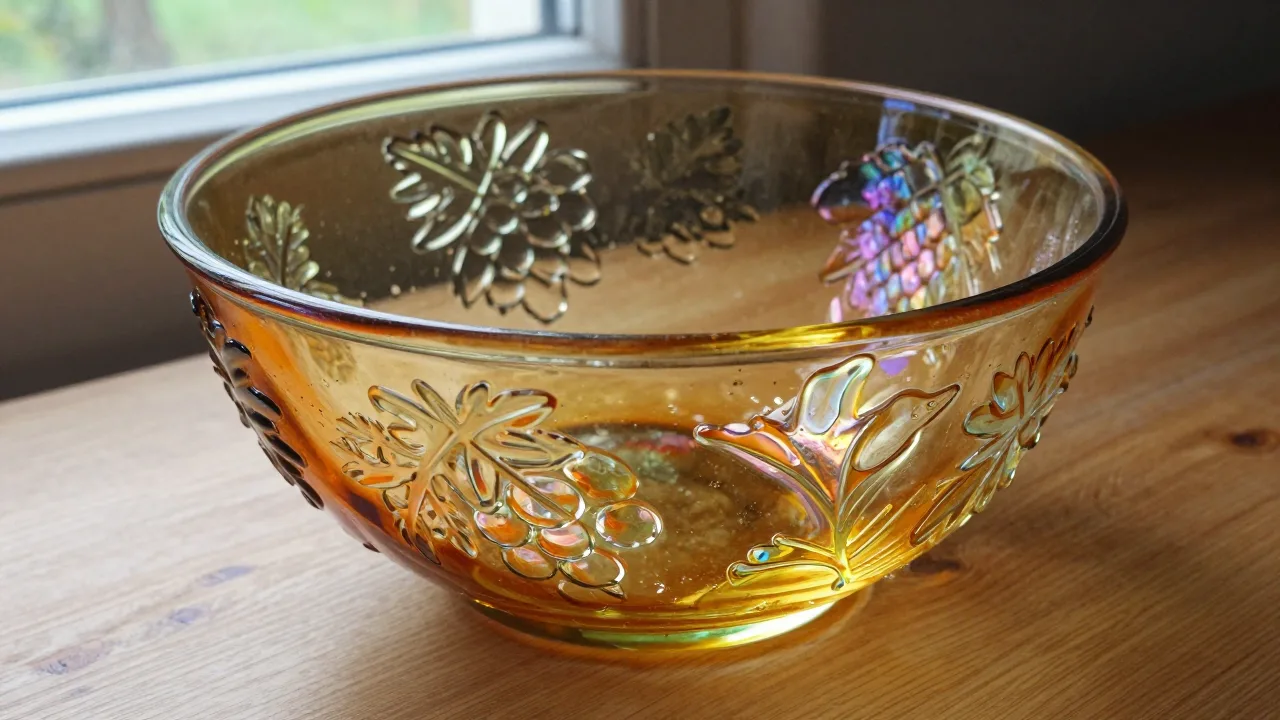
Identify carnival glass by comparing its pattern, shape, base colour and maker’s mark together. A satin finish does not establish an early date, and a bright, shiny surface does not establish a later one. Iridescence is one observation to record, not an age certificate.
The practical task is to find a documented match for the whole object, then check whether that pattern was made again. Start with photographs and a written description before assigning a maker, date or value.
What iridescence can tell you about age
The familiar rainbow surface can help you describe the appearance of an object. It cannot, on its own, separate early carnival glass from later production. Millersburg’s Radium finish is a documented counterexample: old glass could be deliberately very shiny. The Thistlewoods explain this in their guide to reissues, reproductions and fakes.
A dull surface, heavy feel or blurred detail is likewise not enough to assign a production period. Describe what you actually see, then compare the same pattern and shape with a reference. Do not convert a general impression of quality into a date.
Separate the glass colour from the surface colours
The colour reflected by the iridescence can differ from the colour of the glass beneath it. Look through a foot or base area with little iridescence against diffuse white light, supporting the object securely. Do not stare into the sun or hold fragile glass over a hard surface.
The Thistlewoods’ colour reference explains that thickness changes how dark a colour appears and that some collector colour names describe the finish. Marigold describes iridescence on clear glass, rather than an orange base glass; Doty’s marigold examples show its range.
Record these as separate observations:
Viewed through the glass: the apparent body colour, where you looked and how it was lit.
Viewed from the surface: the reflected colours and whether they change as the object is turned.
Uncertainty: a very dark area or an ambiguous photograph that prevents a confident colour name.
Do not force an opaque-looking photograph into a rare colour category. Request another view with different lighting and compare a specialist colour reference. A screen photograph is a starting point for comparison, not a substitute for examining a difficult colour.
Match the pattern, form and mark
Make a short description before searching: bowl, vase or covered dish; number and shape of feet; rim treatment; base form; decoration inside and outside. Look for an exact arrangement of motifs, not simply another piece with grapes or flowers. Include dimensions and explain where you measured them.
David Doty’s maker-mark guide illustrates both older and later marks. Not all Northwood pieces are marked, and some later Wright reproductions carry an N-like mark. A mark is therefore a lead to investigate alongside the pattern. An absent mark is not enough to rule a maker out, and a familiar letter is not enough to confirm an attribution.
Observation
Useful next check
A readable maker’s mark
Compare a photographed reference and the complete pattern and form.
No readable mark
Search by the object’s decoration and shape; record the mark as absent or unclear.
A pattern match but a different base or rim
Investigate that version separately; save both reference images or links.
Only a seller’s close-up of the mark
Request views of the entire object, underside and condition.
Keep the reference URL beside your notes. If two sources disagree, record the disagreement and ask what documentary evidence supports each attribution. Do not average conflicting maker names into a confident answer.
Check for later production before calling it a fake
A reissue or reproduction is not automatically a deliberate forgery. The distinction depends on production history and presentation. Old moulds and similar patterns can appear in later production, so the original introduction of a design does not date every object bearing it. The Thistlewoods’ reproduction guide gives examples and distinguishes these terms.
Ask whether the reference shows the same shape and version, whether later production is documented, and whether the mark is consistent with that account. Family history can be useful when supported by dated records; the place where a piece was bought is not an age test.
Record condition before discussing value
Photograph the rim, feet, base and any suspected chip, crack or repair. Separate visible damage from an explanation of its cause. A cloudy area alone is not a diagnosis of irreversible glass deterioration, and damage does not justify an automatic zero-value verdict.
For a sale comparison, build a record with the following fields:
Pattern, maker attribution and the evidence supporting them.
Shape, dimensions and colour, with any uncertainty retained.
Condition and repairs, including photographs.
Transaction date, venue and whether the amount is an asking figure or a completed transaction.
Which differences prevent it from being a close comparison to your object.
This is a comparison worksheet, not a price formula. If you cannot find a sufficiently similar completed transaction, leave the value unresolved. A maker name or attractive colour does not supply the missing evidence.
Handle and clean cautiously
The Canadian Conservation Institute’s glass-care guidance recommends supporting objects with both hands and inspecting their condition before cleaning. Keep fine glass out of the dishwasher. CCI limits washing advice to robust objects and advises against cleaning deteriorated glass.
Carnival glass has an intentionally iridescent finish; that decorative finish alone does not diagnose the deterioration discussed in CCI’s general glass guidance. If the surface is flaking, unusually cloudy or unstable, or there are cracks or old repairs, stop and consult a conservator before wet cleaning or attempting restoration. Do not polish or scrape the finish to test authenticity.
Method and scope: This guide combines linked collector references with general conservation guidance. The observation table and comparison worksheet are editorial tools; no physical specimen was authenticated for this article. Use specialist examination when the available photographs and records cannot resolve the attribution or condition.
Authentic Dresden porcelain is primarily identified by the blue crown mark, often accompanied by “Dresden” or “Saxony.” Unlike a single factory, this mark indicates the piece was decorated by specific studios in Dresden, Germany, usually after 1883. Look for hard-paste porcelain, elaborate Rococo hand-painting, and delicate applied flowers known as bocage.
This confusion is common. Unlike Meissen, “Dresden” isn’t a single factory. It’s a movement.
What exactly is “Dresden” porcelain?
Many collectors mistakenly believe Dresden is a manufacturer. In reality, it refers to a collective of decorating studios operating in the city of Dresden, Germany.
These studios bought “white ware” (undecorated hard-paste porcelain blanks) from famous factories like Meissen and KPM. They then hired skilled artists to paint and glaze them.
The attribution of a piece depends entirely on which specific studio did the work. This makes the specific variation of the crown mark critical for determining fair market value.
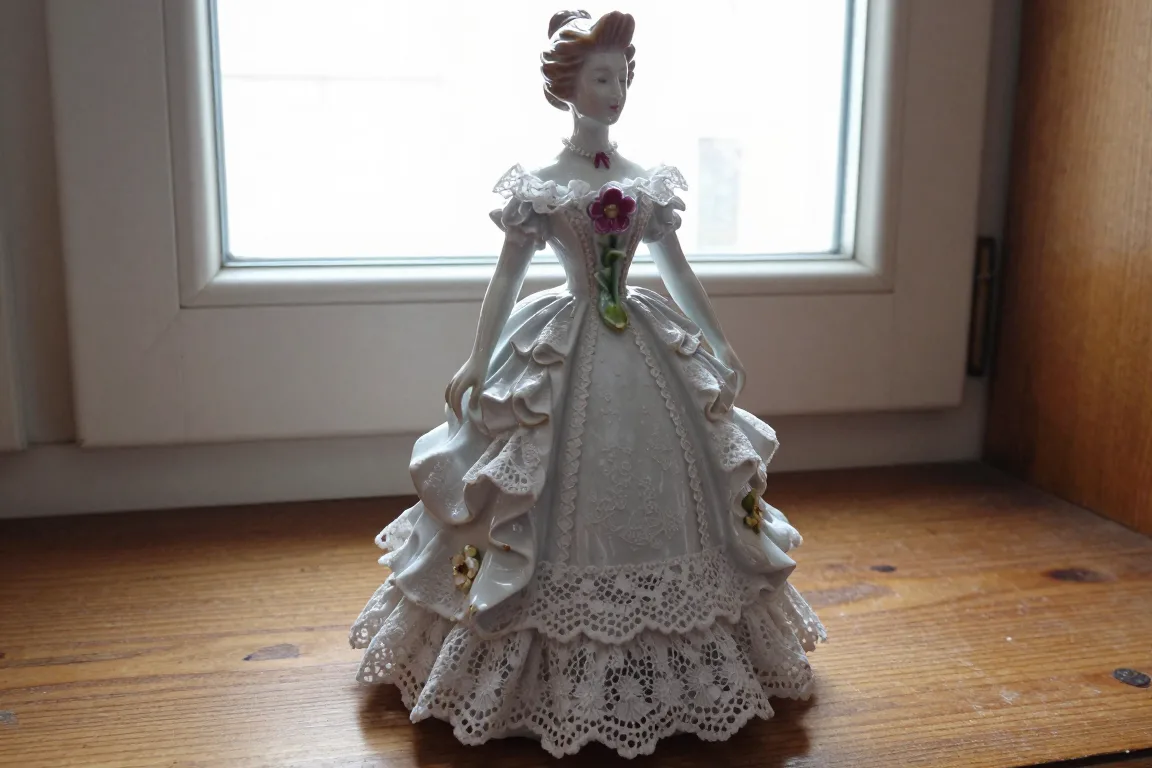
A Dresden-style lace figurine: the skirt is real lace dipped in porcelain slip and fired.
How can I tell if my Crown mark is authentic?
The most famous “Blue Crown” mark was registered by four main decorators in 1883: Donath & Co, Oswald Lorenz, Adolf Hamann, and Carl Thieme.
A genuine mark is usually underglaze blue. It should be crisp, not blurry.
Watch out for the “Irish Dresden” marks or very modern transfer-printed stamps. A true 19th-century mark often has a slightly handwritten quality or a specific style of crown associated with the studio.
For example, the Helena Wolfsohn studio originally used a mark that looked like the royal monogram of Augustus the Strong (AR). Meissen sued her, and she was forced to switch to a Crown mark around 1880. This history of litigation provides excellent provenance clues for dating your item.
Who were the most valuable Dresden decorators?
Not all crowns are created equal. In the collector market, specific names command higher prices.
Ambrosius Lamm is widely considered the finest decorator. His studio (active c. 1887) is known for impeccable, high-style painting that rivals the best bone china from England. If you find a Lamm piece (marked with a lamb symbol or specific crown), the auction estimate jumps significantly.
Carl Thieme (Potschappel) is another major name. He actually started his own factory later on, meaning he produced both the porcelain and the painting, giving him total control over quality.
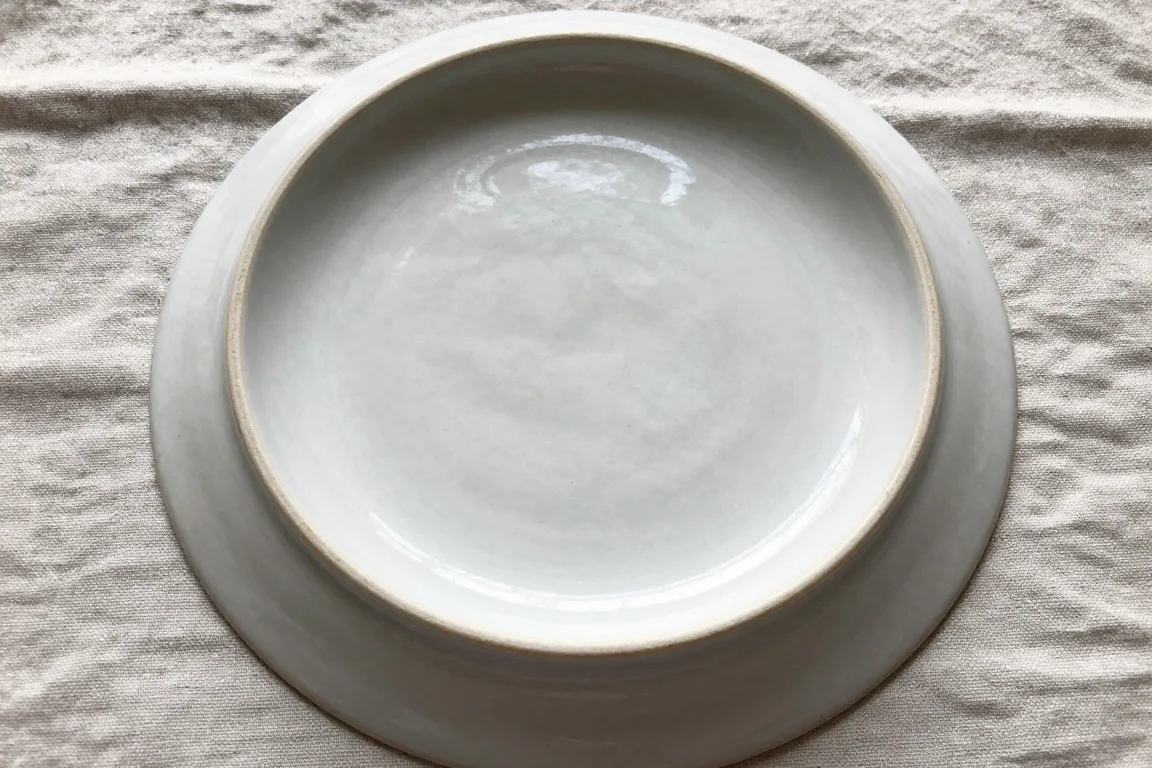
Turn a plate over: a decorator's mark on the underside identifies which Dresden studio painted it.
What are the major red flags for fakes?
Forgery detection in Dresden wares often comes down to the quality of the gold.
Authentic Dresden pieces use heavy, rich gilding. If the gold looks like brown paint or is applied sloppily over the glaze, be suspicious.
Another red flag is the “Capodimonte” style confusion. Dresden marks are sometimes faked on cheap, heavy Italian pottery figures. Remember: Dresden is hard-paste porcelain. It should feel cool, smooth, and glass-like, not chalky or porous.
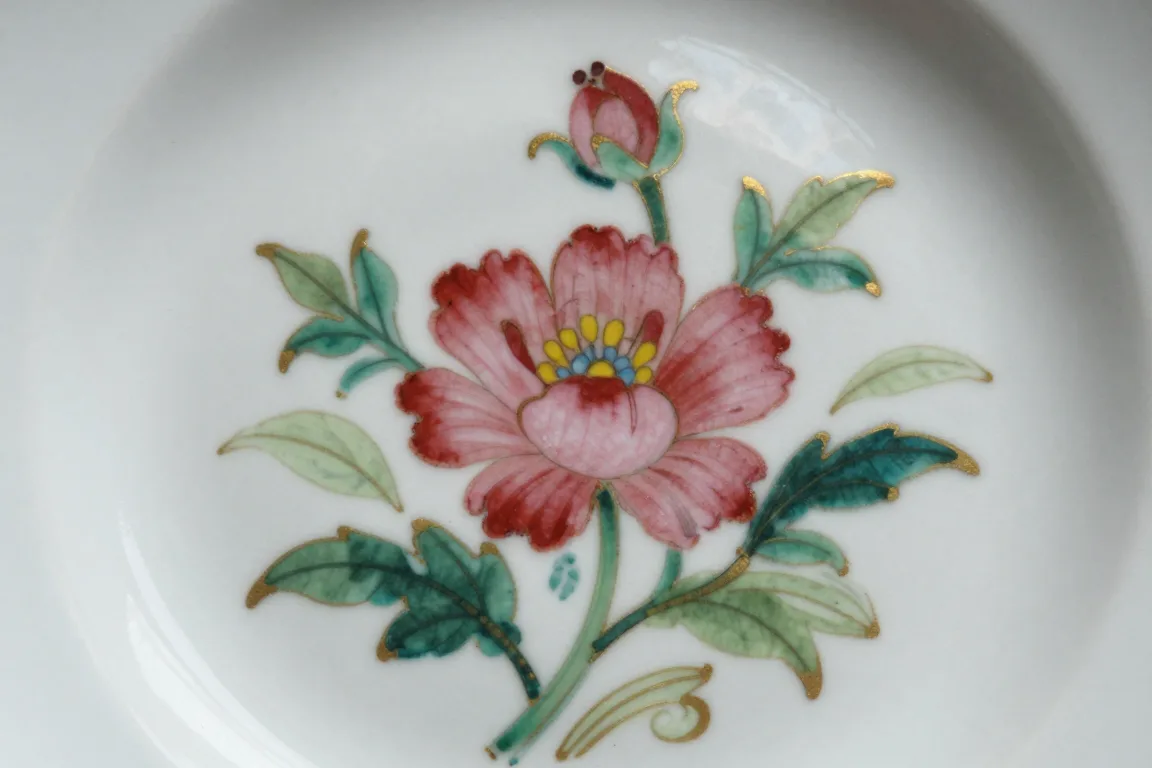
Hand painting shows individual brushstrokes; transfer prints look flat and evenly dotted under a loupe.
How much does condition impact value?
For Dresden “lace” figurines, condition is everything.
The “lace” was made by dipping real cotton lace into porcelain slip and firing it. The cotton burned away, leaving a fragile shell.
Because it is so delicate, restoration is common. However, damage destroys value. A figurine with perfect lace might have a replacement value of $800, while the same figure with chipped lace drops to $150 or less at an auction house.
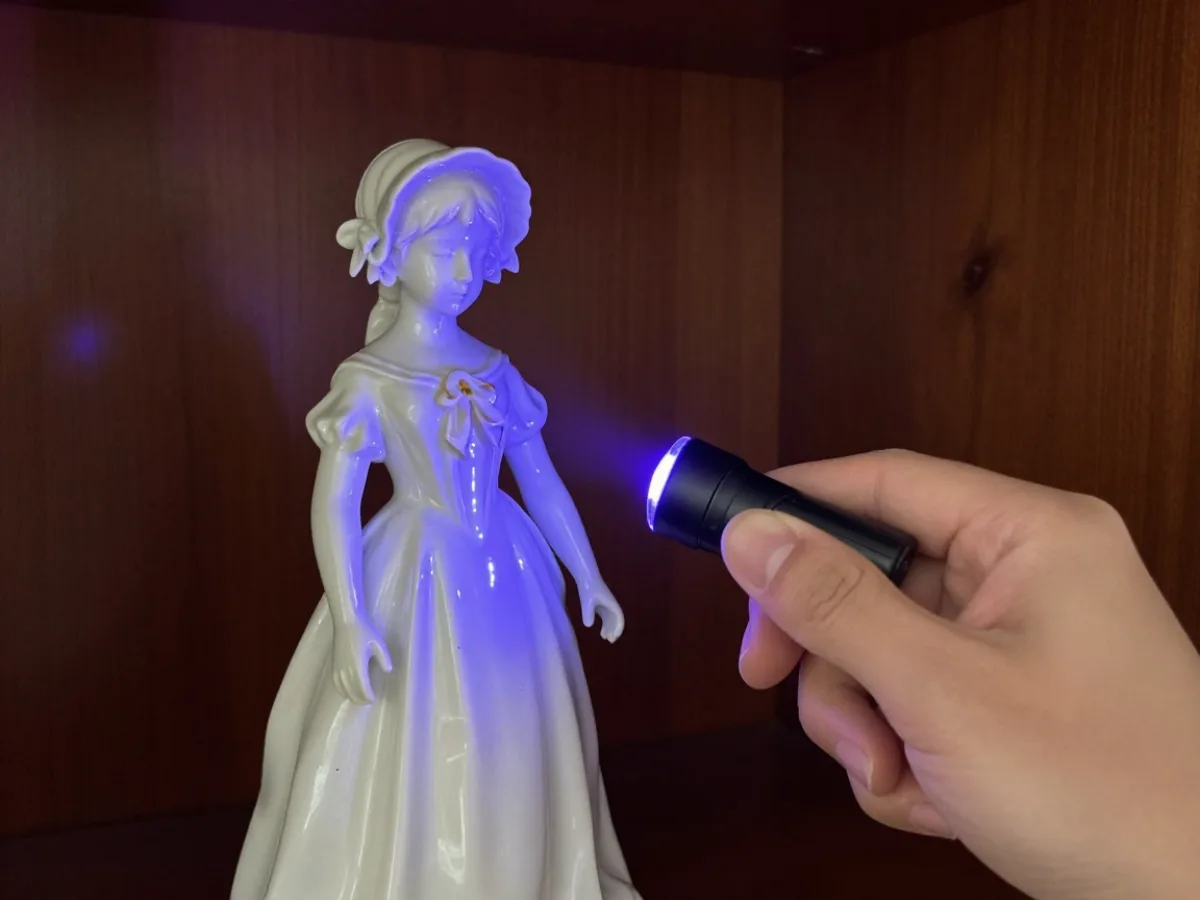
Always ask for a condition report or use a UV light to check for repairs if you are buying high-end pieces.
Under UV light, restored areas often look different from the original glaze.
What is the current market for Dresden porcelain?
The market has shifted. While heavy dinner services have dipped in price, unique hand-painted cabinet plates and pristine figurines remain strong.
An antique dealer will look for pieces signed by the artist. Conservation of these pieces is vital; never wash them in a dishwasher, as the hot water will strip the overglaze enamels.
If you are buying at an estate sale, look for the “Saxon Porcelain” mark as well, which falls under the same umbrella of Dresden decorators.
The blue crown is your roadmap to 19th-century Saxony. By understanding that Dresden is a style and a community of artists rather than a single factory, you can better assess the true artistry, and value, of the piece in your hands.
Authentic Fenton Art Glass (1905–2011) is primarily identified by the oval Fenton logo molded into the base (introduced in 1970) or paper labels on earlier pieces. Key identifiers include ruffled crimped edges, the iconic Hobnail pattern, and specific handle attachments. Unmarked pre-1970 pieces require attribution based on mold shapes and opalescent color quality.
*
How can I tell if my glass piece is authentic Fenton?
The most reliable way to establish provenance for Fenton glass depends entirely on when it was made. The company’s marking system changed significantly over its century-long history.
If your piece was made after 1970, look for an oval logo with the word “Fenton” molded directly into the glass. This is usually found on the bottom center or near the base.
For pieces made between 1980 and 2011, you will often find a small number inside the logo (like an “8” for the 1980s or a “9” for the 1990s). This allows for rapid dating and helps with establishing a fair market value.
An early Fenton carnival dish. Later Fenton pieces carry the Fenton name in an oval on the base.
However, identifying pre-1970 Fenton is harder. These pieces originally had foil stickers that usually washed off decades ago.
To identify these unmarked pieces, you must look at the “finish.” Fenton is famous for crimped edges (ruffles) and hand-applied handles. Unlike mass-produced depression glass, the handles on Fenton baskets were often applied separately, leaving a specific joint mark where the glass was fused.
What are the most valuable Fenton colors and patterns?
While clear glass is common, color is king in the appraisal world. Fenton produced hundreds of colors, but a few command high auction estimates.
Carnival glass, introduced by Fenton in 1907, is iridescent and highly sought after. Look for a metallic, oil-slick sheen.
Hobnail (the bumpy texture) in “Milk Glass” is the most recognized pattern, but it is not always the most valuable because it was produced in massive quantities. However, Opalescent glass, where the glass appears to have a milky, fire-like glow on the ridges, is highly desirable.
Hobnail vases in colored glass are among the most collected Fenton patterns.
Rare colors like Karnak Red, Wisteria, and Burmese (a soft salmon fading to yellow) often have a much higher replacement value than standard colors.
When assessing color, be aware that lighting changes everything. This is particularly true for blue hues. If you are struggling to distinguish between standard blue and rare cobalt, you might want to read our guide on Valuing Blue Cobalt Glass: Why Some Pieces Sell for Thousands to understand the chemistry difference.
Where should I look for production techniques?
The production method tells a story. Fenton Art Glass produced both pressed glass and blown glass.
On a blown piece, check the bottom for a pontil mark. This is a rough scar or a polished concave area where the pontil rod was broken off during manufacturing.
A polished pontil scar in the center of the base shows the piece was hand blown.
On pressed pieces, you should look for mold seams. However, high-quality Fenton often masked these seams within the pattern itself. If the seams are sharp, rough, or highly visible, it might be a lower-quality imitation or a “second” (factory reject).
How does condition affect the value of Fenton glass?
A condition report is vital before you buy. Because Fenton glass was often used as decorative candy dishes or vases, chips on the ruffled edges are common.
Run your finger carefully along the crimped rim. “Flea bites” (tiny chips) can reduce the fair market value by 20-30%.
Cracks are a deal-breaker for serious collectors unless the piece is incredibly rare. Check handles on baskets closely; stress cracks often form where the handle meets the body.
Proper conservation means never washing these pieces in a dishwasher. The heat can cause clouding or “sickness” in the glass which is permanent damage.
How can I spot a fake or reproduction Fenton piece?
Forgery detection is becoming increasingly important as reproductions flood the market.
Be wary of pieces that feel too light. Authentic Fenton has a significant heft due to the lead content in older formulas and the density of the glass.
Watch out for unpolished edges on the base. Fenton usually fire-polished their bases to ensure they sat flat and smooth. If the bottom is rough and scratchy, it is likely a cheaper import.
Also, knowing your history helps. Fenton did not produce cut glass in the traditional sense; they molded patterns to mimic it. If a seller claims a piece is “antique cut crystal Fenton,” proceed with caution.
Fenton glass represents a century of American craftsmanship. Whether you are holding a piece of iridescent carnival glass or a snowy piece of Hobnail, looking for the oval logo and feeling the weight of the glass are your first steps in authentication.
Don’t leave money on the table at your next estate sale. Take the time to examine the ruffles, check for the “F” mark, and assess the color.
Authentic antique cobalt glass is identified by its deep, rich blue color, created by adding cobalt oxide to molten glass. High-value pieces typically feature pontil marks on the base (indicating hand-blown origins), lack mold seams, and may carry signatures from makers like Tiffany, Steuben, or Fenton. Pieces from the 18th and early 19th centuries command the highest prices due to rarity and craftsmanship.
What Makes Cobalt Glass So Valuable?
Not all blue glass is created equal. The value of cobalt glass is driven primarily by age, provenance, and maker. While “depression glass” in cobalt blue is collectible, it rarely reaches the astronomical prices of earlier, hand-blown examples.
True antique cobalt glass, specifically pieces from the Stiegel or Sandwich glass era (late 1700s to mid-1800s), was a luxury item. The cobalt oxide used to achieve that signature hue was an expensive import. Consequently, finding a large, intact vessel from this period is rare.
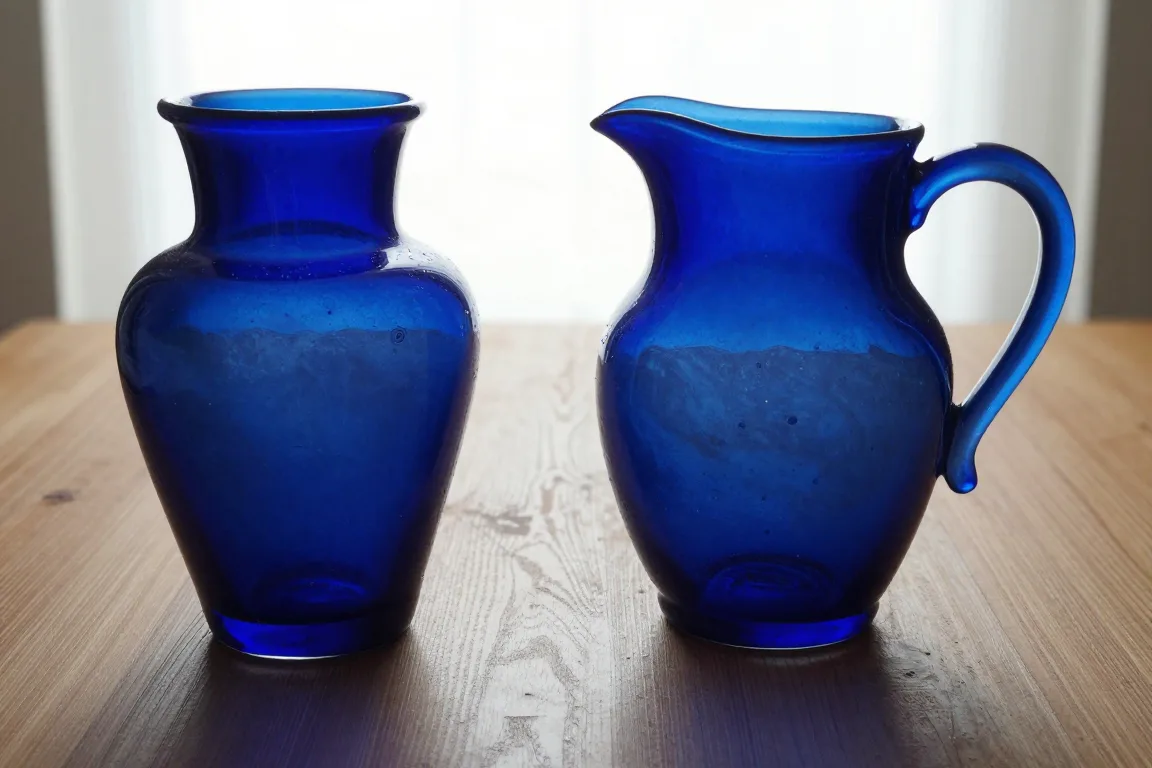
Molded modern glass looks uniform; older hand-blown pieces show small bubbles and uneven walls.
Pro Tips for Value:
Weight: Older lead glass feels heavier than modern soda-lime glass.
Wear: Look for “shelf wear” (scratches on the bottom) which confirms age.
Clarity: Early glass often has small bubbles or “seeds,” which are not considered flaws but signs of hand-production.
How Can I Tell if My Cobalt Glass is Antique?
The most reliable way to date blown glass is to examine the base. Before the mid-19th century, glassblowers used a pontil rod to hold the hot glass. When they snapped it off, it left a rough scar or a polished depression known as a pontil mark.
If you run your finger along the bottom and feel a sharp ridge or a smooth, polished dimple, you likely have a hand-blown piece. Conversely, if the piece has smooth, raised lines running up the sides, it is likely pressed glass made in a mold, common in the 20th century.
Who Are the Most Sought-After Makers?
Look for the makers who mastered the cobalt medium.
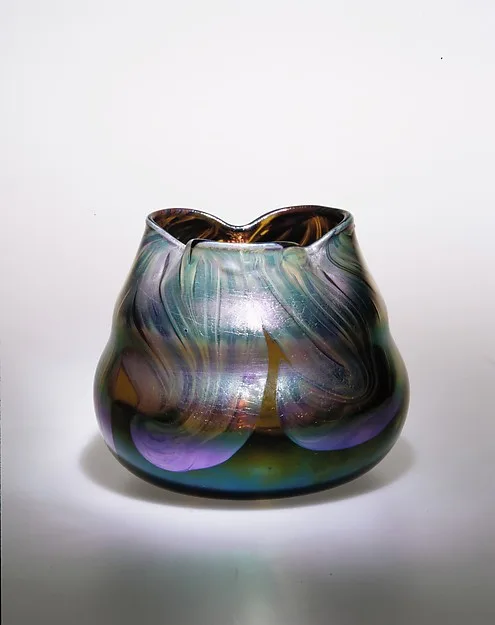
Tiffany Studios: Their “Favrile” glass often incorporated cobalt. A signed Tiffany piece can easily fetch five figures.
Steuben: Frederick Carder’s “Aurene” blue is legendary.
Boston & Sandwich Glass Company: Famous for their mid-1800s pressed and blown wares.
Fenton: A prolific maker, but their early, unmarked pieces are often confused with lesser brands.
Tiffany Favrile pieces are usually signed by hand on the base; compare the script with documented examples.
Authentication often comes down to the specific shade. Steuben cobalt is incredibly deep, almost black in low light, while depression glass cobalt tends to be lighter and more transparent.
This attention to color nuance is similar to identifying other colored glasswares, which we cover in our guide on Identifying Antique Carnival Glass Patterns.
What Are the Major Red Flags for Fakes?
The market is flooded with reproductions. In the 1970s and 80s, companies like Hazel Atlas and Mosser produced millions of cobalt pieces. While vintage and collectible, they do not hold the high fair market value of true antiques.
Warning Signs:
Oily Sheen: Some modern glass has an iridescent spray applied to mimic carnival glass. If it flakes off, it’s a cheap modern fake.
Excessive Perfection: Antique glass has character: tool marks, asymmetry, and flow lines. Perfectly uniform glass is usually a modern machine-made product.
“Made in China” Stickers: A surprising number of “antique” finds still have residue from a modern import sticker on the base.
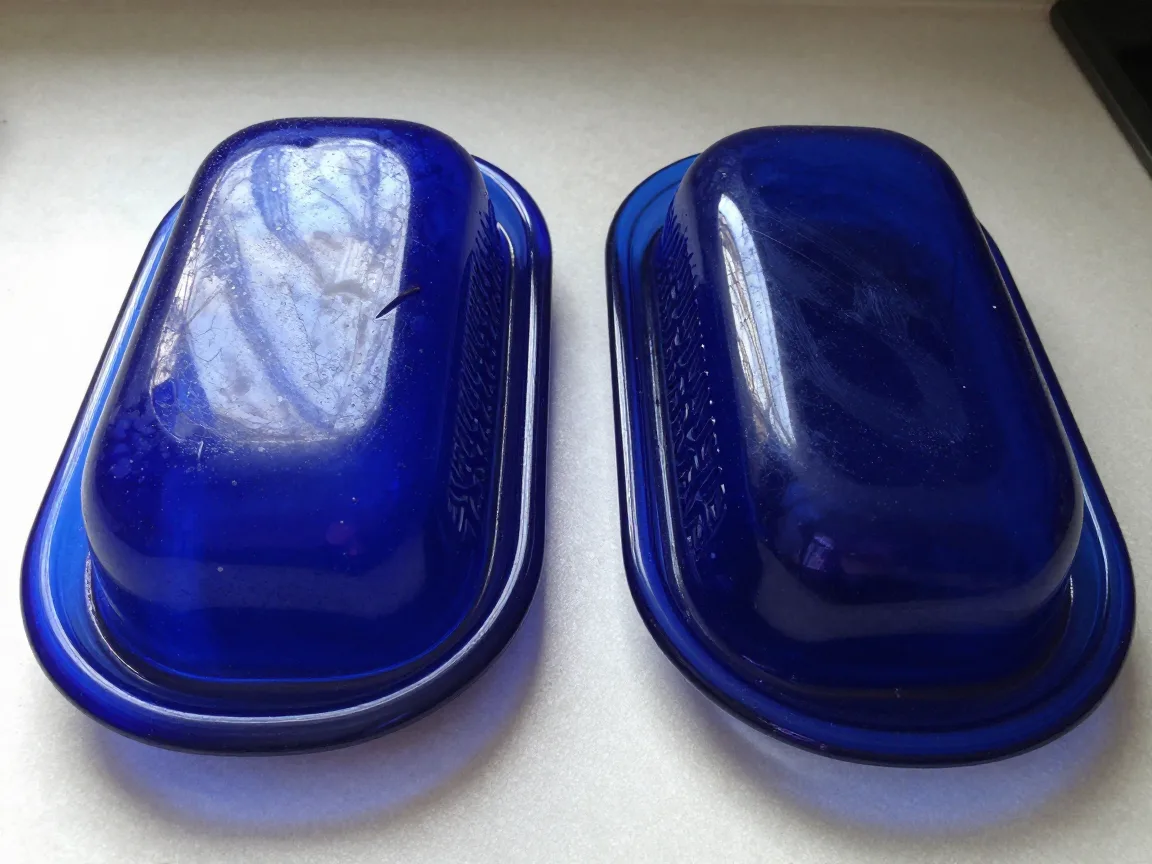
Reproductions often show softer, less defined mold detail than original Depression-era pieces.
How Do Condition and Restoration Affect Price?
For a serious collector market, condition is king. A “mint” condition sugar shaker might sell for $400, while the same piece with a chip on the rim might struggle to get $40.
Restoration is a tricky subject. While a professional conservation effort can stabilize a piece, visible repairs generally lower the auction estimate. However, for extremely rare 18th-century Stiegel type flasks, collectors are often willing to overlook minor damage simply because so few examples exist.
Always check the “high points” of the design on pressed glass for wear. If the pattern is worn smooth, the value drops significantly compared to a piece with crisp details.
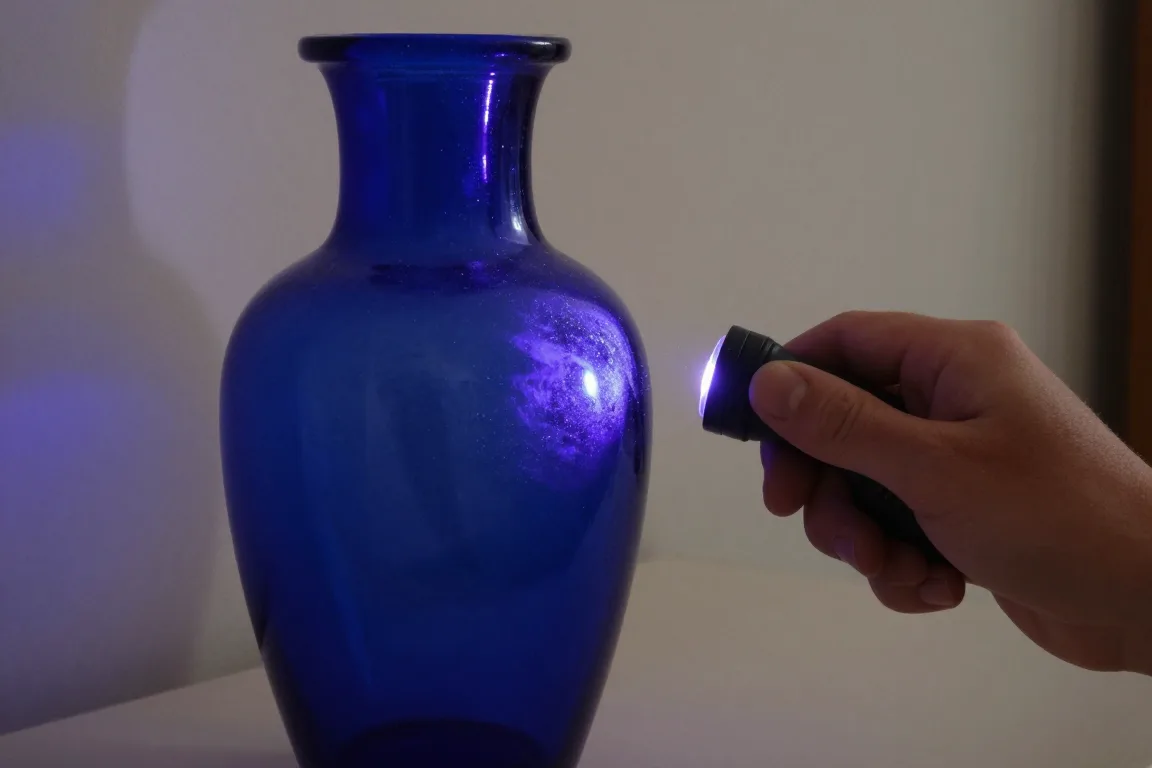
A UV light can make some glue repairs and old cracks easier to see.
Valuing cobalt glass is a journey through history, chemistry, and art. Whether you are looking at a replacement value for insurance or hunting for a bargain at a thrift store, remember to look for the pontil mark, feel the weight, and check the clarity. That flash of blue on a bottom shelf might just be a forgotten masterpiece waiting for you to discover it. Happy hunting!
A real Murano glass label is either a Vetro Artistico® Murano consortium sticker, with a borsella logo and a three-digit furnace code, or a foil label from a named furnace such as Venini or Seguso. Stickers reading “Murano Style”, “Venetian Style”, or “Cristal Venezia” mean the piece was made somewhere else. Without any label, the base, the weight, and the sharpness of the color layers decide.
*
A sticker is easy to copy or move; the glass itself tells you more.
Why is identifying real Murano glass so difficult?
The challenge lies in the island’s history. Murano isn’t a single brand; it is an island near Venice, Italy, home to hundreds of independent glass furnaces. For centuries, makers like Barovier & Toso, Seguso, and Venini have operated independently.
Unlike Wedgewood or Hummel, which have standardized marks, Murano glass identification relies heavily on attribution, linking a piece to a specific furnace based on technique, color application, and yes, stickers. However, labels fall off, get faked, or use misleading language.
Without a signed base or a verifiable provenance (history of ownership), you are often left judging the glass itself.
The gap between the name and any legal protection is the root of the problem. Glassmaking was confined to the island by a Venetian decree of 1291, but the word “Murano” itself was not protected until the regional trademark of 1994, and the first labels under it appeared in 2002. Imitations from Asia and Eastern Europe are estimated to hold 40 to 45 percent of the market, so for any piece made before 2002, which is most of the vintage glass in circulation, attribution rather than a mark does the work.
What do authentic Murano labels actually look like?
Not all stickers are created equal. In the US market, you will commonly encounter three types of labels. Knowing the difference affects the fair market value significantly.
The Consortium Label: The most trustworthy modern mark is from the Promovetro Consortium. It features a specific logo (a glassmaker tool called a borsella*), the words “Vetro Artistico® Murano,” and a serial number. This guarantees authentication.
Furnace Specific Labels: Older vintage pieces (1950s-1970s) might have foil stickers from specific houses like Salviati or Fratelli Toso. These are goldmines for collectors.
The “Murano Style” Trap: If a sticker says “Murano Style” or “Cristal Venezia,” put it back. These are almost always mass-produced elsewhere.
What does the Vetro Artistico Murano label look like?
The Vetro Artistico® Murano label is a small white or transparent sticker printed with a borsella (the glassmaker’s tongs) logo, the words “Vetro Artistico® Murano”, and a three-digit number that identifies the furnace that made the piece. It is the only Murano label backed by law: the Veneto Region created the trademark in 1994 and the Promovetro consortium has applied it to glass since 2002. Every other sticker on a Murano piece is a maker’s own label, a shop label, or an importer’s label.
Feature
What to look for
Since
Logo
Borsella (tongs) symbol; printed in red or blue depending on the type of production
2002
Wording
“Vetro Artistico® Murano” with the registered mark; never “style”, “type”, or “inspired by”
2002
Furnace code
Three digits starting at 001; the same number appears on every piece from that furnace
2002
Background
Opaque white or fully transparent; two formats, a rectangle and a small jewelry version
2002
Segmented cuts
The label is scored into segments that break apart when peeled, so it cannot be moved to another piece
2002
QR / Data Matrix code
Scans to a protected database record for that piece; verify at muranoglass.com or with the consortium’s Original Murano Glass app
2016
Security print
A film that shifts from clear to cyan as you tilt it, UV-fluorescent red and blue ink, and gold cold foil
2016
Three checks take under a minute. Tilt the label under a lamp and watch for the color shift. Read the three-digit code and compare it with the consortium’s published list of licensed furnaces. Scan the code if the label has one; the same UV torch used to spot uranium glass also lights up the fluorescent ink on a post-2016 label. A sticker that is glossy and smooth, carries no number, or peels off in one piece fails the test.
The label has an older sibling. Vetri Murano labels with a “VM” logo and codes 001 to 056 were issued by the Consorzio Venezia Vetro from 1981 until about 2001, so a VM sticker on a 1980s or 1990s piece is genuine; it simply predates the current mark. Roughly 50 furnaces were using the Vetro Artistico trademark by 2012, and the code list has since grown past 130. Absence of the label therefore condemns nothing: many furnaces never joined, and every piece made before 2002 predates the scheme. The history of Murano glass explains why a legal mark arrived so late for an industry that is more than seven centuries old, and the contrast with French houses is sharp: Baccarat, Lalique, and Daum have marked the glass itself for most of the last century, while Murano relied on paper.
Which Murano labels are real and which are a warning sign?
A label proves Murano origin only when it names the consortium or a specific furnace. A label that names a country, a style, or a shop proves nothing either way, and a label that says “style” proves the opposite.
Label wording
Who issued it
Era
What it proves
“Vetro Artistico® Murano” with a three-digit code
Promovetro consortium under Veneto regional law
2002 to now
Made on Murano by a licensed furnace; the strongest label
The scale of the problem explains why the wording matters. Imitation pieces from Asia and Eastern Europe are estimated to take 40 to 45 percent of the market for Murano glass, and most of them reach buyers with some form of Murano wording on a sticker. The most commonly faked antiques follow the same pattern: the fake borrows the name of the place rather than the name of a maker.
Foil labels are the most abused category. Reproductions of vintage furnace foils are sold by the sheet, so a foil label counts as evidence only when its typography, color, and outline match documented examples of that furnace, and when its condition matches the piece. A crisp, bright foil on a base with decades of shelf wear is a mismatch, and so is a 1950s label on a shape that furnace did not make until the 1970s. American makers went through the same transition: Fenton relied on paper labels until it began molding its logo into the glass in 1970, which is why so much early Fenton is unmarked. The broader guide to art glass marks covers which makers marked the glass itself and which never did.
How can I tell if glass is Murano without a sticker?
When the sticker is long gone, a common issue with estate sale finds, you must look at the glass itself.
First, check the base. Authentic blown glass from Murano is hand-finished. You should often see a pontil mark. This is a rough scar or a polished-smooth depression on the bottom where the glass was broken off the pontil rod.
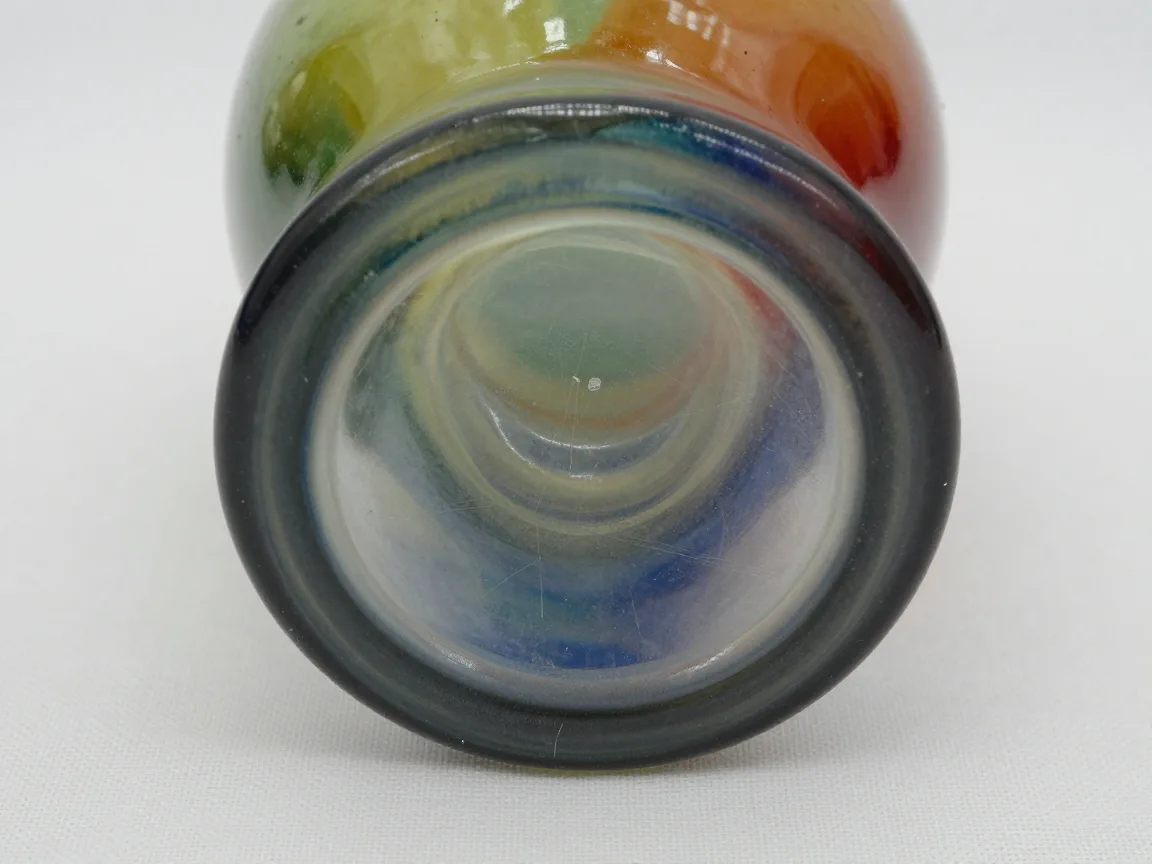
A polished pontil mark on the base points to hand-blown glass; a flat molded base does not.
Mass-produced glass usually has a smooth, flat bottom or, worse, a faint molded ridge line running down the side. Authentic Murano will rarely have visible mold seams unless it is specific pressed glass (which is rarer for high-end Murano).
Does the presence of bubbles mean it’s fake?
This is a huge misconception. While high-end crystal (lead glass) strives for perfection, Murano glass is an artistic, handmade medium.
Small, scattered bubbles are actually a sign of the handmade process. However, the bubbles should be internal. If the surface feels gritty or pitted, that is a sign of poor quality control or damage, which hurts the condition report.
Conversely, if the glass is absolutely flawless, perfectly symmetrical, and feels suspiciously light, be wary. Chinese reproductions are often chemically perfect but lack the “soul” and weight of Italian glass.
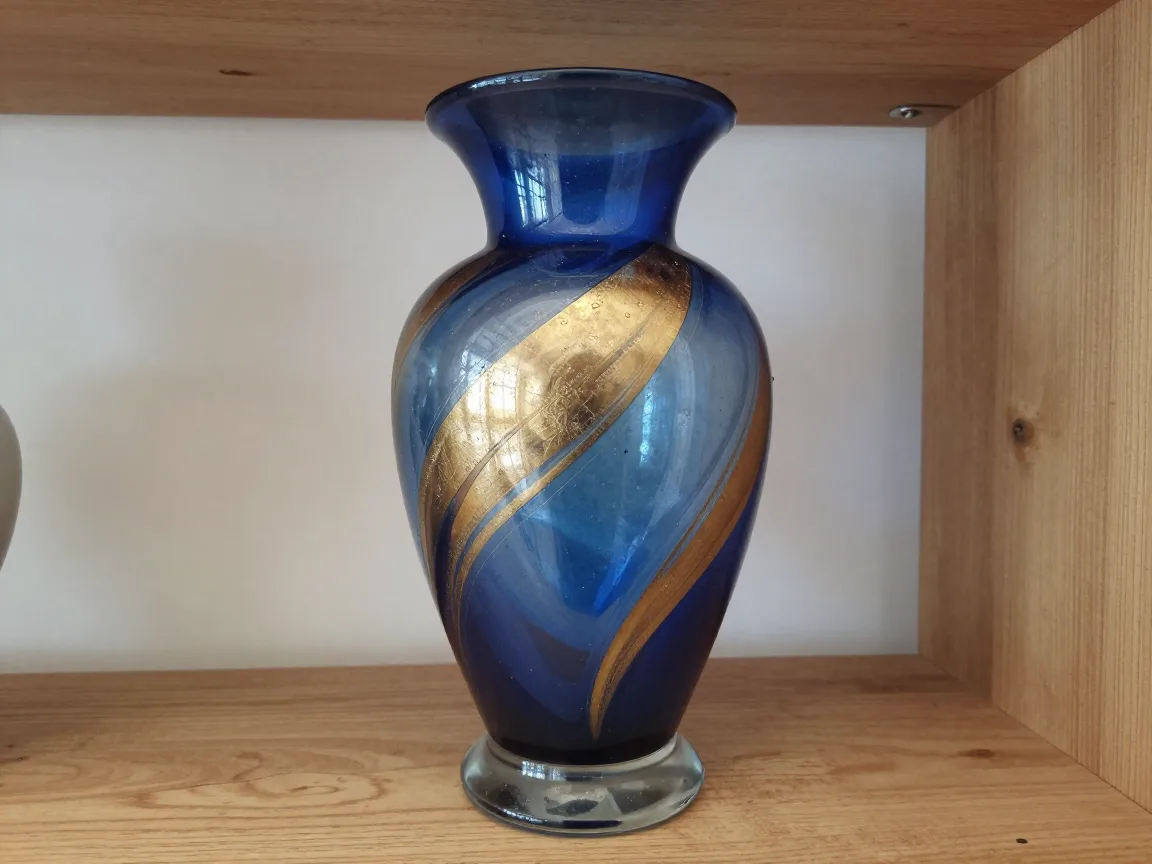
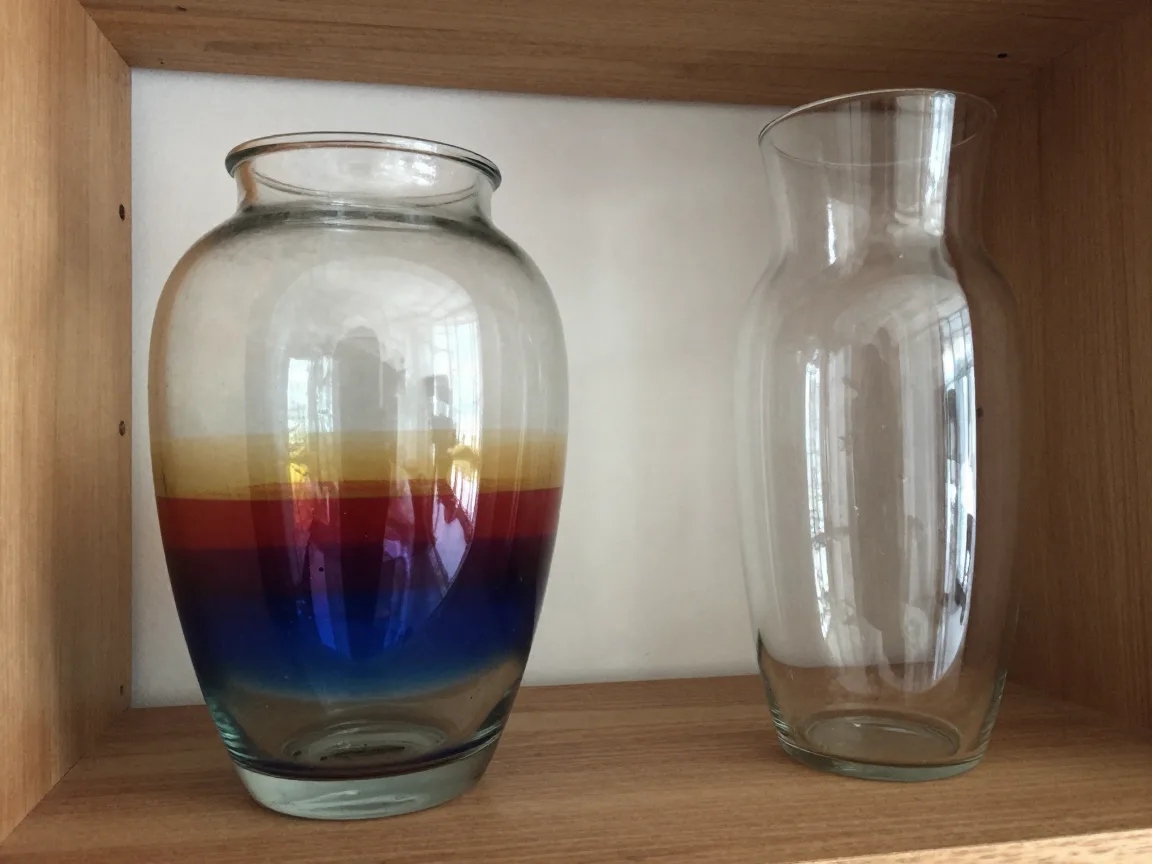
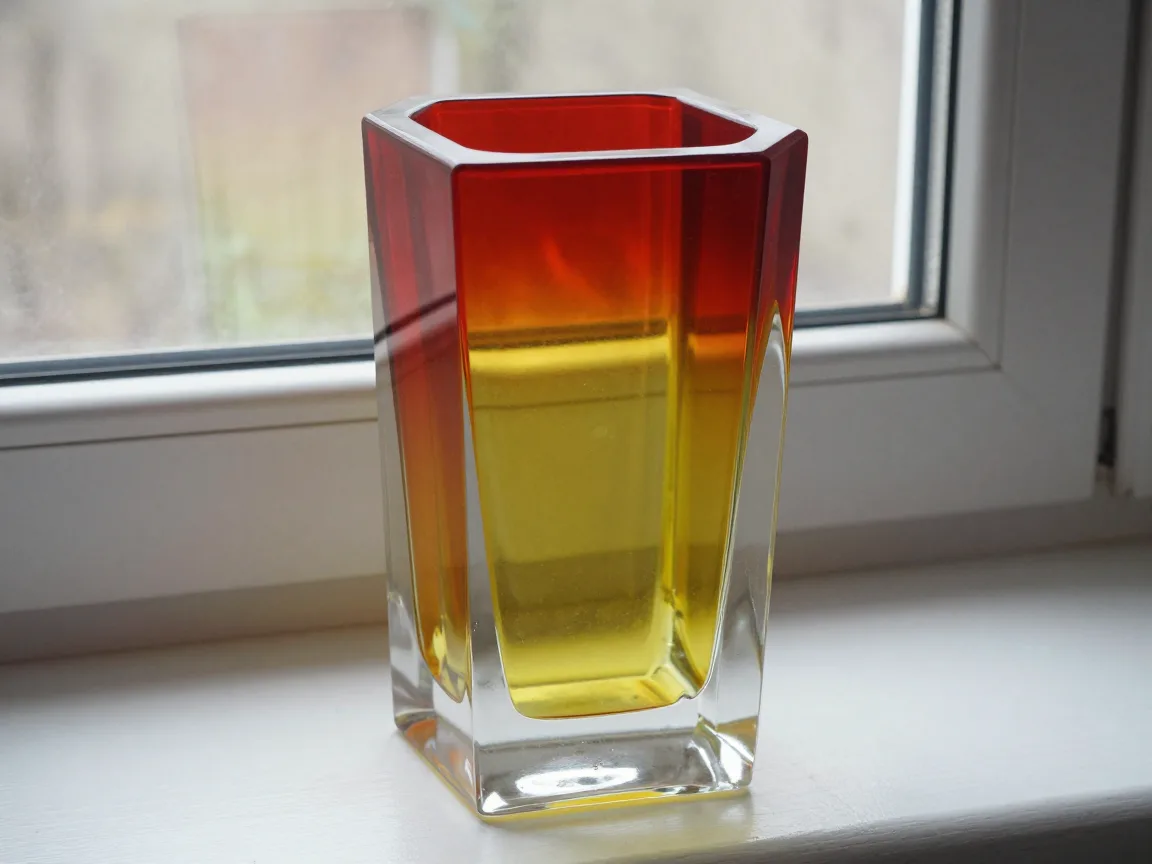
Sommerso pieces are heavy, with layers of color cased inside clear glass.
One of the most valuable styles found in the US collector market is “Sommerso” (submerged). This involves dipping colored glass into molten glass of a different color to create layers.
Authentic Sommerso, popularized by Flavio Poli for Seguso, features distinct, sharp lines between the colors. You should see a clear definition where the red meets the blue, for example.
In fakes, the colors often bleed together or look muddy. If the transition is blurry, it’s likely a cheaper imitation, which significantly lowers the auction estimate.
Sommerso as a named technique dates from the late 1930s, so a piece offered as “1920s sommerso” is misdated at best. The heaviest examples are the faceted block vases of the 1950s and 1960s, often in red or cobalt under a thick clear casing; a cobalt piece in a single layer of the same size weighs noticeably less in the hand, which is why weight is the first check when the layers are hard to read in poor light.
Is a signature required for high value?
Surprisingly, no. Many masterpieces were never signed. In fact, a signature can sometimes be a red flag.
Forgers often etch “Murano” or “Venice” onto the bottom of generic glass using a diamond tip tool. If the signature looks like it was hastily scratched with a rotary tool, be skeptical.
Genuine signatures (like Archimede Seguso) are usually fluid and confident. Sometimes, the signature is actually an acid stamp.
If you find a high-quality piece without a signature, don’t dismiss it. Look for gold flecks (aventurine) or complex cane work (millefiori). These require high technical skill that counterfeiters rarely bother to replicate perfectly.
Aventurine glass holds tiny metallic flecks that sparkle in the light.
How did Venini, Seguso, and Barovier & Toso sign their glass?
Most Murano furnaces did not sign their glass before the 1960s, and the ones that did used a small set of methods: an acid-etched stamp, a diamond-point engraving on the base, or an enamel-painted signature on studio pieces. Knowing which method a furnace used in which decade is the fastest way to catch a signature that was added later.
Furnace or maestro
Typical marking
Period
What a fake usually gets wrong
Venini
Acid stamp “venini murano” in the 1930s; three-line acid stamp “venini / murano / ITALIA” from the 1940s to the 1960s; diamond-point “venini italia” from the mid-1960s; “venini” with a year after 1985
1930s to now
Engraved signatures on pieces that should carry an acid stamp, or a year on a pre-1985 shape
Seguso Vetri d’Arte
Paper labels; the glass itself is usually unsigned
1930s to 1970s
A scratched “Seguso” on the base of a piece the furnace never signed
Foil labels; engraved “barovier & toso murano” on some later production
1930s to now
Engraving on early pieces that only ever had labels
Cenedese, Barbini, Salviati
Diamond-point signatures naming the furnace, sometimes with the artist and a date on later work
1950s onward
Signature naming only “Murano” or “Italy” without a furnace
Modern studio maestri
Engraved name, year, and often a sequence number
1980s onward
Missing year on a piece that should carry one
The pattern in the last column is the useful one. A genuine signature names a furnace or a person; a forged signature names the island. “Murano”, “Made in Murano”, or “Murano Italy” scratched into the base with no maker’s name is the mark most often added to generic glass, because it is the only word the forger is sure the buyer will recognize. The founder’s own story shows how late signatures arrived: Paolo Venini built the firm from 1921, yet the systematic dated signature only appeared after the company changed hands in 1985.
Technique is the second signature. Millefiori canes, murrine, aventurine flecks, and controlled sommerso layers are difficult and slow, so a piece that shows them has cleared a bar most imitations never reach, signed or not. Pressed and molded glass carries the opposite kind of mark, a logo or letter in the mold, which is how Heisey’s Diamond H and the makers of carnival glass are identified; a Murano piece with a molded mark of that kind is almost never Murano.
Authenticating Murano glass is an art form. It requires assessing the weight, the clarity of the color, the cold-work on the base, and the quality of the label. Whether you are buying for restoration, resale, or your own collection, trust your hands and your eyes.
Real Murano glass commands respect, and a high replacement value, because it represents centuries of guarded secrets and fiery craftsmanship. Don’t let a shiny “Style” sticker fool you.
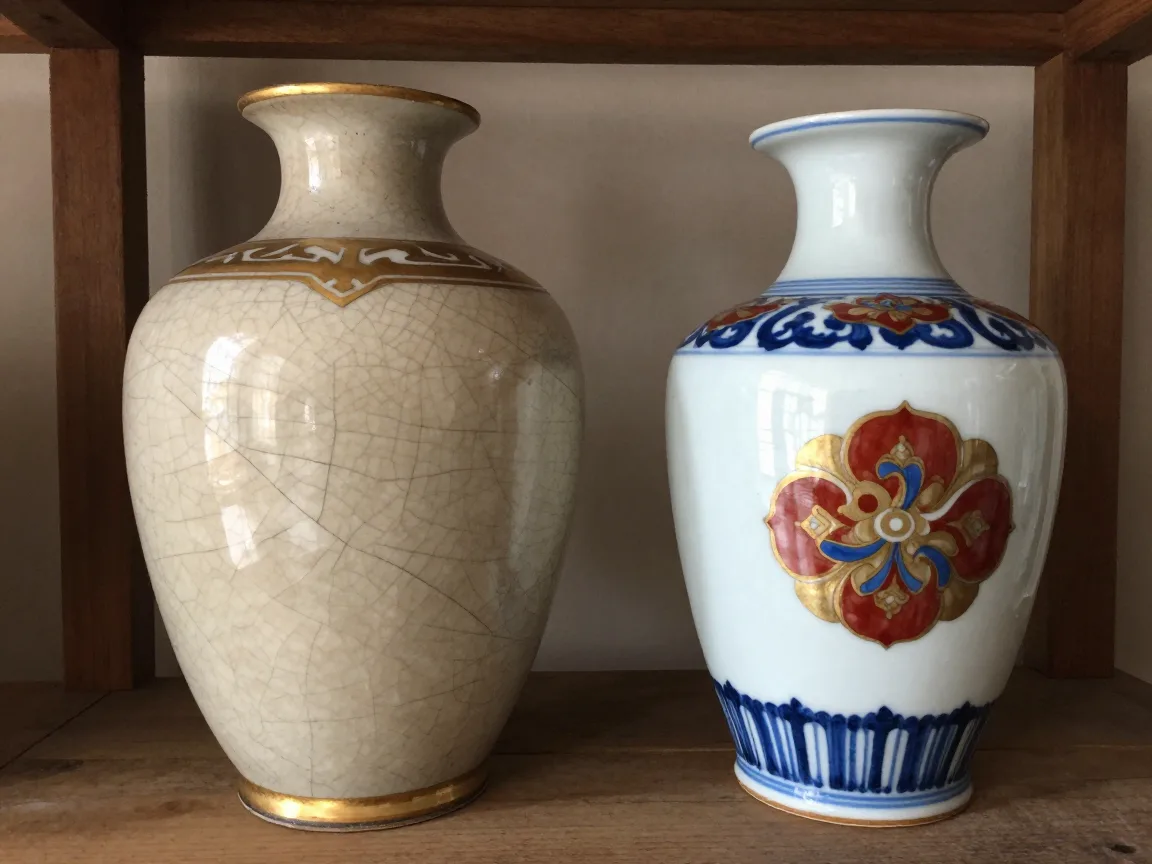
To distinguish between 19th-century Satsuma and Imari vases, examine the clay and color palette. Satsuma ware uses a cream-colored earthenware body with a distinctive crackle glaze and detailed gold/polychrome enamel scenes. Imari porcelain is hard, white, and translucent, dominated by deep underglaze blues, rusty iron reds, and gold gilding without crackling.
*
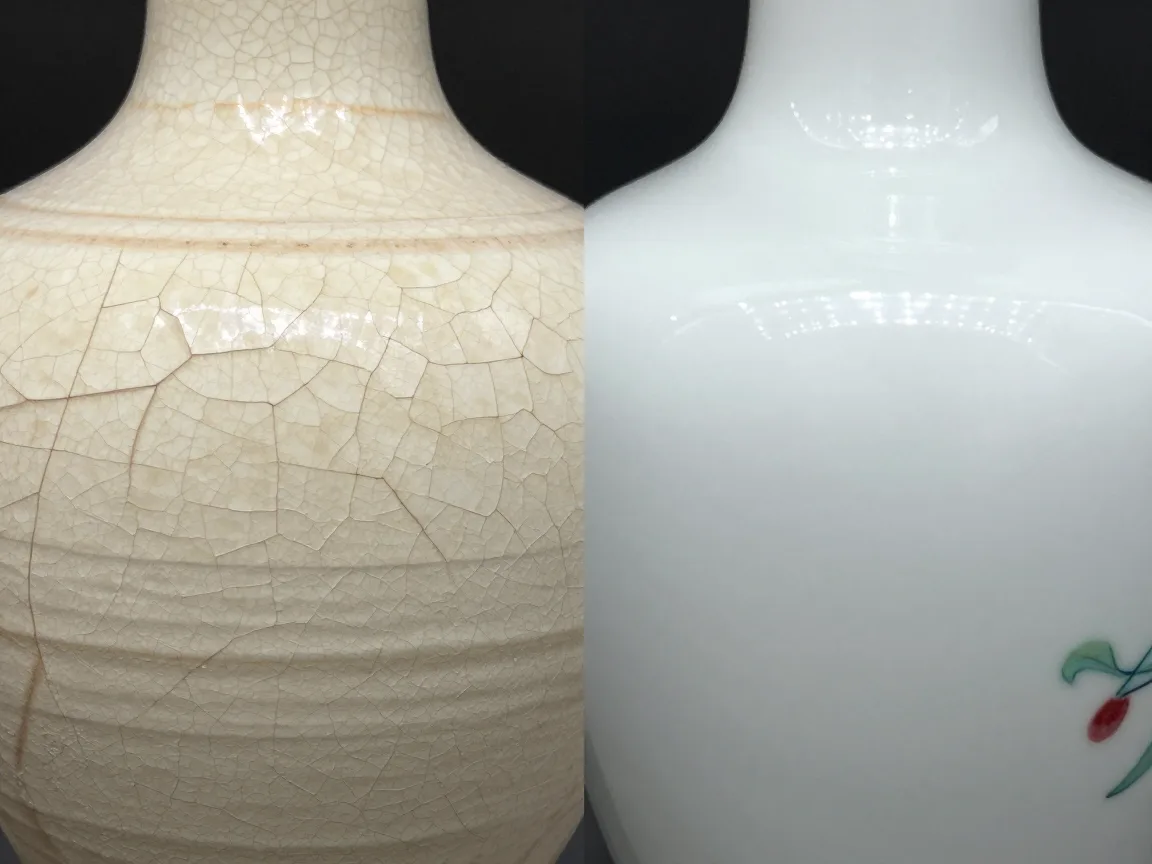
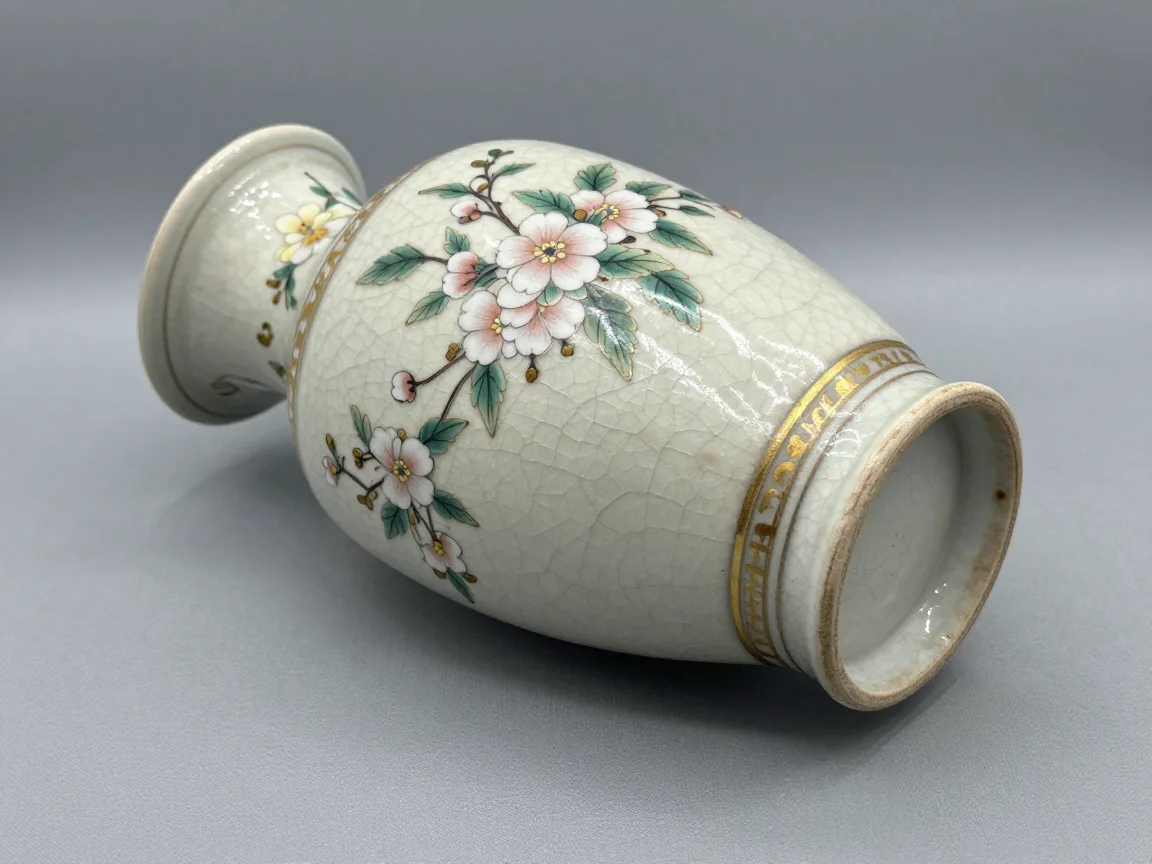
Satsuma has a fine crackled cream glaze; Imari porcelain is smooth and white.
What are the key characteristics of Antique Satsuma Ware?
True Satsuma ware, specifically from the late Edo and Meiji periods (1868–1912), is defined by its material. It is earthenware, not porcelain. This means if you tap it, it produces a dull thud rather than a clear ring.
The most critical identification feature is the craquelure or crackle glaze. This web of fine lines in the clear glaze is intentional and covers the cream or ivory-colored body.
Look for the Shimazu crest, a red cross in a circle, often found on the base or near the rim. However, be cautious; this mark was widely used on 20th-century tourist ware too. High-quality 19th-century pieces feature incredibly precise, miniature painting known as gosu blue or heavy gold gilding (moriage) that feels raised to the touch.
How do I distinguish Imari Porcelain from other styles?
Imari (or Arita ware) is distinctly different because it is true porcelain. The clay body is kaolin-rich, firing to a hard, white, glass-like finish.
The classic “Imari palette” is unmistakable: dominated by deep cobalt blue (painted under the glaze) and iron red (painted over the glaze), accented with gold. This style was heavily exported to Europe and the US, influencing makers like Royal Crown Derby.
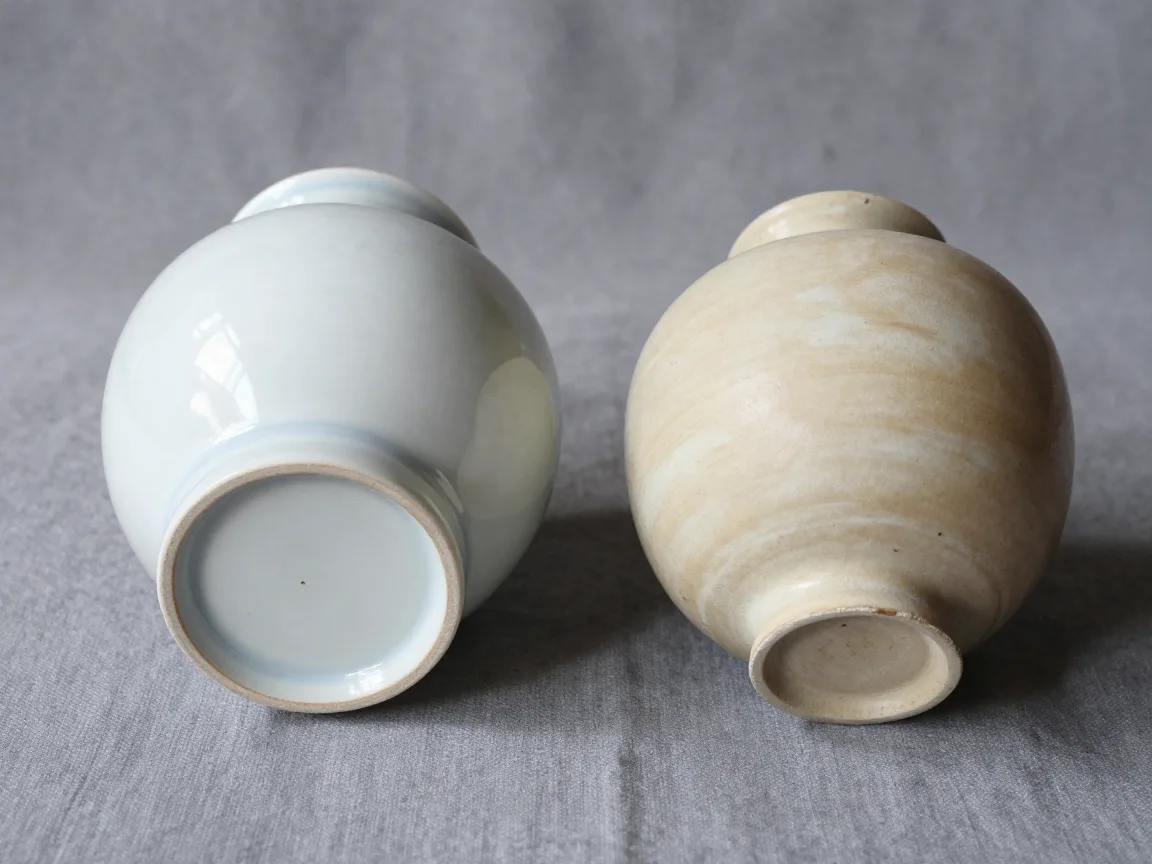
Check the underside. The base of an Imari vase will be bright white and smooth, often with blue underglaze markings or simply concentric blue rings. The provenance of these pieces often traces back to wealthy Western families who collected them during the “Japonisme” craze of the late 1800s.
Turn the piece over: porcelain is glazed and white, Satsuma earthenware shows buff clay.
What determines the Fair Market Value of these vases?
Condition is everything in the collector market. A condition report for a Satsuma vase should note any staining in the crackle glaze, which can lower value. For Imari, look for rubbing on the gold gilding, a sign of heavy handling that impacts fair market value.
Attribution matters immensely. A signed piece by a master studio like Kinkozan or Yabu Meizan can command auction estimates in the thousands, whereas unmarked “export” wares might fetch $50–$150.
Always check the base: Satsuma makers usually signed there in gold or red.
Be wary of “Nippon” marks. If a vase is marked “Nippon” (Japan), it typically dates from 1891 to 1921, created specifically for export to comply with US tariff laws. While collectible, these are generally less valuable than earlier, unmarked examples or artist-signed studio works.
How can I spot a fake or modern reproduction?
Forgery detection in Japanese ceramics often comes down to the quality of the art.
On genuine 19th-century pieces, the faces of figures are painted with single-hair brushes, expressive and distinct. On modern reproductions, faces often look blank, cartoonish, or are simple red dots.
Feel the decoration. The “moriage” (raised gold) on antique Satsuma should feel like distinct ridges. On cheaper copies, it feels flat or looks like piped icing that hasn’t adhered well.
Fine, deliberate brushwork on faces is typical of quality period pieces.
Also, inspect the wear. A 150-year-old vase should show shelf wear on the bottom rim, a soft, matte friction ring where it sat on a table. A glossy, pristine bottom rim suggests it was made yesterday. This principle of wear analysis is vital for authentication, a skill we discuss further in our guide on Detecting Reproductions: How to Tell New Wood from 100-Year-Old Patina.
Whether you prefer the earthy, intricate warmth of Satsuma or the bold, regal contrast of Imari, knowing the difference puts you ahead of 90% of casual shoppers. Always check the clay body first: cream and crackled for Satsuma, white and smooth for Imari.
Remember, if you’re ever unsure in the heat of an auction, the Antique Identifier app is your pocket appraiser, ready to help you separate the treasures from the trinkets.