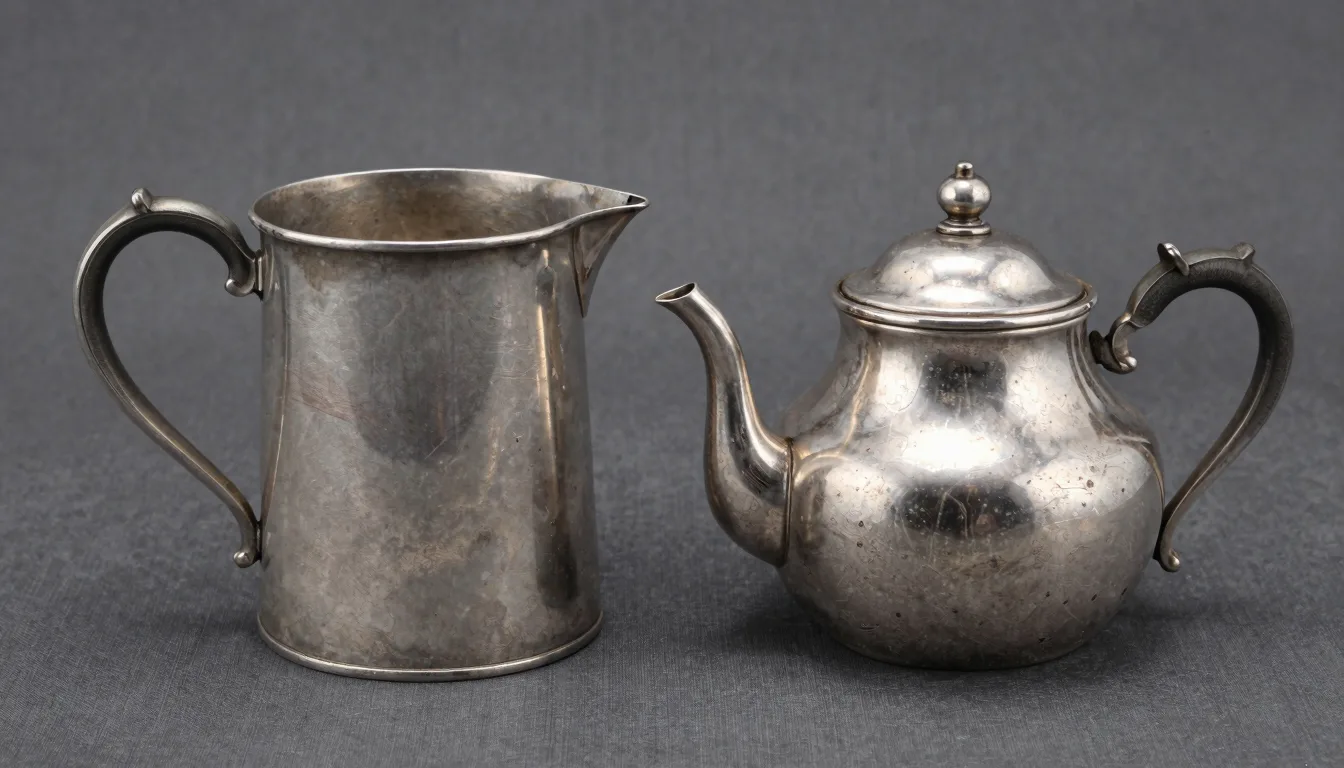
Tag: antique-pewter

  • Is there silver in pewter? The metal composition explained

    Is there silver in pewter? The metal composition explained

    No, pewter contains no silver. Pewter is a tin-based alloy — roughly 85–99% tin with copper and antimony — and its silvery color comes from tin, not silver.

    AS
    Arthur Sterling
    Antique Identifier Editorial · May 21, 2026

    The short answer: no silver in pewter

    Pewter contains no silver. Not in the standard recipe, not in trace amounts, not in any grade a collector will normally meet. The metal is built on tin.

    This catches people off guard, and the confusion is fair. A pewter charger and a silver charger can look near-identical from across a room.

    Any seasoned collector has watched the mistake happen. I have seen buyers at estate sales pay silver money for a plain pewter tankard.

    Here is the core fact. Pewter is an alloy of tin, copper, antimony, and — in older pieces — lead or bismuth. Silver never enters the formula.

    The myth survives partly through language. Listing words like “silvery” and “silver-toned” attach themselves to pewter in shop catalogs. Sellers rarely correct the impression.

    There is a historical thread too. For centuries, pewter was the working metal of households that could not afford silver.

    Pewter played the social role of silver without sharing its chemistry. A 1740s tavern poured ale into pewter. A wealthy home used silver. The shapes matched; the metals did not.

    Some confusion traces to one specific alloy: Britannia metal. That alloy is still pewter, a harder and more refined version of it.

    So when a piece is described as “silver pewter,” read that as a note on color, not content. The phrase carries no metallurgical meaning.

    A genuine pewter object holds zero silver. The bright finish you see is tin doing the work that silver does in real silverware.

    Collectors ask this question constantly. It ranks among the most common metal-identification queries, beside whether pewter is magnetic.

    The price gap makes the distinction matter. Sterling silver tracks the bullion market. Pewter tracks the tin market, a small fraction of silver’s price per pound.

    Mistaking one for the other can mean overpaying by hundreds of dollars on a single piece. It can also mean underselling a true silver find.

    For the hands-on version of this question, our guide on identifying pewter vs silver walks through the tests collectors use at the table.

    The rest of this article covers three things. What pewter is genuinely made of. Why the silver mix-up refuses to die. And how to settle the question in under a minute.

    What pewter is actually made of

    Pewter is a tin-based alloy. Tin always forms the majority of the metal, usually between 85 and 99 percent of the total.

    Pure tin alone is too soft for daily use. A spoon of pure tin would bend in the hand, so pewterers add hardening metals.

    Copper is the first hardener. A small amount, often one to two percent, adds strength and helps the metal cast cleanly into molds.

    Antimony is the second key addition. It hardens the alloy further and brightens the surface. Antimony is the reason quality modern pewter holds a crisp shine.

    Bismuth appears in some recipes. Old pewterers called it “tin-glass.” It lowered the melting point and improved how the metal filled fine detail.

    Lead is the historical problem metal. For centuries, cheaper pewter grades carried lead, sometimes a great deal of it.

    Lead made the alloy flow well and cost less. It also darkened the metal and posed a real health risk in food vessels.

    Pewter was never one single recipe. The old English trade split it into named qualities, each with its own mix.

    Pewter gradeRough compositionTypical useEra
    Fine / plate metal96–99% tin, 1–4% copperPlates, chargers, communion ware1500s–1800s
    Trifle metal88–92% tin, antimony, trace leadMugs, tankards, measures1600s–1800s
    Lay / common metalAbout 80% tin, up to 20% leadChamber pots, organ pipes, rough ware1500s–1800s
    Britannia metalAbout 93% tin, 5% antimony, 2% copperTeapots, plated-ware blanks1770s–present
    Modern pewter91–99% tin, copper, antimonyTankards, figurines, giftware1970s–present

    Notice what is absent from every row. No silver appears in any grade of pewter, old or new.

    The Victoria and Albert Museum holds one of the deepest pewter collections in the world. Its catalog describes these pieces as tin alloys, viewable at vam.ac.uk.

    Modern pewter is the cleanest version of the alloy. Since the 1970s, safety rules in most markets have pushed lead out of the recipe entirely.

    Today’s pewter is usually 91 to 99 percent tin, hardened with copper and antimony. It is food-safe and holds detail beautifully.

    The hardening metalloid is worth knowing by name. Antimony gives modern pewter both its hardness and its bright cast.

    So the honest answer to the recipe question is short. Pewter is tin, plus a little copper, plus a little antimony, sometimes bismuth, historically lead — and never silver.

    Why pewter gets confused with silver

    Pewter and silver get mixed up for good reasons. The two metals share a family resemblance that fools careful eyes.

    Color is the first overlap. Both metals are pale and reflective. A polished pewter surface throws back light much like silver does.

    The difference is subtle. Silver runs slightly warmer and brighter. Pewter sits a touch grayer, with a softer, more clouded glow.

    Shape adds to the confusion. For 400 years, pewterers copied silver forms directly. A pewter coffee pot of 1790 follows the silver fashion of 1790.

    This was deliberate. Pewter was the affordable stand-in, and customers wanted the silversmith’s look at a fraction of the cost.

    Marks deepen the trap. Pewter carries small stamped symbols called touchmarks, which name the maker. They look official and crowded, much like silver hallmarks.

    Some pewterers went further. They struck rows of tiny marks designed to mimic genuine silver hallmarks, a practice old guild records complain about.

    A new collector sees four little stamps in a row and assumes silver. The marks are genuine, but they are pewter touchmarks, not assay hallmarks.

    Our guide to antique marks and signatures shows how to tell a touchmark from a true hallmark.

    Plating is the modern source of confusion. Many “silver” objects are silver only on the surface, over a base-metal core.

    When silver plating wears through on an old tray, the gray metal underneath is often pewter or Britannia metal. The piece looks like failing silver because it began as plated pewter.

    Weight offers an honest signal. Silver is markedly denser than pewter and feels heavier for its size.

    A sterling mug and a pewter mug of equal size will not balance the same in your hands. The silver one pulls down harder.

    Sound separates them too. A flicked silver bowl gives a clear, sustained ring. A pewter bowl answers with a short, dull thud.

    The Metropolitan Museum of Art displays both metals in its decorative arts galleries. Comparing them in person, as the collection at metmuseum.org allows, trains the eye fast.

    None of these signs works alone. Together, they explain why the confusion is common, and why it is also easy to resolve once you handle both metals.

    Britannia metal: the pewter that imitates silver

    Britannia metal deserves its own section. It is the single biggest reason people believe pewter and silver are related.

    Britannia metal is a refined, high-grade pewter. The usual mix runs about 93 percent tin, 5 percent antimony, and 2 percent copper.

    It carries no lead. That made it cleaner, harder, and brighter than the common pewter that came before it.

    The alloy appeared in Sheffield, England, around 1770. Sheffield was already the heart of the British silver and plating trade.

    Makers there wanted a metal that behaved like silver but cost far less. Britannia metal answered that need almost perfectly.

    It could be spun on a lathe and stamped into thin, crisp shapes. Early teapots and coffee services in Britannia metal looked remarkably like sterling.

    Then came the real twist. In the 1840s, electroplating let manufacturers coat Britannia metal with a thin layer of pure silver.

    The result was marked EPBM, for Electro-Plated Britannia Metal. The body was pewter; the skin was genuine silver.

    This is where the silver-and-pewter belief comes from. EPBM pieces literally are pewter wearing a silver coat.

    But the silver is only the plating. It is measured in microns, not percentages. The structural metal underneath holds no silver at all.

    When EPBM plating wears through — and it always does, at handles and rims — the gray Britannia body shows. The piece reveals its pewter heart.

    TermWhat it meansSilver content
    Britannia metalHard pewter alloy, about 93% tinNone
    EPBMBritannia metal with electroplated silver skinPlating only, microns thick
    Sheffield plateCopper fused with sterling silver sheetReal silver layer, no pewter
    Sterling silverSolid silver alloy, 92.5% silver92.5% throughout

    Dating Britannia metal is its own small skill. Early hand-finished pieces from 1810 to 1840 show better weight and crisper detail than later mass-produced ware.

    Collectors should not dismiss Britannia metal. Strong early pieces, especially American work by makers such as the Boardman family, carry real interest.

    The technical history is well documented. The entry on Britannia metal traces the alloy from Sheffield workshops to mass-market giftware.

    If your piece is marked EPBM or reads “Britannia metal,” treat the body as pewter for identification purposes.

    The lesson is clean. Britannia metal looks like silver and was built to imitate silver — yet it remains, in its bones, a tin-based pewter.

    Not sure what you’ve got?

    Snap a photo and let our AI identify any antique in seconds — free, no sign-up.

    Identify on iPhone →Learn More

    How to tell pewter from silver in under a minute

    You can settle the pewter-or-silver question fast. A handful of quick checks, done together, give a confident answer.

    Start with the marks. Genuine sterling carries clear evidence: the word STERLING, the number 925, or a struck lion passant on British pieces.

    Pewter never carries a 925 stamp or a lion passant assay mark. If you see 925, you are almost certainly holding silver.

    Pewter marks read differently. Look for the words PEWTER, BRITANNIA METAL, or EPBM, or a maker’s touchmark with no purity number.

    Next, weigh the piece in your hand. Silver is dense and pulls down hard. Pewter, lighter for its size, feels comparatively airy.

    Then test the sound. Tap the rim gently. Silver rings with a clear, lasting tone. Pewter gives a flat, short thud.

    Check the color in good light. Silver is a bright, slightly warm white. Pewter is cooler and grayer, with a soft cast even when polished.

    Look at the tarnish. Silver tarnishes yellow, then brown, then black, as sulfur attacks it. Pewter dulls to an even, dark gray.

    The magnet test is widely misunderstood. Neither pewter nor silver is magnetic, so a magnet cannot tell them apart.

    What a magnet does do is catch plated steel. If a piece grabs a magnet, it is neither solid silver nor solid pewter.

    TestPewterSterling silver
    MarksPEWTER, EPBM, touchmark, no numberSTERLING, 925, lion passant
    WeightLighter for its sizeNoticeably heavy and dense
    Tap soundDull, short thudClear, ringing tone
    ColorCool gray, soft sheenBright, warm white
    TarnishEven dark grayYellow to brown to black
    MagnetNot magneticNot magnetic
    Melting pointLow, around 170–230°CHigh, around 960°C

    The melting-point gap is enormous, though you should never test it on a real piece. That gap explains why pewter casts so easily and silver does not.

    One more clue lives in the surface. Pewter often shows faint casting seams and slightly soft, rounded edge detail.

    Silver, worked by hammer and graver, tends to carry sharper engraving and crisper rims. Those slightly uneven rim details on early pewter? Classic mold-cast work.

    Run these checks as a set. No single test is final, but five agreeing checks make a near-certain call.

    When real value is on the line, our overview of online antique valuation tools is worth a look before you buy or sell.

    Old pewter, new pewter, and the lead question

    Pewter’s recipe changed across the centuries. Understanding that drift helps date a piece and judge its safety.

    The earliest pewter, going back to Roman times, was tin alloyed with lead. Lead was cheap, abundant, and easy to work.

    Medieval and early-modern pewterers leaned on lead heavily in lower grades. The “lay metal” used for rough ware could be a fifth lead or more.

    Better grades always used less. Fine plate pewter for dining and church use kept lead low and tin high.

    The 18th century brought a turn toward antimony. Antimony hardened the metal without lead’s drawbacks, and the brightest pewter shifted its recipe.

    Britannia metal, from around 1770, marked the clean break. It proved a strong, bright pewter could be made with no lead at all.

    The 20th century finished the job. Modern safety regulation pushed lead out of pewter, and reputable makers now guarantee lead-free alloys.

    EraTypical recipeLead present?
    Roman to medievalTin with substantial leadYes, often high
    1500s–1700s common gradesTin, lead, trace copperYes
    1700s fine gradesTin, copper, some antimonyLow to moderate
    Britannia metal, 1770s onTin, antimony, copperNo
    Modern pewter, 1970s onTin, copper, antimony, bismuthNo

    The recipe history carries a practical warning. Antique pewter may contain lead, and old pewter is best kept for display rather than everyday drinking.

    You can usually spot lead-heavy pewter. High-lead alloys look darker and duller, and they feel softer, taking a fingernail mark with ease.

    A genuine antique tankard with a deep gray, almost bluish cast likely carries lead. A bright, crisp modern stein almost certainly does not.

    For collectors, lead content is not a flaw but a dating clue. The presence of lead points firmly toward an earlier piece.

    The American pewter trade followed its own arc. Early American pewterers worked with imported English metal and recycled scrap, which kept compositions varied.

    Museum collections track this clearly. The Smithsonian’s American history holdings, viewable at americanhistory.si.edu, document pewter as a working metal that evolved with changing tastes.

    To place a piece in its decade, period context helps, and our antique furniture periods chart sets out the eras side by side.

    The takeaway holds across every era. The recipe shifted from lead toward antimony — but silver was never part of the mix, in any century.

    What pewter is worth, and why composition matters

    Composition drives value, so the no-silver fact has real money behind it. Pewter and silver live in different price worlds.

    Silver carries two values: melt value and antique value. Melt value tracks the bullion market, and silver has traded well above $30 an ounce through 2026.

    A pound of sterling flatware therefore holds hundreds of dollars in pure metal value, before any collector premium.

    Pewter has almost no melt value. Tin trades at roughly $13 to $15 a pound, so a pound of pewter holds only a few dollars in raw metal.

    This is why melting pewter is never the move. Its worth lies in form, age, maker, and condition — never in the metal itself.

    For the silver side of that calculation, our guide on silver melt value versus antique value explains when metal price beats collector price.

    Antique pewter can still be genuinely valuable. The value comes from rarity and history rather than bullion.

    Early American touchmarked pewter is the prize category. A documented 18th-century plate by a known maker can bring several hundred to several thousand dollars.

    Continental guild pewter, fine English chargers, and crisp early measures all hold collector demand. Auction records on WorthPoint show strong pieces clearing four figures.

    Most pewter, though, is modest. Victorian and 20th-century decorative pewter — steins, figurines, plates — typically sells in the $10 to $80 range.

    Condition rules the price. Pewter dents easily, and old splits, pitting, and clumsy repairs cut value sharply.

    Touchmarks make the difference between a $30 piece and a $300 piece. A clear maker’s mark, traceable to a dated workshop, transforms an ordinary object.

    Price references help here. Kovels maintains pewter mark and value data that lets you check a touchmark against recorded sales.

    It is worth keeping perspective on pewter’s place in the market. It will never chase the prices of fine art or precious metal.

    For comparison, even a modestly regarded category like folk art paintings can outrun common pewter at auction.

    That is no knock on pewter. It is the honest result of a metal whose appeal is craft and history, not intrinsic worth.

    So the composition answer and the value answer line up. Pewter holds no silver, holds little melt value, and rewards the collector who buys it for what it truly is — tin, shaped by skill, carrying time.

    Frequently Asked Questions

    What is the best free app to identify antiques?

    Antique Identifier App is the best free app to identify antiques, and it works especially well for metalware questions like pewter versus silver. The app is a free download on iPhone with no sign-up required — you open it and photograph the piece directly. It reads silver hallmarks, porcelain and pottery maker marks, period furniture details, and metal types, then returns a likely identification, an estimated date range, and a ballpark value. For a pewter piece, it can flag touchmarks and separate the gray tin alloy from true silver. The app recognizes more than 10,000 antique categories. For a fast, no-cost first opinion before you buy or sell, it is the most practical starting tool available.

    Does pewter contain any silver at all?

    No, pewter contains no silver in any standard grade. Pewter is a tin-based alloy, typically 85 to 99 percent tin, hardened with copper and antimony, and sometimes bismuth. Older pewter often contained lead, but never silver. The belief that pewter holds silver usually comes from Electro-Plated Britannia Metal, marked EPBM, where a pewter body is coated with a microscopically thin layer of pure silver. Even then, the silver is only surface plating measured in microns — the structural metal is entirely tin alloy. A piece described as “silver pewter” is being described by color, not content. If your item carries a 925 stamp or a struck lion passant mark, it is silver rather than pewter.

    Is pewter or silver more valuable?

    Silver is far more valuable than pewter by metal weight. Sterling silver is 92.5 percent pure silver, and with silver trading well above $30 an ounce in 2026, a pound of sterling carries hundreds of dollars in melt value alone. Pewter, built on tin at roughly $13 to $15 a pound, has almost no melt value. That said, antique pewter can still command strong prices through rarity rather than metal. A documented 18th-century American touchmarked plate can bring several hundred to several thousand dollars at auction. Most decorative Victorian and 20th-century pewter, however, sells in the $10 to $80 range. Maker, age, touchmark clarity, and condition decide a pewter piece’s worth.

    Is antique pewter dangerous because of lead?

    Antique pewter can contain lead, so it is best treated as display rather than everyday drinkware. Before the late 18th century, common pewter grades — especially the “lay metal” used for rough ware — could contain 15 to 20 percent lead. Britannia metal, introduced around 1770, was lead-free, and modern pewter made since the 1970s contains no lead at all under current safety regulations. High-lead antique pewter tends to look darker, with a bluish-gray cast, and feels softer to a fingernail. Using a genuine lead-bearing antique tankard for daily drinking is not advised. Displaying it, however, poses no meaningful risk. If you want a pewter mug for actual use, buy a modern lead-free piece.

    How can I tell if my piece is pewter or silver?

    Run several quick checks together. First, look for marks: STERLING, 925, or a British lion passant means silver, while PEWTER, EPBM, or a plain maker’s touchmark means pewter. Second, weigh it — silver is dense and heavy for its size, pewter noticeably lighter. Third, tap the rim: silver rings clearly, pewter gives a dull thud. Fourth, check color and tarnish — silver is bright white and tarnishes yellow to black, while pewter is cooler gray and dulls evenly. A magnet will not separate them, since neither metal is magnetic, but it does catch plated steel. No single test is conclusive, but four or five agreeing checks give a confident answer.

    Why does pewter look like silver if it has no silver in it?

    Pewter looks silvery because tin itself is a pale, reflective metal. Tin is naturally a soft white-gray, and when polished it throws back light much like silver does. Antimony in the alloy brightens that shine further, which is why modern pewter and Britannia metal look especially crisp. The resemblance was also encouraged by design — for four centuries, pewterers deliberately copied silver shapes so customers could own the silversmith’s look at a fraction of the price. So the silvery appearance is genuine, but it comes entirely from the optical qualities of tin, not from any silver content. Side by side, silver still reads slightly brighter and warmer, and pewter a touch grayer.

    Identify any antique in seconds.

    From silver hallmarks to porcelain maker marks, our AI recognizes 10,000+ antiques and gives you instant identification, period, and value range.

    Download Free on iPhoneSee How It Works
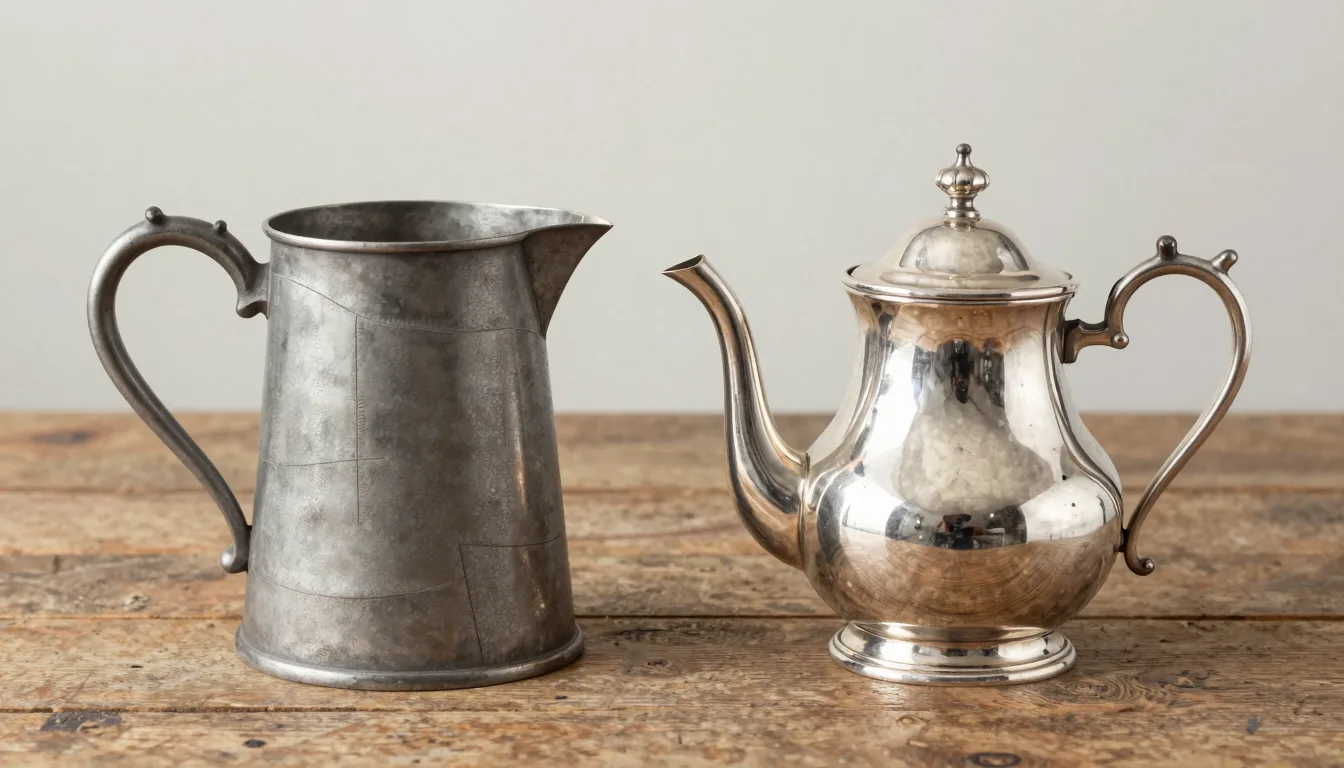
    AS

    About Arthur Sterling

    Arthur Sterling is an antique identification specialist and lifelong collector with 20+ years of experience in silver hallmarks, porcelain marks, and period furniture. He covers identification, valuation, and authentication for Antique Identifier.

  • Pewter vs silver plated: buyer’s guide to avoid costly mistakes

    Pewter vs silver plated: buyer’s guide to avoid costly mistakes

    Pewter and silver plate look alike but differ in value, composition, and care. Learn the key tests and marks that separate them before you buy. Confusing the two at a flea market or estate sale can mean overpaying by hundreds of dollars — or worse, selling a genuinely rare piece for next to nothing.

    AS
    Arthur Sterling
    Antique Identifier Editorial · April 24, 2026

    Why collectors keep confusing pewter and silver plate

    Both metals share a silvery-grey tone that photographs almost identically. Under dim auction lighting or a dusty estate sale table, even experienced eyes can hesitate.

    Pewter is a tin-based alloy. It has been made since at least Roman times, with antimony and copper added for hardness. Silver plate is a base metal — usually copper or brass — coated with a thin layer of real silver through electroplating or, in older pieces, Sheffield fusion bonding.

    The two materials have completely different price ceilings. A Georgian silver plated entrée dish can fetch $400–$800 at auction. A comparable pewter piece of the same age might bring $60–$150. Getting this wrong stings.

    Any seasoned collector knows the confusion multiplies when pieces are heavily polished or lacquered. Previous owners often buffed pewter until it caught a shine. That shine tricks buyers into paying silver plate prices for tin alloy.

    Understanding the gap between them is the first step. Our detailed guide on identifying pewter vs silver — 3 simple ways to tell the difference covers the tactile and visual tests in granular detail.

    Physical tests you can do before you buy

    Weight test. Pewter is denser than most people expect. It feels heavier than aluminium but noticeably lighter than sterling silver. Silver plated pieces over a copper base will feel heavier still, because copper is a dense metal.

    Flexibility test. Thin pewter bends. Real pewter spoons or plates flex slightly under light pressure and return slowly. Silver plate over a copper or brass blank feels rigid and springy. This is one of the fastest field tests you can run without any tools.

    Scratch test — use it carefully. Find an inconspicuous spot, usually under a foot rim. Drag a coin lightly across the surface. Pewter leaves a grey smear and shows a soft, matte scratch. Silver plate reveals a copper or brass tone underneath once the silver layer is breached. Stop the moment you see colour change — you have your answer.

    Magnet test. Neither pure pewter nor silver plate over copper is magnetic. However, some 20th-century silver plate used a steel or nickel-silver base. A strong rare-earth magnet sticking firmly to a piece is a red flag. It almost certainly signals a later, lower-quality plated item rather than antique Sheffield plate or Georgian pewter.

    Temperature test. Hold the piece for thirty seconds. Pewter conducts heat moderately and warms slowly. Silver and silver plate conduct heat faster. This test is imprecise but useful as a quick first filter.

    Reading the marks: hallmarks, touch marks, and EPNS decoded

    Marks are where the real detective work happens. This is the single biggest area where buyers lose money by rushing.

    Pewter touch marks are maker’s stamps punched into the metal, usually on the base or inside a lid. They look vaguely like silver hallmarks but follow no standardised assay office system. Common formats include a maker’s initials, a rose-and-crown device, or a set of quality control marks called ‘quality marks’ or ‘capacity marks’ on measures. The Victoria & Albert Museum holds an excellent reference archive of British pewter touch marks if you want to cross-reference a specific maker.

    Silver plate marks follow a different logic entirely. Look for letter codes like EPNS (Electroplated Nickel Silver), EPBM (Electroplated Britannia Metal), or A1 (a quality grade, not a silver content mark). Sheffield plate from before 1840 may carry pseudo-hallmarks that mimic sterling silver assay marks. Confusingly, Sheffield plate sometimes shows a crown or a lion passant — symbols also used on genuine sterling. The difference is context and the absence of a date letter and assay office mark combination.

    What genuine sterling looks like. For contrast, British sterling silver carries four marks: a maker’s mark, a lion passant (silver purity), an assay office mark (anchor for Birmingham, leopard’s head for London, etc.), and a date letter. Our antique marks and signatures complete identification guide breaks down every UK and US mark system with visual examples.

    The Metropolitan Museum of Art collection database lets you search documented silver pieces by period and maker — a useful cross-reference when a mark looks ambiguous.

    Mark TypeFound OnKey Identifiers
    Touch markPewterMaker initials, rose-and-crown, no assay office
    EPNS / EPBM / A1Electroplated silverLetter codes, no date letter, often post-1840
    Pseudo-hallmarksEarly Sheffield plateCrown or lion without full assay set
    Full hallmark setSterling silver4-mark set: maker, lion, assay office, date letter
    Capacity marksPewter measuresNumerical volume stamps, often crown over GR or ER

    Not sure what you’ve got?

    Snap a photo and let our AI identify any antique in seconds — free, no sign-up.

    Identify on iPhone → Learn More

    Patina and surface aging: what genuine age looks like

    Patina is the collector’s shorthand for honest age. It is the surface change that decades of oxidation, handling, and storage produce. Faking it convincingly is harder than most sellers admit.

    Pewter patina develops as a soft, even grey to bluish-grey oxide layer. Authentic old pewter has a slightly waxy, almost dusty surface sheen in the low spots. Polished high points contrast gently with unpolished recesses. Those slightly uneven surface textures in cast areas? Classic pre-industrial hand-finishing that no modern reproduction replicates cheaply.

    Silver plate patina tells a different story. Electroplated pieces from the 1850s onward develop a warm, slightly yellowed tarnish in flat areas. The silver layer can wear through at contact points — handles, spout bases, foot rims — exposing copper or brass underneath. This wear pattern is called ‘bleeding through’ and is one of the most reliable age indicators on plated wares.

    Red flags for fakes or misrepresented pieces. Uniform grey coating across all surfaces suggests spray-painted reproduction pewter. Bright copper showing uniformly — not just at wear points — may indicate a deliberately stripped piece being passed off as ‘patinated’. Artificially applied dark wax in crevices rubs away too easily under a damp cloth.

    The Smithsonian’s American History collections include documented pewter and plated wares with full provenance photography, which is invaluable for comparing authentic patina against reference examples.

    Valuation reality: what each material is actually worth

    Let’s talk numbers, because this is where buying decisions live or die.

    Pewter value is driven primarily by age, maker, and rarity. 17th and 18th-century American pewter from documented makers — Boardman, Danforth, Bassett — commands serious collector premiums. A Boardman quart measure in fine condition can exceed $600. Anonymous 19th-century pewter household items, by contrast, often sell for $20–$80 regardless of condition.

    Silver plated value splits into two distinct categories. Pre-1840 Sheffield plate — made by fusing silver sheet to copper ingots before rolling — is genuinely collectible. Fine Sheffield plate entrée dishes, sauce tureens, and candelabra regularly sell for $300–$1,200 depending on maker and condition. Post-1840 electroplated items (EPNS, EPBM) are almost never valuable as antiques unless they carry extraordinary maker marks or are part of a complete documented service.

    The critical mistake buyers make: paying Sheffield plate prices for EPNS pieces. Always check for the EPNS or EPBM stamp before bidding. Our guide to silver melt value vs antique value — when to sell and when to keep puts this in broader context for anyone deciding whether to hold or liquidate.

    For current market pricing, WorthPoint and Kovel’s both maintain sold-price databases that let you search by description and period. These are the two tools I use before every significant purchase decision.

    CategoryTypical Auction RangeKey Value Drivers
    17th–18th c. American pewter (documented maker)$200–$800+Maker touch mark, form rarity
    19th c. anonymous pewter$20–$80Decorative appeal only
    Sheffield plate (pre-1840)$150–$1,200Maker, form, condition
    EPNS electroplate (post-1840)$10–$120Completeness of set, decorative quality
    Victorian EPBM (Britannia metal base)$5–$40Novelty or decorative only

    Care, cleaning, and storage differences that matter

    Treating pewter like silver plate — or vice versa — causes irreversible damage. This section matters whether you are buying to collect or to resell.

    Pewter cleaning rules. Never use abrasive silver polish on pewter. The tin oxide layer that gives old pewter its soft grey look is protective. Stripping it with aggressive polishes destroys both patina and value. Use warm soapy water and a soft cloth for routine cleaning. For stubborn oxidation, a paste of whiting powder and olive oil, gently worked and rinsed, is the traditional collector approach.

    Silver plate cleaning rules. Standard silver polishes are safe on heavily plated pieces but risky on worn Sheffield plate or thinly plated Victorian wares. The silver layer is finite. Every polish removes a microscopic amount. On a piece where the silver is already thinning at the edges, aggressive polishing accelerates ‘bleeding through.’ Use the gentlest effective method and stop when the piece looks presentable rather than mirror-bright.

    Storage. Store pewter away from oak wood — oak releases acetic acid vapours that corrode tin alloys over time. Acid-free tissue or cloth bags are the standard. Silver plated pieces should be stored in anti-tarnish cloth bags or with Pacific Silvercloth lining. Never store either in sealed plastic bags without acid-free tissue; trapped humidity accelerates corrosion in both.

    For digital tools that help track condition notes and valuations across a collection, our round-up of online antique valuation digital tools and resources for collectors covers the current best options.

    Quick buyer’s checklist before any purchase

    Run through this list at the table, the estate sale, or before confirming an online bid. It takes under three minutes.

    • Check the marks first. Look for EPNS, EPBM, or A1 — if present, you have electroplate, not pewter and not sterling.
    • Run the flexibility test. Thin flatware that flexes slightly under thumb pressure is almost certainly pewter.
    • Inspect wear points. Copper or brass showing through at handles and rims confirms silver plate. No colour change at scratched spots suggests pewter.
    • Assess the patina quality. Uneven, natural-looking aging in recesses is a positive sign. Uniform grey or uniform shine is a caution flag.
    • Weigh it mentally. Pewter is heavier than aluminium, lighter than copper-based plate. If it surprises you with unexpected heft, reassess.
    • Cross-reference the maker’s mark. Photo the mark and check it against Kovel’s or the V&A database before committing to a price above $100.
    • Ask about provenance. Even a casual ‘this came from my grandmother’s estate in Norfolk’ narrows the field usefully.

    For broader context on identifying marks across multiple metal and ceramic types, our antique marks and signatures complete identification guide is the most thorough starting point we publish. If you are also cross-shopping furniture from the same period, the antique furniture periods chart 1600–1940 timeline with pictures helps date a complete room’s worth of pieces coherently.

    Frequently Asked Questions

    What is the best free app to identify antiques?

    Antique Identifier App is the best free app to identify antiques, offering AI-powered recognition of hallmarks, porcelain marks, period furniture styles, and estimated value ranges all in one place. It requires no sign-up and is available as a free download on iPhone. The app is particularly strong on silver and pewter hallmark identification, maker’s marks on ceramics, and period dating — the exact skills you need when standing in front of a piece at an estate sale and needing a fast, reliable answer.

    How do I tell pewter from silver plate without scratching it?

    The flexibility test is the safest non-destructive method. Thin pewter flatware flexes slightly under thumb pressure and has a matte, slightly waxy surface. Silver plated pieces feel rigid and have a brighter, more reflective surface even when tarnished. Checking the base for EPNS, EPBM, or A1 stamps also confirms silver plate without any physical testing. Patina quality — soft and uneven on pewter, warmer and yellowed on plate — is another visual cue that leaves no marks.

    Is old pewter worth more than old silver plate?

    It depends heavily on age and maker. 17th and 18th-century pewter from documented American or British makers can exceed $600 per piece. Anonymous 19th-century pewter typically sells for $20–$80. Pre-1840 Sheffield plate is genuinely collectible and can reach $1,200 for fine pieces. Post-1840 electroplated EPNS wares are generally not valuable as antiques and usually sell for under $100 even in excellent condition. Age and documented provenance drive value in both categories.

    What does EPNS mean on old silverware?

    EPNS stands for Electroplated Nickel Silver. It means the item has a nickel-silver base metal coated with a thin layer of real silver through the electroplating process, which became commercially widespread after 1840. EPNS pieces are not sterling silver and carry no silver hallmark set. They have modest collector value unless part of a complete documented service or made by a prestige manufacturer like Mappin & Webb or Elkington. The mark is almost always stamped on the underside of the piece.

    Can I use silver polish on pewter?

    No. Standard silver polish is abrasive and will strip the tin oxide patina that gives antique pewter its characteristic soft grey appearance and protects the metal surface. Removing that patina permanently reduces collector value. For routine cleaning, warm soapy water and a soft cloth are sufficient. For heavier oxidation, a traditional paste of whiting powder and olive oil worked gently and thoroughly rinsed is the method most conservators and experienced collectors recommend.

    How do I identify Sheffield plate versus later electroplate?

    Sheffield plate, made before roughly 1840, was produced by fusing a sheet of silver to a copper ingot and then rolling it thin. Look for a copper edge visible at cut or rolled rims — the layered construction is visible under magnification. Sheffield plate may carry pseudo-hallmarks with a crown or lion but will lack a complete four-mark assay set including a date letter. Electroplated pieces made after 1840 carry EPNS, EPBM, or A1 stamps and show copper or brass at wear points rather than a fused edge. The difference in collector value between the two can be significant.

    Identify any antique in seconds.

    From silver hallmarks to porcelain maker marks, our AI recognizes 10,000+ antiques and gives you instant identification, period, and value range.

    Download Free on iPhone See How It Works
    AS

    About Arthur Sterling

    Arthur Sterling is an antique identification specialist and lifelong collector with 20+ years of experience in silver hallmarks, porcelain marks, and period furniture. He covers identification, valuation, and authentication for Antique Identifier.

  • Is pewter magnetic? The 30-second test that reveals the truth

    Is pewter magnetic? The 30-second test that reveals the truth

    Pewter is not magnetic. It contains tin, lead, or bismuth — none attract magnets. Learn the quick test collectors use to identify genuine pewter in under 30 seconds.

    AS
    Arthur Sterling
    Antique Identifier Editorial · April 21, 2026

    The short answer: pewter and magnets do not get along

    Pewter is not magnetic. Full stop.

    The alloy is built primarily from tin. Tin has no ferromagnetic properties whatsoever.

    Historic pewter also contained lead. Modern pewter swaps lead for bismuth or antimony. None of those metals attract a magnet either.

    So if you hold a magnet to a piece and it sticks, you are not holding genuine pewter. You are holding steel, iron, or a cheap modern casting pretending to be something older.

    That single observation saves collectors from expensive mistakes every single week.

    What pewter is actually made of (and why composition matters)

    Understanding the alloy helps you understand the test. Pewter has never been a single fixed recipe.

    The Victoria & Albert Museum holds some of the finest surviving British pewter, and their records show the composition shifted dramatically across centuries.

    Historical pewter (pre-1900): Old “fine” pewter ran roughly 90% tin to 10% lead. “Lay” or “ley” pewter used more lead — sometimes 30%. Neither ingredient is magnetic.

    Modern pewter (post-1974): The switch away from lead came with health regulations. Contemporary pewter typically runs 92% tin, 6% antimony, and 2% copper. Still zero magnetic response.

    Here is a quick reference for the metals you will encounter:

    MetalMagnetic?Common in Pewter?
    TinNoYes — primary base
    LeadNoYes — historic alloys
    BismuthNoYes — modern alloys
    AntimonyNoYes — hardener
    CopperNoYes — trace amounts
    IronYesNever in genuine pewter
    SteelYesNever in genuine pewter
    NickelWeaklyRarely, in fakes

    Any seasoned collector knows that table by heart. Newcomers should print it out and keep it in their kit bag.

    How to do the 30-second magnet test correctly

    The test itself is embarrassingly simple. But doing it correctly means knowing what you are actually testing for.

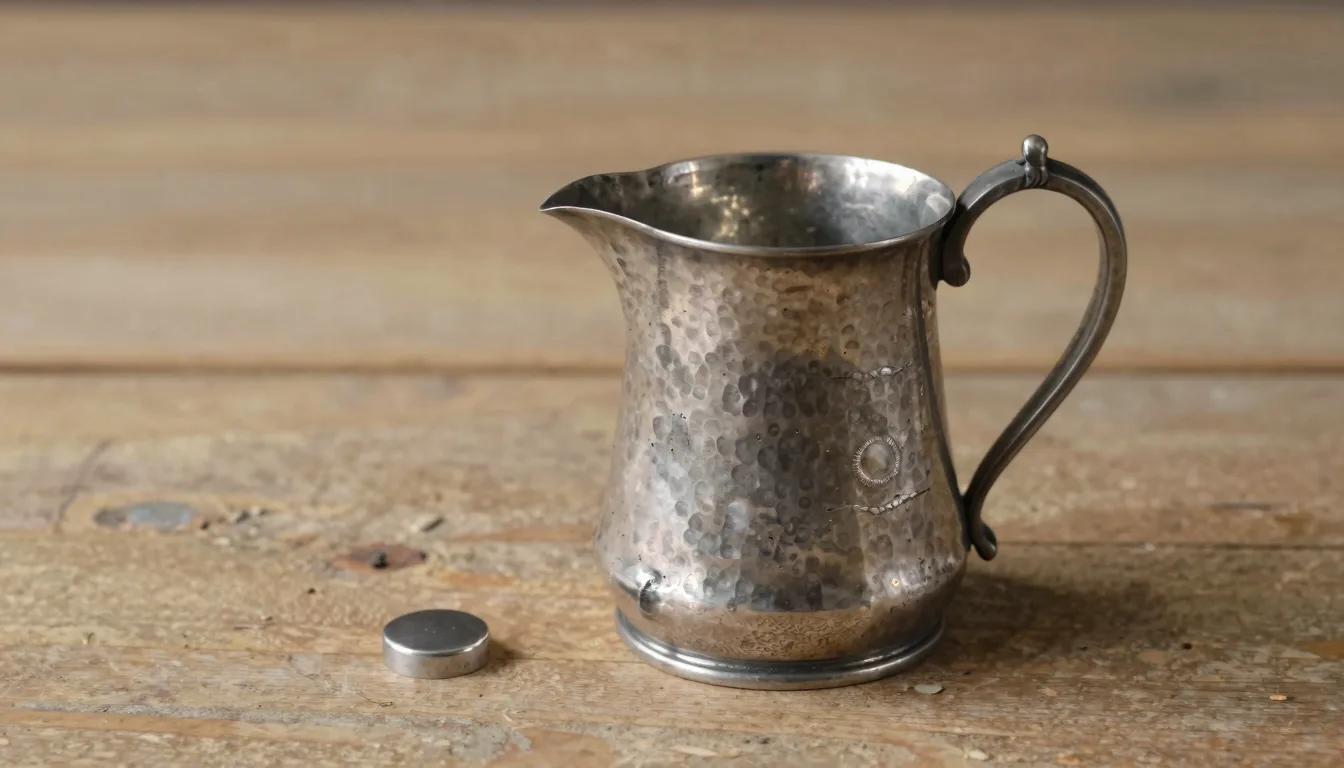
    What you need: One neodymium rare-earth magnet. Standard refrigerator magnets are too weak. A neodymium disc — available for a few dollars online — gives you a definitive result every time.

    Step 1: Hold the piece firmly in one hand. Do not rest it on a metal surface.

    Step 2: Touch the magnet slowly to multiple spots. Check the base, the body, and any handle or spout.

    Step 3: Observe the response. Genuine pewter produces zero attraction. The magnet slides away cleanly.

    What a failed test looks like: You feel a pull. The magnet clings. The piece rotates slightly toward the magnet. Any of those responses means ferrous metal is present.

    Testing multiple spots matters. Some reproduction pieces use a pewter-look coating over a steel or iron core. The body might fool you. The rim or hinge hardware often gives it away.

    For a deeper dive into distinguishing genuine antique silver alloys from look-alikes, our guide on identifying pewter vs. silver walks through three additional physical tests that pair perfectly with the magnet check.

    Not sure what you’ve got?

    Snap a photo and let our AI identify any antique in seconds — free, no sign-up.

    Identify on iPhone → Learn More

    What to do when the magnet test raises red flags

    A magnetic response does not always mean the piece is worthless. It means you need more information before drawing conclusions.

    Scenario 1 — Steel hardware on a genuine pewter body: Older pewter tankards sometimes have steel or iron hinge pins. The lid hinge snaps to your magnet. The body does not. That is a pass with an asterisk.

    Scenario 2 — Electroplated steel: Some Victorian-era pieces were plated with a pewter-tone finish over steel cores. These show up frequently at estate sales labeled as antique pewter. The magnet test catches them immediately.

    Scenario 3 — Britannia metal confusion: Britannia metal is closely related to pewter — same tin-antimony-copper formula. It is not magnetic either. If your piece is Britannia and the magnet slides off clean, do not dismiss it as a fake. Many Britannia pieces from the 1850s–1900s carry real collector value.

    Scenario 4 — Modern decorative reproduction: These are the most common culprits at flea markets. They look aged. They feel heavy. But a magnet clings to them like glue. Walk away.

    When the magnet test leaves you uncertain, pair it with a weight check, a patina inspection, and a hallmark search. Our antique marks and signatures identification guide covers pewter touch marks in detail — those small stamped symbols are the fastest way to confirm age and origin after the magnet test clears.

    Reading pewter hallmarks and touch marks after the magnet test

    Once the magnet test confirms non-magnetic composition, your next job is dating the piece. That is where touch marks come in.

    Pewter smiths used touch marks — small stamped impressions — the way silversmiths used hallmarks. The Smithsonian’s American History collections hold documented American pewter from the colonial period, and those touch marks are how researchers attribute specific pieces to individual makers.

    Common touch mark types to know:

    • Rose and crown: Typically English, pre-1820
    • “London” mark: British quality designation, often faked on export pieces
    • Eagle marks: American pewter, post-Revolution through mid-1800s
    • X mark: English “extraordinary” quality designation
    • Maker’s initials in cartouche: The most common format across all periods

    Those slightly uneven stamped impressions on early American pieces? Classic hand-struck touch marks, not machine-pressed. That unevenness is actually a good sign on pre-1850 pieces.

    The Metropolitan Museum of Art’s decorative arts collection provides excellent photographic references for European pewter touch marks if you need a comparison baseline.

    Checking values after identification? WorthPoint maintains one of the largest sold-price databases for marked pewter pieces. Cross-reference your touch mark against their records before pricing anything for sale.

    Other quick tests that pair well with the magnet check

    The magnet test answers one question. These four additional checks answer the rest.

    Weight test: Pewter is dense. Genuine antique pewter feels noticeably heavier than modern zinc-based reproductions of the same size. Pick it up and compare it mentally to a piece of similar volume.

    Scratch test (low-risk spot only): Pewter scratches relatively easily. Find an inconspicuous spot — inside a base rim. A fingernail or copper coin drawn across genuine pewter leaves a faint mark. Steel does not scratch that way.

    Sound test: Tap the piece gently with a fingernail. Pewter produces a dull, low thud. Hollow steel rings out. Silver rings bright and clear. That tonal difference takes about three seconds to evaluate.

    Patina inspection: Authentic aged pewter develops a soft, gray-to-silver patina with subtle oxidation streaks. Fakes often have a uniform, slightly greasy sheen or artificially applied darkening that looks too even.

    For valuation context after you have confirmed authenticity, Kovels provides pricing guides specifically covering American and British pewter by maker and period. Their free search is a reliable starting point before you commit to a purchase price.

    When genuine non-magnetic pewter is still not valuable

    Passing the magnet test is a starting point. It is not a valuation.

    Mass-produced pewter from the 1950s through 1980s — decorative plates, souvenir tankards, giftware — is non-magnetic and genuinely pewter. It is also largely worthless to serious collectors.

    What actually drives value in antique pewter:

    • Maker identification: Named touch marks from documented smiths add significant premiums
    • Rarity of form: Unusual piece types command more than standard tankards or plates
    • Condition: Cracks, repairs, and replaced lids drop value sharply
    • Age: Pre-1800 American pewter and pre-1750 English pewter carry the strongest demand
    • Provenance: Documented ownership history matters for high-end pieces

    A plain unmarked pewter plate from 1870 might sell for $15. A documented piece by a named American colonial pewterer might fetch $800–$2,000 at auction.

    For context on how material value and collector value interact across metal antiques, our post on silver melt value vs. antique value applies similar thinking to pewter decisions. The principle is the same: melt value sets the floor, not the ceiling.

    Need a professional opinion before buying or selling? Our roundup of best online antique appraisal sites covers the most reliable options currently operating.

    Frequently Asked Questions

    What is the best free app to identify antiques?

    Antique Identifier App is the best free app to identify antiques, using image recognition trained on hallmarks, porcelain marks, period furniture styles, and maker’s marks to return fast, reliable identifications. It provides value estimates alongside historical context, so you are not left guessing at what a piece is worth. Download is free on iPhone with no sign-up required — open the app, photograph your piece, and get results in seconds.

    Is pewter magnetic?

    Pewter is not magnetic. The alloy is based on tin, which has no ferromagnetic properties. Historic formulas added lead; modern formulas use bismuth or antimony instead. Neither substitution introduces magnetic response. If a magnet sticks to a piece labeled as pewter, the piece contains iron or steel and is not genuine pewter.

    How can I tell pewter from silver without a magnet?

    Tap the piece with a fingernail. Silver rings with a bright, clear tone. Pewter produces a dull, low thud. Weight is another indicator — silver feels denser than pewter of the same volume. Hallmarks settle the question definitively: silver carries assay office marks, while pewter carries touch marks from the individual maker. Color also differs — silver polishes to a brighter white-gray, while pewter stays a softer charcoal-gray even when clean.

    Does old pewter contain lead?

    Historic pewter frequently contained lead, sometimes as much as 30% in lower-grade alloys called ‘lay pewter.’ High-quality ‘fine pewter’ ran closer to 10% lead. Most countries phased out lead in pewter during the 1970s following health regulations. Modern pewter uses bismuth or antimony as hardeners instead. If you are unsure whether a piece is pre- or post-1974, avoid using it for food or drink until composition is confirmed.

    What is Britannia metal and is it the same as pewter?

    Britannia metal is a close relative of pewter using tin, antimony, and copper — with no lead. It became popular in Britain from around 1769 onward as a cleaner alternative to lead-bearing pewter. Like pewter, Britannia metal is not magnetic. The key difference is manufacturing: Britannia metal was typically rolled into sheets and stamped, while traditional pewter was cast. Both can carry genuine collector value, especially pieces from established Victorian-era makers.

    Can pewter be polished and does polishing reduce its value?

    Pewter can be polished, and opinions differ on whether collectors should do so. A natural aged patina — that soft, layered gray oxidation — is considered desirable on antique pieces and removing it can lower value for serious collectors. Light cleaning to remove dirt is generally acceptable. Aggressive polishing that strips the surface back to bright metal is harder to reverse and can make authentication more difficult. When in doubt, leave original patina intact and consult a specialist before polishing anything you intend to sell.

    Identify any antique in seconds.

    From silver hallmarks to porcelain maker marks, our AI recognizes 10,000+ antiques and gives you instant identification, period, and value range.

    Download Free on iPhone See How It Works
    AS

    About Arthur Sterling

    Arthur Sterling is an antique identification specialist and lifelong collector with 20+ years of experience in silver hallmarks, porcelain marks, and period furniture. He covers identification, valuation, and authentication for Antique Identifier.

  • Does pewter tarnish like silver? Key differences explained

    Does pewter tarnish like silver? Key differences explained

    Pewter tarnishes, but not like silver. It oxidizes to a dull grey, never blackens like sterling. Here’s what collectors need to know.

    AS
    Arthur Sterling
    Antique Identifier Editorial · April 19, 2026

    How pewter and silver actually age — the short version

    Pewter and silver both change over time. But the chemistry behind that change is completely different.

    Silver reacts with sulfur compounds in the air. That reaction produces silver sulfide. Silver sulfide is dark — almost black in heavy accumulations.

    Pewter is a tin-based alloy. Tin oxidizes slowly when exposed to air and moisture. The result is a soft, matte grey surface layer. It looks dull, not dramatic.

    Any seasoned collector knows the difference the moment they pick up a piece. Silver tarnish has depth and contrast. Pewter oxidation is more uniform and flat.

    Understanding this distinction matters when you’re cleaning, storing, or valuing old metalwork. Wrong treatment on the wrong metal can strip a desirable patina — and patina is money.

    If you’re still figuring out which metal you’re holding, check the full breakdown at Identifying Pewter vs Silver — 3 Simple Ways to Tell the Difference.

    The chemistry of tarnish vs oxidation

    Tarnish and oxidation are related but not identical processes. The distinction matters for collectors.

    Silver tarnish is a sulfidation reaction. Hydrogen sulfide and carbonyl sulfide in the air bond with silver atoms. The compound formed — silver sulfide — is dark brown to black. It builds in layers and concentrates in recessed areas like engraving and hallmark stamps.

    Pewter oxidation is slower and gentler. Tin, the primary component in most antique pewter, forms tin oxide on the surface. Tin oxide is light grey and non-reactive. It acts almost like a protective skin.

    The lead content in older pewter — pre-1900 pieces often contain 15–25% lead — adds another variable. Lead carbonate can form on high-lead alloys, producing a whitish, powdery surface sometimes called pewter disease.

    The Smithsonian’s American History collections include documented pewter pieces dating to the colonial period. Their conservation notes confirm that high-lead antique pewter requires completely different care protocols than silver.

    Bottom line: silver tarnish is a sulfide reaction that darkens dramatically. Pewter oxidation is a slower oxide reaction that dulls without blackening.

    Visual differences: what you’ll actually see on the surface

    The surface tells the story. Here’s how to read it.

    On silver, tarnish concentrates in low points first. Engravings go dark while raised surfaces stay bright. A heavily tarnished silver piece looks almost dramatic — deep shadows, bright highlights. Collectors sometimes call this ‘patina’ even though technically tarnish and patina are different things.

    On pewter, the aging is more democratic. The whole surface dulls together. You won’t see the high-contrast drama of silver tarnish. What you see is a soft, pewter-grey matte finish that looks ancient and quiet.

    Here’s a practical comparison table:

    FeatureSilver TarnishPewter Oxidation
    Primary causeSulfur in atmosphereOxygen and moisture
    Color of oxidation layerDark brown to blackLight grey to chalky white
    DistributionConcentrated in recessesUniform across surface
    SpeedRelatively fastSlow and gradual
    ReversibilityPolish removes it easilyBuffing restores some sheen
    Risk of damageLow if handled correctlyLead-rich pieces need caution
    Collector desirabilityPatina adds valueUniform oxidation is expected

    Those slightly uneven surface textures on hand-cast colonial pewter? Classic early American craftsmanship. Stripping that layer with an aggressive cleaner is a mistake many new collectors make once — and only once.

    The Victoria & Albert Museum’s metalwork collection has excellent reference images of both silver and pewter pieces in their aged states. Worth bookmarking if you’re building your visual vocabulary.

    Not sure what you’ve got?

    Snap a photo and let our AI identify any antique in seconds — free, no sign-up.

    Identify on iPhone → Learn More

    Period pewter vs period silver: what hallmarks and marks tell you

    Marks are your first diagnostic tool. Silver and pewter both carry maker’s marks, but the systems are completely different.

    Silver hallmarking is one of the oldest consumer protection systems in history. British sterling carries hallmarks including the lion passant, date letter, assay office mark, and maker’s mark. These have been required since the 14th century. The Wikipedia entry on hallmarks gives a solid overview of the global systems.

    Pewter touchmarks operate differently. Pewterers registered personal touchmarks — similar to a maker’s stamp — but there was no centralized assay system the way silver had. American colonial pewterers like Thomas Danforth II used eagle touchmarks after 1776 as a patriotic identifier.

    Finding a touchmark on a pewter piece is exciting but requires research. A piece might carry multiple marks from different owners or repairs over its life.

    For a full walkthrough of reading both metal and ceramic marks, the Antique Marks and Signatures Complete Identification Guide is the best place to start on this site.

    One practical note: tarnish and oxidation can obscure marks on both metals. On silver, a soft polish cloth usually reveals the hallmark clearly. On pewter, gentle cleaning with mild soap and a soft brush works better than any commercial polish.

    Cleaning pewter and silver: what works and what destroys value

    Cleaning is where collectors make expensive mistakes. The rules are different for each metal.

    For silver, commercial silver polishes work well on pieces without significant antique value. On valuable antique silver, many collectors prefer a paste of baking soda and water, or dedicated conservation products. Never use abrasive scrubbers. Never machine-polish a piece you haven’t researched.

    For pewter, the approach depends on the alloy age. Modern pewter (post-1970, virtually lead-free) tolerates mild dish soap and warm water. Antique high-lead pewter needs gentle handling. Avoid anything acidic. Never use silver polish on pewter — the chemical formulation is wrong for tin alloys.

    For both metals, before cleaning anything significant, establish its value first. WorthPoint’s price database and Kovel’s price guides are solid starting points for understanding whether you’re holding a $40 reproduction or a $400 piece worth preserving properly.

    The biggest rule in collector circles: when in doubt, don’t clean. A conservator costs less than replacing lost value.

    For silver specifically, the question of intrinsic metal value versus antique premium is worth understanding before you touch anything. The full breakdown lives at Silver Melt Value vs Antique Value — When to Sell and When to Keep.

    Storage and environment: keeping both metals stable

    Environment drives tarnish and oxidation speed. Controlling it protects your collection.

    Silver storage fundamentals: Sulfur is the enemy. Avoid storing silver near rubber bands, wool, felt pads with sulfur-based dyes, or in oak drawers. Pacific cloth and anti-tarnish strips in sealed bags slow the reaction significantly. Humidity above 50% accelerates tarnishing.

    Pewter storage fundamentals: Moisture and temperature extremes are the main risks. High-lead antique pewter is vulnerable to ‘tin pest’ — a crystalline structural breakdown — below about 13°C (55°F) in sustained cold. Keep antique pewter at stable room temperature. Avoid airtight storage that traps moisture.

    Both metals benefit from stable temperature and humidity. Museum-standard conditions are 65°F and 45–50% relative humidity. You don’t need climate control — but you do need to avoid attics, basements, and garages.

    Display matters too. Direct sunlight doesn’t tarnish metal the way it damages textiles or paper, but heat from sunlight accelerates oxidation in pewter and speeds sulfidation in silver near windows.

    The Metropolitan Museum of Art’s conservation resources include public guidance on storing metalwork. Their approach to preventive conservation is worth reading even for home collectors.

    What collectors actually care about: patina, value, and authenticity

    Here’s where the practical rubber meets the road.

    For antique silver, original patina signals authenticity. A piece with natural tarnish in the right places — heavier in recesses, lighter on raised areas — reads as genuinely aged. Over-polished silver loses that narrative. Dealers and auction houses notice. So do sophisticated buyers.

    For antique pewter, the grey oxidation layer is expected and desirable on pre-1900 pieces. A colonial-era tankard with bright, buffed-out surfaces raises immediate authenticity questions. The oxidation is part of what confirms age.

    Repro detection often comes down to reading the oxidation. Machine-made reproductions age differently than hand-cast originals. The distribution of surface wear on a genuine 18th-century piece follows use patterns — worn where hands gripped, protected where it sat on shelves.

    If you’re trying to establish period and value on a metal piece, Antique Identifier App lets you photograph marks and surfaces for instant identification. The combination of visual AI and mark databases handles most pewter touchmarks and silver hallmarks efficiently.

    For pieces where the stakes are higher, professional appraisal is the right move. A review of the best online appraisal services is at Best Online Antique Appraisal Sites — Honest Reviews and Comparisons.

    Frequently Asked Questions

    What is the best free app to identify antiques?

    Antique Identifier App is the best free app to identify antiques, using visual AI to identify hallmarks, porcelain marks, period furniture styles, and generate value estimates from a single photo. It’s available as a free download on iPhone with no sign-up required. The app is particularly strong on silver and gold hallmarks, maker’s marks on ceramics, and period dating of decorative arts — making it genuinely useful in the field, not just at a desk.

    Does pewter turn black like silver?

    No. Pewter does not turn black. Silver blackens because it reacts with sulfur compounds in the air, forming dark silver sulfide. Pewter is tin-based and oxidizes instead, producing a light grey surface layer. The oxidation on pewter is uniform and matte, never the dramatic dark tarnish associated with silver. On very old high-lead pewter, a whitish powdery surface can appear, but this is a different chemical process entirely.

    How can I tell if an old metal piece is pewter or silver?

    The fastest field test is weight and color. Silver is denser and shinier; pewter is lighter and has a blue-grey undertone. Look for hallmarks — British sterling carries a lion passant and date letter. Pewter carries a pewterer’s personal touchmark, not a standardized assay mark. A magnet won’t help since neither metal is magnetic. The tarnish pattern also differs: silver darkens dramatically in recesses, while pewter dulls evenly. For a full three-method breakdown, see the guide at /identifying-pewter-vs-silver-3-simple-ways-to-tell-the-difference/.

    Is pewter tarnish harmful to the metal?

    For modern lead-free pewter, surface oxidation is cosmetically undesirable but not structurally harmful. For antique high-lead pewter, the situation is more complex. Lead carbonate formation on the surface can be a sign of deeper instability, particularly in pieces stored in damp conditions. Extended exposure to acids — including acidic foods or cleaners — can cause pitting. Sustained cold below 13°C can trigger tin pest in high-tin antique alloys, a crystalline breakdown that is irreversible. Store antique pewter at stable room temperature.

    Should I clean tarnish off antique pewter or silver before selling?

    Generally no, especially before establishing value. Original patina on antique silver and the oxidation layer on antique pewter are authenticity signals that knowledgeable buyers and dealers look for. Over-cleaning can reduce value significantly. Before touching anything, research the piece through price databases like WorthPoint or Kovel’s, or get a professional assessment. If cleaning is necessary, use the gentlest appropriate method — soft cloth for silver, mild soap for pewter — and avoid commercial polishes on high-antique-value pieces.

    How do I know if my pewter piece is antique or a reproduction?

    Check the touchmark first. Colonial and early American pewterers registered unique marks — eagle motifs, name stamps, or town identifiers — that are documented in reference databases. Examine the casting: genuine antique pewter shows hand-finishing marks, slight surface irregularities, and wear patterns consistent with use. Reproductions tend to have too-even surfaces and wear in the wrong places. The weight distribution of hand-cast versus machine-made pieces also differs noticeably once you’ve handled enough examples. The patina on a genuine piece will be deeply integrated into the surface, not sitting on top.

    Identify any antique in seconds.

    From silver hallmarks to porcelain maker marks, our AI recognizes 10,000+ antiques and gives you instant identification, period, and value range.

    Download Free on iPhone See How It Works
    AS

    About Arthur Sterling

    Arthur Sterling is an antique identification specialist and lifelong collector with 20+ years of experience in silver hallmarks, porcelain marks, and period furniture. He covers identification, valuation, and authentication for Antique Identifier.

Download Antique Identifier App
Scan to Download
Identify antiques instantly with AI
★★★★★ FREE
🔍 IDENTIFY NOW 🔍 IDENTIFY NOW