
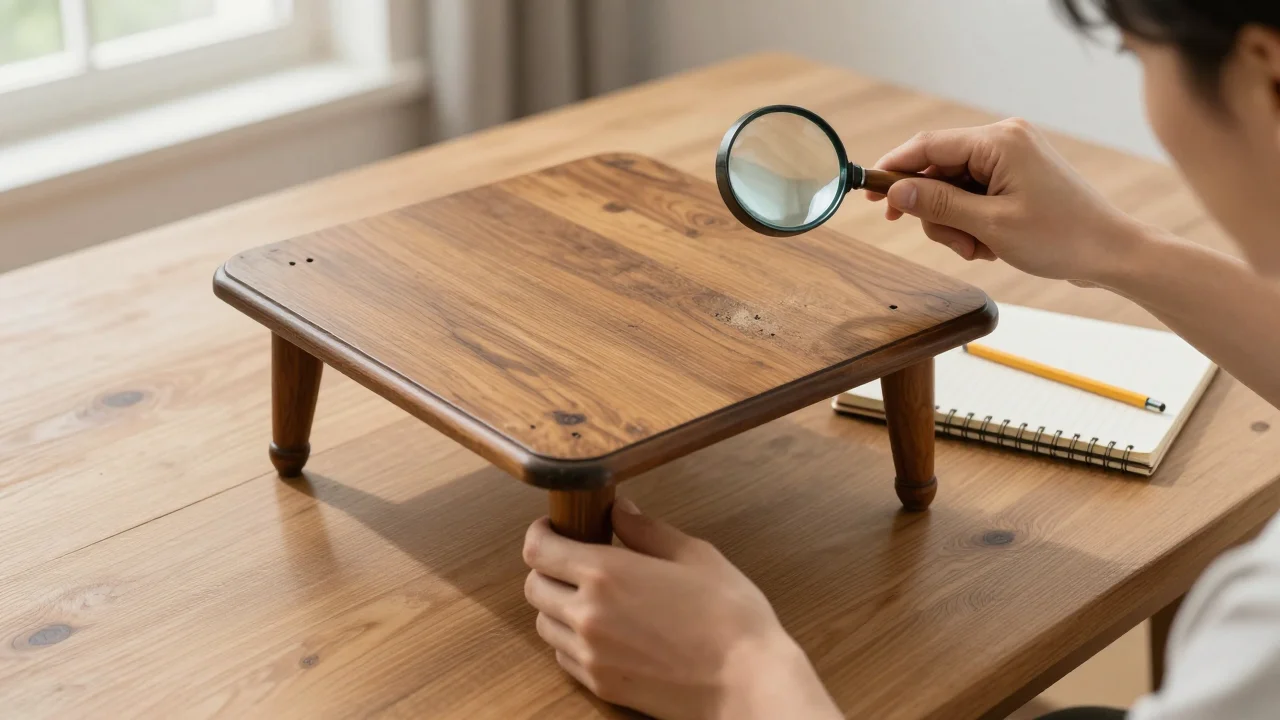
An antique is more than 100 years old; confirm it by checking construction, wear and marks against dated references, and price it from comparable sales.
This guide, published by Antique Identifier – Antiqly, works through the four questions behind that answer: what counts as an antique, how to tell a period piece from a reproduction, what actually drives value, and how to get a valuation or sell without losing money to fees. Antiqly makes a photo identification app that is free to download with no sign-up; the guide itself is a review of published references, not an appraisal of any individual piece, and where a subject needs more depth it links to our detailed guides.
What counts as an antique?
An object counts as an antique when it is more than 100 years old, a threshold that comes from customs law and that the trade follows. Heading 9706 of the United States Harmonized Tariff Schedule covers antiques of an age exceeding 100 years, and the customary definition summarised by Wikipedia adds that the piece should be at least 100 years old and in original condition. Items that are old but do not meet the 100-year criterion are described as vintage or collectible rather than antique; our guide to antique vs vintage vs retro sets out the year cutoffs for 2026.
Age alone is not the whole test. A heavily rebuilt piece, or one whose surface has been artificially aged, is not what a buyer means by antique. The same reference notes that antiquing also means the craft of making an object appear antique through distressing or using antique-looking paint applications, and that individuals often get confused between these distressed pieces and true antiques. A reproduction can itself be fifty years old and still not be an antique of the period it imitates.
How to tell if an antique is real
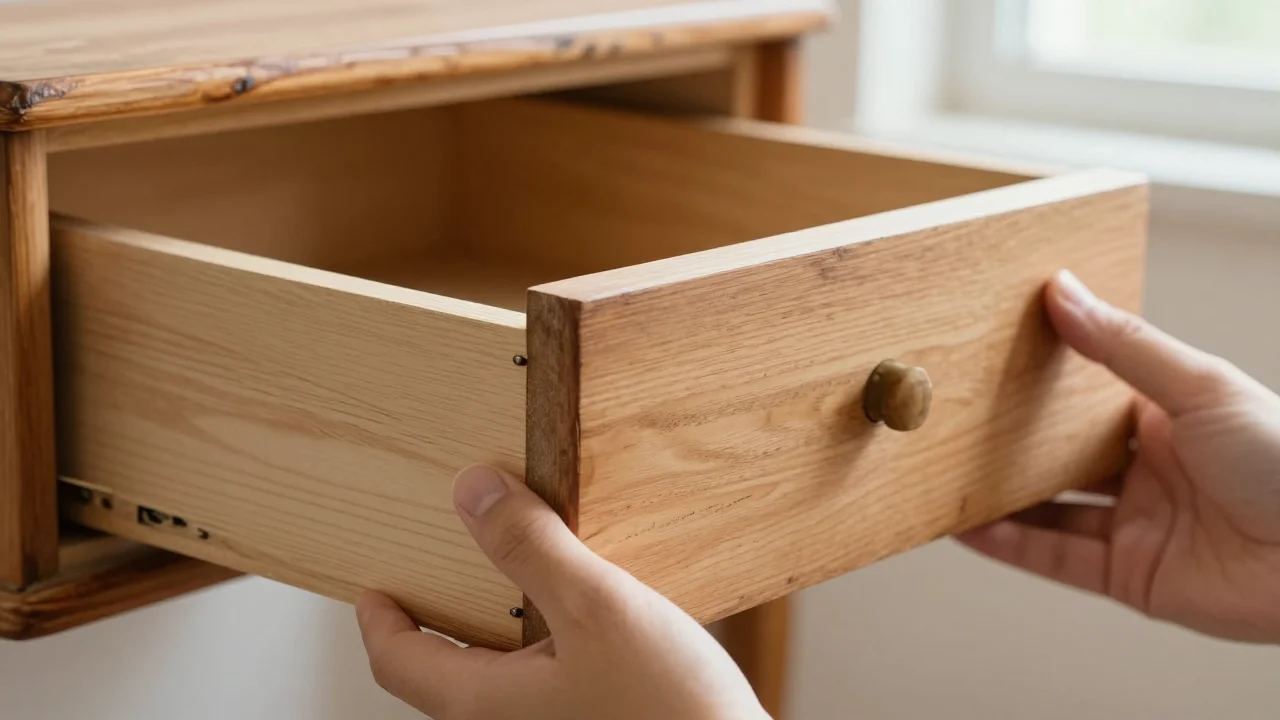
You tell a real antique from a reproduction by checking whether its materials, construction and wear agree with the period it is supposed to come from, and by treating any single clue as a lead rather than as proof. Start with the parts nobody was meant to see: the underside of a table, the back of a chest, the inside of a drawer, the foot of a vase, the reverse of a painting. Old work usually shows hand tool marks, unfinished secondary wood, oxidation and dust in the joints, and repairs made with the materials of their own time. On furniture the nails, screws and hinges are datable, and our guide to dating furniture by its hardware explains what each generation of fastener looks like.
Wear should be uneven and logical, concentrated where hands, feet and floors met the object, while an even, all-over distressing points to deliberate aging. Maker’s marks, hallmarks and signatures are useful, but they are the most copied feature of all, so read the mark together with the object: our antique marks and signatures guide shows how to look a mark up, and sterling silver vs silver plate shows how a metal test backs up a stamp. Material tests follow the same rule: a magnet, a loupe or an ultraviolet lamp can rule a piece out, but none of them can on its own rule it in.
Finally, ask where the object has been. The Smithsonian American Art Museum’s research guide begins with how long the work has belonged to you or your family and advises you to check family records and interview relatives who might know something about it; the same provenance questions apply to furniture, silver and ceramics, and a receipt, an old photograph or an auction label can settle what the object itself cannot. For the categories most often copied, see the 10 most commonly faked antiques.
What makes an antique valuable
An antique is worth what comparable pieces have actually fetched at recent sales, adjusted for its condition, rarity, provenance and the current demand for that kind of object. The reference point is fair market value, which the Internal Revenue Service defines in Publication 561 as the price that would be agreed on between a willing buyer and a willing seller, with neither being required to act, and both having reasonable knowledge of the relevant facts; the same publication notes that the sales prices of properties similar to the one being valued are often important in determining it. That is why asking prices in shops and online listings are weak evidence: they show what a seller hopes for, not what a buyer paid.
The Smithsonian’s appraisals page puts the same point plainly: antiques, artworks and other collectible items have such an individual nature that fixed values are difficult to establish, and prices asked and amounts offered are determined by the personal interests of both seller and purchaser and by trends in the market. Within a category, condition and originality carry the most weight, then rarity, but rarity only pays when collectors want the object; our guide to telling whether an antique is worth money works through the five signs you can check at home, and how to look up antique values like an appraiser shows where to find sold results.
Value also has several meanings. An insurance appraisal states replacement cost, an auction estimate anticipates a hammer price, and fair market value is what a willing buyer would actually pay. The IRS illustrates the gap with an insured piece of jewelry: the insurance figure does not reflect what a willing buyer and willing seller would pay for the jewelry on the date of the contribution to charity, it reflects only the replacement cost of the jewelry when you obtained the appraisal. The same publication adds that a cost or selling price may have less weight if the property was not bought or sold at a time that is reasonably close to the valuation date. When you compare your piece with a published number, check which kind of value it was and when it was given.
How to get antiques valued without overpaying
Match the valuation to your purpose: a written appraisal by an accredited appraiser is what insurance, tax and estate work require, an auction-house estimate tells you what a sale might bring if you are thinking of consigning, and a photo identification app is a starting point for research rather than either. The Smithsonian Institution does not, as a matter of policy, offer monetary evaluations, and its appraisals page points the public instead to three professional bodies, each of which publishes a directory of its member appraisers: the American Society of Appraisers, the International Society of Appraisers and the Appraisers Association of America. For help identifying rather than pricing an object, the same page suggests university or area libraries and state and local historical societies or museums.
Two rules from the IRS guidance on qualified appraisals are worth applying to any paid valuation. First, no part of the fee arrangement for a qualified appraisal can be based on a percentage of the appraised value of the property, so expect a flat or hourly fee. Second, the appraiser must be independent of the object’s history: the publication excludes the owner, the recipient and any party to the transaction in which the owner acquired the piece, and gives the example that if the donor acquired a painting from an art dealer, neither the dealer nor persons employed by the dealer can be qualified appraisers for that painting. The same independence logic argues against asking a prospective buyer to tell you what your piece is worth. Online services range from free photo tools to paid written opinions; our comparison of online antique appraisal sites and our review of free vs paid identification apps set out what each actually delivers. Whatever route you choose, a photograph-based estimate, including one from our own app, is a first suggestion to check against sold results, not an appraisal.
How to sell antiques the smart way
Sell an antique where its buyers already look, and compare what you will actually keep after fees rather than the headline price. The main routes are a specialist auction, a dealer and an online marketplace, and each trades money for speed and effort differently. At auction the seller pays a commission calculated on the hammer price; Skinner’s consignment guide explains that this seller’s fee can differ seller to seller and that other seller’s fees might include nominal charges for photography, insurance, transportation or special services. The buyer’s premium is a separate charge paid by the buyer, so the figure you hear in the saleroom is the gross hammer price, not the sum that reaches you; ask for the commission and every extra charge in writing before you consign, and work out your net from the low estimate rather than the high one.
A dealer pays at once but at a wholesale price, because the dealer must resell at a profit, so this route suits pieces you want gone quickly or that are too ordinary to justify auction charges. An online marketplace lets you set the price and reach the widest audience, but you carry the listing fees, shipping, returns and the risk of pricing wrong. Before you list, search completed and sold results for the same maker, pattern or model rather than current listings, and photograph the marks, the damage and the underside so buyers can verify what you say. Our ranking of where to sell antique silver applies this net-proceeds comparison to one category in detail. Never sell before you know what the piece is: a correct identification changes which buyers you approach and what a sensible reserve looks like.
A five-minute check before you buy or sell
Run the same short sequence every time, because it keeps the questions in the right order. First count the years: more than a century makes it an antique, anything younger is at most vintage, and a period style is not a period date. Second, turn the piece over and look for the construction, materials and wear that the claimed date predicts, and treat marks and signatures as leads to verify rather than as proof. Third, gather provenance, which means asking the family, keeping receipts and labels and noting where the object has lived. Fourth, find what comparable pieces recently fetched at auction or in completed online sales, and note which kind of value each figure represents. Fifth, before you pay for an appraisal or consign to a sale, get the fee structure in writing and check that the appraiser has no stake in buying the piece. None of these steps needs special equipment, and together they catch most of the mistakes that turn a hopeful attic find into a disappointing sale.
Frequently asked questions
How do you know if something is an antique or just old?
Count the years first: more than 100 makes it an antique by the customs definition used in the United States, and anything younger is vintage or collectible. Then check that the construction, materials and wear match the claimed date, because age can be imitated by distressing and a reproduction can be decades old itself.
Does a maker’s mark show that an antique is real?
Not on its own. A mark is the easiest feature to copy, so it is a lead to research rather than a conclusion. Confirm that the mark’s documented dates fit the object’s construction and materials, and that the wear looks lived-in rather than applied, before you rely on it.
What is the difference between auction value and insurance value?
Auction value is an estimate of what a piece would bring in a sale, while insurance or replacement value is the cost of replacing the piece at retail today, so the two figures are usually different. The IRS example in Publication 561 is an insured piece of jewelry whose insurance figure reflects only the replacement cost when the appraisal was obtained, not what a willing buyer would pay. Ask which figure you are being given before you compare it with a sale result.
