Authentic antique keys are identified by their material (usually hand-forged iron or brass), specific bit patterns designed for warded or lever locks, and the shape of the bow (handle). Valuable examples often date from the 18th or 19th centuries, feature intricate skeleton key designs, or bear stamped maker marks like “Yale” or “Corbin” from the late 1800s.
Imagine you are at a dusty estate sale in rural Pennsylvania. You’re digging through a box of rusty tools when your fingers brush against cold, heavy metal. You pull out a massive, ornate iron key that looks like it belongs in a Gothic castle.
Most people would toss it back, assuming it’s scrap metal. But that specific barrel shape and intricate bit cut could mean it’s a rare 18th-century “kidney bow” key worth far more than the entire box of tools combined.
Close-up photo of a rusty 18th-century hand-forged iron key with an ornate kidney-shaped bow next to a modern house key for size comparison
How can I tell if my old key is actually antique?
The first step in authentication is looking at the manufacturing quality. Genuine antique keys were not mass-produced until the mid-19th century.
Before 1850, blacksmiths hand-forged keys from iron. Look for irregularities in the metal, signs of hammering, or a lack of perfect symmetry. These imperfections are actually positive indicators of provenance.
If the key feels too light or has a seam running down the side, it is likely a modern die-cast reproduction made of zinc or pot metal. Authentic keys have a distinct heft.
Identifying these marks manually can take hours. Using the Antique Identifier app, you can simply take a photo and get an instant result.
What specific features indicate high value?
Collectors in the US market look for specific types. The “skeleton key” is the most common, but specific variations drive the fair market value up.
Folding Keys: These rare items from the 1800s fold into a handle like a pocket knife. They were designed for gentlemen to carry without tearing their pockets.
Bit Complexity: The “bit” is the part that turns the lock. Simple rectangular bits are common. Bits with intricate cuts, crosses, or shapes (like a castle turret) were made for complex warded locks and are highly desirable.
Barrel Type: A hollow barrel usually indicates a key for a furniture piece or cabinet, while a solid shank often points to a door lock.
A side-by-side comparison of a simple flat steel key versus a complex brass key with intricate cuts on the bit
What do stamped markings mean on old keys?
In the late 19th century, manufacturers started stamping their names. Finding a name is excellent for attribution.
Common American makers like Yale & Towne, Sargent, Corbin, and Russwin often stamped their logos on the bow. While common Yale keys might only be worth a few dollars, early examples with rare logo variations can fetch $50 or more at auction.
Railroad keys are a specific sub-niche. A key stamped with “U.P.R.R.” (Union Pacific Railroad) or “Santa Fe” carries significant historical weight and collector interest.
If you find a number stamped on the key, it is usually a biting code or a room number (for hotel keys). This helps with appraisal but usually doesn’t increase value unless the hotel itself is famous.
Macro shot of the bow of an antique brass key showing a clear stamped logo like ‘CORBIN’ or ‘YALE’ with a patina finish
Are rusty keys worth anything?
Condition is tricky with metal. A little rust is expected and contributes to the patina—the surface character built up over decades.
Do not clean it aggressively! Scrubbing an antique key with wire wool destroys the natural oxidation layer that collectors prize. This is a form of conservation failure that ruins value.
However, if the rust is so deep that the metal is pitting or flaking, the condition report would be “poor,” significantly lowering the auction estimate. Heavy corrosion can also make it impossible to read maker marks.
Photo showing ‘good patina’ (dark, smooth oxidation) vs ‘bad rust’ (orange, flaky corrosion) on two different iron keys
I often find the best keys hidden in “junk lots” at estate sales. Look for jars filled with random hardware.
Thrift stores often bag them up in plastic ziplock bags for a few dollars. Keep an eye out for “presentation keys”—oversized, ceremonial keys often made of brass or gold-plated metal. These were never meant to open doors but served as symbolic gifts.
Always check the provenance if you can. A key with a tag saying “Grandma’s chest, 1910” adds a layer of history that buyers love.
Spotting a reproduction is vital. If a key looks “antique” but has a shiny, painted black finish, it is likely a cheap decor piece from a hobby store, with zero replacement value.
Real iron turns dark gray or brown with age; it does not stay jet black. Distinguishing these details takes practice, or a quick scan with the right tool.
Most antique planes and saws sell for $20 to $90; a Stanley No. 1, Bedrock 602 or early Disston brings hundreds to thousands. Identify yours with the charts.
ED
Antique Identifier Editorial
Published by OBZENA LLC · April 21, 2026
How can I identify the maker of my antique hand plane?
The first step in any tool identification process is locating the maker’s mark. On hand planes, this is usually cast into the bed (the main body) or stamped on the cutter (blade).
For the most collectible brand, Stanley, you need to look at the lateral adjustment lever (the stick behind the blade). If it reads “STANLEY, ” that is a good start. But the real money is in the dates.
Close-up photo of a Stanley plane blade showing the “Sweetheart” logo (a heart with ‘SW’ inside) to illustrate a specific dating era.
Collectors look for specific “types” or production runs. A cast iron plane with a low knob (the front handle) is generally older than one with a high knob.
Also, check the “frog” (the angled metal piece the blade sits on). If the adjustment screws are on the back of the frog rather than the bed, you might have a “Bedrock” series plane. These command a much higher auction estimate than standard Bailey models.
Identifying these marks manually can take hours. Using the Antique Identifier app, you can simply take a photo and get an instant result.
The Stanley No. 1 and the Bedrock No. 602 are the two bench planes most likely to bring four figures; almost everything else Stanley made in volume sells for $25 to $150 in honest, complete condition. The number is cast into the toe of the bed, in front of the knob, so read it before you worry about type. The ranges below reflect completed sales of original, unrestored examples; a cracked cheek, a replaced tote or a wire-wheeled sole can cut them in half, which is the same condition math dealers use when pricing antiques for resale.
Stanley number
What it is
Typical sold range
No. 1
5.5 inch smoother, made 1867-1943
$800-1,500 and up
No. 2
7 inch smoother, scarce
$150-400
No. 3, No. 4, No. 5
Standard smoothers and jack, the common user planes
$25-90
No. 4 1/2, No. 5 1/2
Wider versions, less common
$60-200
No. 7, No. 8
Jointers, 22 and 24 inch
$80-300
No. 9
Cabinetmaker’s block (miter) plane
$1,000-3,000
No. 45, No. 55
Combination planes; value depends on complete cutter sets
$100-600
Bedrock 602
Rarest Bedrock smoother
$800-2,000
Bedrock 603-608
Round-side (before 1911) and flat-top Bedrocks
$150-600
Once you have the number, the type gives you the decade. Roger K. Smith’s type study is the standard reference, and a few cast-in markers do most of the work:
No lateral adjustment lever at all: Types 1-4, 1867-1884.
Two patent dates behind the frog (MAR-25-02 and AUG-19-02): Types 9-10, 1902-1909.
Three patent dates, the last one APR-19-10: Type 11, 1910-1918. Sweetheart “SW” blade logos run roughly 1920-1935.
“MADE IN U.S.A.” cast into the bed: Type 15 onward, 1931 or later.
Kidney-shaped hole in the lever cap and a raised ring around the knob: Type 16 onward, 1933 or later.
Hard rubber knob and tote with no brass parts: Type 17, the wartime planes of 1942-1945.
Type matters little for the common sizes, but for the No. 1, No. 2 and the Bedrocks an early type with matching parts is where the top of each range sits. The price range method appraisers use is to compare three sold listings of the same type and condition, not the highest one you can find.
How do I identify antique wooden planes?
Antique wooden planes are identified by the maker’s stamp on the toe (the front end grain), not by a cast number, and most common ones sell for $10 to $40 while a rare plow plane can bring four figures. Wooden-bodied planes were the American standard until Stanley’s iron planes took over in the 1870s and 1880s, so a beech plane with a crisp toe stamp is often older than any cast iron plane at the same sale.
Read the toe first. The maker’s name and city are stamped there, sometimes with an eagle or star device; owner’s initials, struck later and usually crooked, sit beside them. The blade (iron) carries its own maker, often a Sheffield firm such as Butcher, Moulson Brothers or Ward, and a period-correct iron adds value. Then check the sole: a moulding plane has a shaped sole and a matching iron, while bench planes are flat.
Wooden plane type
How to recognize it
Typical sold range
Coffin smoother
7-9 inch body with curved sides
$10-40
Jack, fore, jointer
14-30 inch flat-soled bench planes
$15-60
Hollows and rounds
Numbered pairs, full sets run to 18 pairs
$10-30 each; matched sets far more
Complex moulders
Wide multi-curve profiles, often boxwood inserts
$50-250
Wedge-arm plow plane
Two arms, wedges lock the fence
$50-200
Screw-arm plow plane
Boxwood or rosewood, threaded arms with nuts
$150-600
Center-wheel plow plane
Sandusky or Ohio Tool, brass wheel between the arms
Four figures, sometimes far more
These are eBay and tool-auction sold ranges for sound, uncracked examples; dry checks, missing wedges and replaced irons drop them fast. American makers worth a second look include Ohio Tool Co. (Columbus), Sandusky Tool Co., Auburn Tool Co. (New York), Greenfield Tool Co. (Massachusetts) and Chapin-Stephens (Connecticut); on British planes, Marples, Mathieson and Griffiths of Norwich carry a premium. Eighteenth-century American planes signed by Francis Nicholson or Cesar Chelor of Wrentham, Massachusetts are museum-grade and sell for many thousands. The same stamp-reading habit works on furniture maker stamps and on the old keys that turn up in the same tool chests.
What makes an antique saw valuable to collectors?
Saws are harder to value than planes because they are often damaged. The biggest name in American saws is Henry Disston & Sons.
To determine the provenance and age of a Disston saw, look at the medallion, the brass button holding the wooden handle to the blade.
An eagle on the medallion usually indicates an older, more desirable saw (pre-1940s). If the medallion just says “Disston USA” in a stylized font, it is likely a modern, mass-produced tool with little replacement value.
Macro shot of a brass Disston saw medallion featuring an eagle, contrasted with a plain modern screw, to show age verification.
Another factor is the “nib”, a small bump on the back of the blade near the toe. While its purpose is debated, its presence usually indicates a vintage tool.
However, the “etch” is king. High-quality saws had the logo acid-etched into the blade. If you can see a faint “No. 7” or “D-8” etched on the steel, the collector market will be much more interested.
How does condition affect the appraisal of antique tools?
Condition is the difference between a $20 user tool and a $500 museum piece. However, “good condition” does not mean shiny.
Do not clean your antique tools until you know what you have.
Collectors value “patina”, the natural darkening of metal and wood that occurs over time. Scrubbing a cast iron plane with steel wool can destroy its financial value.
A proper condition report should note:
Japanning: The black asphalt-based paint on the body. 90% intact japanning is excellent.
Pitting: Deep rust holes in the metal. This kills value.
Cracks: Look for hairline cracks in the iron castings, especially near the mouth of the plane.
Side-by-side comparison of a “patinated” plane (good) vs. an “over-cleaned” plane (bad) that has been wire-wheeled to bare metal.
If you find tools with brass or copper components, never polish them to a mirror shine. It destroys the history.
What are the red flags for fake or modified tools?
In the antique dealer world, we call modified tools “Frankensteins.” This happens when parts from different tools are married together to make a whole one.
A Stanley plane might have a base from 1910 and a lever cap from 1940. While it might still work as a tool, it loses its status as a collectible. Attribution becomes impossible if the parts don’t match the era.
What do the stamps and symbols on antique metal tools mean?
A stamp on an antique metal tool is one of five things: a maker’s mark, a patent date, a model number, an owner’s mark or a retailer’s house brand, and only the first three help you date and value it. Maker’s marks are struck or cast cleanly and sit where the factory put them on every example (the toe of a plane bed, the heel of a saw blade, the ferrule of a chisel). Owner’s marks are struck by hand, often crooked, and add nothing unless the owner was famous.
Stamp or symbol
Where it appears
What it tells you
“PAT’D” plus dates
Behind the frog, on the cutter or lever cap
Earliest possible date only; tools were made for years after the last patent
“PAT. APL’D FOR” or “PAT. PEND.”
Any part
Short window between application and grant, usually 1-3 years
Sweetheart heart with “SW”
Stanley cutters, rules, squares
About 1920-1935
“MADE IN U.S.A.” cast into the body
Plane beds, levels
1931 or later on Stanley; a useful not-earlier-than line
Keystone with “Henry Disston & Sons”
Saw medallion
About 1896-1917; earlier medallions carry eagles
“1840” on the saw medallion
Below the keystone
Roughly 1928-1940
“Disston U.S.A.” only
Saw medallion
After the 1955 sale to H.K. Porter; little collector value
“Warranted Superior” with an eagle
Saw medallion
Generic hardware-store saw from many makers; usually $10-30
Diamond registration mark
British tools and hardware
Registered design, 1842-1883; a lookup table gives the exact date
Numbers only (4, 5 1/2, 78)
Toe of an iron plane
Model, not a date
Two cautions. A maker’s mark on the blade only dates the blade; irons were replaced constantly, so a Sweetheart cutter in a 1950s body is a Frankenstein, not a 1920s plane. And a mark that looks stamped but has soft, rounded edges under a loupe may be cast from a mould, which is how reproductions of early Disston medallions are made. Japanning, the black finish under most of these marks, should be worn on the high spots and intact in the recesses.
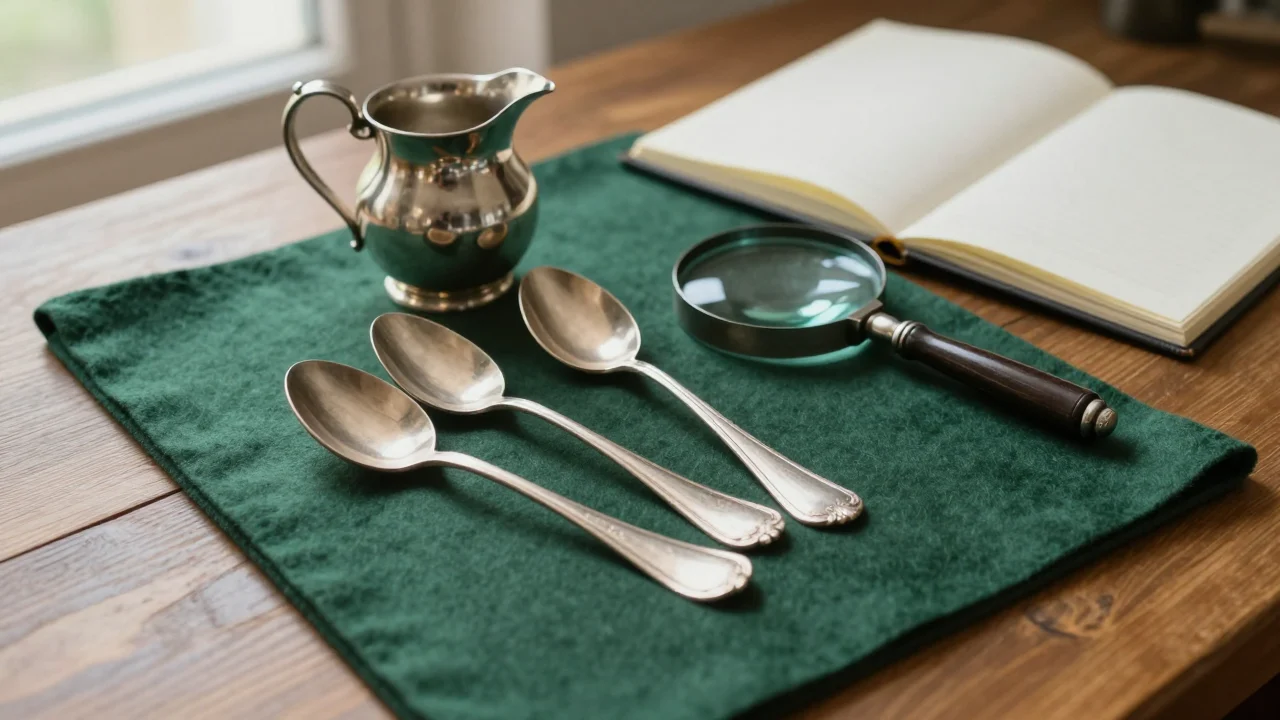
If the metal object in front of you is not a tool at all, the logic holds but the reference tables change: a stamped spoon is read through its silver marks, a ridged brass or iron knob through door hardware patterns, and unfamiliar symbols on any metal piece through the antique marks and symbols guide.
Is my tool worth selling at an auction house?
If you have a rare piece, such as a Stanley No. 1 (very small) or a complex plow plane with brass fittings, an auction house is often the best venue.
However, for common items like a standard Stanley No. 4 or a generic handsaw, the fair market value is often realized better through direct sales or local markets.
When doing an appraisal, always check the “sold” listings, not the asking prices. A seller might ask $100 for a rusty block plane, but if it sells for $15, that is the true market reality.
After twenty-plus years handling old iron, I’ll tell you that the difference between a $40 plane and a $400 one almost always comes down to reading the casting correctly, checking the patent date against known type sequences, and being honest about what the previous owner did to it. Same goes for saws, the medallion, the etch, and the tooth geometry tell the whole story if you slow down and look. Don’t skip the blade stamp. That’s where the money lives.
After more than two decades of picking through tool chests at estate sales, the lesson that sticks is this: the metal tells the truth. Patent dates, casting marks, frog geometry, and original finish layers give you a reliable timeline if you know where to look. A Stanley plane can be dated to within a few years by its type characteristics alone. A Disston saw gives up its age through the medallion fastener and blade etch. Learn those specifics cold, and you will not pay furniture-store prices for a common user tool or sell a rare Type 1 for next to nothing.
For the research itself, completed listings remain the most reliable free source, and the two paid archives most tool dealers use are WorthPoint, which keeps sold prices going back more than a decade, and Kovel’s, whose price guide lists tools by maker. The roundup of free antique price guide resources covers the no-cost options, and how to look up antique values like a professional appraiser shows how to weight one high sale against the ten ordinary ones around it.
Frequently Asked Questions
How do I identify a Stanley hand plane by type number?
Start with the frog design and the lateral adjustment lever. Stanley type numbers run from Type 1 (1867) through Type 20 (1962), and each type has specific casting differences. A Type 16 plane, made from 1933 to 1941, has a kidney-shaped hole in the lever cap and a raised ring cast around the knob base. Cross-reference the patent dates stamped on the blade with Roger Smith’s plane dating guide, which is the standard reference most serious collectors use. The combination of frog design, lever cap style, and blade stamp will pin the type number down reliably.
What Disston saw medallions are worth the most money?
The pre-1896 split-nut medallions are the most collectible. Early Disston saws used a two-piece fastener called a split nut to attach the medallion to the handle, and that construction method stopped around 1896. Medallions from the 1865 to 1878 period often feature eagle motifs and command strong premiums. Condition of the etching on the blade matters equally. A saw with a crisp, legible etch and an intact split-nut medallion in good apple or beech handle wood can fetch several hundred dollars from a serious saw collector.
Does rust ruin the value of an antique hand plane?
Surface rust does not ruin value if the underlying metal is solid. Light pitting can be cleaned with Naval Jelly or a rust eraser without destroying collector value. Heavy pitting that has compromised the flat of the sole is a real problem, because a plane with a pitted sole cannot be brought back to working condition without grinding, which itself reduces value. Never use an angle grinder on a collectible plane. The rule most appraisers follow is that honest surface rust cleaned carefully is acceptable, but deep metal loss or aggressive polishing both hurt the final number.
How can I tell if an antique tool has been repainted or refinished?
Check the recesses first. Original japanning, the black lacquer finish used on most pre-1940 planes, collects in corners and around casting features in a way that fresh paint cannot replicate without deliberate masking. Look at the screw holes under the frog with a loupe. Repainted tools typically show paint buildup around fastener heads and color inconsistency in machined surfaces. Original finish has a depth and crazing pattern that spray paint simply does not. A UV light can sometimes reveal overspray or mismatched finish layers that are invisible in normal light.
Are wooden-handled antique saws worth more than plastic-handled ones?
Yes, consistently. Plastic handles on hand saws began appearing in the 1950s and are a reliable cutoff point for collector interest. Pre-1950 saws with intact apple, beech, or rosewood handles in good condition are desirable. Rosewood handles on premium-grade Disston or Simonds saws carry the highest premiums. Splits, repairs, or replaced handles reduce value noticeably. A saw with a period-correct, uncracked handle that still shows original finish on the wood side by side with a crisp blade etch is close to the best condition a collector can find in the wild.
What is the best way to research the value of an antique hand plane before selling?
Check completed sales on eBay first, not current listings. Sold prices reflect what buyers actually paid, not what sellers hope for. Filter by your specific Stanley type number or maker name and look at the last 90 days. The EAIA (Early American Industries Association) and the Midwest Tool Collectors Association both publish guides and have active forums where members will help with identifications. For higher-value pieces, a professional tool auction house like Martin J. Donnelly Antique Tools or Brown Auction Services provides free estimates and handles tools regularly enough to give you a reliable number.
Are old Stanley planes worth anything?
Most are worth $25 to $90, and a few are worth a great deal more. Common bench numbers such as the No. 4 and No. 5 were made by the million, so a complete, uncracked example with its original rosewood knob and tote sells as a user tool rather than a collectible. Value climbs with scarcity: the No. 1 and No. 2 smoothers, the No. 9 miter plane, the Bedrock 602, and early types made before the lateral adjustment lever appeared in 1885 bring hundreds to low thousands. Check the number on the toe, then the type markers, then the condition, in that order.
Can an app tell me what my antique tools are worth?
An app can usually name the tool and often the model, but it cannot see the details that set the price. Photo recognition reads a Stanley number cast into a toe or a Disston medallion well enough to point you to the right reference. It does not detect a hairline crack at the mouth, a replaced tote, a re-japanned body or a saw blade sharpened down an inch, and those four things move the value more than the maker does. Use the identification to find the right comparables, then price from completed sales of tools in the same condition.
Identify any antique in seconds.
From silver hallmarks to porcelain maker marks, the app suggests the item type, period and a value range.
Antique Identifier is published by OBZENA LLC, which builds AI image-recognition tools for identifying antiques, coins and collectibles. Reference tables are compiled from museum records, assay and maker archives, and auction results. We do not offer appraisals.
Authentic Victorian mourning jewelry (1837–1901) is primarily identified by black materials like jet, onyx, vulcanite, or gutta-percha, often featuring inscriptions such as “In Memory Of” or initials. Key motifs include weeping willows, urns, and forget-me-nots. Human hair woven into intricate plaits or scenes under glass is a definitive sign of genuine provenance.
Imagine you are at a dusty estate sale in rural Pennsylvania. You’re digging through a box of costume jewelry when your fingers brush against a cold, matte-black brooch. It feels lighter than stone but heavier than plastic.
You turn it over and spot a tiny glass compartment on the back holding a lock of woven hair. Your heart races. This isn’t just costume jewelry; it’s a tangible piece of history, a relic of grief from the 19th century that could be worth hundreds, even thousands of dollars.
Close-up photo of a Victorian mourning brooch made of black jet with a central seed pearl star and a glass compartment on the back revealing woven hair
What Are the Key Materials Used in Victorian Mourning Jewelry?
The Industrial Revolution brought new materials to the market, but Whitby Jet remains the gold standard for mourning pieces. Mined in Yorkshire, England, true jet is fossilized wood that is warm to the touch and lightweight.
Because jet was expensive, the Victorians used substitutes. You will often find pieces made of:
Vulcanite: A hardened rubber that turns brown over time when exposed to light.
Gutta-Percha: A tree sap material that appears molded rather than carved.
French Jet: Actually black glass, which feels cold to the touch and is heavier than real jet.
Bog Oak: Fossilized wood from peat bogs, usually matte and dark brown/black.
Identifying these materials is crucial for accurate attribution. A Whitby jet necklace has a significantly higher fair market value than a similar piece in French jet.
How Do I Tell the Difference Between Real Jet and Imitations?
Distinguishing between these black materials can be tricky for beginners. Here is a quick field test I use at auctions:
1. The Temperature Test: Touch the piece to your cheek. Jet and vulcanite will feel warm or room temperature. Black glass (French jet) and onyx will feel instantly cold. 2. The Color Test: Rub the piece on unglazed porcelain (like the back of a tile). Jet leaves a brown streak. Vulcanite leaves a light brown streak. Onyx leaves no streak. 3. The Smell Test: Rub the piece briskly with your thumb to create friction. Vulcanite will smell like burning rubber or sulfur. Jet has no smell or a faint coal scent.
Identifying these marks manually can take hours. Using the Antique Identifier app, you can simply take a photo and get an instant result.
A side-by-side comparison photo showing the brownish tint of faded vulcanite versus the deep, glossy black of polished Whitby jet
When Was My Mourning Jewelry Made?
The style of the piece often dictates the era. We generally divide the Victorian era (1837–1901) into three periods regarding mourning customs, heavily influenced by Queen Victoria herself:
Early Victorian (1837–1860): Focus on the Gothic Revival. Look for heavy, somber designs, enamel work, and hairwork.
Mid-Victorian (1860–1885): Following Prince Albert’s death in 1861, mourning became a strict industry. Grand Era pieces often feature larger, bolder designs in jet and onyx.
Late Victorian (1885–1901): As mourning rules relaxed, the “Aesthetic Movement” influenced designs. Pieces became lighter and more delicate.
This timeline is vital for your condition report and determining age. If a seller claims a piece is “early Victorian” but it features an Eastlake style geometric design, it’s likely misdated.
Is Hair Jewelry Always for Mourning?
Not always, and this is a common misconception. While hairwork is iconic to mourning, it was also used for sentimental reasons: a token of love between sweethearts or friends.
However, if the hair is accompanied by black enamel, pearls (representing tears), or inscriptions like “IMO” (In Memory Of) or “Obt” (Obit/Died), the provenance leans heavily toward mourning.
Pro Tip: Check the condition of the hair. Restoration of hairwork is extremely difficult and costly. If the glass is cracked or the hair has disintegrated, the replacement value drops significantly.
Macro shot of intricate palette work (hair art) under glass depicting a weeping willow tree and a tombstone
What Symbols Should I Look For?
Victorian symbolism was a language of its own. To verify an item as a mourning piece, look for these specific motifs:
Weeping Willow: Eternal grief and nature’s lament.
Urn: The vessel for the soul; a classic Rococo Revival influence.
Broken Column: A life cut short (often used for the death of the head of the household).
Forget-Me-Nots: Remembrance.
Snake Swallowing Tail (Ouroboros): Eternal love and eternity.
I once found a locket at a thrift store in Ohio with a simple snake motif. The dealer thought it was just “goth” jewelry. Because I recognized the Ouroboros combined with black enamel, I knew it was a high-quality mourning piece worth 10x the sticker price.
With the rise in popularity of “memento mori” collecting, forgery detection is a critical skill.
Be wary of:
Perfect, seams:Vulcanite and Gutta-Percha were molded, so you might see faint mold lines, but modern plastic reproductions will often have sharp, obvious seams.
“Bakelite” confusion: Dealers often mislabel any old black plastic as Bakelite. Bakelite wasn’t invented until 1907, after the Victorian era ended.
New findings: If a brooch has a modern safety catch clasp instead of a “C-clasp” or “tube hinge,” it is likely a reproduction or has undergone significant restoration.
Authentic pieces should show signs of wear consistent with their age: tiny flea bites on jet edges or a softening of the carving.
Close-up of an antique C-clasp pin mechanism on the back of a brooch compared to a modern safety catch clasp
What Is the Current Market Value?
The auction estimate for mourning jewelry varies wildly based on condition and material.
Gold and Enamel Rings: Can fetch $300 – $1,500+ depending on the intricacy and if they are dated.
Whitby Jet Brooches: Generally range from $75 – $300. Large, intricately carved pieces command more.
Hairwork Bracelets: Finely woven bracelets with gold clasps can sell for $200 – $600.
Remember, conservation is key. A piece with original, un-scratched glass and intact enamel will always hold its value better than a damaged one.
Identifying Victorian mourning jewelry is about connecting with the past. It requires looking beyond the somber color to see the craftsmanship and the story of the person it commemorates. Whether you are a seasoned collector or a thrift store hunter, knowing the difference between Whitby jet and black glass is the first step in building a valuable collection.
Start checking your local estate sales for these hidden treasures. You never know when a piece of history is waiting to be found.
To correctly identify an antique pocket watch, you must open the rear dust cover to inspect the movement serial number, as the case serial number only identifies the container. The value is determined by the manufacturer (e.g., Patek Philippe, Hamilton), the jewel count (ruby bearings), and adjustments. A generic movement in a solid gold case is worth gold weight, while a rare, high-grade movement in a brass case can fetch a high auction estimate.
*
Imagine you are at a crowded estate sale in rural Pennsylvania. You spot a heavy, engraved pocket watch sitting in a velvet tray.
The dial says “Elgin,” and the case shines brightly. Your heart races. Is this a solid gold masterpiece worth thousands, or a gold-filled timepiece worth $40?
Most beginners make a fatal mistake here: they value the watch based on the case. The true story, and the real money, is hidden inside.
How can I distinguish between the case and the movement?
The most critical concept in watch identification is that the case and the movement (the mechanical guts) were often made by different companies.
In the US market, a customer would go to a jeweler, pick out a movement (like a Waltham or Illinois), and then select a separate case based on their budget.
Therefore, the name on the dial might not match the name on the case.
Pro Tip: Never use the serial number stamped on the inside of the back cover to date the watch. That is the case serial number. You need the number engraved on the gears/plates inside.
A split photo showing a watch case back with one serial number and the exposed movement mechanism showing a completely different serial number to illustrate the difference
How do I determine if my watch case is solid gold or gold-filled?
This is usually the first thing estate sale pickers look for. While the movement holds the horological history, the case holds the immediate precious metal value.
If you see marks like “Guaranteed 20 Years” or “Warranted 10 Years,” the watch is gold-filled (a layer of gold over brass). These warranty marks were a promise that the gold layer wouldn’t wear through for that duration. These have very little melt value.
For solid gold, look for these specific hallmarks:
14K or 18K (US Market)
0.585 (14K European)
0.750 (18K European)
Walking Lion (British Sterling Silver)
Identifying these marks manually can take hours, especially if they are worn or foreign. Using the Antique Identifier app, you can simply take a photo and get an instant result.
What specific movement details drive the collector market?
Once you have opened the dust cover (carefully, using a case knife!), you need to assess the quality of the engineering.
We look for jewels. These are industrial rubies used as bearings to reduce friction.
7-15 Jewels: Standard consumer grade. Low fair market value unless early (pre-1860).
17-19 Jewels: High quality railroad grade or gentleman’s watch.
21-23 Jewels: The top tier. Highly sought after.
Also, look for the words “Adjusted.” A watch adjusted to “5 Positions” was a precision instrument, tested to keep time whether it was sitting flat, hanging up, or in a pocket. This level of attribution signifies a high-quality piece.
Macro shot of a high-grade watch movement showing “21 JEWELS” and “ADJUSTED 5 POSITIONS” engraved in gold text on the metal plates
How do I spot a “married” watch versus an original?
A “married” watch is one where a movement has been forced into a case it didn’t originally come with.
In the antique dealer world, original pairing is key to provenance.
Check for “recasing marks” (scratch marks on the rim where a watchmaker clamped it). Also, look at the lever slot. Does the setting lever line up perfectly? If the movement rattles or sits too deep, it’s likely a marriage.
This type of mismatch significantly lowers the replacement value. It is similar to the importance of matching lids to bases, which we discuss in our guide on identifying antique Mason jars.
A side-profile photo of a pocket watch where the movement clearly doesn’t fit the case correctly, showing a gap or misalignment
What condition issues ruin a pocket watch appraisal?
Condition is everything. Even a rare Patek Philippe can be worthless if the condition is poor.
The Dial: Look for “hairlines.” These are faint cracks in the white enamel. A perfect porcelain dial is rare. A cracked dial can drop the value by 50%.
Rust: This is the enemy. If you see brown spotting on the steel wheels or hairspring, the cost of restoration will likely exceed the value of the watch.
Modifications: Amateur repairs or improper soldering are major red flags during authentication.
Close up photo of a white enamel watch dial showing a faint hairline crack running from the number 12 down to the center post
Why are “Railroad Grade” watches so valuable?
In 1891, a train collision in Ohio killed 11 people because a conductor’s watch stopped for four minutes.
After this, strict standards were set for “Railroad Approved” watches.
To identify these, look for:
Lever Set: You must pull a small lever under the bezel to set the time (preventing accidental changes).
Micrometer Regulator: A precise screw for fine-tuning speed.
Bold Arabic Numerals: For easy reading.
These watches are masterpieces of American engineering and command a premium fair market value.
Valuing an antique pocket watch requires looking past the shiny gold case and inspecting the mechanical heart within. By checking the serial number, jewel count, and condition of the movement, you can distinguish a common timepiece from a museum-quality treasure. Remember to check for hairline cracks and rust, as these dramatically impact the final appraisal. Happy hunting!
On British silver, a walking lion means sterling, an anchor means the Birmingham Assay Office, and the date letter shows the year the piece was assayed.
Read the row as a set: the lion is a standard mark, the anchor is a town mark, and neither one dates the piece on its own. This guide explains each mark, the lions that are not the English sterling lion, and the anchors that are not Birmingham hallmarks. It draws on the assay offices’ own pages, museum catalogue records and published hallmark references, all read on 4 October 2026; no object was examined for it.
What a British hallmark row tells you
A British hallmark row is an official record of metal and fineness, struck after the piece was tested, not a maker’s logo. Assay Office London describes a hallmark as “a set of component marks applied to articles of the precious metals gold, silver, platinum or palladium” and says it “Means that the article has been independently tested”. The system is old: Wikipedia’s hallmark entry records that “In 1300, King Edward I of England enacted a statute requiring that all silver articles must meet the sterling silver standard”.
On antique British silver you will usually find four marks, often in a line on the back of a spoon handle or under a base:
Sponsor’s mark: initials in a shaped surround, for the person or firm that sent the piece for testing.
Standard mark: the metal standard, usually the lion for sterling.
Town mark: the assay office that tested it, such as the anchor for Birmingham.
Date letter: the year of marking, read against that office’s table.
A fifth mark, the sovereign’s head in profile, shows that duty was paid; the silver dictionary silvercollection.it notes “It was introduced in 1784 and lasted until 1890.” Modern marks differ. Assay Office London says of the number in parts per thousand: “This numerical format was made compulsory in 1999”. Our guide to antique marks and signatures shows how a hallmark row fits among other marks on an object.
What the lion passant means
A lion passant, a lion walking with one forepaw raised, is the English mark for sterling silver: 925 parts of silver in 1,000. silvercollection.it puts it this way: “The 925/1000 (sterling) silver fineness is certified in London and other British Assay Offices by the use of the” lion passant mark, and Wikipedia records that “In 1544 a lion passant was added to English marks”. On older pieces the lion’s head is turned to face you (passant guardant); on later ones the lion looks ahead in profile. Both are the sterling lion, and neither tells you a year by itself.
Britannia silver is the higher standard. The Britannia silver entry explains that “This standard was introduced in England in 1697” to replace sterling for wrought plate, that the sterling lion was replaced with “the figure of a woman commonly called Britannia”, and that London’s town mark became a “lion’s head erased” (a lion’s head cut off at the neck). It adds that “sterling silver was again authorised for use by silversmiths from 1 June 1720”, and that since 1999 “Britannia silver has been denoted by the millesimal fineness hallmark 958”. So a Britannia figure on its own does not mean a piece is from 1697 to 1720; read the date letter too. Our guide to what 925 means on silver covers the number marks used today.
No lion at all is a warning sign on British-style marks. Platers copied the look of hallmarks: silvercollection.it notes that “The marks of electroplated silver were often inspired to the hallmarking used for sterling silver.” A row of small symbols with EPNS, A1 or a maker’s trade name usually means plate; see what EPNS means on silver, the A1, Triple Plate and IS marks guide and our sterling versus plate tests.
Lions that are not the English sterling lion
A lion standing upright on its hind legs, a lion rampant, is a Scottish standard mark, not the English sterling lion. silvercollection.it notes that “Different standard marks are used in Scotland”: its mark list gives “thistle mark (Edinburgh)” and “lion rampant mark (Glasgow and Edinburgh from 1975)”. If your piece shows a lion rampant beside a castle, read it against Scottish tables, not English ones; Glasgow’s own town mark was the “tree, fish and bell”.
A walking lion beside an anchor and a letter G is usually American, not British. Hillwood Estate, Museum and Gardens catalogues a Gorham hand mirror, made in the USA in 1919 to 1920, with the marks “walking lion, anchor, Gothic G for Gorham, STERLING“. That row is the Gorham company’s trademark; it has no British town mark or date letter. Our American silver hallmarks guide covers Gorham and other American marks.
British-looking rows also appear on colonial silver that was never assayed in Britain. silvercollection.it’s note on duty dodgers and pseudo hallmarks explains that “Local silversmiths used to identify their works with series of symbols imitating the English hallmarks”, marks “with no official value and are commonly called” pseudo hallmarks.
What the anchor means on silver
An anchor in a British hallmark row is the town mark of the Birmingham Assay Office, which has used it since the office was founded. The Birmingham Assay Office entry records that “The Birmingham Assay Office opened on 31 August 1773”. It also repeats a story that the symbol came from the Crown and Anchor Tavern on the Strand, where the Birmingham and Sheffield delegations met, and that “It is said that the choice of symbol was made on the toss of a coin”. Treat the coin toss as tradition.
Read the anchor with its neighbours: a lion passant beside it means Birmingham sterling, and the letter beside it must be dated from a Birmingham table. Modern anchors need one more check. The same entry notes that “The anchor mark no longer indicates that an item was assayed in Birmingham”, because “In July 2016 Birmingham Assay Office began striking its hallmark via a subsidiary in Mumbai, India.” Our full Birmingham anchor hallmark guide covers the office’s history, its gold marks and its import marks.
Quick reference: lions, anchors and town marks
The table below sums up the lions, anchors and town marks you are most likely to meet on antique British silver, and what to check before you rely on each one.
Mark
What it tells you
Check before you rely on it
Lion passant (walking)
English sterling standard
It gives no year by itself
Britannia figure
Britannia standard, higher than sterling
Optional after 1720, so read the date letter
Lion rampant
Scottish sterling standard mark
Use Scottish date tables
Thistle
Edinburgh standard mark
Used with the Edinburgh castle
Anchor
Birmingham Assay Office
Modern anchors may be struck overseas
Leopard’s head
London Assay Office
Crowned until 1820, uncrowned from 1821
Crown
Sheffield, on silver until 1973
A rose on silver is a later Sheffield mark
Lion, anchor and G
Gorham, an American maker
Not a British hallmark
The London dates come from silvercollection.it’s mark list (“London leopard’s head crowned (until 1820)”, “London leopard’s head uncrowned (1821-present)”), which also gives Chester as “a sword erect between three wheat-sheaves (1784-1962)”. The Sheffield row comes from the Sheffield Assay Office itself: “The Crown was used by Sheffield Assay Office to mark silver from 1773 until 1973”, after which it “began to use the Rose for both silver and gold”.
How to date British silver from the date letter
The date letter records the year a piece was assayed and marked, not necessarily the year it was made, and it can only be read against the table of the office that struck it. silvercollection.it explains that “Series of alphabetical letters were chosen to indicate the year of assaying”, and that “Any Assay Office adopted its own cycle of date letters so that only from the 1975 the four surviving Assay Offices use a uniform system of dating”. The same capital letter therefore means different years in London, Birmingham, Sheffield or Edinburgh.
Older letters also straddle two calendar years. In London the letter began as the mark of the Assay Master, “who was sworn in every May”, so a letter covers parts of two years. Today Assay Office London says “A non-compulsory mark, the date letter changes annually on January 1st.” and that “The font, case, and shield shape all change so each can only indicate one specific year.”
To date a piece, find the town mark first, then match the letter’s case, typeface and the shape of its shield in that office’s table. Our date letter guide holds the letter tables. A modern piece with no letter is not necessarily damaged: since 1999, according to Wikipedia, “the date letter is no longer a compulsory part of the hallmark”.
The initials in a shaped surround are the sponsor’s mark, which names whoever registered the mark and sent the piece for testing: often the maker, but not always. Assay Office London says that although it is often called a maker’s mark, “its purpose has always been to establish responsibility rather than identify the manufacturer”. The Sheffield Assay Office adds that the mark “will only tell you who registered the mark and submitted the item to be tested and hallmarked” and that this is not always the manufacturer.
Initials alone are not an attribution. Sheffield explains that “The font or typeface of the initials and the particular shape of the surround are what distinguish” one sponsor’s mark from another, so two firms with the same initials can have different marks. Compare the whole mark, including its outline, with a published register or the office’s own records before you put a famous name on a piece. Our teapot identification guide shows where English silver marks sit on hollowware.
How to spot transposed and fake hallmarks
The fake that matters most on British silver is a genuine set of marks moved from another piece, so check that the marks belong to the object they are on. Historically, this was done to avoid tax. The Victoria and Albert Museum’s record of a Paul de Lamerie ewer explains that “English silver was taxed by weight after 1720”, and that “marks were sometimes cut out from smaller, lighter pieces and added to avoid them going through the assay office”. On that ewer, “In 1944 the transposed marks for this piece were removed and the ewer was re-marked.” Such pieces are called duty dodgers.
Moving marks is still an offence. Section 6 of the Hallmarking Act 1973 covers anyone who “removes any mark from an article of precious metal with intent to transpose it to any other article”, and anyone who “with intent to defraud or deceive, makes a counterfeit of any die or mark”.
Look closely at the area around the marks. silvercollection.it notes that sometimes “a line of deeper colour appears around the transposed hallmarks”, because the solder holds less silver than the surrounding metal. Check that the style of the piece fits the date letter, that the marks sit where that kind of object was normally marked, and that they are not oddly crisp or oddly worn compared with the rest of the surface. Our guide to red flags on fake silver hallmarks lists more checks. If a piece matters, ask a specialist dealer or an assay office to examine it.
Marks that mean silver plate, not sterling
A genuine British hallmark row on sterling includes a standard mark such as the lion passant. Silver-plated wares are not hallmarked, so they carry trade marks instead: letters such as EPNS (electroplated nickel silver), EPBM (electroplated Britannia metal) or EP, quality grades such as “A1”, and the maker’s own name or symbols. Many platers set small marks in a row so that they look like hallmarks at a glance. If a row has no lion, no town mark and no date letter, treat the piece as plate until proven otherwise.
What to do with your marked silver now
Work through the row in this order, and stop when you have what you need.
Photograph every mark. Light the marks from the side and photograph the whole row before you clean or polish the piece.
Name the standard and the office. Decide whether the lion is walking (English sterling), standing (Scottish) or part of a lion, anchor and G row (Gorham), then identify the town mark.
Date it from the right table. Match the date letter in that office’s table, and check that the marks look original to the object before you rely on the year.
Method and limits. This article draws on Assay Office London’s and Sheffield Assay Office’s own pages, reference entries on hallmarks, the Birmingham Assay Office and Britannia silver, the silvercollection.it silver dictionary, a Victoria and Albert Museum catalogue record, a Hillwood museum catalogue record, the Hallmarking Act 1973 and the two app store listings linked above, all read on 4 October 2026. No object was examined and no app was tested for it. A hallmark reading identifies the standard, office and marking year of the row in front of you; it does not prove that the row is original to the object.
Sterling silver is an alloy containing at least 92.5% pure silver, distinguishable by marks like “925,” “Sterling,” or the British Lion Passant assay marks. Silver plate consists of a thin layer of silver over base metal (usually copper or nickel), often marked “EPNS” or “IS.” The “Ice Cube” test works because silver possesses the highest thermal conductivity of any metal, causing ice to melt immediately upon contact.
Imagine you are at a crowded estate sale in rural Pennsylvania. You spot a tarnished, heavy fork in a box labeled “Kitchen Junk, $1.” Your heart races. Is it a lost treasure worth hundreds, or just a piece of flatware worth pennies?
To the untrained eye, they look identical. But as an antique dealer for over two decades, I know that weight, temperature, and tiny stamps tell the real story.
How can I visually tell the difference immediately?
The fastest way to distinguish sterling silver from silver plate is to look for the “bleed.”
On silver-plated items, the thin layer of silver eventually wears off at high points. Check the heel of a spoon or the tines of a fork. Do you see a yellowish or reddish tint coming through?
That is the base metal, usually brass or copper, showing through the plating. Sterling silver is solid silver alloy throughout; it will never change color, no matter how much it wears down.
Close-up macro shot of the back of a silver-plated spoon bowl showing the “heel” where the silver has worn away to reveal a brassy/yellowish base metal underneath
What is the “Ice Cube Test” and how does it work?
This is my favorite parlor trick for authentication. It requires no special tools, just an ice cube.
Silver has higher thermal conductivity than almost any other material. If you place an ice cube on a real sterling silver coin or spoon, it will begin to melt instantly, as if you placed it on a hot griddle.
You will see a puddle of water form within seconds. On silver plate or stainless steel, the ice will sit there and melt slowly at room temperature.
This test is excellent for spotting forgeries or determining if a piece without marks might be coin silver (90% silver, common in early American antiques).
Where do I look for hallmarks and stamps?
Hallmarks are your road map to attribution. On flatware (spoons, forks), look on the back of the handle. On hollowware (teapots, bowls), check the underside of the base.
If you see “925,” “Sterling,” or a walking lion (Lion Passant), you have a winner. This guarantees the metal content.
Detailed photo of the back of a fork handle clearly showing the stamped word “STERLING” next to a maker’s mark like the Gorham anchor
Identifying these marks manually can take hours. Using the Antique Identifier app, you can simply take a photo and get an instant result.
If you see “EPNS” (Electro-Plated Nickel Silver), “EP,” or “A1,” it is plated. These items generally have little melt value, though they may still have fair market value as decor.
Specific maker marks can also help. For example, understanding English marks is crucial for accurate appraisal. This technique is similar to what we cover in our guide on Antique Teapot Identification: Finding English Silver and Ceramic Marks, where specific city marks determine the year of manufacture.
Can I use a magnet to test for silver?
Yes, and you should always carry a strong neodymium magnet to every auction house preview.
Silver is non-magnetic. If the magnet sticks strongly to the object, it is steel or iron, likely just silver-plated.
However, be careful: brass and copper are also non-magnetic. A magnet test is good for weeding out steel fakes, but it does not prove an item is sterling silver. It just proves it isn’t steel.
A hand holding a small rare-earth magnet near a silver teapot; the magnet should not be sticking to the metal
What determines the value of my silver item?
Value depends on three things: metal content, maker, and condition.
1. Melt Value: This is the raw price of the silver scrap. An auction estimate usually starts here. 2. Collector Market: A rare piece by Tiffany & Co. or Paul Revere is worth far more than its weight. 3. Condition Report: Dents, deep scratches, or monogram removals lower value.
Replacement value for insurance is usually much higher than what you would get selling it. Be realistic. A condition report noting heavy wear or repairs will significantly drop the price.
Should I clean the patina off my find?
Stop! Before you grab the polish, understand conservation.
“Patina” is the soft, warm glow that silver develops over tiny scratches and years of use. It is highly prized in the collector market.
Aggressive cleaning strips this away. Never use chemical dips on hollowware, as the liquid can seep into hollow handles and cause damage.
If you suspect restoration is needed, consult a professional. Over-cleaning can turn a $500 spoon into a $50 scrap piece.
Split image showing a heavily tarnished black silver spoon on the left and a gently hand-polished, glowing spoon on the right, demonstrating proper conservation
Whether you are hunting for sterling silver at a thrift store or evaluating an heirloom for provenance, trust your eyes and your tools. The ice cube doesn’t lie.
You can generally date antique ceramic pitchers by analyzing the specific silhouette of the handle. Scrolled or high-arching handles with thumb spurs typically indicate mid-19th century Victorian styles (c. 1840-1860s), while angular, bamboo-style handles point directly to the Aesthetic Movement (1870s-1880s). A handle featuring organic, flowing “whiplash” curves that melt into the body suggests Art Nouveau (1890-1910), whereas sharp, geometric angles are definitive hallmarks of the Art Deco era (1920s-1930s).
Imagine you are at a crowded estate sale in rural Pennsylvania. You spot a dusty, cream-colored pitcher on a back shelf.
The bottom is unmarked: no maker’s stamp, no country of origin. But the handle looks distinct. It’s shaped to look like a piece of twisted rope.
That single detail is your roadmap. Even without a mark, the handle shape can tell you if you are holding a valuable 19th-century piece or a modern reproduction.
How can I tell if my pitcher handles are applied or molded?
Before analyzing the shape, look at how the handle is attached. This is crucial for attribution.
On early 19th-century pieces, handles were often “applied.” The potter would hand-roll a strip of clay and attach it to the body before firing.
You can identify an applied handle by looking for the “terminal”, the point where the handle meets the body.
Close-up photo of a white ironstone pitcher handle attachment, showing the thumb-print impression where the potter pressed the clay into the body
If you see a small depression or “thumb-print” at the base of the handle, it was likely applied by hand. This suggests an earlier date, often pre-1860.
Conversely, if the handle has a visible seam line running down the center that matches the seam on the pitcher body, it was molded as one piece. This mass-production technique became standard later in the Victorian era.
What handle shapes indicate a mid-19th century pitcher?
The mid-1800s were dominated by the Rococo Revival and Gothic Revival styles.
During this period, makers like William Ridgway or Meigh produced pitchers with elaborate, scrolled handles.
Look for a “thumb spur” or rest at the top of the curve. This added grip stability but was also a stylistic choice.
If the handle mimics natural materials, like a branch, a vine, or a stag’s antler, you are likely looking at a piece from the 1850s to 1860s.
Identifying these marks manually can take hours. Using the Antique Identifier app, you can simply take a photo and get an instant result.
How do I identify Aesthetic Movement handles (1870s-1890s)?
The Aesthetic Movement changed everything. The flowery curves of the mid-century were replaced by an obsession with Japanese design.
If your pitcher has a handle that looks like segmented bamboo, it is almost certainly from the 1870s or 1880s.
Photo of a Majolica pitcher featuring a handle molded to look like brown bamboo stalks, contrasting with a colorful body
These handles are often angular and rigid. You will find them on Majolica ware and transferware alike.
Another key shape from this era is the “rope” handle, often found on anchor-themed pitchers used in coastal communities.
What is the difference between Art Nouveau and Art Deco handles?
This is where beginners often get confused, but the distinction is sharp.
Art Nouveau (1890–1910) is all about organic movement. The handles often look like plant stems extending from the base and growing upward.
Look for the “whiplash curve”, a sinuous, flowing line that lacks sharp corners.
Art Deco (1920s–1930s) did the opposite.
Photo of a bright orange and yellow Clarice Cliff pitcher with a solid, triangular, geometric handle
Art Deco handles are geometric. They may be perfectly round circles, sharp triangles, or “stepped” shapes that look like a staircase.
If the handle looks architectural rather than natural, you are likely in the 1930s.
This shift from organic to geometric is distinct, similar to the evolution we discuss in our guide on Royal Doulton Identification, as they were prolific producers during both eras.
Does the condition of the handle affect fair market value?
Absolutely. When writing a condition report for an appraisal, the handle is the first place I check.
Because they protrude, handles are the most vulnerable part of the pitcher.
Run your finger along the inside of the handle. This is where “hairline cracks” often hide.
Macro shot of a pitcher handle showing a dark, thin hairline crack near the upper attachment point, highlighted for visibility
A pitcher with a re-glued handle has lost significant collector market value.
While a rare piece might still have historical value, for common transferware, a broken handle essentially reduces the item to decorative value only.
Also, check for restoration. Shine a blacklight on the handle. If it glows a different color than the body, it has been repaired.
Professional conservation can hide damage to the naked eye, but it changes the replacement value for insurance purposes.
The handle is often the most honest part of a pitcher. While marks can be forged and patterns reproduced, the physical shape of the handle usually stays true to the technology and fashion of its era.
Next time you are at an auction house or browsing a shelf, grip that handle. If it feels like a bamboo stalk or a geometric block, you are halfway to a successful authentication.
Authentic antique milk glass is defined by its dense, opaque white color and often displays a “Ring of Fire” (haloes of iridescent reds or blues) when held up to natural light, particularly in pieces made before 1900. Key makers to look for include Fenton, Westmoreland, and McKee. Genuine pieces feature sharp detail in pressed glass patterns or a rough pontil mark on older blown glass.
Imagine you are at a dusty estate sale in rural Pennsylvania. You spot a creamy white vase sitting on a card table between a rusted toaster and a stack of paperbacks. The sticker says $5.
To the untrained eye, it looks like standard kitchenware from the 1980s. But you pick it up, feel the heavy, cool weight of the glass, and notice the fiery opalescence when the sunlight hits the rim. You might be holding a rare piece of Victorian blown glass worth twenty times that asking price.
This is the thrill of the collector market. But to capitalize on it, you need to know exactly what you’re looking at.
Close-up photo of a milk glass hobnail vase held against sunlight, clearly showing the “Ring of Fire” opalescence effect on the rim
What exactly is milk glass and why was it made?
Milk glass was originally developed in 16th-century Venice as a cheaper alternative to porcelain. However, the pieces you will likely encounter in US thrift stores date from the Victorian era (1800s) through the mid-20th century.
Chemists added opacifiers like bone ash, arsenic, or tin oxide to the molten glass mixture. This created that signature creamy, opaque white appearance.
While the Victorian era produced delicate, translucent pieces often called “opal glass,” the 20th century saw a boom in mass-produced pressed glass. Companies like Fenton and Westmoreland churned out durable, decorative pieces that became staples in American homes.
How can I tell if my milk glass is vintage or a reproduction?
Forgery detection is a critical skill for any antique dealer. The market is flooded with cheap reproductions from the 1960s and later imports.
First, check the opacity. Early Victorian milk glass often has a translucence to it. If you hold it up to the sun, you should see the “Ring of Fire”, a swirl of colors, usually oranges, reds, and blues.
If the glass is stark, flat white and looks like glossy plastic, it is likely a modern reproduction or late 20th-century mass production with little fair market value.
Side-by-side comparison of an authentic Westmoreland glass marking on the bottom of a dish versus a smooth, unmarked modern reproduction base
Next, look for markings.
Many high-quality pieces from makers like McKee or Jeannette will have raised logos or maker’s marks molded directly into the glass. However, many paper labels have washed off over decades, making attribution difficult.
Identifying these marks manually can take hours. Using the Antique Identifier app, you can simply take a photo and get an instant result.
Which manufacturers are most sought after by collectors?
Not all white glass is created equal. In the world of appraisal, specific makers command significantly higher prices.
Fenton Art Glass Company: Perhaps the most famous name. Look for the “Fenton” logo in an oval (after 1970) or specific patterns like Hobnail or Silver Crest (white glass with a clear ruffled edge).
Westmoreland Glass: Famous for their Paneled Grape pattern. Their “WG” stacked logo is a reliable sign of quality.
McKee Glass: Known for animal dishes (hens on nests). An authentic McKee will often have precise detail in the feathers that reproductions lack.
Finding a signed piece significantly helps with authentication and ensures a higher auction estimate.
A collection of “Hen on Nest” covered dishes, highlighting the sharp detail of the feathers on a vintage McKee piece compared to a blurry modern copy
What is the difference between blown glass and pressed glass?
This is a major factor in determining age and value.
Blown glass is created by an artisan blowing air into a gob of molten glass. These pieces are often older (Victorian era) and will have a “pontil mark”, a rough scar on the bottom where the rod was broken off.
Pressed glass was made by pressing molten glass into a mold. This allowed for mass production. You will often see mold seams running down the side of the piece.
While blown glass generally has higher provenance and value due to the craftsmanship involved, rare pressed glass patterns from the Depression glass era can still fetch high prices.
How does condition affect the value of my milk glass?
A detailed condition report is essential before buying or selling.
Unlike wood furniture, restoration of glass is nearly impossible. A crack is forever.
Check the rims and bases carefully for “fleabites”, tiny chips that feel rough to the fingernail. These significantly lower the replacement value.
Also, look for “sick glass.” This is glass that has been damaged by dishwasher detergent, resulting in a permanent, cloudy haze. This is conservation damage that cannot be fixed and renders the piece almost worthless to serious collectors.
Similar to checking ceramic glazes, which we discuss in our guide on Royal Doulton Identification: How to Read Date Codes on Pottery, examining the surface sheen is vital. Authentic vintage milk glass should have a silky, lustrous finish, not a dry or chalky texture.
Macro shot of a glass rim showing a “fleabite” chip next to a pristine rim to illustrate condition issues
What is the current market value of milk glass in 2026?
Values fluctuate, but here are some general appraisal benchmarks:
Common Vases (Fenton Hobnail): $15 – $40. These are plentiful.
Covered Animal Dishes (Westmoreland/McKee): $45 – $150. Rare colors or heads raise the price.
Authentic Limoges china is identified by specific backstamps featuring the word “Limoges” alongside “France,” which became mandatory for exports after 1891. Look for two marks: an underglaze maker’s mark (often green) indicating the factory, and an overglaze decorator’s mark (often red or blue) stamped later. High-quality pieces exhibit translucency when held to light.
Imagine you are at a dusty estate sale in rural Pennsylvania. You spot a delicate, floral-painted plate buried under a stack of old linens. The gilding catches the light, and the porcelain feels impossibly smooth. You flip it over, hoping for treasure, but you’re met with a confusing jumble of green and red stamps. Is it a valuable antique or a mass-produced reproduction?
What exactly is “Limoges” china?
First, it is crucial to understand that Limoges is a city, not a specific brand. Located in central France, Limoges has been a hub for hard-paste porcelain production since the discovery of kaolin clay nearby in 1768.
Hundreds of factories have operated in the region over centuries. When we talk about attribution, we aren’t looking for one company; we are identifying which specific studio within the region created the piece. Major names like Haviland, Bernardaud, and Tressemann & Vogt (T&V) all fall under the Limoges umbrella.
Close-up photo of a translucent white porcelain plate held up to a window, showing the shadow of a hand behind it to demonstrate translucency
How do I read the backstamps?
The most confusing aspect for beginners is the presence of multiple marks. Unlike British pottery which often has one clear stamp, Limoges pieces frequently have two.
The Whiteware Mark (Underglaze): This is usually a green stamp applied before the final firing. It tells you who manufactured the blank white porcelain (the “whiteware”).
The Decorating Mark (Overglaze): This stamp, often red, blue, or gold, was applied after the piece was painted. It tells you who decorated it.
If a piece only has a whiteware mark, it was likely sold as an undecorated blank and painted by an amateur artist, a popular hobby in the Victorian era. Professional factory decoration adds significantly to the fair market value.
Identifying these marks manually can take hours. Using the Antique Identifier app, you can simply take a photo and get an instant result.
How can I date my Limoges porcelain?
Dating is often done through the McKinley Tariff Act of 1890.
Before 1891: Marks typically just say “Limoges” or have a factory symbol.
1891-c. 1914: To comply with US import laws, the country of origin was required. You will see “France” added to the mark.
After c. 1914: The words “Made in France” became standard.
This timeline is essential for establishing provenance and determining if a piece is a true antique (over 100 years old).
Side-by-side comparison graphic of three backstamps: one saying just ‘Limoges’, one saying ‘Limoges France’, and one saying ‘Limoges Made in France’, labeled with their respective date ranges
Which Limoges manufacturers are most valuable?
While condition is paramount (chips kill value), certain makers command higher prices at auction houses.
Haviland & Co. is perhaps the most famous name in the US market. They tailored their designs specifically for American tastes in the late 19th century. Their patterns are cataloged by “Schleiger numbers”, a complex system essential for replacement value.
William Guérin (W.G. & Co.) and Jean Pouyat (J.P. L.) are known for exceptional whiteness and heavy gilding. A piece with a “J.P. L. France” mark is often synonymous with top-tier quality.
Photo of a Haviland Limoges platter featuring delicate pink floral sprays and a scalloped gold rim, sitting on a dark wood table
How can I spot a fake or reproduction?
Forgery detection with Limoges is tricky because the name is a place, not a trademark. However, there are red flags.
Be wary of marks that are stickers or look like they are sitting on top of the glaze rather than fired into it (unless it is a known decorator mark).
Also, feel the surface. Genuine Limoges hard-paste porcelain is fired at incredibly high temperatures, creating a glass-like fusion between the body and the glaze. It should feel smooth as butter. If the surface is bumpy or “orange-peeled,” it is likely a lower-quality imitation.
I once saw a “Limoges” vase at a thrift store in Ohio that felt rough to the touch. A quick check of the mark revealed it was a modern counterfeit using a transfer print meant to deceive. Authentic pieces show evidence of hand-painting or high-quality lithography.
Macro photography shot of a genuine hand-painted gold rim on a Limoges cup, showing the slight texture of the brushstrokes versus a flat decal
What is my Limoges china worth in 2026?
The collector market has shifted. Complete dinner services for 12 are harder to sell because modern families rarely host formal 12-course dinners.
However, unique serving pieces (soup tureens, gravy boats, and oyster plates) are retaining high value. Condition reports are vital; even a hairline crack can drop the value by 80%.
If you are looking for an appraisal for insurance, remember that replacement value (what it costs to buy from a dealer) is higher than auction estimate (what you would get selling it).
Limoges porcelain represents the pinnacle of French ceramic artistry. Whether you inherited a set or found a stray saucer at a garage sale, understanding these marks unlocks the history of the piece. Look for the word “France,” feel the glaze, and when in doubt, snap a picture for a second opinion.
To accurately date a Ball Mason jar, examine the cursive script logo. The rare “3-L” logo (with a decorative loop on the ‘B’) dates from 1900-1910. An underscore was added from 1910-1923, but dropped by 1933. Jars with a simple block letter style usually date after 1960, while the earliest “Buffalo” jars (1880s) command the highest appraisal values.
Imagine you are at a dusty estate sale in rural Indiana, rummaging through a damp basement. You spot a dusty blue jar on a wooden shelf. Is it a $5 decor piece for a wedding centerpiece, or a $400 rarity from the late 19th century?
The difference often comes down to the tiny, specific swirl of the calligraphy on the front.
These jars are extremely common. Understanding the nuances of antique identification is the only way to separate the common canning supplies from the serious investment pieces.
How can I tell exactly how old my Ball jar is?
The “Ball” script is the most reliable method for attribution and dating. The company tweaked their logo slightly every few decades, creating a timeline we can follow.
1892–1896 (Block Letters): If your jar features block letters rather than script, it is likely a “1st Variety.” These are incredibly rare.
1896–1910 (The “3-L” Logo): This is a favorite in the collector market. The decorative loop on the bottom of the ‘B’ looks like a third ‘L’. If you see this loop, you have a turn-of-the-century piece.
Close-up macro shot comparing a standard Ball logo next to the “3-L” logo, highlighting the extra loop on the B with a red circle
1910–1923 (The Underscore): Ball dropped the loop but added an underscore beneath the script. This period was massive for production, so these are common finds in thrift stores.
1923–1933 (No Underscore): The underscore disappeared. However, the script style remained similar.
1937–1960 (The Split B): If the loop of the ‘B’ doesn’t connect to the bottom stem, you are likely looking at a jar from the mid-20th century. These generally have a lower fair market value compared to their predecessors.
What is the market value of different jar colors?
While the logo tells us the date, the color often dictates the auction estimate.
Most people are familiar with “Ball Blue,” the aquamarine color resulting from the sand used in manufacturing. While iconic, it is relatively common.
Amber Glass: Produced largely between 1890 and 1910, amber jars were designed to block light to preserve food better. These are highly desirable.
Olive Green: This is the “Holy Grail” for many. A true olive Ball jar can see an auction estimate in the thousands, provided the condition report shows no chips or cracks.
Clear Glass: Standard clear glass usually indicates production after 1937. While useful for canning, they rarely hold significant replacement value unless they have a unique error or shape.
A lineup of three Mason jars on a wooden table: one standard blue, one dark amber, and one clear, demonstrating the color differences
How do I spot a reproduction or fake?
Forgery detection is critical in the antique glass world. In the 1970s and 80s, many companies released “commemorative” jars.
To the untrained eye, these look antique. However, a genuine antique jar from before 1915 will often have a ground lip.
Run your finger carefully over the top sealing edge. If it feels rough, like ground glass, it was likely hand-finished and is authentic. If there is a smooth, molded seam running all the way over the top lip, it is a machine-made jar from a later era.
Identifying these marks manually can take hours. Using the Antique Identifier app, you can simply take a photo and get an instant result.
What do the numbers on the bottom mean?
This is the most common question I get asked during an appraisal.
If you turn the jar over, you will see a number (0-15 usually). Many sellers claim these are dates or rarity indicators.
They are simply mold numbers.
These numbers identified the specific position on the glass machine where the jar was made. If a mold broke, the factory knew which one to fix.
While a “13” might be lucky or unlucky depending on who you ask, it does not significantly increase the fair market value of the jar.
Photo of the bottom of a blue Mason jar, clearly showing the embossed mold number ‘5’ in the center of the base
Where are the best places to find valuable jars in 2026?
The antique dealer landscape has changed. You are less likely to find steals in curated shops now.
Estate Sales: Look for homes built before 1940. Head straight to the basement, root cellar, or garage. Jars were tools, not decor, so they were often stored in work areas.
Auctions: Pay attention to “box lots.” An auction house might sell a box of 20 kitchen items. If you spot a rare “3-L” logo peeking out from the bottom of the box, you could secure a high return on investment.
Restoration of these finds should be minimal. Never put an antique jar in a dishwasher. The heat and harsh detergents can cause “sickness” (cloudiness) that ruins the provenance and value.
Collecting Mason jars is a gateway into American history. Each bubble in the glass and wave in the logo tells a story of industrialization.
Whether you are looking to flip for profit or build a collection, always prioritize the logo script and the condition of the lip. And if you are ever unsure in the field, don’t guess. Verify.